



Wavy hair and ginger color are a match made in heaven — the depth and warmth of ginger tones seem to catch light differently in textured waves, creating dimension that flat styles simply can’t achieve. When you add bangs to this combination, something magical happens: the framing effect of bangs against wavy texture creates movement and personality that transforms an entire look. But here’s where most people stumble: not all bangs work with wavy hair, and not every bang style flatters every ginger shade equally.
The challenge with waves and bangs together is managing the texture. Straight-haired friends can wear blunt bangs without thinking twice, but anyone with natural wave or curl knows that those blunt bangs can flip, frizz, or take on a completely different shape by noon. That’s exactly why understanding which bang styles complement wavy hair — and how to style and maintain them — matters so much. Ginger adds another layer of consideration because certain bang placements, lengths, and textures either enhance the warmth and richness of the color or fight against it.
This guide walks through fifteen carefully considered bang styles specifically designed to work with wavy hair texture rather than against it. Each style comes with styling techniques, maintenance tips, and realistic expectations for how your waves will interact with your bangs throughout the day. Whether you’re considering a dramatic change or just exploring options, you’ll find specific, actionable guidance for making each style work.
1. Ginger Wispy Bangs with Textured Waves
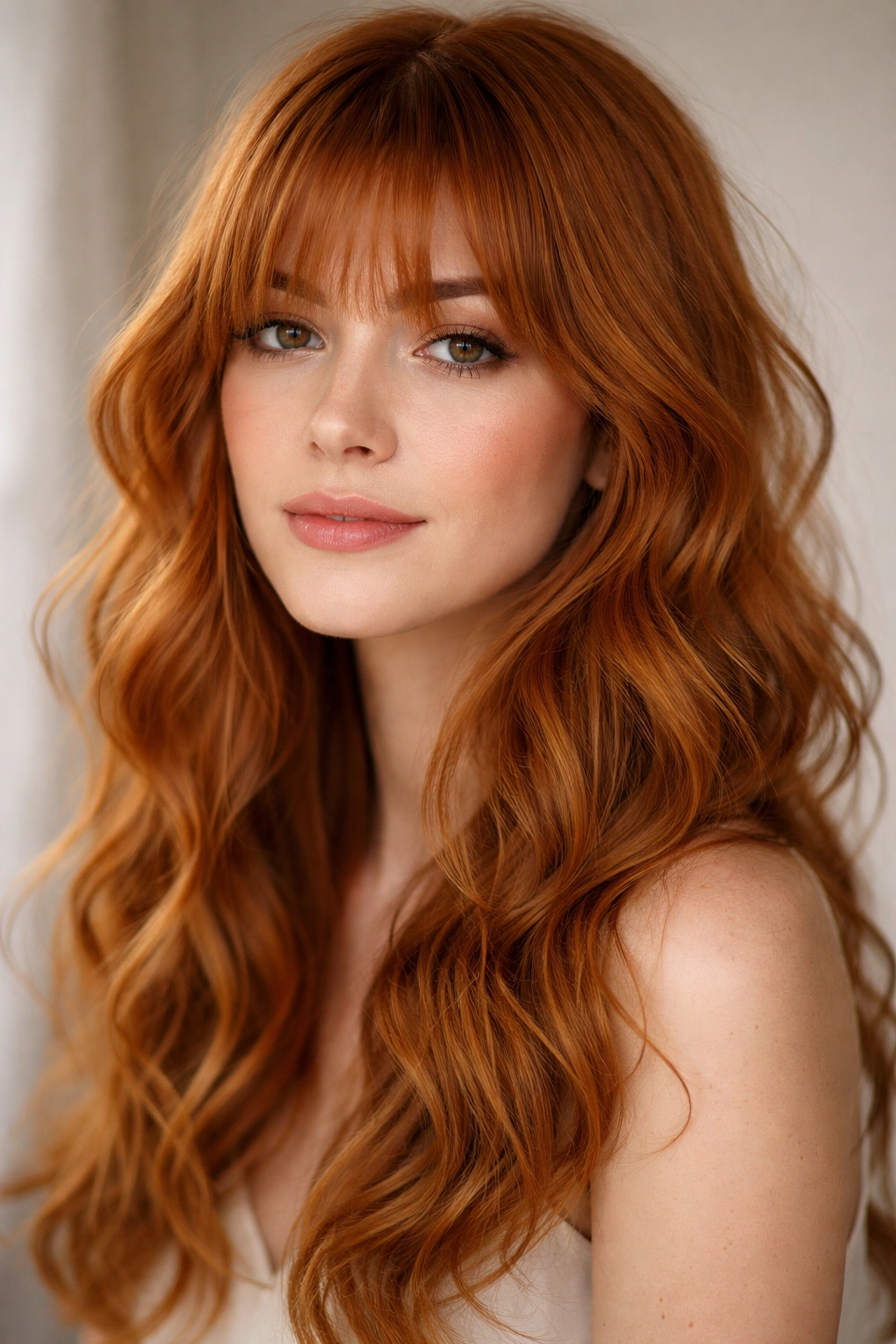
Wispy bangs are perhaps the most forgiving option for wavy hair because they’re cut with intentional texture from the start — they’re designed to move and shift slightly rather than sit in one perfect line. When paired with ginger-colored waves, wispy bangs create an undeniably romantic, lived-in aesthetic that works for both everyday wear and special occasions. The individual strands of wispy bangs catch light beautifully against the warm undertones of ginger, drawing the eye upward and creating subtle dimension across your face.
Why This Style Suits Wavy Hair
Wispy bangs work with your natural wave pattern instead of fighting it. Because the stylist cuts them in graduated layers rather than a blunt line, minor texture changes throughout the day don’t look like a styling failure — they look intentional. The ginger color shines through the gaps between the wispy strands, amplifying the color dimension rather than making it appear flat or dull. This style flatters a wide range of face shapes because the soft, airy texture doesn’t create hard lines.
Styling and Maintenance Tips
- Use a round brush and blow dryer on low heat to gently shape the bangs away from your face as they dry, allowing your natural wave to guide them
- Apply a lightweight texturizing spray to damp bangs before styling to enhance movement without weighing them down
- Expect to trim wispy bangs every 4-6 weeks because the individual strands show bluntness quickly as they grow
- On second-day hair, flip your bangs to one side and pin them back with a small clip while you style the rest of your waves — this refreshes their shape without washing
Who Should Choose This Style
This works best for people with medium to thick wavy hair and anyone who prefers a softer, less dramatic look. If you have very fine hair, wispy bangs might look too thin or sparse. If you’re seeking a bold, statement-making style, you might want something more structured.
2. Side-Swept Ginger Bangs with Soft Beach Waves
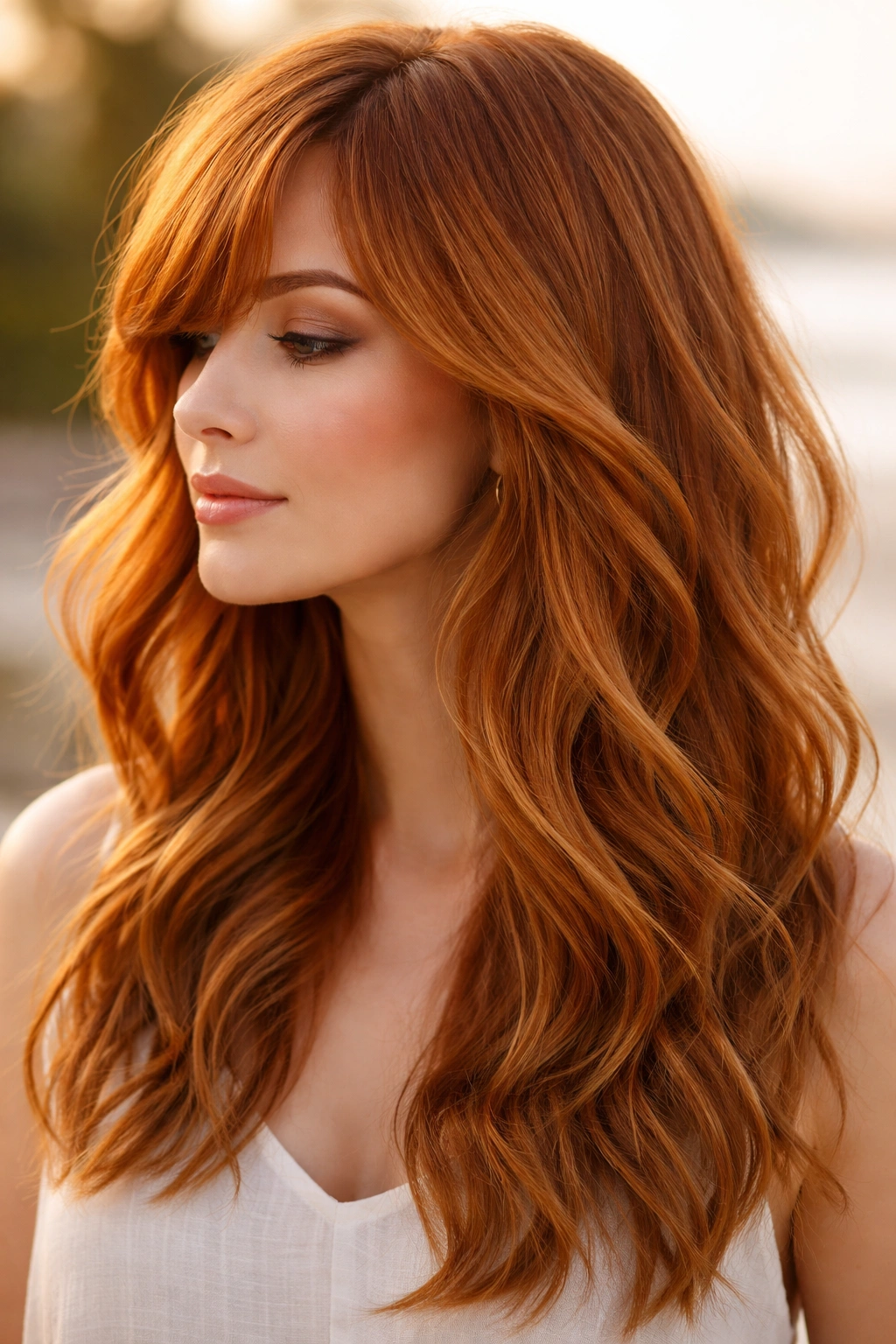
Side-swept bangs are a masterclass in working with wavy texture because they follow the same natural angle that your waves already want to take. Rather than fighting the physics of your hair, you’re leaning into it. This style pairs beautifully with ginger because the sweep movement shows off the color’s dimension — as your bangs move from the center toward the side, light hits them at different angles, revealing undertones and highlights that a blunt bang would hide.
The Face-Framing Advantage
Side-swept bangs frame one side of your face while leaving the other more open, which is incredibly flattering for oval and rectangular face shapes. The ginger color becomes a focal point without overwhelming your features. Your eye is naturally drawn along the sweep of the bangs, which can make cheekbones appear more defined and create an elongating effect on the face. The soft, curved line of the sweep also complements the organic curves of wavy hair better than any structured bang could.
How to Style and Maintain Them
- Blow dry your bangs from the center scalp toward the designated side, following your natural wave pattern
- Use a small round brush to curve the ends of the bangs slightly under as they dry, which prevents them from looking stringy
- A lightweight mousse applied to damp bangs before styling adds hold without making waves look crunchy
- Side-swept bangs need trimming every 5-7 weeks; they grow out more gracefully than blunt bangs, so you have a wider window before they start looking shaggy
- On days when your waves are cooperating, you can skip the blow dryer and let them air dry, using a bit of styling cream to encourage the sweep direction
Best Face Shapes and Hair Types
Side-swept bangs are wonderfully versatile and work for most face shapes. They’re particularly flattering on round faces because the sweep creates vertical lines that elongate. This style works beautifully on wavy hair ranging from loose beach waves to more pronounced ripples — the key is having enough natural texture for the bangs to curve naturally.
3. Blunt Ginger Bangs with Loose Waves
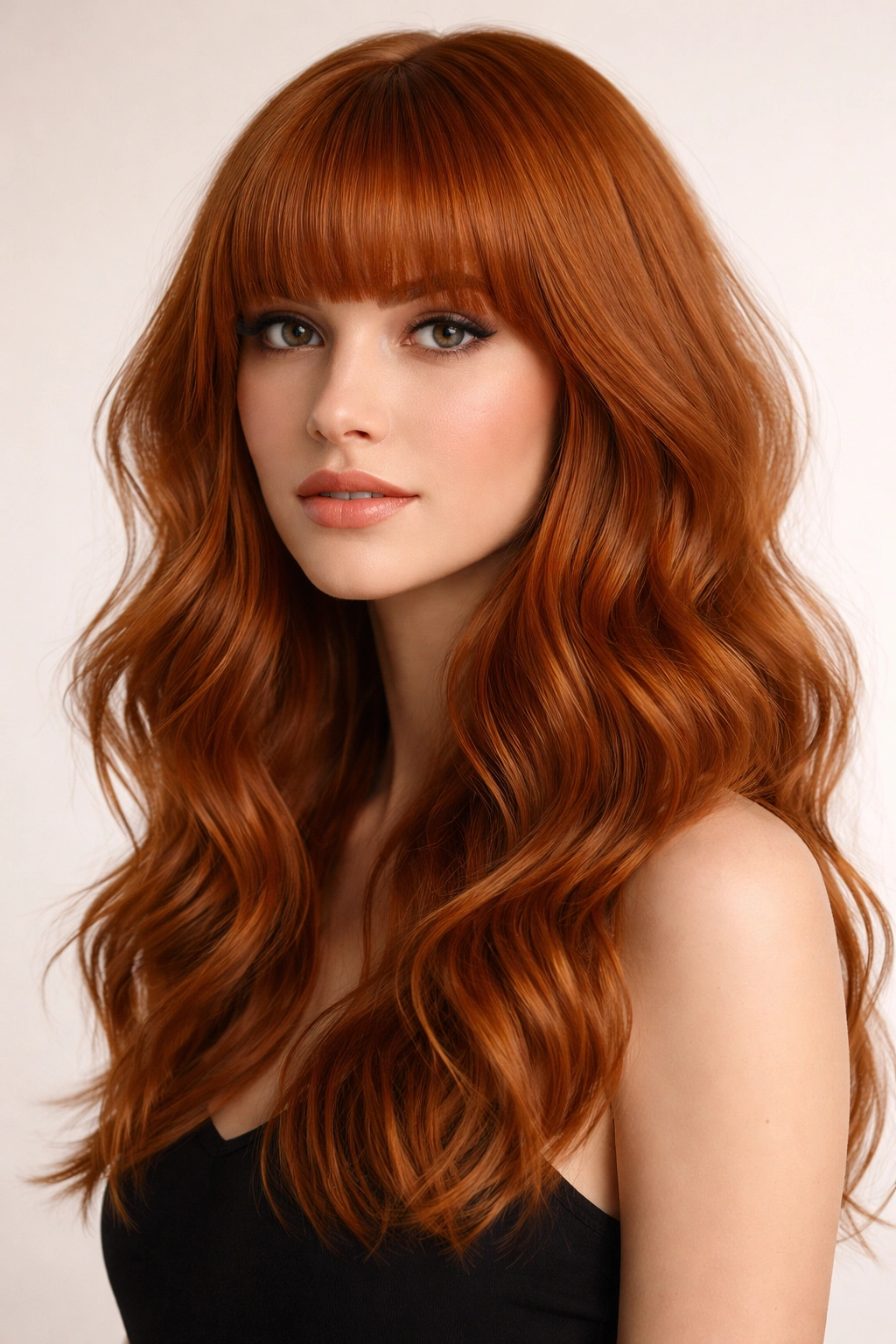
Blunt bangs make a statement. They’re bold, structured, and unapologetically present on your face — which is exactly why they require a particular approach when paired with wavy hair. The success of blunt bangs on waves depends entirely on your styling commitment and your willingness to blow dry them straight and sleek rather than letting them follow your natural texture. But when you commit to the styling, blunt ginger bangs create a striking frame that makes the color pop.
Why Blunt Works (With Conditions)
The hard line of blunt bangs creates contrast against soft, wavy hair, which is visually interesting and modern. The blunt line at the edge of your bangs reflects light differently than wispy or textured bangs, making the ginger color appear more saturated and richer. For people with bold personalities and a preference for a more intentional, fashion-forward look, blunt bangs deliver that energy. The geometric precision of the cut makes the ginger color appear more deliberate and chosen, rather than naturally grown in.
The Styling Reality
Blunt bangs on wavy hair require blow drying almost every time you wash. You’ll need to dry them straight and smooth, either with a paddle brush and round brush or with a flat iron for extra polish. The moment they air dry, they’ll follow your natural wave pattern and no longer look blunt — they’ll look shaggy and unintentional. This means a higher styling commitment than other bang styles. If you’re not willing to blow dry regularly, blunt bangs on wavy hair aren’t your best choice.
Maintenance and Longevity
- Schedule trims every 3-4 weeks because blunt bangs show growth, bluntness loss, and texture very quickly
- Invest in a good blow dryer and round brush designed for creating smooth, controlled styles
- A volumizing dry shampoo applied to the roots of your bangs before styling helps them hold their blunt shape longer
- Keep a small straightening iron in your bag for midday touch-ups if needed
- Use a smoothing serum on damp bangs before blow drying to reduce frizz and create that polished finish
Who Should Commit to Blunt Bangs
Choose this style if you love the aesthetic enough to make blow drying non-negotiable, if you’re willing to get regular trims, and if your lifestyle allows for that styling time most mornings. This style absolutely shines on people who enjoy an editorial, intentional appearance and aren’t afraid to make a style statement.
4. Curtain Bangs with Dimensional Ginger Waves
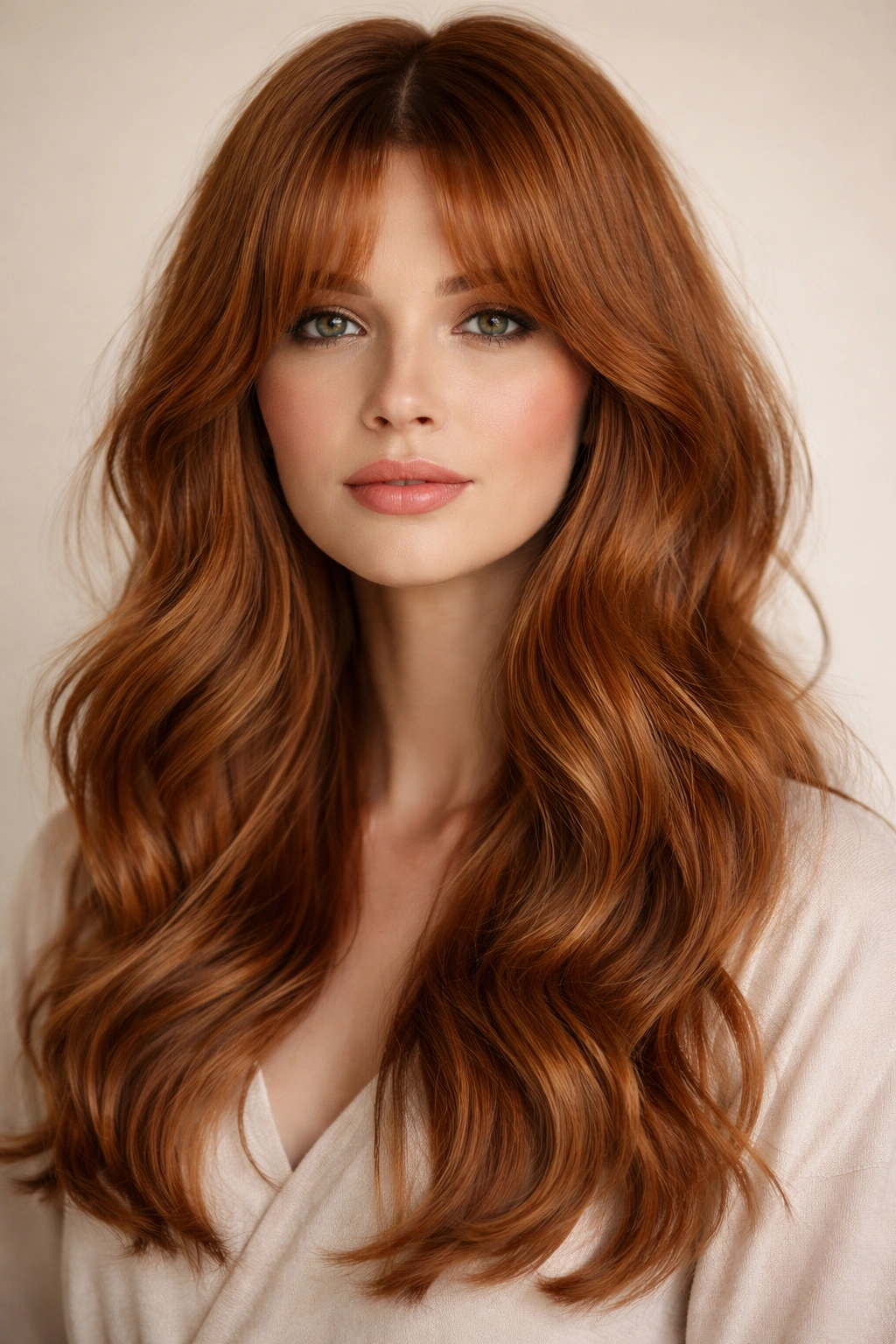
Curtain bangs parted down the middle with wavy hair create a dreamy, effortlessly cool aesthetic that’s genuinely forgiving of your hair’s natural texture. The defining characteristic of curtain bangs is that they’re longer than traditional bangs and part in the center, framing both sides of your face equally. When you have ginger-colored waves, curtain bangs create a soft, romantic frame that lets your color shine without requiring the styling precision that blunt or side-swept options demand.
Why Curtain Bangs Feel So Effortless
Curtain bangs naturally follow the curve of wavy hair because they’re designed to move away from the center and curve toward the sides of your face — exactly where waves naturally want to go. The part down the middle becomes less obvious when you have texture, so minor asymmetries look intentional rather than like styling mishaps. The ginger color gets distributed across both sides of your face equally, creating a balanced, harmonious appearance. This style reads as intentionally styled but also like you’re not trying too hard, which is the sweet spot for modern styling.
Styling Approach for Maximum Impact
- Let your bangs air dry whenever possible; they look better when they follow your natural wave pattern
- If you want them slightly more polished, use a blow dryer on low heat and a diffuser attachment to enhance your wave pattern without fighting it
- Part your bangs down the center when they’re still damp, and let gravity and your natural texture do the rest
- A light texture spray applied to damp bangs before air drying adds movement without changing the ginger color’s appearance
- Curtain bangs work beautifully with both sleek waves and more voluminous, bouncy waves — they adapt to whatever texture you have
Maintenance Schedule and Growth Pattern
- Trim every 6-8 weeks, which is longer than blunt bangs because the longer length hides growth better
- As they grow out, curtain bangs transition gracefully into side-swept bangs or full-length layers rather than looking shaggy
- They’re the lowest-maintenance bang option for wavy hair because they don’t require daily styling
- If you ever decide you want different bangs, curtain bangs grow out easily without requiring a whole new cut
Face Shapes This Suits Best
Curtain bangs work beautifully on most face shapes, but they’re particularly flattering on wide or square faces because the frame created by the bangs softens the angles. The style also works wonderfully on heart-shaped faces, as the width created by the parted bangs balances a wider forehead.
5. Long Layered Ginger Bangs with Spiral Waves
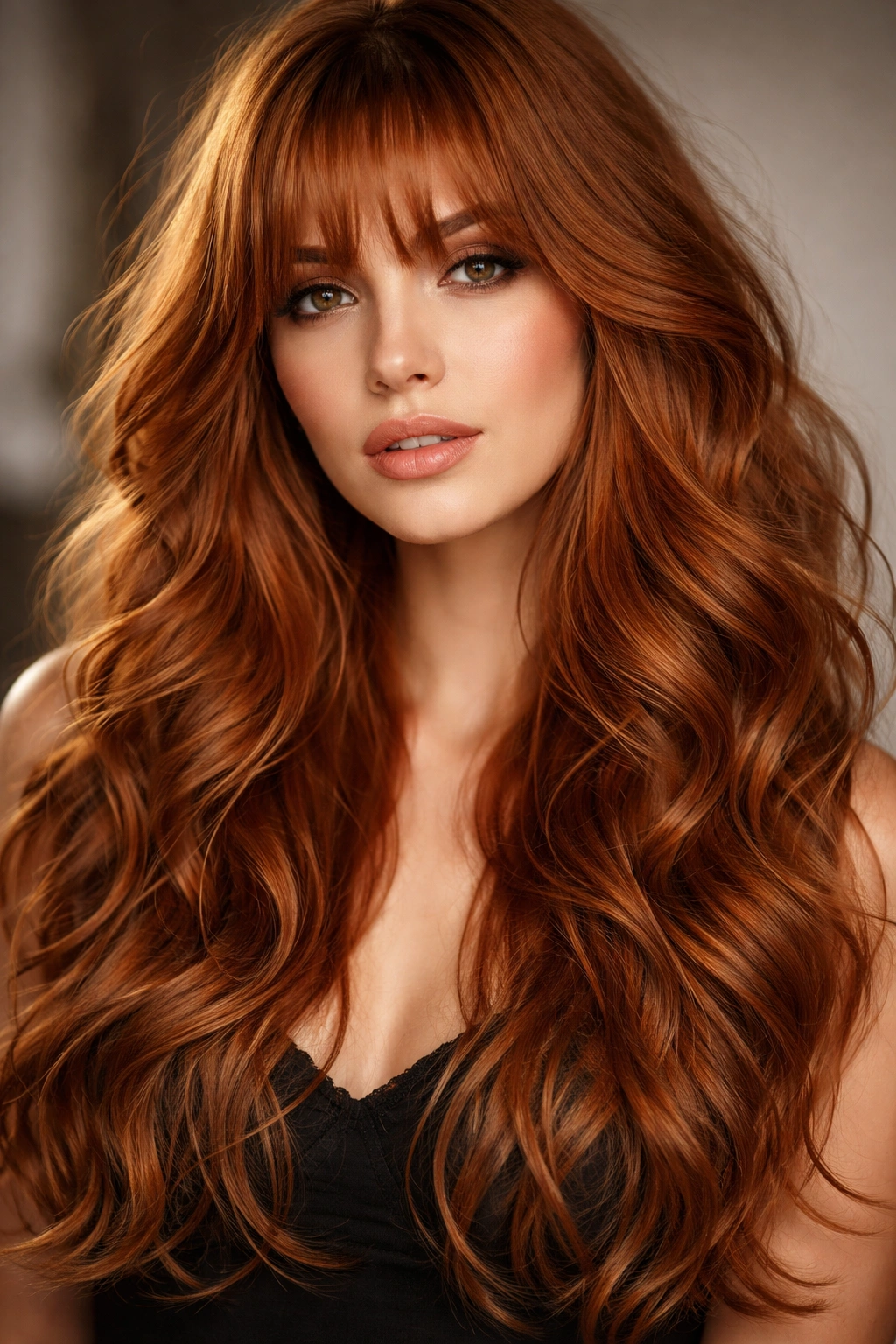
Long bangs that extend toward your cheekbones or jaw, cut with internal layers and texture, create what some stylists call “shag bangs.” These bangs blend seamlessly with the rest of your layered haircut while still providing the framing effect of bangs. When combined with ginger color and spiral or pronounced waves, this style creates serious texture and movement that photographs beautifully and feels incredibly modern.
The Texture-on-Texture Advantage
Long layered bangs work because they’re textured to match your wave pattern. Rather than creating a contrast with a blunt line or a sweep, they echo the movement already happening in your waves. The ginger color gets distributed throughout the bangs thanks to the layering, which means the color reads as dimensional and intentional rather than flat. This style is particularly stunning on people who love texture and don’t want a “finished” appearance — it’s deliberately undone and moves with your natural hair movement.
How to Enhance Your Spiral Waves
- Use a curling wand or spiral curler on your bangs to match the curl pattern in the rest of your hair, creating cohesive texture
- Apply curl cream or wave enhancer to damp bangs before styling to encourage your natural spiral pattern
- Aim your blow dryer upward toward the roots of your bangs to create volume while your waves form
- Scrunch damp bangs gently while applying styling product to encourage the spiral pattern to develop
- This style genuinely looks better when you lean into the movement rather than trying to smooth it down
Styling Reality and Expectations
- These bangs work beautifully with air-dried waves and look even better on second or third-day hair when waves are more pronounced
- Expect a slightly more undone appearance than other bang styles — this is intentional and the whole point of the style
- Trimming every 5-6 weeks keeps the layers visible and prevents the bangs from getting too long and heavy
- This style works best on people who appreciate texture and aren’t seeking a polished, sleek appearance
Who This Style Suits
Choose long layered bangs if you love your natural wave pattern and want to enhance it rather than fight it. This works best on people with medium to thick wavy hair and those who don’t mind the slightly tousled, editorial aesthetic. If you prefer a sleek, controlled appearance, this isn’t your style.
6. Choppy Ginger Bangs with Tousled Waves
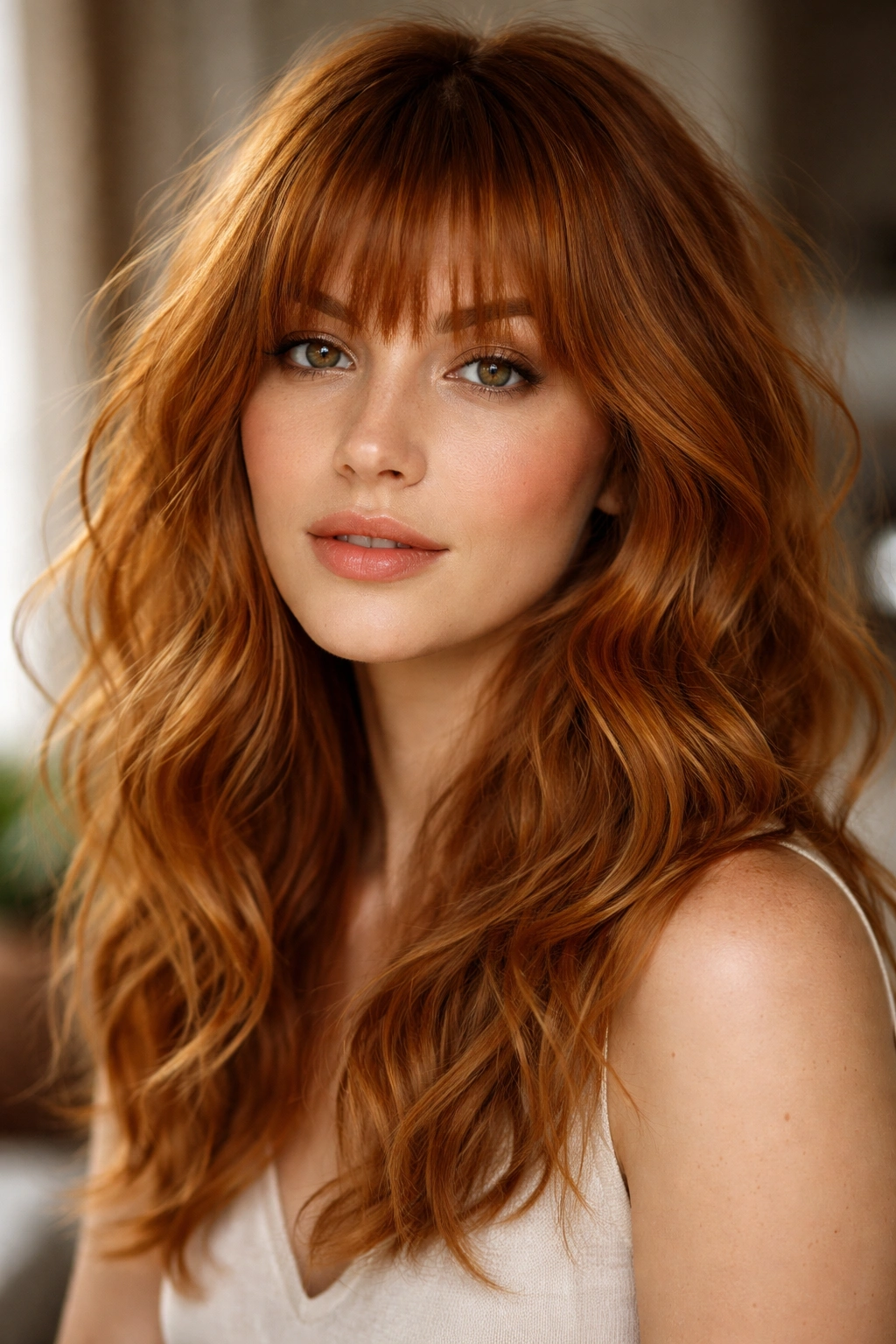
Choppy bangs are cut with short, stacked layers that create a deliberately textured, almost disconnected look. When paired with tousled ginger waves, choppy bangs make a serious style statement that reads as fashion-forward and intentional. The individual texture of the choppy layers bounces light in multiple directions, making the ginger color appear more dynamic and interesting than it would with a smoother bang style.
Why Choppy Bangs Stand Out
The choppy texture creates the illusion of movement and energy, which complements tousled, lived-in waves perfectly. Rather than looking like a styling error, the slight messiness of choppy bangs looks deliberate and cool. The ginger color becomes a character element of your overall style rather than just a color. This style works beautifully on people who want to project confidence and aren’t concerned with appearing “polished” in a traditional sense.
Styling for Maximum Choppy Texture
- Apply texture spray or sea salt spray to damp bangs before blow drying to enhance the choppy layers
- Use your fingers or a brush with wider-spaced bristles rather than a fine-tooth comb to avoid smoothing down the texture
- A blow dryer on medium heat with a diffuser attachment enhances the choppy texture while encouraging your natural waves
- Tousle your bangs upward and to the sides with your fingers as they dry to emphasize the movement
- This style genuinely looks better slightly undone, so don’t aim for perfection
Maintenance and Upkeep
- Schedule trims every 4-5 weeks because the choppy layers show bluntness quickly as they grow
- Use a leave-in conditioning spray on the ends of your bangs to prevent them from looking too dry and wispy
- Avoid products that smooth or sleeken; instead, use volumizing and texturizing products that enhance the choppy effect
- This style works best on people who are willing to embrace a slightly undone aesthetic and aren’t seeking a refined look
Face Shape Considerations
Choppy bangs work well on most face shapes, but they’re particularly striking on people with angular features because the soft texture balances hard lines. They also work beautifully on round faces because the upward texture creates the illusion of more vertical space.
7. Feathered Ginger Bangs with Bouncy Waves
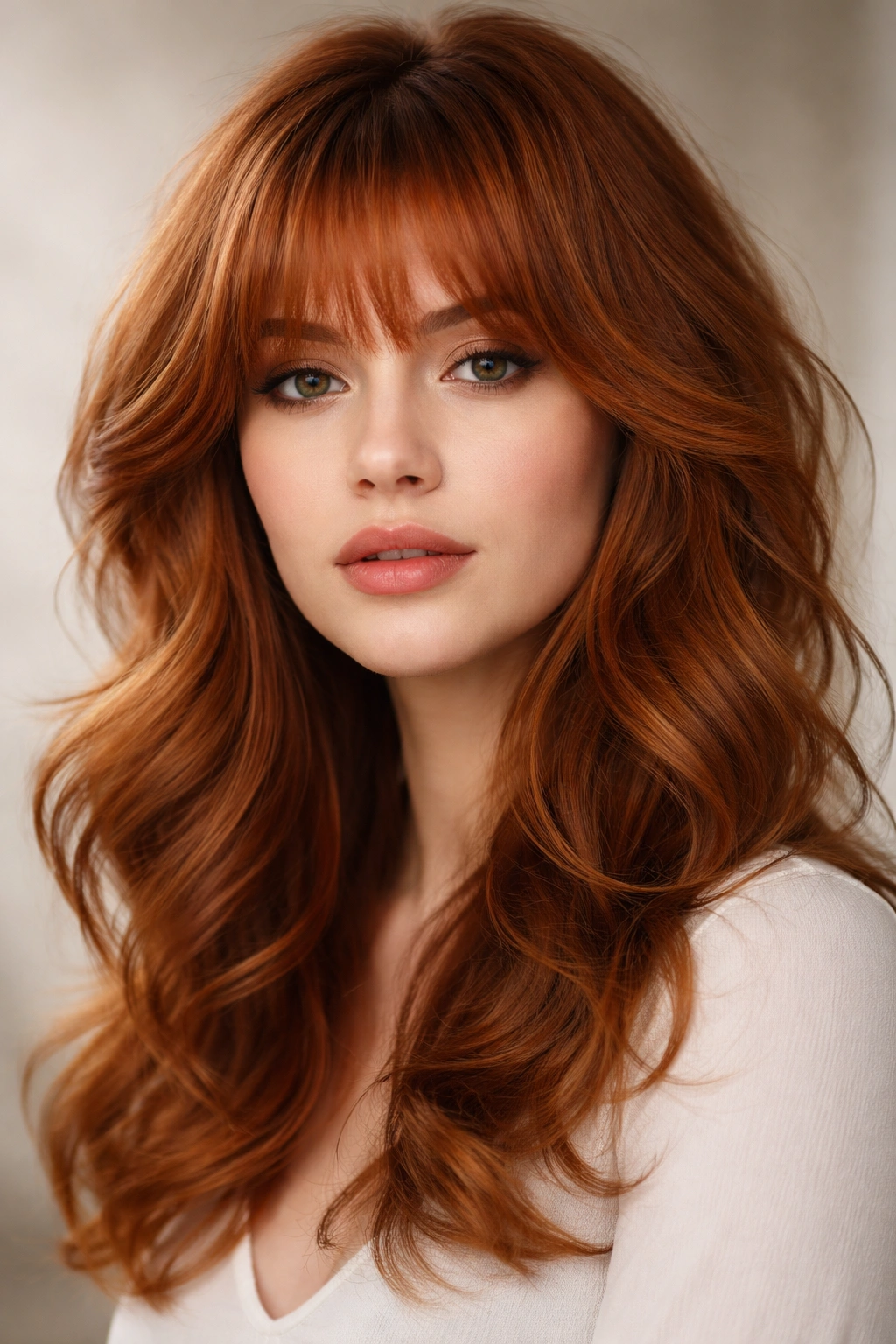
Feathered bangs are lighter and airier than most other styles because they’re cut with layers that point outward and upward, creating a bird-like, feathery appearance. When combined with bouncy ginger waves, feathered bangs create an incredibly soft, romantic look that has serious ’70s-inspired appeal while still feeling contemporary. The feathering technique works with your wave pattern rather than against it, making this a genuinely low-maintenance option for textured hair.
The Magic of Feathering
Feathered bangs work because each layer is cut at a slightly different length and angle, which means your natural waves won’t disrupt the style — they’ll enhance it. The ginger color gets distributed throughout the bangs thanks to the multiple layers, creating a rich, multi-dimensional appearance. This style reads as both intentionally styled and effortlessly natural, which is the ideal balance for most people. The feathering technique also means these bangs won’t look blunt or harsh as they grow out; they’ll transition gracefully into longer framing layers.
How to Style Feathered Bangs
- Use a large round brush and blow dryer to gently curve the feathered layers away from your face as you dry
- Apply a volumizing mousse to damp bangs before styling to create fullness and encourage the feathered shape
- Allow your natural waves to work with the feathering rather than fighting them
- A light misting of texture spray after styling helps hold the feathered shape without making it feel stiff
- These bangs actually look better with a bit of movement, so aim for a relaxed appearance rather than perfection
Timing and Maintenance
- Feathered bangs need trimming every 5-6 weeks to keep the layered shape defined
- As they grow out, they transition into longer, feathered framing layers without ever looking obviously grown out
- This is one of the most forgiving bang styles in terms of maintenance because minor imperfections blend with the feathered texture
- The style works beautifully on both freshly washed hair and second-day waves
Who Should Choose Feathered Bangs
This style works for people who love texture and movement and who want a romantic, soft aesthetic. It’s particularly flattering on people with thinner hair because the layering creates the illusion of fullness. If you prefer bold, graphic styles, feathered bangs might feel too soft and delicate for your taste.
8. Thick Ginger Bangs with Deep Waves
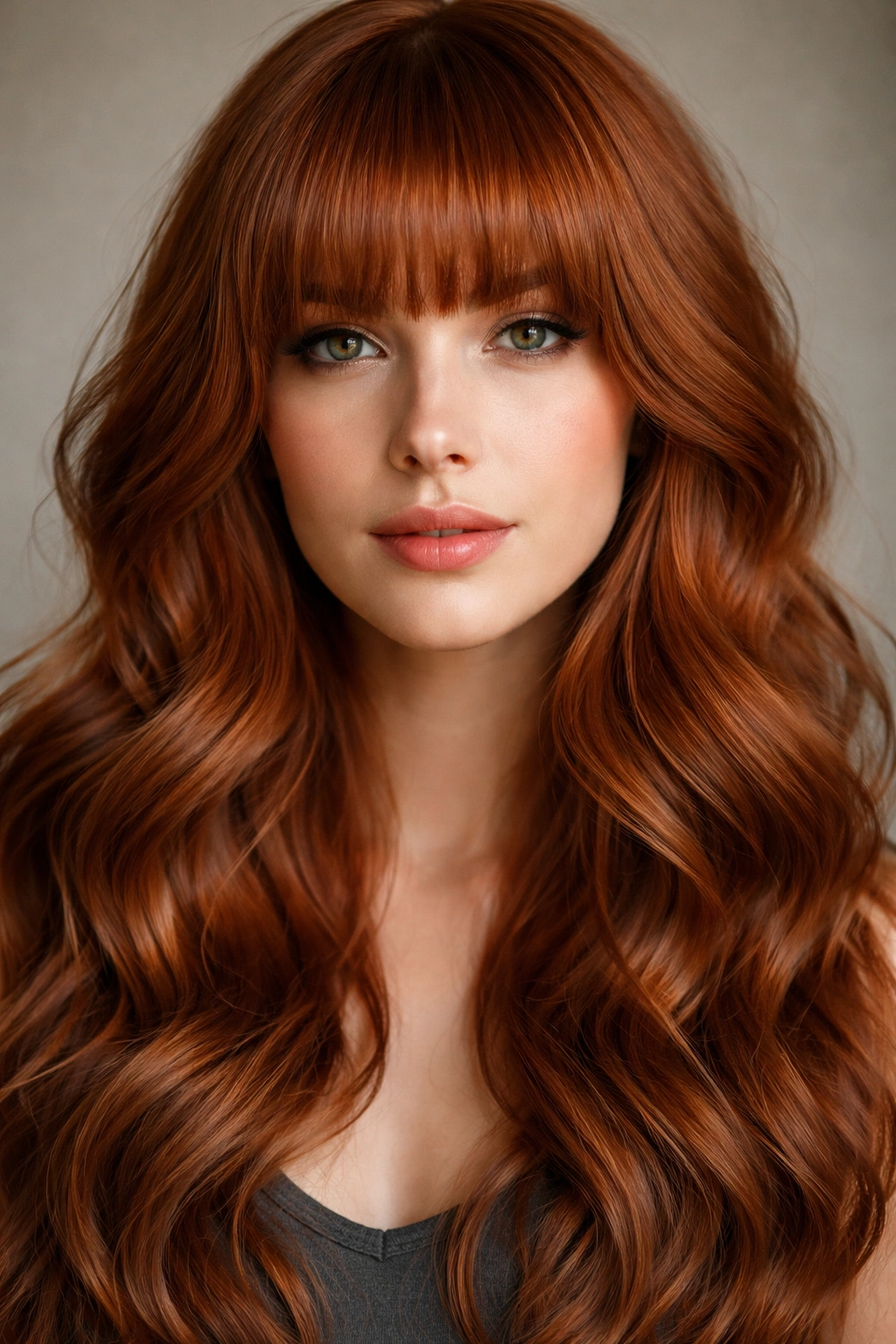
Thick bangs — where the stylist takes a wider section of hair than usual and cuts them to sit heavier and more substantial on your forehead — create a dramatic framing effect that’s perfect for people with dense, voluminous hair. When paired with deep, pronounced waves and ginger color, thick bangs create an undeniably bold appearance that reads as confident and fashion-forward. This style requires the right hair type to pull off successfully.
Making Thick Bangs Work
Thick bangs work best when you have genuinely thick, dense hair because thin or fine hair will look overly heavy and flat with this volume. The depth and richness of ginger color is beautifully showcased by thick bangs because the color gets concentrated in a substantial area where it catches light and draws focus. Thick bangs create a statement without requiring them to be blunt — they can be textured, feathered, or layered while still maintaining that substantial, present quality.
Styling for Substantial Bangs
- Blow dry thick bangs with a paddle brush to smooth them down while maintaining their fullness
- Apply a smoothing serum to damp bangs before styling to prevent frizz and create a polished appearance
- Use your blow dryer on medium heat to avoid overheating the denser section of hair
- A volumizing powder applied to the roots of your bangs creates lift and prevents them from lying flat against your forehead
- These bangs look best when they have visible shape and movement rather than looking plastered down
Why the Deep Waves Matter
Deep waves complement thick bangs perfectly because the substantial bangs anchor the rest of your hairstyle. Your waves have a strong foundation to play against, which makes the overall style feel more cohesive. The ginger color in your waves reads as intentional and complementary rather than competing with your bangs for attention.
Trim Frequency and Expectations
- Schedule trims every 4-5 weeks because thick bangs show growth and weight changes noticeably
- Expect these bangs to be slightly heavier than other options, which some people love and others find uncomfortable
- This style requires some styling commitment to prevent the bangs from looking flat or overly thick
Who Pulls Off Thick Bangs
Choose this style only if you have genuinely thick, dense hair and you love a bold, statement-making appearance. If you have fine or thin hair, thick bangs will look overwhelming and will likely feel uncomfortable and heavy.
9. Shaggy Ginger Bangs with Voluminous Waves
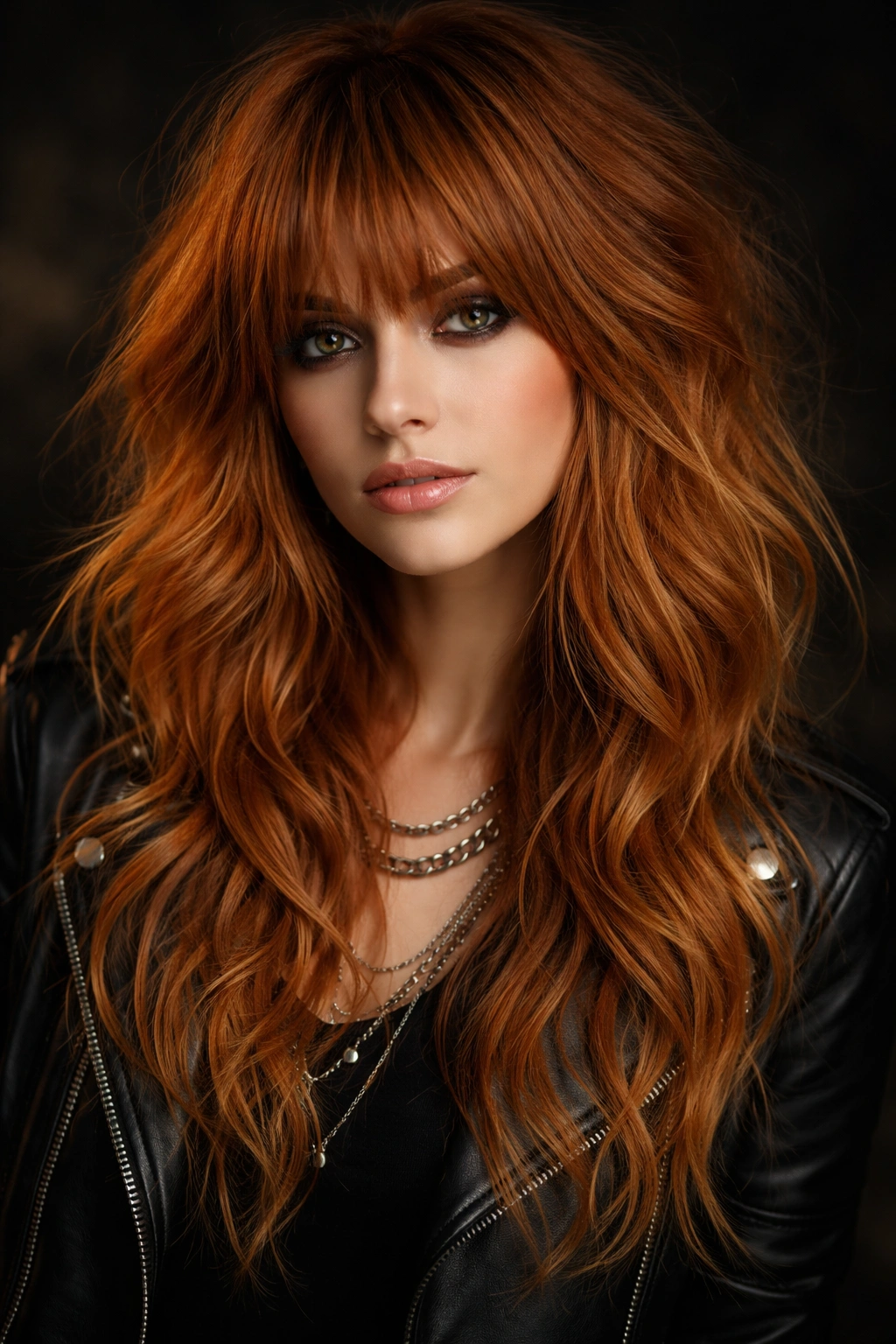
Shaggy bangs are essentially a more extreme version of choppy bangs — they’re cut with multiple short layers throughout that create serious texture and movement. Combined with voluminous ginger waves, shaggy bangs create an undeniably cool, rock-and-roll aesthetic that’s completely different from the soft, romantic options earlier in this list. This is a style for people who want their hair to make a statement.
The Rock-and-Roll Appeal
Shaggy bangs work because they’re inherently textured and movement-oriented, which pairs perfectly with voluminous, bouncy waves. The ginger color becomes part of the rock aesthetic rather than a traditional color choice. This style reads as intentional, bold, and confident — there’s no apology in a shaggy bang style. The multiple layers in shaggy bangs catch light at different angles, making the ginger color appear more dimensional and interesting.
Creating Maximum Volume
- Use a blow dryer on medium-high heat with a diffuser attachment to encourage volume and movement in both your bangs and waves
- Apply volumizing mousse or sea salt spray to damp bangs before styling to enhance the shaggy texture
- Flip your head upside down while blow drying to create lift at the roots
- Tousle your bangs upward and to the sides with your fingers for maximum texture
- This style looks better when it’s intentionally undone rather than perfectly styled
Maintenance Reality
- Shaggy bangs need trimming every 4-6 weeks to keep the layered, textured shape defined
- The style requires some styling commitment to achieve maximum volume and texture
- Use texturizing products rather than smoothing products to keep the shaggy aesthetic intact
- This style works best with air-dried or diffuser-dried waves rather than sleek, blown-straight styles
Who Should Rock Shaggy Bangs
This works for people who love texture, volume, and an edgy aesthetic. If you prefer refined, polished styles, shaggy bangs won’t align with your aesthetic. This style is perfect for people with naturally thick or curly hair and those who want their hair to be a statement piece of their overall style.
10. Micro Bangs with Ginger Waves
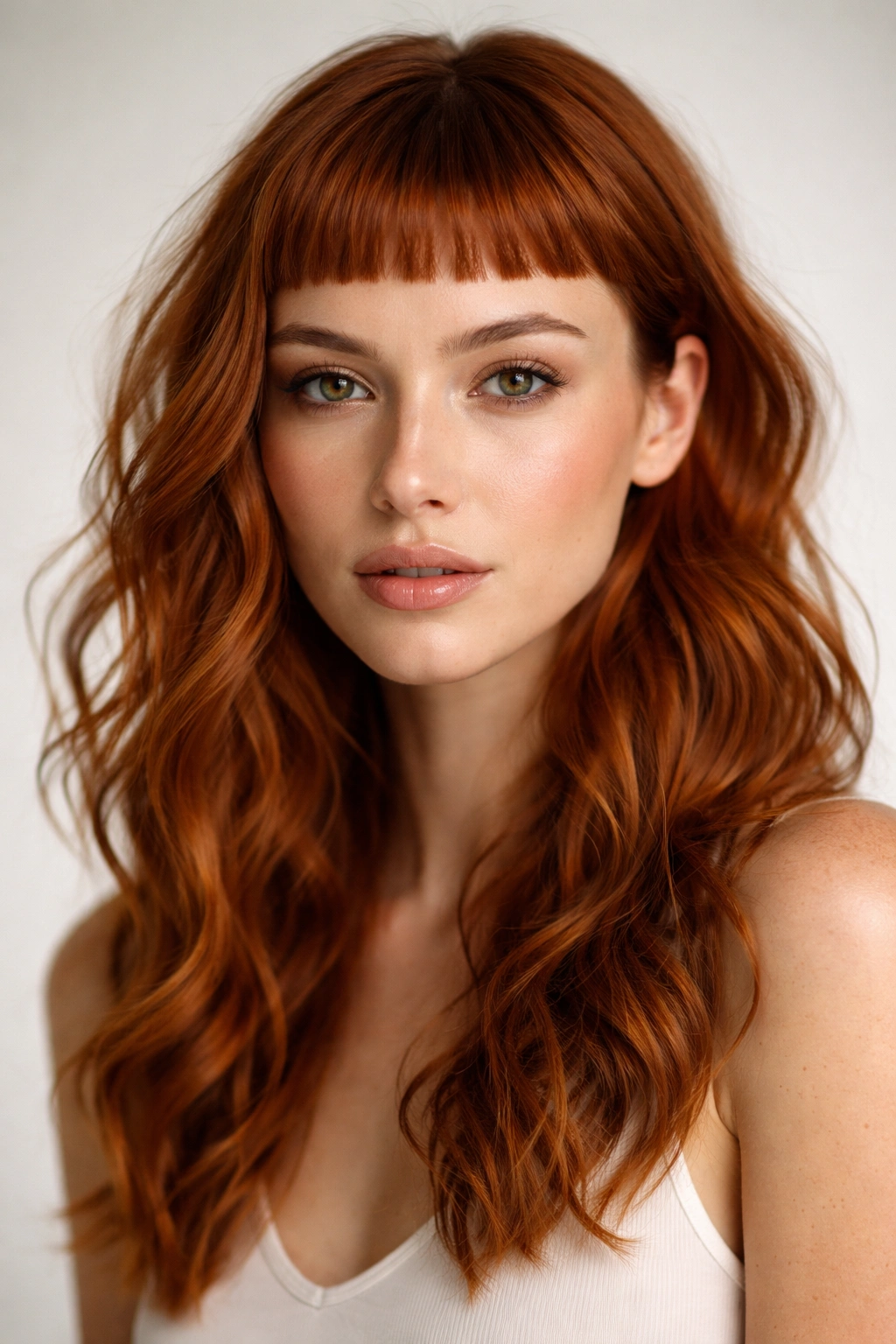
Micro bangs sit much higher on the forehead than traditional bangs, typically ending at the top of your eyebrows or even higher. This is a bold, avant-garde choice that creates maximum visibility of your forehead and requires specific styling and the right face to pull off successfully. When paired with ginger waves, micro bangs make a serious fashion statement that’s completely unique.
Why Micro Bangs Are a Statement
Micro bangs work because they’re so unexpected and trend-forward that they immediately signal fashion confidence. The ginger color in your waves becomes the main focus of your hairstyle because your forehead takes center stage. This style works beautifully on people with small foreheads, as it showcases rather than hides that feature. The contrast between the very short bangs and the longer, wavy hair creates visual interest and movement.
The Styling and Appearance
- Micro bangs require precise blow drying to prevent them from looking too short or awkward
- Apply a smoothing serum to micro bangs before styling to create a sleek, intentional appearance
- A flat iron can help create the clean, precise line that micro bangs require
- These bangs work best when your waves are smooth and controlled rather than voluminous and chaotic
- The style reads as very fashion-forward and editorial rather than romantic or soft
Maintenance Challenges
- Micro bangs need trimming every 2-3 weeks because even slight growth changes how they sit on your forehead
- This is the highest-maintenance bang style in terms of trim frequency
- The growth-out phase isn’t attractive, so you’ll need to stay on top of trims to maintain the style
- If you ever change your mind, growing out micro bangs takes considerable time
Face Shape Requirements
Micro bangs work best on people with smaller foreheads and oval or heart-shaped faces. They’re also beautiful on people with high cheekbones because the exposed forehead draws attention upward. Avoid micro bangs if you have a very wide forehead or if you feel self-conscious about showing that much of your face.
Who Can Pull This Off
Choose micro bangs only if you’re genuinely committed to a fashion-forward aesthetic and you’re willing to get trims frequently. This style requires styling precision and isn’t forgiving. It’s perfect for people who love trends, who aren’t afraid to stand out, and who feel confident with an exposed forehead.
11. Ginger Bangs with Beachy Waves and Texture
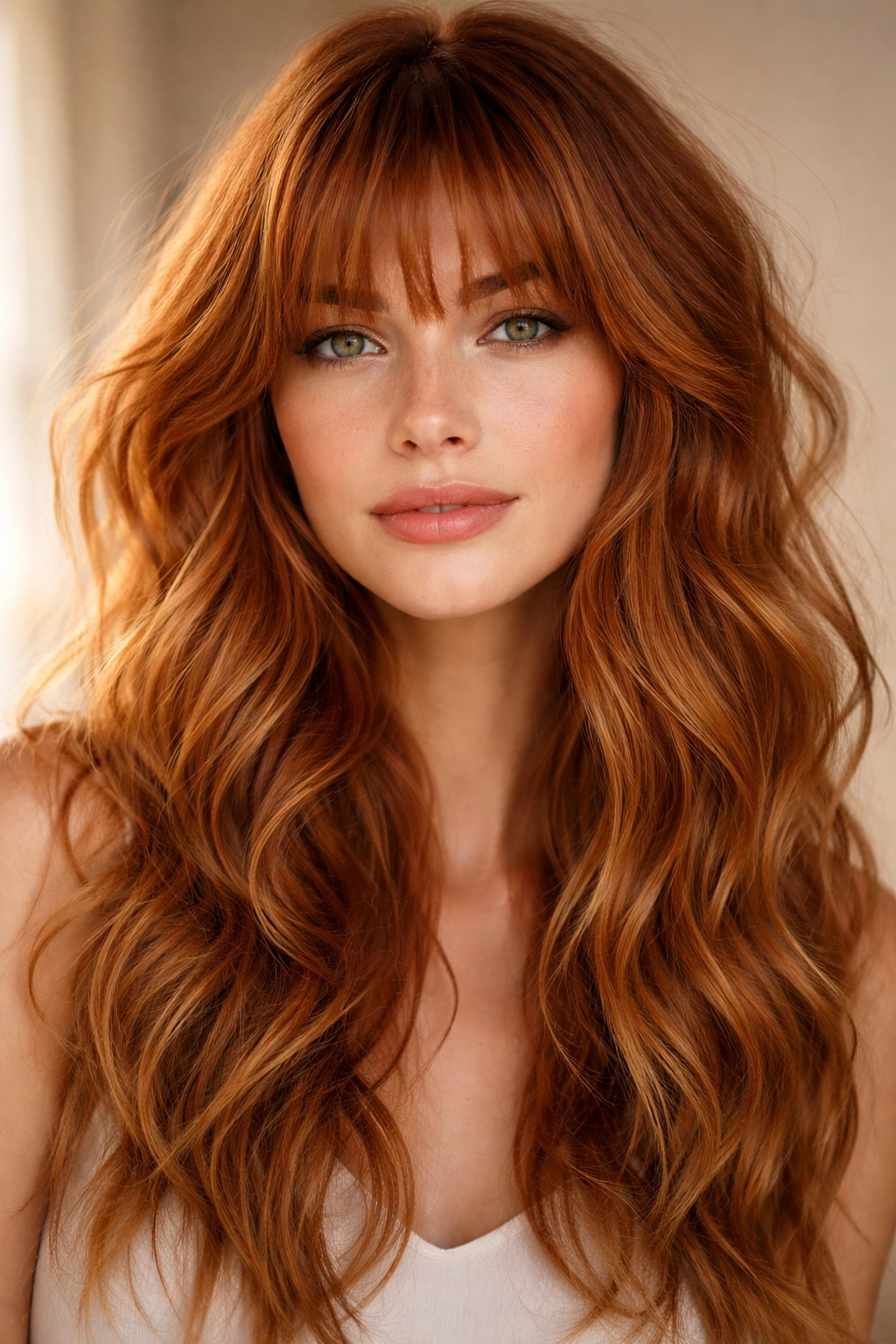
Beachy waves have a relaxed, sun-kissed quality that feels effortlessly cool, and when combined with ginger bangs, the effect is like you’ve just returned from a seaside vacation. This style works because beachy waves are intentionally textured and undone, which pairs perfectly with bangs that have movement rather than blunt precision. The combination of ginger color, beachy waves, and soft bangs creates an undeniably appealing aesthetic that feels both intentional and natural.
Creating the Beachy Wave Aesthetic
Beachy waves are typically created with salt spray, a curling wand, or by braiding damp hair and releasing it after it dries. The goal is texture and movement rather than defined curls. When you combine this with ginger bangs, the bangs should have a similar undone quality — they shouldn’t look blunt or perfectly straight. This works best with wispy, feathered, side-swept, or long layered bangs rather than blunt or thick options.
Styling for the Beachy Look
- Apply sea salt spray or texture spray to damp bangs before styling to enhance movement
- Use a large barrel curling wand on your bangs, curling away from your face to create soft, beachy texture
- Allow your bangs and waves to air dry when possible for the most authentic beachy aesthetic
- Tousle everything gently with your fingers to create that lived-in, just-back-from-the-beach appearance
- This style looks better the more relaxed and undone it appears
Why This Works with Ginger
The warm, sunset-inspired tones in ginger color naturally complement the beachy aesthetic. Ginger reads as sun-warmed and naturally highlighted, which enhances the beachy vibe. The color makes this style feel intentional and curated rather than accidental, even though it appears effortlessly done.
Maintenance and Longevity
- Beachy waves actually improve on second or third-day hair, so this style doesn’t require daily styling
- Trim your bangs every 5-6 weeks to keep them from getting too long and heavy
- Use a leave-in conditioning spray to keep the ends of your bangs from looking too dry and wispy
- This style works beautifully with most bang types as long as they’re not too blunt or too thick
12. Razor-Cut Ginger Bangs with Sharp Waves
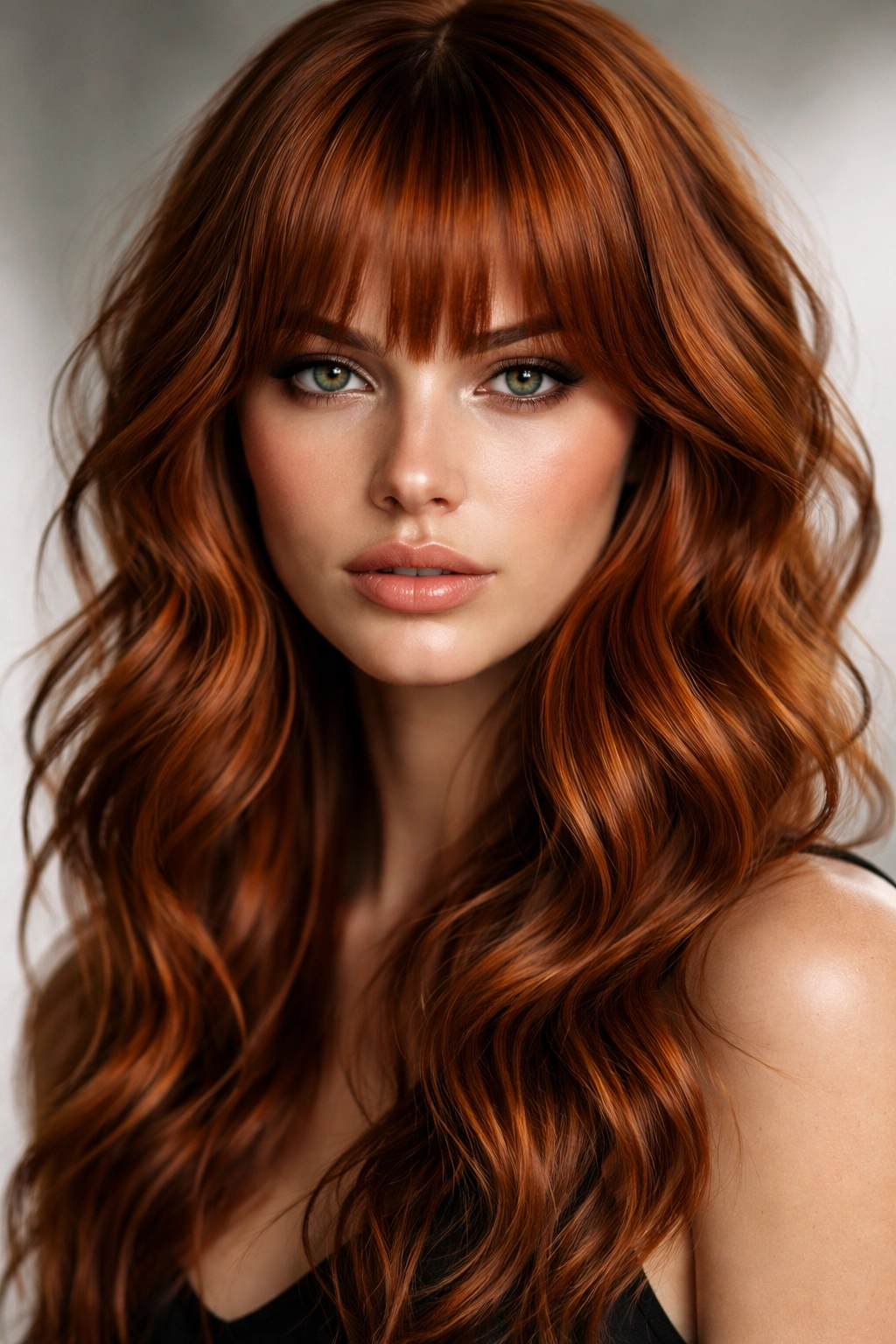
Razor-cut bangs are cut with a razor instead of scissors, which creates a sharper, more edgy line with slightly choppy or feathered texture at the edges. When combined with sharp, defined waves (think more pronounced, almost crimped-looking texture), razor-cut bangs create a very modern, almost editorial aesthetic. This style has serious attitude and reads as intentionally fashion-forward.
What Makes Razor Cutting Different
Razor cutting creates a thinner, more delicate edge than scissor cutting, which is why razor-cut bangs often have a softer appearance despite being considered more edgy. The razor technique also creates subtle layers and texture within the bangs without the obvious choppiness of choppy bangs. When paired with ginger color, razor-cut bangs have an almost metallic quality — the light reflects off the delicate, textured edges in a way that makes the color shimmer.
Styling Razor-Cut Bangs
- Use a round brush and blow dryer to create smooth, defined waves that complement the sharpness of the bangs
- Apply a smoothing serum to damp bangs before styling to prevent frizz and emphasize the delicate, textured edges
- The contrast between the sharp bangs and soft waves creates visual interest
- This style works best on people who want a polished, modern appearance rather than a soft, romantic one
- Use texture spray sparingly — a light mist enhances rather than dominates the appearance
Maintenance and Growth
- Razor-cut bangs need trimming every 4-5 weeks because the delicate, textured edges show wear quickly
- The edges can become thin if they’re not trimmed regularly, so staying on top of appointments is important
- As they grow out, razor-cut bangs can look a bit wispy and thin rather than maintaining their sharp appearance
Who Should Choose This Style
This works for people who appreciate modern, editorial aesthetics and who have healthy hair that can support the delicate texture. Avoid this style if you have very fine or damaged hair, as the razor technique can exacerbate those issues. This style works best on people with straight to wavy hair that can be blown dry smooth.
13. Curved Ginger Bangs with Romantic Waves
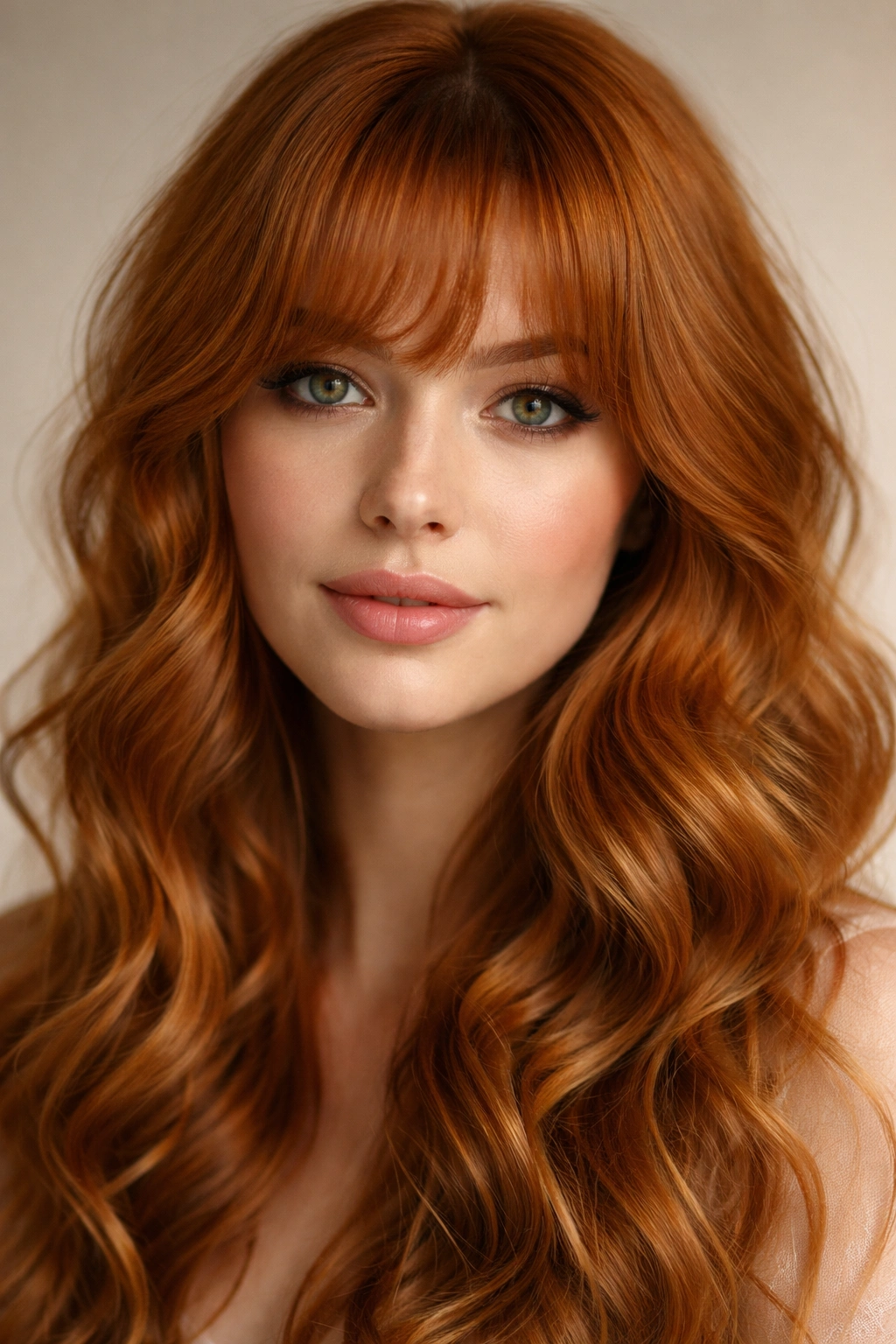
Curved bangs follow the natural line of your eye area, slightly curved rather than completely straight or heavily side-swept. They’re cut with enough shape that they have presence and frame your face intentionally, but they’re not as blunt as traditional straight bangs. When combined with soft, romantic ginger waves, curved bangs create an incredibly flattering, face-framing effect that works beautifully on most people.
The Face-Framing Magic
Curved bangs work because they follow the contours of your face rather than creating a hard, flat line across your forehead. The curve is subtle but present, which creates a naturally flattering frame. The ginger color is showcased along this curved line, creating emphasis on your eye area and cheekbones. This style feels intentional and styled while still maintaining softness and femininity.
How to Style Curved Bangs
- Blow dry curved bangs with a round brush, following the natural curve of the cut
- Apply a lightweight volumizing mousse to damp bangs before styling to create shape
- The bangs should curve slightly outward at the ends, following the line of your cheekbones
- Use a diffuser on low heat to enhance any natural wave in your bangs without disrupting the curve
- These bangs work beautifully with air-dried waves that complement the soft, romantic aesthetic
Why This Works with Romantic Waves
Romantic waves — soft, undulating texture that looks naturally beautiful rather than intentionally styled — complement curved bangs perfectly. The combination reads as effortlessly elegant rather than trying too hard. The ginger color in your waves creates warmth that complements the framing effect of the curved bangs.
Trim Schedule and Expectations
- Curved bangs need trimming every 5-6 weeks to maintain the subtle curve
- As they grow out, they transition gracefully into longer, curved framing layers
- This is a forgiving style in terms of growth because the curve is less obvious than a blunt line
- The style works beautifully on most face shapes and hair types
Who Should Choose Curved Bangs
This style works for people who want a flattering frame without the commitment or styling intensity of blunt bangs. It’s beautiful on people with most face shapes, particularly heart-shaped and oval faces. If you prefer very soft, romantic aesthetics, curved bangs are perfect. If you prefer bold, graphic styles, you might find them too subtle.
14. Ginger Bangs with Ombre Waves
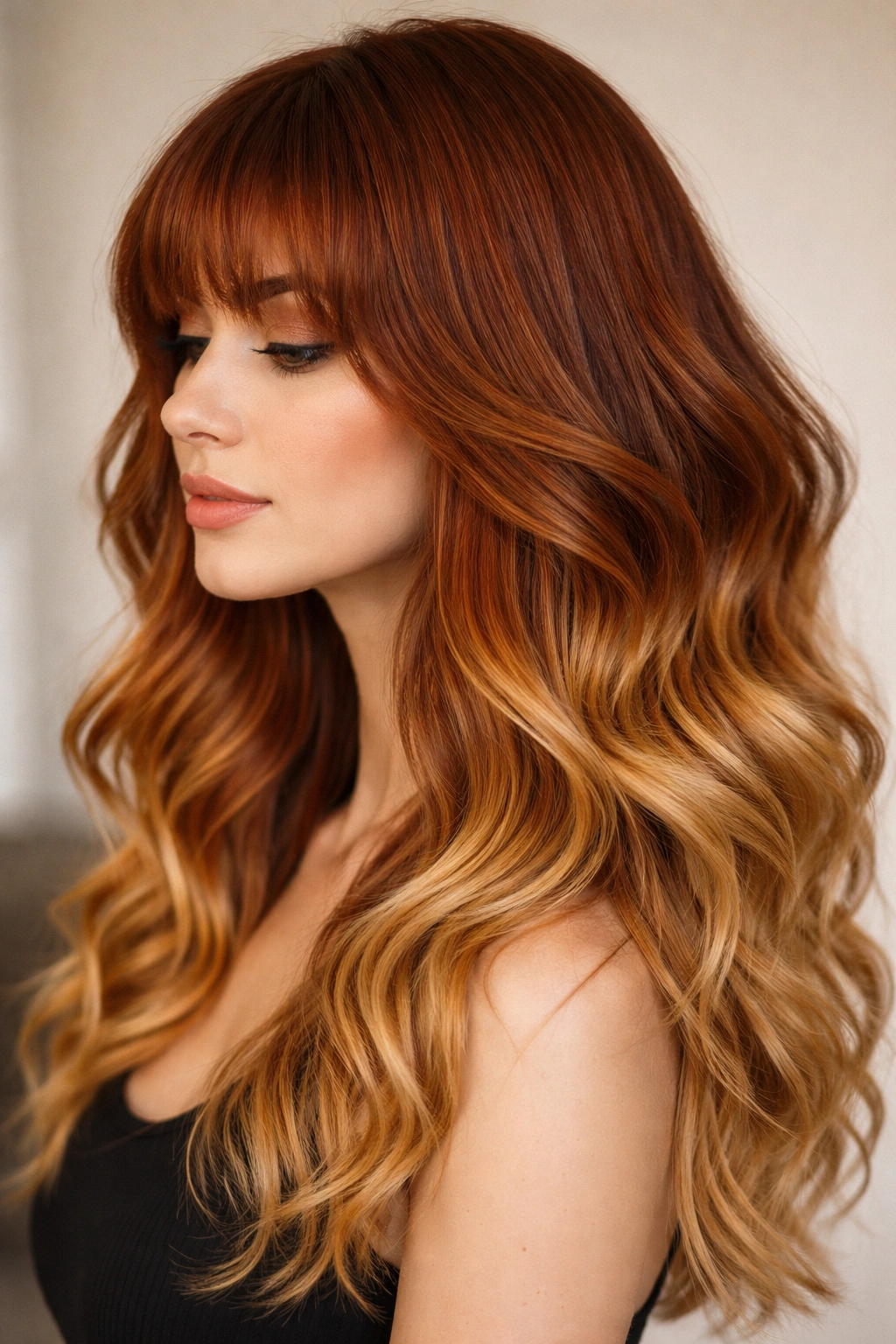
Ombre waves combine multi-tonal color with textured waves, creating a sophisticated, dimension-rich appearance. If your ginger bangs are a deeper, more saturated ginger shade and your waves feature lighter, more golden ginger or peachy tones, the contrast between the colors creates incredible visual interest and depth. This styling approach treats your bangs and waves as complementary elements of a cohesive color story.
Using Color Contrast Intentionally
The magic of this style lies in using bangs and waves as tools to showcase color dimension. If your bangs are a deeper burnt orange-ginger and your waves fade to a lighter golden ginger or honey tone, the color shift creates movement and draws the eye through your hair. This is particularly striking because ginger color naturally has a lot of warmth and dimension. The bangs, being the densest, most saturated part of your color, anchor the entire look while your waves add lightness and dimension.
Which Bang Styles Work Best
- Side-swept bangs work beautifully because the angle shows the color transition
- Feathered or long layered bangs distribute the color across multiple layers, enhancing the dimensional effect
- Curtain bangs allow both colors to be visible simultaneously, creating a balanced, cohesive appearance
- Avoid blunt bangs with ombre waves unless you’re going for maximum contrast; the blunt line can feel too heavy when color is already multitonal
Styling for Maximum Color Impact
- Use a blow dryer on medium heat to smooth your waves slightly, which allows light to hit the color more directly
- Apply a color-safe, sulfate-free shampoo and conditioner to preserve the color dimension
- A leave-in conditioning spray protects the color while enhancing shine
- Use a lightweight styling cream rather than heavy products that can dull the color’s vibrancy
Maintaining the Color Story
- Schedule color touch-ups every 4-6 weeks to keep the darker roots of your bangs and any regrowth looking intentional
- If you’re using balayage or hand-painted color to create the ombre effect, you might have more flexibility in touch-up timing
- Purple or violet-toning shampoo can help keep warmer ginger tones from fading to brassy
- The more intentional your color placement, the better the style reads overall
Who Should Choose This Approach
This works for people who love color and aren’t afraid of embracing multiple tones within their ginger. If you prefer a solid, monochromatic color, ombre might feel too complicated. This style is perfect for people who want their hair to be a complete, cohesive style statement with both texture and color dimension.
15. Flipped Ginger Bangs with Cascading Waves
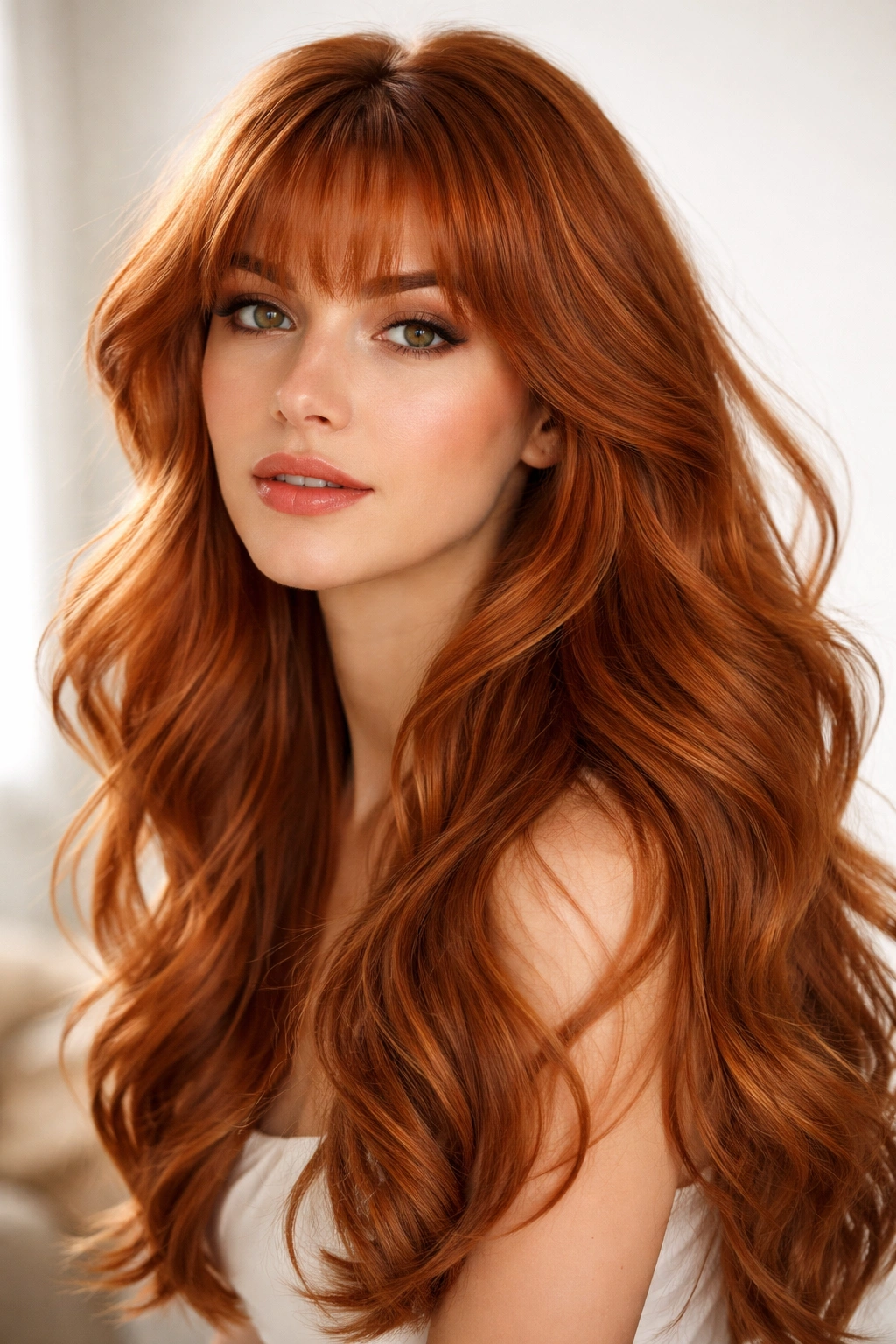
Flipped bangs curve upward and away from your face, almost like they’re flipped up at the ends rather than falling straight down. This creates a cheerful, playful energy that’s perfect for pairing with cascading waves — long, flowing waves that literally cascade down your shoulders and back. This style is bold, voluminous, and undeniably fun without feeling costume-y or overdone.
The Upward Movement
Flipped bangs work because they create positive energy and visual movement. Rather than bangs that frame downward and inward, flipped bangs frame upward and outward, which creates lift and the illusion of more fullness. The ginger color catches light at an upward angle, which can make it appear lighter and brighter than the same color in downward-flowing bangs. This style reads as youthful, confident, and playful.
Creating the Flipped Effect
- Blow dry your bangs upward and away from your face using a round brush or blow dryer
- Apply a texturizing spray or mousse to damp bangs before styling to help them hold the flipped shape
- Curl the ends of your bangs with a small curling wand, curling away from your face to encourage the upward flip
- Use a medium heat setting to avoid damaging the hair while creating the shape
- A light hairspray applied after styling helps hold the flipped shape without making it feel stiff
Why Cascading Waves Complement This Style
Cascading waves flowing down your back create a dramatic contrast with the upward-flipped bangs on your face. The style reads as intentional and put-together rather than accidental. The length and movement of cascading waves showcase the ginger color beautifully, especially if you have subtle color dimension or highlights that play with light as the waves move.
Styling Commitment
- This style requires daily blow drying to maintain the flipped shape in your bangs
- Cascading waves benefit from a blow dryer or curling iron to create defined texture
- This isn’t a low-maintenance, air-dry style — it requires intentional styling most mornings
- The payoff is a dramatic, voluminous appearance that definitely makes a statement
Who Should Choose Flipped Bangs with Cascading Waves
This works for people who love volume, drama, and a playful aesthetic. If you have thick, healthy hair and enjoy blow drying, this is an excellent choice. Avoid this style if you prefer minimal styling or if you have fine hair that doesn’t hold curl or flip shape well. This style is perfect for people who want their hair to be a statement and who enjoy the styling process.
Final Thoughts
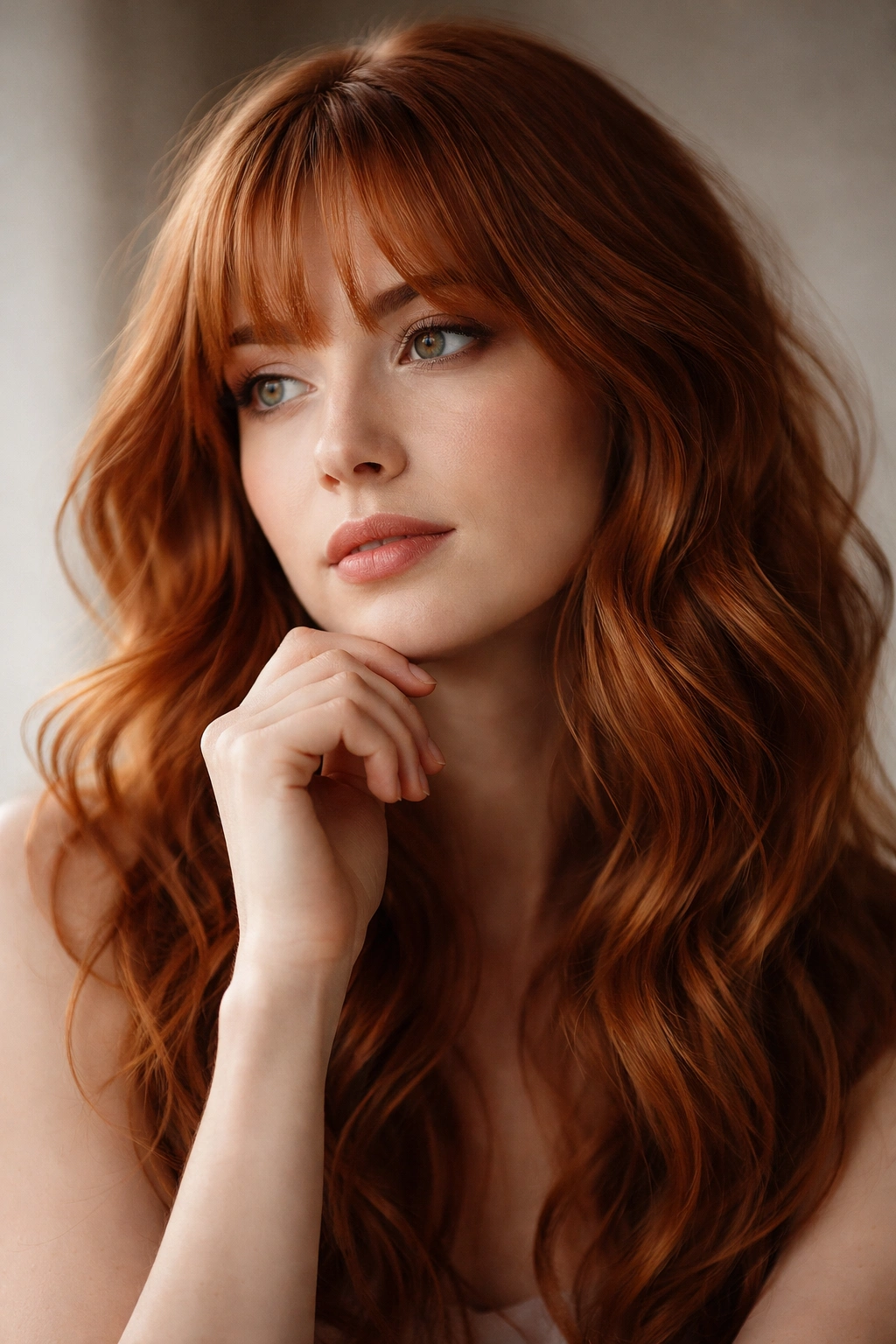
Choosing the right bang style for wavy ginger hair comes down to understanding your texture, your styling commitment, and the aesthetic you want to project. Some of these styles are effortless and work with your natural waves, while others require daily blow drying and precise styling. Some read as soft and romantic, while others make a bold, fashion-forward statement.
The truth is that any of these styles can work for your ginger waves — the key is matching the bang style to your lifestyle and the amount of styling effort you’re willing to commit to regularly. If you love air drying and prefer a relaxed aesthetic, lean toward wispy, feathered, side-swept, or curtain bangs. If you enjoy blow drying and appreciate precision and polish, blunt, razor-cut, or flipped bangs deliver that energy. Most importantly, work with a skilled stylist who understands how to cut bangs for textured hair and who can personalize any of these styles to suit your specific wave pattern and face shape.
Ginger color is naturally gorgeous and works beautifully with nearly all bang styles, so your main consideration should be the texture and maintenance level that fits your life. Once you find your match, you’ll have a hairstyle that feels authentically you and that you’ll actually want to wear.
