

The wavy bob has become a go-to choice for women over 50 who want movement, volume, and that effortless sense of texture without surrendering polish or sophistication. A well-chosen wavy bob can frame mature faces beautifully, add dimension that works with graying hair, and require far less daily styling effort than long hair or rigid blunt cuts. The beauty of this cut lies in its versatility — waves can be soft and romantic, tousled and modern, or structured and sculptural depending on your face shape, hair texture, lifestyle, and the specific styling approach you choose.
What makes wavy bobs so flattering in this phase of life is their ability to hide thinning, add visual fullness through texture and movement, and create the illusion of density even with naturally fine hair. The cut itself becomes the star rather than relying on length to do the work. Unlike straight bobs that can sometimes draw attention to fine lines or an angular jaw, waves create soft shadows and movement that photograph beautifully and feel inherently modern without trying too hard.
Finding the right wavy bob requires understanding a few key principles: how wave placement affects face shape, which layers create the most flattering movement, how to balance length with texture, and how much maintenance you’re genuinely willing to commit to on a weekly basis. The styles ahead represent the best-performing wavy bob variations for women over 50 — each one accounts for different hair textures, face shapes, and lifestyle demands, so you’ll find options whether your hair is naturally wavy, straight, fine, thick, curly, or some combination of all those things.
1. Textured Shag Bob
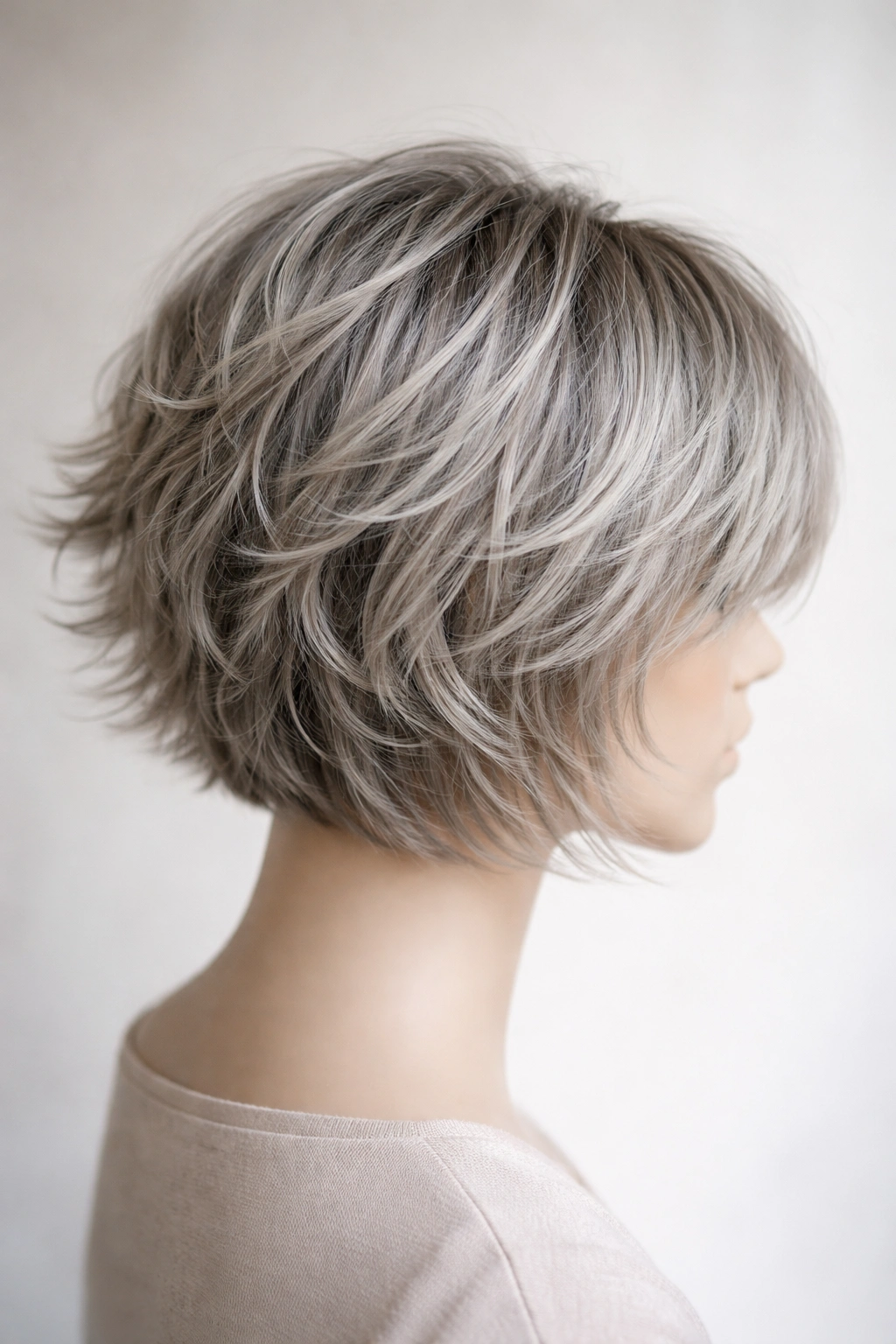
A textured shag bob brings back the drama of layered movement while keeping the sophistication of a shorter, managed cut. This style works through multiple short, choppy layers that create distinct texture rather than blending seamlessly — think of texture stacked throughout rather than a smooth gradient. The result is incredible dimension, especially when styled with a texturizing product that defines each wave and piece separately.
Why It Works for Mature Hair
A shag bob thrives on natural texture and gray hair, which tends to hold waves and definition beautifully. The layers create the illusion of volume even if your hair has thinned with age, and the choppy movement camouflages a fuller neckline or undefined jawline. The cut itself does most of the work styling-wise — even unstyled, a textured shag reads as intentional and modern, not messy or undone.
How to Pull It Off
- Best suited to hair that has natural wave or curl — straight hair can look stringy in a shag
- Face shapes: Works especially well for oval, rectangular, and heart-shaped faces
- Length: Typically sits right at the shoulder or just shorter, with the longest pieces framing the face
- Styling: Use a texturizing spray or sea salt spray to encourage separation and definition between layers
- Consider asking your stylist for slightly longer pieces at the front to frame cheekbones
Pro tip: This cut benefits from a trim every 5-6 weeks to maintain the choppy definition; let it grow too long and it can read as shapeless instead of intentionally textured.
2. Shoulder-Length Layered Wave
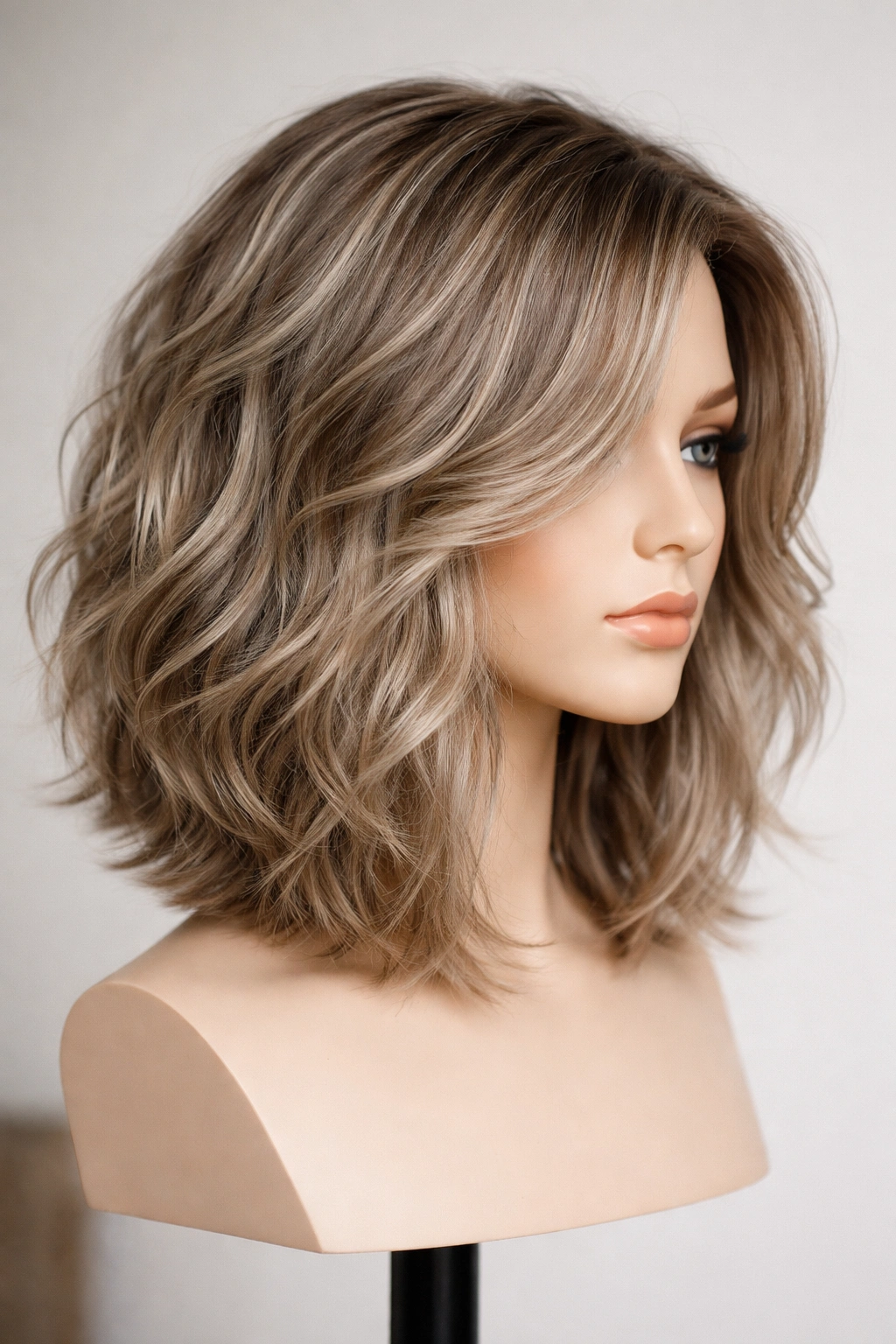
A shoulder-length layered wave offers maximum versatility — long enough to pull back into a ponytail or clip when needed, yet short enough to feel managed and fresh. Layers are placed strategically throughout to create waves that fall naturally without requiring tight pin curls or aggressive blow-dry styling. The result is a cut that works beautifully straight, waves, or curled, and transitions seamlessly from casual to polished settings.
The Right Technique for This Length
The layers need to be thoughtfully placed — longer pieces at the crown and cheekbones create face-framing movement, while mid-length layers add volume and encourage waves throughout the mid-section. The underneath needs less layering to maintain structural weight. This balance keeps the cut from feeling wispy or old-fashioned.
Who It Flatters
- Face shapes: Universally flattering — adapts to most face shapes with slight adjustment to where the front-framing pieces start
- Hair texture: Works with straight, wavy, and fine hair; curly hair may need a stylist experienced with curl-specific cutting techniques
- Works beautifully with glasses, which can sit on a shorter face without the weight of longer hair making them feel heavy
- Gray hair looks intentional and modern at this length, especially with subtle highlights or balayage
Worth knowing: This length typically needs styling 2-3 times weekly to maintain wave definition, making it ideal for people comfortable with a basic blow-dry routine.
3. Soft Choppy Waves with Bangs
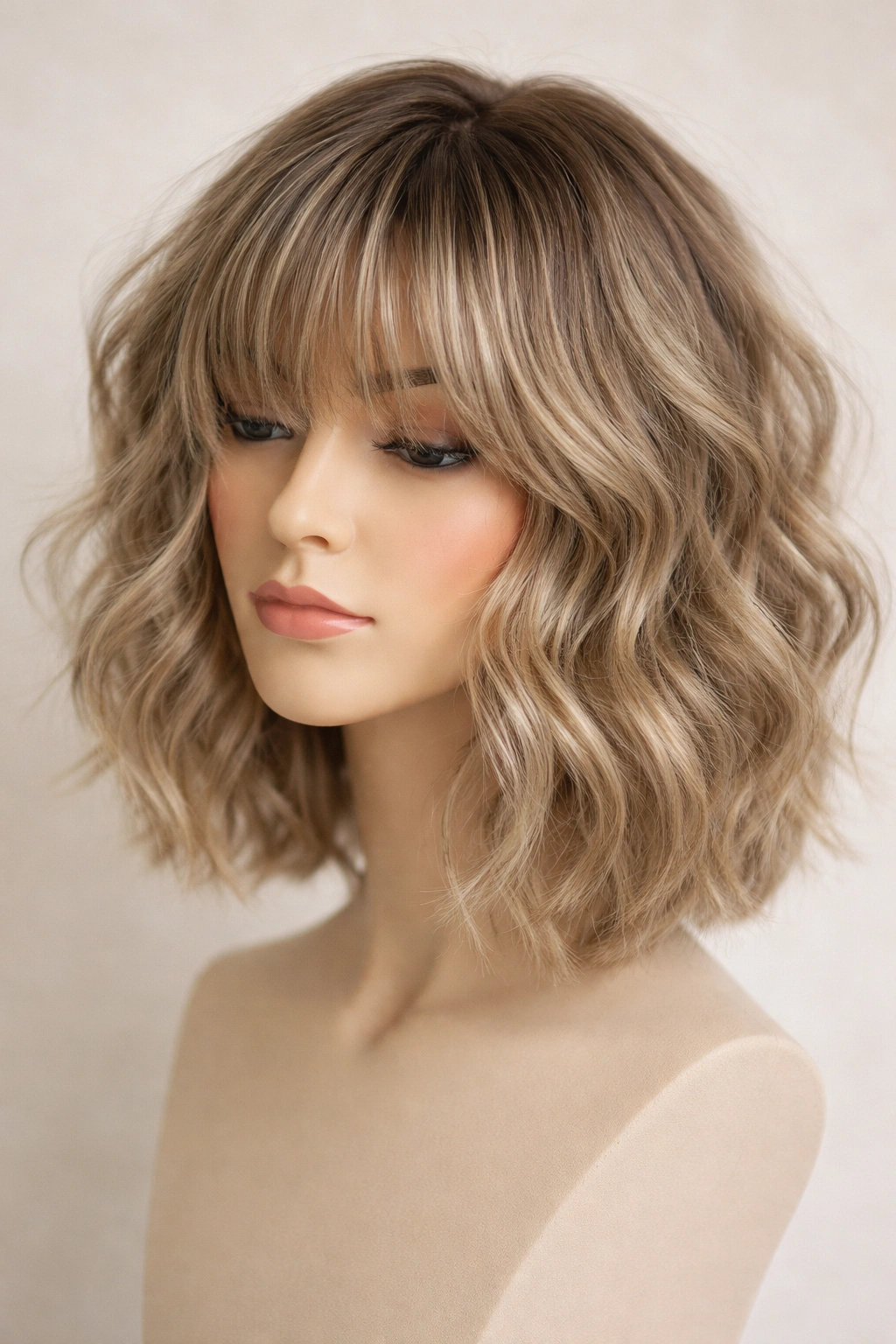
Adding bangs to a wavy bob can completely reset your look, making the cut feel contemporary and deliberately styled rather than a default choice. Choppy, piece-y bangs — not blunt or heavy, but textured and tapered — work beautifully with wavy bobs and frame the eye area in the most flattering way. The bangs create the focal point, allowing the rest of the cut to stay choppier and shorter without feeling severe.
Strategic Choppy Placement
Choppy bangs should start at eyebrow height and taper into the surrounding hair so there’s no harsh line. They should feel like an extension of the waves rather than a separate element sitting on top. The texture of the bangs should echo the texture throughout the bob — if the bob is soft and feathered, the bangs should be too. If it’s deliberately chunky, the bangs can mirror that.
Consider Your Face Shape
- Oval and heart-shaped faces: Choppy bangs are incredibly flattering, softening the forehead and broadening the face proportionally
- Round faces: Make bangs slightly side-swept and longer on one side to elongate and add angles
- Square faces: Choppy bangs work beautifully here, adding softness without diminishing the jaw
- Avoid: Heavy, blunt bangs on very round faces — they can emphasize fullness
Key point: Choppy bangs need trims more frequently than the rest of the cut — every 4-5 weeks to maintain their piece-y definition and prevent them from growing too long and obscuring the eye area.
4. Blended Lob with Subtle Waves
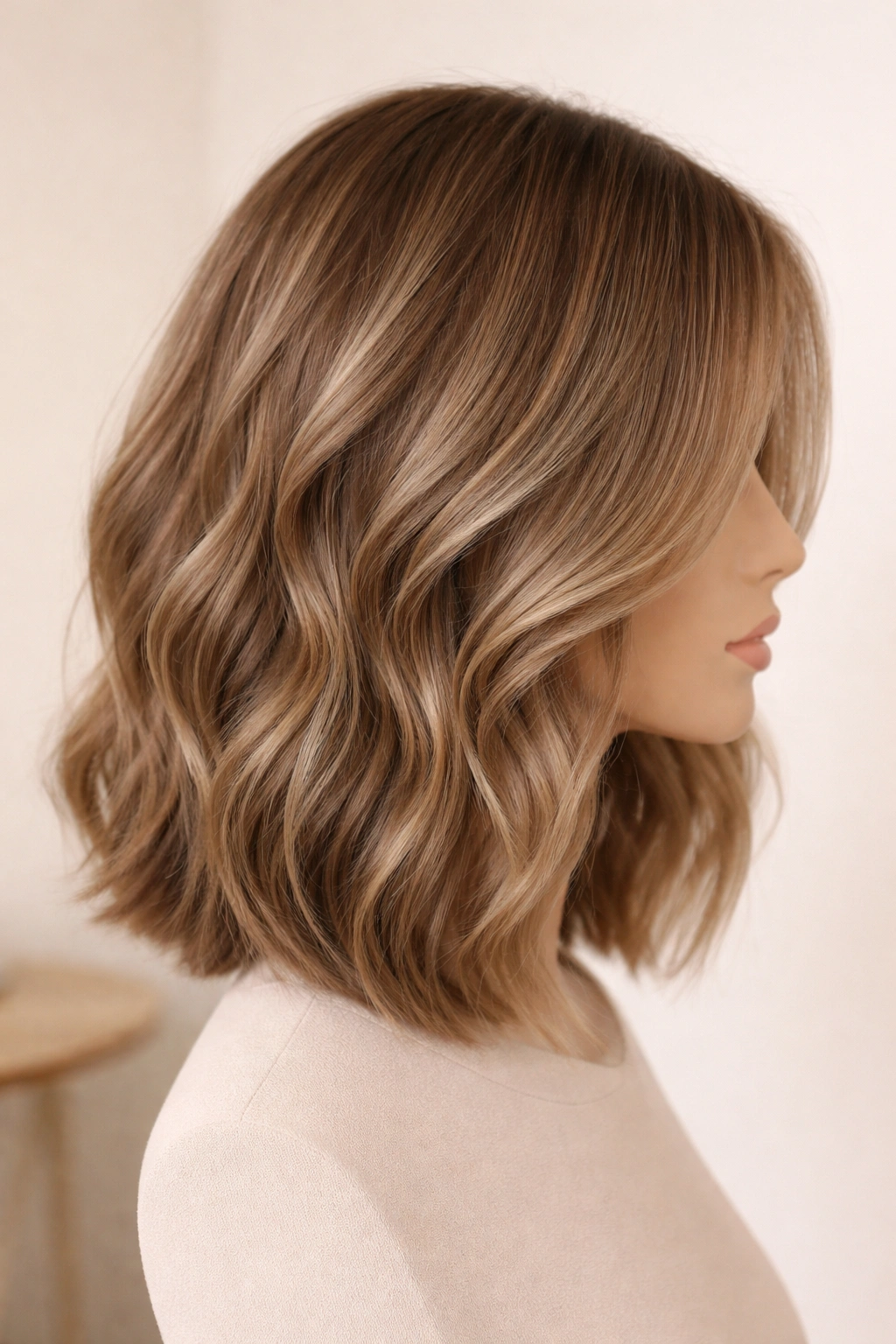
A lob — that in-between length that’s longer than a bob but shorter than traditional long hair — with subtle waves is the safest bet if you’re nervous about shorter hair. The cut creates movement and texture without the dramatic change of a true bob, making it psychologically easier to commit to. Subtle waves (rather than distinct, chunky layers) create a seamless, elegant look that reads refined rather than trendy.
Why Subtle Works Better Than Bold Here
Subtle waves are created through blending rather than chopping, which means fewer visible layers and lines. This approach suits mature hair beautifully because it maintains structural integrity and weight while still creating necessary movement. The waves look effortless and natural, as though your hair simply falls that way rather than requiring specific styling.
The Science of Blending
A blended wave is achieved by the stylist using specific angles and a blunt or semi-blunt scissors technique rather than point-cutting, which creates choppy texture. The result is smooth transitions between shorter and longer pieces, with waves emerging from the overall shape rather than discrete pieces. This takes longer to cut correctly, so budget extra time and prioritize a stylist experienced with blending techniques.
- Best on straight to naturally wavy hair
- Ideal for fine or thinning hair because the overall weight helps it hold shape
- Length typically lands 2-3 inches below the shoulder
- Waves can be enhanced with a light styling cream or wave-defining product
5. Tousled Beach Waves Bob
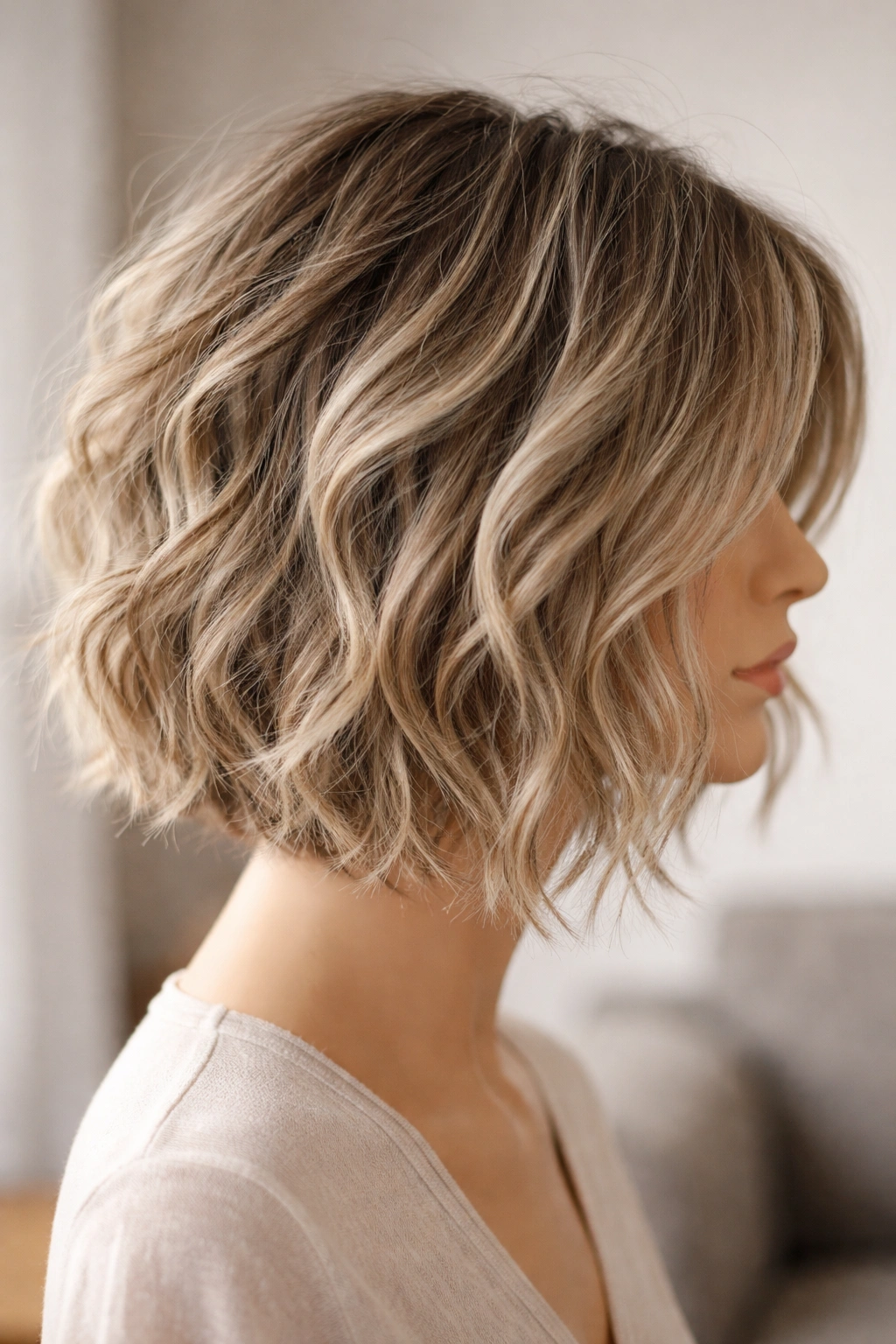
A deliberately undone, beach-waves aesthetic appeals to women over 50 who want their hair to look intentionally casual rather than carefully styled. This cut is slightly shorter and choppier than a blended lob, with distinct texture throughout that naturally reads as beautifully disheveled. The styling goal is achieved through texture alone — your hair should look great with a texturizing spray and your fingers, no brush needed.
The Styling Philosophy
Beach waves bobs are designed to look great without effort, which paradoxically means the cut itself needs to be very deliberately designed by a skilled stylist. The choppy layers need to work in concert with your natural hair texture rather than fighting against it. If your hair is naturally straight, this cut may feel like it requires more styling effort than advertised.
Perfect Pairings
- Works beautifully with sun-kissed color or dimensional balayage — the color movement echoes the texture movement
- Complements a casual, effortless personal style perfectly
- Great for active lifestyles where perfectly groomed hair feels out of sync with your day
- Ideal if you live in a humid or damp climate where waves emerge naturally
Honest note: Despite the “effortless” aesthetic, this cut does require a styling product and a few minutes of piece-definition with your fingers to look intentional rather than slept-on. But it’s more forgiving than most cuts if you skip a day.
6. Graduated Wavy Bob
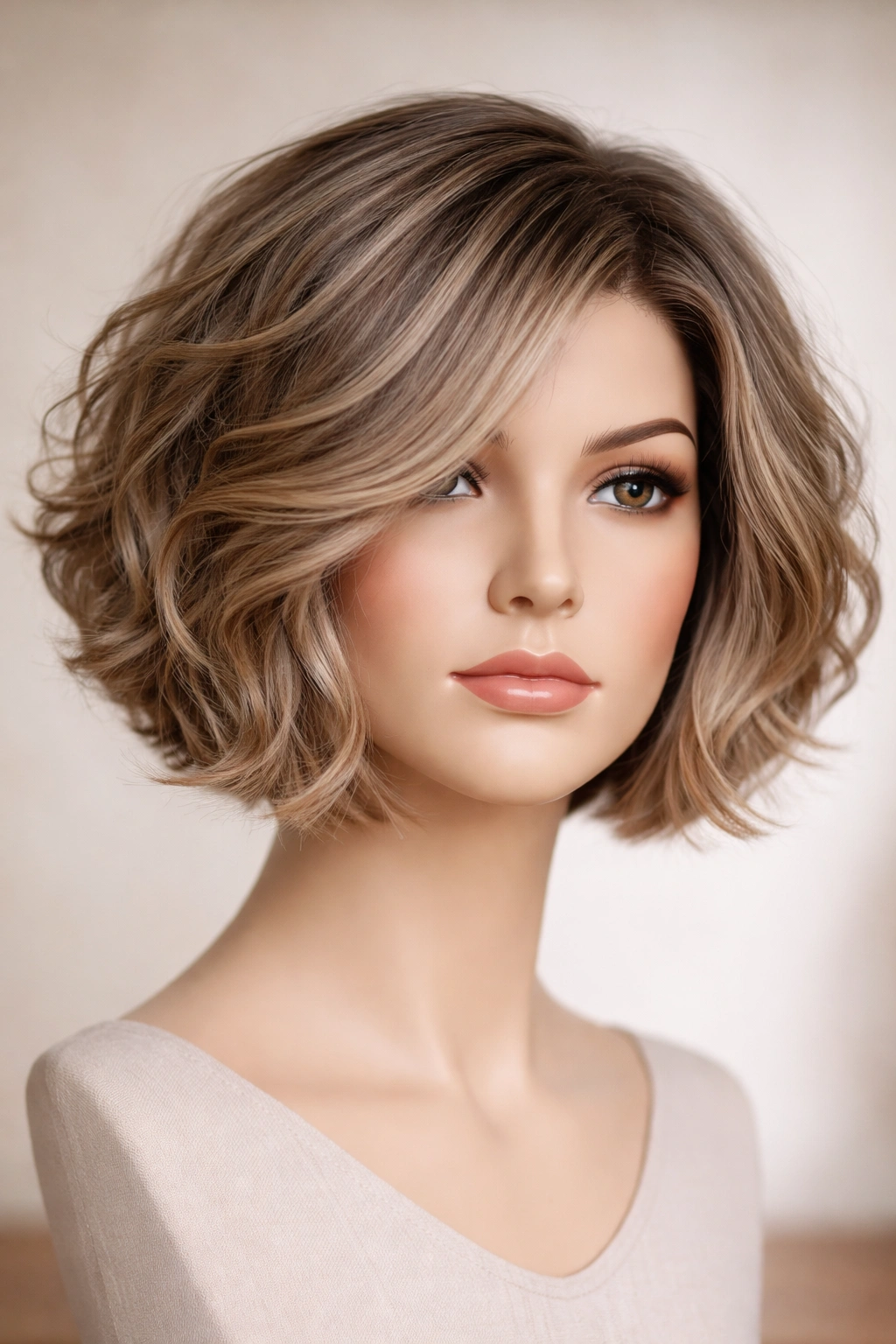
A graduated bob is shorter in the back and longer toward the front, creating an automatic forward-movement visual that suits mature faces incredibly well. When waves are layered into this graduated shape, the result is movement that falls naturally forward and frames the face, which is precisely what most women over 50 want. This cut has been refined over decades and remains flattering for good reason.
The Architecture of Graduation
The back needs to be significantly shorter — typically at the nape or just touching the collar — while the longest pieces at the front should fall to the chin or jaw. This isn’t just an aesthetic choice; it’s structural. The weight naturally pulls forward, the shorter back adds lift and movement, and the overall silhouette becomes more flattering without seeming overly styled. Layers throughout the graduated shape create waves instead of the cut feeling stiff or helmet-like.
Face-Framing Advantages
- The forward fall automatically frames cheekbones and jawline, making this cut inherently face-flattering
- Creates the illusion of a lifted jawline and longer neck (short back = immediate lift at the base of the skull)
- Works beautifully for women with fuller faces or softer jawlines because the graduated shape is inherently slimming
- The face-framing front pieces can be customized to your specific face shape and proportions
Styling reality: A graduated wavy bob does require blow-drying and styling product to maintain its shape; if you’re hoping for a wash-and-go cut, this requires more effort than some alternatives.
7. Feathered Crown Bob
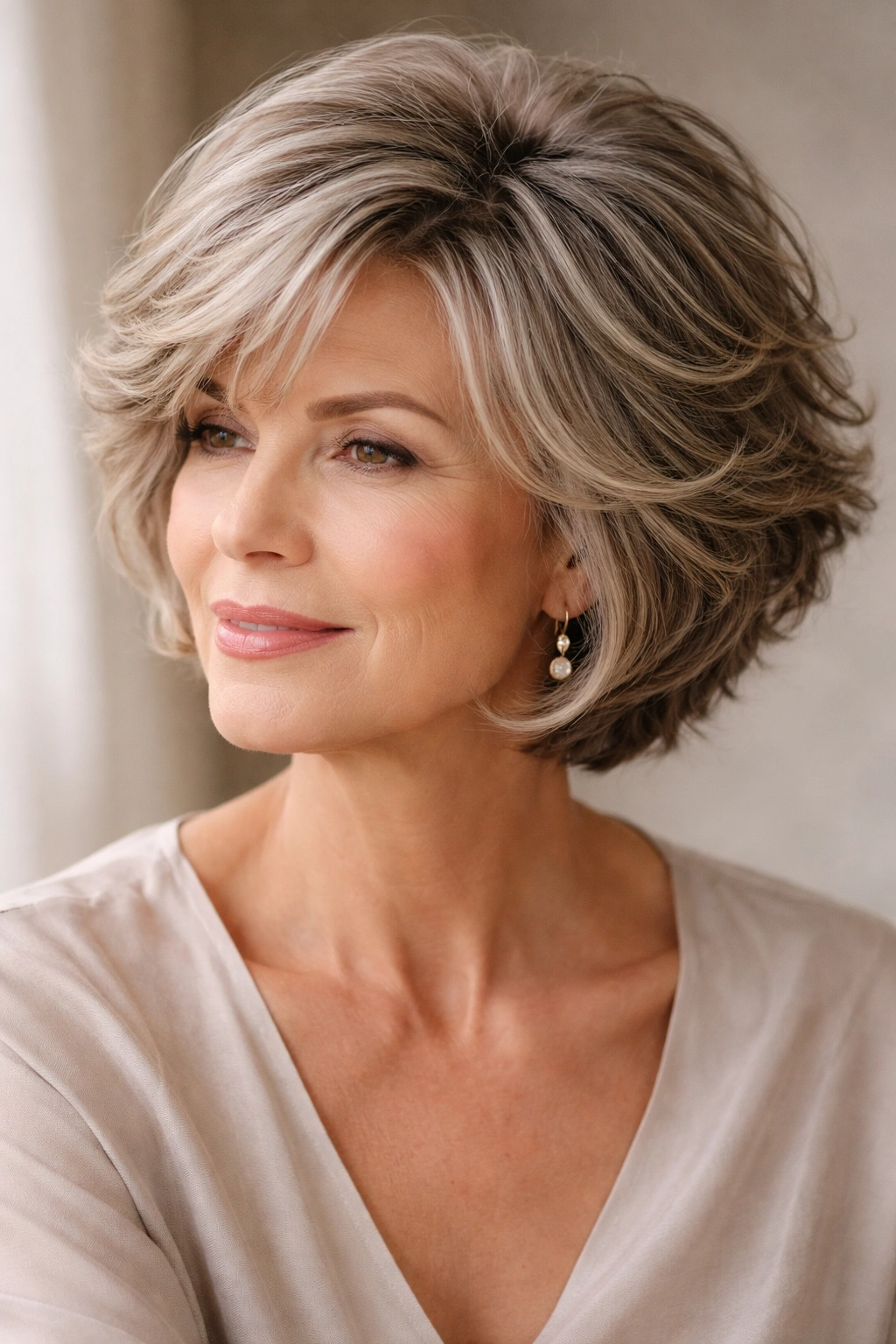
A feathered crown bob builds volume at the crown and top of the head through strategic layering that creates texture-based lift rather than relying on a permanent wave or aggressive styling. For women whose hair has thinned naturally with age, this is a game-changer — the cut itself creates the illusion of density and volume that styling alone can’t achieve. Feathering is a technique where layers are cut at angles that create distinct texture and separation, especially visible when styled with a texturizing product.
Crown Placement Matters
Layering is heaviest at the crown and gradually transitions to less layering toward the nape. This creates natural lift where you need it most and weight at the base for balance. The feathering technique means each piece of hair is visible as distinct texture rather than blending together, which amplifies the volume effect even with fine or thinning hair.
Who Benefits Most
- Anyone with fine, thin, or thinning hair absolutely transforms with this approach
- Women who’ve experienced age-related hair loss or thinning regain visible fullness through texture
- Works beautifully with short, pixie-adjacent lengths or longer bobs with heavy feathering
- Complements graying hair because the texture catch light and create dimension
Maintenance consideration: Feathering requires regular trims (every 5-6 weeks) to maintain the defined layer texture; as it grows, the pieces blend together and lose the feathered definition.
8. Chin-Length Textured Waves
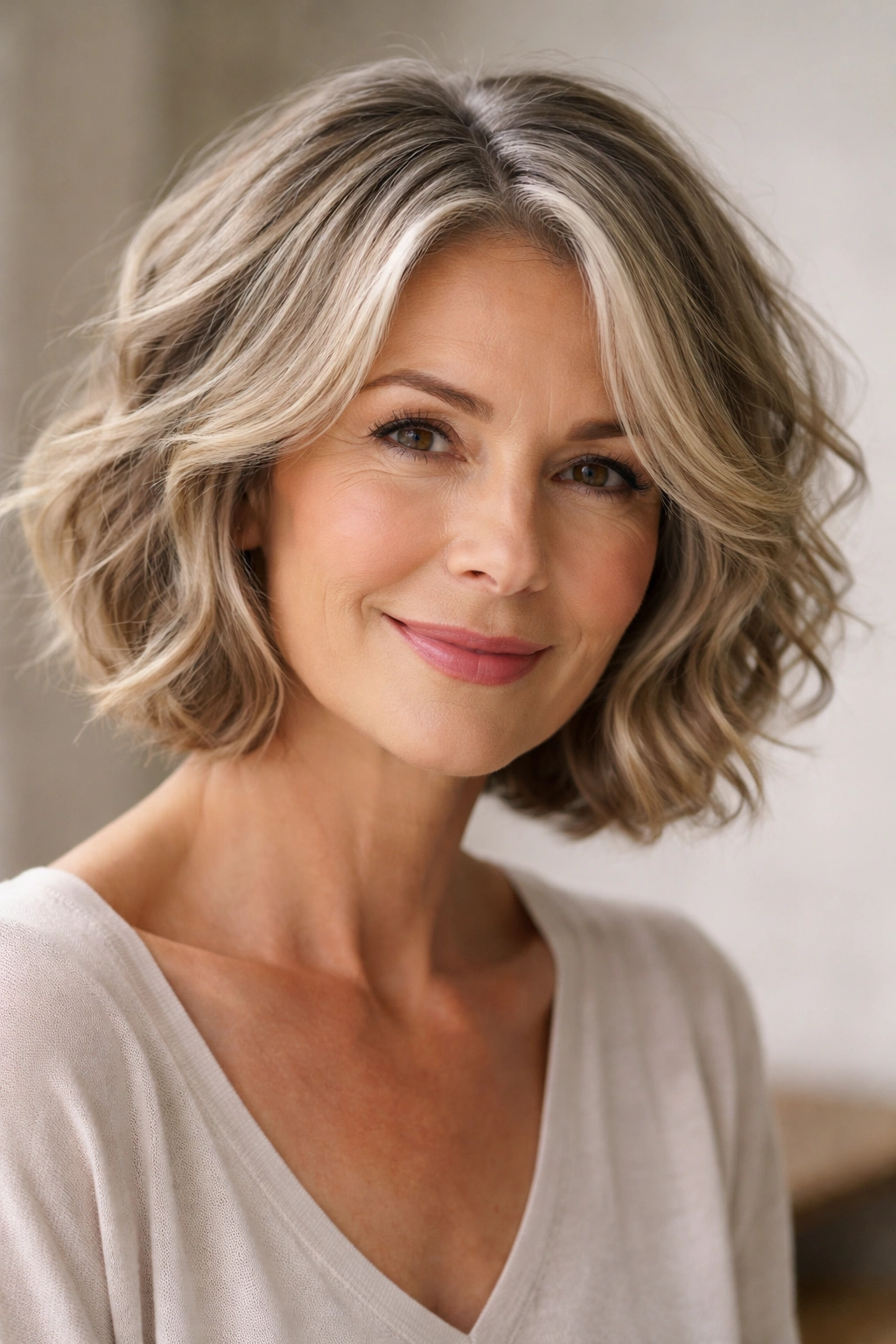
A chin-length cut is a sweet spot for many women over 50 — short enough to feel managed and modern, long enough to not feel too dramatic. When texture and waves are built into this length through smart layering, the result is sophisticated movement that frames the face perfectly without the cut needing to be the primary focal point of your appearance. This length is especially flattering because it sits right at the jawline, naturally drawing attention upward toward eyes and cheekbones.
Why This Length Specifically
Chin-length hair sits at eye level when you look in the mirror, making it feel closer and more present than longer lengths. It’s long enough to style multiple ways — down and wavy, half-up with clips, swept to one side — but short enough that styling takes minutes, not an extended routine. The texture prevents this length from feeling blunt or severe even if your face is angular or square.
Styling Versatility
- Looks polished blown out and wavy with a brush and heat styling tools
- Reads beautifully undone with just a texturizing spray and air-drying
- Can be pinned half-up for a pulled-together feeling when needed
- Works with or without bangs depending on your preference and face shape
- Transitions seamlessly from professional settings to casual without feeling out of place in either
Real talk: This length does require some weekly styling to maintain wave definition and prevent the cut from looking like it’s “growing out.” It’s not quite a wash-and-go, but it’s far simpler than longer lengths.
9. Side-Swept Wavy Bob
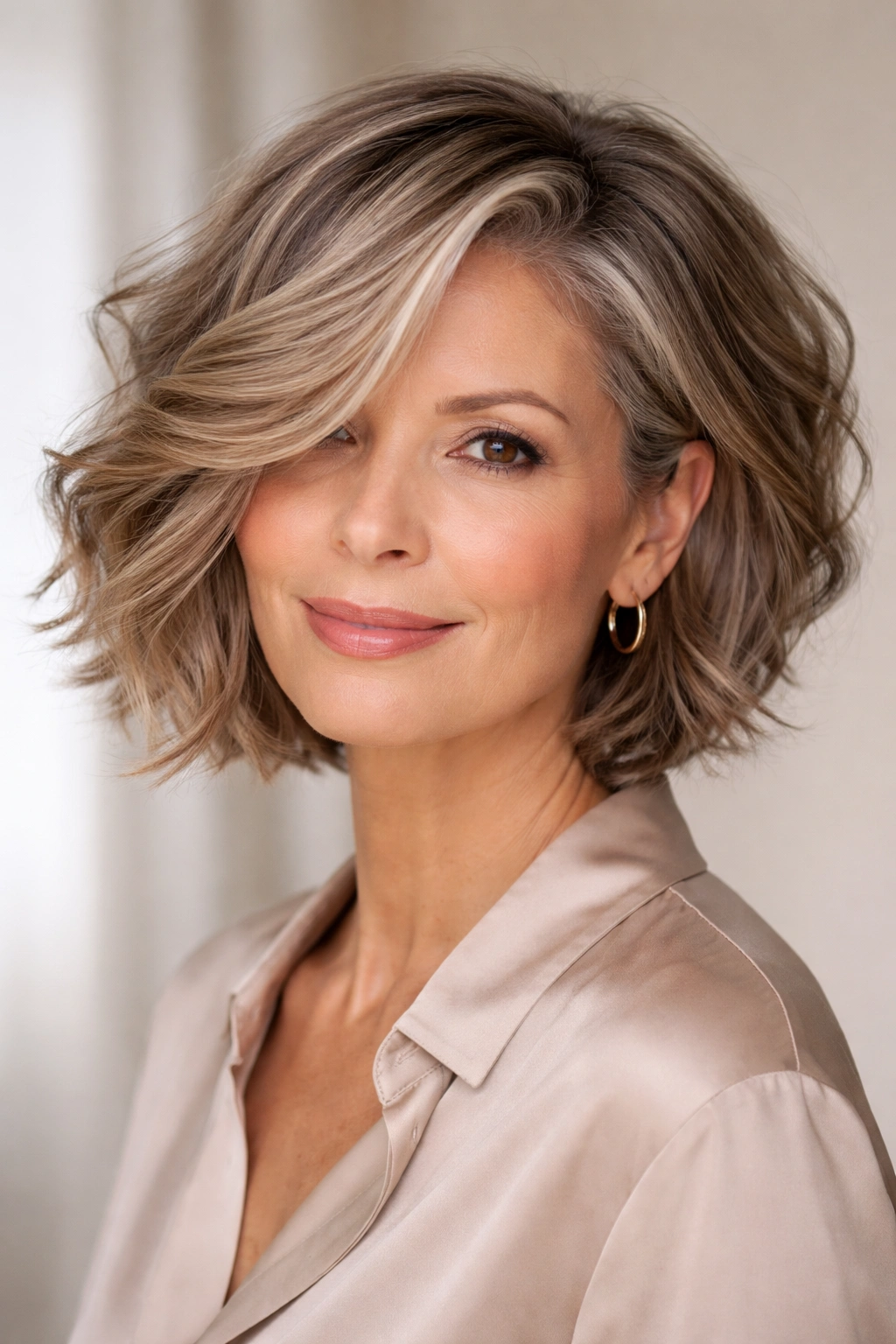
A side-swept bob uses asymmetry to create visual interest and flattery through strategic placement of length and layers. One side is longer than the other, and waves are cut into both sides but styled with more emphasis on the longer, swept side. This approach is incredibly flattering for mature faces because it creates visual movement and draws attention where you want it while moving focus away from areas you may feel less confident about.
The Psychology of Asymmetry
Asymmetry feels modern and intentional, which automatically reads as more youthful than symmetrical cuts. One side longer and swept across the forehead or framing one side of the face creates angles and movement that are inherently more flattering than a symmetrical cut. For women over 50, this sense of deliberate styling and contemporary choice matters psychologically — it signals that you’re confident and current, not defaulting to a “sensible” cut.
Customizing the Asymmetry
- The longer side can fall to the chin, jaw, or shoulder depending on your preference and face shape
- The shorter side can be quite a bit shorter (cheekbone length or shorter) for maximum drama, or only slightly shorter for subtle asymmetry
- Waves should be cut into both sides but styled with more texture and dimension on the longer side
- Works beautifully side-parted or center-parted depending on the day
Styling note: This cut looks best when deliberately styled and swept, not worn with both sides equal or unstyled. If you prefer a no-fuss aesthetic, a more symmetrical cut serves you better.
10. Romantic Soft Waves
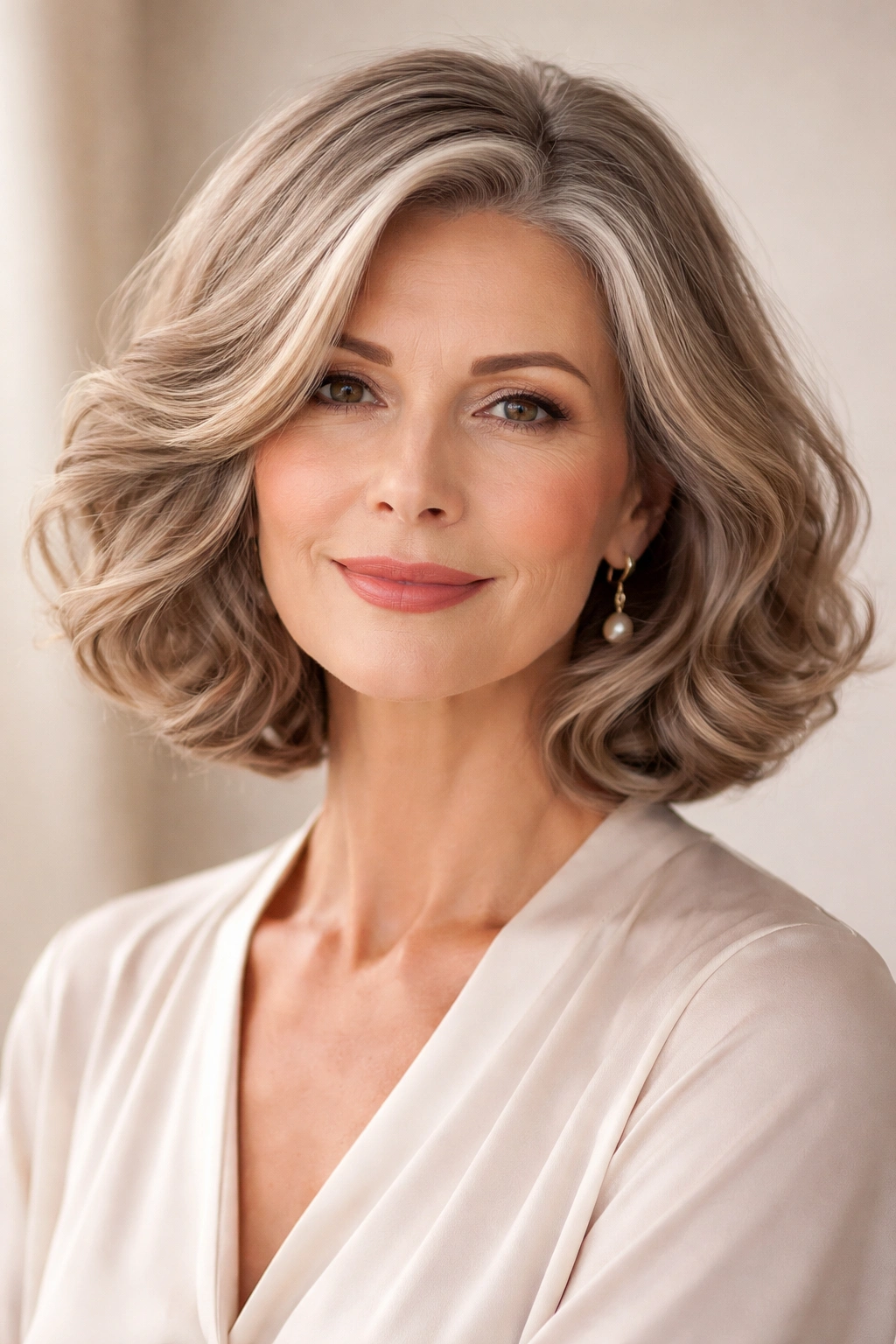
A romantic soft-wave bob embraces femininity and elegance through gentle waves, minimal sharp lines, and an overall softness in both cut and styling. This isn’t choppy or tousled; it’s refined and intentional, with waves that look like they’ve been lovingly styled rather than haphazardly broken up with texture. For women over 50 who want to feel polished and beautiful rather than trendy or edgy, this approach is ideal.
Achieving the Romantic Aesthetic
Soft waves are created through blending techniques, consistent layers that are less dramatic than choppy bobs, and styling with a larger round brush and heat tools. The waves should be loose and flowing, not tight curls or piece-y texture. A styling cream or light gel can enhance the waves without making them look wet or heavily product-dependent. The overall impression should be of effortless beauty rather than deliberate styling, even if the styling actually takes some time.
The Color-Cut Relationship
- This style pairs beautifully with soft, blended color — balayage, highlights, or dimensional color that echoes the wave movement
- Works especially well if you’re maintaining your natural color mixed with gray; the softness of the cut frames gray hair beautifully
- Can be the perfect canvas for a subtle color change that feels more significant than it actually is
Styling frequency: Romantic soft waves look best with professional styling (blow-out or salon visit) every 1-2 weeks, or committed daily styling with hot tools and product. It’s the opposite of low-maintenance.
11. Piece-y Textured Bob
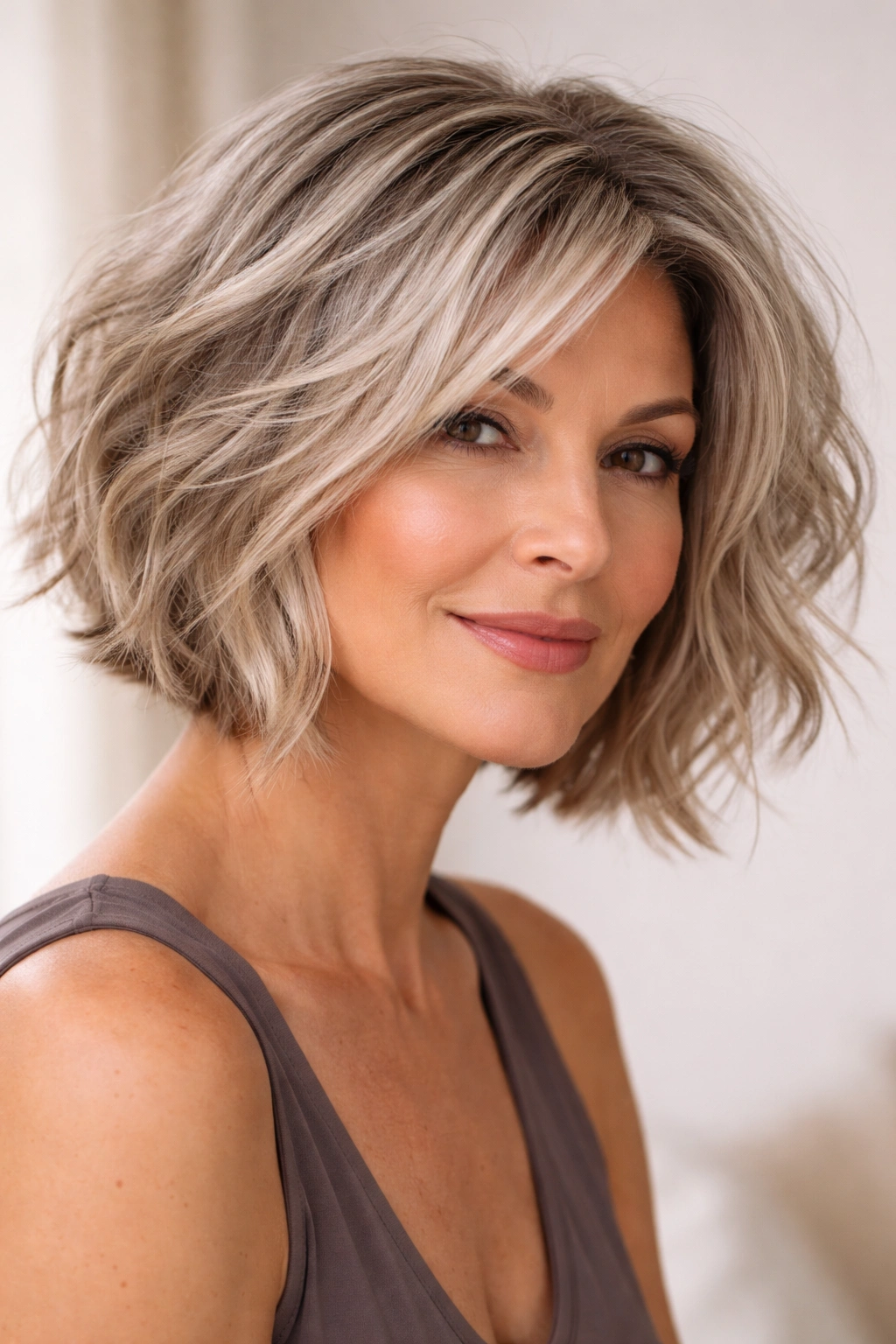
A piece-y textured bob uses distinct, visible layers to create defined texture where each piece of hair is individually visible rather than blending together. This is achieved through point-cutting or choppy layering techniques where the stylist intentionally creates separation between pieces. The result is a cut that looks intentionally modern and fashion-forward, with visible texture that photographs beautifully and reads as deliberately styled.
The Point-Cutting Technique
Point-cutting (also called slicing or point-chopping) is a technique where the stylist angles the scissors and cuts into the hair from above, creating choppy layers with visible lines between them. This is different from blending, which creates smooth transitions. For women over 50, the piece-y texture approach works beautifully because the visible layers create the illusion of volume and movement that blending can sometimes miss, especially in fine or thin hair.
Styling This Cut
- Requires texturizing spray, sea salt spray, or a light styling cream to encourage pieces to separate and stay defined
- Blow-drying with fingers rather than a brush helps maintain the piece-y texture
- Can be styled with or without heat — air-drying often reveals natural texture beautifully
- Looks great slightly undone and deliberately textured; perfection actually works against this cut’s aesthetic
Hair texture note: Piece-y bobs work best on naturally wavy or curly hair, or on straight hair with very fine texture that doesn’t require the weight of blending to hold shape.
12. Sleek Wave Bob with Volume
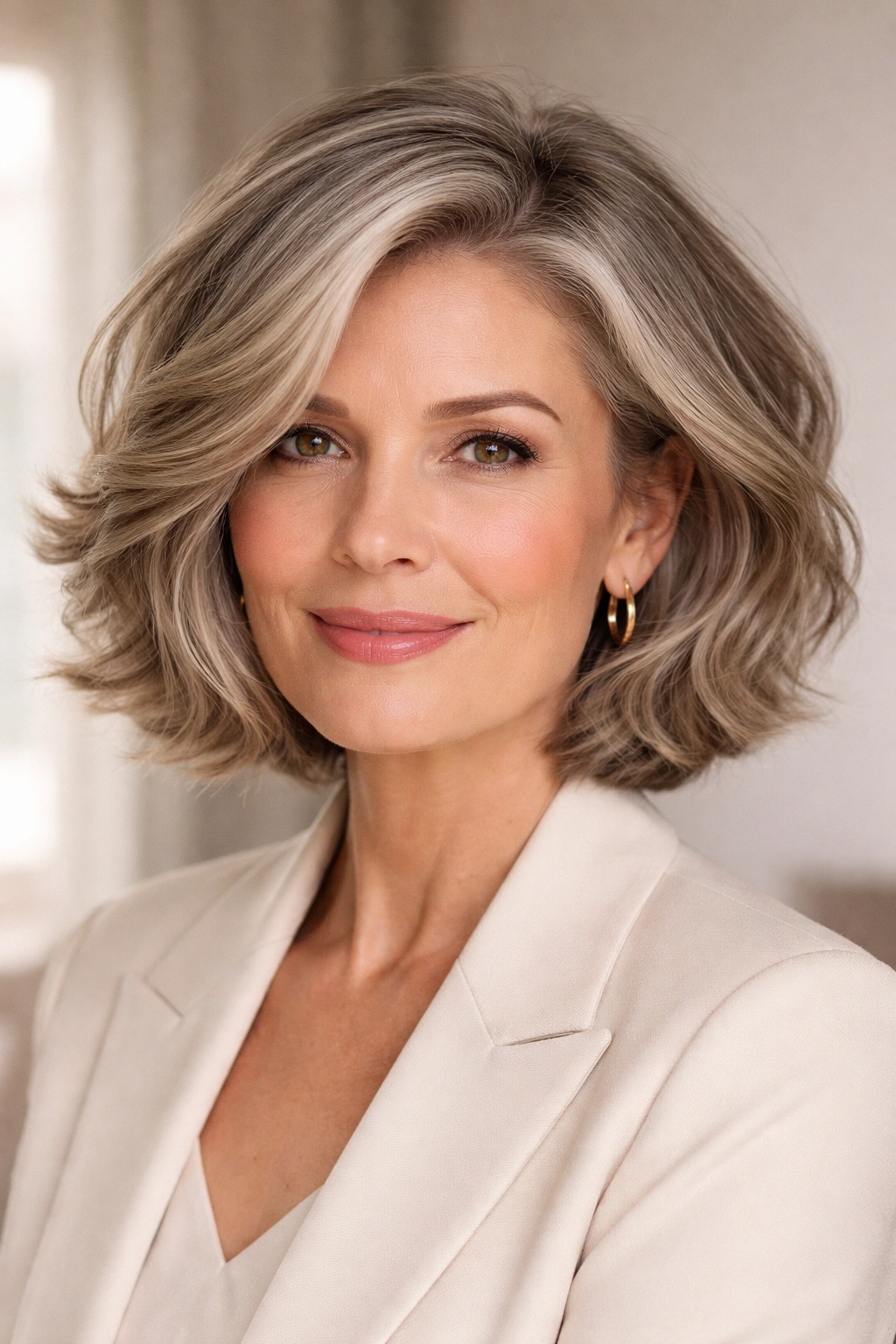
A sleek wave bob marries polish with movement through a cut that’s structured and clean but strategically layered to create waves and volume. Unlike soft romantic waves that prioritize femininity, this approach feels modern and sophisticated — the waves are present but the overall cut reads as intentional and refined. Styling is key; this bob looks best when clearly styled rather than haphazardly wavy.
The Structure-Texture Balance
The cut itself is relatively clean with less dramatic layering than choppy or piece-y bobs, but layers are placed specifically to create wave movement. Styling is where the magic happens — you blow-dry with a brush to create smooth waves that have structure and direction rather than loose, flowing waves. The result is a bob that feels polished enough for professional settings but textured enough to feel current and modern.
Best Use Scenarios
- Ideal for women who prefer a more corporate or professional aesthetic but want movement and modernity
- Works beautifully in business or formal settings; doesn’t read as casual or undone
- Pairs well with strong color — sleek waves showcase dimensional color and grays beautifully
- Excellent if you enjoy blow-drying and styling as part of your routine and don’t mind daily effort
Product dependency: This cut benefits significantly from volumizing products, wave-defining creams, and light hold styling sprays; it’s less forgiving if you prefer minimal product.
13. Modern Undercut Wavy Bob
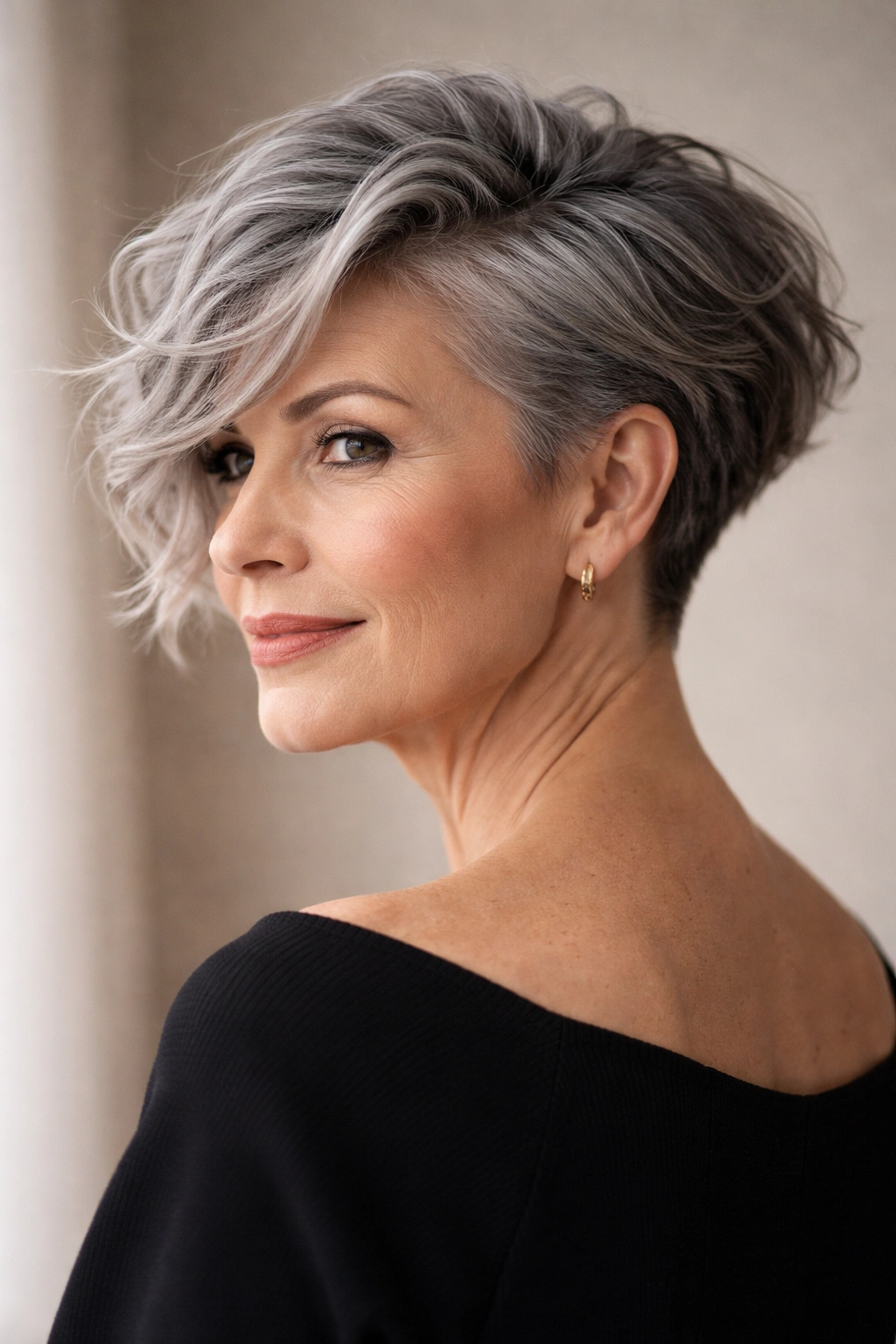
A modern undercut bob is an edgier, more fashion-forward choice where the underneath is significantly shorter than the top, creating dramatic contrast and movement. The top section is longer and layered with waves, while the underneath is clippered or cut very short, sometimes even showing the nape of the neck. When styled, the longer, wavy top falls over the shorter underneath, creating dimension and visual interest that reads unmistakably contemporary.
Who’s Brave Enough
This cut requires confidence and a clear styling commitment — it’s not subtle or blend-in-able. It’s a statement, which is precisely why it works so well for women over 50 who are beyond worrying about fitting in. The cut says you’re bold, intentional, and not interested in playing it safe. It’s especially striking when the undercut is revealed — glimpses of the short underneath when you move or pin the top back create a sophisticated surprise.
Styling and Personality
- Works beautifully with silver, platinum, or white hair; the undercut showcases gray hair as an intentional choice
- Can be subtly undercut (just enough shorter that it’s not immediately obvious) or dramatically undercut (very visibly short)
- Looks incredible with color work — undercut in one color, top in another, or undercut with shaved designs or patterns
- Requires confidence; if you’re worried people are looking, this cut will amplify that feeling
Maintenance reality: The undercut portion needs touchup trims every 3-4 weeks as it grows out; the longer top follows normal bob trim schedules of every 6 weeks.
How to Choose Your Wavy Bob
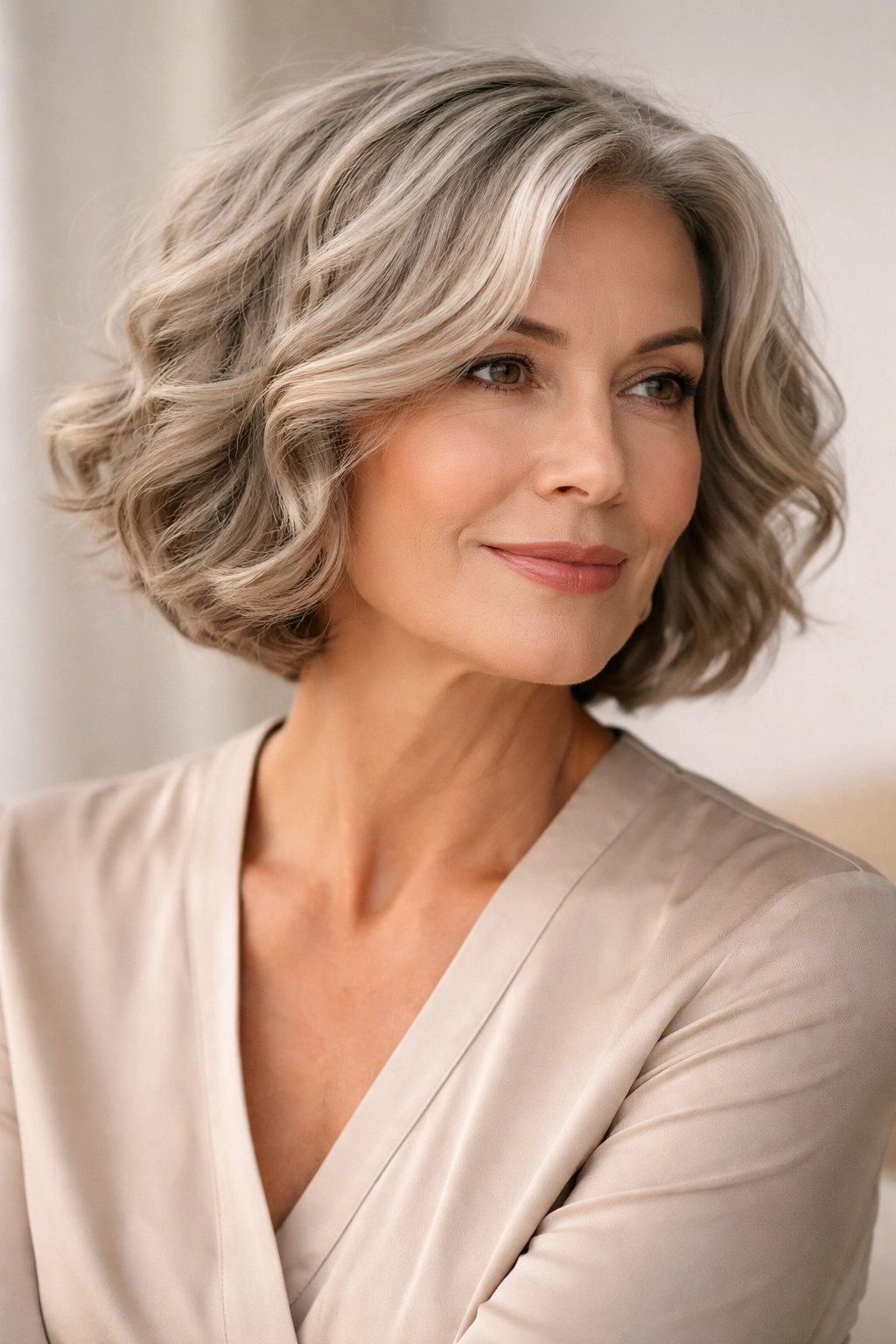
The right wavy bob isn’t determined by what looks good on Instagram or what your stylist suggests — it’s determined by your hair texture, face shape, lifestyle, and honest styling commitment. A gorgeous romantic soft-wave bob that requires blow-drying daily will frustrate you if you prefer wash-and-go styling. A high-maintenance piece-y textured bob will disappoint if you’re not comfortable with styling products and daily styling.
Start by assessing your natural hair texture honestly. Does your hair naturally fall into waves or hold curl? Is it fine, medium, or thick? Does it tend toward frizz or lay smooth? Your natural texture determines which cuts will work with your hair rather than against it. A cut that fights your hair’s natural tendencies will feel like a constant battle.
Next, consider your face shape and what you want to emphasize. A longer, more angular face might benefit from a textured shag or graduated bob that adds width. A rounder face often looks best with a chin-length or slightly longer bob with face-framing layers. An angular or square face can pull off edgier cuts like undercuts or dramatic side-sweeps. Bring reference photos to your stylist showing not just the haircut but the face shape you’re referencing — this matters more than the specific cut.
Be honest about styling reality. How much time are you genuinely willing to spend on hair daily or weekly? If the answer is five minutes, choose a textured shag, feathered crown, or beach-waves bob and skip romantic soft waves. If you enjoy blow-drying and styling, you have more options. If you’re willing to visit your stylist every 1-2 weeks for professional styling, dramatically different cuts become possible.
Styling Tips That Actually Work
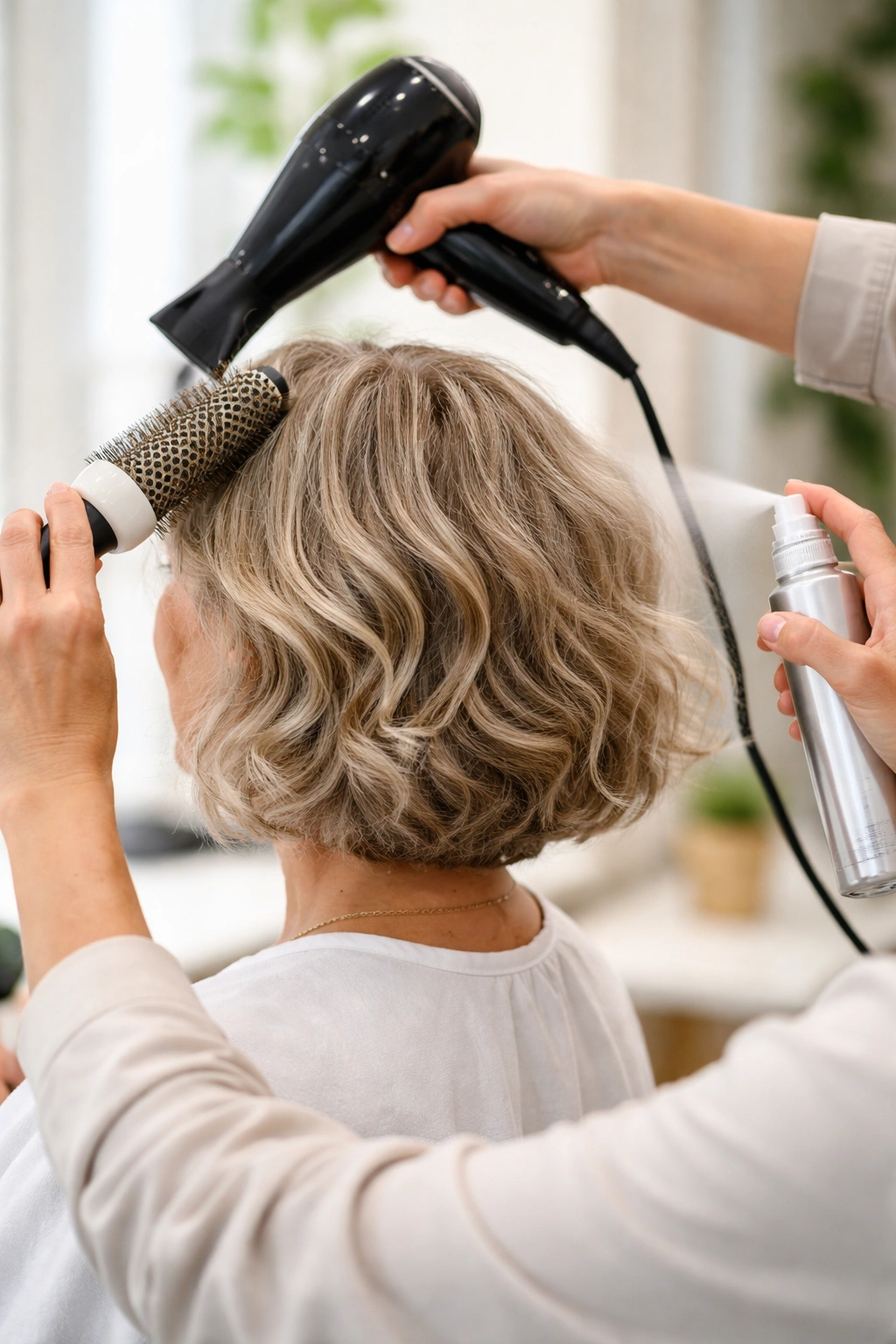
The difference between a mediocre wavy bob and a gorgeous one is almost always in the styling, not the cut itself. A perfectly executed cut will look flat and dated without proper styling, while a good cut elevated through thoughtful styling reads as intentional and modern.
Invest in the right products for your hair type and the waves you’re creating. Fine hair needs volumizing products that don’t weigh waves down. Thick hair benefits from creams and heavier texture products. Curly or very wavy hair often needs curl-defining creams or gels. Straighter hair might need texture sprays and lightweight wave-defining products. The stylist who cuts your hair should recommend products specifically for your hair and the cut — ask them what they use on your hair in the salon.
Master the blow-dry. Most wavy bobs look best with at least some blow-drying, even if you’re aiming for an undone aesthetic. A round brush creates waves, finger-styling with a blow dryer encourages texture, and the warmth of the dryer helps the waves set. You don’t need to be a pro at blow-drying — basic technique (sections, medium heat, brush movement) creates professional results surprisingly quickly.
Use texturizing sprays and salt sprays strategically. These products create grip and definition in waves, making them more visible and defined. Apply them to damp hair before blow-drying for best results. A texturizing spray applied to the roots before styling creates volume at the crown. A sea salt spray applied to the ends encourages piece-y separation and wave definition. These tools are game-changers for women over 50 because they create the illusion of density and youthfulness through texture.
Refresh waves between wash days with a dry shampoo or texturizing spray. Wavy bobs look great for 2-3 days after styling, with texture actually becoming more defined as product builds up slightly. On day two or three, spray roots with dry shampoo for volume, spritz ends with texturizing spray, and finger-style or use a heat tool to reshape. This extends the life of your style and means you’re not styling from scratch daily.
Maintenance and Upkeep
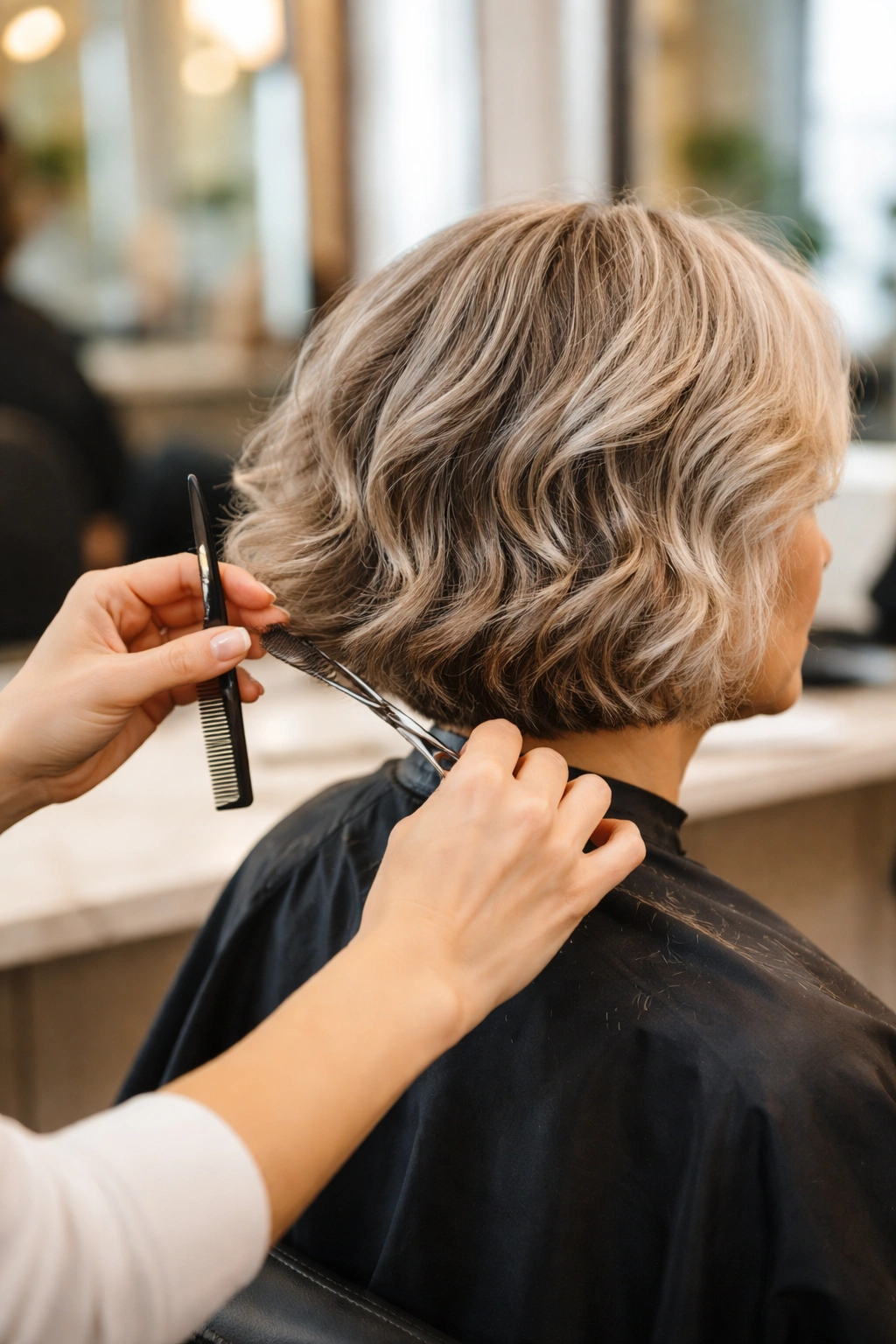
A wavy bob requires more frequent trims than longer hair because the cut itself is the defining element of the style. A cut that’s grown out an inch can look completely different — and often less flattering. Plan for trims every 4-6 weeks depending on how quickly your hair grows and how defined your cut is. Choppy, textured, and piece-y bobs need more frequent trims (every 4-5 weeks) because the layered texture becomes less defined as it grows. Blended or more subtle waves can stretch to 6-8 weeks between trims.
Communicate clearly with your stylist about maintenance between appointments. Take photos of your cut when it looks its best (usually right after a professional styling) and show your stylist that reference at your next appointment, explaining that you want your hair to look exactly like that. Many stylists have different approaches to maintenance trims, and clear communication prevents surprise changes.
Consider your color strategy alongside your cut. A wavy bob is the perfect canvas for dimensional color — balayage, highlights, or shadowing that echoes the movement of the waves. Even if you’re maintaining your natural color, strategic placement of gray (if you have it) or subtle highlights can make your cut feel more intentional and modern. Dimension in color makes texture in the cut more visible and defined.
Final Thoughts
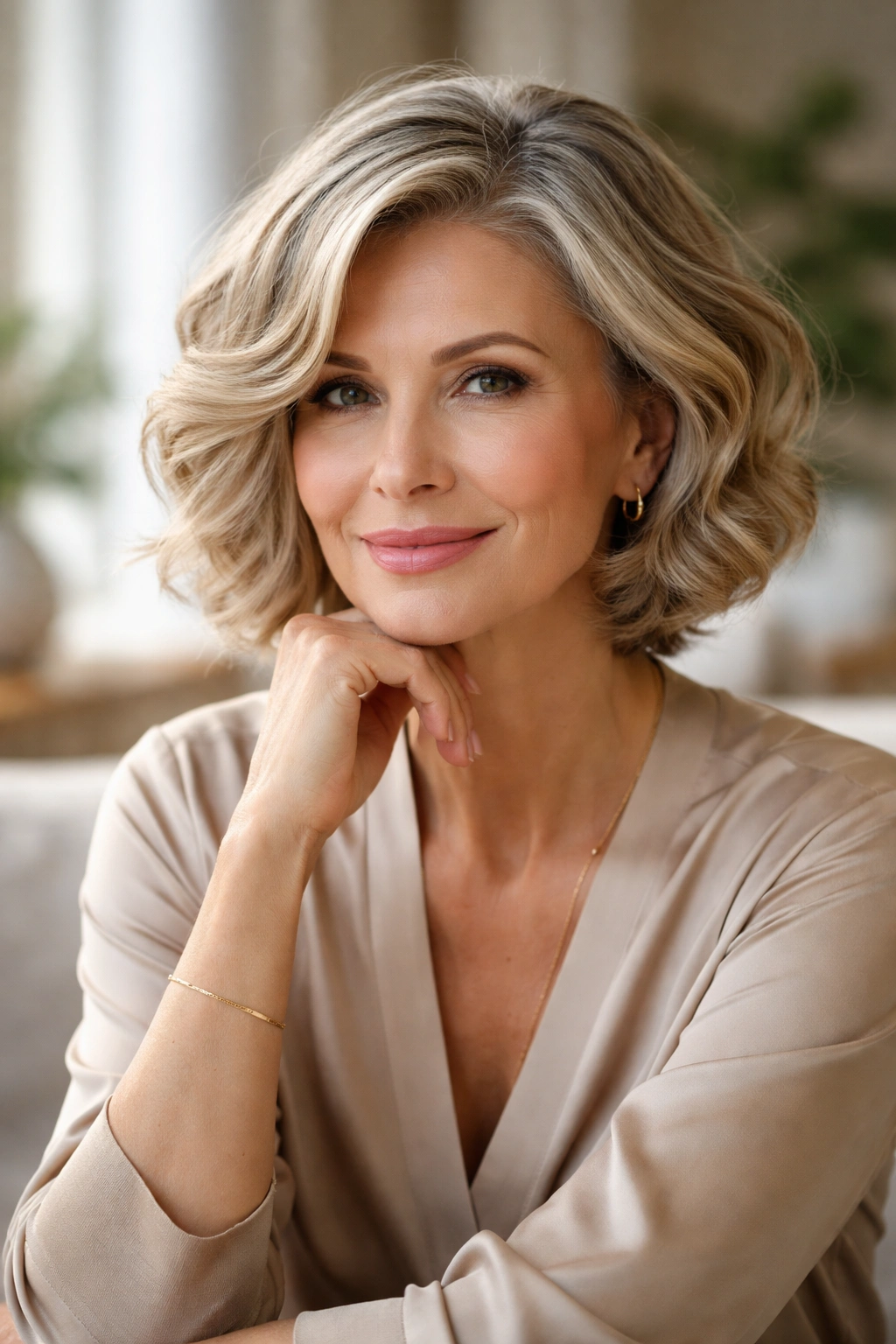
A wavy bob after 50 is far more than a practical choice — it’s a declaration that you’re interested in looking current, feeling confident, and investing in a cut that works with your lifestyle and aesthetic. The right wavy bob makes you feel polished without requiring hours of styling, creates volume and movement that flatters mature faces, and photographs beautifully in every light.
The key to success is choosing a style that aligns with your hair texture, styling commitment, face shape, and personal aesthetic. A cut chosen from Instagram or a magazine that doesn’t match your reality will frustrate you within weeks. A cut chosen specifically for you, cut by a stylist who understands mature hair and the subtleties of layering and wave placement, becomes something you actually love maintaining.
Take time finding the right stylist — someone who specializes in mature hair and understands that a wavy bob requires specific knowledge about layering, blending, texturizing, and how waves behave in different hair types. Bring reference photos, be honest about your styling reality, and ask questions about maintenance and styling recommendations. A great stylist becomes a partner in your beauty routine, not just someone who cuts your hair.