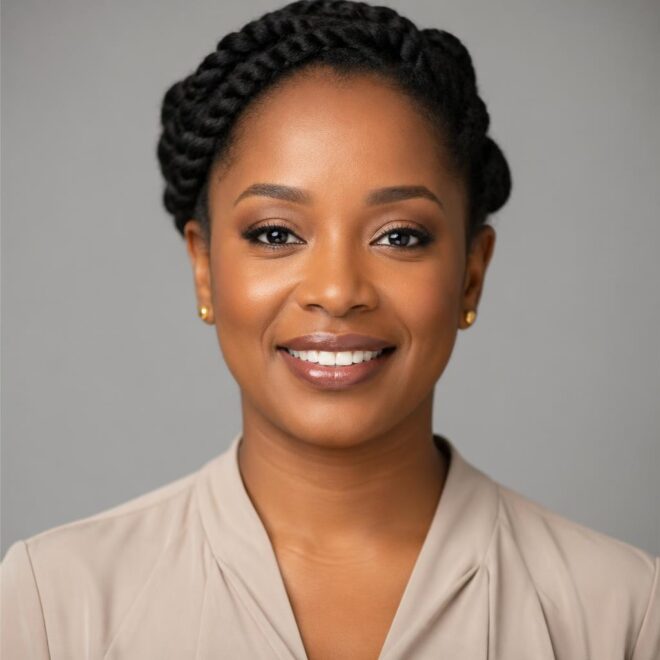


Wispy bangs have this magical way of softening the face while working with thick, wavy texture instead of fighting against it. If you’ve got waves and volume naturally, you know the struggle of finding bangs that don’t look bulky or flatten your waves into submission. Here’s the thing: wispy bangs are specifically cut to breathe and move, which means they won’t weigh down your hair or create a harsh line across your forehead that fights your natural texture. They taper from longer pieces on the sides to shorter strands in the center, giving you the benefit of face-framing without the blunt, heavy look that thick bangs demand.
The real magic happens when you pair wispy bangs with the right length and layers throughout your whole style. Thick, wavy hair has plenty of body to carry bangs beautifully—you’ve just got to work with your texture, not against it. The challenge most people face is finding specific styles that actually show how wispy bangs can work with different lengths, textures, and styling preferences. Some styles lean into your natural waves, while others give you the flexibility to straighten them when you want something sleeker. Whether you’re embracing your waves or taming them with tools, there’s a wispy-bang style that’ll make you feel like you actually have your hair figured out.
What makes these styles work is that wispy bangs create instant dimension and movement—they’re not trying to be a bold statement, they’re trying to be flattering. They work especially well for thick, wavy hair because the varied lengths mean some strands sit perfectly on your forehead while others catch the light and add softness. If you’ve been nervous about committing to bangs, wispy ones are genuinely the gentlest way to test the waters. And if you’ve tried bangs before and they disappointed you, these styles might change your mind entirely.
1. Shoulder-Length Waves With Wispy Bangs and Subtle Layers
This is the most versatile foundation for thick, wavy hair. The bangs graze just above your eyebrows, feathering out naturally, while your hair falls to roughly shoulder length with gentle, face-framing layers throughout. What makes this work is the simplicity—you’re not fighting against your natural texture; you’re highlighting it. The layers give your waves permission to move freely without creating that dense, bottom-heavy look that thick hair can fall into without proper structure.
Why This Style Stands Out
The shoulder length hits at the perfect sweet spot where waves look intentional without requiring a ton of styling effort. Your waves will have room to develop their natural pattern, and the wispy bangs catch light in a way that makes the whole style look dimensional. The layers throughout prevent the bulk from settling at the ends, which is essential when you’re working with thick hair. You can wear this straight, wavy, or curly—the structure adapts.
How to Style and Maintain It
- Wash with a hydrating shampoo (thick waves need moisture, not stripping), then apply leave-in conditioner while hair is still soaking wet
- Scrunch your waves by hand or use a curl-defining cream if you want more defined texture
- For wispy bangs specifically, blow-dry them straight if you want that sleek softness, or let them air-dry for a more undone vibe
- Get a trim every 6-8 weeks to keep the layers crisp and the bangs from getting too heavy as they grow
- Sleep on a silk pillowcase to reduce frizz and preserve waves overnight
Pro tip: Use a lightweight finishing spray on your bangs alone after styling—they’re shorter and drier than the rest of your hair, so they frizz first.
2. Long Wavy Hair With Wispy Bangs and Minimal Layers
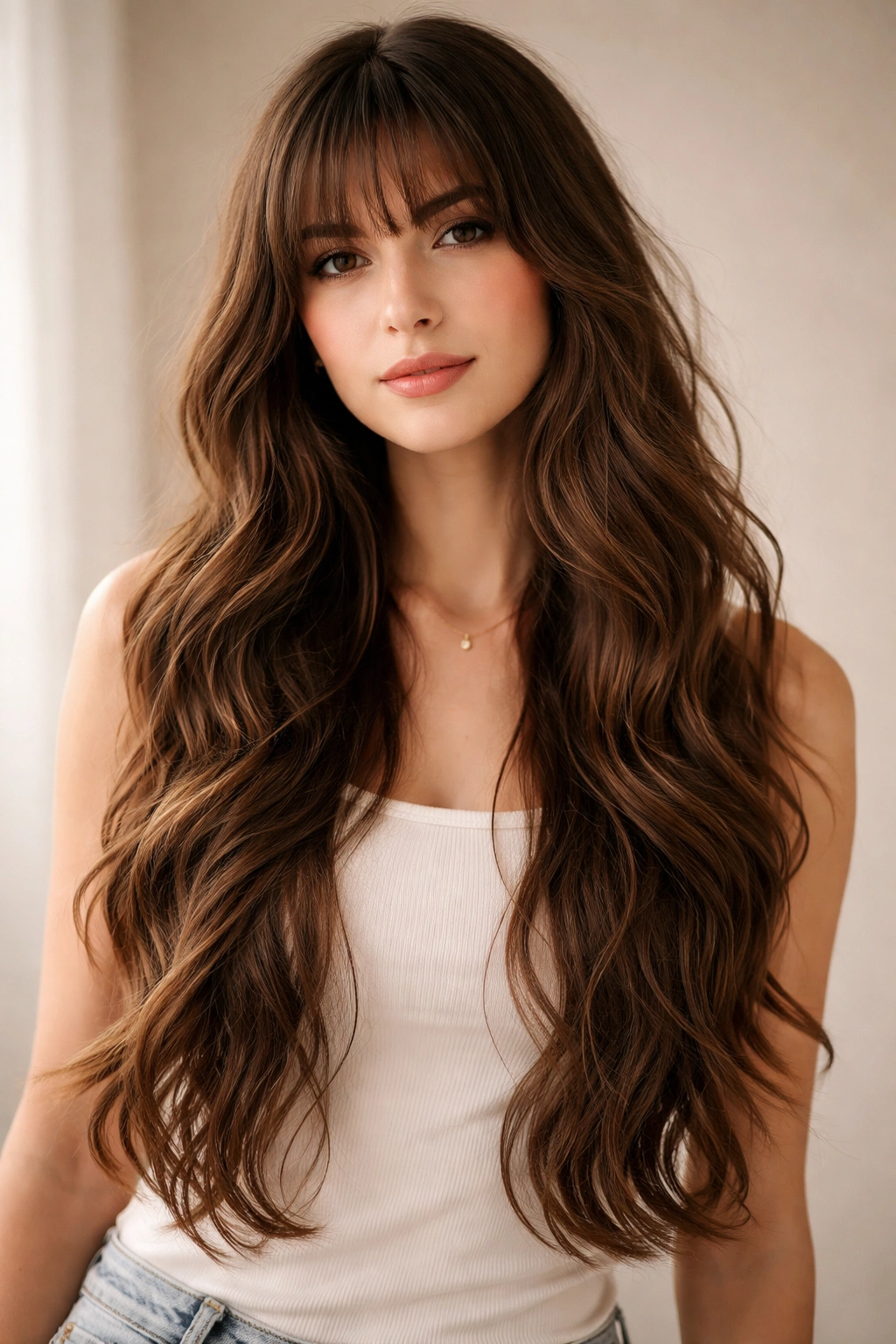
If you love length but want the softening effect of bangs, this style keeps most of your hair long and thick while adding wispy bangs that stop at your eyebrows. Minimal layering means you’re preserving as much length as possible—just strategic pieces around the face and maybe a subtle internal layer or two to reduce bulk without sacrificing the drama of long hair. This works beautifully if you have genuinely thick hair that can handle the weight; thinner textures might struggle.
What Makes This Different
Long hair with thick texture can look heavy or one-note without something to break it up—wispy bangs solve that problem instantly. They create a focal point at your face without requiring you to cut away the length you love. The minimal layering approach respects the thickness of your hair while still allowing movement. You get volume and presence from the length while the bangs add sophistication and softness.
Styling Tips for This Length
- Braids and twists are your friend—they showcase your length while keeping everything tidy
- Side-parting works better than center parting for this style, as it creates asymmetry that flatters most faces
- Blow-dry your bangs smooth while the rest air-dries wavy, or curl everything together for a uniform look
- Use a texturizing spray or sea salt spray on the ends to prevent the hair from looking too solid and heavy
- Deep conditioning treatments are non-negotiable—long thick hair needs serious hydration
Worth knowing: This style shows off your hair’s health and shine more than shorter cuts, so invest in quality products and regular trims at the very ends.
3. Curly Waves With Wispy Bangs and Lots of Texture
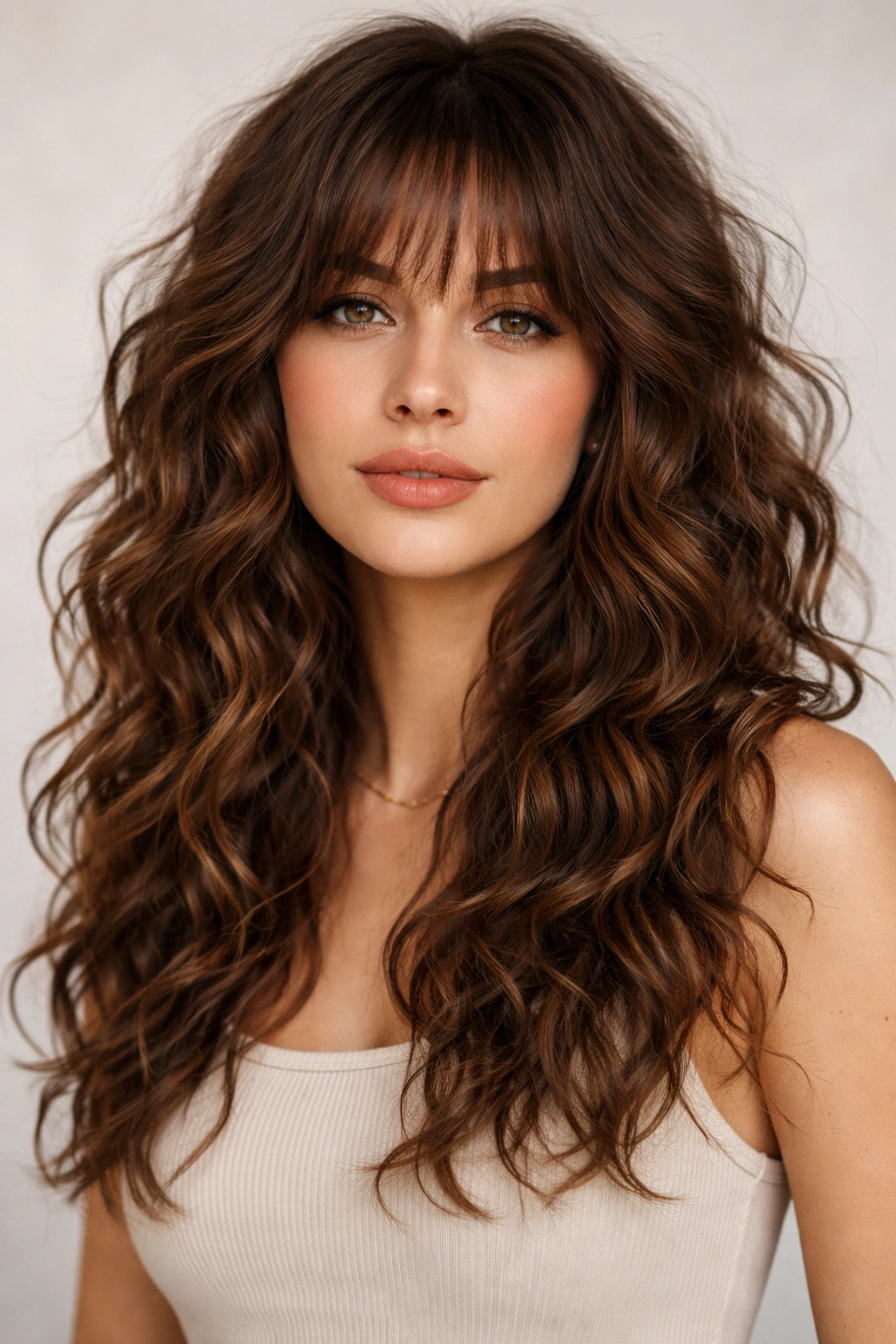
For people whose thick wavy hair actually leans toward coil or curl, wispy bangs become a way to define your curls while creating a softer frame. This style embraces your texture completely—you’re not trying to smooth waves into submission; you’re celebrating spirals and curls. The bangs stay wispy because individual curls catch at different lengths, creating that natural, feathered effect without the need for precision cutting. Lots of layers throughout keep curls from clustering into heavy, dense clumps.
Why Curly Hair Needs This Approach
Thick, curly hair can look massive without strategic cutting. Layers are essential because they allow curls to stack and separate rather than bunch into one solid shape. Wispy bangs work because curls naturally create the varied length and movement you’d be fighting to achieve with straight bangs. Each curl dries at a slightly different angle, giving you that effortlessly wispy effect. This is genuinely one of the easiest bang styles to maintain if your hair is naturally curly.
Maintaining Curls and Bangs Together
- Cut your bangs at a slightly longer length than you think you want—they’ll shrink up as the curl sets
- Use a gel or curl cream on damp hair, then diffuse-dry or air-dry depending on your texture
- Apply product to your bangs the same way as the rest of your hair—don’t treat them separately or they’ll look disconnected
- Refresh curls between washes with a spray bottle and a light curl cream, or try a pineapple method (loose, high ponytail) to keep everything intact
- Get trims every 5-6 weeks because curly hair grows different at different layers
Insider note: Many curl stylists will ask you to bring a photo of the specific bang texture you want, because describing wispy bangs to someone who doesn’t cut curly hair often leads to disappointment.
4. Textured Lob With Wispy Bangs and Movement
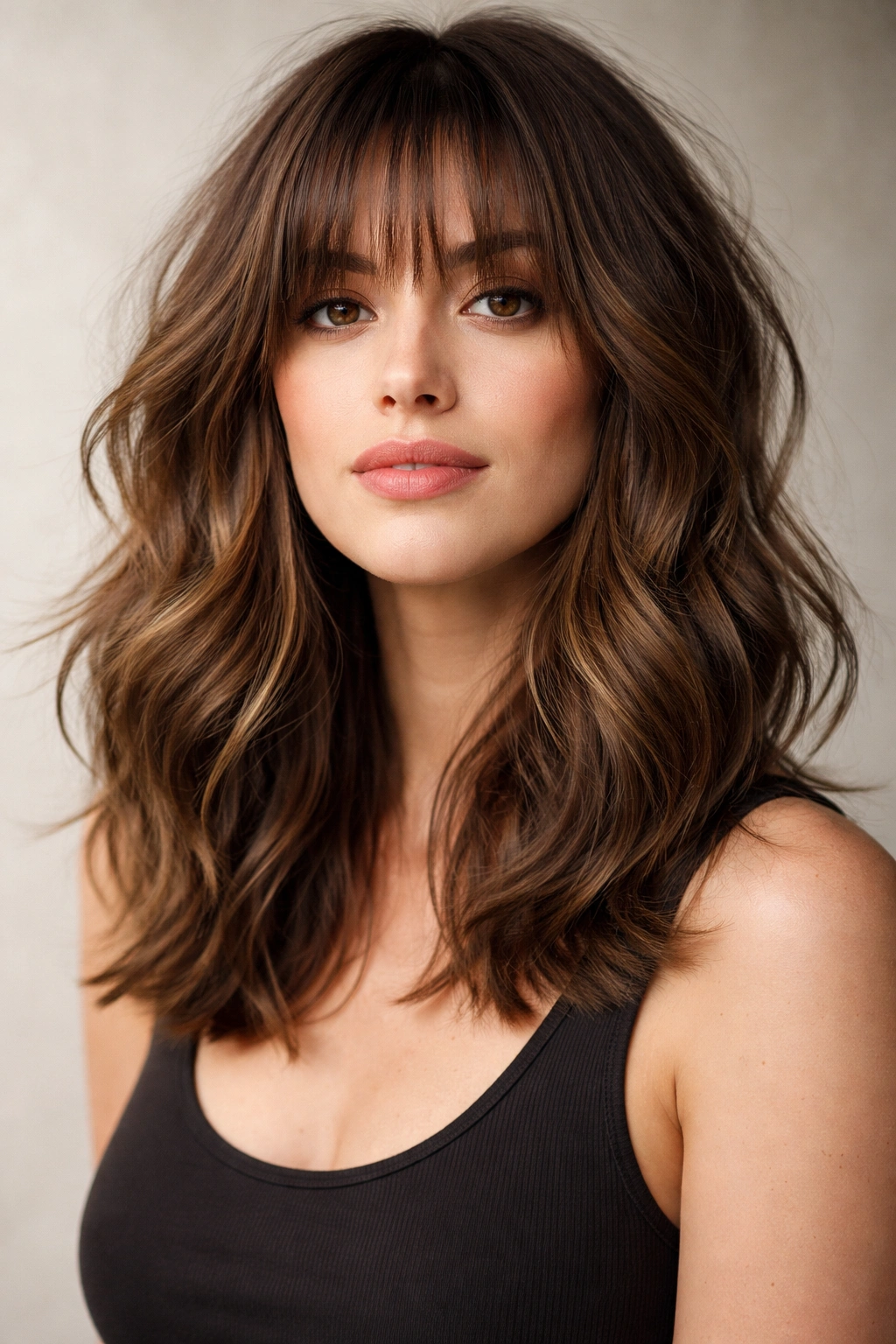
A lob (long bob) sits somewhere between shoulder-length and mid-back, and it’s perfect for thick, wavy hair when it’s cut with the right texture. This version has wispy bangs plus heavy layering throughout that creates multiple movement points. Your hair will have shorter pieces near your face and longer pieces toward the back, which means waves fall in different directions and catch light in completely different ways. It’s visually interesting and flatters almost every face shape.
What Makes a Textured Lob Work
The layers are the key difference between a lob that looks blunt and heavy and one that looks lived-in and dimensional. With thick hair, you can handle a lot of layering without creating a choppy or stringy look. The wispy bangs introduce softness at the top while the layers below ensure the rest of your hair has room to breathe. This style also gives you options—you can part it different ways and the texture works with you every time.
Styling a Textured Lob
- Blow-dry your bangs smooth if you want them soft, or let them dry naturally with the rest of your wavy texture
- Use a round brush to create soft waves if you’re blow-drying the whole style, or apply a wave-enhancing product to damp hair and air-dry
- This length is perfect for half-up styles, braids, and clips—you have enough hair to create dimension while still showing off your bangs
- Texturizing spray is your best friend; it makes the layers pop and reduces the weight
- Trim every 6-8 weeks to maintain the shape as your hair grows
Pro tip: Ask your stylist for longer wispy bangs with a textured lob—the additional length means the bangs don’t get buried when you put your hair up or to the side.
5. Blunt Ends With Softened Wispy Bangs
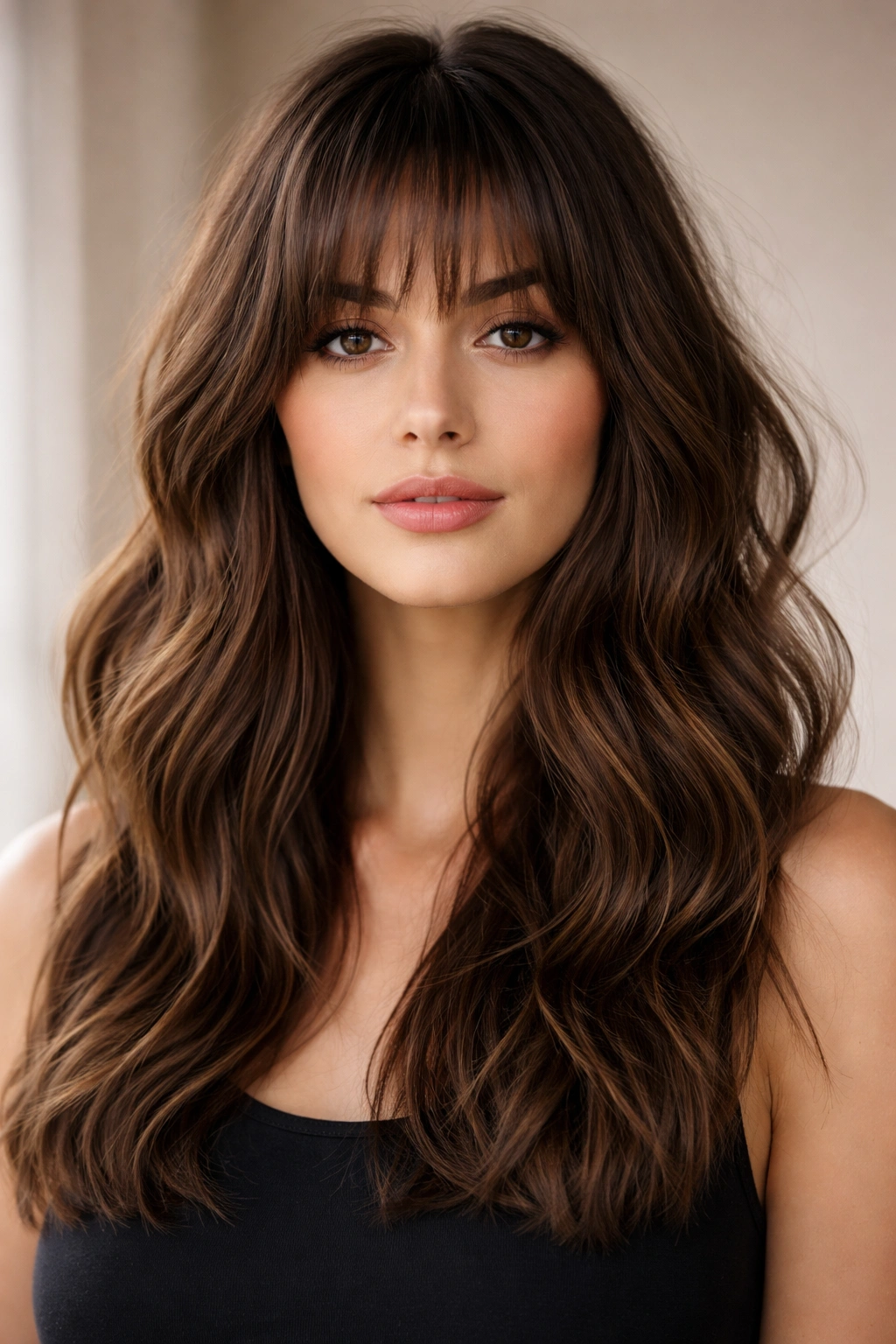
If you want the drama of thicker, denser hair but you’re worried wispy bangs will look too delicate, try pairing them with blunt ends throughout. The blunt line at the bottom grounds the whole style and prevents the wispy bangs from looking fragile or wispy to the point of disappearing. You’re creating intentional contrast—crisp, defined ends with soft, feathered bangs. Minimal layers keep the weight at the ends, which works beautifully for thick hair because it actually uses your density rather than fighting it.
How Blunt Ends Change the Dynamic
Blunt cuts are bolder and more modern, but they can look harsh without softening elements—wispy bangs provide that softness. The bluntness of the ends draws attention downward, so your face and forehead feel more open and framed by the bangs rather than overwhelmed. This style works for thick, wavy hair because the weight at the ends actually helps waves fall smoothly instead of puffing up. You get structure from the blunt line and movement from the waves and bangs.
Making Blunt Ends Work With Waves
- Blunt cuts work best on straighter waves or waves you’re willing to blow-dry and smooth
- If you love your natural waves, this style will require more intentional styling to maintain the clean blunt line
- Apply a smoothing cream or serum before blow-drying to keep frizz out of your blunt line
- This style needs trims more frequently—every 4-6 weeks—because blunt lines show every bit of growth and damage
- Texturizing spray can soften the bluntness if it feels too severe
Worth knowing: This style is high-maintenance if you want to keep the blunt line pristine, but low-maintenance if you let it get a little textured and lived-in between appointments.
6. Shag Haircut With Wispy Bangs
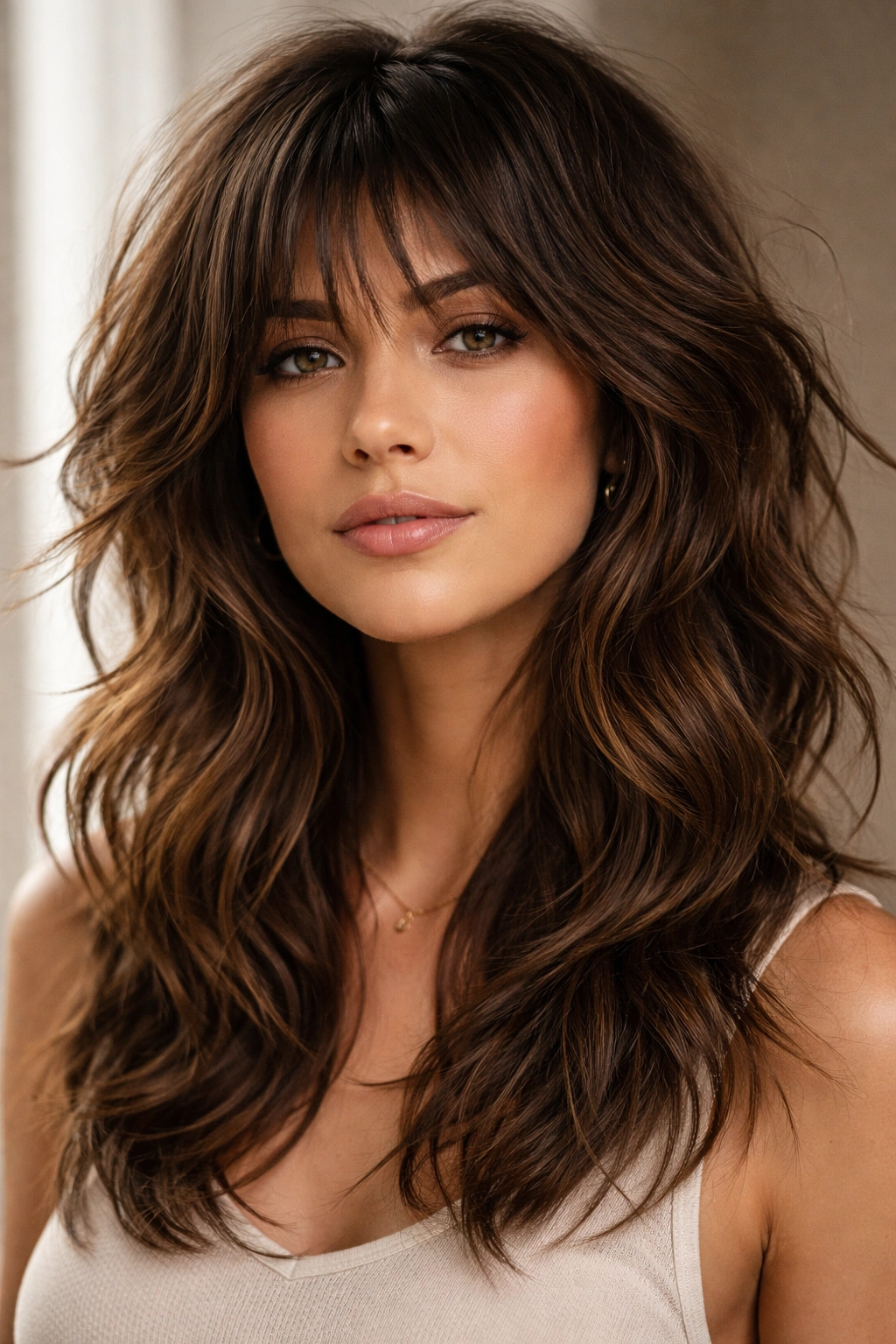
Shags have made a massive comeback, and they’re ideal for thick, wavy hair. A shag combines super-short, heavily layered pieces on top with longer pieces underneath, creating that signature rock-and-roll texture and movement. Wispy bangs fit naturally into the shag aesthetic—they’re part of all those shorter, choppy pieces at the top. The result is maximum movement and texture without any heaviness. This style celebrates thick hair rather than taming it.
Why Shags Work for Thick Texture
The whole point of a shag is movement and separation, which is exactly what thick, wavy hair wants. Heavy layering means every single piece of your hair can move independently instead of clustering into a blob. The shorter pieces on top (including your wispy bangs) dry quickly and add lift, while the longer pieces underneath give you length and weight distribution. You get volume without looking like you stuck your finger in an electrical socket because everything is intentionally cut to work together.
Styling a Shag With Wispy Bangs
- Shags look best with some texture or wave, so this is perfect if you’re not blow-drying everything straight
- Apply a texturizing product to damp hair and either air-dry or diffuse-dry for the easiest approach
- The bangs automatically look wispy because they’re cut into choppy layers—you don’t have to do anything special
- Use a light texturizing spray or sea salt spray to enhance the separation and movement
- Trim every 4-6 weeks because shags need consistent maintenance to stay shaped and avoid looking scraggly
Pro tip: Shags photographed better with some product and intentional styling, but they look amazing in real life even with minimal effort—don’t be discouraged if social media shags look more done than yours.
7. Side-Swept Wispy Bangs With Asymmetrical Waves
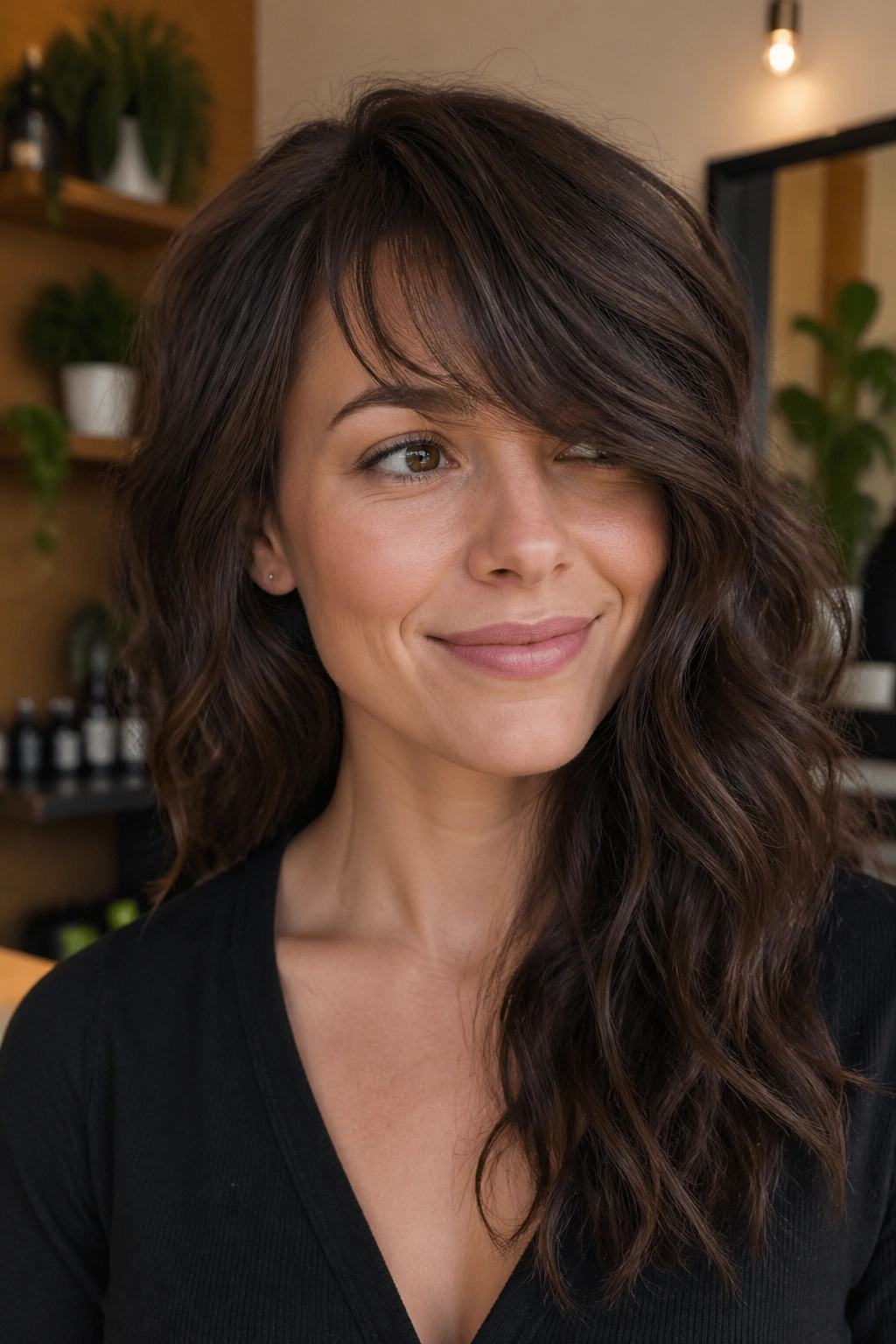
Instead of center-parting your wispy bangs, try sweeping them dramatically to one side. This creates an asymmetrical frame that’s incredibly flattering and adds sophistication to any length or style. Pair side-swept bangs with waves that also lean toward one side, and you’ve got a style that works for thick hair because the weight is intentionally distributed asymmetrically. It’s less about fighting your thickness and more about styling it strategically.
The Psychology of Asymmetry
Asymmetrical styles naturally draw attention to your better features because they create visual interest and movement. With thick, wavy hair, an asymmetrical part and side-swept bangs prevent the style from looking too heavy or symmetric. Your face feels framed rather than surrounded. The longer side of your hair can tuck behind your ear or fall forward depending on your mood, giving you flexibility within one cut.
Styling Side-Swept Bangs
- Part your hair to one side—the deeper the part, the more dramatic the sweep
- Blow-dry your bangs toward the side you want them to fall; they’ll remember this direction for a few days
- Use a light hairspray on your bangs to keep them in place without making them stiff or crunchy
- This style works great with half-up styles because the bangs stay visible and framing your face
- You can rotate which side you sweep them to if you get bored, giving yourself two different looks from one cut
Worth knowing: Side-swept bangs are more forgiving than center-parted bangs because they don’t expose your whole forehead—imperfections matter less when you’re only showing one side.
8. Thick Wavy Hair With Wispy Bangs and Undercut Layers
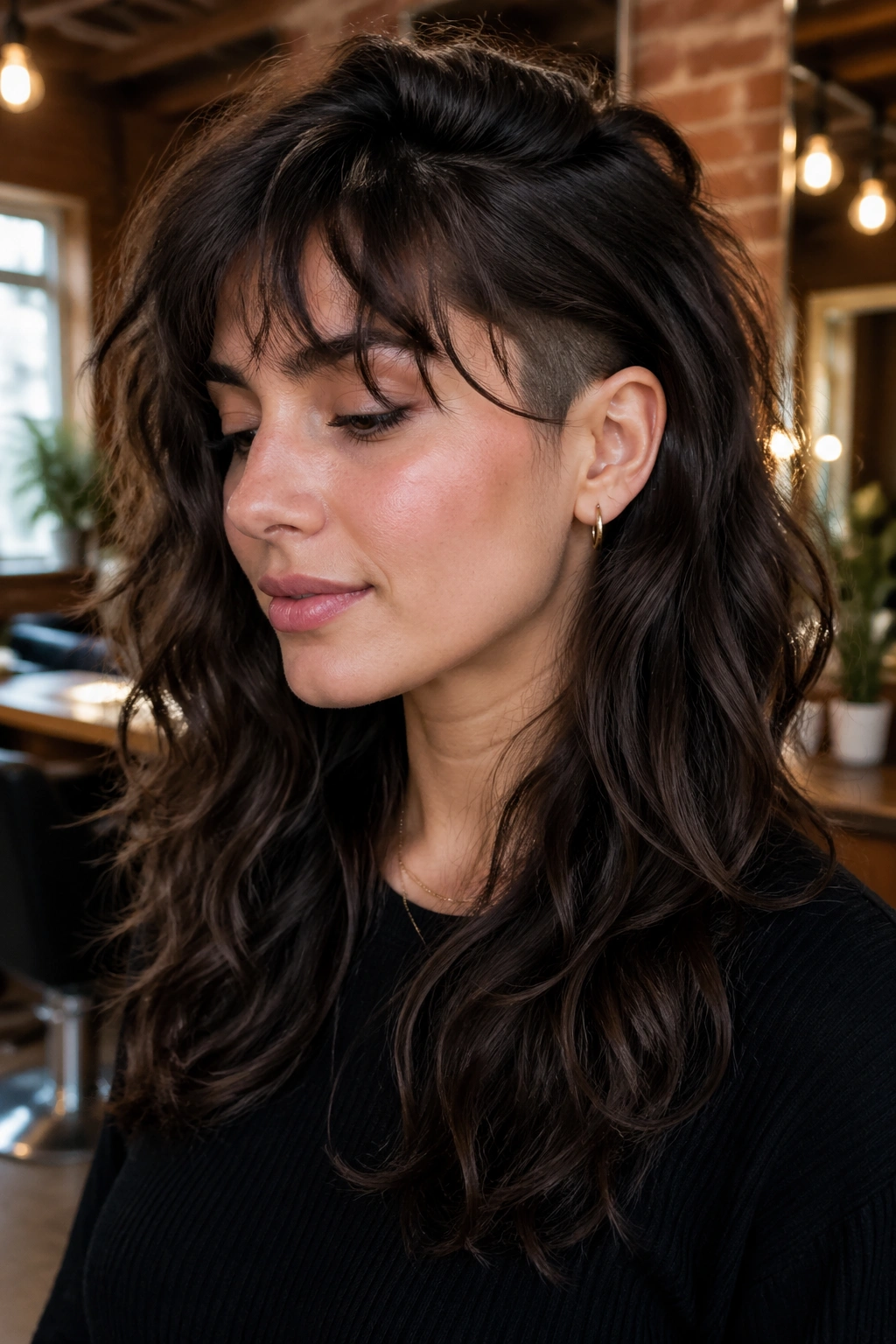
For people who want maximum texture and movement, an undercut takes the short layers underneath and makes them significantly shorter than the top layers. Your wispy bangs sit on top of all this texture, and the contrast between the short, choppy underneath and the longer top creates drama and movement. This is a bolder choice than some other styles, but it’s perfect if you love texture and don’t mind that your hair will look intentionally styled rather than natural.
What an Undercut Really Offers
An undercut gives you the best of both worlds: visible length on top with all the airiness and movement of a much shorter cut. For thick hair, this means you’re not storing all your density in one spot—it’s distributed across different layers. The underneath dries faster and lighter, which makes the whole style feel less heavy. It also gives you options for styling: you can show off the undercut deliberately or hide it depending on how you part and style your top layers.
Maintaining an Undercut With Wispy Bangs
- Get trims every 3-4 weeks on the undercut because short hair shows growth fast
- The top layers (including your wispy bangs) can go longer between trims
- Styling is flexible—blow-dry everything smooth, embrace your waves, or create intentional texture
- Your undercut will need more frequent touch-ups, but the top layers save you from having to cut the whole style constantly
- Ask your stylist to fade the undercut gradually rather than creating a harsh line, so it looks intentional rather than like you made a mistake
Pro tip: Undercuts look amazing with side-parting because you can reveal the short layers on one side while keeping them hidden on the other, giving you two totally different vibes from one cut.
9. Wavy Mullet With Wispy Bangs (Modern Version)
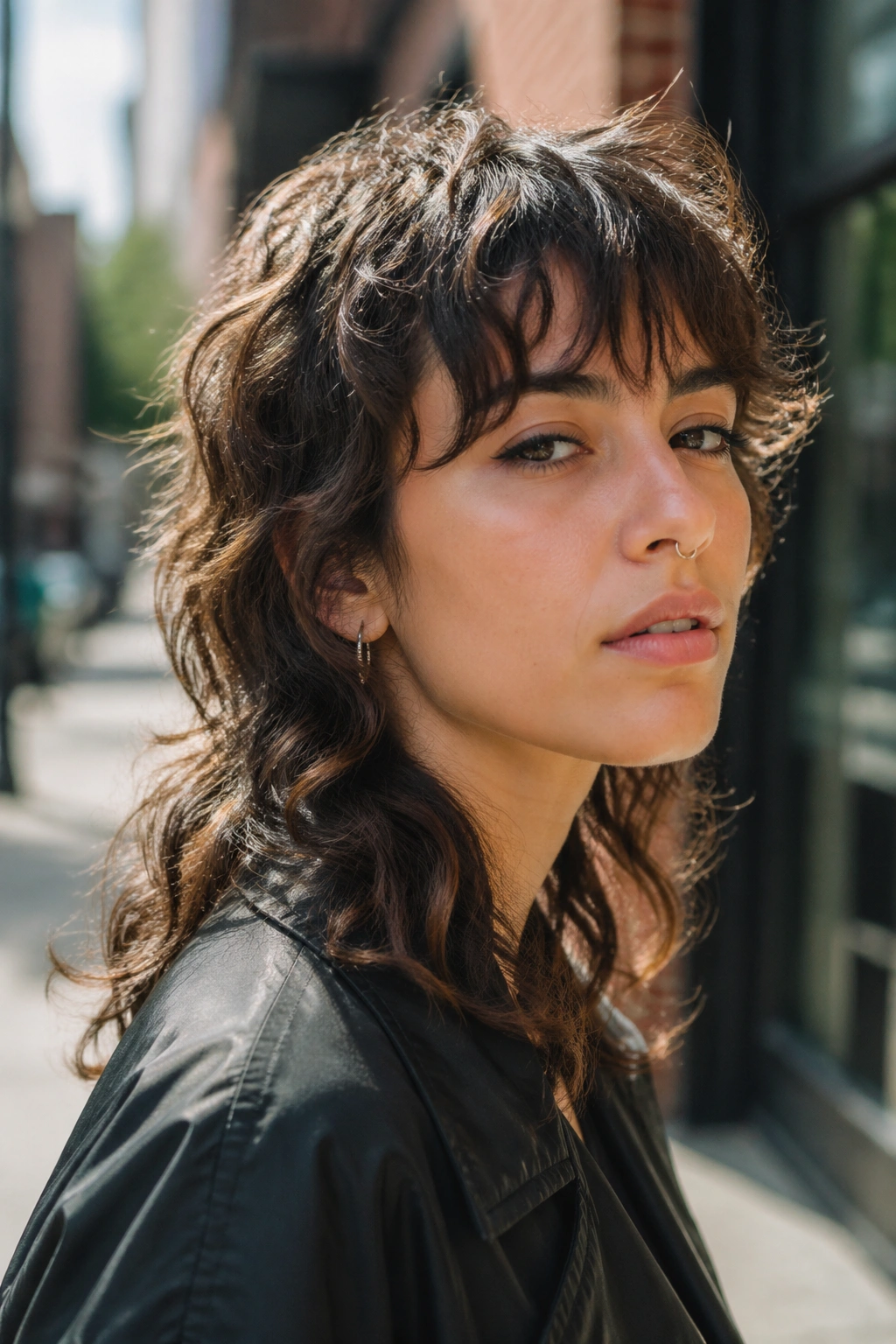
Before you dismiss this: modern mullets are nothing like the ’80s versions. This is a style with slightly shorter, textured layers on top (including wispy bangs) and longer, thicker lengths underneath. The contrast is intentional and flattering, especially for thick, wavy hair. It’s edgy without being extreme, and it gives you the illusion of a shorter cut on top while preserving length in the back. Wispy bangs are essential to making a modern mullet work for most face shapes.
Why a Modern Mullet Suits Thick Waves
The “business in the front, party in the back” concept actually works for thick hair because it gives you a way to style your fullness intentionally rather than looking accidentally voluminous. Your wispy bangs and shorter top layers prevent you from looking like you have a triangle head (a common risk with longer thick hair). The longer back still uses your natural thickness, just in a way that feels balanced and intentional. Many people are shocked how flattering this style is once they commit.
Styling a Modern Mullet
- The front (including bangs) can be blow-dried smooth for a sleeker look, or styled with your natural wave
- The back is longer so you can curl it, braid it, or wear it however you want
- This style is incredibly versatile for different settings—business casual on top, more relaxed on the back
- Use a texturizing spray to enhance the layers and prevent the top from looking too blunt
- Trim the front every 4-6 weeks and the back every 8-10 weeks
Insider note: Mullets have serious cult-status love right now, so you’ll likely get compliments from people who get it and confusion from people who don’t. Commit fully and you’ll convert the skeptics.
10. Wispy Bangs With Waves and Lots of Face-Framing Pieces
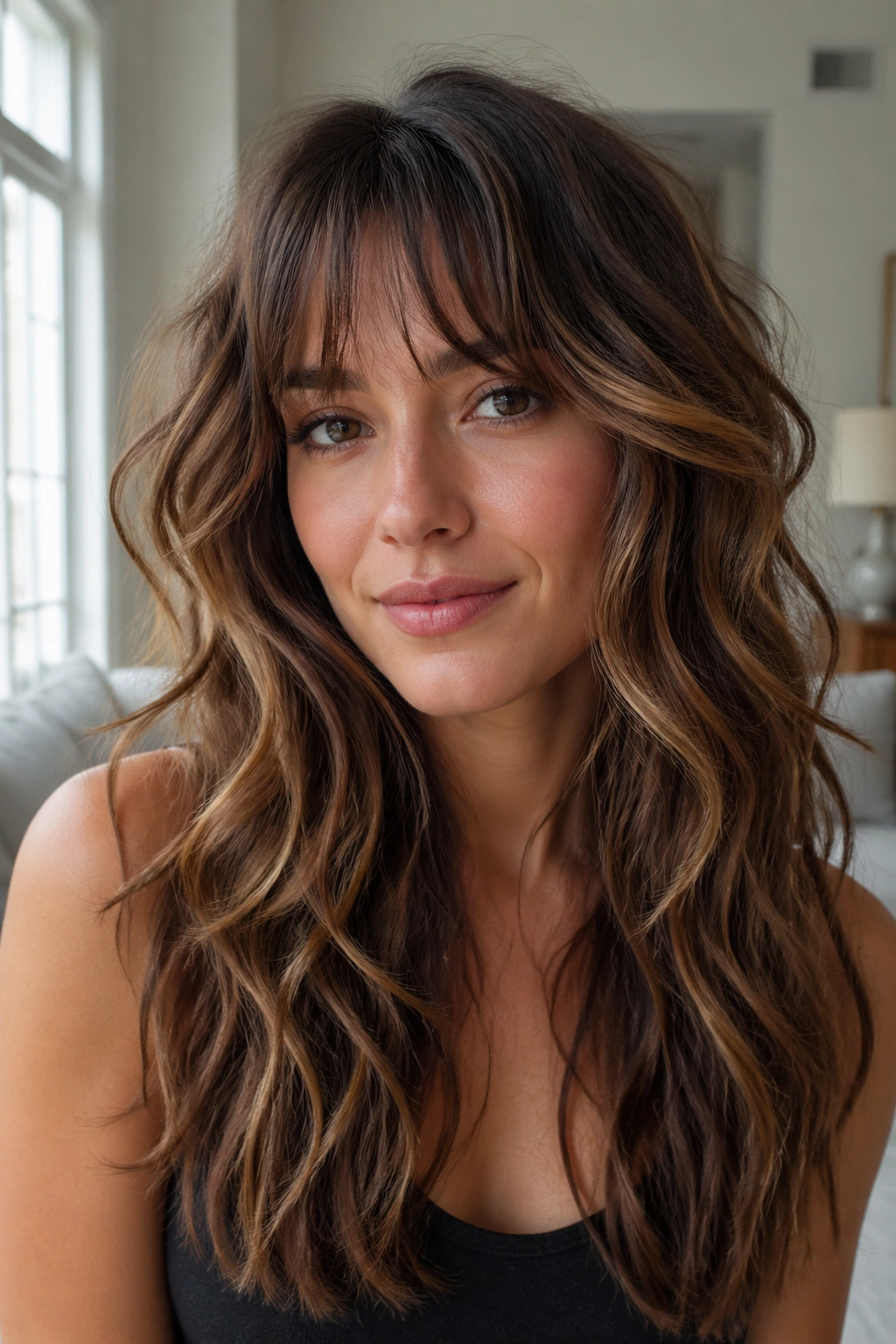
This is the most customizable option for thick, wavy hair because the main structure is long layers positioned specifically to frame your face. Your wispy bangs are part of this strategy—they’re the first thing framing your forehead, and then you’ve got multiple layers of face-framing pieces throughout the rest of your hair. Every layer creates a different line and catches light differently, so your whole face feels dimensional and lifted. This works for literally any hair length as long as you have enough hair for meaningful layers.
How Face-Framing Layers Enhance Wispy Bangs
Face-framing layers do all the heavy lifting of making you look younger, fresher, and more intentional about your styling. Wispy bangs extend that concept to your forehead and eyes. Together, they create a gradient of softness around your entire face rather than just at the top. For thick hair, layers are essential because they prevent the weight from dragging everything down and flattening your face. You get movement and dimension everywhere, not just in your bangs.
Making Face-Framing Work With Thick Hair
- Ask your stylist for layers that are actually visible and distinct, not just subtle choppy bits
- The shortest face-framing pieces should hit around your jawline or chin, depending on your face shape
- Blow-dry your bangs and face-framing pieces with a round brush to create soft waves and volume
- Use a texturizing spray to make all your layers pop and ensure they don’t get lost in your overall thickness
- Get trimmed every 6-8 weeks to maintain the shape as layers grow out
Pro tip: Photograph yourself from different angles with this style because face-framing pieces look different depending on how you part your hair and which way your waves fall.
Final Thoughts
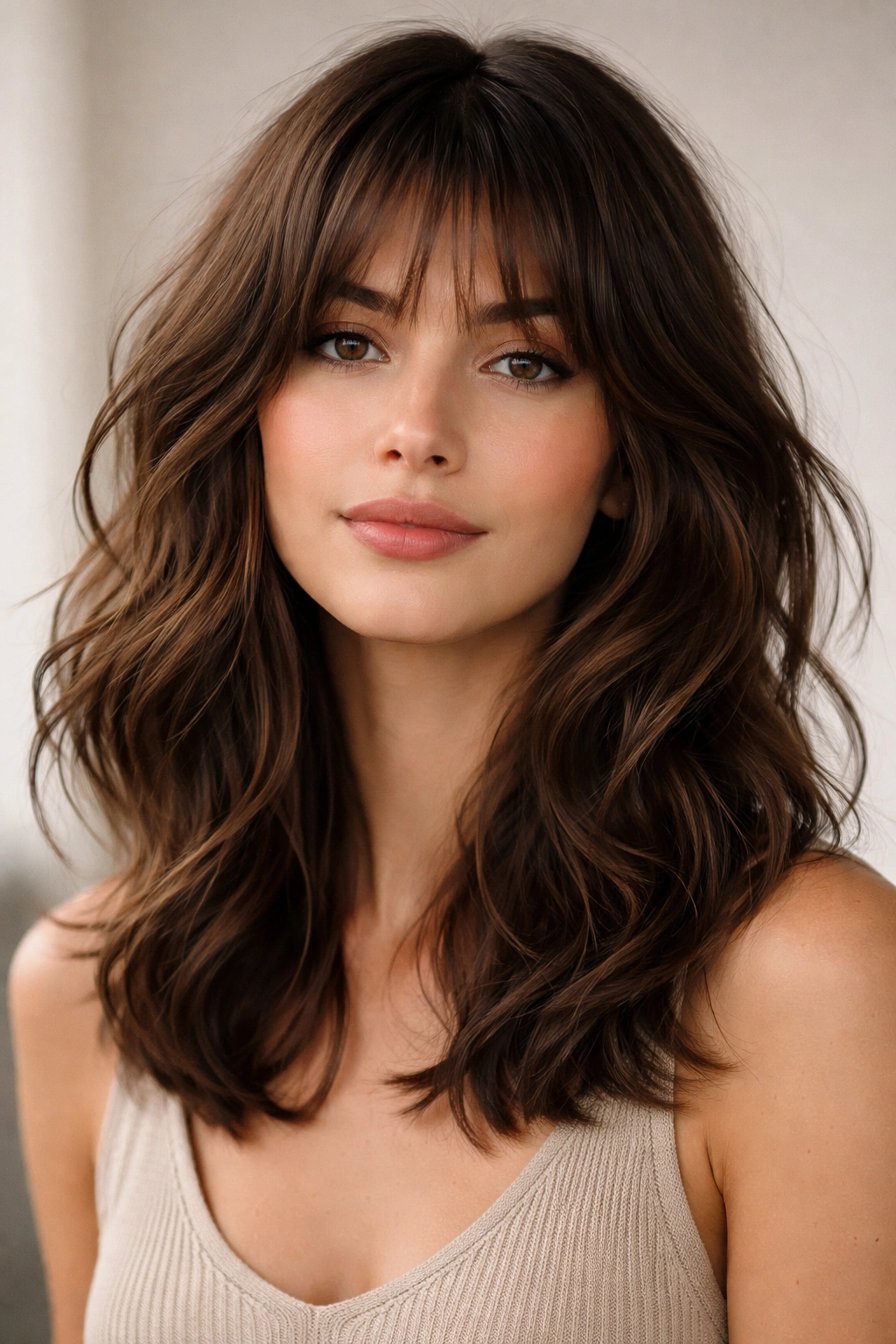
Wispy bangs work for thick, wavy hair because they’re designed to cooperate with texture rather than fight it. The varied lengths mean some strands will fall perfectly while others catch the light and add softness, and that’s exactly what you want. Whether you go minimal with long waves, or commit to a shag or modern mullet, the key is pairing wispy bangs with appropriate layers throughout your whole style so the weight is distributed and movement is encouraged rather than suppressed.
The styling commitment varies wildly depending on which look you choose. Some of these styles need blow-drying and product every time you wash; others actually look better when you just air-dry and let your waves do their thing. The common thread is that all of them respect your hair’s natural texture and thickness instead of trying to minimise it. Pick the length, layer pattern, and vibe that appeals to you most, find a stylist who actually cuts curly or wavy hair regularly (this matters way more than you might think), and give yourself a solid 2-3 weeks to figure out how to style it confidently. Wispy bangs are surprisingly forgiving once you get past that initial “did I make a mistake?” phase—and spoiler alert, you probably didn’t.