Wavy hair paired with balayage color is one of the most forgiving—and flattering—combinations in modern styling. The soft movement of waves gives dimension and texture that makes any color placement look more intentional, while balayage highlights create a sun-kissed, effortless finish that works across nearly every skin tone and hair type. What makes this pairing so compelling is that neither element demands perfection; waves don’t require salon-precision straightness, and balayage doesn’t need razor-sharp color lines. The result is a look that feels lived-in, low-maintenance, and undeniably beautiful.
The magic happens because waves and balayage work together to enhance each other. When light catches wavy strands with hand-painted highlights, it creates natural-looking depth and movement that wouldn’t register the same way on straight hair. The color appears richer in shadow and brighter in the light-struck sections, giving you dimension without the commitment of traditional full-coverage color. You get the sophistication of highlighted hair without the harsh regrowth line or the feeling that your color was applied with a ruler.
Whether you prefer loose, beachy undulations or more defined, structured waves, there’s a balayage combination that elevates your look. The styles below showcase different wave patterns, color placements, and intensity levels—from subtle single-tone balayage that adds movement through color alone, to bold multi-tonal combinations that make a statement. Each style includes the specific details you need to know to ask for it at the salon and maintain it at home, so you walk out with exactly the look you want.
1. Honey Blonde Balayage on Long Wavy Hair
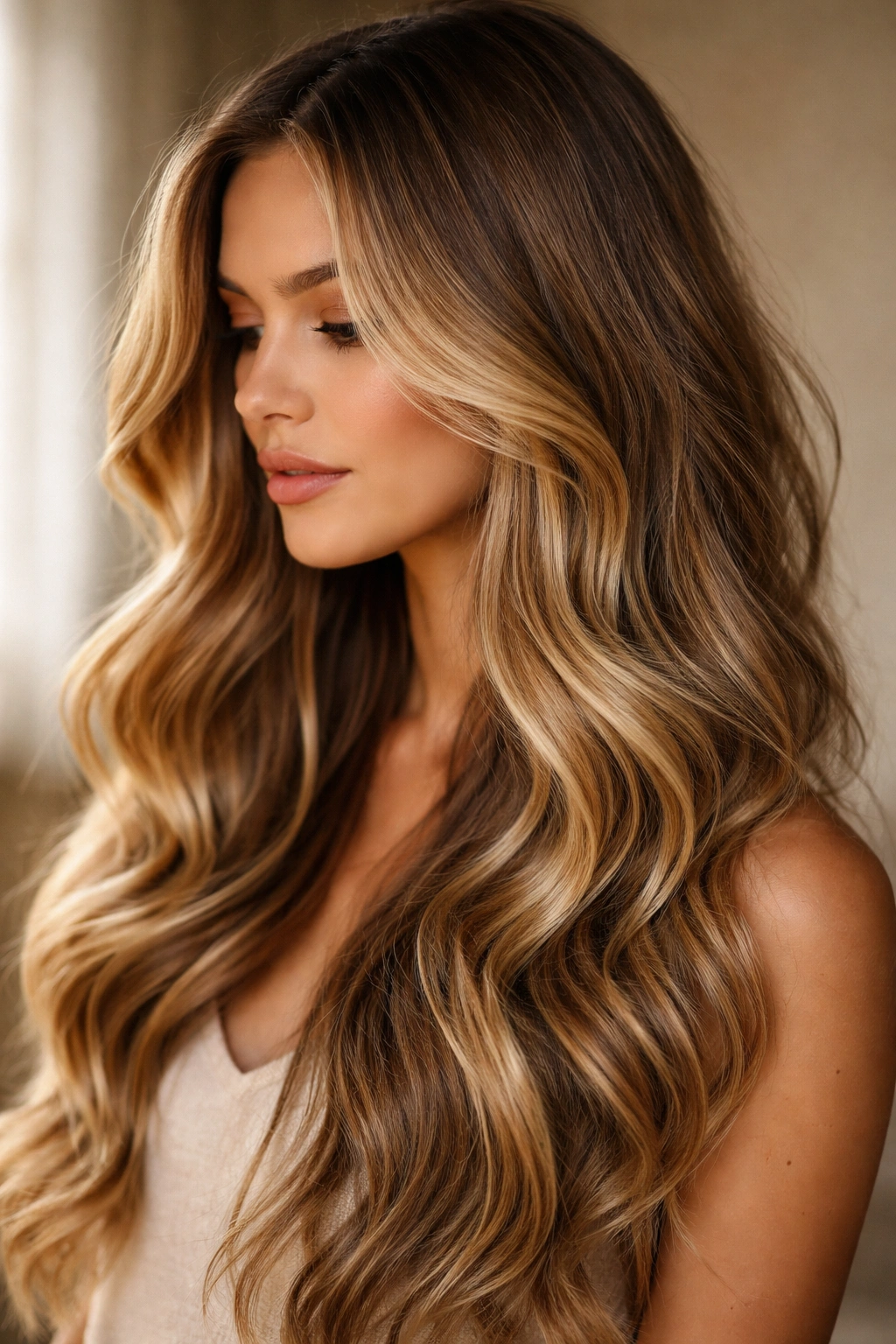
Long waves are the canvas where honey blonde balayage truly shines. This style works best when the balayage is concentrated around the face and mid-lengths, with warmer tones hitting the lighter strands to create a sun-bleached effect that looks naturally rich rather than overdone. The length of the hair gives the waves plenty of room to develop, creating that signature tousled beach texture that pairs beautifully with golden blonde highlights.
Why It Works
Honey blonde has an inherent warmth that complements most skin tones, and when applied through balayage, it creates the illusion of thicker, fuller hair. The color sits in the mid to light range, so it photographs beautifully and catches natural light in a way that makes even subdued waves look intentional and styled. On long hair, this combination photographs especially well because the movement and color both have space to be visible.
Best For
This style suits anyone with a medium to dark natural base who wants noticeable color change without committing to high-maintenance upkeep. It’s especially flattering on warm skin tones and anyone whose natural hair has some warmth already—the balayage amplifies what’s already there rather than fighting against it.
How to Style It
Wavy hair with honey blonde balayage looks best when you lean into the texture rather than trying to tame it. Apply a texturizing spray to damp hair before air-drying, or use a sea salt spray for extra movement. If you want more defined waves, use a large-barrel curling iron on the bottom two-thirds of each section, leaving the roots smooth for that effortless, un-curled appearance at the crown.
Maintenance tip: Honey blonde needs toning every 4-6 weeks to stay vibrant. Use a purple or ash-based shampoo once weekly to prevent brassy tones from developing, and get a gloss every 6-8 weeks to keep the color fresh.
2. Caramel and Brown Balayage on Shoulder-Length Waves
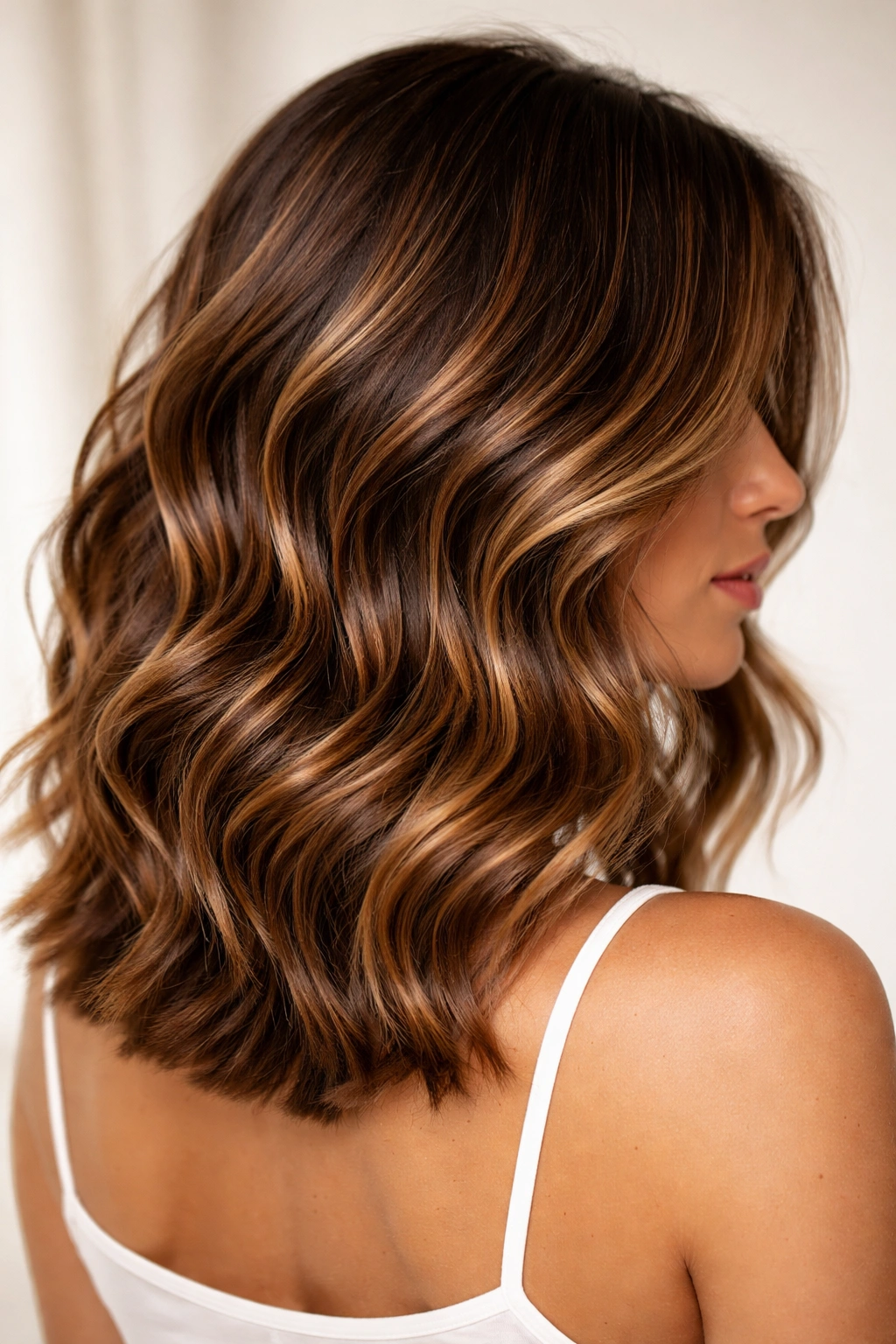
This style delivers dimension without extreme lightness—caramel and chocolate brown tones woven through waves create a multi-dimensional look that feels rich and expensive. The shorter length keeps the waves more controlled and defined, making the balayage placement more prominent and visible with every movement. This is the perfect middle ground for someone who wants color interest but isn’t ready for blonde.
Why It Works
Caramel and brown balayage is incredibly forgiving because all the tones sit within a warm, natural range. There’s less risk of brassiness developing, and the style looks good even as it grows out because the color transition is subtle. The waves on shoulder length show off the balayage beautifully without being so long that the color gets lost at the ends.
Best For
Nearly every skin tone can wear this combination. It’s ideal for anyone with a naturally warm undertone or anyone whose hair already has some brown in it. If you’ve never had balayage before, caramel on brown is an excellent starting point—the results look natural even if the placement isn’t flawless.
How to Style It
On shorter waves, the key is creating movement without overwhelming the style. Use a medium-barrel curling iron to create loose waves through the mid-lengths and ends, then separate the waves gently with your fingers rather than brushing them out. A light texturizing spray helps the waves hold longer throughout the day.
Worth knowing: Caramel tones fade faster than darker shades because they’re lighter and more porous. Washing in cool water, using a color-safe shampoo, and avoiding chlorinated pools helps preserve the color intensity longer.
3. Rooted Blonde Balayage With Deep Waves
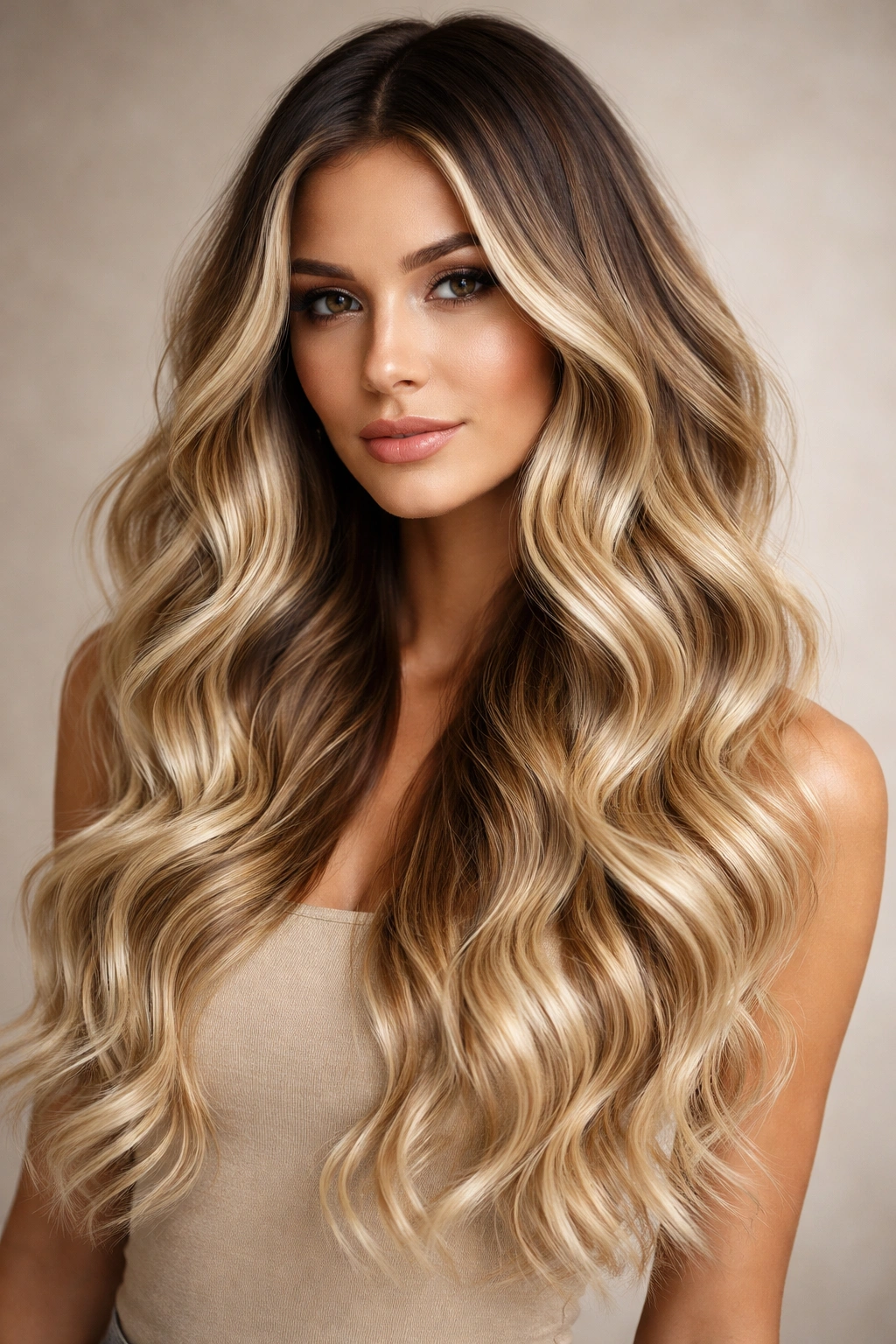
This style keeps a darker root, transitioning into brighter blonde through the mid-lengths and ends. The deeper root creates the appearance of fuller hair at the crown, while the bright blonde balayage does the work of showing off your waves. Deep waves—almost curl-like in their definition—paired with this rooted blonde creates a striking contrast between the pale blonde and dark shadow beneath.
Why It Works
Rooted balayage is a game-changer for blonde hair because it dramatically reduces how often you need to visit the salon. The dark root grows out seamlessly without creating a harsh line, and the balayage placement automatically makes even subtle regrowth look intentional. Deep waves accentuate the color contrast, making the whole style look more professionally done.
Best For
This style is perfect for anyone with naturally dark hair who wants to go blonde without full highlights. It’s excellent for people who color their own hair at home because the rooted style forgives slight imperfections. It also suits anyone with a cooler undertone better than honey blonde would.
How to Style It
Deep waves require a bit more technique than loose waves. Use a smaller barrel curling iron (1 to 1.25 inches) and curl away from the face, leaving the roots straight for a few inches. The contrast between the straight roots and the curled ends makes the rooted blonde effect more striking and intentional-looking.
Pro tip: Deeper root shadows actually look better with cooler-toned blonde because the contrast isn’t as dramatic. Ask your colorist for an ash blonde or champagne blonde rather than golden for this style to feel cohesive.
4. Lived-In Bronde Balayage With Loose Waves
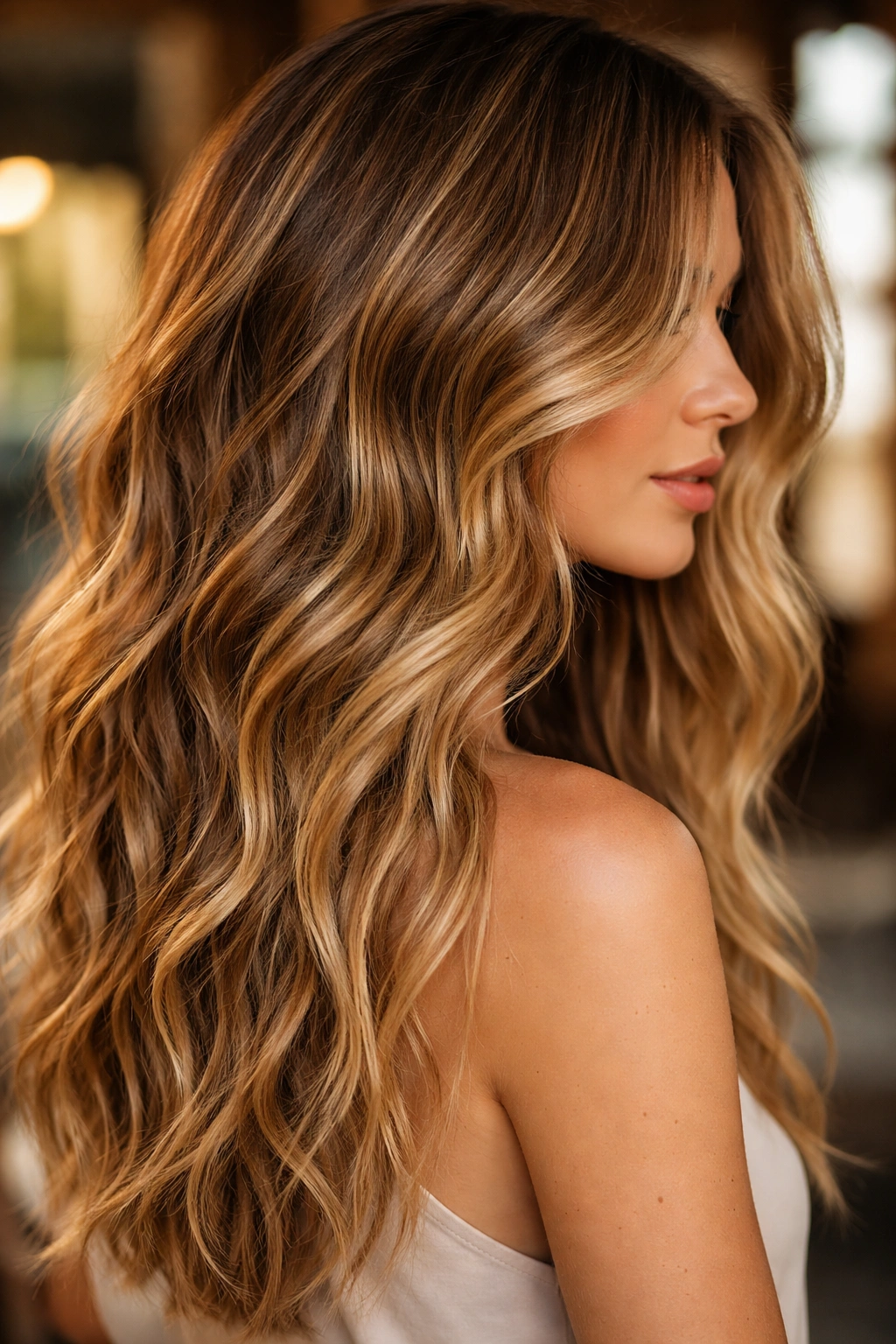
Bronde—the perfect marriage of brown and blonde—is absolutely transcendent on wavy hair. This style keeps you in warm, neutral territory where the color shifts between deeper brown and lighter sandy blonde depending on the light and the angle. Loose waves mean the color placement isn’t overly obvious; instead, it creates subtle dimension that becomes more apparent as the hair moves.
Why It Works
Bronde has become popular for a reason: it’s genuinely flattering on nearly everyone, and it photographs beautifully in every lighting condition. On wavy hair, bronde creates a naturally sun-kissed effect that reads as though you’ve just come back from a vacation rather than sitting in a colorist’s chair for hours. The lived-in quality of balayage bronde means small imperfections just add to the natural appeal.
Best For
This is the most universally flattering color combination in this list. Medium skin tones, warm skin tones, cool undertones—everyone can wear bronde. It’s especially stunning on people with naturally wavy texture who want to enhance what they already have rather than transform it completely.
How to Style It
Loose waves on bronde look best when they feel undone and organic. Apply texturizing spray to damp hair and either air-dry while scrunching, or blow-dry with a round brush and separate the waves loosely with your fingers. The goal is waves that look natural, not perfectly styled.
Maintenance note: Bronde requires both warm and cool toning to stay balanced. Use a purple-based shampoo once weekly to keep both the blonde and brown tones rich, and refresh with a gloss every 8 weeks.
5. Dark Rooted Balayage With Curtain Bangs and Waves
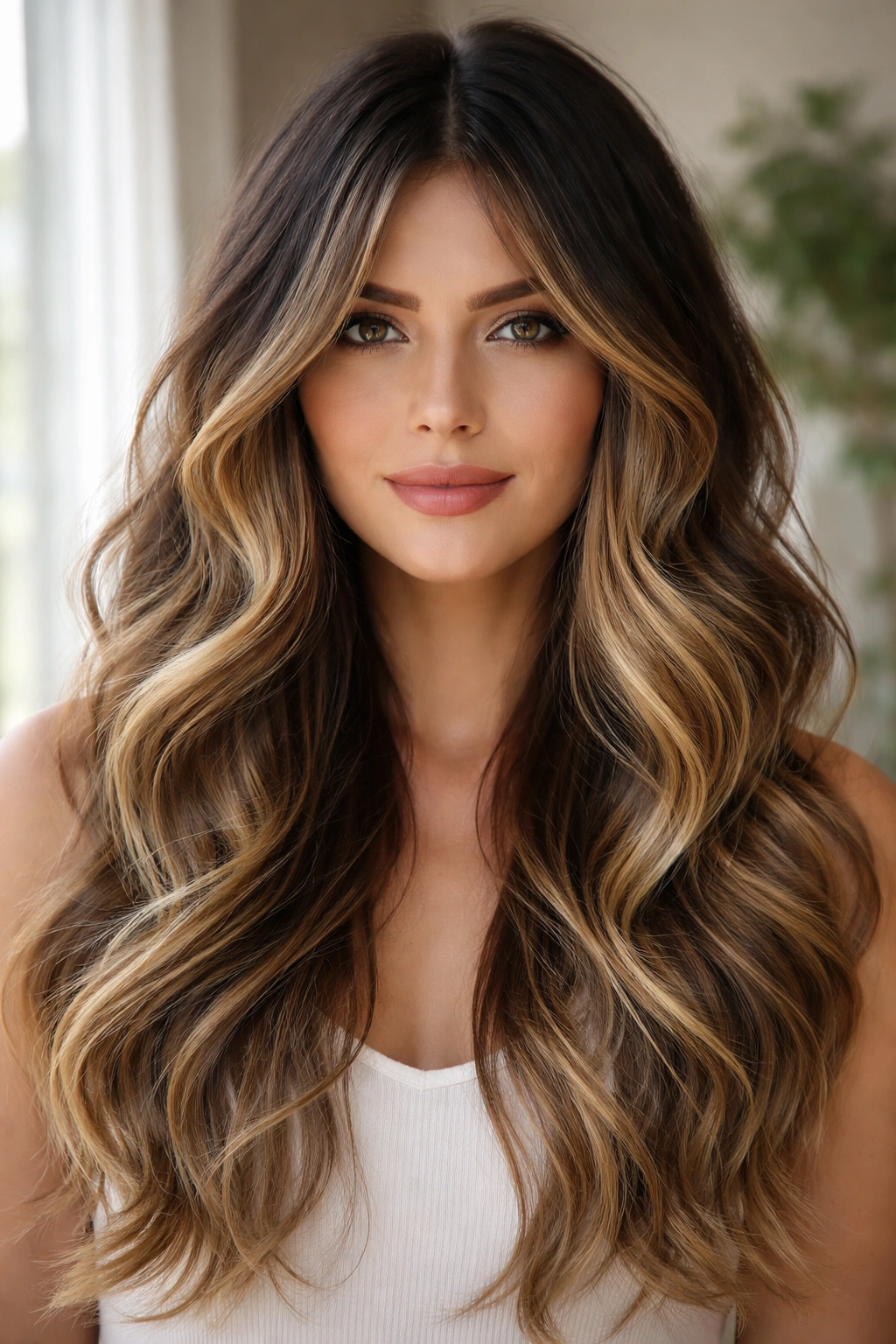
This style combines face-framing with dimensional color for maximum impact. The darker root creates that rooted effect while balayage highlights brighten the curtain bangs and frame the face. Waves throughout add softness and movement, with the bangs creating an extra layer of texture. This is the choice if you want your balayage to be visible and intentional.
Why It Works
Curtain bangs are the perfect frame for showcasing balayage because they move independently from the rest of the hair, displaying the color from multiple angles with every head turn. The dark root keeps the style grounded and the face-framing brightens the entire complexion. Combined with waves, this style has movement in multiple directions—it’s visually interesting from every perspective.
Best For
This style suits people with a longer face who want softness around the cheekbones, or anyone who wants their balayage to be noticed and celebrated. It’s especially good for people with a strong brow bone or prominent jawline because the bangs and waves soften those features.
How to Style It
Curtain bangs with waves requires intentional styling. Blow-dry the bangs straight with a brush to get them to part down the middle, then curl the rest of the hair in waves. The bangs should have a slight wave or bend, not be completely straight—use a medium curling iron on low heat to create a subtle S-curve in each side of the bang.
Critical tip: If you’re going to do curtain bangs, trim every 3 weeks to keep them at exactly the right length. Too long and they block your vision; too short and they stop framing your face properly.
6. Dimensional Balayage With Textured Waves and Layers
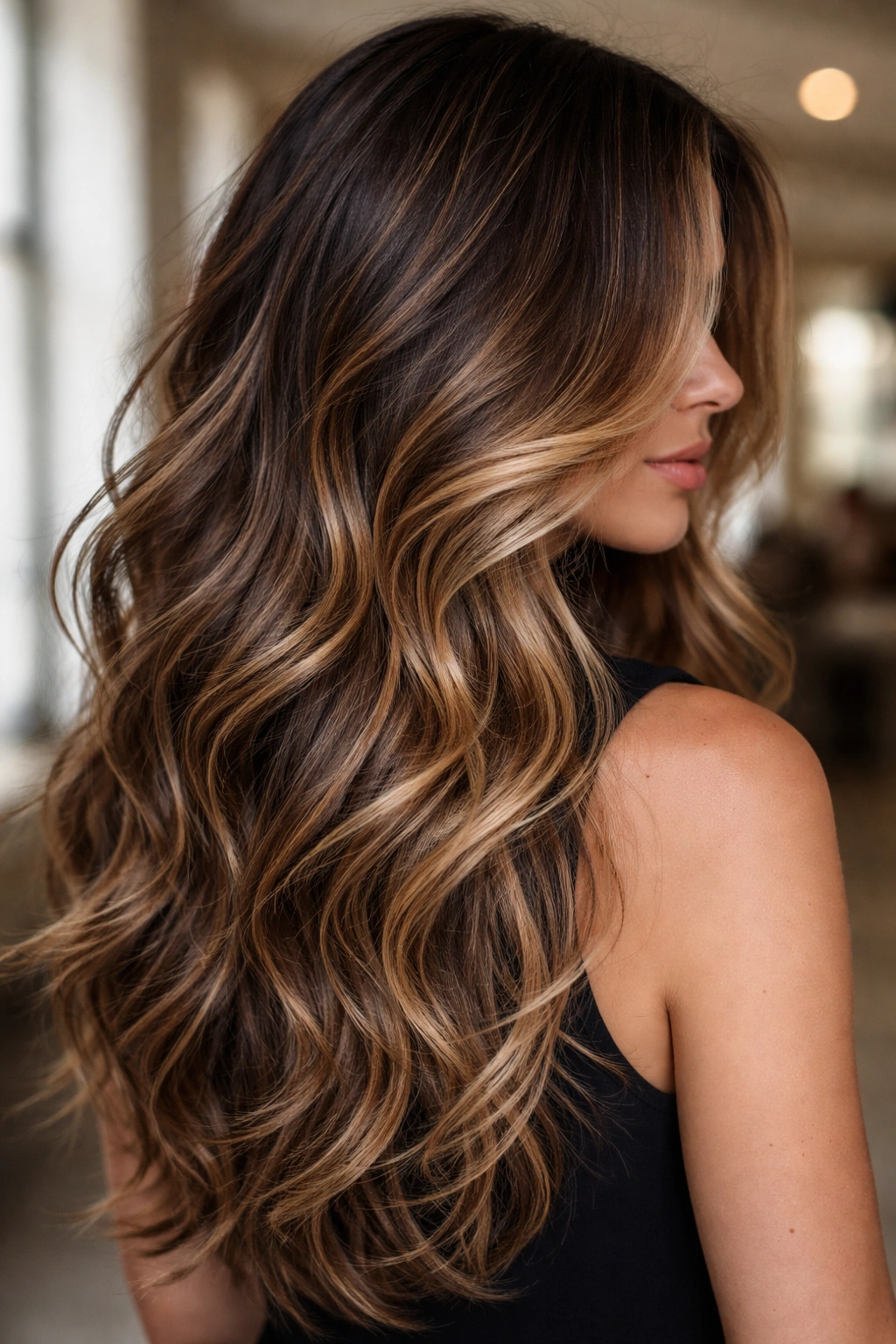
Layers and textured waves are the dream combination for balayage because the movement of the layers automatically shows off the color. A dimensional balayage with at least 3 color tones (a darker base, a medium mid-tone, and a lighter blonde) creates visual complexity that makes shorter hair feel fuller and more dynamic. The textured waves ensure the color is visible from multiple angles.
Why It Works
Layered hair naturally moves more than blunt-cut hair, which means your balayage is constantly on display. Each layer catches light differently, making the color placement appear intentional and professional. When you combine that with textured waves that create space between each layer, you get maximum dimension—both from cut and from color.
Best For
Anyone who wants high-impact color without extreme brightness should consider this style. It’s ideal for people with finer hair because layers and waves create the illusion of thickness. It also works beautifully for anyone transitioning from a darker color who wants a gradual shift rather than a dramatic change.
How to Style It
Textured waves on layered hair benefit from products that enhance movement and hold. After blow-drying, use a small curling iron to create waves throughout, curling in alternating directions (away from face, then toward, then away again) for a more natural, broken-up wave pattern. Apply a light hairspray to hold the texture without weighing it down.
Worth noting: Layered, textured hair needs more frequent trims than blunt cuts because the layers show split ends more readily. Plan on a trim every 4-6 weeks to keep the texture looking intentional rather than scraggly.
7. Ash Blonde Balayage With Cold-Toned Waves
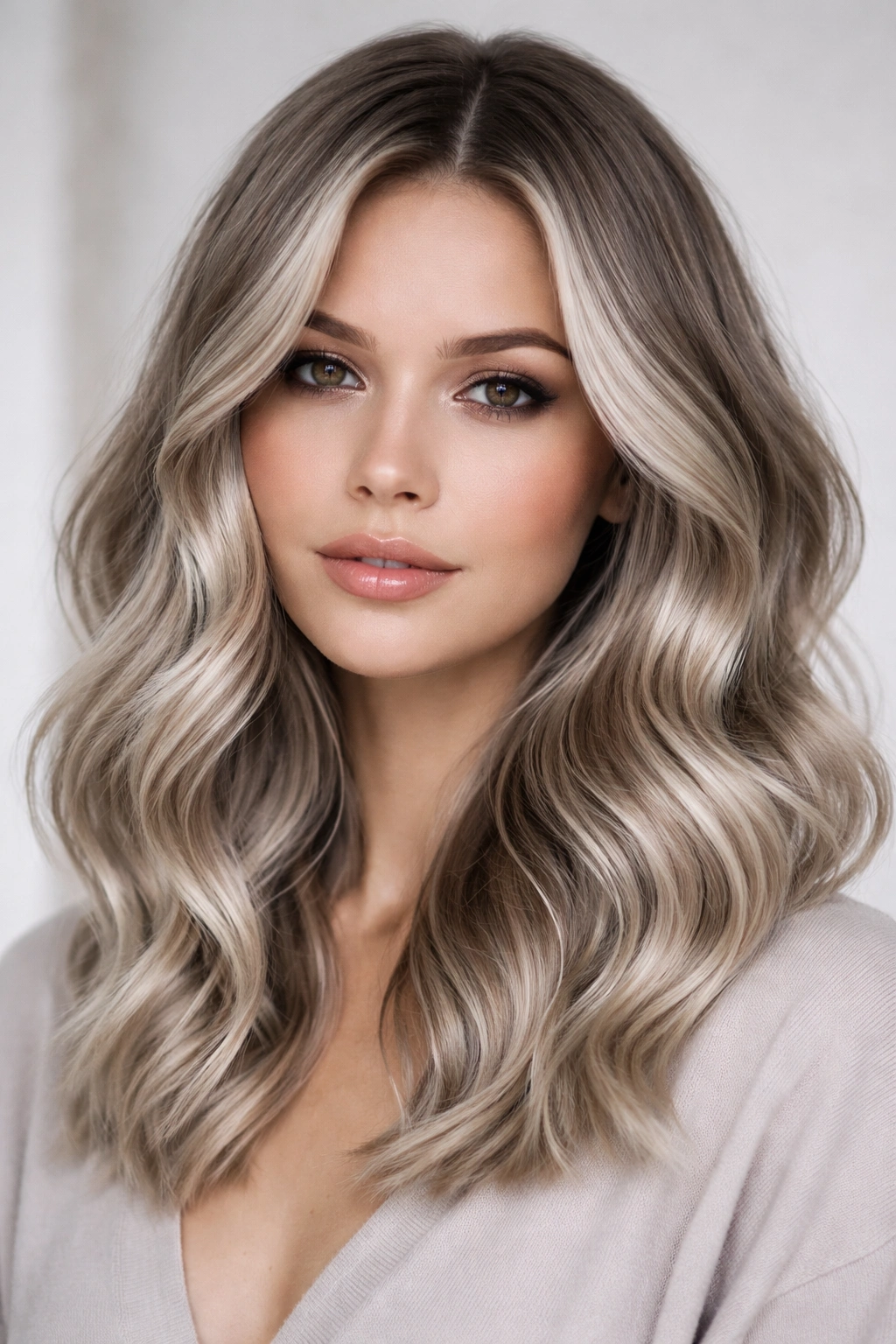
If you prefer cooler, more modern-looking color, ash blonde balayage delivers. This style strips away warmth entirely, opting instead for champagne, platinum, and silvery blonde tones through the waves. The result looks intentional, slightly edgy, and extraordinarily chic. Cold-toned waves appear sleeker and more polished than warm-toned ones, making this style perfect for someone who prefers minimalist aesthetics.
Why It Works
Ash blonde catches light differently than warm blonde—it reads as more sophisticated and contemporary. On waves, the cool tone keeps the style from looking overly sweet or romantic; instead, it feels modern and intentional. The coldness of the blonde makes even soft waves appear more structured and considered.
Best For
This style is best for people with naturally cool or neutral undertones. Fair skin, olive skin, and anyone with natural blonde or light brown hair can wear this beautifully. It’s also excellent for anyone who spends time on social media and wants their hair to photograph with accurate color (ash tones are more true-to-life in photos than warm tones).
How to Style It
Ash blonde waves look best when they’re soft and undone rather than tightly curled. Create loose S-waves by curling large sections around a curling iron, then immediately releasing and scrunching slightly to break up the curl. The goal is waves with movement and texture, not defined ringlets.
Maintenance alert: Ash blonde requires regular toning to prevent brassiness. Use a purple or violet-based shampoo twice weekly, and get a toner gloss every 4-6 weeks to keep the cool tone intact.
8. Sunlit Balayage With Choppy Waves and Lots of Dimension
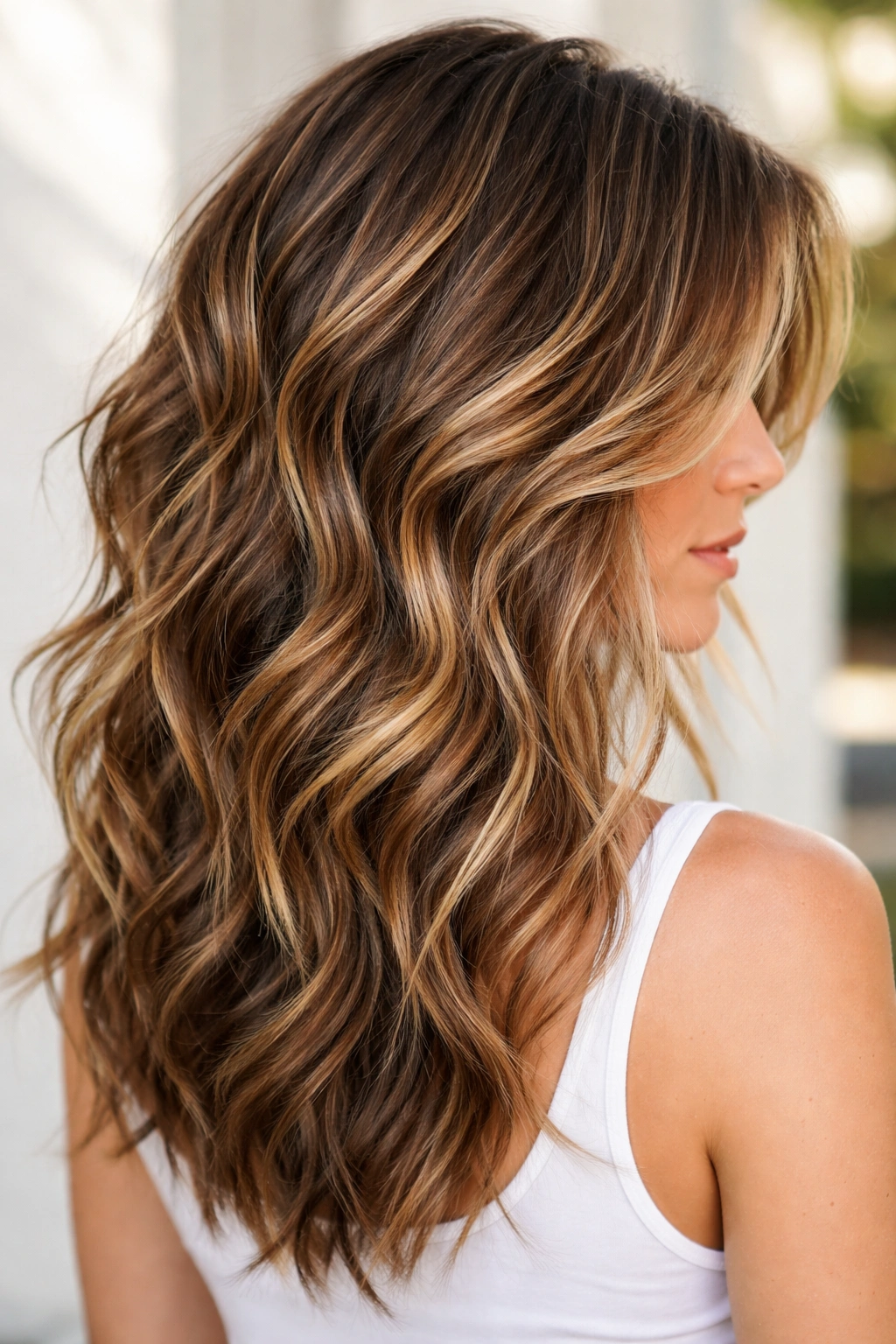
This style is all about dimension through both color and cut. Choppy, textured layers combined with a multi-tonal balayage (incorporating sandy blonde, honey, caramel, and deeper brown) creates an almost painted effect. The choppy cut ensures every layer shows off the color, and the waves add movement that makes the whole style feel lively and youthful.
Why It Works
Choppy layers are naturally more forgiving than blunt or slightly-layered cuts because imperfections blend into the texture rather than standing out. When you add a dimensional balayage that plays with both warm and cool tones, you get incredible depth. The waves on choppy hair create a Brigitte Bardot or ’70s-inspired effect that reads as intentionally styled without looking overdone.
Best For
This style works beautifully on anyone with medium to thick hair—fine hair can look thin with too-choppy layers. It’s ideal for people who want a trendy, current-looking style and don’t mind a slightly more involved styling routine. It’s especially flattering on people with longer faces or those who want to add visual interest to longer hair.
How to Style It
Choppy waves need texture products to look their best. Apply a texturizing sea salt spray to damp hair before blow-drying, blow-dry with a diffuser attachment for extra texture, then curl individual sections with a medium curling iron. Finish with a light hairspray and separate the layers with your fingers to emphasize the choppiness.
Important note: Choppy layers require regular trims (every 4-6 weeks) to keep them looking intentional. As they grow out, they can start to look mullet-ish if not maintained.
9. Melted Chocolate Balayage With Soft Beach Waves
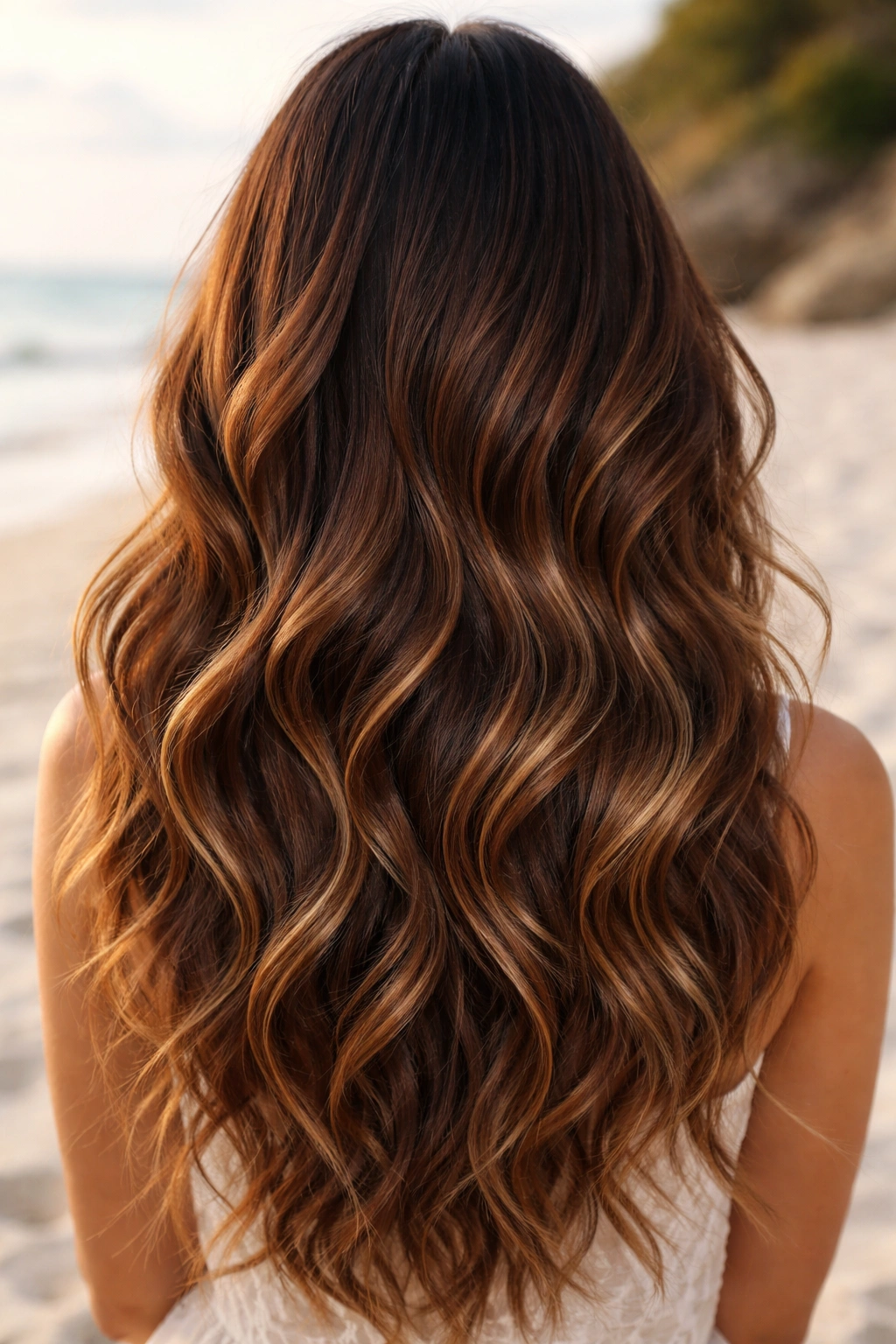
This is the style for someone who loves dimension but prefers to stay within a chocolate brown palette. The balayage melts from dark chocolate at the roots to warm milk chocolate and subtle caramel in the mid-lengths and ends. Soft, beach-like waves keep the color subtle and wearable. This style reads as sophisticated and expensive while remaining low-maintenance.
Why It Works
Chocolate brown is universally flattering and works across every skin tone. A melted balayage technique (which blends the colors more gradually than traditional balayage) creates an almost ombré effect but with more control and precision. On beach waves, the color becomes more apparent with movement, but the gradient makes the style feel cohesive and intentional.
Best For
Anyone with a medium to dark natural base who wants color dimension without going significantly lighter. This style is excellent for people with warm or olive undertones and for anyone who wants their hair to feel effortless rather than high-fashion. It’s also ideal for people who prefer staying closer to their natural color family.
How to Style It
Soft beach waves on chocolate balayage look best when they’re loose and touchable. Apply a sea salt texture spray to damp hair, blow-dry gently with your fingers (avoiding a brush), and then create loose waves with a large curling iron by curling sections loosely and immediately releasing. The key is movement without definition.
Low-maintenance reality: This style truly is easier to maintain than blonde balayage. Wash in warm water with a hydrating shampoo, condition generously, and you can go 10-12 weeks between gloss appointments.
10. Bright Blonde Balayage With Thick, Defined Waves
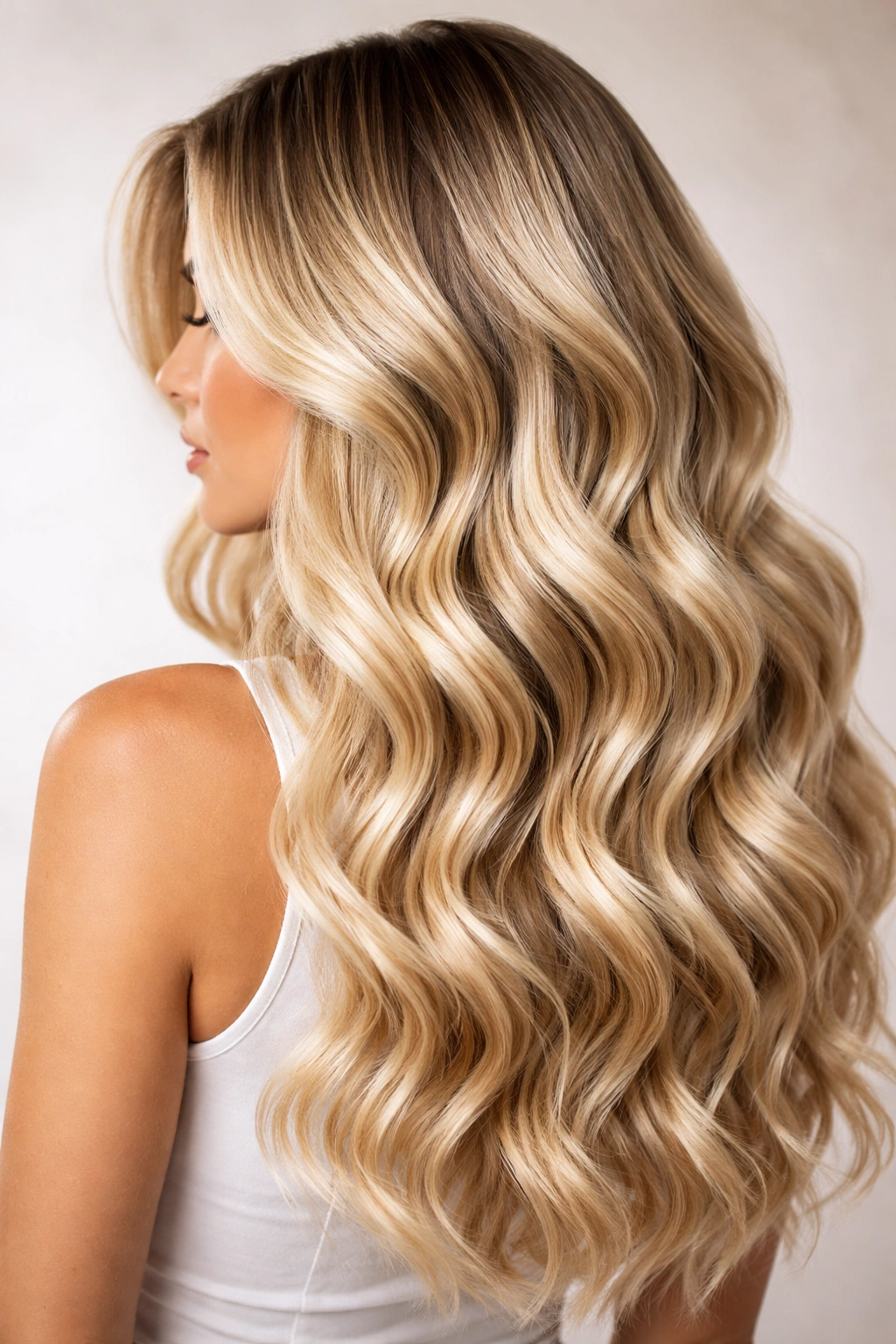
For someone who wants their balayage to make a bold statement, bright blonde balayage with thick, defined waves delivers impact. This style uses very light, almost platinum blonde highlights against either a medium brown or dark root, creating dramatic contrast. The defined waves (not soft or loose, but clearly curled and structured) create a polished, intentional look that photographs spectacularly.
Why It Works
Bright blonde is inherently eye-catching, and defined waves mean the color is constantly visible and apparent. The contrast between light and dark reads as high-fashion, and the structured waves prevent the style from looking casual or unkempt. This combination is perfect for anyone who wants to make a statement with their appearance.
Best For
This style suits people with strong features, clear skin, and confidence in their styling abilities. It’s ideal for anyone who doesn’t mind more frequent salon visits (bright blonde requires toning every 3-4 weeks). It’s also excellent for people with naturally cool skin tones or for anyone who wants their hair to be the focal point of their appearance.
How to Style It
Defined waves need to be intentionally created and held. Curl your hair in sections using a 1 to 1.25-inch curling iron, wrap each curl around the barrel and hold for a few seconds, then gently release and immediately spray with a strong-hold hairspray before the curl cools completely. The key is setting the curl while it’s hot so it stays defined.
Styling commitment: This look requires blow-drying and curling daily, or at minimum refreshing with a curling iron every other day. If you prefer air-dry styles, this probably isn’t the right choice for you.
11. Ribbon Balayage With Loose Waves and Blonde Streaks
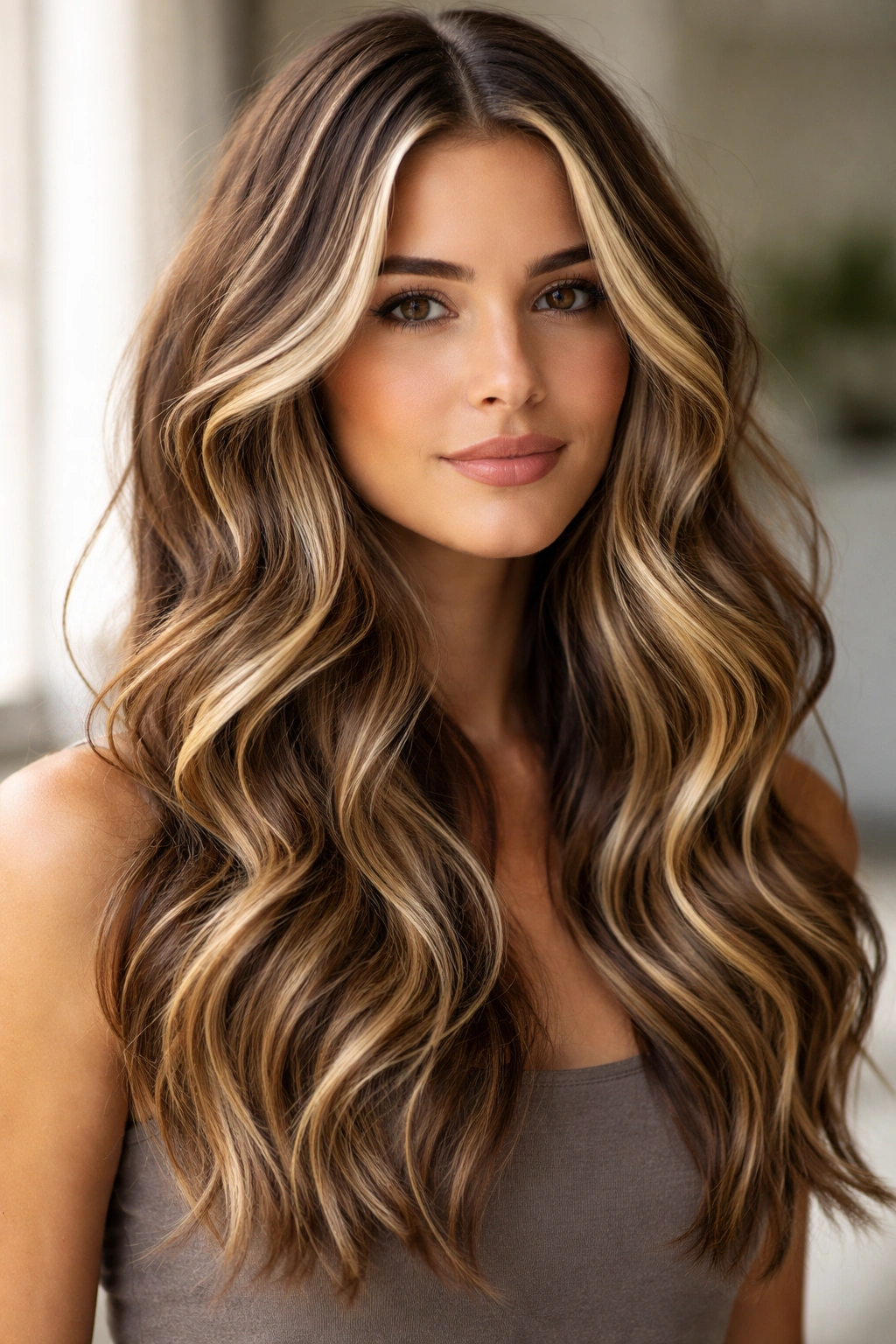
Ribbon balayage creates distinct, placed highlights that run through the hair like ribbons, lighter than the classic balayage sweep. This technique is perfect for wavy hair because the ribbons of color create clear stripes that weave through the waves, creating almost a striped effect. The ribbons are usually placed at the face-framing layers and one or two throughout the mid-lengths.
Why It Works
Ribbon balayage creates a more intentional, visible highlight effect than soft balayage, but it’s less uniform than traditional highlights. On wavy hair, the ribbons of color are constantly moving and shifting position, so the style looks dynamic and interesting. The specific placement means you get maximum brightening in the most flattering spots—around the face.
Best For
This style is ideal for anyone who wants visible blonde highlights but prefers a more modern technique than traditional foils. It’s especially flattering on people who want to brighten their complexion or who have features they want to emphasize (eyes, cheekbones). It also works well on longer hair where the ribbons have space to move.
How to Style It
Loose waves are the best canvas for ribbon balayage because the color placement becomes more apparent and visible with movement. Create waves with a large curling iron, separating each wave gently with your fingers after curling. The looser and more undone the waves, the more the ribbon highlights will be visible.
Color care tip: Ribbon balayage typically requires toning every 6-8 weeks because the highlights are concentrated in specific areas rather than distributed throughout. This means you’ll see regrowth more obviously at the face-framing section.
12. Dimensional Balayage With Money Pieces and Textured Waves
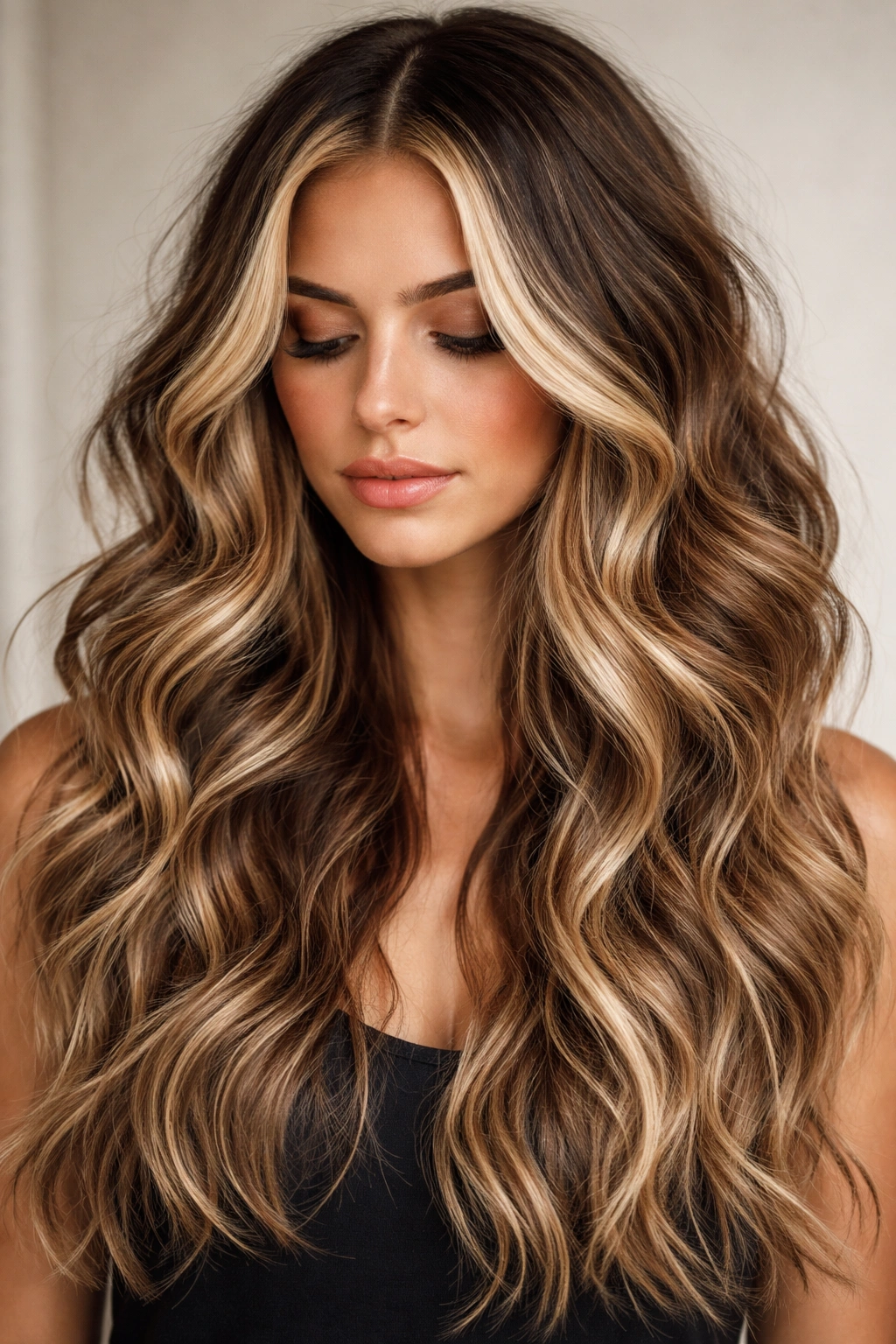
Money pieces are thick, strategically placed highlights that frame the face on both sides. Paired with a dimensional balayage throughout the rest of the hair and textured waves, this creates a style that’s simultaneously classic and modern. The money pieces ensure your face gets brightened and framed, while the balayage elsewhere provides subtle dimension.
Why It Works
Money pieces never go out of style because they’re flattering on nearly every face shape—they brighten the complexion, frame the cheekbones, and draw attention upward. When combined with textured waves throughout the rest of the hair, you get a sophisticated style that feels intentionally done without being overdone. The textured waves show off both the money pieces and the dimensional balayage.
Best For
Anyone who wants a timeless, universally flattering style should consider money pieces with balayage. This works across all hair lengths, all skin tones, and all natural color levels. It’s especially good for anyone with a rounder face or anyone who wants to brighten their complexion without dyeing their entire head.
How to Style It
Textured waves are key to making money pieces with balayage look intentional. Curl your hair in waves throughout, creating movement and texture. The money pieces will naturally frame your face as you move and turn your head. Finish with a texturizing spray and lightly separate the waves with your fingers.
Long-term maintenance: Money pieces do require more frequent touch-ups (every 4-6 weeks) because they’re so visible at the face-framing area. However, they’re usually quicker appointments than full balayage because the colorist is working on a smaller surface area.
13. Reverse Balayage With Dimensional Waves and Hidden Blonde
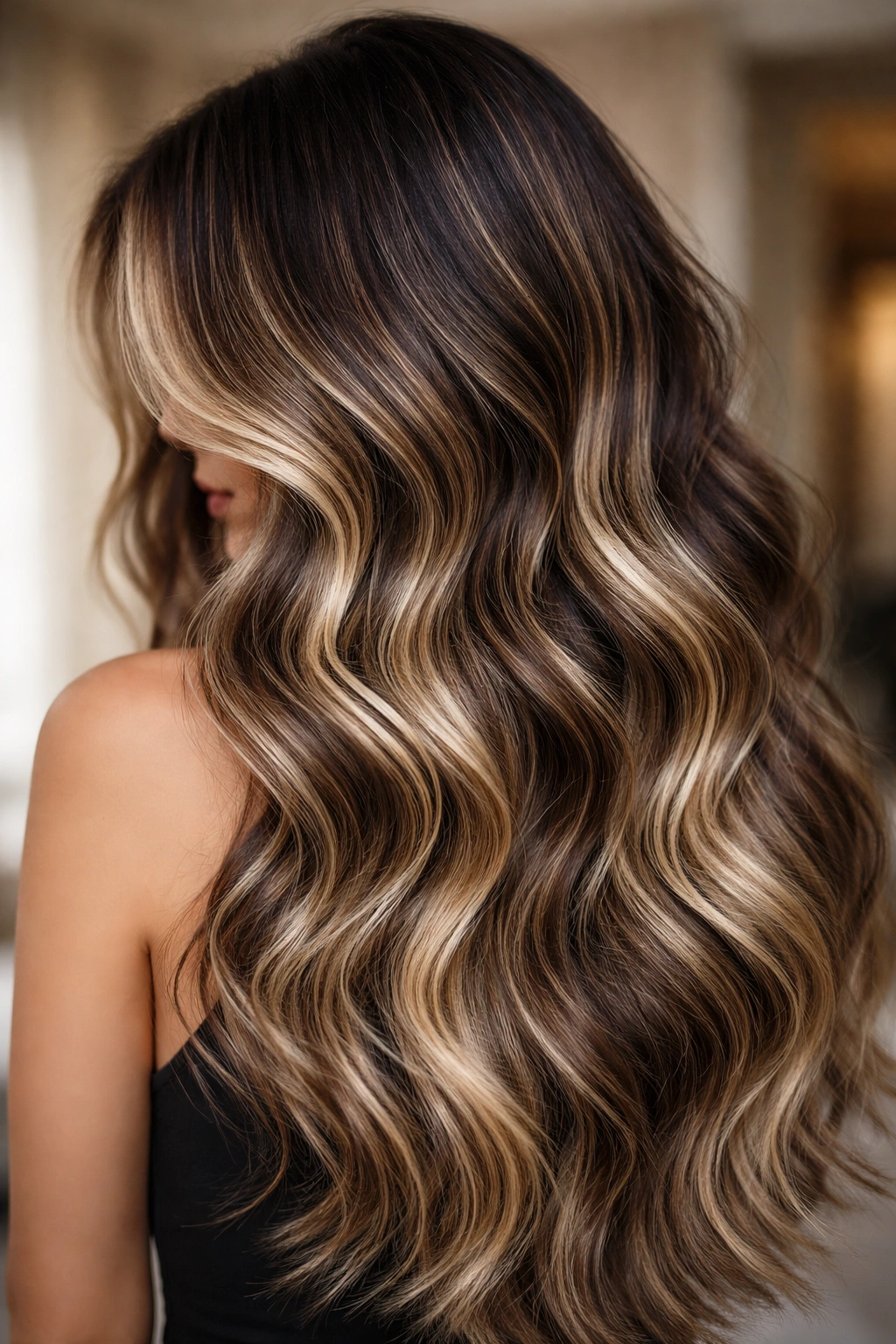
Reverse balayage takes the traditional technique backward—instead of applying lighter color to a dark base, you apply darker color to a lighter base, creating shadow and depth. Paired with dimensional waves and hidden pockets of blonde that only show when your hair moves, this creates a sophisticated, mysterious look. The blonde might be subtle or hidden in the underneath layers, becoming visible only when the waves move.
Why It Works
Reverse balayage is the epitome of modern, intentional color work. It looks expensive and high-fashion because it requires precise technique and an understanding of color placement. On dimensional waves, the darker tones create depth while the hidden blonde provides surprise and interest. This is a style that improves with movement and looks better from multiple angles.
Best For
This style suits anyone who wants a sophisticated, non-obvious color story. It’s ideal for people with an experimental mindset who want something that looks subtle and natural until the hair moves and reveals hidden dimension. It’s especially flattering on medium to longer hair where there’s space for the hidden blonde to surprise.
How to Style It
Dimensional waves with reverse balayage look best when styled with intentionality. Create loose to medium waves throughout, ensuring the underneath sections move and separate to show the hidden blonde. Use a texturizing product to enhance movement and ensure the waves stay separated and visible throughout the day.
Expert insight: Reverse balayage is less visible in photos than traditional balayage because the blonde is hidden until the hair moves. If you’re doing this primarily for social media, traditional balayage might be more impactful.
Wrapping Up
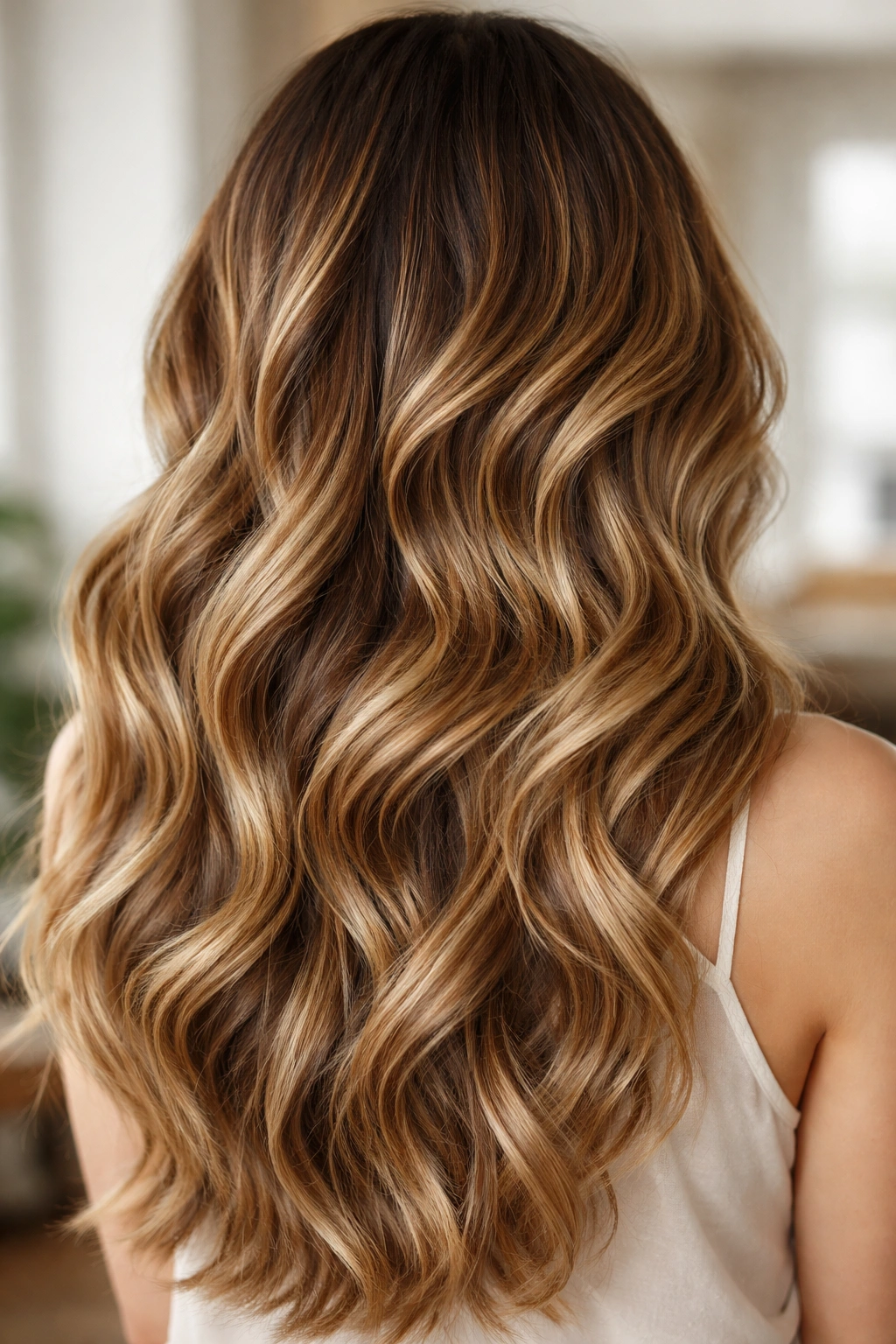
Wavy hair and balayage were made for each other—the movement of waves naturally showcases hand-painted color, while the subtle dimension of balayage makes waves appear richer and more intentional. Whether you’re drawn to warm honey tones, cool ash blondes, subtle chocolate dimensions, or bold contrasts, there’s a balayage and wave combination that matches your aesthetic and lifestyle.
The real beauty of pairing these two techniques is that neither demands perfection. Waves become more beautiful as they move and shift throughout the day, making any imperfections in the color placement look intentional. Balayage grows out gracefully, with the subtle color work blending naturally rather than creating harsh regrowth lines. Together, they create a style that looks expensive and intentional while remaining relatively low-maintenance compared to other color and texture combinations.
Start by identifying which color palette speaks to you—warm or cool, subtle or bold, dark-rooted or all-over—and then consider what wave pattern feels most aligned with your daily styling capacity. An air-dry beachy wave demands less daily effort than defined, curled waves, while a shorter, layered cut with textured waves requires more frequent trims but gives you maximum dimension. The perfect wavy balayage style is the one you’ll actually maintain and wear with confidence.