



Mullets are making a serious comeback, and the short wavy version might be the most wearable interpretation yet. If you’ve been scrolling through barber inspiration feeds or considering a bold cut that’s actually versatile enough for real life, wavy mullets deserve your attention. They walk the line between statement-making and genuinely flattering—short enough on top to look contemporary and intentional, with enough length in the back to feel rebellious without requiring a full commitment to ’80s nostalgia.
The beauty of a short wavy mullet is that the texture does most of the heavy lifting. Those natural waves create visual interest and dimension without needing a ton of styling effort. The contrast between a tapered or faded top and the longer, layered back creates movement and personality—and unlike their straight-haired cousins, wavy mullets feel modern rather than purely retro. Whether your waves are naturally wavy, you’re willing to perm them in, or you’re working with a permanent wave texture, there’s a version here that’ll work with your hair type and personal style.
What makes short wavy mullets so appealing is their adaptability. You can dress them up or down, style them sleek or textured, wear them to a professional setting or a music venue. The cut works across different hair densities and textures, from fine waves to thick, coily hair. Plus, once you understand the basic structure, your barber can customize it to your face shape, hair growth patterns, and lifestyle.
1. The Textured Fade Mullet
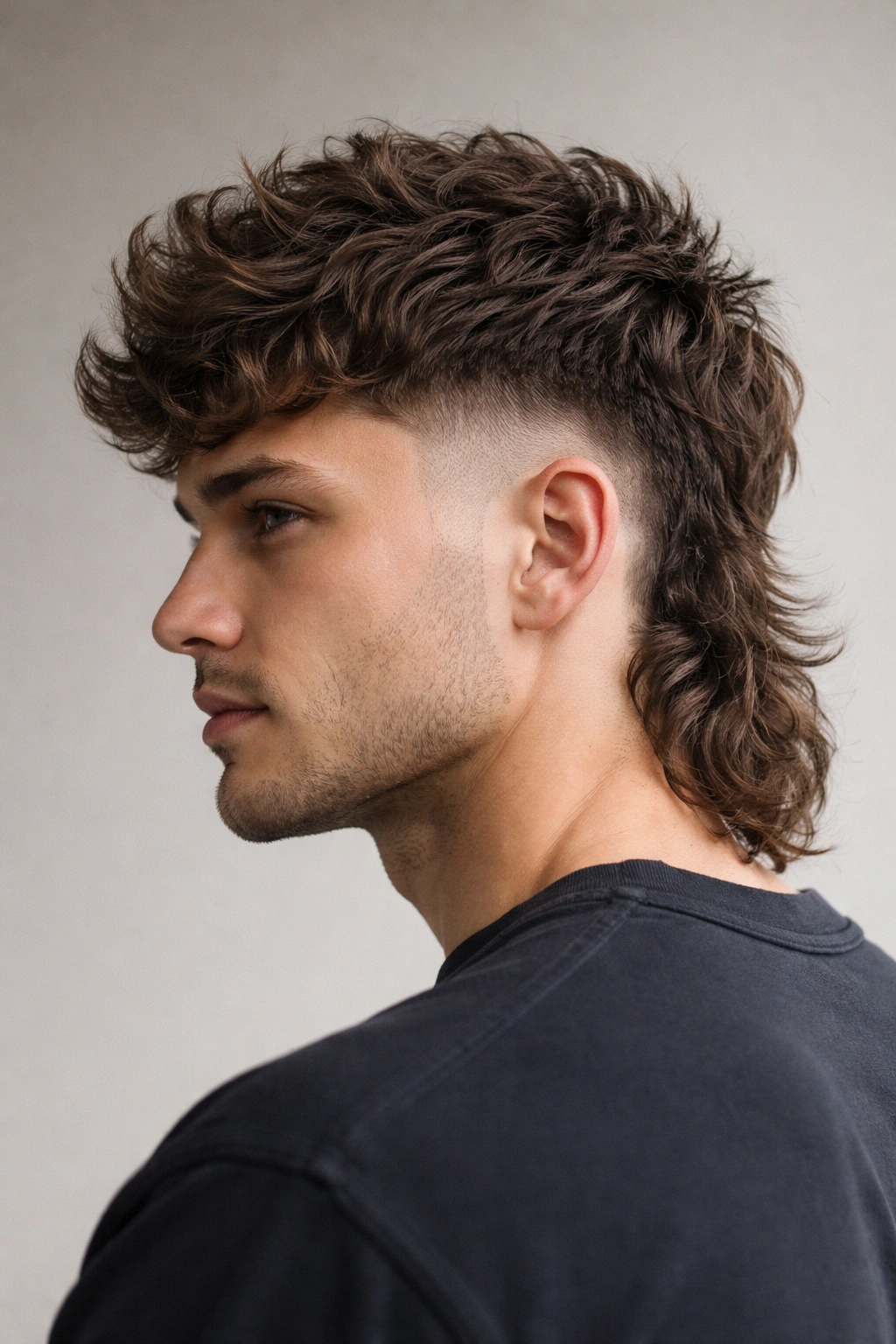
This is the modern barber shop version—a clean fade on the sides and back that gradually blends up into a wavy, slightly longer top. The texture comes from keeping the top section choppy and disconnected from the fade, so the waves stand out rather than lying flat. It’s short enough to look intentional and sharp, but the back stays longer in those telltale mullet proportions.
Why This Cut Works
The fade creates a visual clean-up that keeps the overall look from feeling shaggy or unkempt, even though the top is textured and lived-in. A hard line between the fade and the textured top actually enhances the wave pattern because it frames the volume. This version bridges modern barbering and the classic mullet silhouette—barbers who normally do fades and undercuts can execute this without breaking their usual technical approach.
How to Style It
Start with textured clay or matte pomade through damp hair, working upward and backward to encourage the wave pattern. You can wear it slightly messy for a casual vibe or run a comb through it for something tidier. The back will naturally sit longer and fuller without much styling—that’s the point. Ask your barber to keep the back slightly choppy rather than blunt so the waves look intentional rather than stringy.
Pro tip: Refresh the sides and back fade every 2-3 weeks to maintain that contrast; the top can go 4-5 weeks between cuts.
2. The Curly Wolf Cut Mullet
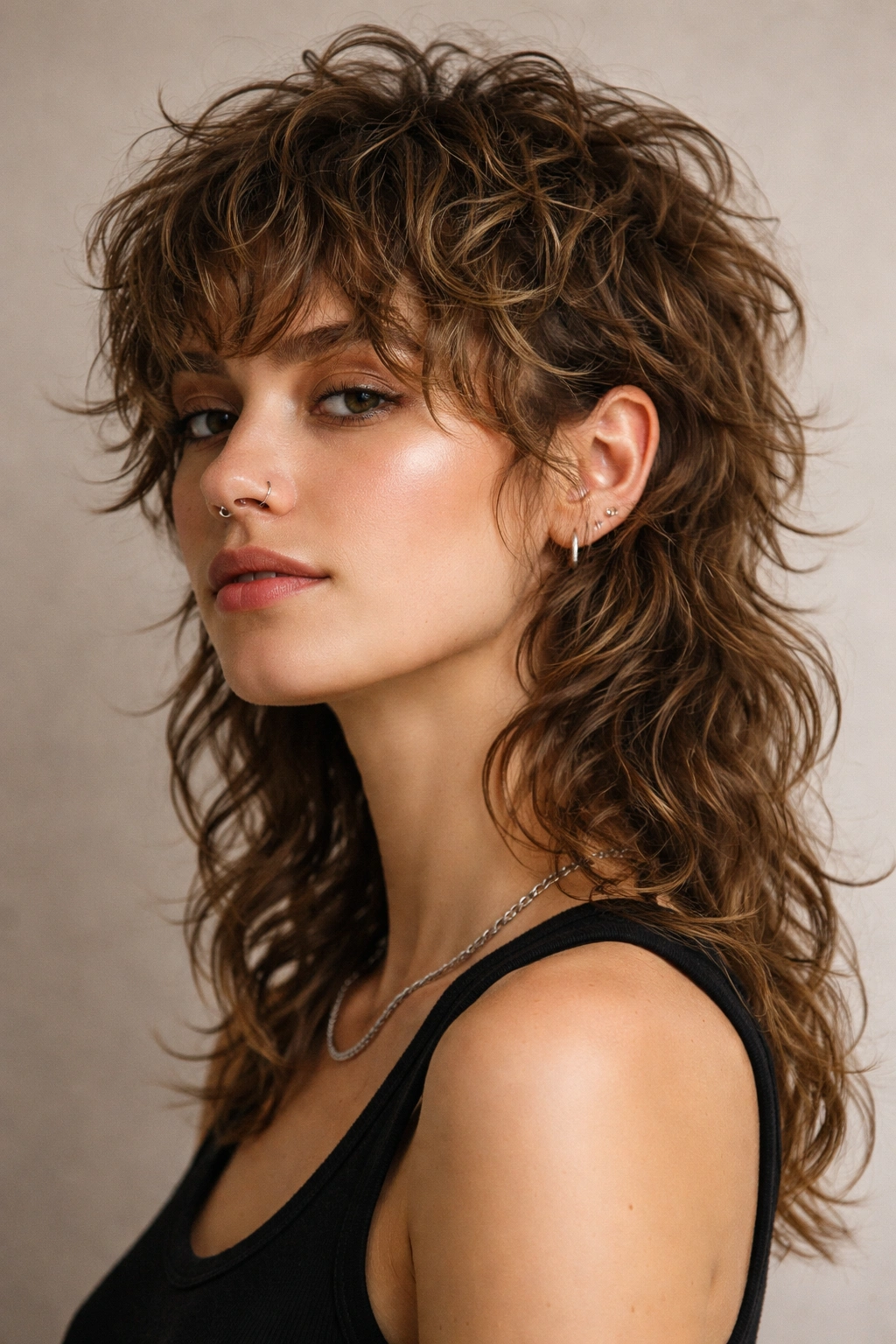
A wolf cut is that shaggy, piece-y layered style that’s been trendy, and when you apply it to wavy hair with mullet proportions, you get something genuinely unique. The top is choppy and layered all over, creating movement and texture that works with the natural wave pattern. The back length gives it that mullet identity while the layers on top catch light and create dimension.
What Sets It Apart
Wolf cuts are all about internal layers rather than a blunt shape, so a curly wolf mullet doesn’t feel as structured or architectural as other versions. It’s softer and more organic-looking, which actually makes it more flattering for people with delicate features or rounder face shapes. The layers also mean you can achieve volume and movement without needing to blow-dry aggressively.
Maintenance and Styling
This cut needs product—sea salt spray or a light texture spray will enhance the wave pattern and keep layers separated and visible. You can run your fingers through it for a tousled look or use a blow-dryer on cool-to-warm heat to encourage the waves. The back will need occasional trimming to maintain definition between layers.
Worth knowing: This version shows wear faster than a blunt cut because the layers can get thin with regular brushing, so schedule trims every 4-5 weeks to keep it looking intentional rather than depleted.
3. The Slicked-Back Wavy Mullet
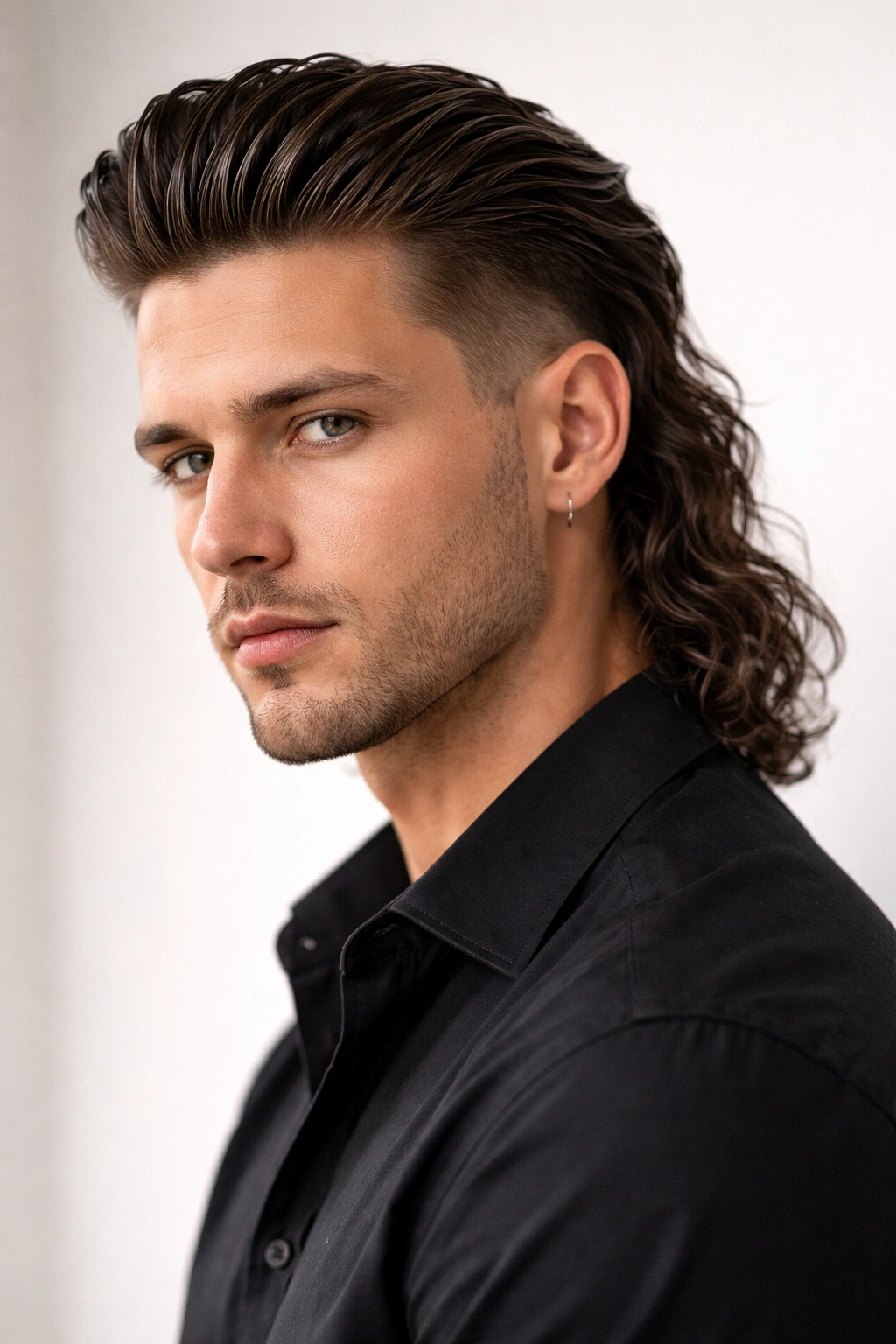
This one’s for people who want a wavy mullet that still reads as polished or professional. The top is slicked straight back with product, emphasizing the wave pattern while maintaining a controlled silhouette. The sides are tapered cleanly, and the back stays longer with waves that flow backward rather than sticking up.
The Styling Commitment
This cut absolutely requires styling—you’re applying a firm-hold gel or pomade to damp hair every morning and combing everything straight back. That’s not necessarily a drawback if you like having a ritual or prefer a put-together look. The result is genuinely sharp and works in formal settings or upscale social situations where a completely textured mullet might feel too casual.
Best for Straight-to-Wavy Hair Types
If your natural wave pattern is subtle, slicking everything back actually shows off the wave because it’s wet and shiny—the light hits the curves. If you have stronger natural waves, this version might feel slightly restrictive unless you use a lighter hold product. The back should be longer than the front by at least 2-3 inches to maintain the mullet ratio.
Real talk: This cut requires daily styling, so it’s not the move if you prefer wash-and-go simplicity.
4. The Tousled Shag Mullet
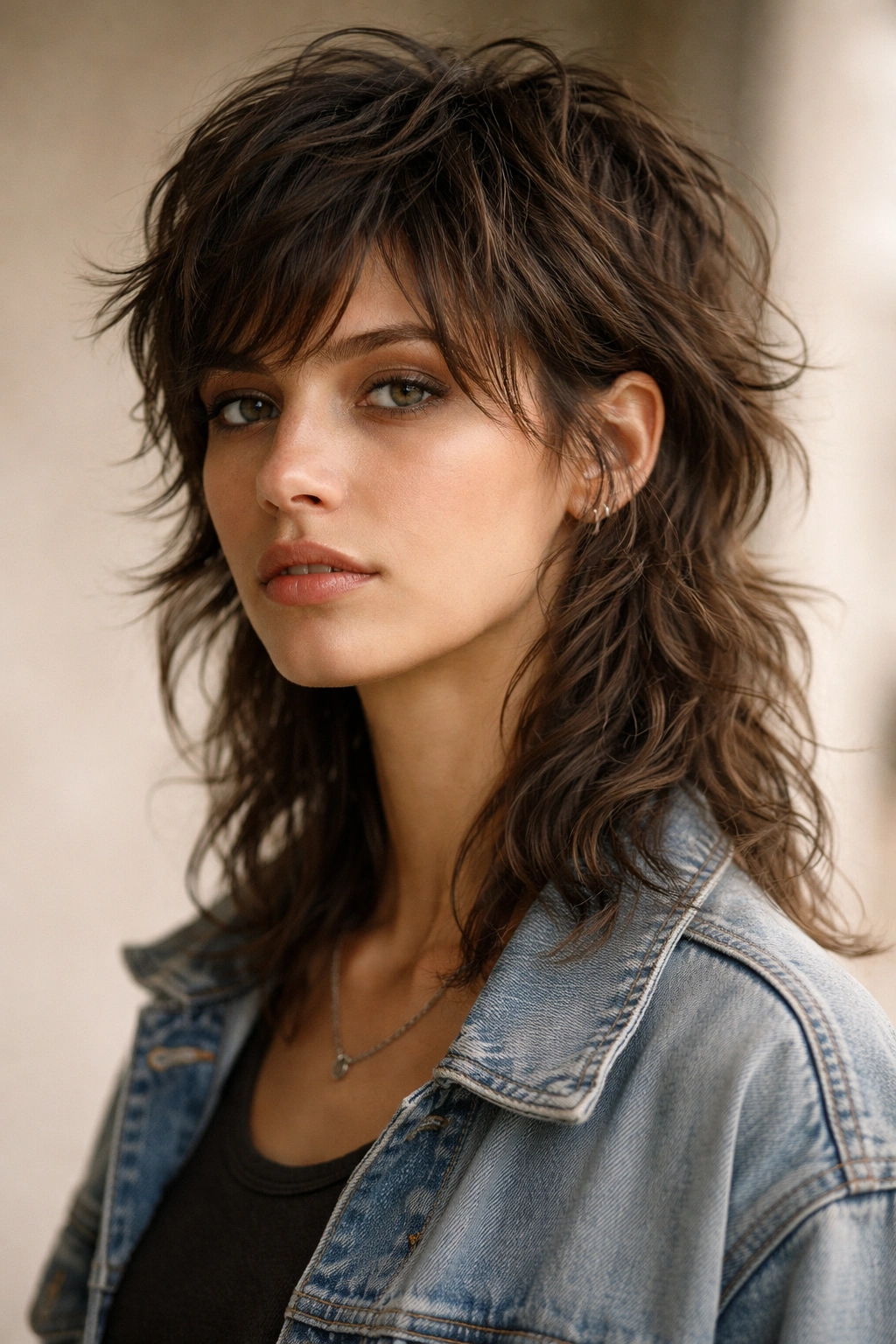
A shag is all about choppy, piece-y texture throughout, and when you add waves and mullet length in the back, you get something that looks intentionally disheveled in the best way. The top is short and shaggy with layers that create movement, while the back is longer with longer layers that create that feathered, flowing effect.
Why Wavy Hair Makes It Work
Shags can look stringy or thin on straight hair, but waves fill them out beautifully. The natural bend in the hair creates visual density even if you don’t have thick hair. You get the youthful, rock-and-roll vibe that shags are famous for, but the wave pattern makes it feel modern rather than purely ’70s nostalgia.
Styling for Maximum Impact
This is a wet-and-scrunched kind of cut. Apply a sea salt spray or light mousse to damp hair and scrunch upward to encourage waves and layers to separate. You can blow-dry for more volume or air-dry for a softer, more relaxed look. The back will have natural movement without much product.
Work some texture paste or light pomade through the top to enhance separation if you want more definition, but this cut looks good slightly messy. The key is not fighting the texture—embrace that your hair looks like it just blew in from somewhere cool.
5. The Undercut Wavy Mullet
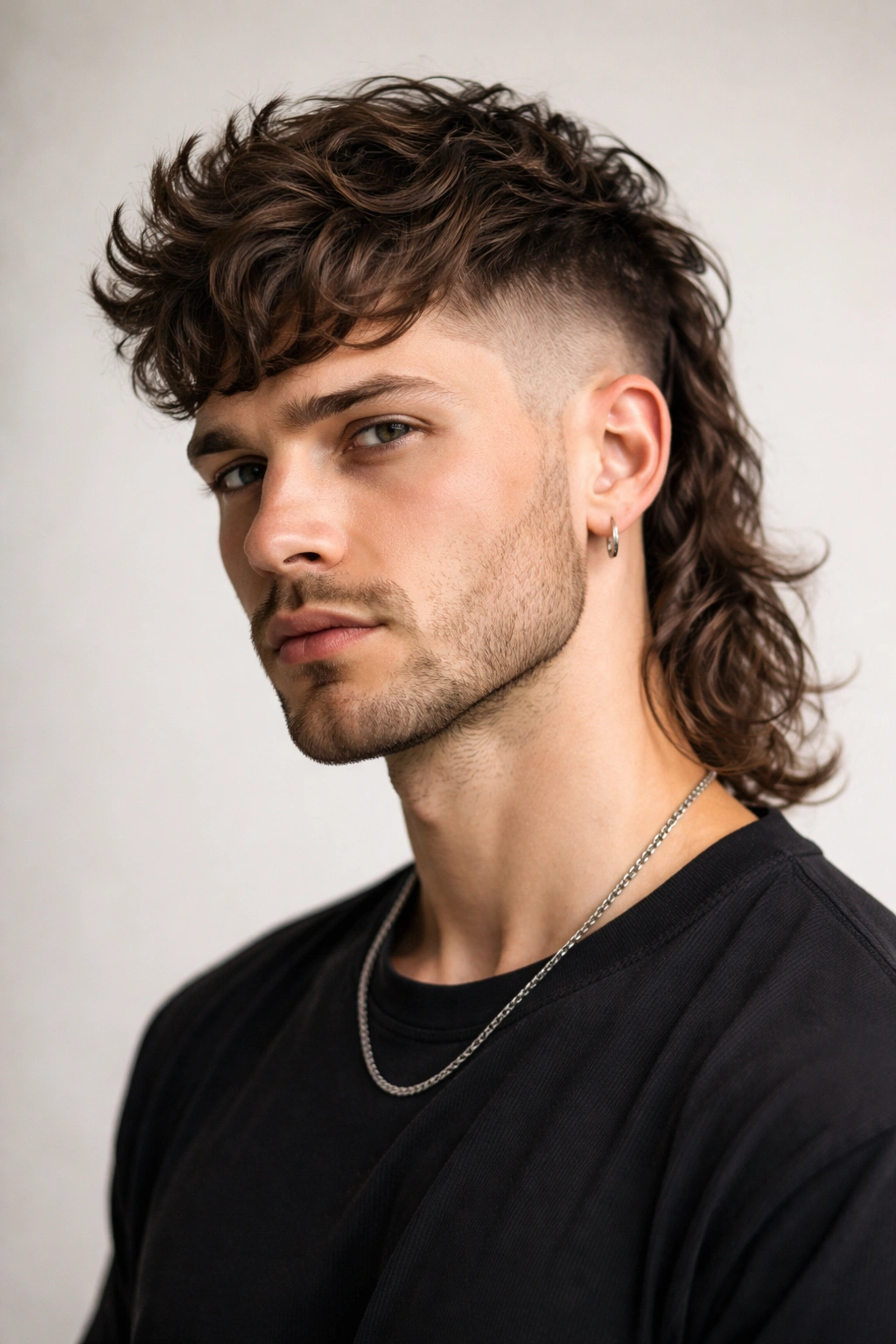
An undercut means the sides are cut much shorter than the top, with a defined line between them rather than a gradual fade. On a wavy mullet, this creates stark contrast—short, clean sides that highlight the volume and texture on top, then the longer back section with waves that flow downward.
The Bold Visual Contrast
The undercut approach is more architectural and edgy than a fade—it’s a definite style statement. It works well if you have a longer face shape because the tall sides-to-top ratio can actually make your face look shorter and broader. The clean lines also look very intentional and contemporary, which is perfect if you’re going for “I meant to do this” rather than “I’m embracing retro nostalgia.”
Length Ratios That Matter
A true undercut usually means the sides are 1-2 inches at most, while the top can be 3-4 inches. The back needs to be noticeably longer—at least 4-5 inches—to maintain the mullet silhouette. This creates a dramatic visual jump that’s very ’80s-informed but done in a modern way.
Key detail: The line between undercut and top should be clean and sharp, not blended—that’s what makes an undercut different from a fade.
6. The Spiky Wavy Mullet
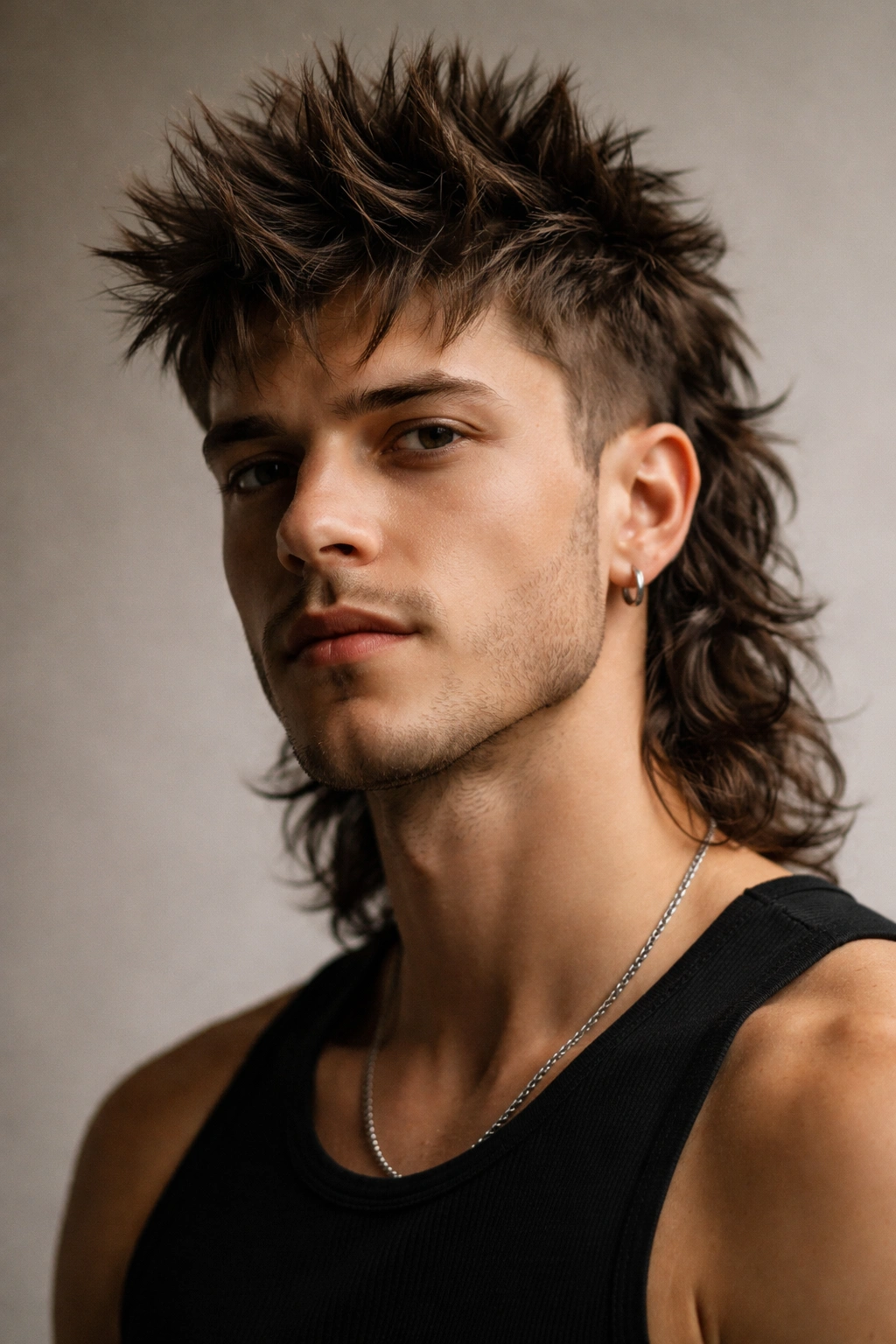
This version uses choppy, vertical layers on top to create spikes and points that stand straight up, while the back stays longer with waves that flow downward. It’s short and textured on top in the most exaggerated way, creating serious visual height without looking cartoonish.
Getting Height Without Looking Dated
The trick is keeping the spikes relatively natural to the wave pattern rather than sculpting them into perfect points. You want the texture and layers to create a spiky effect when you style it, not artificially spiked gel from 2000. This feels intentional and current rather than costume-y.
Product and Styling Method
Use a texturizing paste or matte gel through damp hair, working upward with your fingers to encourage spikes. You can blow-dry while doing this to set them, or use a blow-dryer on cool air after to seal everything in place. The goal is spikes that look alive and moveable, not stiff and frozen.
The back doesn’t need much product—just enough to define the waves and keep them from getting matted. This cut creates a silhouette that’s tall on top and longer in back, which is dramatically mullet but feels modern when executed with natural texture.
Insider note: Ask your barber to connect the spiky top to the longer back with a gradual taper on the sides rather than disconnecting them, which makes it feel more cohesive and less costume-like.
7. The Tapered Flow Mullet
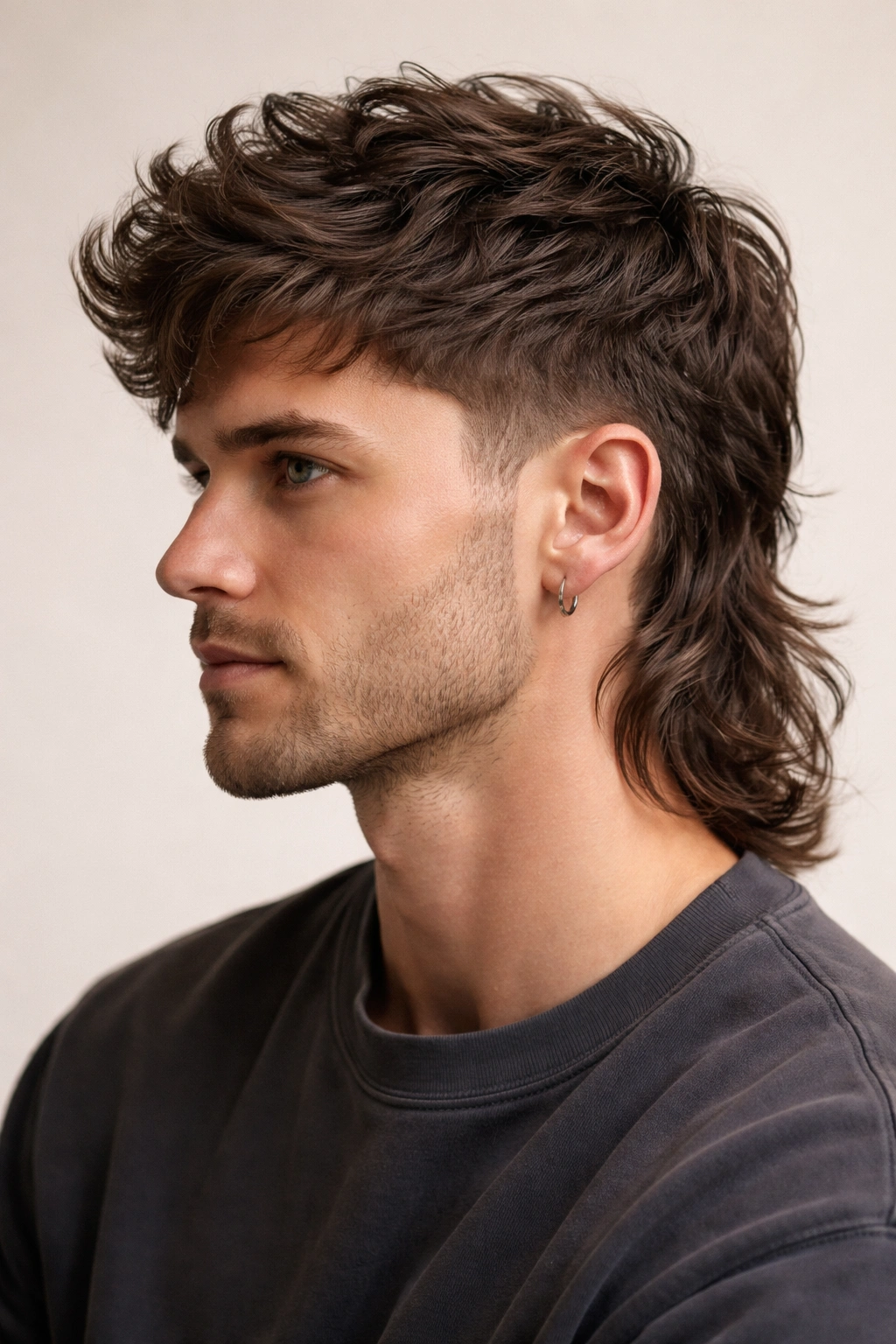
This is a refined, understated version—short and wavy on top with a subtle taper into the longer back section. Rather than disconnecting the top from the back (like you’d do with an undercut), everything flows together with a gradual transition. The sides are tapered, not faded, creating a softer aesthetic.
The Sophisticated Approach
Tapered mullets feel less aggressive than other versions, which makes them work in more conservative environments. You can actually wear this to corporate environments or formal settings if you style it neatly. The waves prevent it from looking boring or overly dated because the texture is contemporary.
Styling for Elegance
This cut works great with a light pomade or grooming cream that enhances shine and definition without creating a shiny, product-heavy look. You can style it with volume on top or brush it back—the tapered transition gives you flexibility. The longer back can be tucked behind the ears for a neater look or left to flow if you prefer more relaxed styling.
The beauty of a tapered mullet is that it reads as intentional without being aggressive. You’re choosing a mullet structure, but executing it in a way that signals sophistication rather than pure rebellion.
8. The Permed Wave Mullet
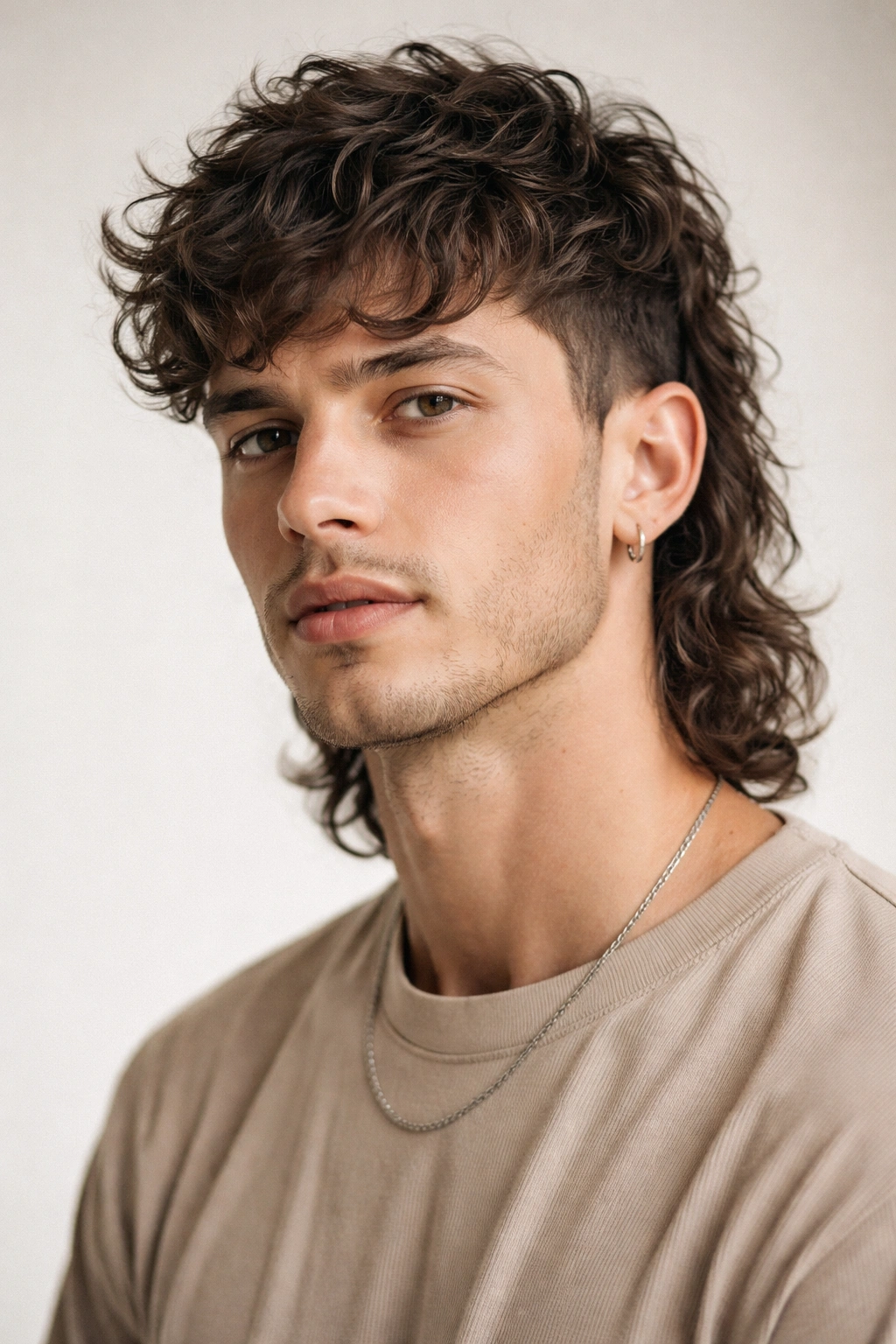
If you have straight hair and love the idea of a wavy mullet, getting a permanent wave is the most reliable way to commit to the look. A perm creates actual texture throughout your hair that you can enhance with styling but isn’t entirely dependent on it. On a short mullet, a perm creates waves from root to tip that work with the cut’s structure rather than against it.
Making a Perm Look Modern
The key is avoiding the tight, spiral-curl look that perms are famous for. Work with your stylist to get a looser, more natural-looking wave pattern that enhances your hair rather than transforming it into something unrecognizable. Modern perms can be very subtle if you want them to be.
Styling a Permed Mullet
Once your perm settles (usually 48-72 hours), you can enhance the waves with a light sea salt spray or wave cream. You can also just shampoo and go—that’s one major advantage of having actual texture built into your hair. The waves will be there even on mornings you’re rushed.
One drawback: perms require more frequent conditioning because the chemical process dries out hair. You’ll need to be more intentional about hair care to keep the waves looking healthy and shiny rather than fried or frizzy.
9. The Disconnected Mullet
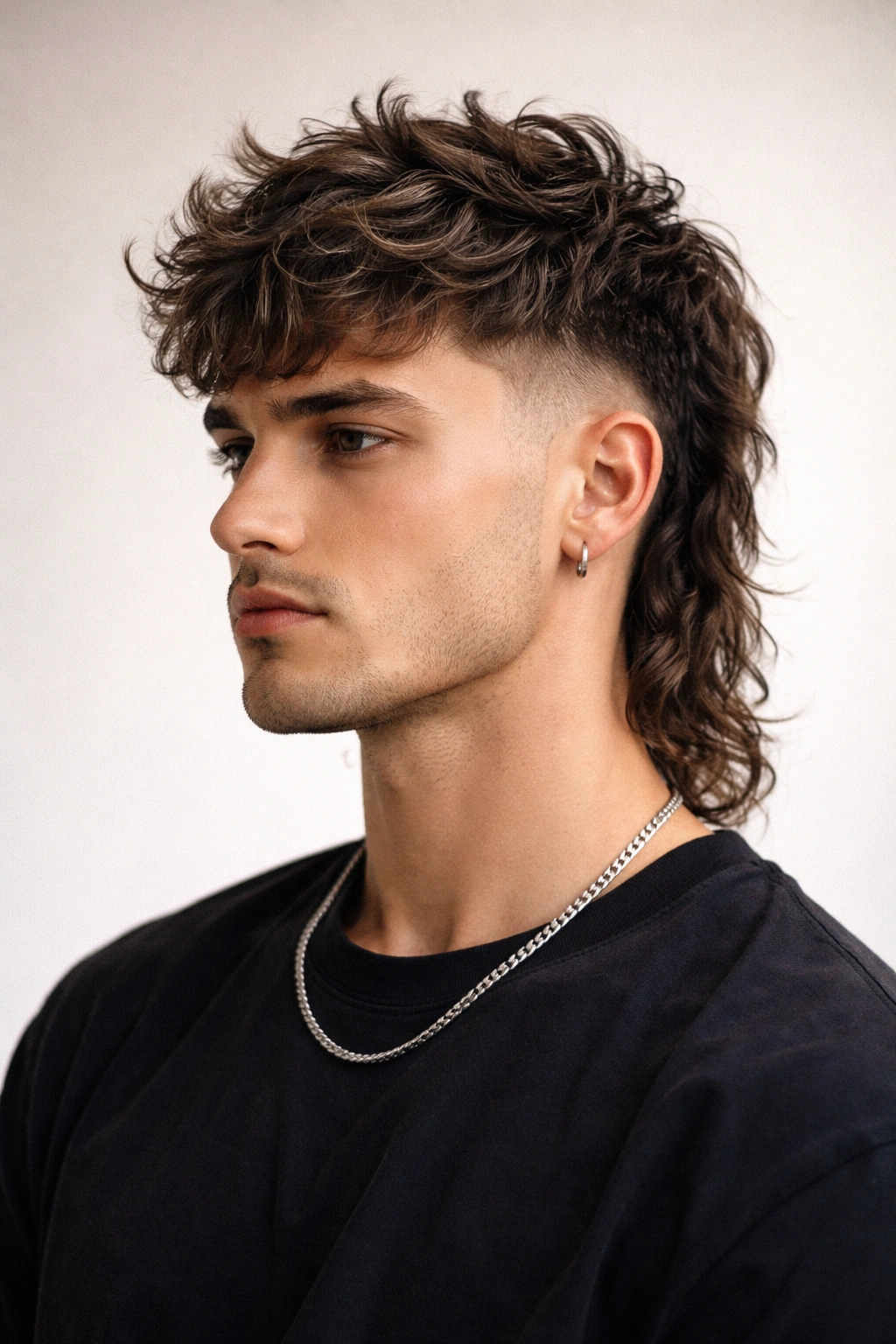
A disconnected cut means the top is deliberately separated from the sides and back—there’s no blend or transition at all. It’s a very graphic, architectural look. The top stays short and wavy, the sides are faded or undercut, and the back is noticeably longer, creating three distinct zones rather than one flowing shape.
When Disconnected Works Best
This look is bold and unapologetic—perfect if you’re doing a mullet because you love mullets, not because you’re trying to sneak it past anyone. It reads as intentional and modern because of the deliberate lack of blend. The disconnection actually makes the waves on top more visually prominent because they’re not blending into anything.
The Visual Impact
The hard lines create a very strong silhouette that works better on certain face shapes—longer faces benefit from the height on top, while rounder faces might feel more balanced with a more tapered version. The disconnected approach is definitely more of a fashion statement than other versions.
The back stays distinctly longer, usually 4-6 inches, creating a dramatic length difference between front and back. This is the most stereotypically “mullet” of the cuts, but done with short texture and modern barbering, it feels current.
10. The Cropped Wavy Mullet
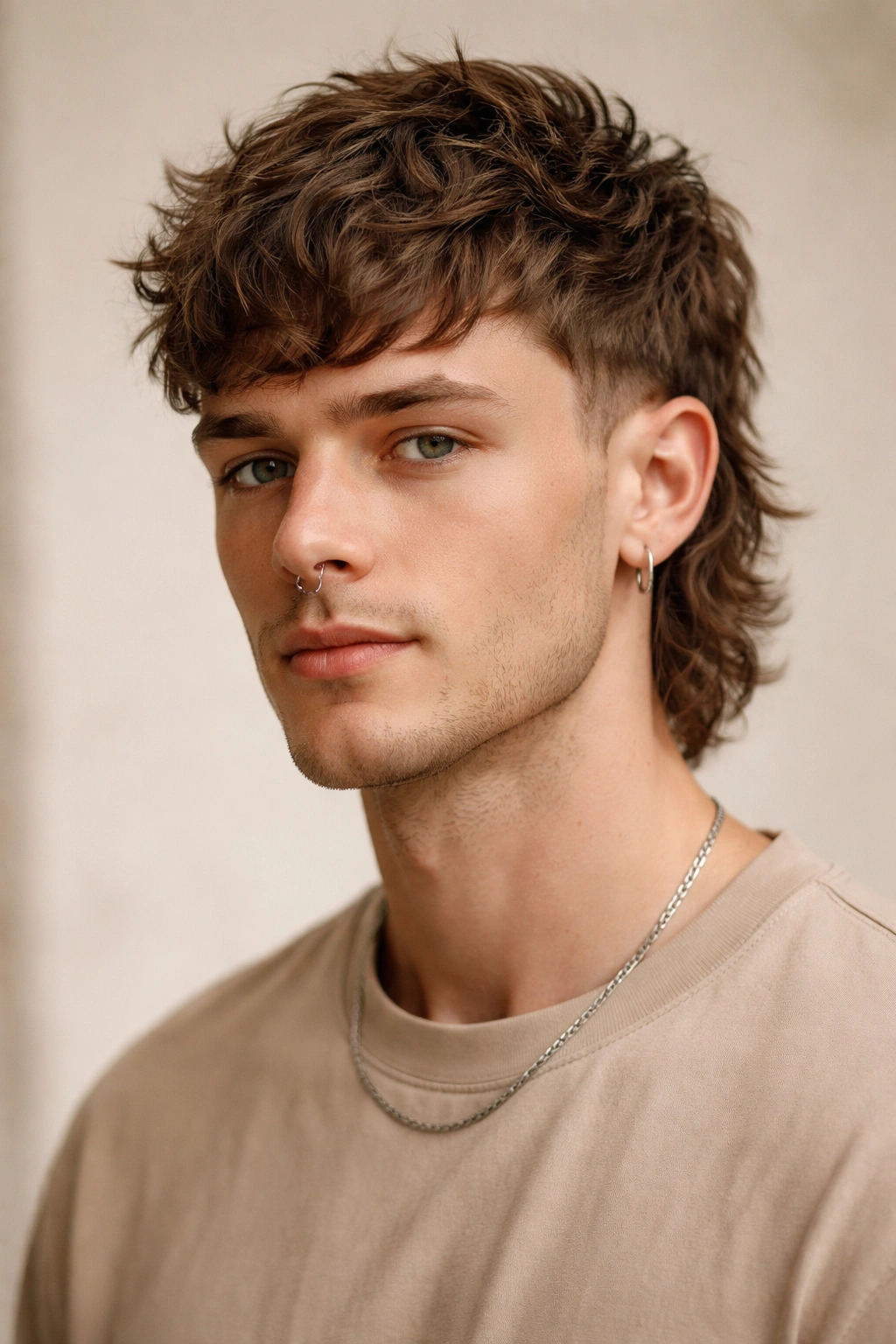
A cropped version is short all over, but still maintains mullet proportions—the back is maybe only 1.5 to 2 inches longer than the front, rather than a dramatic difference. It’s the least dramatic of the mullet interpretations, which actually makes it more wearable for people who want the vibe without the commitment.
The Subtle Statement
This reads more like a textured crop than a traditional mullet to most people, which is probably the point. You get the cool factor of having a longer back without the obvious mullet shape that’ll get comments. It’s a gateway mullet—perfect for testing whether you actually like the style before committing to a longer version.
Who This Cut Works For
People with finer hair or thinner hair often prefer cropped mullets because the shorter length everywhere maintains density and shape. It also works better if you don’t have naturally wavy hair and don’t want to perm—a subtle texture is enough to make the shape read as intentional.
Real talk: A cropped mullet is sometimes just called a textured crop or shag, so don’t be surprised if your barber isn’t immediately sure what you mean. Bring a photo to make sure you’re on the same page.
11. The Feathered Mullet
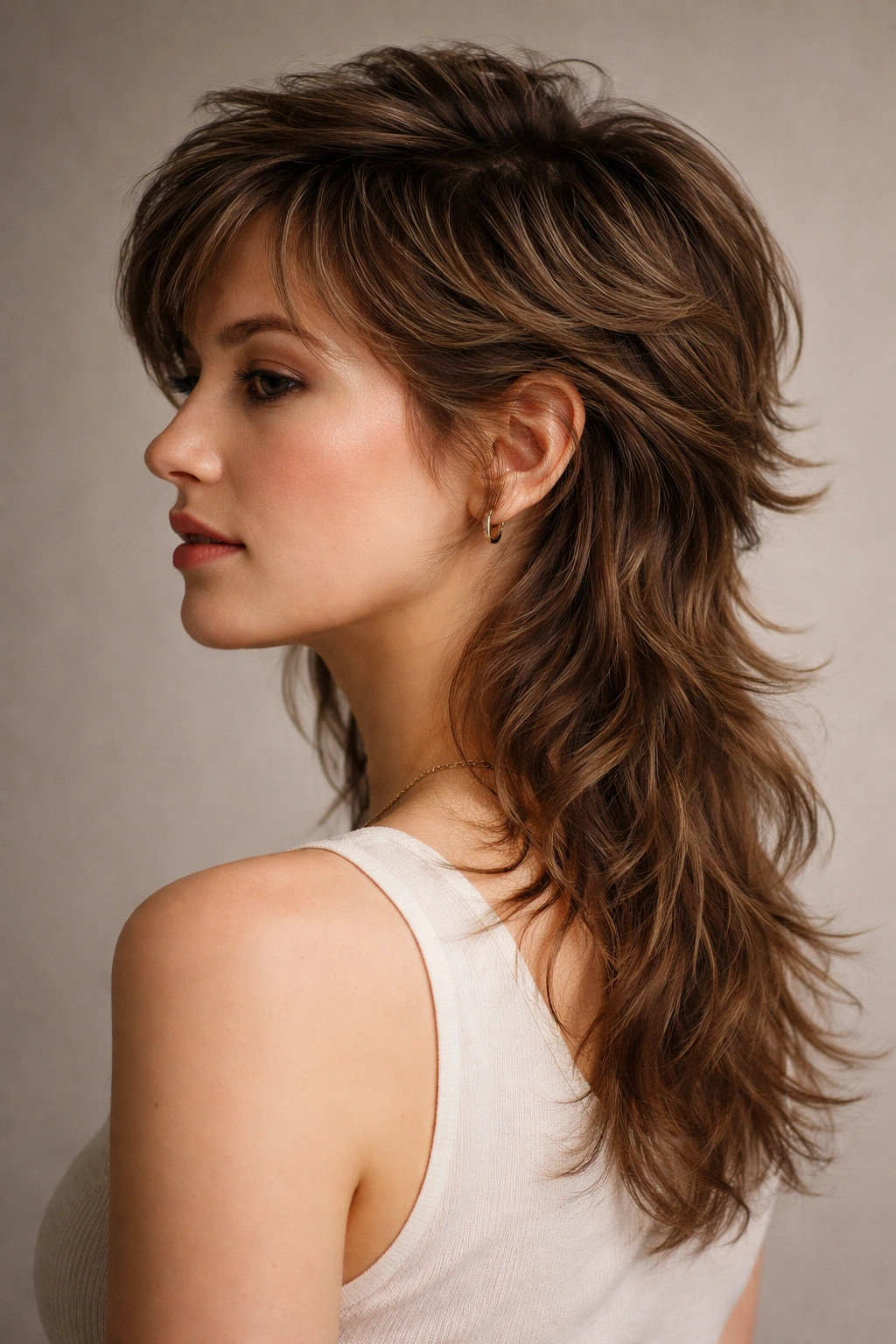
Feathering means layers are cut at angles that create movement and flow, like feathers. On a wavy mullet, feathered layers throughout the top create a softer, more flowing silhouette rather than choppy, piece-y texture. The longer back is also feathered, creating movement that flows downward.
The Softer Approach
Feathered cuts are less edgy than choppy versions—they feel more romantic and less punk. If you want a mullet that still feels elegant or works in settings where you need to look polished, feathering is a good strategy. The layers still create movement and prevent the hair from lying flat, but in a more controlled way.
Styling for Flow
Feathered mullets work well with a light texturizing spray and blow-drying to encourage the layers to move as designed. You can also let them air-dry and they’ll maintain their shape. The back will naturally feather into longer layers that create movement without needing much product.
This version is especially flattering if you have a rectangular or angular face shape because the feathered layers create softness that balances sharp features.
12. The Choppy Layer Mullet
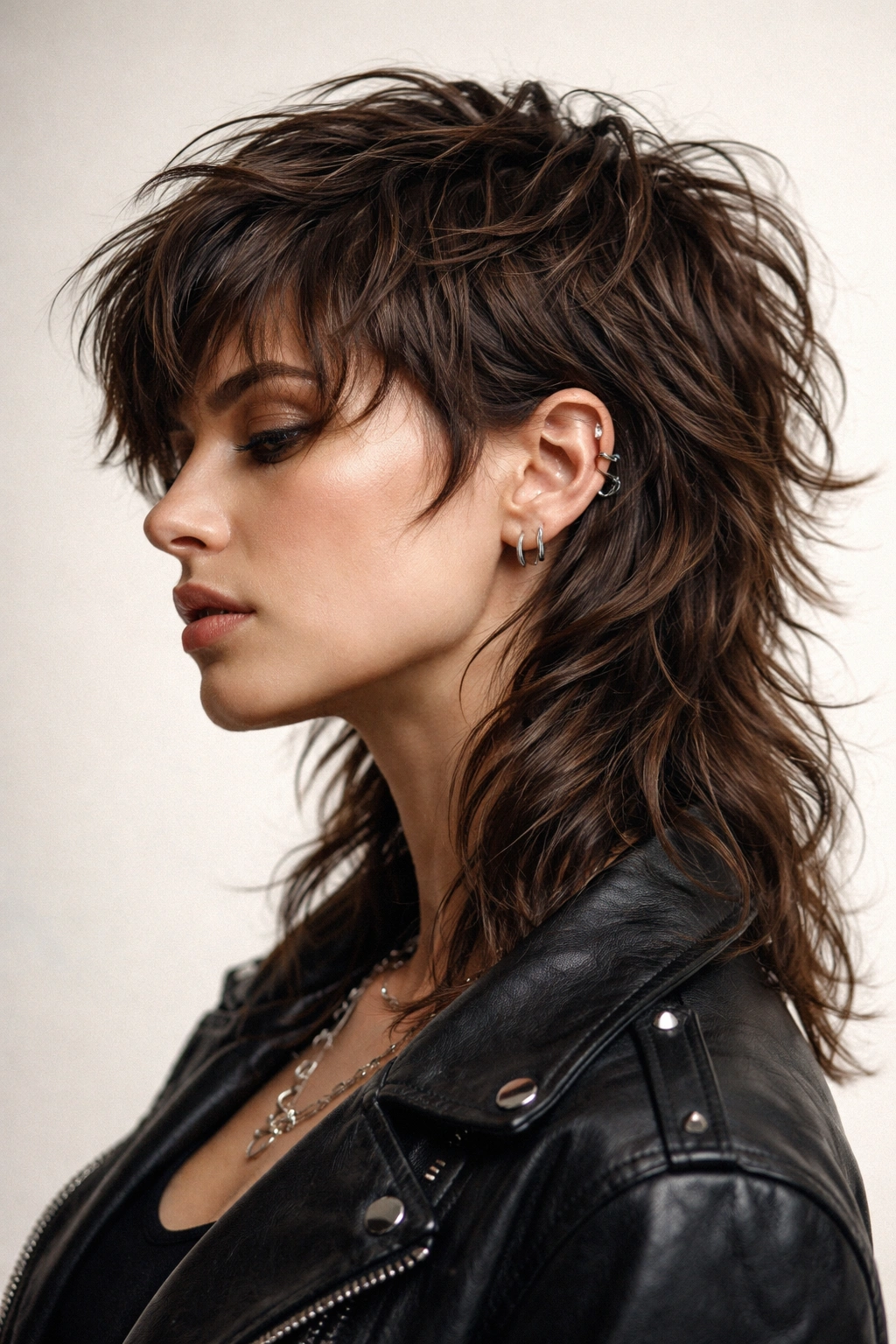
Choppy layering creates visual texture and movement through shorter, more aggressive layers throughout. Unlike feathering, which is smooth and angled, chopping creates more obvious separation and piece-y definition. On a wavy mullet, choppy layers enhance the texture and create a punk-rock, edgy vibe.
Maximum Texture and Movement
Choppy layers catch light beautifully on wavy hair because each piece casts its own shadow. You get serious visual dimension and movement even if you don’t have thick hair. This is the version for people who want their mullet to look absolutely intentional and fashion-forward.
Styling Choppy Layers
Choppy mullets look good with texture products—matte paste, clay, or texturizing spray all enhance the layer definition. You can also just scrunch them damp and let them air-dry for a more natural, piece-y look. The back will have natural movement from the choppy layers without needing much product.
This version does show grow-out more obviously than blunt cuts because the choppy layers become increasingly visible as they grow, so plan on trims every 4-5 weeks to maintain the defined look.
13. The Side-Swept Mullet
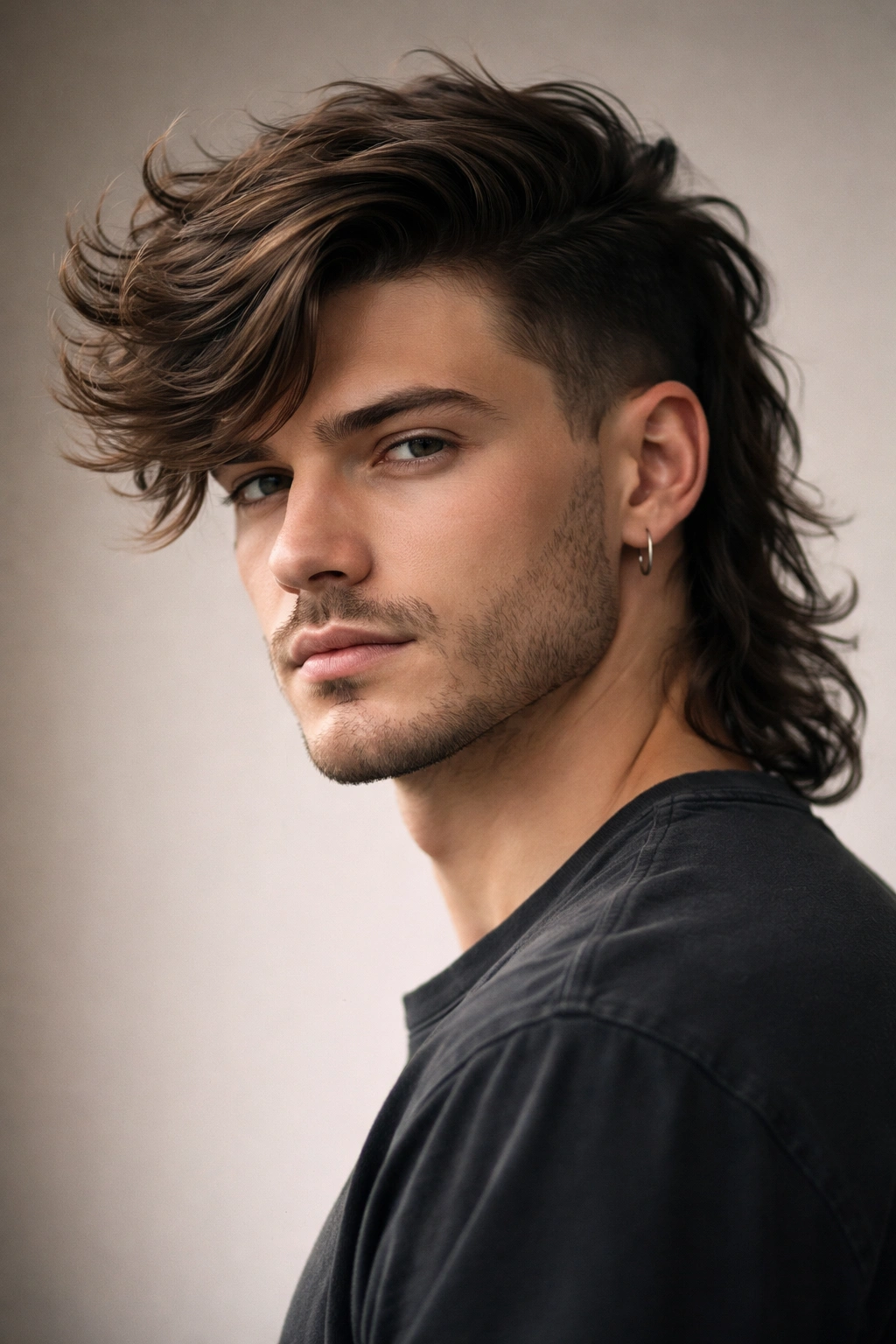
Instead of styling everything backward or upward, a side-swept mullet has the top swept dramatically to one side, creating asymmetry. One side is shorter and more tapered, while the other side is longer and wavy. The back stays long, maintaining the mullet proportion.
Creating Asymmetrical Interest
Asymmetrical cuts are inherently interesting because they’re different from the standard symmetrical haircut people are used to. A side-swept mullet draws attention to one side of your face, which can be flattering if you have a favored side or want to highlight better features on one side.
Styling Asymmetrical Waves
You’ll be blow-drying and combing the top toward the swept side to create that asymmetrical effect. This isn’t a wash-and-go cut—it requires intentional styling every day. The longer back can be swept to the same side for extra drama or left neutral.
Side-swept versions work well if you have longer hair on top because there’s enough length to really move. The back’s longer length makes the asymmetry feel intentional rather than like you have a bad haircut.
Worth knowing: Asymmetrical cuts can look odd during grow-out because the length difference becomes exaggerated, so maintain frequent trims to keep the shape looking intentional.
14. The Messy Textured Mullet
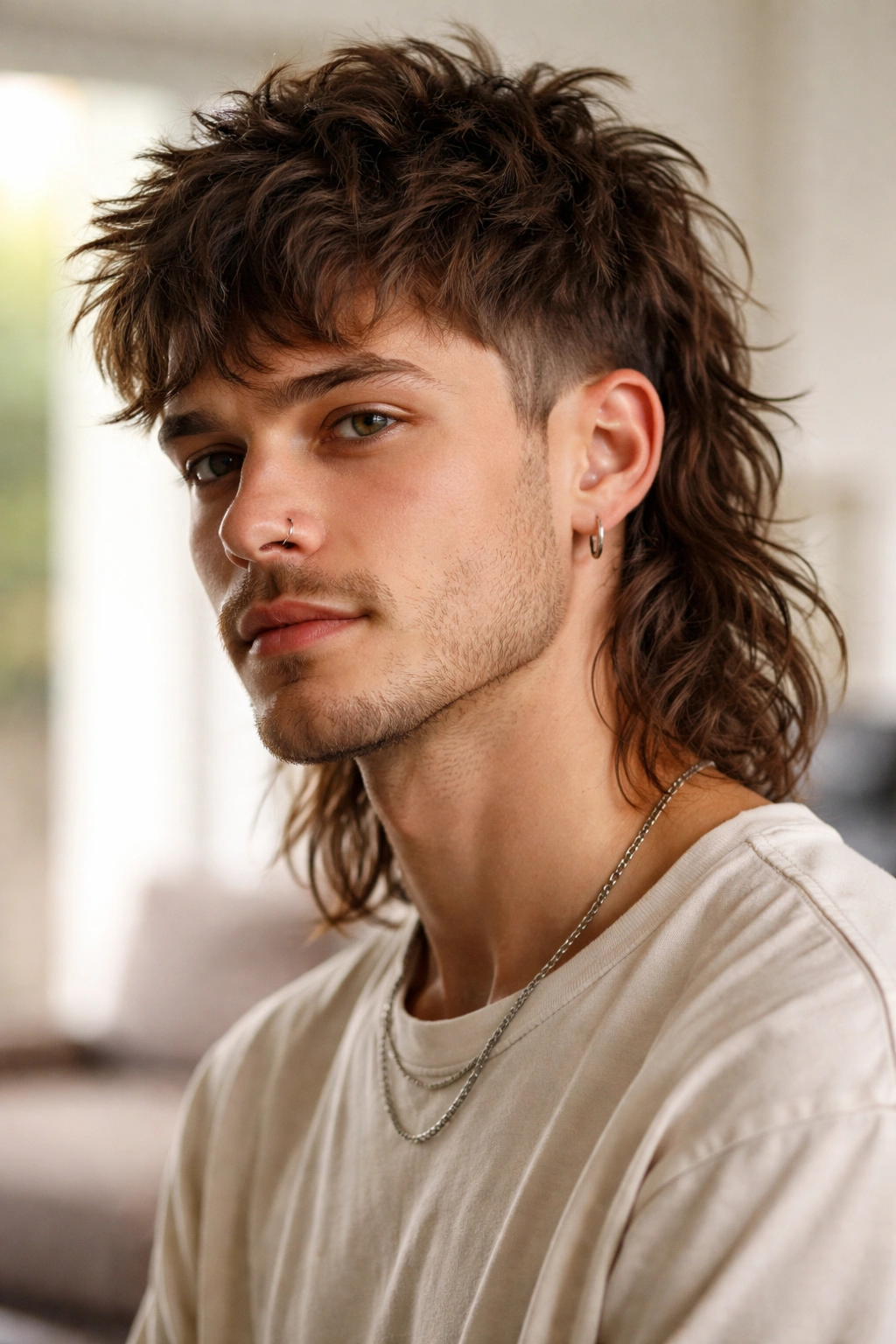
This is the version that looks like you just rolled out of bed and it looks effortlessly cool. The top is very textured and choppy, styled with light texturizing spray or sea salt spray for a lived-in, undone look. The back is longer with choppy layers that also look naturally tousled rather than styled.
The Intentional Casualness
The messy aesthetic is actually intentional—it’s not that you didn’t style it, it’s that you styled it to look like you didn’t. This works really well if you actually prefer low-maintenance styling because once you achieve this look in the morning, you can pretty much forget about it.
Getting the Right Kind of Messy
Ask your barber for choppy, piece-y layers throughout with no blunt edges. Use a texturizing spray or sea salt spray on damp hair and scrunch upward to activate the texture. You can finger-comb rather than brush it, which keeps it looking piece-y and separated rather than blended.
The back will have natural movement from the layers and the waves. You don’t need a ton of product—just enough to enhance texture and separation. This version looks best if you’re okay with your hair looking slightly undone, which is actually a compliment in this case.
15. The Skin Fade Mullet
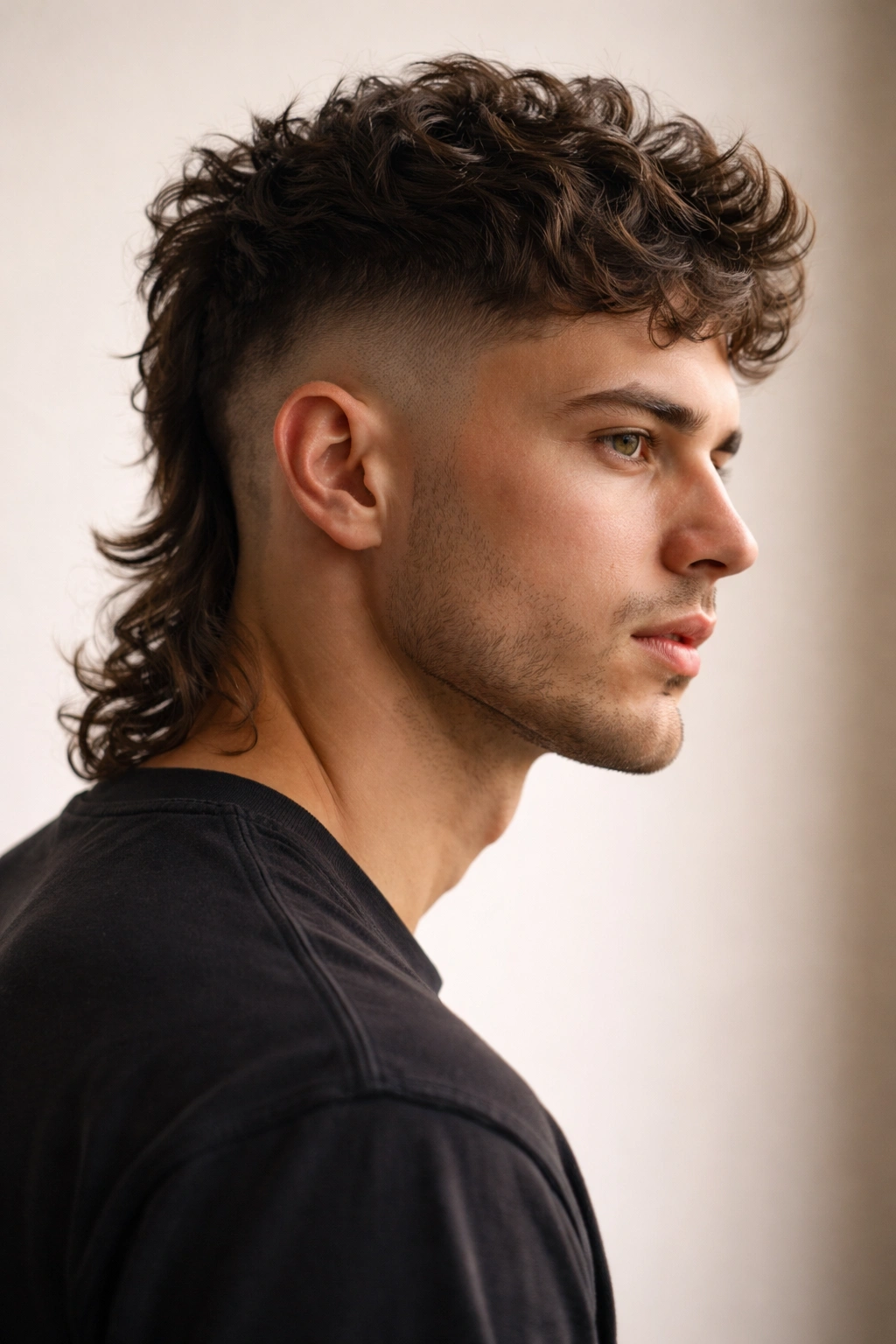
A skin fade is the most extreme fade option—the sides are faded all the way down to very short or nearly shaved at the bottom, with length gradually increasing toward the top. On a mullet, a skin fade creates the starkest possible contrast between the textured top and completely clean sides.
Maximum Modern Impact
A skin fade is unquestionably the most contemporary barbering technique, which makes a skin fade mullet feel surprisingly current even though you’re doing a traditional mullet shape. The super-clean sides actually make the longer back feel less retro because it’s framed by modern barbering.
The Maintenance Reality
Skin fades show growth very obviously—within a week, you’ve got stubble instead of skin. Plan on getting this trimmed every 1-2 weeks to maintain that clean appearance. If you’re not willing to commit to frequent barber visits, a skin fade might be more maintenance than you want.
The contrast is so stark that it works best if you have clearly defined waves or texture on top—otherwise the clean sides might emphasize that your top is just fine or straight hair. Pair this with choppy layers or textured styling to maximize the visual impact.
16. The Blunt Wave Mullet
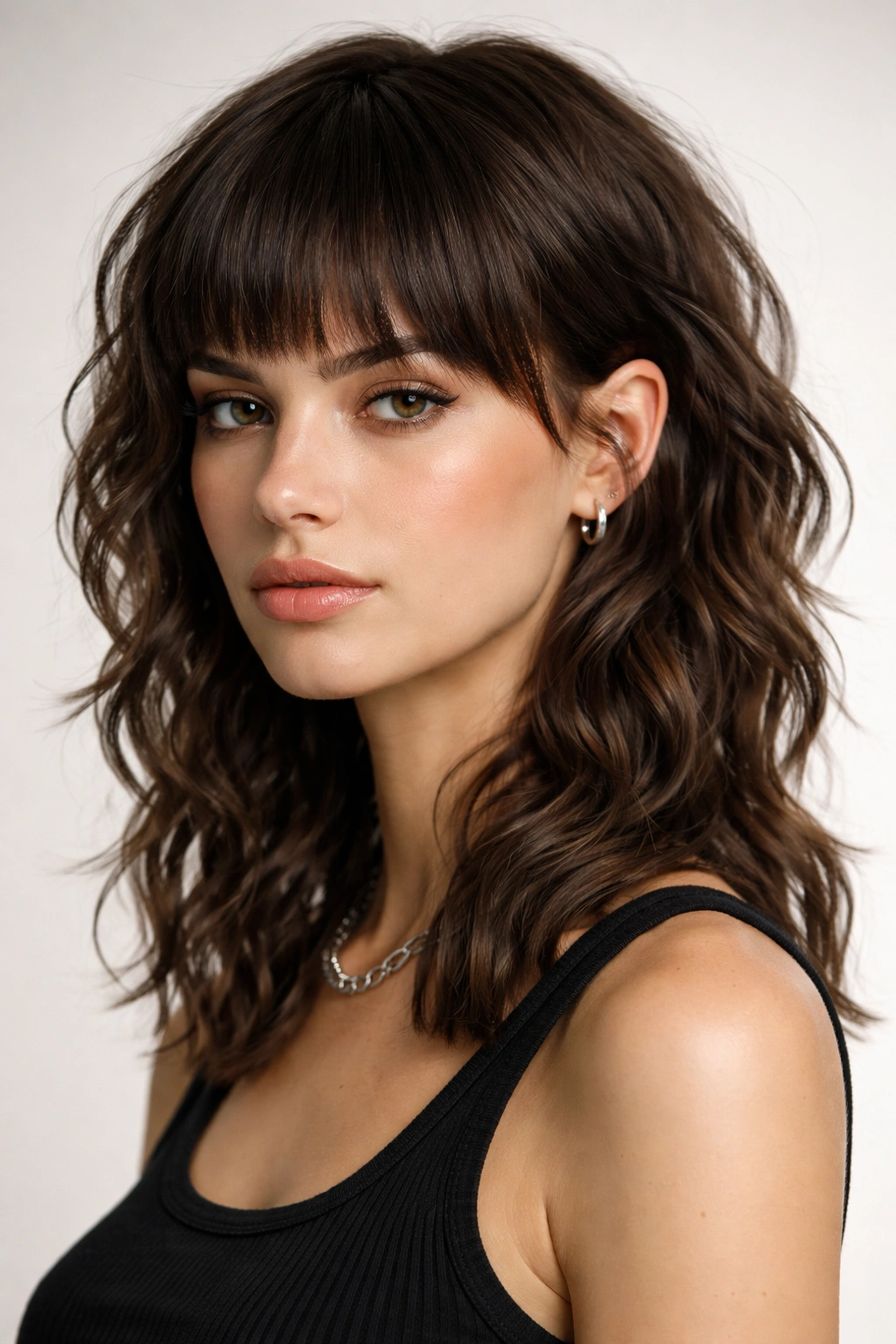
A blunt cut means the ends are cut straight across rather than layered or tapered. On a wavy mullet, blunt edges on top create a strong, defined shape with clean lines. The back is also blunt, creating a distinct perimeter rather than feathered or choppy texture.
Bold Geometry
Blunt cuts are all about shape and silhouette. Because you’re keeping the lines defined, the waves have to be strong enough to be visible—subtle waves might just look like you have straight hair that’s cut bluntly. This works best if you have natural waves or you’re willing to perm.
Styling Blunt Edges
Blunt waves look good with a light shine product rather than thick texture paste. You want the light to hit the edges and show off the defined shape. Blow-drying to emphasize the waves will enhance the overall silhouette.
The back’s blunt edge creates a hard line that’s very intentional-looking. This version works well in more formal settings because the sharp geometry reads as deliberate and sophisticated rather than casual.
Key point: Blunt cuts show split ends more obviously than choppy or layered cuts, so you’ll need regular trims to keep the edges sharp and healthy-looking.
17. The Swept Fringe Mullet
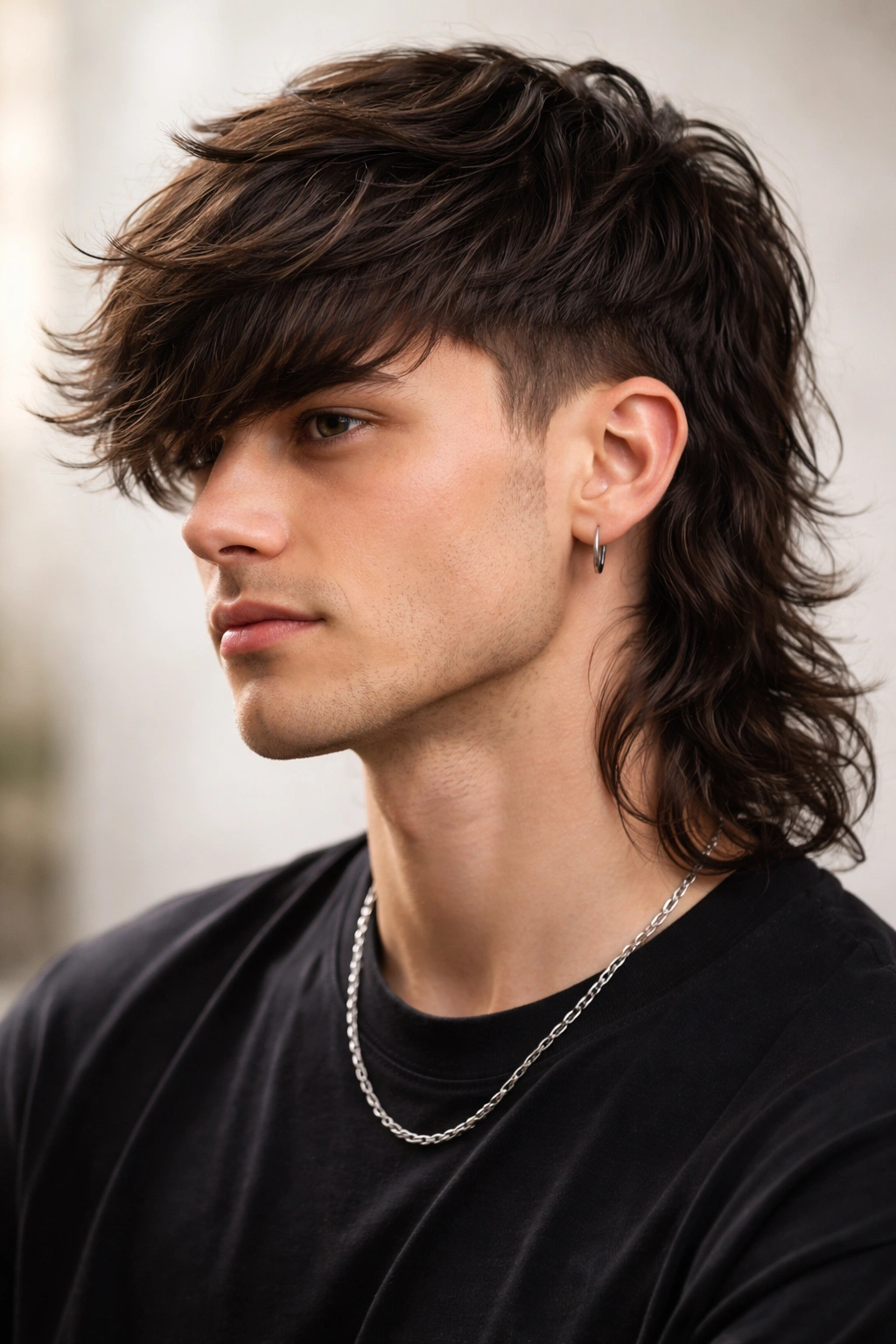
A swept fringe is longer hair in the front that sweeps across, creating a fringe effect. On a mullet, the fringe is the most prominent feature on top, while the sides are tapered and the back is longer. This creates a very distinctive profile with the fringe drawing immediate attention.
Defining Features
A swept fringe can almost hide the mullet aspect because the front is so prominent. The longer back doesn’t read as obvious until you turn around. This is the move if you want a statement cut that doesn’t announce “I’m wearing a mullet” from the front.
The Styling Requirement
A swept fringe requires blow-drying and combing to get it right. You need to direct the fringe across the forehead with a blow-dryer and then comb it into place. This is the most styling-dependent of the versions we’re discussing.
The fringe length is usually at least 2-3 inches longer than the sides, and it sweeps down to cover at least one eye. The back stays distinctly longer, maintaining the mullet proportion even though your eye is drawn to the fringe.
18. The Short Stack Mullet
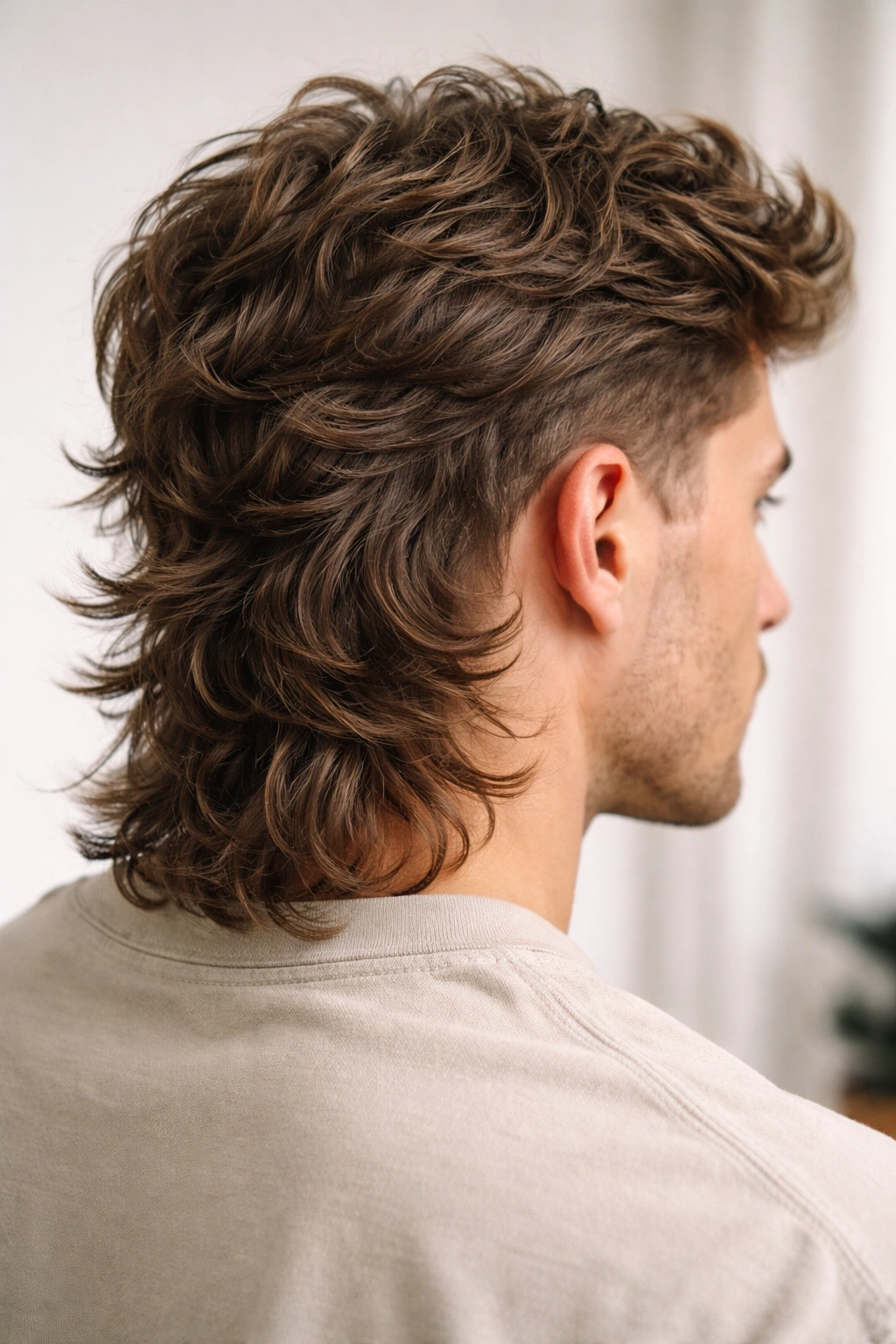
A short stack is when the back has multiple layers that create stacked volume—like shorter layers on top of longer layers. On a mullet, this means the back has visible tiers of length that create depth and movement. The top is also layered and textured, creating a cohesive texture throughout with more length in back.
Visual Complexity and Depth
Stacked layers create visual interest because you see layers on top of layers. This works especially well if you don’t have extremely thick hair because the stacking creates the illusion of density. Light hits all the different layers and creates shadow and dimension.
Maintenance Matters
Stacked cuts need regular trims because the layers become less defined as they grow. Plan on getting shaped up every 4-5 weeks to keep that stacked effect visible. When a stacked cut grows out without maintenance, it just looks like you need a haircut rather than intentional styling.
The back’s visible tiers make this version feel especially fashionable and current. This is the pick for people who love the look of movement and texture and don’t mind the maintenance that comes with keeping layers clean and defined.
Real talk: Stacked mullets look incredible when freshly cut and maintained, but grow out less gracefully than blunt versions, so be realistic about committing to regular barber visits.
Final Thoughts
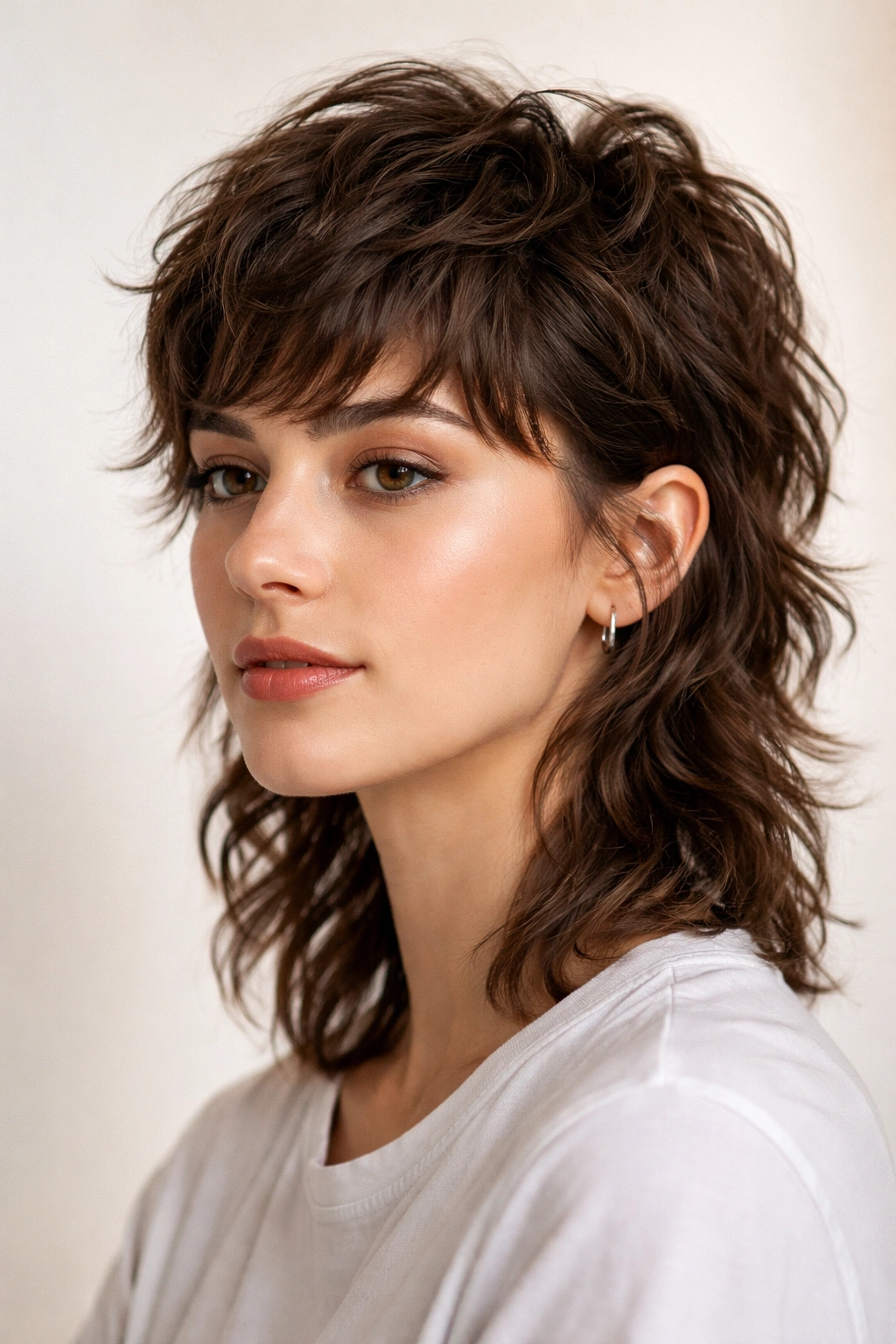
Short wavy mullets are less about pure nostalgia and more about exploiting the fact that waves and layers are legitimately flattering. You get movement, dimension, and a silhouette that feels intentional without requiring you to embrace full ’80s aesthetics. The texture does the heavy lifting—your natural (or permed) waves mean you can wear some of these versions as wash-and-go cuts, while others give you flexibility in how you style them daily.
The version you choose really depends on your personal style, your hair’s natural texture, and how much styling effort you’re willing to invest. A cropped wavy mullet with a skin fade reads completely contemporary in 2024, while a tousled shag mullet with longer back length leans more openly into the retro vibe. Neither is wrong—it’s about what feels right for you.
Start conversations with your barber about the specific dimensions that matter for your face shape and hair type. Bring photos of at least 2-3 versions so you’re clear about what you want. And remember that a short wavy mullet in the hands of a good barber isn’t a gimmick—it’s a deliberately shaped cut that actually complements your features when it’s executed well.
