



Long wavy hair paired with side bangs creates one of the most effortlessly beautiful and versatile combinations available—and honestly, it’s easier to maintain than you might think. Side bangs work particularly well with waves because they frame the face beautifully, add dimension without requiring constant styling, and actually complement the natural movement of wavy textures instead of fighting against them. Whether you’re drawn to soft, romantic waves or something with more texture and definition, adding side bangs opens up an entirely new range of styling possibilities while still letting your waves do what they do best.
The magic of this combination lies in how forgiving it is. Side bangs don’t demand perfect straightness or precise styling every single day. They flow and bend with your natural wave pattern, which means you get a polished, intentional look without spending hours with a flat iron or curling iron. Plus, they add a subtle facial frame that makes your features pop and gives you plenty of options for parting, styling, and even tucking them back when you want a different vibe.
If you’re considering this cut or trying to figure out which variation would suit your face shape, hair texture, and lifestyle, the variations below will help you find exactly what you’re looking for. From beachy and undone to structured and glamorous, there’s a wavy-hair-with-side-bangs combination that fits your aesthetic.
1. Loose Waves With Wispy Side Bangs
This is the epitome of effortless, lived-in elegance. Loose waves with delicate, wispy side bangs create a soft, romantic aesthetic that feels modern and approachable. The waves are large, relaxed, and don’t require much manipulation to look great—they flow naturally without tight definition.
Why This Look Works So Well
Wispy bangs blend seamlessly into the rest of your hair because they’re so fine and sparse. This creates a cohesive line from the bangs into the longer pieces, making everything feel intentional rather than like you have two separate hair sections competing for attention. The minimalist bangs pair perfectly with larger waves because there’s visual harmony—nothing feels too heavy or too light.
How to Get and Keep This Look
- Loose waves can be created with a curling iron, flat iron twist, or salt spray for natural texture
- Wispy bangs work best when they’re slightly longer and feature lighter, more subtle layering
- This style doesn’t require perfect styling every day; even bedhead waves look intentional
- Texturizing spray or dry shampoo adds volume without frizz
- Side part naturally moves the bangs across your face for maximum face-framing effect
Pro tip: Sleep on braids or use a silk pillowcase to enhance natural waves overnight, and your bangs will sweep naturally across your forehead without styling.
2. Beachy Waves With Long Side Bangs
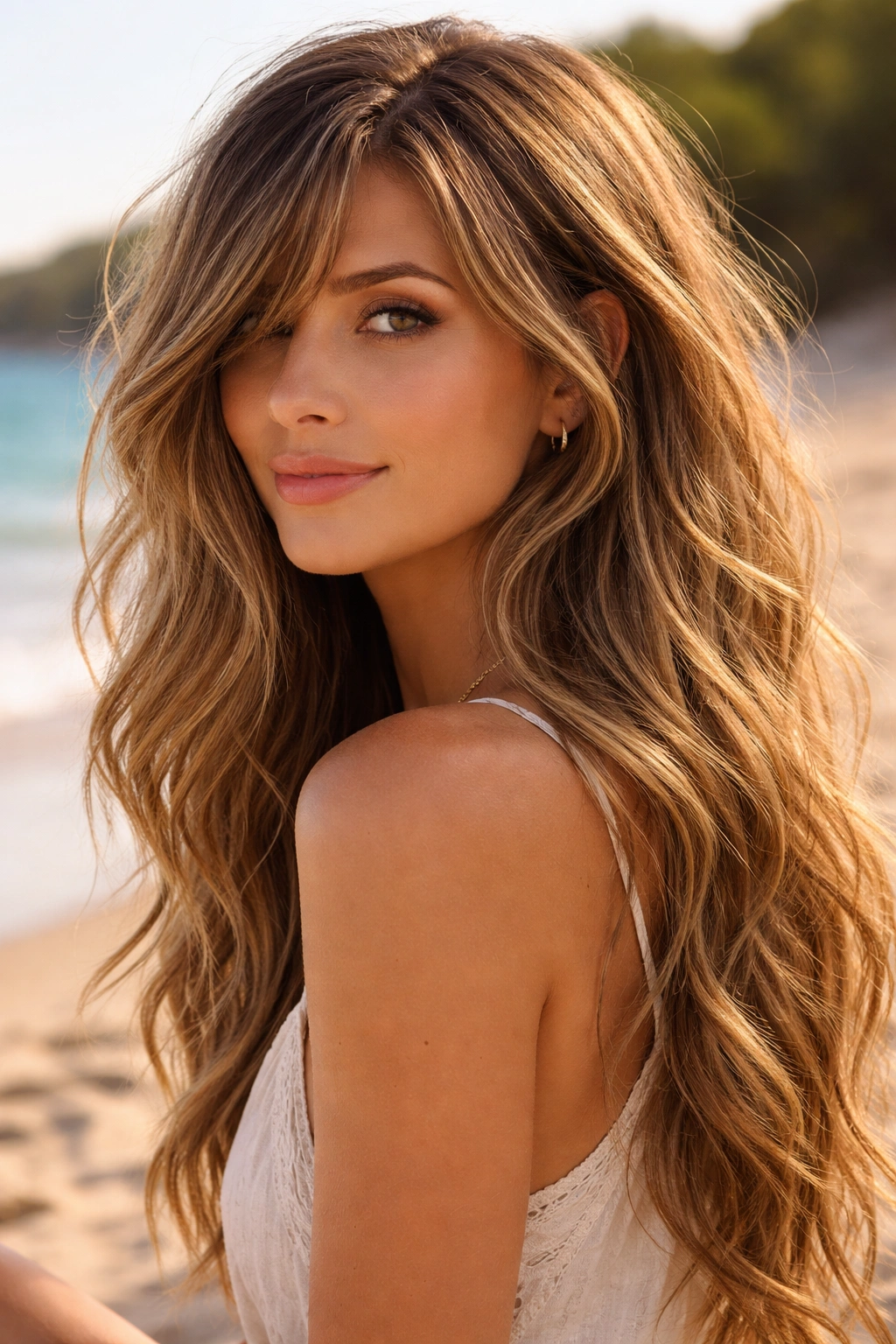
Long side bangs that extend toward your shoulder create a flowing, beachy aesthetic that screams summer, warmth, and relaxation. Pair these with textured, salty-looking waves, and you’ve got a style that works equally well at the beach, at a casual dinner, or just running errands.
The Appeal of Extended Bangs
When side bangs are cut longer—reaching at least to your cheekbone or even past it—they create less visual separation from the rest of your hair. They feel more like a continuation of your longer pieces rather than a distinct framing element. This length works especially well if you have thinner hair or prefer less dramatic facial framing.
How to Style This Combination
- Create waves with a sea salt spray and natural texture, or use a wand for more defined texture
- Long side bangs can be tucked behind your ear, swept fully across, or positioned anywhere in between
- Layering throughout the length helps waves move more freely and prevents heaviness
- This style photographs beautifully, especially in natural light
- Salt spray or texturizing powder adds the beachy element without requiring heat styling
Worth knowing: Longer bangs are easier to style into different looks—you can pin them back, side-sweep them dramatically, or let them fall naturally depending on your mood.
3. Textured Waves With Blended Side Bangs
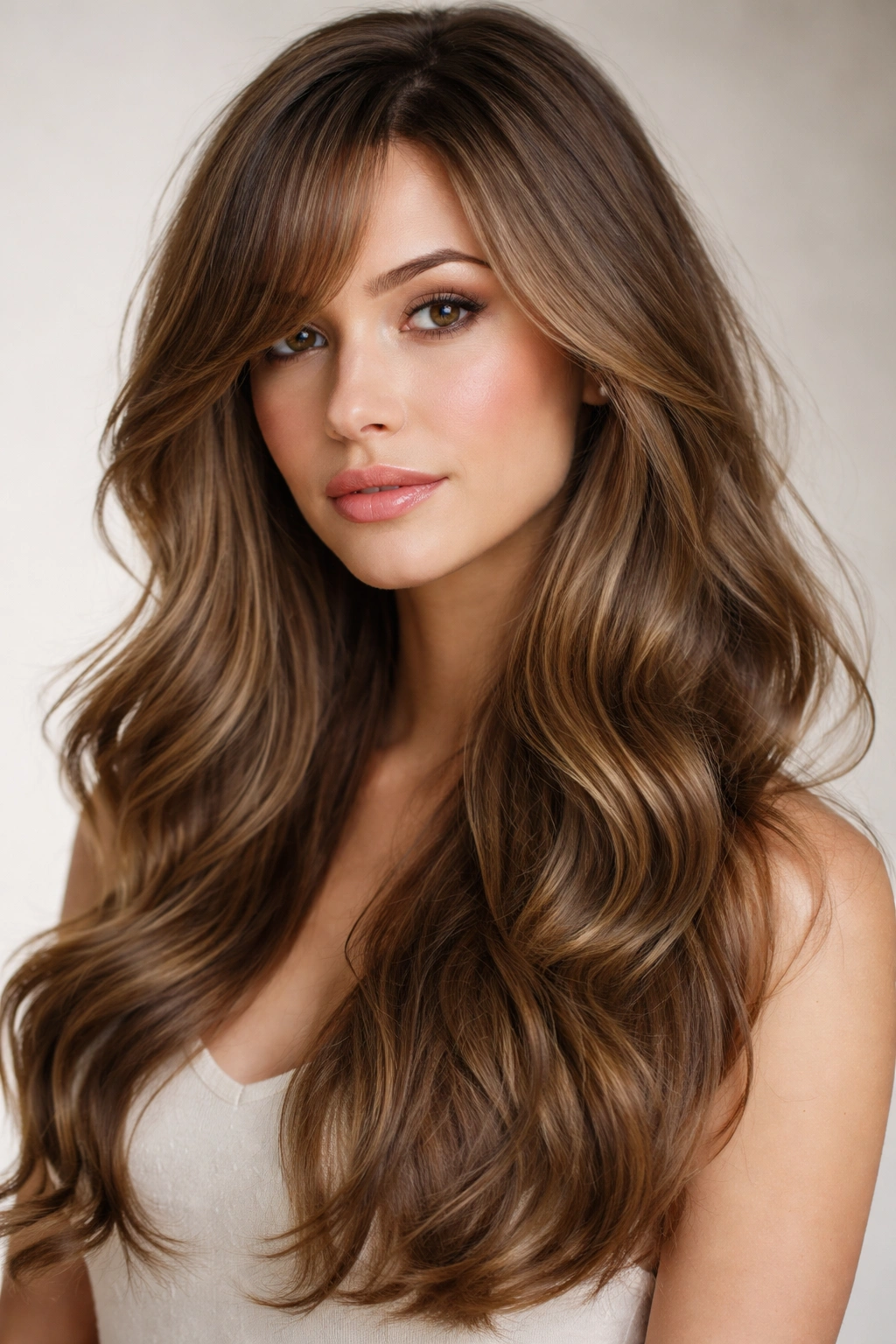
Textured waves that feature crisp, defined separation from piece to piece pair beautifully with side bangs that blend rather than create a hard line. Blended bangs feature subtle layers and don’t start as dramatically different thickness compared to the surrounding hair.
What Makes Textured Waves Different
Textured waves have intentional crispness and shape to them. Unlike loose, flowing waves, these look deliberately styled with visible wave definition. They’re created with careful curling techniques, often using smaller sections and more precise tool placement. This definition looks stunning when paired with bangs that complement rather than compete.
Creating and Maintaining This Style
- Use a 1.25-inch curling iron or wand to create more defined texture
- Blended bangs are cut with careful attention to how they transition into your hair
- This requires touch-ups every 6-8 weeks as bangs grow out
- Products like mousse or wave-enhancing spray help define texture
- Scrunching damp hair with product creates natural texture that lasts longer
Insider note: Slightly drying your bangs before your main waves set them helps blend the texture naturally into your wave pattern.
4. Cascading Waves With Soft Side Bangs
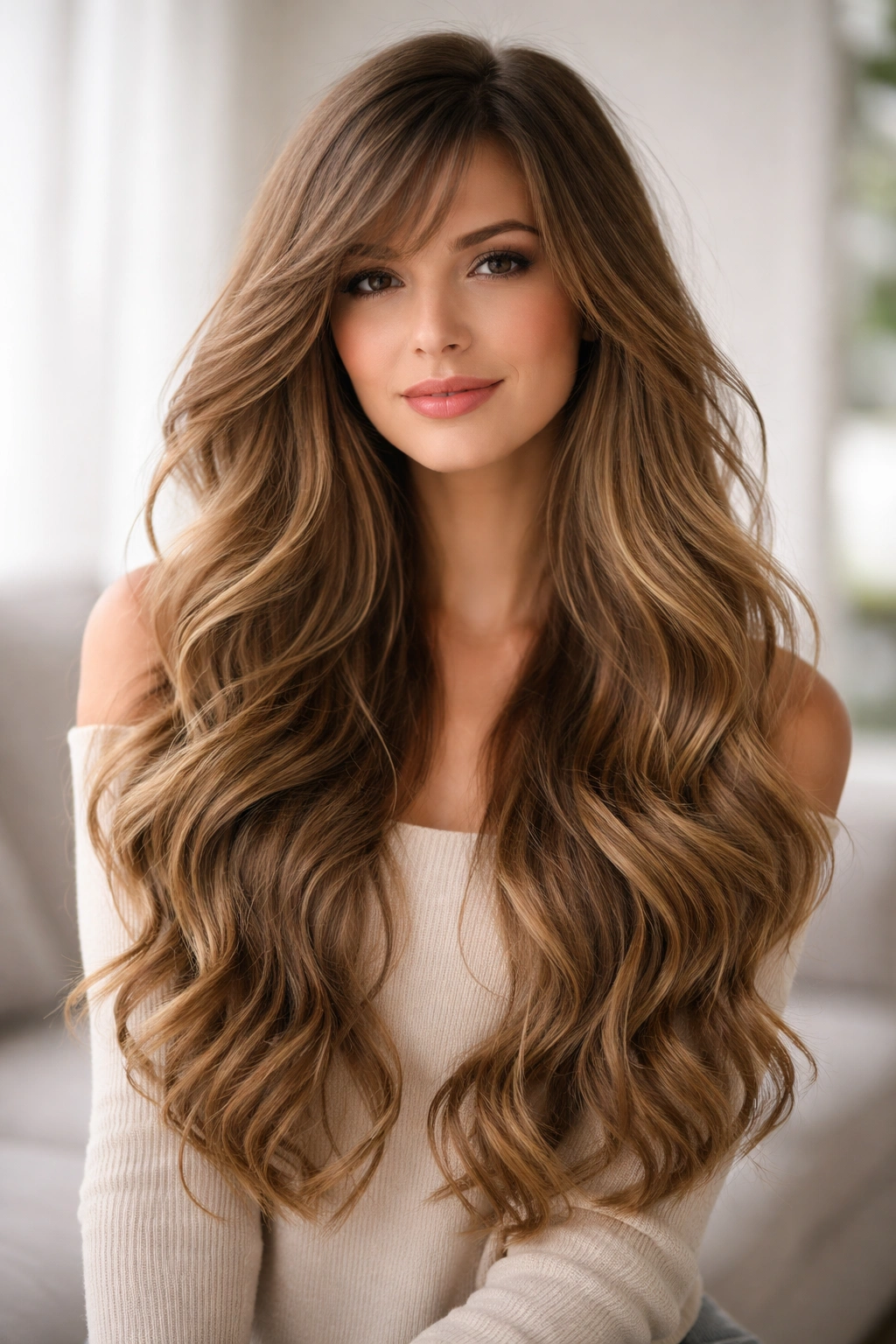
Cascading waves flow down your back in gorgeous, defined layers that look like water flowing downward. Soft side bangs—meaning they’re gently layered, not harsh or blunt—complement this romantic, feminine aesthetic perfectly.
The Layering That Creates Cascades
Cascading waves require strategic layering throughout your length, with shorter pieces on top and progressively longer pieces underneath. This creates depth, movement, and the literal cascading effect. The layers also prevent the look from feeling heavy despite the length.
Achieving Cascading Movement
- Start your curls at the base of each section; higher tension creates bouncier cascades
- Soft bangs feature light, feathered layers that mimic the layering of your waves
- This look suits most face shapes because the soft lines aren’t as harsh
- Sleep-in waves or curl-enhancing sprays refresh this style between wash days
- Brushing lightly through waves in the morning releases them for more flow
Pro tip: Fine-tooth combs through waves create more separation and enhance the cascading effect, while brushes blend waves into a softer, more romantic texture.
5. Hollywood Waves With Sleek Side Bangs
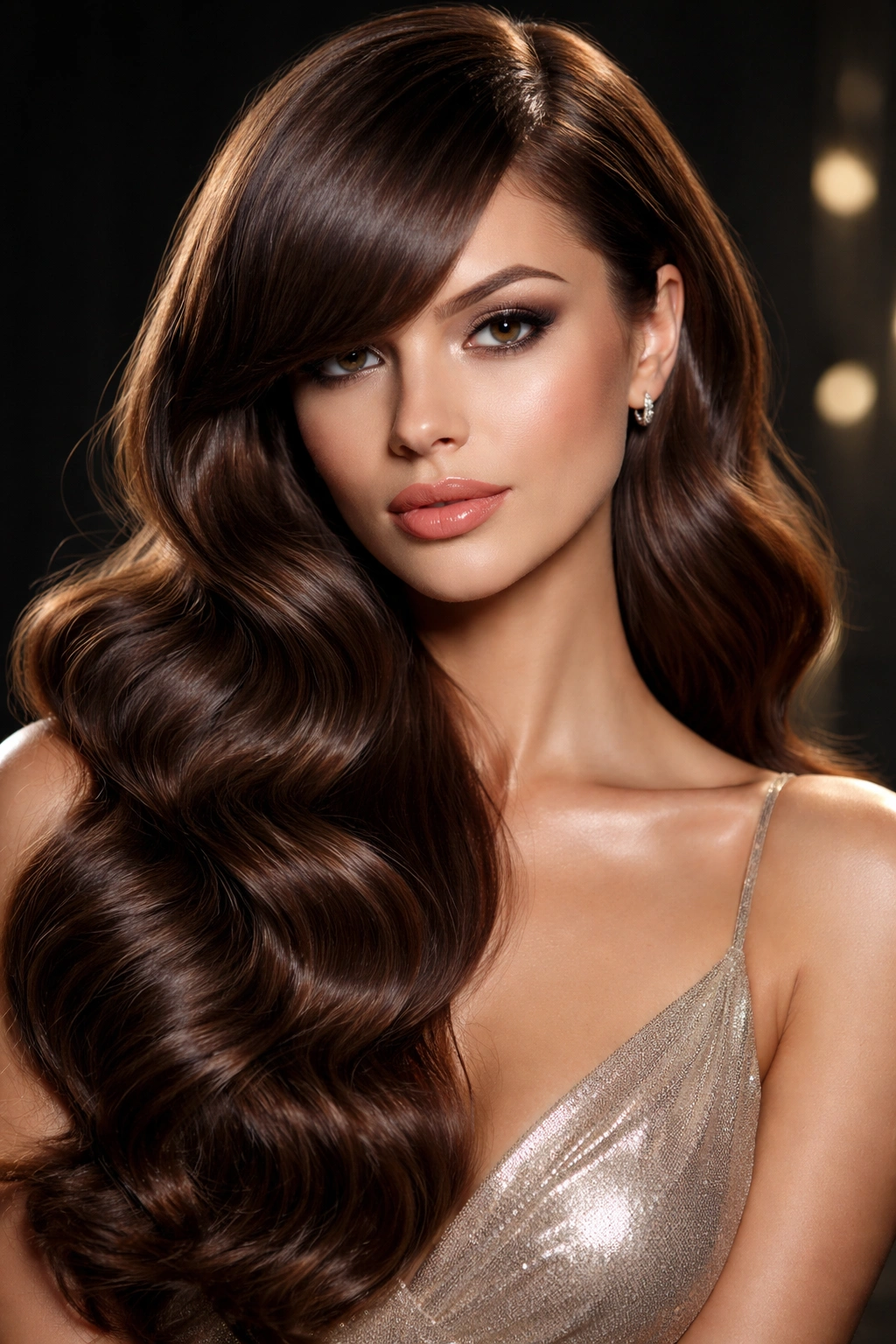
This is glamour in its purest form. Hollywood waves are polished, defined, and immaculately styled, with each wave perfectly shaped and shiny. Sleek side bangs—cut blunt and precise, with smooth edges—complete the sophisticated, red-carpet aesthetic.
What Makes Hollywood Waves Iconic
Hollywood waves are the gold standard of sophisticated wave styling. They feature consistent wave pattern, shine, and polish that suggests professional styling. This isn’t a quick-fix style; it’s intentional, curated beauty that demands a bit of effort but pays off immensely.
How to Achieve This Look
- Use a 1.5-inch curling iron or wand, curling each section tightly and in the same direction
- Brush through curls with a paddle brush while they cool to blend them into waves
- Sleek bangs require a blunt cut and regular maintenance (every 4 weeks ideally)
- Smoothing serums and shine sprays keep this style looking polished
- This works best on hair that has some natural body or on blow-dried, voluminous hair
Worth knowing: This style requires blow-drying or heat styling every time you wash your hair—it’s not a wash-and-go look, but it’s absolutely worth the effort for events or photos.
6. Tousled Waves With Feathered Side Bangs
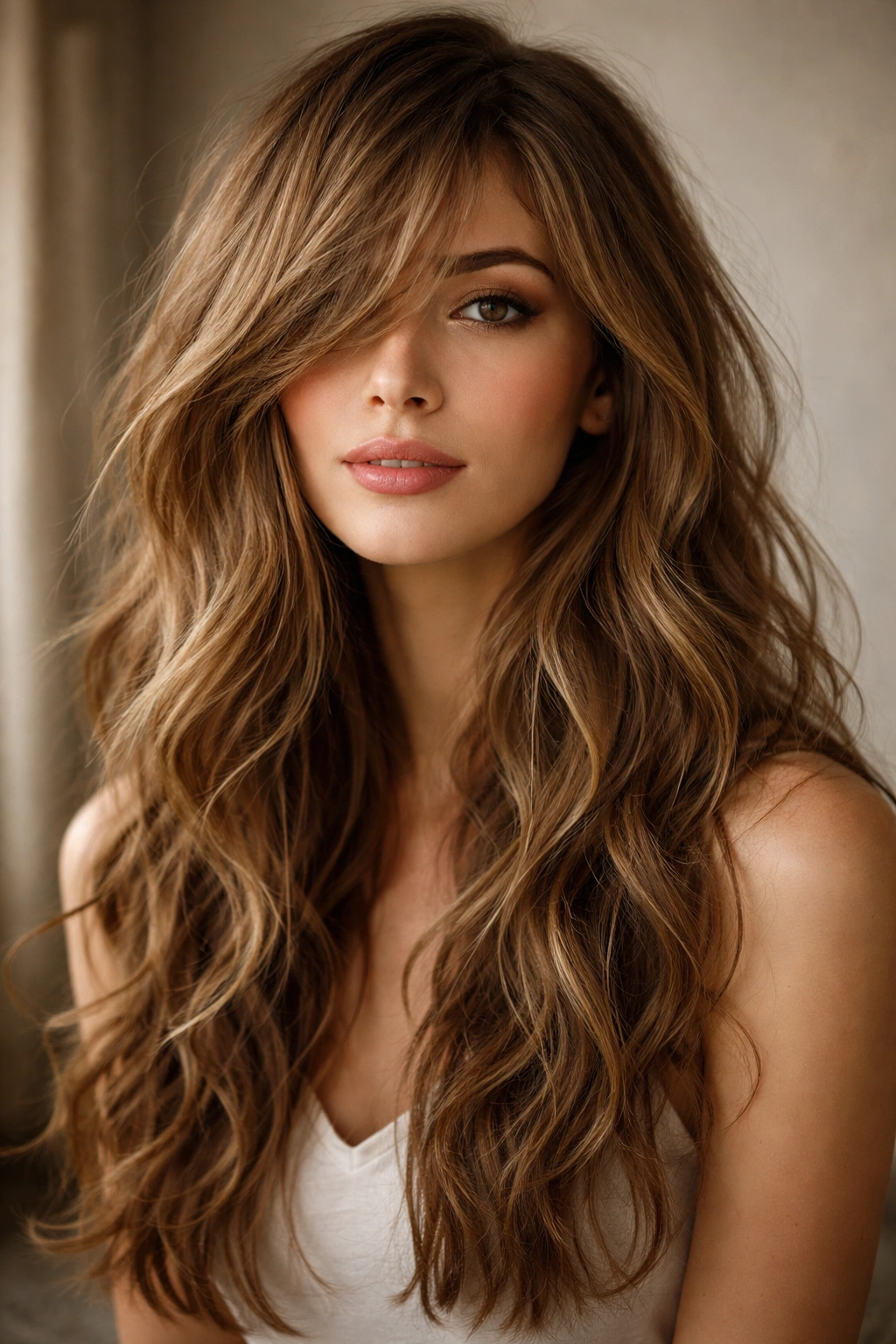
Tousled waves look intentionally undone, like you just woke up and they happened to fall perfectly. They have texture, some separation, but no strict definition—it’s all about the lived-in feeling. Feathered side bangs extend the aesthetic by being light, airy, and piece-y.
The Art of Looking Undone
Tousled waves are deceptively simple. They require texture but not perfection, movement but not rigidity, volume but not frizz. The trick is using the right products and techniques that create that “I didn’t try very hard” effect that actually takes practice to perfect.
Creating Tousled Texture
- Finger-wave your hair with a curling wand, twisting the wand as you glide down your hair
- Feathered bangs feature shorter pieces cut at different lengths, creating a wispy effect
- Dry shampoo or texturizing spray adds grip without making hair look stiff
- Scrunching damp hair with mousse before air-drying creates natural texture
- Second-day or third-day hair actually looks better for this style
Insider note: Curling your hair in random directions (rather than all the same way) creates the tousled effect; consistent curling creates waves, but varied directions create texture.
7. Defined Waves With Curtain Side Bangs
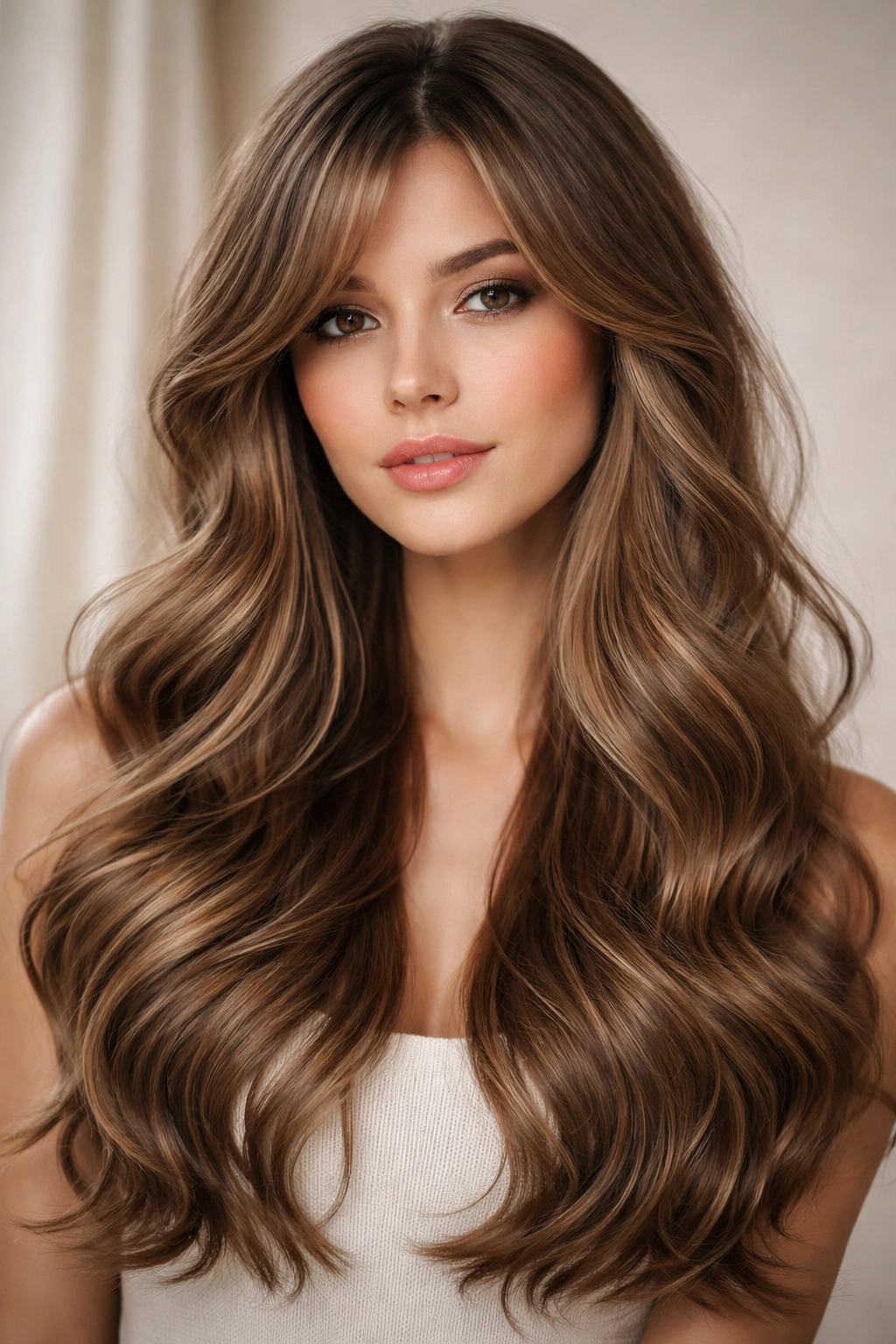
Defined waves feature clear wave shape and separation between each curl. Curtain side bangs—meaning they’re longer on the sides and parted in the middle, creating a sweeping effect—frame the face beautifully while maintaining a classic, polished look.
Why Curtain Bangs Complement Defined Waves
Curtain bangs have a built-in movement and flow that complements structured waves. Because they’re parted and positioned to move away from center, they don’t fight against the wave pattern; instead, they enhance the overall sense of movement and dimension. They’re also incredibly forgiving for different face shapes.
Styling This Combination
- Curl each section of hair with intention, using the same-sized sections and tool for consistency
- Curtain bangs are cut longer and with a center part that sits naturally in your hair
- This style works well with a middle part or slightly off-center part
- Brushing gently through waves before they fully cool creates more dimension
- Wave-supporting products like sea salt spray or mousse help definition last longer
Pro tip: If you have natural waves, you might only need to enhance them with light curling or styling spray rather than creating them from scratch, which means less heat damage.
8. Voluminous Waves With Side-Swept Bangs
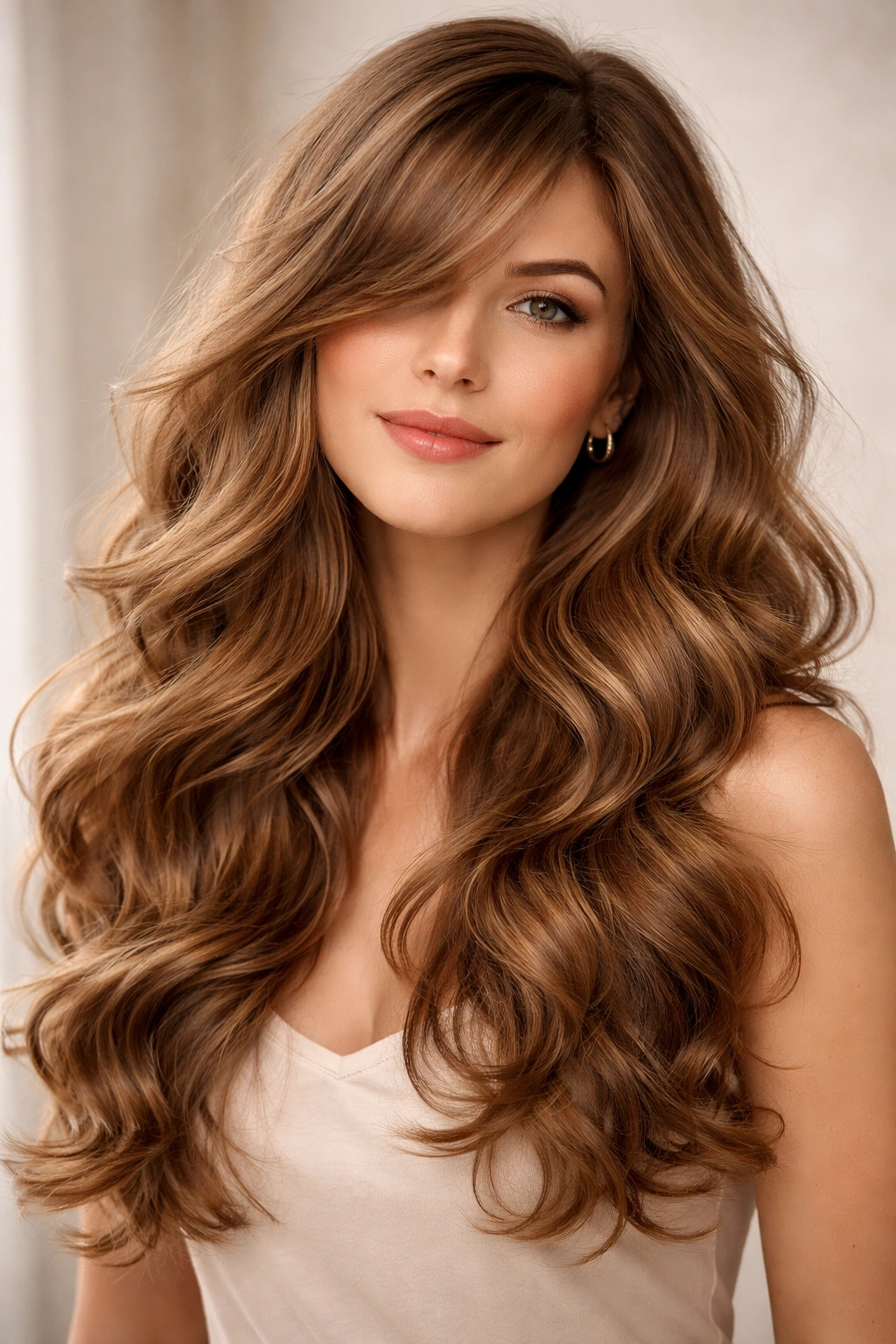
Voluminous waves are big, bouncy, and full of life. They require strategic layering, styling technique, and often some blow-drying to achieve that gorgeous body and movement. Side-swept bangs—cut longer on one side and shorter on the other—add to the overall sense of volume and movement.
Building Volume Into Your Style
Volume comes from three things: layering, styling technique, and blow-drying direction. Shorter layers on top create lift, blow-drying roots upward creates height, and curling in alternating directions prevents flatness. Side-swept bangs actually add to this volume effect by creating visual interest and movement.
Achieving Maximum Volume
- Blow-dry your roots upward using a round brush or fingers
- Curl hair starting at the scalp, not the mid-length, for maximum volume
- Side-swept bangs should be cut shorter on one side (cheekbone length) and longer on the other
- This style suits most face shapes and works well with layers throughout
- Root-boosting sprays or volumizing mousse applied to damp roots creates lasting volume
Worth knowing: Voluminous waves require blow-drying and styling—air-drying won’t create this effect—but the payoff is a stunning, red-carpet-ready style.
9. Choppy Waves With Layered Side Bangs
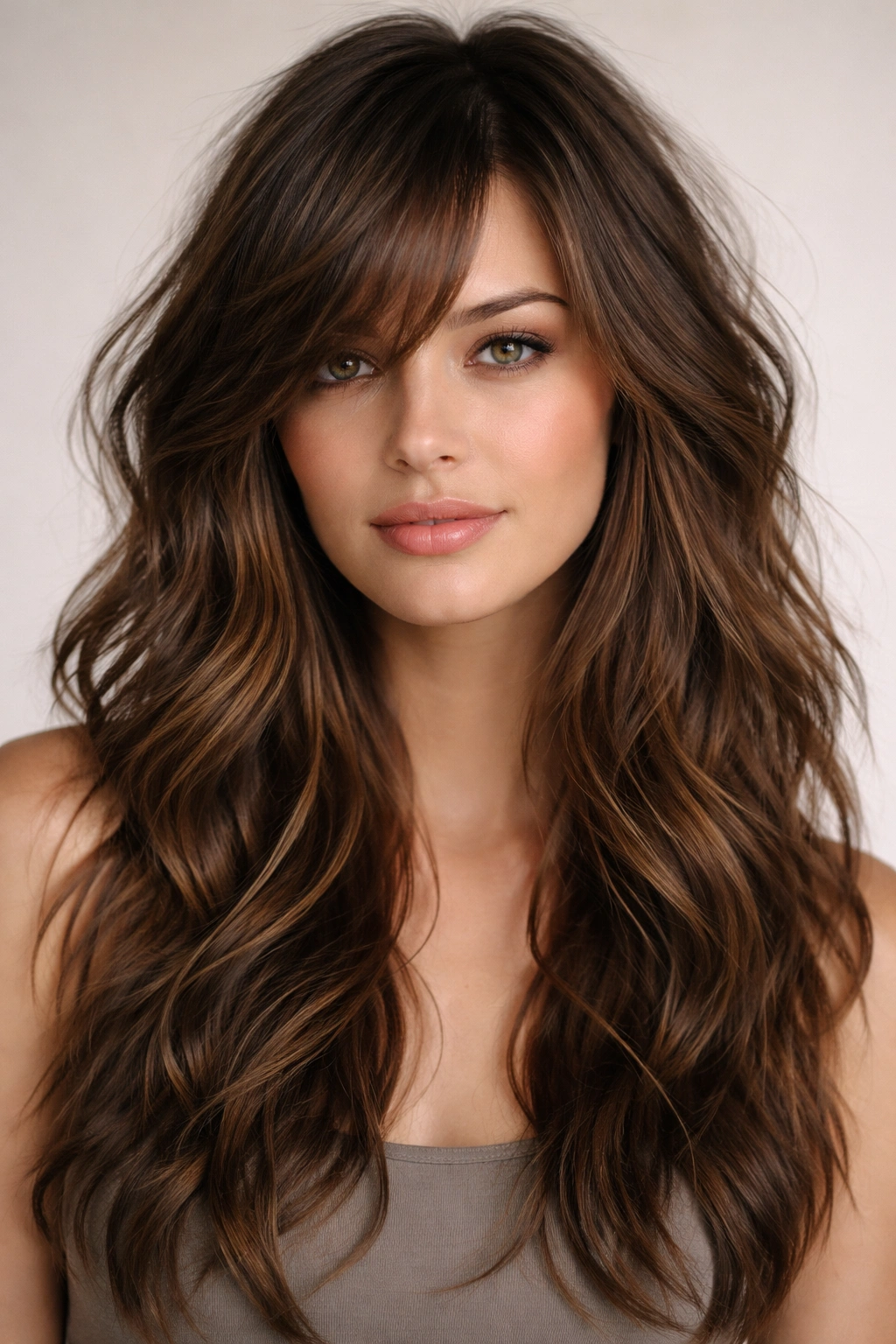
Choppy waves feature irregular, piece-y layers that create movement and texture. This edgy, modern aesthetic pairs perfectly with layered side bangs that feature shorter, more dramatic pieces. Together, they create a youthful, fashion-forward look.
The Impact of Choppy Layering
Choppy layers aren’t just about texture; they’re about creating a specific visual statement. Each piece is distinct and visible, which means this style demands more intentional styling but also offers incredible movement and a modern edge that appeals to people who want something beyond classic waves.
Creating Choppy Texture
- Choppy waves require a lot of movement and cannot be achieved by simply curling straight hair
- Layered bangs feature noticeably shorter pieces, often with texture created through point-cutting
- Texturizing spray and dry shampoo become essential products for this look
- Scrunching and finger-waving create natural choppy texture
- This style works best with some natural texture or wave in your hair to begin with
Insider note: Choppy layers are high-maintenance between cuts, so plan for trims every 6-8 weeks to keep the shape intentional and prevent it from looking grown-out.
10. Romantic Waves With Longer Side Bangs
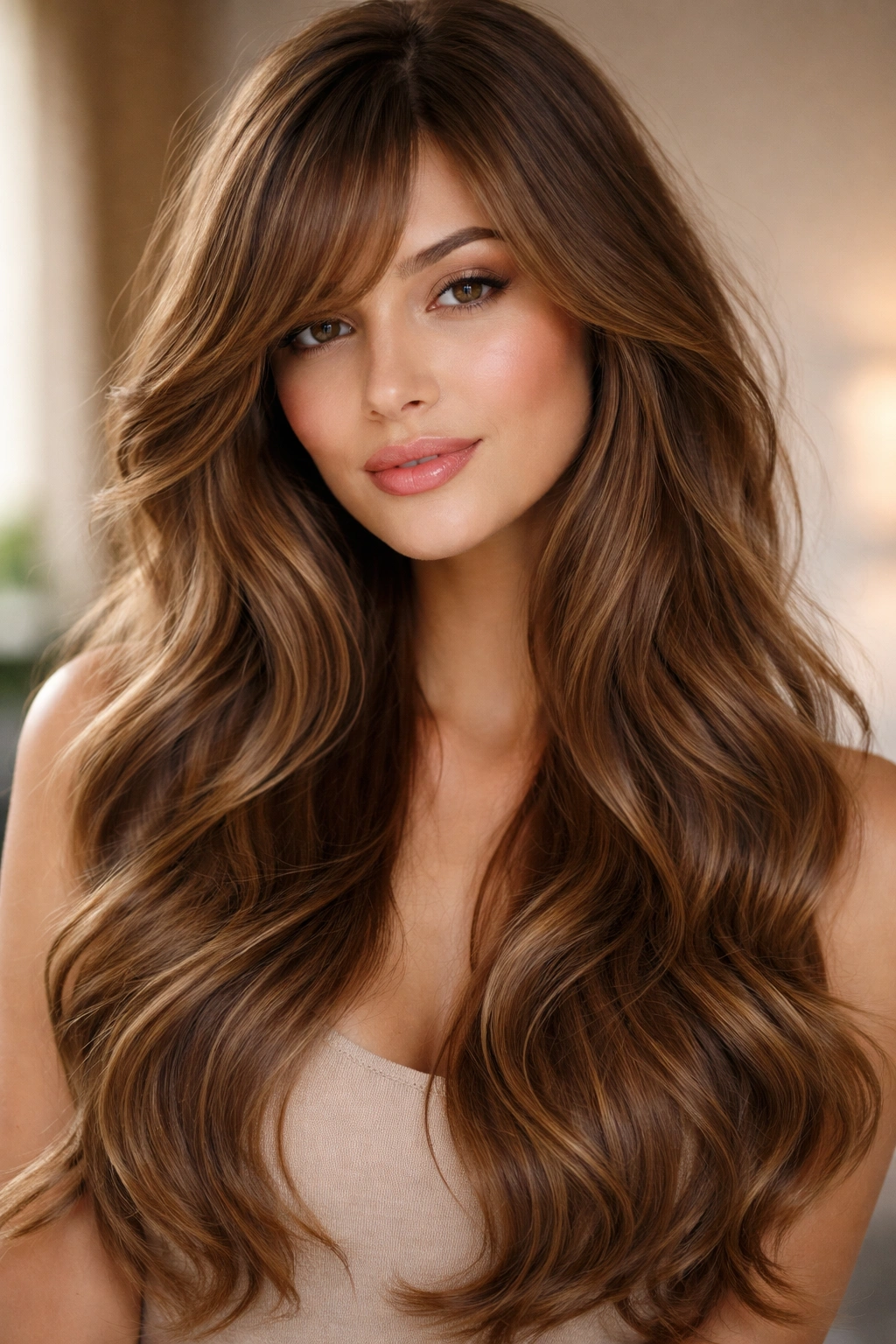
Romantic waves are soft, flowing, and decidedly feminine. They feature gentle curves without harsh definition, creating an ethereal, princess-like aesthetic. Longer side bangs that flow past the cheekbone extend this romantic feeling and create a dreamy frame.
The Romantic Aesthetic
Romantic styling is all about softness, flow, and beauty that feels effortless. This isn’t edgy or modern; it’s classic, timeless, and inherently flattering. Longer side bangs that blend into waves create cohesion and add to the overall romantic narrative without feeling like a separate styling choice.
Achieving Romantic Movement
- Use a 1.5-inch curling iron and curl away from your face for a softening effect
- Brush through curls while they cool to blend them into waves rather than distinct spirals
- Longer side bangs should reach past your cheekbone and taper subtly into longer pieces
- Lightweight oils or smoothing serums add shine without weighing down the softness
- This style suits most face shapes, particularly round or angular faces that benefit from soft framing
Pro tip: Loosely braid damp hair and sleep on it to create romantic waves without heat—this method is gentler on your hair and often produces the softest, most natural-looking waves.
11. Spiral Waves With Delicate Side Bangs
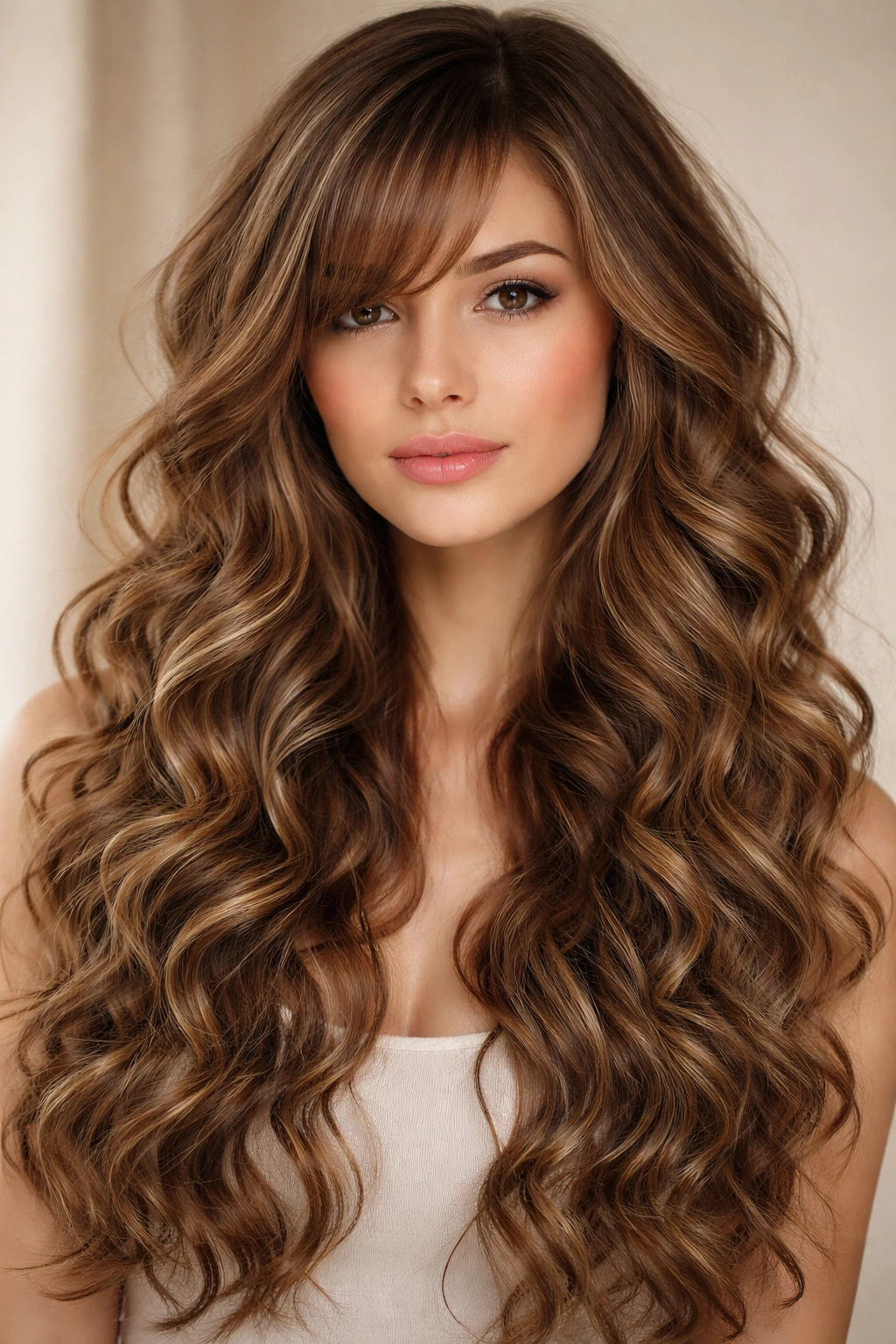
Spiral waves are tight, defined, and individually visible—think corkscrew curls that have been relaxed into waves rather than worn as distinct curls. Delicate side bangs feature fine, thin pieces that don’t compete with the texture of your waves.
What Defines Spiral Waves
Spiral waves are the result of using smaller curling tools (like a 1-inch wand) and maintaining curl integrity even after brushing through. Unlike looser waves, spirals have clear definition and a more structured look. This works beautifully with delicate bangs that won’t look out of place next to such defined texture.
Creating Spiral Texture
- Use a smaller-barrel curling iron or wand to create tighter spirals
- Don’t brush through spirals as thoroughly as you would loose waves—maintain some definition
- Delicate bangs are thinner, shorter on the ends, and feature minimal layering
- Curl-enhancing products help spirals hold their shape throughout the day
- This style works beautifully on naturally wavy or curly hair that already has some texture
Worth knowing: Spiral waves require more frequent touch-ups than looser waves, as the definition can drop after a few days of wear.
12. Modern Waves With Blunt Side Bangs
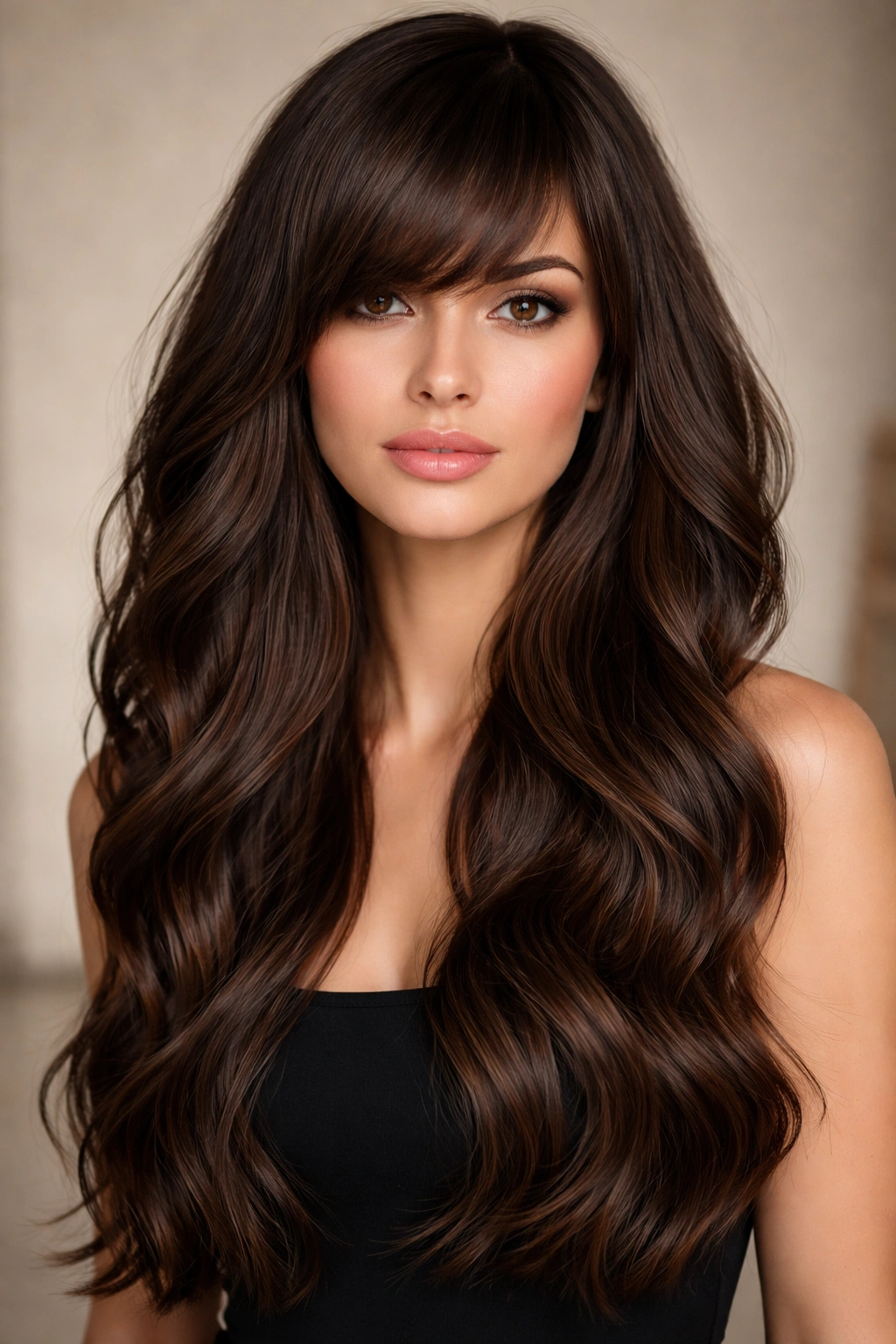
Modern waves sit somewhere between defined and textured—they’re crisp and intentional without being overly polished or romantic. Blunt side bangs create a sharp, contemporary frame that complements the straightforward aesthetic of modern waves.
The Contemporary Appeal
Modern styling is all about intention without fussiness. Blunt bangs are cut straight across with no softening layers, which creates a bold, confident statement. This pairs beautifully with waves that are clear and defined but not overly elaborate.
Creating Modern Waves
- Use a 1.25-inch wand and curl sections tightly, then brush through once cooled for a polished finish
- Blunt bangs are cut straight across your forehead, sitting typically at eyebrow or just below eyebrow length
- This style suits most face shapes but particularly flatters longer, oval, or rectangular faces
- Smoothing products create a polished finish, while texturizing spray adds modern texture
- Blunt bangs require regular maintenance (every 3-4 weeks) to prevent looking overgrown
Insider note: Blunt bangs and modern waves create a very specific aesthetic that photographs beautifully and works well for professional settings or fashion-forward styling.
13. Undone Waves With Shaggy Side Bangs
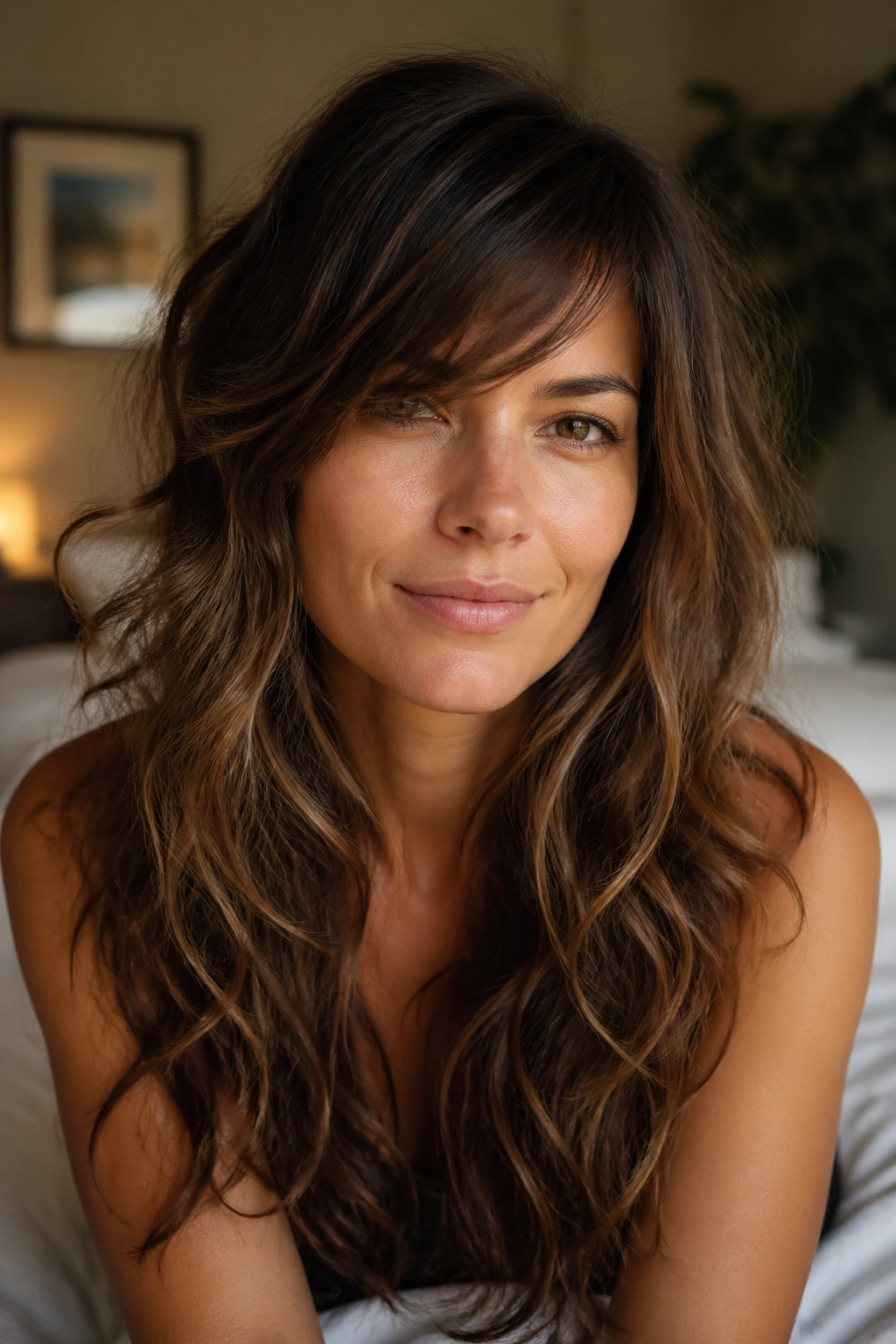
Undone waves are the ultimate low-maintenance style. They look like you didn’t try, which paradoxically takes effort to achieve but then requires almost no daily maintenance. Shaggy side bangs—featuring very short, piece-y layers—extend the effortless vibe and add movement and texture.
The Low-Maintenance Aesthetic
Undone styling is perfect for people who want to look polished but don’t have time for daily styling. This style relies on texture, natural wave pattern, and strategic product use rather than blow-drying and curling every time you wash your hair. Shaggy bangs fit perfectly into this approach.
Achieving Undone Movement
- Create waves with salt spray and minimal heat, letting your natural texture do most of the work
- Shaggy bangs feature very short pieces cut at varying lengths, creating movement
- Dry shampoo or texturizing powder becomes your best friend for refresh days
- Second-day or third-day hair looks better for this style than freshly washed hair
- Finger-waving or twisting sections loosely creates natural undone texture
Pro tip: This style suits people with naturally wavy or textured hair; if you have straight hair, you’ll need some curl or wave pattern to begin with for the undone effect to work.
14. Dimensional Waves With Textured Side Bangs
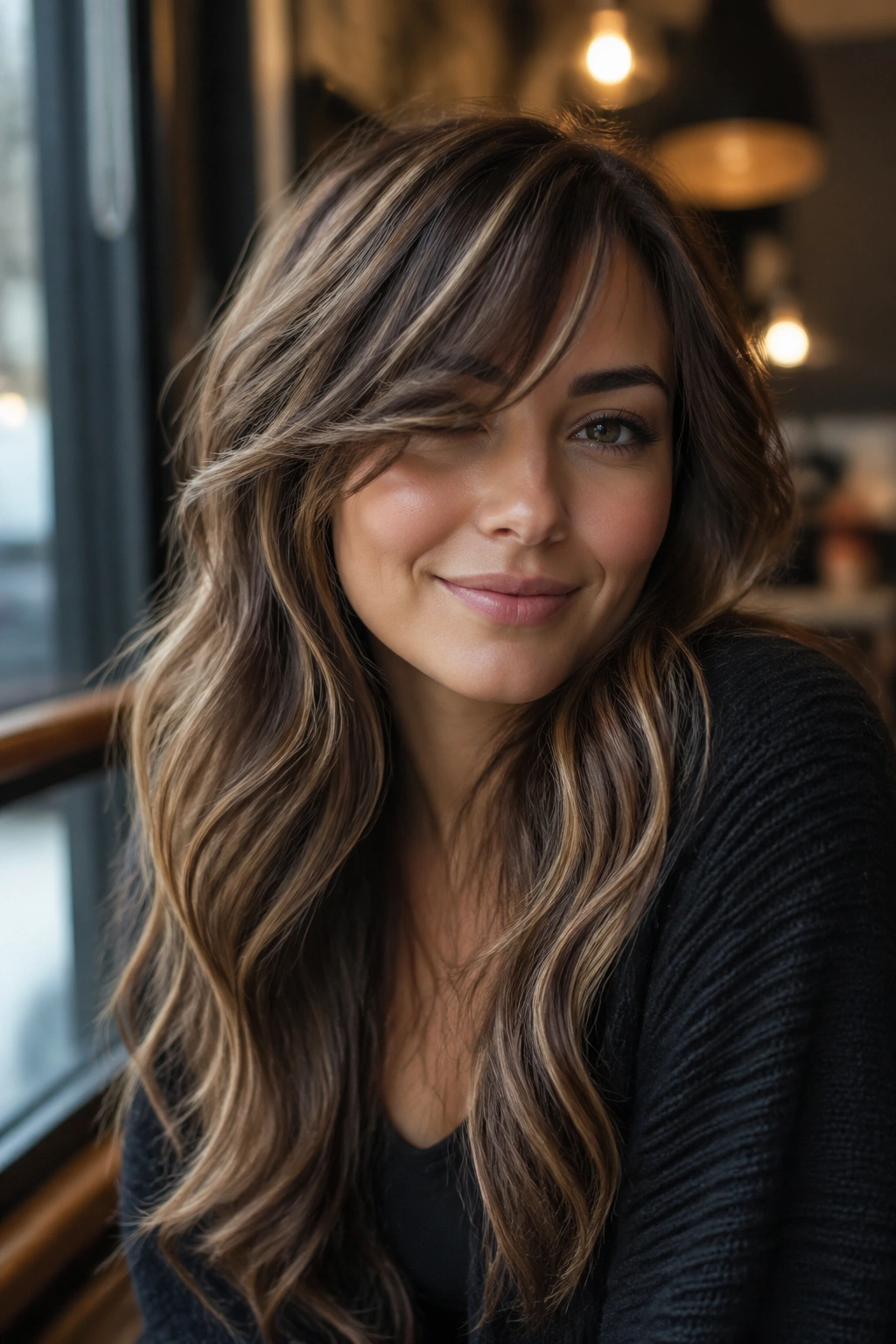
Dimensional waves feature multiple shades or highlights that add depth and movement to your style. Textured side bangs with multiple shorter and longer pieces echo this dimensional aesthetic and create additional visual interest.
Adding Depth Through Color and Texture
Dimension comes from both cut and color. Layering creates movement, while highlights or balayage adds depth that makes waves look more interesting and three-dimensional. Textured bangs that aren’t uniform in length add to this sense of multidimensional styling.
Creating Dimensional Style
- Layering throughout your hair adds movement that shows off color dimension
- Textured bangs feature irregular lengths and pieces that create visual interest
- This style benefits enormously from strategic highlighting or balayage for maximum dimensional effect
- Wave-enhancing products like sea salt spray help dimension show more clearly
- This works on most hair types and face shapes, particularly those looking for modern dimension
Worth knowing: Dimensional color requires maintenance every 6-8 weeks to keep highlights fresh, so factor that into your styling commitment.
15. Soft Waves With Piece-y Side Bangs
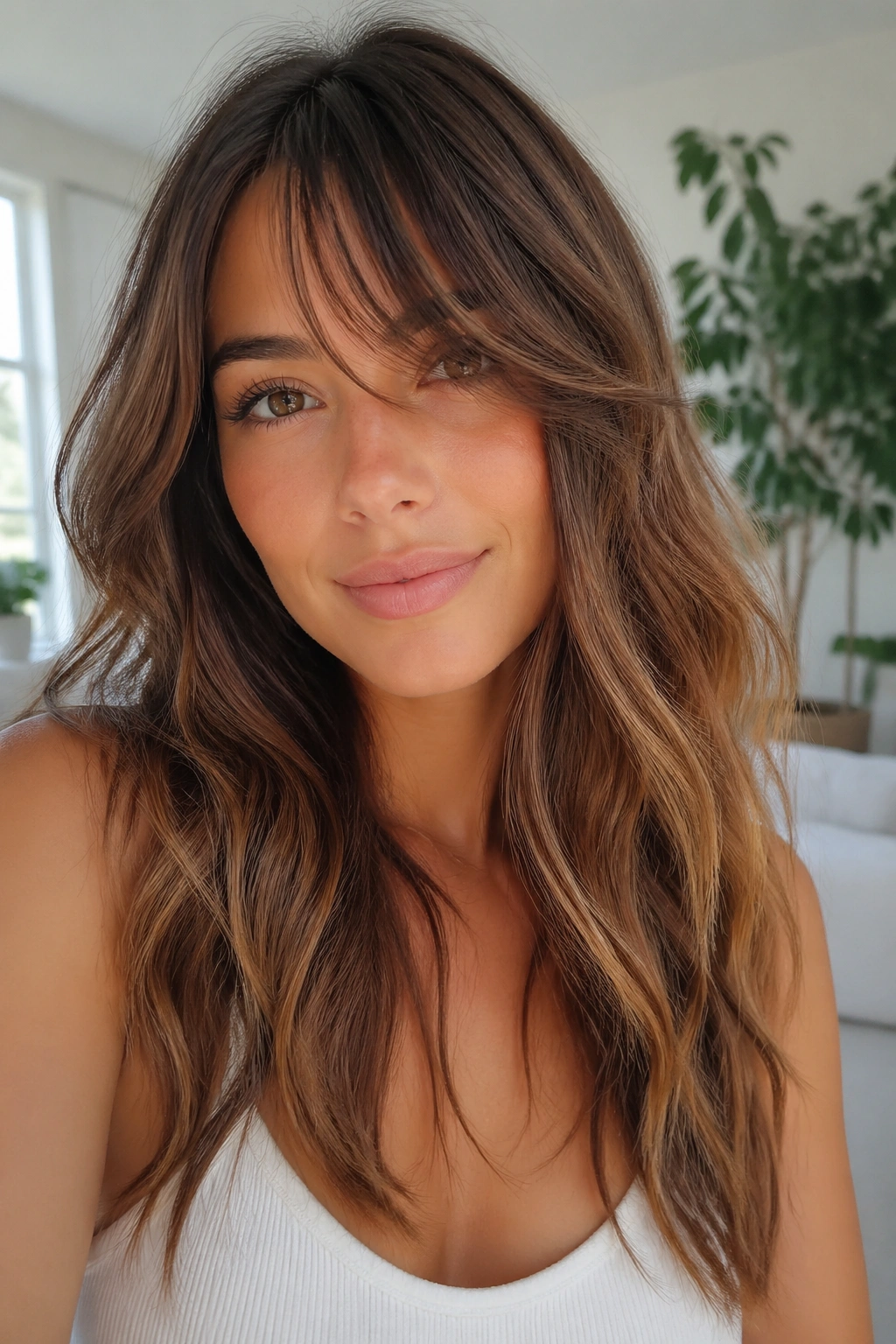
Soft waves are the epitome of approachable beauty—they’re defined enough to look intentional but gentle enough to feel effortless. Piece-y side bangs feature distinct shorter pieces that create movement and prevent the bangs from looking like a solid block.
The Appeal of Piece-y Texture
Piece-y bangs feel less dramatic than blunt bangs and less wispy than feathered bangs. They sit in the middle ground, creating a modern, movement-forward aesthetic without being edgy. This pairs perfectly with soft waves that are similar in philosophy.
Creating Soft, Piece-y Style
- Curl hair loosely with a 1.5-inch wand, creating movement without rigid definition
- Piece-y bangs are cut with shorter pieces interspersed throughout, creating separation
- Brushing gently through soft waves creates a romantic, undone effect
- This style suits most face shapes and works on various hair textures
- Light texturizing products help piece-y bangs maintain movement without looking frizzy
Insider note: Piece-y bangs are more forgiving than blunt bangs if you miss a trim by a week or two—they still look intentional while growing out.
16. Bouncy Waves With Curved Side Bangs
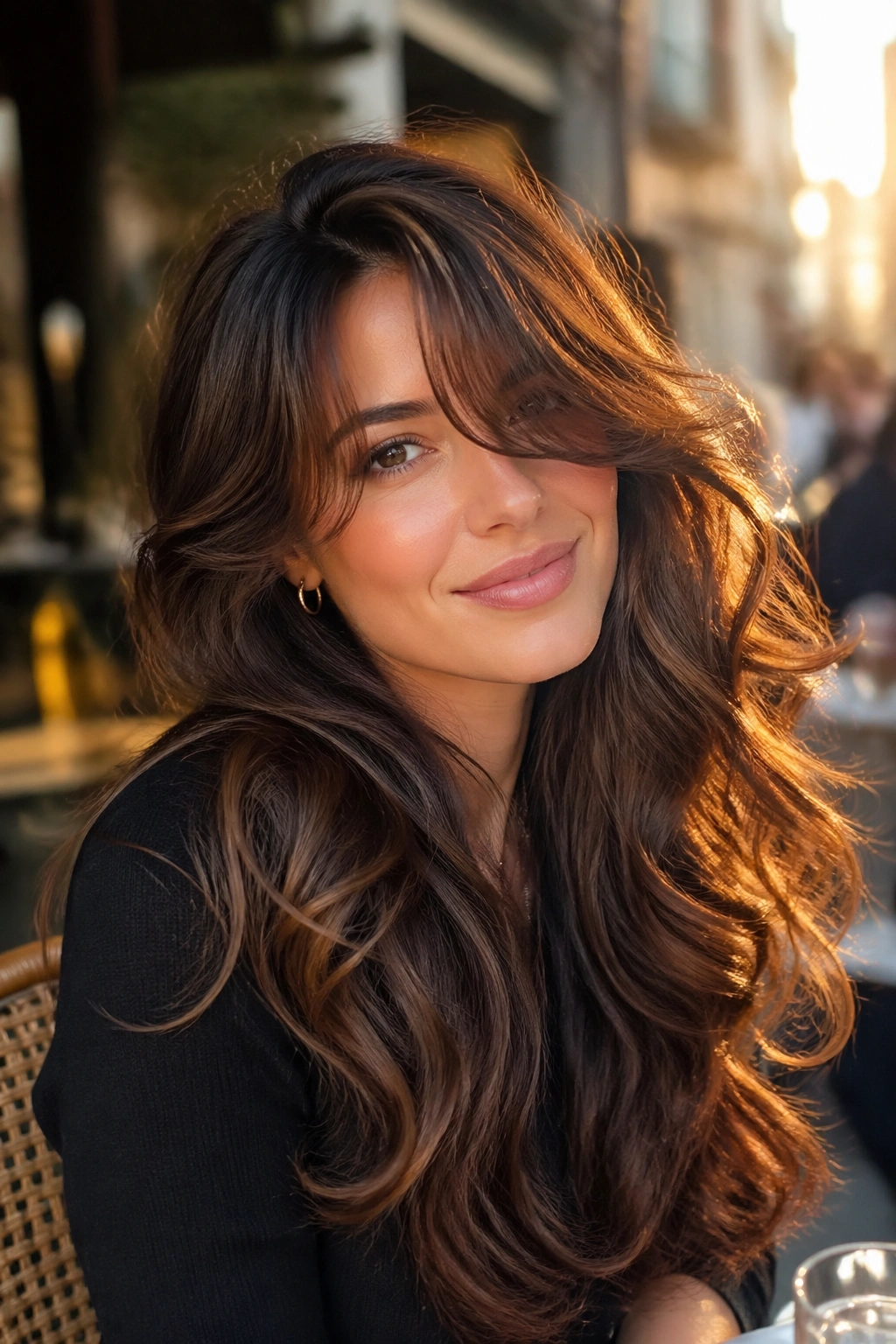
Bouncy waves have energy and movement built into every curve. They’re the result of careful blow-drying, strategic curling, and the right products. Curved side bangs—cut to follow the natural line from your temple around your face—enhance this bouncy aesthetic.
Creating Genuine Bounce
Bounce comes from blow-drying roots upward, using a medium-barrel curling iron, and curling hair away from the face. The direction you curl matters; curling inward creates bounce and fullness in the center, while curling outward creates more width and movement at the ends.
Styling for Maximum Bounce
- Blow-dry roots upward using a round brush for maximum lift
- Use a 1.5-inch curling iron and curl sections in the same direction for consistent bounce
- Curved bangs follow your natural facial contours, typically longer on the sides than in the center
- This style suits most face shapes but works particularly well on round faces that benefit from the softening curve
- Bounce-enhancing products like volumizing mousse help movement last longer
Pro tip: Curling your bangs last (after your main hair) allows them to cool in the correct position while your other hair is setting, which means they bounce independently from your waves.
17. Lived-In Waves With Invisible Side Bangs
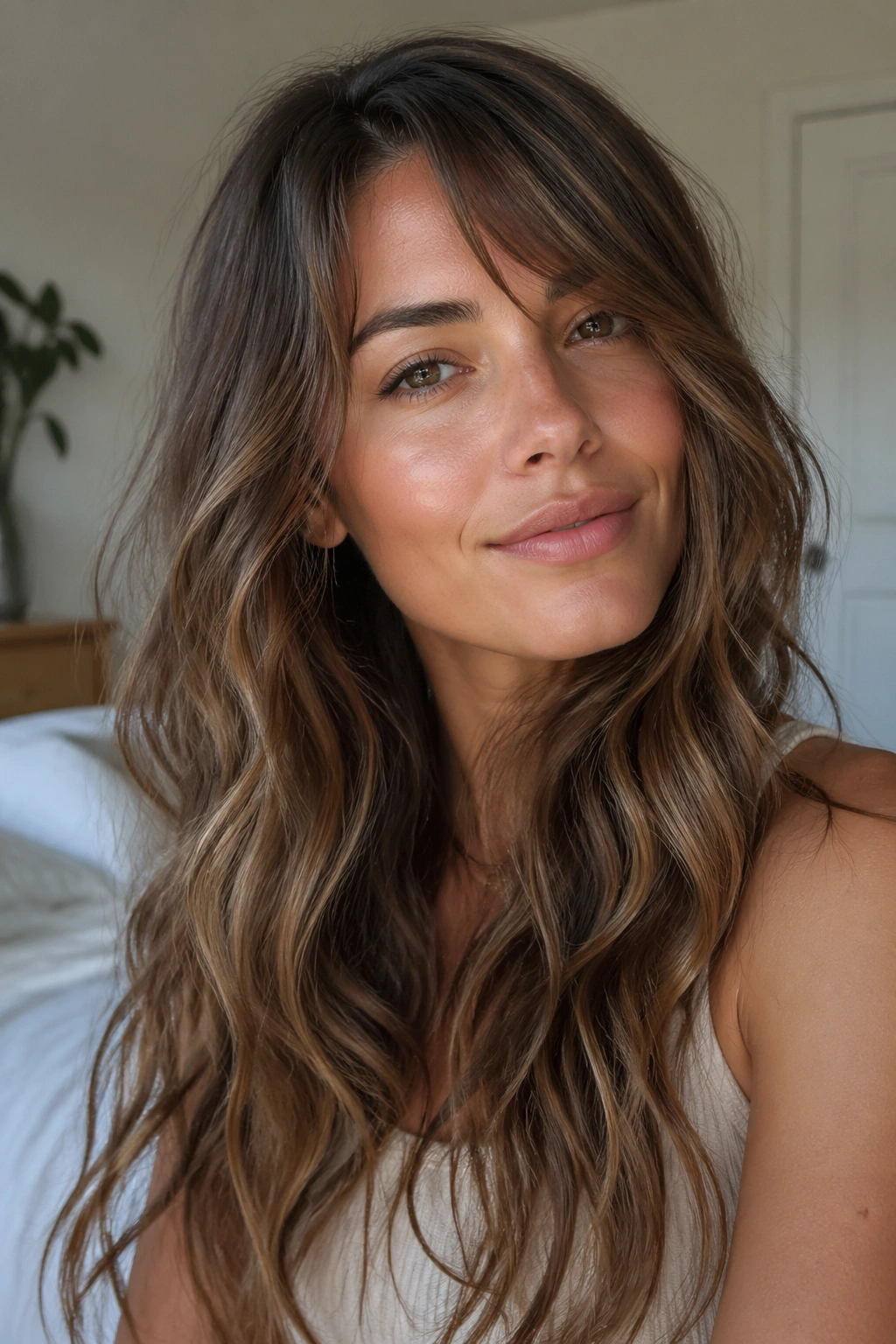
Lived-in waves look like you’ve worn them for days—they’re relaxed, imperfect, and utterly effortless. Invisible side bangs are cut so subtly and blended so carefully with your hair that they’re barely noticeable as bangs; they simply frame your face naturally.
The Art of Invisible Bangs
Invisible bangs require a specific cutting technique where shorter pieces are woven throughout your overall length rather than starting as a distinct section. The result is that longer pieces blend seamlessly with shorter pieces, and there’s no obvious “bangs” section—just natural face-framing.
Achieving the Lived-In Effect
- Create waves using whatever method works for your hair—curling, braiding, or salt spray
- Invisible bangs work beautifully on most hair types because they’re so subtly integrated
- This style doesn’t require daily styling; even bedhead waves look intentional
- Texturizing spray enhances the lived-in feeling without requiring heat styling
- This works on almost all face shapes because the framing is so subtle and individualized
Worth knowing: Invisible bangs are brilliant if you like the idea of face-framing but worry about how distinct bangs will look on you—this gives you all the benefits with none of the commitment anxiety.
18. Statement Waves With Bold Side Bangs
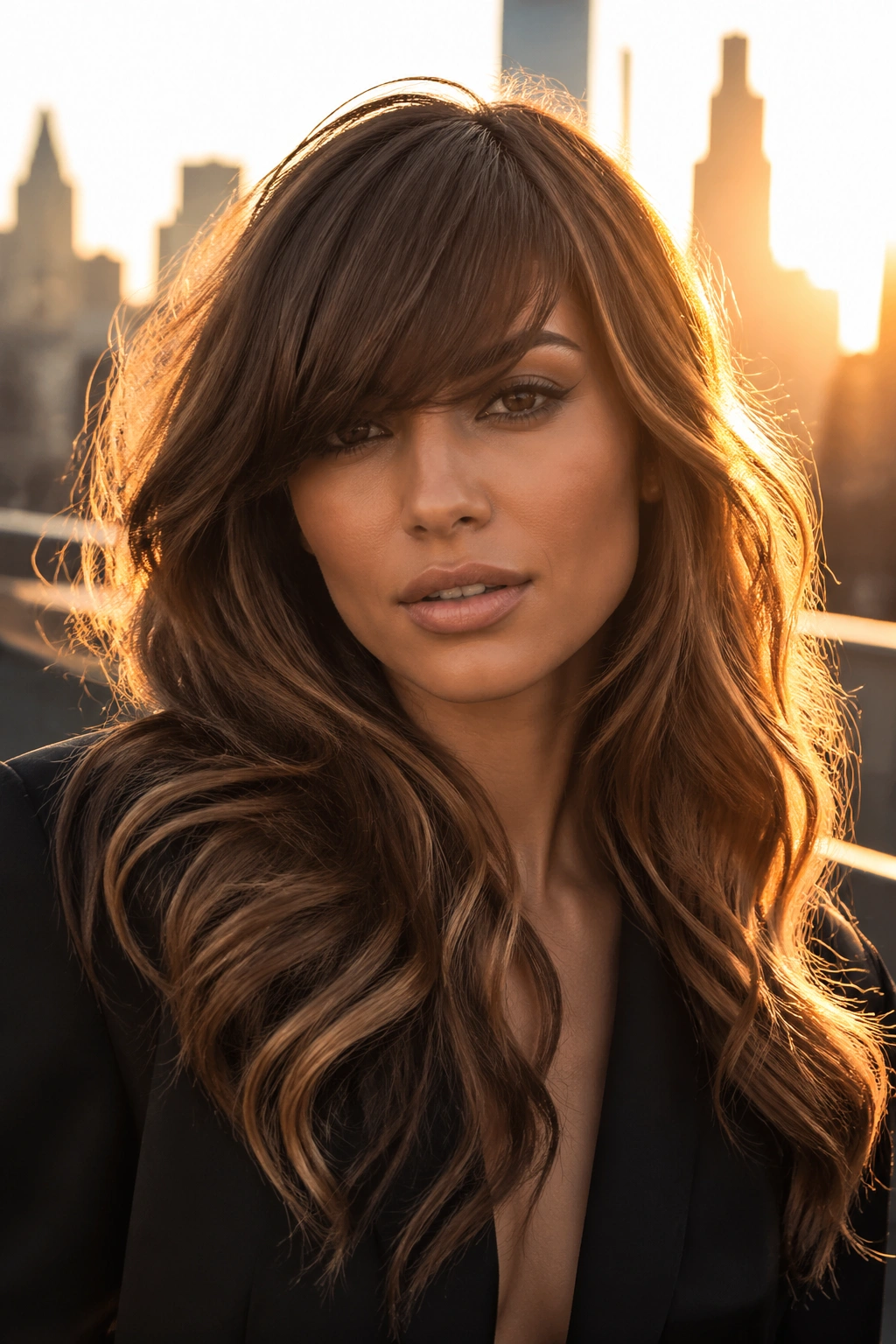
Statement waves are big, obvious, and demand attention. They’re voluminous, well-defined, and deliberately styled. Bold side bangs—cut blunt, positioned dramatically, and sitting at a striking length—complement this confidence perfectly.
Making a Bold Styling Statement
Bold styling is for people who want to make an impact. Statement waves and bold bangs work together to create a look that’s impossible to ignore—in the best way. This isn’t subtle or understated; it’s fashion-forward and deliberately eye-catching.
Creating Statement Impact
- Blow-dry with maximum volume using a round brush and root-lifting products
- Curl hair in tight spirals using a 1-inch wand, then brush through for polished waves
- Bold bangs are cut shorter (around eyebrow to slightly above) and sit prominently on your face
- This style suits people with longer, rectangular, or oval face shapes
- Shine products, volumizing sprays, and sleek finishes enhance the statement aesthetic
Insider note: Bold bangs require a significant commitment to regular maintenance (every 3-4 weeks), so make sure you’re ready for that before committing to this look.
Final Thoughts
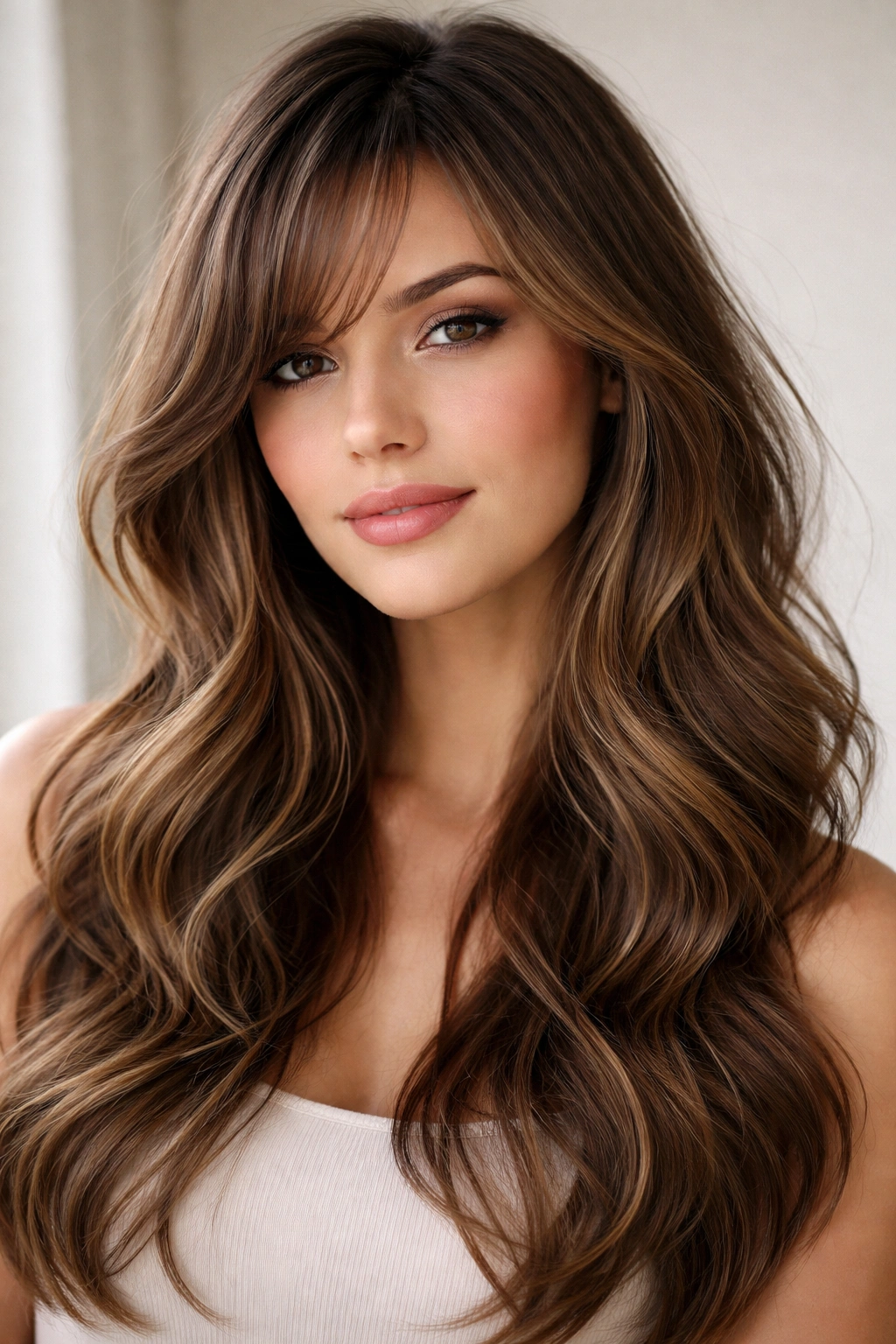
Finding the right combination of waves and side bangs is about understanding what flatters your face shape, matches your styling commitment, and makes you feel confident. Whether you’re drawn to soft, romantic waves or something with more drama and definition, there’s absolutely a pairing that will work beautifully with your natural hair texture and lifestyle.
The best part about wavy hair with side bangs is that you’re not locked into one specific look. You can style your waves loosely for an undone day, more tightly for something polished, or partially pin them back for an entirely different vibe—and your side bangs flow beautifully through all of those variations. Start with a style that resonates with you, work with a skilled stylist who understands wave texture and side-bang placement, and don’t hesitate to experiment with different styling methods and products until you find your perfect formula.
