
If you’ve got wavy hair, you already know the constant battle against frizz. That humidity creeps in, and suddenly your carefully styled waves transform into a fuzzy cloud you didn’t sign up for. Short hair seems like it should be easier to manage — and it absolutely can be — but only if you work with your hair’s natural texture instead of against it. The good news is that strategic cut, the right styling techniques, and smart product choices can actually make short wavy hair less prone to frizz than longer lengths, since there’s less distance for moisture to travel and fewer strands competing for attention.
The key to taming frizz with short wavy hair isn’t fighting your waves into submission. It’s embracing them, working with the natural movement your hair wants to make, and choosing styles that actually showcase that texture rather than pretend it doesn’t exist. A well-cut short wavy style can look polished and intentional, not messy or unfinished. The styles that work best are the ones that account for density, add movement through the right layering, and allow your waves to settle into a natural pattern without working overtime to stay smooth.
Each of these 13 styles approaches short wavy hair from a different angle — some are textured and tousled, others are more controlled, and several work beautifully across a range of hair types and face shapes. Whether you’re looking for something you can air-dry or a style that benefits from a bit of intentional styling, you’ll find options that actually address the frizz issue rather than just ignoring it.
1. The Textured Pixie Cut
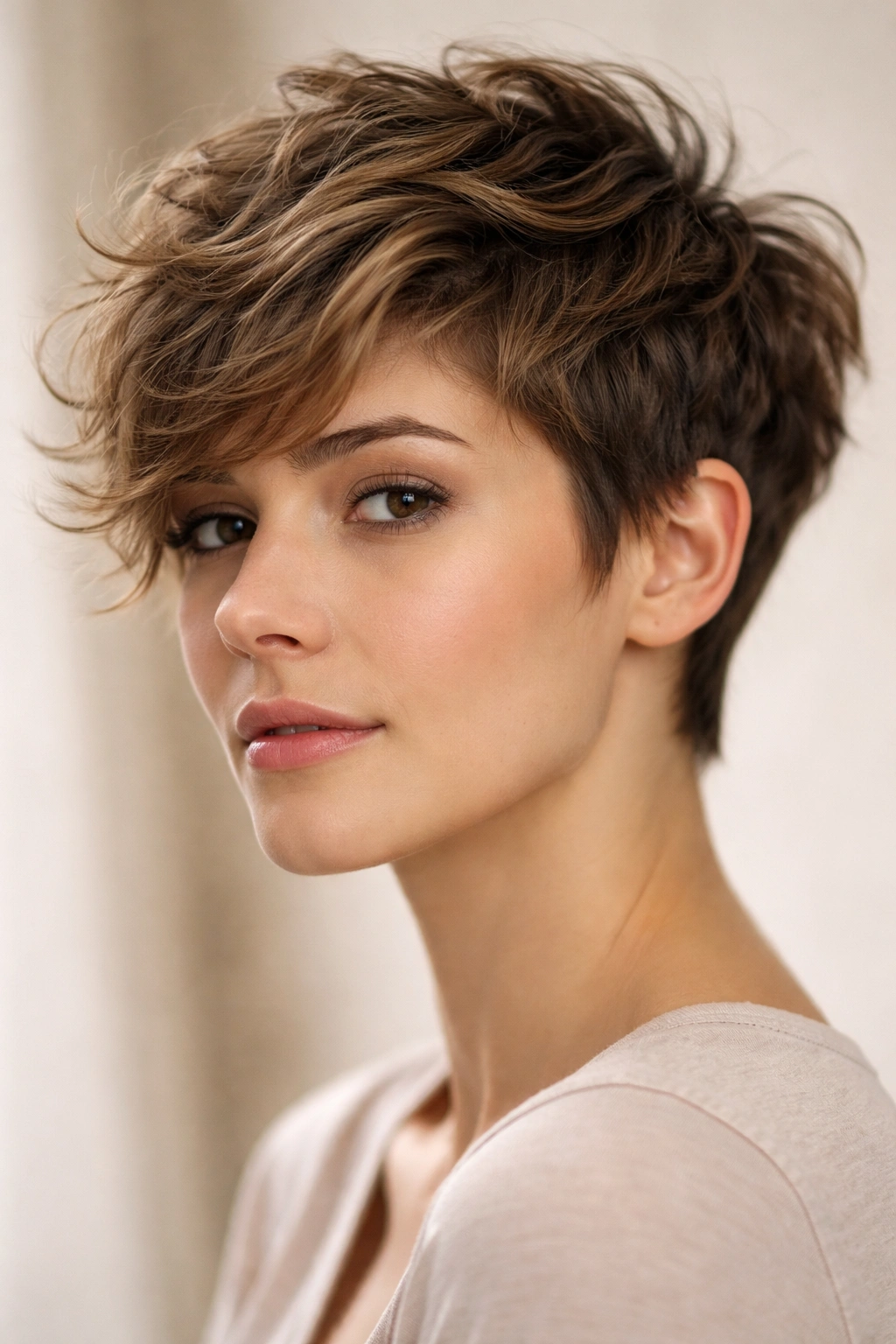
A textured pixie is basically a short, choppy cut with plenty of layers that create movement and break up density. Instead of sleek and smooth, this style plays with texture by using longer pieces on top and shorter, tapered sides. The layers are specifically positioned to interrupt frizz-prone areas and create definition so individual wave patterns show instead of combining into one puffy mass.
Why This Cut Tames Frizz
The secret here is layering strategy. By cutting shorter through the bulk of your hair and leaving slightly longer sections on top for movement, you reduce the weight that’s pulling your waves straight. Less weight means less tension on individual strands, which means they’re free to wave naturally without fighting gravity. Layering also means fewer strands bunched together, so frizz-inducing friction between hairs decreases dramatically.
How to Style and Maintain It
- Rough dry with your fingers to encourage natural wave direction rather than blow-drying straight
- Apply a lightweight frizz-control serum to damp hair before styling — the key word is lightweight; heavy products will weigh down short, choppy layers
- Tousle the pieces on top with your fingers once dry for an intentional, undone texture
- A dry shampoo texture spray can add grip and prevent oils from weighing waves down between washes
- This style actually improves the second or third day after washing, when natural oils have distributed and waves set in their natural pattern
Best for: Fine to medium wavy hair, or anyone who wants a low-maintenance style that actually looks better slightly tousled. Works especially well if you have a rounder face shape, since the height on top creates balance.
2. The Shaggy Bob
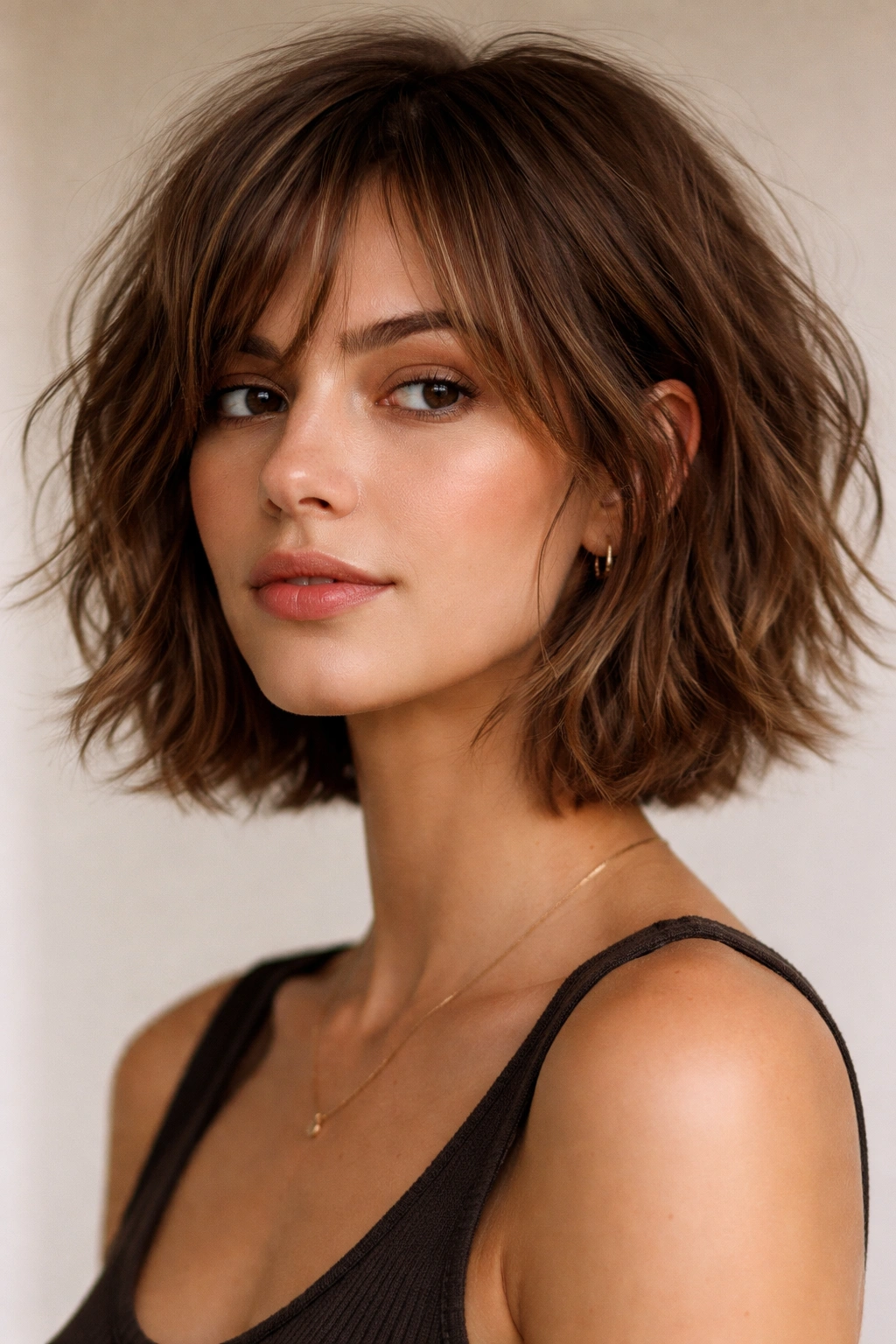
The shaggy bob sits right around chin length with choppy, face-framing layers throughout. It’s distinct from a pixie because it has more length overall, but it shares the same principle: layering breaks up density and creates texture instead of bulk. Shaggy bobs were popular for decades because they work with natural wave patterns, not against them.
The Anti-Frizz Architecture of This Cut
A shaggy bob fights frizz by refusing to create a solid block of hair. Every layer interrupts the potential for waves to combine into one fuzzy mass, and the choppy ends actually mimic the texture you’re trying to create anyway. When frizz happens, it’s reading as intentional texture rather than a problem. The face-framing pieces are cut at angles that work with facial contours, which helps waves fall in a flattering direction rather than puffing out chaotically.
Styling Techniques That Work
- This cut genuinely benefits from texture spray or sea salt spray applied to damp roots before drying
- Air-drying or diffuser-drying with the head tilted to encourage wave direction works beautifully
- Use a lightweight mousse on damp hair to add definition without crunch
- Finger-style your waves as hair dries — guide them where you want them rather than forcing them straight
- Avoid heavy oils or serums on the lengths; stick to products specifically made for frizz control
- This style actually lives well for several days, so you don’t need to wash and restyle constantly
Best for: People with medium to thicker wavy hair who want a style that reads as intentionally textured. The shaggy bob looks great on oval and heart-shaped faces, and the choppy pieces can be tailored to suit different face proportions.
3. The Tousled Crop
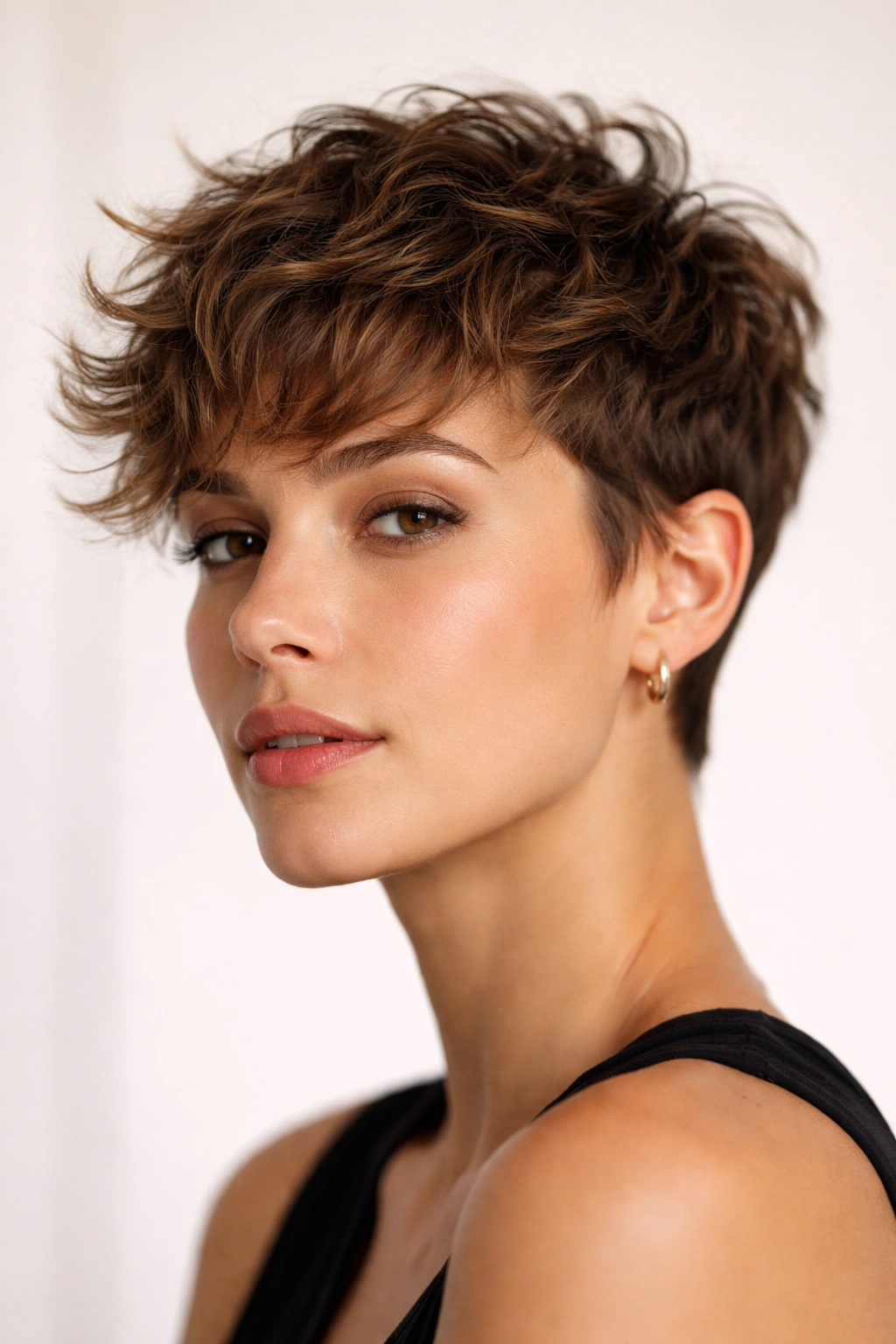
A tousled crop is shorter than a pixie, sitting right at the scalp on the sides and back, with enough length on top to create actual texture and movement. It’s edgy and modern without being severe. The entire point of this cut is to showcase texture, so frizz basically becomes a non-issue because the style is frizzy texture, intentionally done.
How Short Length Equals Frizz Control
When hair is genuinely short, individual strands have nowhere to go — they can’t combine into larger fuzzy sections. Each wave sits independently, and any frizz reads as intentional texture. The short sides and back mean that the most frizz-prone areas (usually around the face and nape) are kept close to the scalp where humidity has less opportunity to make waves swell. You’re basically eliminating the environments where frizz tends to develop most.
Styling and Upkeep
- This cut can be air-dried completely or lightly diffused for more texture
- Apply product to damp hair before it dries — mousse, texture spray, or light gel
- Use your fingers to manipulate and encourage waves while hair dries
- Longer product use is minimal compared to longer styles; you’re not applying serums to lengths that don’t exist
- A tiny amount of pomade or wax on the tips of top pieces adds definition without weight
- This style actually requires more frequent cuts (every 4-6 weeks) since the short length needs maintenance
Best for: Anyone confident in a bold, edgy aesthetic who isn’t attached to longer hair. Works beautifully on people with thick wavy hair, and it’s particularly flattering on those with strong jawlines who can pull off the cropped texture.
4. The Layered Bob With Textured Ends
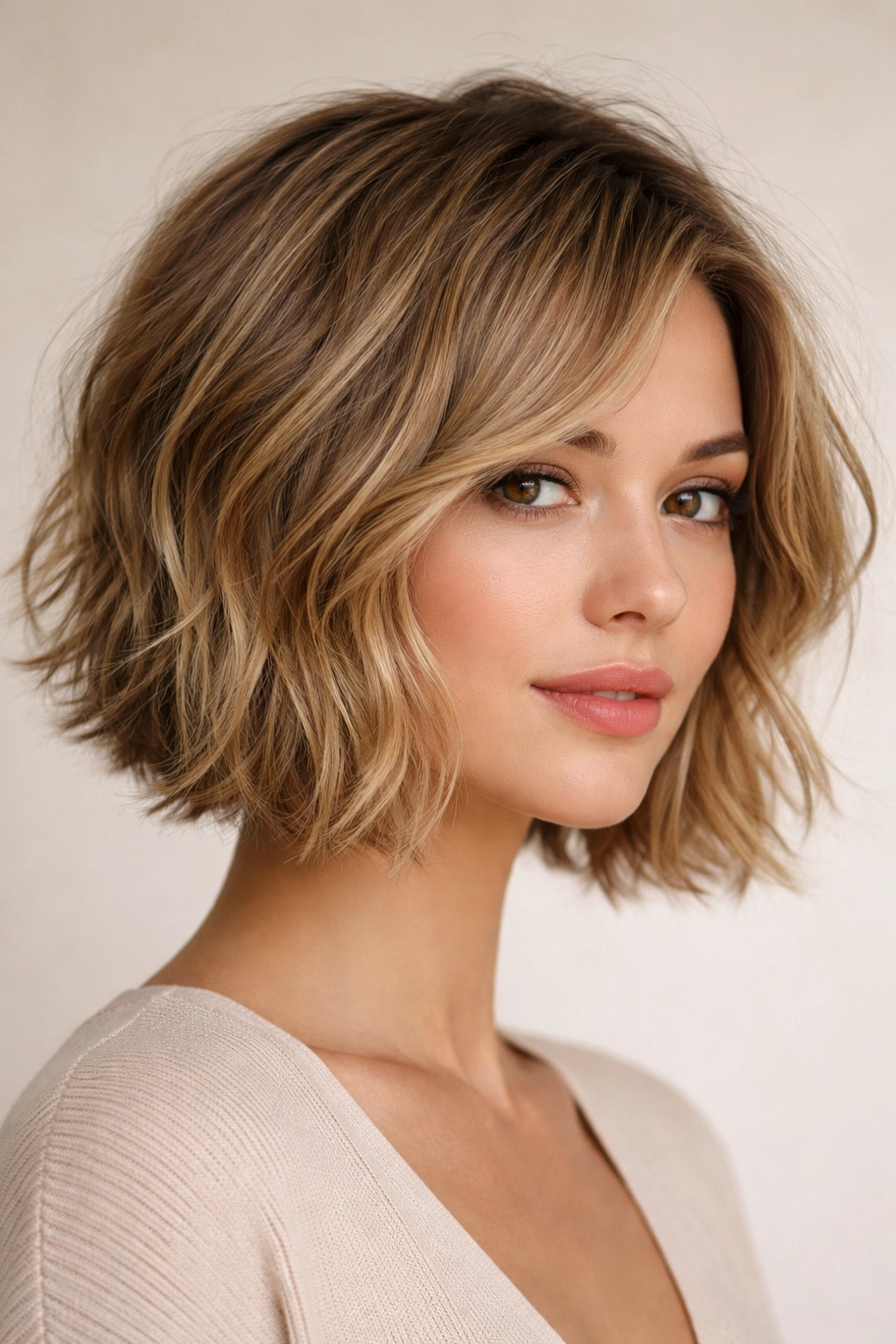
This is a chin-length or slightly shorter bob with layers throughout that create movement and texture. The key detail is that ends are cut with choppy, textured lines rather than blunt edges. Those choppy ends are essentially anti-frizz tools — they break up the solid line where frizz typically looks most noticeable.
The Texture-Cutting Technique
Textured cuts use scissors in a specific way — sometimes cutting at angles, sometimes using point-cutting or slide-cutting techniques — to create choppy ends rather than blunt ones. Blunt ends tend to show frizz more obviously because you’re looking at the clean line where texture is breaking through. Choppy ends integrate frizz into the overall texture, so loose strands read as part of the intended style rather than a flaw. Layering also means the cut is working with your wave pattern, shortening certain sections so waves have less distance to travel before they settle.
Achieving the Right Texture and Finish
- Ask your stylist for a cut with choppy, textured ends, not a blunt bob
- Layers should be cut to encourage your specific wave pattern, not fight it
- Use a texturizing mousse or light foam on damp hair before blow-drying
- If blow-drying, use a diffuser to dry waves without stretching them straight
- A light mist of frizz-control serum or anti-frizz spray on the ends helps contain loose strands
- Air-drying with texture product is often easier and produces better results than blow-drying
Best for: Wavy hair with medium density, anyone wanting a polished but textured look. This cut works across most face shapes and can be tailored with different layer placements to suit various proportions.
5. The Cropped Curly Shag
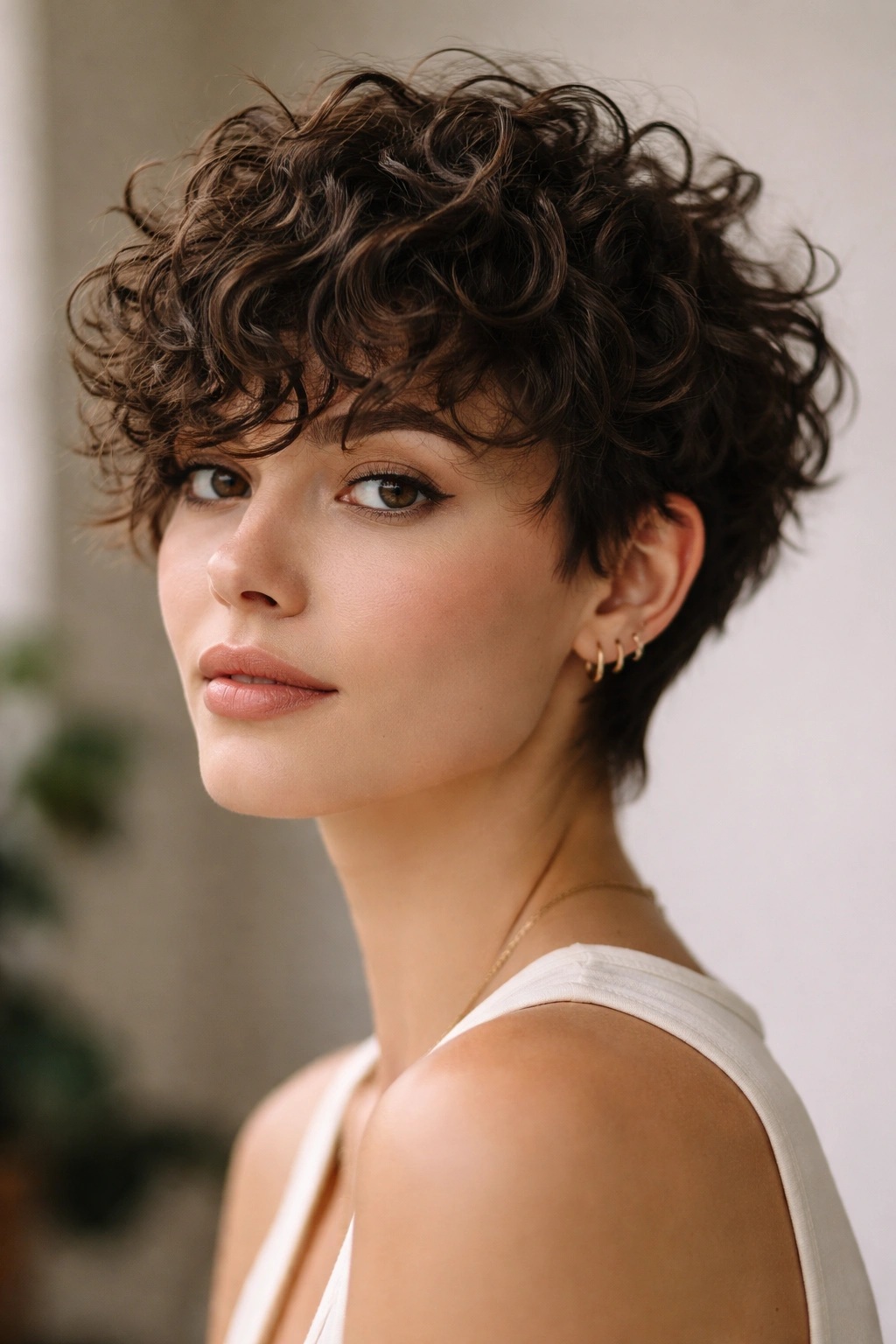
If your waves are on the curly side of the spectrum, a cropped shag is your friend. It’s very short through the back and sides, with longer, heavily layered pieces on top. The aggressive layering creates separation between curl groups, which prevents them from fusing together into one frizzy mass. Each curl has space to form independently.
Curl-Specific Frizz Prevention
Curly hair tends to frizz when individual curls are pressed against each other or against the scalp for too long. A cropped shag eliminates that problem by giving each curl room to live independently. The short back and sides keep the nape of your neck (notoriously frizz-prone due to collar friction and heat trapping) completely clear. The longer, separated layers on top mean curls can form in their natural pattern without external compression.
Product and Styling Strategy
- Use a curl-defining cream or gel on soaking-wet hair before drying
- Apply products generously — you want enough to define the curl without any hair being dry
- Diffuse-dry rather than air-drying, or use a standard blow dryer on low with a diffuser
- Don’t touch hair while it dries — manipulation creates frizz instead of definition
- Once completely dry, use a curl-refreshing spray or very light oil to smooth any frizz without weighing curls down
- Refresh curls between washes with a spray bottle of water and a dab of product
Best for: Wavy to curly hair, especially coily or tightly textured hair where frizz is a constant battle. This cut transforms curly hair that’s been cut bluntly into separated, defined curls that actually look intentional and beautiful.
6. The Feathered Pixie
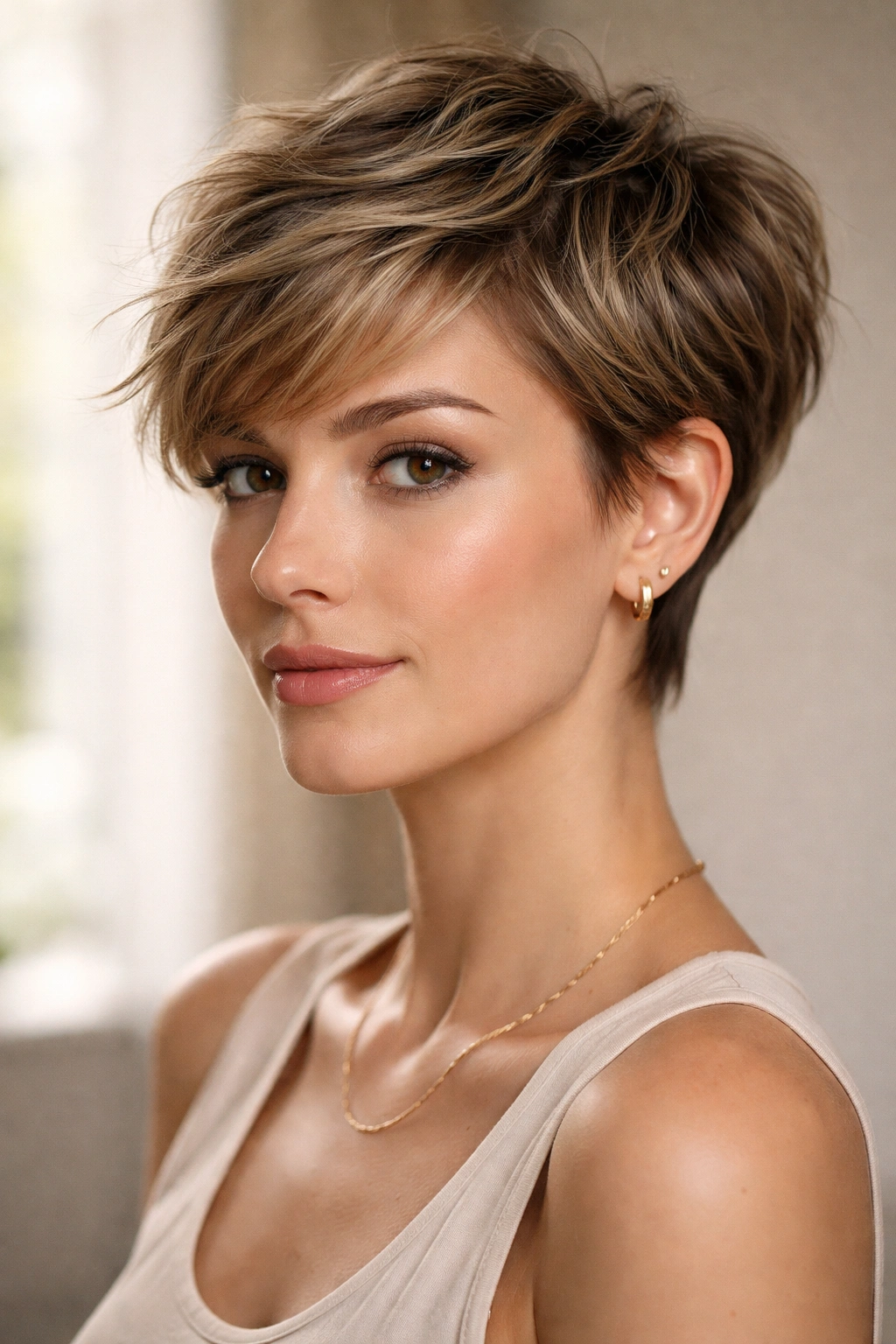
A feathered pixie is a short cut with slightly longer pieces on top that can be styled forward or to the side, creating movement and texture. The layers are cut to create feathering — that’s a technique where hair is cut at sharp angles to create thin, separated pieces rather than one solid mass. It’s retro-chic and genuinely works to combat frizz because there’s so little hair that frizz has nowhere to accumulate.
Why Feathering Fights Frizz
Feathering relies on creating separation through the cut itself. Instead of blunt layers where pieces sit on top of each other, feathered layers are cut so each section is distinct and separate. This approach means frizz that would normally occur at the intersection of multiple hairs just… doesn’t happen, because those hairs aren’t sitting directly on top of each other. You’re using geometry to prevent the mechanical friction that creates frizz.
Styling for Maximum Texture
- This cut works beautifully with natural texture and air-drying
- A lightweight texture spray on damp roots gives grip and definition
- Blow-dry with fingers to encourage pieces to separate and feather
- You can style pieces forward for a softer look or off to the side for edge
- Use very minimal product on lengths — one tiny pump of styling cream is enough
- This style genuinely improves as hair grows out slightly; the texture becomes more pronounced
Best for: Anyone comfortable with a bold, short style, particularly those with fine to medium wavy hair. The feathered pieces create the appearance of more volume, so it’s flattering for fine or thin hair.
7. The Wavy Lob With Long Layers
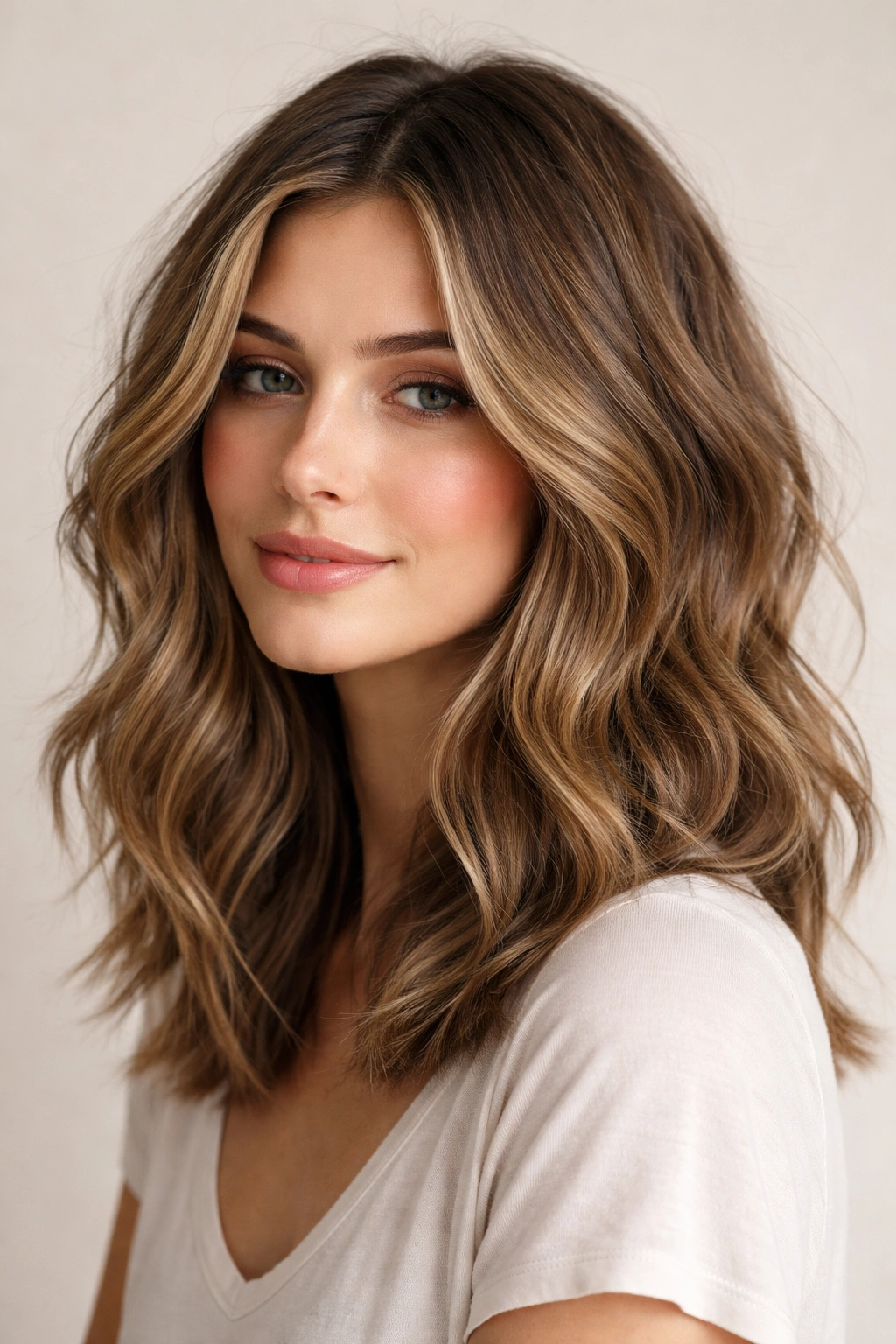
A lob is longer than a bob but shorter than true long hair — typically hitting somewhere between the collarbone and shoulder. When you add long, flowing layers throughout, you create movement and texture while still having enough length to show off wave patterns. The length gives you styling versatility while the layers keep frizz from becoming one solid, puffy mass.
The Long-Layer Advantage for Wave Control
Long layers mean each section of hair is cut slightly shorter than the section beneath it, so waves have natural variation in length throughout. This variation prevents the dead weight that makes waves frizz — instead, each wave settles at its natural length. Layers also create texture throughout the cut, so frizz reads as intentional wave texture rather than a problem. The longer length means you can tuck hair behind your ears or style it different ways, which gives you frizz-management options.
Styling a Wavy Lob Effectively
- Use a medium-hold mousse on damp roots for volume and texture
- Blow-dry with a diffuser, flipping your head to encourage natural wave direction
- Once dry, use a lightweight serum on just the ends to smooth any frizz without flatting roots
- Braiding damp hair overnight and releasing waves in the morning creates gorgeous defined waves
- Texture spray refreshes waves between washes without requiring a full restyle
- Layers mean you can pin sections back if humidity is extreme, turning a wavy lob into a half-up style
Best for: Medium to thick wavy hair with some density to carry longer length. Works beautifully on most face shapes and gives you the most styling versatility of any short style.
8. The Tousled Shag Cut
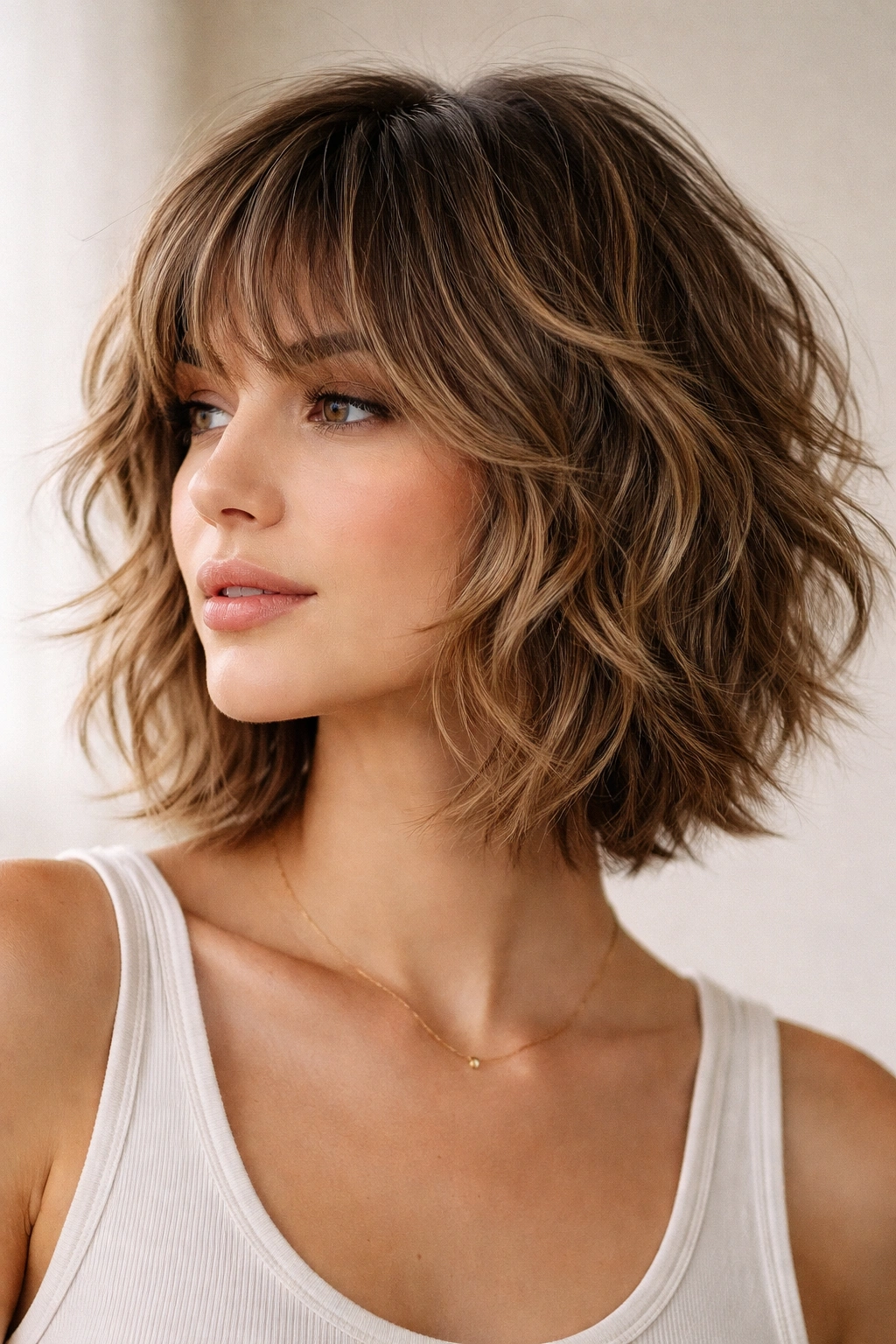
A modern shag is distinct from vintage shags — it’s less extreme but uses the same principle of layered texture throughout. It’s typically chin-length with layers cut to encourage movement and texture. Think of it as a shaggy bob’s tousled cousin. Every strand is cut intentionally to create separation and movement rather than density.
Texture-Based Frizz Prevention
A shag cut specifically uses layers to create texture as its primary design feature. Because the entire style is textured, frizz-prone areas read as intentional design rather than problems. The layers create air gaps between sections of hair, reducing the density that traps humidity and causes frizz. Each layer is cut at a slightly different length, so when waves form, they do so at different points along the hair’s length, creating overall shape and movement rather than one bulky form.
Achieving the Tousled Look
- Ask your stylist specifically for a modern, textured shag cut with choppy layers
- Mousse applied to damp roots gives texture and definition
- Air-dry or diffuse-dry with fingers guiding pieces into place
- Once dry, a light mist of texture spray adds hold and emphasis
- Tousle pieces with your fingers — mess is intentional with a shag
- This cut looks better slightly lived-in, so it’s perfect if you don’t want a polished everyday style
Best for: Anyone who wants intentional texture as the primary feature, regardless of hair density. Works across face shapes and is particularly flattering on those who want an undone, effortlessly cool aesthetic.
9. The Wavy Pixie With Side Part
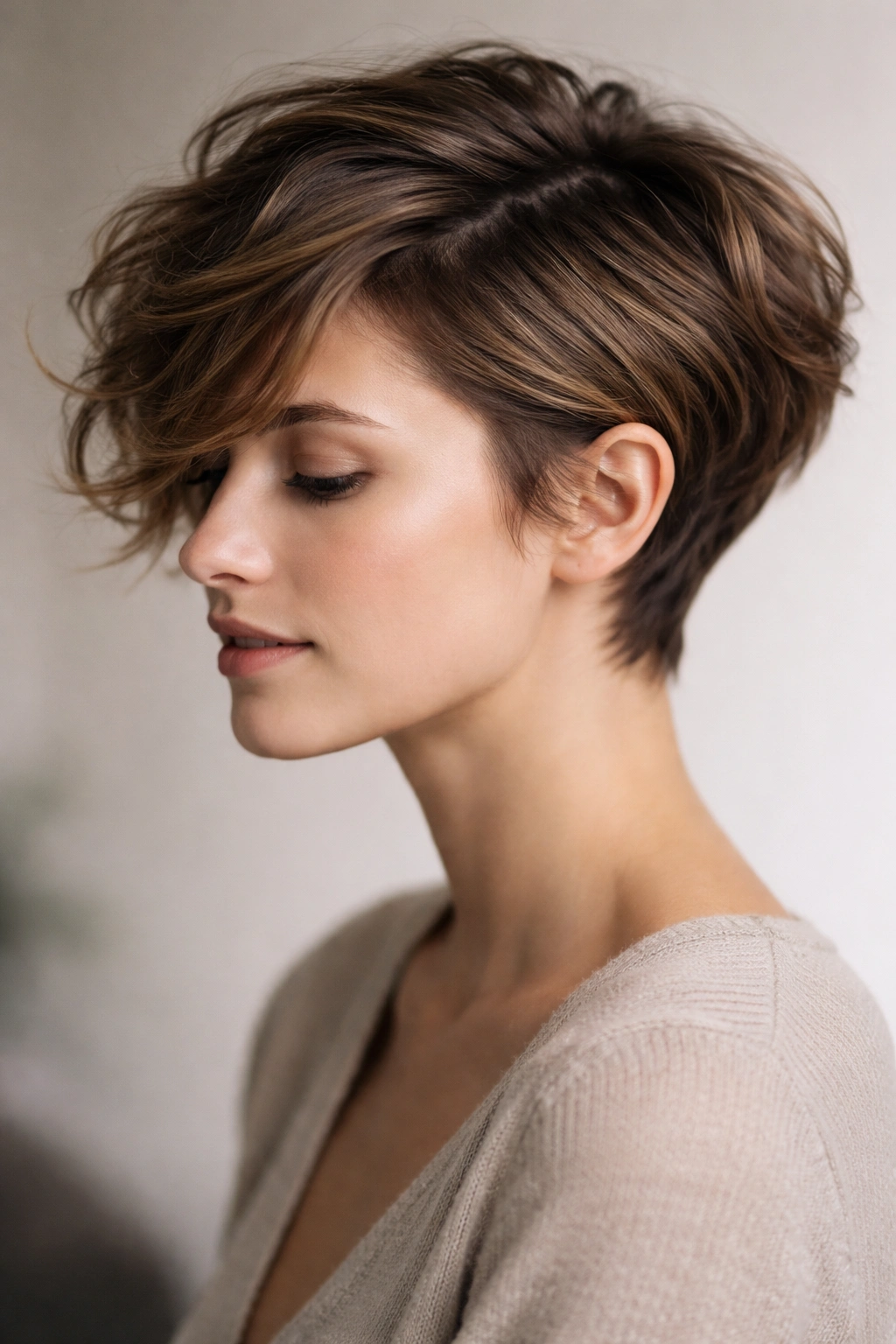
A wavy pixie with a deep side part is essentially a pixie cut where you intentionally style longer pieces to one side, creating drama and movement. The side part draws attention to one side of the face and creates a frame that adds visual interest. The waves in the longer top section have space to move without being pulled straight by weight.
How a Side Part Changes the Frizz Game
A side part creates an asymmetrical movement that actually helps manage frizz. Instead of hair falling naturally downward and puffing out, a side part directs hair in a specific direction, encouraging waves to follow that path. The longer pieces that fall to the side have less direct vertical weight, so they’re freed to wave naturally. The shorter pieces on the opposite side eliminate frizz-prone bulk in that area. You’re essentially using styling direction to guide waves rather than trying to suppress them.
Styling to Maintain the Side-Part Shape
- Use a lightweight mousse on the longer side for hold and texture
- Blow-dry the longer pieces in the direction of the part, using your hand to guide
- A small amount of texture spray or light pomade on the side pieces helps them stay in place
- Tousle the texture once dry — this style benefits from intentional messiness
- You can refresh the part and side pieces with dry shampoo between washes
- This style requires more frequent cuts than others (every 4-6 weeks) to maintain the asymmetrical shape
Best for: Anyone wanting a bold, stylish pixie that still feels textured and modern. The side part adds femininity to a short cut, making it flattering for those who want edge without losing softness.
10. The Choppy Textured Bob
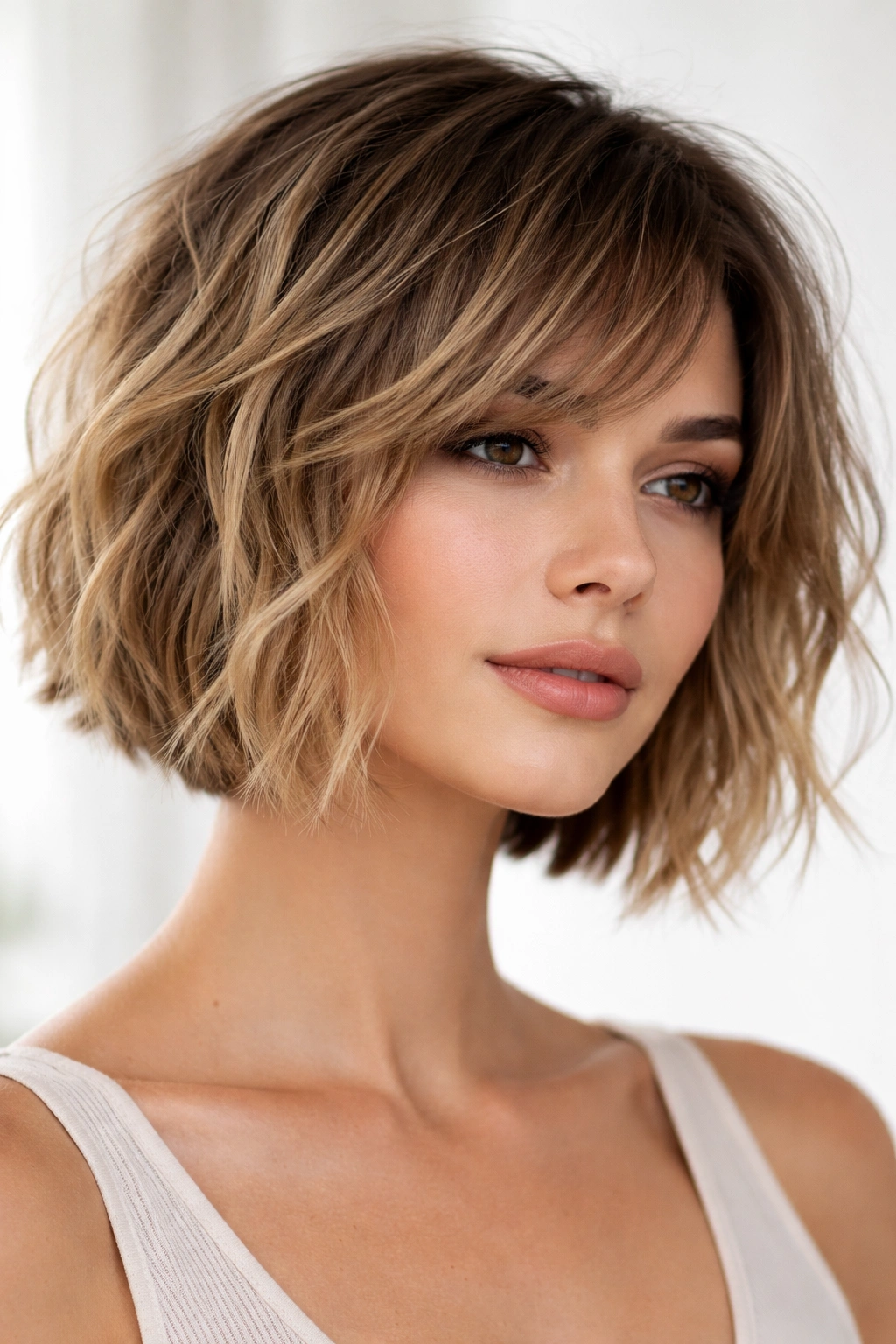
This bob is shorter (usually hitting right at the jaw or slightly below) with choppy layers cut throughout in a way that creates maximum texture and movement. The choppiness is the point — blunt lines are the enemy here. Every cut is made at an angle, creating separation and texture rather than solid sections.
The Science of Choppy Cuts
Choppy cutting techniques create intentional separation through the way the scissors meet the hair. Instead of cutting straight across (which would create a blunt line where frizz shows clearly), choppy cuts use point-cutting and angle-cutting to create pieces that don’t sit flush against each other. This technique means fewer surfaces for frizz to develop on, and any frizz that does occur reads as part of the textured design. The layers are cut to work with your specific wave pattern, not against it.
Product and Styling for Choppy Texture
- Texture mousse on damp roots is essential for definition
- Blow-dry with a diffuser, using your fingers to encourage separation between pieces
- Once dry, use a very light styling cream or texture spray on just the tips
- Avoid heavy oils or serums that will weigh down the choppy layers
- Tousle with your fingers while product is still slightly damp for maximum definition
- This style benefits from being slightly undone — polished is the enemy of choppy texture
Best for: Wavy to textured hair with at least medium density. The choppy cuts work beautifully when you have enough hair that the pieces read as intentional separation rather than sparse.
11. The Textured Undercut
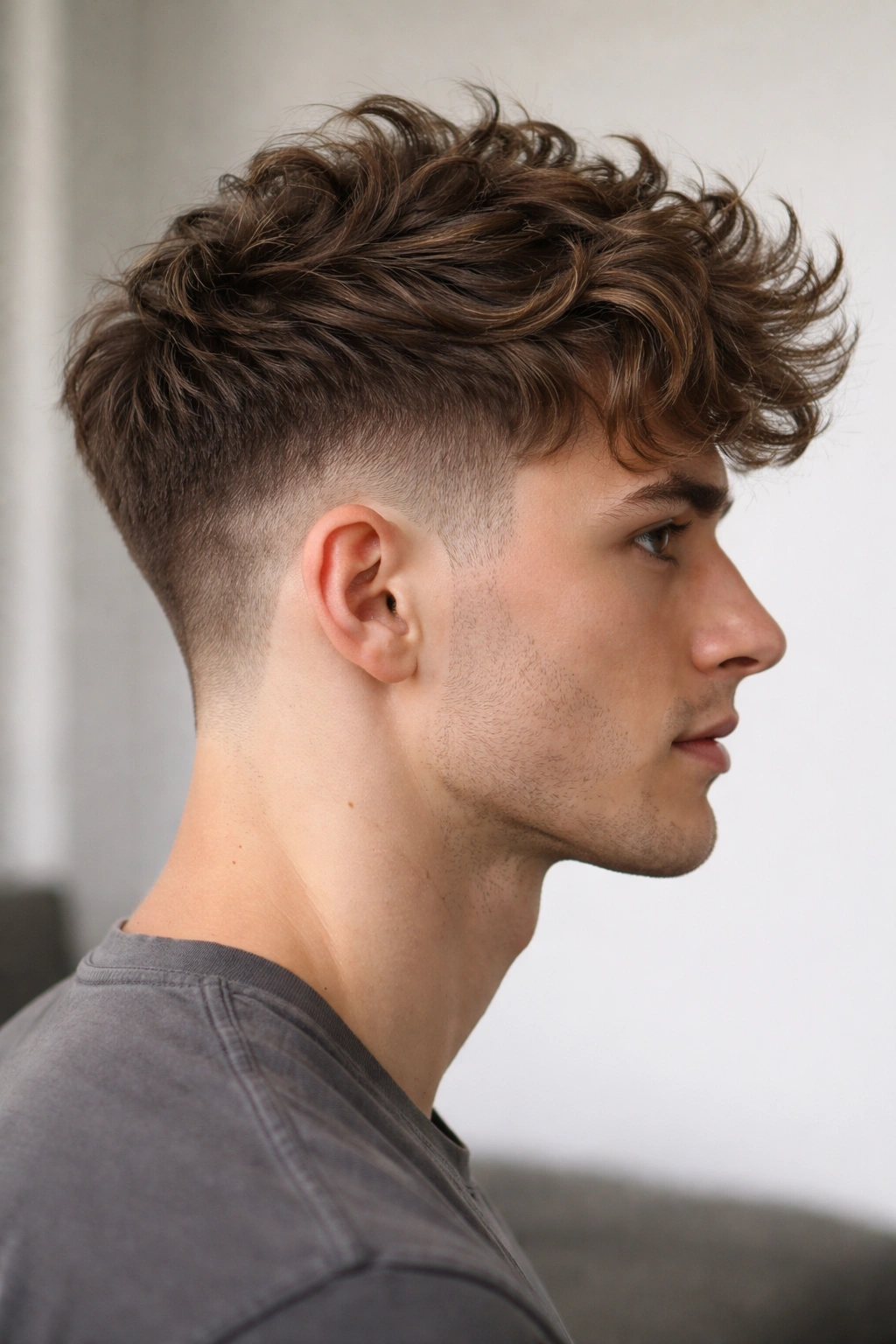
An undercut means the back and sides are cut very short or even shaved, while the top is left longer with plenty of layers. It’s edgy and modern, and the short back and sides eliminate huge amounts of frizz-prone real estate. The contrast between short sides and layered top creates dramatic movement and texture.
Frizz Elimination Through Strategic Contrast
By cutting the back and sides extremely short, you’re eliminating the areas that trap the most heat and humidity — the nape of your neck and the sides around your ears. These are notoriously frizz-prone because they’re closest to your body heat and collar friction. The short sides also mean hair can’t tangle or compress against your shoulders. The longer, layered top has room to move and wave without being weighed down by volume underneath.
Maintaining Your Textured Undercut
- The back and sides require frequent trims (every 2-3 weeks) if you want sharp definition
- The top layers need regular cuts every 4-6 weeks to maintain shape as they grow
- Texture product on damp hair is essential for the top layers to look intentional
- Air-dry or diffuse with fingers to encourage movement in the top section
- A dry shampoo texture spray refreshes your style between washes
- The short back and sides require minimal styling — focus on the top layers
Best for: Anyone bold enough to commit to a very short style, particularly those with thick hair. The strong contrast is flattering on those with strong facial features and anyone who wants a genuinely transformative cut.
12. The Wavy Crop With Textured Bangs
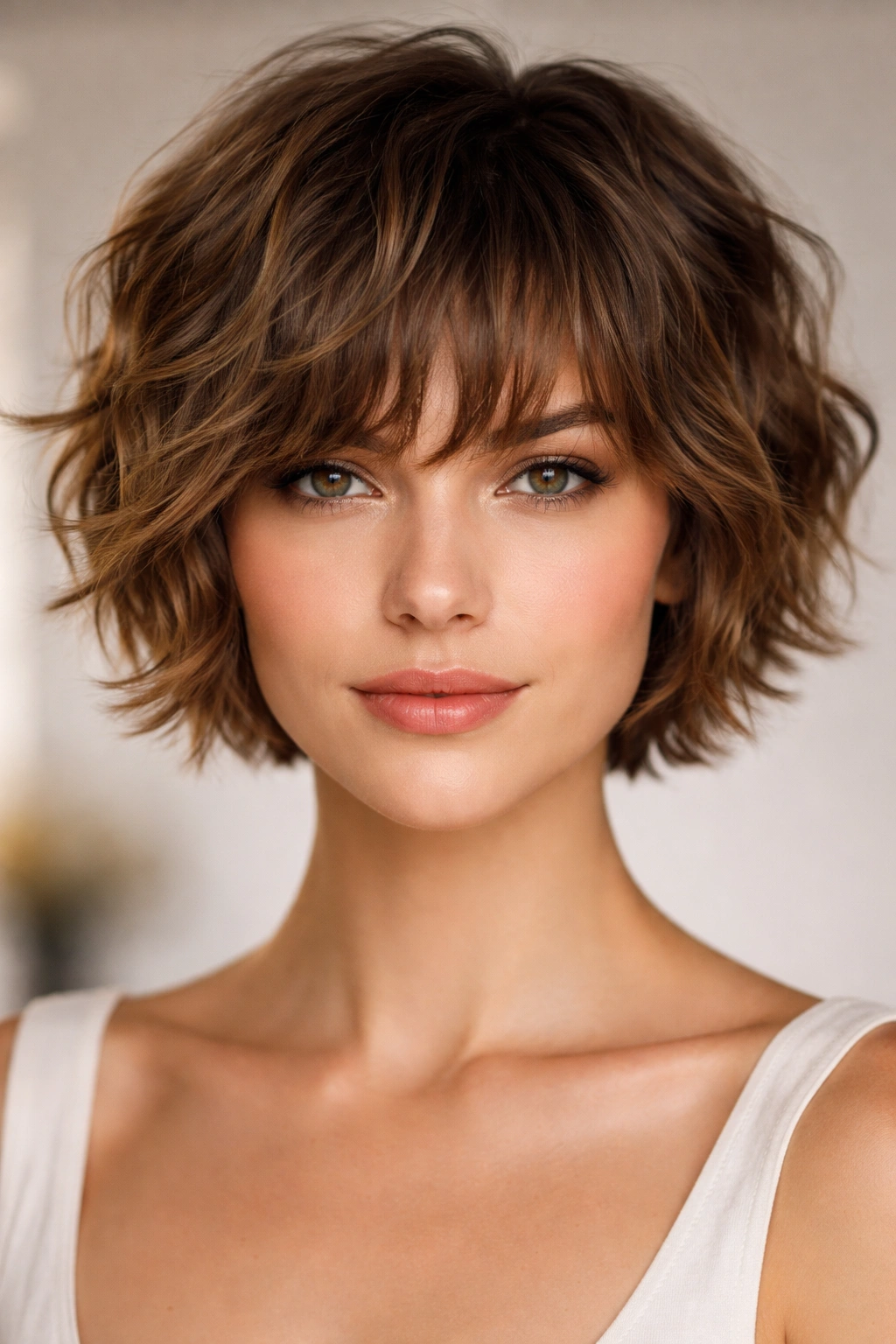
This is a very short crop throughout, similar to a tousled crop, but with longer pieces in the front that create textured bangs or face-framing pieces. The bangs are cut to create choppy texture rather than a solid line. It’s edgy and dramatic while still framing the face.
Bangs as a Frizz Strategy
Textured bangs are genius because they draw attention to the face while providing an intentional frame that guides eye movement. The choppy texture means any frizz in the bangs reads as intentional style rather than a problem. The shorter overall length means the entire style has minimal frizz opportunity — there’s just not enough hair for frizz to accumulate into a significant issue. Longer front pieces give you face-framing options while the short back and sides keep nape and sides frizz-free.
Styling Textured Bangs and Keeping Them Fresh
- Textured bangs need product to look intentional — use texture spray or mousse
- Blow-dry the bangs into place using your fingers, directing them where you want them
- Refresh bangs between washes with dry shampoo or texture spray
- Texture bangs actually benefit from being slightly disheveled — perfect if you don’t want a polished look
- You might trim bangs more frequently than the rest of your cut (every 3-4 weeks) since they’re most visible
- This style reads younger and more playful than other short styles
Best for: Anyone wanting a dramatic, youthful short style with personality. Works best on those with higher foreheads or those who want the face-framing feature that bangs provide.
13. The Layered Pixie Bob
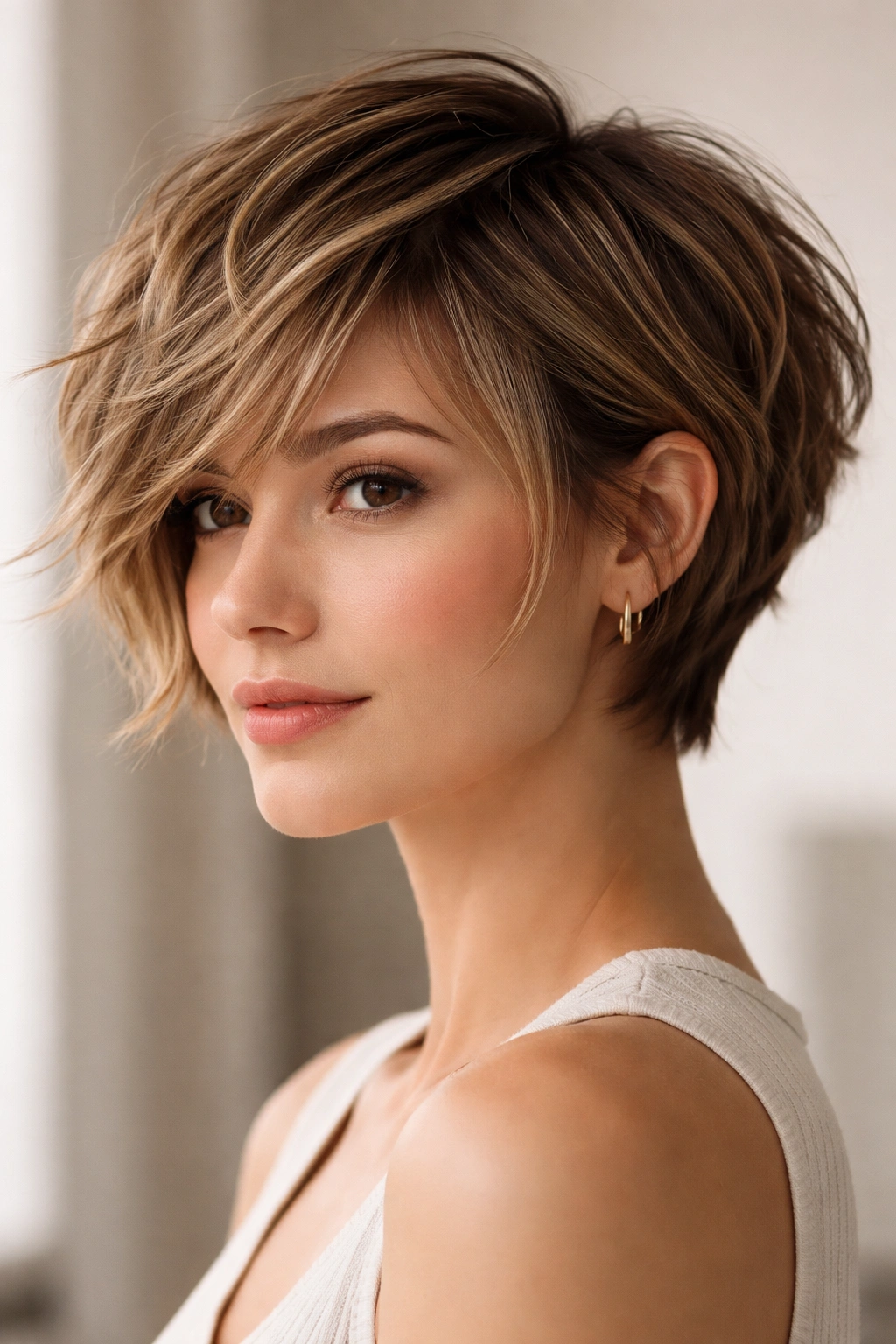
A pixie bob is essentially the middle ground between a pixie and a bob — it’s short but with slightly more length than a true pixie, usually with a longer front that can frame the face. Adding layers throughout creates texture and movement while keeping the overall length short.
The Layered Pixie Bob’s Frizz Control
This style benefits from everything we’ve discussed: layers that create separation, short length that prevents frizz accumulation, choppy ends that integrate texture. The longer front pieces give you something to style and frame your face with, while the short back and sides keep bulk minimal. It’s essentially a pixie cut with just enough length and movement to feel more traditionally feminine while maintaining all the frizz-control benefits of very short hair.
Versatile Styling Options
- You can style the longer front pieces forward to frame your face or sweep them back
- Texture mousse on damp roots gives definition throughout
- Air-drying or diffuse-drying both work beautifully with this cut
- The longer front pieces can be pinned back if you want your full face visible
- Texture spray refreshes your style between washes
- This cut is flattering across most face shapes and works with various hair textures
Best for: Anyone wanting the low-maintenance benefits of short hair with slightly more femininity and styling versatility. The layered pixie bob works beautifully on people with all hair densities and textures.
Final Thoughts
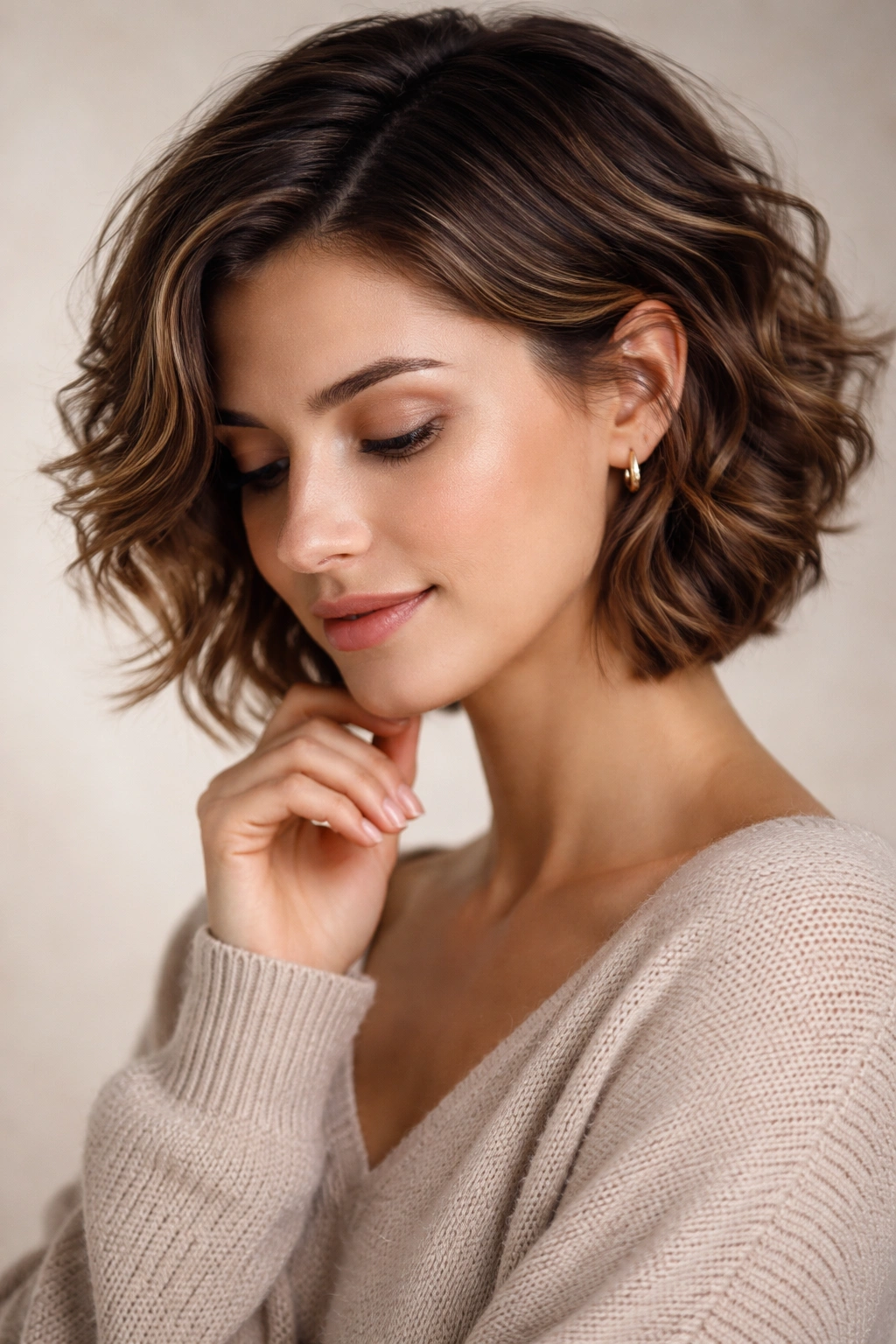
The real truth about short wavy hair and frizz is this: the problem isn’t your waves, it’s fighting them. Every single one of these styles works because they stop battling your hair’s natural texture and start celebrating it instead. A cut with intentional layers, choppy texture, and strategic length distribution doesn’t just reduce frizz — it transforms what might have been a frizz disaster into the entire point of your style.
Choosing the right short wavy style means thinking about three things: how much styling effort you want to put in daily, what kind of texture you naturally have (fine waves, medium, thick curls), and what kind of personality your style communicates. A feathered pixie sends a completely different message than a textured undercut, even though they both manage frizz through short length and layering.
Once you’ve got the right cut, your frizz battle becomes manageable because you’re no longer fighting your hair’s natural instinct. Use texture-building products on damp hair, let your waves dry in their natural direction, and embrace the tousled texture that makes short wavy hair so striking. The frizz that would have felt like a problem in a blunt-cut bob becomes an intentional design feature in a well-layered pixie. That’s the real magic of these cuts.