



Short curly bobs have become the ultimate power move for anyone looking to embrace their natural texture while keeping things modern and low-maintenance. If you’ve been wrestling with long curls or considering a dramatic change, a short curly bob offers the best of both worlds—serious styling versatility combined with the freedom that comes with less hair to manage. The key is finding the cut that complements your specific curl pattern, face shape, and lifestyle.
The beauty of curly bobs is that they work across virtually every curl type, from loose waves to tight coils. A well-executed short bob can actually enhance your natural curl pattern, giving definition and shape that longer hair sometimes loses under its own weight. The right style also means you’ll spend less time fighting your hair and more time enjoying how good it looks. Beyond that practical benefit, there’s something undeniably transformative about cutting off length and watching your curls spring to life with renewed bounce and personality.
What makes choosing the perfect curly bob tricky isn’t the style itself—it’s understanding which variations work with your specific texture, face shape, and how much styling effort you’re willing to invest. Some curly bobs are nearly wash-and-go ready, while others benefit from intentional styling and product layering. We’ve pulled together ten distinct curly bob styles that showcase the full range of what’s possible, from choppy and textured to sleek and structured. Whether you prefer something subtle or a head-turning statement cut, one of these approaches will speak to you.
1. Textured Pixie Bob
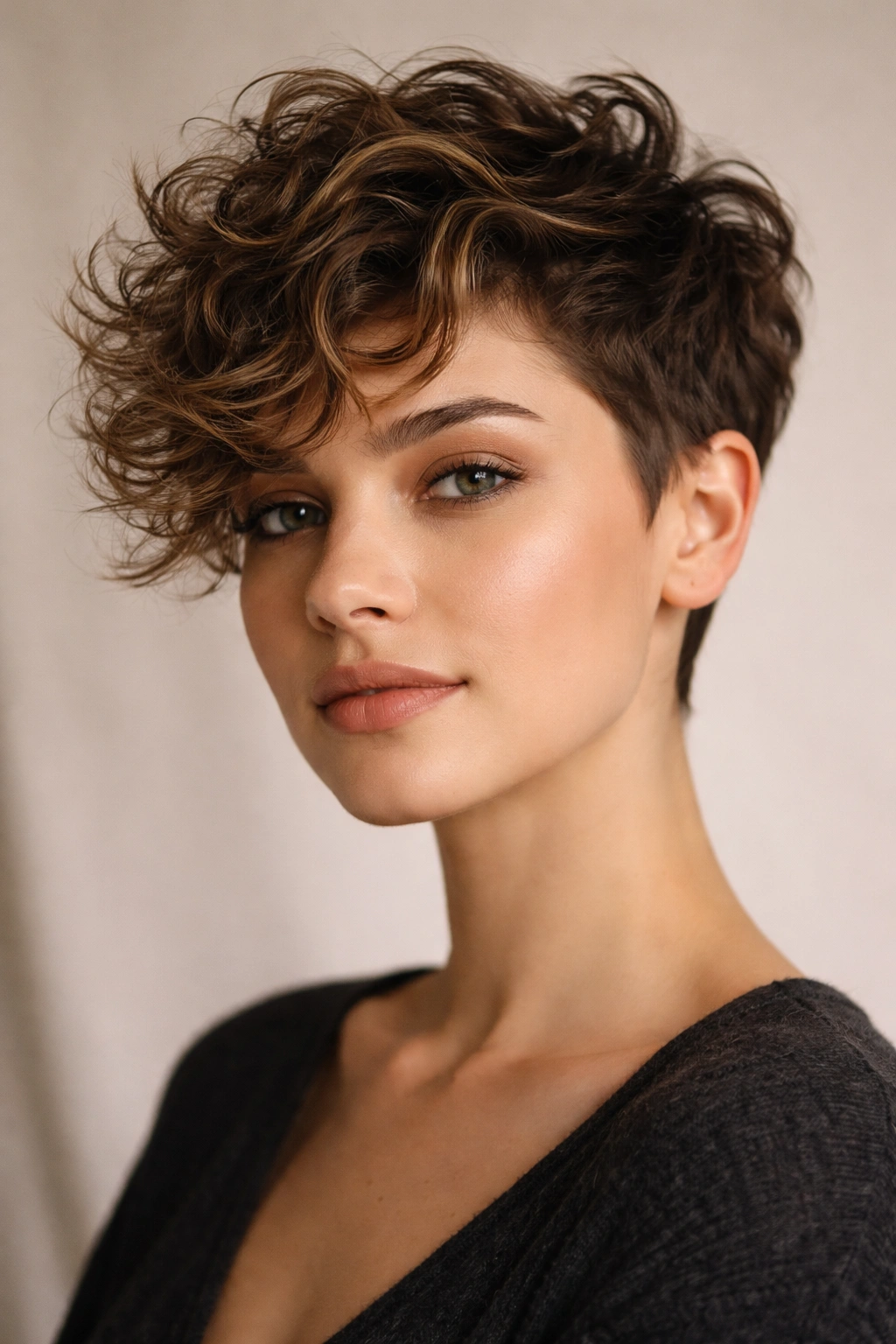
The textured pixie bob is where a pixie cut meets curly hair in the most flattering way possible. This style keeps sides and back dramatically short—think 2-3 inches maximum—while leaving slightly more length on top to showcase your curl texture. The result is an architectural cut that frames the face beautifully and puts your cheekbones front and center.
Why This Cut Stands Out for Curly Hair
This style works brilliantly for curly hair because the shorter length means your natural curl pattern becomes the dominant visual element rather than weight dragging everything down. The strategic length on top gives texture room to express itself without looking shapeless. You’re essentially working with your curls as a styling tool rather than fighting against them, which means less product dependency and less styling time overall.
What to Expect With This Style
- Styling commitment: Minimal. Most days you’ll simply apply a lightweight curl cream and let your curls do their thing
- Face shapes it flatters: Angular faces, strong jawlines, and anyone confident about showing off their facial features
- Maintenance schedule: Trims every 4-6 weeks to keep the shape crisp and intentional
- Best for curl types: Works across loose waves to medium curls; very tight coils may need slightly more length on top to avoid an ultra-short appearance
Pro tip: This cut requires a stylist with genuine curly hair expertise. You want someone who understands how curls shrink when dry and can cut accordingly, not someone who cuts based on wet length.
2. Layered Curly Bob
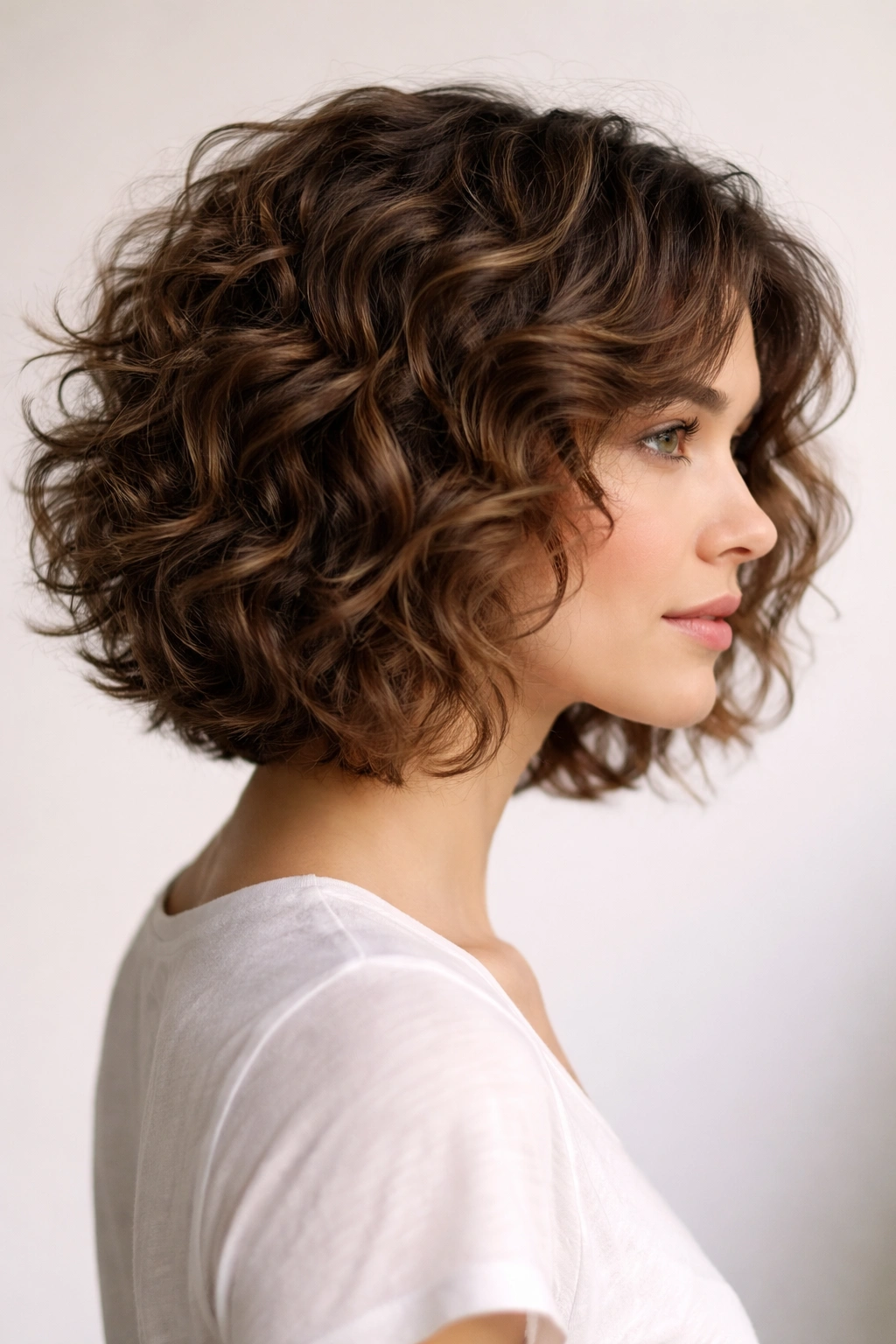
A layered curly bob combines the clean structure of a classic bob with strategically placed layers throughout that add movement and dimension. Layers hit at different lengths across the crown and sides, creating a textured, almost feathered effect that looks effortlessly put-together.
How Layering Changes a Curly Bob
Layers are revolutionary for curly hair because they remove bulk while maintaining length and density. Without layers, a blunt curly bob can sometimes feel heavy or pyramid-shaped. Strategic layering creates lift at the crown, encourages volume rather than flatness, and gives your curls room to separate and show off individual texture. The cut works with gravity rather than against it.
Styling and Maintenance Details
- Ideal curl pattern: Works best with wavy to medium curls that have good definition; very fine curls can look too wispy with aggressive layering
- Daily styling routine: Apply leave-in conditioner to damp hair, rake through with fingers, use a diffuser on low heat or air dry, then scrunch in a lightweight gel
- Upkeep: Trims every 6-8 weeks to keep layers from blending into one length as your hair grows
- Best product type: Cream or gel-based products that enhance definition without creating hard crunch
This style gives you more flexibility for various looks. You can enhance the layered effect with specific styling, or smooth it out slightly on days when you want a cleaner appearance.
3. Curly Shag Bob
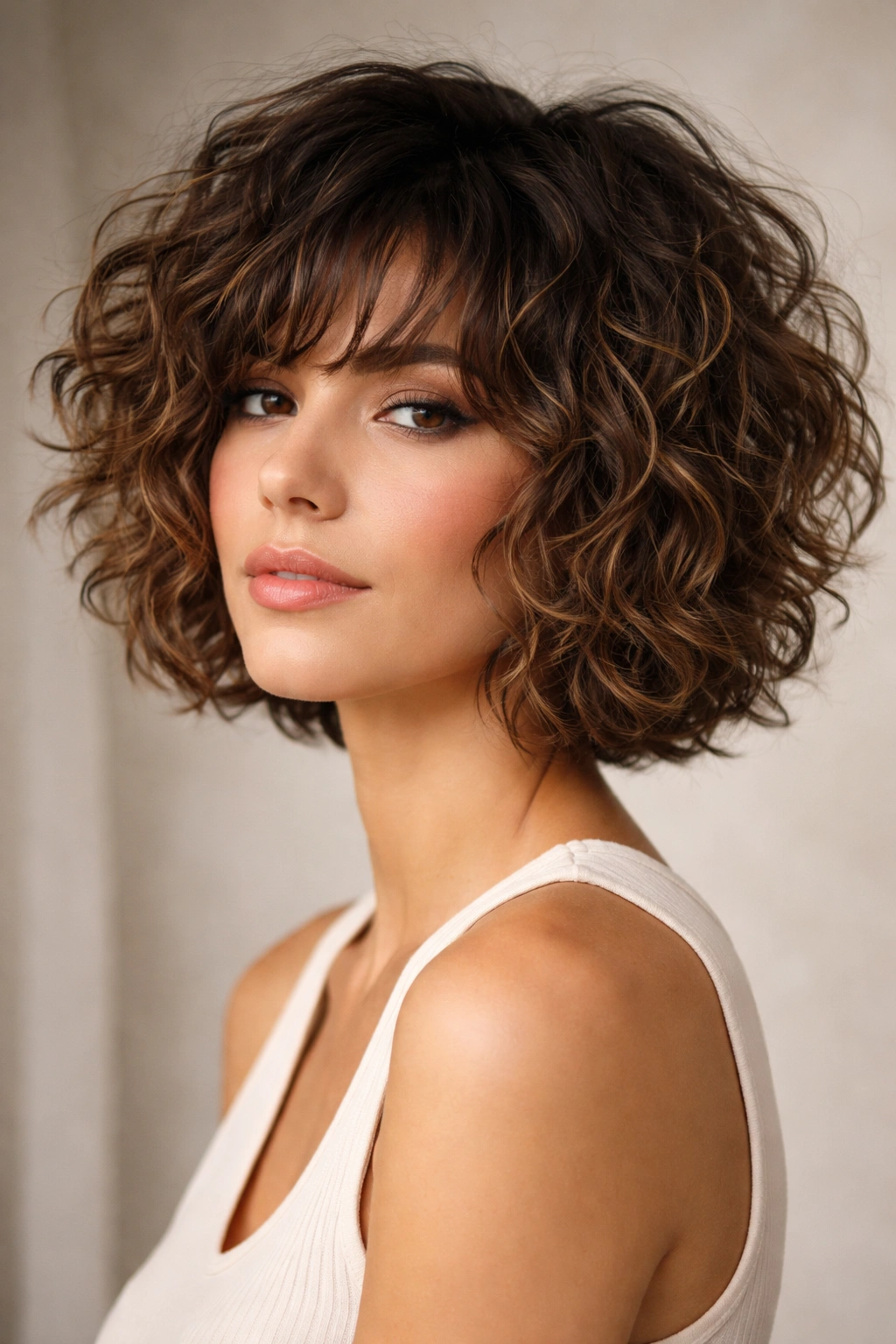
The shag bob is pure nostalgia with a modern update, combining choppy layers with a shorter overall length and an unapologetically textured vibe. It’s the cut for people who want their curly bob to have personality, movement, and that enviable “I woke up like this” energy. The shag celebrates messy, unpolished beauty in the best possible way.
Why a Shag Works With Curls
Straight hair shags can sometimes look unflattering or overly dated, but curly shags feel contemporary and editorial. Your natural curl pattern creates the texture and movement that makes a shag sing. The combination of shorter length and choppy layering means you get volume without weight, and the cut’s inherent messiness actually plays to curly hair’s strengths rather than against them.
Styling Approach and Best Practices
- Texture enhancement: Use a texturizing spray or salt spray on damp curls before you style for that intentional piece-y effect
- Drying method: A diffuser on medium heat, or air dry with occasional scrunching to encourage separation
- Product strategy: Keep styling products light and minimal—the cut does most of the work for you
- Face shape fit: Outstanding for round faces, square faces, and anyone who wants to draw attention outward rather than frame the face closely
- Maintenance: Every 4-6 weeks to keep the choppy layers sharp and intentional
A shag bob lets you lean into the texture rather than trying to control or smooth it, which is exactly the right energy for curly hair.
4. Coily Undercut Bob
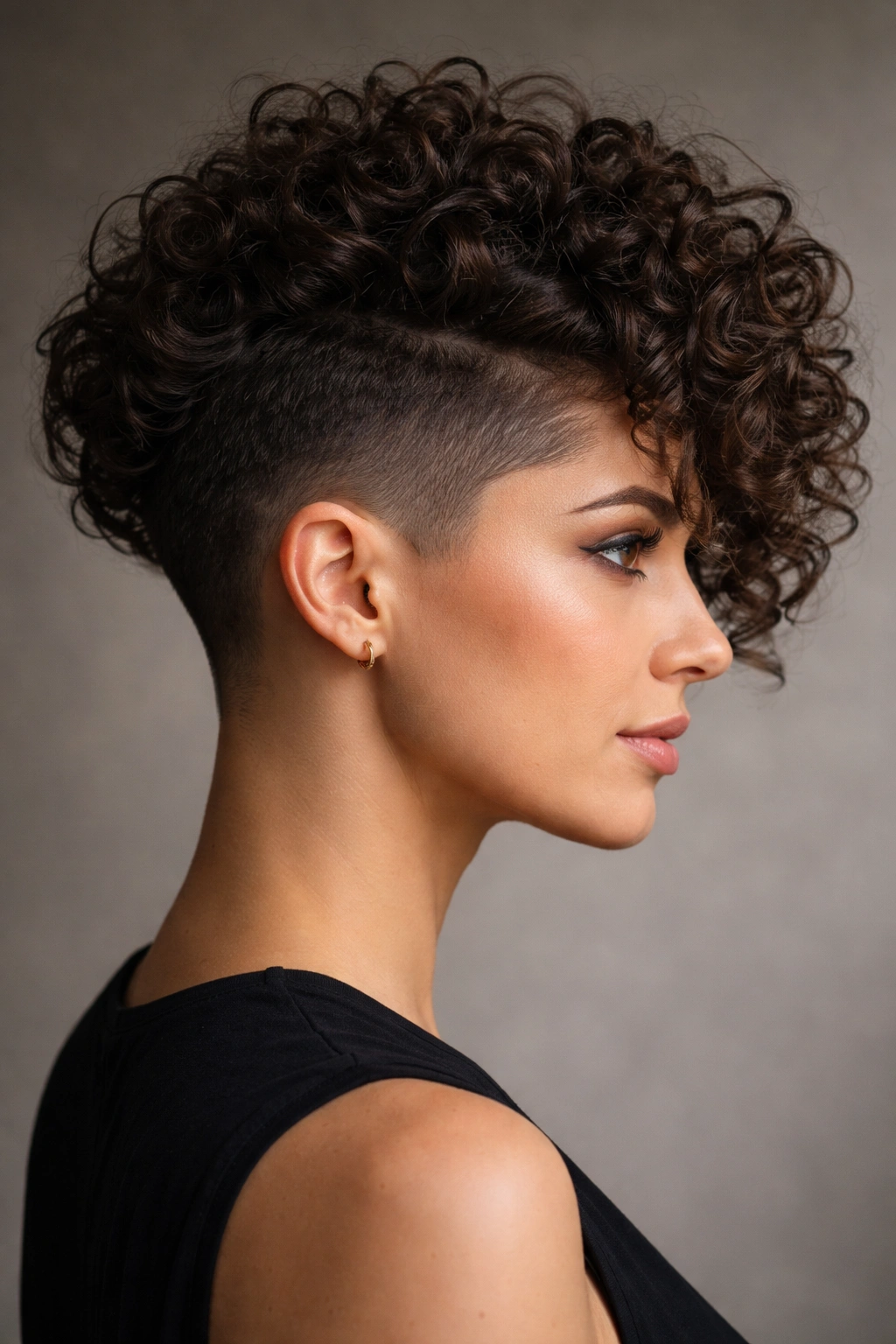
An undercut curly bob shaves the sides and back quite short—often faded to 1-2 inches or even undercut very close to the scalp—while leaving the top and crown full of volume and curl. This creates striking contrast and an undeniably bold aesthetic. It’s a style that says you’re confident in your texture and willing to make a statement.
The Visual and Practical Impact
The undercut elevates a curly bob from pretty to striking. The shorter sides create a frame that makes fuller curls on top look even more voluminous and defined. From a practical standpoint, undercuts mean minimal styling for the sides and back—you’re basically managing the top section, which is far less overwhelming than maintaining a full curly bob.
Care and Styling Specifics
- Who it suits best: Those with face shapes that can handle strong definition, confident self-expression, and anyone who appreciates architectural haircuts
- Texture type: Works beautifully across all curl types, from waves to coils, because the contrast is the main visual point
- Maintenance frequency: Sides and back need touch-ups every 2-3 weeks to maintain definition; the top section trims every 6-8 weeks
- Styling: The top section typically needs product and intentional styling; the undercut portions essentially style themselves
- Versatility: You can smooth the top curls for contrast or let them be more textured depending on your mood
This cut requires commitment to regular barber or salon visits, but the payoff in terms of visual impact and styling efficiency is substantial.
5. Shoulder-Length Curly Bob
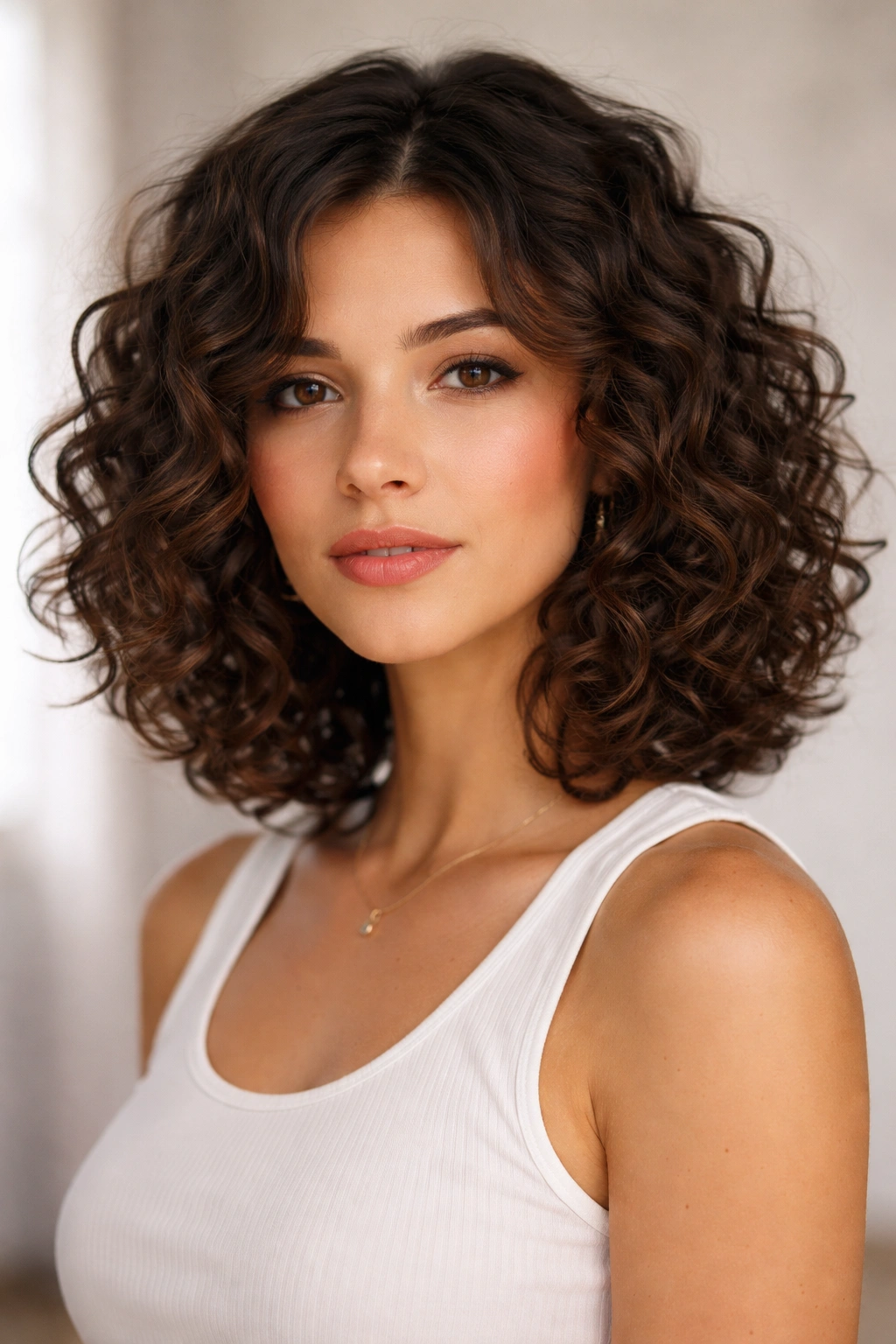
A shoulder-length curly bob sits right at the shoulders or slightly below—longer than a traditional bob but shorter than most people wear curly hair. It’s the Goldilocks zone: enough length to feel like a departure from a pixie, but not so much that you’re back to managing heavy curls.
Why This Length Sweet Spot Works
Shoulder-length offers real practical advantages. You get the styling flexibility and freshness of a shorter cut without quite as much styling commitment as a very short bob. The length creates a softer frame around the face while your curls still have room to show off definition and pattern. It’s also a lower-stakes way to try a shorter curly style if you’re nervous about going too short too fast.
Practical Styling and Living With the Cut
- Versatility factor: You can wear this styled with enhanced curl definition, smoothed out for a sleeker look, or half-up half-down, giving you more outfit matching flexibility
- Product requirements: Moderate—a good leave-in conditioner and either a cream or gel depending on your curl type and desired hold
- Drying time: Longer than ultra-short bobs, but noticeably faster than longer curly hair
- Best curl patterns: Particularly flattering for wavy to medium curls; coily hair works well with slightly more length like this
- Trim schedule: Every 8-10 weeks to maintain shape while letting the length work for you
This length is surprisingly low-drama to maintain while still feeling like a real style choice rather than just hair with less length.
6. Tapered Curly Bob
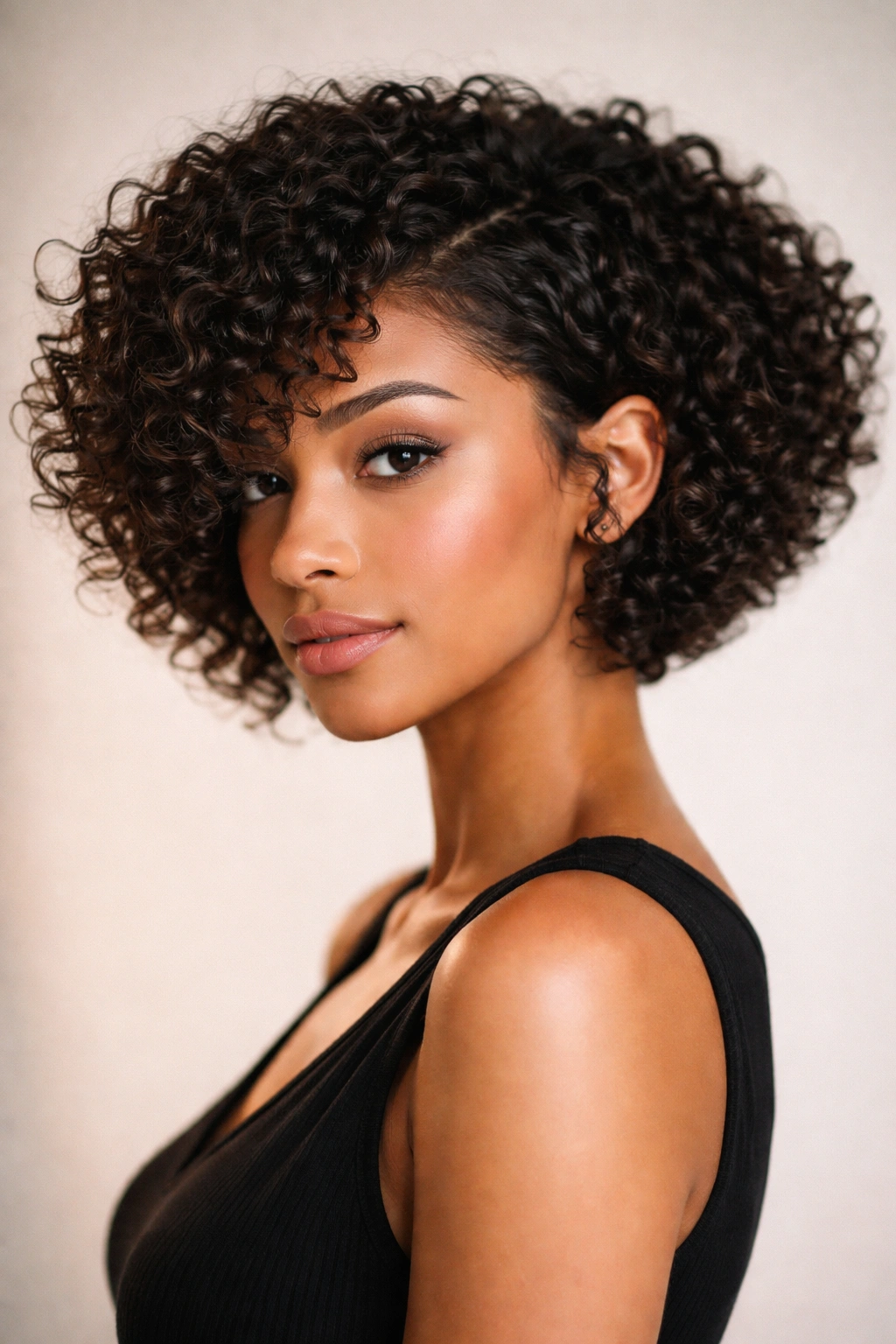
A tapered bob is shorter in the back and gradually longer toward the front, creating a shape that angles down from nape to chin or jawline. It’s structured, chic, and deeply flattering because the forward length draws the eye to your best features while the shorter back creates shape and definition.
How a Taper Flatter Your Features
The tapered shape creates an illusion of length and creates a natural frame that points toward your face. For curly hair specifically, the taper means the front curls catch light and show dimension, while the back’s shorter length prevents that common problem of curly bobs where the back becomes too dense or pyramid-shaped. It’s a cut designed to work with curly texture, not against it.
Technical Details and Styling
- Best for: Oval faces, heart-shaped faces, and anyone who wants subtle structure rather than dramatic contrast
- Curl type compatibility: Works across most curl patterns; the taper actually helps define coilier hair better than a blunt cut
- Styling method: Apply products to damp hair, encourage the front pieces to fall forward naturally as they dry, add definition where needed
- Maintenance: Every 6-8 weeks, focusing particularly on keeping the taper angle clean and intentional as your hair grows
- Daily effort: Low to moderate—the cut does the heavy lifting structurally, so styling mostly involves product application and air drying
A taper bob feels effortlessly chic because the cut itself creates the style rather than requiring intense daily styling to look intentional.
7. Curly Fringe Bob
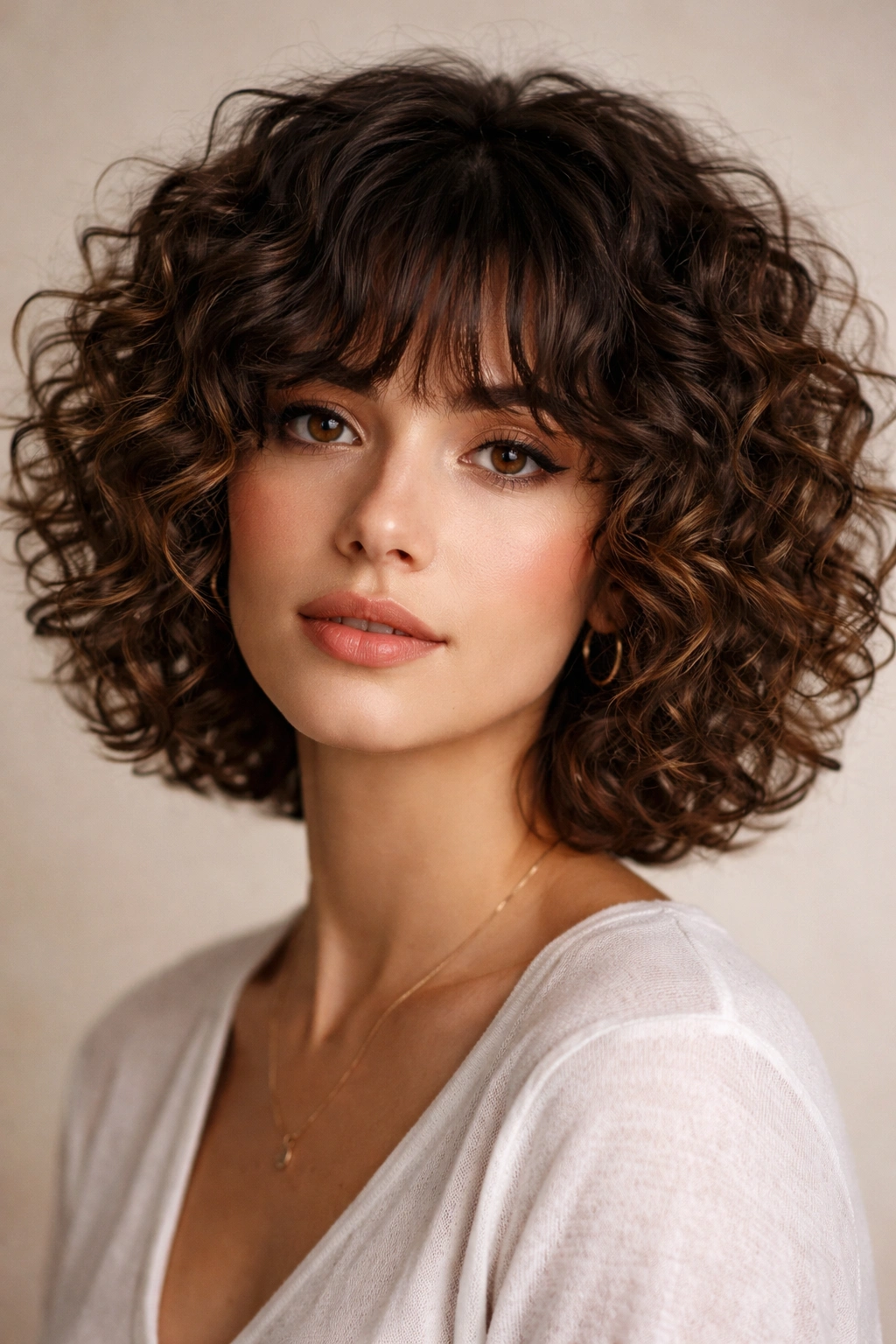
A curly bob with a fringe (or bangs) adds instant personality and a playful edge to any curly bob foundation. The fringe can be blunt and thick, wispy and subtle, or anywhere in between—the key is choosing a fringe style that works with your specific curl pattern and face shape.
Making Bangs Work With Curls
Curly bangs are a conversation piece, and they work best when you fully commit to them and style them intentionally rather than trying to fight your curl pattern. A blunt fringe on curly hair can look playful and editorial; a wispy or shaggy fringe works beautifully with tighter curls. The critical factor is working with a stylist who understands how to cut curly bangs so they land where you want them after shrinkage from drying.
Practical Considerations With Fringe
- Maintenance difference: Fringes need more frequent trims than the rest of the cut because they grow and hit eyes faster; plan for trims every 3-4 weeks
- Styling: You’ll likely want to blow-dry or diffuse your fringe every day or every other day to keep it in the position you want
- Face shapes: Suits heart-shaped faces, long faces, and anyone wanting to draw attention upward
- Curl pattern match: Looser, wavier curls make fringe styling easier; tighter curls need more intentional daily styling to keep fringe separated
- Confidence factor: Bangs are a bold statement—choose this option only if you’re excited about the extra daily styling and maintenance
A fringe transforms a curly bob from subtle to statement-making, which is exactly what many people want.
8. Curly Wolf Cut Bob
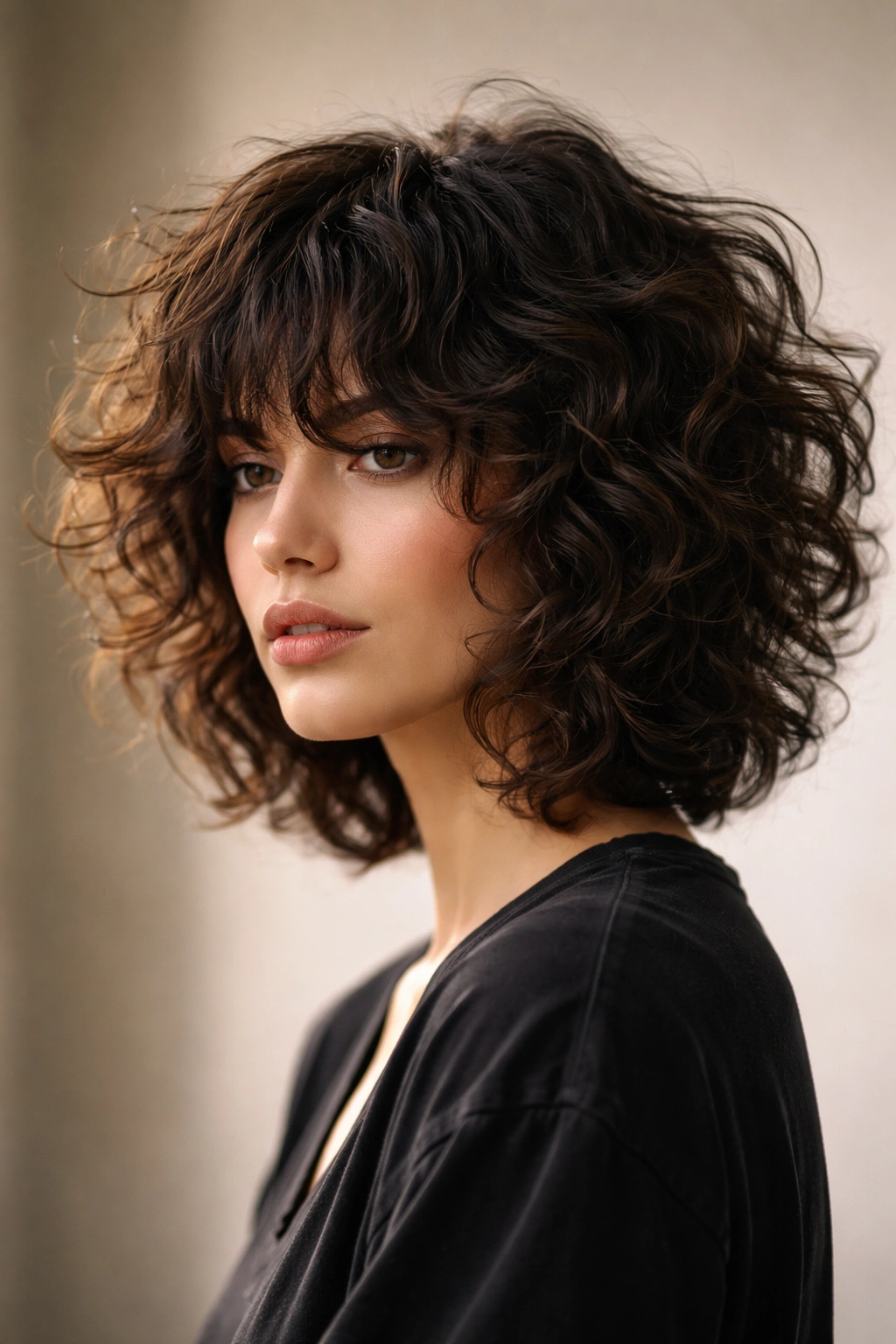
The wolf cut is the shag’s edgier, more architectural cousin—it combines very short, choppy layers throughout with a longer interior, creating a wild, almost mohawk-like crown of texture. It’s the cut for people who want their curly bob to be completely unmissable and absolutely unapologetic about texture.
The Wolf Cut’s Dramatic Effect
A wolf cut on curly hair creates volume and movement that’s almost sculptural. The numerous choppy layers throughout mean every single curl can express itself fully without any weight holding it down. The longer interior combined with short, tapered exterior creates a silhouette that’s distinctly modern and fashion-forward.
Living With and Styling a Wolf Cut
- Maintenance: Requires visits every 4-6 weeks to keep the layers sharp and intentional; this isn’t a low-commitment cut
- Styling approach: Enhance the texture with a texturizing spray, diffuse dry with medium heat, scrunch in a lightweight product that defines without crunching
- Best curl patterns: Particularly striking on medium to tight curls where you want serious texture and definition
- Face shapes: Works beautifully on most faces, but especially flattering for round or square faces
- Personality factor: This cut requires confidence and a willingness to embrace maximum texture; it’s not a subtle style
A wolf cut is for people who love their curls and want the entire world to know it.
9. Curly Choppy Bob
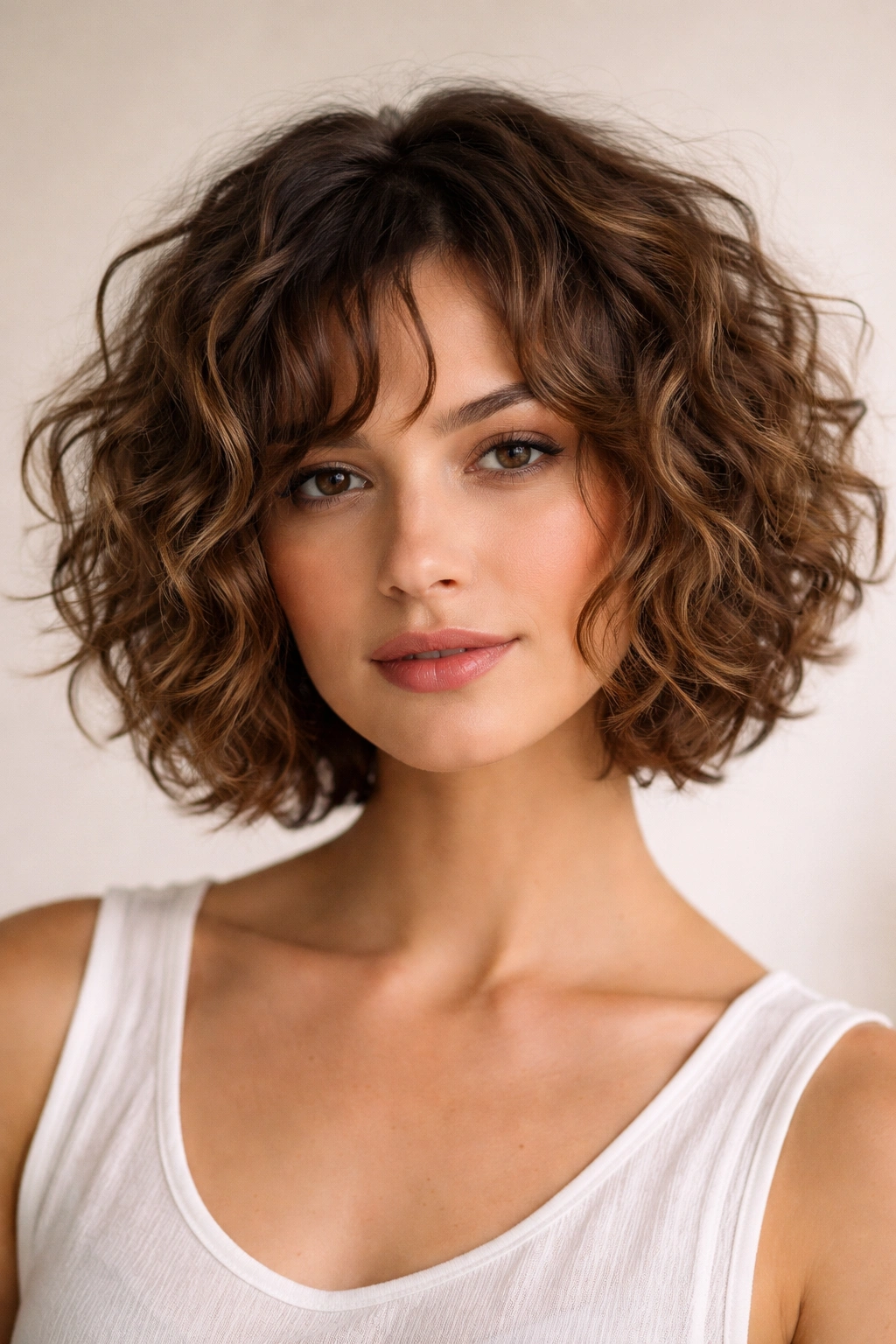
A choppy bob is less layered than a shag but more textured than a blunt bob—it’s the middle ground where you get movement and dimension without going full shag. Choppy layers hit strategically throughout, creating a cut that feels modern, textured, and intentional without being overly dramatic.
Why Choppy Works as a Curly Bob Strategy
Choppiness removes bulk while maintaining enough length that you still feel like you have hair. For curly hair specifically, choppy layers help prevent the dense, triangle-shaped silhouette that sometimes happens with blunt bobs. Instead, you get a shape that’s textured and moves with your curls, looking lively and intentional rather than heavy.
Styling and Maintenance Reality
- Product needs: Moderate—a good leave-in conditioner and either a cream or gel, depending on your curl definition
- Drying method: Air dry with occasional scrunching, or diffuse on low to medium heat for more control
- Trim frequency: Every 6-8 weeks to maintain the choppy texture as layers grow out
- Best for: Anyone who wants more movement than a blunt bob but less extreme styling than a shag
- Versatility: You can emphasize the choppy texture with specific styling or smooth it out more on days when you want a cleaner look
A choppy bob lands in that sweet spot where you get genuine movement and style without quite as much commitment as a wolf cut or shag.
10. Curly Blunt Bob
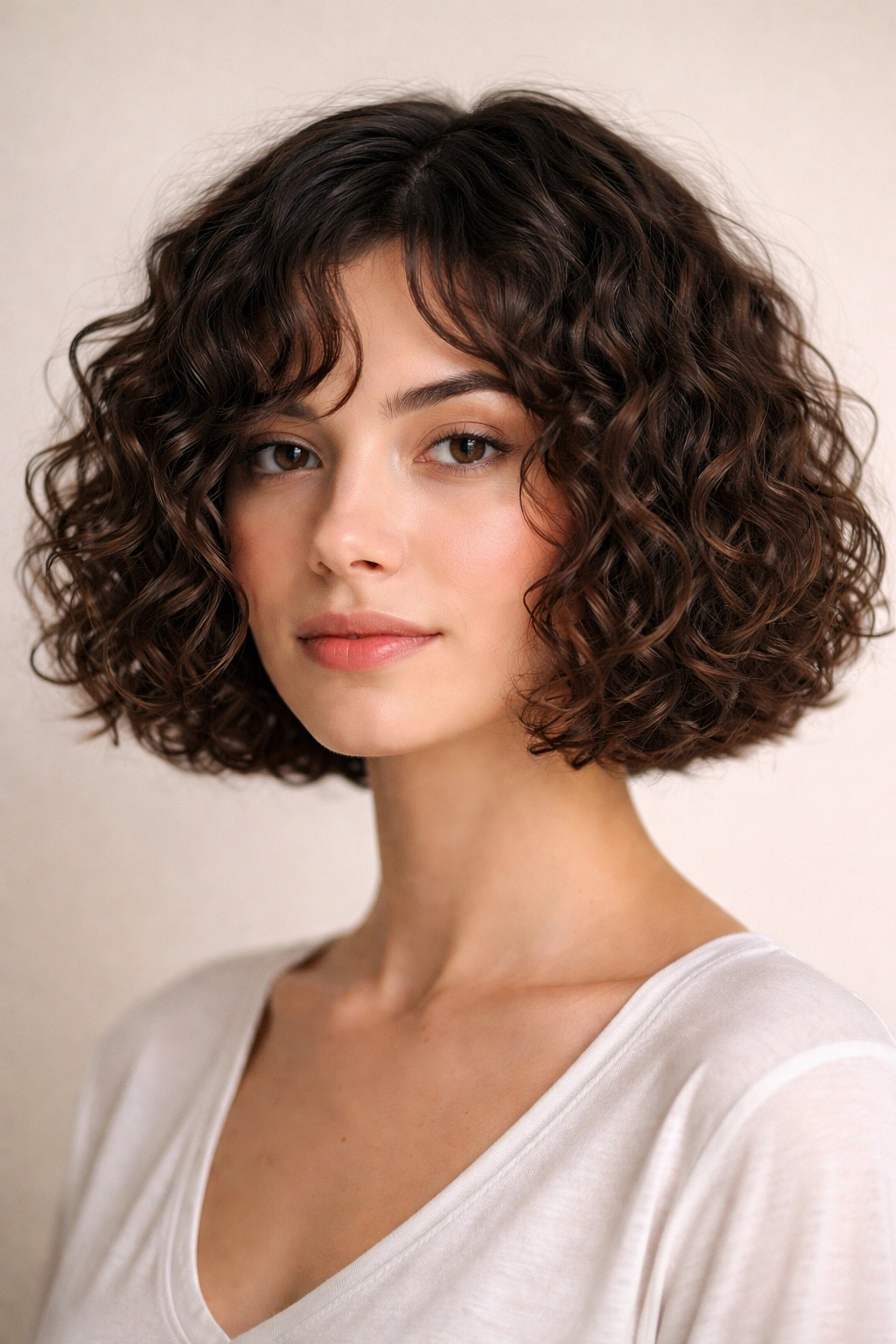
A blunt bob is the classic—chin-length or slightly shorter, with a clean line all around with minimal layering. It’s structured, graphic, and when done right on curly hair, it’s absolutely stunning. A blunt curly bob says you’re confident in your texture and willing to let it be the star of the show.
The Power of Simplicity in a Blunt Curly Bob
There’s something undeniably chic about the restraint of a blunt bob. When you’re working with curly hair, a blunt line actually creates the illusion of control and definition—the structured cut contrasts beautifully with your natural texture. You’re not trying to hide your curls or make them conform; you’re framing them with a sharp, intentional shape.
The Real Picture of Blunt Bob Life
- Styling: Light to moderate—apply leave-in conditioner to damp hair, let air dry or diffuse, and let your curl pattern do the work
- Best curl types: Particularly flattering on medium to tight curls with good definition; looser waves can sometimes look less intentional with a blunt cut
- Maintenance: Trims every 6-10 weeks to keep the blunt line clean and graphic as your hair grows
- Face shapes: Suits strong jawlines, angular faces, and anyone confident about showing off their entire face
- Versatility factor: Lower than choppy or layered styles, but you can still play with how much you enhance vs. smooth your curls daily
- Commitment: This is a cut that requires you to embrace and style your natural curl pattern rather than fighting it
A blunt curly bob is the choice for someone who’s made peace with their texture and actually loves it.
Final Thoughts
Choosing a short curly bob comes down to understanding what your curl pattern can do and what you actually want to spend time maintaining. All of these styles work beautifully on curly hair—the difference is in the level of texture you want to showcase, how much you’re willing to visit the salon for trims, and what kind of styling effort you’re genuinely willing to put in on a regular basis.
The most important thing you can do is find a stylist who actually understands curly hair. Someone who cuts curly hair dry (or at least understands how much your curls will shrink when they dry), who knows the difference between your curl pattern and your hair texture, and who can look at your specific curls and recommend a cut that works with them rather than against them. That stylist is worth the investment, because the right cut can legitimately transform your relationship with your hair.
Once you’ve got your cut, maintenance becomes genuinely manageable. Short curly bobs are lower maintenance than longer curly hair, and when your cut is designed specifically for your texture, you spend less time fighting your hair and more time actually enjoying how it looks. That’s when the magic happens.
