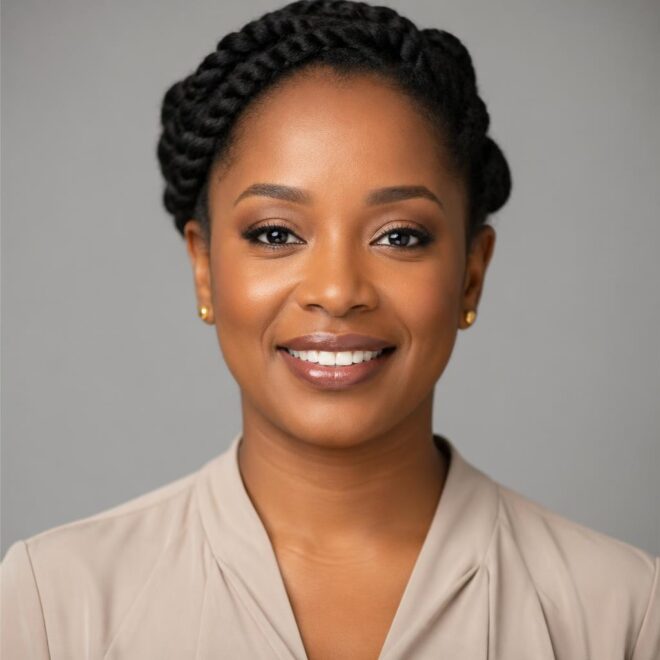


Caring for mixed kids’ curly hair comes with a unique set of challenges and opportunities — the curl patterns can vary dramatically, ranging from loose waves to tight coils, sometimes all on the same head. Finding hairstyles that honor their natural texture while being practical for school, activities, and daily life doesn’t have to be complicated. The right style keeps curls healthy, requires manageable maintenance, and most importantly, helps kids feel confident and seen in their own hair.
Mixed children’s curly hair deserves styling approaches that work with the texture, not against it. This means moving away from styles that force curl patterns straight or require excessive heat and manipulation, and instead embracing techniques that enhance what’s already there. The best styles for curly-haired kids accomplish multiple things at once: they’re protective (minimizing daily breakage and friction), they’re age-appropriate (doable for school drop-offs and sleepovers), and they celebrate the natural beauty of curls rather than hiding them.
The hairstyles in this guide work across different curl types and thicknesses because they’re built on principles that honor curly hair’s actual needs — moisture retention, tension management, and styling methods that don’t flatten or disrupt the curl pattern. Whether your child has loose waves, springy coils, or a combination of textures, these styles adapt to what you’re working with. Many can be refreshed mid-week without a full wash, some double as protective styles that allow hair to rest, and others let curls shine on their own with minimal styling time.
1. Defined Curls with Product Enhancement
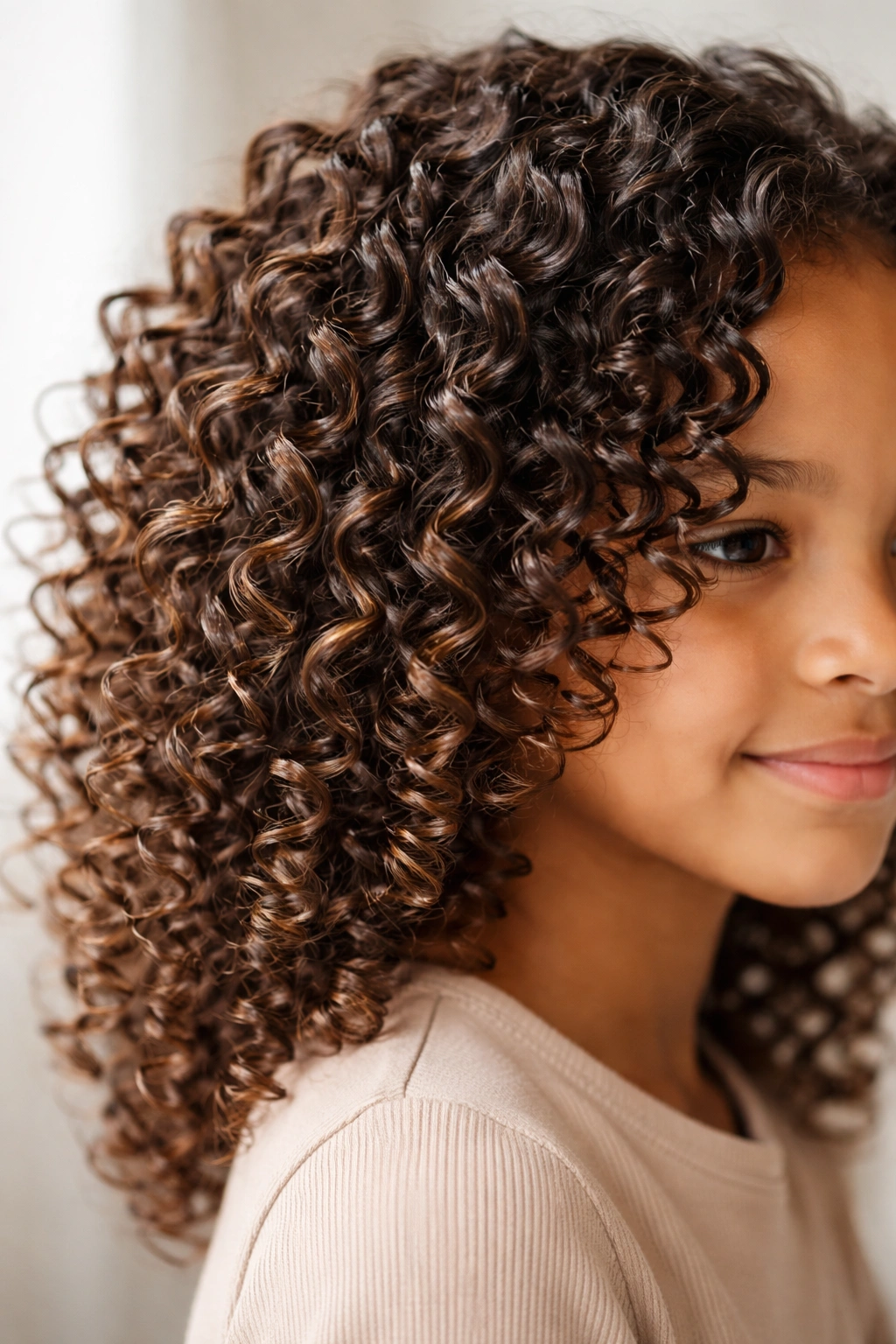
This classic approach brings out your child’s natural curl pattern by using the right products and technique to create separation and bounce. Instead of letting curls clump together in undefined chunks, defined curls are shaped individually so each curl stands out with its own distinct pattern — the result is volume, dimension, and genuinely beautiful natural texture that kids can wear with real pride.
Why This Style Works for Mixed Curls
Defined curls respect the actual curl pattern your child was born with rather than trying to reshape it. The key is using lightweight products that hydrate without weighing curls down — a good leave-in conditioner combined with a curl-defining cream or gel gives you separation and hold without crunchiness. Kids with mixed curl patterns (where different sections of the head have different curl types) especially benefit from this approach because you can work with each section’s natural pattern individually rather than fighting for uniformity across the whole head. The curls actually get more defined with proper moisture, not less.
How to Build This Look
- Apply a leave-in conditioner to soaking wet hair, section by section, starting with the back and sides
- Follow with a curl-defining cream or gel, using the praying hands method (smooth product between your palms, then run hands down each section) or the roping method (twist small sections while applying product for more definition)
- Scrunch the product upward into the curls with your hands, encouraging the natural curl pattern to form and spring up
- Let it air dry completely or use a diffuser attachment on low heat for faster drying
- Once dry, gently scrunch again to break up any cast and fluff curls for maximum volume
- Pro tip: Refresh defined curls mid-week by misting with water, adding a tiny bit more cream or gel to fingers, and scrunching damp curls back to life.
2. Box Braids or Cornrows for Protective Styling
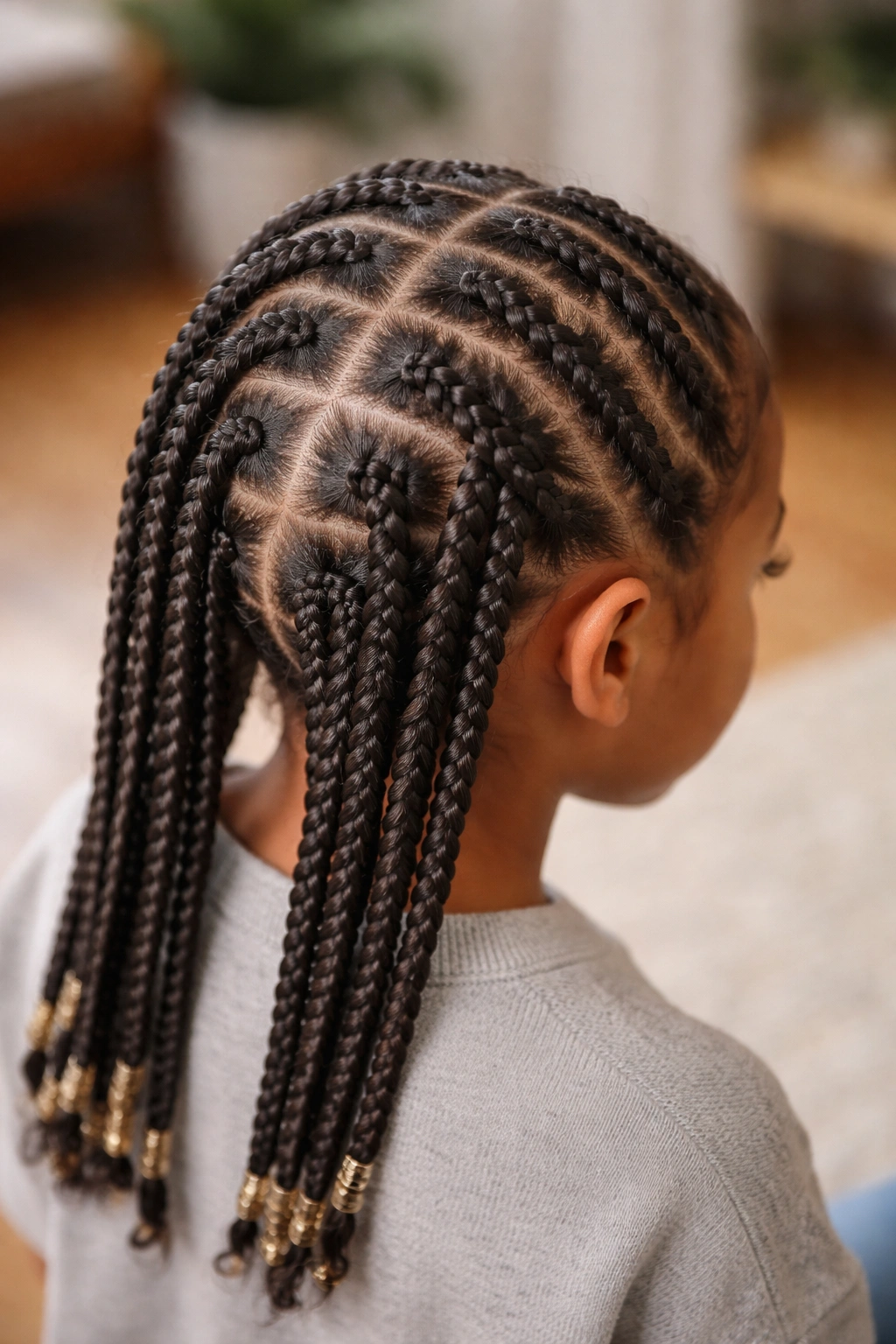
Box braids and cornrows are iconic protective styles that have served Black and mixed communities for generations — they keep curls tucked safely away, require minimal daily manipulation, and frankly look polished for any occasion from school to family events. These braided styles work beautifully on mixed kids’ hair because they accommodate different textures and thicknesses throughout the head, and you can customize the size, length, and style to suit your child’s preference and lifestyle.
Why Protective Braids Matter for Curly Hair
Curly hair is naturally more fragile than straight hair because the curl pattern creates bends and angles where breakage happens more easily. Every time you brush, tie, or manipulate curls, you risk snapping hair strands. Protective styles like braids eliminate most of that daily wear and tear by keeping the hair secured and contained while still allowing the scalp to breathe. For mixed kids juggling school, sports, and sleep, braids mean styling peace — no daily detangling sessions, no bedhead battles, and curls stay moisturized inside the braids because they’re not exposed to friction and environmental stress.
Key Benefits for Busy Families
- Reduced daily styling time — once braids are in, you’re done for 2-4 weeks
- Protection from breakage and damage — the hair tucked inside the braids stays safe from friction, harsh weather, and over-manipulation
- Moisture retention — sealed strands hold moisture better than exposed curls, so hair actually gets stronger and healthier during the protective style period
- Styling versatility — the same braids can be worn loose, gathered into high ponytails, buns, or decorated with beads and cuffs for different looks
- Works on mixed textures — because braids don’t depend on uniformity, they accommodate the natural variation in curl pattern across your child’s head
- Inclusive cultural value — braided styles celebrate Black and African diaspora heritage while being completely natural and practical for mixed kids with curly hair
Worth knowing: Keep braids moisturized by spritzing the scalp every few days with water or a lightweight scalp oil, and wash the braids gently every 7-10 days with diluted shampoo to keep the scalp clean and healthy.
3. Twist-Outs for Texture and Definition
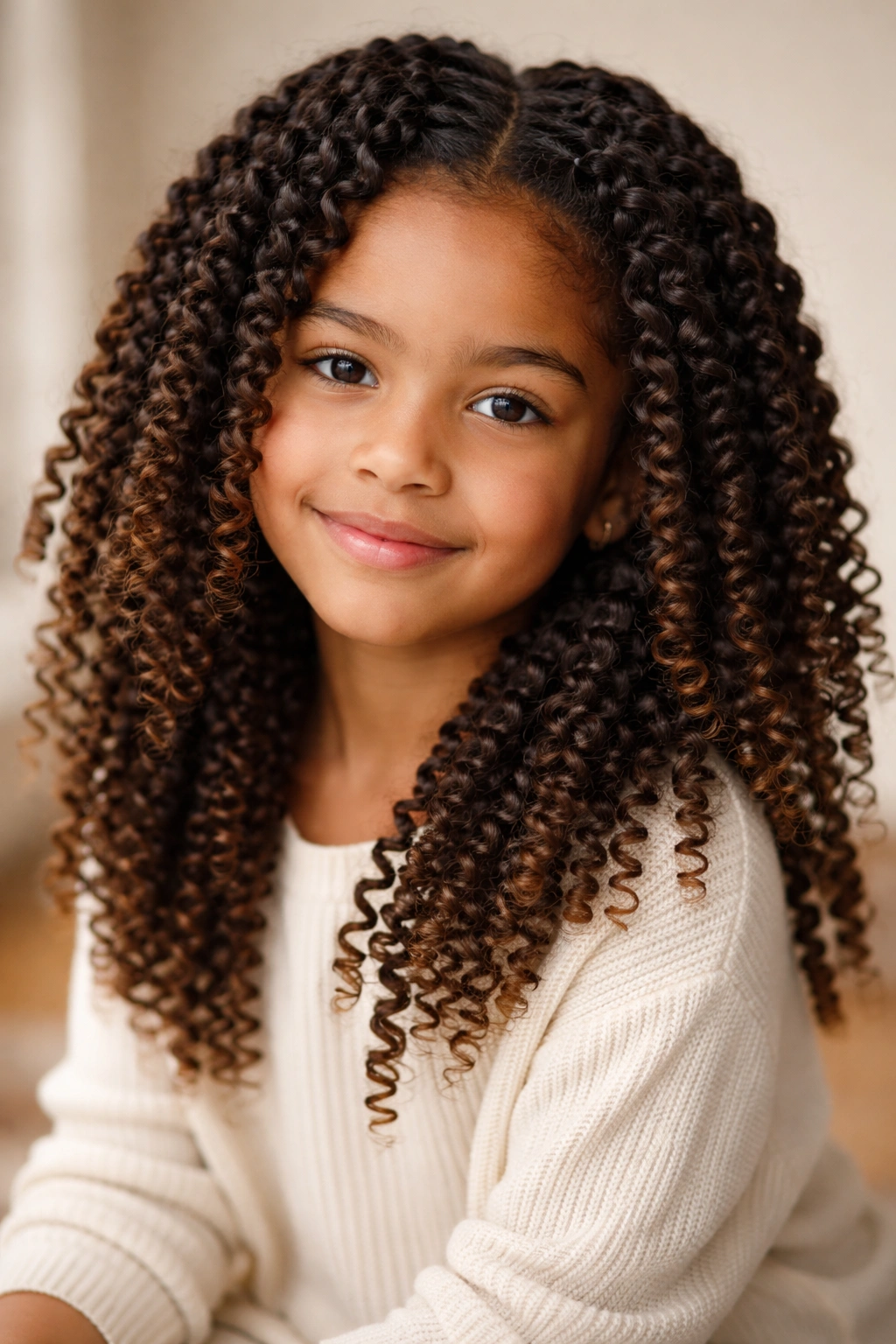
A twist-out is created by twisting damp sections of hair around each other while products are applied, then unraveling those twists once the hair is completely dry to reveal a beautifully textured, defined look. The result is elongated curls with incredible texture, volume, and a polished appearance that makes kids look put-together without requiring complicated styling.
How Twist-Outs Enhance Mixed Curl Patterns
Two-strand twists as a styling method work with every curl type because the twisting action itself creates definition regardless of whether your child’s hair is wavy, coily, or tightly coiled. Loose curls benefit because the twisting elongates them and creates more visual interest and texture. Tighter curls benefit because the manipulation and product application ensures every strand is coated and defined. On mixed hair, twist-outs create a unified look across different curl zones — everything gets the same polished texture even if the natural curl patterns vary.
The Twist-Out Process
- Start with clean, damp hair and apply leave-in conditioner and styling cream section by section
- Divide hair into manageable sections (the more sections, the smaller and more defined the curls will be)
- Take two strands and twist them around each other from root to end, keeping tension consistent so the twist is neat and even
- Let the twists dry completely (or use a diffuser for 2-3 hours until fully dry) — the key to a successful twist-out is patience; twists unravel best when completely dry
- Gently unravel each twist by unwinding the two strands, then use fingers to separate and fluff the curl pattern
- Scrunch to add volume and encourage curl formation
- Pro tip: Twist-outs last longer if you pineapple at night (gather hair on top of the head in a loose band while sleeping) to protect the pattern and prevent frizz.
4. High Bun or Top Knot with Curls
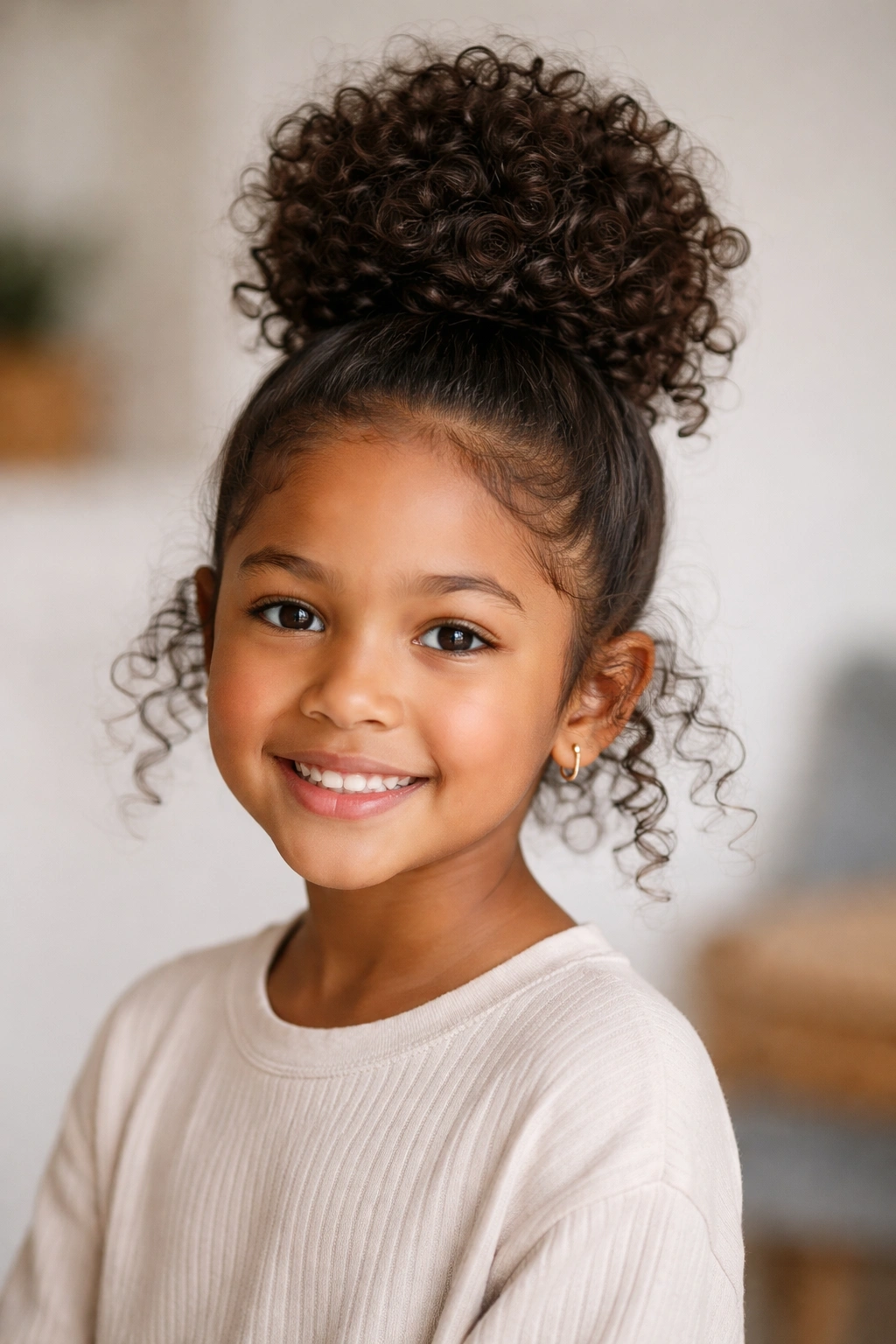
A bun on top of the head keeps hair off the face and neck for school, sports, and hot weather, while the curls tumbling out from the base of the bun add movement and keep the style from looking too severe. This works beautifully on kids because it’s neat enough for school but playful enough that they still feel like themselves.
Why Buns Work for Mixed Kids’ Curly Hair
A high bun gathers hair securely without demanding that curls cooperate into a sleek style — the curls stay curly, they just get gathered. This approach respects different curl patterns because you’re not trying to smooth everything into uniformity; you’re simply collecting hair at the crown and letting the natural texture do its thing at the base. Kids with sensitive scalps or breakage concerns benefit because gathering curls into a bun creates less daily tension than tight braids or constant brushing. The style sits right at the developmental sweet spot where it looks intentional and polished (appropriate for school photos or events) but doesn’t feel restrictive or uncomfortable for active kids.
How to Build This Look
- Apply a light oil or smoothing cream to hands and smooth the hair back from the face toward the crown
- Gather all the hair at the very top of the head into a high ponytail, using a soft elastic or claw clip
- Gently twist or loosely braid the ponytail, then wrap it around the base to form a bun shape
- Secure with bobby pins or another soft elastic, tucking any flyaways back in gently
- Leave curls loose and flowing at the bottom, or gather them into the bun for a fuller, rounder shape depending on your child’s preference
- Let a few face-framing pieces escape for a softer, more playful look
- Pro tip: This style holds much better overnight if you sleep in a silk or satin bonnet — it prevents flattening and frizz so the curls look good the next morning too.
5. Half-Up, Half-Down Style with Definition
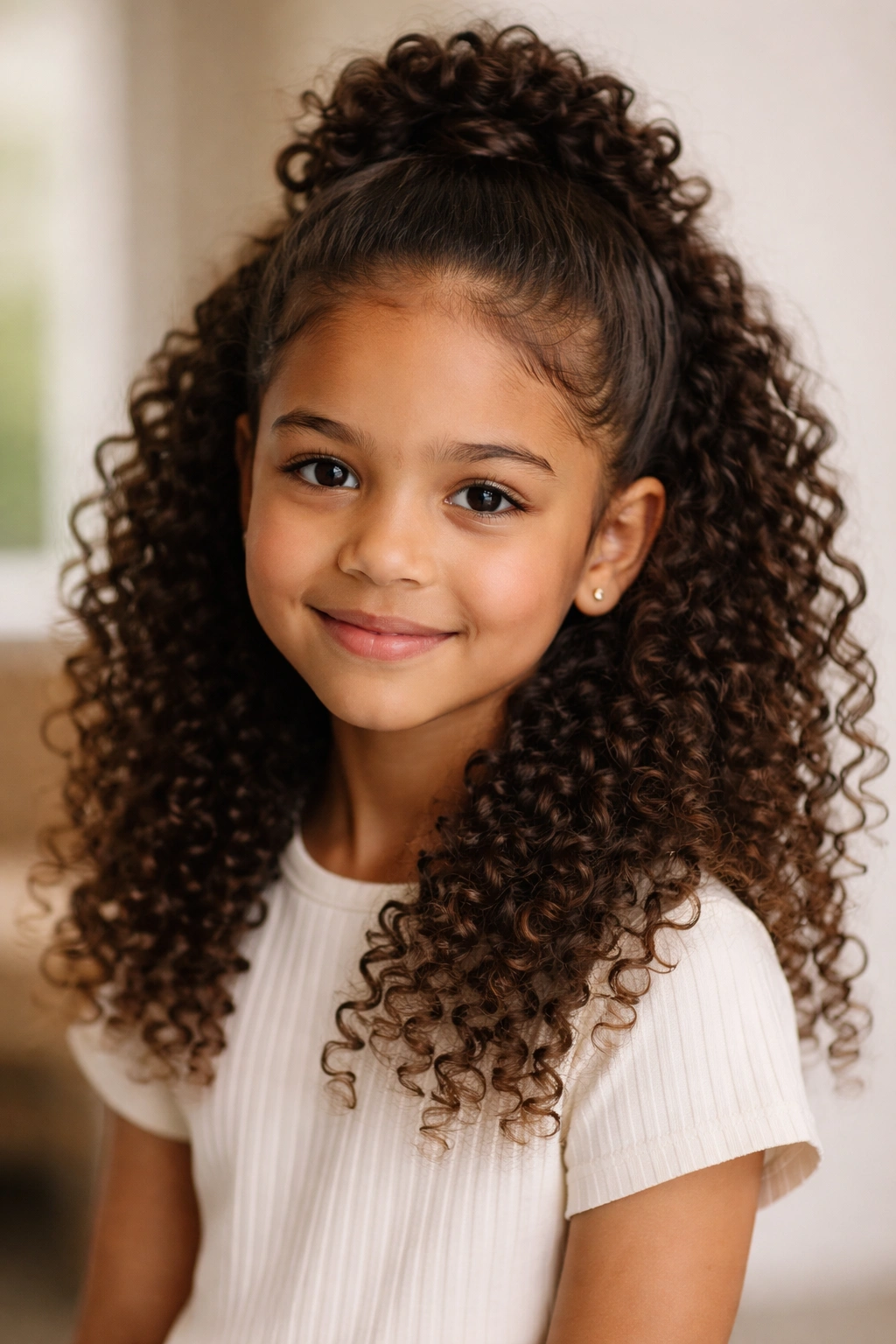
The half-up style takes half the hair gathered back while the bottom half flows loose, creating a look that’s romantic but still practical for school or activities. It’s a perfect entry point for kids who want an intentional style but aren’t ready for full protective styling or complicated techniques.
Why This Style Suits Mixed Hair Textures
Half-up styling works beautifully on mixed curl patterns because you only need to manage half the hair, and the gathered portion can be braided, twisted, or simply clipped back without requiring that the bottom half cooperate with any particular texture. The loose bottom half showcases the natural curl pattern without modification, while the gathered top keeps hair out of the face and adds intentionality to the look. It’s genuinely practical — cool air gets to the back of the neck, curls stay free to bounce, but hair won’t constantly fall in the face during homework or meals.
Building a Half-Up Look
- Brush or detangle the top half of the hair gently while damp
- Apply a leave-in conditioner and curl cream to the top section and smooth it back from the face
- Gather the top half at the crown (leaving the bottom half completely loose) and secure with an elastic or clip
- Optional: Braid or twist the gathered section before securing for added texture and detail
- Leave the bottom half down and curly, allowing natural curls to frame the face and shoulders
- Refresh curls on the loose bottom half with water and a touch of product if needed
- Worth knowing: A half-up style lasts several days if you sleep with the gathered section in a loose pineapple (coil of hair loosely banded at the crown while sleeping) and refresh the bottom curls each morning with water.
6. Wash-and-Go Curls for Low-Maintenance Days
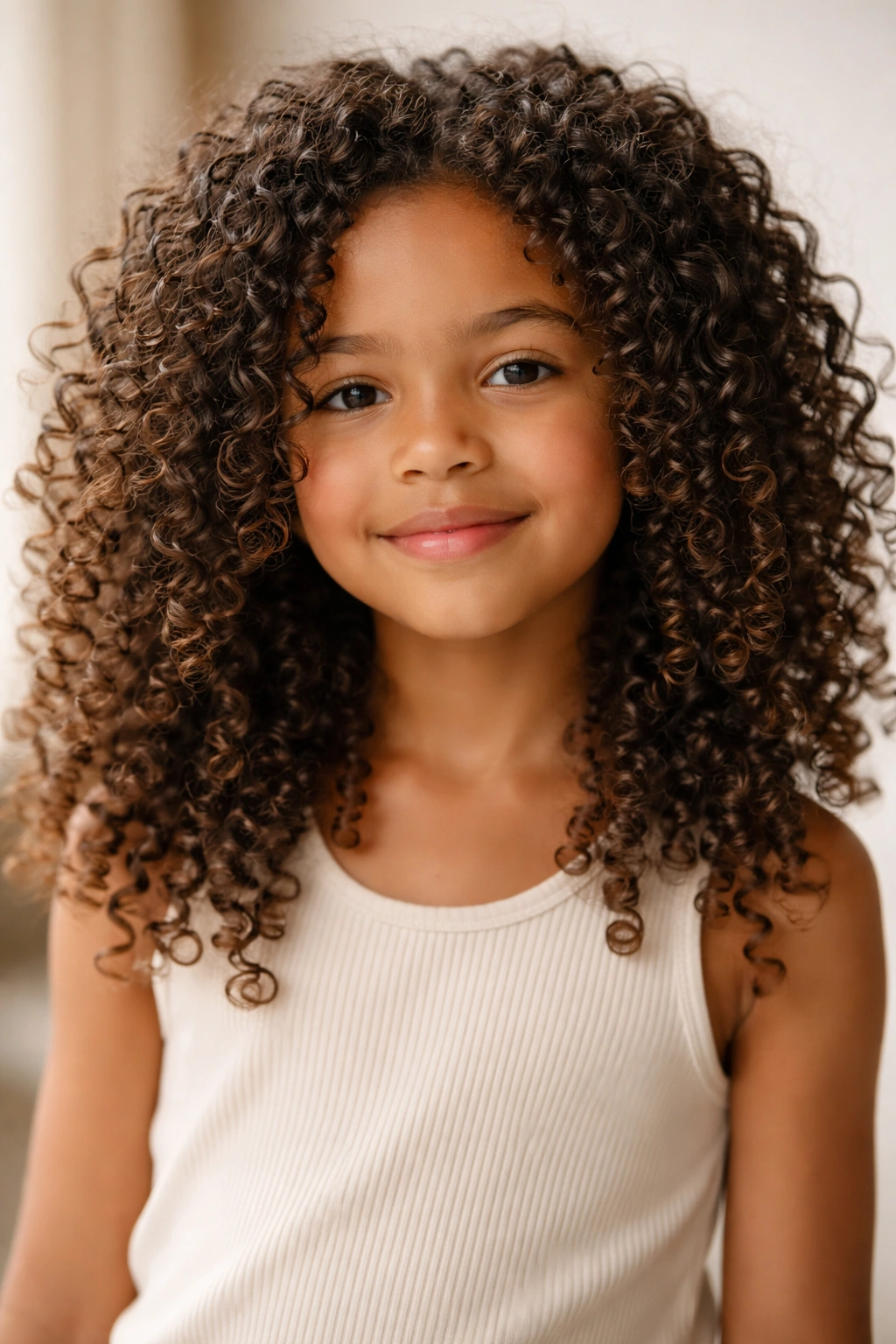
A true wash-and-go is exactly what it sounds like — wash the hair, apply product, and let it air dry into curls without any styling or manipulation beyond that initial product application. It’s the purest celebration of natural curl texture and the most time-efficient option for busy families and active kids.
The Science Behind Successful Wash-and-Gos
Wash-and-gos work when you use products that hydrate and define without requiring you to manually shape or manipulate the curls. The curl pattern that emerges is the curl pattern your child was born with — no twisting, braiding, or forcing it into shape. On mixed hair where curl patterns vary across the head, wash-and-gos are sometimes easier than more complex styles because you’re not trying to create uniformity. What you get is authentic, diverse, beautiful texture that celebrates exactly how your child’s hair grows.
The Complete Wash-and-Go Process
- Wash with a sulfate-free shampoo or cleansing conditioner, focusing on the scalp with fingertips (not nails) to remove product buildup and oil
- Rinse thoroughly with cool water — cool water seals the cuticle and enhances shine and curl definition
- Apply a rich leave-in conditioner while hair is still soaking wet, working it through section by section from roots to ends
- Apply a curl-defining cream or gel, using the praying hands method to smooth it down each section, or the roping method (twisting while applying) for more definition
- Scrunch the product upward into the curls with cupped hands to encourage curl pattern formation
- Let it air dry completely (or use a diffuser on low heat) without touching or disturbing the curls
- Once dry, gently scrunch to break up any product cast and fluff for maximum volume
- Pro tip: Wash-and-gos look freshest the first 2-3 days; refresh by spritzing with water on days 4-5 and re-applying a tiny bit of cream to fingers before scrunching.
7. Afro Puffs or High Ponytails with Curls
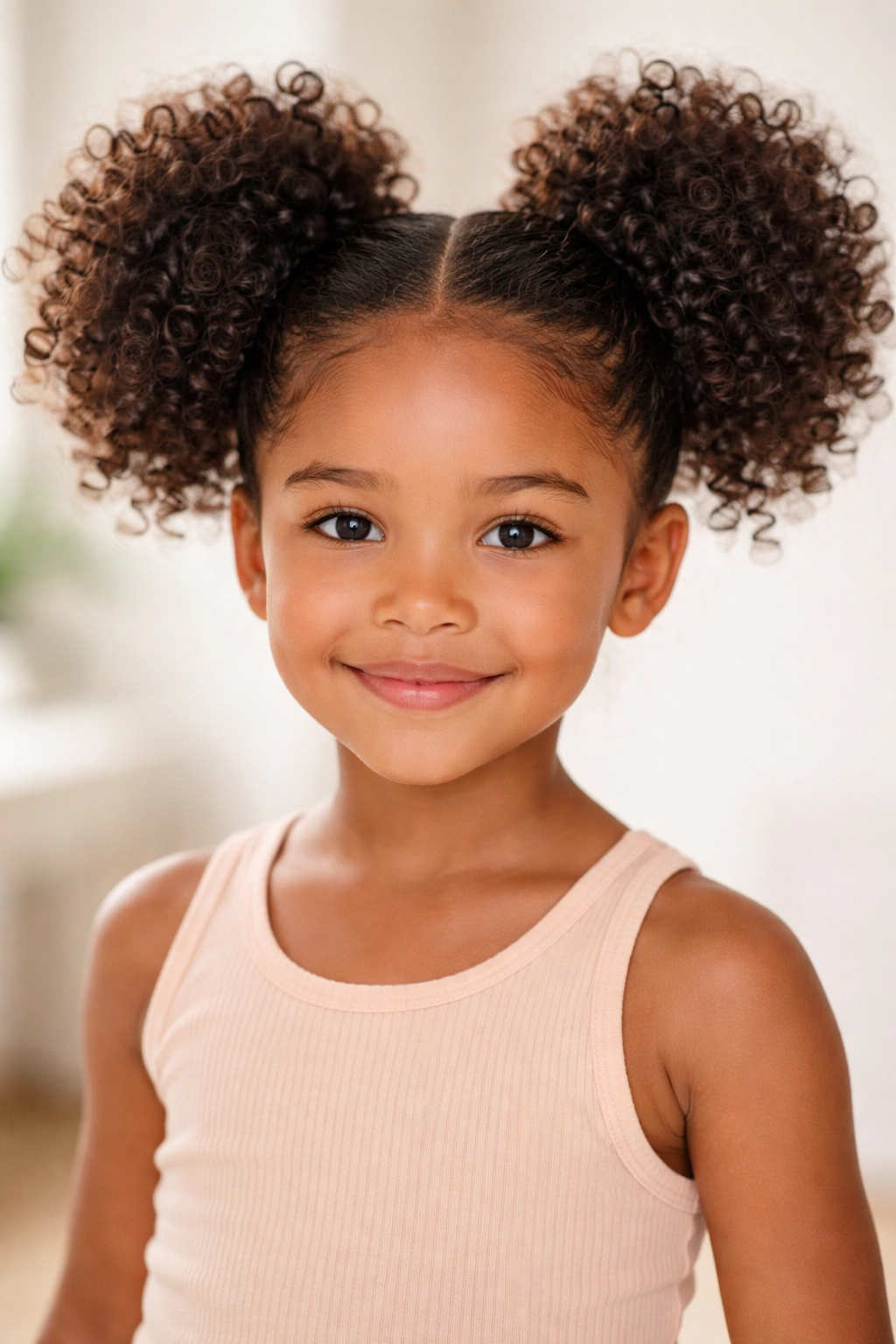
Afro puffs — two high ponytails gathered on top of the head — are playful, practical, and age-appropriate for kids. The style keeps hair off the neck, looks intentionally styled rather than messy, and celebrates the natural fullness and bounce of curly hair in its gathered form.
Why Puffs Are Perfect for Active Mixed Kids
Puffs work for any curl type because you’re simply gathering curls in their natural state without requiring them to behave any particular way. Loose waves look pretty piled into puffs, tight coils look voluminous and defined, and mixed textures actually read as intentionally styled when gathered this way. For active kids — those doing sports, playing outside, or dealing with summer heat — puffs move well, stay secure, and keep hair completely off the face and neck. They’re also genuinely comfortable; unlike tight braids or flat styles that might cause tension headaches, puffs are soft and bouncy and don’t restrict movement or cause discomfort.
Creating Picture-Perfect Puffs
- Apply a light smoothing cream or oil to hands and gently smooth the hair up and back from the face
- Divide the hair into two equal sections — one on each side of the head, creating a line from the center part to the nape of the neck
- Gather each section into a high ponytail at the top-outer area of the head (the “puff” position is higher and further back than you might think)
- Secure each ponytail with a soft elastic or scarf
- Gently fluff and spread each puff outward to create volume and show off the full curl pattern
- Leave natural texture showing; puffs should look full and bouncy, not slicked down
- Optional: Add beads, cuffs, or colorful hair clips to the base of each puff for personality
- Worth knowing: Puffs hold better when you sleep with them gathered loosely into a silk bonnet or wrapped in a silk scarf to prevent compression and overnight frizz.
8. Bantu Knots for Texture and Heritage
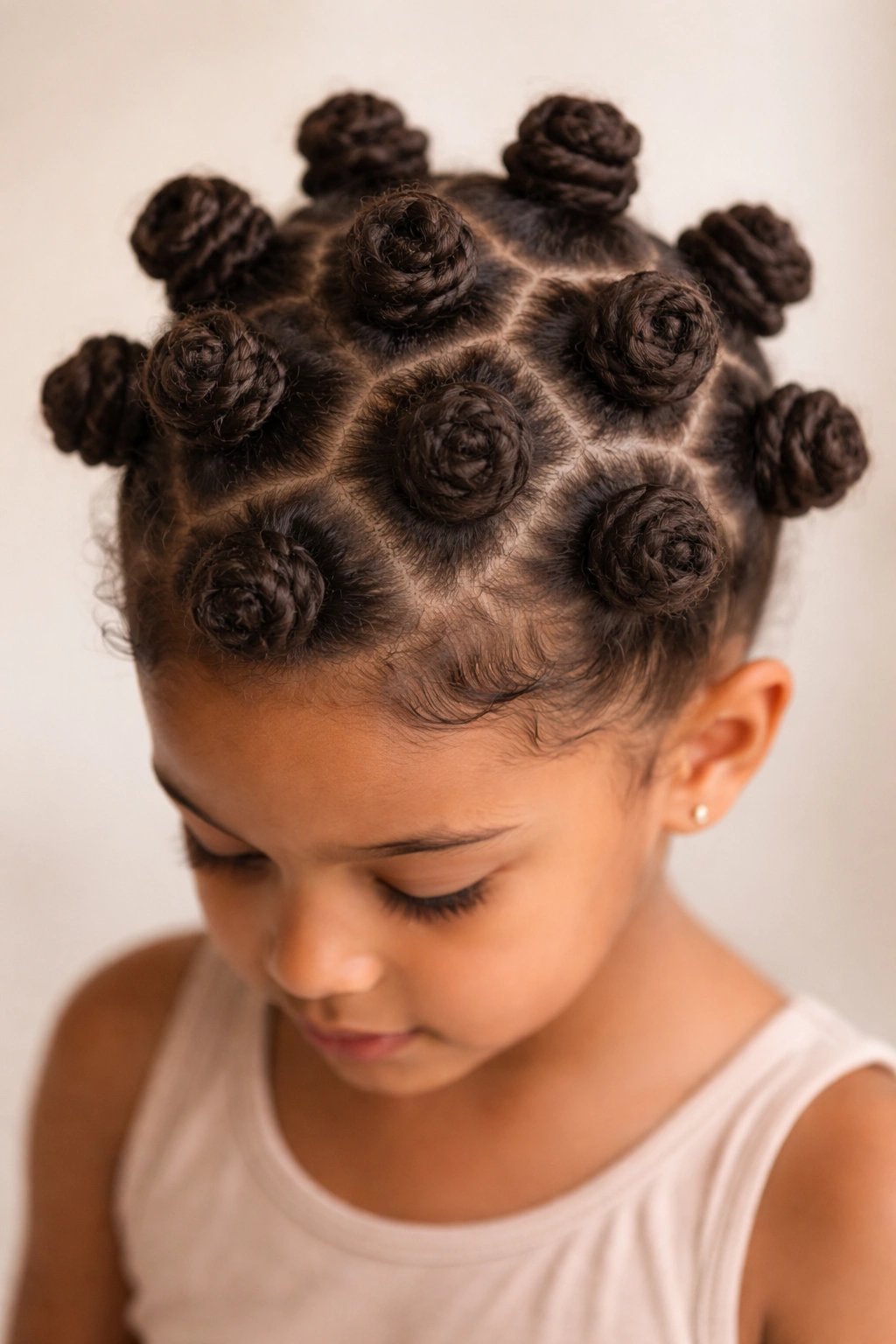
Bantu knots are a traditional African protective style where sections of hair are twisted and then coiled around themselves at the base to create knot shapes across the head. Beyond being gorgeous and culturally significant, they’re an excellent protective style that sets curls beautifully and can be worn as knots or unraveled into a textured curl pattern.
Cultural Significance and Practical Benefits
Bantu knots have deep roots in Zulu and other African cultures where they’ve been worn for centuries as a symbol of identity, beauty, and cultural pride. For mixed kids with curly hair, learning and wearing this style connects them to their heritage while providing genuine protective benefits. The coiling motion stretches the hair slightly and the contained knots eliminate friction and manipulation, making this an excellent style for kids with breakage concerns or those needing a break from daily styling demands.
How to Install Bantu Knots
- Start with damp, detangled hair that’s been moisturized with leave-in conditioner and a styling cream
- Divide hair into small sections (the number of sections determines how many knots you’ll have — 8-12 knots is typical for kids)
- Take one section and twist it from root to tip, maintaining consistent tension so the twist is neat
- Once twisted all the way to the end, coil the twist around its own base (the root end) and tuck the tail underneath to secure
- Pin with a bobby pin if needed to keep the knot compact and secure
- Repeat across the entire head, working section by section
- Let knots dry completely (overnight is fine) or use a diffuser to speed the process
- To wear as knots: Leave them in for a polished, textured look (they work for 2-3 weeks as a protective style)
- To create a textured curl-out: Gently uncoil each knot to reveal beautifully coiled curls with incredible texture and definition
- Pro tip: Sleep in a silk bonnet with Bantu knots intact to preserve the style and keep curls moisturized; the same knots can go 3+ weeks before needing re-installation.
9. Braided Crown or Halo Braid Around the Perimeter
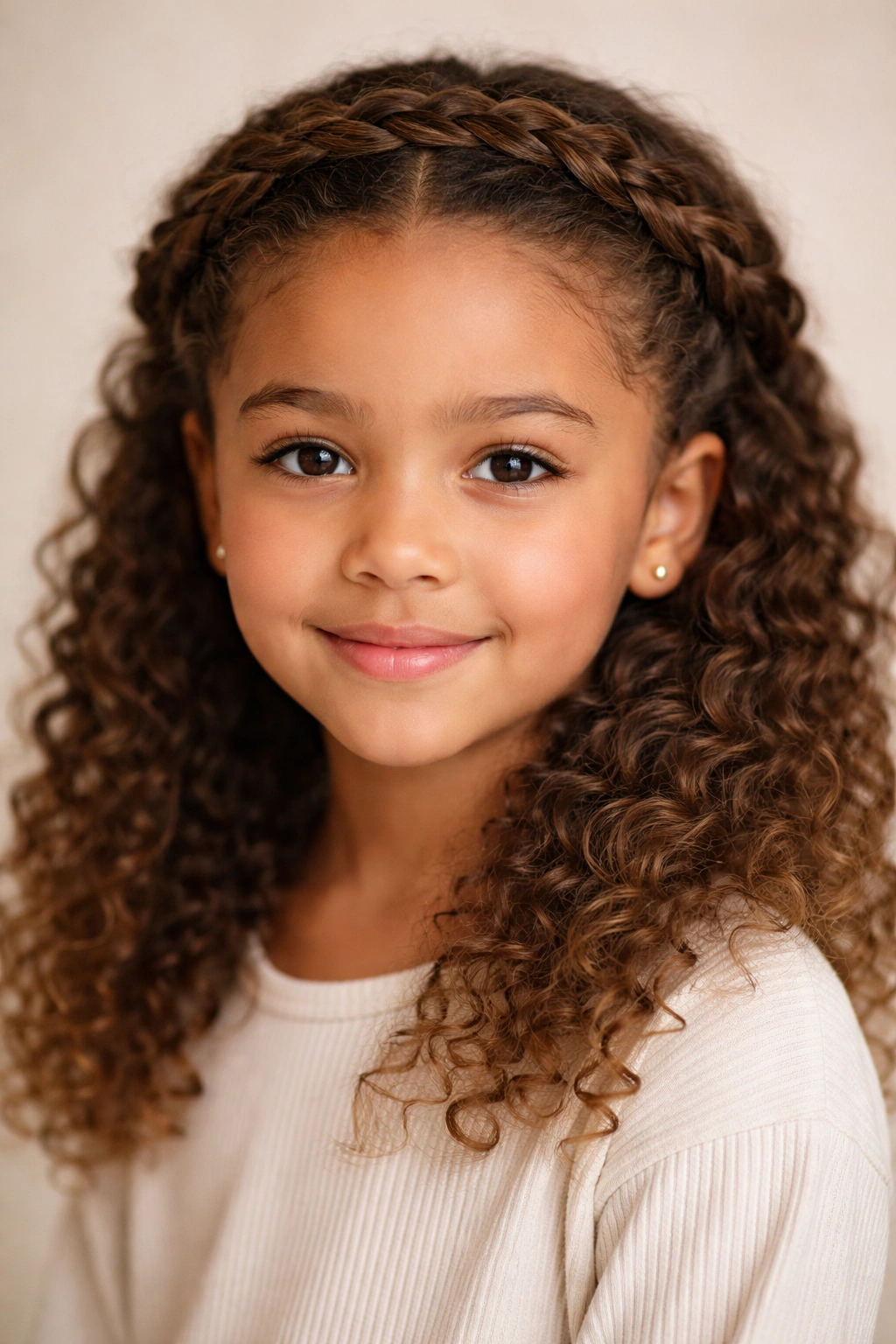
A braided crown circles the head, creating an elegant frame that looks fancy enough for special occasions but can be made casual enough for school. The back or loose sections remain curly and free, so it’s a hybrid style that’s both protective and celebratory of natural texture.
Why Crown Braids Flatter Curly-Haired Kids
A braided crown draws the eye upward and frames the face beautifully, making it particularly flattering for kids with curly hair because the braid itself is neat and intentional while the loose curls below add personality and movement. On mixed hair, the braided portion can be made tidy and polished while different curl textures in the loose section add visual interest rather than looking chaotic. This style works for school, for church, for family photos, and for days when your child wants to feel extra beautiful and seen.
Creating a Braided Crown
- Start with detangled, damp hair that’s been moisturized and lightly oiled
- Part the hair horizontally from ear to ear across the back of the head
- Braid the front/top section in a loose three-strand braid, starting at one ear and working across the crown to the other ear
- Secure the braid at the end with a small elastic or bobby pins
- Leave all the hair from the horizontal part line downward loose and curly
- Gently pull and loosen the braid slightly to create a relaxed, romantic appearance rather than a tight, formal look
- Refresh the loose curls below by spritzing with water and applying a light product if needed
- Add decorative elements like small flowers, beads, or hair cuffs woven into the braid for special occasions
- Worth knowing: This style lasts 2-3 days beautifully; refresh by sleeping in a silk bonnet to protect the braid and loose curls, then spritz and re-scrunch the loose section each morning.
10. Two-Strand Twists for Versatility and Definition
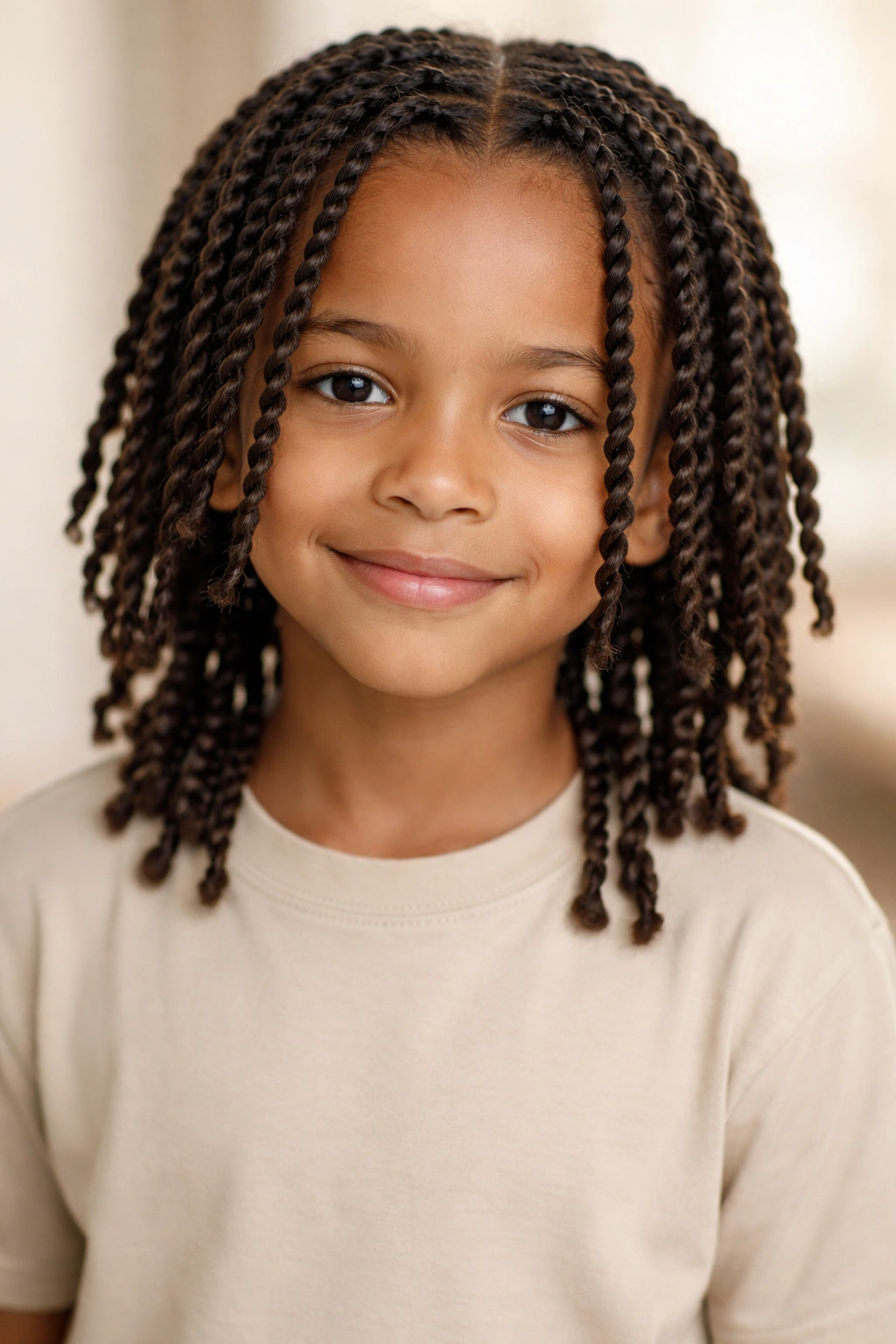
Two-strand twists are created by twisting two strands of hair around each other from root to tip, creating a rope-like texture. Worn loose as full-head twists, they’re stunning and defined. Gathered into ponytails or buns, they become an instant protective style. They’re incredibly versatile and work beautifully across all curl types.
Why Two-Strand Twists Adapt to Every Kid’s Hair
Two-strand twists work because the twisting itself creates definition regardless of the natural curl pattern — loose waves get elongated and texturized, tight coils get even more definition and hold, and mixed patterns all read as intentionally styled. The twists can be worn down for a flowing, textured look, or gathered up into styles that range from athletic (for sports and active play) to elegant (for events and photos). Twists are also genuinely protective when you gather them, but still show off natural curls when worn loose.
Installing and Styling Two-Strand Twists
- Apply products to soaking wet hair section by section — use a leave-in conditioner and curl cream for hold and definition
- Divide hair into manageable sections (smaller sections = skinnier, more defined twists; larger sections = thicker, fuller twists)
- Take two strands and twist them around each other from root to tip, maintaining consistent tension for even, neat twists
- Repeat across the entire head, working methodically through all sections
- Let twists air dry completely (4-6 hours) or use a diffuser for faster drying
- To wear down: Leave twists out and flowing for a beautiful textured look that moves and bounces
- To wear gathered: Pull twists into ponytails, buns, or half-up styles for protective day-to-day styling
- Add beads, cuffs, or colored thread to twists for personality and fun
- Pro tip: Two-strand twists can last 2-4 weeks as a protective style; sleep in a silk bonnet and spritz the scalp every few days with water or a lightweight oil to keep everything moisturized and the scalp healthy.
Final Thoughts
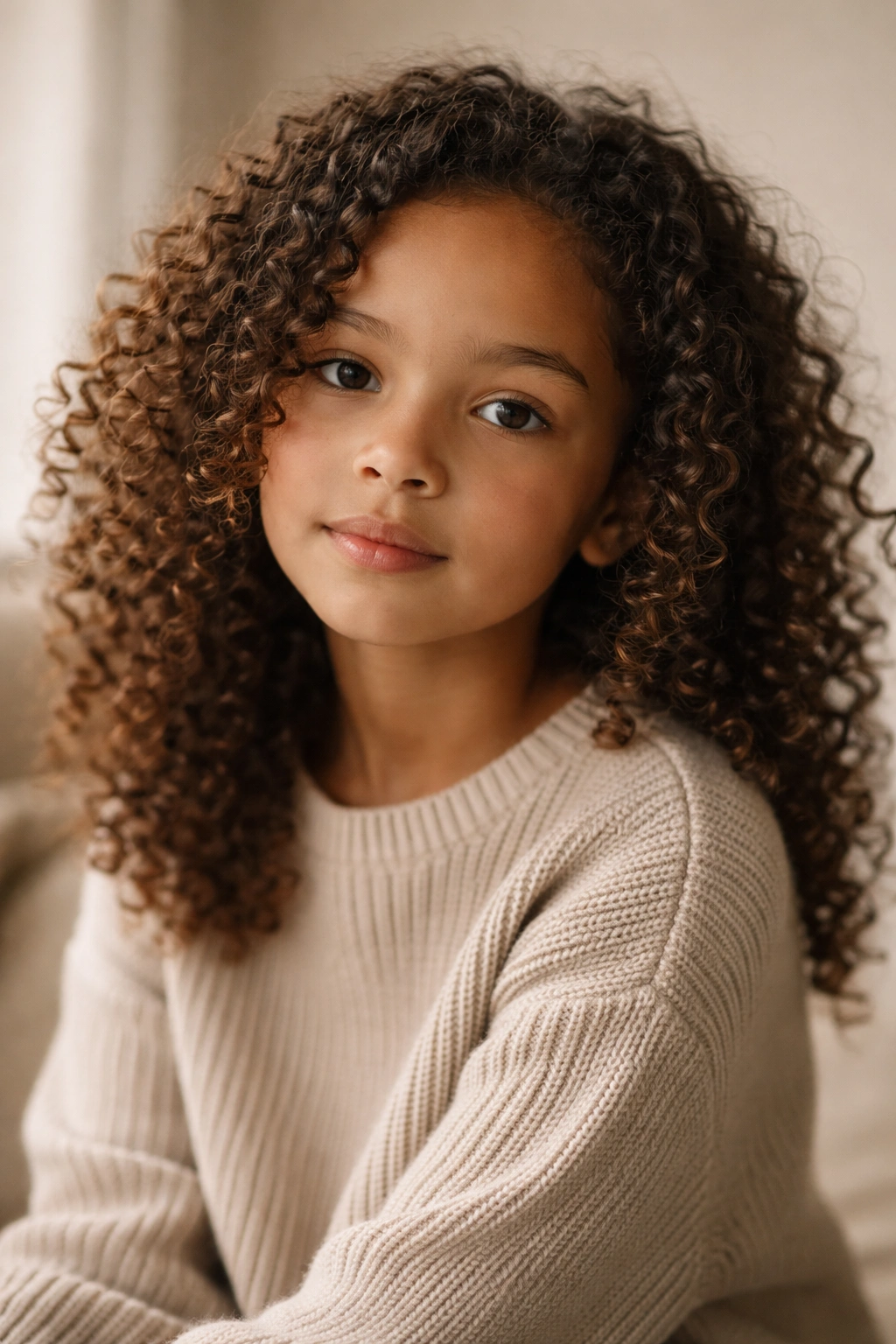
The right hairstyle for your mixed child’s curly hair is one that celebrates their natural texture while fitting into your real life — busy school mornings, sports schedules, family events, and everything in between. None of these styles demands that curls behave in ways they don’t naturally want to; instead, each approach works with what your child was born with.
The most important thing to remember is that healthy, beautiful curls start with moisture and gentleness. Whatever style you choose, prioritize products that hydrate (leave-in conditioner is non-negotiable), minimize daily manipulation and friction, and protect curls while they sleep. That might mean silk bonnets, pineapple-style gathering, or protective styling that gives hair a break from daily handling.
Your child’s curls are beautiful exactly as they are — textured, voluminous, unique, and worthy of celebration. The styles in this guide aren’t about fixing or hiding natural hair; they’re about enhancing it, protecting it, and helping your kiddo feel confident and seen. Start with a style that calls to you, be patient with the learning curve, and remember that even “imperfect” curls are still beautiful curls. As your child gets older, they can help choose their own styles and develop their own curl-care preferences. For now, you’re building a foundation of healthy hair and positive self-image that’ll last them a lifetime.