


Gray hair has a stunning natural beauty that deserves the right cut and style to truly shine. Short wavy hairstyles are a perfect match for gray tones—they add movement, texture, and dimension that emphasize the silver, ash, and pewter hues while requiring less maintenance than long styles. The waves create a soft, romantic quality that feels intentional and sophisticated, never plain or washed out.
The thing is, not every short wavy cut works the same way on gray hair. Your face shape, hair texture, and lifestyle all influence which style will make you feel most confident. Some styles emphasize volume and movement, while others play with undercuts and texture for an edgier look. The good news? Gray hair actually photographs beautifully with waves—the light catches the color variation in a way that makes the cut appear even more dimensional and alive.
This guide walks through nine distinct short wavy hairstyles that look absolutely stunning in gray. Each one brings something different to the table, from romantic finger waves to modern textured crops. You’ll find options whether you’re looking for classic elegance, artistic edginess, or carefree texture. The key to any of these styles is working with your natural wave pattern and finding the right cut that lets your gray shine without fighting against your hair’s actual texture.
1. The Choppy Pixie Wave
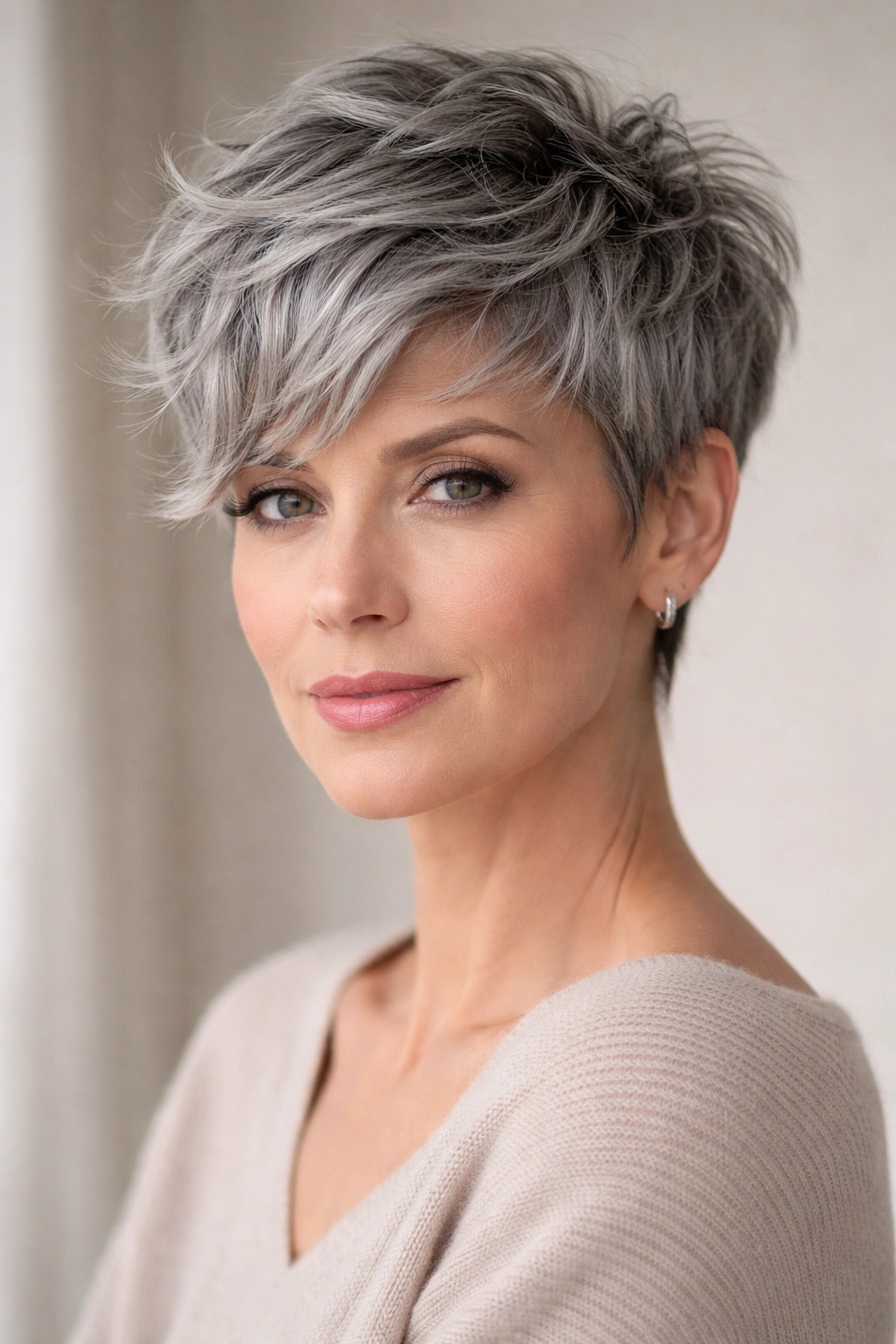
A choppy pixie with soft waves is the definition of effortlessly cool. This style keeps the overall length very short—typically two to three inches on top and tapered at the sides—but incorporates varied length throughout the crown to create movement and texture. The choppiness prevents the style from feeling too severe, and the built-in waves soften the entire look while celebrating your gray with complete clarity.
Why This Style Works for Gray Hair
The choppy texture breaks up the color in a way that makes gray appear more dimensional and intentional. Short pixie cuts naturally draw attention to your face, cheekbones, and eyes, and gray hair actually enhances this effect by providing a neutral, sophisticated frame. The waves add a feminine touch that keeps the style from reading as too masculine or severe, even though it’s technically short and minimal. The movement also creates an optical effect that makes fine or thinner hair appear fuller than it actually is.
How to Style and Maintain
- Apply a light texturizing cream or sea salt spray to damp hair, then scrunch upward while blow-drying with a diffuser attachment
- Use your fingers to piece and define the choppy layers while the hair dries, rather than a round brush
- Once completely dry, you can either leave it tousled or smooth it down slightly with pomade for a more polished version
- This cut needs a trim every four to six weeks to maintain the shape and prevent it from growing too shaggy
Pro tip: Ask your stylist to create longer pieces around the face—even by just half an inch—so you have some length to curl under or flip back on days when you want to switch up the look.
2. The Textured Shag with Waves
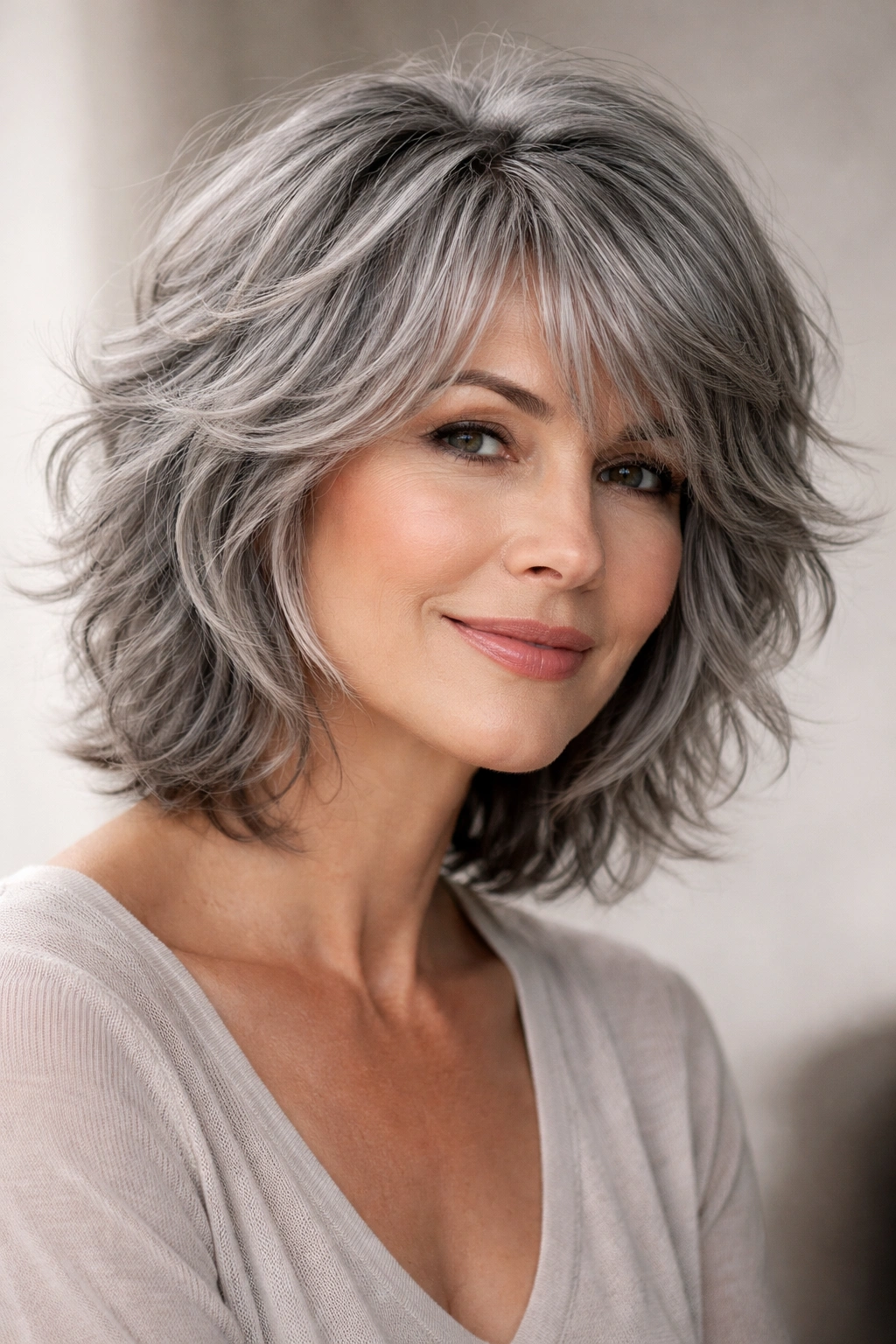
The shag is having a legitimate moment, and for good reason—it’s stylish, forgiving, and incredible on gray hair. This version features longer layers throughout, starting around chin-length in the front and graduating slightly shorter toward the back. The layers are razor-cut to create feathery texture, and the natural wave pattern creates movement that looks almost tousled even when you’ve just styled it. It’s the opposite of high-maintenance despite looking deliberately styled.
The Magic of Layers on Gray
Layering is your best friend when working with gray hair because it creates countless light-catching surfaces. Each layer picks up light differently, making your gray appear multidimensional rather than flat or one-note. The shag specifically uses choppy, broken layers that don’t lie flat, so they naturally emphasize texture and movement. This is especially valuable if you have gray that’s intermixed with darker pigment—the layers separate those colors visually, making the overall effect look more artistic and intentional.
Styling Secrets for Maximum Texture
- Blow-dry your hair roughly first, then apply a texturizing product while it’s still damp
- Use a round brush or your fingers to create soft waves while drying, focusing on the mid-lengths and ends
- For extra texture, braid damp hair loosely before bed and shake it out in the morning for undone waves
- A light mist of salt spray after styling adds grit and prevents the waves from falling flat during the day
Worth knowing: Shags look best when your natural texture is somewhere between straight and wavy. If you have very straight hair, you’ll need to add waves with heat styling every time. If your hair is very curly, a shag can read as frizzy unless you use products and techniques designed for curls.
3. The Soft Shoulder-Grazing Bob
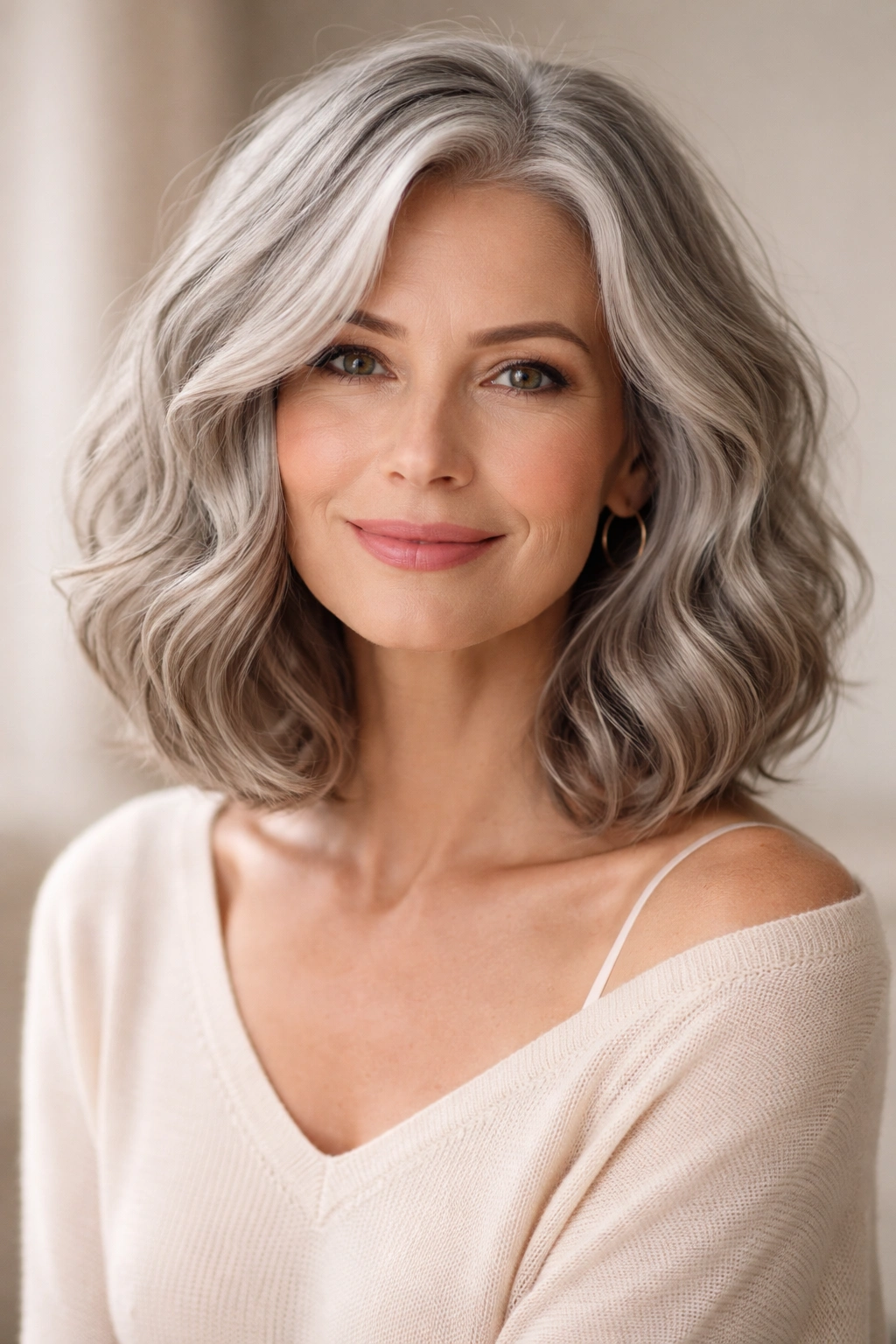
This is your answer if you want something longer than a pixie but still decidedly short. A shoulder-grazing bob with built-in waves hits right around chin length to shoulder length, with enough wave to create softness without looking overly styled. The beauty of this length is that it’s truly versatile—you can wear it wavy and tousled on casual days or blow-dry it smooth and sleek when you want something more polished.
Why This Length Suits Gray Hair Perfectly
Shoulder-grazing length allows your gray to have presence and impact without requiring the thickness and styling commitment of longer hair. The waves add movement that keeps gray from appearing heavy or severe, and this length actually works well on most face shapes. It’s long enough to show off color variation in your gray—light and dark strands create depth when they’re long enough to move. The length also gives you flexibility: you can tuck it behind your ears, create a side part, or let it fall loose depending on your mood.
Achieving and Maintaining the Wave
- This style works best with a straight or damp-wavy blow-dry using a one-and-a-half-inch curling iron or round brush
- Wrap each section away from your face, holding the curl for a few seconds before releasing
- Finger-comb through the curls once they’re cool to blend them into soft waves rather than ringlets
- Use a light hairspray only on the roots and crown to prevent weighing down the waves
- Schedule trims every six to eight weeks, as this length can get scraggly at the ends quickly
Real talk: The key to this style is texture product. Without it, a shoulder-grazing bob can look flat or feel heavy. A texturizing spray or volumizing mousse applied to damp roots before blow-drying makes a huge difference in how long your waves actually last through the day.
4. The Layered Tapered Wave
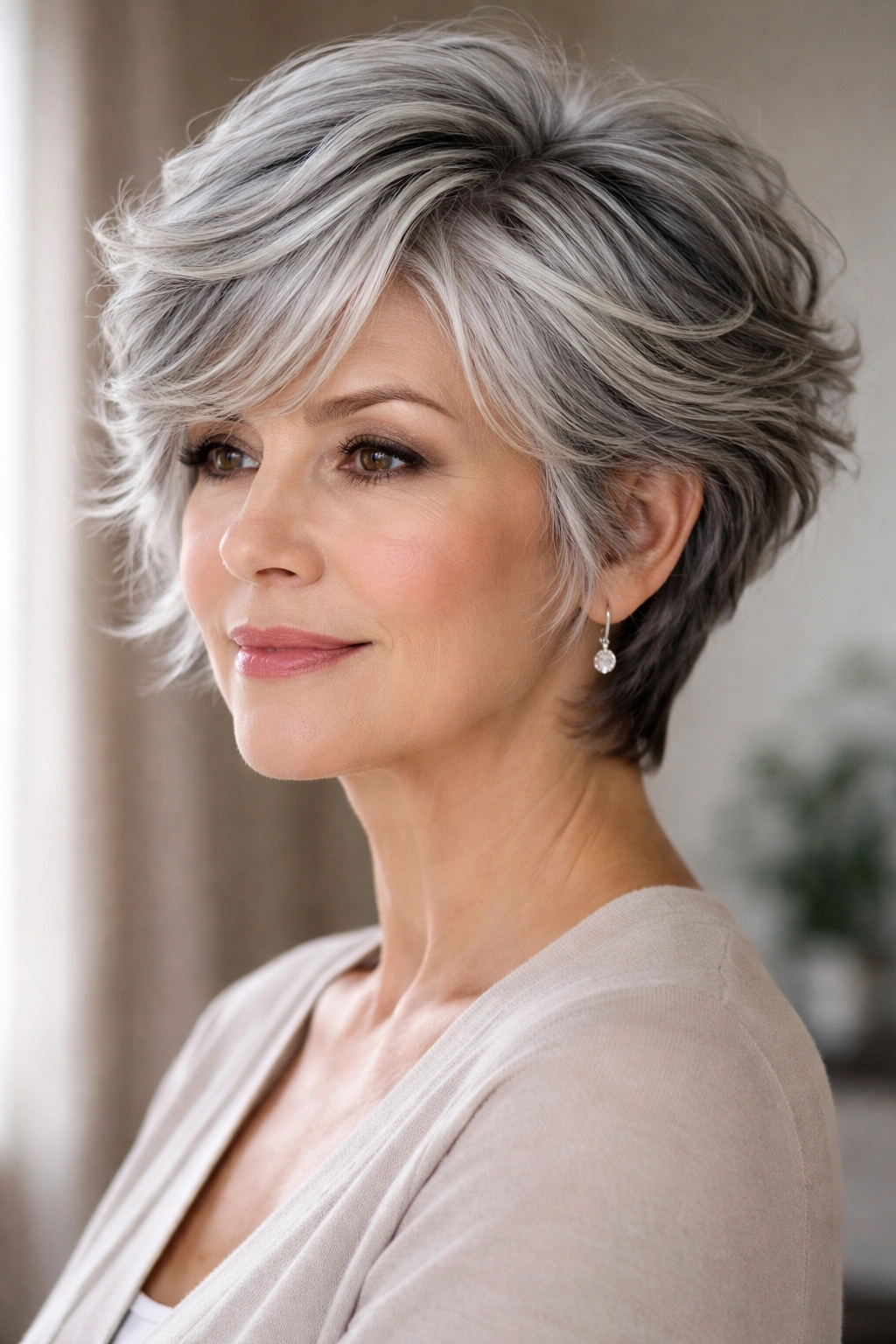
This style combines a tapered undercut on the sides with longer, heavily layered texture on top. The sides are cut very short—often with an undercut that sits an inch or so shorter than the hair on top—while the crown and front are left longer and shaped with long, feathered layers that embrace your natural wave. It’s a style that reads as intentionally artistic and modern while still being flattering on virtually every face shape.
How the Undercut Amplifies Gray
An undercut creates contrast, and that contrast is particularly striking with gray hair. The closely cut sides show off your skin tone and cheekbone structure, while the layered texture on top showcases the wave and dimension in your gray. The style also creates an optical illusion of volume—the tapered sides actually make the hair on top appear fuller and more abundant. This is especially valuable if you’re dealing with any thinning or hair loss, because the structure of the cut compensates for less density.
Styling for Maximum Impact
- Blow-dry the top layers with upward direction and movement, using a blow-dryer and your fingers rather than a brush
- Don’t dry the undercut excessively; it should lie smoothly against your head with minimal styling
- A matte texturizing paste applied to damp roots and mid-lengths adds definition to the layers without making them look greasy
- The undercut needs trimming every three to four weeks to maintain the sharp definition
Insider note: Ask your stylist to blend the undercut subtly into the longer layers rather than creating a harsh, obvious line. A blended undercut reads as more sophisticated and less “shaved sides” and more “intentional volume.”
5. The Modern Crop with Texture
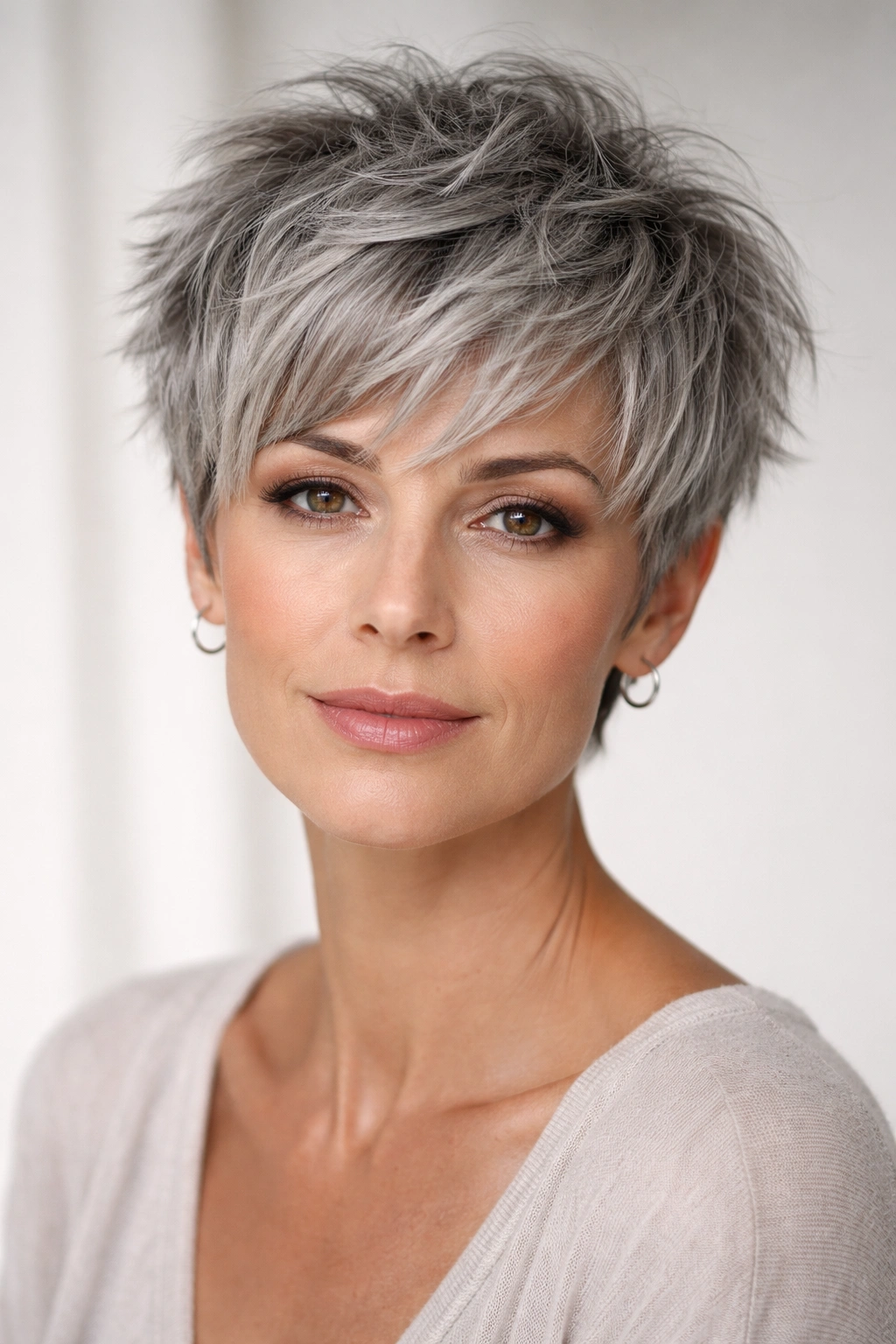
A modern textured crop is short—usually two to three inches throughout with minimal length difference between crown and sides. What makes it work is the emphasis on texture rather than length. Your stylist should razor-cut or point-cut the ends to create choppy, piece-y texture that looks undone but actually requires some strategic styling. It’s youthful, trendy, and gives you that low-maintenance edge while still reading as intentional.
Texture as Your Main Styling Tool
With a crop, you’re not relying on length or layers to create interest—you’re relying on the texture of the cut itself and how you manipulate it with product. Gray hair is absolutely beautiful with this approach because the color variation combined with the choppy texture creates a naturally multidimensional effect. The style reads as effortlessly cool rather than trying hard, which is exactly what makes modern crops so appealing. You get the androgynous edge without sacrificing femininity.
Daily Styling Routine for a Textured Crop
- Apply a lightweight texturizing cream or dry texture spray to damp roots and mid-lengths
- Blow-dry with your fingers, pushing the hair in different directions to encourage piece-y separation
- Once dry, add a matte pomade or texture paste to your fingertips and piece out individual sections for definition
- Some days you can push it forward, other days back and to the side—the texture allows for styling versatility
- Trims every four weeks keep the shape crisp and prevent the choppy texture from growing too long and losing definition
Worth knowing: This style requires daily styling if you want it to look intentional rather than bedhead-y. If you prefer to wash and go, a textured crop might frustrate you. But if you enjoy spending five minutes on your hair each morning, this style rewards that effort with a sophisticated, pulled-together look.
6. The Tousled French Bob
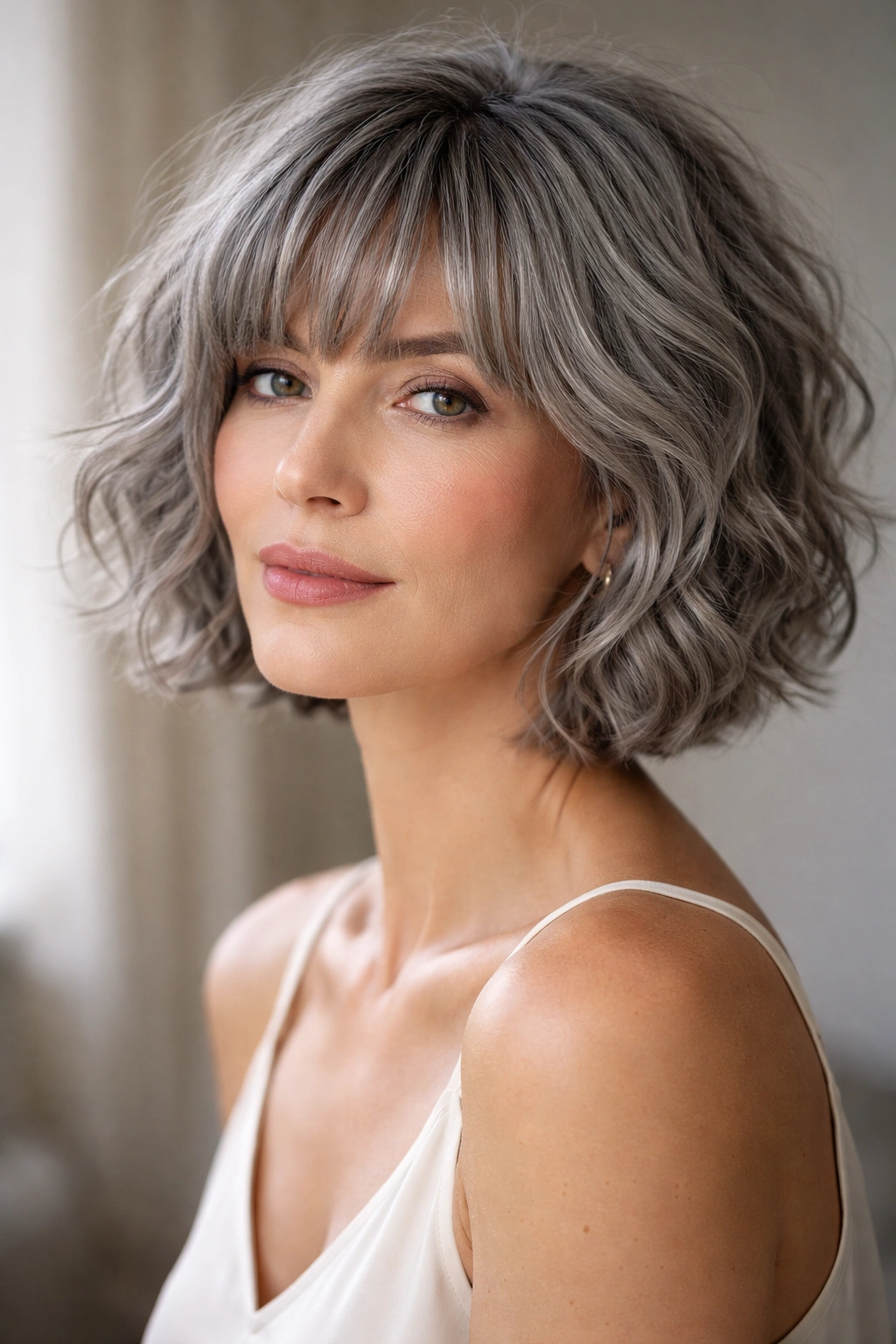
A French bob with waves is soft, romantic, and unexpectedly versatile. It typically hits right below the ear or at the jawline, with bangs or a soft fringe that grazes the eyebrows. The waves are intentionally loose and undone-looking rather than structured or tight. The combination of the short length, the fringe, and the tousled waves creates a style that feels effortlessly Parisian—and gray hair makes this look absolutely luminous.
Why Gray Enhances the French Bob Aesthetic
The French bob’s appeal rests on its sophisticated simplicity, and gray hair elevates that aesthetic immediately. The color gives the style gravitas and polish without requiring any additional styling tricks. A tousled French bob in gray reads as intentionally elegant rather than messy, which is part of why it works so well. The bangs or fringe draw attention to your eyes and forehead, making the style feel youthful and modern. The soft waves break up the line of the bob, preventing it from reading as a severe, blunt cut.
Styling Technique for Effortless Waves
- The key is a loose, undone wave rather than tight curls. Use a one-and-a-quarter-inch barrel curling iron
- Wrap hair sections around the iron, angling them away from the face, and hold for just a few seconds before releasing
- Don’t curl all the way to the roots; start an inch or so down the shaft to keep roots flat and prevent poofiness
- Once you’ve curled all sections, finger-comb through gently while the curls are still warm to blend them into soft waves
- Mist with a light, flexible-hold hairspray that won’t make the waves feel crunchy
Pro tip: French bobs look best when bangs or fringe are slightly longer and curved rather than blunt. This creates a softer frame for the face and makes the overall style feel less severe.
7. The Face-Framing Waves with Undercut
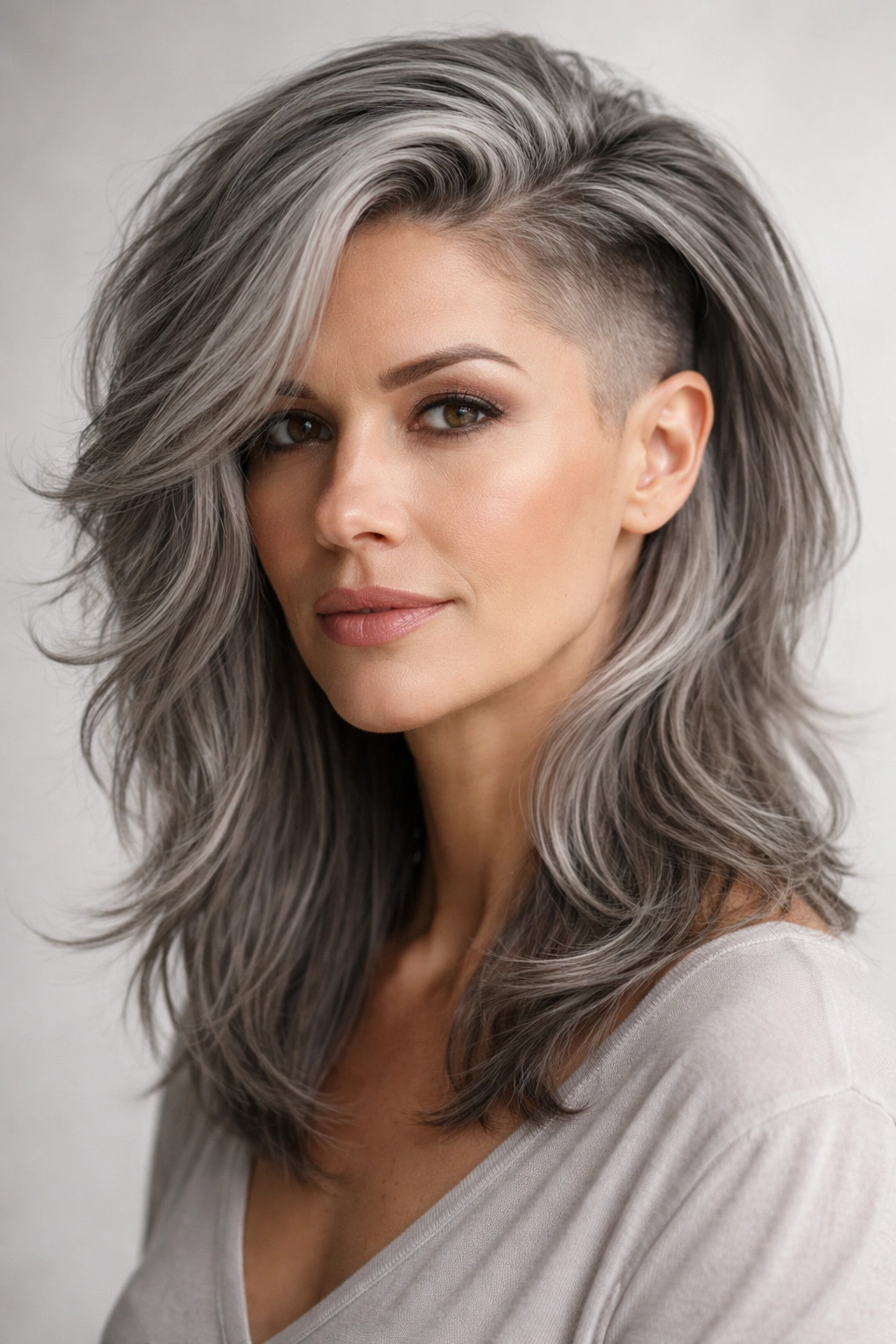
This style keeps longer texture on top and around the face while using an undercut on the sides and back. Typically, the front pieces are long enough to frame the face and even touch the collarbone, while the back and sides are clipped very short. The contrast is dramatic and modern, and the longer face-framing pieces emphasize cheekbones and jawline while the undercut keeps the style feeling fresh and contemporary.
The Flattering Power of Face-Framing
Face-framing layers are universally flattering because they direct attention upward toward your eyes and cheekbones. With an undercut, you get that benefit plus the visual interest of the stark contrast between lengths. The undercut also prevents the longer pieces from feeling heavy or dated—it’s the modern edge that keeps this style from reading as overly traditional. For gray hair, the longer face-framing pieces showcase the color right where it’s most visible, while the undercut provides structure and shape.
Creating Waves That Actually Stay
- This style works best with loose waves rather than tight curls, so use a curling iron that’s at least one and a quarter inches in diameter
- Apply a volumizing mousse to damp roots before blow-drying to create a foundation for the waves to hold onto
- Blow-dry the face-framing pieces with an upward direction, then curl them away from the face using a curling iron
- For the undercut, blow-dry smooth with minimal styling—it should be sleek and neat to create contrast with the wavy texture on top
- Use a flexible-hold hairspray rather than a hard-hold formula, which can make the waves feel stiff
Worth knowing: This style requires regular trims—the undercut needs refreshing every three to four weeks, and the longer top needs shaping every six to eight weeks to prevent it from getting too wispy or disconnected.
8. The Romantic Finger Wave Bob
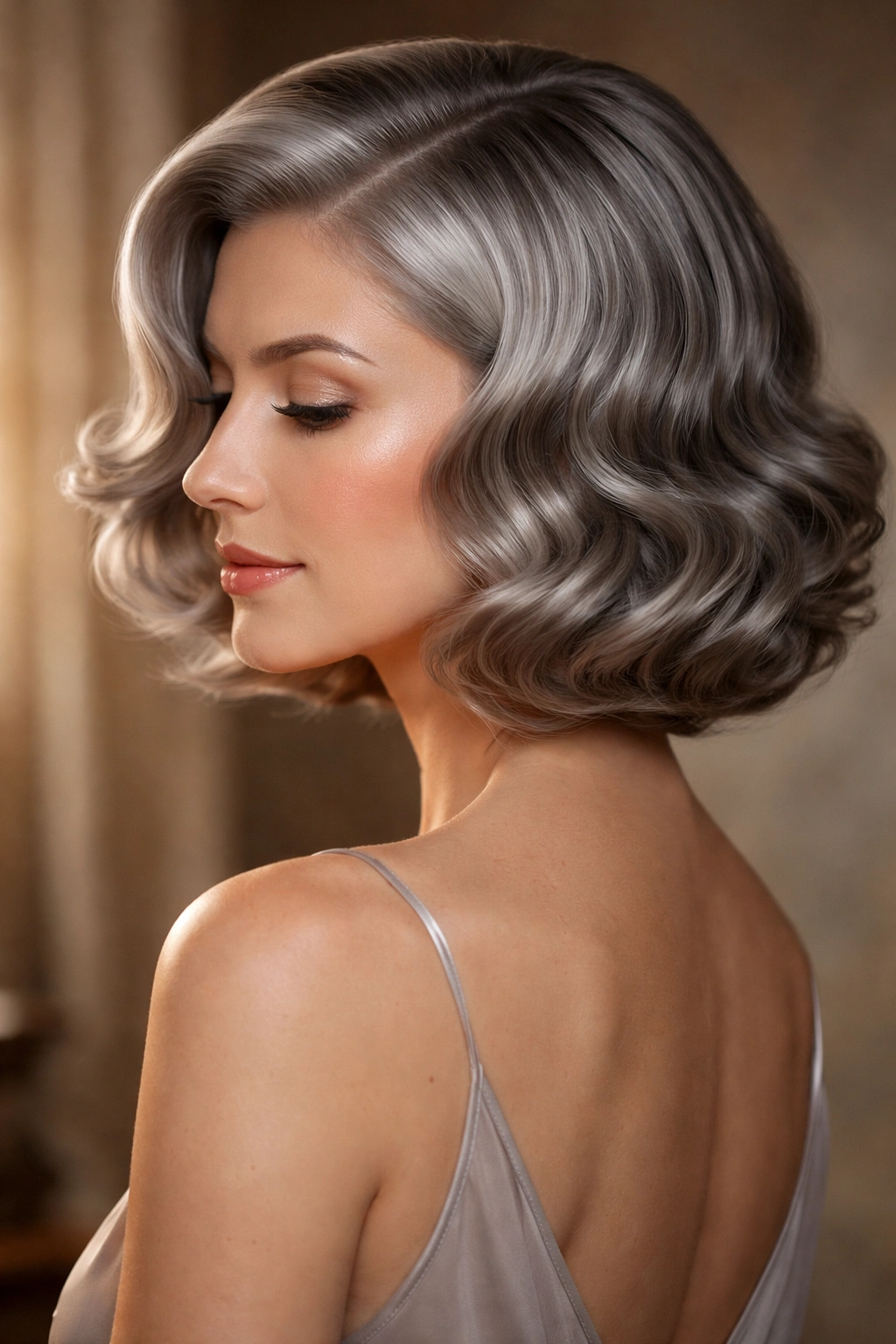
Finger waves are a timeless classic, and they’re experiencing a resurgence because they work beautifully with modern short lengths and gray hair. A romantic finger wave bob is typically shoulder-length or slightly shorter, with soft finger waves created either through setting with clips or using a curling iron and comb technique. The waves are uniform but never stiff—they should feel fluid and romantic while still reading as intentional.
The Elegance of Finger Waves in Gray
Finger waves are inherently sophisticated and vintage-inspired, and gray hair amplifies that elegance. The style reads as polished and put-together without being overdone or theatrical. The waves create movement and dimension that’s particularly striking in gray tones, as light bounces off each wave crest. This is the style to choose if you want something that feels dressy enough for special occasions but can also work for everyday wear depending on how loosely you waves the waves.
Setting Finger Waves Properly
- Start with damp hair and apply a wave-setting mousse or light gel to create hold
- Use a fine-tooth comb and a one-to-two-inch clips or bobby pins to create the wave pattern by securing the hair in alternating S-shaped waves
- Let the waves set while the hair dries completely—this takes two to three hours minimum
- Once dry, gently remove the clips and use your fingers to soften the waves slightly, creating flow rather than rigidity
- Smooth with a light hairspray, applying it to the finished waves rather than before you’ve released them
Alternative method: If setting with clips feels tedious, you can achieve finger waves with a curling iron and a fine-tooth comb. Curl small sections of hair, then comb through the curl gently while it’s still warm to create the wave shape, holding it in place with a pin until it cools.
9. The Tousled Crop with Volume
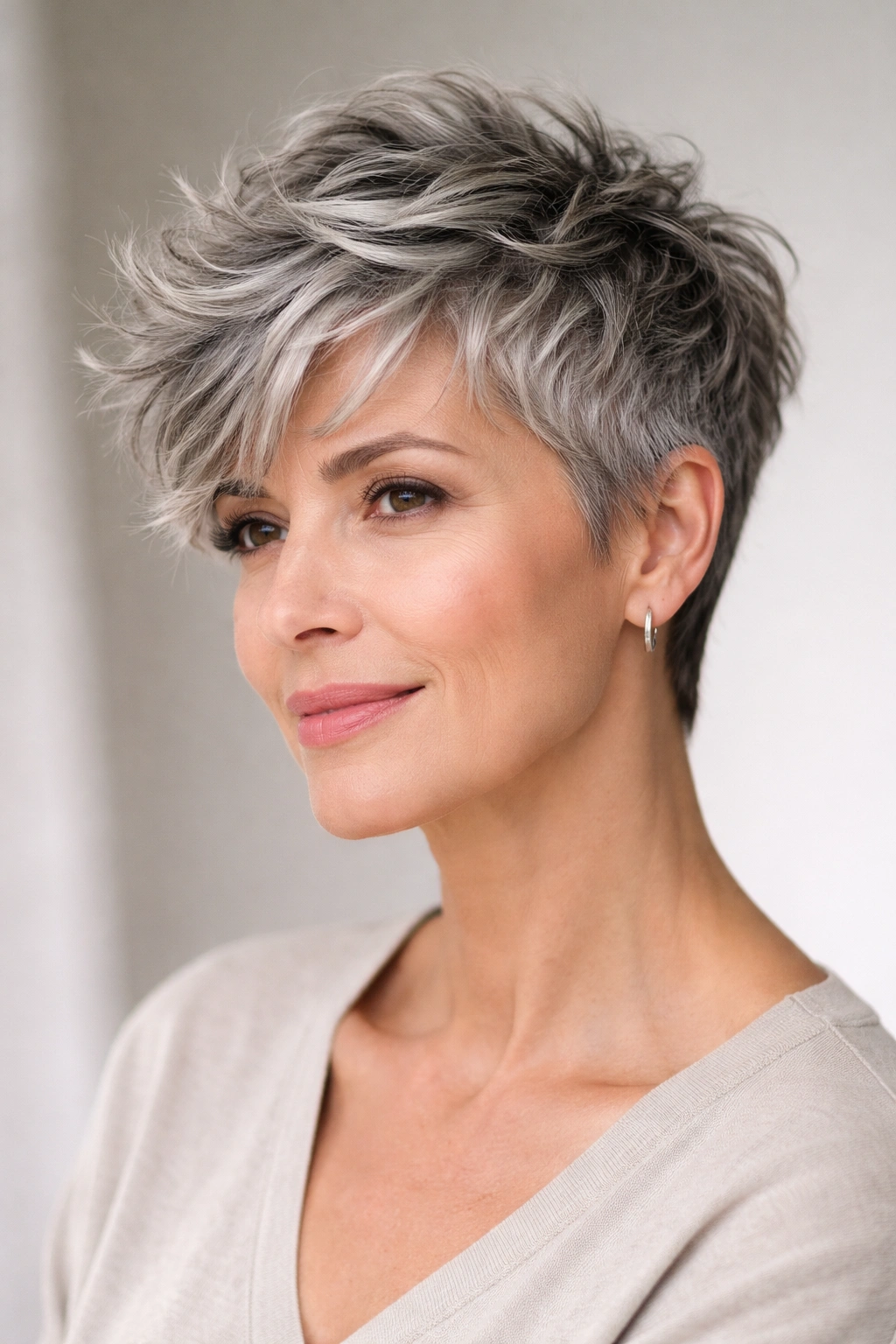
This final style is a longer version of the textured crop, typically four to five inches on top with tapered or undercut sides. The emphasis is on abundant texture and volume rather than length, and the tousling should look natural and lived-in rather than carefully styled. It’s a style that works beautifully if you have some natural wave pattern to work with, as your texture does much of the heavy lifting.
Building Volume Into the Cut
The way your stylist cuts this style is crucial to its success. They should create longer choppy layers on top that will naturally fall at varied heights and angles, creating volume without bulk. The sides can be either tapered (gradually shorter) or undercut (dramatically shorter) depending on whether you want a subtle or more dramatic contrast. The cut itself should support volume rather than require you to tease or backcomb your hair to create it.
Styling for All-Day Volume
- Start with a volumizing mousse applied to damp roots before blow-drying
- Blow-dry with your head upside down or with your head tilted back, pushing the roots away from your scalp
- Use a round brush to create movement in the mid-lengths and ends while your roots dry
- Once mostly dry, flip your head back and continue styling from the front, directing hair away from your face
- Apply a light texturizing spray or dry texture product while hair is still slightly damp to set the volume
Real talk: This style requires daily blow-drying if you want to maintain the volume. If you prefer to air-dry, the volume will be less pronounced. But the trade-off is that the textured cut means the style still looks intentional and attractive even when air-dried—it just won’t have quite the same lift.
Styling Products That Maximize Gray and Waves
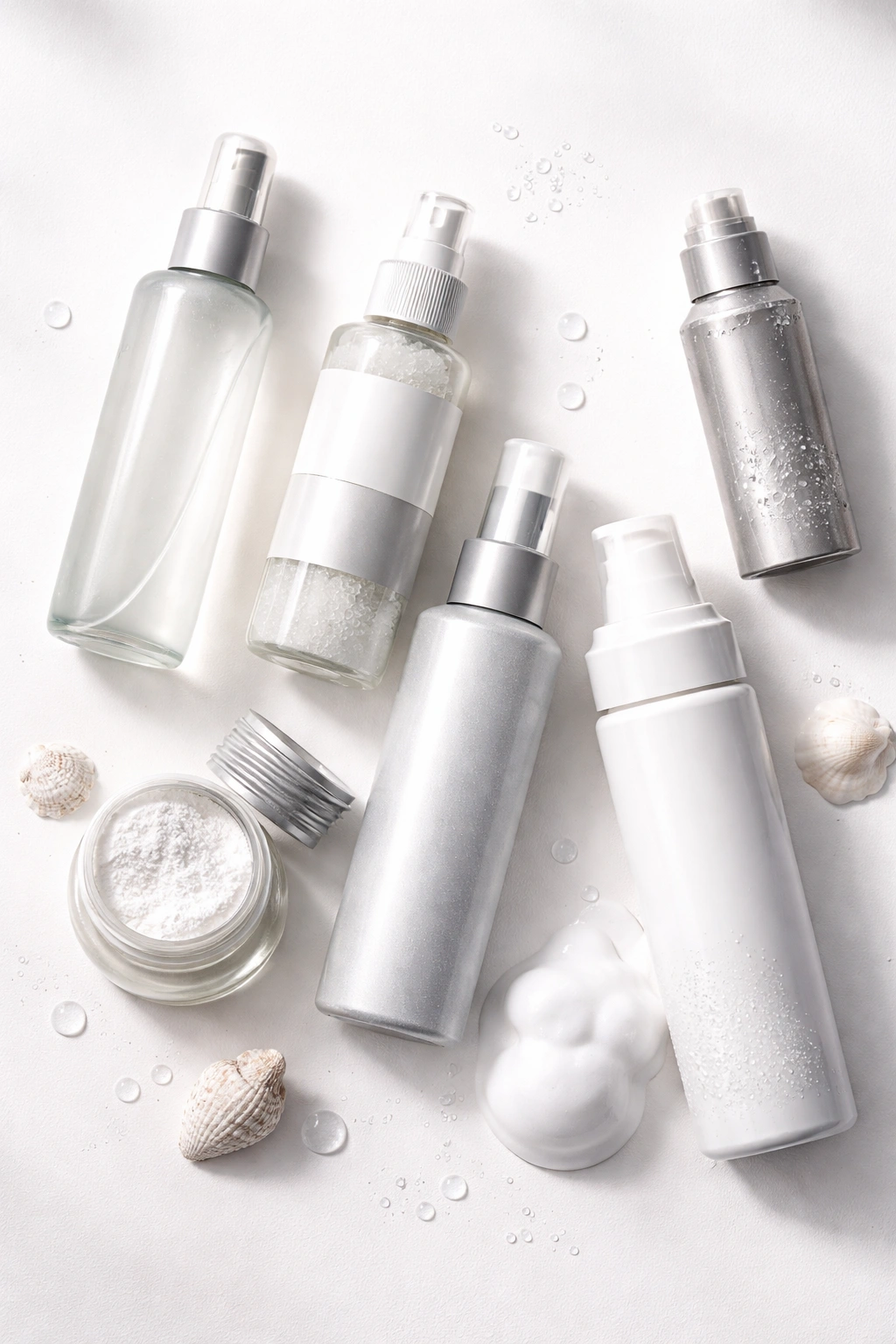
The right products make the difference between a hairstyle that looks like it happened by accident and one that looks deliberately styled. For short wavy styles in gray, you need products that add definition and hold without making hair feel sticky, heavy, or artificially shiny. Texturizing sprays and creams are your best friends, as they enhance the wave pattern and add grip that helps waves last longer.
Texturizing products like sea salt sprays, dry texture powders, and texturizing creams applied to damp hair before blow-drying create a foundation for waves to hold onto. They also prevent hair from looking flat or greasy, which is important for gray hair that can sometimes appear more reflective than pigmented hair.
Volumizing mousses applied to wet roots before blow-drying create lift that lasts through the day. This is especially valuable if your gray hair tends toward fine or thin texture, as mousse adds body without weight.
Flexible-hold hairsprays (as opposed to strong-hold formulas) allow waves to move and feel natural while still providing enough hold to maintain the shape. Spray from about six inches away and allow it to dry completely before touching your hair, or you’ll disrupt the hold.
Maintenance and Care for Short Wavy Gray Hair

Short wavy styles require different maintenance than other cuts, and gray hair has its own specific care needs. The good news is that short styles require less product, less blow-drying time, and less overall styling effort than longer hair—but the bad news is that they need trimming more frequently to maintain shape and texture.
Plan on trimming every four to six weeks depending on how quickly your hair grows and how precise you want the shape to remain. Choppy and textured styles need more frequent trims than blunt or straight styles, because the texture becomes less defined as the hair grows out. Between trims, you can maintain some shape by using pointed scissors to trim any obvious scraggly ends, though this is definitely a job best left to a professional if you’re not confident with scissors.
Gray hair benefits from using a purple or silver shampoo once or twice weekly, especially if your gray has yellow or brassy tones. This isn’t about dyeing your hair—it’s about maintaining the brightness and neutrality of your natural gray. A hydrating shampoo and conditioner are important too, as gray hair tends to be drier than pigmented hair. The reduced oil production in gray strands means you may need more moisture than you did before going gray, despite what myths suggest.
Finding a Stylist Who Understands Short Wavy Cuts
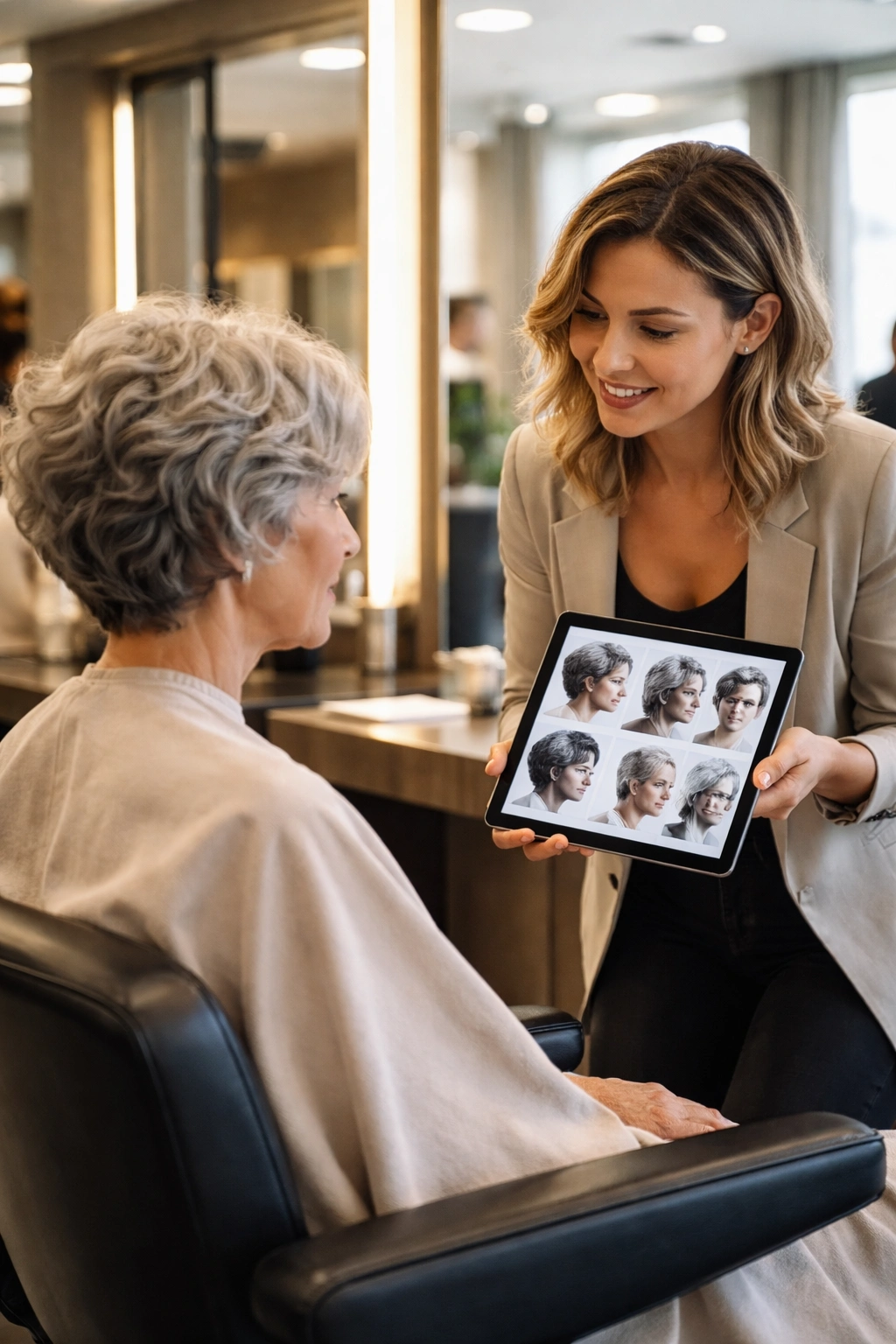
Not every stylist is equally skilled at cutting short wavy styles, particularly ones designed for gray hair. You want someone who understands how to cut with your wave pattern rather than against it, and who recognizes that gray hair deserves to be celebrated rather than hidden. Look for stylists with a portfolio that shows short, textured cuts and gray hair specifically.
When you book an appointment, come prepared with reference photos of styles you love. Talk specifically about your lifestyle and how much time you’re willing to spend styling each morning. Be honest about whether you prefer low-maintenance ease or whether you enjoy having a style that requires daily blow-drying and product. The best cut is one that matches your actual lifestyle, not the lifestyle you wish you had.
During the consultation, ask your stylist questions about maintenance, styling, and product recommendations. A great stylist will give you honest guidance about whether a particular style suits your hair texture and face shape, and they’ll suggest modifications if they think something different would work better.
Final Thoughts
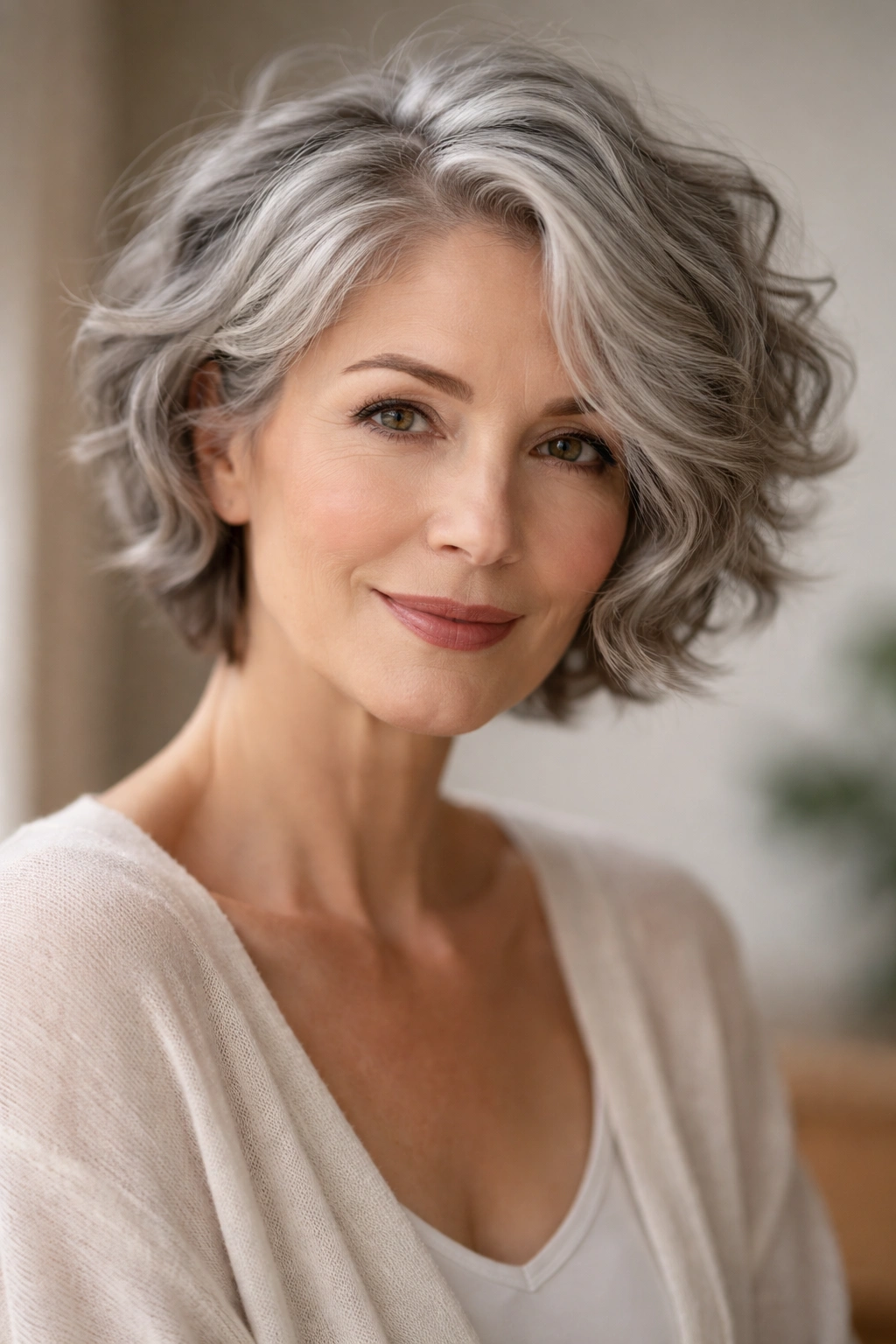
Short wavy hairstyles celebrate gray hair in a way that longer styles sometimes can’t. The movement, texture, and dimension created by waves make gray appear luminous and multidimensional rather than flat or monotone. Whether you choose a choppy pixie, a textured shag, a face-framing cut with undercut, or any of the other styles covered here, you’re opting for a look that’s both modern and timeless.
The key to success with any short wavy style is choosing one that aligns with your hair texture, face shape, lifestyle, and styling preferences. Don’t pick a style just because it looks beautiful on someone else—pick one because it’s achievable for you with your specific hair and daily routine. A simple pixie crop that you love might be better than a complicated shag you’re frustrated with every morning.
Gray hair deserves a hairstyle that showcases its beauty rather than competing with it. Short wavy cuts do exactly that. They’re easier to maintain than longer styles, they age you backward rather than forward, and they make a confident statement about accepting and celebrating your natural color. Whether you’re transitioning to gray or you’ve been rocking it for years, one of these nine styles is waiting to become your new favorite.