Korean beauty standards have always celebrated soft, textured waves that frame the face with effortless elegance. Unlike blunt, severe cuts, K-beauty embraces movement and dimension — waves that catch the light, add volume, and create that coveted “chic without trying” aesthetic that makes Korean celebrities so distinctive. Whether you’re drawn to the romantic, loose waves of K-drama heroines or the playful, spiraled curls of modern K-pop idols, Korean wavy hairstyles offer something for every face shape, hair type, and personal style.
What makes Korean wavy hairstyles so uniquely appealing is their focus on soft, natural-looking texture rather than dramatic, artificial-looking curls. The goal isn’t bouncy ringlets or tight spirals — it’s waves that flow, bend, and move naturally with your hair’s own weight and rhythm. These styles prioritize longevity too; Korean stylists design waves that hold their shape for days without needing constant touch-ups, making them practical for busy lifestyles while still delivering that premium, salon-finished look.
The versatility is remarkable. Korean waves work beautifully at shoulder length, mid-back, or even ultra-long. They complement both warm and cool undertones, frame different face shapes flattering, and look equally stunning on straight hair that’s been permed or waved, or on naturally wavy hair that’s been refined and enhanced. Whether you’re considering a permanent wave perm (a Korean specialty), using heat styling techniques, or relying on semi-permanent styling, there’s a Korean wavy style that’ll feel authentically you.
1. The Signature K-Drama Loose Wave
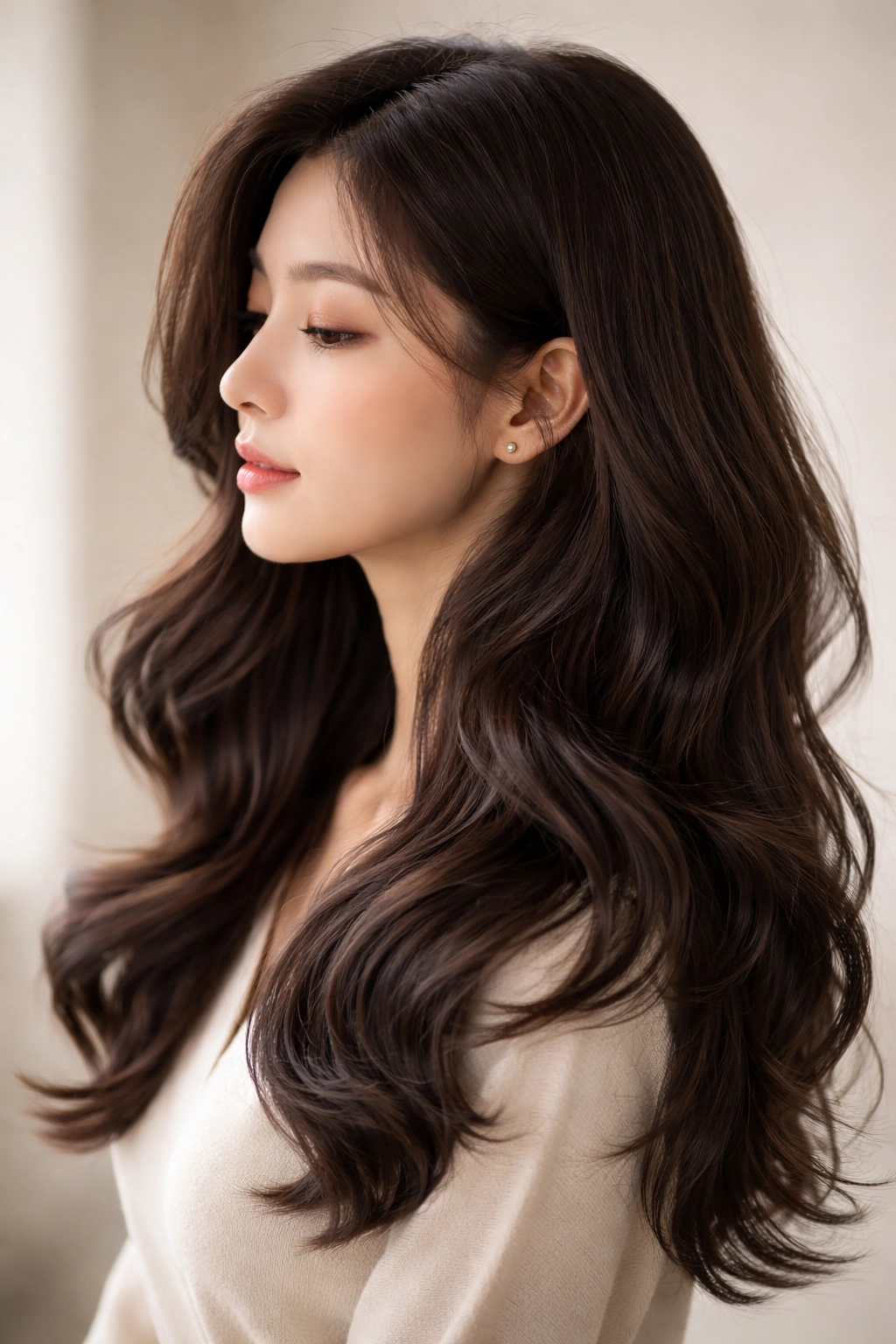
This is the quintessential Korean wave that’s dominated television dramas and gained international fame. It features large, soft waves that start from mid-shaft and flow downward, creating an almost romantic, touchable texture. The waves aren’t uniform — they vary subtly in size and direction, which is what makes them look so naturally effortless rather than done-up. Hair typically falls past the shoulders, with layers cut to encourage movement and volume at the crown.
How This Style Works
The loose wave requires either a professional perm treatment (specifically a digital or volume perm in Korean salons) or consistent heat styling with a large barrel curling iron. If you’re opting for the perm route, the stylist applies solution to create a soft permanent wave pattern that holds beautifully through multiple hair washes. For heat styling, you’d use a 1.5-inch to 2-inch curling iron, wrapping sections away from the face and leaving the bottom 2-3 inches straight for a modern, undone finish.
Why It’s So Popular
- Incredibly flattering on oval, heart, and square face shapes because it softens angular features
- Works on both thick and fine hair — the waves add volume to fine hair and define texture in thick hair
- Requires minimal daily styling once established; a quick tousle with texturizing spray recreates the look
- Photographs beautifully; the soft shadows created by the waves are incredibly photogenic
- Pairs well with both casual and formal styling — dress it down with a basic tee or elevate it with a blazer
Pro tip: Ask your stylist for a “volume perm” rather than a tight wave perm. This creates looser, more romantic waves that’ll feel natural against your face and won’t look overdone as the perm relaxes over weeks.
2. The Modern Curtain Wave
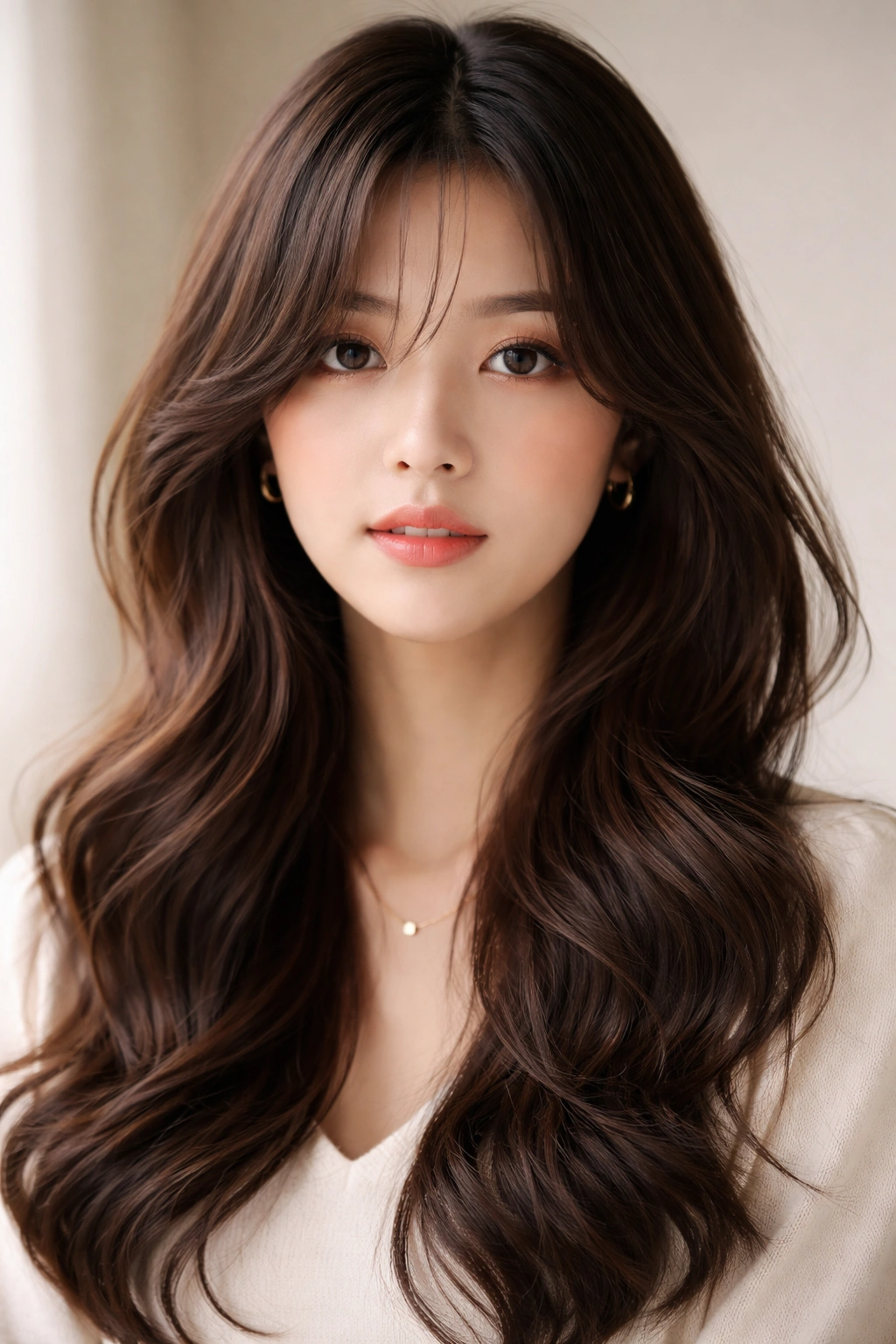
Curtain waves have surged in popularity because they combine the romantic texture of wavy hair with the practical, flattering structure of a curtain cut. Layers frame the face on both sides, with longer pieces in the center that create a self-framing effect. Waves tumble downward in a way that draws attention to cheekbones and jawline, making this an especially flattering choice for round or square face shapes.
The Layering Details
The cut typically starts with longer face-framing pieces (usually chin-length or slightly longer) that sit on top of a slightly shorter base layer. This creates dimension and ensures that even when your hair is straight, the cut itself creates the illusion of volume. When waves are added, those face-frame pieces become truly magical — they flip outward and inward naturally, creating movement that feels alive and intentional.
Making It Work for Your Hair Type
- Fine, straight hair: A loose perm or consistent heat styling with a medium barrel curling iron creates enough texture to hold the curtain shape
- Thick, coarse hair: Digital perms work beautifully; the heat relaxes coarser textures and creates defined, springy waves
- Naturally wavy hair: Minimal styling required; a light texturizing spray and scrunching brings out your natural wave pattern while the cut provides the curtain structure
- Shoulder-length or longer: This style shines at these lengths; shorter versions can feel choppy and lose the romantic curtain effect
Pro tip: The curtain wave requires professional maintenance every 8-10 weeks if you’re getting a perm, or consistent weekly heat styling if you’re styling at home. Budget accordingly, and invest in a high-quality heat protectant spray to minimize damage.
3. The Shoulder-Grazing Textured Bob
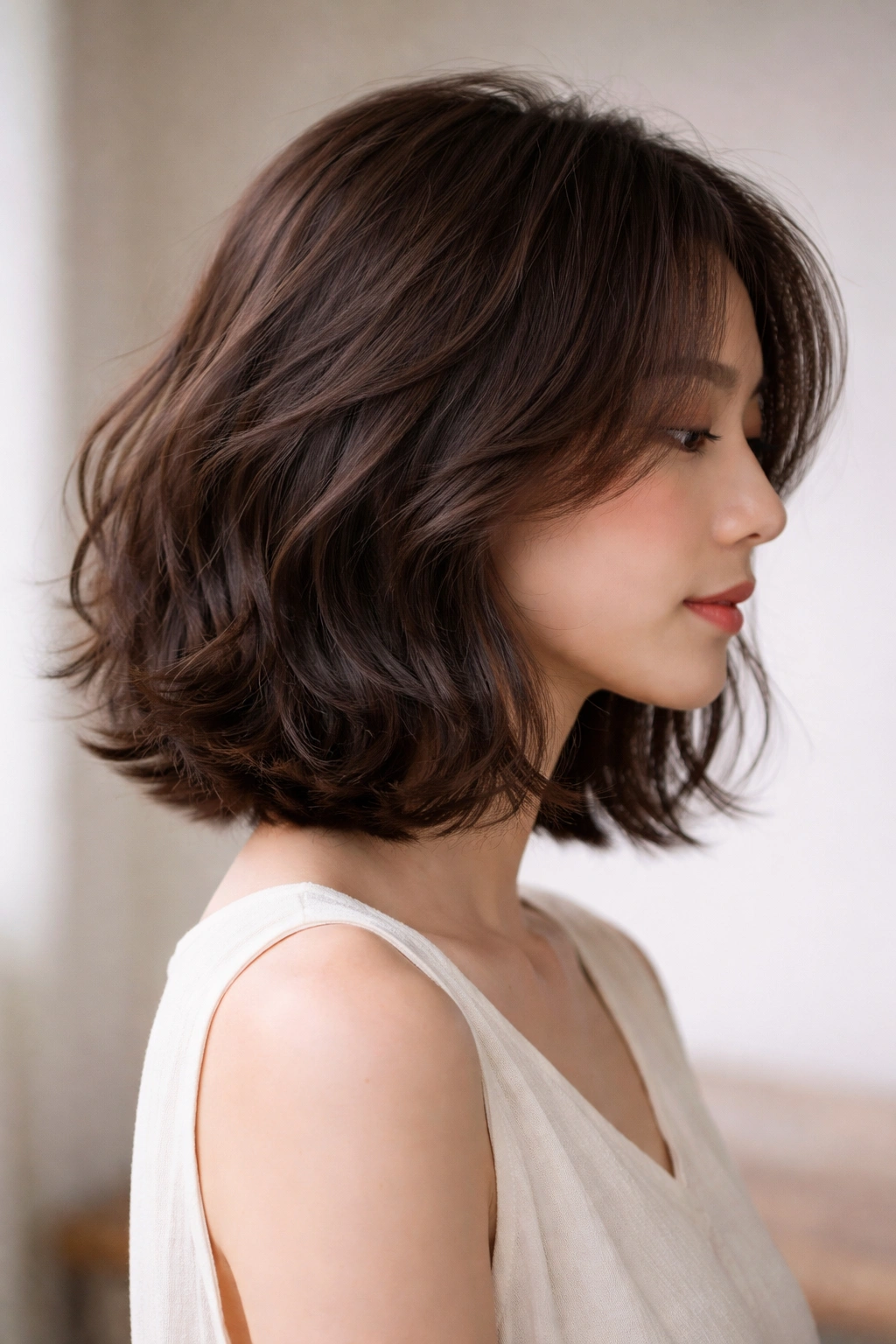
Korean stylists have revolutionized the bob by adding subtle, purposeful waves that prevent the cut from looking blunt or severe. This chin-length to shoulder-grazing wave bob features shorter layers throughout that encourage natural movement and prevent the “dull, flat” appearance traditional bobs sometimes have. It’s a modern, youthful style that reads as more fashion-forward than the classic Korean bob.
The Cut Structure
Unlike a traditional blunt bob, this style has graduated layers — slightly longer in the back, shorter at the sides, with plenty of texture throughout. The layers mean each section moves independently, creating a tousled, dimensional look even when you’re not actively styling. The wave pattern is typically loose and organic rather than perfectly uniform, which keeps the overall aesthetic modern and undone.
Why Korean Stylists Excel at This
- They understand how to layer for movement without creating a “shaggy” or unkempt appearance
- Korean cut techniques prioritize the living quality of the hair — how it moves and falls naturally
- They factor in the Asian hair growth pattern (which tends to be very straight) and design waves that’ll complement natural hair behavior
- The combination of length and layers means this style flatters almost every face shape without looking too trendy or temporary
Pro tip: This style requires a stylist who’s genuinely skilled at cutting textured, wavy hair. Bring reference photos from Korean salons or Instagram accounts, and be specific about the wave pattern you want — show whether you prefer loose, romantic waves or tighter, more defined texture.
4. The Long Spiral Wave
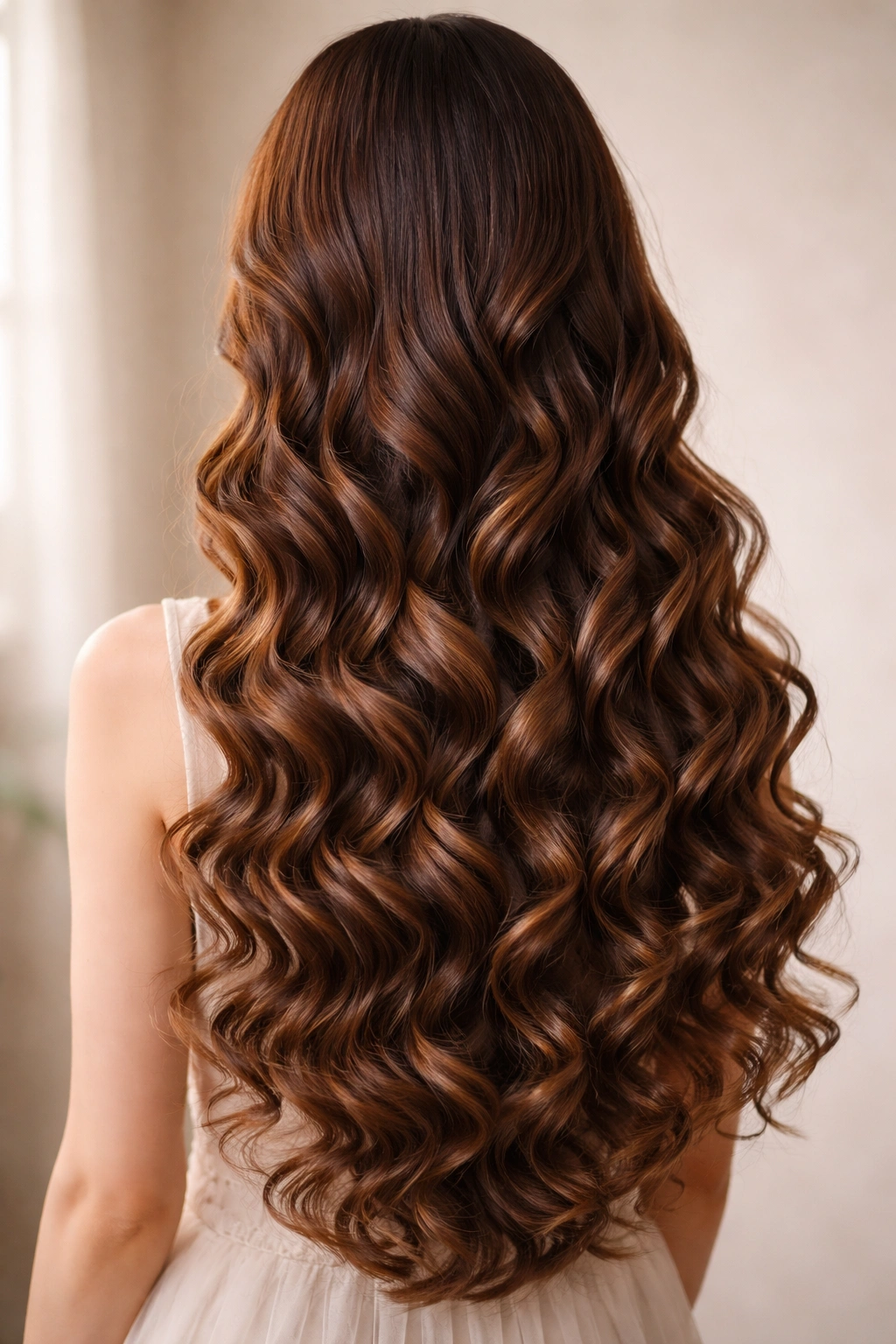
If you want dramatic, defined waves that make a statement, spiral waves deliver. Rather than soft, flowing waves, spirals are more structured and springy — each section of hair coils around itself, creating a clear, visible wave pattern that doesn’t fade as quickly as looser waves. This style is especially popular among younger Korean women and K-pop idols who want that polished, eye-catching look.
Achieving the Spiral Wave
Professional spiral or perm waves require a stylist wrapping your hair around a rod vertically in a specific direction, then applying chemical solution to set that exact spiral pattern. The size of the rod determines the spiral’s tightness — smaller rods create tighter, more distinct spirals, while larger rods create looser, more natural-looking spirals. The spiral pattern holds remarkably well through multiple washes, making it incredibly low-maintenance.
The Styling and Maintenance
- Spirals typically hold their shape for 3-4 months with minimal styling required
- A texturizing spray or sea salt spray enhances the wave definition and prevents the style from looking too “done”
- You can wear spirals sleek and polished for formal occasions or tousled and undone for casual days
- Towel-drying with a microfiber cloth (rather than rubbing with a regular towel) prevents frizz and preserves the spiral pattern
- This style works best on shoulder-length or longer hair; shorter lengths can look too tight and uniform
Pro tip: If you’re nervous about committing to a perm, ask your stylist about semi-permanent wave treatments or temporarily styling your hair in spirals with heat before deciding on a permanent version. This gives you a low-risk way to see whether the style actually suits your face and lifestyle.
5. The Subtle Beachy Wave
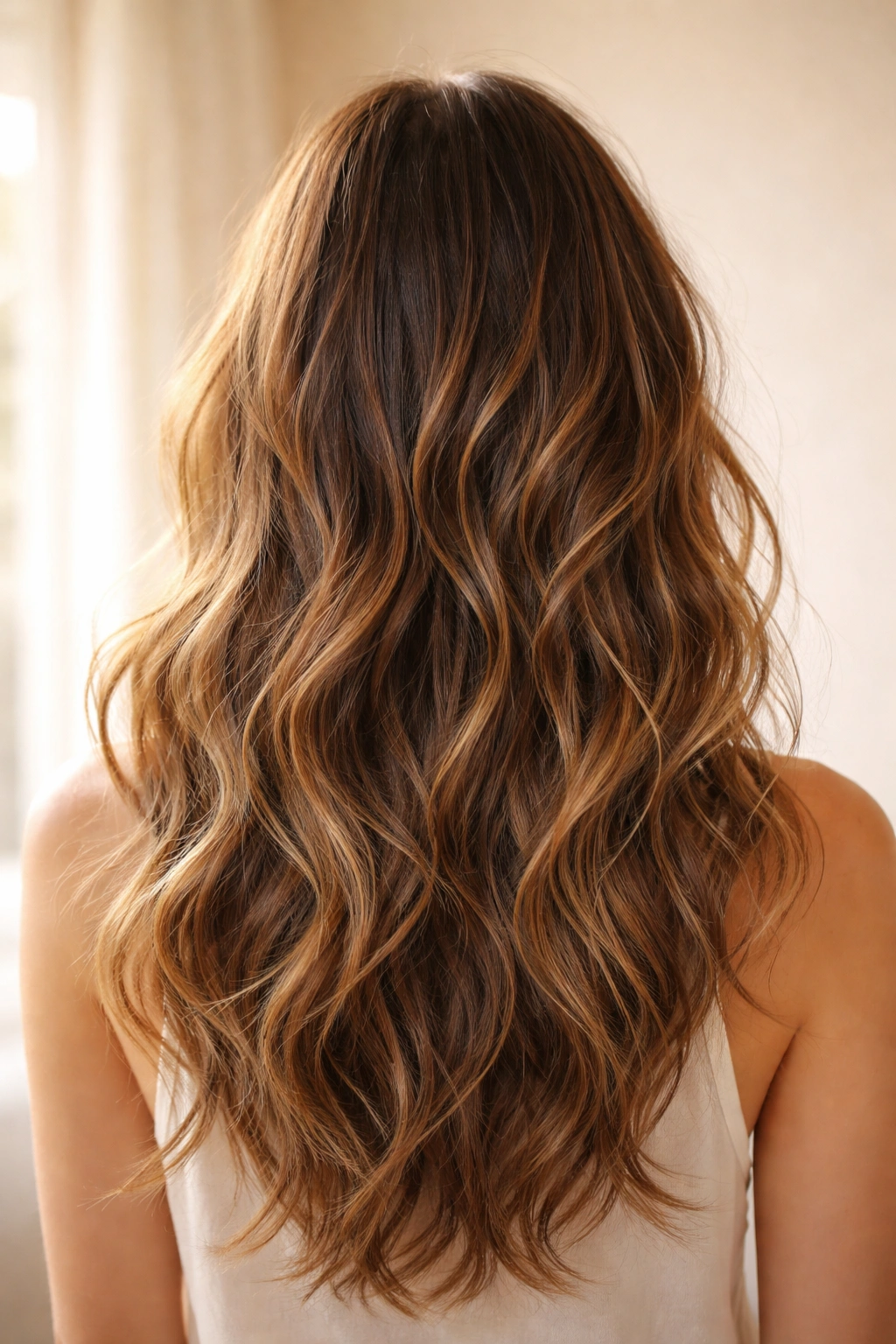
Beachy waves evoke the idea of effortless sun-kissed texture — soft, organic, almost accidentally beautiful. In Korean styling, beachy waves are typically looser than signature K-drama waves and have more randomness to their pattern. Rather than each wave being precisely placed, beachy waves vary in size and direction, giving the impression you’ve just come back from the coast. It’s the most “undone” of Korean wave styles, which paradoxically takes the most intention to create.
Styling Techniques for Beachy Texture
- Curling iron method: Use a 1.5-inch barrel, wrap sections loosely and inconsistently (varying whether you wrap toward or away from the face), and leave the ends out for a tousled effect
- Braiding method: Braid damp hair into 2-3 loose braids overnight, then unravel in the morning and finger-comb for organic, soft waves
- Sea salt spray: Applied to damp hair before air-drying, sea salt spray creates natural-looking texture without heat
- Perm option: A very loose digital perm can create semi-permanent beachy waves that hold through multiple washes with minimal daily styling
Who This Style Suits
- Anyone wanting a low-maintenance wave style; beachy waves forgive imperfection and actually look better slightly undone
- People with longer hair (shoulder-length or past); the weight of longer hair helps beachy waves fall naturally
- Those preferring a more casual, approachable aesthetic over polished perfection
- Hair types that aren’t naturally wavy; the randomness of beachy waves prevents an “overdone” appearance on straight hair
Pro tip: Beachy waves actually work beautifully with lived-in texture — some frizz, some flyaways, and slightly messy sections add to the aesthetic. Embrace imperfection and avoid over-brushing, which destroys the tousled effect you’ve worked to create.
6. The Feathered Wave Cut
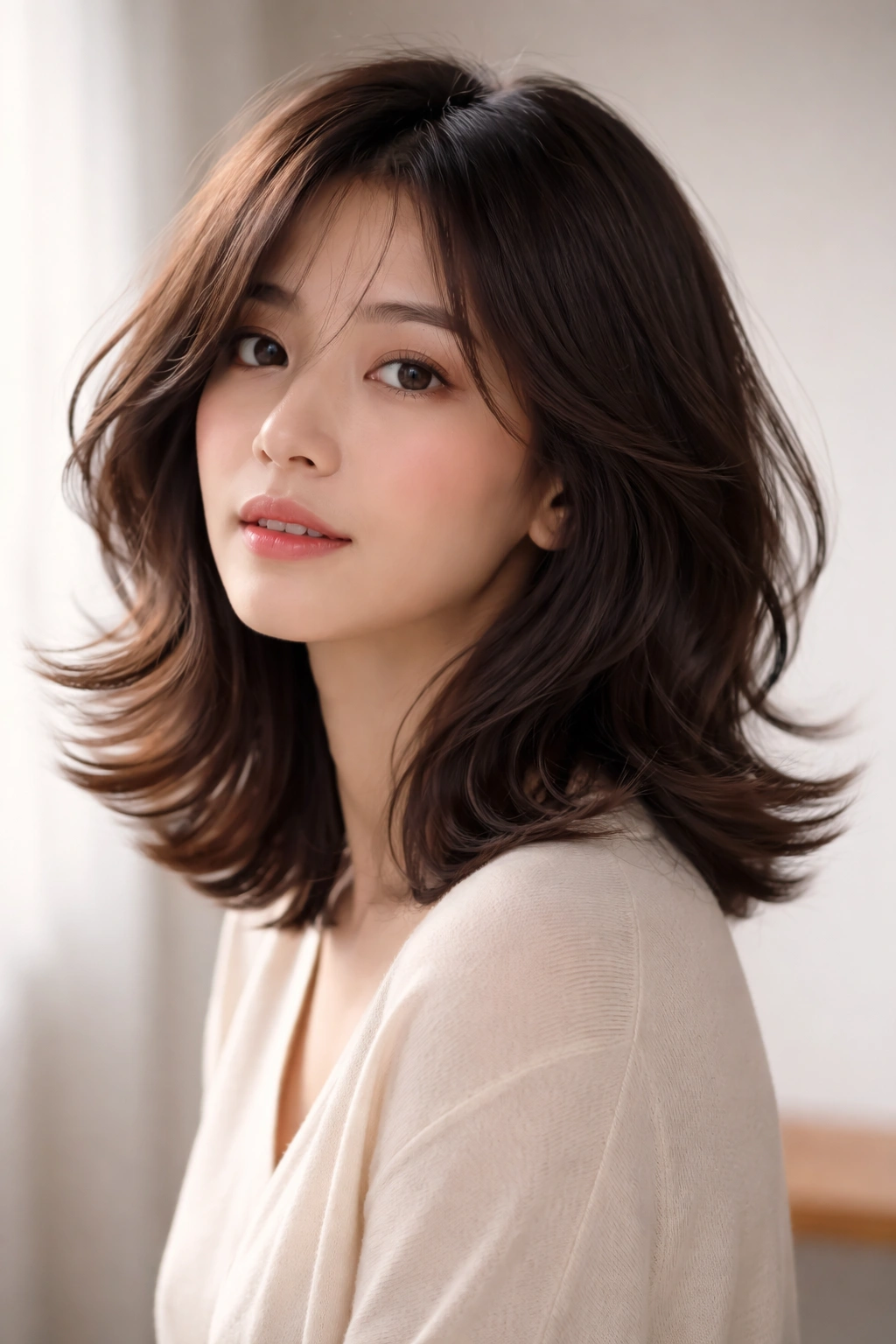
Feathering creates short, layered sections that flip outward slightly, resembling feathers. When combined with waves, this technique is absolutely transformative — it creates movement at multiple lengths, adds volume even on fine hair, and creates a distinctly modern, edgy aesthetic. Feathered waves work especially well on shorter styles (collarbone-length and up) where you want visible texture and movement without the weight of longer hair.
How Feathering Changes the Game
A feathered cut takes your hair and creates internal layers that, when waved, turn into individual pieces of texture. Rather than one solid wave that flows downward, you get multiple wave layers moving in slightly different directions, which creates incredible dimension and visual interest. This technique is especially popular in Korean salons for clients who want movement and personality without looking overly dramatic.
Best Hair Types for Feathering
- Fine, straight hair: Feathering adds much-needed volume and movement; a light perm helps the feathers hold their shape
- Thick, coarse hair: Feathering prevents bulk and allows texture to flow rather than puff outward
- Wavy or curly hair: Feathering refines your natural pattern and prevents the “triangle hair” effect some wave patterns create
- Shoulder-length or shorter: This cut truly shines above the shoulders; longer versions risk looking overly choppy
Pro tip: Feathered cuts require regular trims every 6-8 weeks to maintain their shape. The feathering layers grow out and lose definition quickly, so budget for frequent professional maintenance. Ask your stylist how to style feathered waves at home; they often benefit from blow-drying with a round brush to activate the movement.
7. The Romantic Long Wave with Layers
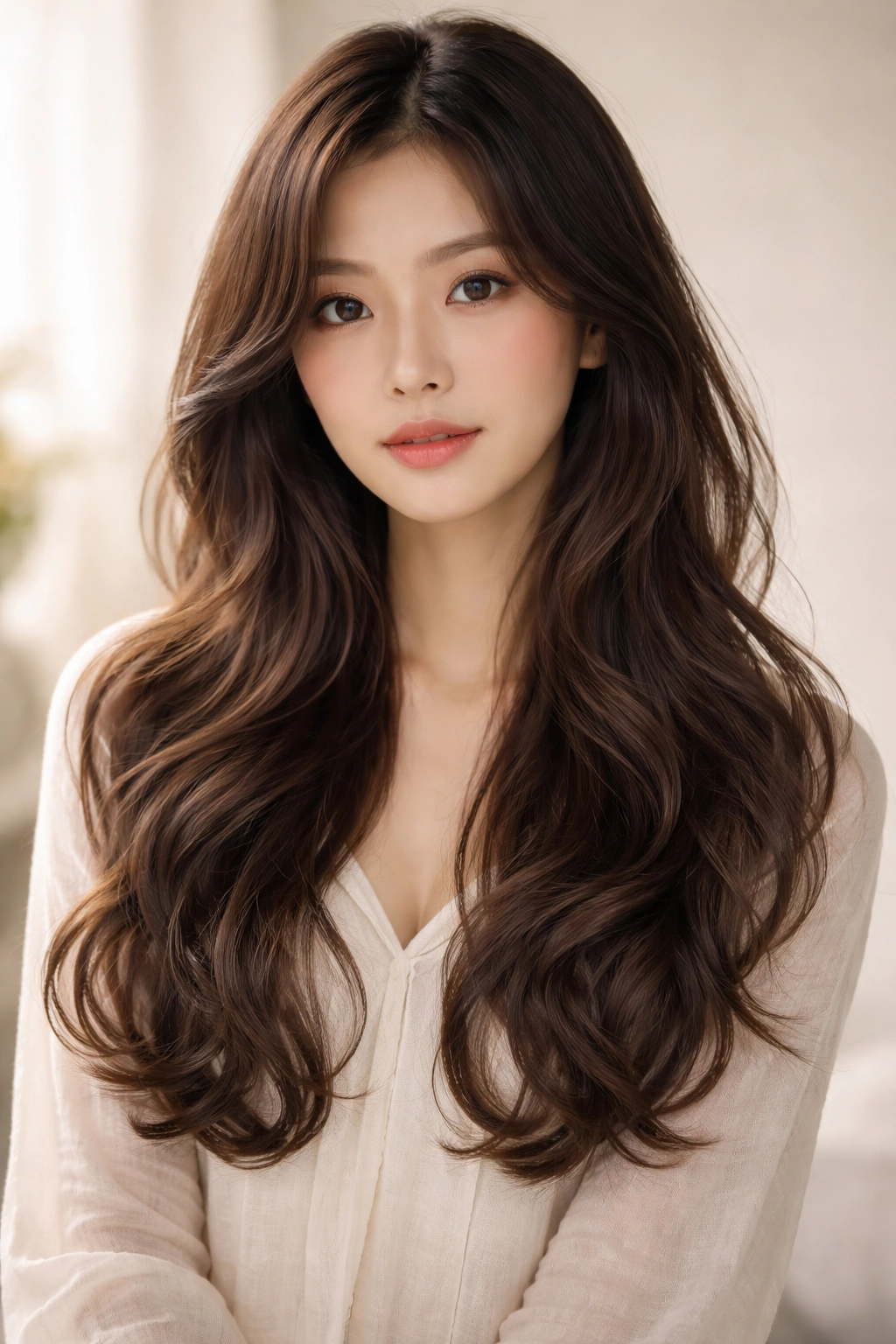
This is the ultimate feminine style — long hair flowing past the shoulders, covered in soft, romantic waves that create an almost ethereal, delicate aesthetic. Layers are strategically placed to add movement without creating choppy texture; they’re most visible in the waves rather than as obvious “chop” layers. This style is timeless in Korean beauty and works at any age because it’s inherently flattering and elegant.
The Layering Strategy
Rather than cutting obvious choppy layers, a skilled Korean stylist creates subtle, nearly invisible layers that only become apparent when the hair is waved. These layers encourage wave pattern to form and prevent the style from looking flat or lifeless. The longest layers typically end around mid-back or lower, with progressively shorter layers near the face for framing and dimension.
Why This Style Endures
- Works beautifully on nearly every face shape — waves soften angular features and add volume where needed
- Incredibly versatile; you can style it sleek and polished, tousled and undone, or half-up for drama
- Romantic waves feel appropriate for both casual and formal occasions without looking dated
- Hair can be worn down, curled into a low bun, or braided — the layered cut works in multiple configurations
- Professional and age-appropriate while still feeling youthful and stylish
Pro tip: Long layered waves require consistent deep conditioning treatment — the length means older hair is more vulnerable to dryness and breakage. Use a hydrating hair mask weekly, and trim every 8-10 weeks to maintain healthy ends. This prevents that “damaged, straw-like” appearance that can make long waves look unkempt rather than romantic.
8. The Multi-Tonal Wave with Color Dimension
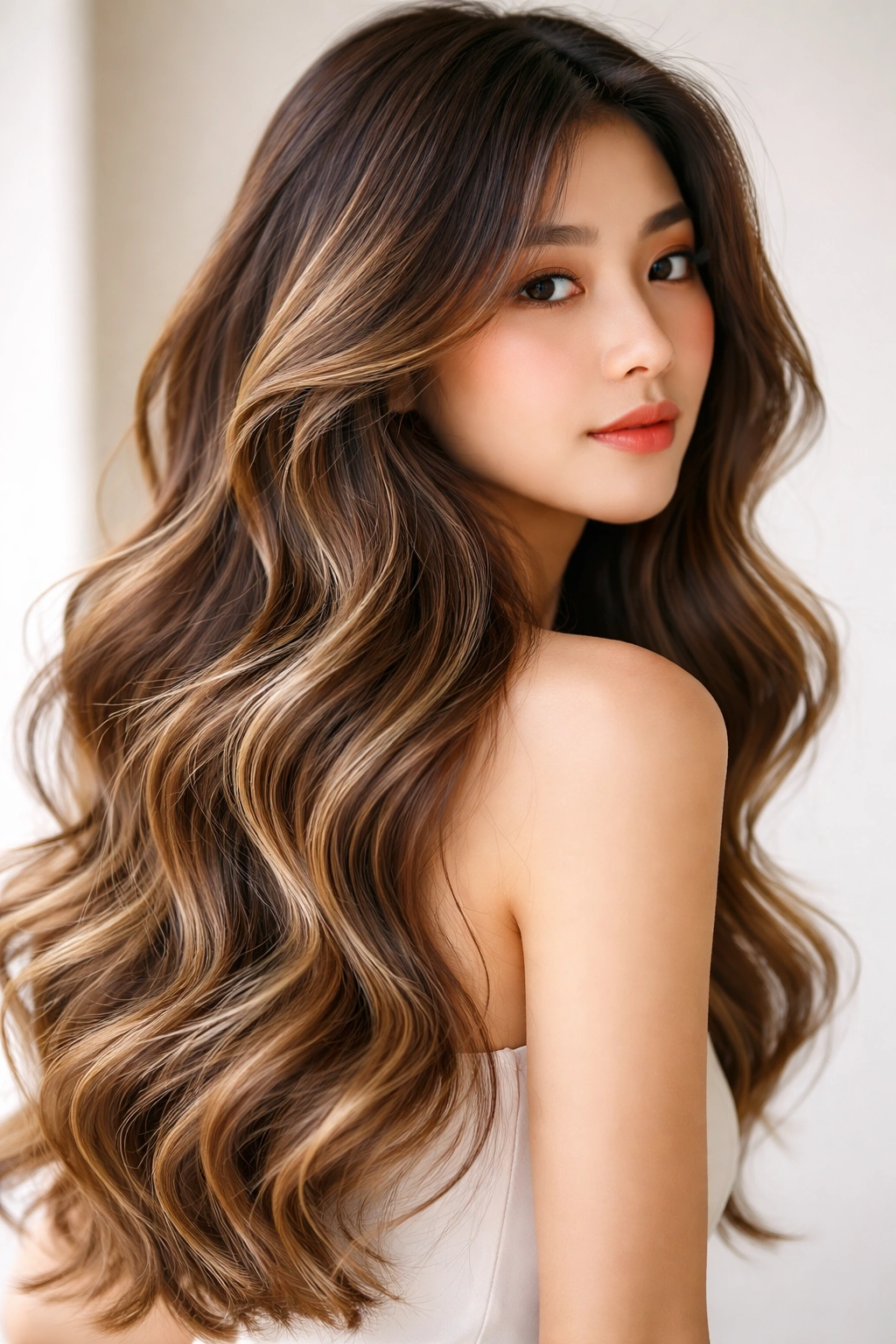
Adding color dimension to waves creates an entirely different visual effect — the waves become even more pronounced because lighter sections catch the light differently than darker sections. Korean stylists often recommend adding subtle balayage, highlights, or even pastel colors to wavy hair to maximize texture visibility. This technique works especially well for those whose natural waves are subtle or who want their style to feel more high-fashion and polished.
Color Combinations That Work Best
- Warm honey highlights on darker roots: Creates a sun-kissed, dimensional effect that makes waves more visible
- Cool ash blonde on black hair: Modern, striking contrast that emphasizes wave pattern and looks undeniably Korean beauty-influenced
- Pastel colors (pink, lavender, peach) coordinated with dark roots: Very on-trend in Korean fashion; the color sits in the wave so it’s subtle when pulled back but stunning when down
- Internal highlights throughout: Rather than face-framing highlights, strategically placed color throughout maximizes texture visibility across the entire head
Technical Considerations
- Coloring and perming are heavy processes; space them at least 2-3 weeks apart to prevent damage
- Wavy, colored hair needs intensive moisture treatment — purple shampoo for cool tones, hydrating masks weekly, leave-in conditioner, and regular trims
- Some color will fade as waves relax (especially pastels); plan for touch-ups every 6-8 weeks if you’re using semi-permanent pastels
- Lighter colors show texture beautifully but require more maintenance than darker shades
Pro tip: Ask your colorist to place highlights in the outer layers of your waves, where they’ll be most visible and catch light beautifully. Avoid coloring roots too light if you’re going for a professional look; balayage with darker roots (a trend called “shadow root” or “rooted blonde”) looks modern and requires less maintenance than full coverage.
9. The Sleek Wave with Straight Ends
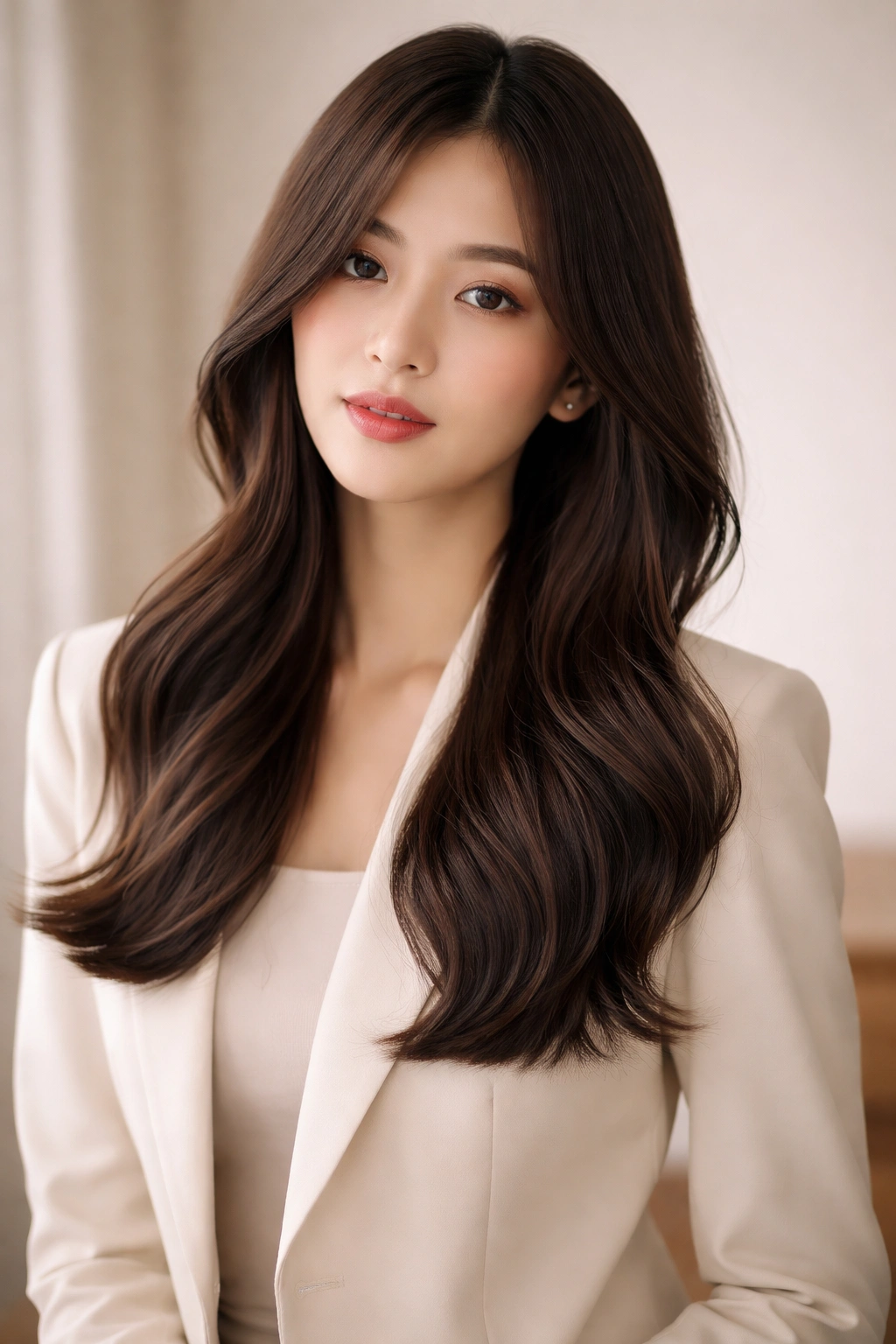
This style splits the difference — soft, defined waves from mid-shaft down, with the bottom 2-3 inches completely straight. This creates a modern, intentional-looking style that feels polished rather than romantic. It’s especially popular among Korean professionals and anyone who wants texture and movement without sacrificing sophistication. The straight ends make the style work in professional settings where full waves might feel too casual.
Styling and Maintenance
The straight-end detail is actually purposeful and flattering. It prevents the style from looking overly “done” and creates a subtle, modern edge. To achieve this, you’d either ask your stylist to perm or wave only the upper portions of your hair, or style with a curling iron while leaving the bottom section out. The straight ends also make the style easier to maintain because you’re not trying to keep waves perfectly formed all the way down to the tips.
Who This Works For
- Professional settings: The polished look is appropriate for offices and formal environments where full waves might feel too casual
- Fine or thin hair: Keeping the ends straight prevents them from looking wispy or thin where the waves would thin out
- Shorter styles (collarbone-length): Creates an intentional, modern look without appearing choppy
- Anyone wanting waves but worried about upkeep: Fewer inches of waves to maintain means less styling time daily
Pro tip: This style requires precision from your stylist. Show reference photos and be very specific about where you want the straight section to begin. The transition between waves and straight should be subtle and natural-looking, not a harsh line where wavy suddenly becomes flat.
10. The Textured Volume Wave
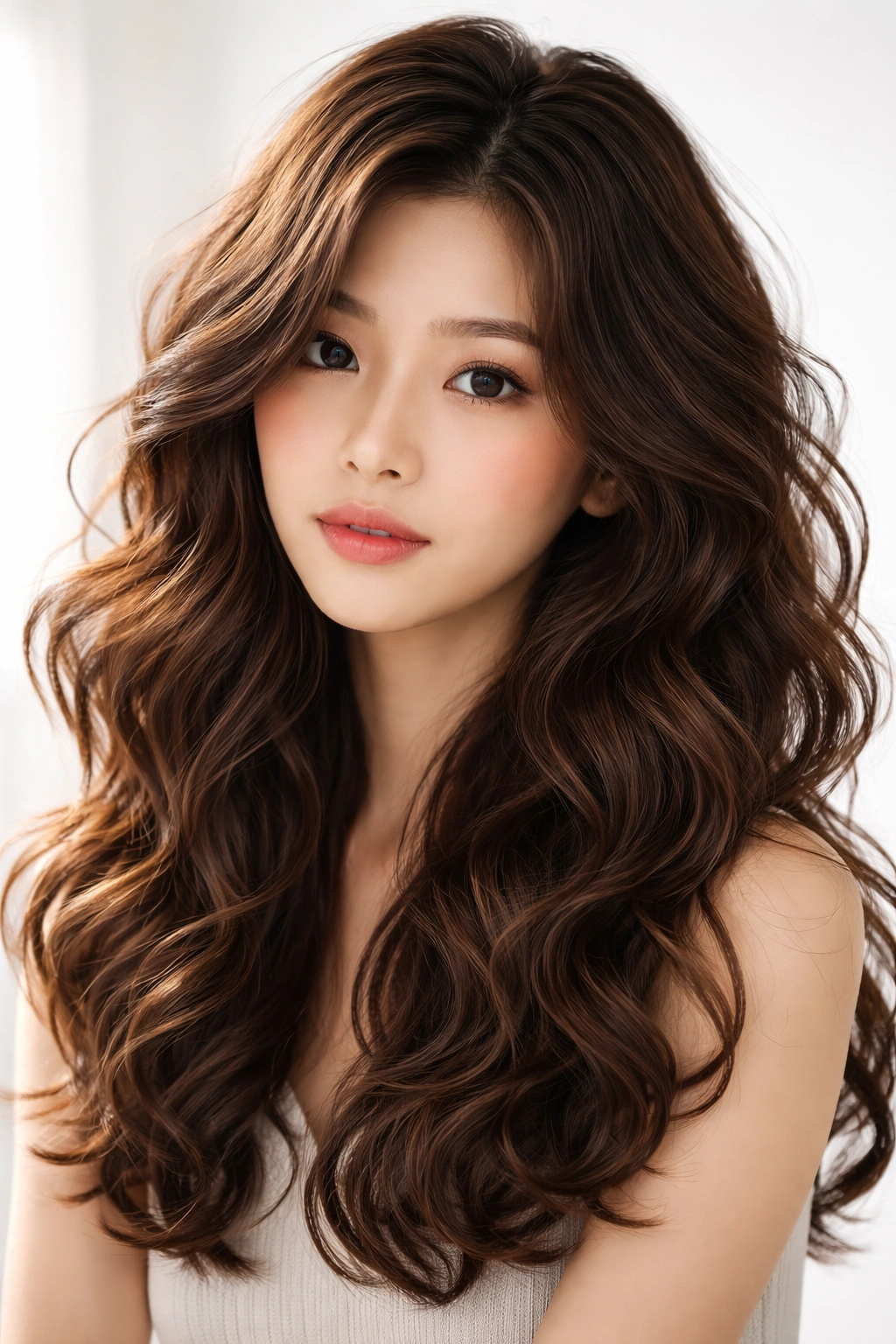
If you have naturally fine hair or thin density, textured volume waves are specifically designed to address these concerns. Rather than loose, flowing waves that can look limp on fine hair, volume waves are more structured and springy — they hold their shape and create the illusion of thicker, fuller hair. The technique uses smaller curling irons or tighter perm rods, creating a denser wave pattern that visually thickens your hair.
Building Volume with Waves
Volume waves work by creating more surface area through tighter texture. Rather than two large waves per section, you might have 3-4 smaller waves, so light bounces off more wave surfaces and the hair reads as thicker. This is especially effective for anyone with straight Asian hair that naturally falls flat; even a slight textured wave can dramatically improve perceived volume.
Specific Techniques
- Blow-dry with a round brush in the direction opposite your hair’s natural growth to create lift at the roots
- Perm placement: Ask your stylist to focus perm solution more heavily at the crown and around the face for maximum framing volume
- Teasing strategically: A light tease at the crown, covered by a smooth layer, creates volume that lasts all day
- Product placement: Texturizing sprays and volumizing mousses applied to damp roots before blow-drying multiply the effect
Pro tip: Volume waves require excellent blow-drying technique to reach their full potential. Invest in a good blow dryer with ionic technology (reduces frizz), and ask your stylist to show you their blow-dry technique during your appointment. Replicating that technique at home matters more than the product you use.
11. The Side-Swept Wave Lob
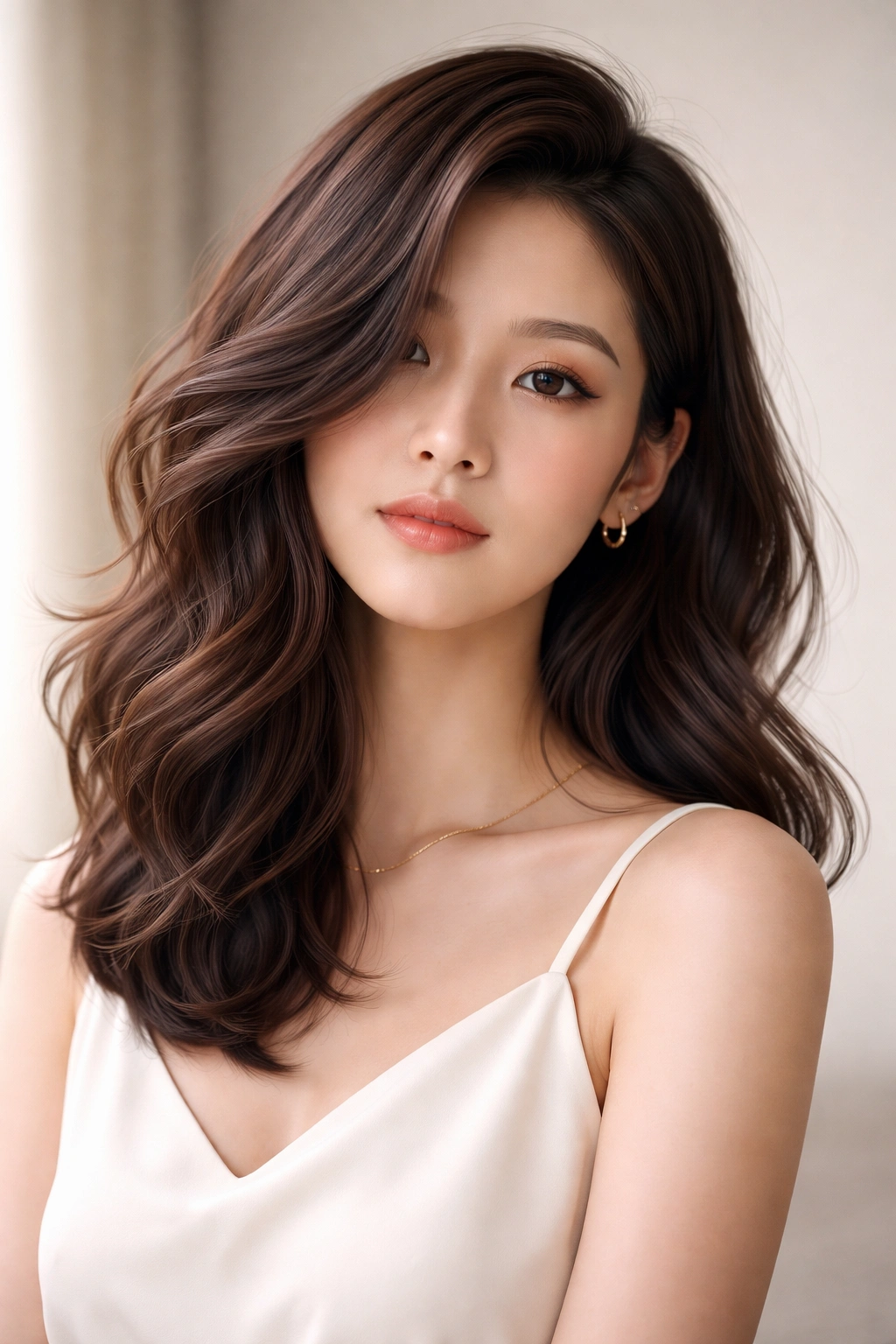
A lob (long bob) with side-swept waves is that perfect in-between length — longer than a traditional bob but shorter than full-length hair. Side-swept waves are draped predominantly toward one side of the face, creating an asymmetrical, fashion-forward aesthetic. This style is incredibly popular in Korean fashion and entertainment because it photographs beautifully and feels both modern and romantic simultaneously.
The Cut and Wave Pattern
The lob is typically collarbone-length or slightly longer, with the back slightly longer than the front. When waves are added, they’re typically formed to emphasize the side-sweep — larger waves on the sweep side that drape beautifully, and smaller waves on the opposite side to balance the asymmetry. This requires precise cutting and styling to look intentional rather than accidental.
Styling Versatility
- Wear the sweep dramatic and pronounced for a statement look
- Pin the sweep side back for an entirely different, more balanced aesthetic
- Add a middle part for a more symmetrical, softened appearance
- Half-up styling works beautifully; the waves frame your face while the rest is secured
Pro tip: This style requires a stylist confident in asymmetrical cuts. Bring photo references and be willing to communicate about your natural hair’s fall pattern — your hair naturally leans one way, and a good stylist works with that rather than against it to create a side-sweep that doesn’t require constant repositioning.
12. The Shoulder-Dusting Micro-Wave
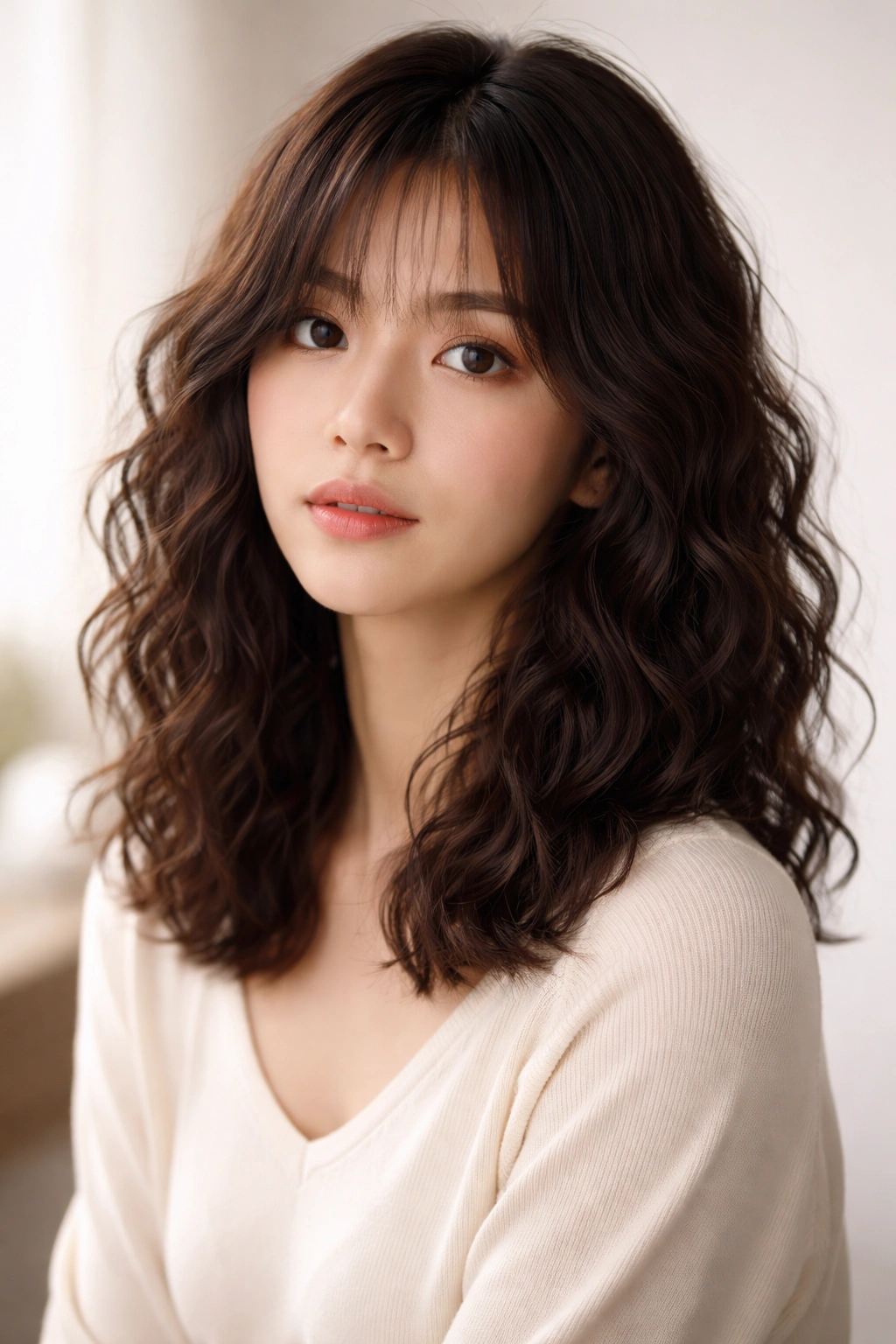
For those who prefer a shorter, lower-maintenance option, micro-waves on shoulder-length hair offer texture and movement without the commitment of longer styles. Rather than loose, flowing waves, micro-waves are tighter, more defined waves that sit right at the shoulders. This length is practical for daily life — it doesn’t get caught in bags or jackets — while still delivering beautiful wave texture.
Why Shoulder Length Is Magic
Shoulder-length hair sits at the perfect pivot point where waves can breathe and move freely. It’s long enough to show wave pattern clearly but short enough to be genuinely low-maintenance. A slight angle cut (longer in back, shorter in front) creates natural movement that works beautifully with waves. This is actually the most common length in Korean salons because it delivers the best balance of style and practicality.
Maintenance and Styling
- Shoulder-length waves hold their shape well through daily activities without feeling heavy
- Heat styling takes 10-15 minutes with a medium barrel iron
- A perm or digital wave holds for 3-4 months with minimal upkeep
- This length works in professional and casual settings equally well
- Works beautifully with both minimal makeup (casual vibe) and full makeup (polished vibe)
Pro tip: Ask your stylist to point out which direction your hair naturally falls and which way the angle cut slopes. Understanding your hair’s natural behavior helps you work with it rather than constantly fighting it when styling.
13. The Permed Crimp Wave
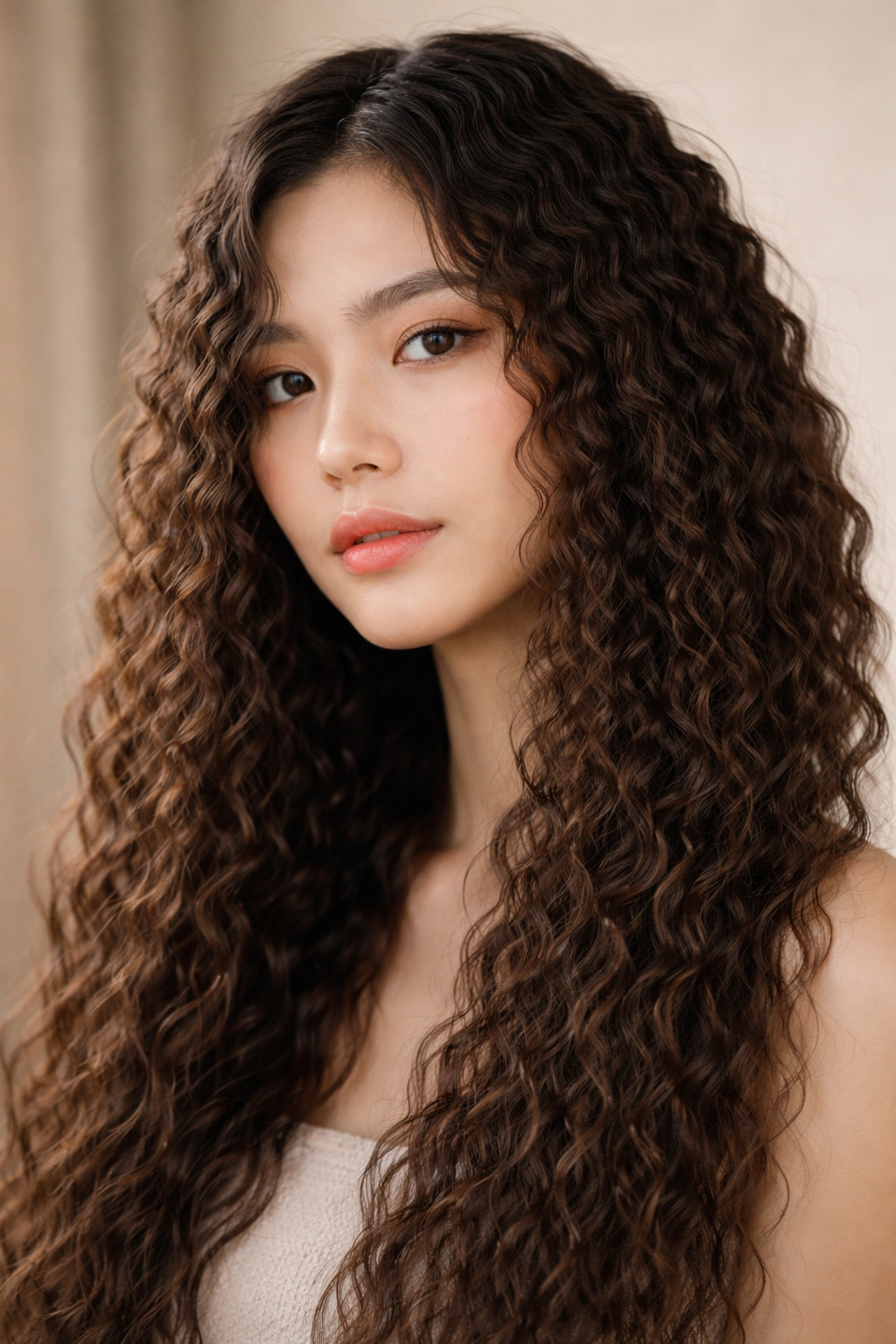
Crimp waves are tighter, more structured waves that create a distinctly fashion-forward, bold aesthetic. Crimping (also called crimped perms) creates fine, zigzag-pattern waves throughout the hair, making even thin hair appear incredibly thick and textured. This style is bolder than traditional waves and feels more editorial or avant-garde — it’s for people who want their hair to make a statement.
The Crimp Perm Process
A crimp perm uses specially designed crimping rods that create that tight, zigzag pattern rather than smooth, flowing waves. The chemical process is similar to a traditional perm, but the tools create entirely different texture. Crimped waves typically last 3-4 months and hold remarkably well through multiple washes because the pattern is so intentionally engineered.
Who Chooses Crimp Waves
- Bold personalities who want hair that matches their confidence level
- Fine or thin hair that gains massive perceived volume from crimp texture
- Shorter styles (pixie to shoulder-length); crimp waves create incredible movement and personality even on very short hair
- Anyone wanting a distinctly fashion-forward, editorial aesthetic rather than soft, romantic waves
Pro tip: Crimp waves can feel too dramatic for everyday wear if done throughout the entire head. Consider asking your stylist to crimp only the upper layers or around the face for texture and movement, while keeping the underneath looser. This creates dimension without overwhelming your overall appearance.
14. The Half-Up Wave with Face Framing
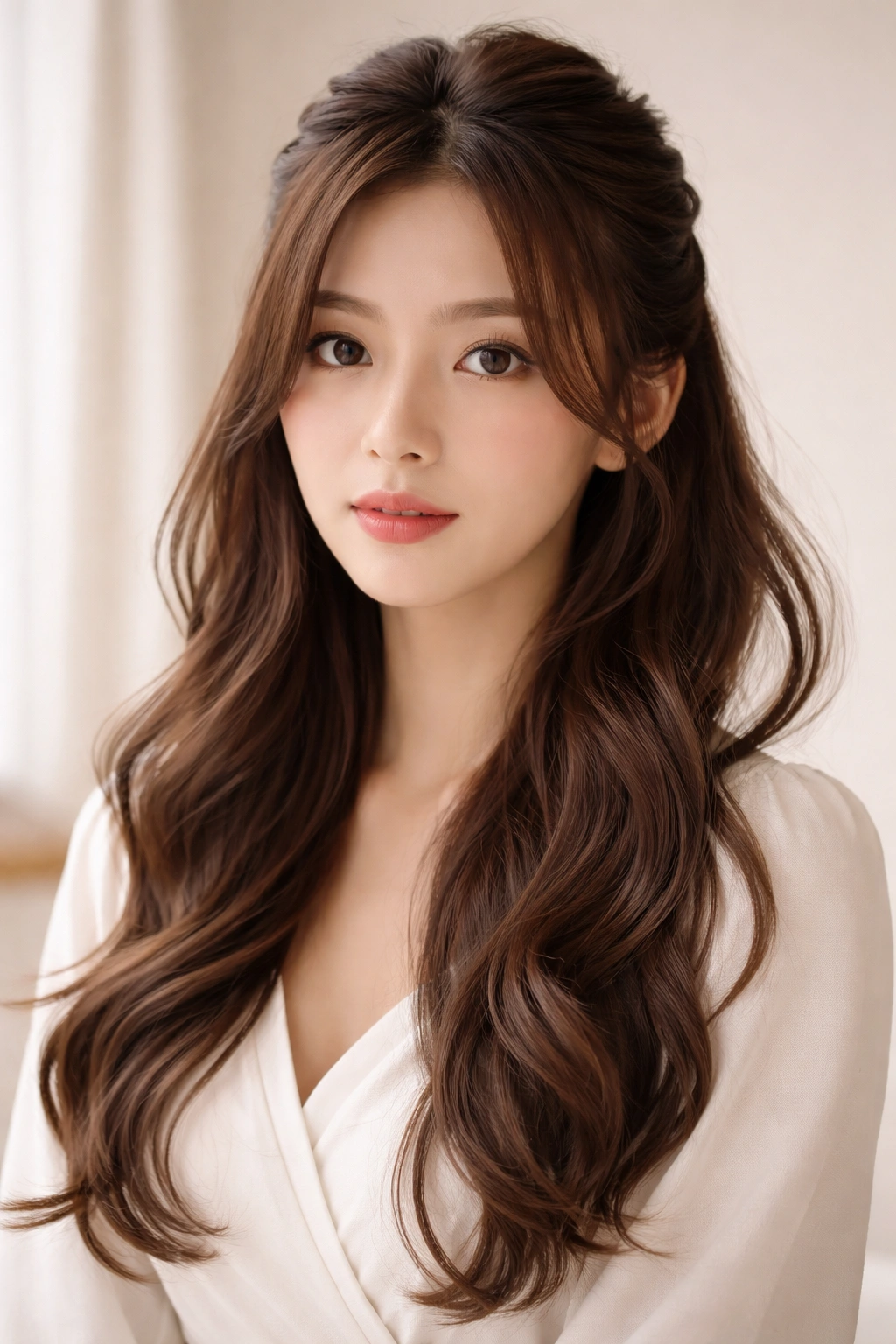
Styling waves half-up creates an entirely new silhouette and elegance level. By securing the top half while leaving the bottom waves down, you create a romantic, polished aesthetic that works for everything from casual outings to formal events. The face-framing effect is enhanced because loose waves frame your face while the secured top creates a clean, intentional look. This is more of a styling technique than a cut, so it works with virtually any wave length or pattern.
Creating the Half-Up Effect
- Brush or finger-comb your waves gently (avoid creating a slicked-back, wet look unless that’s your intention)
- Take a section from each side at about ear level
- Twist or braid these sections loosely, pulling them back and securing with a clip or elastic
- Leave the back section loose, allowing waves to flow freely
- Pull a few small pieces from around your face for soft framing
When to Wear This Style
- Casual days: Tousled, undone half-up feels effortlessly chic
- Professional settings: A sleek, polished half-up is sophisticated and practical
- Formal events: Half-up with a delicate clip or accessory feels elegant and refined
- Hot days: Securing half your hair creates comfort without sacrificing the beauty of your waves
Pro tip: The key to a flattering half-up is leaving enough face-framing pieces loose. If you pull back too much, it ages you by exposing your entire face. A few intentional loose pieces around your face soften the overall look and create that coveted Korean beauty aesthetic.
15. The Lived-In Wave with Texture Spray
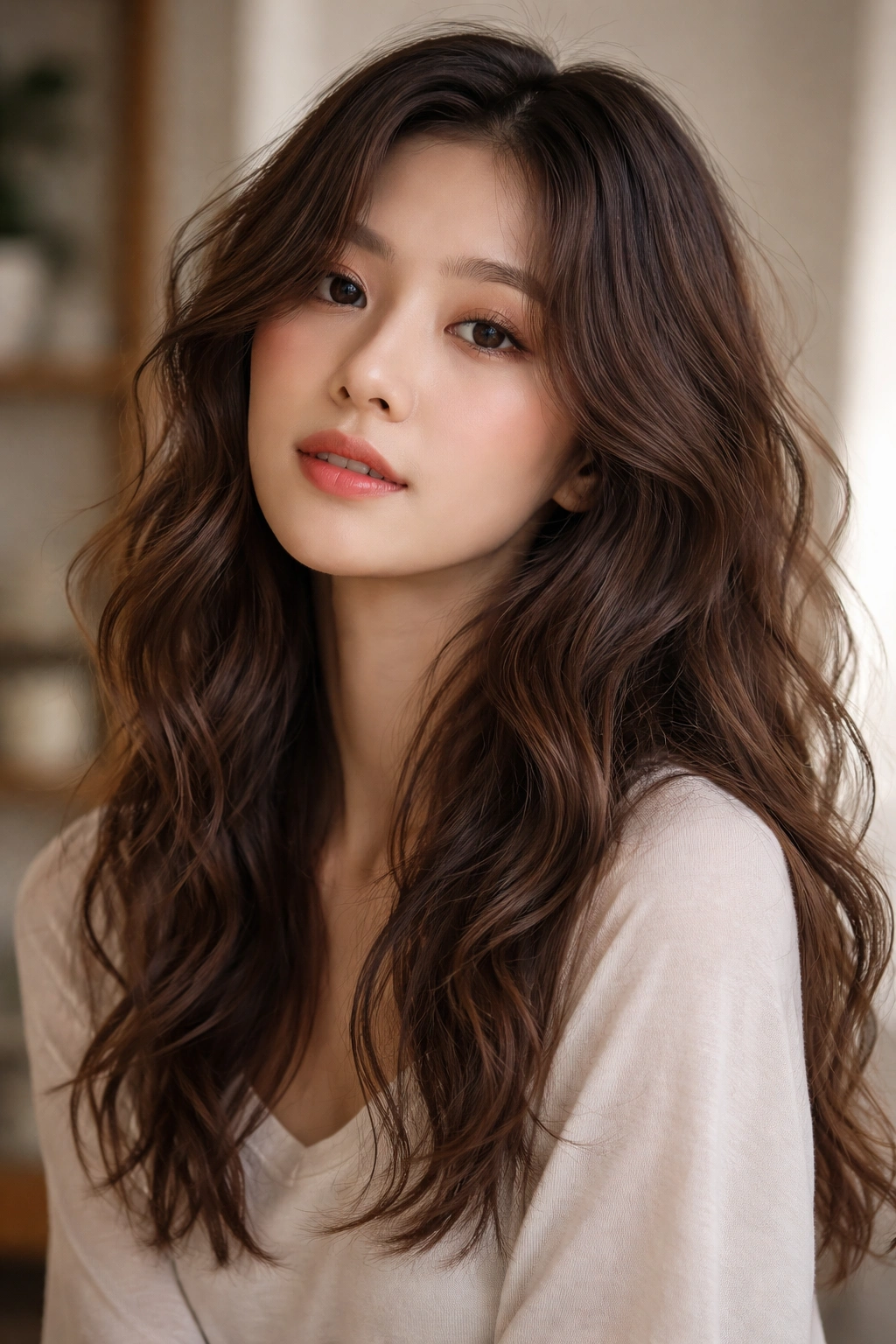
This final style is more about technique and product than cut — it’s the art of making waves look effortlessly beautiful, not overdone. The lived-in wave aesthetic is that “I woke up like this” vibe that’s actually carefully curated. Using texturizing sprays, sea salt products, and specific styling methods, you create waves that look naturally textured, slightly undone, and undeniably stylish. It’s the styling philosophy behind many Korean beauty content creators’ everyday looks.
Building the Lived-In Aesthetic
- Start with waves (from a perm, heat styling, or braiding) that are already established
- Apply sea salt or texturizing spray to damp hair before blow-drying for grip and hold
- Blow-dry with your fingers rather than a brush for a tousled, undone finish
- Finger-comb through gently rather than brushing, which destroys texture
- Add a light texturizing spray or dry shampoo to bring out wave definition and add grip throughout the day
The Product Lineup
- Sea salt spray: Creates natural-looking texture and grip; apply to damp hair before styling
- Texturizing or volumizing spray: Applied to dry hair for touch-ups throughout the day
- Leave-in conditioner: Keeps waves soft and prevents frizz without weighing texture down
- Dry shampoo: Adds grip and texture while absorbing oils (use a light touch)
Pro tip: The lived-in wave aesthetic actually requires less product than a polished wave look, but the products you use should be high-quality. Cheap texturizing sprays can leave a gritty, chemical residue. Invest in salon-quality products and use them sparingly — a light spritz goes further than oversaturating your hair.
Final Thoughts
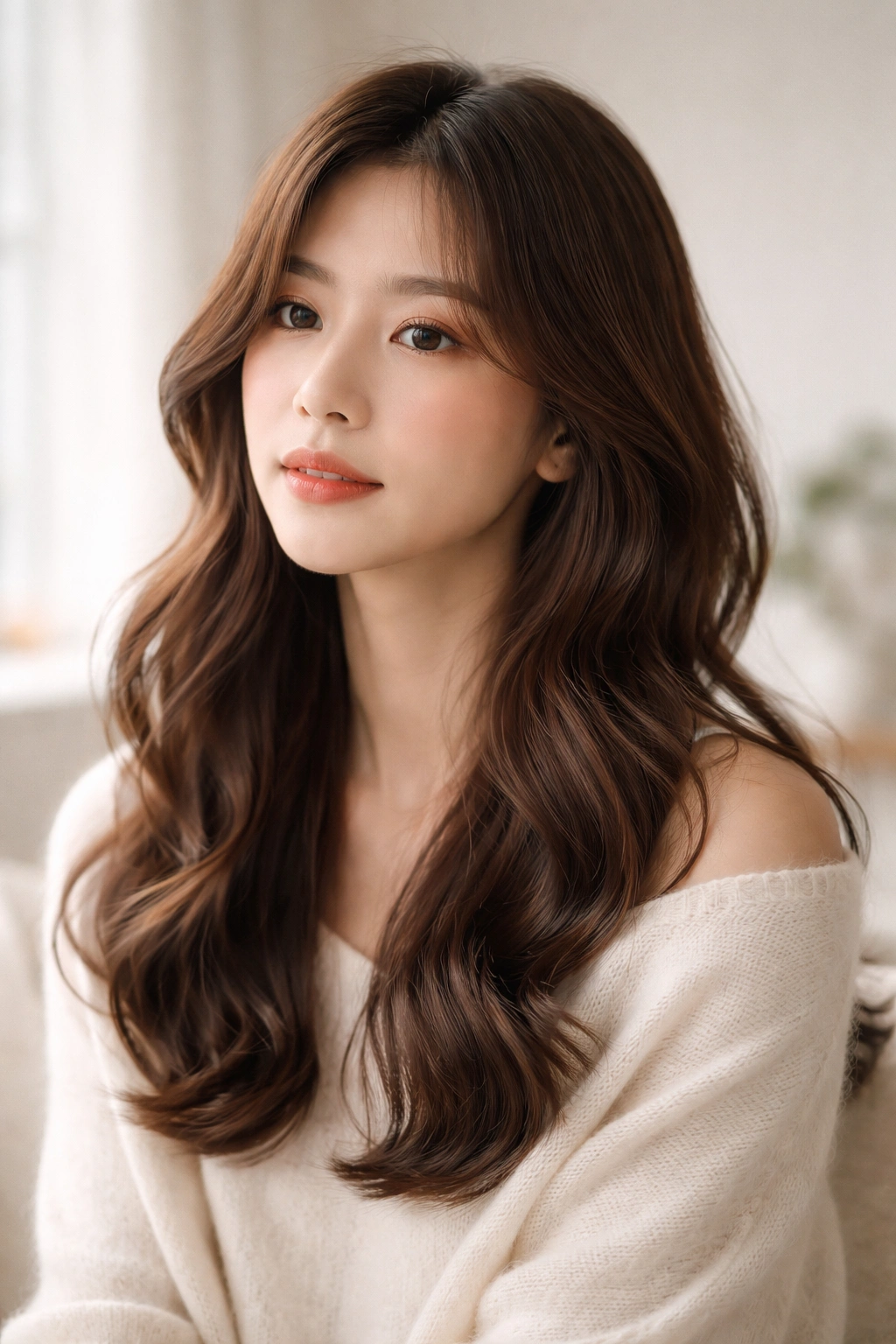
Korean wavy hairstyles represent a philosophy of beauty that feels effortless yet intentional — waves that move naturally, catch light beautifully, and frame your face with sophistication. Whether you’re drawn to the romantic softness of K-drama waves, the modern edge of curtain cuts, or the bold statement of crimp texture, there’s a Korean wave style that’ll feel authentically right for you.
The key to finding your perfect style is understanding your hair’s natural behavior, being specific with your stylist about the texture and movement you want, and committing to the maintenance that keeps waves looking fresh. A consultation with a stylist experienced in Korean techniques is invaluable — they’ll understand how to work with Asian hair’s natural growth patterns and can recommend whether a perm, heat styling, or combination approach will give you the most beautiful, longest-lasting results.
Remember that your wave style isn’t permanent (or if it is via perm, it’ll grow out and can be restyled). Take time to explore what makes you feel confident and beautiful, whether that’s lived-in, textured waves or polished, romantic ones.