
Short wavy bobs have become the go-to haircut for anyone wanting texture, movement, and low-maintenance styling without sacrificing style. The beauty of a wavy bob is that it works with your hair’s natural texture rather than against it, and there are genuinely so many ways to customize it to your face shape, hair type, and personal aesthetic. Whether you’re drawn to choppy, piecey layers or prefer something more blunt and structured, there’s a wavy bob variation that’ll make you feel like the best version of yourself.
The challenge is figuring out which one actually suits your hair and lifestyle. A cut that looks effortless on your stylist’s Instagram might require 20 minutes of styling every morning—or it might be the wash-and-go dream you’ve been searching for. That’s why we’re breaking down 14 distinct short wavy bob styles, each with specific details about how to ask for it, who it works best for, and what kind of styling commitment you’re actually signing up for.
1. Textured Wavy Pixie Bob
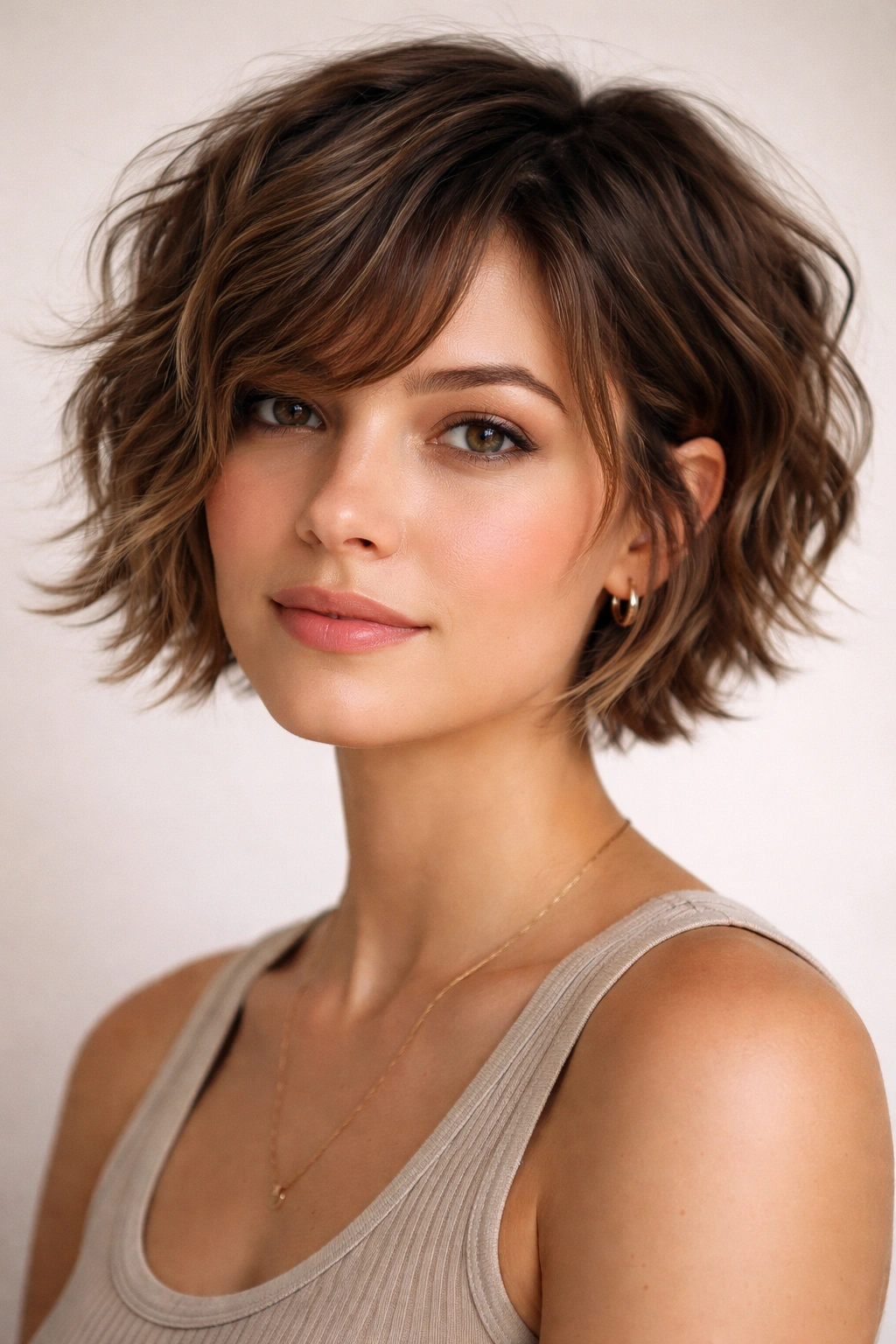
This is the short end of the bob spectrum—hitting somewhere between your ear and chin—with heavy texture and choppy layers throughout. It’s less “cute and delicate” and more “effortlessly cool.” The layers create natural separation and movement, so even if your waves are loose, the cut itself adds dimension and that sought-after piecey quality.
Why This Cut Works
The textured pixie bob thrives on asymmetry and movement. Your stylist will cut shorter layers throughout to encourage the hair to separate and move independently rather than clump together. Because it’s shorter overall, there’s less weight pulling your waves down, which means your natural wave pattern will actually show up better. This is the opposite of flat—it’s all about celebrating texture.
Best For and Styling Reality
- Works beautifully on fine to medium hair that has natural wave or curl texture
- Requires a lightweight styling product like a sea salt spray or texture cream rather than heavy styling products
- Dries relatively quickly (10-15 minutes) and doesn’t demand perfection
- Needs a trim every 4-6 weeks to maintain the choppy layer definition
- Takes about 5-10 minutes of styling if you want to enhance the texture, or wear it air-dried for an undone vibe
Pro tip: This cut actually looks better when it’s slightly undone. The more you try to perfect it, the less interesting it becomes—lean into the texture and movement instead.
2. Asymmetrical Wavy Bob
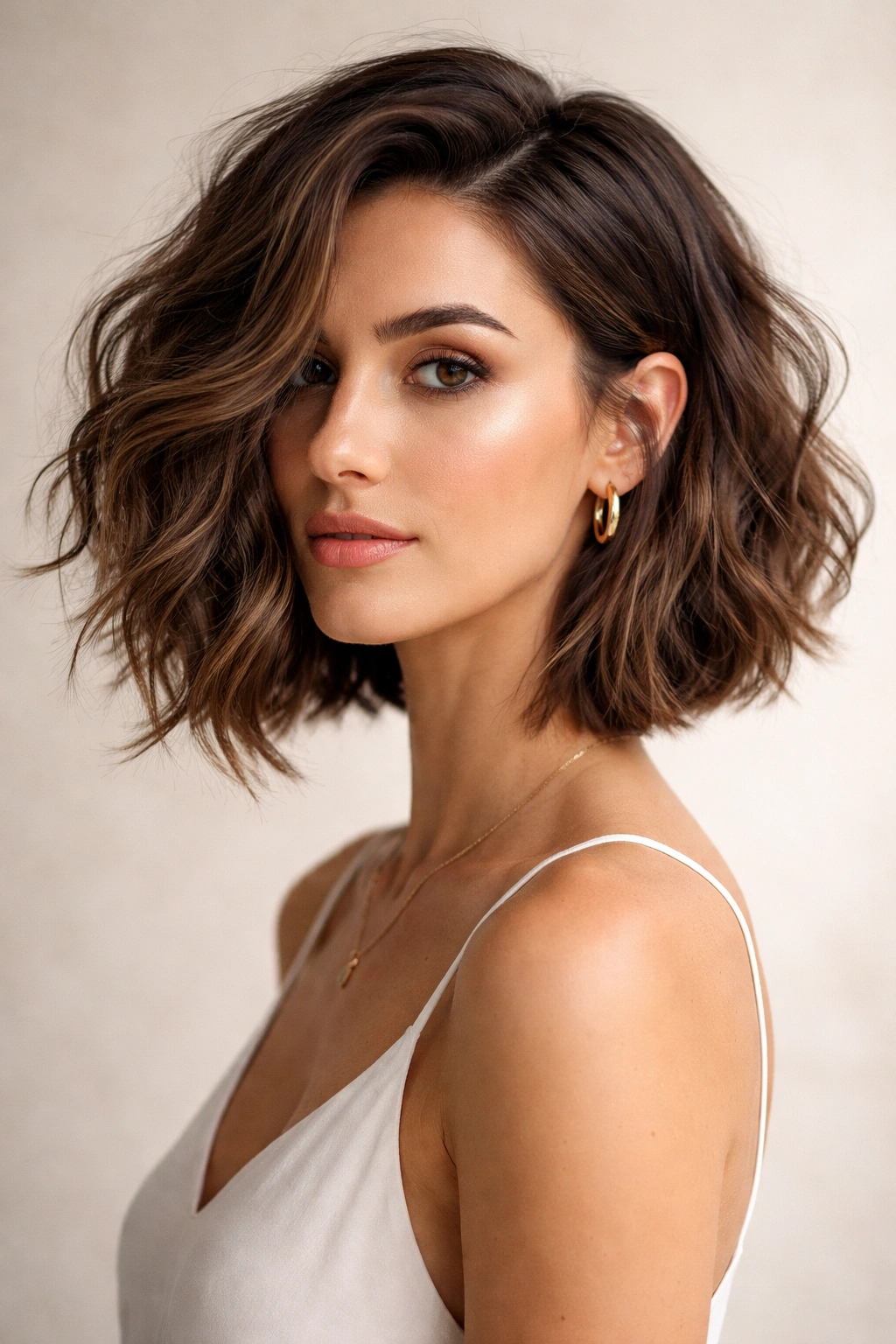
One side is noticeably longer than the other—sometimes dramatically—creating an edgy, modern silhouette. The asymmetry can be subtle (just an inch or two difference) or bold (one side grazing your collarbone while the other hits at your ear). Both wavy sides catch light differently, which adds visual interest and movement.
The Visual Impact
An asymmetrical cut automatically looks more editorial and intentional than a symmetrical bob. It’s flattering because you can position the longer side over areas you want to emphasize or the shorter side to draw attention where you want it. The asymmetry also means your waves aren’t mirrored, so the movement is less predictable and more interesting.
Styling Considerations
- Requires slightly more styling attention than a symmetrical cut because both sides behave differently
- The longer side might wave differently than the shorter side—wave products and technique matter
- Works across all hair types and textures, but shows up best with defined waves or curls
- Needs trims every 5-7 weeks to maintain the asymmetrical shape as it grows
- Can be styled with the longer side swept back, tucked behind one ear, or falling naturally across your chest
Worth knowing: If you have a side part naturally, this cut will enhance that pattern—which is great if that’s your goal, but something to consider if you want more styling flexibility.
3. Layered Shag Wavy Bob
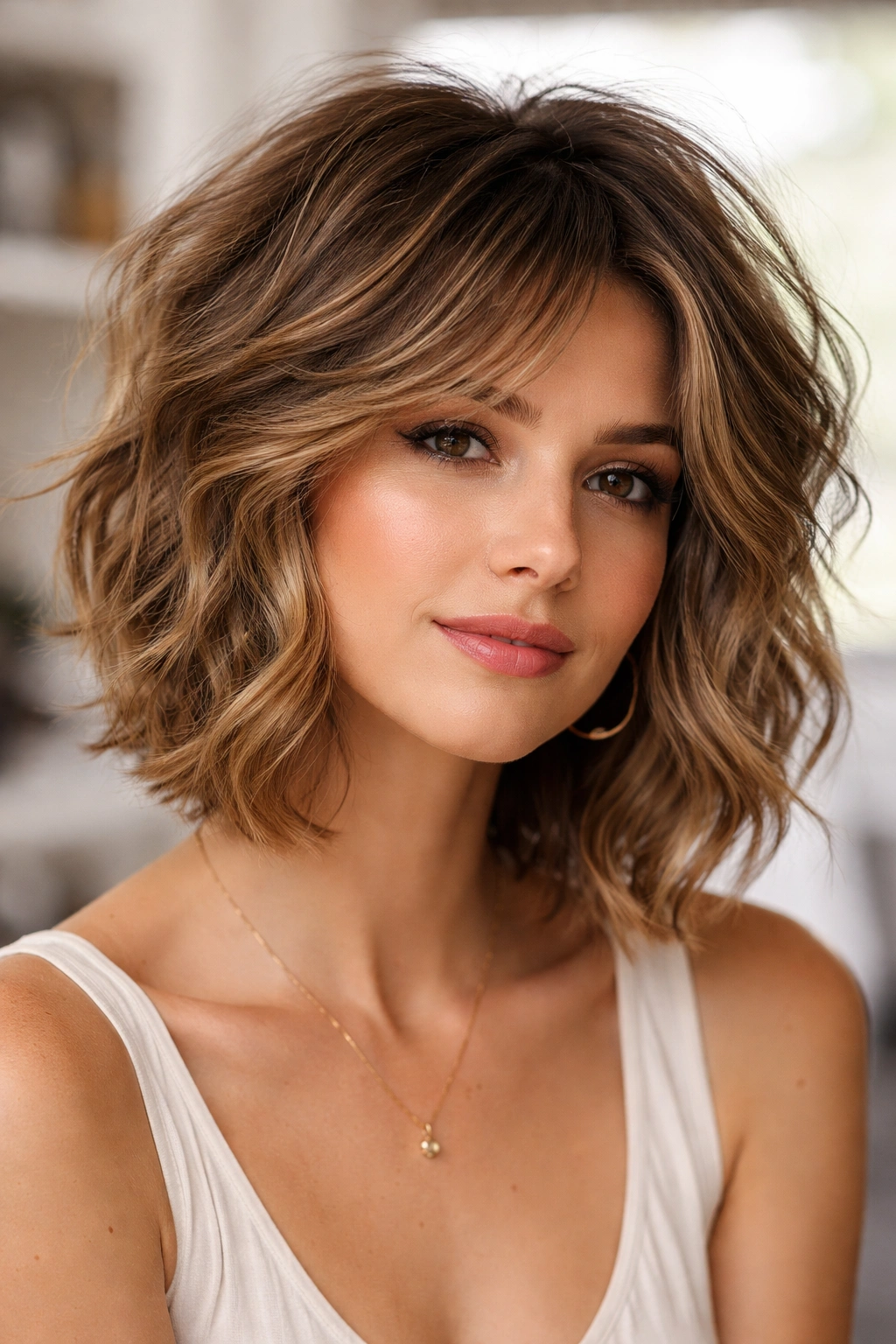
Think “modern shag” rather than 1970s feathered nightmare. This is a short bob with layers throughout that create height at the crown and lots of movement and texture all over. The layers are choppy enough to be obvious but not so short at the top that you lose density or control.
Why It’s Different From Other Textured Bobs
A layered shag bob prioritizes volume and movement over sleekness. Where a blunt or stacked bob creates a solid shape, a shag disperses the hair so that it floats and moves independently. The crown layers lift away from your head, which creates the illusion of more volume and works beautifully on finer hair types.
Making It Work For You
- Best on straight to wavy hair (not tightly curly, because the layers can create frizz)
- Shorter at the crown (2-3 inches of layering) and slightly longer toward the ends
- Creates movement even when your hair is damp and unstyled
- Requires texturizing products or salt spray to avoid looking flat
- The layering works wonderfully with light-colored hair or highlights because the texture shows up better visually
Real talk: This cut can look a bit “fluffy” if you have very thick hair and don’t style it deliberately. If that’s your hair type, ask your stylist for more aggressive layering to keep it from feeling bulky.
4. Tousled Beachy Waves Bob
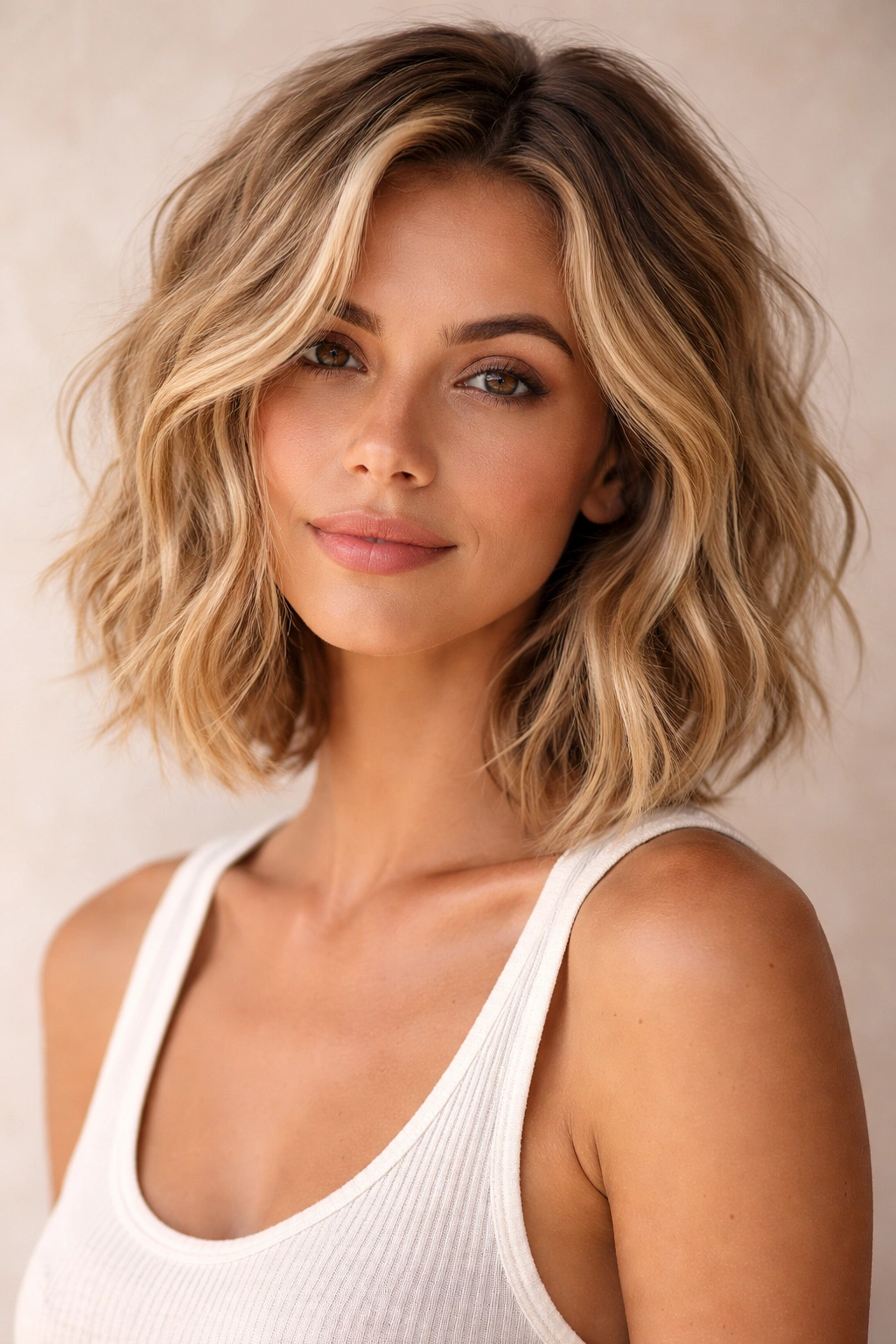
A textured, undone-looking bob that mimics the beach waves you get from salt water and sun. It’s intentionally messy and relaxed, with waves that look natural and uncontrolled. The cut itself is usually pretty simple—relatively blunt or with subtle layers—and the magic happens with styling products and technique.
The Styling Approach
This style relies on your product and drying technique more than the actual haircut. You’ll typically use a sea salt spray, wave-enhancing cream, or lightweight mousse, then scrunch and diffuse or air-dry for that undone quality. The waves should look like they happened naturally, not like you spent an hour perfecting them.
Who This Suits
- Works on wavy to curly hair types that already have natural texture
- Can work on straighter hair but requires more styling effort and product
- Best on shoulder-length or slightly shorter bobs (hitting around your jaw to collarbone)
- Ideal if you want that “I just came from the beach” aesthetic without actually living near water
- Pairs beautifully with lived-in, dimensional hair color rather than a solid block of one shade
Insider note: The key to this looking intentional rather than like you didn’t brush your hair is using the right product. A good sea salt spray or wave cream makes all the difference between “effortlessly beachy” and “just didn’t brush it.”
5. Blunt-Ended Wavy Bob
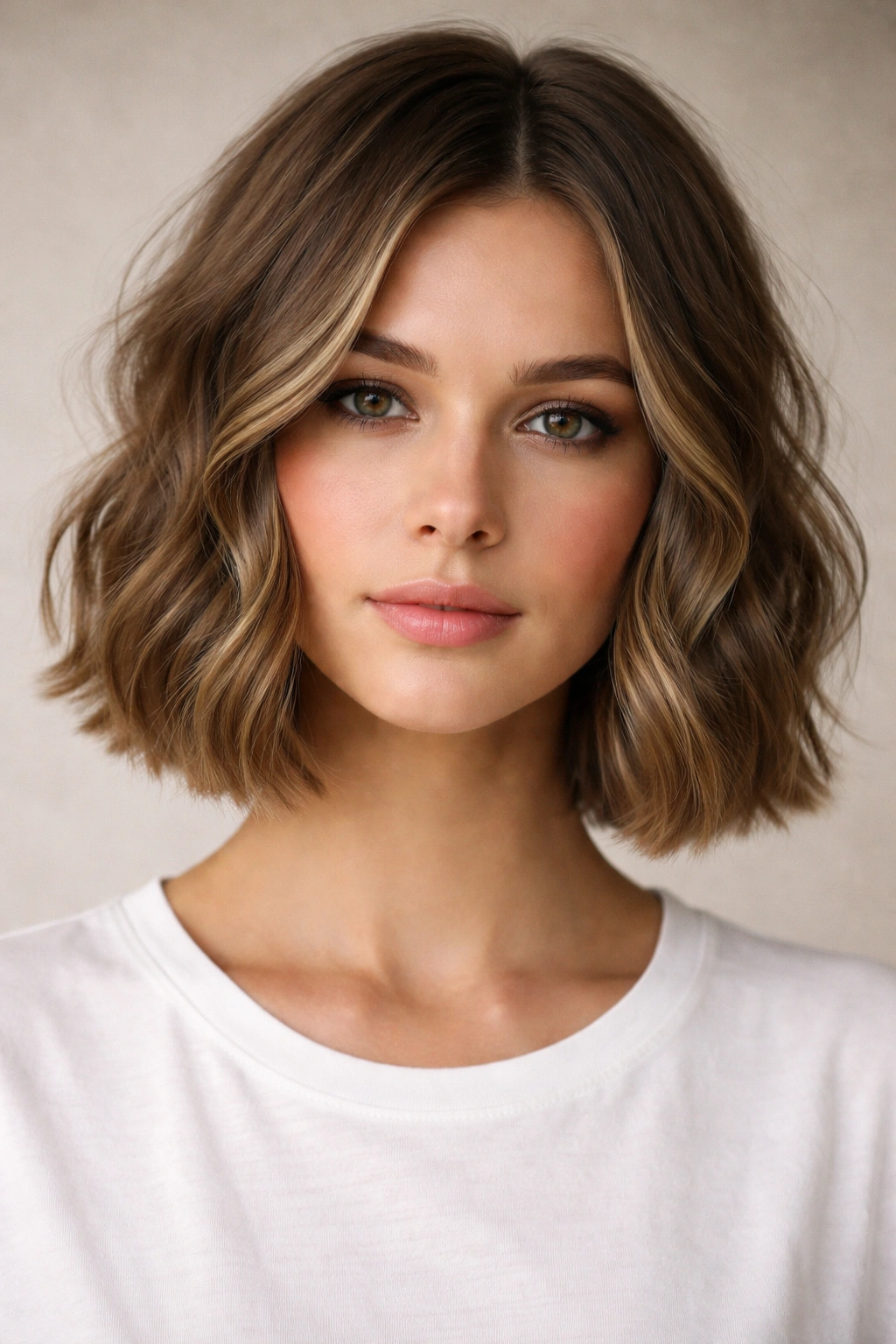
A sleek, clean-lined bob with little to no layering but with a wavy texture that creates movement and softness. The blunt ends hit a defined line—usually around your jaw or slightly below—and the waves prevent it from looking severe or overly formal. This is the grown-up version of a blunt bob, with texture that makes it feel more forgiving.
Why The Blunt Cut Matters
Blunt ends create a graphic, intentional silhouette that reads as polished. The waves soften that graphic quality so it doesn’t feel rigid or harsh. You get the clean, sophisticated vibe of a blunt cut with the texture and movement of waves—it’s a win-win if you want something that looks put-together without feeling stiff.
Styling and Maintenance
- Works beautifully on straight to wavy hair (very curly hair might make the blunt line disappear)
- The blunt ends are slightly more noticeable when you have darker hair or a solid color
- Requires trims every 4-6 weeks to keep the blunt line crisp and defined
- Styling usually involves blow-drying to emphasize the waves and create movement
- Pairs well with dimensional color or highlights that catch light and show off the wave texture
Worth noting: As this cut grows out, the blunt line softens and the shape can look less intentional. This is the trade-off for having clean, defined ends—you’re committing to more frequent trims.
6. Choppy Wavy Mullet Bob
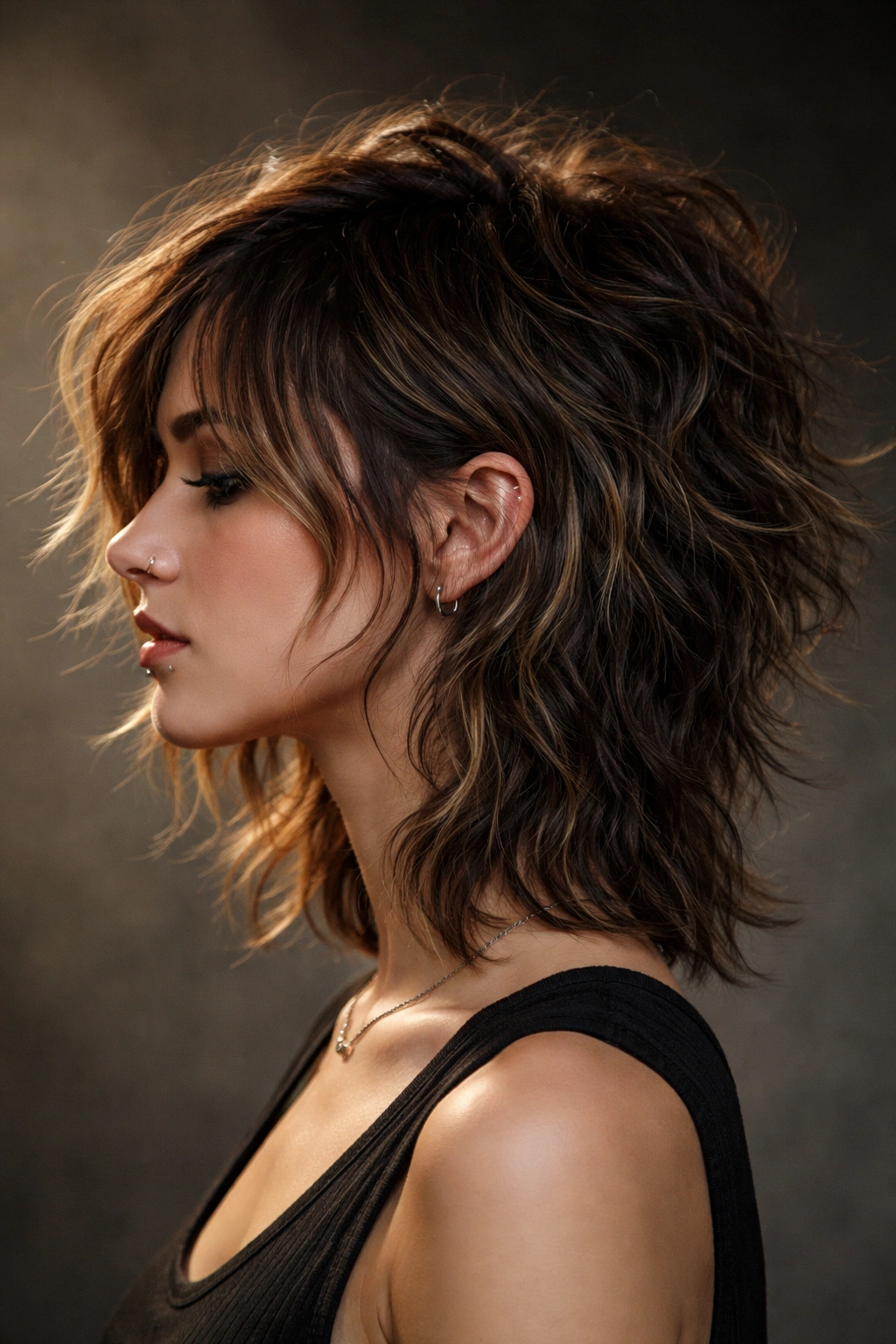
Short and textured at the crown and sides, with noticeably longer length in the back—but not as extreme as a traditional mullet. It’s got an edge and attitude, with plenty of choppy layers that create movement throughout. The contrast between the shorter front and longer back is deliberate and fashion-forward.
The Modern Mullet Appeal
A wavy mullet bob walks the line between edgy and wearable. The choppy texture throughout keeps it from feeling costume-y or gimmicky. It’s a statement cut that says you’re willing to take style risks, but the waviness makes it feel approachable and soft rather than punk rock.
Making It Work
- Requires a stylist who really understands modern mullet proportions (it’s not the 1980s version)
- Works across most hair types, but shows up best with defined waves or curls
- The longer back can be pinned, tucked, or left loose depending on your mood
- Styling involves texturizing products and some deliberate scrunching or styling
- Best on people with confidence and a willingness to embrace an unconventional silhouette
Pro tip: If you’re nervous about committing to a choppy mullet bob, ask your stylist for a more subtle version first—shorter layers at the crown but less dramatic length difference in the back. You can always go bolder next time.
7. Curtain-Bangs Wavy Bob
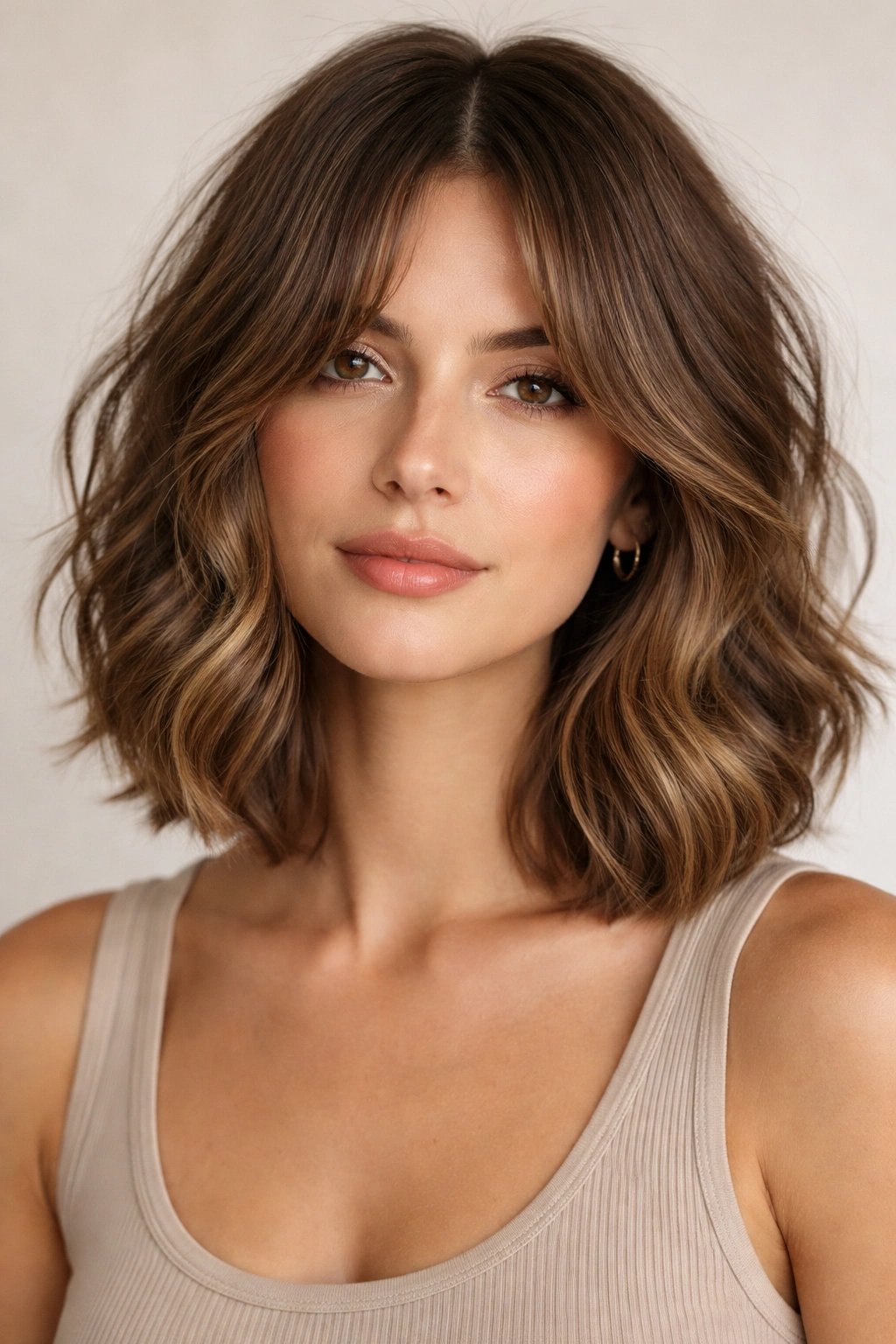
A wavy bob with longer face-framing pieces and defined curtain bangs that part naturally down the middle. The bangs frame your face and create movement and softness around your features. The rest of the bob is typically wavy and textured, with the shorter front pieces blending seamlessly into the longer back length.
Why Curtain Bangs Change Everything
Curtain bangs instantly soften any face shape and create natural movement around your eyes and cheekbones. They’re flattering because they frame rather than completely cover, and the longer pieces on either side of your face create a slimming effect. With a wavy bob, the bangs wave too, so they never look blunt or severe—just soft and intentional.
Wearing and Styling
- Works beautifully on most face shapes, especially if you want to emphasize your eyes
- The bangs can be styled away or swept to the sides if you want versatility
- Requires regular trims to keep the bangs at the right length (every 3-4 weeks)
- Pairs well with textured, wavy styling rather than sleek, blown-out looks
- Best on straight to wavy hair (very curly hair can make bangs difficult to manage)
Real talk: Curtain bangs are higher-maintenance than no bangs. They grow fast and can start looking shaggy quickly. If you’re okay with regular bang trims, you’ll love this look; if you hate frequent salon visits, consider a slightly shorter, less dramatic fringe instead.
8. Stacked Wavy Bob
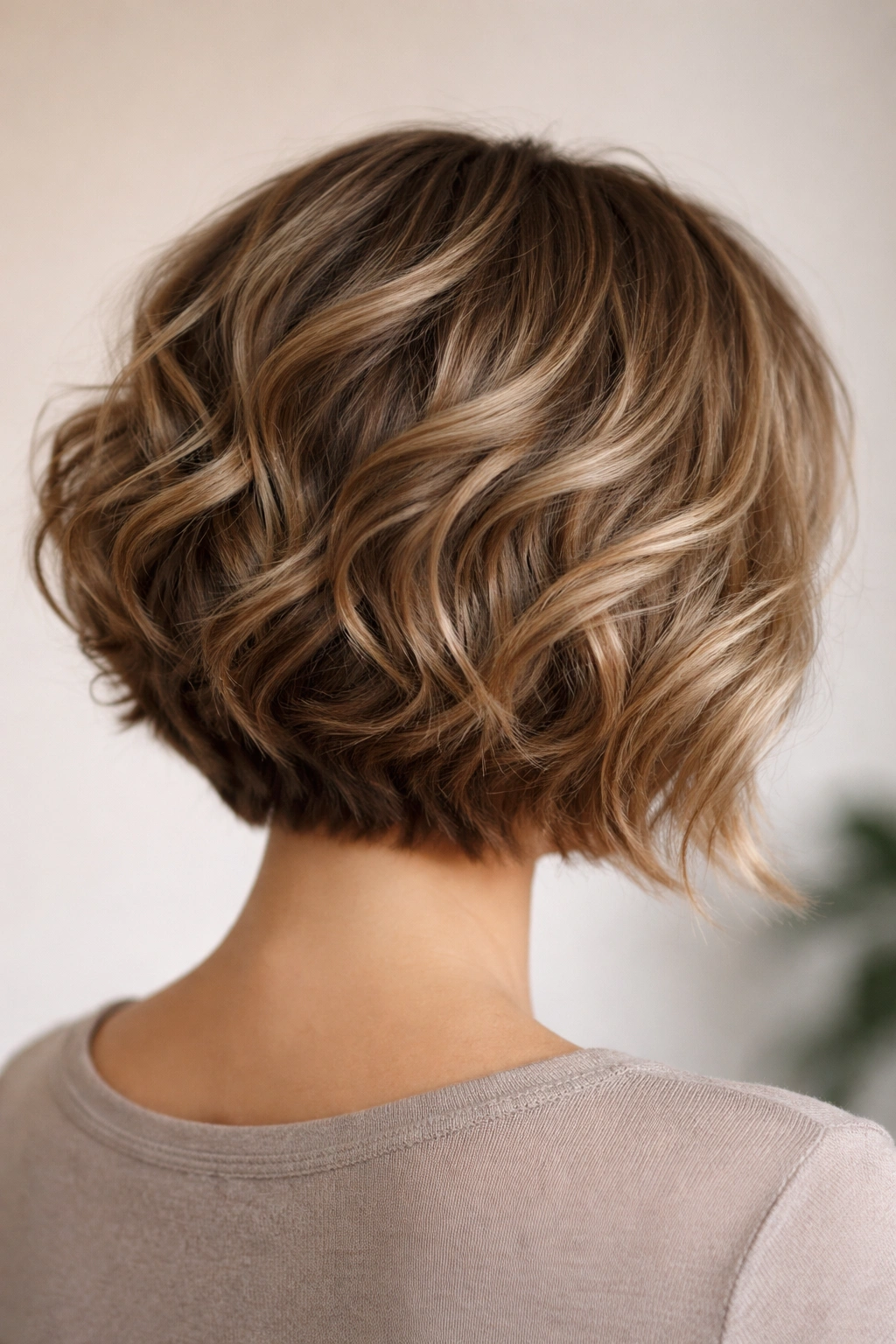
Short and voluminous, with layers concentrated at the back creating an almost wedge-like shape. The hair is shorter at the sides and front, with progressive length and stacking in the back. The layers create texture and movement all over, and the stacking builds volume where you might otherwise have flatness.
The Volume Story
A stacked wavy bob is brilliant if you have fine or thin hair. The layering and stacking create the visual illusion of more density, and the shorter sides keep you from looking weighed down. The layers also mean your natural waves have room to move and separate without getting matted down.
Styling Specifics
- Works beautifully on fine to medium hair, especially hair that’s straight to gently wavy
- Very curly hair can look poofy or overly voluminous with all the layering
- The back requires some styling attention to show off the stacking—blow-drying or texturizing helps
- Shorter sides mean styling is usually quick and straightforward
- Pairs well with products that add texture and separation rather than smoothing products
Insider note: The stacking at the back can start to look flat and formless if you don’t refresh it regularly. Trims every 5-6 weeks keep the shape intentional and dimensional.
9. Face-Framing Wavy Bob
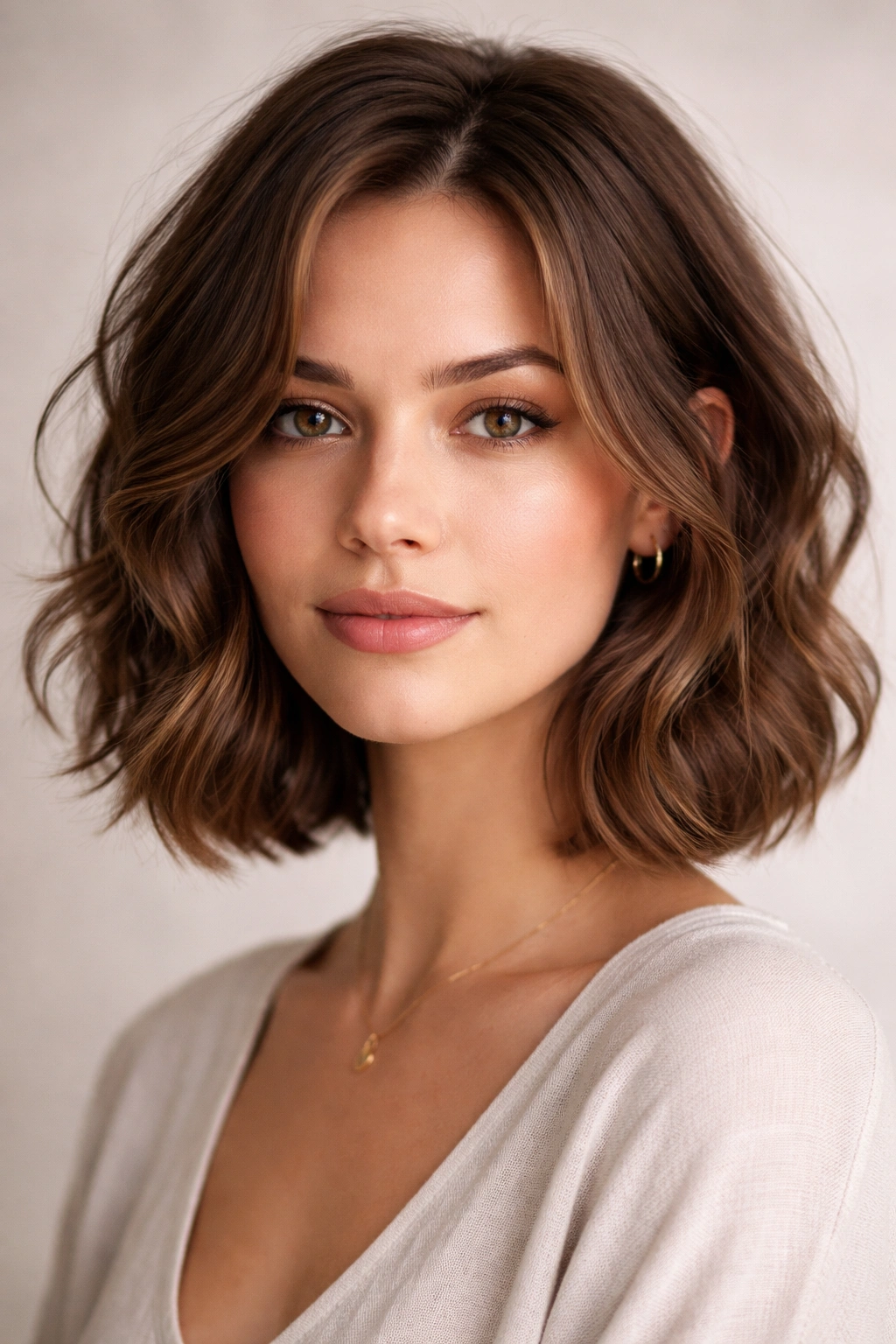
A wavy bob where the front pieces are deliberately shorter and more textured, creating a frame around your face. The back is slightly longer, and the layers graduate from short in front to longer in back. This isn’t a dramatic asymmetrical cut—it’s more subtle and flattering, designed specifically to draw attention to your face and eyes.
The Flattering Proportions
Face-framing layers work because they create depth and movement right where you want it—around your features. Shorter, textured pieces catch light differently than longer, heavier hair, which creates visual interest and dimension. Combined with waves, this creates a soft, flattering effect that actually makes your face look smaller and more sculpted.
Who This Suits Best
- Works across all face shapes, but especially flattering on round or square faces
- Creates movement and dimension that draws attention upward
- Best on wavy hair that naturally holds some texture and movement
- Shorter front pieces can be tucked behind your ears or left loose
- Styling usually involves some texturizing product and minimal blow-dry time
Worth knowing: If your hair is very straight, face-framing layers might look a bit choppy and sharp rather than soft and flattering. You’d need to add waves with styling products or heat tools to get the full effect.
10. Tapered Wavy Nape Bob
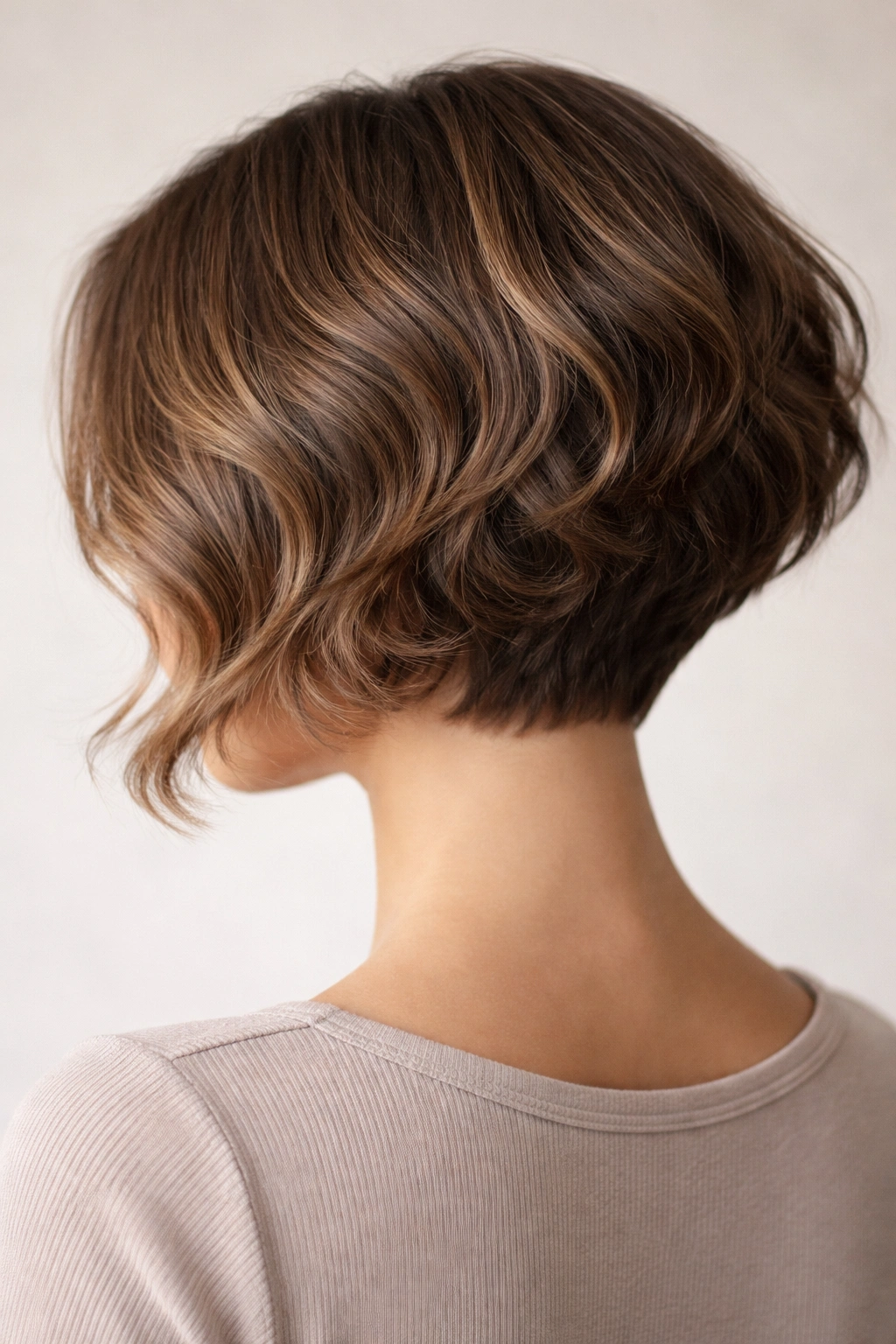
A bob that’s slightly longer in the front and tapers shorter toward the nape of your neck, creating a neat, controlled silhouette with subtle shaping. It’s not dramatically short in back, but there’s definite tapering that creates a clean, finished look. The waviness throughout adds texture without making it look undone or chaotic.
Why Tapering Matters
A tapered nape creates a polished, intentional shape without the boldness of a mullet or shag. It’s a subtle detail that completely changes how a bob sits and reads. Tapering also helps if you have a thick nape area—the shorter length in back creates a neater line and less bulk.
The Practical Angle
- Works beautifully on most hair types and textures
- The tapered shape requires trims every 5-6 weeks to maintain definition
- Shorter nape means the back of your neck stays cool and the hair doesn’t stick to your skin in warm weather
- Styling is straightforward—the taper creates shape even when you just air-dry
- Pairs well with undercuts or subtle fade lines if you want extra edge
Pro tip: Ask your stylist for a taper that’s gradual rather than blunt. A soft taper looks more intentional and sophisticated than an obvious, harsh line.
11. Messy Textured Wavy Bob
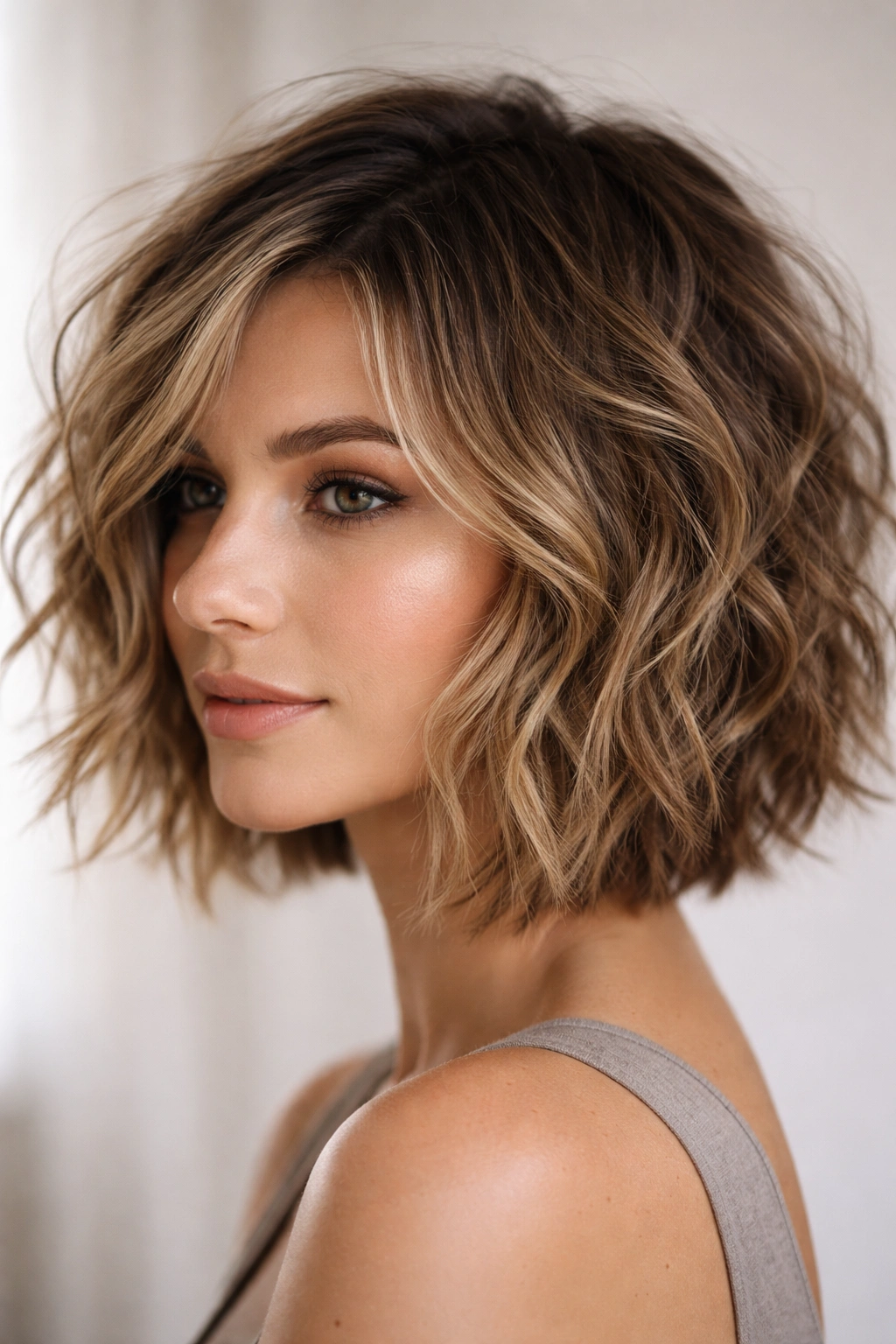
Deliberately undone and piecey, with choppy layers throughout that make the hair look like it’s falling apart (in a good way). There’s no sleekness or polish here—it’s intentionally rough and textured. The waves are obvious and movement is obvious, and everything about it says “I woke up like this” even though you definitely didn’t.
Creating the Messy Effect
This cut relies on aggressive layering and choppy texture rather than smooth, blended layers. Your stylist will cut shorter pieces throughout to create separation and movement. The result looks chaotic but in a calculated, intentional way—every choppy piece is there because it serves the overall aesthetic.
The Maintenance Reality
- Works best on wavy to curly hair that already has natural texture
- Requires texturizing products (cream, spray, mousse) to enhance and define the texture
- Styling involves scrunching, tousling, and letting products do the work rather than trying to smooth anything down
- Looks better slightly undone—over-styling defeats the purpose
- Needs regular trims to maintain the choppy, piecey layers as it grows
Real talk: If you prefer a polished, sleek look, this cut will drive you crazy. It’s for people who genuinely want that undone, textured, “just got out of bed” vibe and are willing to invest in the right products to achieve it.
12. Feathered Wavy Bob
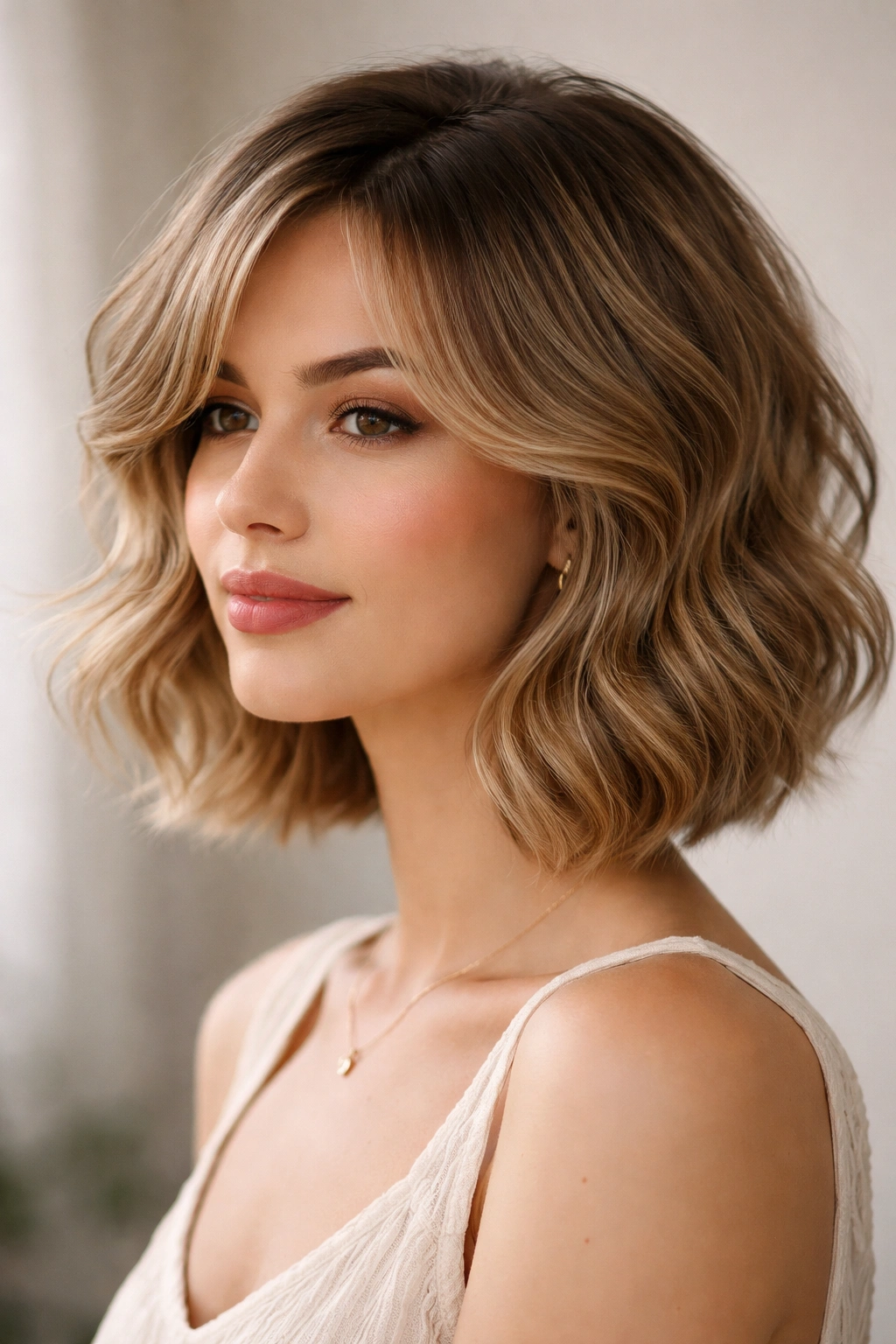
Soft, feathered layers throughout that create movement without choppiness. The layers are blended smoothly rather than creating obvious, piecey separation. The result is a soft, romantic look with lots of movement and flow. It’s textured and wavy but refined and polished rather than messy or undone.
The Feathering Technique
Feathering means your stylist is creating layers that blend smoothly into each other rather than creating obvious, separate pieces. The waves are enhanced by the layers, but the overall effect is cohesive and soft rather than choppy and piecey. This technique is especially flattering if you want movement without looking chaotic.
Styling and Personality
- Works beautifully across all hair types, from straight to curly
- Feathering actually helps curly or coily hair because it reduces bulk and creates definition
- Requires some styling attention—blow-drying helps show off the layers and waves
- Works well with lighter products that enhance waves without weighing hair down
- Looks romantic and soft rather than edgy or statement-making
Worth noting: Feathering requires a skilled stylist who understands how to create smooth, blended layers. This isn’t a cut you want a beginner attempting—the difference between beautiful feathering and choppy, obvious layers is significant.
13. Undercut Wavy Bob
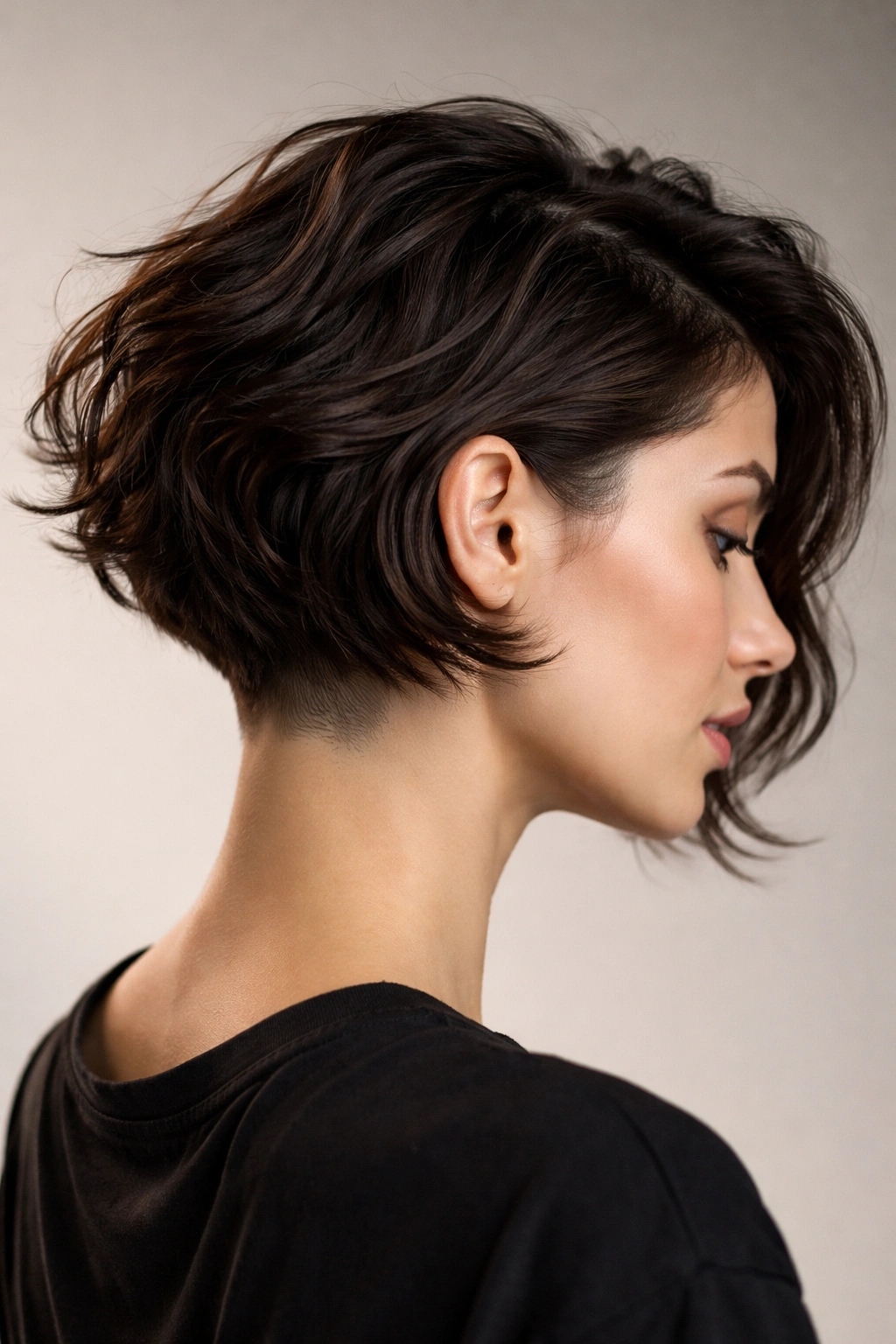
Shorter, textured layers on top with a shaved or very short undercut underneath—usually hidden when your hair is down but visible when you pull it back or move certain ways. The contrast between the longer top and the short undercut creates edge and dimension. It’s a bold, modern take on the wavy bob.
The Undercut Element
An undercut adds an unexpected edge to an otherwise soft, wavy silhouette. It’s a hidden detail that changes how the cut moves and sits, and it creates visual interest when visible. The undercut also reduces bulk at the sides and nape, which can be especially helpful if you have thick hair.
Who This Works For
- Best on people who want an edgy, fashion-forward look
- Works across most hair types, but shows up best on darker hair where the contrast is obvious
- The undercut can be subtle (just the nape) or more dramatic (sides and back)
- Requires trims every 4-6 weeks to maintain the sharp undercut line
- Styling can be sleek and intentional to show off the undercut, or you can hide it completely
Pro tip: If you’re not sure about committing to an undercut, ask your stylist for a very subtle version first—just the nape shaved. You can always go bolder next time or choose to fade it out if you decide it’s not for you.
14. Sleek Wavy Bob With Volume
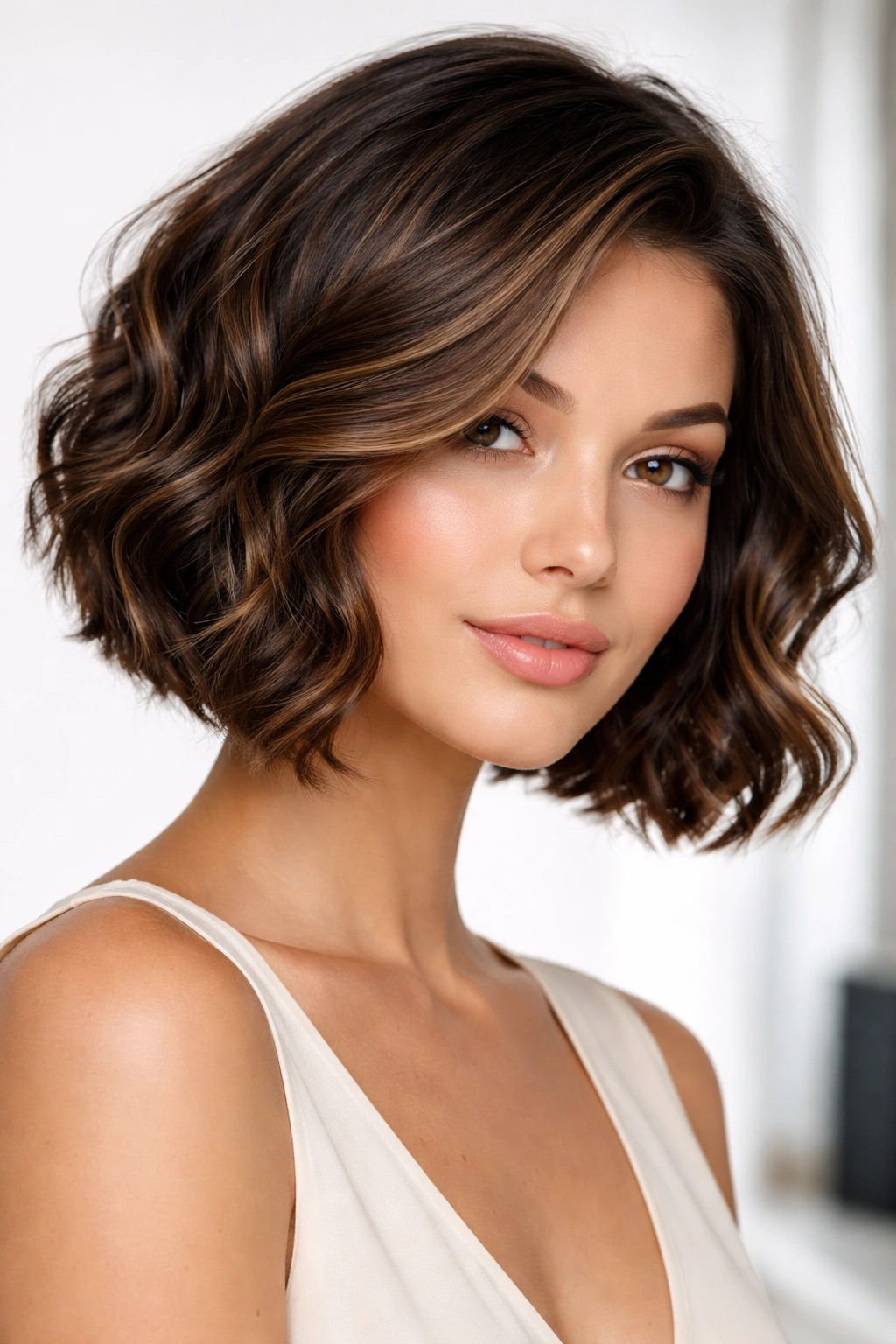
A polished, intentional bob with smooth, blended layers and defined waves that create movement without looking undone. The back is slightly fuller and more voluminous while the front and sides are more refined. This is the “I look like I just left the salon” version of a wavy bob—put-together and sophisticated.
Balancing Sleek and Textured
This cut walks the line between sleek and textured beautifully. The waves are obvious and intentional, but everything is styled and finished rather than messy or chaotic. The volume is built in through layering and proper styling rather than relying on product texture or undone-ness.
The Styling Commitment
- Requires regular blow-drying to maintain the voluminous shape and define the waves
- Works across most hair types, but requires some styling effort to look polished
- Needs a good blow-dry product and technique to show off the dimension and movement
- Pairs beautifully with professional styling or regular salon blow-outs
- Best if you enjoy the ritual of styling and want to feel polished daily
Real talk: This is the least low-maintenance option on the list. If you want truly wash-and-wear, this probably isn’t it. But if you enjoy styling your hair and want that salon-fresh look, this delivers beautifully.
Final Thoughts
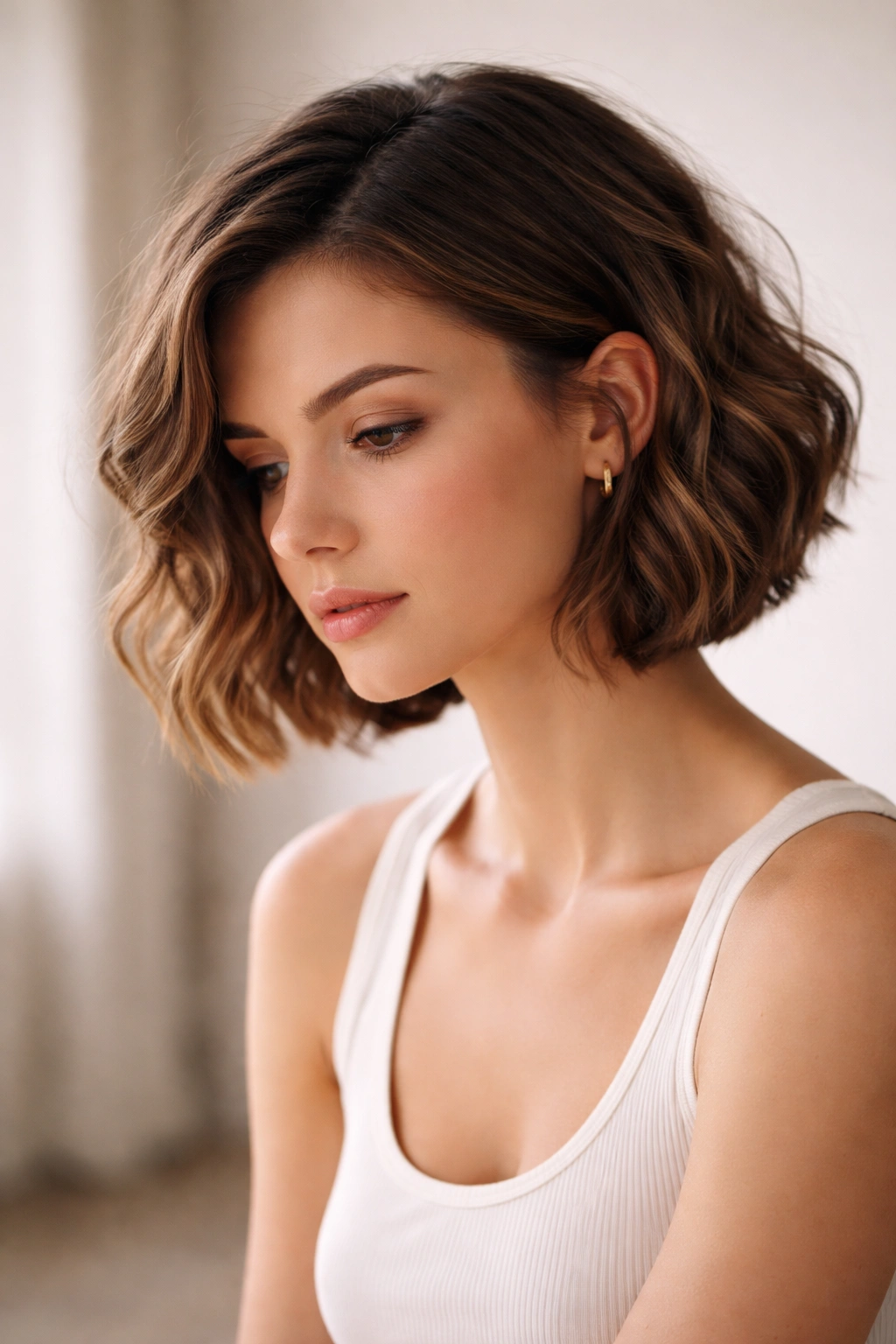
Choosing a short wavy bob comes down to three honest questions: how much styling time are you actually willing to invest, what’s your hair texture naturally, and what kind of vibe are you going for—edgy, polished, undone, or somewhere in between?
The textured and messy options require less daily commitment but work best if you already have waves or curls. The sleek and feathered cuts look more intentional and polished but demand regular blow-drying or salon visits. The asymmetrical, undercut, and choppy mullet options are for people who want their haircut to make a statement. And the blunt, stacked, and face-framing versions are the reliable middle ground—flattering, manageable, and versatile enough for most lifestyles.
Bring pictures of two or three styles you love to your consultation, not just one. Your stylist can help you understand which will actually work with your hair texture and lifestyle, and you might discover hybrid versions that incorporate your favorite elements from multiple cuts. The best wavy bob is the one you feel genuinely good in every single day.