



Thick, wavy hair presents a unique opportunity for styling versatility that many people with straighter or thinner textures simply can’t achieve. The natural movement and body already present in your hair creates dimension and interest that requires far less styling effort to maintain. When you layer in curtain bangs — those swept-back, face-framing pieces that fall on both sides of the face — you’re adding a level of sophistication and visual movement that transforms the entire look.
The challenge with thick wavy hair isn’t finding ways to add texture or volume; it’s managing the weight and controlling the way those waves fall so they look intentional rather than chaotic. Curtain bangs done well on thick wavy hair create a soft frame around your face while allowing your natural waves to remain a focal point. Done poorly, they can fight against your texture or look weighed down and heavy. The difference between a great curtain bang style and a mediocre one comes down to how the cut is shaped, which layers are added, and how you approach styling and products.
The styles that work best with thick wavy hair tend to embrace movement rather than fight it. Longer curtain bangs that fall past your cheekbones integrate more smoothly with wavy texture, while shorter variations need strategic layering and deliberate styling to shine. Your cut should work with your natural wave pattern, not against it — and the best stylists understand how to adjust cutting angles, section placement, and layering strategies specifically for textured hair.
Whether you’re looking to refresh your current style or explore something entirely new, these thirteen approaches show you exactly how to work curtain bangs into thick wavy hair in ways that actually look polished and intentional.
1. Long Layered Curtain Bangs with Gentle Waves
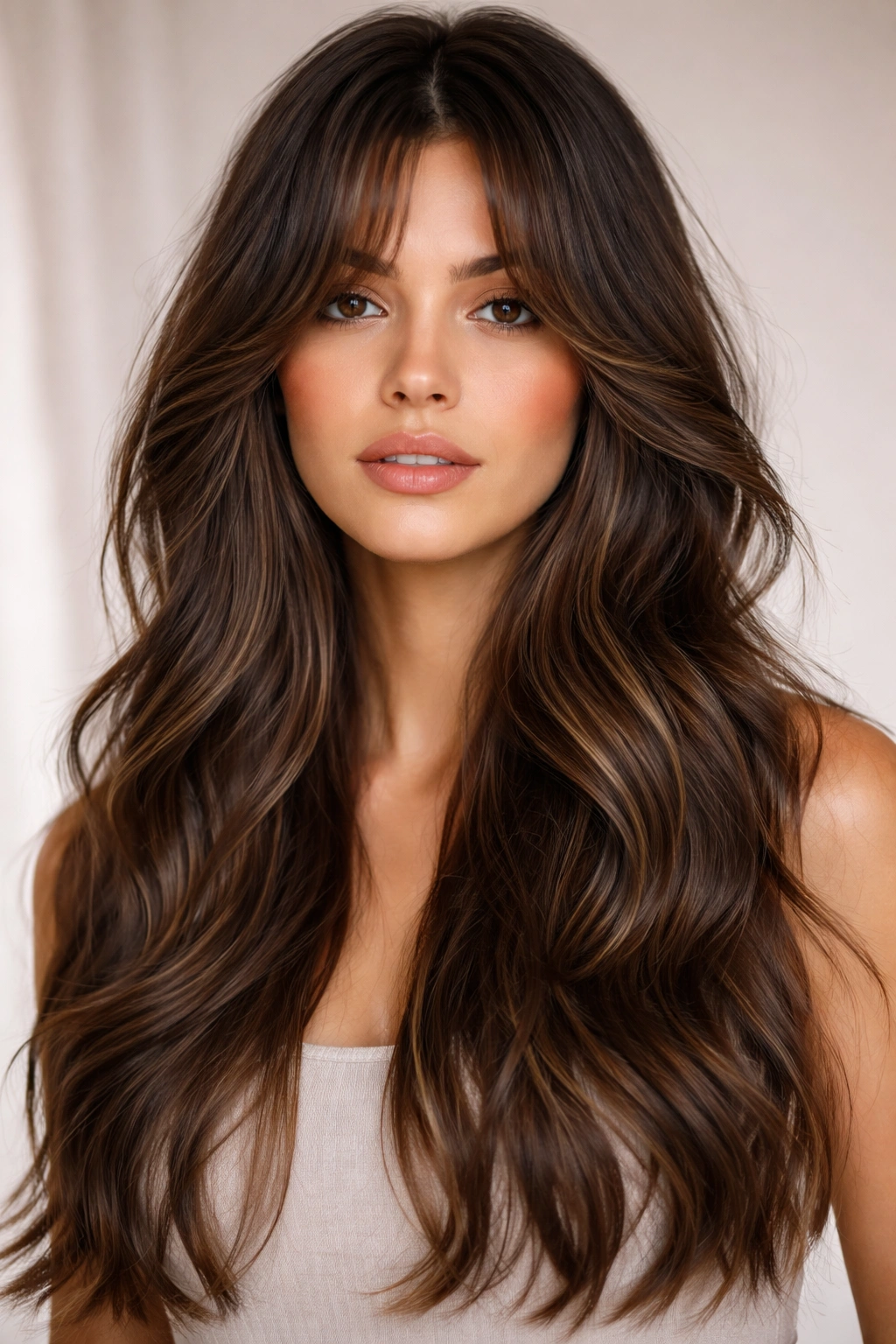
Long curtain bangs that reach past your collarbone create a soft, romantic frame that suits thick wavy hair beautifully. The length works because it’s substantial enough that your waves can create natural movement without the bangs looking flat or disconnected from the rest of your hair. This style pairs especially well when the rest of your hair is cut into long, subtle layers that complement the curtain bangs rather than compete with them.
The Cutting Structure
Your stylist should angle the bangs so they sweep back at approximately forty-five degrees, creating that signature curtain effect on both sides. The key with thick hair is ensuring the bangs don’t sit too heavily at the face — they should taper gradually rather than create a blunt line. A good cut incorporates point-cutting or razor techniques throughout the bangs to remove bulk while maintaining length and softness.
Styling and Maintenance Tips
- Create soft waves using a one-and-a-half-inch curling iron, curling away from your face to enhance the curtain effect
- Apply sea salt spray or a texturizing product to damp hair before blow-drying to enhance your natural waves
- Avoid blow-drying your bangs completely straight; instead, let them air-dry slightly wavy for a more integrated look
- Use a lightweight styling cream on the ends to prevent frizz and encourage wave definition
Pro tip: Part your hair naturally down the center or slightly off-center — this positioning lets your curtain bangs fall exactly the way they’re cut without fighting against your parting.
2. Textured Curtain Bangs with Shoulder-Length Waves
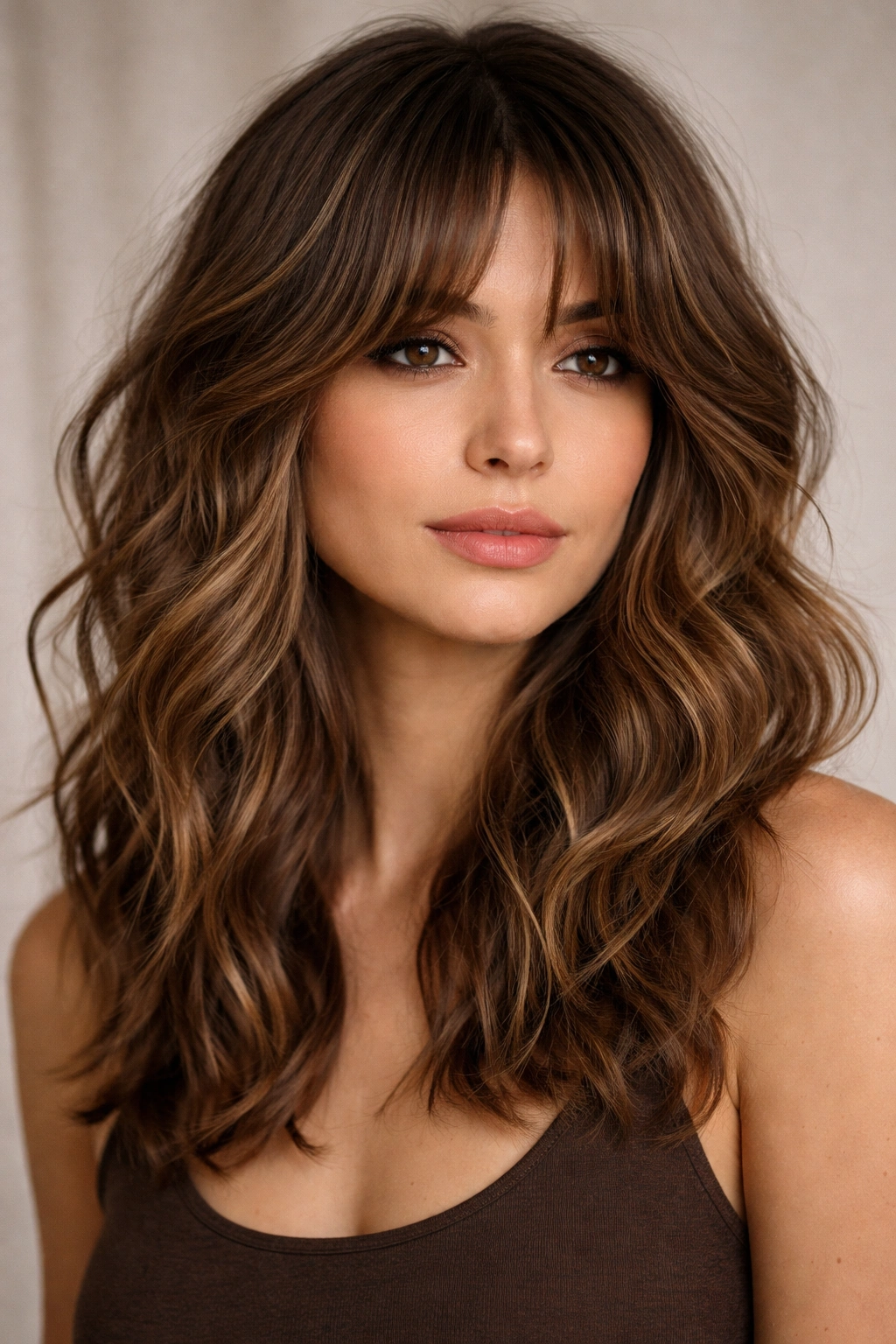
If you want curtain bangs but prefer a shorter overall length, shoulder-length hair with heavily textured curtain bangs creates visual interest and movement without requiring lots of daily styling. The bangs themselves become more textured through strategic layering, which actually works better with thick wavy hair because the layers follow the natural wave pattern of your hair rather than creating disconnect.
Why This Works with Thick Hair
Thick hair can handle shorter lengths without looking thin or stringy — in fact, shoulder-length cuts often look fuller and bouncier. The layering throughout the cut, especially in the bangs, allows curl pattern and natural waves to shine without the weight of longer hair pulling everything down. This also means you can get more movement and definition in your waves with less styling effort.
Product and Styling Approach
- Start with a curling or texturizing cream applied to damp roots to encourage wave formation
- Use a diffuser attachment on your blow-dryer, scrunching upward to enhance your natural texture
- Add layers throughout your bangs using a curling iron or waver, creating movement in different directions
- Finish with a light-hold spray that won’t weigh down thick, wavy texture
3. Wispy Curtain Bangs with Beachy Waves
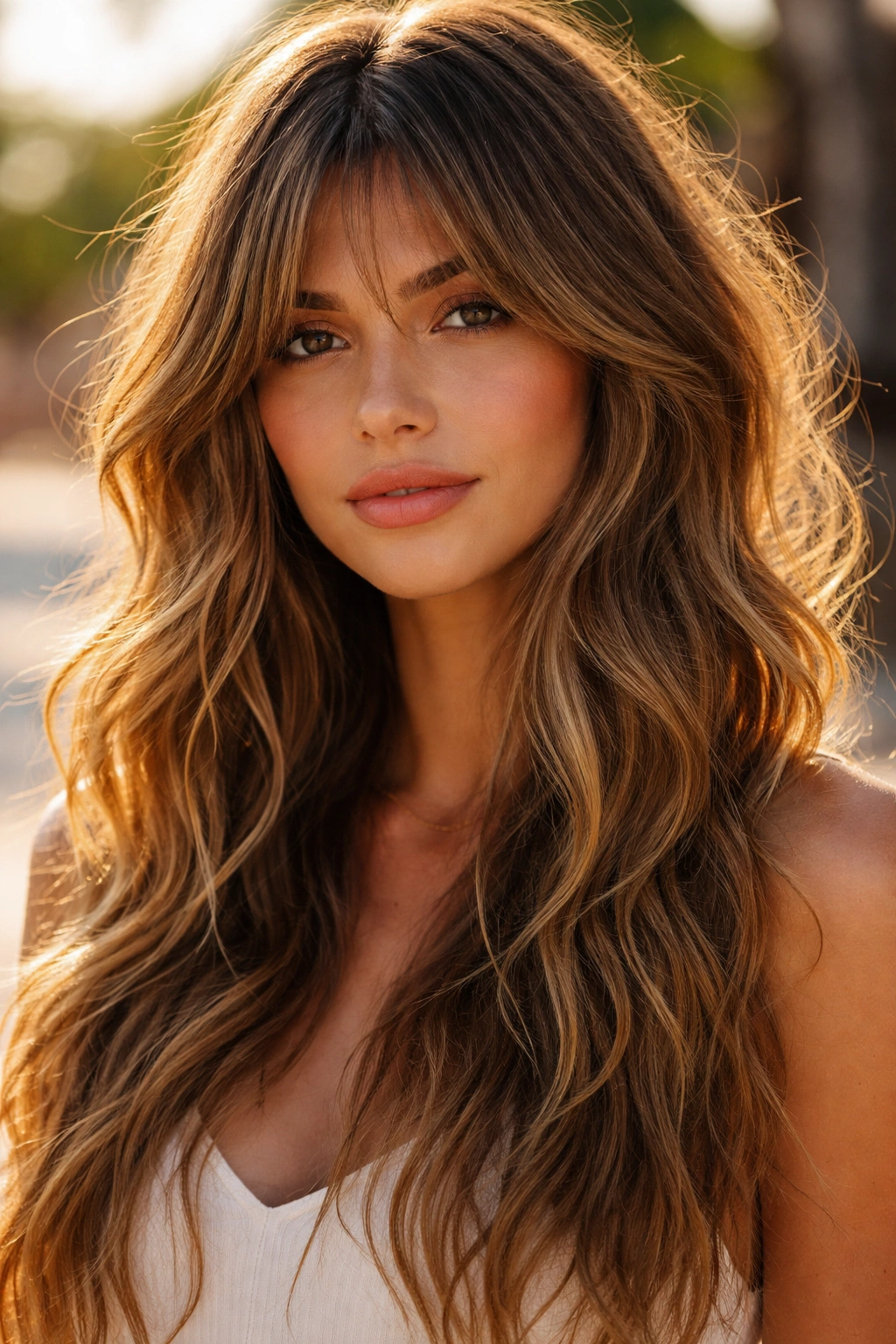
The wispy, feathered approach to curtain bangs creates a relaxed, beachy aesthetic that feels current and effortless. This style works brilliantly with thick wavy hair because the individual wisps of hair catch light and create dimension, and the softness of the cut complements natural waves rather than fighting them. The styling is intentionally undone, which means you’re not trying to achieve perfection every day.
Achieving the Wispy Effect
Wispy bangs require significant point-cutting and texturizing throughout the bang section — your stylist should be removing bulk strategically while keeping plenty of length. Each individual piece should taper to a fine point rather than blunt off, which creates that feathered, separated look. With thick hair, this means your stylist needs to work section-by-section to ensure even texture removal without creating holes or sparse spots.
Daily Styling Routine
- Apply a saltwater or texturizing spray to damp hair before blow-drying
- Blow-dry with your head tilted downward to encourage wave formation and separation
- Use a curling iron or waver on random sections to enhance the beachy texture
- Scrunch in a medium-hold styling cream or mousse while hair is still slightly damp
- Let hair air-dry partially between each step to avoid over-styling
4. Dark Curtain Bangs with Dimensional Waves
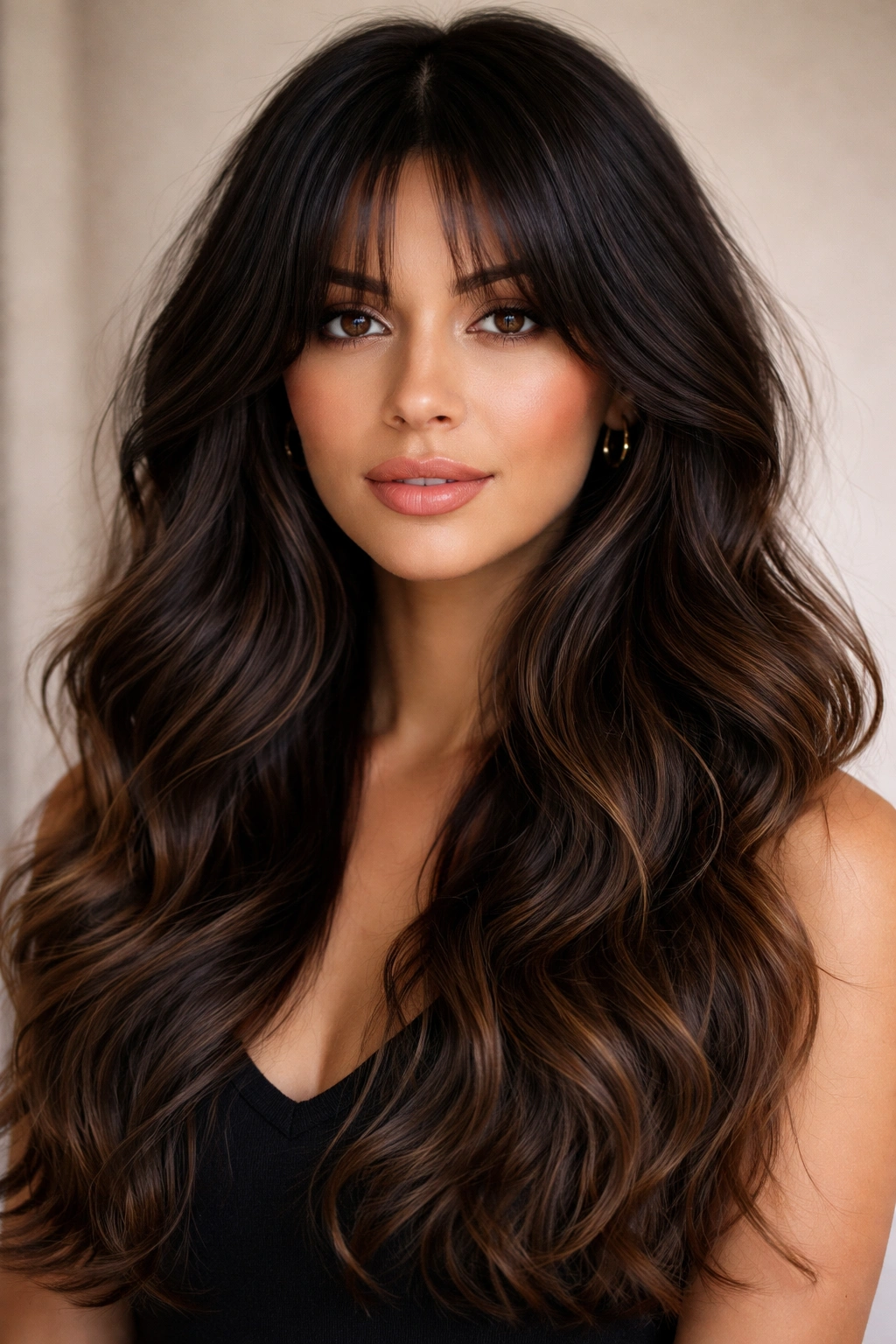
Adding darker tones or depth to curtain bangs creates visual separation and makes the face-framing pieces feel intentional and artistic. With thick wavy hair, dimensional color makes each wave catch light differently, creating a multi-textured appearance that feels rich and expensive. This approach works whether you’re going for a subtle shadow-root effect or more dramatic contrasting tones.
Color Placement Strategy
Position darker tones or dimension primarily in the curtain bang area and throughout the first few layers, with lighter or brighter tones moving toward the ends. This creates a natural graduation that mimics how color moves through wavy texture. The depth also helps thick bangs feel less heavy by creating visual interest and movement through color rather than relying solely on cut and texture.
Combining Color with Cut
- Ensure your stylist cuts the bangs and layers before coloring — color looks different on layered versus blunt edges
- Incorporate balayage or highlights strategically through the bangs to create movement and depth
- Use a glossing treatment after coloring to enhance shine and make dimensional color more visible in your waves
- Protect colored hair with sulfate-free products specifically formulated for thick, textured hair
5. Shorter Curtain Bangs with Maximum Volume
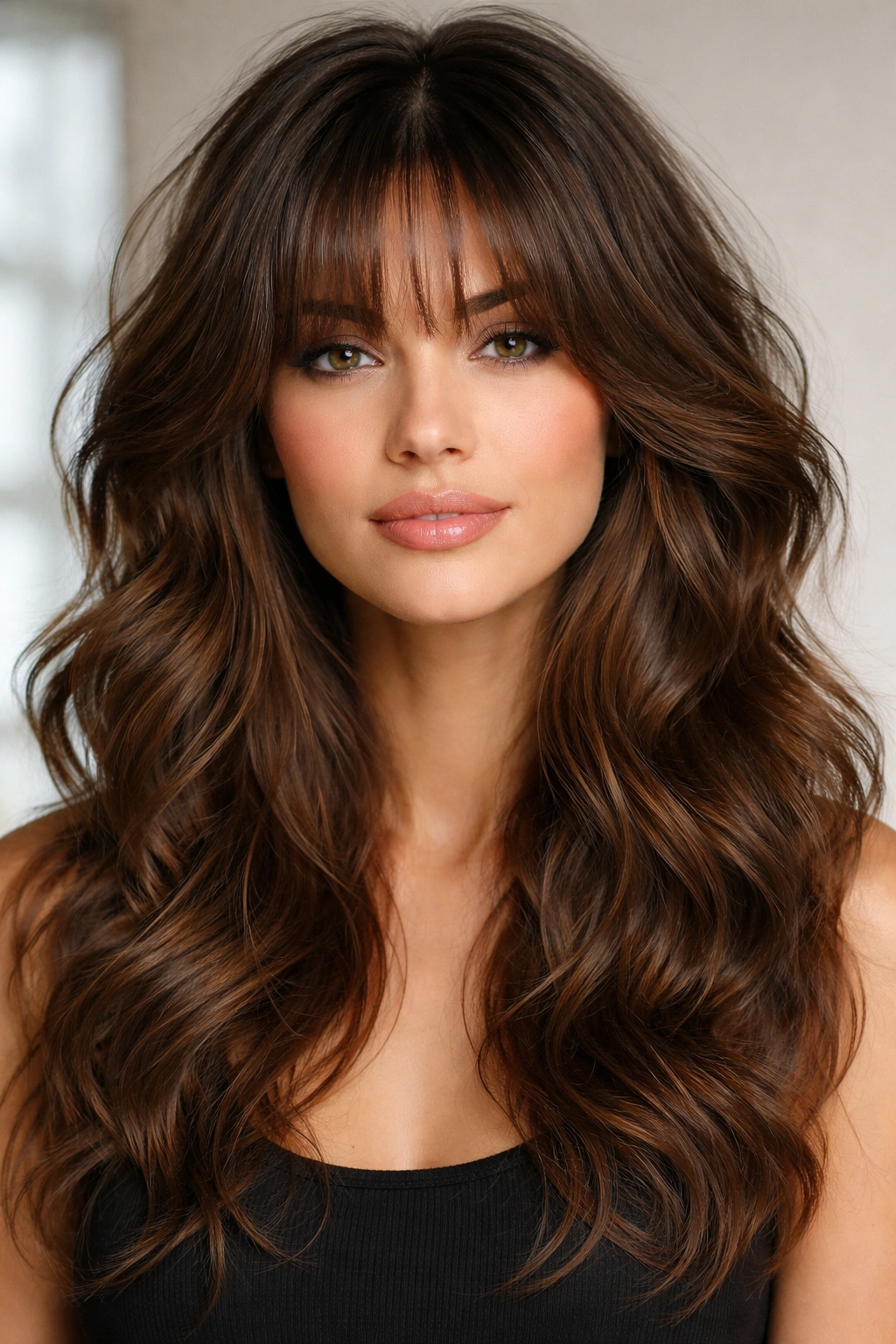
Some people prefer shorter curtain bangs that sit closer to the eyebrows — this creates a bolder frame and can actually work well with thick wavy hair when cut and styled correctly. The key is ensuring the bangs are layered enough that they don’t sit flat or heavy, and that they integrate smoothly with the shorter layers throughout the rest of your cut.
Making Shorter Bangs Work
Shorter bangs on thick hair require more deliberate styling because the weight of thick hair can pull them down or make them look bulky. Your cut should incorporate shorter, choppy layers throughout to distribute weight and create lift. The bangs themselves should be heavily textured through point-cutting or razor techniques, with each piece distinctly separated.
Styling for Lift and Movement
- Blow-dry upward and backward to create volume at the roots
- Use a small round brush or a curling iron to curl bangs slightly upward and away from your face
- Apply volumizing powder or texturizing spray at the roots before blow-drying
- Create separation between individual pieces using your fingers or a fine-tooth comb
- Use a light-hold product rather than heavy styling cream to avoid weighing bangs down
6. Curtain Bangs with Lots of Texture and Layers
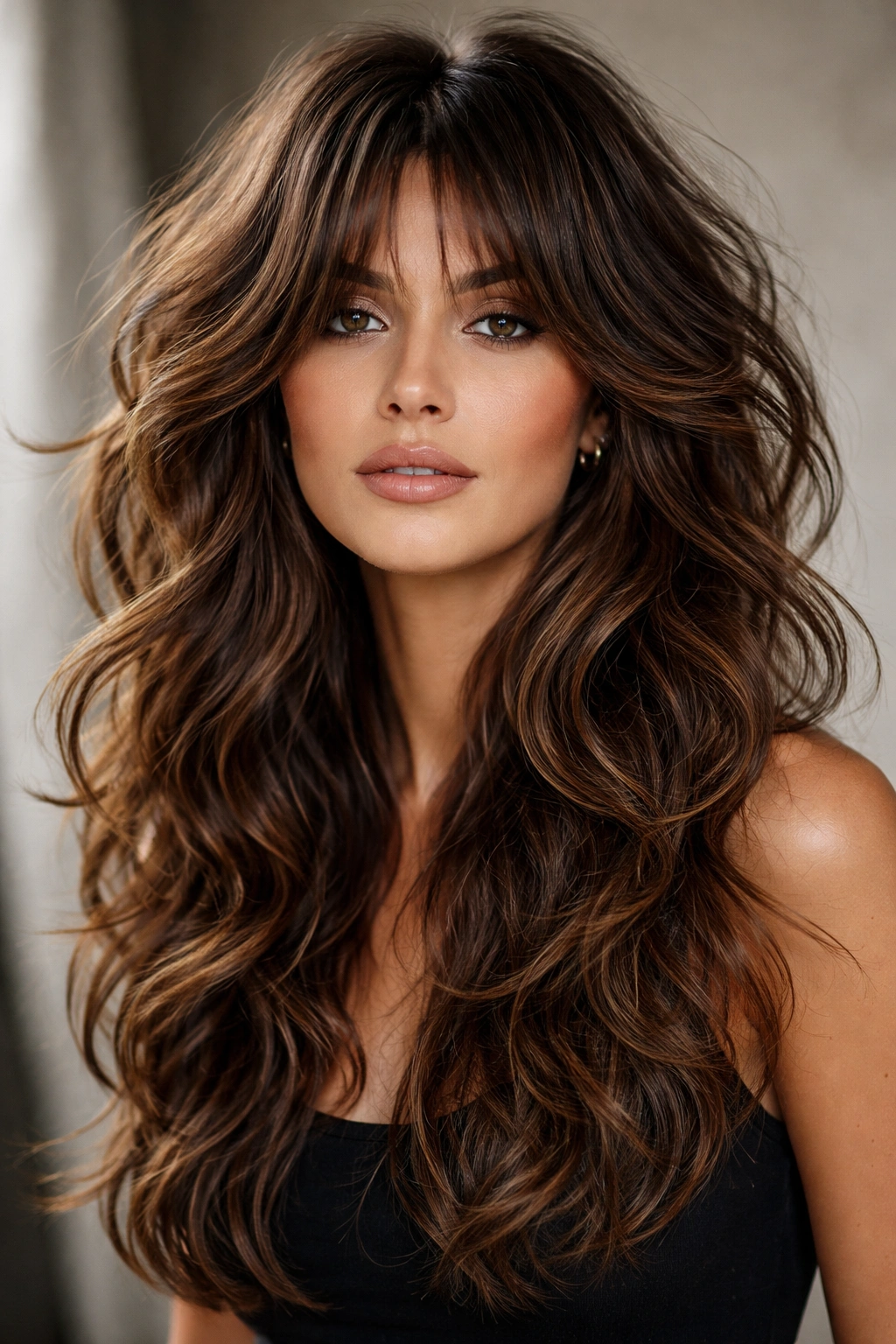
Maximum layering throughout your entire cut, including the curtain bangs, embraces thick wavy hair fully by creating movement in multiple directions rather than trying to smooth or control it. This edgy, textured approach creates a shaggy, contemporary look that feels fashion-forward and intentional. Every layer works together to create depth and movement.
The Layering Blueprint
A heavily layered cut with textured curtain bangs involves strategically shorter pieces throughout that create stepping and movement. Your stylist should cut each layer to sit at a slightly different length, with the bangs being one of the shortest and most textured sections. The texture comes from point-cutting and razor techniques that remove bulk while keeping length, allowing each piece to move independently.
Styling a Heavily Layered Cut
- Embrace your natural wave pattern rather than fighting it — this style looks better undone
- Use a texturizing mousse or cream on damp hair, scrunching upward
- Blow-dry with your head tilted downward to encourage separation
- Optionally use a diffuser or just let sections air-dry slightly between blow-dry stages
- Avoid heavy serums or thick oils that can weigh down the layers — stick with lightweight products
Worth knowing: This style requires a cut every 6-8 weeks to maintain the layering structure and keep bangs looking intentional rather than grown-out and straggly.
7. Face-Framing Curtain Bangs with Soft Definition
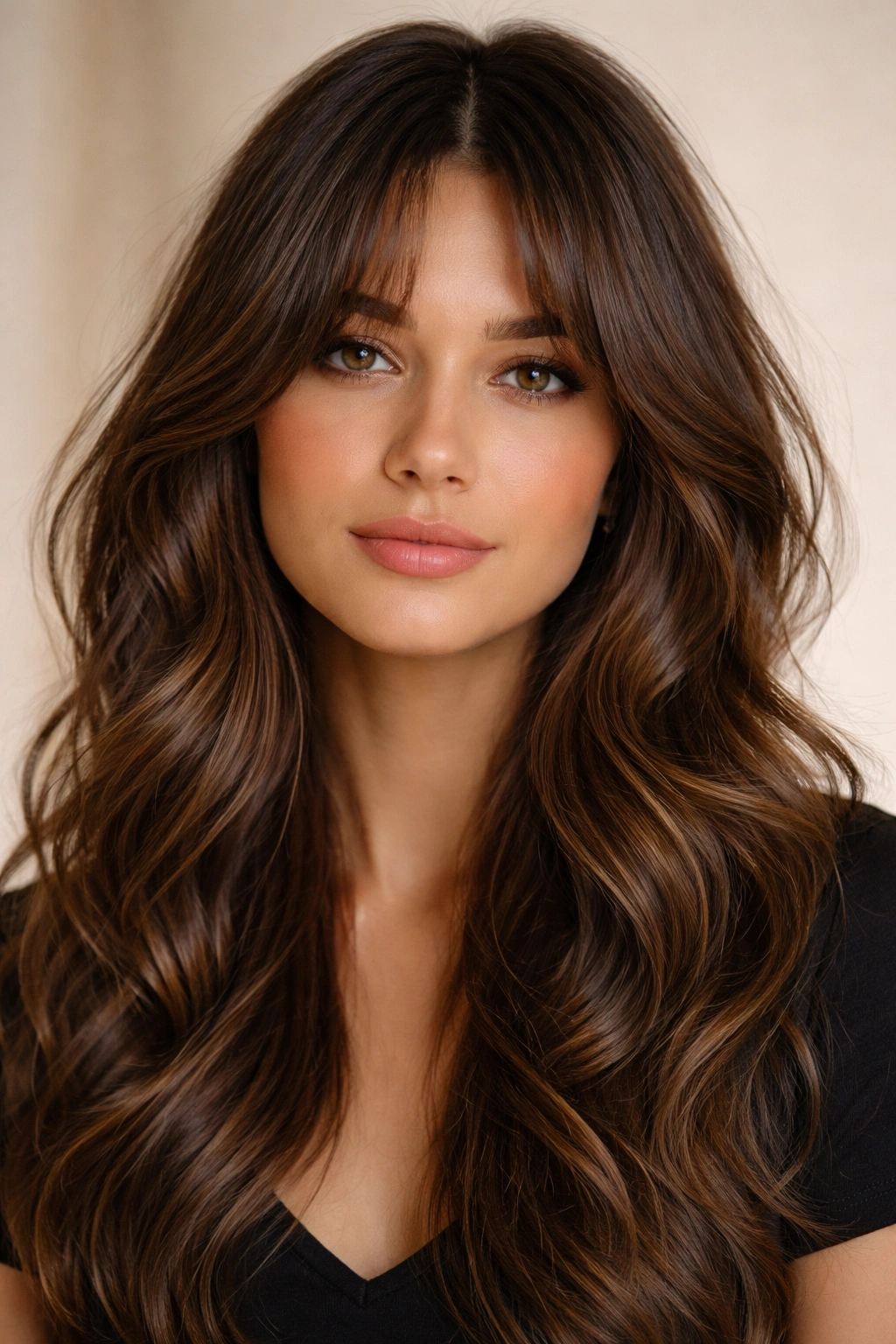
Curtain bangs designed specifically to frame your face — with strategic placement that follows your face shape — create a flattering, personalized look. Rather than generic bangs that work on anyone, face-framing bangs are customized to where your best features are, using length and angle to enhance your natural proportions.
Customizing to Your Face Shape
For round faces, slightly longer bangs that taper toward the chin create vertical elongation. For square faces, softer, more feathered bangs that curve inward can soften angular features. For heart-shaped faces, bangs that sit fuller at the temples and taper gradually create balance. Your stylist should assess your face shape and place the bangs accordingly, which means the angle and length might be slightly different on each side.
Maintaining Face-Framing Effect
- Get bang trims every 3-4 weeks to maintain the precise face-framing placement
- Blow-dry bangs slightly inward and downward along your face contours
- Use a small curling iron to create subtle curves that follow your face shape
- Avoid tucking bangs behind your ears constantly — this defeats the face-framing purpose
- Keep bangs slightly separated rather than blended completely into the rest of your hair
8. Curtain Bangs with Chunky Highlights or Brighter Pieces
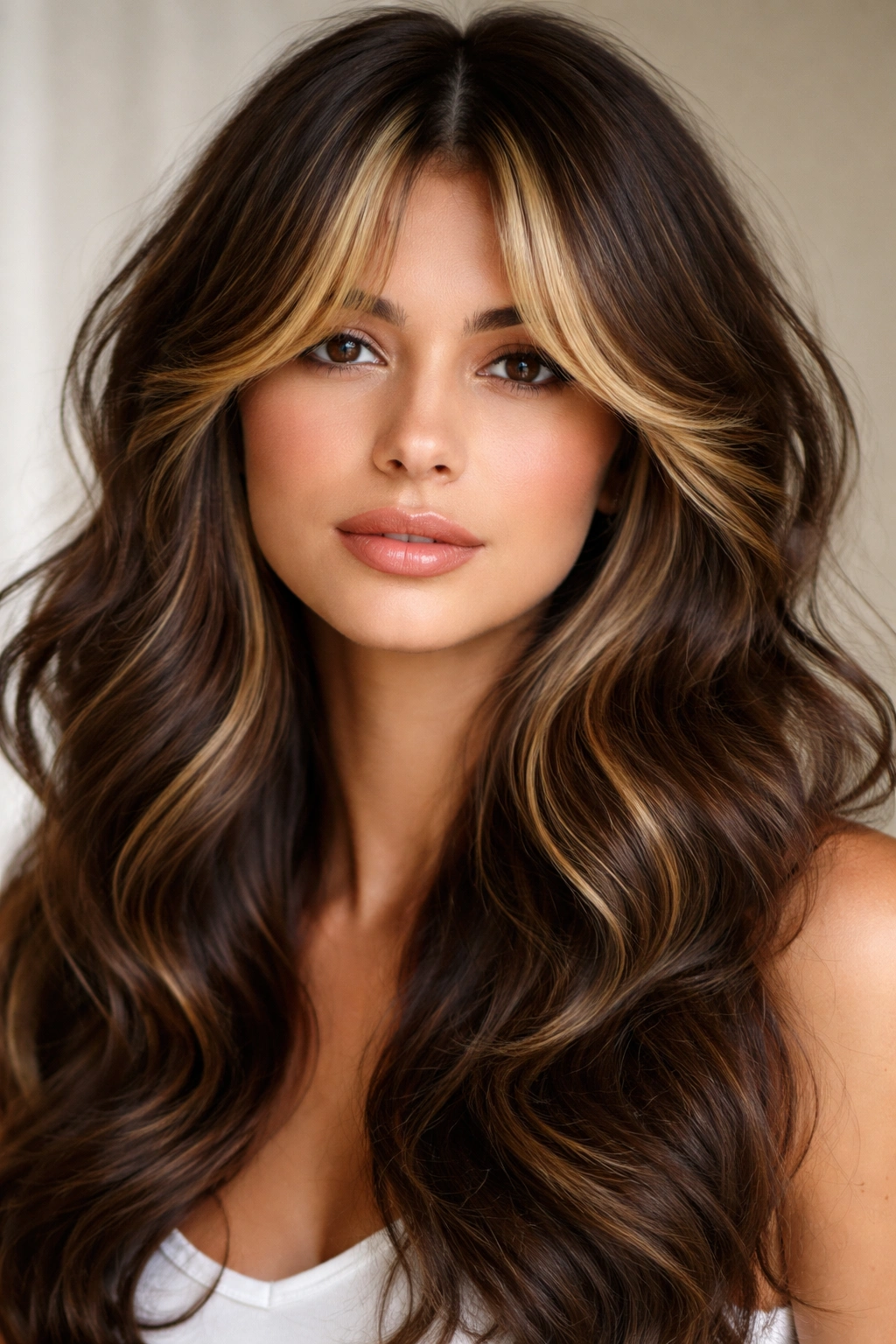
Adding chunky, visible highlights or brighter pieces specifically to the curtain bang area creates high-impact dimension and makes the face-framing pieces visually pop. With thick wavy hair, these brighter pieces catch light as your waves move, creating dynamic color movement throughout the day.
Strategic Color Placement
Place thicker, more visible highlights in the curtain bangs and the first few layers around your face, gradually transitioning to thinner or more subtle pieces toward the back and ends. This creates a frame effect where your face is literally surrounded by the brightest, most dimensional color. The chunky placement means the highlights remain visible even as your waves fall and move.
Maintaining Chunky Highlights
- Use a sulfate-free shampoo and conditioner formulated for color-treated hair
- Get glossing treatments every 4-6 weeks to refresh blonde or brighter tones
- Apply color-depositing conditioner weekly if maintaining blonde or cool tones
- Use a purple or blue-toning shampoo once weekly to prevent brassy undertones in lighter pieces
- Deep condition regularly since highlighted pieces can be more prone to dryness
9. Blunt Curtain Bangs with Wavy, Textured Ends
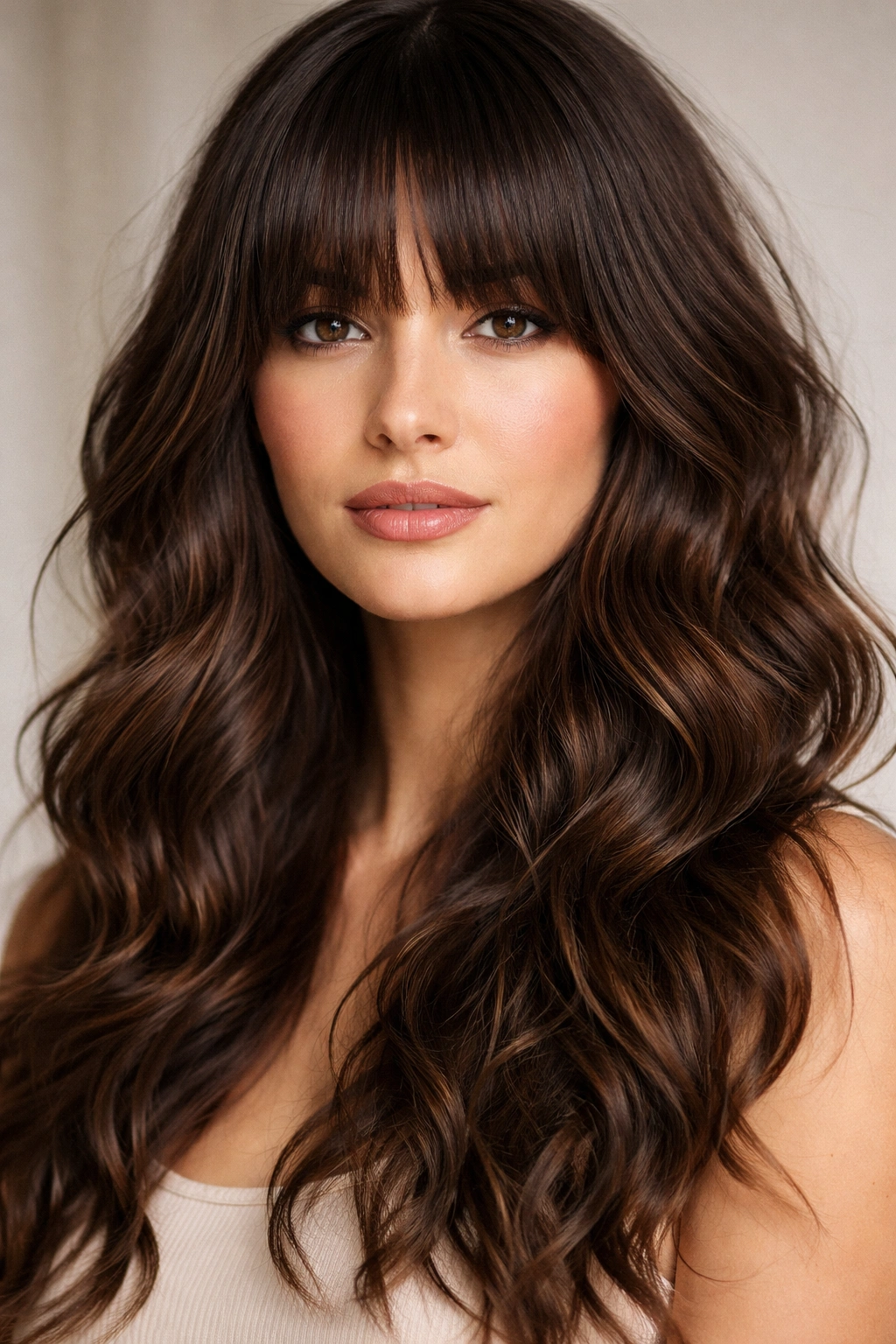
Blunt curtain bangs create a bold, statement-making frame that contrasts beautifully with heavily wavy, textured ends throughout the rest of your hair. This creates visual interest through the contrast between the clean-line bangs and the soft, organic waviness everywhere else. The bluntness needs to be precise so it doesn’t look like your bangs weren’t finished.
Cutting Blunt Bangs on Thick Hair
Blunt bangs on thick hair require a sharp blade and precise technique to create a clean line without the bluntness appearing too heavy or severe. Your stylist should angle the bangs to fall with your natural wave pattern rather than against it — this prevents the blunt line from looking artificial or disconnected. The rest of your hair should be heavily textured and layered so the blunt bangs feel intentional rather than isolated.
Styling for Sharp Definition
- Keep blunt bangs straight and sleek through blow-drying and a flat iron
- Contrast the straight bangs with deliberately wavy or textured sections throughout the rest of your hair
- Use a smoothing serum on bangs to enhance their clean appearance
- Keep the bangs slightly separated from the rest of your hair through styling rather than blending them in
- Trim blunt bangs every 3-4 weeks to maintain the crisp line
10. Curtain Bangs with an Off-Center or Zigzag Part
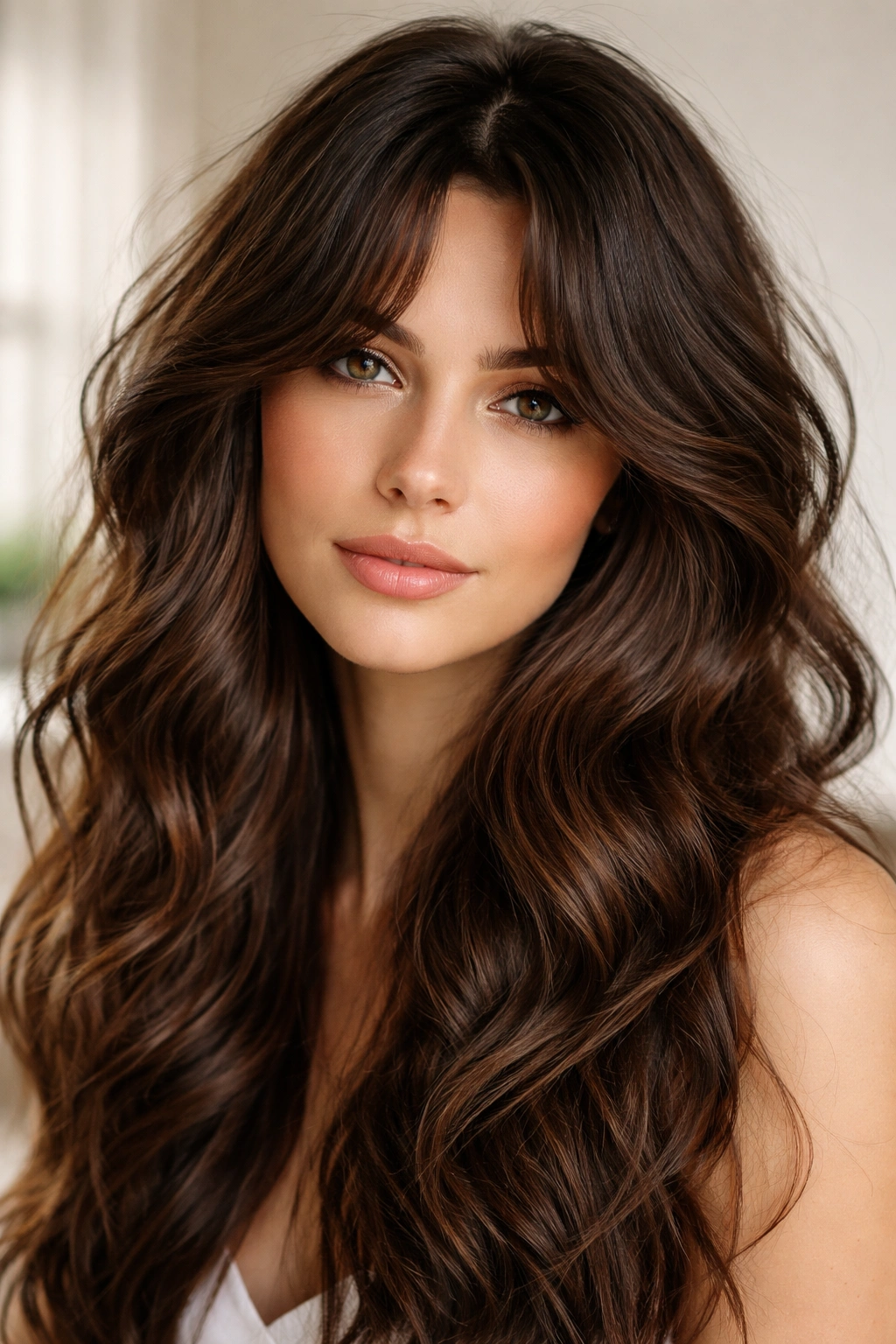
Rather than a traditional center part, an off-center or zigzag parting creates visual interest and makes curtain bangs look less uniform and more modern. The asymmetrical parting means your bangs don’t fall symmetrically on both sides, creating a more dynamic, contemporary effect. This works especially well with textured hair because the irregular placement complements the natural movement.
Creating Movement with Asymmetrical Parting
An off-center part that’s slightly zigzagged means your left curtain bang might sit at a different angle than your right one — this is intentional and creates movement. When you have thick wavy hair, this asymmetry actually looks more natural because it mimics how waves naturally fall in different directions. The bangs themselves should still be cut to fall curtain-style on both sides, but the parting creates visual variation.
Styling Asymmetrical Bangs
- Establish your zigzag part with a rattail comb before styling
- Blow-dry bangs along your natural wave pattern, allowing them to fall in their most comfortable direction
- Use a texturizing spray or product to encourage the separation that asymmetry creates
- Avoid trying to make both sides perfectly symmetrical — embrace the variation
- Refresh your zigzag part daily by dampening slightly and re-establishing the line
11. Curtain Bangs with Loose, Voluminous Waves Throughout
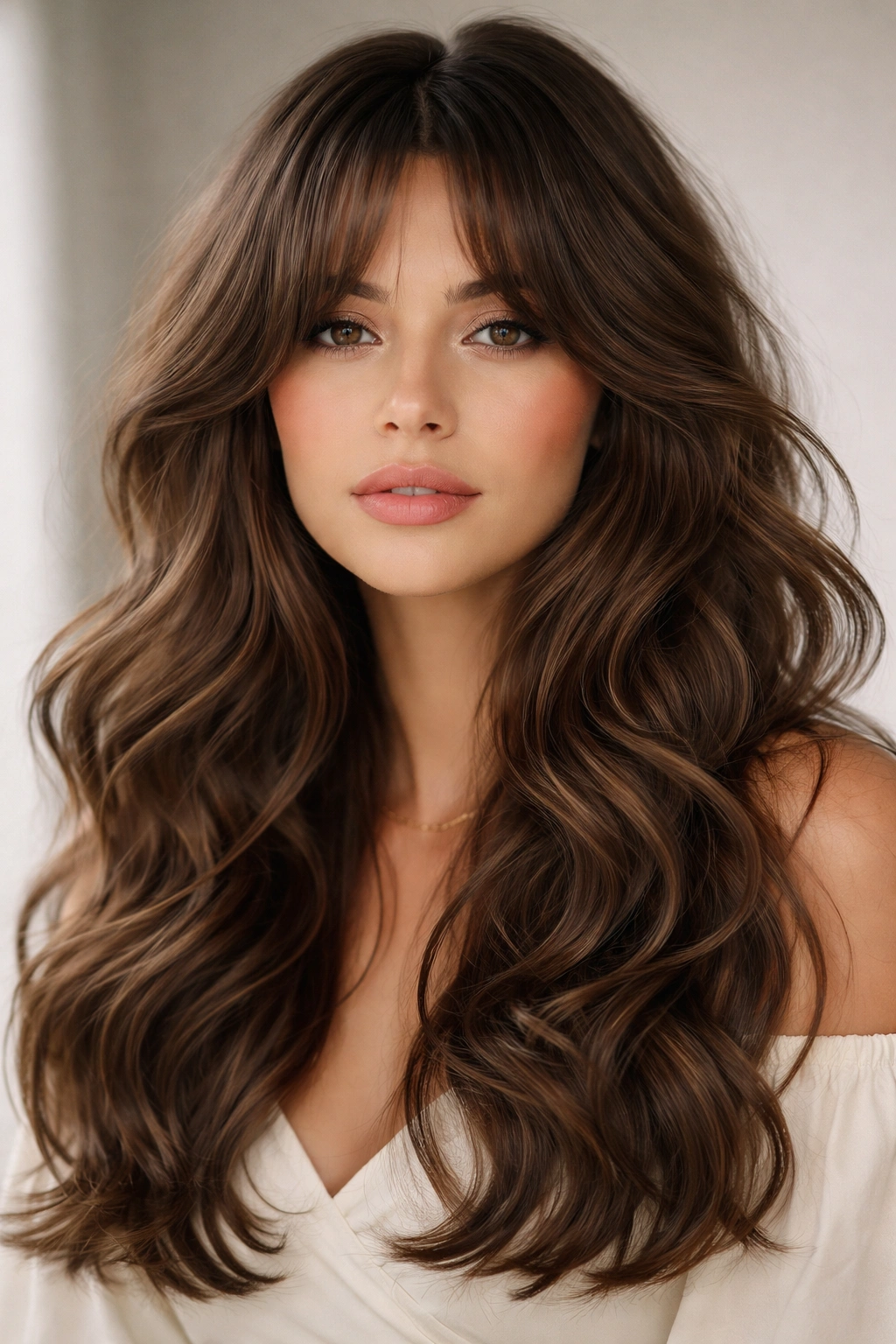
Pairing curtain bangs with loose, voluminous waves throughout creates a romantic, full-bodied style that celebrates the natural texture and thickness of your hair. The bangs act as a soft frame while the rest of your hair gets maximum volume and movement. This approach works best when your overall cut is designed to create lift and separation rather than weight and flatness.
Building Volume with Your Cut
Your stylist should incorporate choppy, face-framing layers throughout your cut that create stepping and lift rather than one-length or minimally layered density. The shorter layers sit on top of longer layers, which prevents your thick hair from sitting flat while maintaining enough length to create waves. The curtain bangs are part of this layering strategy, creating softness at the face while shorter pieces throughout the crown and sides build volume.
Styling for Maximum Volume
- Apply volumizing mousse or spray to damp roots before blow-drying
- Blow-dry upside-down and scrunching to create root lift
- Use a curling iron or waver on different sections to create waves in varying directions
- Flip your head side to side while blow-drying to ensure even volume throughout
- Finish with a light-hold product that maintains volume without weight
12. Curtain Bangs with Disconnected Layers and Choppy Texture
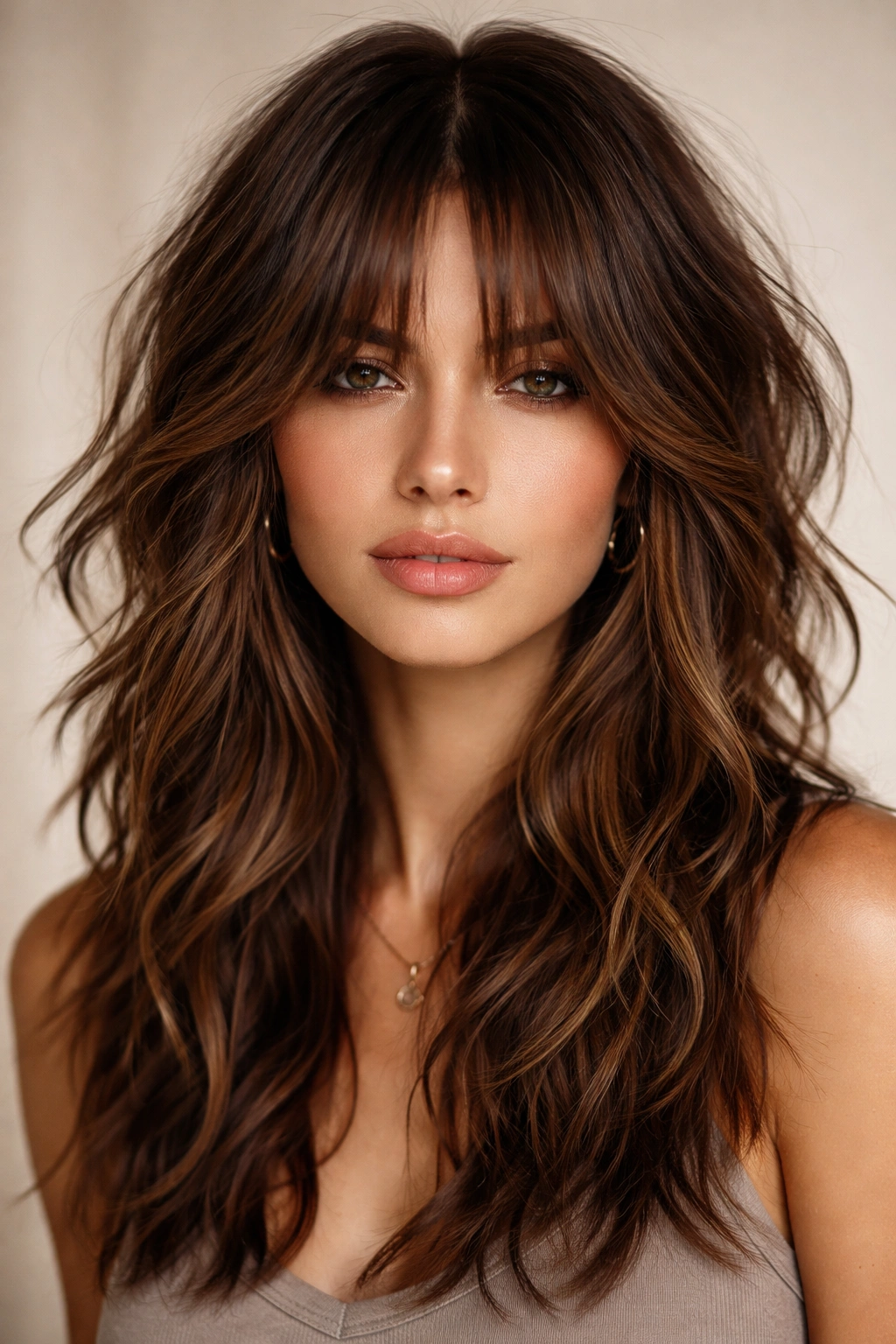
Heavily disconnected layers create an edgy, fashion-forward aesthetic that’s contemporary and intentional-looking. The curtain bangs are dramatically textured and separated from the rest of your cut, creating visual distinction between the bangs and the layers below. This style celebrates dimension and movement in a bold way.
Understanding Disconnection
Disconnected layering means the lengths vary dramatically — short layers sit visibly on top of longer ones without blending smoothly between. The curtain bangs are one of the shortest, most textured sections, creating clear visual separation from the layers beneath. With thick wavy hair, disconnection actually looks better because each layer has enough density to stand apart rather than looking thin or sparse.
Maintaining Disconnected Layers
- Get trims every 6-8 weeks to maintain the dramatic length differences
- Embrace textured styling rather than trying to smooth or blend layers together
- Use a texturizing product to emphasize the separation between layers
- Avoid blow-drying in a way that blends layers — instead, direct pieces in different directions
- Consider what styling approach works best with your lifestyle — this look requires intentional styling
13. Soft Curtain Bangs with Piece-y, Separated Waves
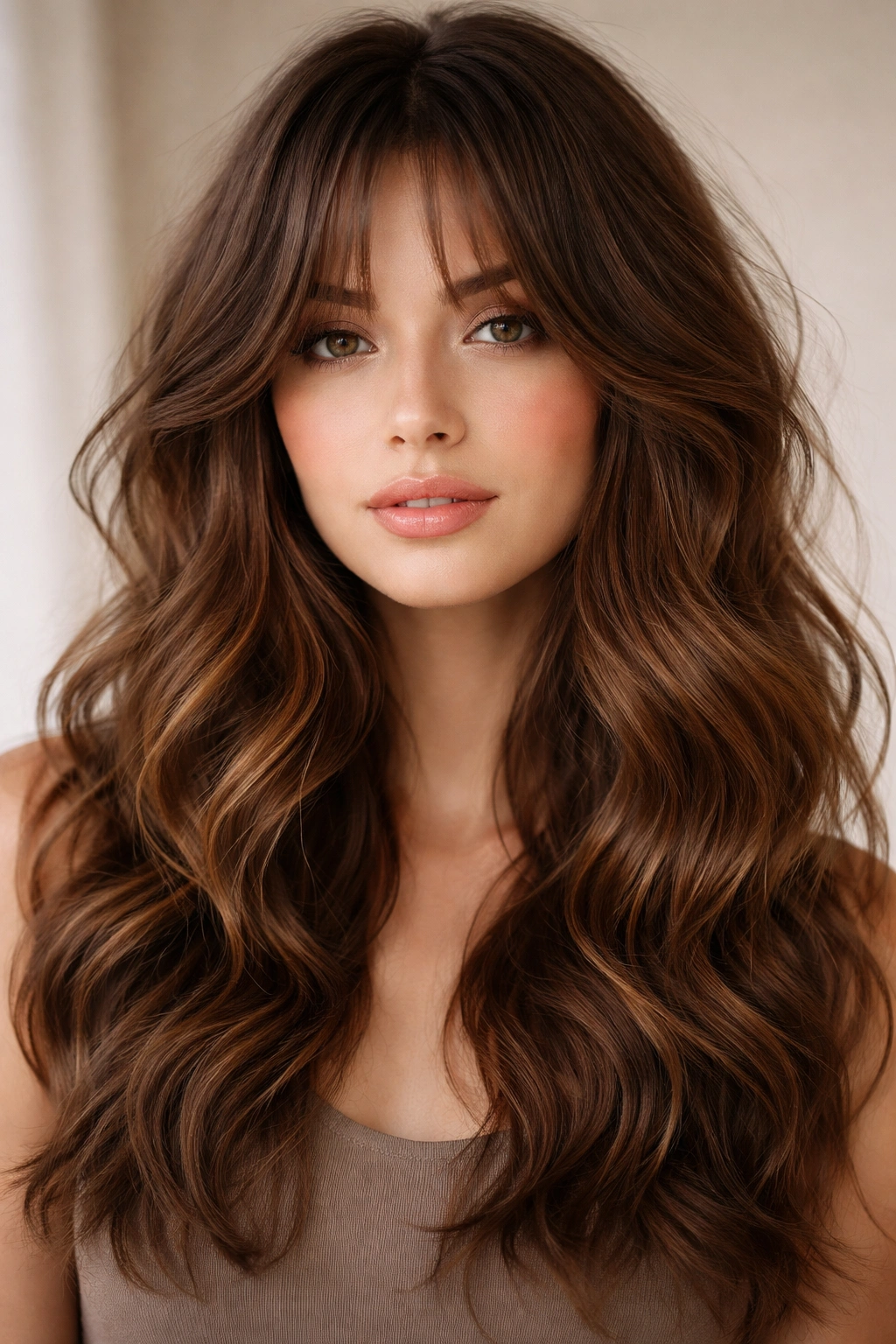
Soft, piece-y curtain bangs that feel separated and distinct from each other create a romantic, ethereal aesthetic. Rather than solid bangs that fall as one unit, piece-y bangs are textured enough that individual strands or small sections separate visibly. This works beautifully with thick wavy hair because the texture is already built in — you’re just enhancing what’s naturally there.
Creating Piece-y Separation
Piece-y texture comes from strategic point-cutting and texturizing techniques that remove bulk from specific sections while maintaining length. Your stylist should work section-by-section through the bangs, creating fine point-cuts that allow pieces to separate. The goal is bangs that catch light individually rather than reading as one solid mass.
Styling for Separation and Definition
- Apply a texturizing cream or serum to damp hair before blow-drying
- Use a diffuser attachment on your blow-dryer, scrunching upward to enhance piece-y texture
- Optionally use a curling iron on individual pieces to create more defined waves
- Avoid using heavy serums or thick products that glue pieces together
- Use your fingers rather than a comb to style and separate pieces
- Refresh separation during the day by lightly scrunching or running your fingers through bangs
Real talk: Piece-y bangs require slightly more daily styling than blunt or heavily layered versions, but the romantic, textured effect is worth the minimal extra effort if you enjoy styling your hair.
Final Thoughts
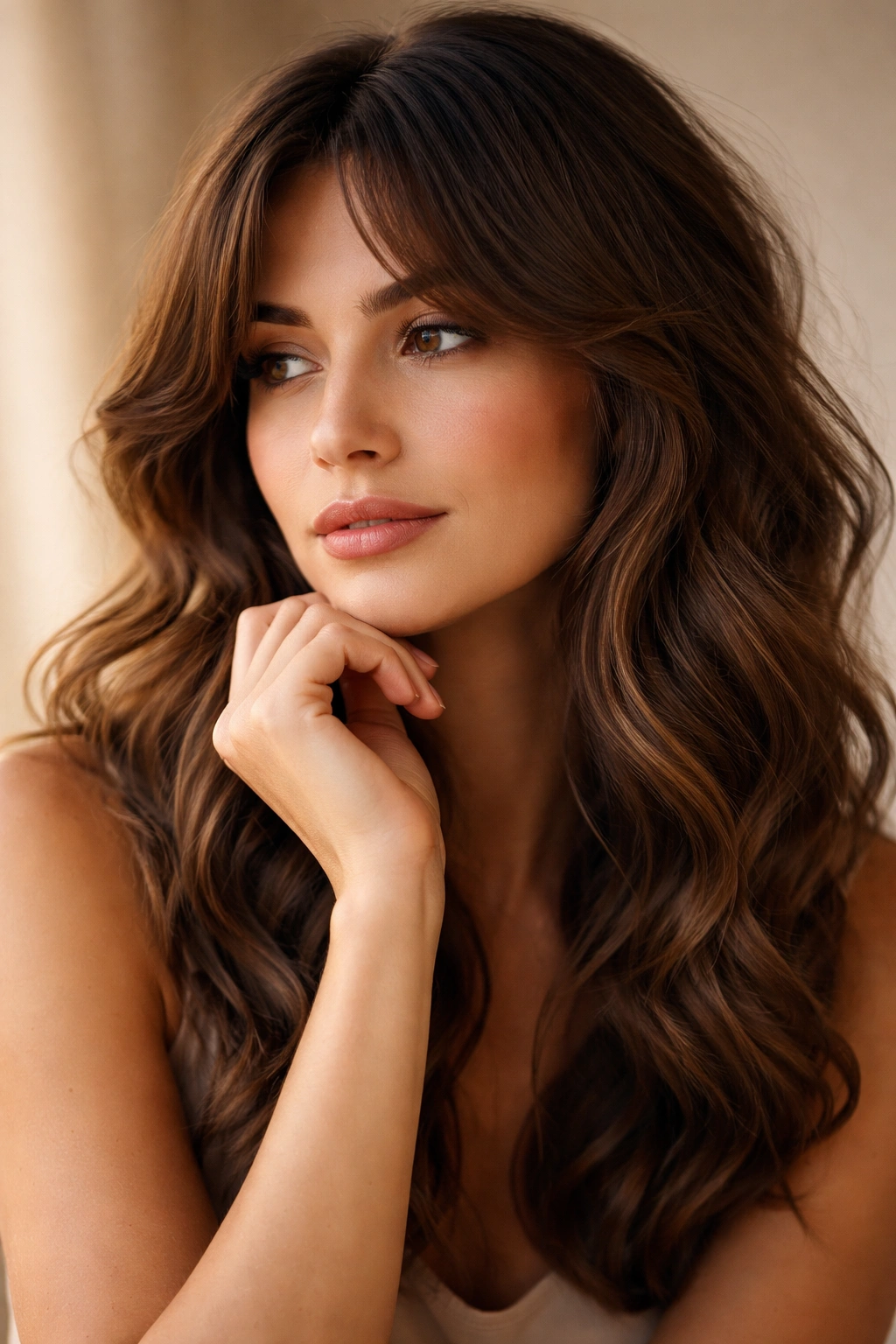
Curtain bangs on thick wavy hair represent an opportunity to embrace your texture rather than fight it. The best styles are those that work with your natural wave pattern — cutting and styling in ways that enhance movement rather than trying to smooth everything into compliance. Your specific style choice should consider your face shape, how much daily styling you’re willing to do, and what aesthetic speaks to you.
The cut matters more with thick wavy hair than it does with other hair types. A stylist who understands how to cut for texture, who uses point-cutting and razor techniques strategically, and who considers your natural wave pattern while designing your bangs will make an enormous difference in how easy your style is to maintain. Curtain bangs that are cut well require minimal styling to look polished; those cut without considering your texture will fight against your hair constantly.
Most of these styles require bang trims every three to four weeks because curtain bangs tend to grow out quickly and the soft, face-framing effect gets lost fast. Using texturizing products, embracing your natural waves, and styling with upward motion rather than downward smoothing will all contribute to bangs that look intentional rather than accidentally grown-out. Your thick, wavy hair is genuinely an asset — use it to your advantage.
