



Chestnut brown represents one of the most flattering and versatile hair colors available, striking a perfect balance between warm red undertones and cool auburn dimensions. When paired with long, wavy hair, this shade transforms into something truly special—the waves create natural movement and depth that showcase the color’s complexity beautifully, while the length provides a canvas for texture and dimension that shorter styles simply can’t achieve. The combination of chestnut tones and flowing waves creates an effortlessly elegant aesthetic that works across seasons, face shapes, and personal styles, whether you’re after a romantic, lived-in look or something with more structure and definition.
What makes long wavy hairstyles in chestnut so appealing is how the color interacts with light as the hair moves. The waves create shadows and highlights that make chestnut appear richer and more multidimensional than it would in a straight style, while the length gives you options for styling versatility—you can wear it down and relaxed, pull it into a half-up style, braid it, or pile it into a textured bun. The warm honey and copper undertones in true chestnut brown seem to enhance the natural luminosity of wavy hair, making the style feel both sophisticated and approachable.
Beyond aesthetics, long wavy chestnut hairstyles offer practical advantages too. This length is forgiving enough that you don’t need salon-fresh styling every week, the waves hide root regrowth better than blunt cuts, and chestnut brown is far less maintenance-heavy than lighter shades when it comes to upkeep and preventing brassiness. Whether you’re considering growing out your hair, switching colors, or simply looking for inspiration on how to style what you already have, these nine approaches showcase the range of possibilities with long, wavy chestnut hair.
1. The Beachy Layered Wave
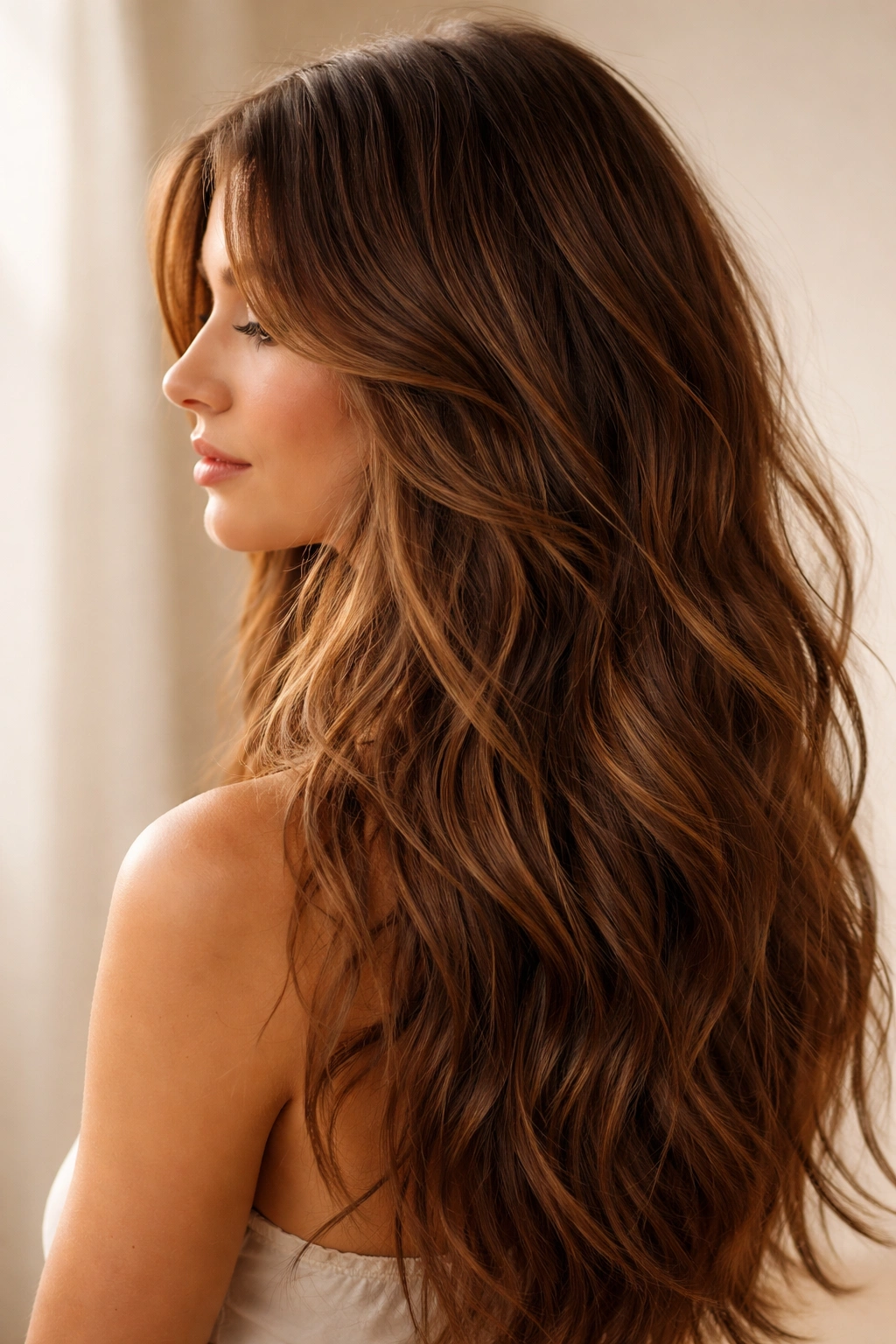
Beachy layered waves are the undisputed champion of effortless long-hair styling. This style works by creating choppy, shorter layers throughout the length of your hair, which allows the waves to move independently and create that signature tousled, just-rolled-out-of-bed aesthetic. In chestnut brown, the layering catches light throughout the hair, making each wave appear more three-dimensional and textured.
Why This Cut Transforms Chestnut Hair
Layered waves allow the chestnut color to show variations in depth as the shorter pieces move away from the longer base. The movement created by layers means sunlight hits multiple surfaces of the hair, revealing warmer tones in some areas and deeper tones in others. This natural highlight-and-shadow effect is something that solid, one-length hair simply cannot replicate. For chestnut specifically, those warmer honey and caramel undertones become far more visible when layers create movement and dimension.
How to Style and Maintain It
- Use a sea salt spray applied to damp hair, then scrunch as you blow-dry with your head flipped over for maximum texture
- Finish with a wave-forming cream or light texturizing paste for hold without crunchiness
- Sleep in loose braids on nights before you want especially defined waves
- Visit your stylist every 6-8 weeks for layer maintenance—layers lose their effect as hair grows out without shaping
- Avoid harsh brushing when dry; use a wide-tooth comb on damp hair instead to preserve the wave pattern
Pro tip: Apply sea salt spray to already-wavy damp hair rather than soaking-wet hair—this prevents the product from diluting and gives you more control over how defined your waves become.
2. The Soft Romantic Waves
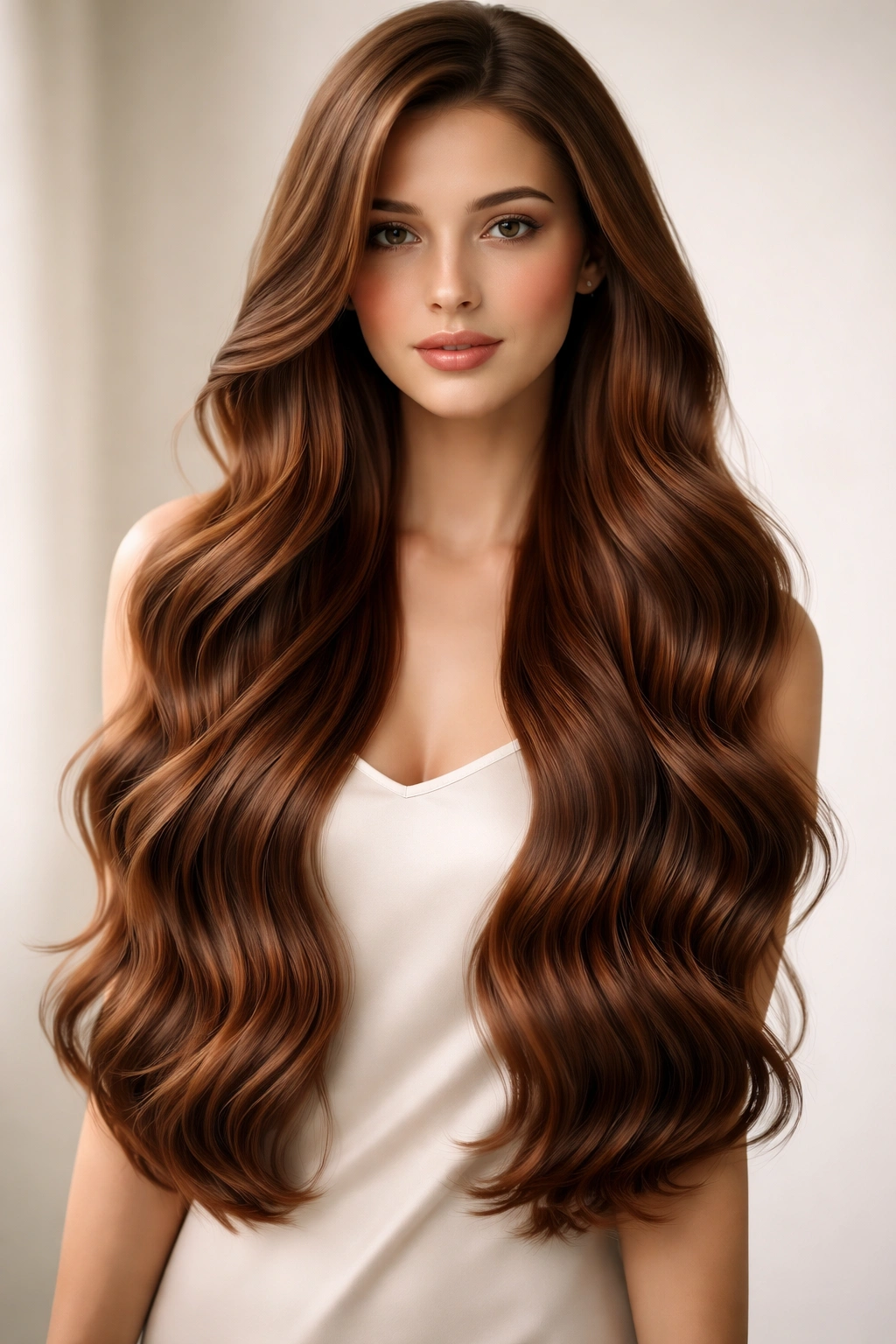
Soft romantic waves take a completely different approach than beachy layers—instead of choppy texture, this style emphasizes long, flowing curves that cascade down the length of the hair without much layering. The waves are intentionally looser and more uniform, creating an almost vintage-inspired elegance. In chestnut, this style reads as deeply feminine and polished, perfect for special occasions or anyone who prefers a more refined everyday aesthetic.
The Beauty of Uniformity in Long Hair
This style typically features hair that’s cut straight across or with minimal layers, allowing the waves to flow from root to tip in consistent curves. Chestnut brown in this style appears almost luminous because the longer, unbroken wave pattern means light travels further down the hair shaft, revealing the full depth of the color. The consistency of the waves also makes the chestnut tone appear more uniform and intentional, rather than highlighted or dimensional—it’s a solid, gorgeous canvas of color with movement on top.
Styling Techniques for Long Romantic Waves
- Use a 1.5-inch curling iron, wrapping sections around the barrel and holding for 8-10 seconds, then releasing
- Curl away from the face on both sides for a flattering frame
- Let curls cool completely before running your fingers through them for softer, more natural-looking waves
- Apply a light hairspray before curling to help waves hold through the day
- Refresh second-day waves by spritzing with a wave-refreshing spray or dry shampoo and gently scrunching
- Sleep on a silk pillowcase to reduce friction and preserve wave shape overnight
Insider note: The key to soft romantic waves that don’t look overdone is to curl only to mid-length or lower—leaving the roots straight creates a more natural, less “styled” appearance that reads as effortlessly elegant.
3. The Lived-In Dimensional Wave
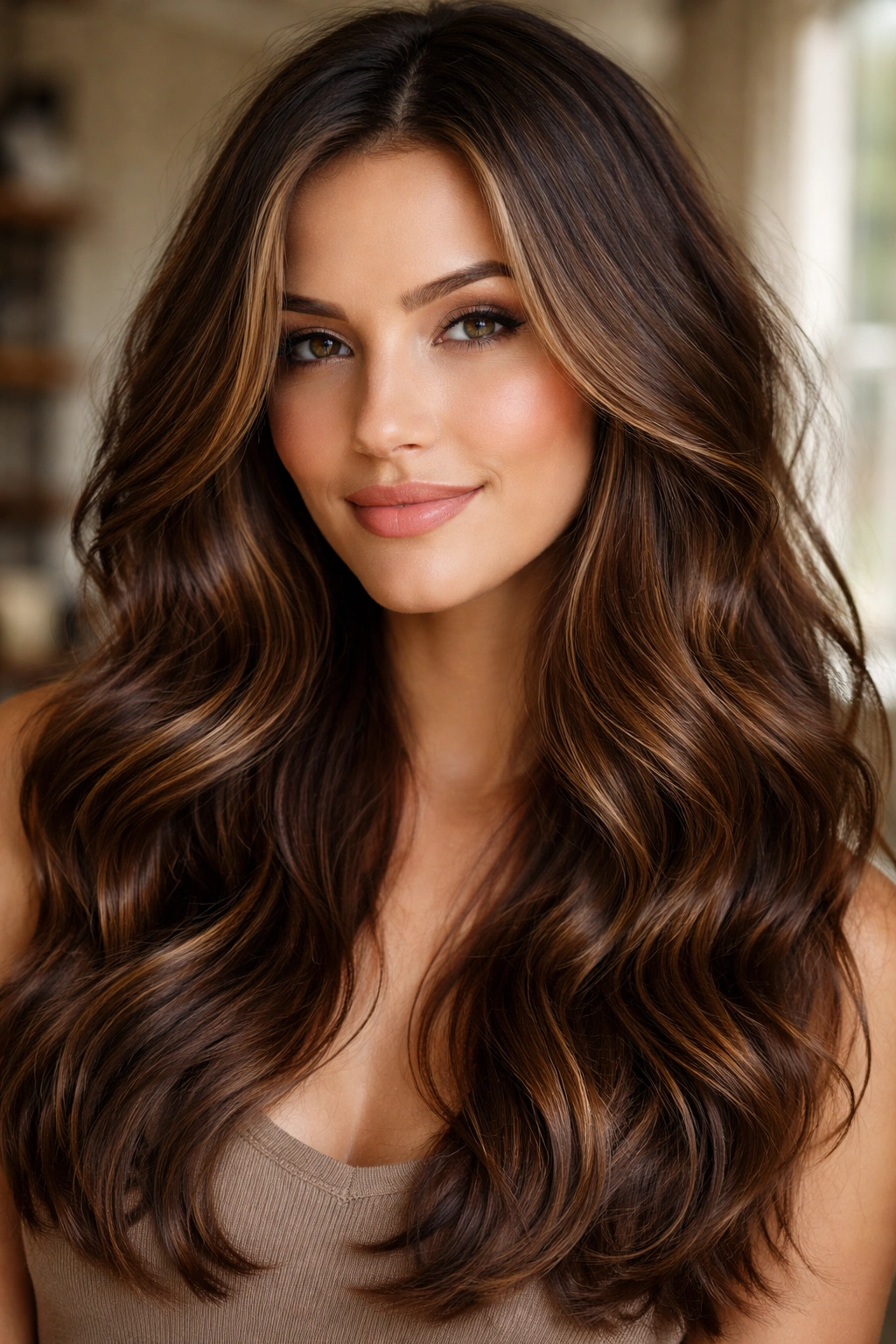
This style bridges the gap between beachy texture and polished waves, creating a look that feels natural and intentional without appearing heavily styled. Dimensional waves incorporate subtle layering mixed with strategic highlights or lowlights that create even more movement and visual interest than solid chestnut alone. The dimension can come from actual color variation (like adding caramel or copper highlights) or simply from how the layers and waves catch light.
How Dimension Creates Depth in Chestnut
Pure chestnut is beautiful, but dimensional chestnut is captivating. By introducing slightly lighter or warmer tones in strategic places—perhaps caramel highlights throughout the mid-lengths and ends, or deeper copper tones in the deeper layers—you create the illusion of even more texture and movement than the waves alone provide. When light hits a highlighted section of a wavy strand, it bounces differently than it would off a solid chestnut section, creating an almost shimmering effect as the hair moves. This is why dimensional long wavy hair photographs so beautifully and catches attention in person.
Creating and Maintaining Dimensional Waves
- Ask your stylist for “invisible” or “shadow” layers—shorter pieces underneath that don’t show when the hair is down, but create movement in the waves
- Consider adding dimensional color through balayage (hand-painted highlights) rather than traditional foils for a more natural, lived-in effect
- Use a curling iron or wave iron to encourage natural-looking waves that work with your hair’s texture
- Apply a heat protectant before any heat styling and use lower heat settings (around 350°F) to prevent damage to color-treated hair
- Deep condition weekly if you’ve added dimensional color, as lighter pieces are more porous and need extra moisture
- Schedule color touch-ups every 8-12 weeks depending on how visible your roots are and how much the dimension fades
Worth knowing: Dimensional color actually helps conceal regrowth better than solid color because the variation is less noticeable against root growth—this is one of the practical benefits of adding highlights to chestnut.
4. The Textured Shag Wave
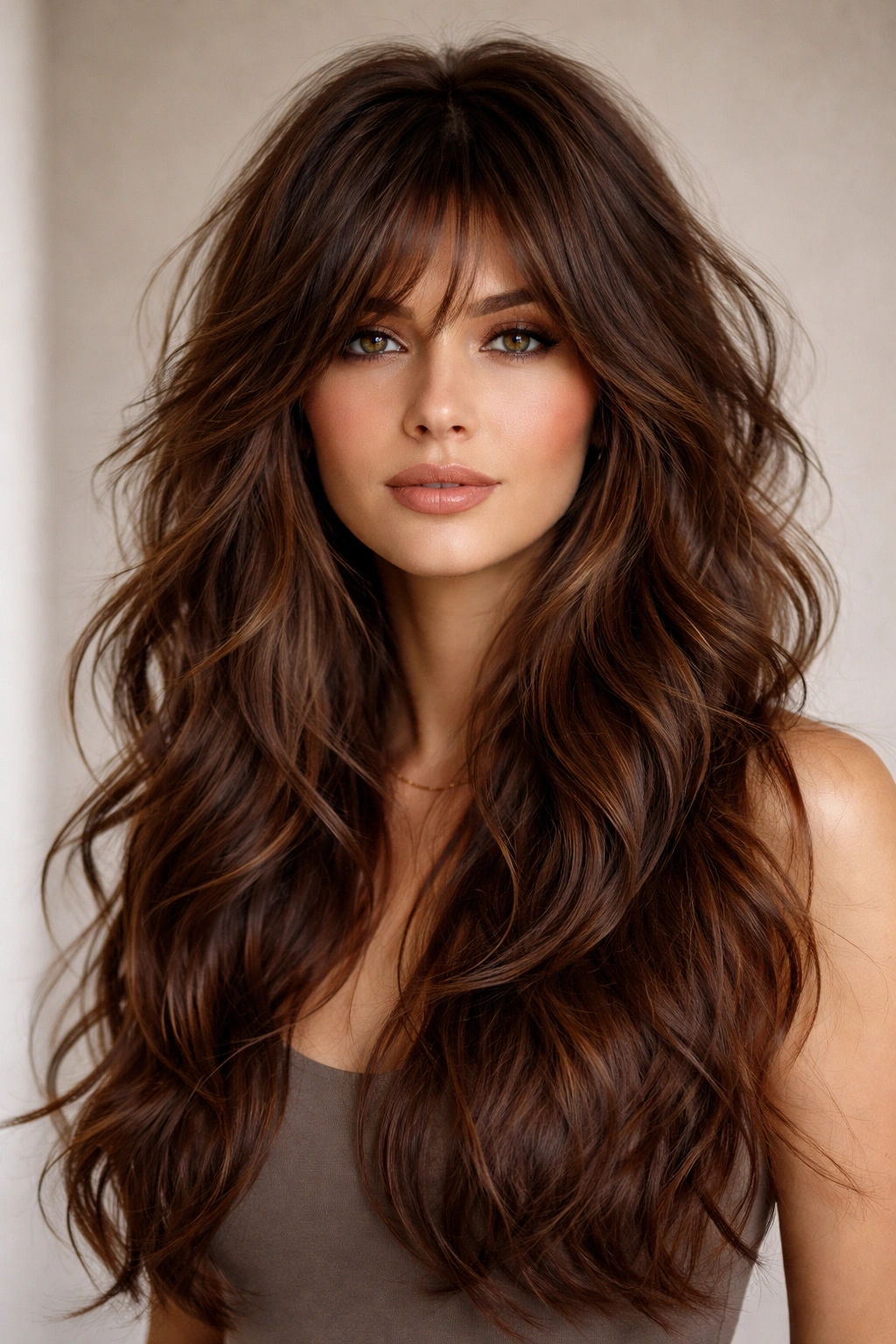
Shag haircuts experienced a major resurgence, and for good reason—when done well, they create unmatched textural interest and movement. A wavy shag in chestnut is modern, playful, and surprisingly flattering. This style combines the layering intensity of a true shag (very short layers throughout, including at the crown) with long wavy hair, creating a style that’s voluminous at the roots, textured throughout, and dramatically wavy at the ends.
Shag Waves and Chestnut’s Hidden Dimensions
The extreme layering in a shag cut means nearly every section of your hair is a different length, which creates pockets of shadow and light when those layers wave. In chestnut brown, this becomes visually stunning because the color deepens slightly in the shadowed areas between layers and appears lighter and warmer where light touches the topmost layers. The textural complexity of a shag cut makes chestnut appear more interesting and dynamic than it would in a one-length style.
Styling a Long Shag with Waves
- Blow-dry with a diffuser attachment to encourage natural wave formation without frizz
- Use a texturizing spray or dry shampoo on damp hair before blow-drying for extra grip and volume
- Finger-comb your hair as it dries rather than using a brush—this maintains the shag’s intentional texture
- Scrunch in a lightweight wave cream or curl cream while damp for definition
- Embrace the slightly undone, textured appearance—a shag is meant to look lived-in and effortless, not polished
- Style second-day hair by spritzing with wave refresher spray and scrunching or gently twisting sections
Pro tip: Shag cuts require more frequent trims (every 4-6 weeks) to maintain the layered shape and prevent the style from looking matted or shapeless as it grows out.
5. The Cascading Side-Part Wave
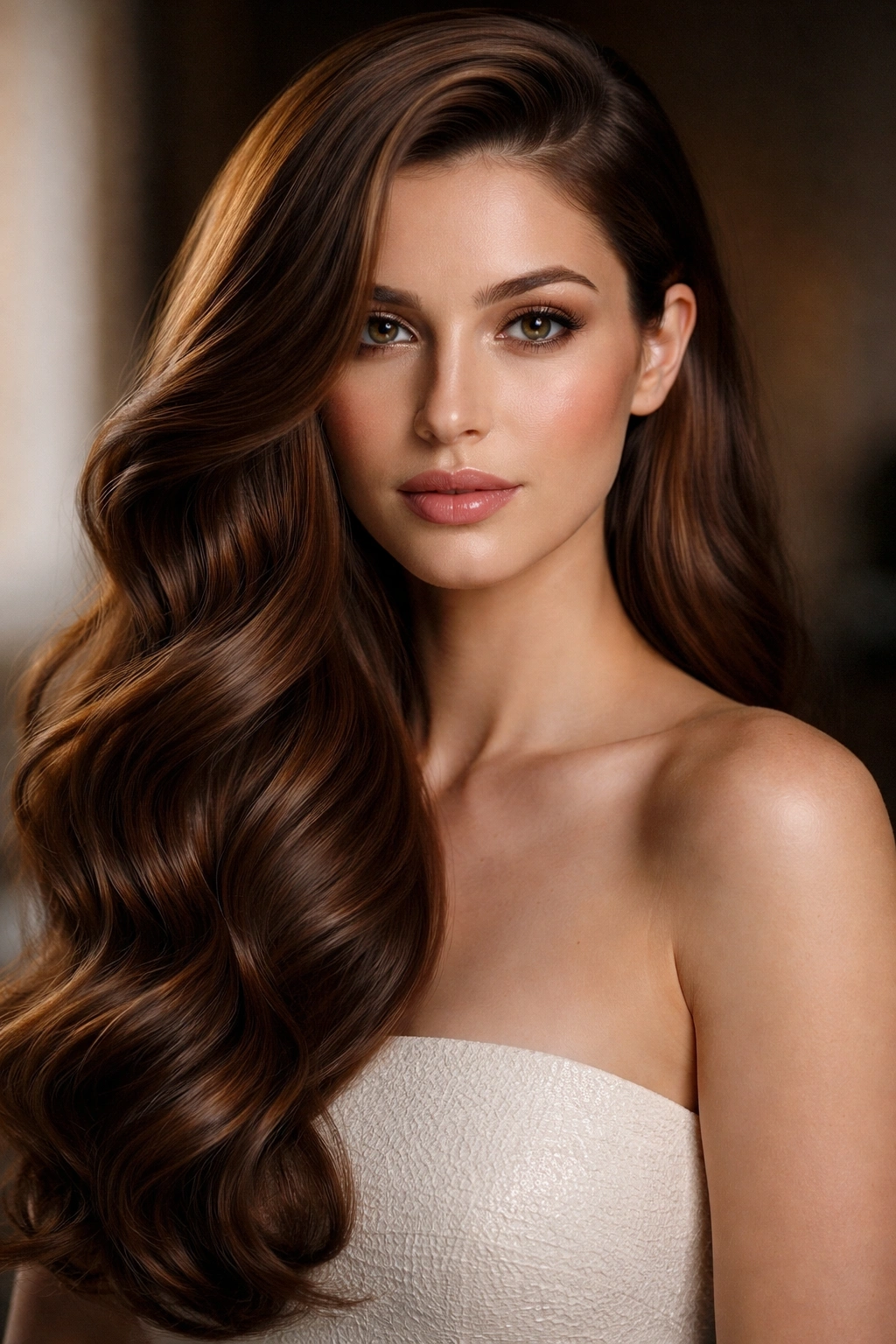
This style emphasizes an asymmetrical side part and long, flowing waves that cascade preferentially to one side, creating an elegant, almost red-carpet aesthetic. The waves in this style are typically looser and larger than beachy waves, and the side-part creates an intentional, polished frame for the face. In chestnut, this style has an especially sophisticated, timeless quality—it’s reminiscent of Old Hollywood glamour but feels entirely modern.
Framing the Face with Side-Parted Waves
When hair is parted to the side and waved, the longer side frames one side of the face while the other side remains slightly more open. This creates a flattering asymmetry that works well for most face shapes. The waves themselves, when parted deeply to one side, appear even more dramatic because the length of hair has more distance to travel in its wave pattern. Chestnut brown in this configuration appears especially lustrous because the waves create highlights and shadows that emphasize the hair’s dimension and shine.
Technique for Long Cascading Waves
- Create a deep side part by running a fine-tooth comb from one temple all the way back to the opposite ear
- Using a 1.25 or 1.5-inch curling iron, curl hair away from the face on both sides
- Curl the longer side (the side with more volume from the deep part) in sections, working from the back forward
- Allow curls to cool completely before brushing through gently with your fingers
- Use a smoothing serum on the roots and upper lengths to create a sleek base, contrasting with the waved ends
- Finish with a flexible-hold hairspray that won’t make the waves feel stiff
Real talk: This style photographs beautifully and is perfect for special events, but it requires more styling time than truly effortless waves—it’s worth the effort if you love a polished, intentional look.
6. The Undone Wavy Lob with Extensions
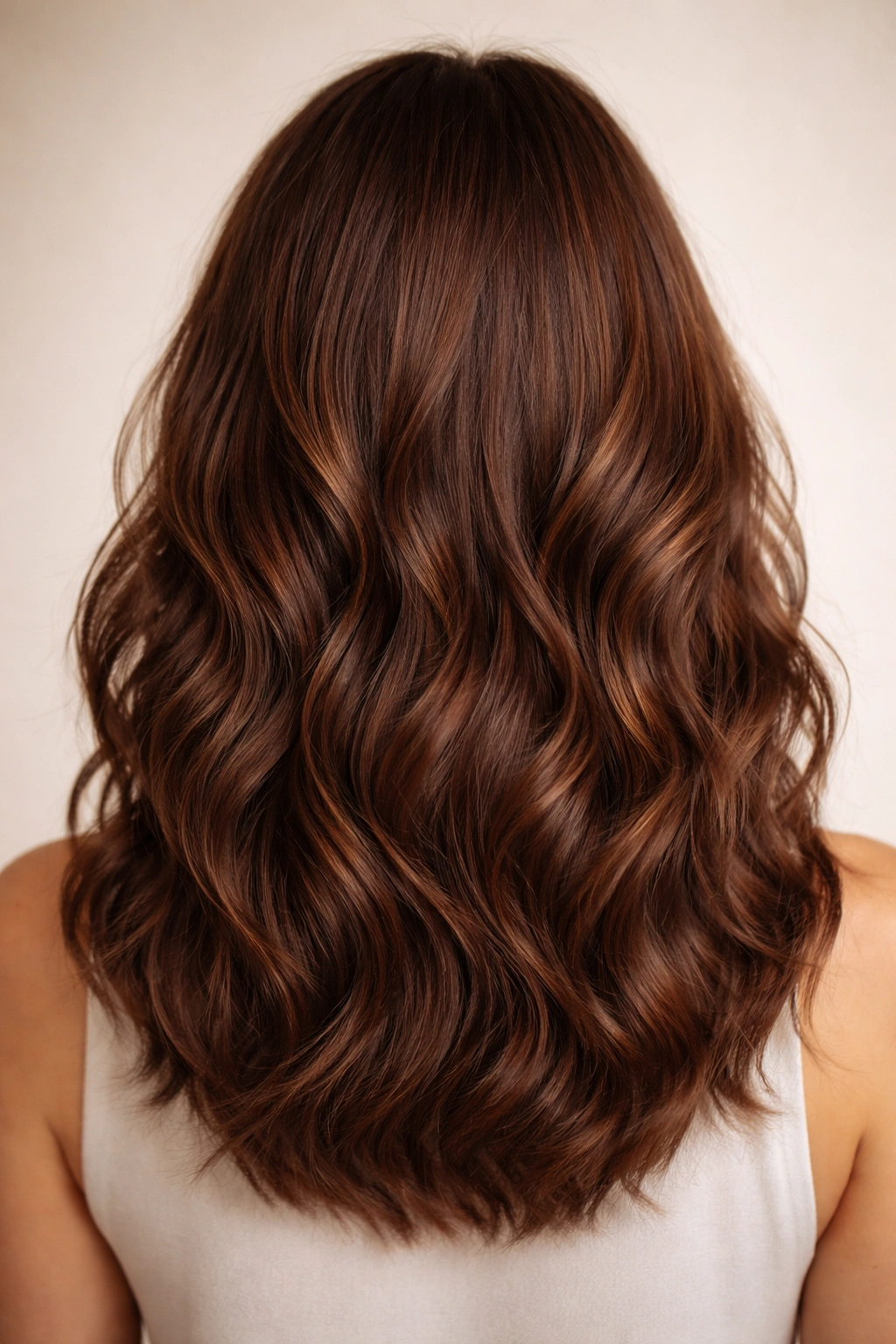
If you love the idea of long wavy hair but aren’t ready to commit to growing it out or prefer a more practical length, a long lob (shoulder-blade length) with subtle extensions and natural waves offers the best of both worlds. Extensions in chestnut blend seamlessly with your natural color while adding length and the ability to wear fuller, thicker waves. This style sits at that sweet spot where it’s long enough to feel romantic and wavy, but short enough to be genuinely manageable for daily life.
Why Extensions Work with Chestnut
Chestnut brown is perhaps the easiest color to match with extensions because it’s a medium tone that sits comfortably in the middle of the color spectrum. Slightly lighter or slightly darker pieces of extensions blend almost invisibly against chestnut base color, whereas they might be obvious against blonde or black hair. Extensions give you the ability to wear fuller waves and thicker-looking hair without the commitment of growing out your natural hair or the weight and potential damage of very long natural hair.
Extension Application and Wavy Styling
- Clip-in extensions are ideal for experimenting with longer waves without permanent commitment
- Tape-in or fusion extensions last longer (6-8 weeks) if you want a more permanent wavy look
- Always match extensions to your natural chestnut shade, or go one shade lighter for subtle dimensional effect
- Use extensions in the mid-lengths and ends, where natural hair is thinner and less dense
- Style with waves using a curling iron rather than relying on the extension’s natural texture
- Apply a strengthening serum to the bonds or clips weekly to prevent damage and slippage
- Sleep with hair in a loose braid to prevent tangles and preserve wave shape
Important note: Quality matters hugely with extensions—investing in genuine human hair extensions in your exact shade will look and feel infinitely better than cheaper synthetic alternatives.
7. The Tousled Everyday Wave
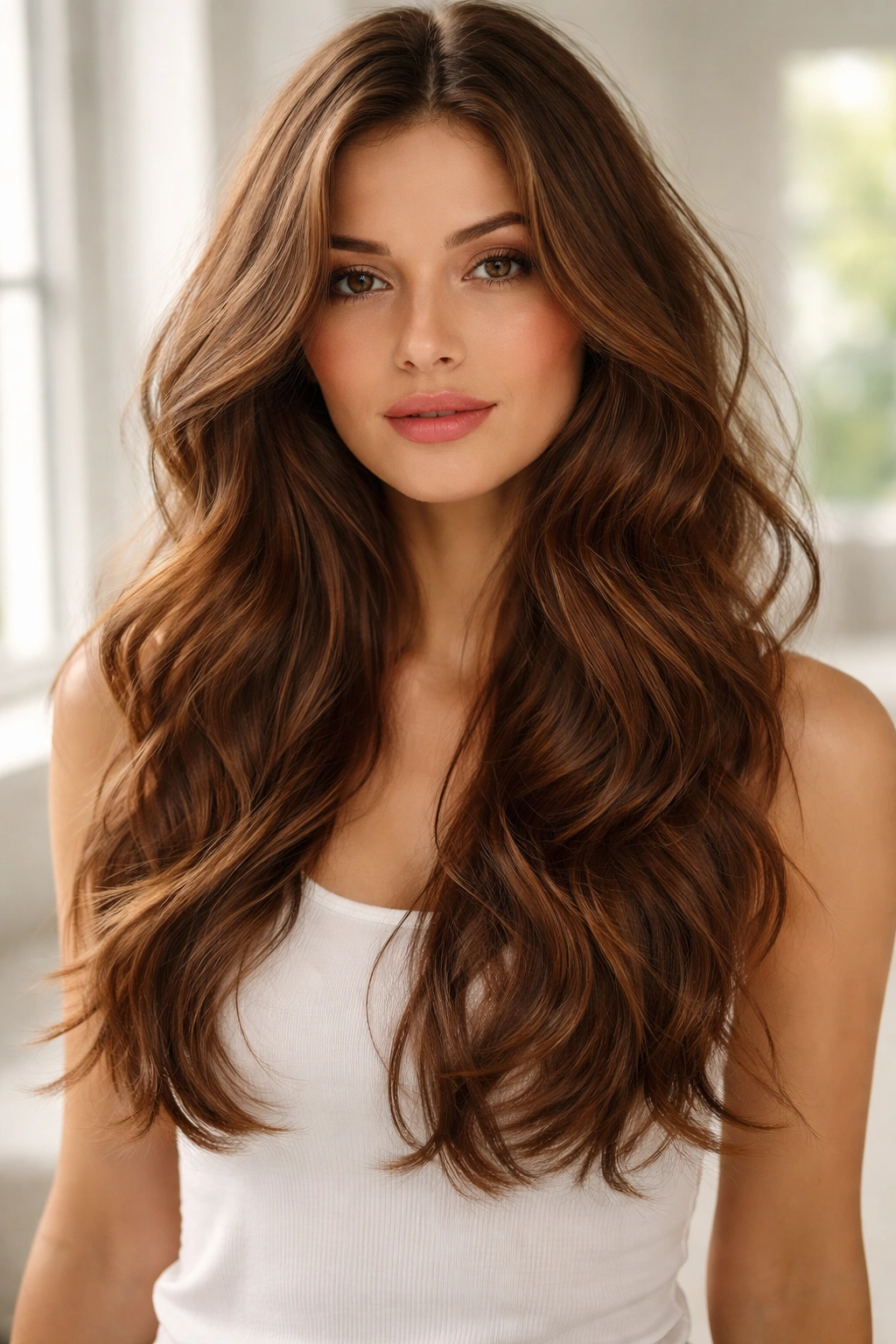
This is the holy grail for anyone who wants waves but doesn’t have time for daily styling. Tousled everyday waves prioritize natural texture and movement over intentional, polished waves. The goal is hair that looks like it waves naturally (or close to it), requires minimal styling, and looks good on days two and three without refreshing. In chestnut, this casual approach is surprisingly sophisticated because the richness of the color itself carries enough visual weight that elaborate styling isn’t necessary.
Achieving Low-Maintenance Waves in Chestnut
This style typically requires a cut that works with your hair’s natural texture—meaning your stylist assesses your natural wave pattern and either enhances it with strategic layering or encourages it with the cut itself. Chestnut brown actually makes less-styled hair look intentional and polished in a way that lighter colors might not. The depth of the color reads as curated even when the styling is minimal.
The Minimal Styling Approach
- Apply a wave cream or texturizing mousse to damp roots and mid-lengths
- Blow-dry with your head flipped over and a diffuser attachment to encourage natural waves
- Allow hair to air-dry completely for the most natural appearance
- Use dry shampoo or texturizing spray on second or third day hair to refresh waves without washing
- Avoid brushing when dry—finger-comb or use a wide-tooth comb on damp hair only
- Sleep on a silk pillowcase and in a loose braid to preserve wave shape
- Refresh waves by misting with water and scrunching, or using a wave-refreshing spray
Worth knowing: This style typically requires less frequent trims (every 8-10 weeks) because the less-structured cut doesn’t lose its shape as quickly as a precisely-layered cut might.
8. The Beachy Waves with Face-Framing Layers
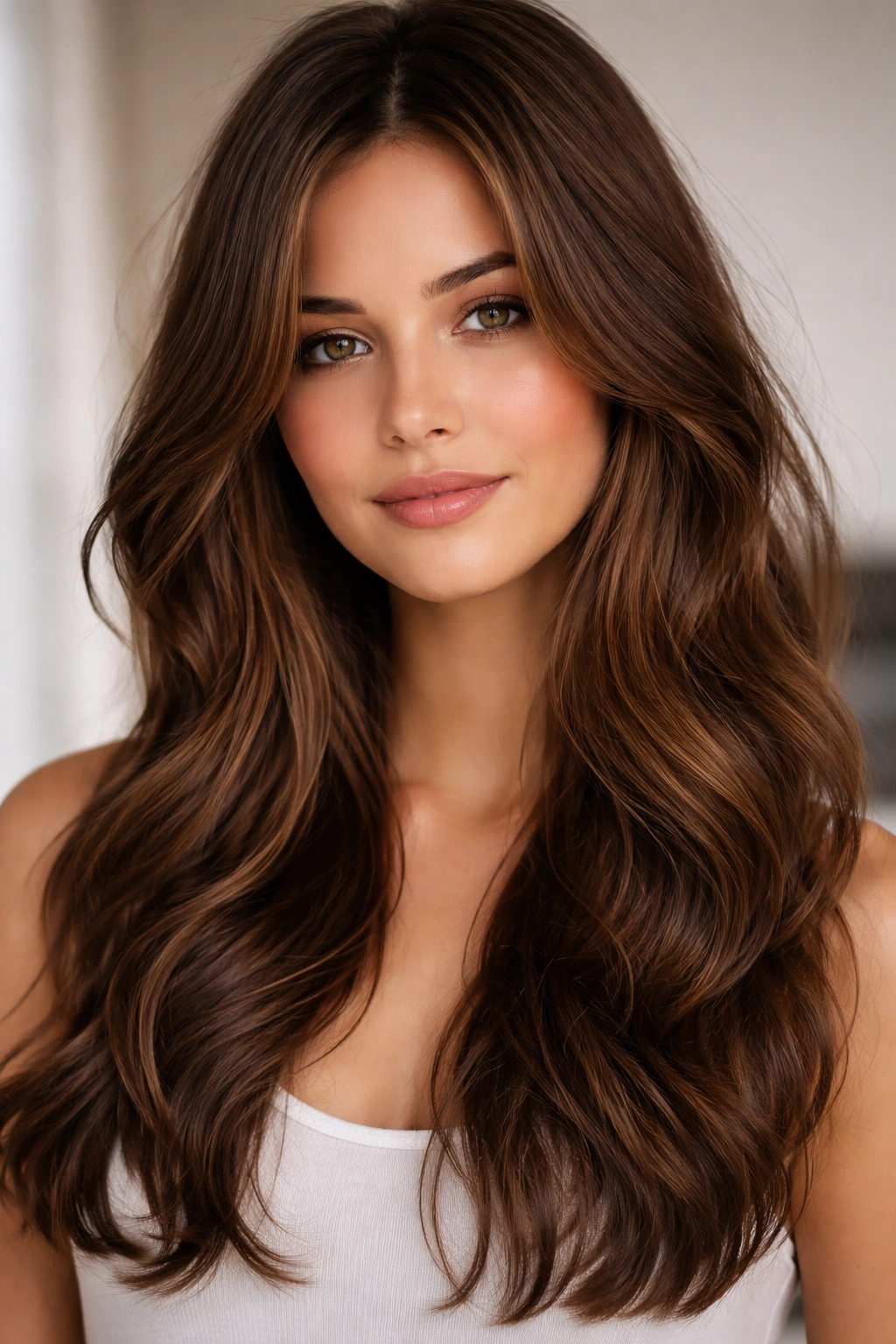
This variation of beachy waves emphasizes shorter, more intentional layers specifically around the face, creating a flattering frame that draws attention to your features. While the back of the hair retains longer lengths and waves, the face-framing layers are noticeably shorter and create movement closer to the face. In chestnut brown, this style is especially flattering because the shorter pieces pick up light and add brightness near the face, making skin appear radiant.
Face-Framing Layering and Chestnut Color
Shorter layers near the face in chestnut brown create an almost halo effect when light hits them, especially if there’s any dimension or warmth in your tone. The shorter pieces also tend to wave more dramatically than longer hair, so the movement and texture are concentrated right where you want them—framing and flattering the face. This is why face-framing layers are so universally flattering and why hairstylists recommend them so frequently.
Creating Definition with Face-Framing Layers
- Ask your stylist to cut layers that start at cheekbone length and get progressively longer as they move toward the back
- Angle the layers slightly toward the face (shorter in front, longer in back) for a face-flattering shape
- Style shorter face-framing pieces with slightly tighter waves or curls than the back section for more dramatic texture near the face
- Use a smaller curling iron (1-inch) for face-framing sections and a larger iron (1.5-inch) for back layers
- Apply a volumizing mousse to roots to keep shorter layers from lying flat against the head
- Dry shorter sections first while hair is still quite wet for better hold
- Use a texture spray specifically on shorter layers to keep them separated and defined
Pro tip: If you have fine or thin hair, face-framing layers can actually make your hair look fuller because the shorter pieces create the illusion of density and movement.
9. The Long Wavy Hair with Subtle Balayage
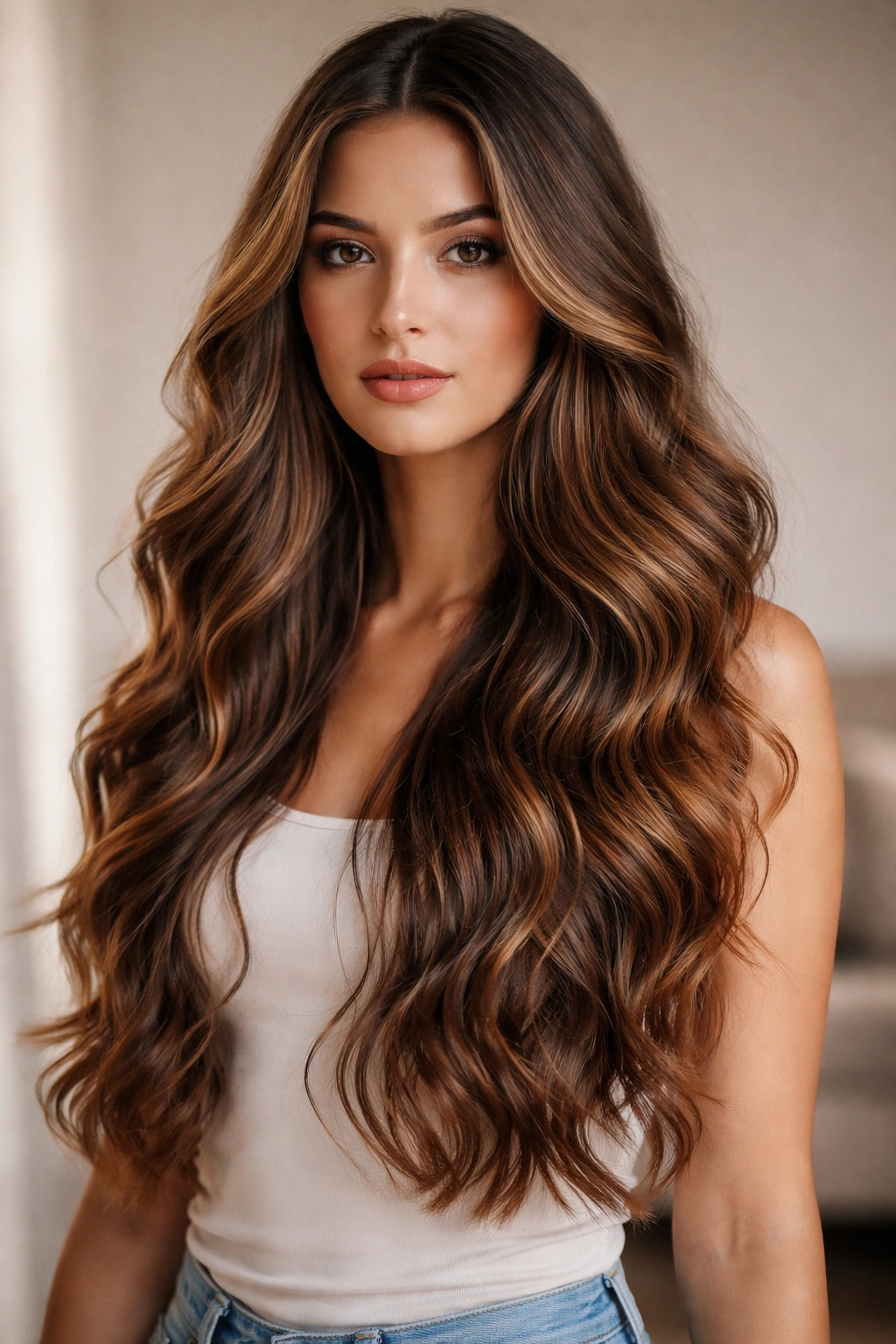
This final style takes long wavy chestnut hair and elevates it with subtle balayage—hand-painted color that creates the appearance of naturally sun-kissed, multidimensional hair. Rather than a complete color change, balayage on chestnut involves adding warmer, lighter tones (caramel, honey, copper) in a way that looks like your hair has naturally lightened from sun exposure. Combined with waves, this creates an incredibly dimensional, high-fashion aesthetic.
Balayage and Wavy Hair: A Perfect Pairing
Waves magnify the impact of dimensional color because light bounces differently off lighter and darker sections as the hair moves. A balayage on straight chestnut hair looks nice; the same balayage on wavy chestnut hair looks transformative. The lighter pieces catch the eye first, and the waves create constant movement that shows off the dimension from multiple angles. This style reads as deliberately styled and expensive without requiring daily complicated styling.
Application and Maintenance of Balayage Waves
- Work with a skilled colorist experienced in balayage—this is not a technique that translates well to at-home application
- Discuss placement with your colorist before application; typically, lighter pieces are concentrated in the mid-lengths and ends for a natural look
- Avoid painting color on roots to create a low-maintenance grow-out that’s less noticeable
- Schedule touch-ups every 12-16 weeks rather than every 4-6 weeks because balayage fades more subtly
- Use a color-safe shampoo and conditioner to prevent fading between appointments
- Apply heat protectant before any heat styling, as color-treated hair is more porous and prone to damage
- Deep condition weekly to maintain moisture in lighter, more porous pieces
- Tone hair every 4-6 weeks with a semi-permanent toner if lighter pieces start to look brassy
Insider note: Balayage is the most forgiving dimensional color technique because it’s hand-painted rather than sectioned, meaning regrowth and fading blend more naturally and look less obvious than traditional highlights would.
Final Thoughts
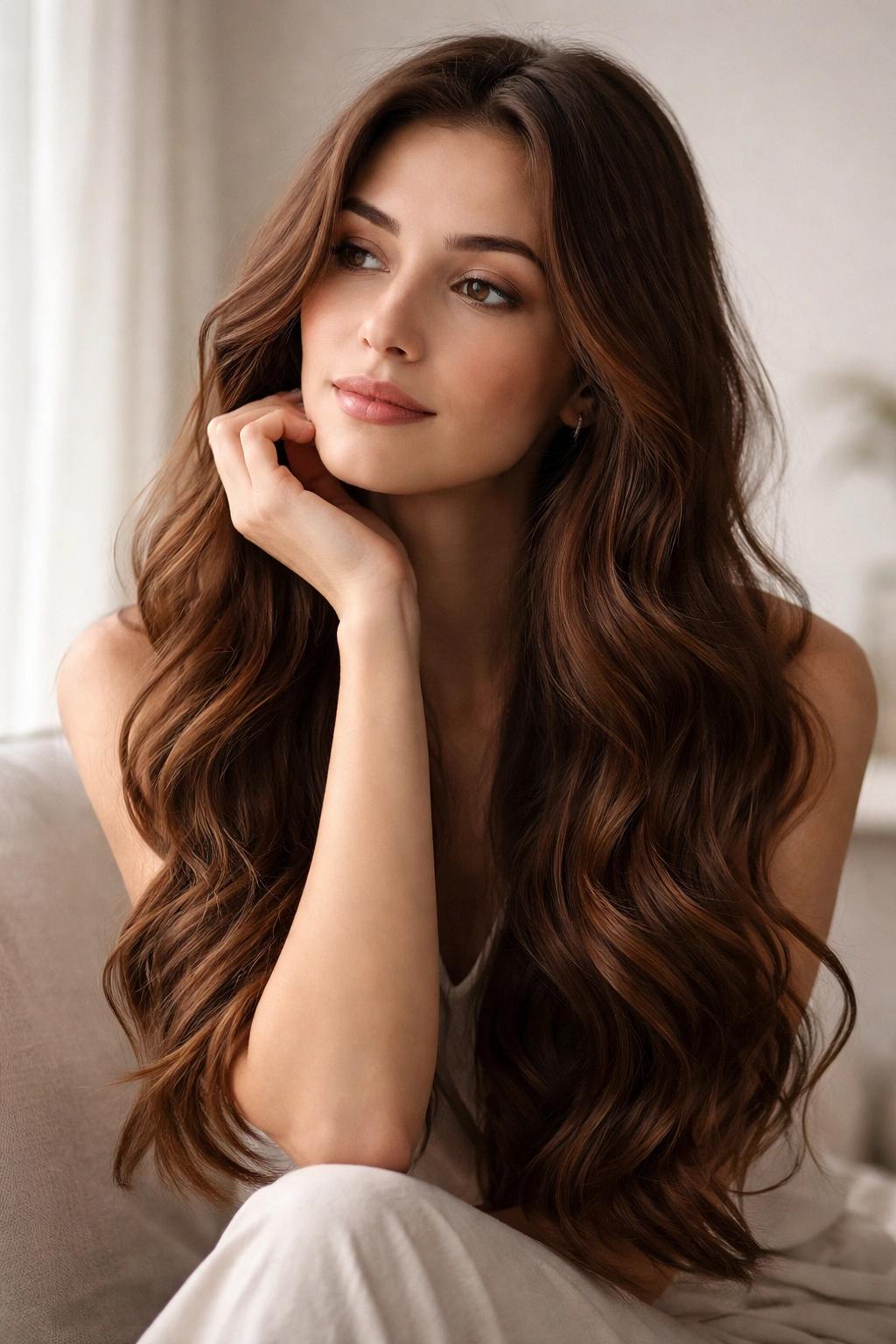
Long wavy chestnut hairstyles offer something truly special—they’re versatile enough to work for casual everyday wear or special occasions, flattering across most face shapes and hair textures, and rich enough in color that they can look polished even without elaborate styling. Whether you’re drawn to the effortless texture of beachy layers, the elegance of soft romantic waves, the modern edge of a shag cut, or the sophistication of dimensional color, chestnut brown provides the perfect canvas for wavy hair to truly shine.
The key to loving any of these styles long-term is choosing something that aligns with how much time you’re willing to spend styling. If you love the ease of tousled everyday waves, that’s a valid choice that will look great without requiring 20 minutes of heat styling each morning. If you adore the polished appearance of cascading side-parted waves and don’t mind dedicating time to styling, that’s equally valid. The beauty of long wavy hair is that the length and movement themselves carry enough visual interest that you have flexibility in how much effort you invest.
Beyond styling considerations, remember that long wavy hair in chestnut brown requires consistent care to keep it looking its best. Regular trims every 6-10 weeks maintain the shape and health of your ends, deep conditioning treatments protect and enhance the color, and heat protectant before styling prevents damage that can leave hair looking dull and lifeless. Invest in these fundamentals and any of these nine styles will look gorgeous for months to come.
