



Wave patterns have long been associated with elegance and sophistication, and when it comes to formal occasions, they’re one of the most versatile options available. Unlike stick-straight styles that require constant touch-ups or rigid curls that can feel dated, waves strike the perfect balance between polished and effortless—the hallmark of truly formal styling. Whether you’re attending a black-tie wedding, a gala, a red carpet event, or an upscale dinner, wavy hairstyles offer dimension, movement, and a timeless quality that photographs beautifully and holds up throughout an entire evening.
The beauty of waves for formal settings lies in their adaptability. They work with virtually every face shape, complement most skin tones, and can be customized from romantic and loose to sleek and structured depending on the dress code and venue. More importantly, waves have the practical advantage of forgiving minor imperfections—a strand that falls slightly out of place still looks intentional, and the texture provides grip that helps styles stay put during an evening of movement, dancing, or mingling.
What separates formal wavy styles from everyday beach waves is precision. The difference between “just rolled out of bed” waves and red-carpet waves comes down to consistency of pattern, attention to proportional styling, the strategic use of accessories or styling techniques to elevate the look, and the quality of products used to ensure the waves last without looking frizzy or deflated by the end of the night. This guide covers ten sophisticated wavy hairstyles specifically designed to complement formal attire and occasion expectations.
1. Hollywood Waves with Half-Up Styling
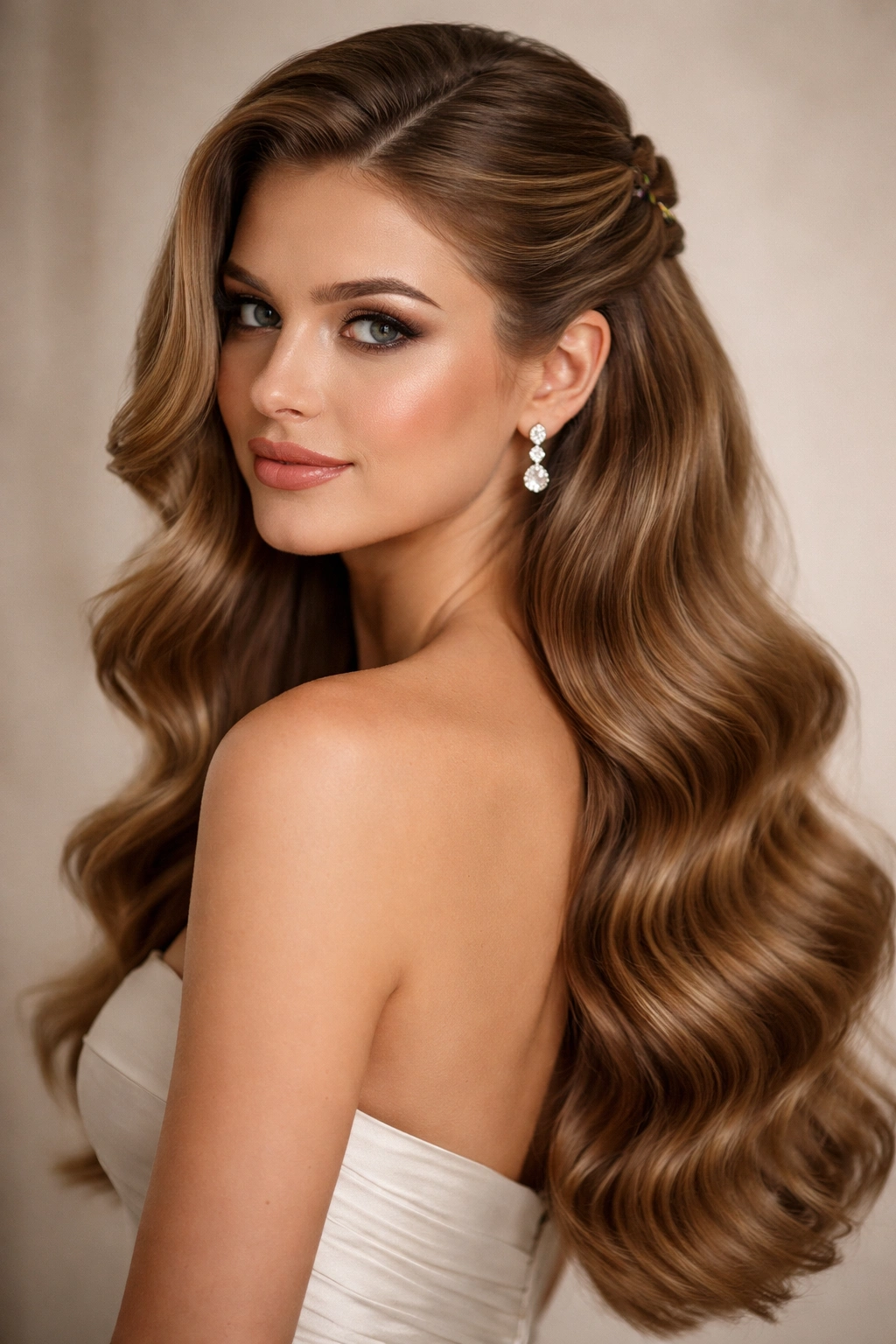
Classic Hollywood waves represent the gold standard of formal elegance—a hairstyle synonymous with glamour, confidence, and timeless beauty. This style features deep, uniform waves that run through the full length of the hair, then incorporates a half-up element that adds sophistication while keeping hair partially off the face. The half-up section is typically twisted, braided subtly, or gathered into a soft knot, secured with bobby pins that match your hair color for invisibility.
Why It Works for Formal Events
Hollywood waves project instant polish and work equally well for black-tie events, weddings, award ceremonies, or cocktail galas. The combination of waves and the half-up structure prevents hair from looking limp or flat against the face, which is crucial under formal lighting and photography. The style reads as intentional and elevated while remaining wearable for hours without excessive damage or discomfort.
How to Create and Perfect It
- Blow-dry hair with a barrel brush to create a smooth base, then section the dried hair into three or four vertical sections using clips
- Using a 1.5-inch curling iron or waving iron, curl each section away from the face, holding each curl for three to five seconds, then gently releasing
- Allow curls to cool completely before combing through—this sets the wave pattern permanently for the evening
- Take a section from each temple and twist it gently back, securing both twists together at the crown with bobby pins hidden beneath the waves
- Finish with a flexible-hold hairspray that doesn’t create crunchiness; this protects the waves without making them feel stiff or immobile
Pro tip: Create waves the night before and sleep on them loosely braided; refresh them in the morning with a curling iron for a wave pattern that lasts twice as long because the hair has already set into the shape.
2. Soft Side Waves with Low Ponytail
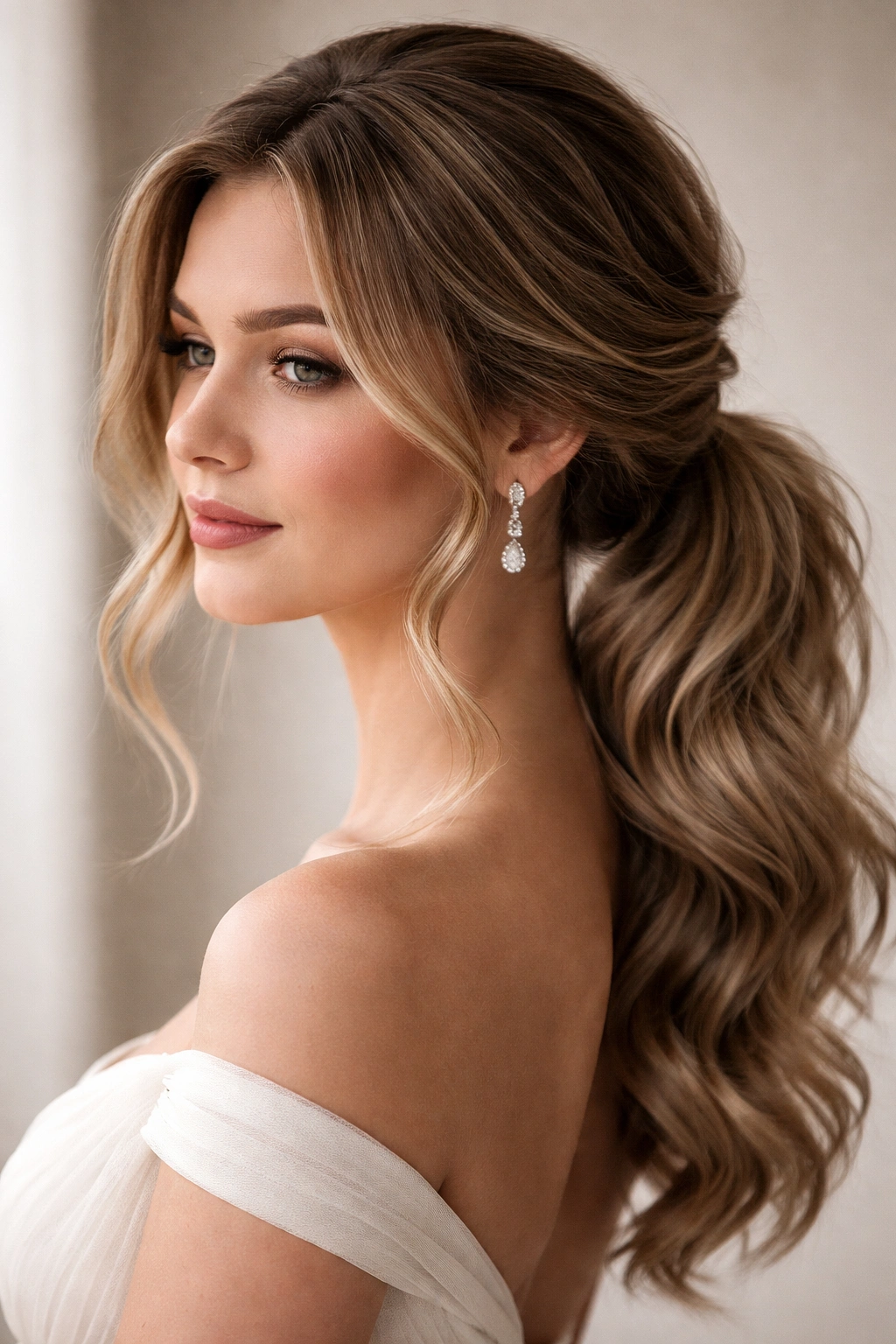
This variation takes the romantic essence of waves and pairs them with the restraint of a low ponytail, creating a style that feels both relaxed and completely refined. The waves are kept loose and flowing rather than structured, and they frame the face softly before the hair is gathered into a low, centered or slightly-off-center ponytail at the nape of the neck. The ponytail itself is typically left loose and voluminous, with face-framing pieces intentionally released to soften the look.
Why It Works for Formal Events
The side wave and ponytail combination works particularly well for events where you want elegance without severity—rehearsal dinners, bridal showers, garden parties, or intimate formal dinners. The softness of the waves prevents the ponytail from looking too utilitarian, while the gathered element prevents hair from feeling completely open and unstructured. It’s also exceptionally practical for formal events involving physical activity, as the hair remains off the face while maintaining visual interest.
Styling Steps and Details
- Create soft waves using a one-inch curling iron or a salt spray and braiding method; the goal is loose, touchable texture rather than defined curl
- Brush through the waves gently with a wide-tooth comb to create a soft, flowing pattern rather than distinct ringlets
- Take a section of hair from one side (typically the right side for a traditional look), and use a fine-tooth comb to gather the ponytail at the nape, securing with an elastic that matches your hair color
- Release two to three delicate face-framing pieces from the front to soften the style
- Wrap a thin strand of hair around the elastic base to hide it completely, securing with a bobby pin tucked into the wrap
- Use a volumizing mousse at the crown before styling to ensure the ponytail has lift and body rather than sitting flat against the head
Worth knowing: Soft waves maintain their shape longer when you use a heat protectant spray before creating them and finish with a light-to-medium hold hairspray; heavy products flatten the waves.
3. Romantic Finger Waves with Vintage Twist
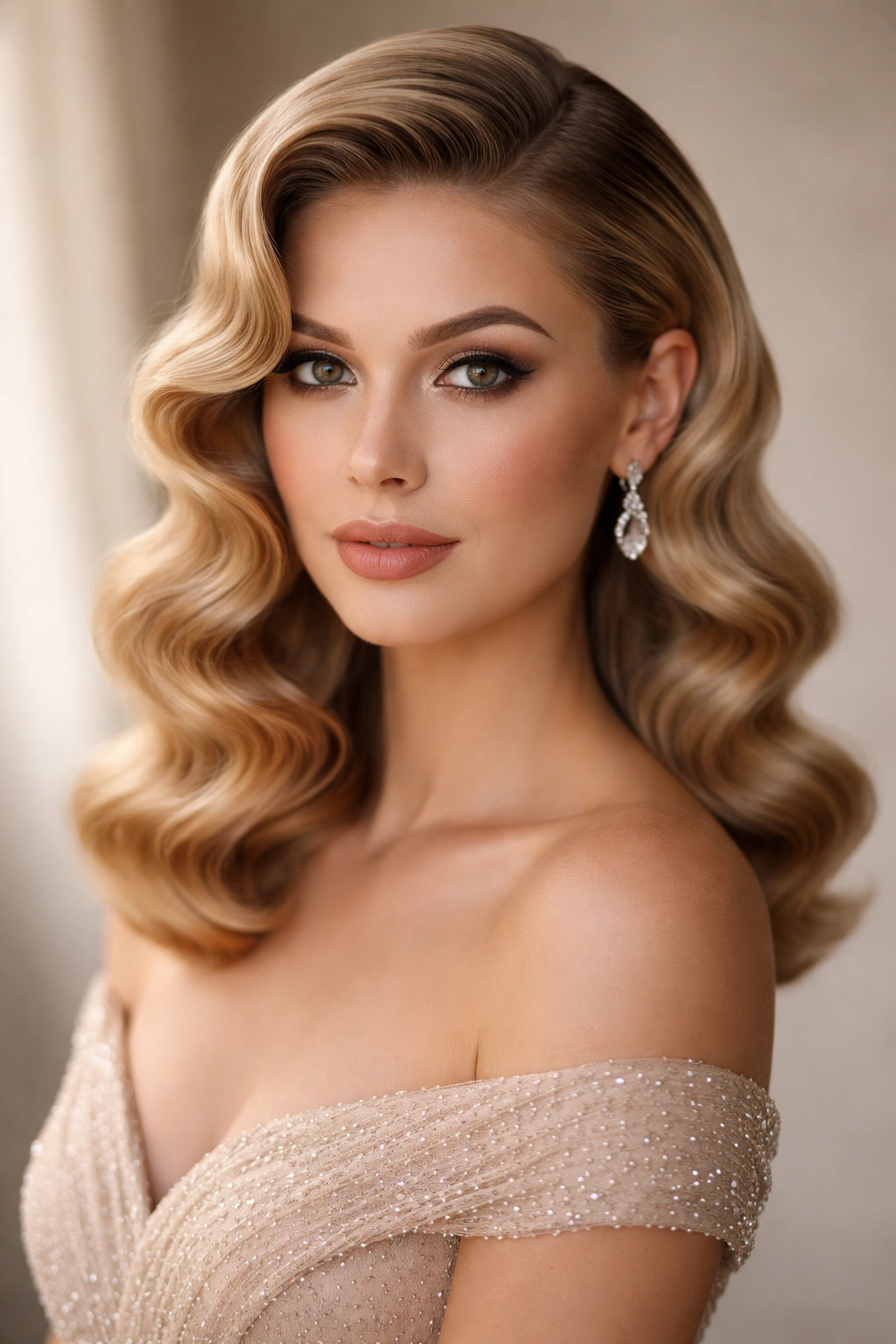
Finger waves are an undeniably glamorous choice for formal occasions, drawing inspiration from 1920s art deco elegance and 1950s Old Hollywood sophistication. This style features precise, structured S-shaped waves that flow from the crown down the length of the hair, created by using your fingers (or a wave setting clip) to sculpt wet or damp hair into the wave pattern, then either heat-setting or pin-setting until dry. The result is waves with sharp, visible definition that photograph beautifully and maintain their shape all evening.
Why It Works for Formal Events
Finger waves convey intentionality and effort in a way that reads as respectful to a formal dress code. The structured pattern suggests both vintage romance and contemporary edge, making this style appropriate for weddings, charity galas, theater events, or any black-tie occasion. Unlike loose waves that can blur together, finger waves create distinctive visual geometry that adds sophistication and ensures the hairstyle remains a standout feature throughout the event.
Creating Precise Finger Waves
- Apply a setting lotion or light gel to damp hair; this is essential because finger waves require moisture to hold their shape initially
- Section the hair into two or three vertical sections using clips; work on one section at a time
- Using your pointer and middle fingers, create an S-curve starting at the roots: position your fingers horizontally, push hair forward to create the first curve, then push backward to create the second curve, repeating down the length
- Use a wave clip or bobby pin to hold the first wave in place while it sets
- Blow-dry the section while the waves are clipped, or allow them to air-dry completely before releasing (air-drying creates longer-lasting waves)
- Once all sections are dry and waves are set, gently remove clips and pins, then use a fine-tooth comb to subtly blend the wave lines if they’re too harsh
- Finish with a medium-hold hairspray that allows some movement while keeping the wave structure intact
Pro tip: If creating finger waves feels too technical, use a flat iron on low heat to press waves that you’ve already styled with a curling iron; this creates sharper definition without the labor-intensive pin-setting process.
4. Textured Side-Swept Waves with Crown Detail
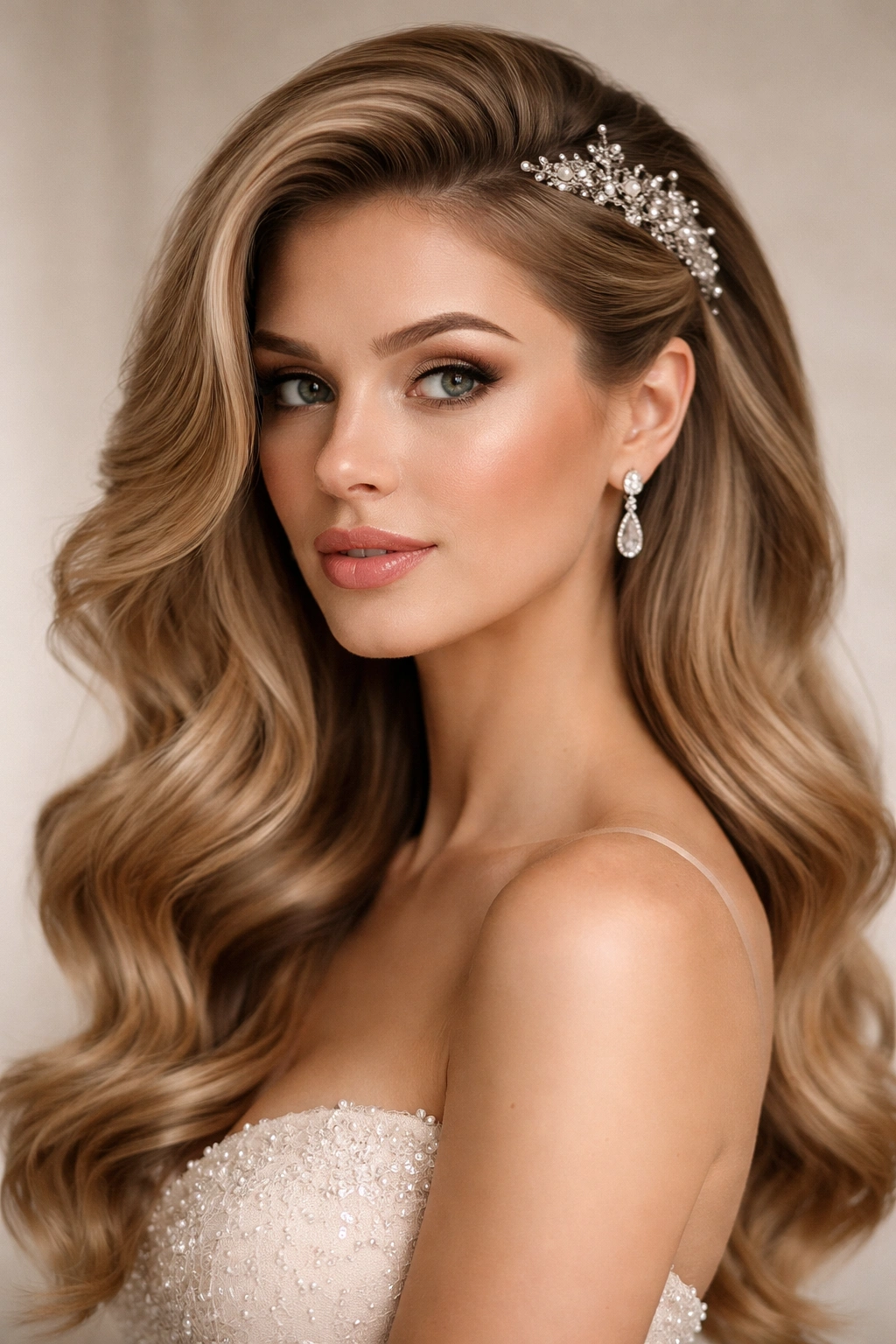
This style prioritizes movement and dimension by creating waves that sweep dramatically to one side while incorporating a subtle crown detail—either a thin braid, a delicate twist, or a cluster of bobby pins hidden under the top layer of waves. The waves themselves are textured and slightly undone rather than perfectly uniform, giving the style a contemporary polish that feels current while remaining timelessly elegant. The side sweep is dramatic but not extreme, and the crown element adds depth that photographs exceptionally well.
Why It Works for Formal Events
Side-swept waves with crown detail work beautifully for formal events where you want sophistication without rigidity—upscale cocktail parties, formal dinners, awards shows, or galas. The asymmetry of the side sweep is visually interesting and flatters most face shapes, while the crown detail suggests effort and intentionality. The textured wave pattern (as opposed to perfectly smooth waves) feels contemporary and works with modern formal fashion while honoring classic elegance.
Building the Style Step by Step
- Create textured waves by curling two-inch sections of hair with a one-and-a-half inch barrel, curling some sections away from the face and others toward the face for varied texture
- Brush through the waves with a soft paddle brush, breaking up the curl pattern into softer, more undone waves
- Tease gently at the crown area to create volume without obvious backcombing
- Take a thin section of hair from one temple and either braid it loosely or twist it, bringing it across the crown and securing it with bobby pins on the opposite side
- Sweep the majority of your hair to one side, securing the base of the sweep with bobby pins that sit under the waves and become invisible
- Leave two or three pieces on the opposite side of the face unswept and slightly separated to frame the face softly
- Finish with a texture spray or dry shampoo spritzed lightly at the crown to add grip and ensure the sweep and crown detail stay in place
Worth knowing: This style works best with hair that has some natural texture or damage from previous styling, which makes it hold waves longer; freshly clean hair can be too slippery for the side sweep to maintain throughout an event.
5. Beachy Waves with Sleek Accessory Accent
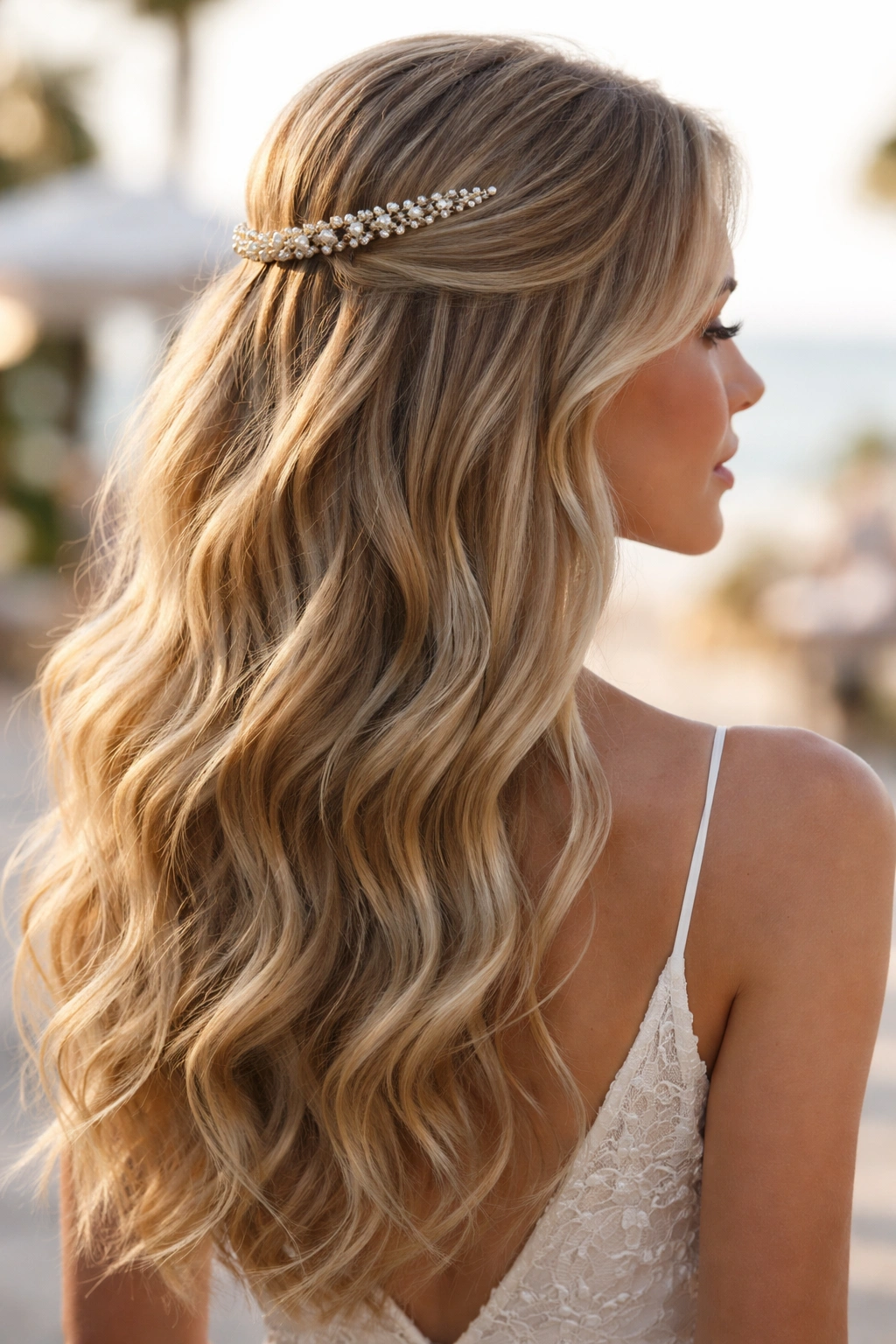
For formal events with a less rigid dress code—think destination weddings, upscale daytime galas, or sophisticated outdoor events—beachy waves paired with a sleek metallic or pearl hair accessory create elevated casual elegance. These are loose, natural-looking waves with significant texture and movement, created using sea salt spray, braiding overnight, or a curling iron on lower heat to avoid the polished Hollywood wave look. The accessory (a clip, comb, or decorative pins) anchors the informality with a touch of glamour.
Why It Works for Formal Events
Beachy waves without a sleek accent might feel too casual for formal occasions, but paired with the right accessory—a gold cuff comb, pearl-adorned bobby pins, or a structured hair clip—the combination reads as intentional and appropriate for upscale settings. This style works particularly well for outdoor formal events, waterfront ceremonies, warm-weather galas, or any occasion where the dress code leans sophisticated rather than black-tie. The overall effect is relaxed elegance, which is increasingly appropriate across modern formal dress codes.
Achieving Effortless-Looking Waves with Polish
- Apply a sea salt spray to damp hair and allow it to dry naturally, or braid damp hair loosely and sleep on it overnight, then unravel in the morning
- If using a curling iron, use one inch sections on medium heat and don’t hold the curl as tightly as you would for Hollywood waves; the goal is texture rather than definition
- Brush or comb through the waves with fingers or a wide-tooth comb to create that lived-in, natural appearance
- Tousle the hair gently at the roots and throughout to ensure waves look organic rather than uniform
- Place your sleek accessory either at one temple, gathering a subtle section of hair, or across the crown as a decorative comb or clip
- Secure with bobby pins that blend into the accessory rather than the hair
- Finish with a light-hold spray that maintains the waves without making them feel stiff or artificial
Pro tip: The success of this look depends entirely on accessory choice; select pieces with weight and visual interest so they don’t disappear against the waves, and ensure the metal color (gold, silver, rose gold, or pearl) coordinates with your jewelry and skin tone.
6. Waves with Braided Crown and Romantic Face Frame
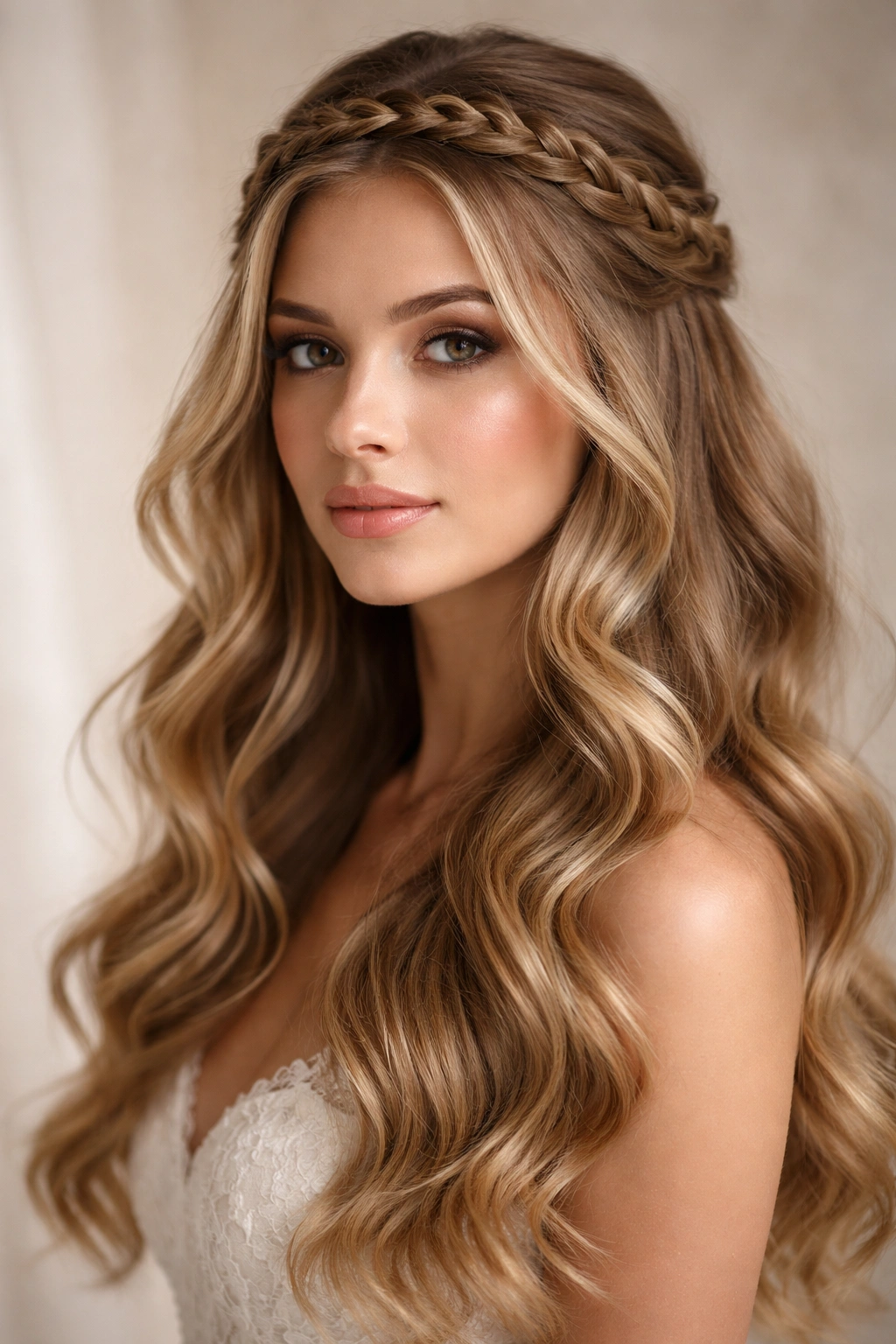
This style combines the security of a braid (which ensures the style lasts all evening) with the romance of waves and intentional face-framing pieces. A Dutch or French braid runs around the crown like a halo or wreath, while the remaining hair flows in loose waves below the braid line. Thin pieces of hair are pulled from the braid and left to wave down the sides of the face, creating softness and romance while the braid element provides structure and ensures nothing falls out of place.
Why It Works for Formal Events
The braided crown is particularly popular for weddings—whether as a bride, bridesmaid, or guest—because it combines security with undeniable romance. The braid ensures the hairstyle survives hours of celebration, dancing, or outdoor conditions, while the waves and face-framing pieces maintain an effortless, romantic quality. This style works beautifully for formal daytime events, garden parties, rehearsal dinners, or any occasion where elegance and comfort must coexist.
Creating the Braided Crown Effect
- Create soft waves throughout the hair first; a curling iron or overnight braid method both work well
- Starting at one temple, begin a Dutch or French braid (braiding hair over rather than under the other strands), moving horizontally across the crown toward the opposite temple
- As you braid, gently pull the braid slightly outward to create a fuller, softer appearance rather than a tight, structured braid
- At the opposite temple, secure the braid end with a bobby pin that matches your hair color, tucking it beneath the waves so it becomes invisible
- Once the braid is in place, gently pull small sections of hair from the braid itself and let them fall as face-framing pieces on both sides of the face
- For additional softness, use a fine-tooth comb to gently backcomb the waves slightly, creating more texture and making them appear fuller
- Finish with a medium-hold hairspray that allows the waves to move naturally while keeping the braid and face-framing pieces secure
Worth knowing: This braid works best with hair that has at least some texture or previous styling in it; freshly washed, smooth hair can be too slippery for the braid to grip properly and stay put throughout the evening.
7. Sleek Waves with Low Twisted Knot
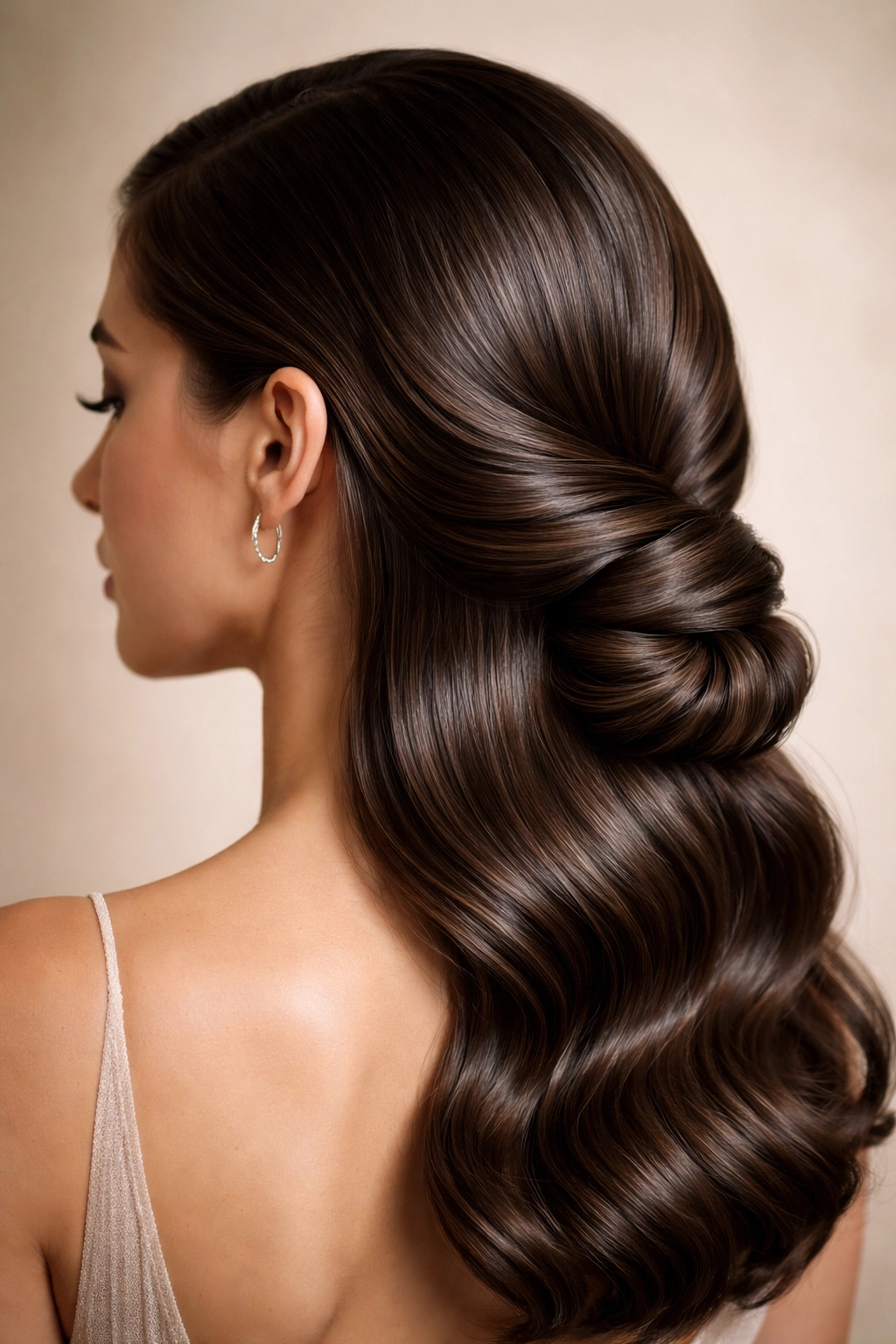
For black-tie events and ultra-formal occasions, sleek waves with a low twisted knot offer maximum sophistication. The waves are smooth and polished rather than textured, created using heat styling and smoothing products. They flow down one side or are evenly distributed, and approximately one-third to one-half of the hair is gathered into a low knot at the nape of the neck. The knot itself is constructed by twisting sections of hair around each other rather than pinning them up, creating an elegant, sculptural element that adds dimension without bulk.
Why It Works for Formal Events
This style reads as uncompromisingly formal and elegant. The sleek waves suggest intentional styling and respect for the dress code, while the low knot prevents hair from feeling completely open and unfocused. This style is ideal for black-tie weddings, galas, awards shows, upscale dinner galas, or any event where the dress code requires utmost sophistication. The style also works exceptionally well with statement necklaces or bare-neck formal dresses because the hair is partially gathered, drawing attention downward to jewelry or necklines.
Constructing the Sleek Wave and Knot
- Blow-dry hair straight using a smoothing product and paddle brush to create a sleek base
- Section off the lower half of the hair (from approximately ear-level down) and secure it with a clip so you can focus on the upper portion first
- Using a 1.5-inch curling iron on medium-to-high heat, create waves in the upper section by curling away from the face and allowing curls to cool before touching them
- Brush through the curls gently with a soft paddle brush to create waves rather than ringlets, aiming for movement that flows from roots to tips
- Release the lower section and repeat the waving process
- Allow all waves to cool completely before moving the hair
- Take the lower back section of hair and divide it into two equal sections
- Twist one section around the other, coiling them together until they form a flat knot shape at the nape
- Secure the knot with bobby pins that sit completely hidden within the knot itself
- Use a smoothing serum on the waves to enhance their sleek appearance and reduce frizz
- Finish with a flexible-hold hairspray that allows the waves to move without the knot shifting
Pro tip: The difference between casual and formal here is the smoothness of the waves and the intentional, sculptural quality of the knot; this isn’t a casual low bun but a structured twisted knot that reads as deliberate and polished.
8. Waves with Pearl or Diamond Hair Pins
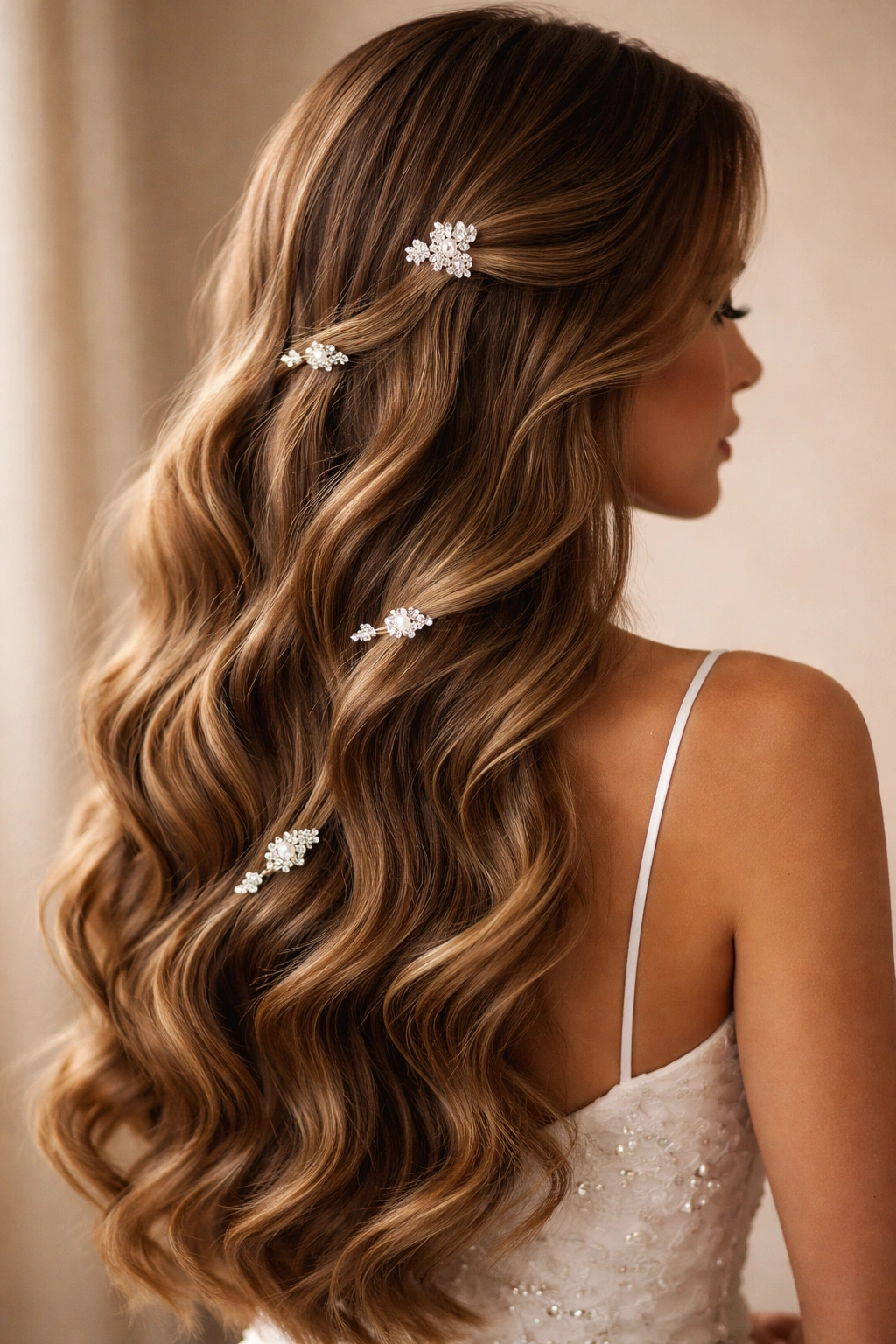
This style prioritizes simplicity while using accessory placement to communicate formality and intentionality. The waves are kept loose and romantic—created using whatever method suits your hair type best—and are left completely down rather than partially up. However, the hair is anchored and styled using decorative hair pins adorned with pearls, diamonds, or other gemstones placed strategically throughout the wave pattern. The pins both secure the style and serve as jewelry, adding visual interest and formality without requiring a complicated updo.
Why It Works for Formal Events
Pearl and diamond hair pins instantly elevate a simple wavy style into formal territory. This approach works beautifully for events where you want romance and movement but need visible evidence of formal styling intention. The style is ideal for upscale daytime events, garden-based formal occasions, bridal showers, engagement parties, or any event where jewelry plays an important visual role. The pins also have practical benefit: they keep waves from falling completely into the face or becoming disheveled while looking intentional and decorative rather than purely functional.
Styling with Accessory Accents
- Create soft to medium waves using whatever method works best with your hair type; the key is waves that have movement and texture
- Brush through the waves gently to create soft, flowing pattern rather than distinct curls
- Place strategically-selected decorative pins throughout the wave pattern: two or three at the crown area, possibly one or two at each temple, and one or two at the base if the back of your head will be visible
- Ensure pins are placed where they sit naturally within the wave pattern and don’t require hair to be pulled tightly to stay put
- Space pins far enough apart that they appear intentional and decorative rather than functional or crowded
- Coordinate the metal (gold, silver, rose gold) and gem color with your overall jewelry palette and dress color
- Use bobby pins underneath to secure the waves if needed, then place decorative pins on top where they’re visible
- Avoid hairspray immediately around the pins; allow it to dry first, then lightly mist around them to avoid visible product buildup
Worth knowing: Pearl pins work beautifully with cool-toned metals and pale or rich jewel-tone dress colors, while diamond or crystal pins complement virtually any dress color or metal tone and offer maximum sparkle under formal lighting and photography.
9. Textured Waves with Side Clip and Soft Undercut
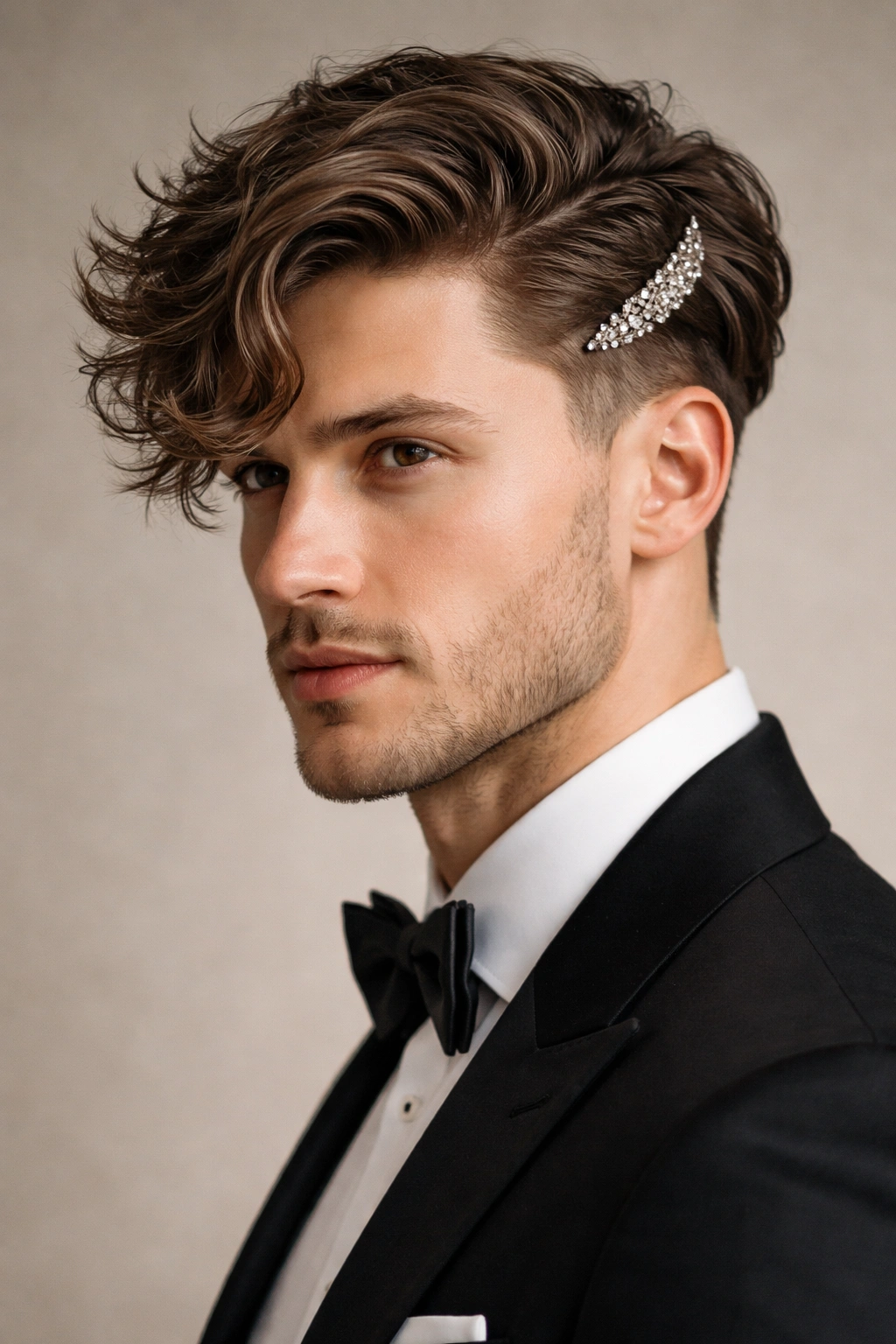
For a contemporary take on formal waves, create textured waves throughout and use a decorative side clip to anchor and organize a significant section. This style involves waves that are less uniform and more piece-y than traditional formal waves, creating a modern aesthetic that still reads as intentional and formal. A structured clip (metal claw, jeweled barrette, or sculptural comb) holds a major section of hair to one side, while the remaining hair waves freely, creating an asymmetrical, fashion-forward appearance.
Why It Works for Formal Events
This style bridges the gap between modern fashion sensibility and formal elegance, making it ideal for upscale events that don’t follow traditional black-tie rules—think art gallery openings, fashion-industry events, contemporary award shows, or modern formal dinners. The textured waves feel current, while the deliberate clip placement and asymmetry signal intentional styling. This look works exceptionally well if you want to avoid the classic, traditional formal wave aesthetic while remaining absolutely appropriate for an upscale occasion.
Building the Textured Wave and Clip Look
- Create textured waves by curling small (one-inch) sections on high heat, curling some sections away from the face and others toward the face to avoid uniformity
- Brush through the waves loosely with your fingers rather than a comb to create a piece-y, undone texture
- Tease gently at the crown and throughout to add volume and ensure waves don’t flatten as the evening progresses
- Select which side will be clipped; typically the side with fuller waves or the side that frames your face most favorably
- Gather a significant section (roughly one-third of your hair) from the clipped side and secure it with a decorative clip positioned approximately midway down the side of your head
- Allow the remaining hair and the clipped section to create movement and flow rather than appearing tight or controlled
- Ensure the clip itself is visually interesting and coordinates with your dress and jewelry
- Use a texture spray or dry shampoo throughout the waves to add grip and ensure they hold their textured appearance
- Finish with a light-hold hairspray applied from a distance to avoid weighing down the piece-y texture
Pro tip: This style works best on hair with some natural texture or previous styling; very straight hair may look limp in the textured pattern, so consider adding some texture before the event through braiding or curling products.
10. Waves with Pulled-Back Crown and Jeweled Bobby Pins
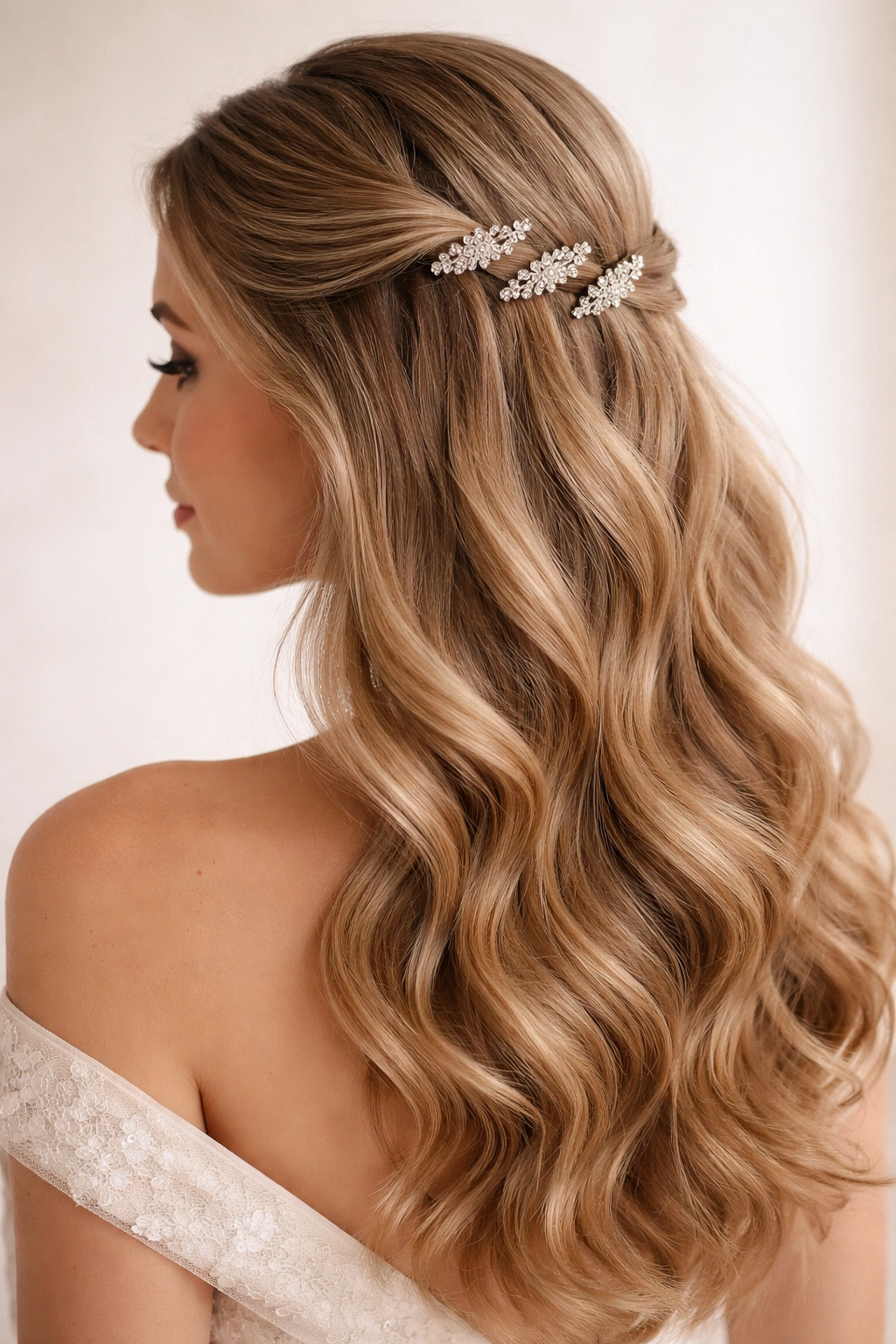
This final style is perhaps the most versatile across various formal dress codes and face shapes. Soft waves flow throughout the hair, while the crown area is gently pulled back and secured with decorative bobby pins placed visibly as jewelry. The style maintains openness and movement through most of the hair while adding polish and intention through the crown styling. The result is waves that feel romantic and elegant while remaining practical for an evening of socializing and activity.
Why It Works for Formal Events
This approach works across virtually every formal occasion because it’s technically versatile while remaining appropriately formal. The crown pull-back prevents hair from looking completely open and unstructured, while the visible, decorative pins add jewel-like detail without requiring an updo. This style flatters most face shapes, works across all hair types that can hold a wave, and photographs beautifully. The simplicity of the styling also means it requires minimal maintenance during the event—no complex structures to shift or braid elements to come loose.
Creating the Pulled Crown with Decorative Pins
- Create soft to medium waves using a one-and-a-half inch curling iron, a sea salt spray and braiding method, or whatever approach suits your hair type best
- Brush through the waves gently to create soft, flowing texture rather than tight ringlets
- Take a thin section of hair from one temple and lightly tease it to create grip
- Pull this section back toward the crown and secure it with a bobby pin placed where it will be partially visible
- Take another thin section from the opposite temple and repeat the process
- Optionally, take a very thin section from the very crown center and pull it back slightly, securing with another pin
- Ensure all pins are placed at slightly different angles and heights so they create visual interest rather than looking uniform
- Select pins adorned with pearls, crystals, or metal details that coordinate with your formal jewelry
- Place pins where they sit naturally within the wave pattern; they should look like they’re holding back intentional sections rather than arbitrarily placed
- Use flexible-hold hairspray to ensure the pulled sections stay back without looking stiff or uncomfortable
- Avoid heavy product on the waves themselves; the style should look soft and touchable, not rigidly gelled
Worth knowing: The success of this style depends on whether your hair naturally grips bobby pins; finer hair may require texturizing products or a light coating of dry shampoo at the crown before styling to ensure sections stay back all evening.
Final Thoughts
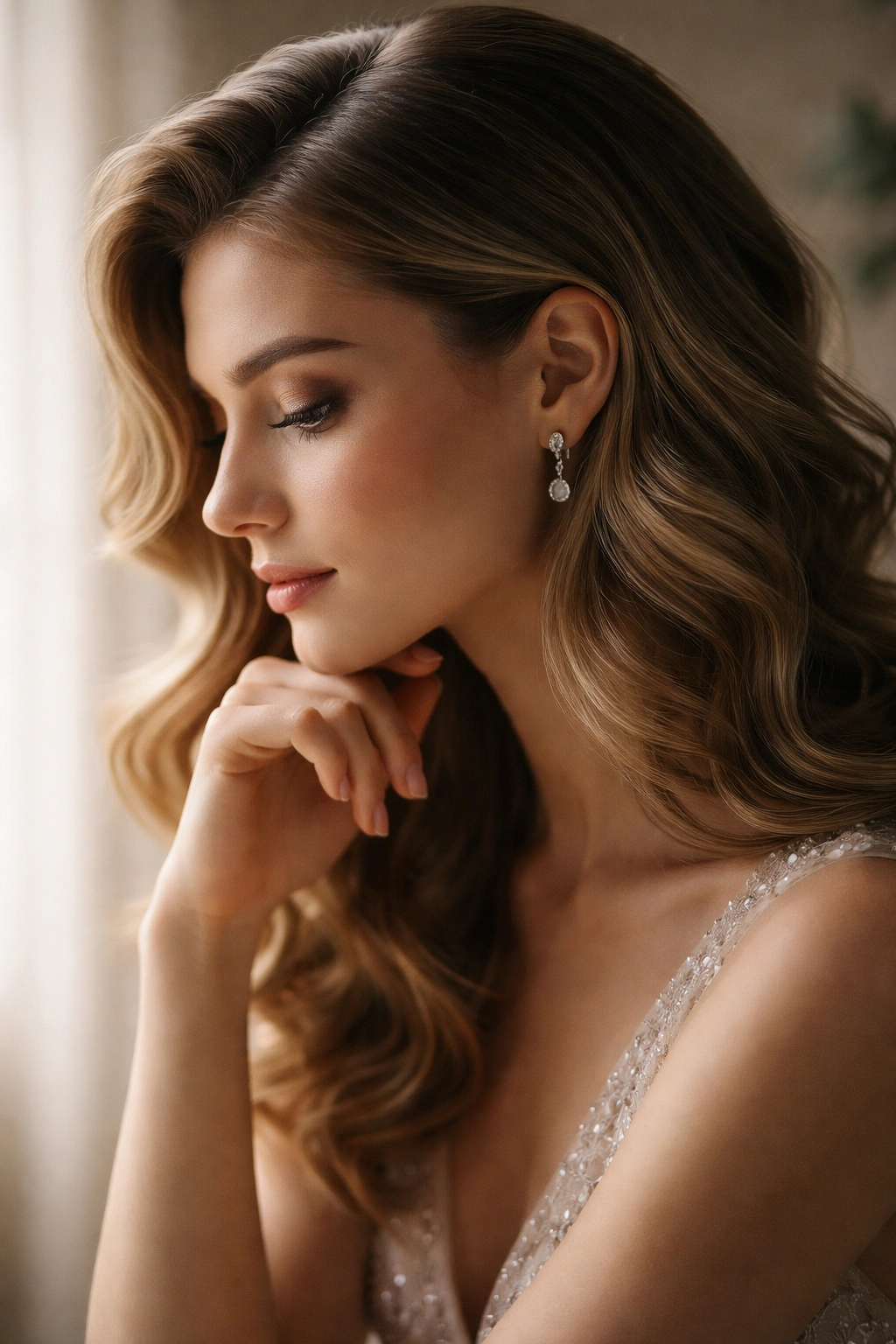
Formal wavy hairstyles offer something unique among elegant options: they’re sophisticated without feeling severe, intentional without appearing overly constructed, and forgiving enough to withstand hours of activity and celebration. Whether you choose structured Hollywood waves, romantic finger waves, textured contemporary styles, or simple waves accessorized with jewelry, the underlying principle remains constant: waves communicate movement, dimension, and visual interest in a way that elevates any formal outfit.
The key to wavy hairstyles that truly work for formal occasions is committing to the details that separate casual waves from formal waves—smooth, moisturized hair; precise styling technique; thoughtful product choices that provide hold without crunchiness; and finishing elements that demonstrate intentionality, whether through accessories, partial styling, or meticulous wave placement. Testing your chosen style before the event is invaluable; the evening of an important formal occasion is not the time to discover that your chosen style doesn’t hold up or that products clash with your hair texture.
Remember that formal doesn’t mean uncomfortable or requiring hours of torture to achieve. The best formal hairstyle is one that you can wear with confidence because you know it will hold throughout the event, won’t require constant adjustment, and genuinely flatters your features and complexion. Wavy hairstyles offer this combination more effectively than almost any other formal option available.
