



The inverted bob—with its shorter front layers and progressively longer back sections—seems designed specifically for curly hair. Instead of fighting your natural texture or demanding endless styling, an inverted bob actually works with your curls, using their natural movement and volume to create shape, dimension, and that effortlessly polished look everyone wants. The key is choosing the right variation: some inverted bobs lean into choppy, textured layers that emphasize bounce, while others keep things smoother and more structured. Understanding which style complements your specific curl pattern, face shape, and lifestyle makes all the difference between a cut that feels like a chore and one that genuinely simplifies your routine.
The versatility of inverted bobs for curly hair is often underestimated. You can wear them sleek and defined, tousled and voluminous, side-swept and romantic, or choppy and edgy—all with the same cut, just different styling approaches. The layering inherent in most inverted bobs prevents the heaviness and bulk that plague many curly-haired people trying traditional blunt cuts. Instead, layers encourage your curls to sit closer to your head while still maintaining volume where you want it, creating a silhouette that flatters rather than overwhelms. Whether your curls are loose waves, springy ringlets, or tight coils, there’s an inverted bob variation that’ll make you wonder why you didn’t make the switch sooner.
Why Inverted Bobs Work So Well for Curls
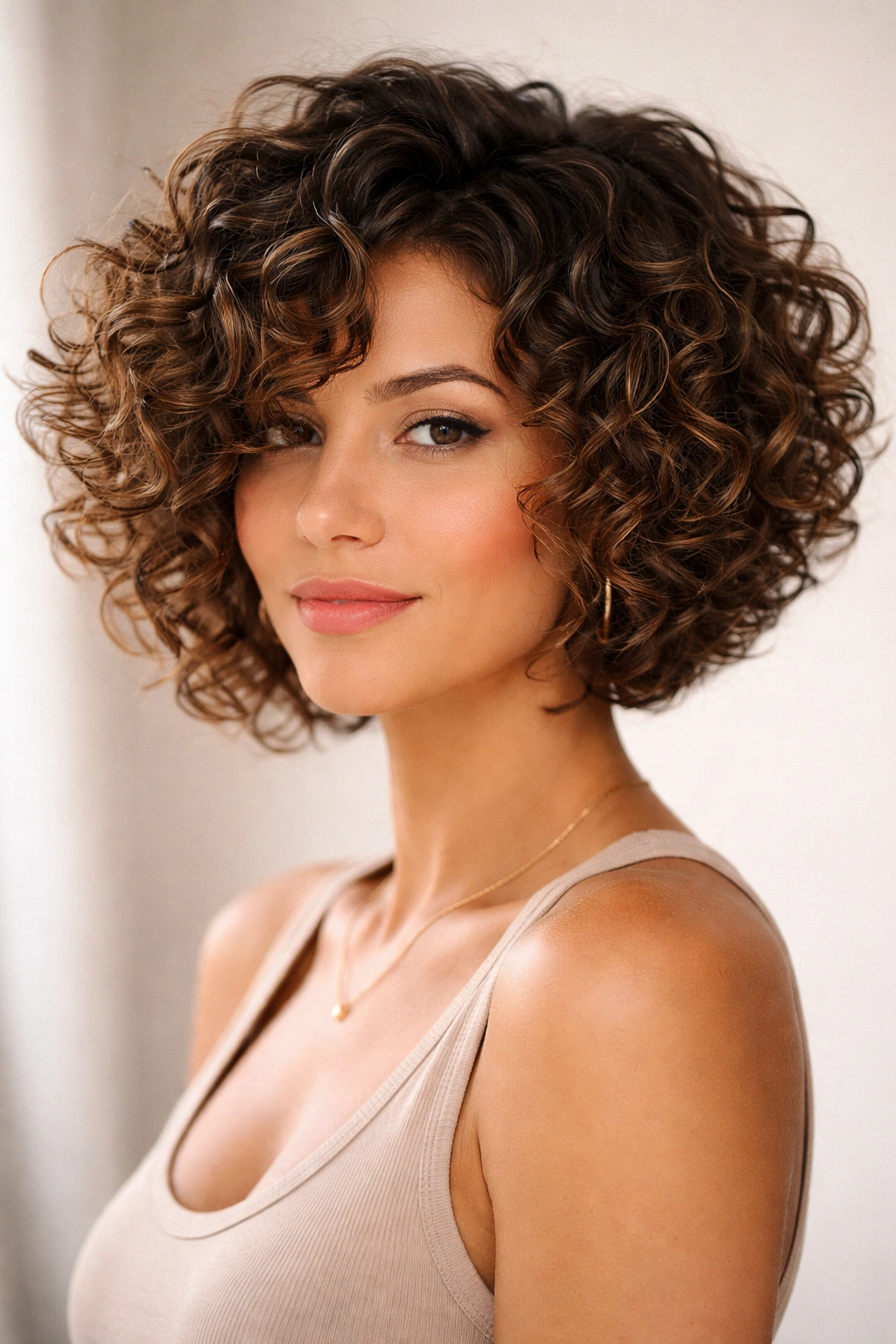
An inverted bob’s shorter front and longer back naturally complement the texture and movement of curly hair in ways that blunt cuts simply can’t replicate. Layers remove weight from the crown while maintaining length in the back, which means your curls have room to expand upward and outward without creating an awkward trapezoid shape. The graduated length also allows curls to fall more naturally—shorter pieces in front can sit closer to your face and frame it beautifully, while longer back sections showcase the full, gorgeous texture of your hair without dragging it down flat.
The beauty of this cut is how it works with your curl pattern instead of against it. Curly hair naturally wants volume, movement, and dimension. A skilled stylist cutting an inverted bob will incorporate layers strategically so that your curls fall at different lengths, which automatically creates the visual interest and shape you’d otherwise have to style into straight hair. This means less blow-drying, less straightening, less fighting your hair’s natural inclination. Many curl-haired people report that their inverted bob actually looks better on wash-day with no styling than their previous cuts did after an hour with a flat iron.
When you choose layers in an inverted bob, you’re also choosing the ability to embrace your curl texture fully. Layers encourage separation between curl clusters, which means more definition and less clumping or frizz-prone density. The shorter front sections also tend to dry faster than longer, heavier layers would, which can actually lead to less frizz over time. And because the cut itself creates shape, you have permission to lean into your curls’ natural behavior rather than constantly trying to tame or reshape them.
1. The Classic Layered Inverted Bob
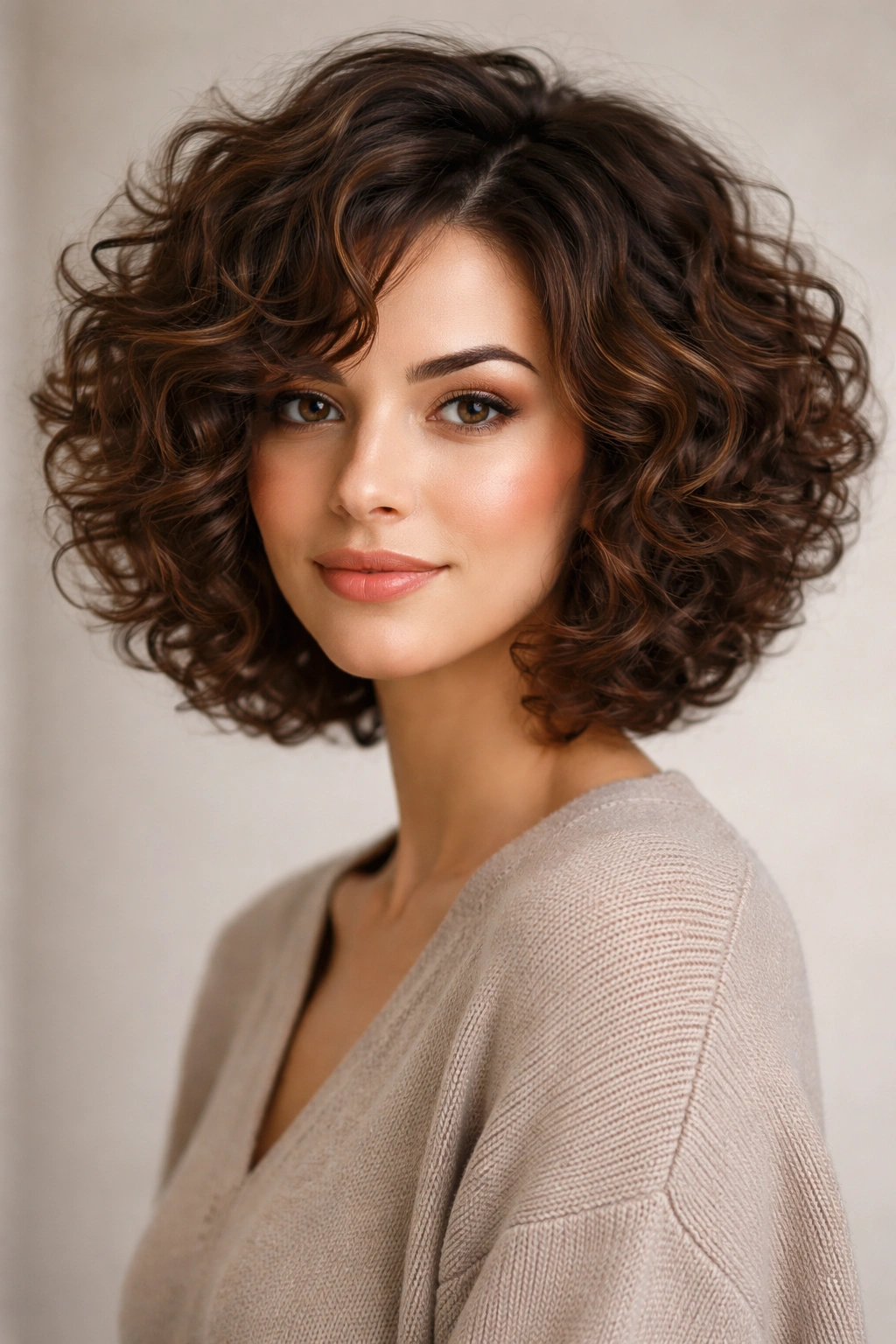
This is the foundational inverted bob style—the one that works beautifully for the majority of curly-haired people and serves as the template for many variations. Think: shorter, voluminous layers in the front that frame the face, medium-length sides, and longer pieces in the back that might reach your shoulder or slightly below. The layers are distributed throughout rather than clustered only at the crown, which means your entire head gets dimension without creating a droopy, sad silhouette.
Why It’s a Standout Choice for Curls
The classic layered inverted bob is forgiving in the best way. It accommodates a range of curl types and densities because the multiple layers distribute volume evenly, preventing the common problem of curly hair getting too thick and boxy at the crown. The graduated length naturally encourages your curls to fall away from your face while maintaining that coveted shorter-front profile that flatters most face shapes. It’s also realistic to maintain—even if you go 10 or 12 weeks between cuts (which is reasonable for many curl-textures), the shape still reads as intentional and polished, not overgrown.
What Makes This Version Work Best
- The front layers should sit roughly at your cheekbones or slightly longer—this length is short enough to frame your face but long enough that your curls don’t flip outward awkwardly as they dry
- Ask your stylist for point-cut or razor-cut layers (not blunt layers), which help your curls separate naturally and dry with more definition
- The back length typically sits at or just past shoulder-length, giving you enough material to work with for styling flexibility
- This style works beautifully with both looser waves and tight coils, though your stylist may need to adjust the angle and number of layers based on your specific curl pattern
Pro tip: This style is easiest to refresh between haircuts if you learn to diffuse your hair with a little product—the layers already create the shape, so you’re just enhancing what’s already there rather than creating shape from scratch.
2. The Textured Shag-Inspired Bob
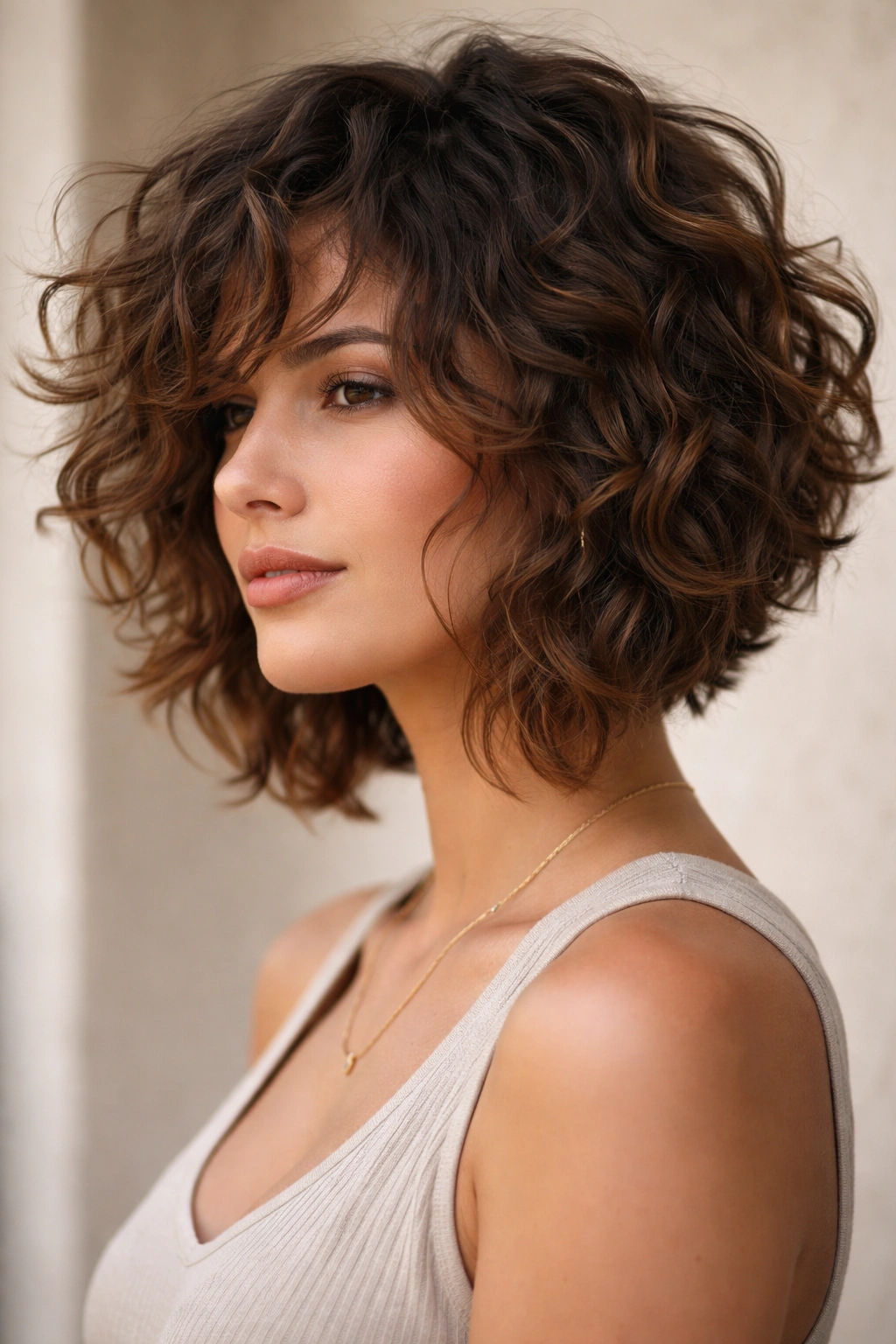
If you love the idea of movement, texture, and a bit of that ’70s cool-girl energy, a shag-inspired inverted bob delivers exactly that. This version incorporates even more layers than the classic—think choppy, deliberately disconnected pieces throughout—which creates a shaggier, more deliberately tousled aesthetic. The shorter pieces in front might be quite short (sometimes grazing your ears), while back layers are distinctly separated and textured rather than blending smoothly into each other.
Why Curly Hair Loves This Approach
A shag inverted bob on curls is a game-changer for people who want maximum movement and texture. The choppy, disconnected layers encourage your curls to bounce and separate dramatically rather than clumping together. This style celebrates curl definition instead of trying to minimize density, making it a fantastic choice if you have medium to thick curly hair and want to lean into that texture rather than tame it. The intentional choppiness also means the cut actually looks better as your curls move and shift throughout the day—it’s designed to look a little undone, which is the opposite of high-maintenance.
Key Details That Make the Difference
- Layers should vary in length throughout, creating that disconnected shag texture—not a smooth graduation
- The shortest pieces (often in the front and around the crown) should be noticeably shorter than mid-length pieces, creating visual separation
- This is one inverted bob that actually looks great a little bit messy and textured; embrace that rather than trying to tame it into sleekness
- Works best on curls that are at least medium density—fine, thin curls can look wispy with too many choppy layers
Insider note: Ask your stylist to cut this style with your curls dry or damp, not soaking wet, so they can see how your curls actually fall and place layers accordingly.
3. The Chic Chin-Length Inverted Bob
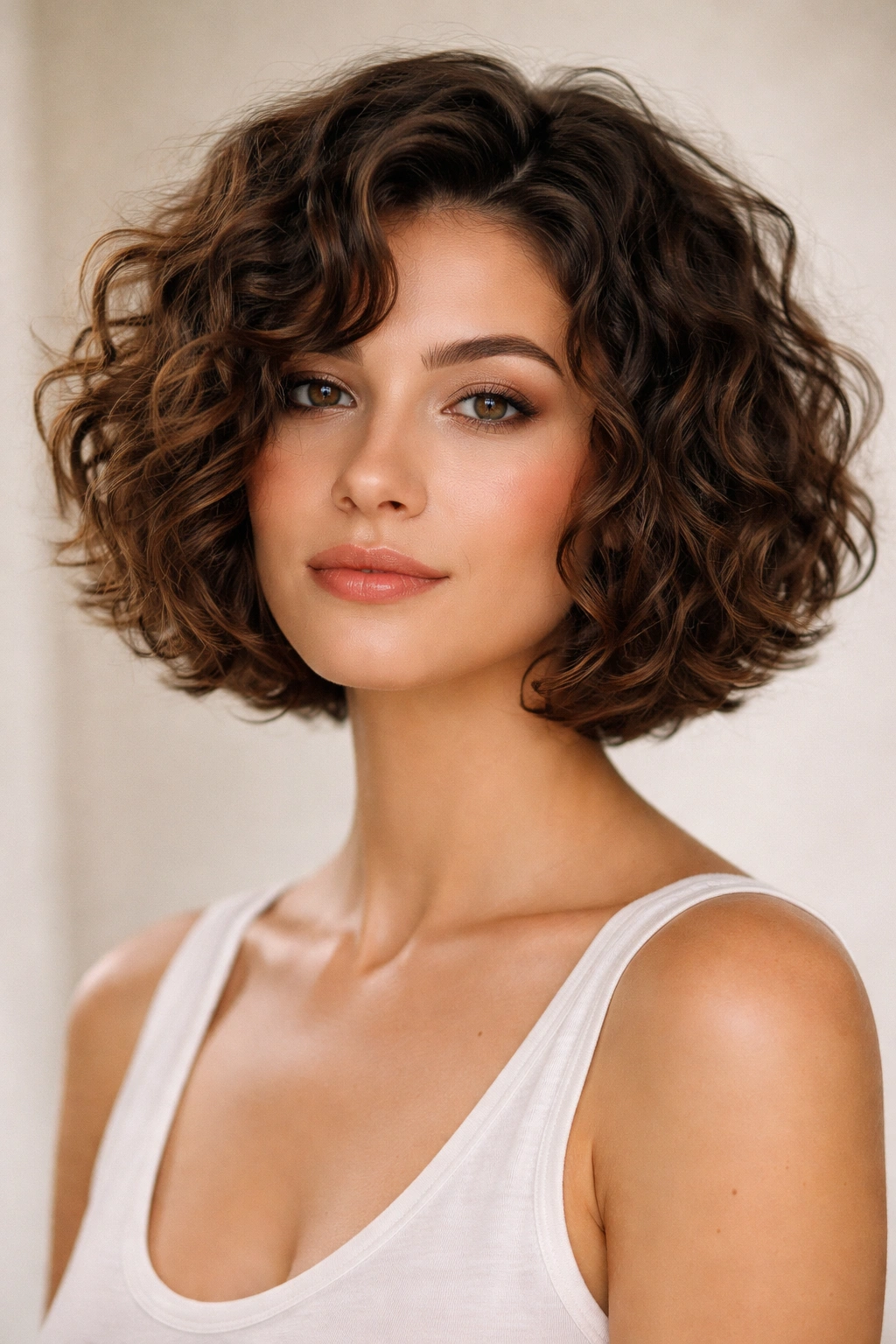
For those who want the inverted bob profile but with a shorter overall length, a chin-length inverted bob hits a sweet spot. The front layers land right at or slightly below your chin, the sides are shorter still, and the back reaches perhaps an inch or two past your chin at its longest point. It’s a bold, confident look that photographs beautifully and works especially well for people with smaller or more delicate face shapes.
What Makes This Length So Flattering for Curly Hair
A chin-length inverted bob on curls creates an almost halo effect—the shorter front layers literally frame your face in the most flattering way possible. Because the overall cut is shorter, there’s less weight pulling your curls down, which means maximum volume and lift. This length also tends to work well with looser curl patterns (waves through loose ringlets) because there’s not enough length for gravity to stretch out your curl shape dramatically. For tighter curl patterns, this length ensures your curls have maximum bounce and spring without dragging down.
Critical Styling Considerations
- Make sure your stylist understands you want the front shorter (framing the face) but doesn’t cut too short at the back—you still want that inverted profile, not a blunt bob
- The shorter overall length means you’ll notice the cut growing out more quickly—budget for trims every 6-8 weeks to maintain the shape
- This length works best when styled with product and a little air-drying or diffusing—the shorter pieces benefit from some texture and definition rather than a blown-out, smooth finish
- Consider your hair density: if you have very thick, dense curls, this length might create more volume than you want; medium to fine curls typically shine at this length
Worth knowing: A chin-length inverted bob can actually look more dramatic and striking than longer lengths, so if you’ve been playing it safe with longer hair, this might be the confidence boost you need.
4. The Long Choppy Inverted Bob
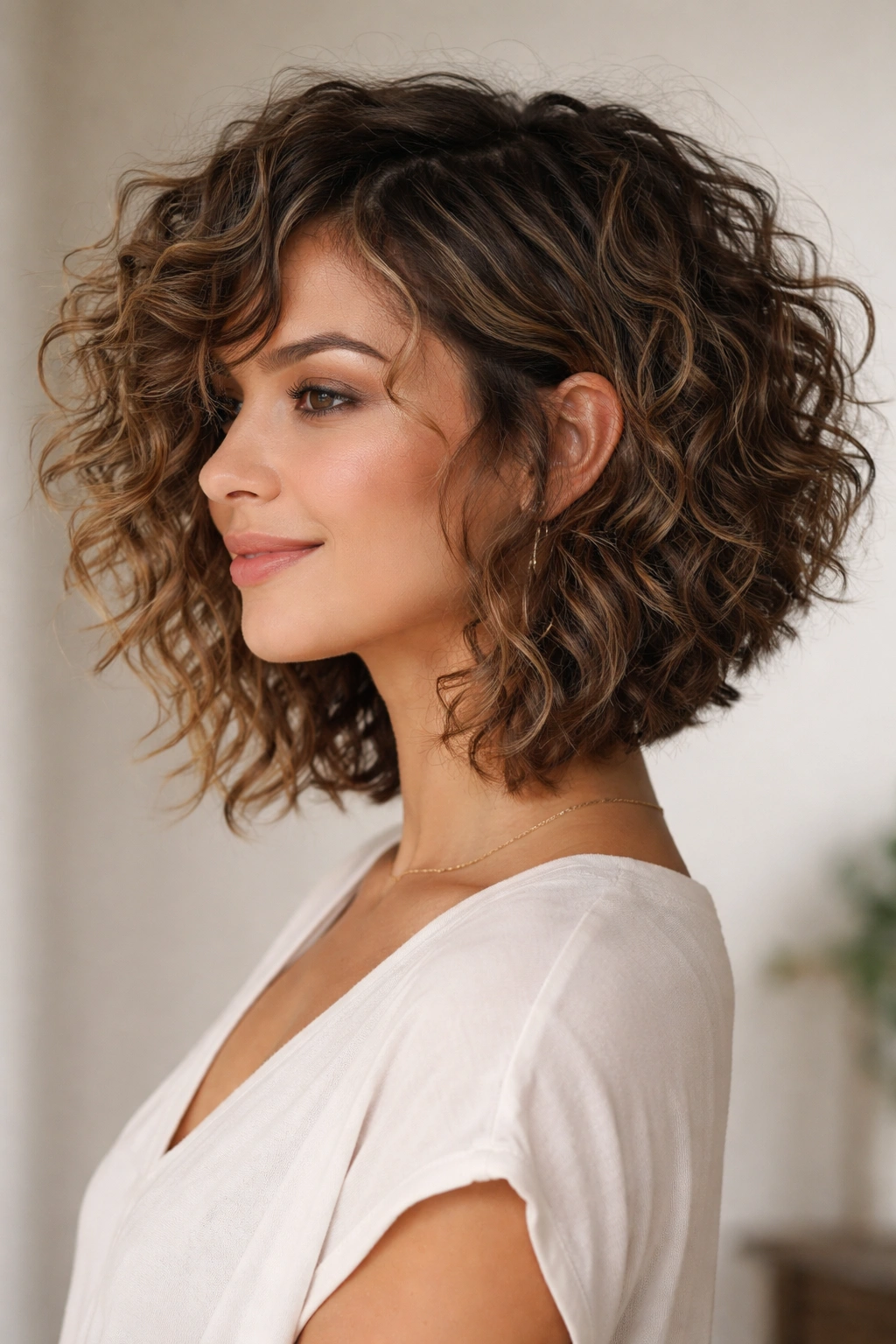
This variation keeps the overall length longer—think shoulder-length or beyond—while incorporating choppy, textured layers throughout that create movement and prevent that heavy, solid feeling. It’s an inverted bob for people who aren’t quite ready to commit to truly short hair but want the benefits of layering, texture, and that shorter-front silhouette.
Why This Length Works for Curly Textures
A long choppy inverted bob gives you permission to keep length while still getting the lift and dimension that curly hair needs. The choppy layers prevent the length from creating a solid, boxy shape while the shorter front layers maintain that face-framing benefit. This is an excellent choice if you love styling versatility—the length means you can wear your curls down and wavy, pull them into a half-up style, or even attempt a low ponytail on days when you want less volume around your face.
How This Differs From the Classic Layered Version
- The layers are more deliberately choppy and textured, not smoothly graduated—they should look intentionally disconnected
- The back length extends noticeably longer, giving you a more dramatic contrast between front and back
- You have more styling flexibility because there’s enough length to work with in various directions
- This works beautifully on all curl types because the length accommodates both denser, tighter curls and looser waves
Pro tip: This is the best inverted bob choice if you’re uncertain about going shorter—it gives you the styling and texture benefits of choppy layers while maintaining the security of longer length.
5. The Heavily Layered Pixie-Bob Hybrid
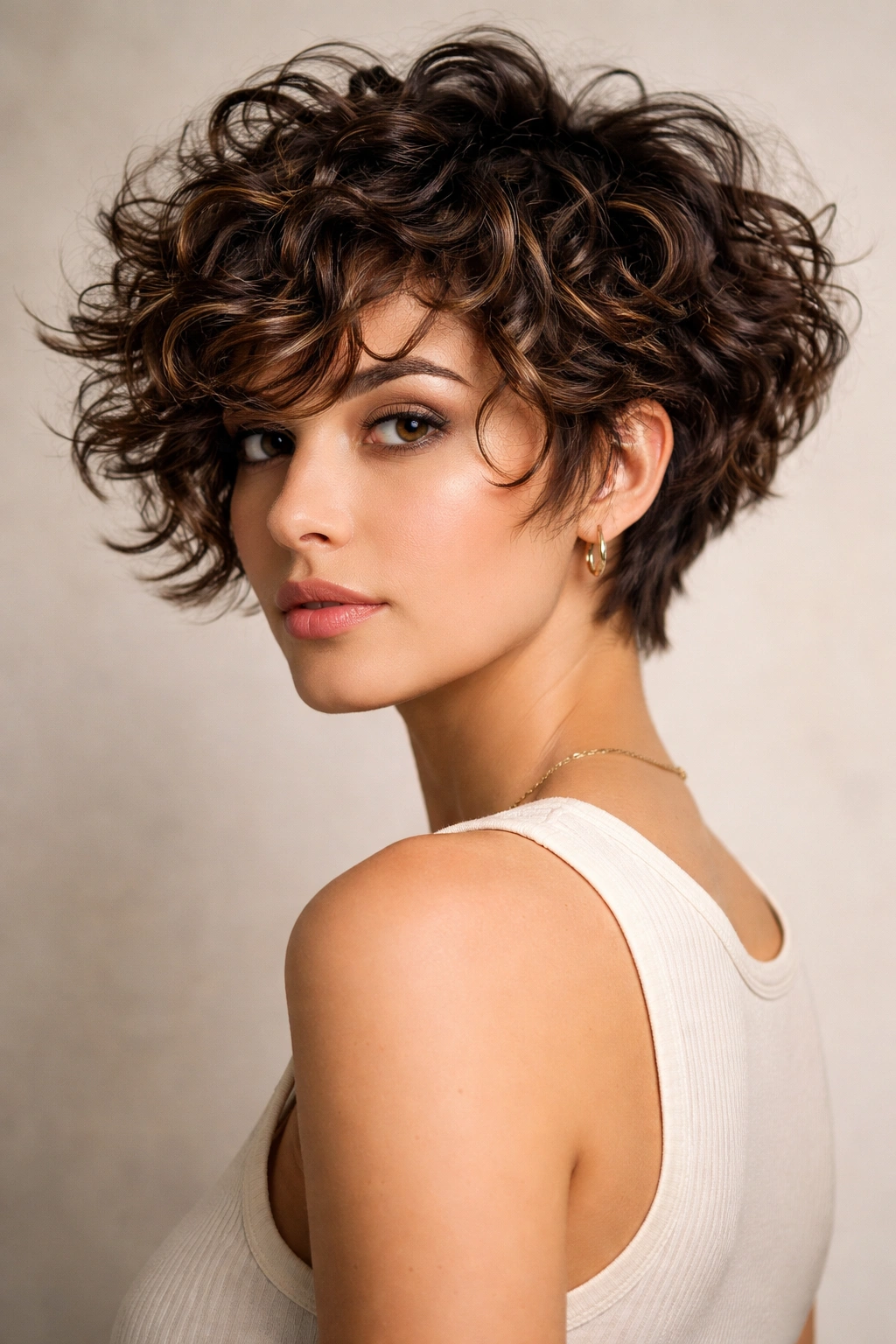
For the brave and texture-loving, a heavily layered pixie-bob hybrid combines pixie cut elements (very short, heavily textured pieces, especially around the crown and sides) with inverted bob structure (shorter front, longer back). This is not a subtle cut—it’s a bold statement that celebrates curls with maximum movement and minimal styling.
Why This Is a Powerhouse for Curly Hair
This hybrid style is specifically designed for curly hair that wants to be curly. There’s nowhere to hide with this cut—you’re either embracing your texture fully or you’re not. The heavily textured layers encourage maximum separation and definition, making even loose waves look bouncier and more defined. For people with tight curls and coils, this style is liberating—it removes the weight that tight curls accumulate, letting them spring free without any heaviness dragging them down.
Who Should Consider This Cut
- Anyone with medium to thick, dense curls who’s tired of their hair looking heavy
- People who genuinely love their natural texture and want to showcase it fully
- Those with enough confidence to rock a bold, high-texture look
- Anyone willing to maintain shorter hair and get trims every 6-8 weeks (this cut grows out quickly)
- People with oval or oblong face shapes, where shorter, textured styles tend to be most flattering
The Real Talk About Maintenance
- This cut requires a skilled stylist who specifically understands cutting curly hair and creating texture
- Your curls will need product and some form of moisture to look their best—dry, un-moisturized curls might look frizzy rather than defined with this much texture
- Styling is minimal, but you do need to embrace some level of daily care rather than washing and going completely untouched
- This is not the cut for someone who wants wash-and-wear simplicity with zero product
Honest note: This style is absolutely worth it if you’re genuinely excited about your curls, but don’t choose it just because it’s trendy or different. You need to actually love your texture for this to feel joyful rather than high-maintenance.
6. The Side-Swept Inverted Bob
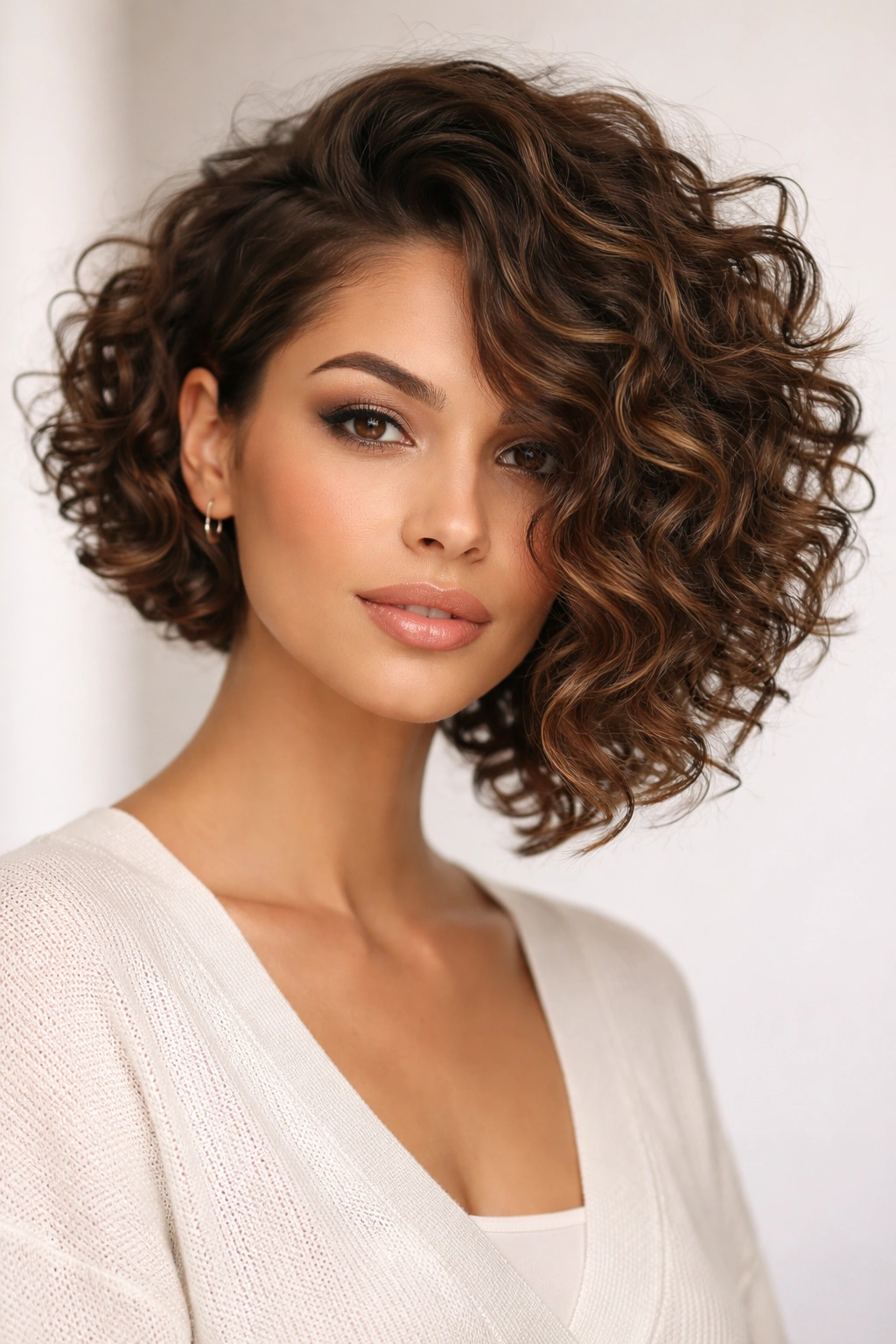
This variation incorporates a dramatic side part and longer side-swept layers on one side, creating an asymmetrical, directional aesthetic. One side of the face gets more frame and coverage while the other side is slightly shorter and more exposed, creating movement and visual interest.
What Makes This Profile Work for Curls
The side-swept inverted bob is ideal for curly hair that responds well to directional styling. By sweeping your curls deliberately to one side, you create immediate shape and visual drama without needing to blow out or straighten. The longer side gives your curls somewhere to fall, preventing that all-over puffiness, while the shorter side maintains the face-framing benefit of a proper inverted bob. This works beautifully if you have a face shape you’d like to balance—for example, a longer side on a rounder face creates length and definition.
How Your Stylist Should Approach This Cut
- The short side should still have layers and texture—it shouldn’t be a blunt, heavy section
- The longer side can have slightly longer back layers to accommodate the side-sweep direction
- The side part should fall naturally with your curl pattern and head shape, not fight against it
- Ask your stylist to show you how to style this—sweeping curls dramatically to one side sometimes requires a little blow-drying or specific product placement
Styling the Side Sweep
- This works best when you lean into directional styling rather than trying to make your curls go symmetrical
- A lightweight mousse or curl cream applied to damp hair and dried with a diffuser, while directing airflow to one side, creates the perfect shape
- You can refresh the side-sweep on day-two or day-three curls with a little water and product rather than rewashing
- This style reads as more “done” and intentional than symmetric bobs, which some people love and others find high-maintenance
7. The Disconnected Undercut Bob
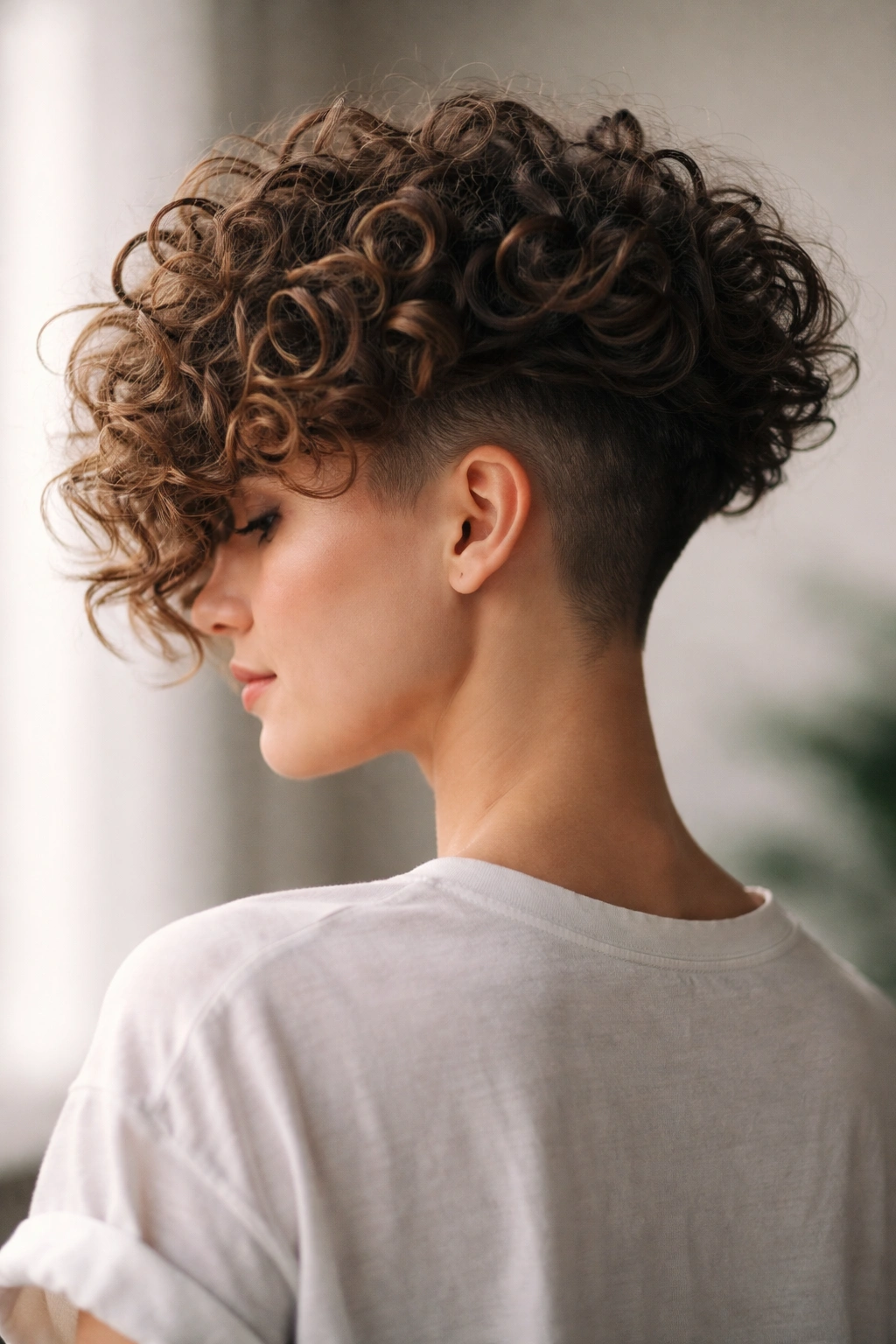
For those wanting true boldness, a disconnected undercut inverted bob features very short, closely-shaved or buzzed sections underneath (usually at the nape and possibly the sides), with longer curly layers on top. It’s edgy, modern, and surprisingly wearable for everyday life while still reading as a statement cut.
Why Curly Hair Thrives With This Design
An undercut completely eliminates the weight problem that longer curly hair can develop at the nape—that uncomfortable, heavy feeling when all your curl length pulls down at the back of your head. Instead, you get all your volume and curl definition on top while keeping the undercut sleek and streamlined. For people with very dense curls, this is genuinely life-changing because you get the aesthetic of longer curls without the physical weight and scalp tension that can come with it.
Considering the Undercut Commitment
- You need to be comfortable showing undercut growth—the contrast between short and long becomes obvious as the undercut grows out, which happens every 3-4 weeks
- This cut requires a stylist with undercut experience and ideally someone trained in cutting curly hair
- Styling is minimal (the cut does the work), but you do need products to define and moisturize your curls
- This is legitimately striking and gets attention—make sure you’re choosing it because you love it, not because you think it’s edgy
Design Variations Worth Considering
- You can undercut just the nape (lowest part of the back) or extend it further up and around the sides for a more dramatic effect
- Ask your stylist about fade patterns—some undercuts fade gradually from long to short, while others are sharply disconnected
- The longer top section can still have choppy, textured layers or can be slightly smoother, depending on your preferred aesthetic
Real talk: This cut photographs beautifully and feels amazing (no more heavy curls pulling on your scalp), but it’s not subtle. Own that if you choose it.
8. The Soft-Textured Inverted Bob
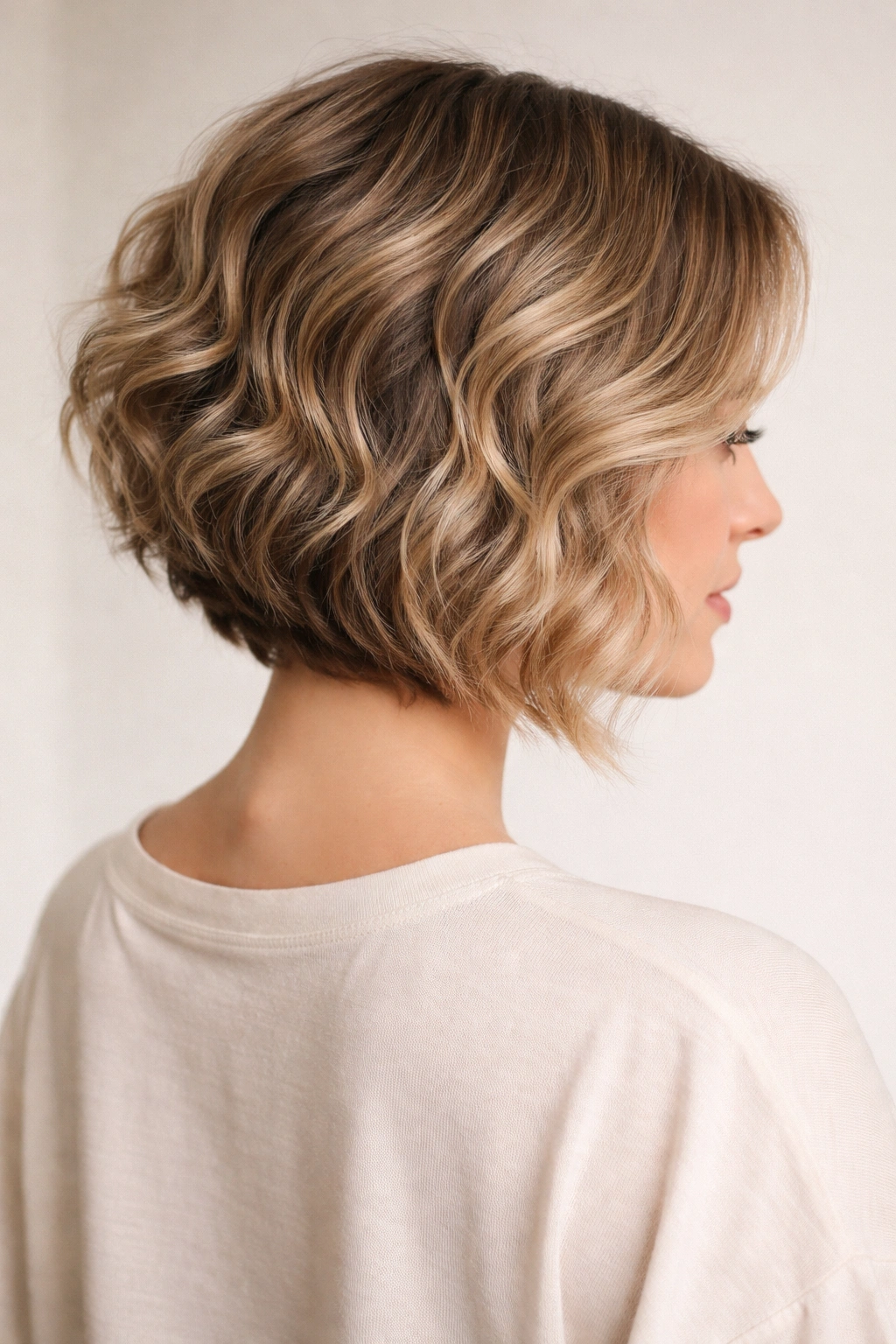
This is the inverted bob for people who want shape, dimension, and the shorter-front profile but prefer a softer, more polished, less choppy aesthetic. Layers are present but are more subtle and blended, creating a smoother overall shape with movement rather than dramatic texture and separation.
Why This Suits Certain Curl Patterns Beautifully
A soft-textured inverted bob works wonderfully for looser wave patterns and people who prefer a more refined, less-tousled look. The layers are there to remove weight and create shape, but they blend together more smoothly, allowing your curls to fall in a cohesive wave pattern rather than separate, choppy pieces. This style bridges the gap between wanting the benefits of an inverted bob and preferring a sleeker, more controlled aesthetic.
The Technical Execution
- Layers should be cut with point-cuts or subtle razor work, not choppy disconnected pieces
- The emphasis is on graduated length rather than dramatic texture—each layer flows into the next
- Ask for longer, more substantial layers rather than super-short, wispy ones
- This works best when styled with a creamy curl cream or gel that enhances definition without creating separation
Ideal Situations for This Version
- You have waves or looser curls that don’t naturally separate into tight, defined ringlets
- You prefer a polished, put-together aesthetic rather than intentionally textured
- You want to style your hair with smoothing gels or creams rather than light, texture-enhancing products
- You’re looking for a sophisticated, professional-appropriate cut
Worth noting: This version actually photographs better than choppy bobs in many cases because it reads as intentional polish rather than bedhead, which is perfect if you work in a corporate environment or just prefer that vibe.
Styling and Maintaining Your Inverted Bob
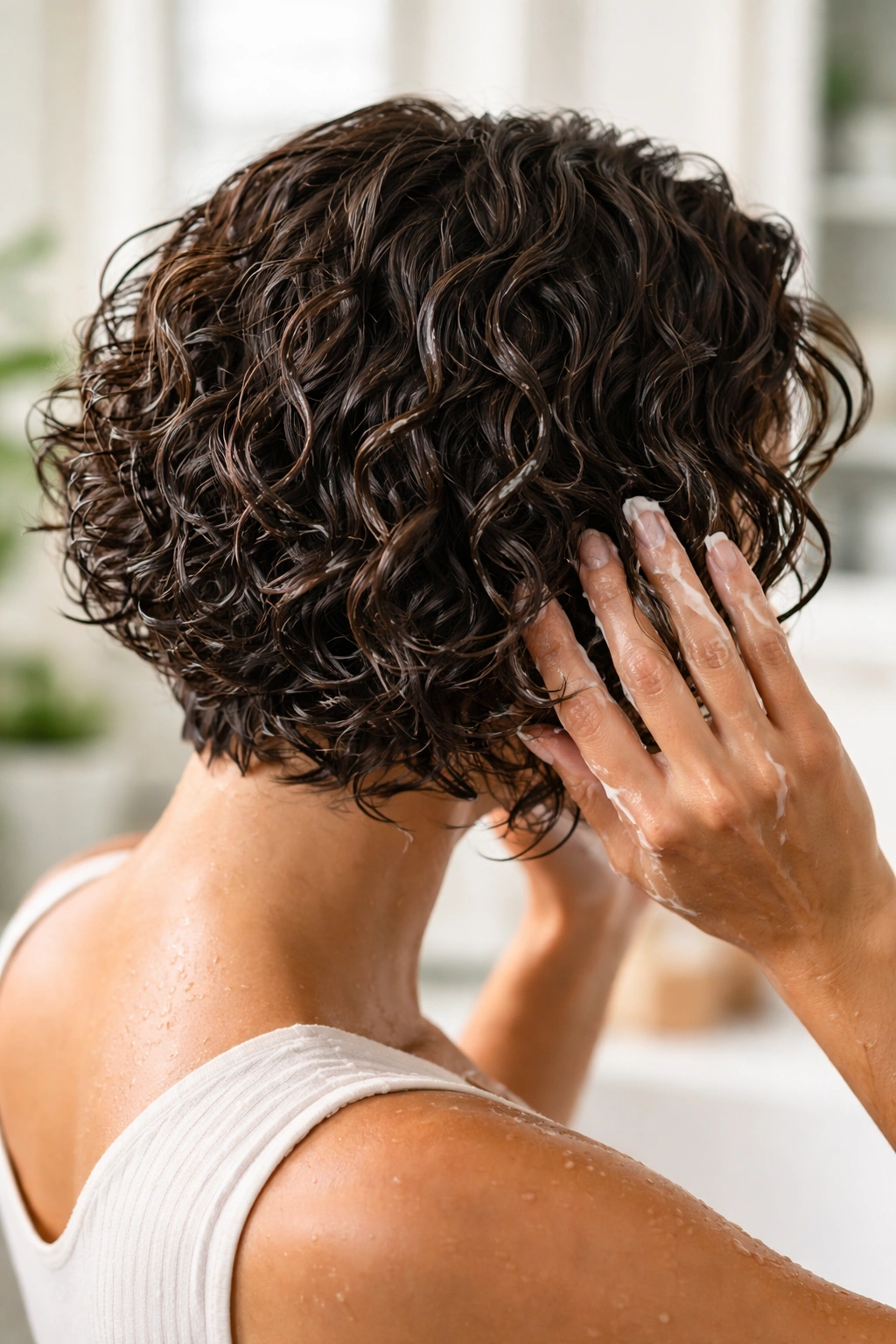
Every inverted bob variation needs the same foundational approach to styling and care: embracing your curl pattern rather than fighting it, using moisture-rich products, and understanding how to enhance your curls without frizz or crunchiness.
Start with proper hydration. Your curls need moisture more than anything else, regardless of which inverted bob you choose. A good curl-specific shampoo and conditioner are non-negotiable—these should actually clean without stripping your curls of natural oils. Many people find that co-washing (conditioning wash) a few times per week between shampoos helps maintain moisture levels and reduces frizz.
Use the right styling products. This depends slightly on your curl pattern and texture, but generally, curly-haired people benefit from lightweight gels, creams, or custards that define curls without crunchiness. Apply products to soaking-wet hair before you dry—never to dry hair. The product needs to be distributed evenly through your curls from root to tip to work effectively.
Diffuse rather than blow-dry. A regular blow-dryer nozzle disrupts curl patterns and causes frizz. A diffuser attachment (the flat, circular piece with little prongs) gently dries curls without disturbing their shape. Lean your head into the diffuser, let it cup your curls, and hold for a few seconds, then move to another section. You’re not blowing your curls dry; you’re gently setting them.
Embrace the plopping technique. After applying product, gather your soaking curls on top of your head wrapped in a microfiber towel or t-shirt (microfiber is gentler than regular towels and causes less frizz). Leave them there for 10-20 minutes while the fabric absorbs excess water. This encourages curl clumping and definition while preventing the disruption that towel-rubbing causes.
Sleep without destroying your curls. Sleeping on your curls flattens them, causes frizz, and undoes all your styling work. Use a satin or silk pillowcase (cotton creates friction and frizz), or try a pineapple method: loosely gather your curls on top of your head with a soft scrunchie before bed. Your curls will bounce back when you release them.
Final Thoughts
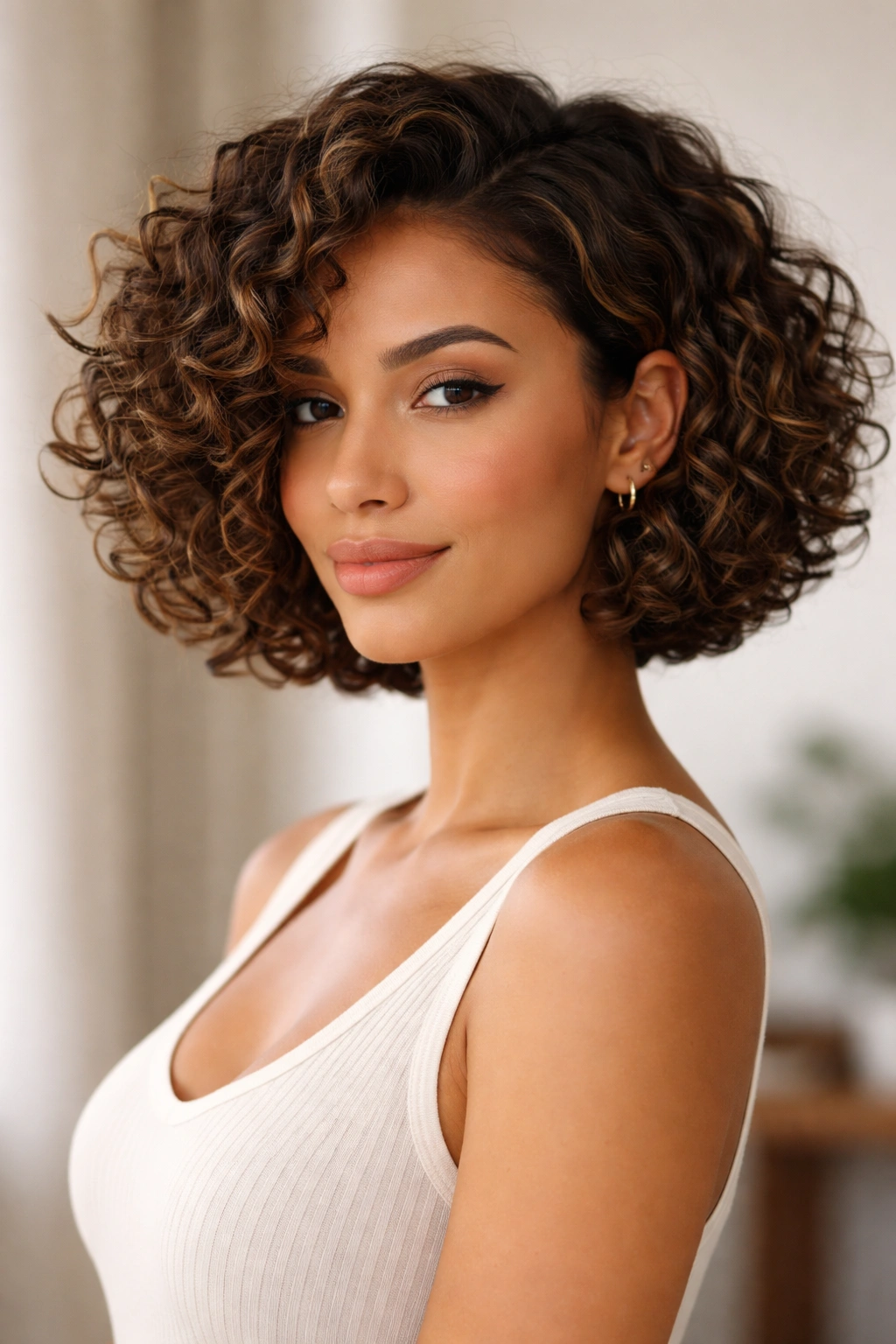
An inverted bob is one of the smartest haircut choices for curly hair because it works with your texture instead of requiring you to fight it. Whether you go for the classic layered version, the choppy shag-inspired style, or something bolder like an undercut, the key is choosing a cut that matches both your curl pattern and your lifestyle.
The most important thing is finding a stylist who actually understands curly hair. This is not the time to book with someone who primarily cuts straight hair or hasn’t cut curls regularly. A great curly-hair stylist will assess your specific curl pattern, density, and texture, and tailor their technique accordingly. They’ll cut your curls dry or damp so they can see how they actually fall, and they’ll use techniques like point-cutting or razor-cutting that encourage separation and definition rather than blunt-cutting that creates density and frizz.
Once you have the right cut, maintenance is genuinely simple—good products, proper hydration, and a diffuser are your main tools. Your curls will thank you for finally giving them a cut designed specifically for their needs rather than forcing them into styles designed for straight hair. That’s when an inverted bob stops feeling like a style choice and starts feeling like a revelation.
