


If you’ve been considering a wig but worried it’ll look obviously fake, you’re not alone. The good news? Modern curly bob wigs have come a long way. The key to finding one that actually looks natural isn’t just about the quality of the wig itself—it’s about choosing a style that complements your face shape, matches your natural hair texture patterns, and works with how you’ll wear it in real life. A curly bob wig that looks natural sits somewhere between the textured movement of genuine curls and the overall proportion that flatters your features.
The difference between a wig that screams “costume” and one that blends seamlessly into your everyday look often comes down to a few critical factors: how the curls are arranged, whether there’s variation in curl size and direction, how the density builds from the roots to the ends, and most importantly, whether the hairstyle itself feels like something you’d actually wear. A wig with perfectly uniform, overly bouncy ringlets might be gorgeous in isolation, but it can read as costume-y if it doesn’t match how you normally style yourself.
What makes a curly bob wig look genuinely natural is the presence of what we call “happy accidents”—slight irregularities in curl pattern, a bit of frizz at strategic points, and variation in how the curls fall. When a wig looks too perfect, it actually becomes more noticeable. Your goal is finding a style that has enough character and texture to feel authentic to how real curly hair behaves, while still being polished enough for you to wear with confidence anywhere.
1. The Textured Shag Bob
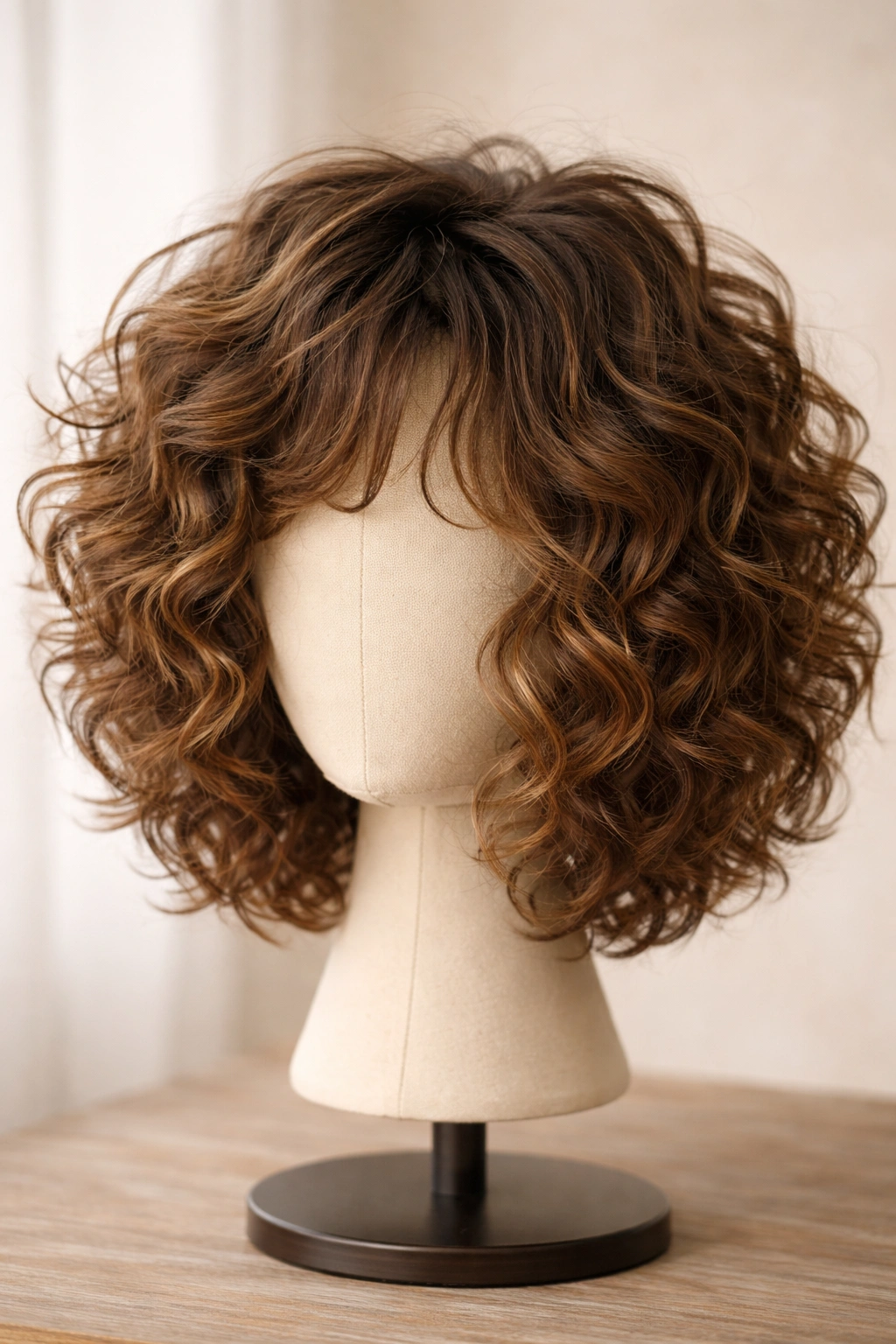
The shag bob is having a major moment, and for curly hair, this cut is absolute magic. It combines shorter layers on top for volume and movement, with slightly longer pieces underneath that give you length and flow. The beauty of a shag curly bob wig is that the layers work with your curl pattern instead of fighting against it—each curl has room to breathe and express itself naturally.
Why This Style Reads as Authentically Curly
A shag cut is one of the most forgiving styles for curly hair because layers are literally built into the design. You don’t need every single curl to fall perfectly into place for this look to work. In fact, a little bit of loose, wispy texture around the face and at the ends actually enhances the authenticity factor. The shorter crown adds height that reads as intentional volume, not wig-iness. The way layers interrupt the curl pattern creates a lived-in quality that feels immediately genuine.
How to Wear It
Style your textured shag by separating curls with your fingers rather than running a comb through (this prevents the poodle effect that screams synthetic). A light leave-in conditioner or curl cream applied to damp curls before putting on the wig helps the curls settle into their natural pattern. This style works beautifully swept to one side or with a middle part. The versatility is part of what makes it look so natural—you’re not locked into one rigid style.
What to Look For When Shopping
Check that the shag has genuine graduation in the layers rather than just choppy pieces scattered randomly. The best versions have shorter, piecier layers at the crown that gradually blend into longer, fuller layers underneath. Look for a wig with a lace front or lace top closure if you can—this detail makes the hairline appear more naturally grown out. The density should feel moderate, not overstuffed.
Pro tip: Shag bobs look especially natural when paired with wispy baby hairs around the edges. If your wig doesn’t come with these, you can add them using small individual curls from a curly hair extension bundle attached with lace glue.
2. The Bouncy Spiral Curl Bob
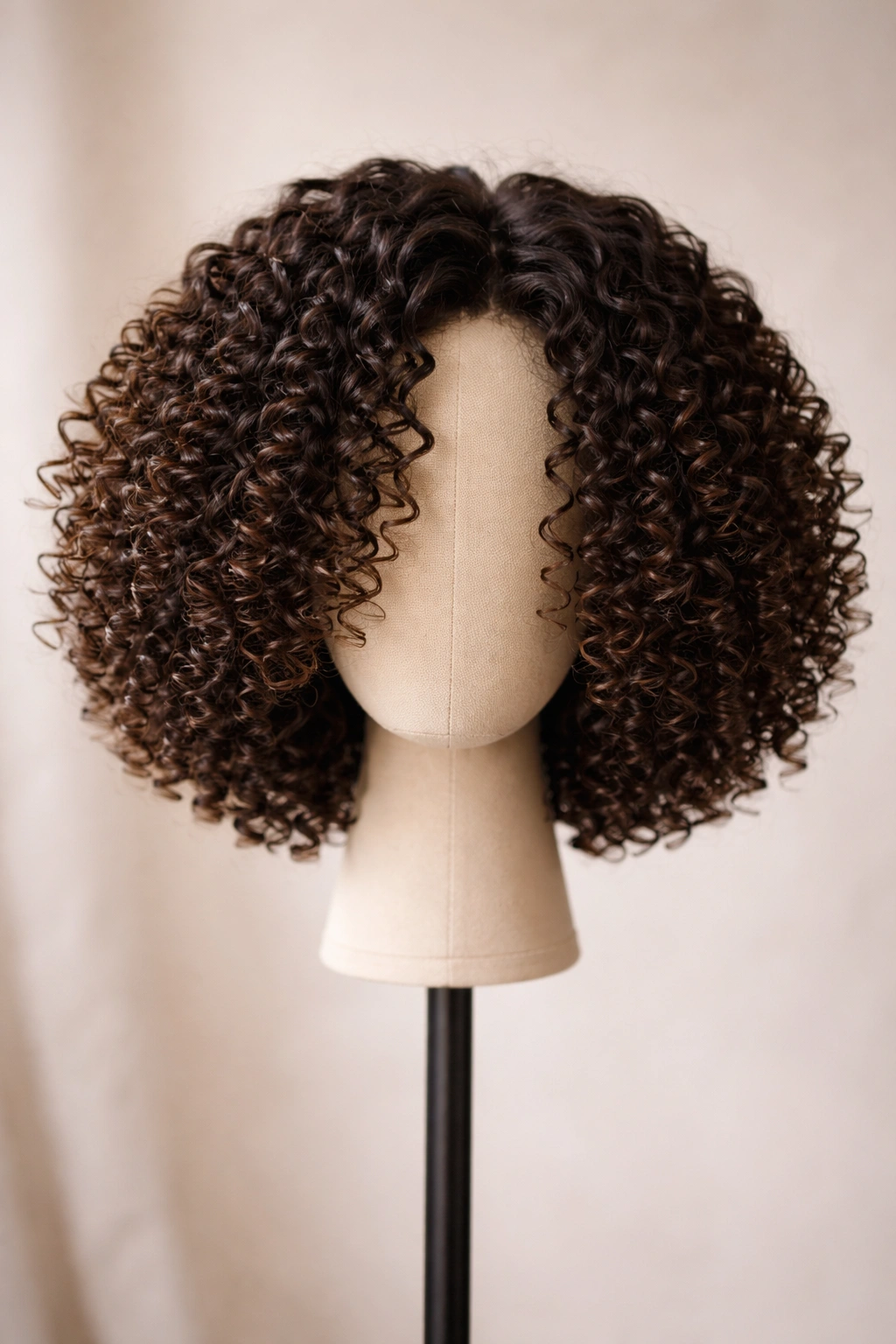
If you love the defined, springy look of tight ringlet curls, a bouncy spiral curl bob delivers that energy while still maintaining a polished, wearable silhouette. This style features consistent, well-defined curls throughout—think of the kind of curl pattern you’d get from a perm or from using flexi rods overnight. The curls are uniform enough to look intentional, but they’re arranged with enough variation in direction that they don’t read as plastic.
The Secret to Making Spirals Look Real
The magic of a bouncy spiral bob is in the density distribution. The best versions have slightly lighter density at the perimeter (around the hairline and the ends) and fuller density in the mid-lengths and crown. This mimics how real curly hair actually grows—it’s thicker and fuller in the middle section of each strand, and it tends to be finer at the very ends. When you look at the style from every angle, the curls should catch light differently and create genuine shadow and dimension, not a solid wall of sameness.
Styling and Maintenance
Bouncy spirals hold their shape beautifully with minimal daily styling, which is one reason people love them. A quick finger-comb in the morning to separate any curls that stuck together overnight, and you’re done. You can also lightly mist with a curl-refreshing spray and scrunch gently if the curls feel a bit flat from sleeping on them. The defined nature of this curl pattern means it works exceptionally well as a wig style because the curl structure is self-supporting.
Which Face Shapes This Flatters Most
Bouncy spiral bobs work beautifully on most face shapes, but they’re especially stunning on oval, heart, and square faces. The consistent curl pattern creates visual movement that prevents a heavy, bottom-heavy appearance. If you have a longer face, you might want to choose a slightly shorter bob length (chin-length rather than shoulder-touching) to ensure the proportions stay balanced.
Worth knowing: Spiral curls can sometimes appear denser or more voluminous than they actually are because of how light plays off the curl shape. If you tend to prefer sleeker, less voluminous styles, try a spiral bob in a slightly lighter color—the visual lightness of the color can balance the apparent density of the curls.
3. The Tousled Wave Bob
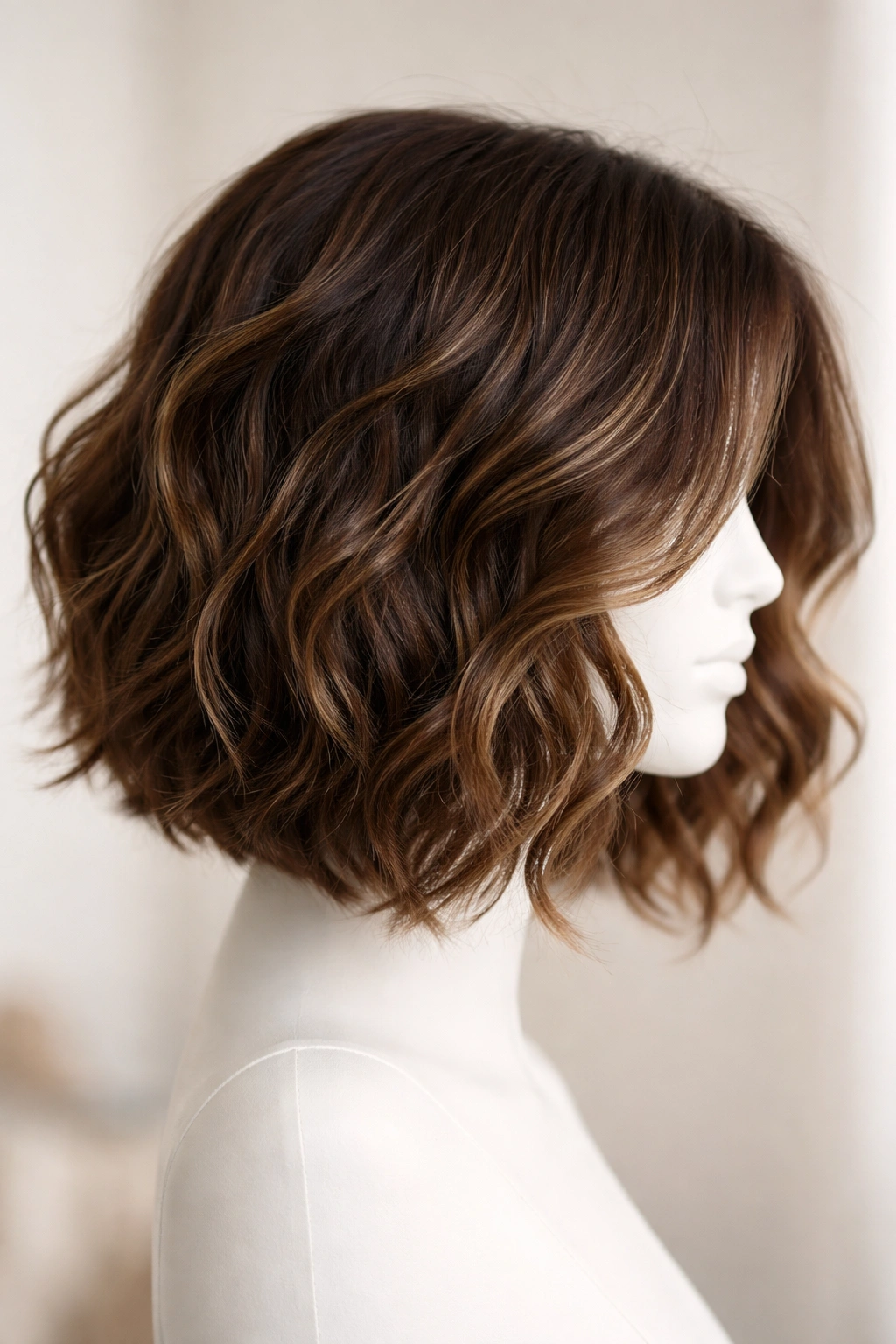
This is the style for anyone who wants the ease and wearability of a bob without committing to tight curls. The tousled wave bob features soft, loose waves that fall somewhere between straight hair and defined curls—it’s flowy, it moves, and it has just enough texture to look intentional without being overly structured. Think of the kind of waves you’d get by braiding damp hair overnight or using a curling iron loosely on your ends.
Why Waves Read as More Naturally Grown
Loose waves are actually one of the most realistic curl patterns for a wig because they’re what so many people’s natural hair naturally does. If you’ve ever seen someone with naturally textured hair who doesn’t define their curls, you see a wave pattern like this. The waves create movement and dimension without the “wig” association that sometimes comes with tighter, more obviously processed-looking curls. Waves also allow you flexibility—you can separate them into more defined curls, scrunch them tighter, or smooth them out slightly depending on your mood.
Styling Options and Versatility
A tousled wave bob is genuinely one of the most versatile wig styles you can choose. You can wear it with a side part for a sophisticated look, a center part for something more carefree, or even sweep it all to one side for drama. You can enhance the waves by scrunching with gel or curl cream when wet. You can also partially smooth sections with a flat iron or smoothing serum if you want a softer, straighter look on a particular day—something you really can’t do with tighter curl patterns without looking like you’ve lost half your curls.
Finding the Right Wave Texture
Pay close attention to whether the waves are consistent throughout or if they vary in tightness and direction. The most natural-looking versions have slight variation—some waves might be tighter at the crown and looser at the ends, or tighter on one side and looser on the other. This variation is what makes it read as genuinely grown-out hair rather than a uniform styling.
Insider note: If you’re worried about a wave pattern looking too uniform or “done,” choose one with slightly undone-looking ends—pieces that don’t curl all the way to the tip, or ends that appear a bit roughed up. This detail transforms a wave bob from looking styled to looking effortlessly tousled.
4. The Tapered Curl Bob
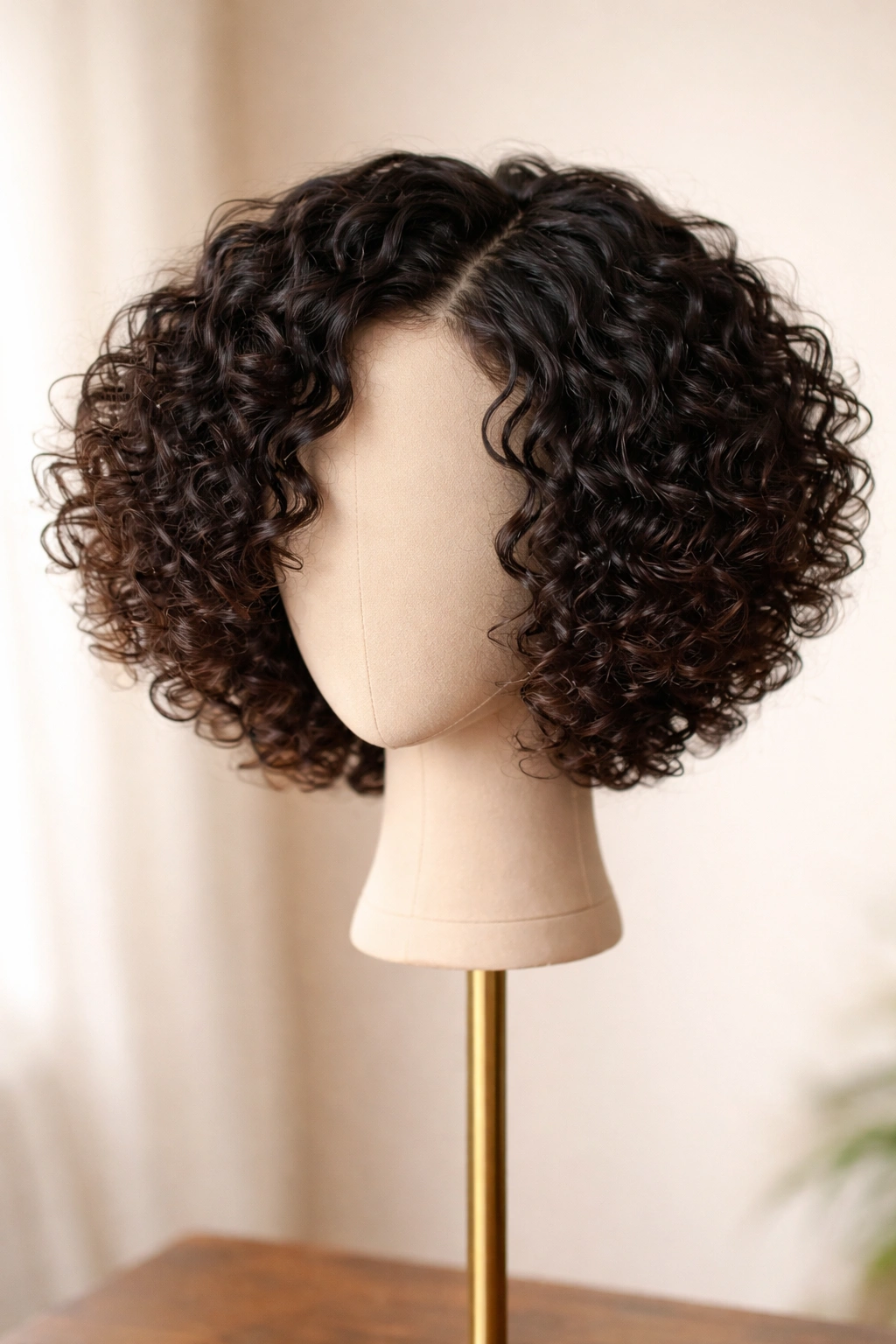
A tapered curl bob features curls that are tighter and more defined at the crown, gradually loosening and elongating toward the ends. This gradation creates a shape that’s flattering to nearly every face because the fuller volume sits high (where it creates lift and balance) while the longer, looser curls frame the face gently. It’s structured without feeling rigid, and it has movement without looking overly processed.
The Geometry of Taper That Actually Works
The best tapered curl bobs follow a principle: the curls transition smoothly from tight to loose, rather than making an abrupt switch. You’ll see the curl pattern gradually open up as you move down the hair shaft. This creates an optical effect that makes the style look intentional and designed, not accidental or damaged. The taper also means you get the best of both worlds—enough curl definition to look curated, but enough looseness at the ends to look soft and wearable.
Who This Style Suits
Tapered curl bobs are incredibly flattering on round, oblong, and rectangular face shapes because the tighter curls at the crown create height, while the longer, looser curls below the jaw elongate the face visually. For heart-shaped faces, this style works especially well because it doesn’t emphasize the width at the top. For oval faces, it’s basically universally flattering because you’re playing with natural proportions in the best possible way.
The Maintenance Reality
Because the curls are tighter at the crown, you might notice some frizz forming there faster than at the ends. This is actually fine—and even adds to the natural appearance if it’s light frizz and not excessive. You can manage this with a light smoothing serum or by finger-combing gently while the wig is slightly damp. The looser ends require even less maintenance; they generally stay looking fresh longer.
What to watch for: Make sure the taper transition doesn’t create a weird “bulbous” effect around the lower crown. The best tapered bobs have a continuous, gradual flow from tight to loose, not a sudden poof where the curl pattern changes. This is one detail that separates a well-designed tapered bob from a poorly executed one.
5. The Blended Length Curl Bob
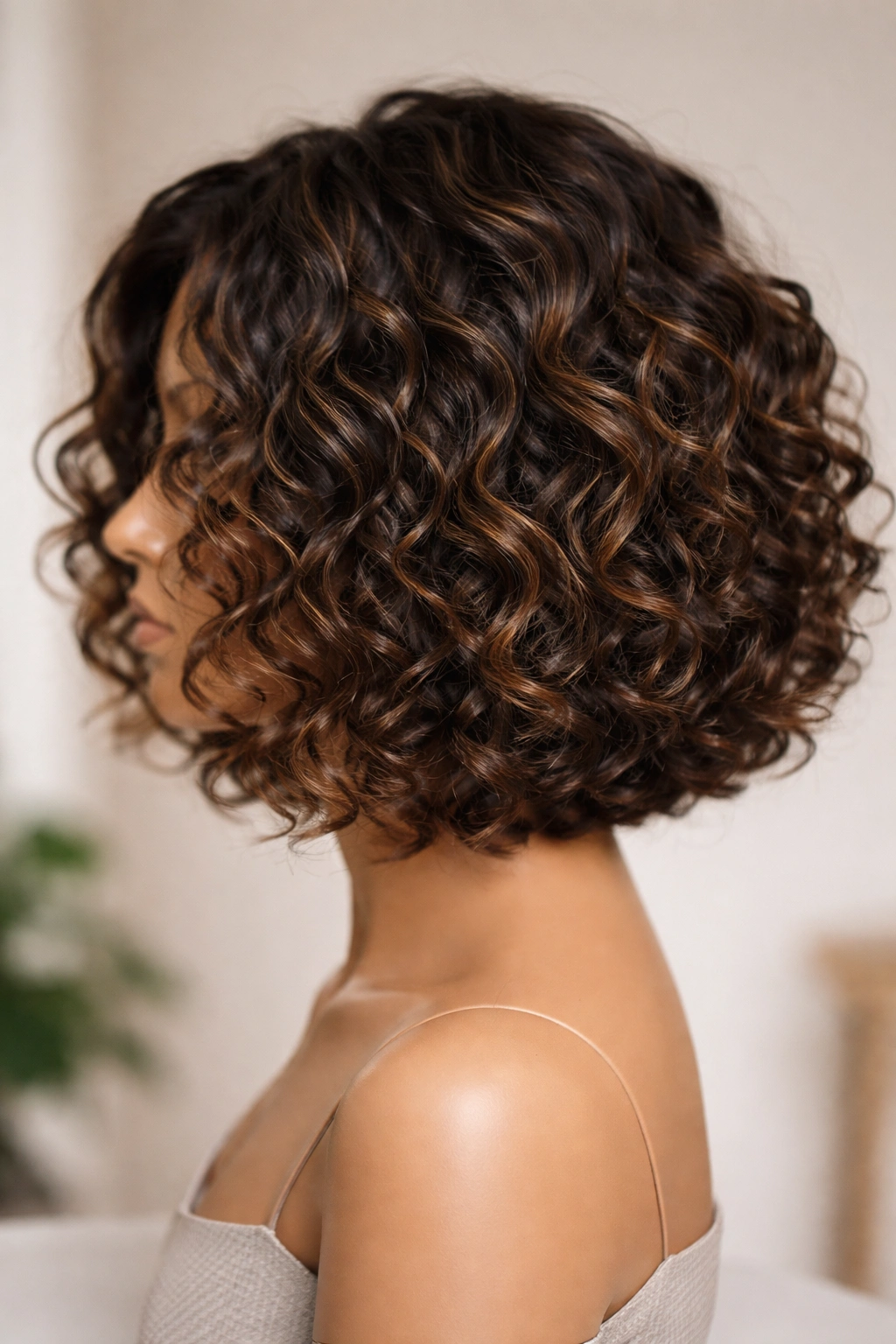
This style features curls that vary slightly in length throughout—not in a choppy, obvious way, but in a subtle graduation where some pieces are fractionally shorter or longer than their neighbors. This variation means that when you move, the curls don’t all move as a unified block. Instead, different sections move independently, creating the impression of genuine fullness and authentic texture variation.
Why Length Variation Creates Realism
Real curly hair naturally has slight length variations. Curls shrink at different rates, they break off at different points, some grow slightly faster than others. A blended length curl bob mimics this reality. When every single curl is exactly the same length, it reads as manufactured—even if the curls themselves are beautiful. Blended length creates visual complexity that our brains instantly recognize as authentic.
How to Work With the Variation
The beauty of this style is that you don’t need to maintain perfect uniformity. In fact, you don’t want to. Wear it naturally and let different sections fall where they want to. If one curl wants to stick out slightly, that’s perfect—that’s authenticity. You can separate curls with your fingers to emphasize the variation, or you can let them sit more blended together for a smoother silhouette depending on your mood.
The Sizing Question
Blended length bobs come in various lengths—some sit at the chin, some brush the jawline, some extend to the shoulder. Choose based on your face shape and what length you’re most comfortable wearing. The blended nature of the curls means that length variations matter less for overall style coherence than they would in a straight bob, where every half-inch of length difference is visible.
Pro tip: A blended length curl bob is one of the few wig styles where you can successfully add or remove a little length using careful trimming without destroying the style. If you find the curls are looking a bit long or you want to refresh the shape, a subtle trim of ½ to 1 inch can work beautifully. Have this done by someone experienced with curly wigs if you’re not confident.
6. The Defined Ring Curl Bob
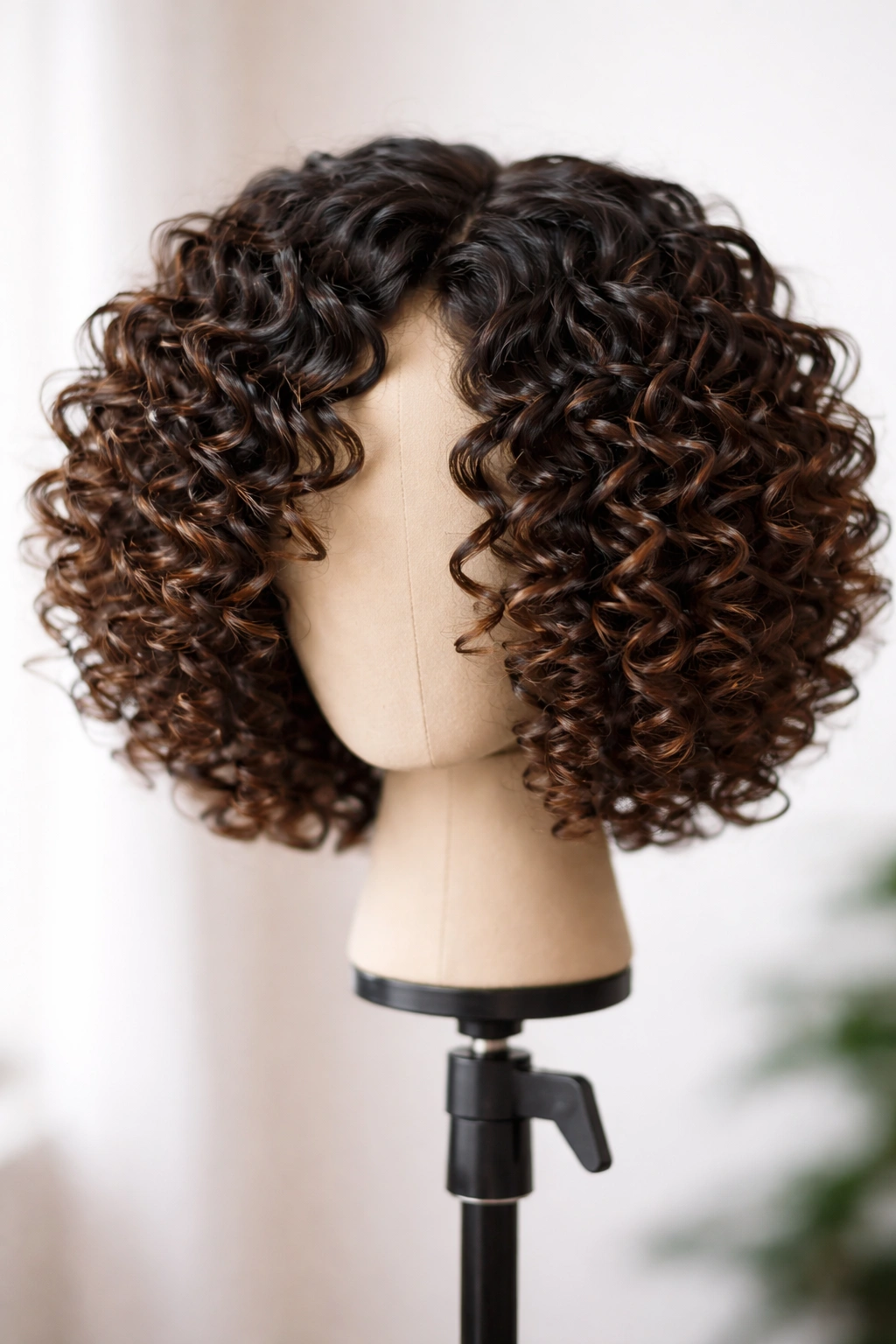
Ring curls—sometimes called corkscrew curls—are individual, distinct curls that spiral tightly from root to tip. A ring curl bob features these beautifully defined, individual curls arranged to create a full, dimensional silhouette. Each curl is clearly visible and separate from its neighbors, creating a style that’s visually striking and undeniably elegant. When done well, a defined ring curl bob reads as polished and intentional, not natural per se, but definitely wearable and fashionable.
When Ring Curls Read as Wearable
Ring curls work best when they’re arranged with genuine thought to density and direction. The most natural-looking versions have fuller density in some areas (like the crown and sides) and lighter density in others (like around the face and at the nape). The curls should spiral in slightly different directions rather than all spiraling the same way. When you look at the wig, you should see depth and dimension created by curls at different angles and distances from the scalp.
The Styling Approach
Ring curls hold their pattern beautifully, which is honestly part of their charm. With this style, you’re not really aiming for “natural and undone”—you’re aiming for “intentionally styled and gorgeous.” Style it by finger-combing gently to separate curls, or just leave them as they fall naturally from the wig cap. You can also use a light curl cream or gel to encourage definition if some curls relax over time. The key is maintaining that individual curl clarity.
Face Shape Considerations
Ring curl bobs work wonderfully on most face shapes when the curl density and direction are thoughtfully arranged. For narrow or oval faces, you want adequate density on the sides to create width. For wider faces, you might want slightly tighter curls or higher density on top to create lift rather than expansion. The individual nature of the curls means you have more control over how the overall style reads proportionally.
Worth knowing: Ring curl wigs sometimes shed slightly more than other wig types because individual curls can snag and pull free if not handled gently. Use a wide-tooth comb or fingers rather than brushes, and avoid tugging on curls when styling.
7. The Soft Layered Bob
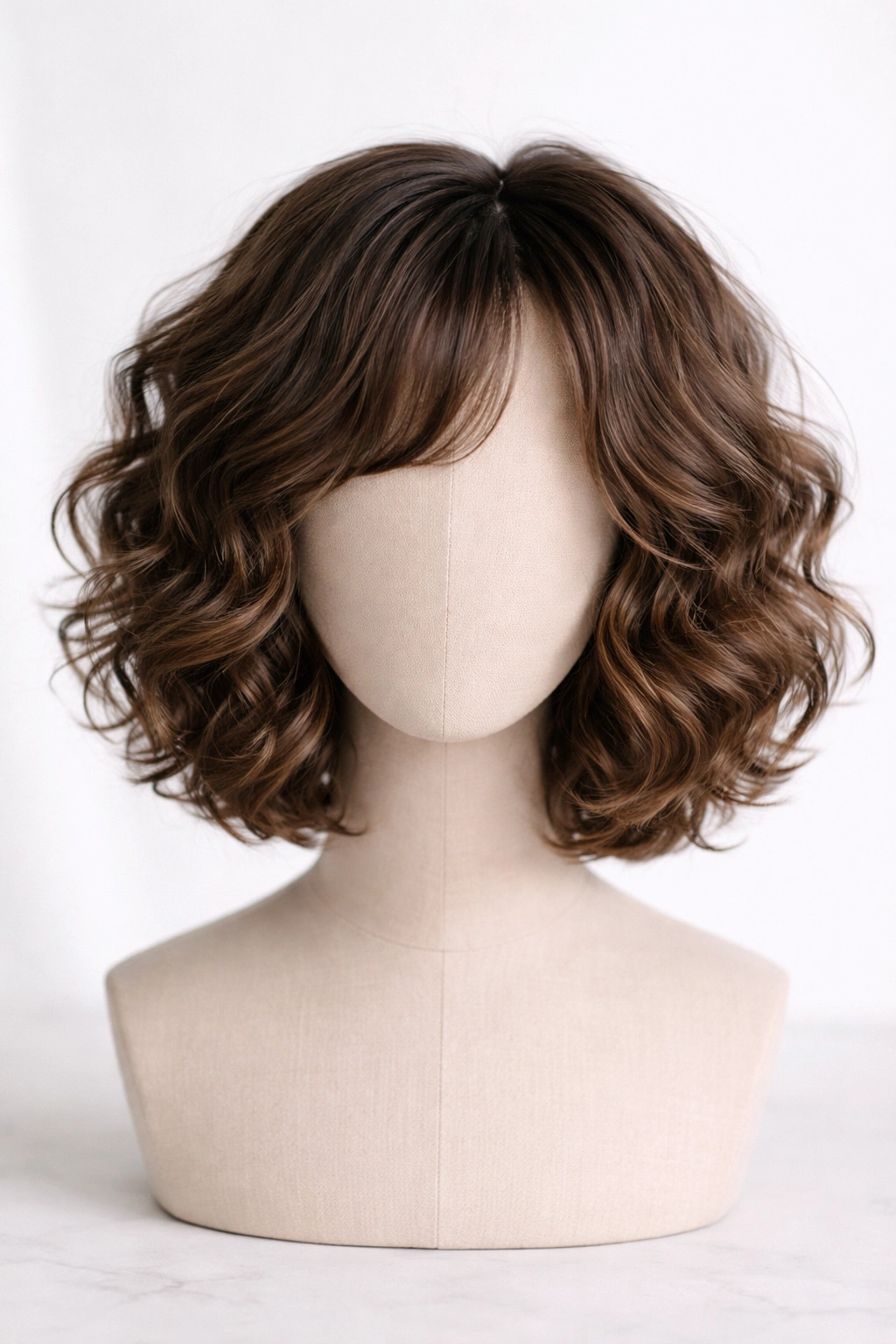
A soft layered bob combines strategically placed layers—shorter on top for lift and movement, gradually blending into longer pieces—with a soft, slightly loose curl pattern. The result is a style that has clear structure and shape, but with enough texture softness that it never reads as severe or overly done. This is the wig equivalent of “effortlessly chic.”
The Layer Placement That Makes It Work
What makes a soft layered bob different from a shag is the precision of the layering. Rather than choppy, piecey layers throughout, a soft layered bob has longer, more substantial layers that blend smoothly. You might have a slightly shorter crown, then longer layers through the mid-section, then even longer pieces underneath—but the transitions between these sections are soft and blended, not abrupt. The soft curl pattern smooths out any harshness the layers might create.
Creating Authentic Movement
The combination of layers and soft curls creates movement that’s incredibly natural-looking. When you move, different sections of the wig move at slightly different speeds because of the varying lengths. Your head, shoulders, and the wig’s density distribution all create genuine, three-dimensional movement—not the flat swinging of a solid-length bob.
Styling Flexibility
A soft layered bob gives you flexibility in how polished versus relaxed you want to appear. You can wear it with all curls separated and defined for a more intentional look, or you can let curls blend together for something softer and more diffused. You can add a headband, clips, or a scarf and the style works beautifully. It’s genuinely one of the most versatile wig styles available.
The Best Wig Cap Options
Soft layered bobs pair beautifully with lace front caps because the soft texture of the curls helps blend the hairline naturally. If you prefer a full lace or 360 lace cap, even better—you’ll get all the versatility in styling directions. The layering works well with most cap constructions, though you’ll want adequate ventilation if you’re wearing this for longer periods since the layers create slightly more density.
Worth knowing: Soft layered bobs sometimes look even better after a few days of wear, once the curls have relaxed slightly and the layers have settled into their natural fall. Don’t judge a new wig by how it looks in the first hour—give it a day or two.
8. The Curly Bangs Fringe Bob
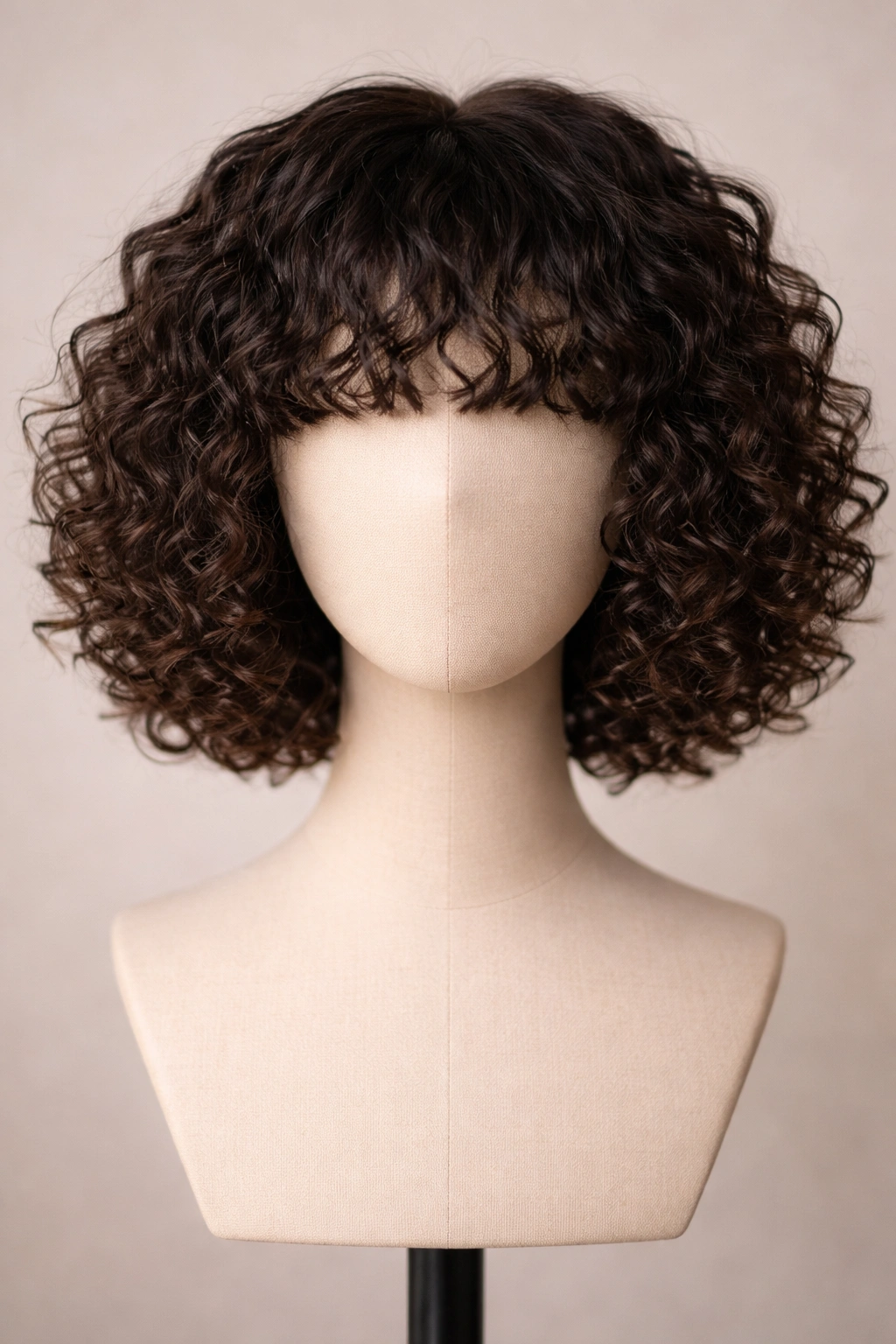
This style takes a classic curly bob and adds curly bangs or a fringe—shorter, textured pieces that frame the face from the forehead down to approximately eyebrow level or just past. Curly bangs create an entirely different vibe than a straight-haired bob with bangs would. The curly texture makes them look intentionally styled rather than like a geometric line across your forehead. It’s instantly youthful, playful, and surprisingly easy to wear.
Why Curly Bangs Look Better Than You Might Think
Curly bangs have a major advantage over straight bangs: they don’t require precise, sharp lines to look polished. Straight bangs demand blunt-straight evenness; if they’re even slightly uneven or fluffy, they read as messy. Curly bangs, though? They’re supposed to have texture and variation. They sit naturally and look intentionally styled, not like you haven’t trimmed them properly. This makes them one of the most forgiving bang styles for wig wearers.
Face Framing Magic
Curly bangs frame your face immediately and create an optical effect of bringing your features forward. For anyone with a longer face, curly bangs shorten the proportions visually. For anyone with a rounder face, the vertical movement of curly bangs creates length. The curls frame your eyes and cheekbones naturally, which can make the entire face appear more lifted and youthful. It’s a subtle but genuine optical effect.
Styling and Daily Wear
Curly bangs need minimal daily maintenance. You can finger-comb them gently, or just let them fall naturally from the wig. If they get a bit flat from sleeping on them, a light misting with water or curl spray and a gentle finger-scrunch refreshes them instantly. The curls provide enough texture that you don’t need them to be perfectly smooth or straight. In fact, a little textured separation in the bangs adds to the authenticity.
Choosing the Right Fringe Density
This is where many curly bang wigs miss the mark—they have too much density in the bangs, which can create a heavy wall across the forehead. Look for a wig where the bangs have moderate, airy density. You should be able to see a bit of scalp or lace through the bangs, especially around the outer edges. This creates the impression of genuine, grown-out bangs rather than a costume piece.
Pro tip: If you’re nervous about committing to bangs, start with a wig that has longer, looser bangs that you can style away from your face on days you want them off your forehead. Longer curly bangs have more versatility—you can sweep them to the side, pin them back, or let them frame your face depending on your mood.
Final Thoughts
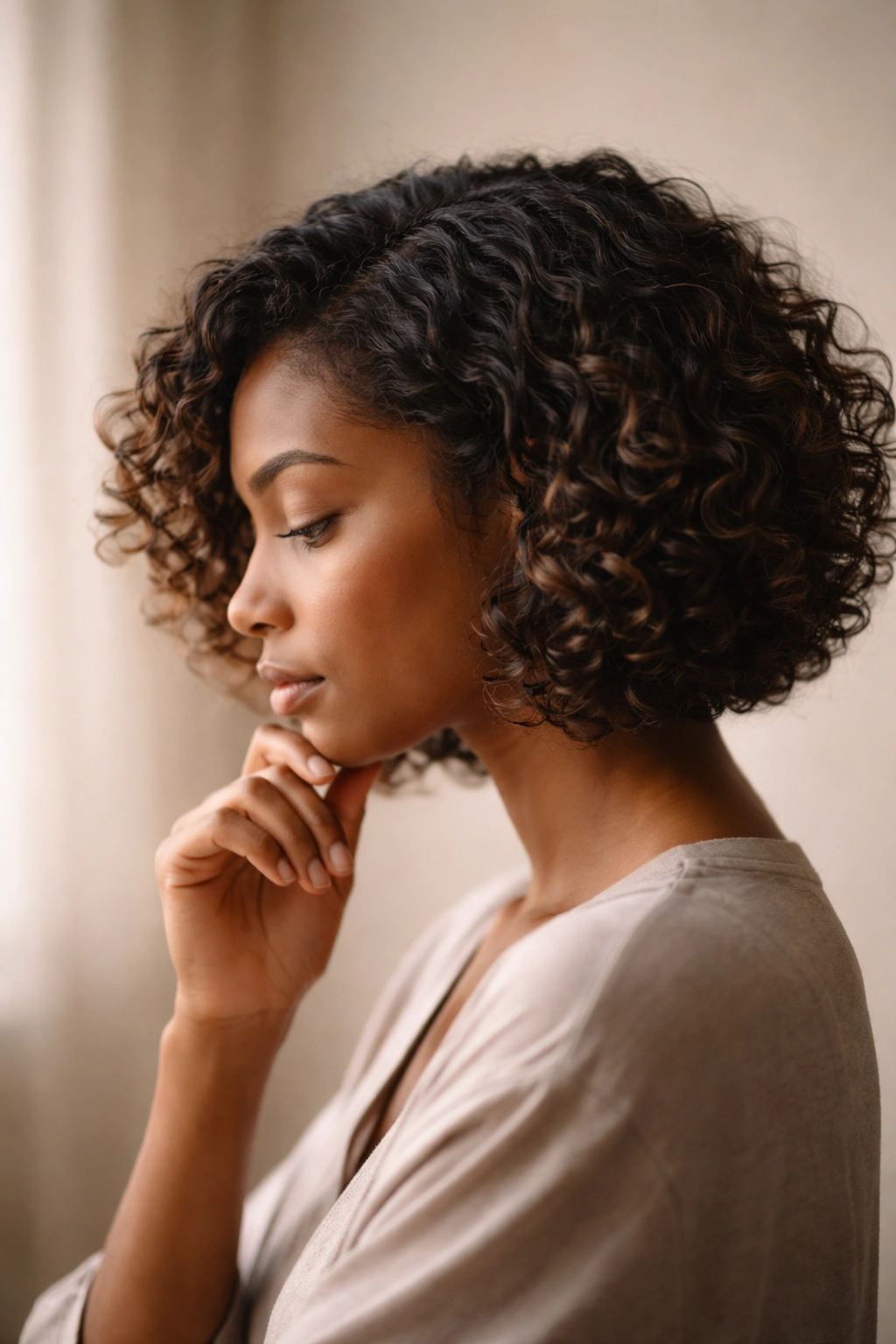
Finding a curly bob wig that looks genuinely natural comes down to understanding what makes curly hair read as authentic: variation in curl size and direction, appropriate density distribution, and a style that actually suits your life and face. The eight styles covered here represent the range of options available, from soft, undone waves to defined, intentional spirals. Each one can look absolutely natural when the right elements come together—good construction quality, thoughtful density placement, and realistic curl pattern variation.
The most important thing to remember is that natural-looking doesn’t mean it has to look unintentional. Some of the most natural-looking curly bob wigs are actually incredibly well-designed, with every element considered. The difference is that the design serves authenticity rather than drawing attention to itself. A quality wig in the right style for your face shape, lifestyle, and personal aesthetic can blend seamlessly into your everyday look or become a confident statement depending on what you’re going for.
Start by considering your face shape, the amount of styling maintenance you’re willing to do, and the vibe you want to project. Look closely at density, curl pattern variation, and how the style transitions from crown to ends. Pay attention to whether the hairline looks realistic—lace front details matter. And remember that trying on wigs in person, when possible, makes an enormous difference. What reads as natural through a photo might feel completely different when it’s on your head and you’re moving around in it. Trust your gut, choose quality, and select a style that makes you feel like yourself.