



Curly hair has stopped being something to minimize and started being something to celebrate — and the evolution is real. The “cool girl” aesthetic used to mean sleek, straight, and effortlessly flat. Today’s cool girl owns her curls with intention, whether that means emphasizing natural texture, playing with layers, or mixing curls with unexpected cuts and styling techniques. The shift isn’t just about fashion; it’s about confidence in wearing what actually grows from your head rather than fighting it for hours with heat tools.
The best curly hairstyles aren’t one-size-fits-all, and that’s exactly what makes them so cool. A style that makes sense for tight coils looks completely different when you have loose waves, and both are legitimate. What matters is finding a cut and styling approach that works with your specific curl pattern, not against it. The right cut can mean the difference between curls that look intentional and polished versus frizzy and undefined.
This isn’t a list of hairstyles that work for everyone. Instead, these are ten proven approaches that translate across different curl types, face shapes, and hair densities — styles with real staying power because they’re actually flattering and achievable with realistic maintenance. Whether you’re thinking about your next salon visit or just exploring what’s possible with the curls you already have, each of these styles brings something different to the table.
1. Face-Framing Curls with Textured Layers
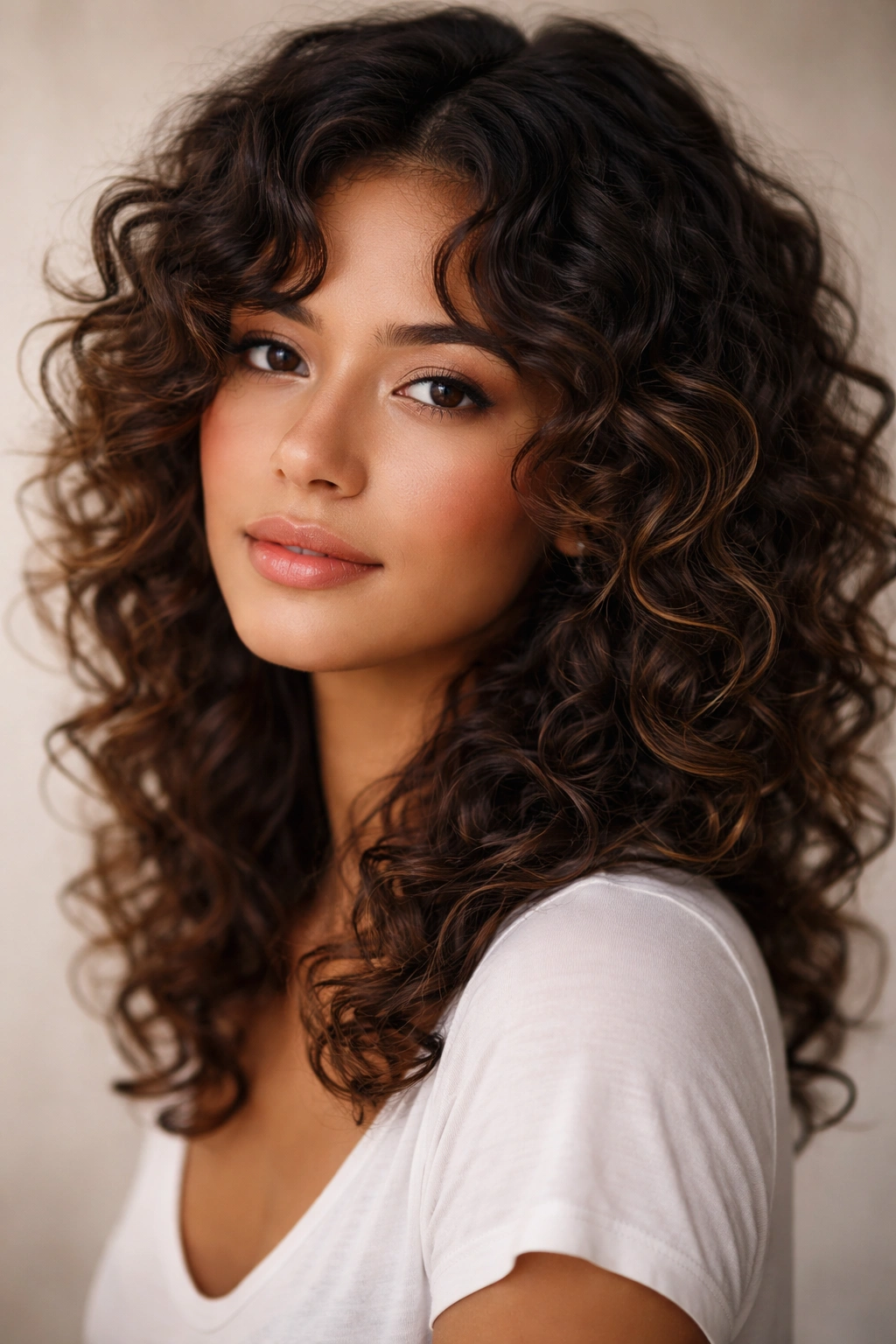
Face-framing layers are the secret weapon for curly hair that needs definition and movement. Rather than cutting a blunt, heavy perimeter, your stylist creates shorter pieces around your face that curl more freely and catch light in a way that draws attention to your features. This isn’t about making your hair shorter overall — it’s about strategic placement of layers that work with your natural curl pattern instead of weighing it down.
Why Face-Framing Layers Work on Curly Hair
The magic of face-framing curls is that they eliminate the “triangle” problem where curls get heavier and wider as they get longer. When you have shorter pieces around your face, they dry faster and form tighter curls, creating the appearance of more volume and shape. These layers also give you control points for styling — you can direct curls toward your face to soften angular features or away from your face if you prefer an open look.
The Styling Reality
- Face-framing layers typically range from 2-4 inches shorter than your back length, depending on your curl type
- These pieces require consistent moisture — they dry faster than longer curls and can get frizzy more easily
- The layers frame best when your curls are defined and clumped rather than separated into individual ringlets
- These work beautifully for medium to coarse curl texture; fine curls might look wispy rather than intentional
- Styling time is roughly the same as longer curls, but the payoff is visible shape and dimension
The real skill in a good face-frame is having your stylist consider your curl type and how your face shape will interact with the shorter pieces. Shorter layers around a rounder face can emphasize width, while they can actually balance a longer face by adding volume around the cheekbones.
Pro tip: Ask your stylist to cut your layers while your hair is wet and curly, not dry. This ensures they’re cutting to your actual curl pattern, not guessing based on how your hair hangs straight.
2. The Shag Cut for Curly Hair
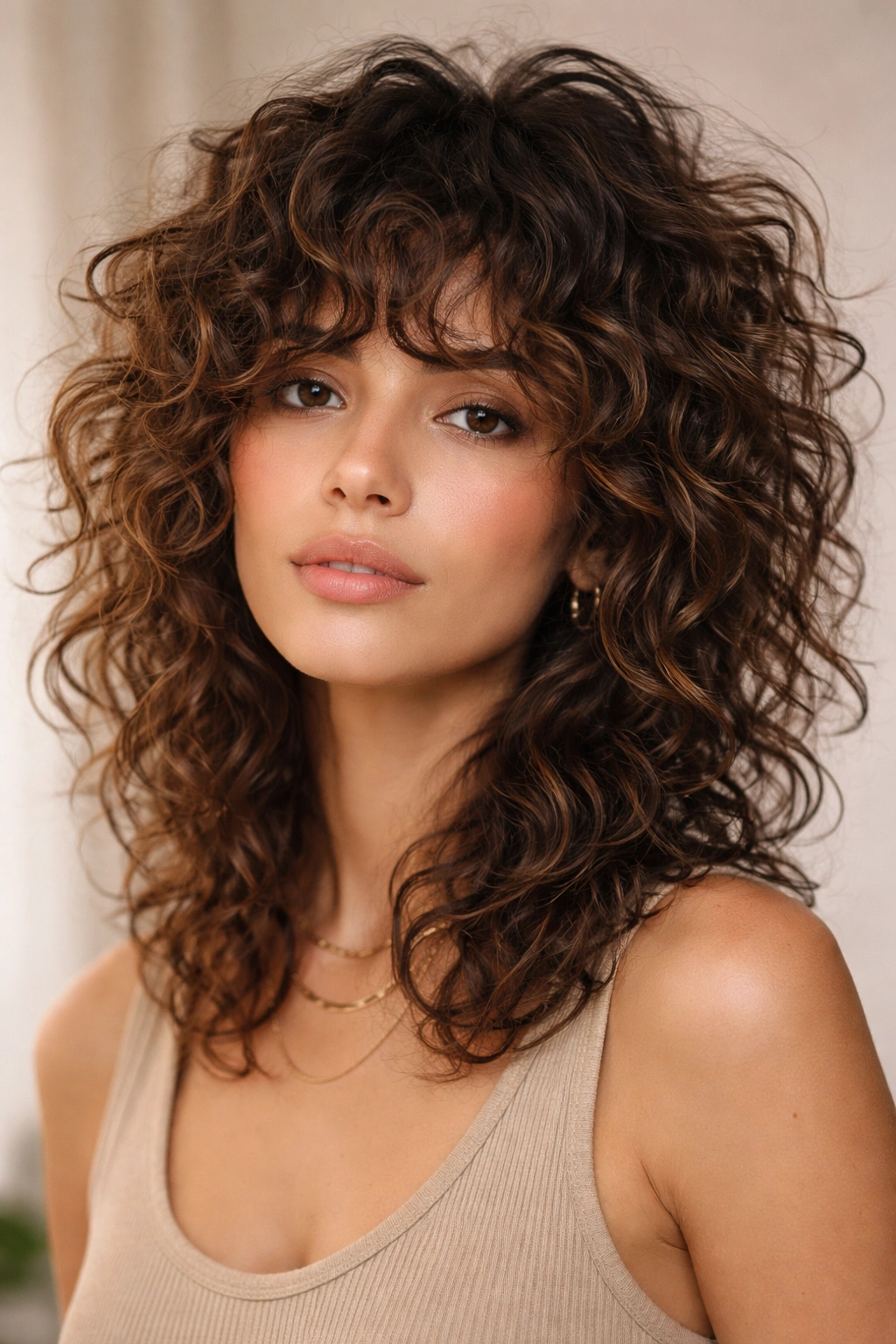
The shag is back, and the curly-haired version is nothing like the limp, stringy shags of the 70s. A modern curly shag combines choppy, disconnected layers throughout your entire head with intentional texture that celebrates movement. This is the style for people who want maximum dimension, a lived-in vibe, and hair that looks cool because it moves, not because it’s perfectly groomed.
What Makes a Shag Work on Curls
A good curly shag uses layers of different lengths scattered throughout, creating peaks and valleys in your curl pattern. The bottom layers might be longer and looser, while upper layers are shorter and springier, creating an almost feathered effect when your curls are fully dried and separated. The key is that these aren’t organized, structured layers — they’re intentionally choppy and irregular, which sounds chaotic but actually creates visual interest that’s impossible to achieve with blunt cuts.
The Maintenance and Styling Reality
- Shags require more deliberate styling than most curly cuts — you’re not just scrunching product in; you’re activating and separating individual layers
- They work best on people with naturally spiraled or coiled curls; looser waves tend to look stringy rather than intentional
- This style demands regular trims every 6-8 weeks to maintain the choppy shape, because without the layer separation, it just looks grown out
- Product needs are higher — you’ll typically need more styling cream or gel to define all those individual layers
- The payoff is a style that looks different depending on how you style it: sleeker and more polished when you clump curls together, or wild and textured when you separate them
The shag is unforgiving of unhealthy hair. If your curls are dry, damaged, or prone to breakage, the choppy layers will show every problem. This is a style for people who are willing to invest in deep conditioning and regular trims.
Pro tip: When your stylist is doing a curly shag, ask them to show you how to style each layer section separately. The cut is only half the battle; knowing how to activate and separate each layer is what makes it look intentional rather than messy.
3. Bouncy Ringlets with Soft Density
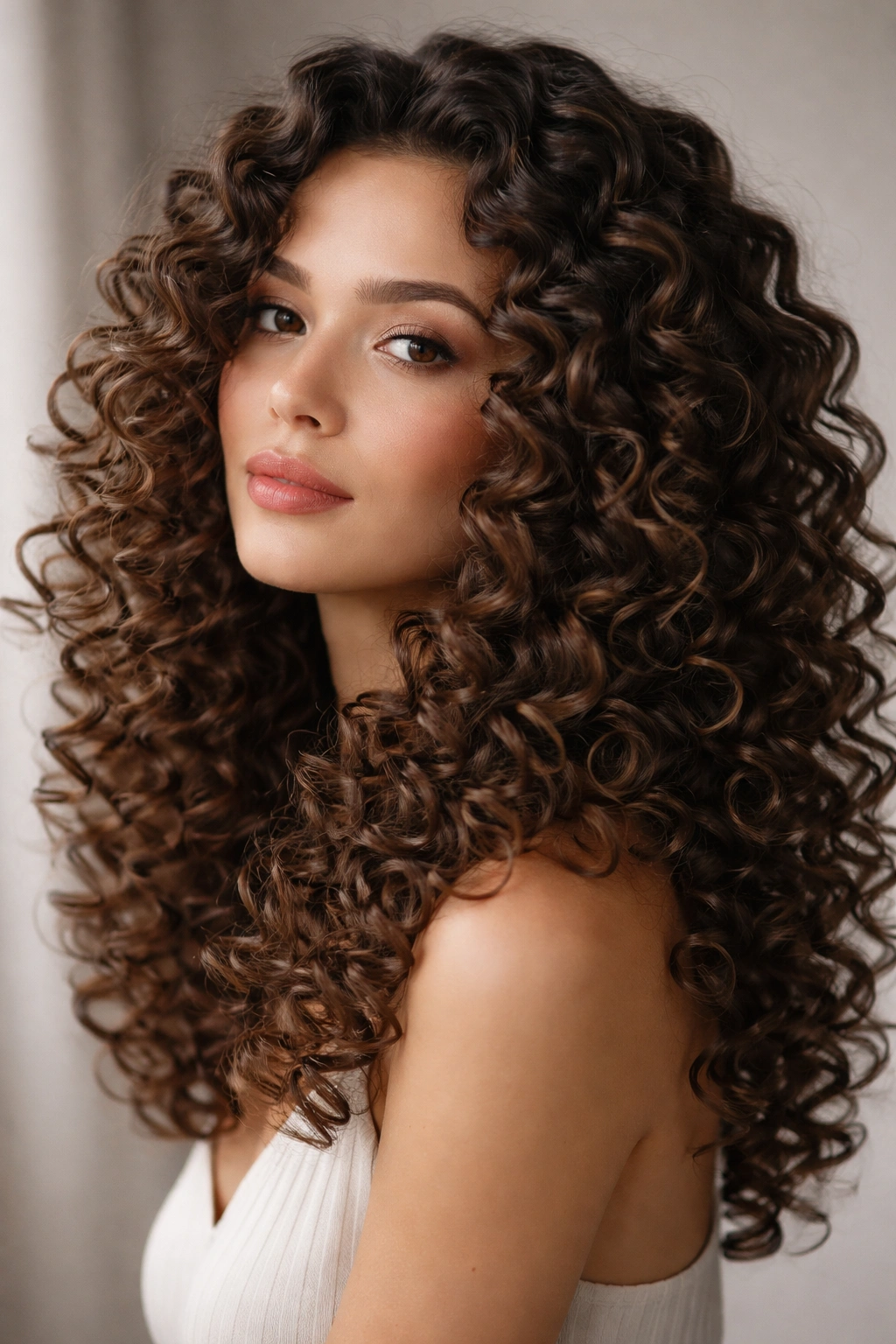
Ringlets are the fairy-tale version of curls — defined, bouncy, consistent spirals that catch light and move as a unit. This style works best if you have naturally ringlet-prone curls or if you’re willing to use techniques like roller setting or perm rods to create uniform curl size. The result is hair that looks polished without being flat or overdone.
How Ringlets Differ from Other Curl Styles
Ringlets have a specific, tighter curl pattern — usually ranging from about a half-inch to an inch in diameter, depending on what you start with. Unlike face-framing layers or shags that embrace texture and irregularity, ringlets are about uniformity and bounce. They’re the curly equivalent of the “done hair” look, which is ironic because they require more intentional styling to maintain their shape and definition throughout the day.
Achieving and Maintaining Ringlet Texture
- If your curls aren’t naturally ringlet-shaped, roller setting or perm rod styling is the most reliable way to create them
- Ringlets hold best when you use a stronger hold gel or mousse and allow them to fully dry before touching them
- The curl size needs to be consistent, which means your stylist may need to cut strategically to remove curl variations
- Plopping or diffusing upside-down usually gives you better ringlet definition than air-drying
- Sleep is the enemy of ringlets — you’ll need a pineapple (high crown ponytail) or bonnet to preserve them overnight
The gorgeous bounce of ringlets comes from tension during drying, which means air-drying rarely gives you this effect naturally. If you love this look but aren’t interested in roller setting or heat styling regularly, this might not be the right style for your lifestyle.
Worth knowing: Ringlets and humidity are complicated. In damp weather, they can tighten up and shrink closer to your scalp, which can be beautiful or can feel too heavy depending on your curl density and personal preference.
4. Tousled Textured Waves for a Lived-In Look
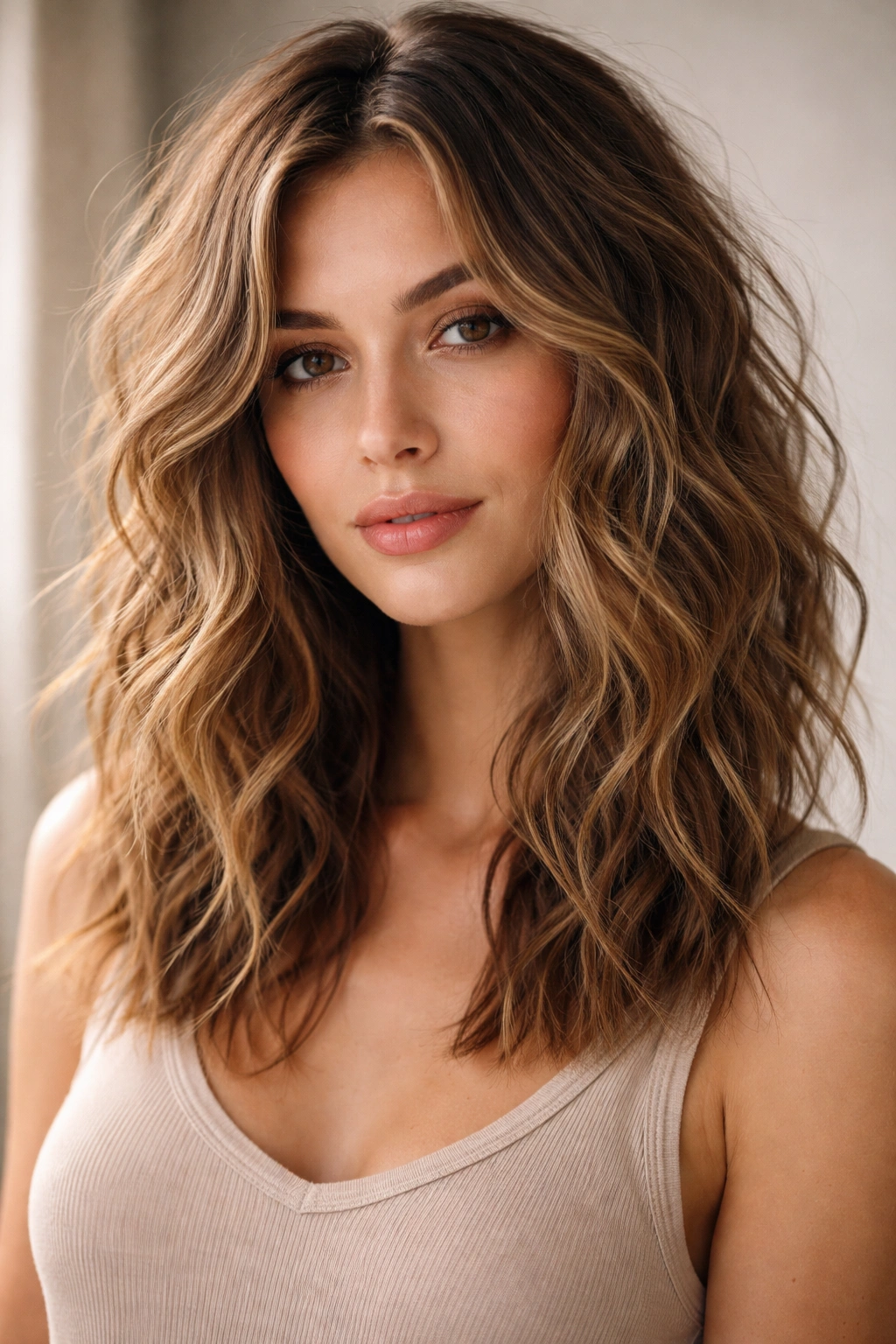
Tousled waves are the curly-haired equivalent of “I woke up like this” — except you definitely didn’t, but the styling makes it look that way. This is looser than ringlets, less structured than a shag, and more intentional than just letting your natural curls do their thing. It’s the sweet spot between effort and effortlessness that actually takes skill to pull off convincingly.
The Appeal of Textured Waves
Textured waves work because they look modern and accessible rather than “done hair.” They have movement and dimension without screaming that you spent an hour styling. This style reads as confident rather than trying too hard, which is probably why it’s become the default look for actors, models, and people with genuinely cool Instagram aesthetics.
Creating the Textured Wave Effect
- This style works best on medium to loose curls; tight coils tend to look frizzy rather than tousled when deliberately undone
- The cut is usually longer and features fewer layers than a shag — think shoulder-length or longer with subtle choppy pieces
- Styling involves applying product to soaking-wet hair, then either diffusing on low heat or air-drying with intentional separation
- The key is not letting curls fully clump together; instead, you want some definition but also visible texture and slight frizz at the edges
- This look gets better after a day or two as curls relax slightly and gain movement — the first-day appearance can actually look too polished
Tousled waves require understanding the difference between deliberate texture and accidental frizz. If your edges are fuzzy and undefined, you probably need more product or better diffusing technique. If your curls look too neat and clumped, you need to separate them more and maybe use slightly less product.
Pro tip: This style actually improves with second-day styling. If you’re going for tousled waves, embrace refresh sprays and know that your hair will probably look better on day two than on wash day.
5. Defined Coils with Strategic Layers
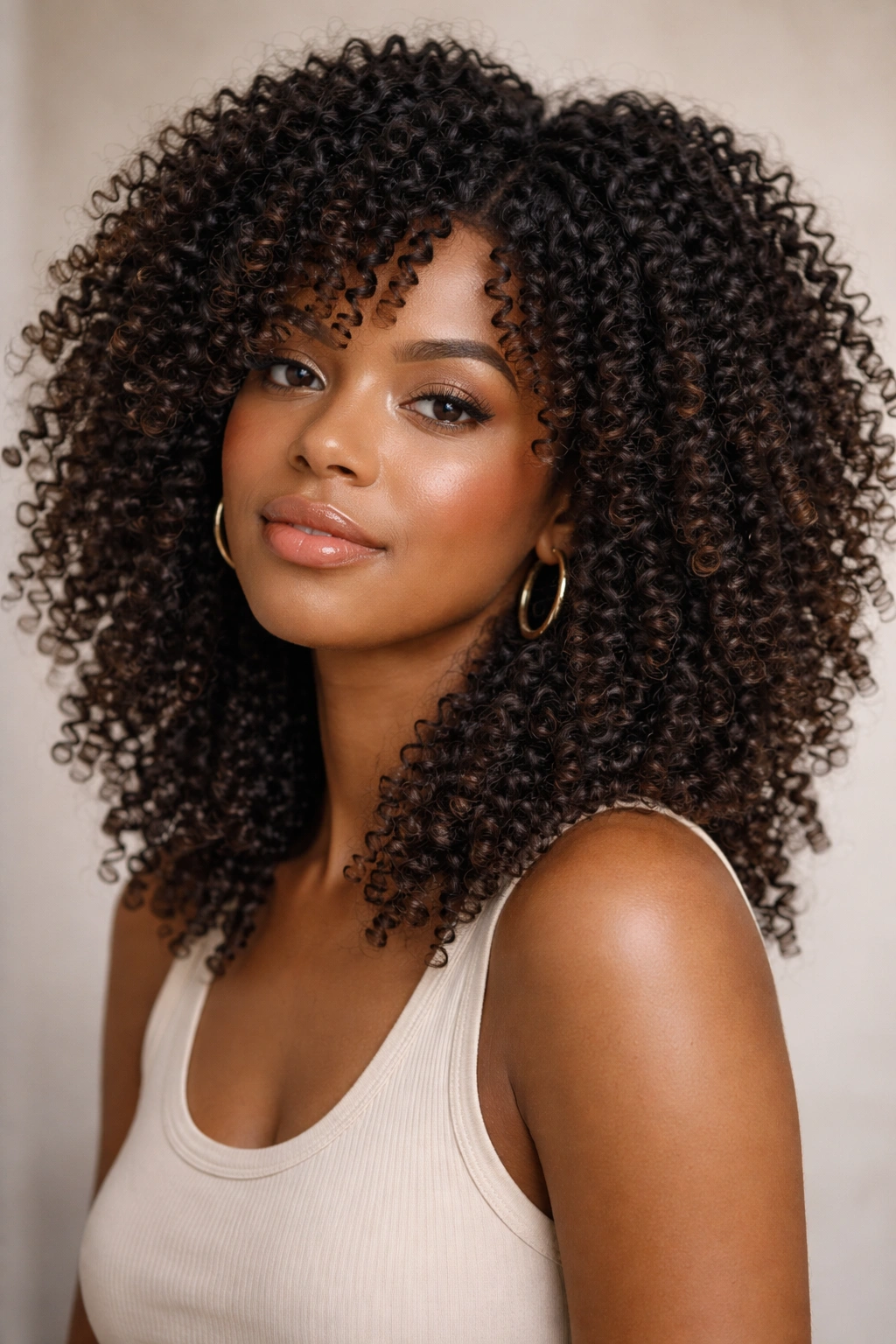
If you have tight coils or coily curls, defined coils with layers is the style that actually celebrates your natural texture rather than trying to open it up or make it bouncier. This approach uses precise cutting and intentional layering to create dimension within your coil pattern, so each coil reads as individual and alive rather than as one dense mass.
How Layering Works on Coily Hair
Layering on coily hair is fundamentally different from layering on loose waves. You’re not creating layers that flow smoothly from one to the next; you’re creating strategic cuts that allow coils at different lengths to spring up independently. A good stylist will cut your coils while they’re in their natural, dry state so they can see exactly how each length will behave and where you need shorter pieces to pop with volume.
The Styling and Maintenance Reality
- Coily hair benefits from fewer products, not more — overloading with gel or cream can weigh down coils and prevent them from springing up fully
- The cut should emphasize clumping your coils rather than separating individual strands, which maintains definition and reduces frizz
- Refresh styling on coils is easier than on looser curls — you can usually just spritz with water and re-scrunch to reactivate
- Deep conditioning is essential because coily hair is naturally drier; moisture directly impacts how bouncy and defined your coils look
- This style shows the benefit of protective styling and nighttime care — your coils will last longer if you protect them while sleeping
The payoff for committing to coil-focused cutting is that you get to wear your most natural texture with genuine elegance and polish. You’re not fighting your hair or trying to change it; you’re emphasizing what it actually does.
Worth knowing: The shape of your coils matters as much as the size. Some coils are springy and round; others are more elongated or S-shaped. A stylist who understands your specific coil pattern can cut in a way that maximizes their natural bounce.
6. Loose Romantic Curls with Movement
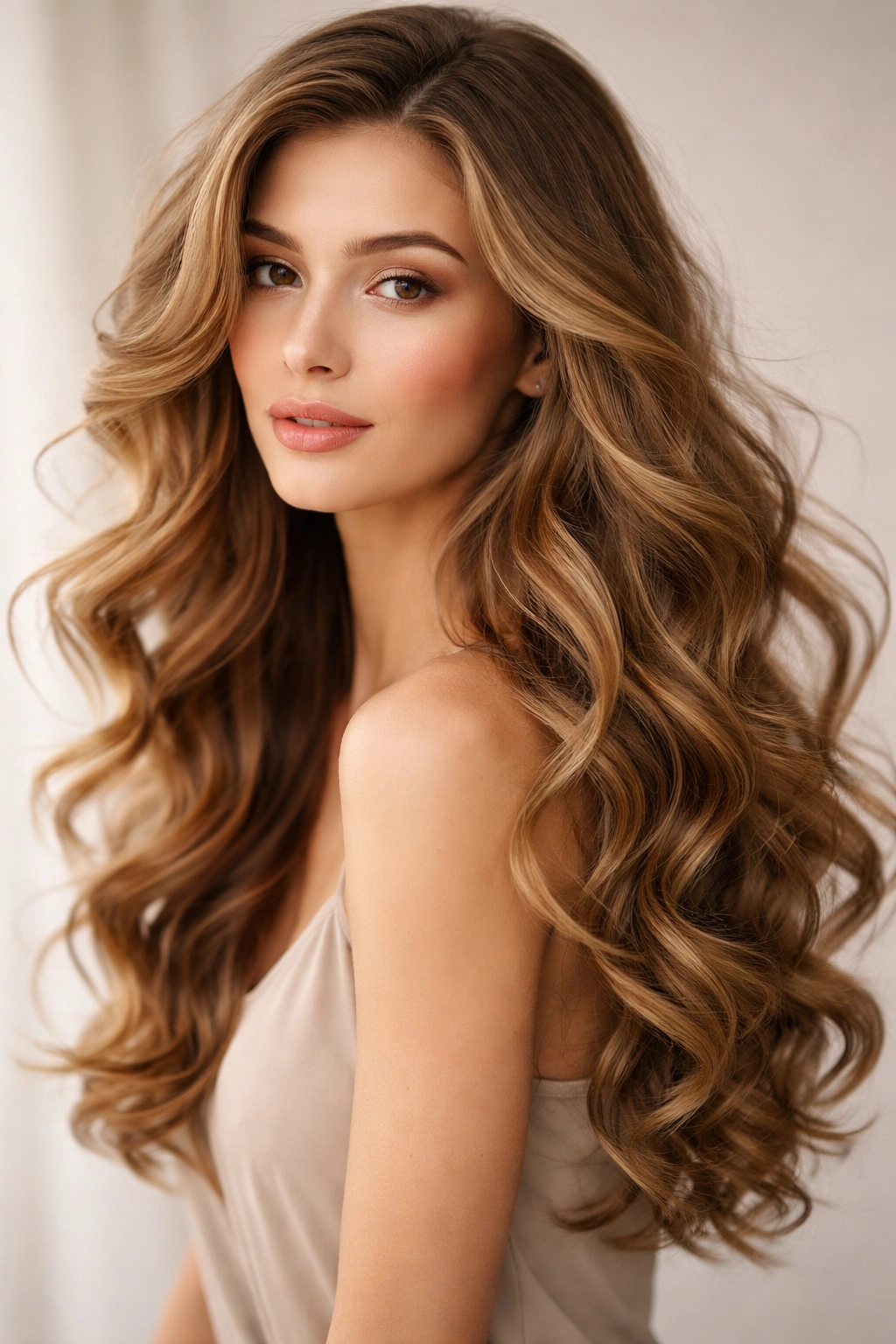
Loose romantic curls are the curly equivalent of an undone updo or tousled beach waves — soft, romantic, and somehow effortlessly elegant. This style has bigger curl formations than ringlets or defined coils, featuring waves and curves that can be 1-2 inches in diameter or larger. The effect is polished enough for an event but relaxed enough for everyday wear.
The Difference Between Loose Curls and Frizz
The tricky part about loose romantic curls is that they’re closer to frizz than they are to ringlets, which means styling matters enormously. You need enough product definition to hold the curl shape without looking stiff, and you need the right technique to enhance waves without opening them up into undefined texture.
Achieving Loose Curl Definition
- This style works best on people with naturally loose to medium curls; if your curls are very tight, forcing them to sit in larger formations usually requires heat styling or roller setting
- The cut can be longer and have fewer layers since the curl pattern is already providing movement — sometimes a simple long-layers approach works better than choppy layers
- Styling involves encouraging curls to clump in specific directions while diffusing, rather than separating them out
- Using a cream-based product (rather than gel) often gives better results because it provides hold without the shine and stiffness of heavy gels
- Air-drying works better than blow-diffusing for this look if your curls naturally want to form loose shapes
The romantic appeal of this style comes from softness and movement rather than precision. The curls don’t all have to be perfectly uniform; in fact, variation in curl size actually makes this look more intentional and beautiful.
Pro tip: If you’re styling loose romantic curls, try “praying hands” application — smooth product between your palms and then press it into vertical sections of hair rather than scrunching. This encourages curls to clump in longer formations rather than fragmenting into smaller pieces.
7. Half-Up Curly Knot for Effortless Sophistication
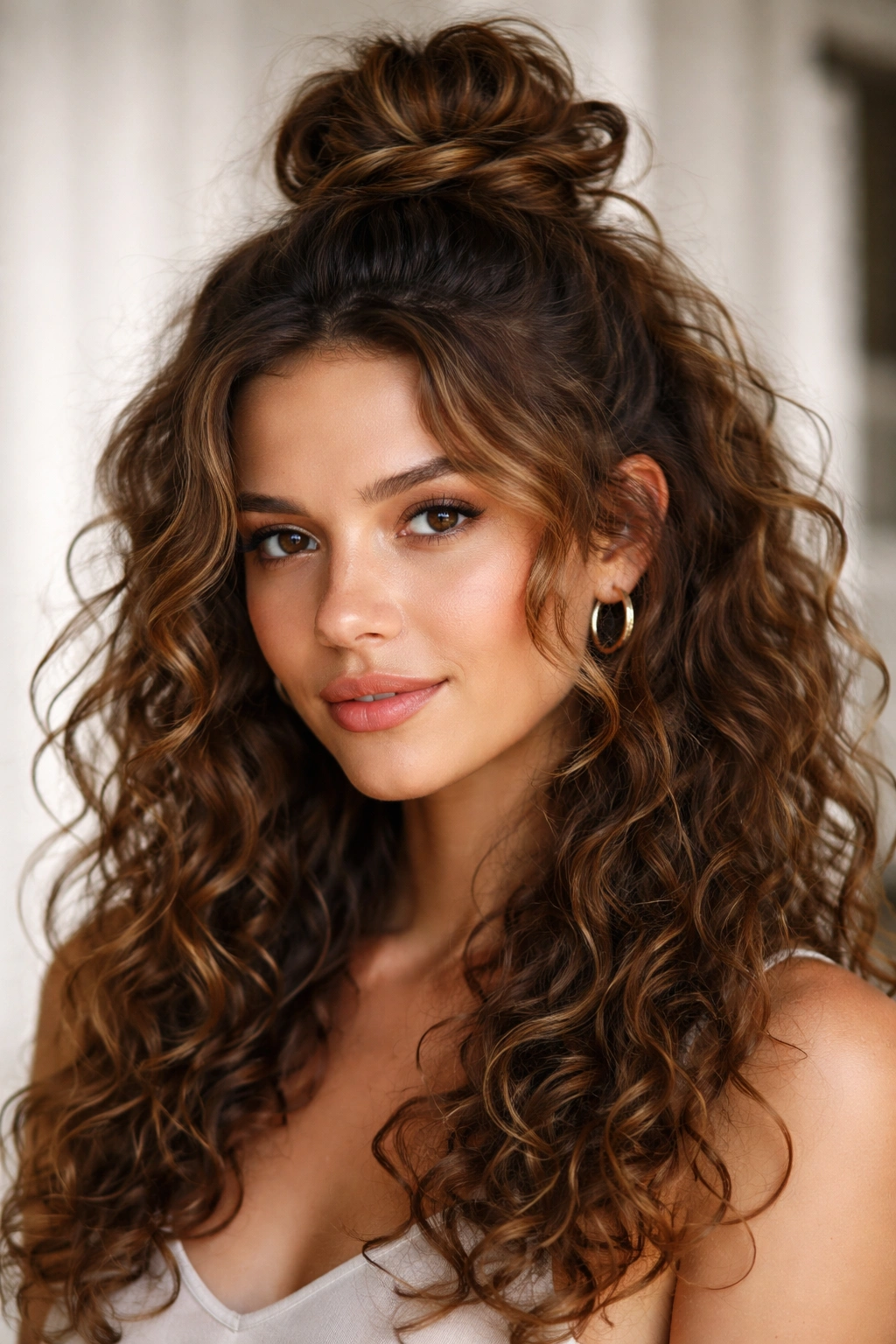
The half-up curly knot takes a handful of curls from the crown area, twists them loosely, and secures them into a knot or bun at the back of your head. It’s the curly girl’s answer to the half-up style, and it looks polished enough for work or events while still showcasing your curl pattern in the down section. This style bridges casual and intentional in a way that works for almost any curl type.
Why Half-Up Works for Curly Hair
The genius of this style is that it’s simple enough to do in 30 seconds but looks intentional and put-together. You’re using your curls as the styling element rather than against them, and the partial updos relieves volume and weight from the crown without flattening your curls. Plus, it’s genuinely functional — it keeps hair off your face without the commitment of a full updo.
Styling and Versatility
- This works on any curl type, from loose waves to tight coils, because you’re not trying to smooth or transform the texture
- The knot can be perfectly neat or deliberately undone and wispy, depending on your vibe
- You can do this on day-one curls or refresh-day curls; it actually looks better if your curls have a bit of lived-in texture rather than being perfectly defined
- The hair left down can be styled however you want — clumped, separated, tousled — and it still reads as intentional with the knot on top
- This is one of the few styles that’s genuinely quicker to do in the morning than to style your curls down fully
The half-up knot solves a real problem for people with curly hair: sometimes you want your curls down and visible, but you also need them off your face and managed. This style does both.
Pro tip: If your knot keeps unraveling, try twisting your section more tightly and securing it with bobby pins underneath rather than relying only on a hair tie. A few strategic bobby pins make this style last all day.
8. Micro Braids Woven Through Natural Curls
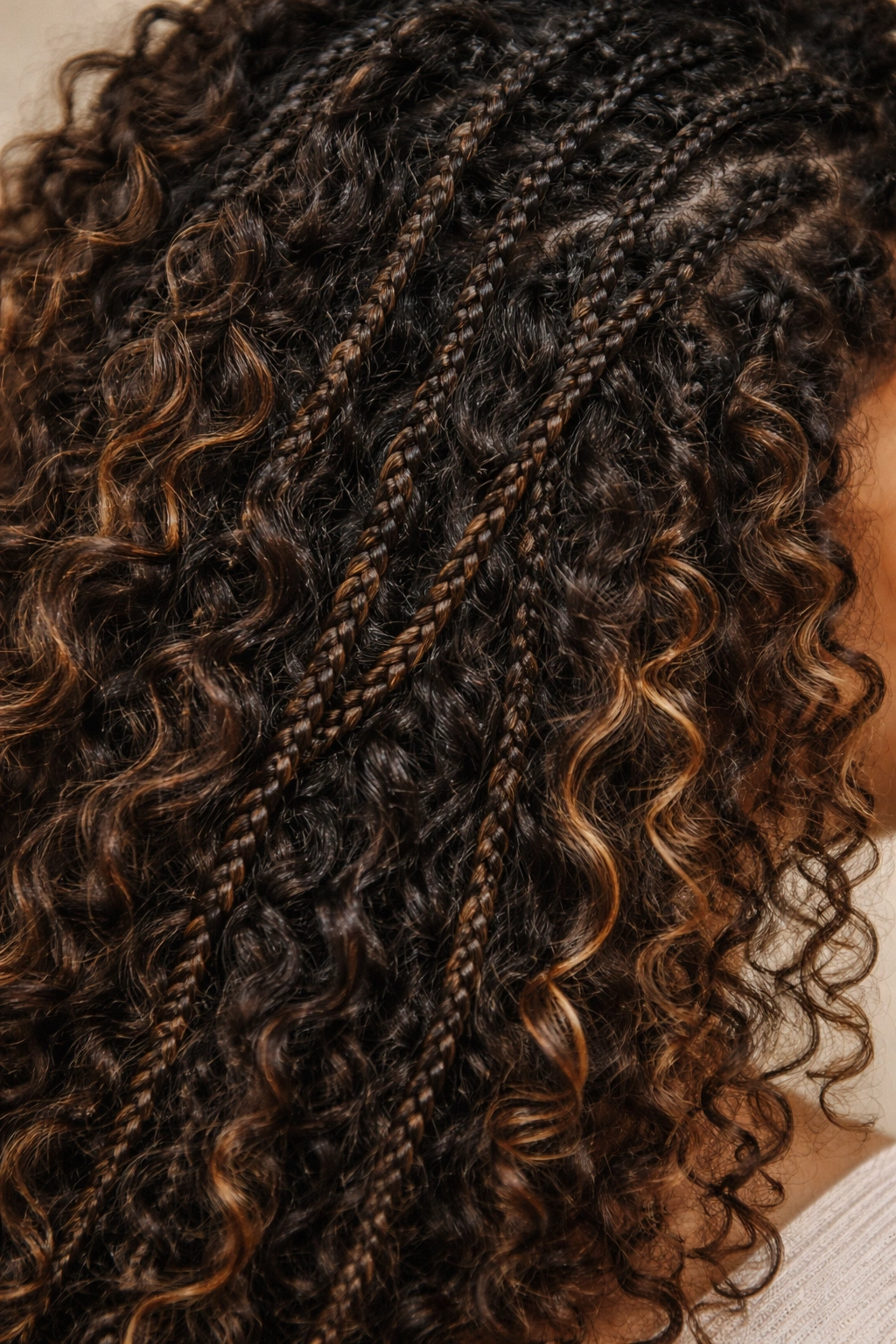
Micro braids aren’t technically a haircut, but they’re definitely a hairstyle, and they’re having a major cool-girl moment. Small braids woven through your natural curls add visual interest, texture variation, and a level of intentionality that reads as high effort but is actually surprisingly low maintenance. You can do thin braids throughout your entire head or scatter them strategically for a more subtle effect.
The Visual Impact of Braids in Curly Hair
Braids create linear elements against your curved curl pattern, which is why they’re so visually striking. They also slightly hold and define the curls they’re braided through, which can enhance your curl definition without extra products. The effect is artistic and creative without looking costume-like if the braids are sized appropriately and placed intentionally.
Installing and Maintaining Braids
- Micro braids work best on curls that are at least medium-sized; very tight coils can be difficult to braid through without disturbing the curl pattern
- You can create micro braids yourself once you learn the technique, or visit a stylist — both options are viable depending on your skill level and time
- Braids typically last 2-4 weeks depending on how active your lifestyle is; they can loosen or start to look messy as your curls shift and relax
- Sleeping in braids can actually improve their longevity — the braids stay tighter and your curls don’t fight against them
- You’ll need to refresh the curls without the braids occasionally (remove braids, refresh curls, re-braid), which adds maintenance compared to straightforward curly styles
The commitment here is primarily about upfront time investment. Once braids are in, they actually require less daily styling because you’re not diffusing or scrunching your entire head.
Worth knowing: Micro braids can be styled in multiple ways — you can let the curls outside the braids do their thing, you can twist braids with curls together, or you can style everything into an updo. It’s one install with multiple styling possibilities.
9. Curly Lob with Choppy Texture
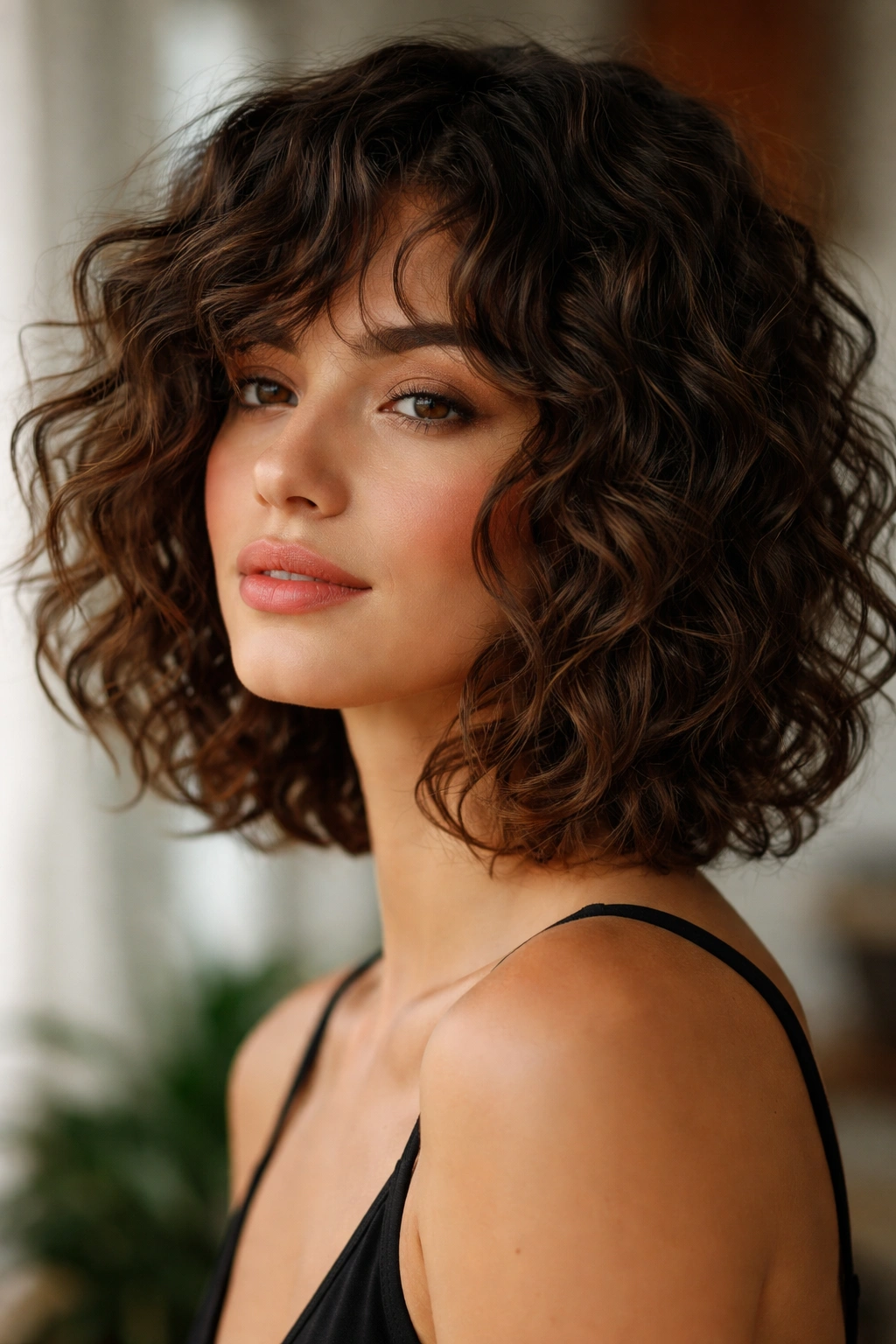
The lob (long bob) has transcended straight hair, and the curly version is genuinely one of the most flattering and wearable lengths for curly hair. A curly lob hits somewhere around chin to collarbone length and features choppy, textured layers that create movement and shape without requiring the commitment of longer hair. It’s the sweet spot between practicality and statement-making.
Why Lob Length Works for Curly Hair
At lob length, you’re past the awkward mid-length zone where curls can look formless, but you’re not so long that weight and density become difficult to manage. The length also means your curls have room to settle and find their natural formation without being so short that they spring up tightly around your head. Add choppy layers and you get incredible dimension and movement.
Lob Styling and Care
- A curly lob can look drastically different depending on how you style it — sleeker with more product and diffusing, or wilder and more tousled with less product and air-drying
- The choppy layers mean you have multiple styling options: clump curls together, separate them out, or create hybrid looks
- Lob length is easier to maintain than longer curly hair — it requires trimming every 8-10 weeks to keep the layers sharp, but you’re not dealing with the daily tangles and density of waist-length hair
- This length works well with all curl types; it’s one of the most universally flattering lengths for curly hair
- The weight distribution is forgiving — even if your layers aren’t perfectly even, the shorter length means any unevenness reads as intentional texture rather than bad cutting
The lob is also practical for work and formal settings in a way that longer curly hair sometimes isn’t. It reads as polished and professional without requiring you to straighten your hair.
Pro tip: When your stylist cuts your curly lob, ask them to cut a bit shorter than you think you want. Curls have memory and can seem to spring up a bit after a few washes, so erring slightly short gives you room for that adjustment.
10. Spiral Curls with Subtly Undercut Sides
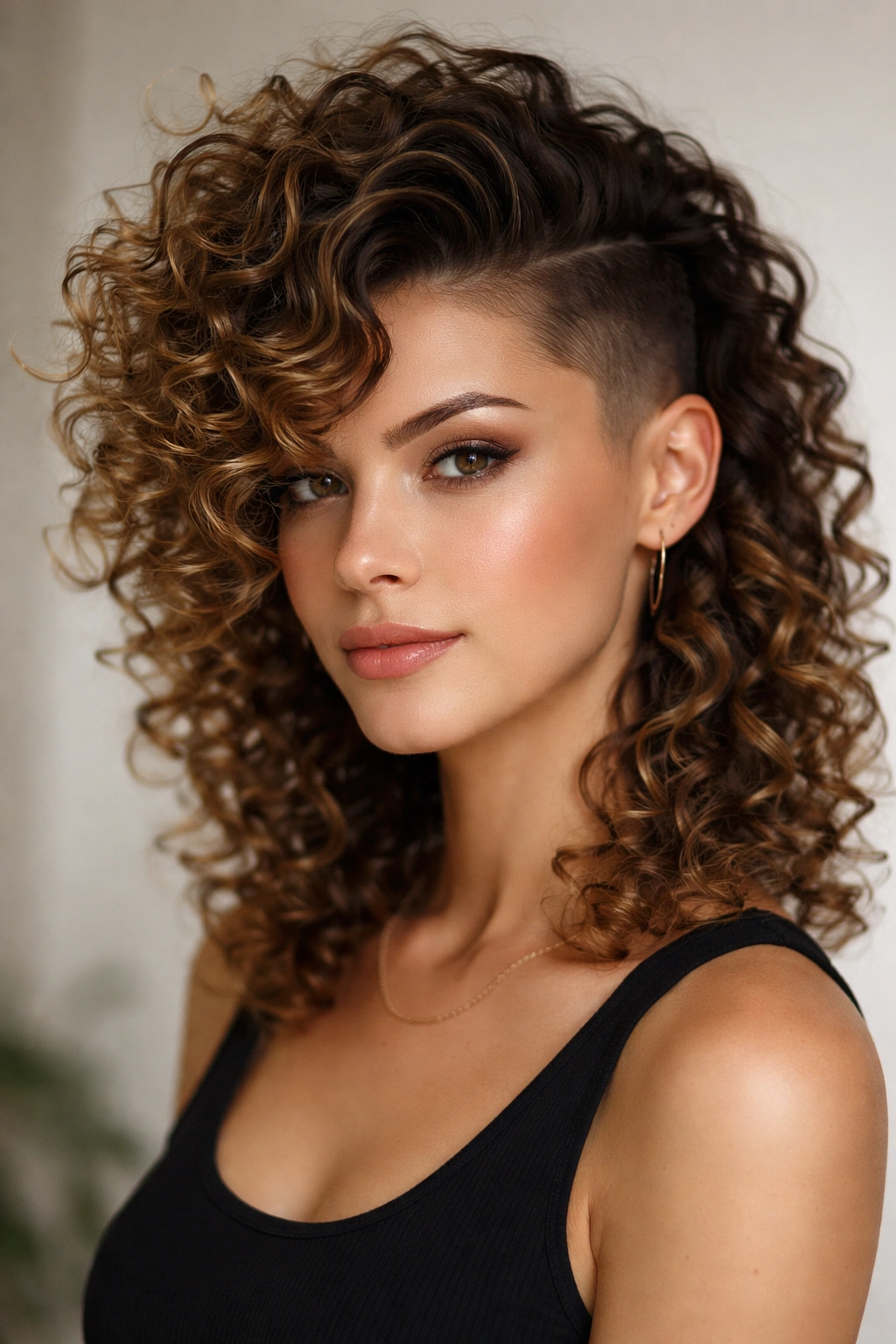
For people who want maximum curl definition combined with an edgy, modern cut, spiral curls with undercut sides creates dramatic contrast and visual sophistication. The longer curls on top spiral down freely while the sides are clippered short, creating a silhouette that’s bold and intentional. This style reads as high-fashion curly girl without being costume-like.
The Drama of Spiral Curls and Undercut Contrast
The power of this style is the juxtaposition — soft, romantic, very defined spiral curls contrasting against clean, angular, super-short sides. The undercut also creates the visual effect of more volume on top because there’s nothing competing for space below. It’s a style that reads as confident and deliberate, suitable for people who genuinely want their hair to make a statement.
Creating and Maintaining This Look
- Spiral curls need to be naturally spiraled or created through techniques like braiding hair damp and leaving braids in to dry
- The undercut requires regular maintenance — clippered sides need touchups every 3-4 weeks to stay sharp
- The top section can be any length from shoulder-length to longer; styling options include letting spirals hang freely or putting them in updos that showcase the undercut
- This style is high-maintenance in terms of frequent trims, but it’s also instantly transformative — even if your spirals relax slightly, the cut still looks intentional
- Works best on people who are genuinely committed to the statement aspect; if you’re worried about the boldness, this probably isn’t the move
The undercut sides also create practical benefits: they’re easy to wash, they dry quickly, and they never require styling. You’re really only managing the curls on top.
Worth knowing: The fade or transition between the undercut sides and the longer curls on top is important. Ask your stylist to create a gradual blend rather than a stark line; it’s more wearable and looks less costume-like while still creating clear contrast.
Final Thoughts
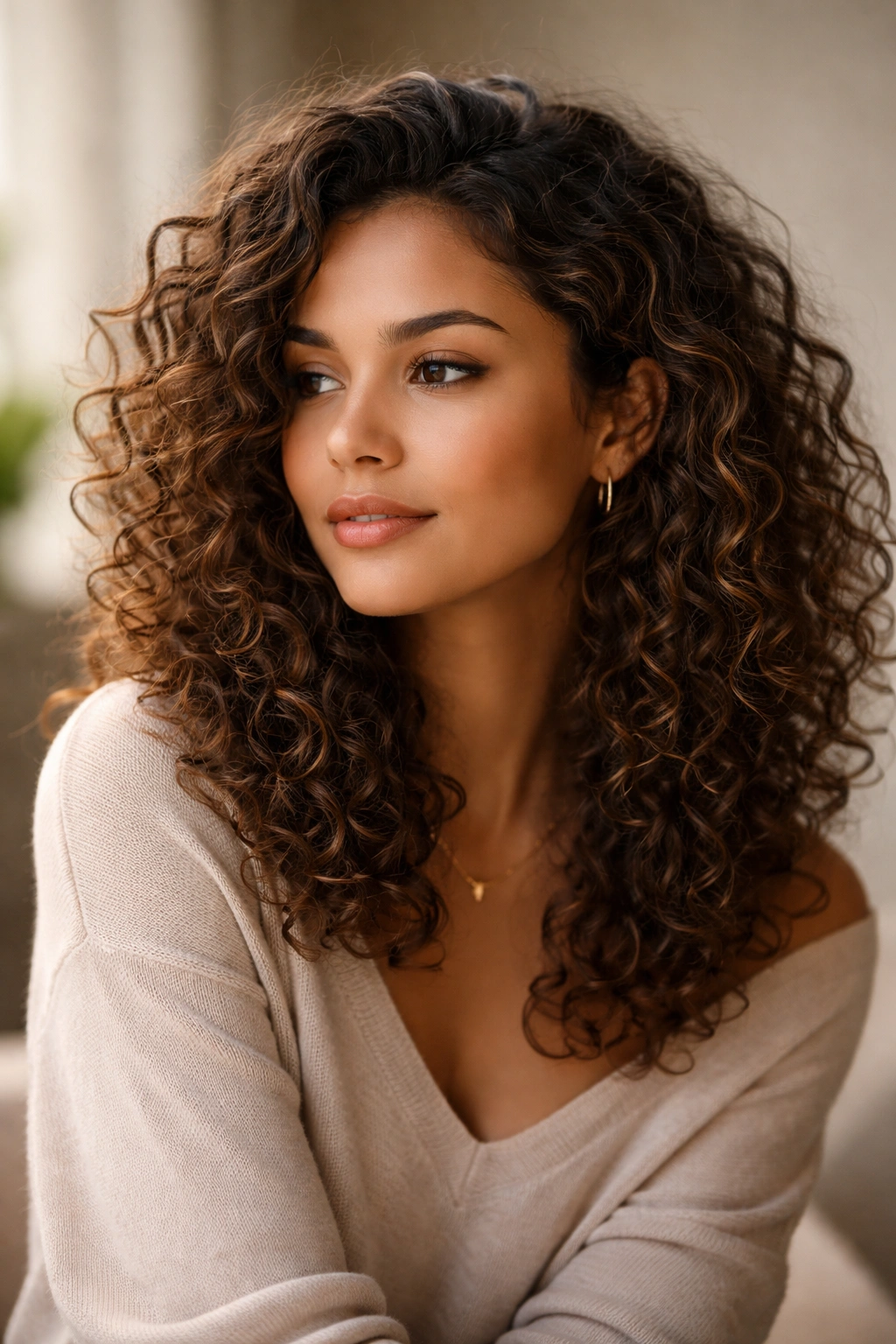
The right curly hairstyle is the one that works with your actual curl pattern, your lifestyle, and your willingness to invest time in maintenance. None of these styles are universally flattering or universally easy — they all have trade-offs between effort, maintenance, and visual payoff.
The coolest girl energy comes from owning your curls with intention rather than apology. Whether you’re going for romantic softness, textured undone vibes, defined precision, or bold edges, the common thread is that you’re choosing a style because it genuinely works for you, not because it’s trendy. That confidence is what makes curly hair actually cool.
When you’re considering your next cut, bring reference photos but also have a conversation with your stylist about your curl type, your styling habits, and what you actually want to spend time on. The best style is the one you’ll actually maintain and enjoy wearing, not the one that looks amazing in a photo but requires an hour of styling every morning.
