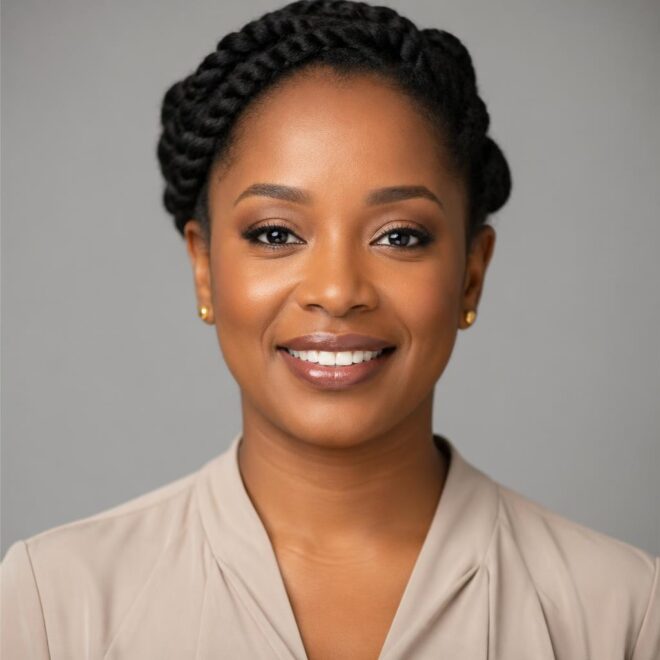


Curtain bangs have made a massive comeback, and for good reason — they’re incredibly forgiving on wavy and curly hair types. Unlike blunt bangs that can look stringy or require constant straightening, curtain bangs frame the face with a soft, movement-friendly edge that actually works with your texture instead of against it. The parted-down-the-middle style naturally follows the contour of your face, separates into pieces as your waves and curls form, and can be styled multiple ways depending on your mood, the weather, or how much time you have.
The magic of curtain bangs on wavy and curly hair is that they don’t fight your natural texture — they celebrate it. Whether you have loose waves, defined ringlets, tight coils, or anything in between, this cut can be adapted to enhance what you’ve already got. The key is finding the right overall style that pairs well with your specific curl pattern, density, and how your hair naturally falls when it dries.
What makes curtain bangs so versatile is that they work across hair lengths, from cropped pixie cuts all the way down to waist-length waves. They can look edgy and modern, romantic and effortless, textured and dramatic, or soft and natural depending on the layers underneath and how you style them. If you’ve been thinking about adding curtain bangs to your wavy or curly hair, these 16 styles show exactly what’s possible and give you concrete ideas to bring to your stylist’s chair.
1. Textured Shag Cut with Center-Parted Curtain Bangs
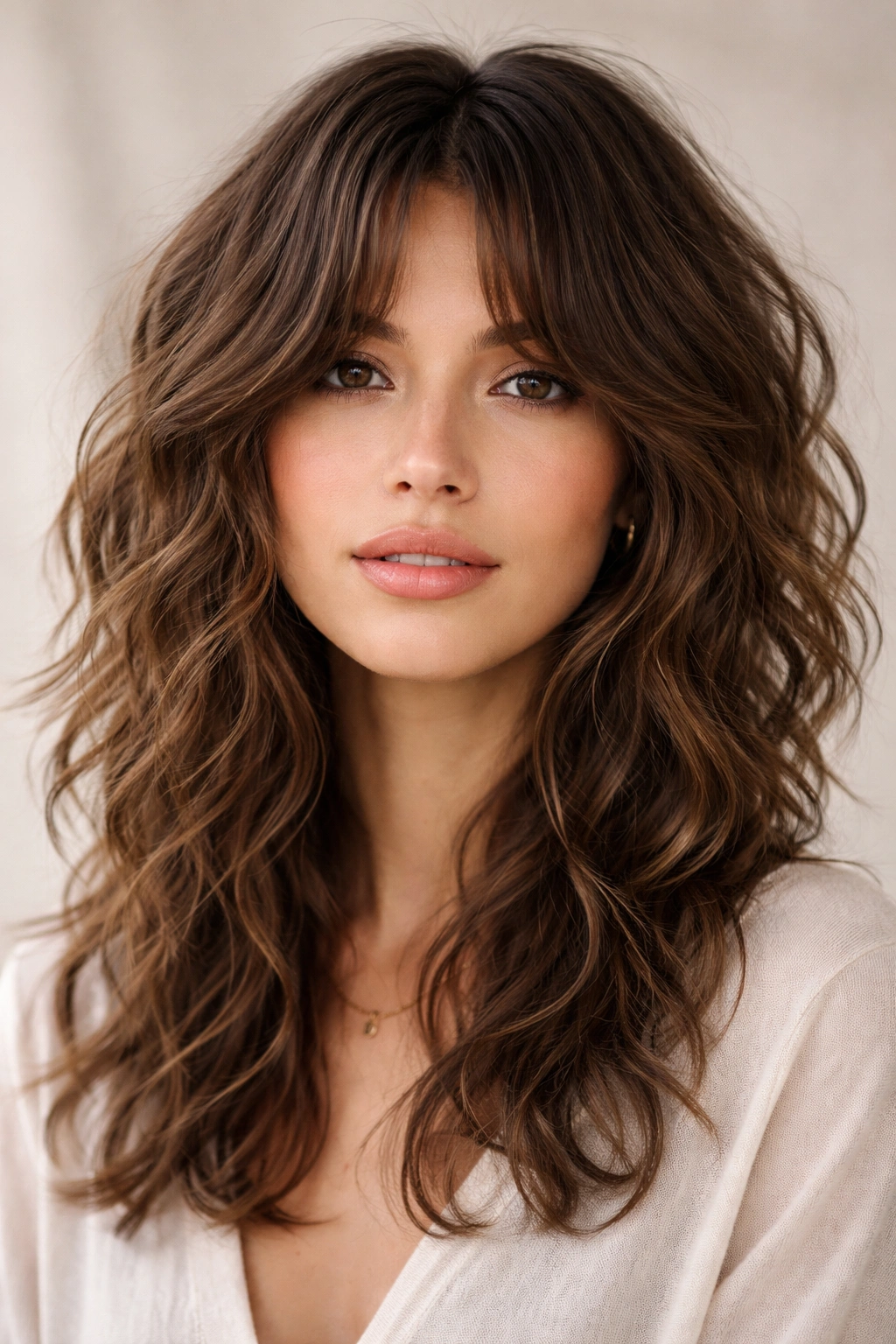
The shag is back, and it’s perfect for wavy and curly hair because the choppy, layered structure actually enhances movement and texture instead of fighting it. When you add center-parted curtain bangs to a shag cut, you get that effortlessly cool 1970s vibe but with modern texture and personality. The bangs frame your cheekbones while the rest of the cut adds volume at the crown and textured, choppy layers throughout.
How to Style It
Curtain bangs on a shag cut work best when you let them air dry or use a diffuser attachment on low heat. Once dry, you can flip your hair to one side, tousle the bangs with your fingers, and let the natural texture take over. The shag’s built-in layers mean the bangs will separate and create a wispy, lived-in look without extra effort.
Who It Suits
This cut works beautifully on people with medium to thick hair density and waves ranging from loose to medium curls. If your hair has some natural volume and you like a more editorial, fashion-forward aesthetic, this is your style. It’s also excellent if you want a cut that looks intentionally textured rather than neatly defined.
Styling tip: Use a lightweight curl cream or mousse applied to damp hair, then scrunch upward as you air dry. The shag’s layers will grab the product and create maximum texture and separation.
2. Layered Waves with Swept Curtain Bangs
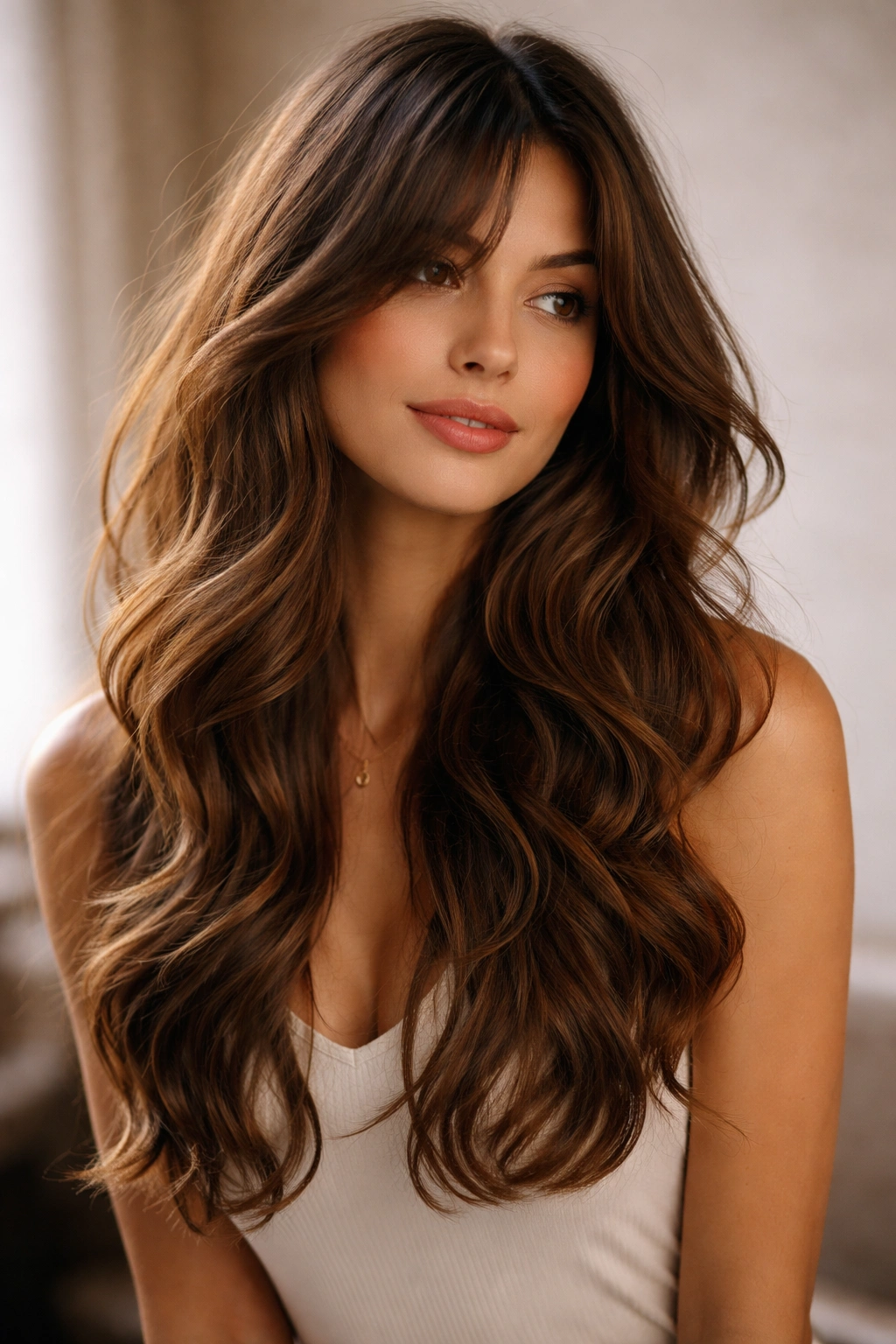
If you want curtain bangs that feel softer and more romantic than center-parted, swept curtain bangs are your answer. This version sweeps to one side (or both sides, but more dramatically to one) and pairs beautifully with long, flowing layers throughout the entire head. The bangs blend seamlessly into the rest of the cut, creating one continuous movement from root to tip.
The Styling Approach
Swept bangs work best on hair that naturally waves or when you intentionally wave your hair with a curling iron or waves cream. The bangs should graze your cheekbone or collarbone, giving them enough length to swoop without looking like you’re constantly pushing them out of your face. Blow-dry with a round brush to enhance the wave, or use a diffuser for a more textured finish.
Best for Specific Hair Types
This style is particularly flattering on people with loose to medium waves and anyone who prefers a softer, less edgy aesthetic. It’s also excellent if you have a round face shape because the swept angle creates a subtle lengthening effect. The longer bangs mean you have flexibility — you can tuck them behind your ear on bad hair days or let them frame your face when they’re cooperating.
Insider note: Ask your stylist to connect the bangs with the layers in a way that feels intentional, so there’s no awkward divide between where the bangs end and the rest of the hair begins.
3. Long Wavy Lob with Softly Framed Bangs
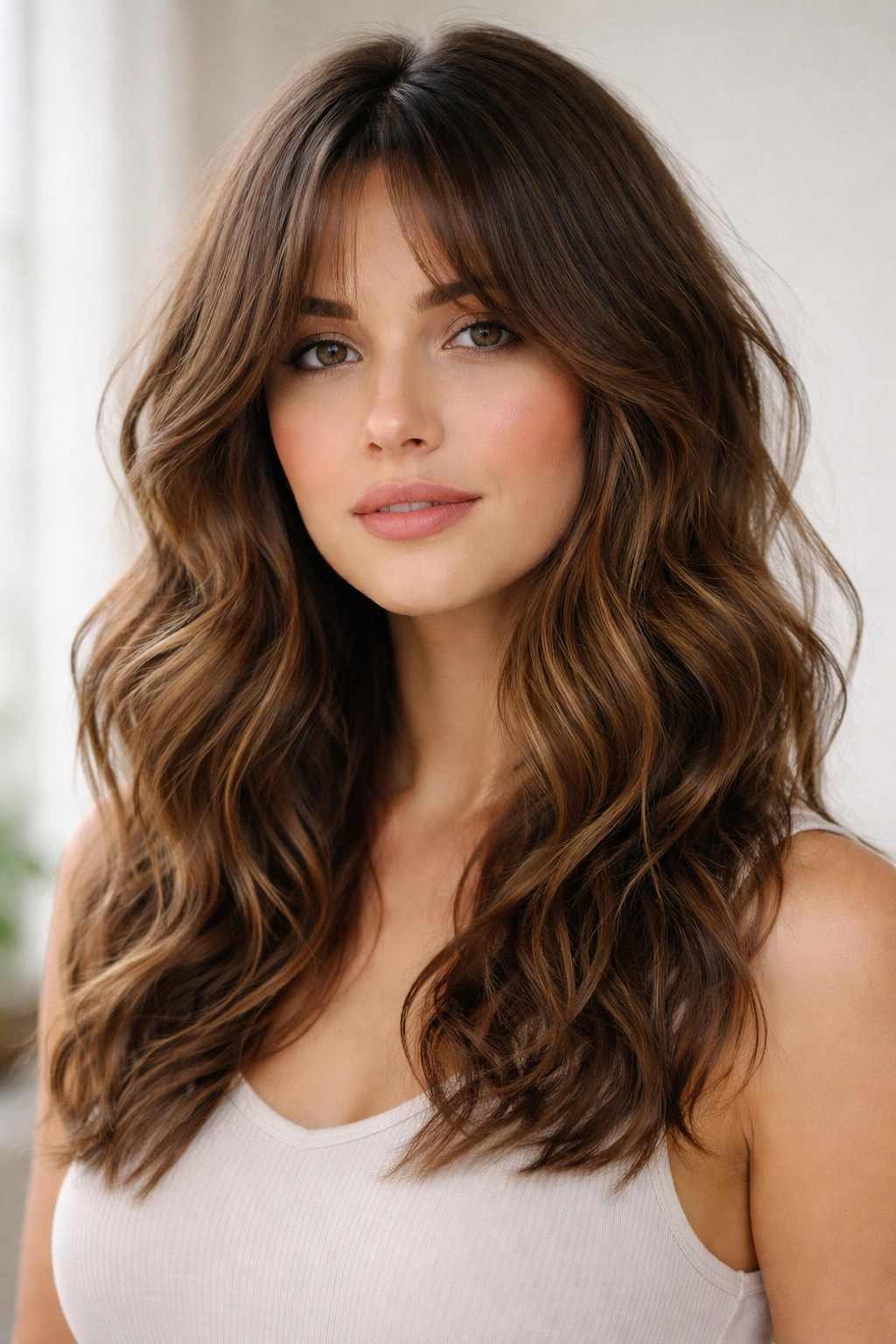
A lob (long bob) that hits around mid-collarbone is an ideal canvas for curtain bangs because it’s long enough to show off waves and curls but short enough to feel modern and manageable. Pair it with softly textured curtain bangs, and you get a cut that’s both flattering and practical — especially if you want to transition from shorter to longer hair or you’re not ready to commit to long lengths.
Creating the Right Shape
The lob should have subtle layers throughout, particularly around the face and at the ends, so the curtain bangs blend seamlessly. The overall shape should have more weight at the back (where your curls and waves have more grip) and be slightly shorter at the front to frame the face. This creates a subtle A-line that’s flattering on most face shapes.
Styling for Maximum Wave Definition
With a lob and curtain bangs, you can emphasize your natural wave pattern by using a curl-defining cream, scrunching as you air dry, and then finger-combing through once everything is dry to create softer, piecier waves. Or you can blow-dry straight sections for a more polished, dimensional look with the waves as a subtle texture underneath. The beauty of this length is that it works both ways.
Pro tip: Get your lob with slightly longer bangs (long enough to brush your cheekbone) so you can ease into the style and see what length feels right before your next trim.
4. Choppy Layers with Wispy Curtain Bangs
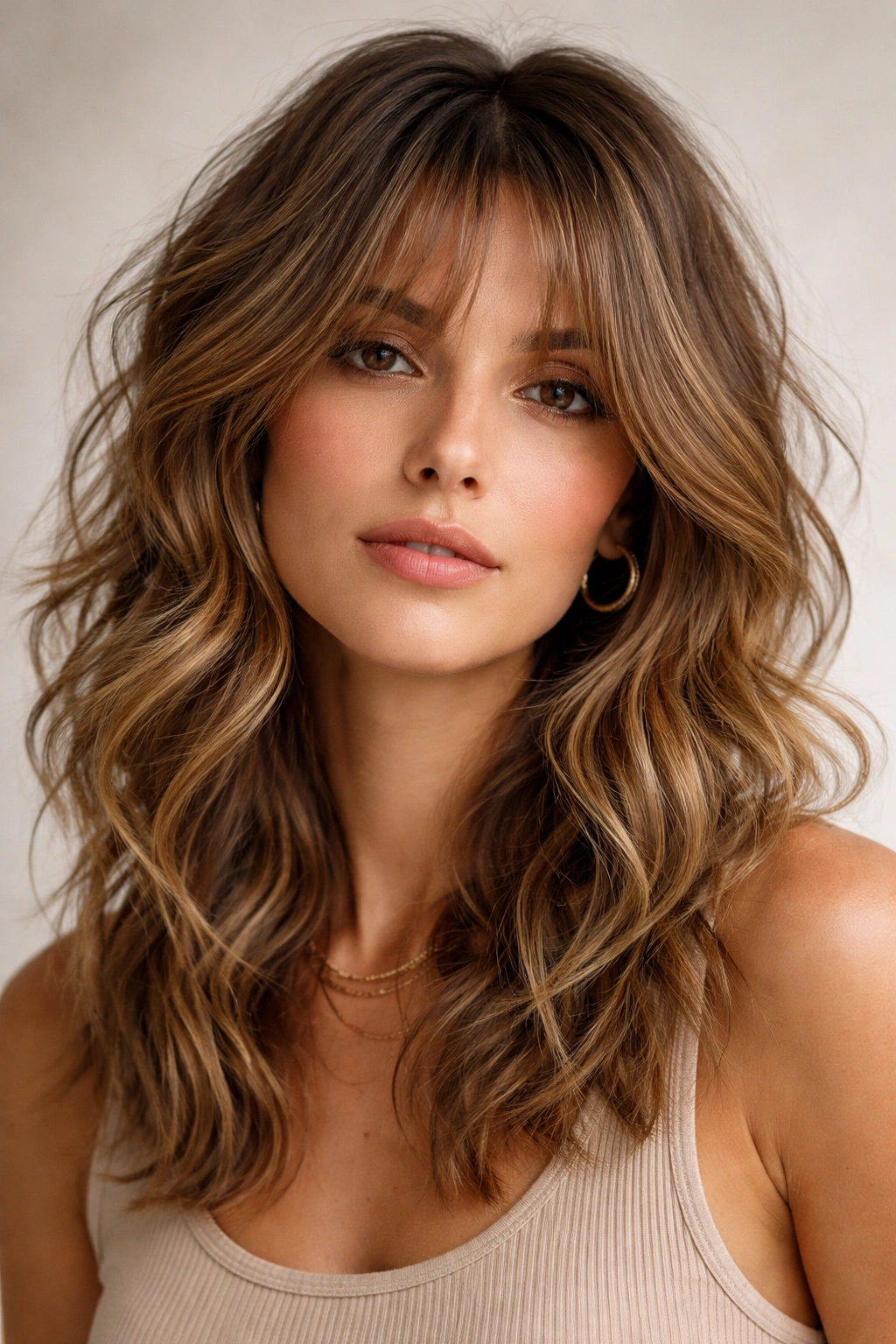
For people who love texture and movement and don’t mind higher-maintenance hair, choppy layers combined with wispy curtain bangs create a bold, editorial look. The layers are short and intentionally choppier than a traditional shag, creating sharp lines and lots of separation. The wispy bangs — thinner and more delicate than standard curtain bangs — add softness and prevent the whole look from feeling too harsh.
The Cut Breakdown
Choppy layers work by creating shorter pieces throughout the crown and mid-lengths, with slightly longer pieces at the back for length and weight. The curtain bangs are cut thinner (fewer hairs in the bang section) so they separate into individual wisps rather than a solid piece. This creates movement and airiness that suits wavy and curly hair perfectly.
Styling Requirements
This cut requires more styling attention because the choppy pieces need product and technique to look intentional rather than messy. Apply a texturizing spray, mousse, or curl cream to damp hair, scrunch or finger-coil sections to encourage texture, then either air dry or use a diffuser. You’ll want to refresh this style every couple of days with a spray bottle and quick scrunching session.
Worth knowing: This style photographs beautifully and looks great on camera, which is why it’s popular on social media. In real life, it requires more styling time than some people want to commit to, so be honest with yourself about your styling habits before getting this cut.
5. Beach Waves with Face-Framing Curtain Bangs
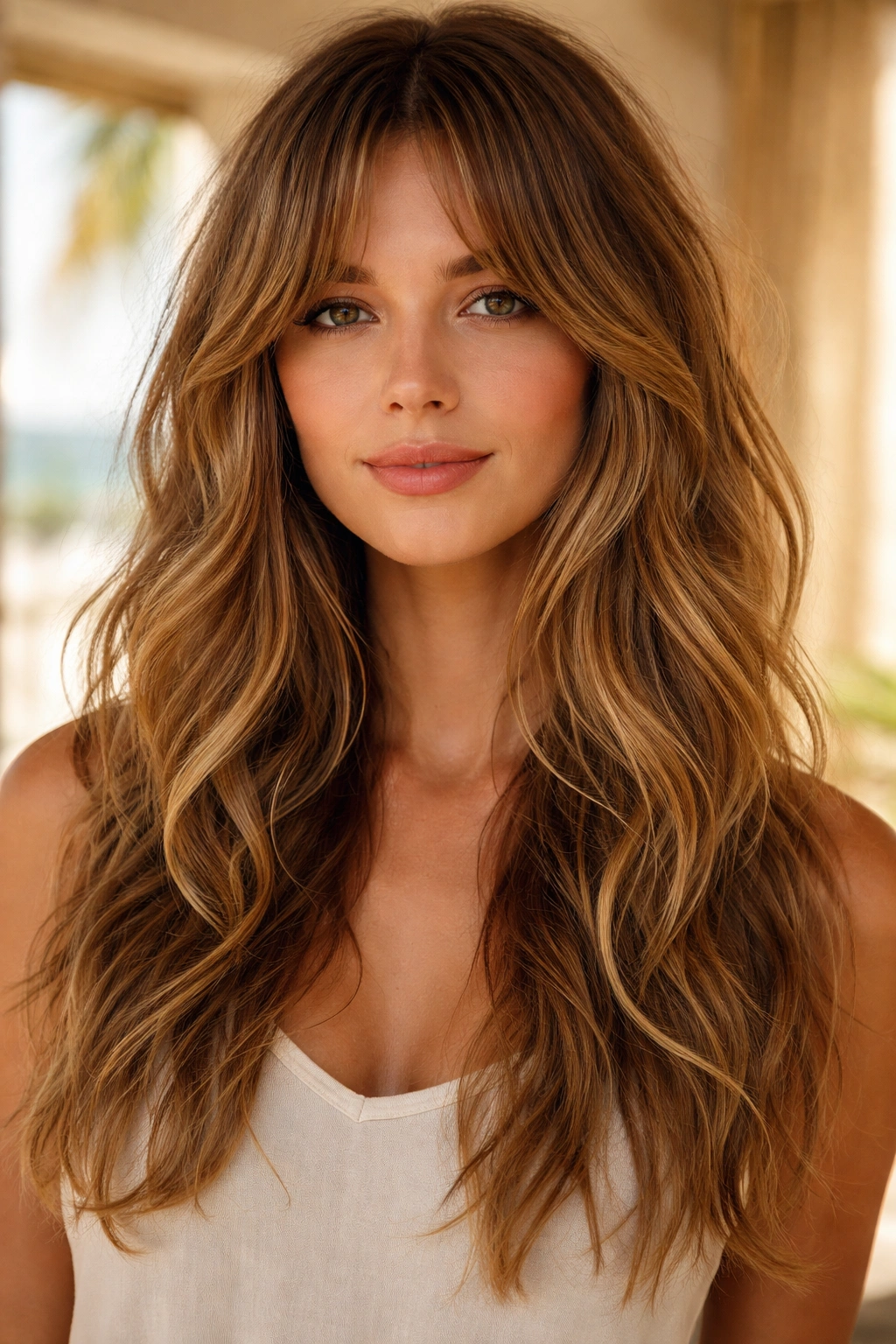
If “effortless” is your styling motto, beach waves with face-framing curtain bangs deliver that lived-in, just-back-from-the-beach aesthetic without actually requiring a beach. This is a longer style — typically collarbone length or below — with subtle waves throughout and bangs that are slightly thicker and more textured than wispy versions.
Creating the Beach Wave Texture
Beach waves on curly and wavy hair often happen naturally, but you can enhance them with the right cut and product. Ask your stylist for layers that encourage wave formation and separation, then style with a lightweight wave cream or salt spray applied to damp hair. Scrunch upward as you air dry or use a diffuser. The result should feel soft, approachable, and like you didn’t try too hard.
The Curtain Bang Placement
Face-framing curtain bangs on this style should be longer (hitting around mid-cheek) so they blend with the waves and contribute to the overall soft texture. They shouldn’t look like a separate “bang” — instead, they should feel like they’re simply the front layers of your waves, separated out by the center part.
Styling secret: Use a sea salt spray or texture spray on second-day hair or on damp hair before diffusing. This enhances the wave pattern without making anything look crunchy or overdone.
6. Textured Shoulder-Length with Blended Bangs
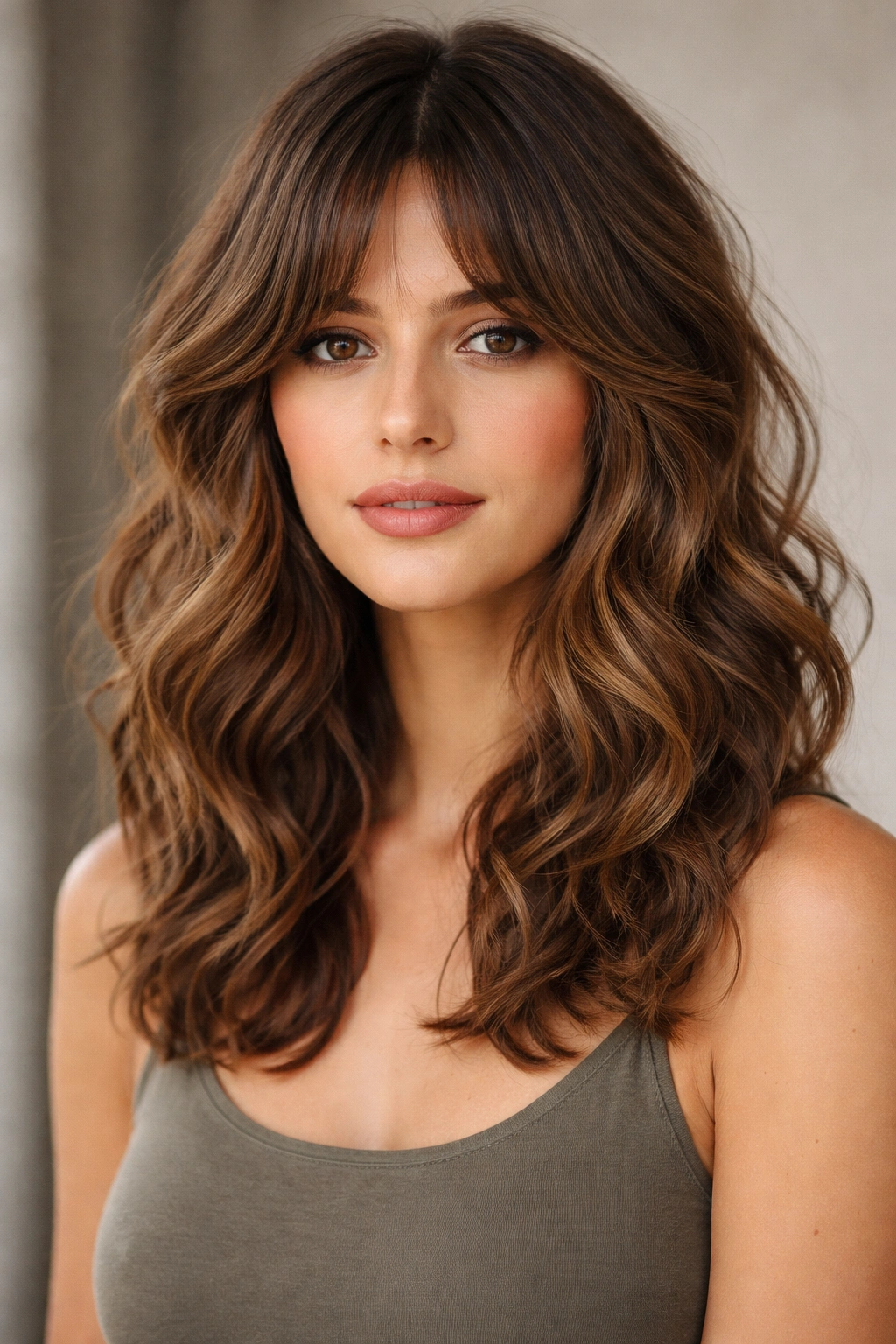
A shoulder-length cut with heavy texture throughout and subtly blended curtain bangs creates a modern, face-flattering style that works on a surprising range of face shapes. This cut is shorter than a lob but longer than a typical bob, hitting right around your shoulders. The texture comes from strategic layering that encourages your natural waves or curls to shine.
Why This Length Works
Shoulder length is the sweet spot for many people with wavy and curly hair because it’s long enough to show off texture but short enough to avoid the dreaded triangle shape that happens when curly hair gets too long without enough layers. The blended curtain bangs (bangs that don’t feel like a separate element but integrate into the surrounding layers) keep the cut feeling cohesive.
Maintenance and Styling
This cut doesn’t require constant styling but definitely benefits from a good routine. Cowash or shampoo with sulfate-free products, apply leave-in conditioner to damp hair, then either air dry for natural texture or use a diffuser. The shorter length means your waves and curls will dry faster, which is a practical advantage if you’re always on the move.
Real talk: Shoulder-length hair with curls and waves tends to kick out more than longer hair, and that’s actually the design of the cut. If that bothers you, you might prefer a longer length, but many people love how this length creates fullness and dimension.
7. Voluminous Waves with Deep Side-Parted Bangs
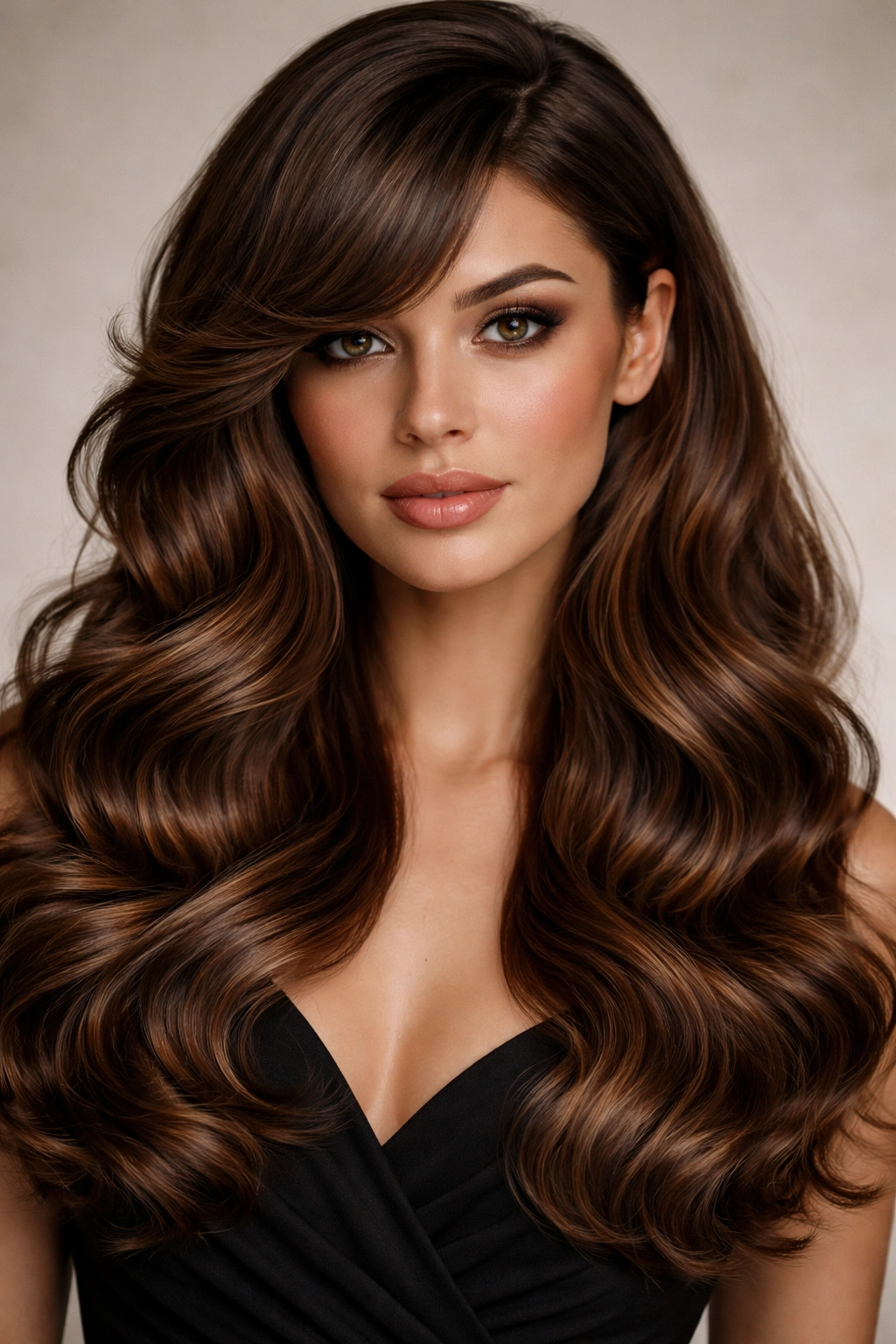
For a more dramatic, glamorous take on curtain bangs, try a deep side part with your bangs swept dramatically to one side. Pair this with voluminous waves throughout (think Hollywood waves, not subtle texture) and you get a red-carpet-ready style that still works for everyday wear if you want it to.
Building the Volume
This style requires either blow-drying with a round brush, using hot rollers, or curling your hair with a large-barrel curling iron. The waves need to be intentional and defined, not just your natural wave pattern. The deep side part should have the bangs sweeping from the larger section toward the smaller section, creating an imbalanced, flattering frame.
Product and Styling
Use a volumizing mousse applied to damp roots, blow-dry upside down or with your head tilted to one side to encourage volume, then curl or wave the rest of the hair. Finish with a light hairspray to hold the style without making it feel stiff. This is a high-maintenance option but absolutely worth it if you love that polished, intentional look.
Pro tip: This style works beautifully with longer hair (past the shoulders) because the weight helps the waves hold their shape throughout the day without looking limp by evening.
8. Curtain Bangs Over Curly Coils
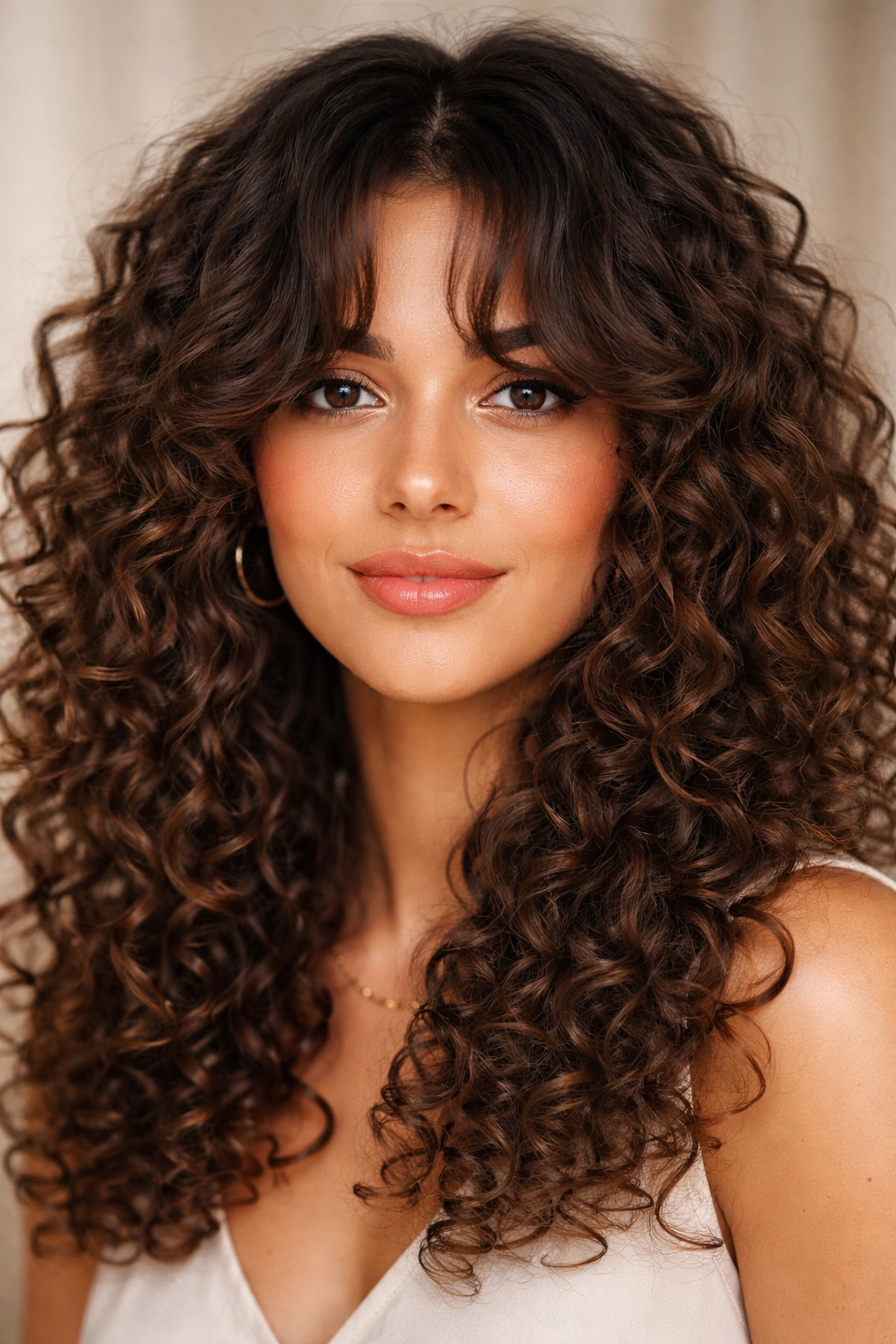
If you have tight, defined curls or coils, you might think curtain bangs aren’t for you — but they absolutely are. Curtain bangs on coily hair create an interesting contrast: the defined curls in your bangs frame your face with texture, while the center part shows off your forehead and allows your coil pattern to shine. The key is asking your stylist to cut the bangs while your hair is in its natural, curly state, not straight.
The Technical Approach
Cutting curly bangs dry (when the hair is in its natural curl state) is essential because curly hair shrinks significantly when it dries. Your stylist needs to see the actual coil pattern to cut bangs that will frame your face properly once dry. Ask them to cut slightly longer than your ideal length and let you style it at home first before making final adjustments.
Styling Coily Bangs
Apply your regular curl cream or gel to the bang section while hair is still wet, making sure to define the curl pattern just as you would the rest of your hair. Your coils will form in the bang area just like everywhere else, creating a textured, voluminous frame. This can look stunning and is definitely a statement style.
Important note: This style requires more frequent trims (every 4-6 weeks) because curls drop over time, and bangs in particular will eventually reach your eyes if not maintained. It’s also not ideal if you have multiple different curl patterns in your bang area, as they may form at different lengths.
9. Wavy Mullet with Modern Curtain Bangs
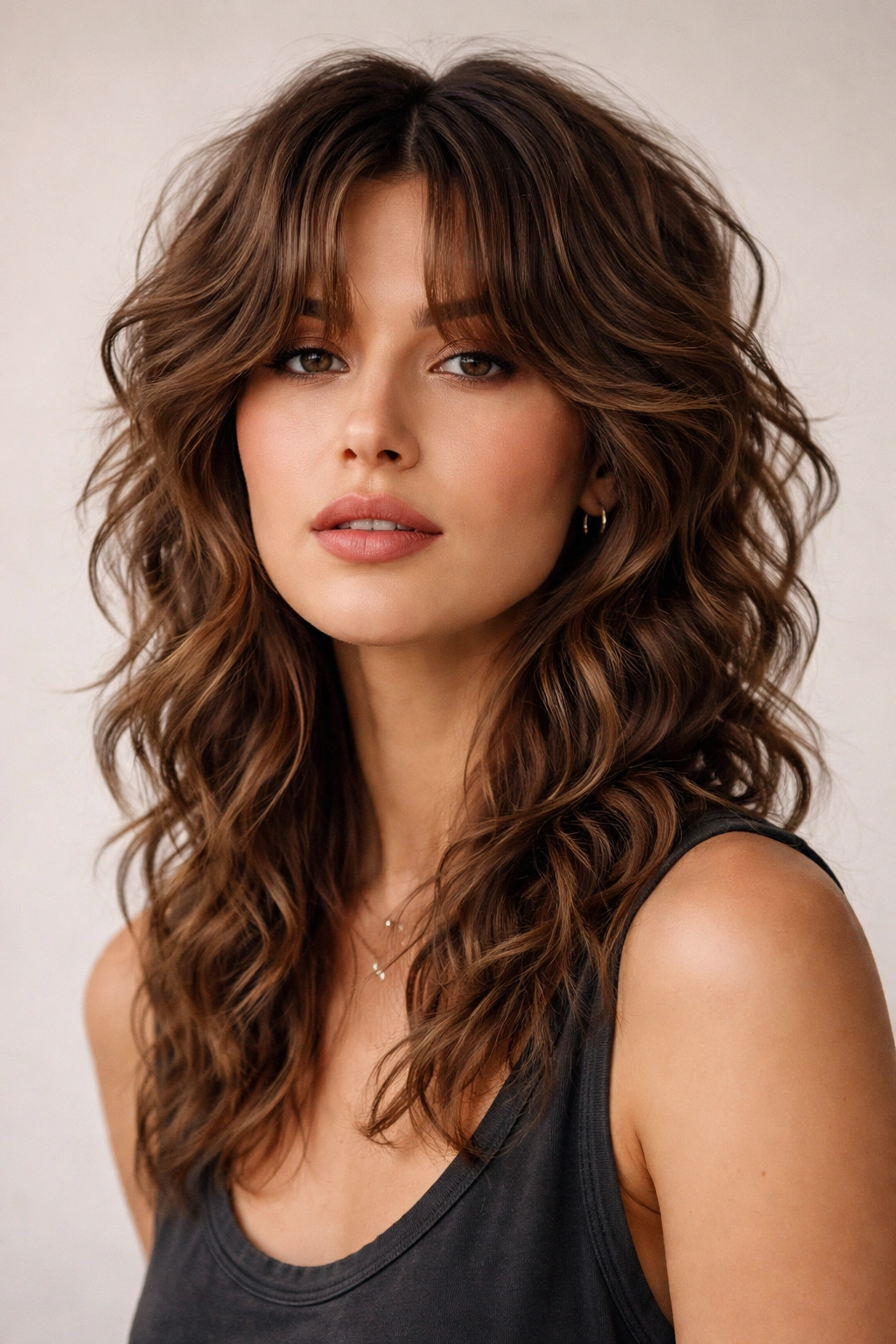
The mullet is having a major moment, and when executed with wave texture and softened with curtain bangs, it’s surprisingly wearable. A wavy mullet has shorter, textured layers on top and at the sides with longer length in the back. Add center-parted curtain bangs, and you get a cut that’s bold without being outrageous.
The Cut Structure
The mullet works on wavy and curly hair because the texture prevents it from looking harsh or too severe. The top and sides are cut choppy and layered for movement, while the back is left longer — sometimes significantly longer — to create visual contrast and interest. The curtain bangs should blend with the shorter layers on top, creating a cohesive frame.
Styling for Wearability
To make a mullet feel more wearable than costume-y, style it in a way that emphasizes the texture rather than the shape. Use a texturizing spray, scrunch the top sections to create volume and separation, and let the back wave or curl naturally. The more textured and less slicked-back you keep it, the more modern and intentional it looks.
Honest take: This is a statement cut that requires confidence and the right hair type (wavy to curly works best; straight hair mullets read differently). It’s worth committing to if you love a more avant-garde aesthetic, but it’s not a safe, conventional choice.
10. Curtain Bangs with Spiral Curls
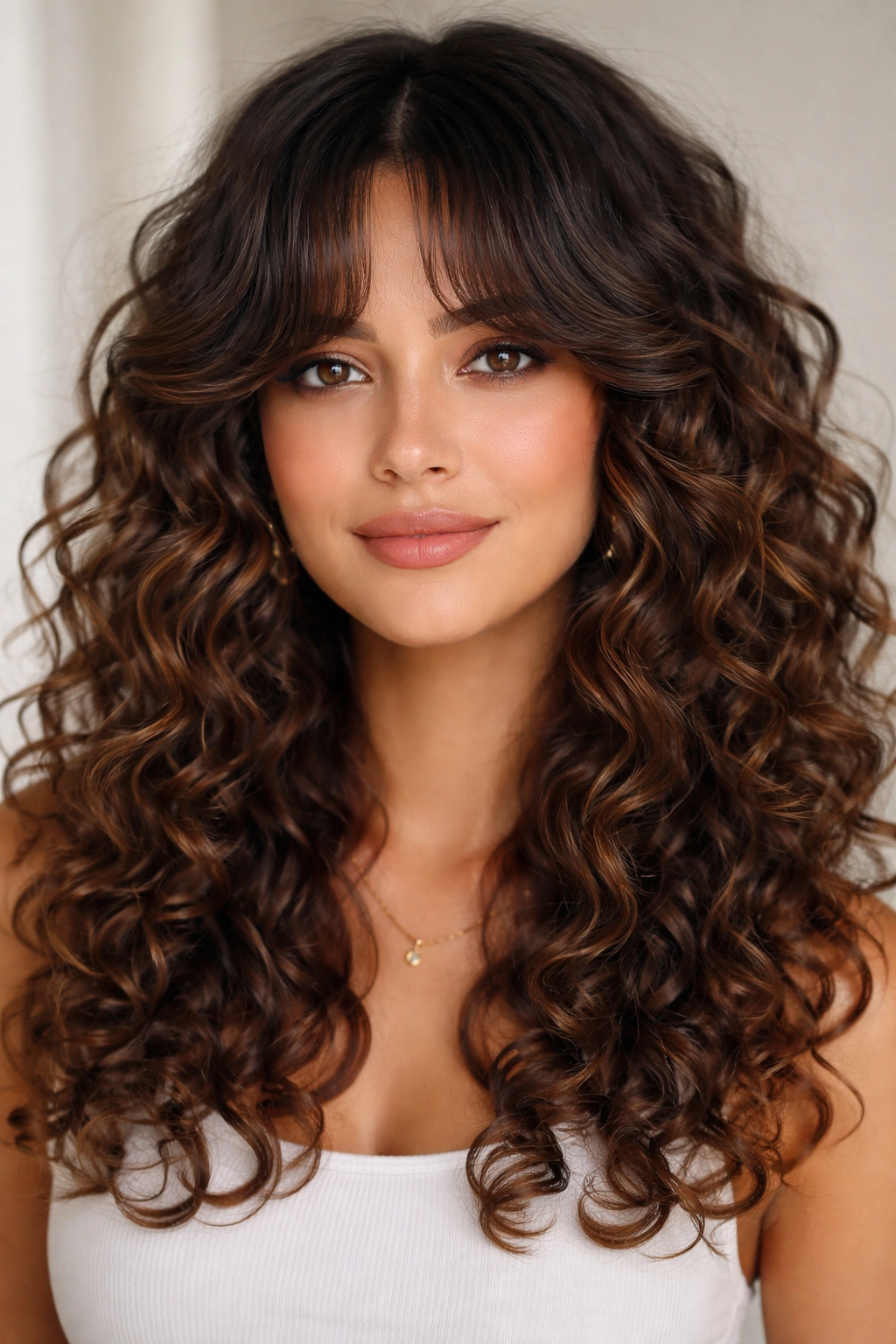
If you have naturally curly hair and you embrace it fully, spiral curtain bangs create a maximalist, textural look that’s absolutely gorgeous. Instead of trying to loosen or relax your curls, this style celebrates defined, bouncy spirals throughout, including in the bang section. Your stylist cuts the bangs while the hair is curly and dry so they can see exactly how the spirals will fall.
Working With Defined Curls
This style requires that you genuinely love and embrace your curl pattern. The bangs will form defined spirals that might stick out at different angles, and that’s intentional — it’s part of the look’s charm. This style works best on people with consistent curl pattern throughout (or who don’t mind visible variation) and hair that’s healthy enough to hold a defined curl.
Maintenance and Care
Keep your curls bouncy and defined with a good curl cream, gel, or custard applied to soaking-wet hair. Use the praying hands or squish-to-condish method to apply product, then either air dry or use a diffuser. Refresh your curls with a spray bottle and quick scrunching between wash days. This is a high-maintenance style but incredibly rewarding if you’re a curl enthusiast.
Worth considering: Spiral curls in the bang area require more frequent touch-ups because as hair grows, you’ll get straight new growth at the roots that doesn’t match your defined curls yet. If you’re not prepared for regular maintenance, a looser wave might be more practical.
11. Short Wavy Crop with Textured Bangs
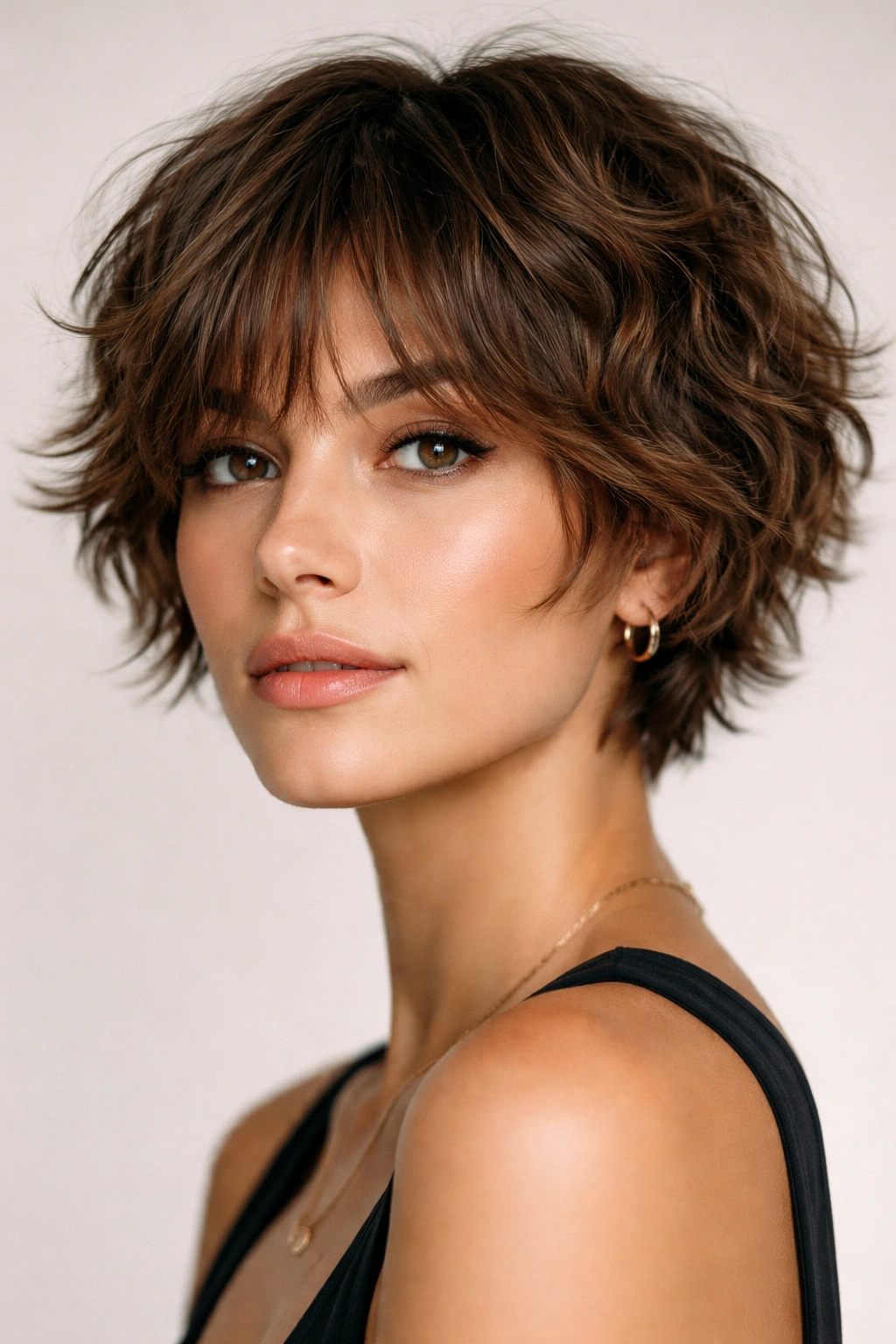
For the bold and adventurous, a short cropped cut paired with textured curtain bangs creates an androgynous, edgy look that’s become increasingly popular. The overall cut is short — maybe 2-4 inches on top — with choppy layers and texture throughout, and the bangs are cut from within the crop, creating wispy, textured framing.
Making Short Hair Work
Short wavy and curly hair requires the right cut to avoid looking shapeless or poofy. Your stylist should cut layers strategically, shorter at the nape and slightly longer on top, with texture throughout. The bangs should feel like a natural part of the crop, not like an afterthought, so they need to be cut and shaped as part of the overall design.
Styling a Short Crop
With short hair, you have flexibility in styling. You can air dry for natural texture, use a diffuser for enhanced curl definition, or blow-dry straight for a sleeker look. Apply a lightweight styling cream or mousse to damp hair and style as desired. Short hair dries quickly, which is practical, and texture shows up immediately, which is beautiful.
Real consideration: Very short hair with texture sometimes reads as curly/kinky in a way that shows texture faster than longer hair. This can be absolutely stunning, but you need to be comfortable with how visible your curl or wave pattern is. If you prefer less-visible texture, a longer length might feel more comfortable.
12. Ribboned Waves with Two-Tone Curtain Bangs
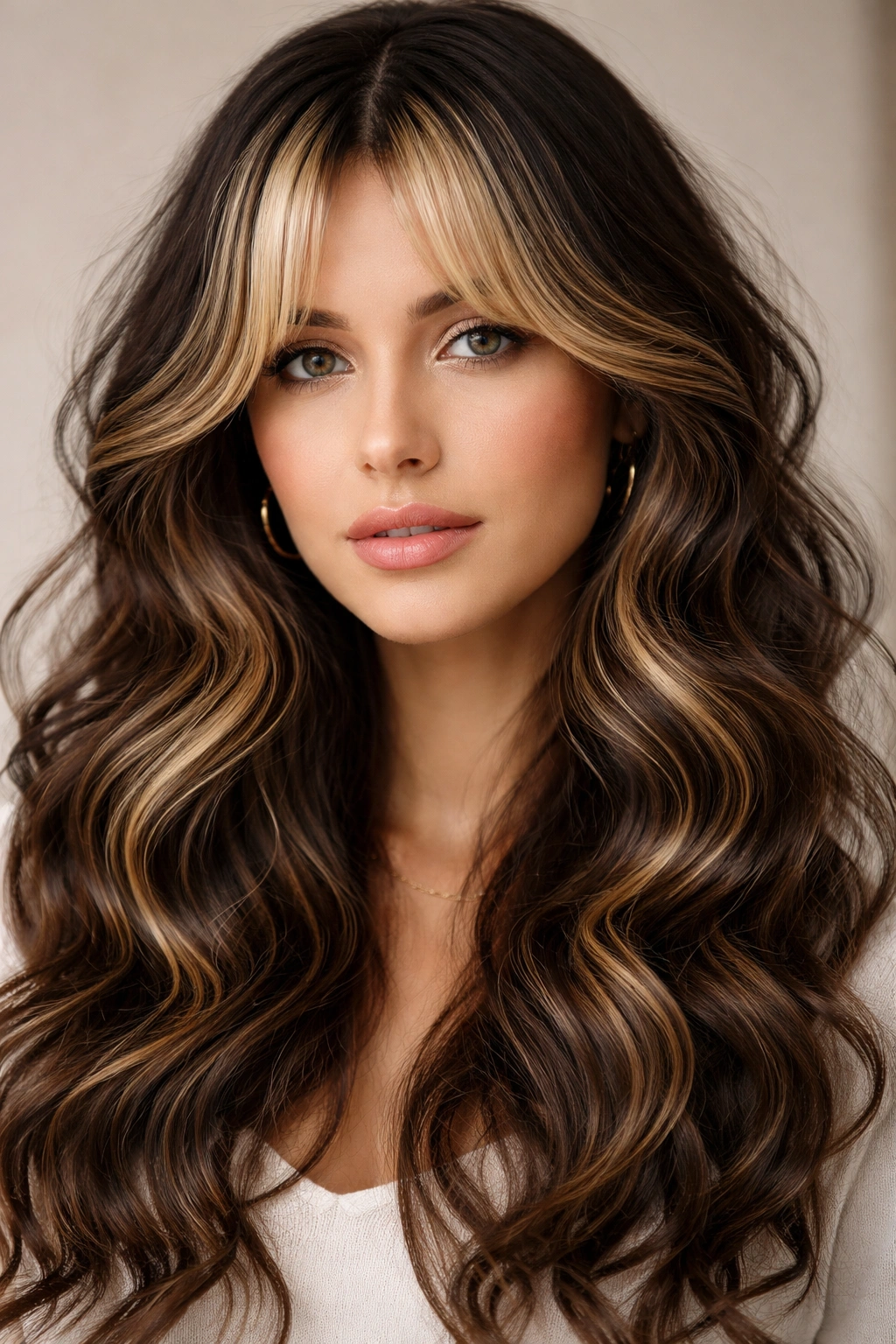
This style is for the adventurous — ribboned waves (where you have multiple colors woven throughout the hair in a striped or sectioned pattern) paired with two-tone curtain bangs that incorporate both colors. It’s a fashion-forward, editorial style that requires commitment to color maintenance but creates an absolutely stunning visual impact.
The Color and Cut Combination
The ribboned wave technique involves coloring sections of hair different shades (typically two or three colors) so that when the hair is styled in waves, you see color variation throughout. The curtain bangs are also done in two colors, so they frame your face with that color interest. This works beautifully with warm and cool-toned color combinations or monochromatic shades in different depths.
Styling for Maximum Impact
Style the ribboned waves with intentional wave-making: use a curling iron, hot rollers, or wave product to create defined, cohesive waves that showcase the color variation. The more textured and wavier the style, the more the ribbon effect stands out. Finish with a light hairspray to hold the waves throughout the day.
Professional note: This is a style that absolutely requires a skilled colorist and stylist who understand both color theory and how to cut in a way that supports the color design. Don’t attempt this with a stylist who hasn’t done similar work before.
13. Natural Texture Curtain Bangs with Undercut
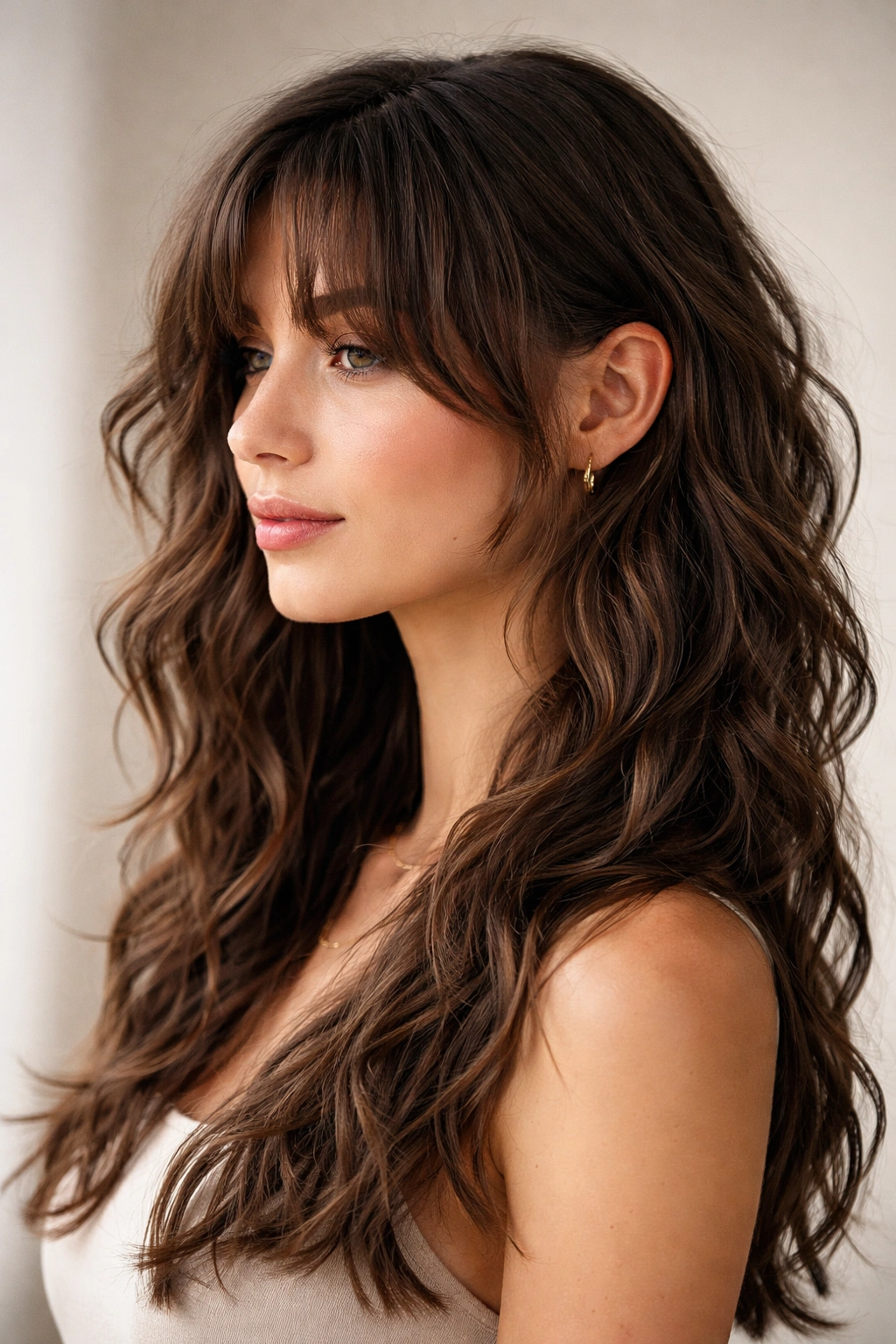
For a more alternative aesthetic, try natural texture curtain bangs paired with an undercut — shorter, clipped hair hidden underneath longer hair on top. This creates visual interest and a subversive quality: when your hair is up or pulled to one side, you reveal the undercut; when it’s down, you see flowing textured waves with soft curtain bangs.
The Technical Structure
The undercut is typically cut very short (clippers, often 1/4 inch or shorter) on the sides and back, hidden underneath longer hair on top and at the front. The curtain bangs should flow from the longer top section, creating a contrast between the visible texture and the hidden undercut. This requires a stylist comfortable with both clipper work and cutting flowing texture.
Styling Flexibility
You can wear this style with your hair completely down, where the undercut is invisible and you just see textured waves and curtain bangs. Or you can pull your hair to one side, tuck it behind your ear, or put it in a half-up style to show off the undercut. This gives you two very different looks from one cut.
Worth knowing: Undercuts require regular maintenance because the clipped sections grow out quickly and will look shaggy without touch-ups every 2-3 weeks. Make sure you’re prepared for that commitment before getting this style.
14. Wavy Pixie Hybrid with Long Curtain Bangs
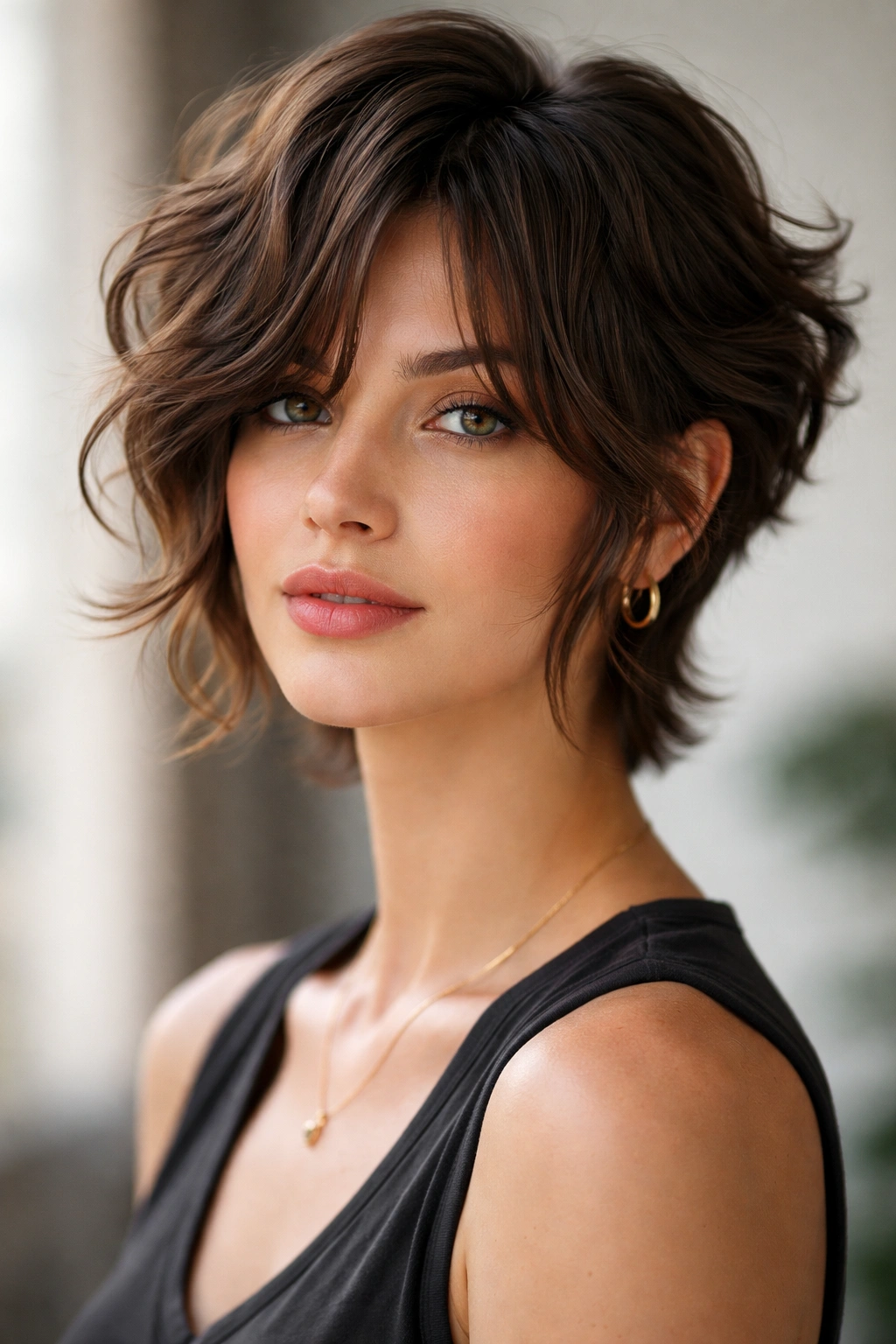
If you love the cropped, edgy vibe of a pixie cut but you’re not ready to go that short everywhere, a pixie hybrid combines a short pixie cut on the sides and back with longer, wavier length on top and longer curtain bangs framing the face. It’s a compromise style that gives you the best of both worlds.
The Hybrid Structure
The sides and back are cut short (typically 1/2 inch to 1 inch) with texture and choppy layers, while the top is left longer (2-3 inches or more depending on your preference) with waves or curls. The curtain bangs are cut longer than the sides (hitting your cheekbone or beyond) so they frame your face while remaining connected to the longer top section.
Maintaining the Style
This cut requires regular trims on the short sections to keep them sharp and textured. The longer top and bangs can go longer between cuts. Style by applying a lightweight product to damp hair and air drying or using a diffuser on the longer sections, while the short sides naturally dry with texture.
Styling flexibility: You can wear this style with the longer top textured and flowing, or you can blow-dry the top smooth for contrast with the textured short sides. You can style the bangs to frame your face or tuck them behind your ear depending on the day.
15. Loose Waves with Piece-y Curtain Bangs
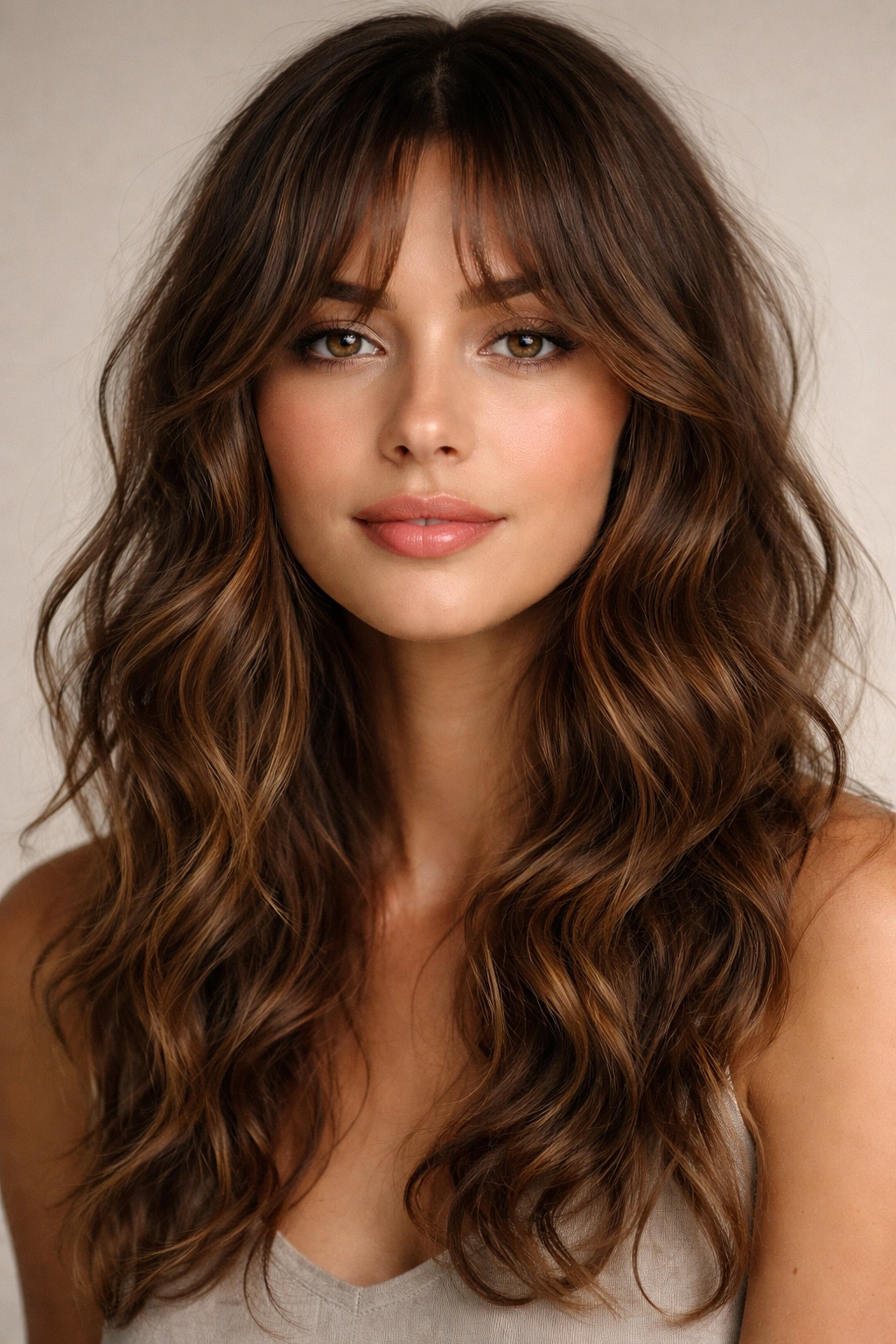
For an undone, relaxed aesthetic, loose waves throughout paired with piece-y curtain bangs create a style that feels effortless and approachable. The waves are soft and subtle rather than defined or dramatic, and the bangs are cut with lots of texture and variation so they separate into individual pieces rather than appearing as a solid bang section.
Creating Piece-y Texture
Ask your stylist to cut the bangs with razoring or point-cutting techniques that create texture and separation within the bang section. This prevents them from looking blunt or heavy and allows them to separate into wispy pieces that coordinate with your overall wave pattern. The rest of the cut should also have layers that encourage softness rather than structure.
Styling for Softness
Use a lightweight leave-in conditioner and a soft-hold mousse or curl cream applied to damp hair. Scrunch gently as you air dry or use a diffuser on low heat. Once dry, flip your head and tousle with your fingers to encourage separation and a lived-in feel. This is a low-maintenance style that actually benefits from not being perfectly styled.
Real advantage: This style looks intentionally textured whether you blow-dry it or air dry, whether you use product or go product-free, and whether your hair cooperates perfectly that day or not. It’s forgiving and wearable, which is why it’s become so popular.
16. Curtain Bangs on Tight Curly Coils with Fade
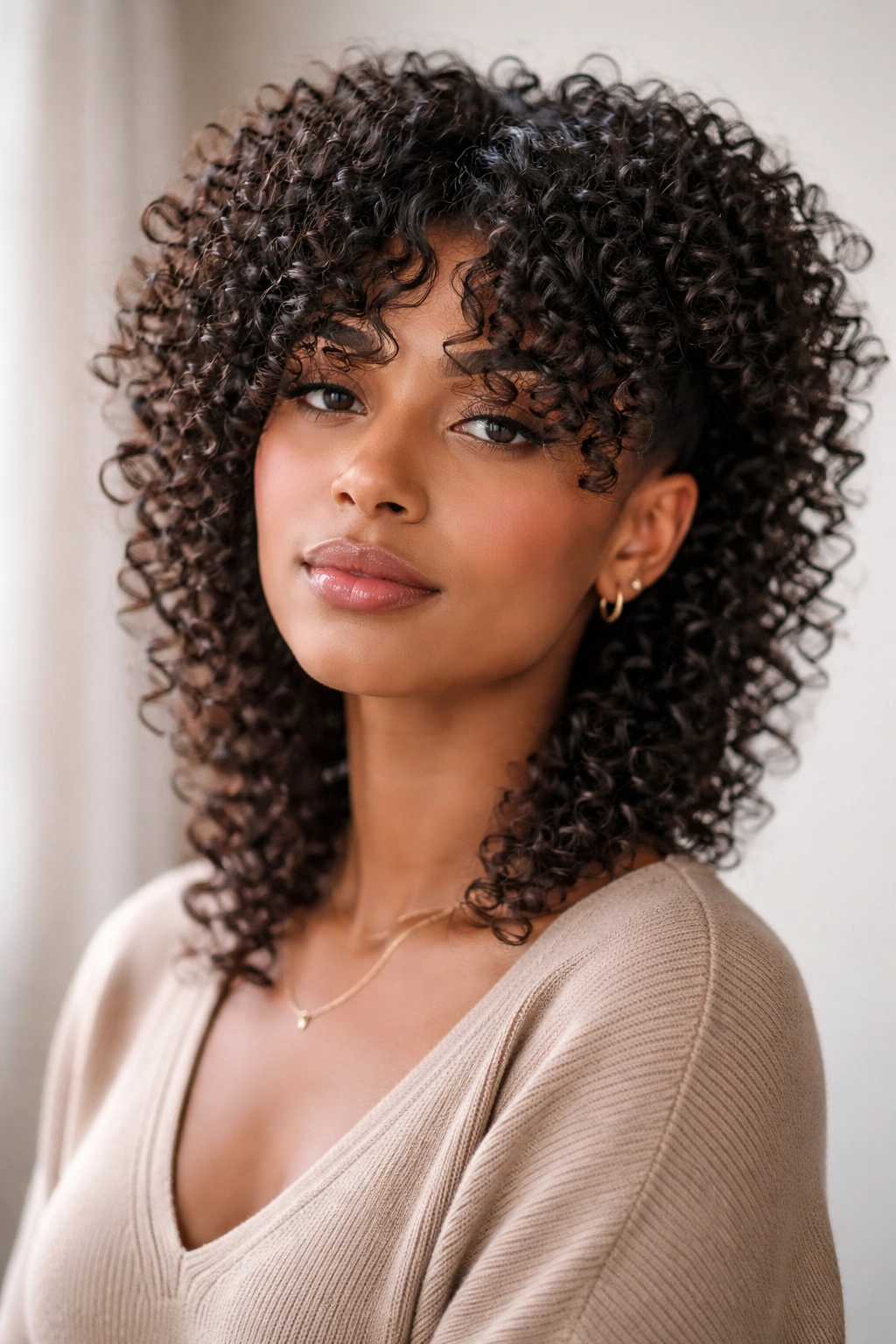
For an ultra-modern style, combine tight curly coils on top with a fade on the sides and back, and textured curtain bangs from the longer top section. This is a gender-neutral style that’s become increasingly popular and works beautifully on all hair types with texture.
The Cut Breakdown
The fade (gradual shortening from longer hair on top to very short on the sides and back) creates clean lines and shows off your natural curl pattern on top. The curtain bangs are cut from the curly top section and should be cut dry so your stylist can see how the curls will actually fall. The bangs frame your face with defined coils, and the fade creates visual interest and a modern silhouette.
Maintenance Requirements
This style requires regular fade touch-ups every 2-3 weeks to keep the transition sharp and clean. The longer curly top can go longer between full cuts, though you may want regular trims every 6-8 weeks to maintain shape and definition. Style by applying curl cream to soaking-wet hair and either air drying or diffusing.
Why it works: This style celebrates natural texture while the fade adds an intentional, designed quality. It works on all face shapes, all curl tightnesses, and anyone who wants a modern, low-maintenance style that requires no blow-drying or straightening.
Final Thoughts
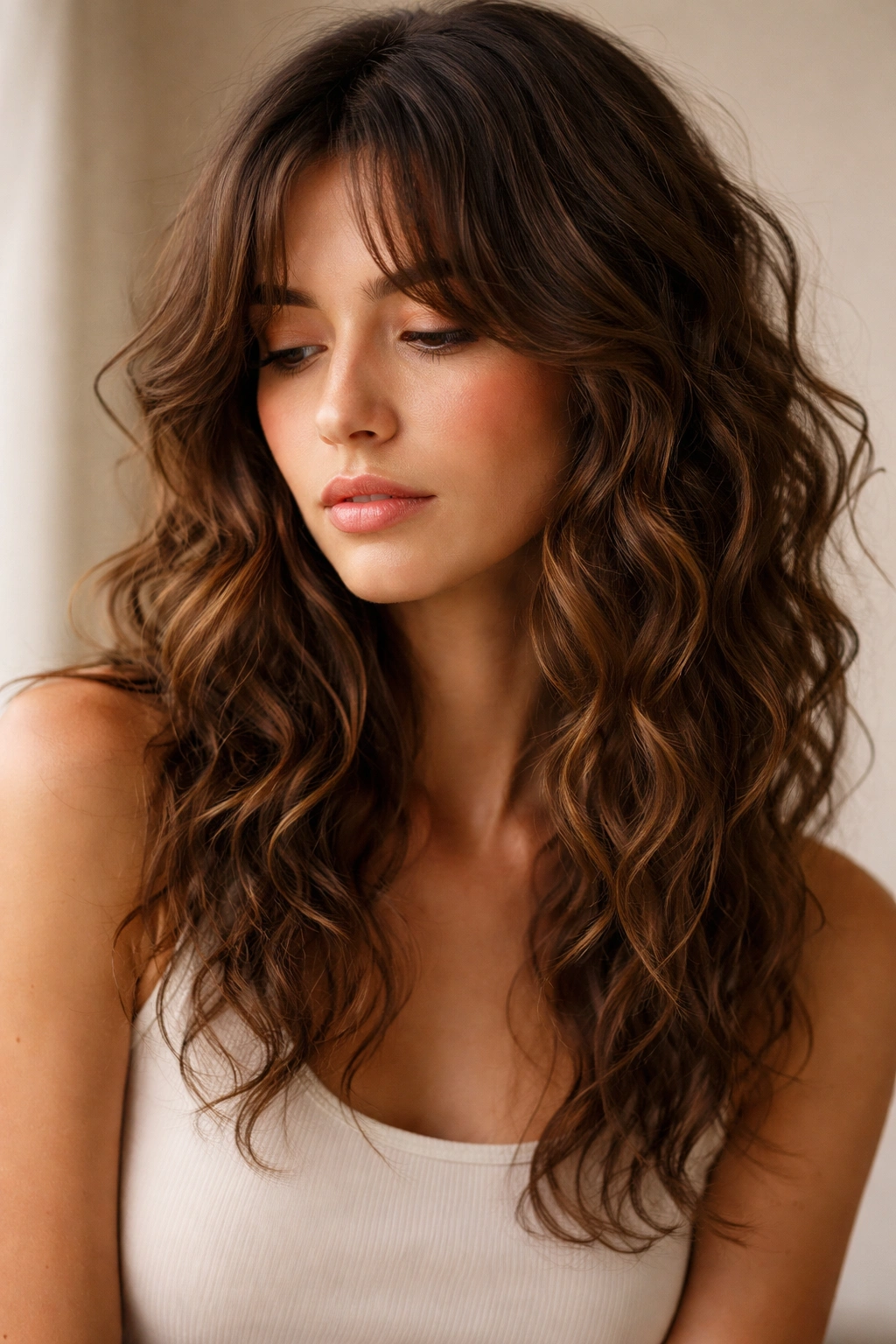
Curtain bangs on wavy and curly hair represent a shift toward working with your natural texture instead of fighting it. Whether you go for a soft, romantic swept style or a bold, textured statement cut, the right curtain bang style can completely transform your look while actually requiring less styling effort than bangs on straight hair. The key is finding a stylist who understands your specific curl or wave pattern and has experience cutting bangs that integrate beautifully with textured hair rather than competing with it.
The most important thing before committing to curtain bangs is being honest about your styling habits and hair maintenance level. Some styles on this list (like spiral curls or two-tone ribbons) require significant ongoing commitment. Others, like loose waves with piece-y bangs or beach waves, are genuinely forgiving and look good even when you do minimal styling. Choose based on what you’ll actually do day to day, not just what looks amazing in the photo.
Bring these styles to your consultation, talk through your specific hair type with your stylist, and ask for their honest recommendation about which will suit your curl or wave pattern best. Get the bangs cut while your hair is in its natural state (curly or wavy, not straightened), do a test styling session at home before assuming the cut isn’t right, and give yourself at least two weeks to figure out how to style it before deciding whether you love it. Curtain bangs have such a high success rate on textured hair that the odds are genuinely in your favor.