
There’s something irresistibly chic about short wavy hair. It strikes that perfect balance between low-maintenance and undeniably stylish — you get texture without the length that requires daily attention, and movement that makes even a simple ponytail look intentional. If you’re considering a cut but worried that short hair can’t deliver the softness of waves, you’re selling yourself short (pun intended). The right short wavy haircut can transform your entire look, frame your face beautifully, and actually make styling easier than longer lengths.
Short wavy haircuts work because they harness your hair’s natural texture instead of fighting against it. Whether your waves are genetic or you’re planning to add them through styling or a perm, a well-executed short cut amplifies movement and creates dimension that longer hair sometimes loses. Plus, there’s a style for every face shape, hair type, and lifestyle. From edgy pixies to soft layers to modern wolf cuts, the variety is genuinely surprising.
Let’s walk through 15 of the cutest short wavy haircuts you can ask your stylist to create — each with the specific details you need to communicate your vision clearly.
1. Textured Pixie Cut
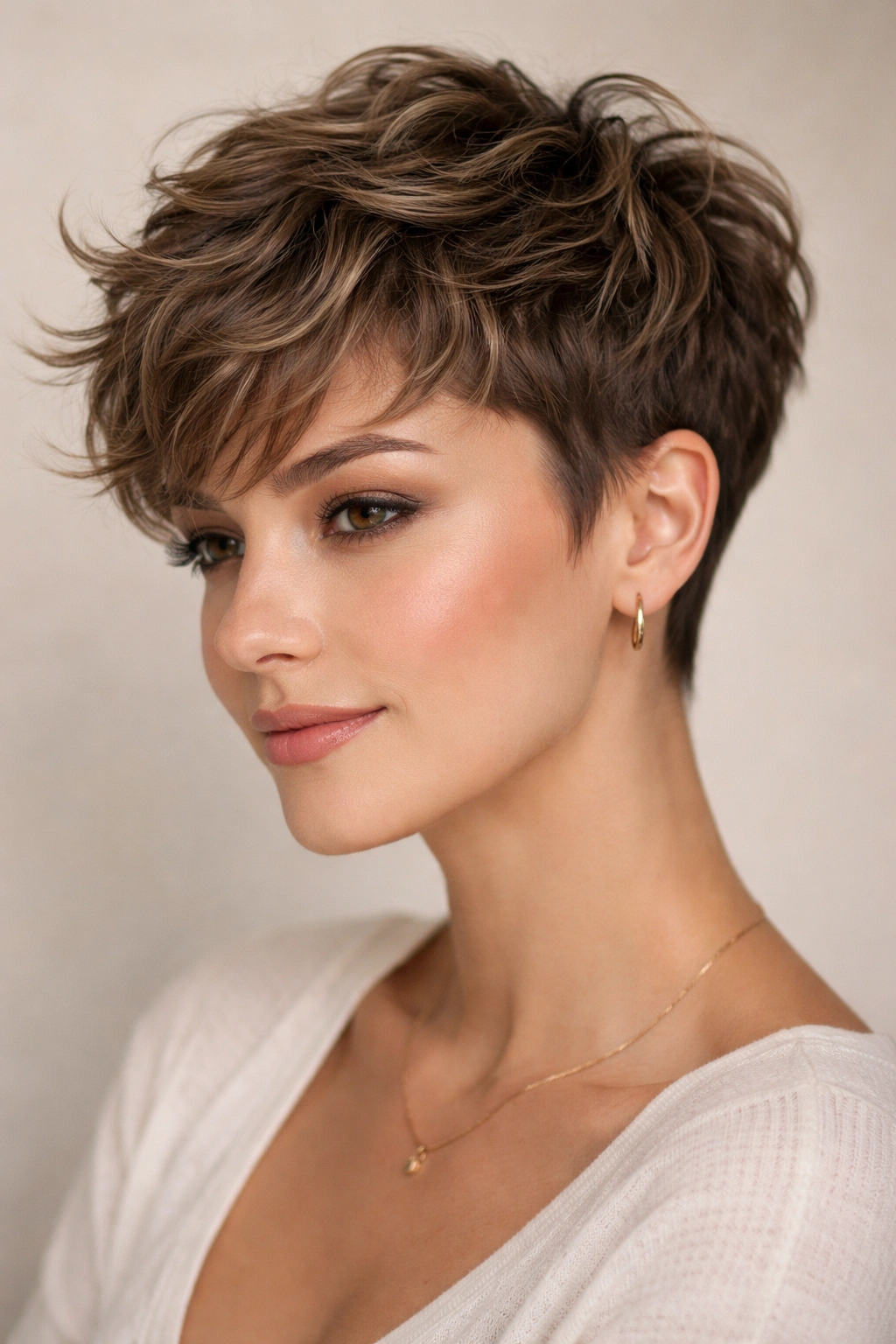
A textured pixie cut takes the classic short style and adds deliberate choppy layers throughout, creating peaks and valleys that celebrate wave naturally. The sides are tapered close to the head while the top has enough length — usually 2 to 3 inches — to show off those waves. This is not a smooth, sleek pixie; this is a pixie that embraces texture and movement.
Why It Works for Wavy Hair
Waves in a pixie cut become a major asset rather than a challenge. The layers catch light differently throughout the style, creating depth that makes the cut look intentional and modern. You get the freedom of a super-short cut without the severe, geometric feel that sometimes comes with a traditional pixie. It reads playful and confident rather than stark.
Key Details to Mention at Your Appointment
- Ask for a longer length on top (at least 2.5 inches) so you have enough hair to show texture
- Request choppy, disconnected layers throughout rather than blended, uniform length
- Get the sides tapered short (half an inch or less) for maximum contrast
- Make sure your stylist understands the difference between a textured pixie and a basic short cut — texture is everything here
- Plan for styling with a light texturizing spray or cream to enhance the waves
Pro tip: This cut works especially well if you have naturally wavy hair that you’ve always tried to smooth down. Finally, let your hair do what it wants to do.
2. Shaggy Bob with Layers
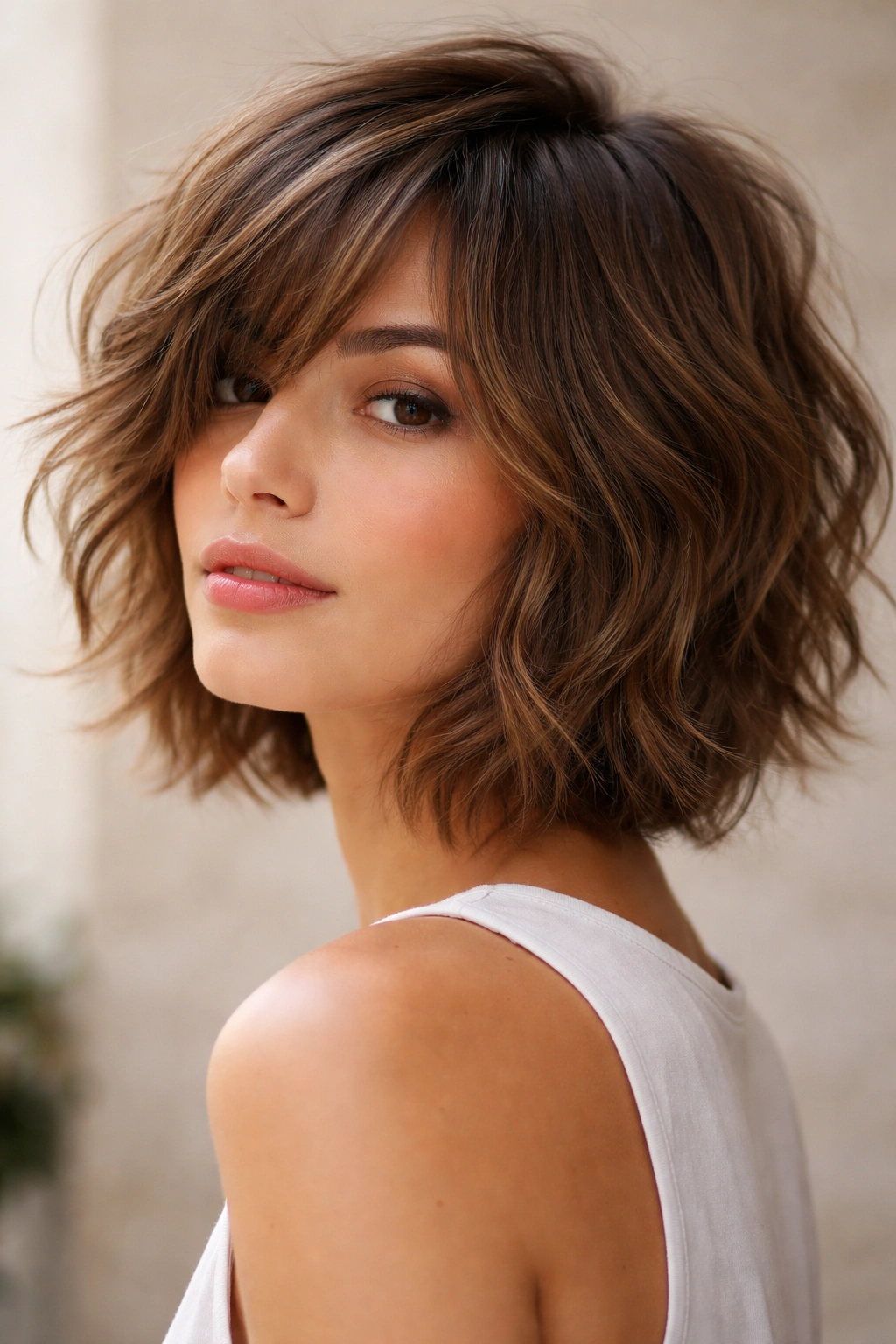
The shaggy layered bob has made a major comeback, and there’s a reason — it’s undeniably flattering on almost everyone. Picture a chin-length bob that’s textured and piecy throughout, with shorter layers on top creating movement and a lived-in vibe. It’s essentially a bob that refuses to be tidy, and that’s its greatest strength.
Why Layers Transform a Bob
A perfectly straight bob can feel severe, especially on wavy hair trying to fight its nature. But layers? Layers make a bob look softer, more forgiving, and infinitely more interesting. The shorter pieces on top give your waves room to move and shine rather than being weighed down by length. You get volume without effort and movement that looks intentional.
What to Ask Your Stylist
- Request layers throughout, with the shortest pieces at the crown creating maximum lift
- Keep the overall length around chin-level or slightly longer depending on your face shape
- Ask for choppy, piecey texture rather than smooth, blended layers
- Make sure the back has movement too — no flat, blunt line across the back of the head
- Discuss how the layers will look air-dried with your natural waves
This cut requires a little styling — you’re not going full wash-and-go — but it’s worth the minimal effort for how good it looks.
3. Modern Wolf Cut
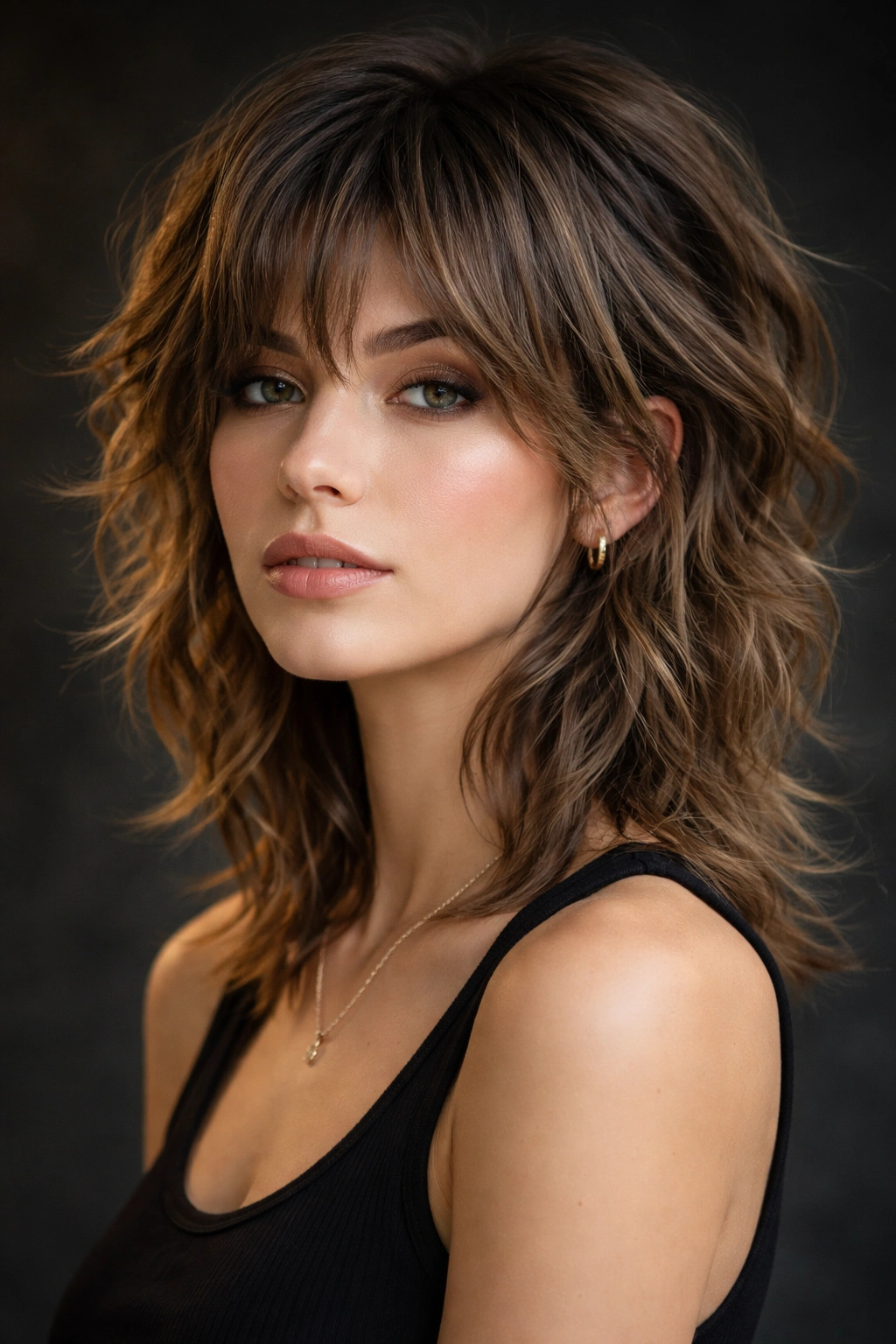
The wolf cut is essentially the love child of a mullet and a shag — shorter, choppy layers on top with slightly more length in the back that still blends naturally. When styled with waves, it creates an edgy-but-soft aesthetic that somehow works brilliantly. It’s textured, it’s modern, and it’s way more wearable than traditional mullets.
The Appeal of Wolf Cut Texture
The wolf cut thrives on texture and movement. The choppy layers on top catch light and create definition, while the slightly longer back flows into waves rather than creating a harsh separation. It reads contemporary and confident without being trying-too-hard. Wavy hair makes this cut sing because the layers showcase every undulation.
Critical Details for Your Consultation
- Bring reference photos showing the level of chop you want on top — this varies from subtle to very choppy
- Specify that you want the length to transition smoothly (no harsh mullet line)
- Ask how much length to keep in the back for your desired look
- Discuss whether you want textured bangs or a longer fringe piece
- Make sure your stylist understands you’re going for “edgy shag” not “throwback mullet”
The wolf cut definitely leans trendy, so it’s a commitment to a specific aesthetic. But if you love modern, slightly unconventional styles, this is your cut.
4. Tousled Beach Waves Bob
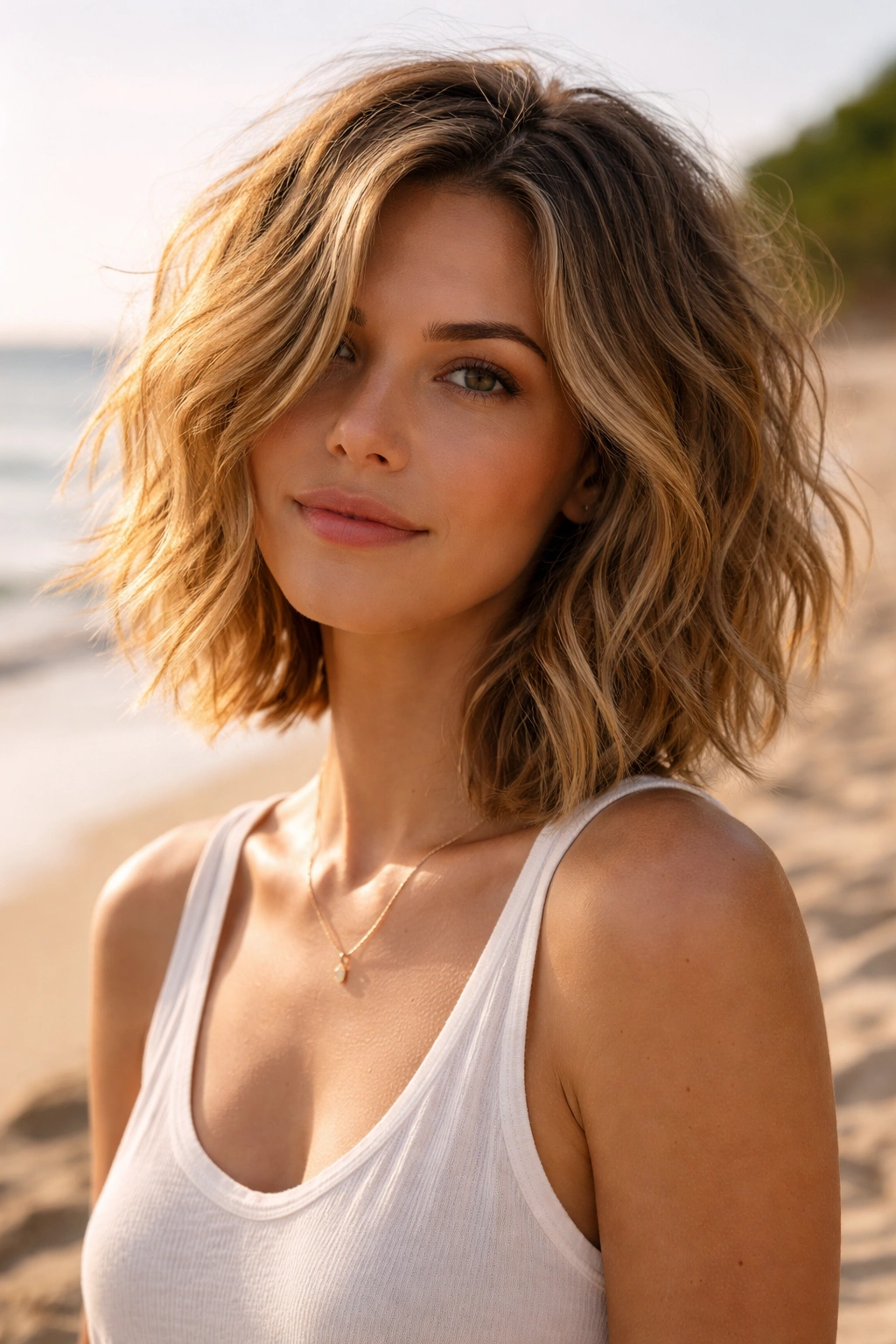
This is the effortless, undone bob that looks like you just came back from the beach and casually ran your fingers through your hair — except you actually spent a few minutes with a curling iron or lived-in cream. It sits around chin length with softer, less choppy layers than a shag. The waves aren’t tight curls; they’re loose, romantic, and relaxed.
Why This Works as an Everyday Style
The beauty of the tousled beach waves bob is that it embraces imperfection. Frizz? That’s part of the look. Hair not perfectly coiffed? Exactly what you’re going for. This cut rewards natural texture rather than demanding precision, making it genuinely low-maintenance compared to blunt bobs that need perfect styling to look right.
Talking Points for Your Stylist
- Ask for long, soft layers that create movement without being choppy or textured
- Keep length around the jaw or slightly longer — not too short, not too long
- Request layers that blend smoothly rather than having disconnected, obvious lines
- Discuss whether you want curtain-style bangs or a longer face-framing section
- Ask about the best products to enhance your natural waves without creating frizz
This cut works beautifully if you already have wavy hair and want to lean into that texture. It’s also forgiving enough to work well if your waves are more subtle.
5. Angled Lob
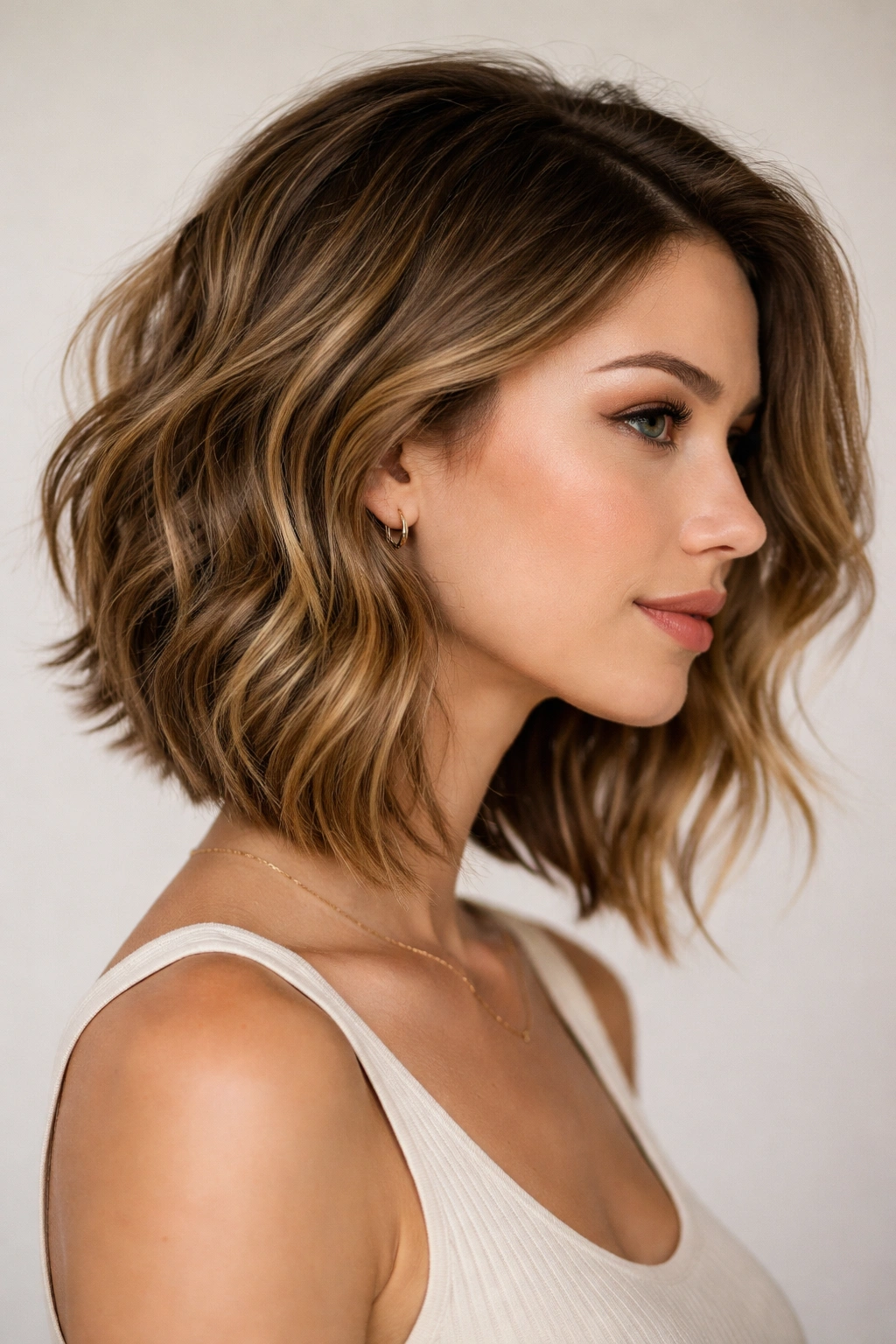
A lob (long bob) that’s angled — slightly longer in front, shorter in back — creates automatic movement and flatters almost every face shape. When combined with wavy texture, the angles become even more pronounced and interesting. It’s longer than a traditional short cut but still reads as definitely-short compared to shoulder-length or beyond.
The Flattery Factor of Angled Cuts
Angled cuts naturally frame the face. The longer front pieces draw attention toward your face and allow waves to move forward, creating softness around your features. Meanwhile, the shorter back creates lift and volume at the crown. This combination is genuinely flattering on almost everyone, which is probably why angled lobs have remained popular.
Must-Discuss Elements at Your Appointment
- Specify how much angle you want — slight (half an inch difference) or more dramatic
- Ask for the length in front — most people prefer chin-length or just past the jaw
- Request layers throughout or mostly face-framing depending on how textured you want it
- Discuss whether you want the back textured or smoother
- Ask about styling options — this cut can look sophisticated or casual depending on how you finish it
An angled lob is incredibly versatile. Style it sleek and smooth for a polished look, or emphasize your waves for something more relaxed and undone.
6. Curly Crop
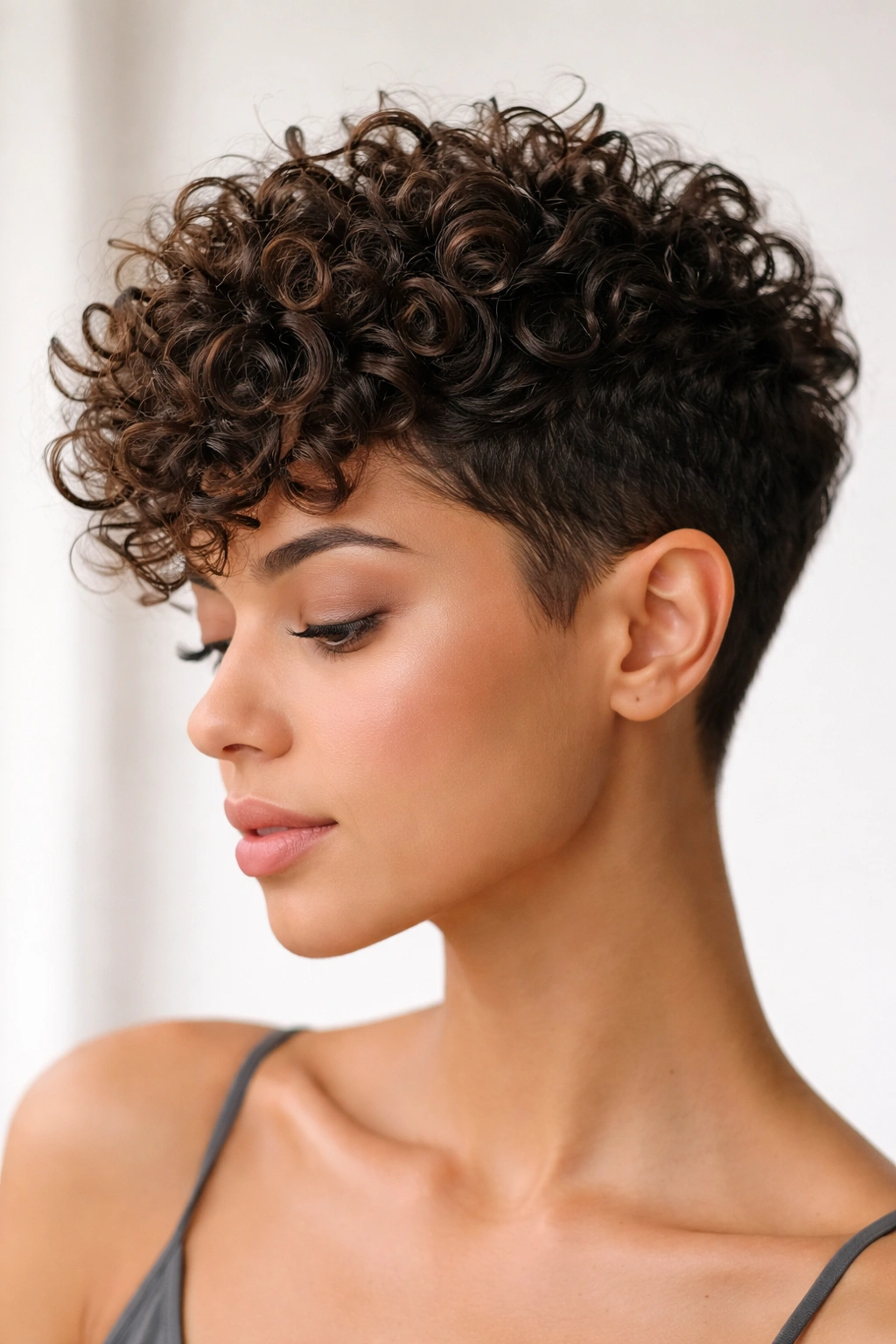
If you have naturally curly or very wavy hair, a crop cut celebrates those curls at full volume. Think super short — maybe two inches on top, tapered on the sides — that sits close to your head while your curls create a cloud of texture. It’s bold, it’s confident, and it’s genuinely low-maintenance once you accept that you’re not styling this smooth.
Why Texture Becomes Volume Here
With very short length and curly or wavy texture, you’re not fighting against your hair’s nature — you’re celebrating it. The curls create shape and volume naturally, so you don’t need layers for movement (your curls provide all the movement you need). This cut is freeing if you’ve spent years trying to flatten or smooth your natural texture.
Important Conversation Points
- Ask your stylist how they recommend cutting curly hair — some prefer dry cutting to see the true curl pattern
- Discuss the taper on sides and back (how close do you want it?)
- Ask what length to keep on top for your curl pattern
- Discuss your daily styling routine — this cut does need product and care, just not length-related styling
- Get recommendations for curl-specific products that enhance rather than weigh down
This cut is not for everyone — it requires embracing your natural texture fully. But if you do, it’s genuinely liberating and looks absolutely beautiful.
7. Choppy Undercut
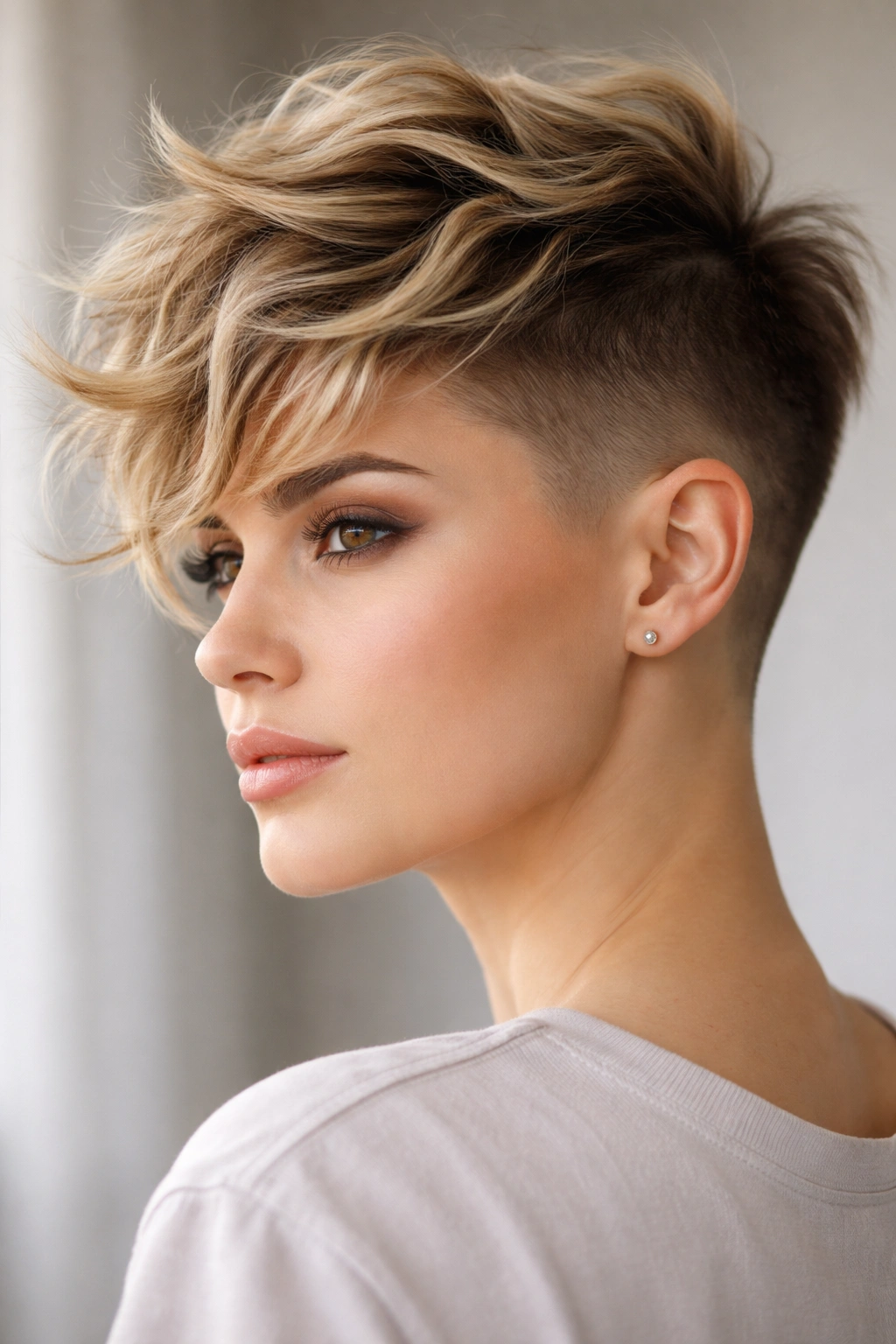
An undercut takes the sides very short (sometimes shaved) while keeping more length on top that’s textured and choppy. It’s edgy, it’s modern, and it makes a statement. Paired with wavy texture on top, the contrast between the close sides and the textured crown is striking.
The Edge of Contrast
Undercuts work because of contrast. When your sides are nearly shaved and your top is full of choppy texture and movement, the style reads powerful and intentional. Waves on top become even more dramatic with this contrast. It’s not subtle, but if you’re looking for a cut that announces your confidence, this is it.
Key Points for Your Stylist
- Decide how short you want the sides and back — half an inch, a quarter inch, shaved?
- Specify texture on top — this should be choppy, not blended
- Ask about length on top (usually 2-3 inches for full effect)
- Discuss whether you want a defined line where the undercut meets the longer hair or a blend
- Bring multiple reference photos so your stylist understands the exact vibe you want
The undercut is definitely a commitment. You’ll need a fade or haircut every 2-3 weeks to keep the undercut sharp. But for the right person, it’s absolutely worth it.
8. Soft Flip Layers
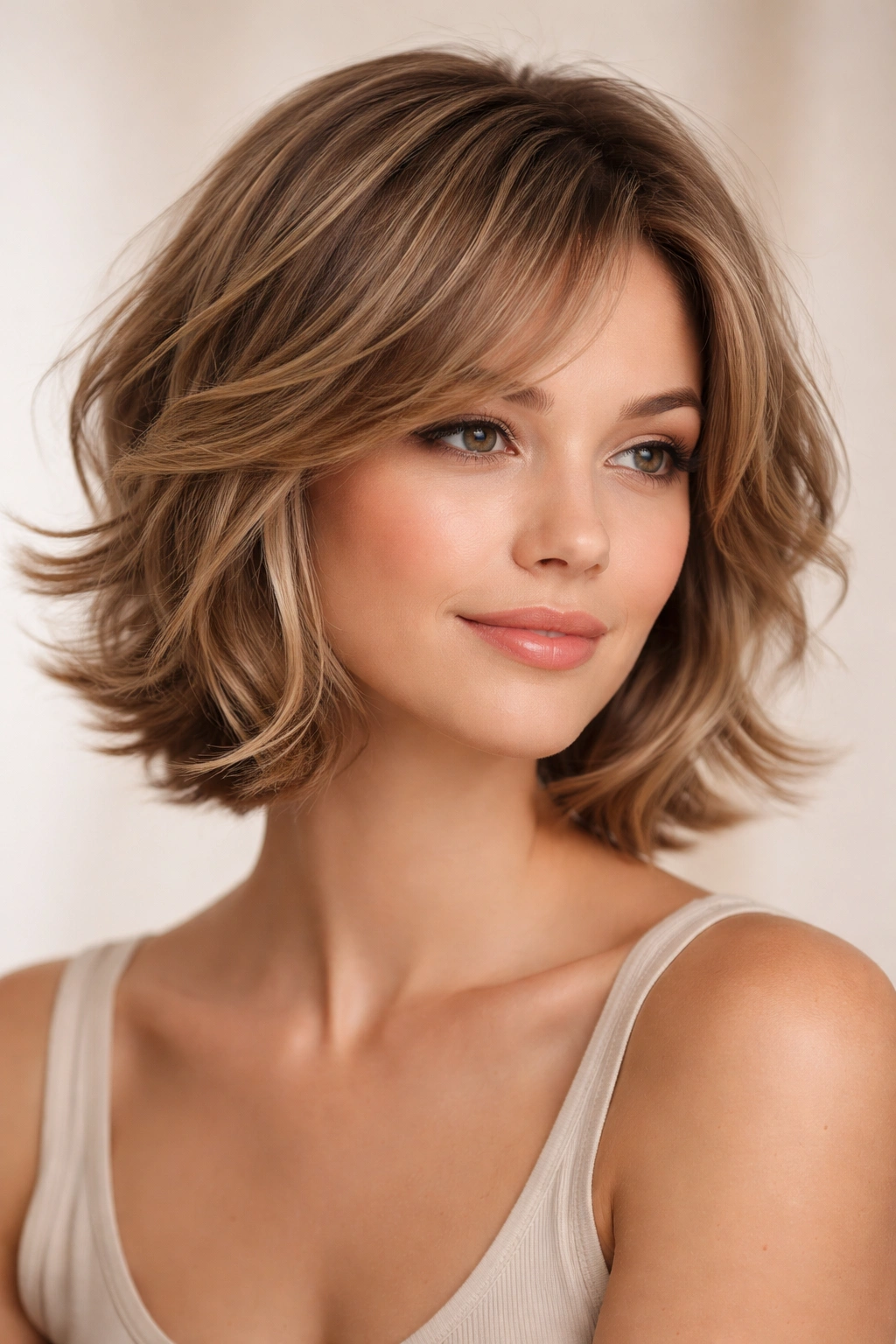
Soft flip layers are shorter, blended layers that flip outward away from the face, creating a gentle, flattering frame. It’s softer and more romantic than choppy layers, with less texture and more of a cohesive shape. Think late-90s influenced but modern and refined, and paired with waves for incredible softness.
The Romance of Outward Flips
When layers flip outward instead of falling inward or sitting flat, your face automatically looks lifted and framed. The waves naturally follow this direction and create movement away from your face rather than toward it. It’s inherently flattering and works beautifully for face-framing without feeling harsh.
What to Ask Your Stylist
- Request blended, smooth layers rather than choppy, disconnected ones
- Ask for layers that flip outward, away from the face
- Specify the length you want — this works anywhere from pixie length to a longer bob
- Discuss whether you want bangs or longer front pieces
- Ask about products that help encourage the outward flip without making hair look stiff
This cut does require some styling to get the flip perfect, especially if your waves don’t naturally want to go that direction. But the payoff is a genuinely flattering frame.
9. Messy Tousle Top
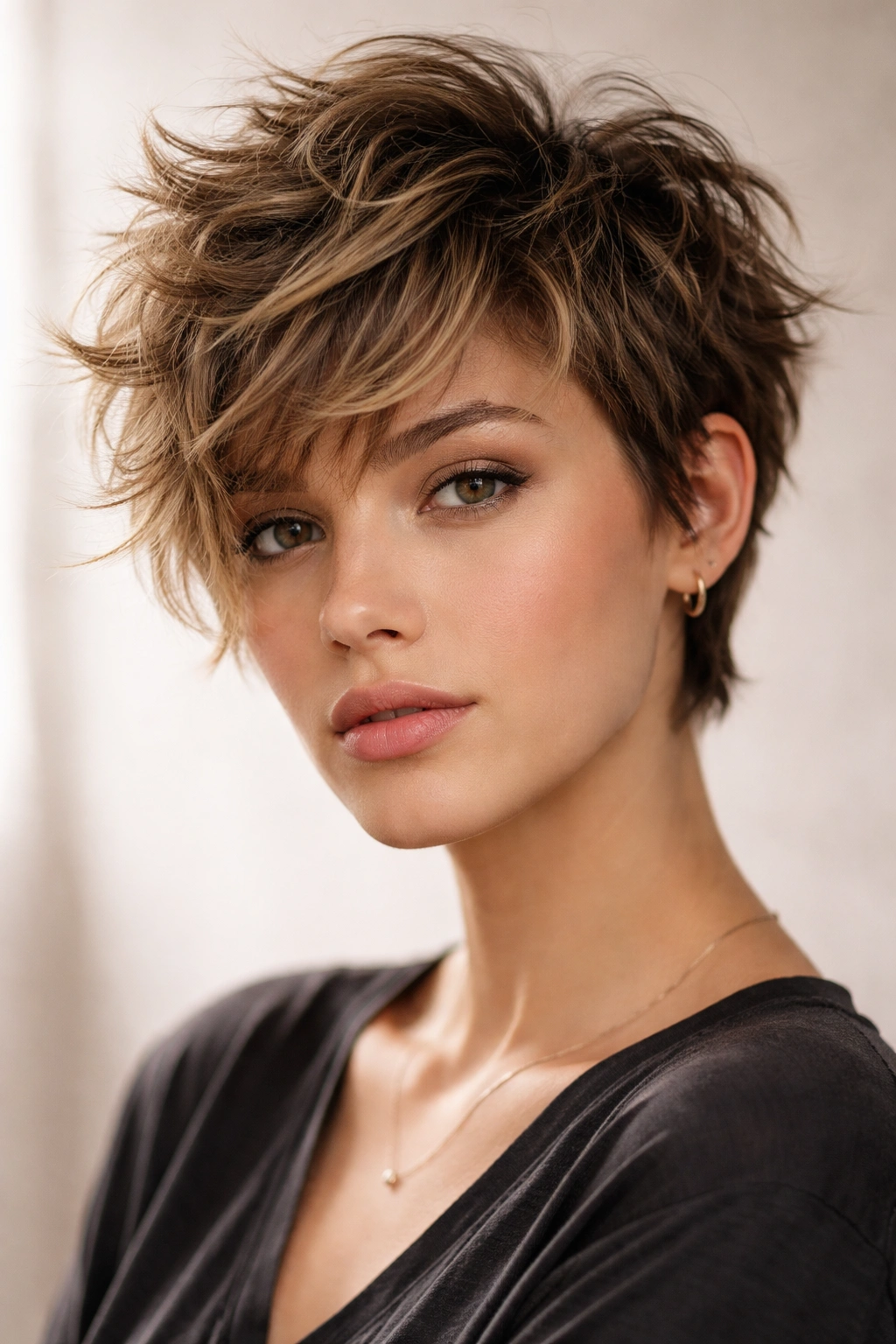
A messy tousle top is exactly what it sounds like — the top is short with choppy, textured layers that look deliberately undone, while it slightly longer and smoother on the sides and back. It’s very modern, very editorial, and honestly a bit punk rock in the best way.
Why Intentional Messiness Works
There’s freedom in a cut that’s supposed to look undone. You’re not fighting against texture; you’re leaning into it hard. The layers catch light in unpredictable ways, creating interest and movement that feels alive. It reads youthful and confident without trying to look perfectly polished.
Details to Communicate
- Ask for very choppy, disconnected layers on top
- Request that the sides stay slightly longer (at least an inch) for contrast with the textured top
- Specify texture over smoothness throughout
- Discuss styling — this cut benefits from texture cream or a light spray
- Bring reference photos showing the exact level of “messiness” you want
This is not a cut that looks better the more you style it. It looks best when you style it just enough to enhance the texture without making it look too groomed. That’s the whole point.
10. Asymmetrical Wave Cut
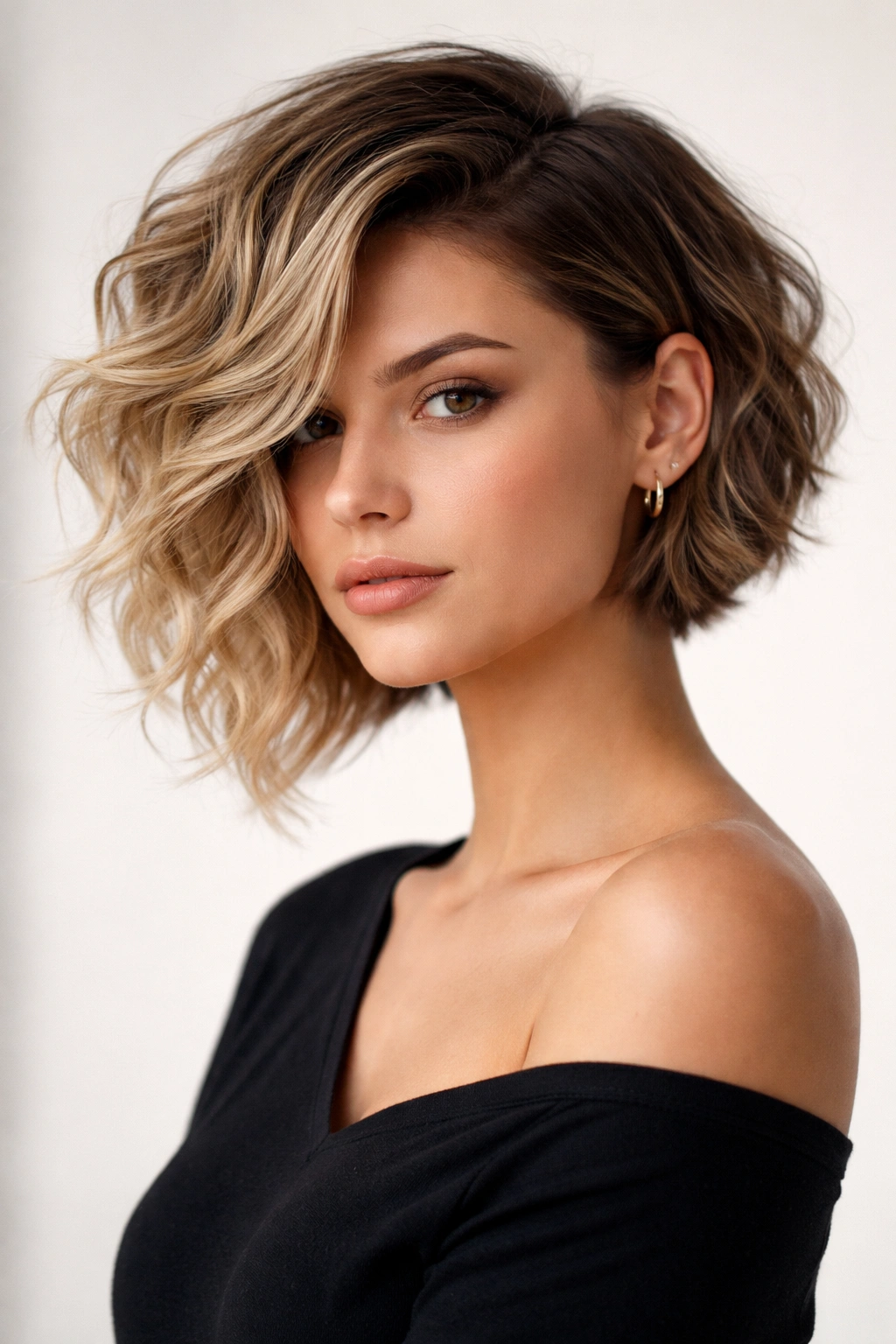
An asymmetrical cut means one side is noticeably longer than the other, creating instant movement and visual interest. When you add waves into the mix, the asymmetry becomes even more dynamic — the longer side shows off more wave movement while the shorter side keeps the overall look modern and fresh.
The Visual Interest of Asymmetry
Asymmetrical cuts draw the eye around your face in an interesting way. The imbalance creates movement in the style itself, without needing your waves to do all the work. It’s an unconventional choice that shows confidence, and wavy texture amplifies that vibe beautifully.
Important Stylist Consultation Points
- Specify how much difference you want between the two sides (subtle or dramatic?)
- Decide which side you want longer — usually the longer side frames one side of the face
- Ask whether you want texture throughout or just on one side
- Discuss whether the sides taper or stay more blended
- Bring photos of asymmetrical styles you love — this is too specific to describe in words alone
Asymmetrical cuts are definitely fashion-forward. They work beautifully, but they’re not for someone wanting a classic, timeless style.
11. Permed Wave Style
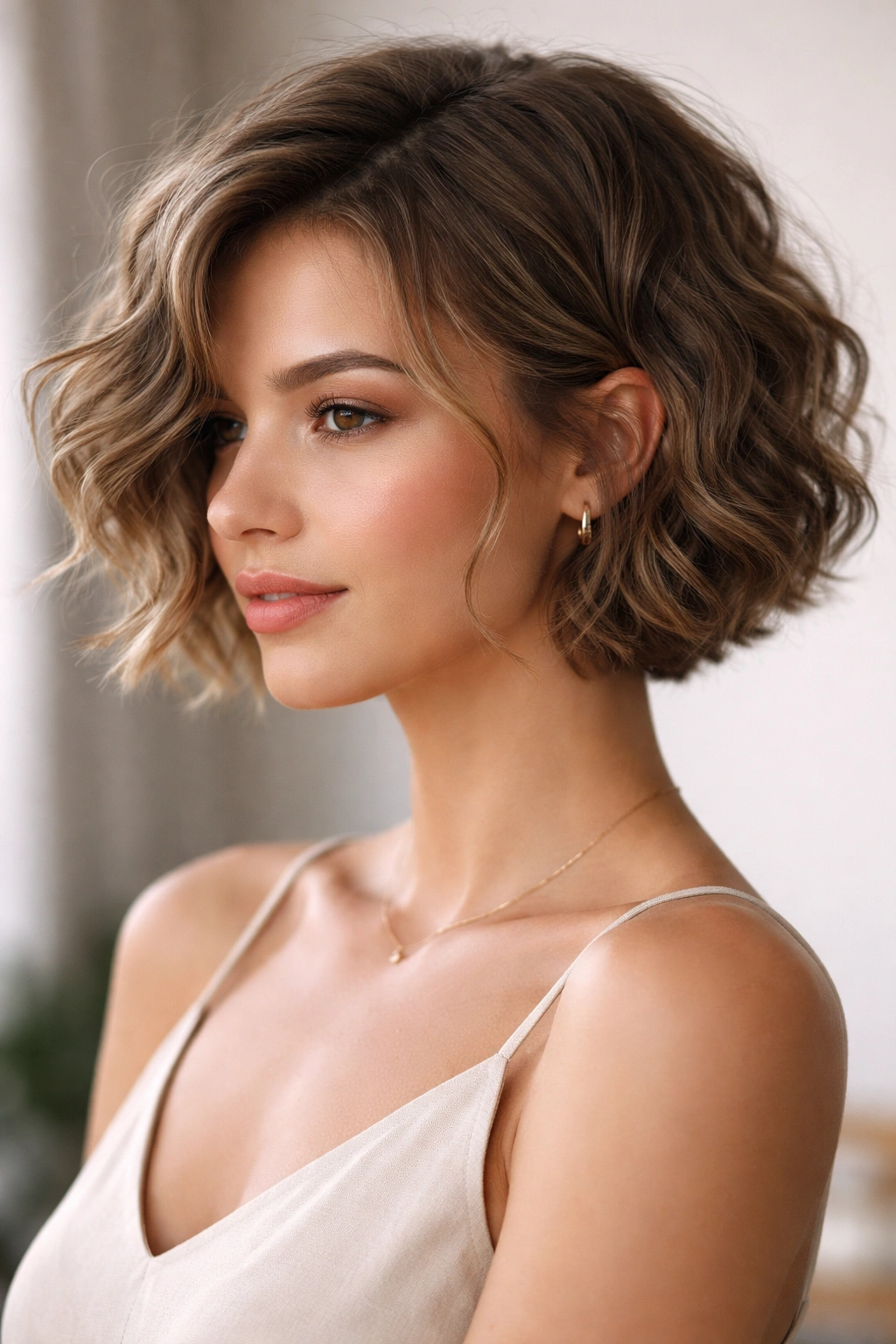
If your hair is naturally straight or only slightly wavy, a perm creates the wave texture you’re looking for on a short cut. Modern perms are gentler than old perms, and when done well on short hair with the right cut, they look natural and beautiful rather than obviously permed.
How Perm Waves Work With Short Cuts
Short hair with permed waves looks fuller and more textured than the same cut on straight hair. The waves don’t need to be tight curls — looser, gentler waves look more natural and modern. On a short cut, a perm means your hair naturally has texture and movement, reducing daily styling significantly.
What to Know Before Getting a Perm
- A quality perm is pricey and shouldn’t be rushed — budget accordingly
- Find a stylist experienced with modern perms and short hair specifically
- Discuss wave pattern (looser waves look more modern and natural than tight curls)
- Ask about aftercare — permed hair needs specific products and care routines
- Expect some processing time and potential slight dryness immediately after
- Schedule a cut after the perm to refine the shape and create the perfect short style
A perm plus the right short cut can genuinely transform your styling routine. Your hair naturally has texture and movement without daily heat styling.
12. Feathered Fringe Bob
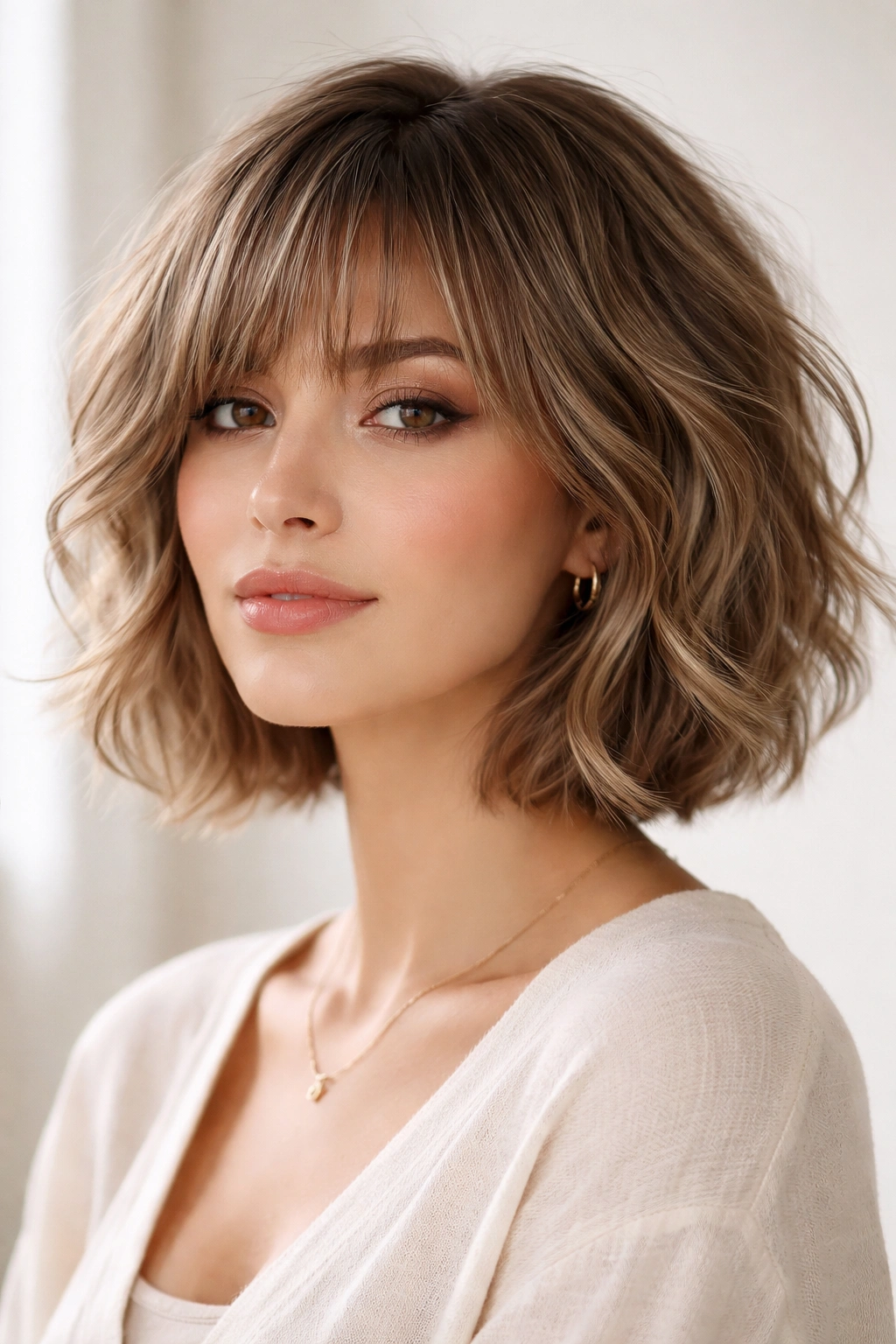
A feathered fringe bob combines short, feathery bangs with a slightly longer bob, usually with soft layers throughout. It’s retro-inspired but modern when executed with the right proportions. The fringe creates an instant focal point while waves throughout add softness and movement.
The Impact of a Feathered Fringe
Feathered bangs immediately change your face shape perception and create a focal point at your eyes. When paired with wavy texture, the fringe looks romantic rather than structured. It’s a more distinctive look than a simple bob, giving you more of a complete style statement.
Critical Discussion Points
- Specify fringe length (usually grazes the eyebrows or sits just above them)
- Ask about fringe texture — feathered means choppy and light, not blunt and heavy
- Discuss the length of the bob beneath the fringe
- Request soft layers throughout to create movement and prevent the bottom from looking too thick
- Ask about styling — feathered bangs need a light hand with product to look right
Feathered fringe bobs require a bit more styling than a simple wavy bob, especially to keep the fringe looking light and feathery. But if you love the look, it’s worth the effort.
13. Wavy Mullet
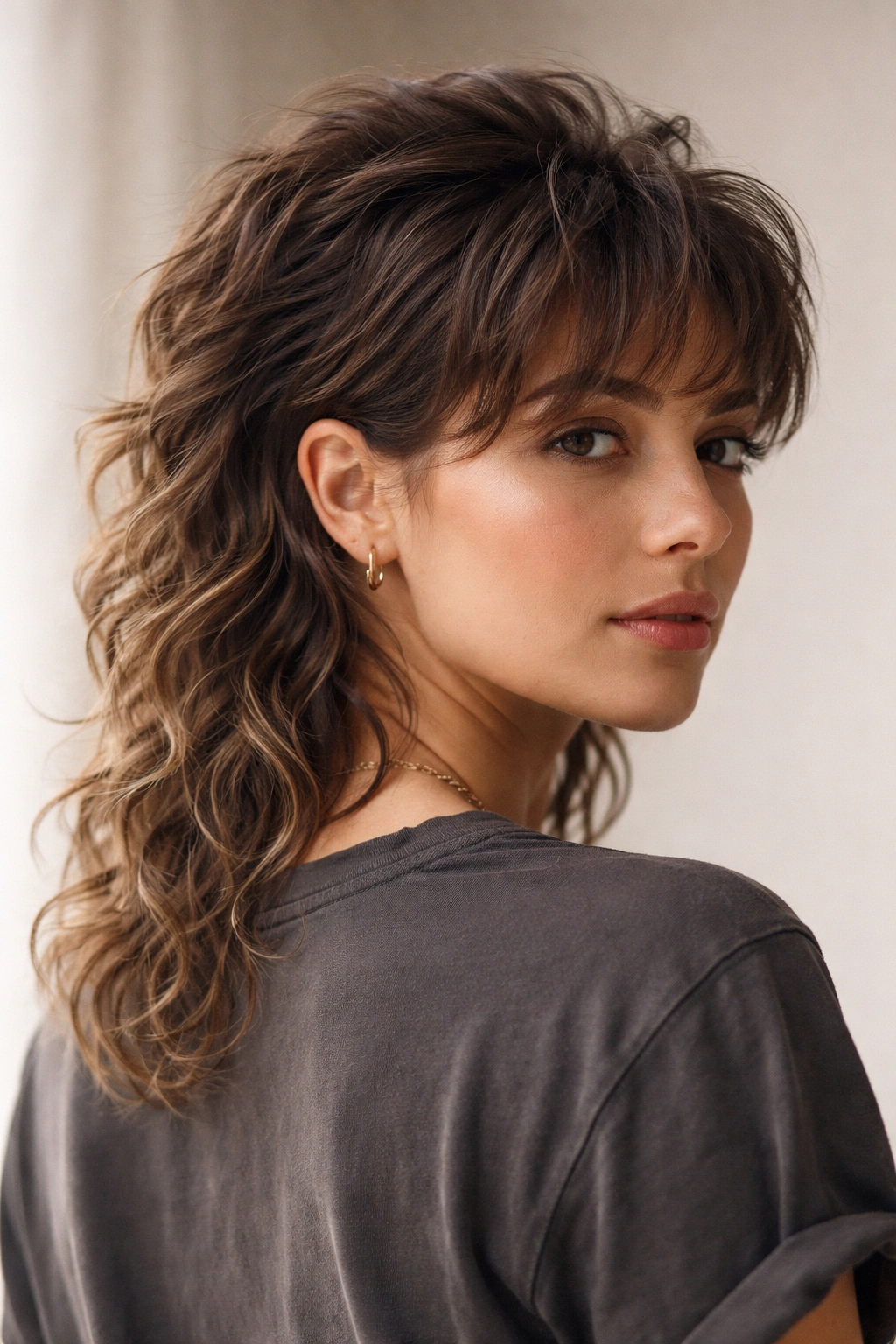
A modern wavy mullet is way cooler than it sounds — it’s longer, textured, and wavy in the back while staying shorter and more refined on top and sides. It’s edgy without being too extreme, and paired with actual waves (not the slicked-back 80s version), it reads contemporary and intentional.
Why Modern Mullets Work Now
The modern mullet is about balance. The shorter front and sides keep it wearable and refined, while the longer back gives you the freedom and movement of longer hair in places where texture can really shine. Waves in the back look undeniably cool in this context.
What to Tell Your Stylist
- Specify that you want a modern, textured mullet — not an 80s throwback
- Ask how much length to keep in back (usually past the neck)
- Request texture and choppy layers rather than a blunt line anywhere
- Discuss the length on top and sides (usually shorter but not undercut-short)
- Bring references showing the exact vibe you want
A wavy mullet is definitely a statement cut. It works beautifully if you’re confident in your style choices and aren’t looking for something conventional.
14. Tapered Wave Fade
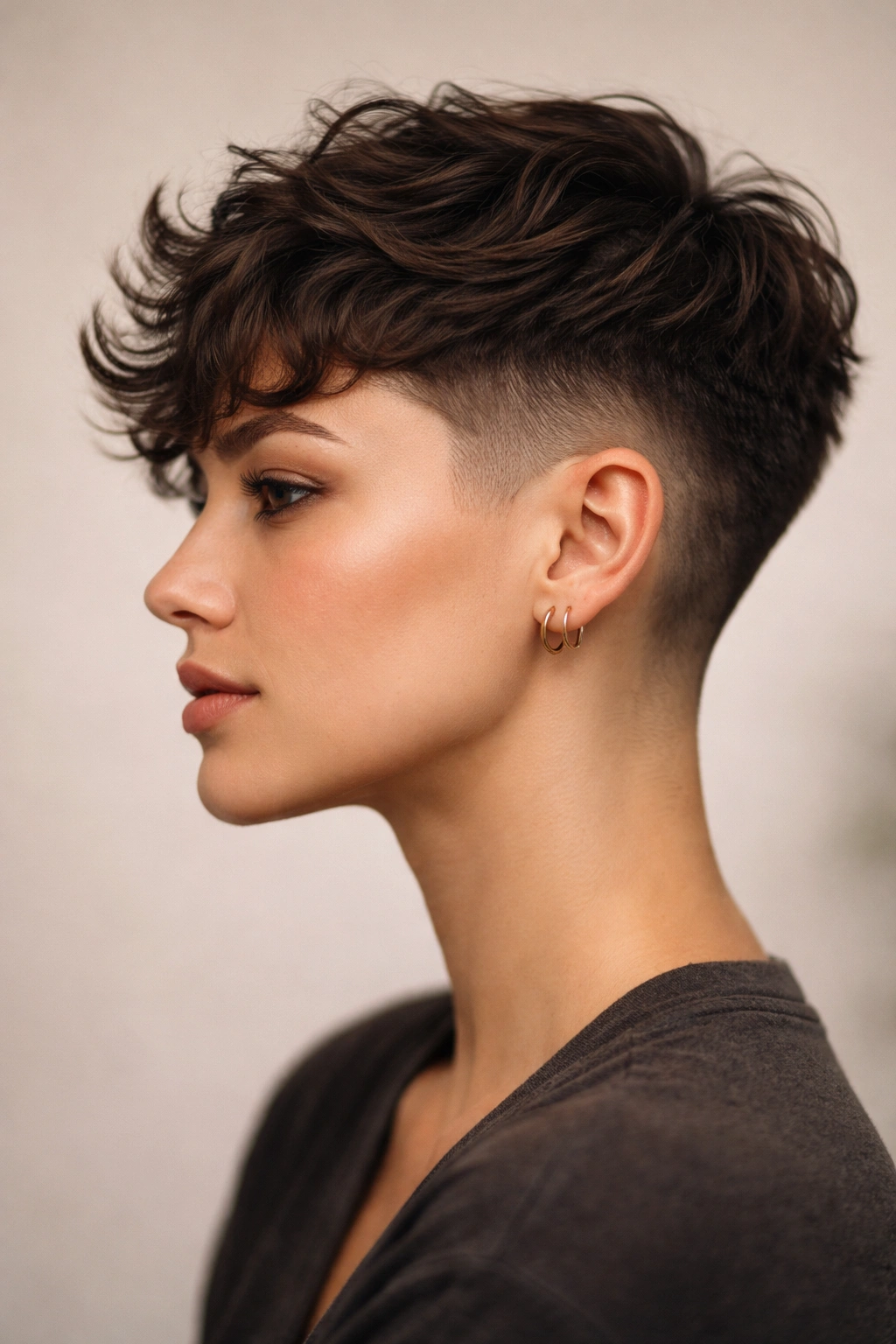
A tapered fade features closely cut sides and back that gradually fade to longer length on top, with choppy texture throughout. It’s clean and modern while still celebrating wave. It sits between an undercut and a typical short cut in terms of edge and attitude.
The Appeal of Structured Texture
A fade creates a clean line and structured shape, and that framework actually makes textured waves look even better by contrast. The sides are neat while the top is all movement. It’s a style that balances edge with softness beautifully.
Key Stylist Information
- Specify fade type — skin fade, low fade, or mid fade (how close do you want the sides?)
- Ask for texture and chop on top while keeping the fade clean
- Discuss length on top (usually 1.5-2.5 inches depending on your wave pattern)
- Request a sharp line where the fade meets the longer hair, or a smoother blend
- Plan for regular maintenance — fades need refreshing every 2-3 weeks
A tapered fade is genuinely flattering and works for many face shapes. It’s also a style that works casually or dressed up depending on how you style the texture on top.
15. Piece-y Textured Crop
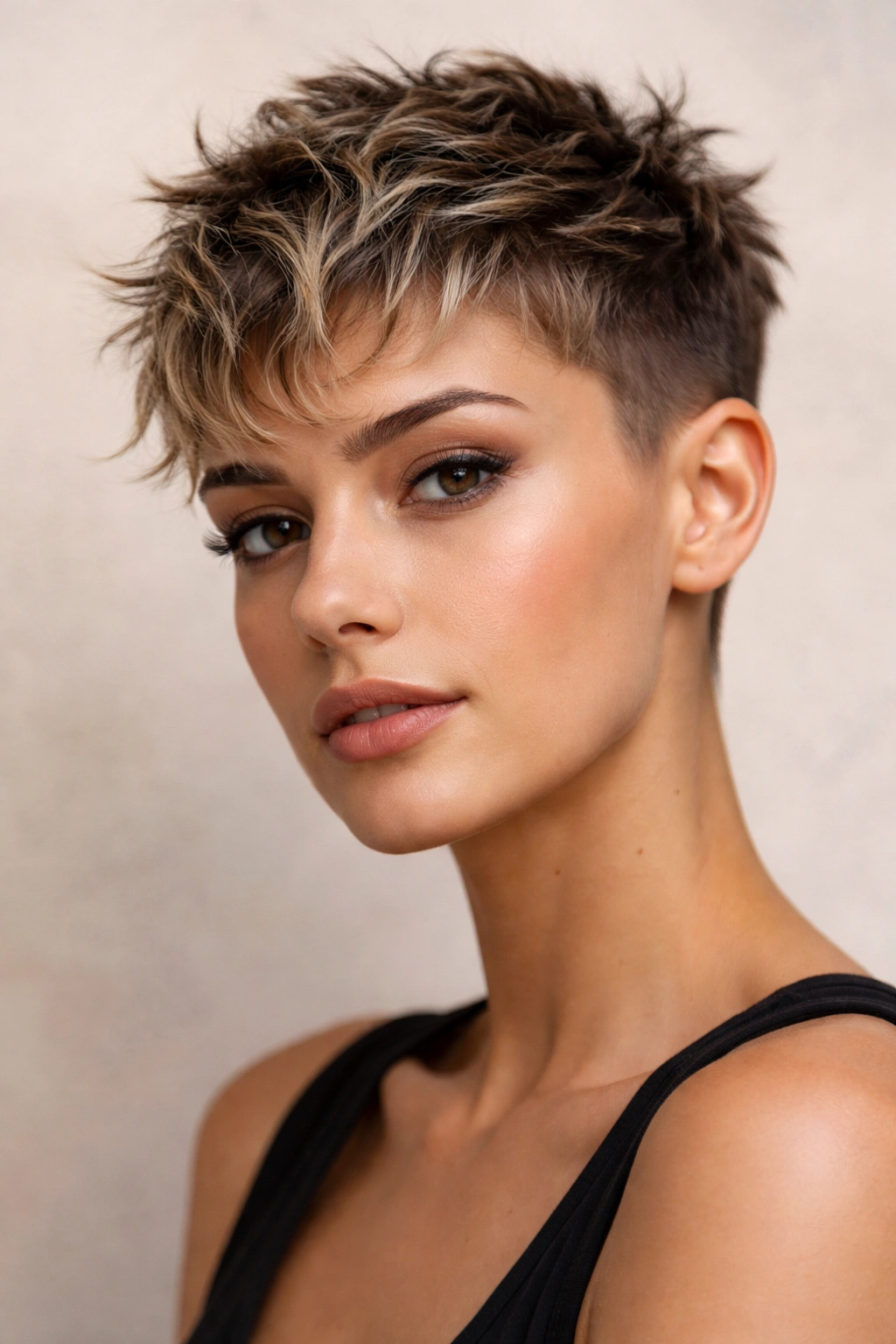
A piece-y textured crop is super short overall — maybe an inch and a half on top — with deliberately choppy, disconnected pieces throughout that create visual texture and dimension. It’s androgynous, modern, and absolutely works with wavy hair because the chop shows off wave pattern beautifully.
Why Short Texture Reads Modern
Pieces and chop on short hair read contemporary and intentional. You’re not trying to hide your hair texture; you’re highlighting it. The individ pieces catch light differently, creating interest even though the overall length is minimal. It’s bold and confident without being severe.
Appointment Details to Discuss
- Ask for very choppy, disconnected pieces throughout (not blended)
- Specify length — some people prefer nearly shaved sides with longer pieces on top, others want it more uniform
- Discuss texture products that enhance the chop without adding weight
- Ask whether you want your stylist to cut it dry to see the true piece pattern, or wet
- Be prepared for this cut to need styling — it’s not wash-and-go, but it’s not high-maintenance either
A piece-y crop is absolutely wearable if you’re comfortable with short hair and modern style. It’s a cut that works harder to create interest because of its length, so every piece matters.
Final Thoughts
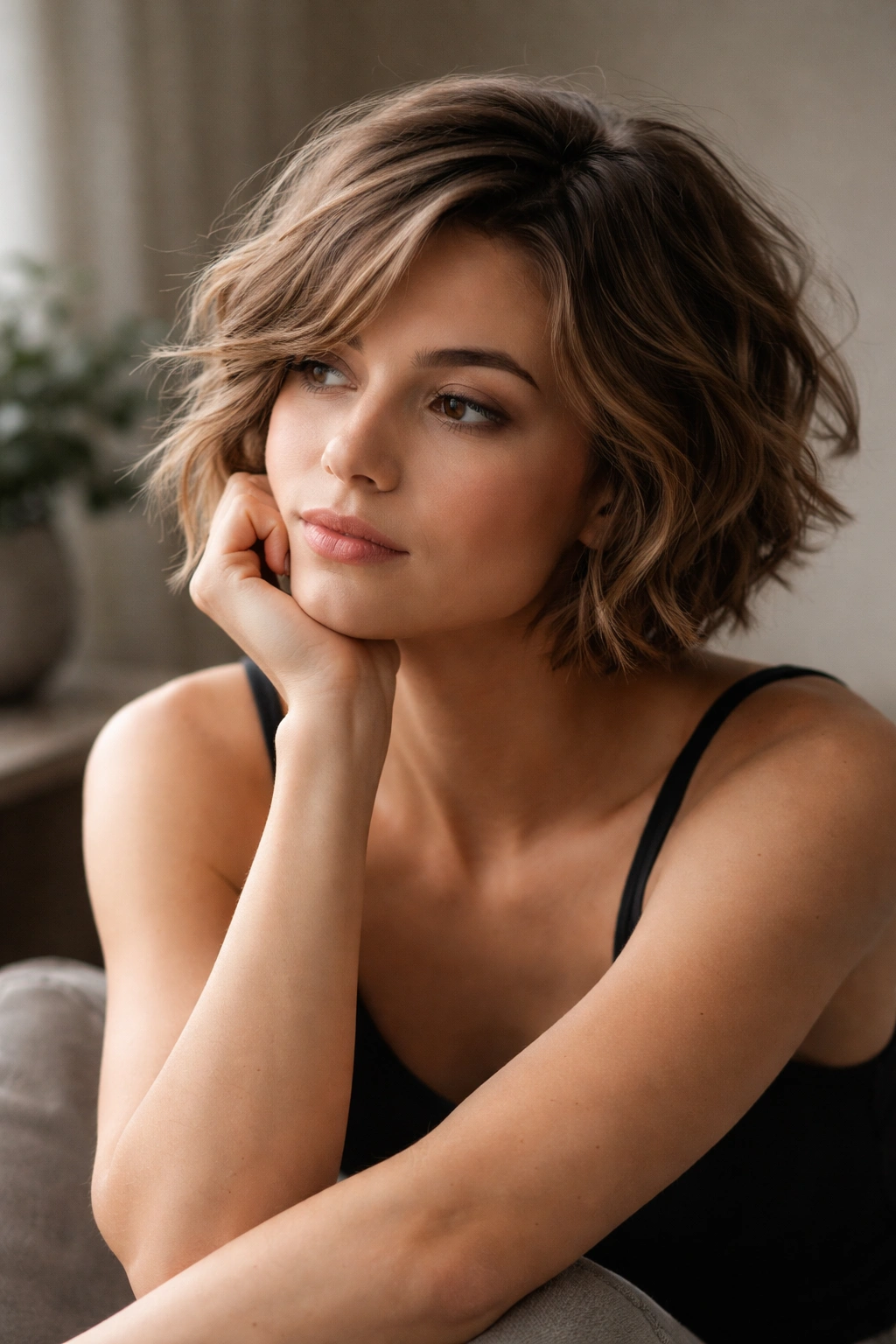
The beauty of short wavy haircuts is how many options actually exist. Whether you want soft and romantic, edgy and modern, or something completely unique, there’s a cut that will work with your natural waves (or the waves you create with styling or a perm). The most important thing is finding a stylist who understands texture and doesn’t try to fight against your hair’s natural movement.
When you book your appointment, bring multiple reference photos showing the exact vibe you want. Don’t just show a single image; show several cuts you love so your stylist understands the full range of your style preferences. Talk specifically about texture, length, and styling expectations — a cut that requires 15 minutes of styling every morning is very different from one that’s genuinely wash-and-go, and you need to make sure you’re aligned.
Remember that short wavy hair is actually easier to maintain than long hair, even though styling requirements vary depending on which cut you choose. Regular trims (every 4-6 weeks) are essential to keeping the shape sharp and the layers looking intentional rather than shaggy. And finally, invest in products that work with your waves, not against them. The right shaping cream, texturizing spray, or curl cream can completely transform how your cut looks day to day.