
Round faces have their own special magic, but finding the right short hairstyle can feel tricky when you’re working with softer, fuller features. The good news? Wavy texture is actually one of your best friends. Waves naturally create movement, dimension, and the kind of visual angles that help balance a rounder face shape. When you combine that natural wave pattern with thoughtful cutting techniques—like strategic layering, asymmetry, and face-framing—you unlock hairstyles that don’t just suit you, they actively flatter your features.
The key to making short wavy hair work for a round face isn’t about fighting your face shape or your natural texture. It’s about understanding which cuts create the right proportions, where to place volume for maximum impact, and how to style your waves so they work with you instead of against you. The styles ahead aren’t trends that’ll feel dated next year—they’re classic approaches that work because they’re rooted in solid hair and face-shape principles.
What makes these styles particularly smart for round faces is that wavy hair adds texture and movement without requiring perfectly smooth, sleek styling. That inherent texture becomes your tool for creating the dimension and visual interest that makes round faces appear more sculpted and defined. Let’s walk through 15 distinct short wavy hairstyles that genuinely work for round face shapes, along with exactly how to style and maintain each one.
1. The Textured Pixie with Longer Top Layers
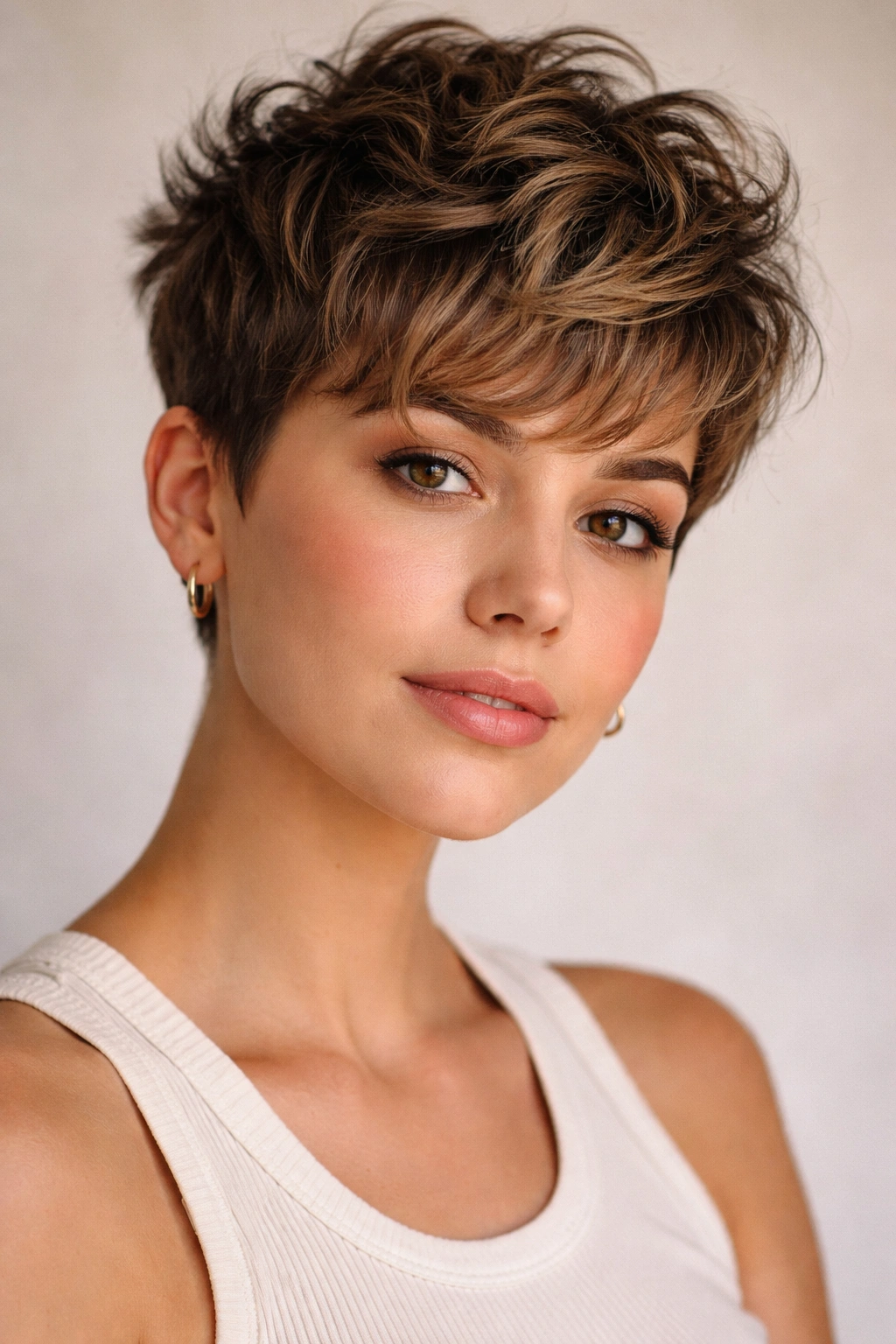
A textured pixie keeps things short and sharp around the sides and back while maintaining more length on top, which creates immediate vertical lift. For round faces, that upward movement is everything—it draws the eye up and breaks up horizontal width. The key is asking your stylist for choppy, disconnected layers throughout the top section so your natural waves have plenty of room to move and create texture.
Why This Works for Round Face Shapes
The extended crown height visually lengthens your face proportions while the textured waves add dimension that prevents the cut from looking too severe or flat. Short sides automatically define your cheekbones and jawline, while those longer, layered waves on top keep things soft rather than harsh.
Styling and Maintenance Tips
- Work a volumizing mousse or sea salt spray into damp hair to enhance your natural wave pattern before air-drying or blow-drying with a diffuser attachment
- Use a texturizing cream or wax on the ends to emphasize individual pieces and prevent the style from looking stringy or one-dimensional
- This style requires a trim every 4-6 weeks to maintain the sharp lines around the ears and nape
- Sleep on a silk pillowcase or in a loose silk cap to protect texture overnight and reduce frizz
Worth knowing: The longer you can grow the top section while keeping the sides buzzed or very short, the more dramatic the face-lengthening effect becomes.
2. The Shaggy Layered Cut with Movement
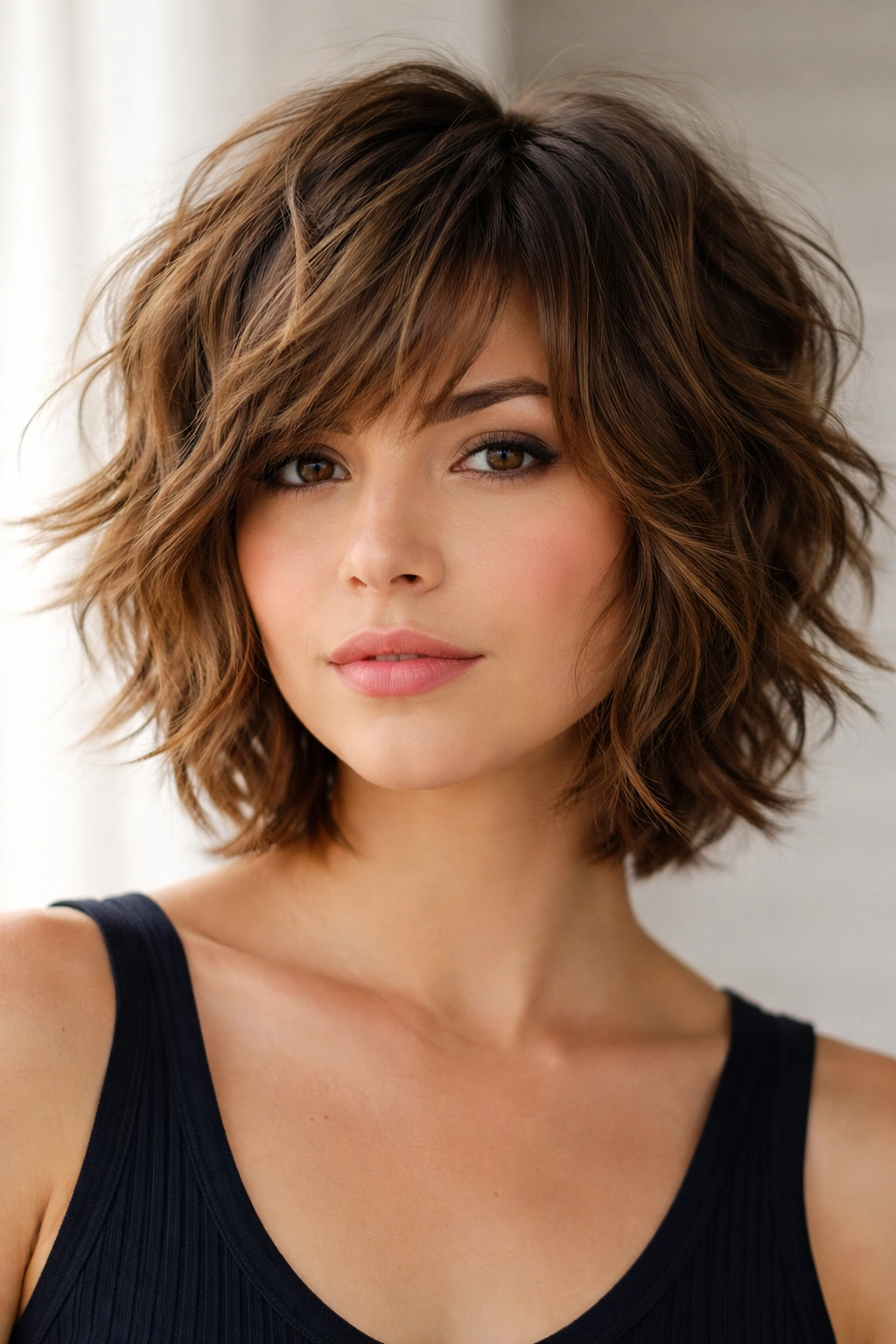
Think of this as a modern take on the classic shag—short all over, but with seriously choppy, choppy layers that create that tousled, lived-in texture. Shaggy layers are phenomenal for round faces because each individual layer catches light differently, creating visual depth and breaking up the roundness. The messier it looks, the more dimension you’re getting.
How Shag Layers Create Definition
Shag cuts work because they’re all about movement and texture rather than sleekness. For a round face, that means the eye travels along the wavy lines of the cut rather than following the rounded contour of your face. It’s the texture doing the visual work of restructuring your proportions.
Best Practices for Shag Styling
- Apply a curl-defining cream or mousse to damp hair and scrunch upward to encourage wave formation before air-drying
- Consider using a diffuser on medium heat to speed up drying while maintaining softness
- Flip your head upside down while styling to build volume at the roots—this creates the height you need
- Refresh texture between washes with a texture spray or sea salt spray to reactivate the wave pattern and add grip
Pro tip: This cut actually gets better with a little bit of texture product and bedhead styling—resist the urge to smooth everything down or make it perfect.
3. The Face-Framing Lob with Asymmetrical Waves
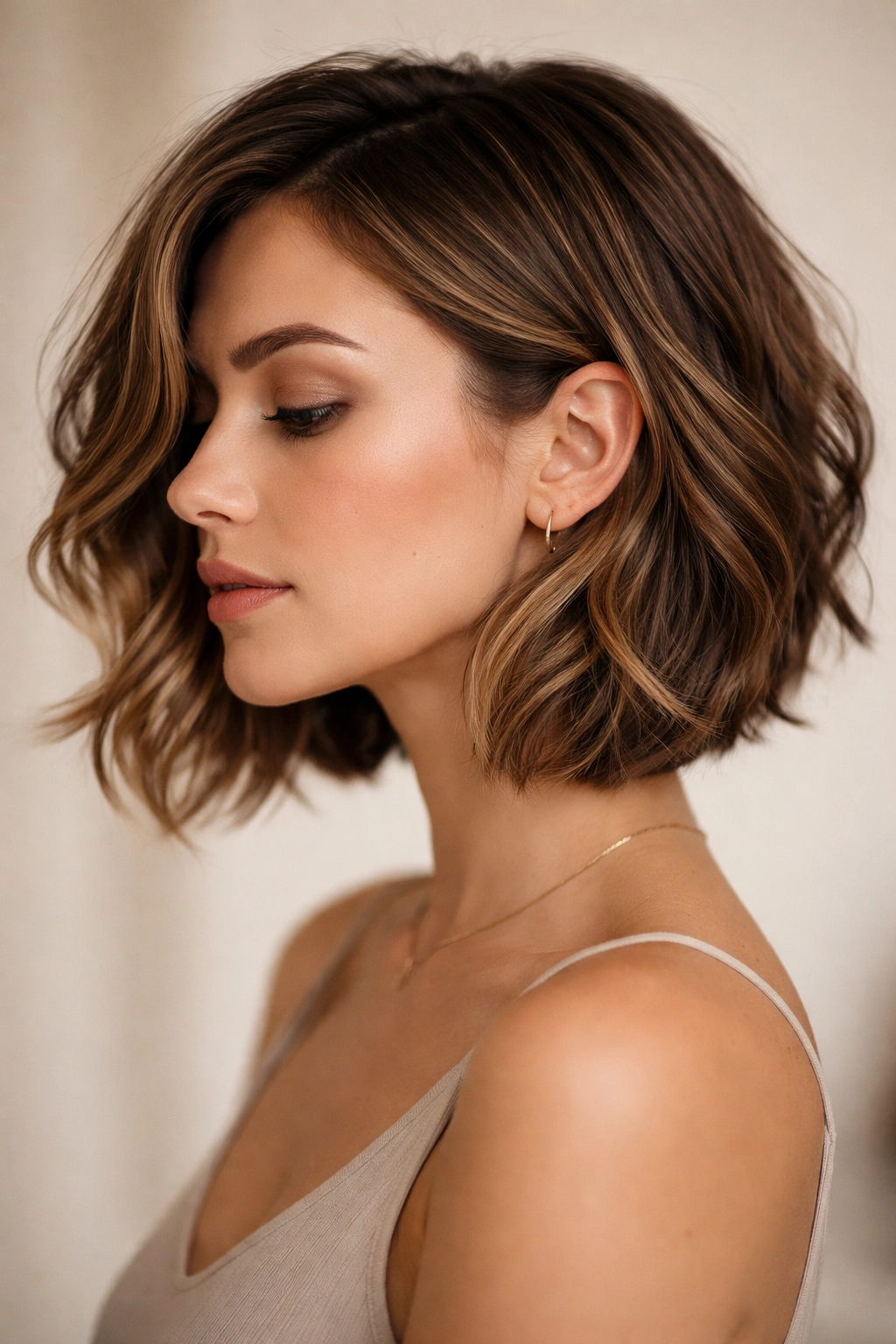
A lob (short for long bob) that sits right at or slightly below the chin gives you more length to work with than a true pixie while still reading as “short.” The magic for round faces comes when your stylist cuts it with intentional asymmetry—one side slightly longer or more textured than the other. This immediate asymmetry tricks the eye into perceiving your face as more angular.
Why Asymmetry Matters for Round Faces
An asymmetrical cut interrupts the circular line of a round face by introducing diagonal lines instead. That one longer side or textured area pulls the eye sideways, making your face appear less circular and more defined. Waves amplify this effect by adding visual texture along those asymmetrical lines.
Styling an Asymmetrical Wavy Lob
- Part deeply on one side to amplify the asymmetry—the deeper side should be over the longer or more textured section
- Use a barrel brush or round brush to gently encourage your waves to curve away from your face, creating face-framing movement
- Apply a smoothing serum or light styling oil to the ends to enhance shine and definition without weighing waves down
- Air-dry is absolutely an option, but using a diffuser blow dryer gives you more control over wave direction
Worth knowing: The deeper your part and the more you lean into the asymmetry, the more effective this style becomes at balancing round face proportions.
4. The Cropped Wavy Bob with Undercut
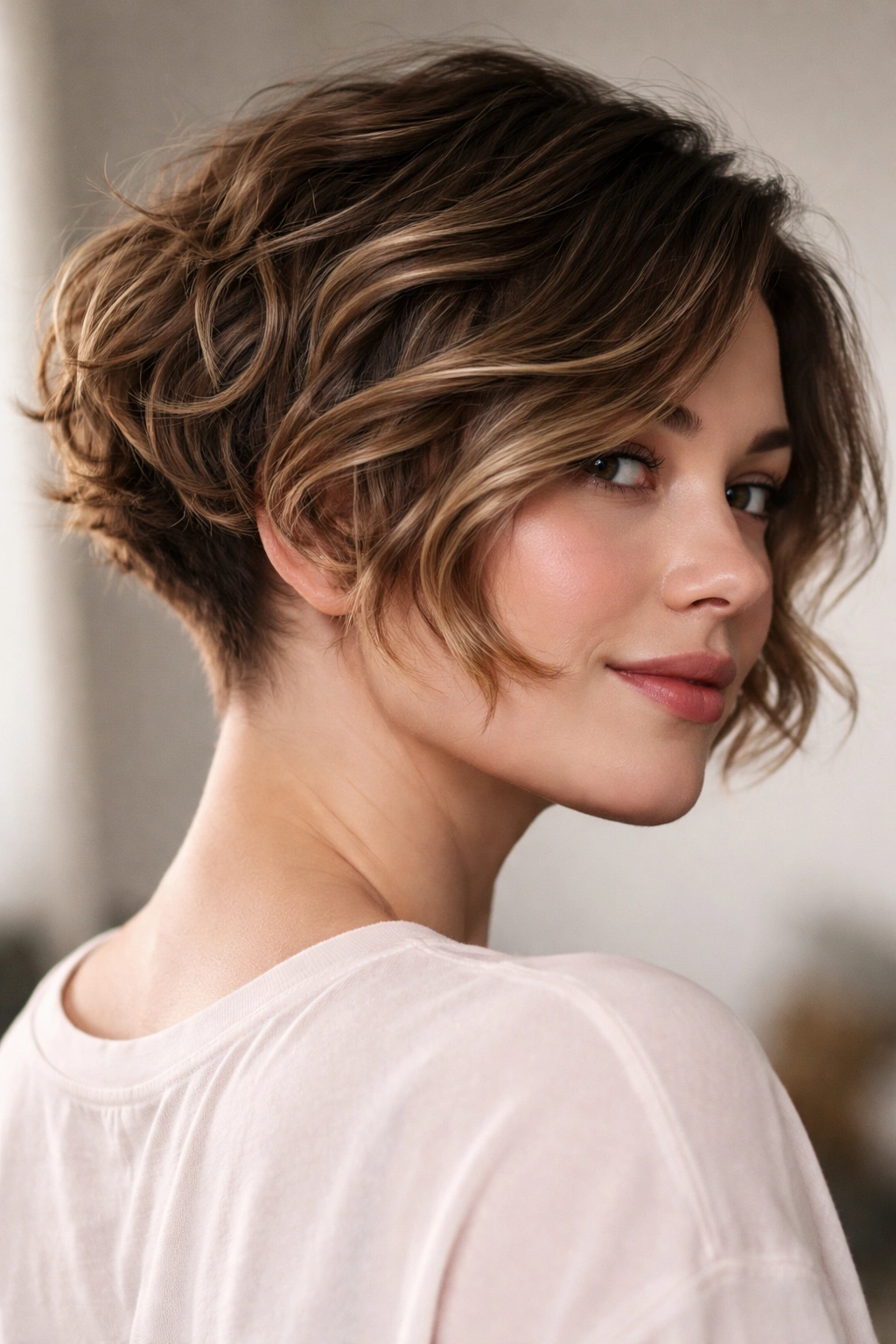
A cropped bob—shorter in the back, slightly longer in the front—paired with a subtle undercut creates shape while your wavy texture adds softness. The undercut (clippered or very closely cut underneath) creates a distinction between the longer top layers and the closely cut underneath, which adds dimension and visual interest. For round faces, that layering effect is crucial.
How Undercuts Add Dimension
An undercut gives you the textural contrast that makes wavy hair look even more dimensional. It’s like creating a built-in shadow and highlight system within your cut. The visible texture on top sits against the cleaner lines of the undercut, making the whole thing feel more sculpted and less rounded.
Achieving the Best Results
- Ask your stylist to keep the undercut very subtle—you want to see it when your hair is styled back or flipped, but it shouldn’t be a bold statement
- Use a lightweight volumizing spray on the crown to encourage wave height and movement
- Style by blow-drying with a diffuser or using a curling iron on the larger waves to encourage defined texture
- The undercut requires maintenance every 3-4 weeks as it grows out, so factor that into your commitment level
Real talk: This cut requires you to actually style it—it doesn’t work as well if you’re just air-drying. Plan for a few minutes with heat styling tools.
5. The Wolf Cut for Short, Wavy Hair
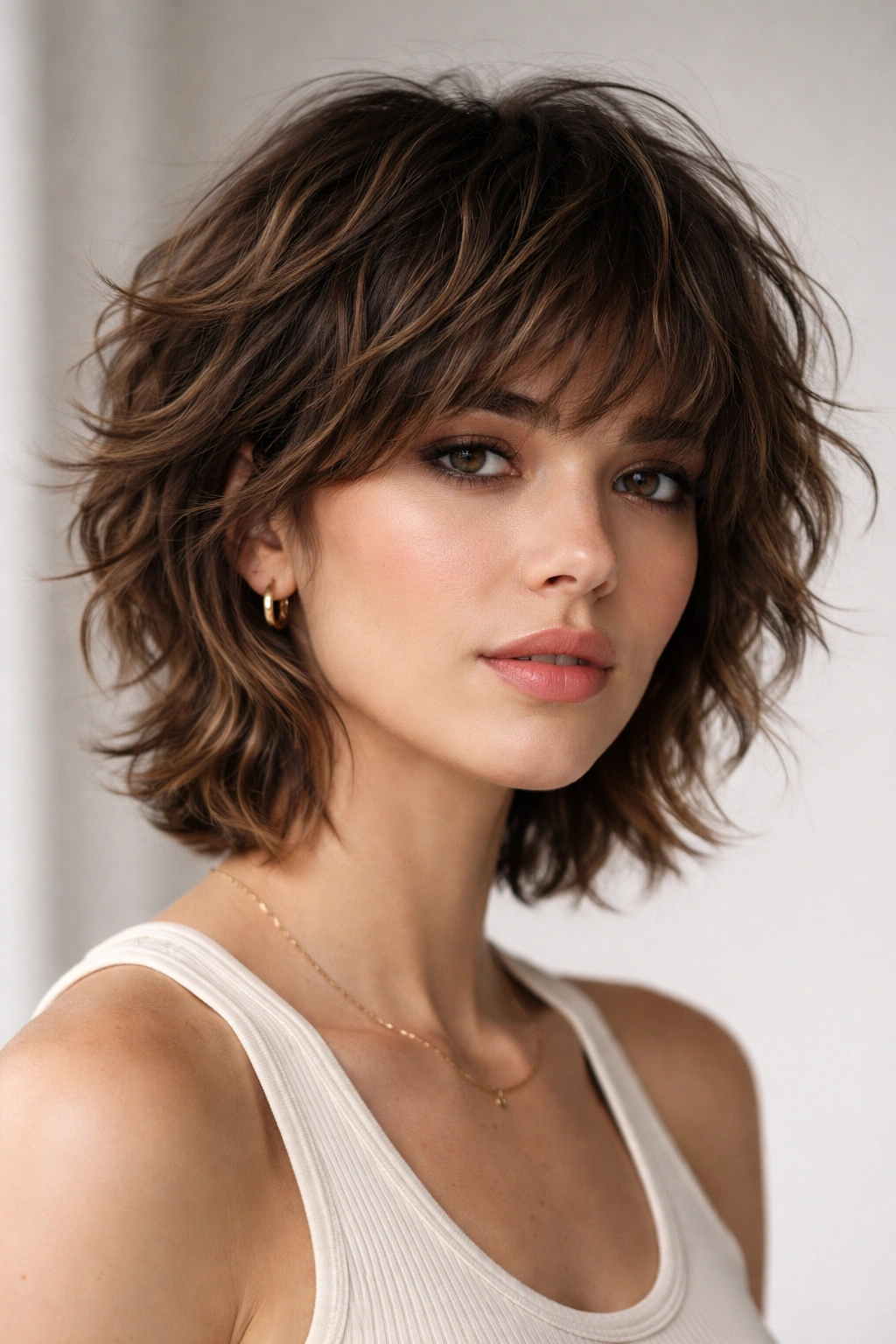
A wolf cut combines the choppy, feathered texture of a shag with the shorter, blunter silhouette of a crop—it’s edgy and textured, with lots of movement throughout. For round faces, all those choppy layers create visual chaos that breaks up the circular shape beautifully. It’s a statement cut, but it absolutely works.
The Texture Advantage of Wolf Cuts
Wolf cuts are all about creating movement and volume through aggressive layering. Every layer moves independently, creating depth and dimension that translates to visual definition. For round faces, that constant texture motion is exactly what you want—it distracts from roundness and emphasizes shape instead.
Styling Your Wolf Cut
- Apply a texturizing mousse or curl cream to soaking wet hair and scrunch vigorously to activate your wave pattern
- Use a diffuser on medium-high heat, tilting your head and moving the diffuser to different angles to build volume all over
- Finish with a texture powder or dry shampoo at the roots for extra grip and hold
- Don’t be afraid to tousle and reshape throughout the day—this cut actually looks better with a little bit of controlled mess
Pro tip: The wolf cut trend varies in intensity. You can ask for a more subtle version if you’re not ready to commit to the super-choppy, statement-making version—it’ll still give you the benefits for round face shapes.
6. The Sideswept Bangs with Wavy Layers
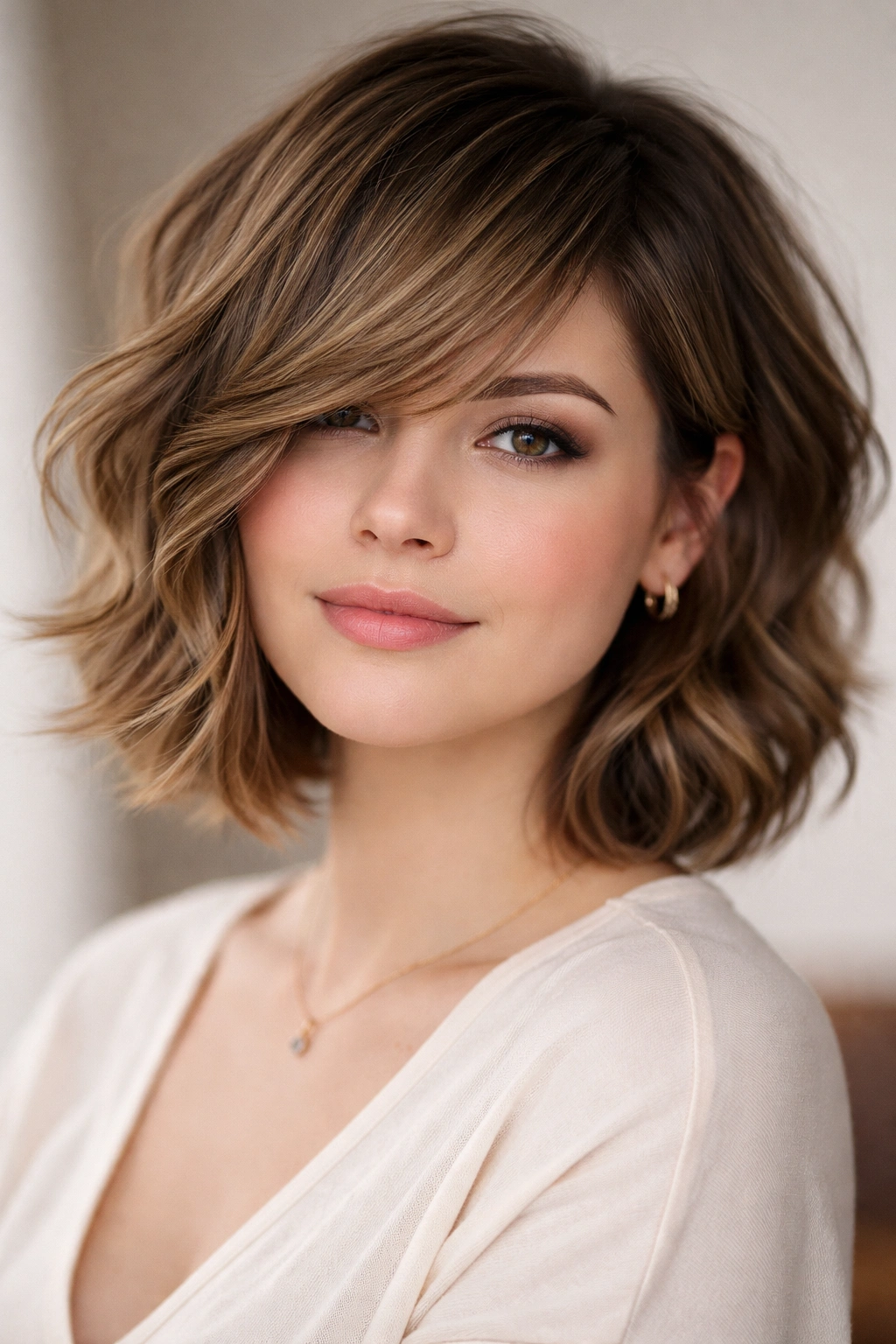
Sideswept bangs create an immediate angle that flatters round faces by introducing a strong diagonal line across your forehead. Pair those bangs with wavy layers throughout the rest of your short hair, and you’ve got a hairstyle that works from multiple angles. The bangs draw attention upward and at an angle, while the wavy layers below add texture and movement.
Why Bangs Help Round Face Shapes
Bangs—especially sideswept bangs—interrupt the widest part of your round face by covering or reshaping that area. They create a line that’s not horizontal, which is exactly what a round face doesn’t need. When combined with waves that add dimension, you get a style that looks intentional and flattering rather than accident-prone.
Maintaining Sideswept Bangs
- Trim bangs every 2-3 weeks to maintain the sideswept angle and prevent them from becoming flat or straight
- Use a lightweight texture spray on the bangs to help them hold their swept position without looking weighed down
- Style bangs last, after the rest of your hair is set—they need to sit in the right direction, so don’t apply product before you know where they’ll naturally fall
- Keep bangs out of your face on days when you don’t have time to style—they won’t look good just air-dried
Worth knowing: Sideswept bangs work best on people who’re willing to style them intentionally. If you prefer wash-and-go hair, this might not be your best choice.
7. The Graduated Wavy Bob
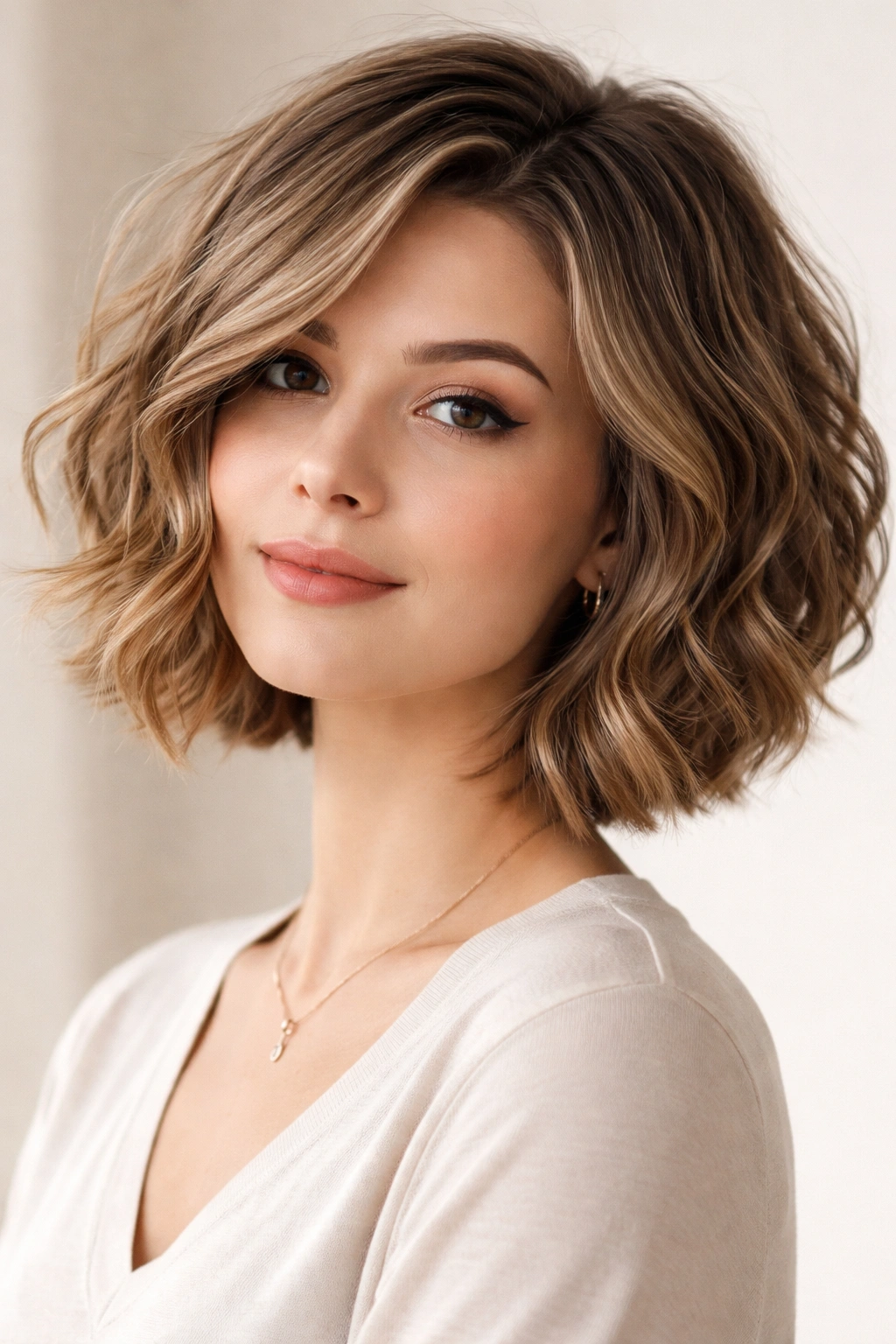
A graduated bob is shorter in the back and progressively longer toward the front, creating a curved silhouette. The waves add texture to this curved shape, but the graduation (the length progression) is what helps round faces—it creates angles and prevents the circular shape from being emphasized. The front pieces frame your face while the texture adds dimension.
How Graduation Improves Proportions
A true graduated bob isn’t blunt; it’s a gentle progression of length that creates visual movement and direction. For round faces, that directional movement (upward and outward) counteracts the natural horizontal emphasis of a rounded face shape. Add waves, and you’ve got even more visual texture and depth.
Styling Your Graduated Wavy Bob
- Blow-dry with a round brush, curling the front pieces away from your face and styling the back layers upward for maximum volume
- Apply a light shine serum to the ends to enhance definition without weighing the waves down
- Use a curling iron to enhance or reset waves as needed, focusing on the front-facing pieces that frame your face
- This cut works well air-dried if you have naturally bouncy waves, but intentional styling makes the graduated shape even more flattering
Pro tip: The longer your front pieces, the more face-framing action you get—but don’t let them extend so far that they lose the “short” quality of the cut.
8. The Textured Crop with Volume at the Crown
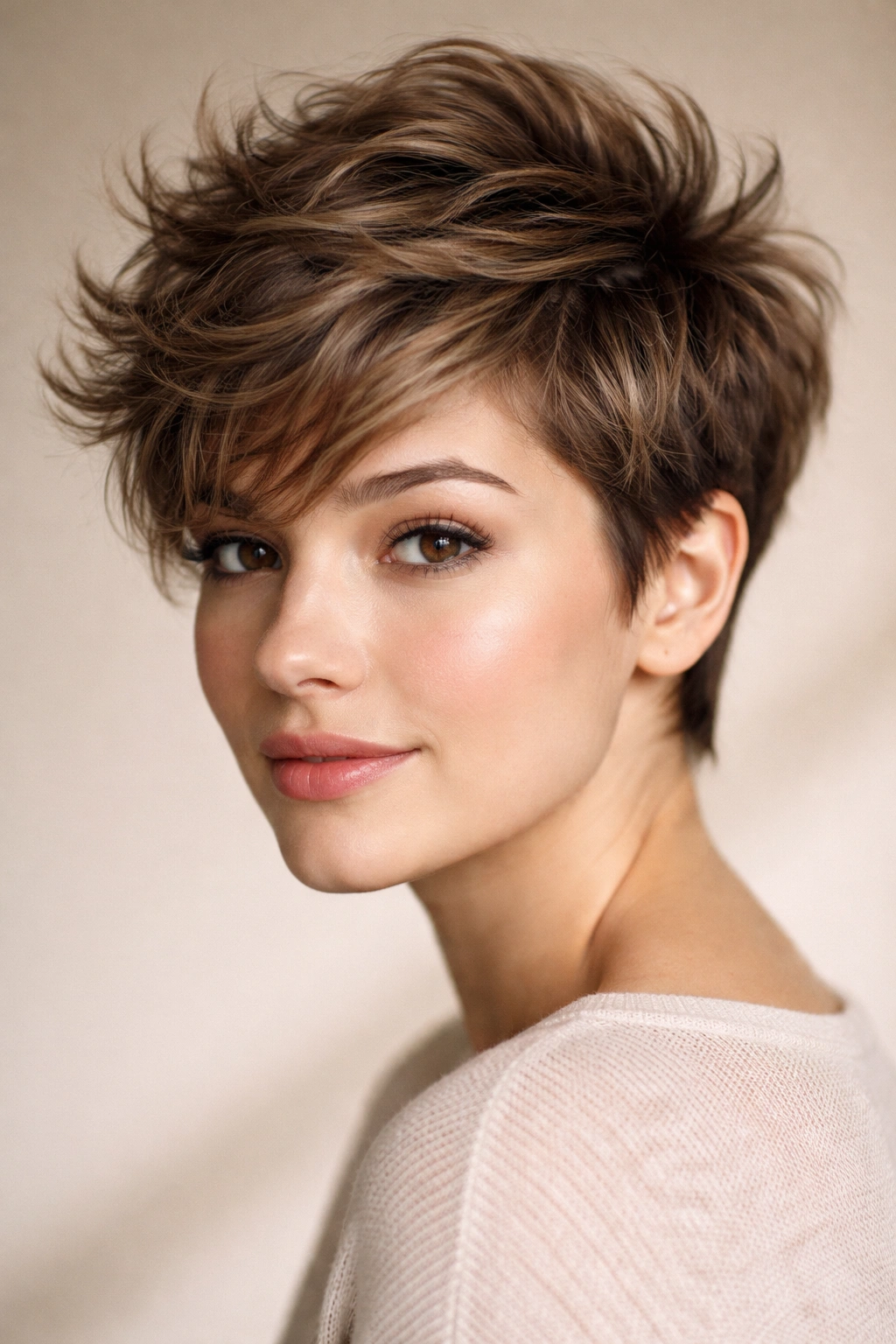
A short, textured crop keeps everything close to your head but with substantial volume built into the crown area. This is a more masculine-leaning cut that’s been softened by intentional texture and wavy movement. For round faces, that crown volume is crucial—it pulls the eye upward and away from the wider parts of your face.
Why Crown Volume Matters Most
The crown is where you build lift and height that visually elongates your face. A textured crop makes this easy because the shorter overall length makes volume more dramatic and noticeable. Even an inch of extra height at the crown can significantly shift how your face proportions read.
Creating and Maintaining Volume
- Ask your stylist to cut shorter on the sides and back, with more length reserved for the crown area
- Blow-dry with a volumizing mousse applied to damp roots, using a blow dryer in an upward direction to train volume upward
- Apply a texture spray or dry shampoo specifically at the roots and crown area for grip and lift
- Sleep on your back or on silk to avoid flattening the crown overnight
Real talk: Achieving crown volume requires some intentional styling—it won’t happen with air-drying alone unless you have incredibly bouncy natural waves.
9. The Wavy Pixie Bob Hybrid
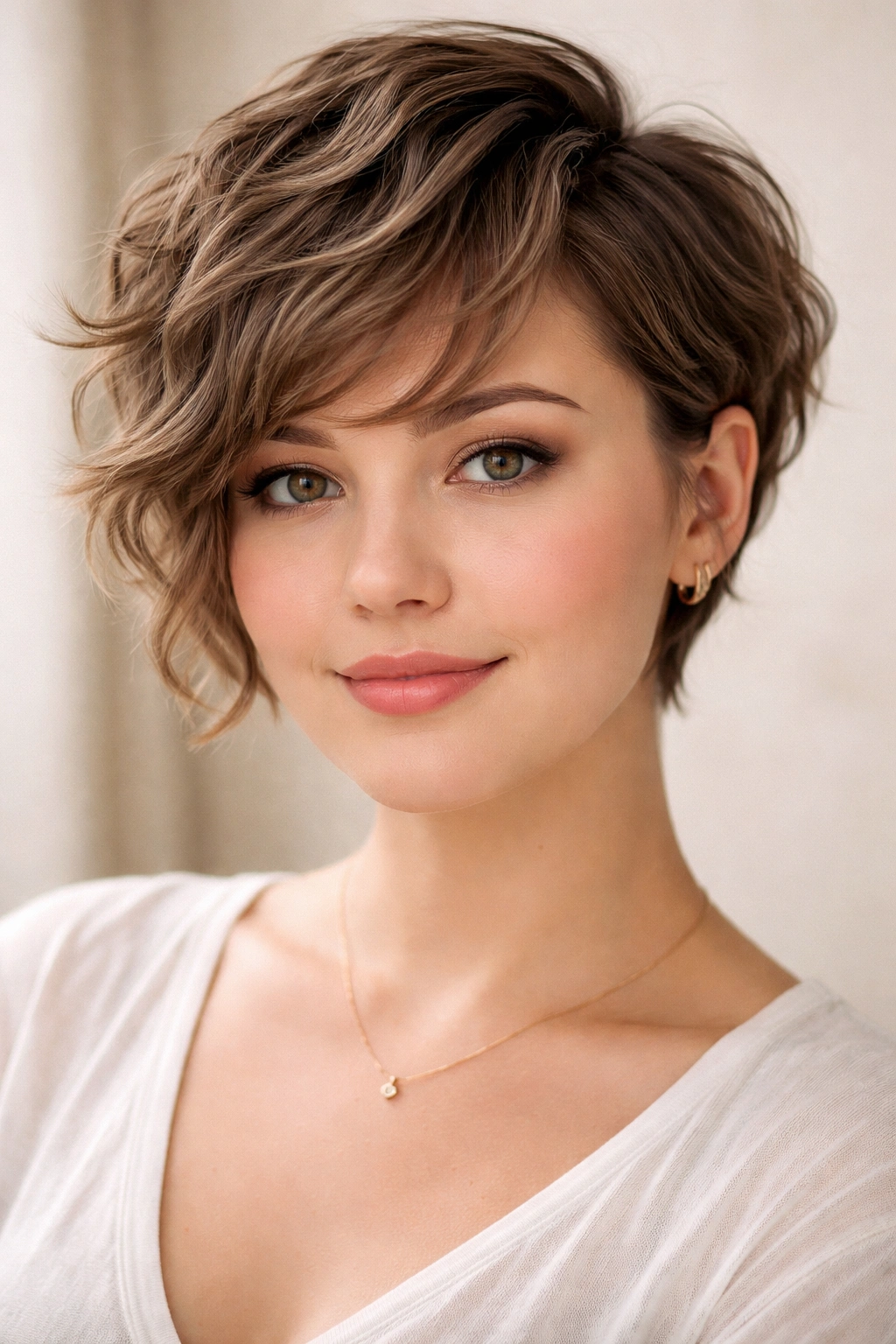
This style lives somewhere between a pixie and a bob—short everywhere, but with slightly longer pieces framing the face and the crown area left a bit longer than the sides and back. The wavy texture throughout prevents it from looking masculine or severe. For round faces, those slightly-longer framing pieces and crown height are exactly what you need.
The Best of Both Worlds
A pixie-bob hybrid gives you the ease of maintenance of a pixie cut (short, manageable, no styling required to look neat) with the face-flattering properties of longer pieces and waves. It’s a compromise that works for people who want short hair but aren’t ready for a true pixie cut.
Maintaining Your Pixie-Bob Hybrid
- Trim every 4-5 weeks to maintain the distinction between the longer crown and frame pieces and the shorter sides
- Style by applying a light volumizing mousse to damp hair and air-drying, or use a diffuser blow dryer to enhance waves
- Use a texture spray for a lived-in look that takes seconds to apply
- This cut genuinely works air-dried if your waves are naturally cooperative
Worth knowing: This is a great intermediate style if you’re considering going shorter but aren’t quite ready to fully commit to a pixie cut’s extreme shortness.
10. The Choppy Layered Shag with Long Bangs
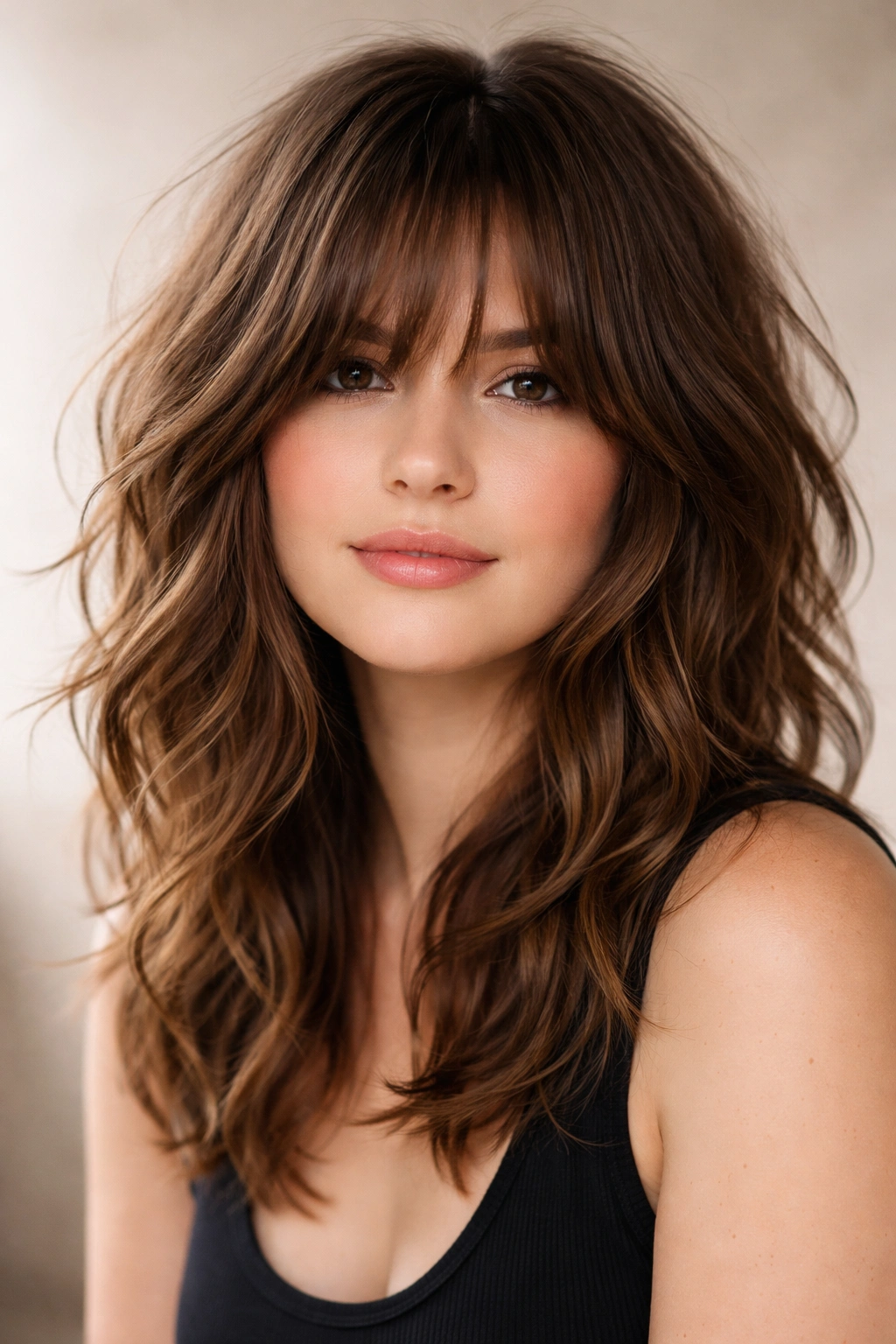
A shag cut where the bangs are intentionally left longer than typical—close to jawline length or even shoulder-length depending on your overall cut length—creates immediate face-framing without being a traditional bang. The choppy layers throughout create texture while those longer bangs soften the look and frame your face beautifully.
How Long Bangs Change the Game
Long bangs (sometimes called long layers or curtain bangs in the shag context) create a frame around your face that’s deeply flattering for round shapes. Instead of covering your forehead, they frame your cheeks and jaw, drawing attention to those areas rather than emphasizing roundness. The waves make these bangs look intentional and textured rather than awkward during the grow-out phase.
Styling Long-Banged Shag Cuts
- Apply a curl-defining cream or mousse to damp hair and scrunch to encourage wave formation
- Use a diffuser blow dryer, scrunching upward and rotating to build volume all over, including the bangs
- Part your hair naturally or at a side part—the long bangs should frame both sides of your face somewhat symmetrically
- Refresh texture between washes with a texture spray to maintain that tousled, layered look
Pro tip: Long bangs in a shag cut look better slightly textured and lived-in than perfectly smooth—lean into the undone vibe.
11. The Angled Pixie with Longer Side-Swept Sections
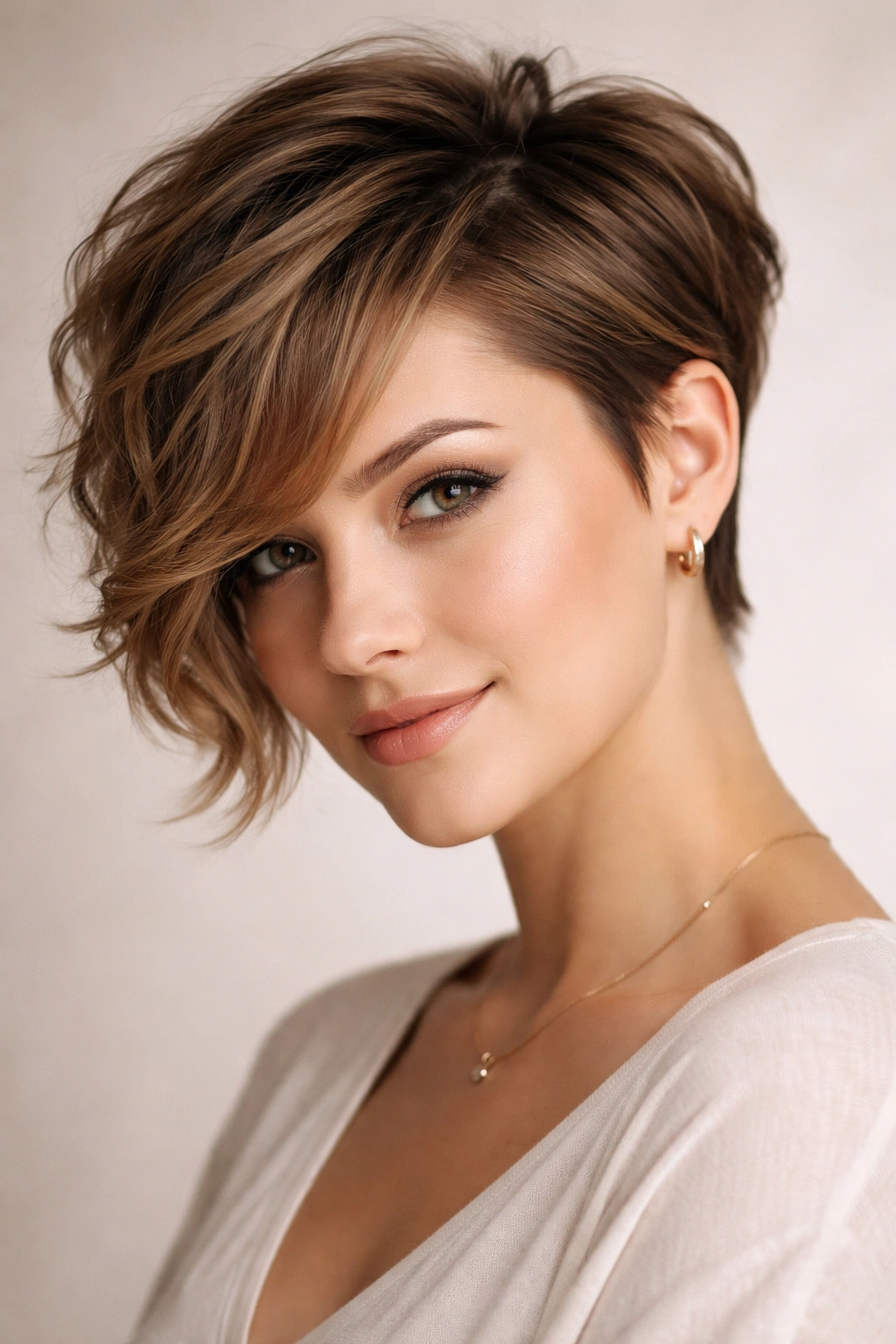
An angled pixie keeps the back and one side very short while allowing more length to grow on the opposite side, particularly around the face. This creates a dramatic angle that’s deeply flattering for round faces because it introduces multiple directional lines. The waves add even more texture and movement along those angles.
Why Angles Beat Symmetry for Round Faces
Symmetry emphasizes the natural symmetry of a round face shape—not what you want. Angles interrupt that symmetry and create visual interest that draws attention away from roundness. An angled pixie does this dramatically, and the wavy texture amplifies the effect.
Styling an Angled Pixie
- Part on the side where your hair is longest, sweeping it across and back to emphasize the angle
- Use a volumizing cream or texture spray on the longer side sections to enhance movement
- Blow-dry using a concentrator nozzle to direct the longer sections where you want them
- This cut requires more frequent trims (every 3-4 weeks) to maintain the sharp angle, so factor that in
Real talk: An angled pixie is a statement cut. It’s bold and requires you to own it with confidence, but it’s incredibly flattering for round faces.
12. The Tousled Wavy Bob with Undercut Detail
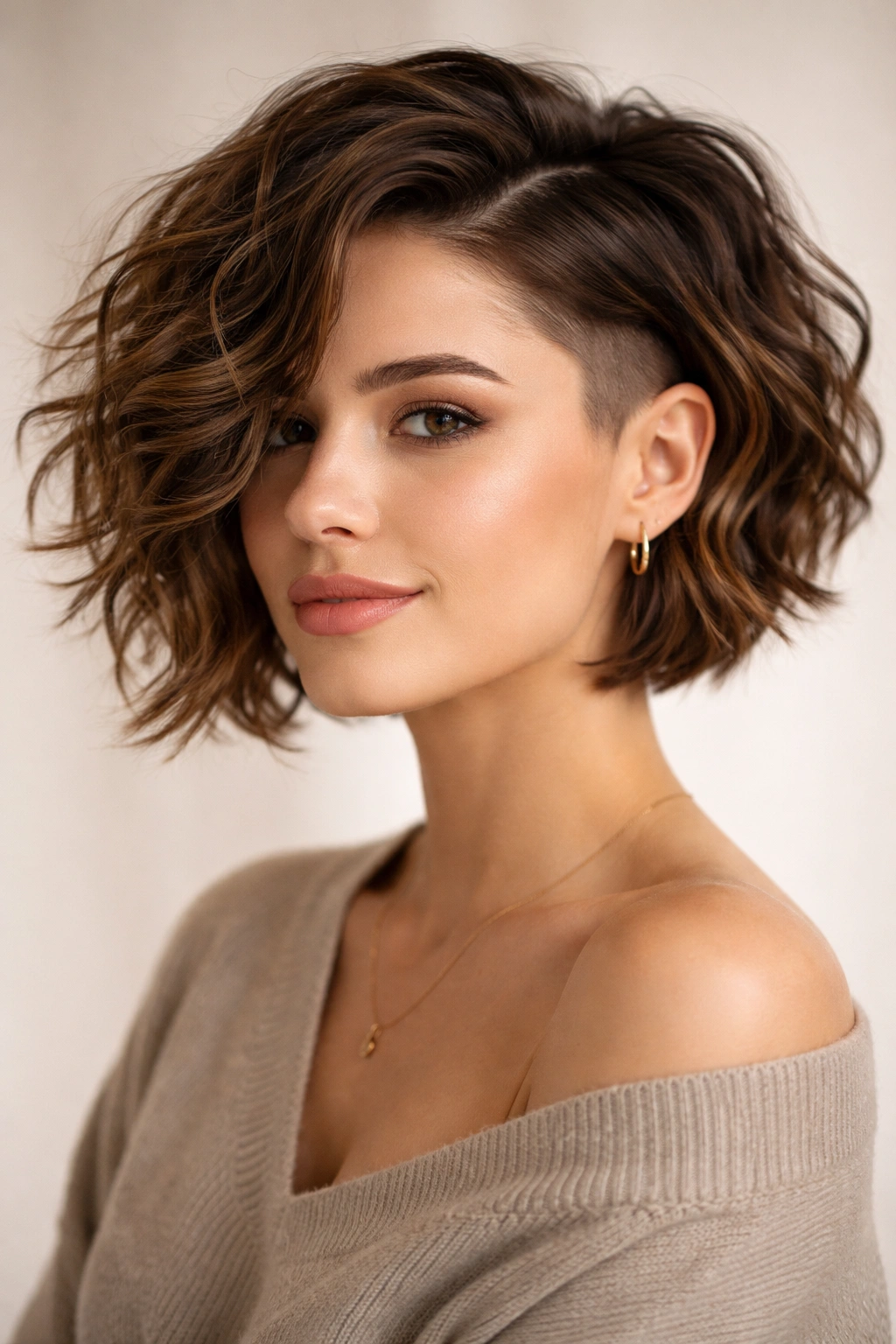
A short bob with subtle undercut detail and intentionally tousled waves hits the sweet spot between easy-to-maintain and truly flattering. The undercut (again, subtle, not shaved) adds dimension, while the tousled waves prevent the cut from looking too polished or formal. For round faces, that tousled quality is key—a perfectly smooth bob would emphasize roundness, but wavy texture breaks it up.
The Power of Tousled Texture
“Tousled” means your waves are intentionally disheveled and textured, which creates the visual effect of movement and dimension. For round faces, that constant visual movement is your friend. It prevents the eye from settling on the rounded shape and instead focuses on the texture and movement.
Getting That Tousled Look Right
- Blow-dry with a diffuser, scrunching as you go, but don’t aim for defined, tight waves—aim for loose, broken-up texture
- Apply a texture spray or texture cream after styling to enhance the tousled appearance and add grip
- Use your fingers to gently separate and break up waves throughout the day to maintain that lived-in texture
- Embrace a little bit of frizz and messiness—it’s the point of this style
Worth knowing: This style absolutely requires a texture product to look intentional rather than accidental. The tousled quality comes from product and intention, not just air-drying.
13. The Side-Parted Wavy Lob with Layers
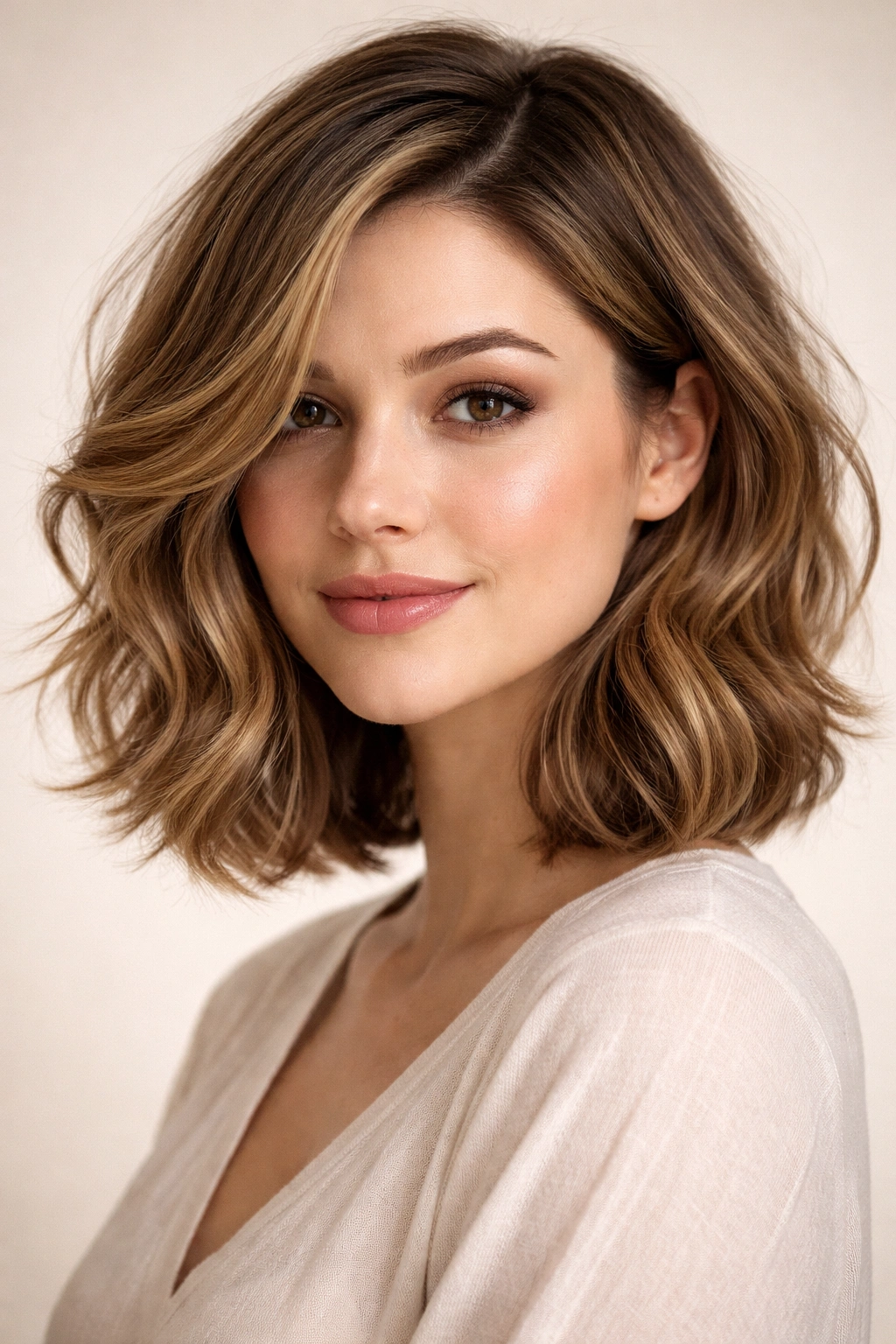
A side-parted lob that sits around chin-length with strategic layers throughout balances round faces beautifully. The side part creates an immediate angle across your forehead, while the layers add texture and movement throughout. The waves enhance everything by making even smooth sections look more textured and dimensional.
How Layers Add Definition
Layers in a lob create multiple points of texture and movement. Each layer moves slightly differently, catching light and creating visual depth. For round faces, that depth is everything—it makes the face appear more sculpted and less flat.
Styling Your Layered Wavy Lob
- Part deeply on one side, sweeping hair across to emphasize the angle created by that part line
- Use a barrel brush to gently curl the ends away from your face, creating face-framing movement
- Apply a lightweight smoothing serum or shine spray to enhance texture definition
- This cut can be air-dried if you have cooperative waves, but blow-drying with a diffuser gives you more control over direction
Pro tip: The deeper your side part, the more flattering the angle becomes—don’t settle for a center part with this style.
14. The Feathered Wavy Crop
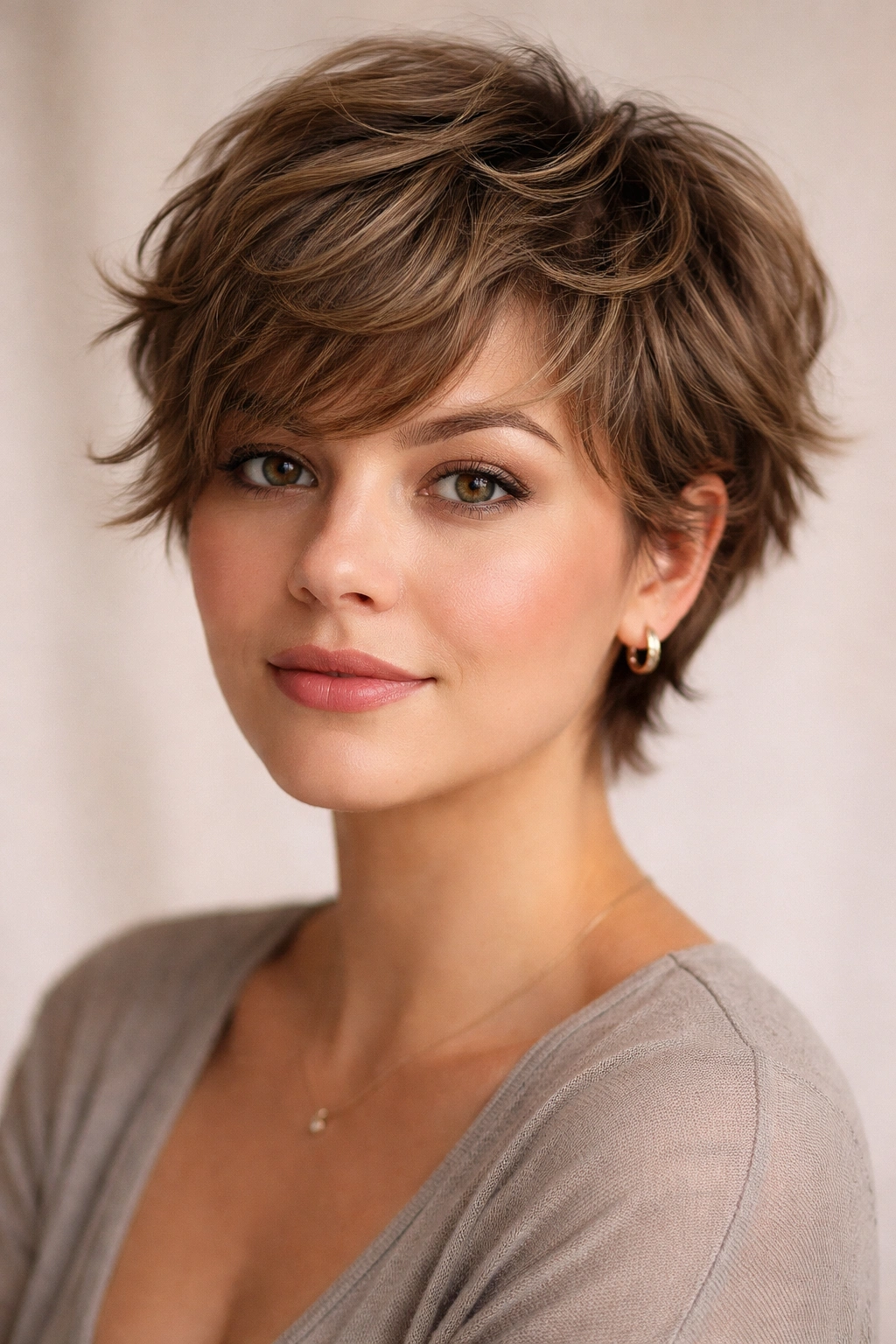
A feathered crop is short overall but with feathered layers (meaning each section is cut shorter than the length beneath it, creating a light, feathery appearance). The feathering creates movement and texture while keeping the overall style short and manageable. For round faces, that feathered texture is exactly what you want—light, airy, dimensional.
The Lightness of Feathering
Feathered layers are all about creating the illusion of movement and texture without bulk. They’re cut at angles that encourage your waves to move in different directions, which breaks up the flat, round appearance. Even thin or fine hair can look textured and dimensional with good feathering.
Maintaining Your Feathered Crop
- Trim every 4-6 weeks to keep the feathered shape from growing out into a shag (unless that’s your goal)
- Style with a volumizing mousse or texture spray applied to damp hair before air-drying or blow-drying with a diffuser
- Use your fingers to separate and arrange layers in different directions as you’re styling for maximum texture
- This cut works well with minimal styling but benefits from intentional texture product
Worth knowing: Feathered cuts are best maintained by a stylist who understands feathering technique—not all stylists approach it the same way.
15. The Tousled Wavy Mullet (Modern Interpretation)
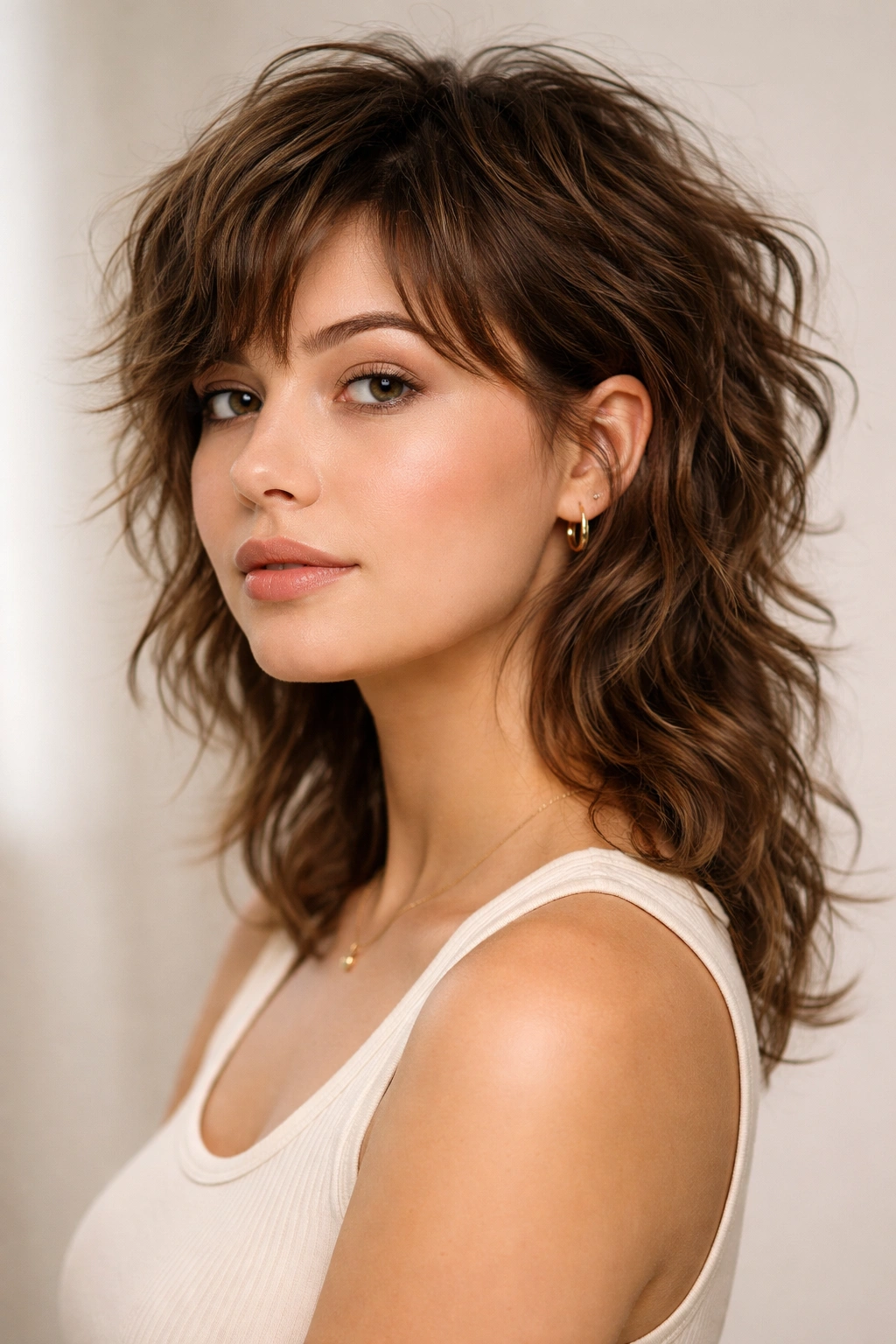
A modern wavy mullet keeps things short in front and gradually gets longer toward the back, with waves throughout creating texture and movement. This is a contemporary take on the ’80s mullet—it’s definitely more fashion-forward and editorial—but it genuinely works for round faces because the shorter front pieces frame your face while the length in back adds depth and prevents frontality.
Why a Modern Mullet Actually Works for Round Faces
The shorter front pieces mean less bulk around your face, which helps prevent the rounding effect. The length in back creates visual depth and keeps the style from reading as “top-heavy.” The waves throughout add texture that prevents any part of the cut from looking flat or two-dimensional.
Styling a Wavy Mullet
- Style the front pieces with a volumizing mousse for lift and movement away from your face
- Apply a texture spray throughout to enhance the wavy pattern and create definition between sections
- Blow-dry the front pieces upward and outward, the sides smoothly, and the back with more relaxed movement
- This cut requires some styling intention—it won’t work well left completely natural
Real talk: A modern mullet is definitely a statement style. If you’re ready to lean into a bold, fashion-forward look and you’re comfortable with regular styling, it’s genuinely flattering for round faces.
Final Thoughts

The best short wavy hairstyle for your round face isn’t the one that looks best on someone else—it’s the one that matches your lifestyle, your natural texture, and your willingness to style it intentionally. What all 15 of these styles have in common is that they use wave texture and strategic cutting techniques (layering, undercuts, angles, volume at the crown, or asymmetry) to create visual dimension that balances a round face shape.
Remember that your round face isn’t a flaw that needs correcting—it’s a face shape with its own beauty and charm. These styles aren’t about hiding your face; they’re about creating the visual proportions and movement that make your features look their absolute best. The waves do most of the heavy lifting for you, adding texture and dimension naturally without requiring you to fight your hair’s natural pattern.
Start with a stylist who genuinely understands both wavy hair and face-shape-specific cutting. A cut that’s designed with your face shape in mind, combined with waves that actually suit your hair type and texture, is what creates a style you’ll love. Be honest about your styling commitment level—some of these cuts thrive with minimal products and air-drying, while others require intentional blow-drying and texture products. Neither is wrong; it’s just about knowing yourself and choosing accordingly. The perfect style is the one you’ll actually wear.