



Long wavy hairstyles have a way of making a statement that feels both effortless and intentional at the same time. When you pair those flowing waves with rich black hair, you’re working with one of the most versatile and flattering combinations available—the deep color creates incredible contrast and depth while the wavy texture adds movement and dimension that draws light throughout the length. Black hair shows off wave definition beautifully, and waves in black hair tend to look fuller, richer, and more deliberate than they might in lighter shades.
The beauty of long wavy styles in black is that they work across different hair types, face shapes, and personal aesthetics. Whether you’re drawn to beachy, relaxed waves or more structured, defined texture, there’s a long wavy option that’ll feel authentically you. Some styles lean into romantic and soft, while others embrace bold texture and movement. Some work best with layers that create dimension, while others showcase the impact of length and seamless waves all the way down.
Finding the right long wavy hairstyle means thinking beyond just the wave pattern itself. You’ll want to consider how layers, bangs, highlights, and texture placement can completely change the vibe of your style. The way your stylist cuts and pieces your hair matters as much as the waves themselves—a choppy cut creates a totally different energy than blended layers, even when the wave pattern looks similar.
1. Long Wavy Layers with Side Bangs
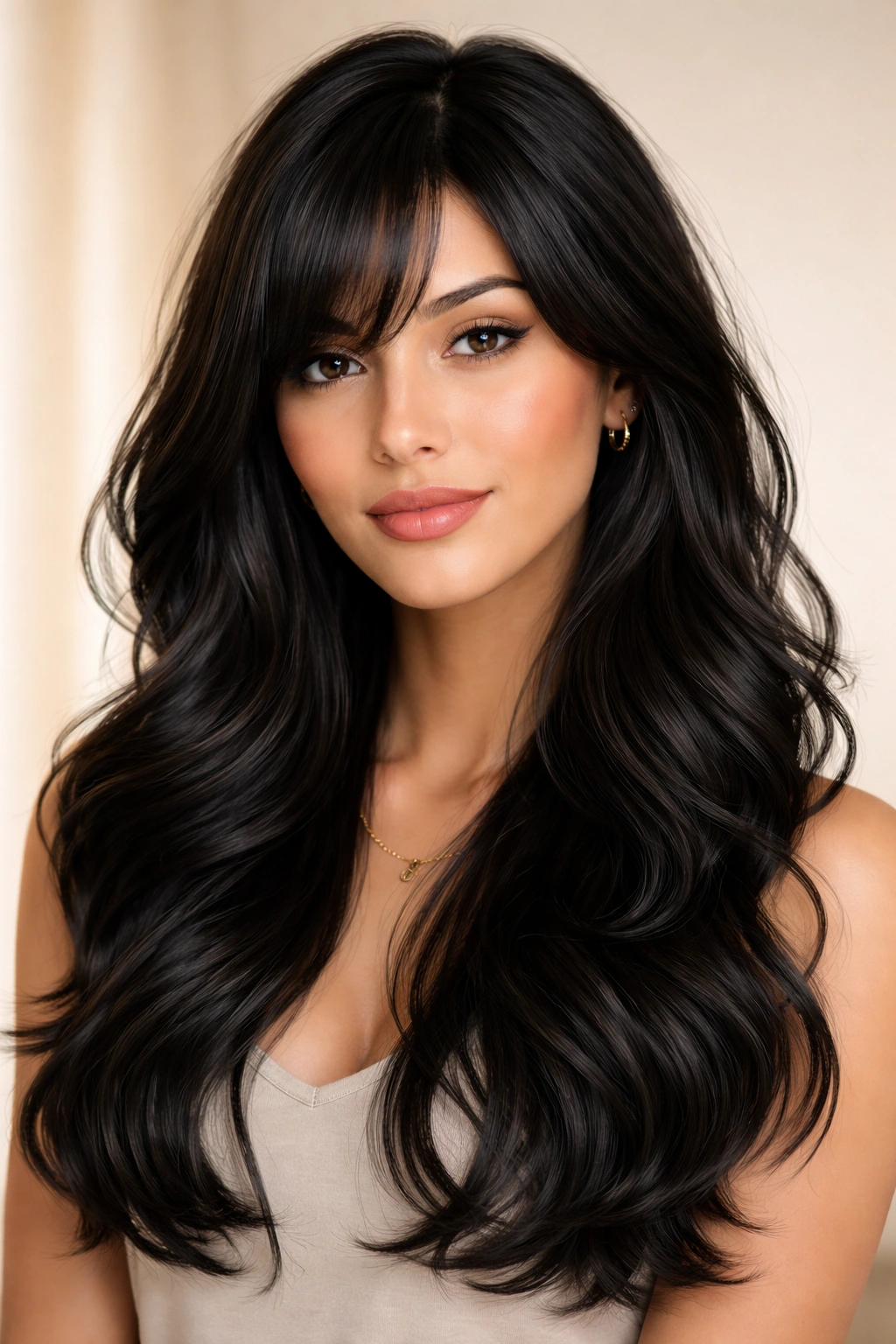
This style combines face-framing layers throughout with a soft sweep of side bangs that graze the cheekbones, creating a romantic and slightly undone look that’s incredibly wearable. The layers start around mid-length and graduate to longer pieces in the back, giving the waves room to move and creating natural movement from the roots all the way down. The side bangs add softness to the face without committing to a full fringe, making this style adaptable to different face shapes and features.
What Makes This Style Stand Out
The layering in this cut is what transforms long waves from flat to dynamic. Layers help wavy hair find its natural movement faster and make styling easier because you’re already working with texture that wants to fall in the right direction. With side bangs, you’re adding a styling element that changes the entire feel of the look—it moves away from “simple waves” and into something more intentional. The side bang placement also has a subtle face-slimming effect and can help balance wider foreheads or square jawlines.
How to Achieve and Maintain It
- Ask your stylist for layers starting at mid-length, with each layer about 2 inches shorter than the one beneath it
- Request side bangs that are blended into the longer layers, not cut separately—this keeps the style cohesive as it grows
- Use a blow dryer with a diffuser attachment to enhance wave definition after shampooing
- Refresh waves with a curling iron or wand on non-wash days, working section by section
Pro tip: This style benefits from a lightweight waves cream applied to damp hair before blow-drying—it enhances the wave pattern without adding weight that might make layers look limp.
2. Loose Beach Waves with Curtain Bangs
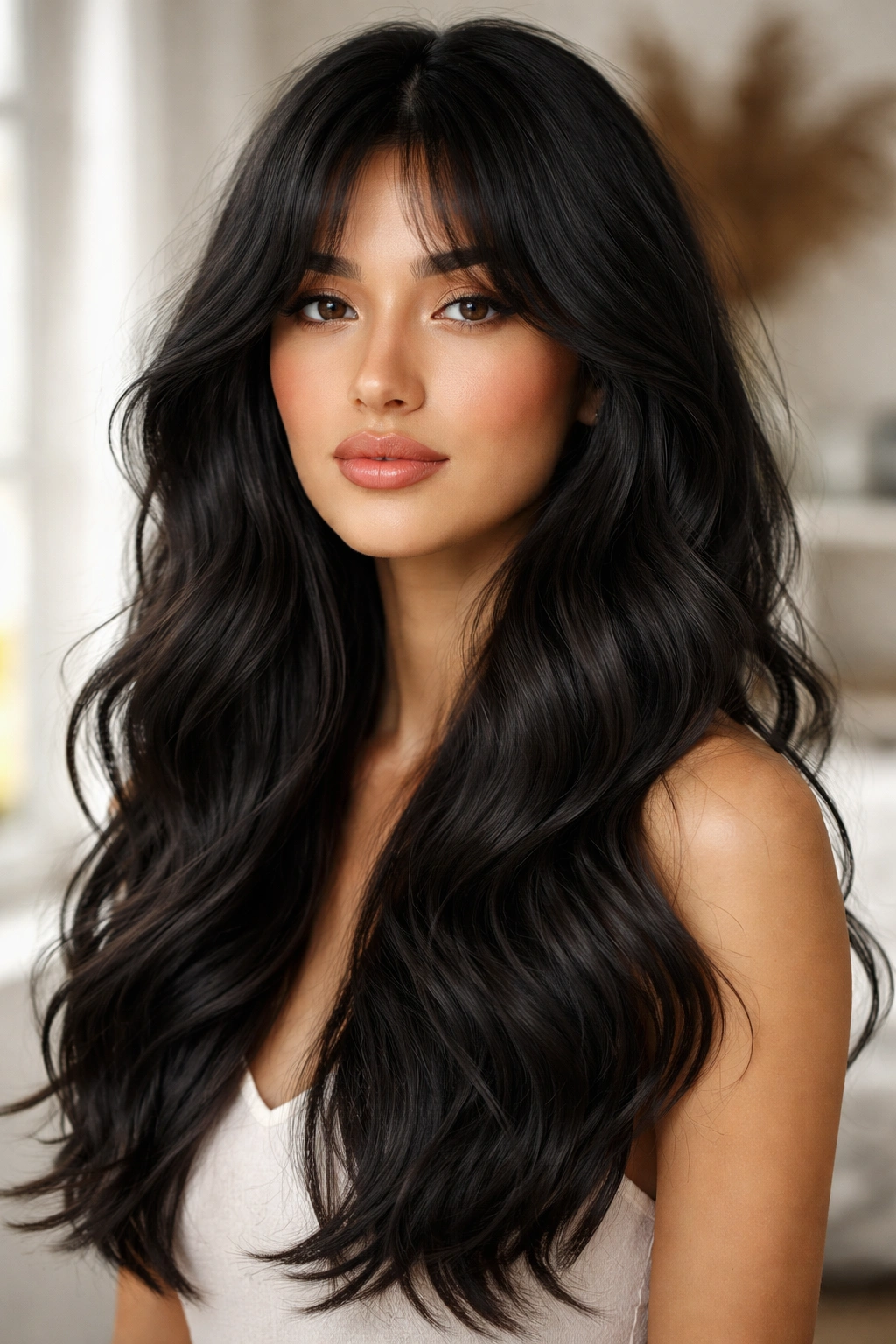
Beach waves are all about texture that feels like you just stepped out of the ocean, even though achieving that look takes intention. Pairing loose, tousled waves with curtain bangs creates a ’90s-inspired, undone aesthetic that feels current and effortless. The waves start from approximately the mid-shaft of the hair and flow all the way down, with slightly looser texture at the ends that softens the overall look. Curtain bangs—parted in the middle and falling to frame both sides of the face—add movement and a retro-inspired element.
Why It Works So Well
Loose beach waves in black hair read as more texture and movement than they might in lighter shades, so the style feels fuller and more intentional. Curtain bangs are incredibly flattering because they work with almost every face shape, don’t require precise daily styling, and they have that inherent movement that reads as modern and cool. The combination of waves and curtain bangs creates a lived-in vibe that actually looks better when it’s not perfectly styled—a little piece out of place makes it more interesting, not less.
Styling and Product Tips
- Apply sea salt spray to damp hair and air-dry, or use a blow dryer on low with your fingers to create loose, piecey waves
- Use a large-barrel curling iron (1.5 inches or wider) for looser wave definition
- Avoid heavy products that flatten the texture—look for lightweight sprays or mousses
- Refresh this style by flipping your head upside down and misting with sea salt spray, then tousling with your fingers
Worth knowing: Beach waves need a little texture to hold their shape. If your hair is very straight and resistant to waves, ask your stylist about a light wave perm or consult about other texture-building options that work with black hair.
3. Defined Wavy Spirals with Subtle Highlights
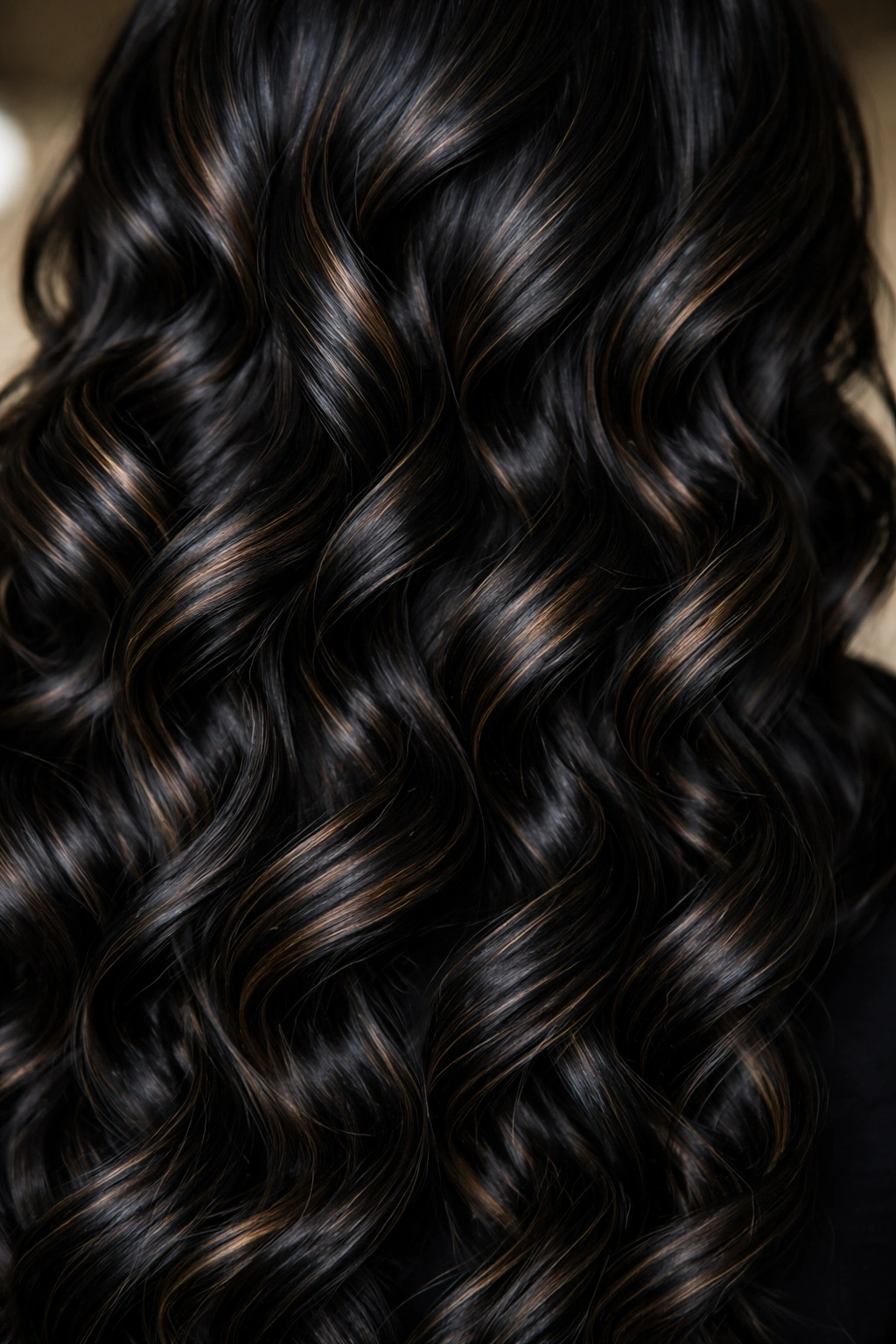
This style leans into deliberate wave definition with consistent spiral waves from root to tip, creating an intentional, structured look that’s different from the softer, more relaxed waves of other styles. The waves are tighter and more uniform, almost like a perm but created through blow-drying, styling, and maintenance. Subtle highlights—thin, carefully placed ribbons of color woven through the black base—add depth and dimension that makes the wave structure even more visible and interesting.
The Visual Impact of Highlights with Waves
Highlights on black hair create shadow and light that makes waves read as more dimensional. When light hits the highlighted pieces in the middle of the waves, it creates this incredible contrast that emphasizes the spiral structure. You don’t need a lot of highlights to create this effect—sometimes 8-12 very thin pieces placed strategically around the head is enough. The highlights might be a warm brown, caramel, honey, or even a touch of copper, depending on your skin tone and preference.
Achieving This at Home and in the Salon
- Book with a stylist who specializes in black hair and has experience with color placement that complements darker bases
- The waves in this style are usually blow-dried with a medium-barrel round brush and set with a light hold hairspray
- Refresh the wave definition between salon visits by blow-drying with a round brush and re-applying lightweight styling cream
- Color maintenance is important—plan for touch-ups every 4-6 weeks depending on the type of highlight placement
Pro tip: If you’re hesitant about permanent highlights, ask your stylist about shadow root highlights or balayage techniques that blend more seamlessly with black hair and require less frequent maintenance.
4. Bouncy Waves with Hidden Underlayer
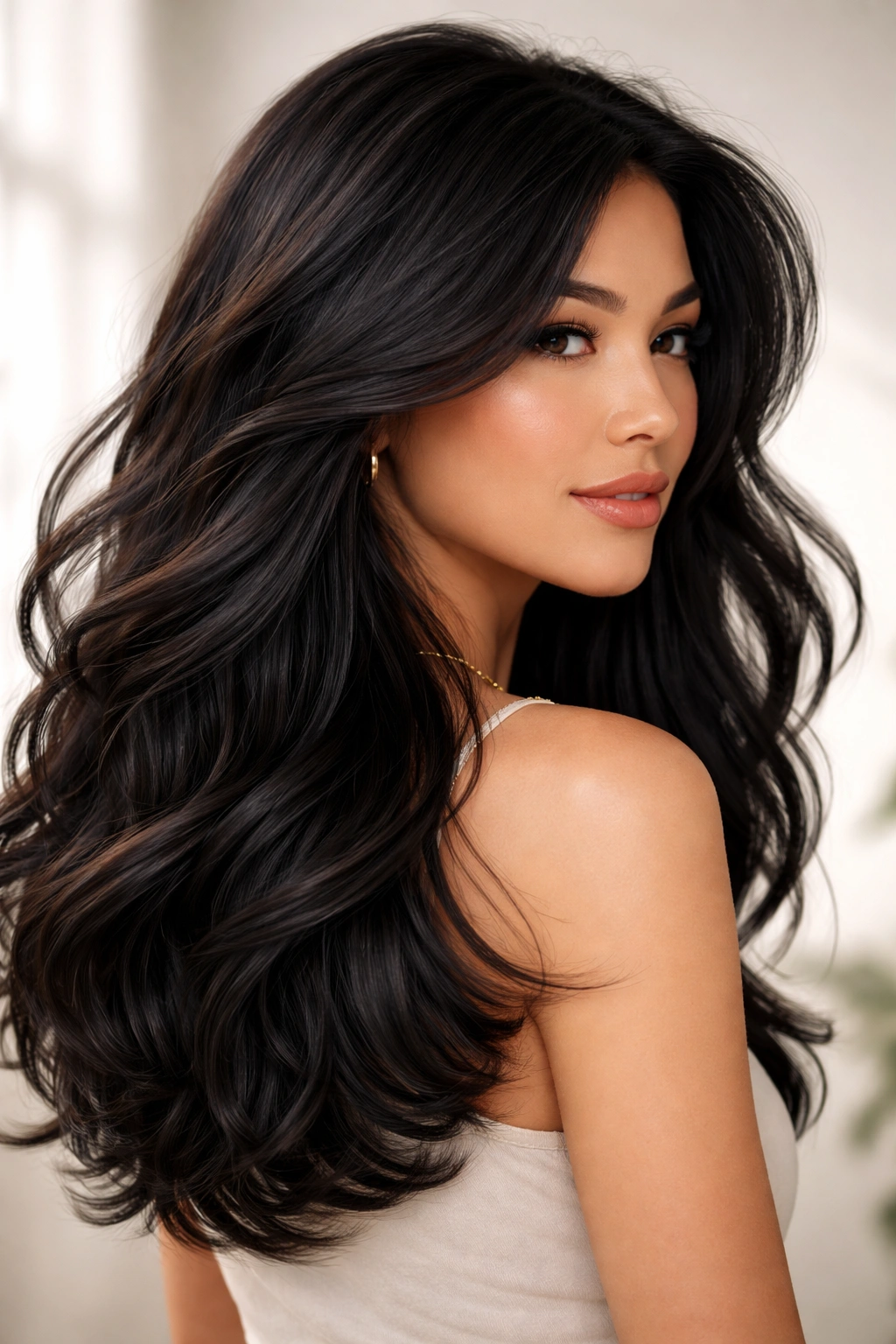
This style is a bit of a secret weapon—the top layers of hair maintain the appearance of long, full-length waves, but there’s a hidden undercut or shortened underlayer that creates incredible bounce and movement. From the front and sides, the style looks like standard long wavy hair. From underneath or when you move, you glimpse shorter texture that’s been expertly blended. This layering creates a lightweight, bouncy feeling even with long hair, and the undercut helps wavy hair avoid the weight that can stretch out wave definition.
Why the Hidden Underlayer Works
Wavy and curly hair has weight—length adds weight, and weight can flatten waves. A hidden underlayer removes bulk without sacrificing length, so you get both the aesthetic of long hair and the manageability and bounce of shorter texture. It’s especially brilliant for people with naturally fine wavy hair who want length but don’t want the weight flattening their waves. The undercut also means styling is faster because you’re working with less total hair volume, but the top layers still read as full and long.
Cutting and Styling Considerations
- The undercut is typically clipped or tied up during consultation so you can see how the top layers will look without it
- Ask your stylist to blend the undercut gradually into the top layers so there’s no obvious line of demarcation
- Style the top layers normally, but the hidden texture underneath means less blow-drying time overall
- This cut grows differently than blunt or standard layered cuts—plan maintenance every 6-8 weeks to keep the undercut sharp and prevent awkward in-between lengths
Worth knowing: This style works best if you’re comfortable having a somewhat undercut or shorter look if you wear your hair up. If you wear hair up frequently, you might occasionally see the shorter underneath, which is fine if that’s intentional but something to consider beforehand.
5. Long Wavy Bob with Blended Texture
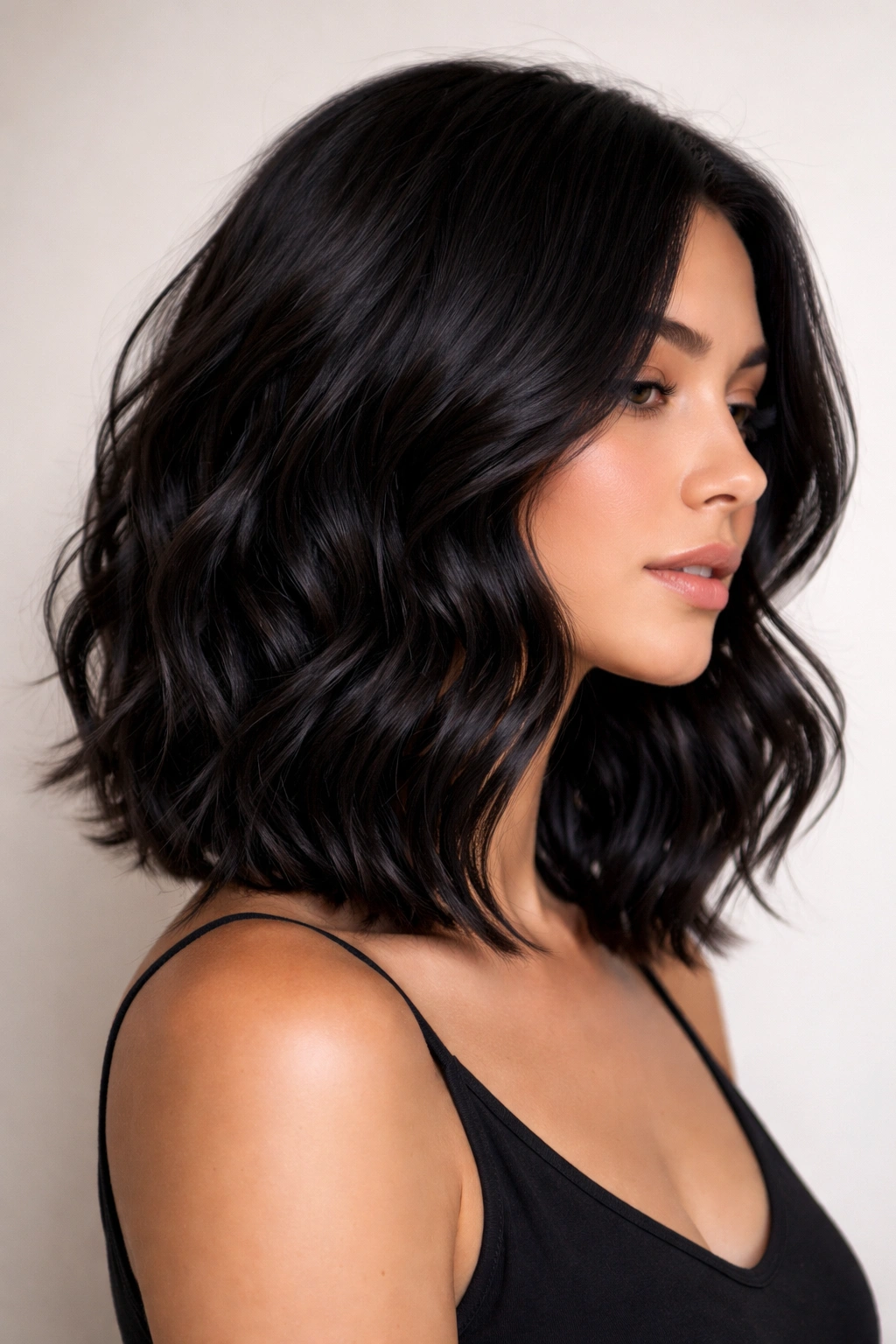
Sometimes “long wavy hairstyles” includes a shape like a blended wavy bob—longer than traditional bob length, but shorter than mid-back. This style is typically cut to fall around the collarbone to mid-shoulder, with waves that start throughout rather than just at the bottom. The “blended” aspect means the layers flow seamlessly into each other rather than being choppy or heavily textured, creating a soft, cohesive shape that moves as one piece.
The Appeal of a Longer Bob with Waves
A blended wavy bob hits a sweet spot between the practicality of shorter hair and the elegance of long hair. It’s easier to maintain and style than long length, but it still has presence and femininity. Black hair especially shows off the shape and silhouette of a bob beautifully—the color creates clean lines while the waves add softness. This length also tends to work with more face shapes than a traditional shorter bob because there’s enough hair to work with different styling options.
Customizing the Shape to Your Face
- Work with your stylist to determine where the longest point should sit (collarbone is flattering for most, but can adjust up or down)
- Decide whether the back will be slightly shorter (more textured) or blended to the same length as the front (softer)
- Waves in a bob can be styled to curve slightly toward the face or away from it, depending on the effect you want
- Styling usually involves blow-drying with a round brush or using a curling iron to enhance the wave pattern
Pro tip: Blended wavy bobs benefit from regular trims every 4-6 weeks to maintain the shape and keep layers from becoming too choppy as they grow.
6. Tousled Waves with Textured Fringe
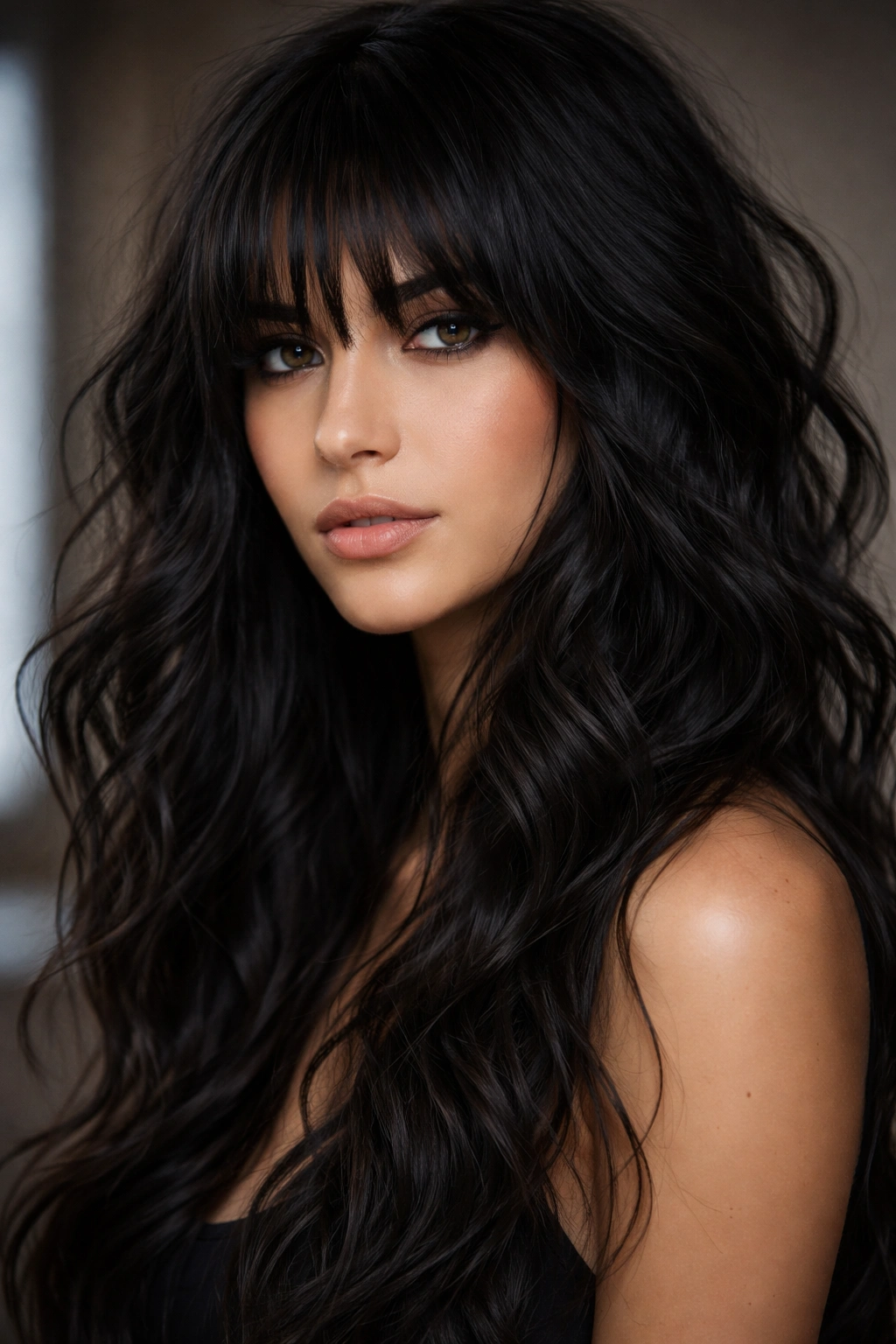
This style embraces maximum texture and movement with tousled, deliberately undone waves throughout and a shaggy, textured fringe that adds attitude. The fringe is longer than traditional bangs (landing around the eyebrows or slightly below) and is cut with texture—lots of pieces and choppy layers within the fringe itself. The overall effect is a bit rock and roll, a bit ’70s, entirely cool. This is the style for people who love the way their hair looks when they’ve just woken up and haven’t touched it yet.
Creating and Styling the Textured Look
The textured fringe is the star of this cut—it’s not a simple straight cut but rather a series of choppy, layered pieces that move independently. Styling involves enhancing natural texture rather than creating perfectly uniform waves. You’re going for that “I woke up like this” aesthetic, which paradoxically takes some intention to create and maintain. The tousled waves throughout work best with slightly thicker or coarser hair that holds texture naturally, though any wave pattern can achieve this with the right cut.
Making It Work Every Day
- Use a texture cream, salt spray, or dry shampoo on non-wash days to enhance and separate the pieces
- Avoid blow-drying this style smooth—instead, blow-dry on low with your fingers to enhance the tousled texture
- The fringe might need occasional shaping with scissors to maintain the textured, choppy effect as it grows
- This style looks better slightly undone than perfectly styled, so embrace the imperfection
Worth knowing: This style needs regular trims every 4-5 weeks to keep the fringe textured and prevent it from looking stringy as it grows. It’s not a low-maintenance cut in terms of salon visits, even though the styling itself is intentionally relaxed.
7. Romantic Side-Swept Waves
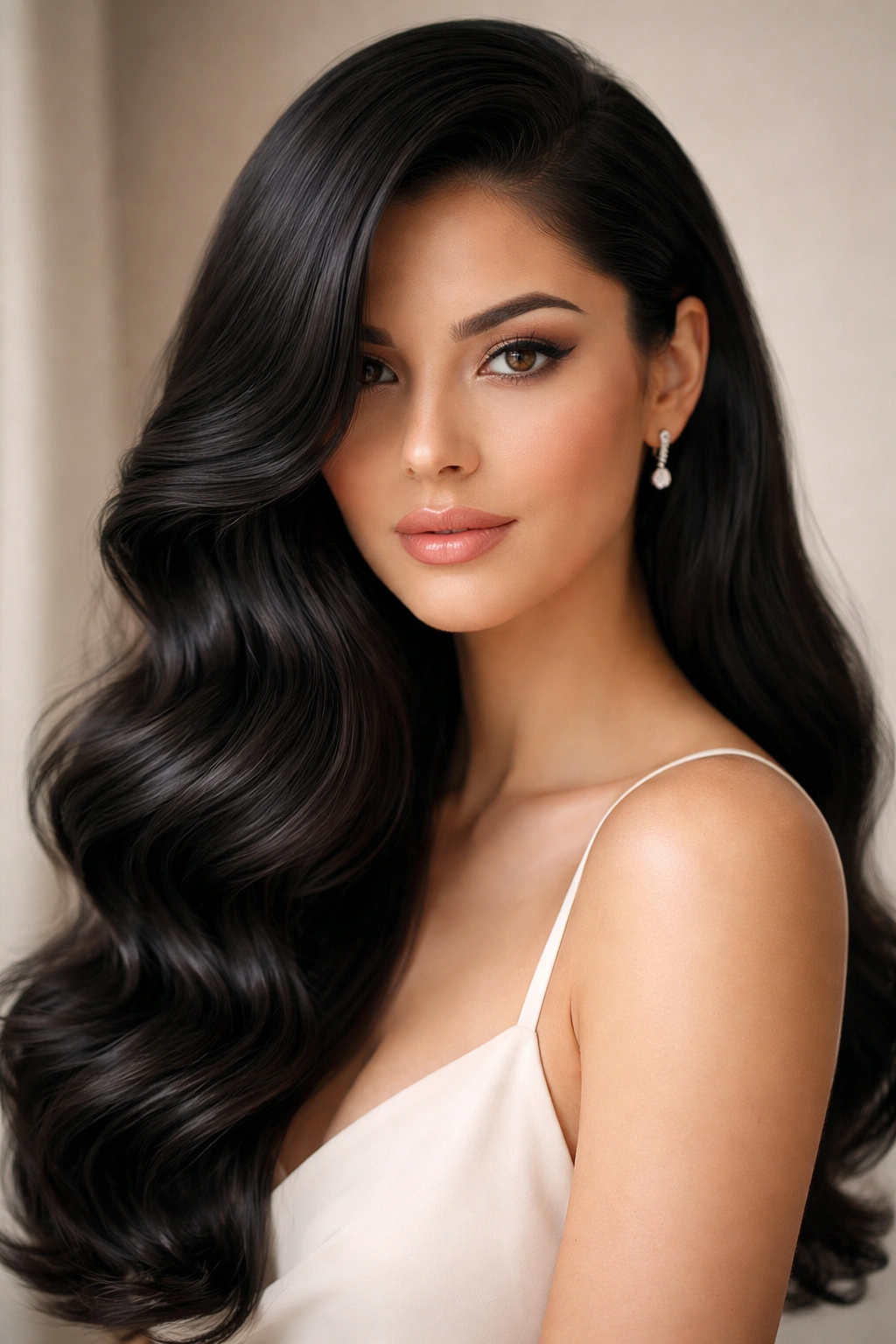
Side-swept waves are all about femininity and flow—the hair is parted deeply to one side and the waves sweep across the head, with longer pieces on the swept side creating an asymmetrical, graceful silhouette. The waves are typically softer and more uniform than the tousled styles, with a focus on elegant movement rather than texture. This style has an almost Old Hollywood feel, especially in black hair where the depth and shine are absolutely stunning.
Why Side-Swept Waves Feel So Romantic
There’s something inherently flattering about side-swept hair—it creates an asymmetrical line that’s more interesting than a center part, and the sweep across the face is naturally slimming. The wave pattern in this style is usually fairly consistent and smooth, not choppy, which makes it feel more polished and intentional. In black hair, waves that sweep across the face are beautifully framed by the depth of the color, and you get gorgeous light reflection as the waves move.
Styling and Maintenance
- Ask your stylist to cut the side-swept shape while dry so they can see exactly how the waves naturally fall
- Style by blow-drying the side part in, then using a large-barrel curling iron to create soft, consistent waves
- Use a light-to-medium hold hairspray to set the waves and keep the side-swept direction stable
- Refresh waves with a curling iron on non-wash days, focusing on creating movement in the direction of the sweep
Pro tip: Deep-side-parted styles sometimes benefit from a tiny spritz of texturizing spray at the roots on the smaller side to prevent that side from looking flat, while the side-swept direction handles the volume on the larger side.
8. Long Waves with Choppy Layers
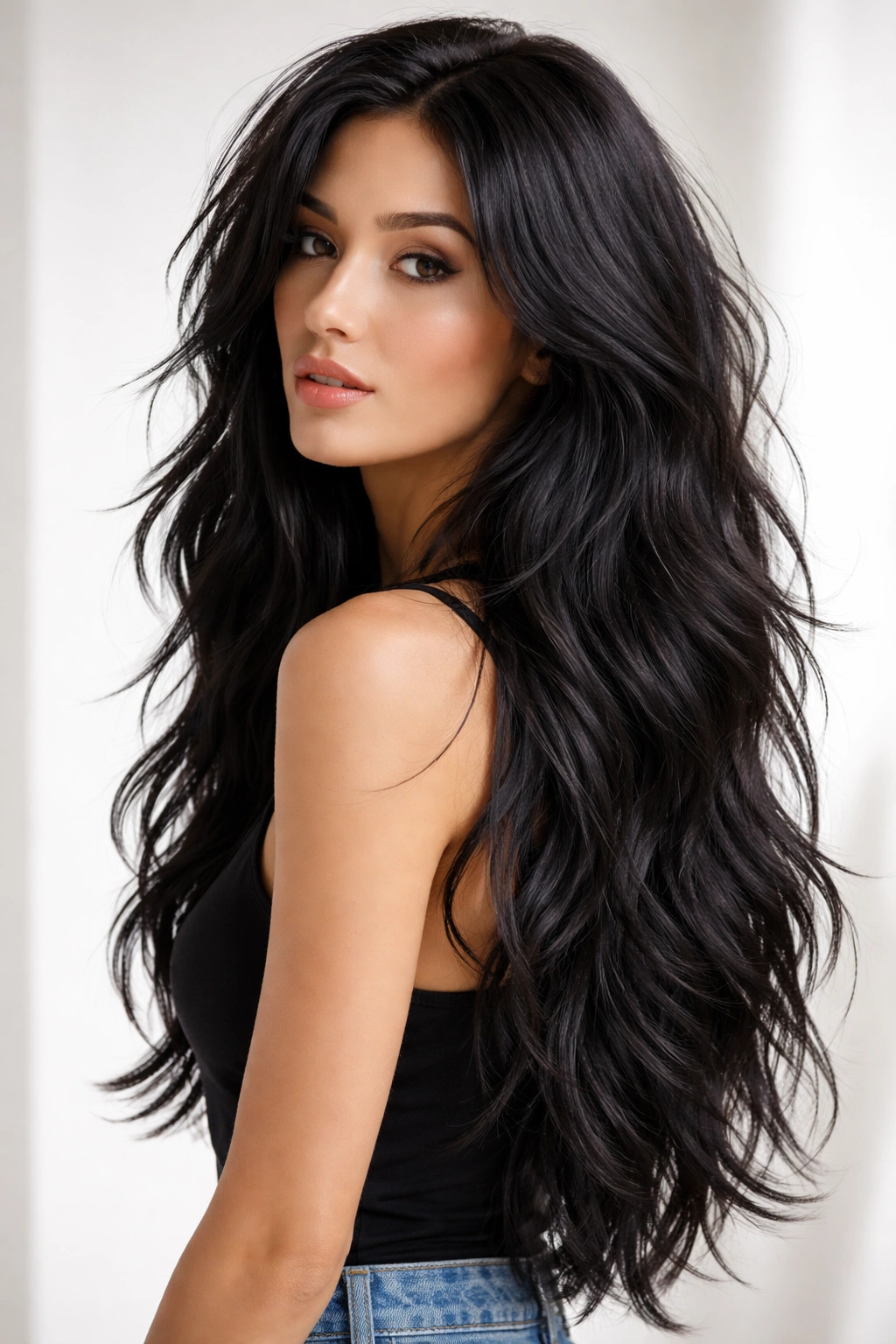
Choppy layers bring maximum movement and texture to long wavy hair, with deliberate, visible pieces throughout that create an edgy, dynamic look. Unlike blended layers that flow seamlessly, choppy layers are intentionally distinct—you can see where one layer ends and another begins. This approach works beautifully with black hair because the color makes each layer and piece visible and defined. The overall effect is bold, modern, and very much intentional rather than accidental.
The Purpose of Choppy Layers
Choppy layers serve a few purposes beyond pure aesthetics. They remove weight strategically, which helps wavy hair maintain wave definition and bounce. They add visual interest and dimension because you’re seeing multiple lengths at once. They also tend to photograph well because the texture and movement are obvious even in still images. For people who love a bold look and want their hairstyle to feel like a choice rather than just hair, choppy layers deliver that energy.
Cutting and Styling Choppy Layers
- The choppiness is created by cutting with point-cutting or razor techniques that create distinct, separated pieces
- Layers typically start shorter (around mid-length) and graduate to longer at the back, with variation throughout
- Styling involves enhancing the separation of layers—blow-dry with your fingers or a diffuser to make each piece distinct
- A texturizing product or light finishing spray helps keep layers from knitting back together and losing their definition
Worth knowing: Choppy layers require a more skilled hand than blended layers do—seek out a stylist experienced with this technique in black hair specifically. The choppiness can look either intentionally edgy or accidental depending on execution, and you want the former.
Final Thoughts
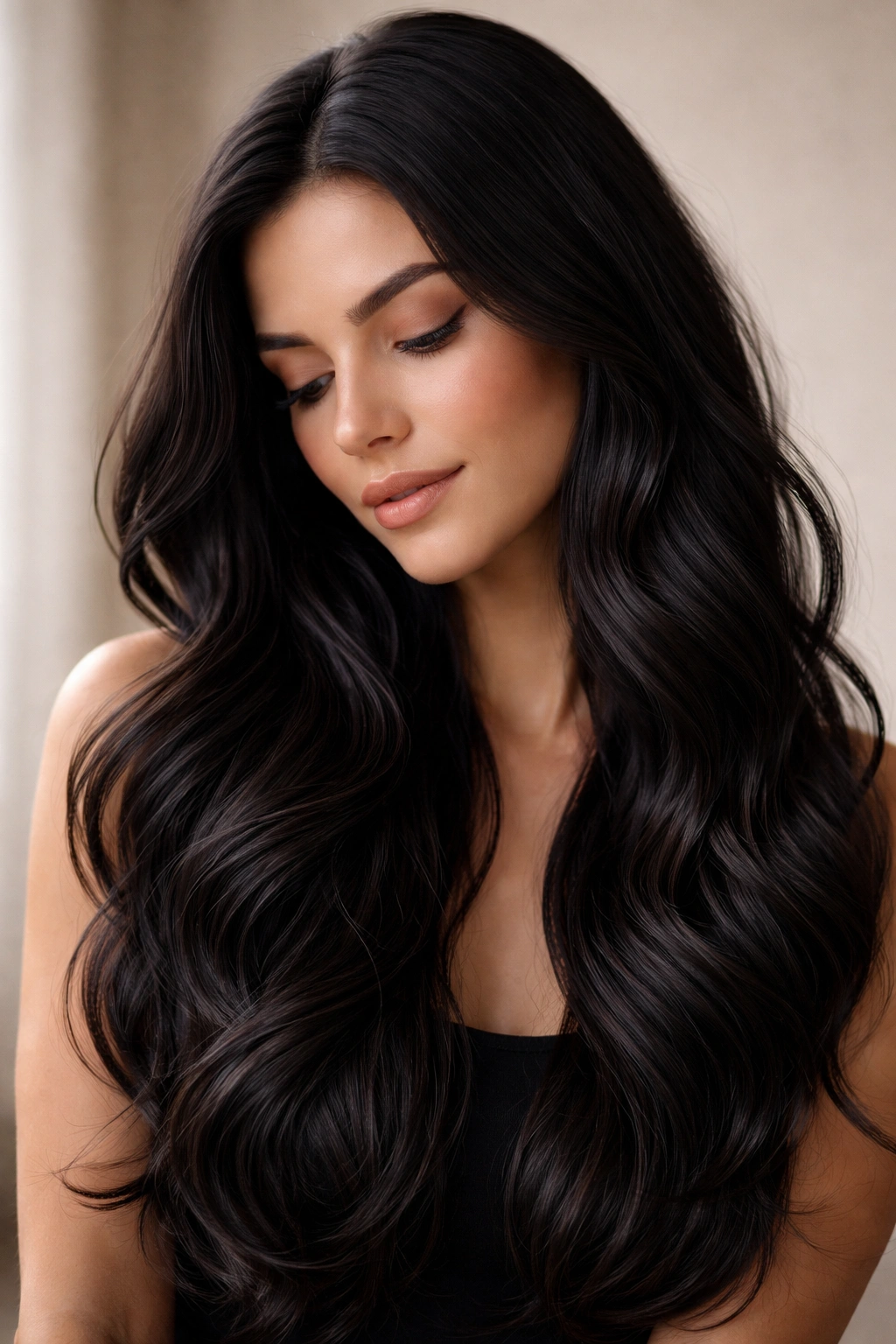
Long wavy hairstyles in black hair offer something special—the color acts almost like a backdrop that makes texture, movement, and light play incredibly visible. Whether you’re drawn to soft romanticism, edgy texture, or effortless beach vibes, there’s a style here that matches your vision. The key to making any of these styles work is finding a stylist who understands wavy hair, who has experience working with black hair specifically, and who listens carefully to what you’re trying to achieve.
The style itself is only half the equation—the other half is understanding how to style and maintain it once you leave the salon. Each of these styles has slightly different needs in terms of products, tools, and refresh techniques. Invest time in learning your style, experimenting with different products, and committing to maintenance appointments. Your stylist should be able to show you exactly how to style your cut and recommend products that work with black hair and wavy texture.
Long wavy hair in black is genuinely versatile. You can wear the same cut dressed up or dressed down, sleek or tousled, swept to one side or parted in the middle. The foundation is right—now it’s about finding the version that feels most authentically you.
