



There’s something undeniably effortless about a short wavy bob in blonde. It’s the kind of haircut that photographs beautifully, feels light and manageable in daily life, and somehow manages to look both polished and undone at the same time. The combination of the shorter length with soft waves creates movement and dimension that longer styles can’t quite achieve, while blonde tones amplify the natural texture by catching light in all the right places.
Whether you’re drawn to tousled, beachy vibes or prefer something more structured and precise, there’s a short wavy blonde bob out there that matches your personality and lifestyle. The beauty of this style is its versatility—it works across different hair types, face shapes, and daily routines. From the way the waves frame your face to how the color adds depth and brightness, every variation brings something unique to the table.
What makes short wavy bobs particularly appealing is their practicality. You’re not committing to a lengthy styling routine every morning, yet the cut naturally creates visual interest and movement without much effort. Add in the brightness and warmth of blonde, and you’ve got a haircut that feels fresh, modern, and endlessly adaptable. Let’s explore the most compelling short wavy bob variations that deserve your consideration.
1. Tousled Choppy Blonde Waves
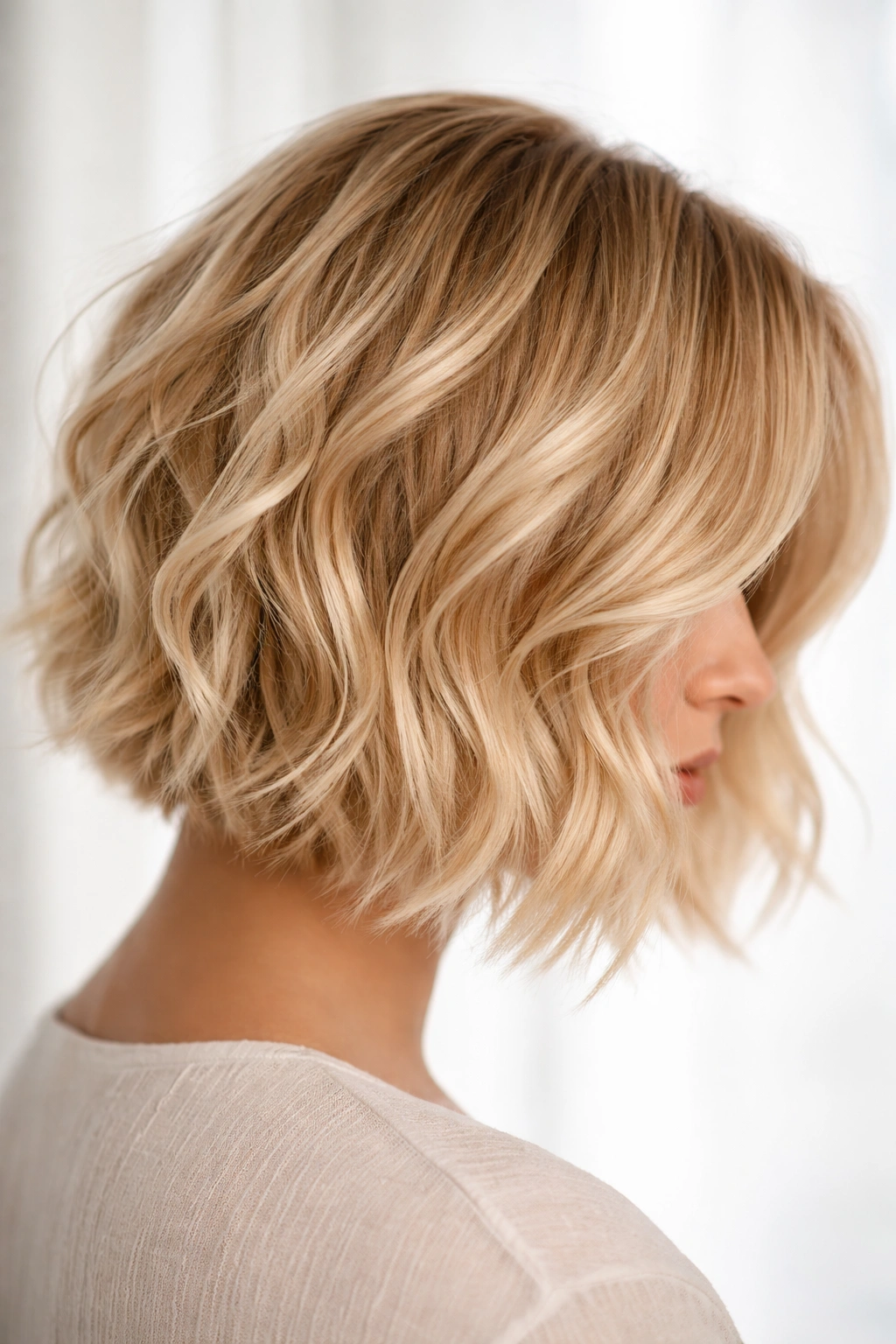
This style leans into controlled texture with choppy layers that create plenty of movement throughout the cut. The shorter length hits around chin-level or just above, and the irregular layers mean the waves have natural anchor points that look intentional rather than accidental. The blonde here works best with some dimensional variation—think butter blonde mixed with subtle honey highlights—so the texture really pops when light hits it.
Why This Cut Works So Well
The choppy layers do heavy lifting for you. They build in natural volume, especially if your hair leans straight or fine, and they give you something to work with even on days when you’re not actively styling. The waves catch on these choppy points and hold their shape longer, which means fewer touch-ups throughout the day. It’s the kind of cut that actually looks better a day or two after styling, when the texture has settled into its own rhythm.
How to Style It
- Apply a texturizing spray or sea salt spray to damp roots for grip
- Blow-dry with a round brush, directing waves away from your face
- Use a 1-inch curling iron to define individual sections if you want more pronounced waves
- Finish with a matte texturizing paste for hold without shine (this prevents the choppy layers from looking wispy)
- Tousle with your fingers to break up the waves and create that undone, lived-in look
Pro tip: This cut works best when you get it trimmed every 4-6 weeks, because the choppy layers need to stay defined to deliver the texture you’re after.
2. Sleek Textured Platinum Blonde Bob
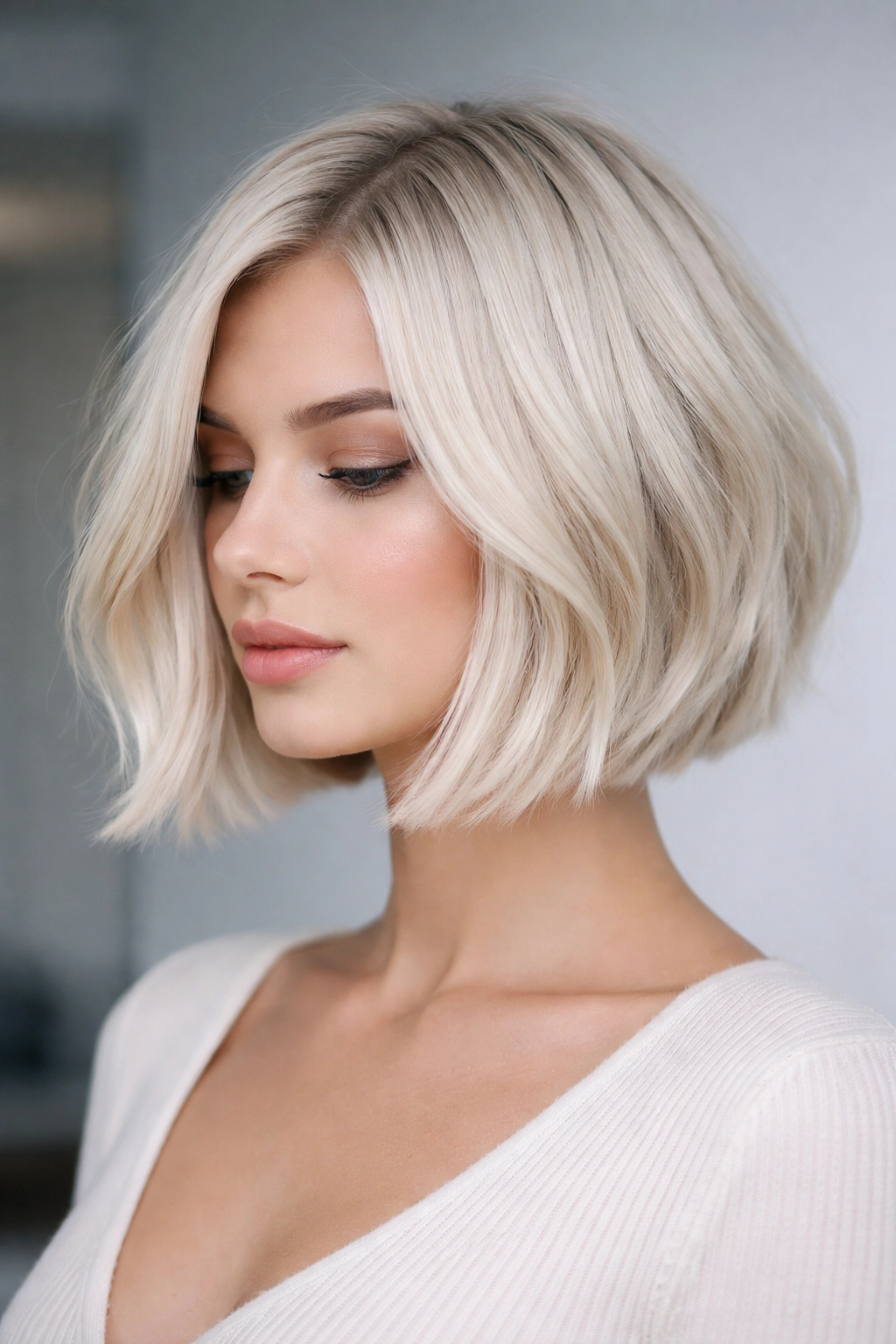
For something more refined and modern, a sleek textured platinum blonde bob trades the undone vibe for something cooler and more architectural. This is a cut where precision matters—clean, even layers that hit just right, and blonde so blonde it’s almost icy. The textured element comes from subtle layering rather than choppy chunks, creating movement without sacrificing the clean, polished look.
The Appeal of This Approach
Platinum blonde naturally reads as bold and fashion-forward, so this cut pairs that confidence with a relaxed texture that keeps it from feeling too severe. The layers add softness to your face while maintaining the overall clean silhouette. It’s especially striking on deeper skin tones, where the cool platinum blonde creates beautiful contrast and makes the textured waves even more visible.
Maintenance and Styling Essentials
- Toning is non-negotiable with platinum blonde—you’ll need a purple or silver-toning shampoo used weekly to prevent brassiness
- Style with a flat iron to create a smooth base, then use a curling iron to add subtle waves at the ends
- A lightweight styling cream keeps the texture soft and prevents frizz without weighing down the blonde
- This cut requires visits to your colorist every 4-6 weeks to maintain the platinum tone and address any regrowth
- On non-wash days, a dry shampoo designed for blonde hair refreshes the texture and adds grip
3. Undone Messy Blonde Waves
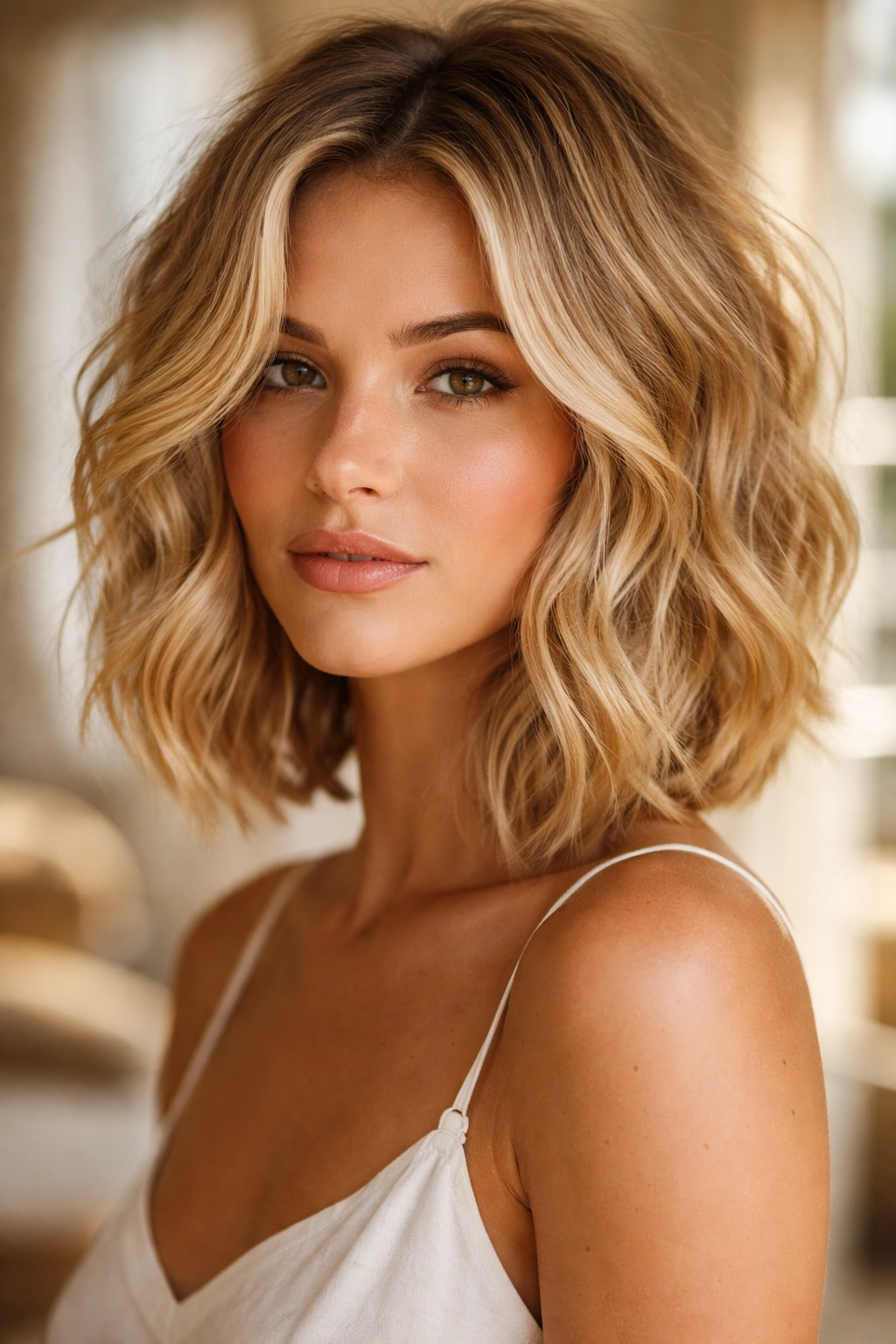
This variation embraces imperfection as the whole aesthetic. The cut itself is simple—relatively straight lines, minimal layering—but the styling is all about creating texture that looks genuinely lived-in, not over-processed. Warm blonde tones work beautifully here because they feel less formal, more approachable. Golden, honey, or sandy blonde creates the perfect foundation for waves that are supposed to look like you just came back from the beach.
Why Messy Waves Actually Look Intentional
The magic is in the styling rather than the cut itself. When you use the right products and techniques, deliberately undone waves read as charming and effortless rather than just unkempt. The warmth in the blonde helps—it adds to the casual, sun-kissed impression. What pulls this whole thing together is the consistency of the messiness. Waves should fall in somewhat predictable directions, even if they look tousled.
Creating This Look
- Start with a texturizing spray applied to damp hair before any blow-drying
- Blow-dry with your fingers or a diffuser attachment, scrunching upward as you go
- Use a curling iron or waving iron to add structure, then immediately break up the waves with your fingers
- Apply a light texturizing paste or cream to enhance the undone texture
- Spray with a flexible hold hairspray that won’t make the waves stiff or crunchy
Worth knowing: This style actually benefits from not being washed every day—day-two and day-three hair often looks better because the waves have had time to settle and the product to do its job.
4. Layered Beachy Blonde Waves
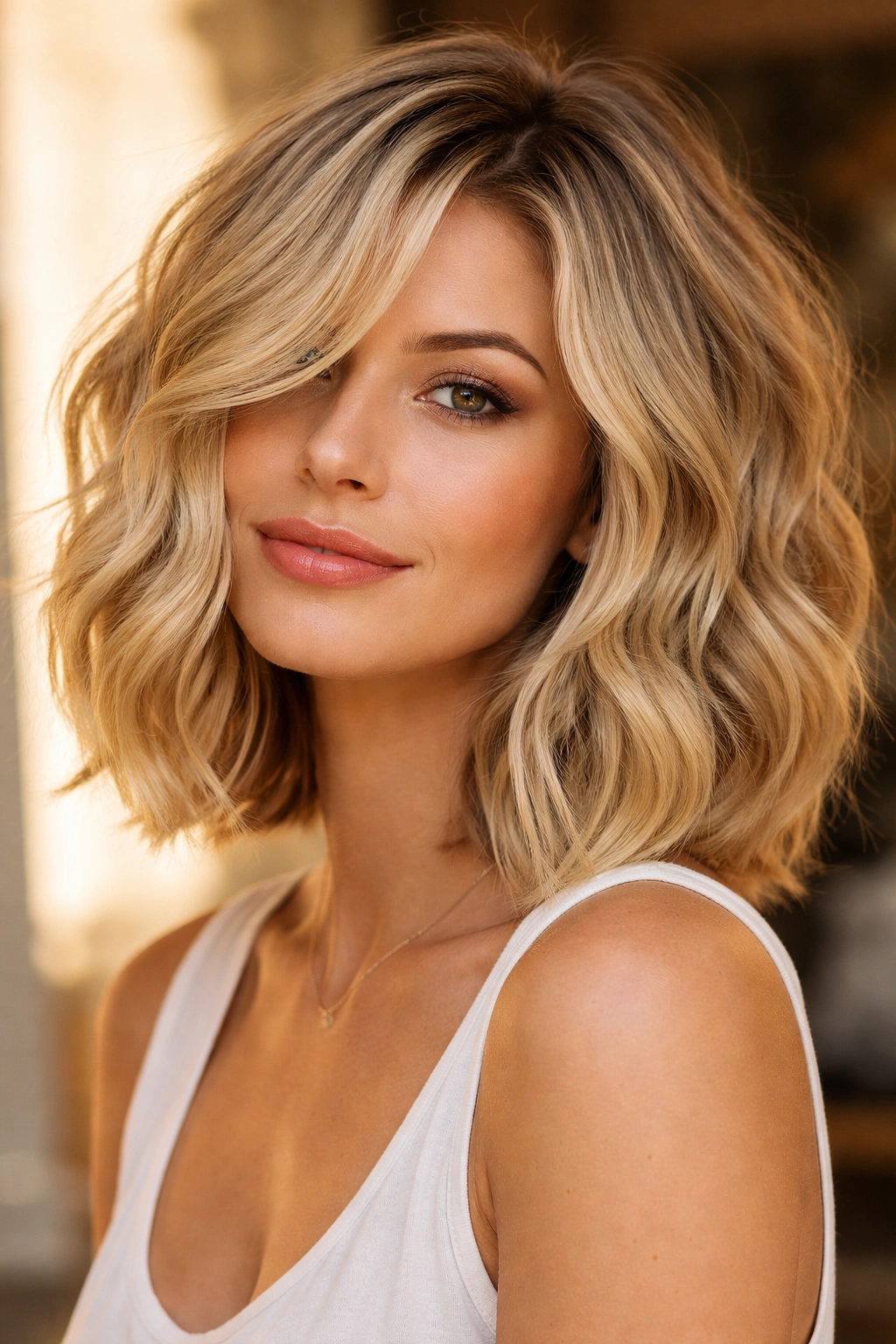
Beachy waves are a different beast from choppy texture or messy undone waves. This style is about soft, uniform waves that look like they were created by salt water and sun. The cut features layers throughout, but they’re blended and soft rather than choppy and distinct. Golden blonde with some lighter, sun-kissed highlights mimics the natural lightening that happens from real beach time.
The Difference Between Beachy and Other Wavy Styles
Beachy waves have a specific look: they’re loose, flowing, and relatively uniform in size and direction. The waves usually start around mid-length and flow down with consistent rhythm. There’s softness throughout—no sharp angles, no choppy texture. The layering serves to enhance these waves rather than create distinct texture. When blonde is this style, it feels warm, approachable, and effortlessly pretty.
Achieving Beach Waves Consistently
- Apply a sea salt spray to damp hair from mid-length downward
- Blow-dry with a round brush, creating loose waves as you dry
- Use a 1.25-inch curling iron to create waves, curling sections away from the face
- Let waves cool completely before moving your hair (this helps them hold longer)
- Scrunch gently upward as waves cool to soften the defined curl and create that looser wave pattern
- Finish with a light hairspray to hold without crunch
5. Asymmetrical Choppy Blonde Bob
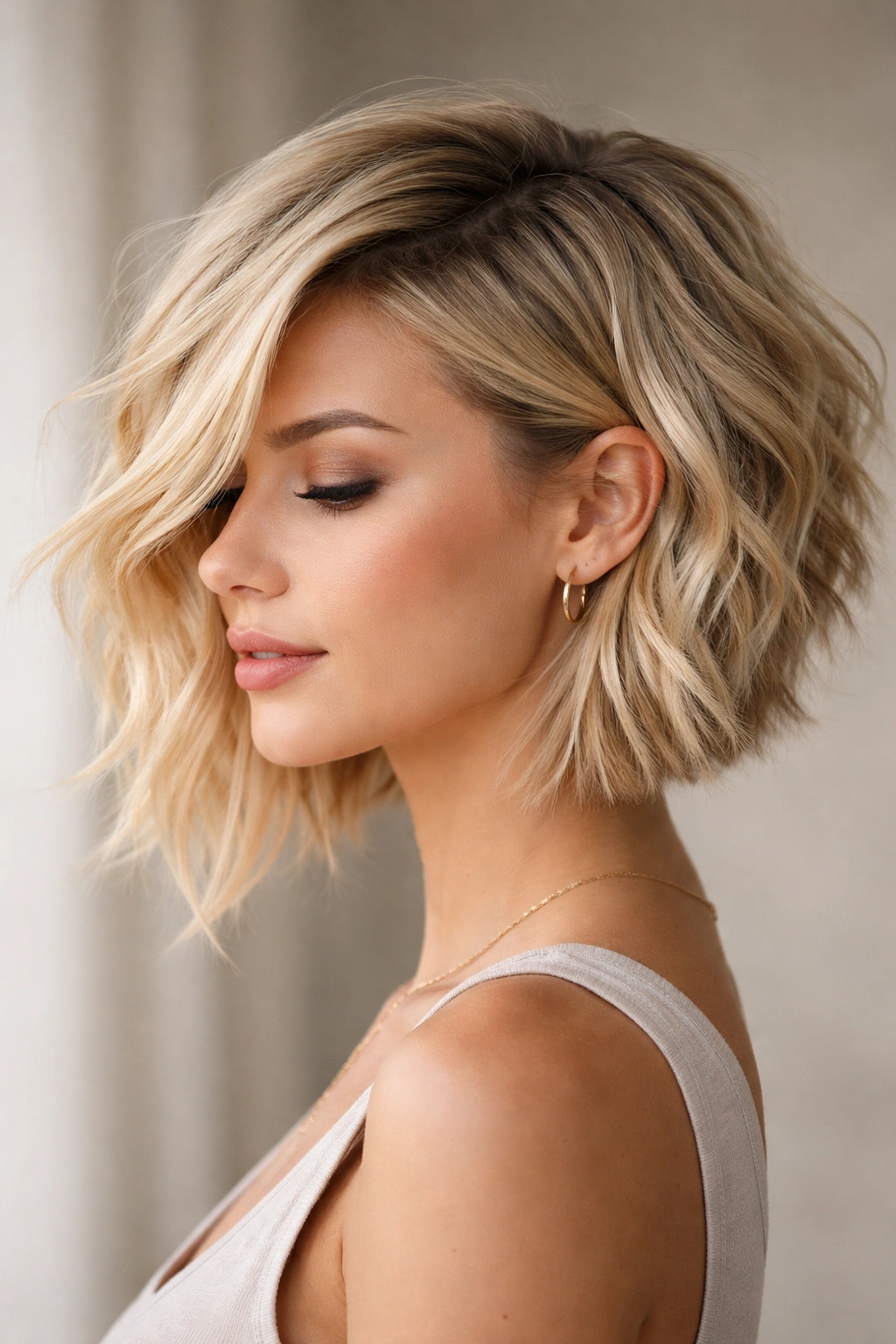
An asymmetrical cut takes the short wavy bob in a bolder direction. One side is noticeably shorter than the other, creating drama and movement that flows from the longer side. Layering throughout adds texture, and the length variation means you get different wave patterns on each side—shorter, tighter waves on one side, longer, looser waves on the other.
When to Consider an Asymmetrical Cut
This style works if you’re willing to style your hair most days and if you enjoy a haircut that makes a statement. It’s not a grab-and-go style, but it’s also not complicated—you’re just styling the longer side a bit more deliberately. The asymmetry suits people with confidence in their style choices and those who like their hair to feel like a deliberately personal expression.
Styling the Asymmetrical Length
- The shorter side usually needs less styling and can be blown dry smooth or with just a slight wave
- The longer side benefits from more deliberate wave creation using a curling iron
- Texture spray helps both sides, preventing any one side from feeling heavier or flatter than the other
- Style away from the face on the longer side to showcase the length variation
- Sweeping the longer waves to one side emphasizes the asymmetry
Key note: This cut shows grow-out differently than a blunt bob because the length variation is the point—you have more flexibility with timing between trims, though cleaning up the shorter side every 4-5 weeks keeps it sharp.
6. Soft Feathered Blonde Waves
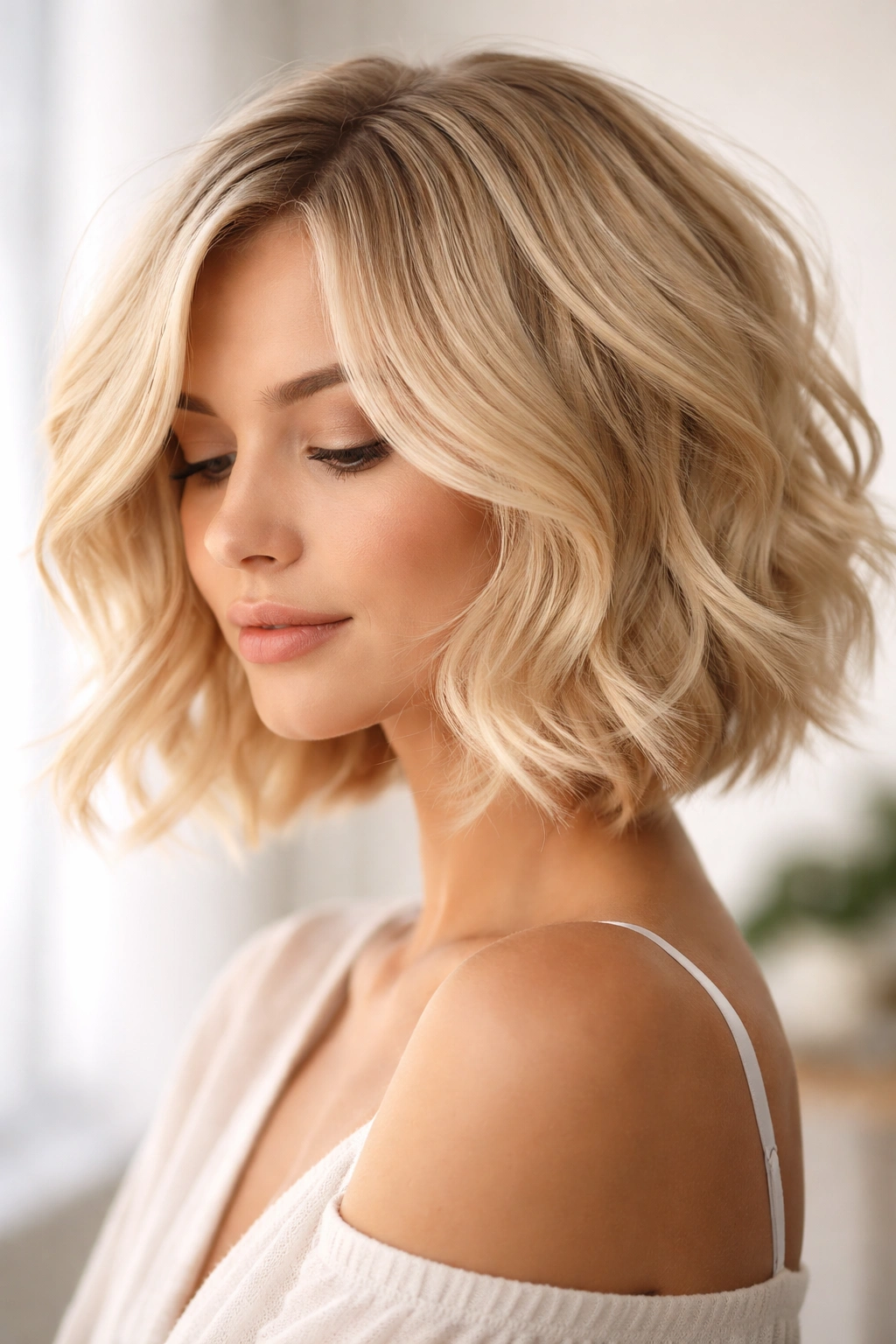
Feathered layers are technique-specific and create a particular kind of texture: the ends of each layer are shaped so they point slightly outward, creating a feathered appearance. The effect is softer and more delicate than choppy layers, even though there’s definitely texture happening. Soft blonde tones—pale golden, champagne, or soft honey—work beautifully with this technique because feathering needs a blonde that’s light enough to show the dimensional quality of the layers.
The Sophisticated Side of Wavy Bobs
This is the style if you want waves that feel refined rather than beachy or undone. The feathering creates movement and dimension without sacrificing elegance. It suits professionals, people who prefer a polished aesthetic, or anyone who wants short waves without the casual vibe of the tousled versions. The cut tends to age well too—it doesn’t read as trendy or too youthful, just timelessly pretty.
How Feathering Differs in Maintenance
- Feathered layers can look wispy, so blow-drying adds body and structure
- Use a round brush while blow-drying, directing waves outward at the ends
- A lightweight styling cream tames any frizz without weighing the feathered texture down
- This cut shows regrowth at the roots more than the layers themselves, so it actually photographs really well for longer between root touch-ups
- Trims every 4-6 weeks keep the feathering sharp and prevent the ends from blending back together
7. Shaggy Blonde Textured Bob
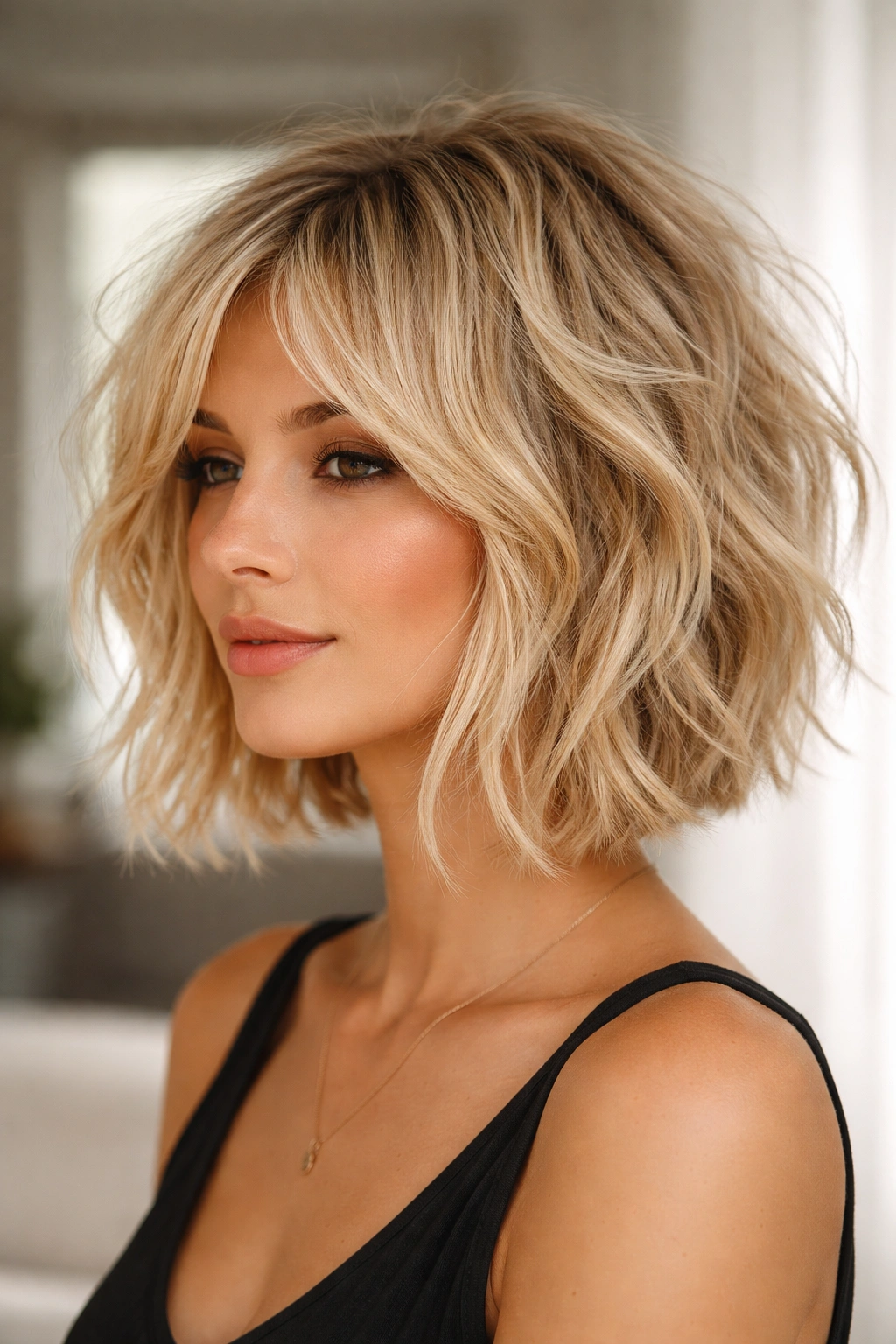
The shag is back, and the short blonde shag is a specific, personality-packed choice. This cut embraces layering throughout—lots of layers, choppy at the ends, creating an almost choppy-shag hybrid. The shortest layers might sit at ear-length while longer pieces flow to the jaw or chin. Blonde makes the shag feel fresh and modern rather than retro, especially if you use dimensional blonde (mixing light and slightly warmer tones).
The Confidence Behind a Shag
A shag isn’t a shy haircut. It makes a statement and looks best when styled intentionally. The layers create so much movement that even minimal styling produces noticeable texture. It’s a great cut if you like the idea of short hair but want something with real movement and presence. The blonde adds brightness that makes the texture even more apparent.
Building a Shag Routine
- Blow-dry with a diffuser to enhance natural texture and layer separation
- Use a texturizing spray before styling for grip and definition
- A curling iron can define individual layers if you want more pronounced waves
- Scrunch upward as layers dry to encourage lift and movement at the crown
- A matte texturizing paste works better than cream for keeping shaggy layers defined and separated
Real talk: Shags need more frequent trims—every 3-4 weeks—because the choppy layers need to stay precise or they start looking stringy rather than textured.
8. Face-Framing Blonde Waves
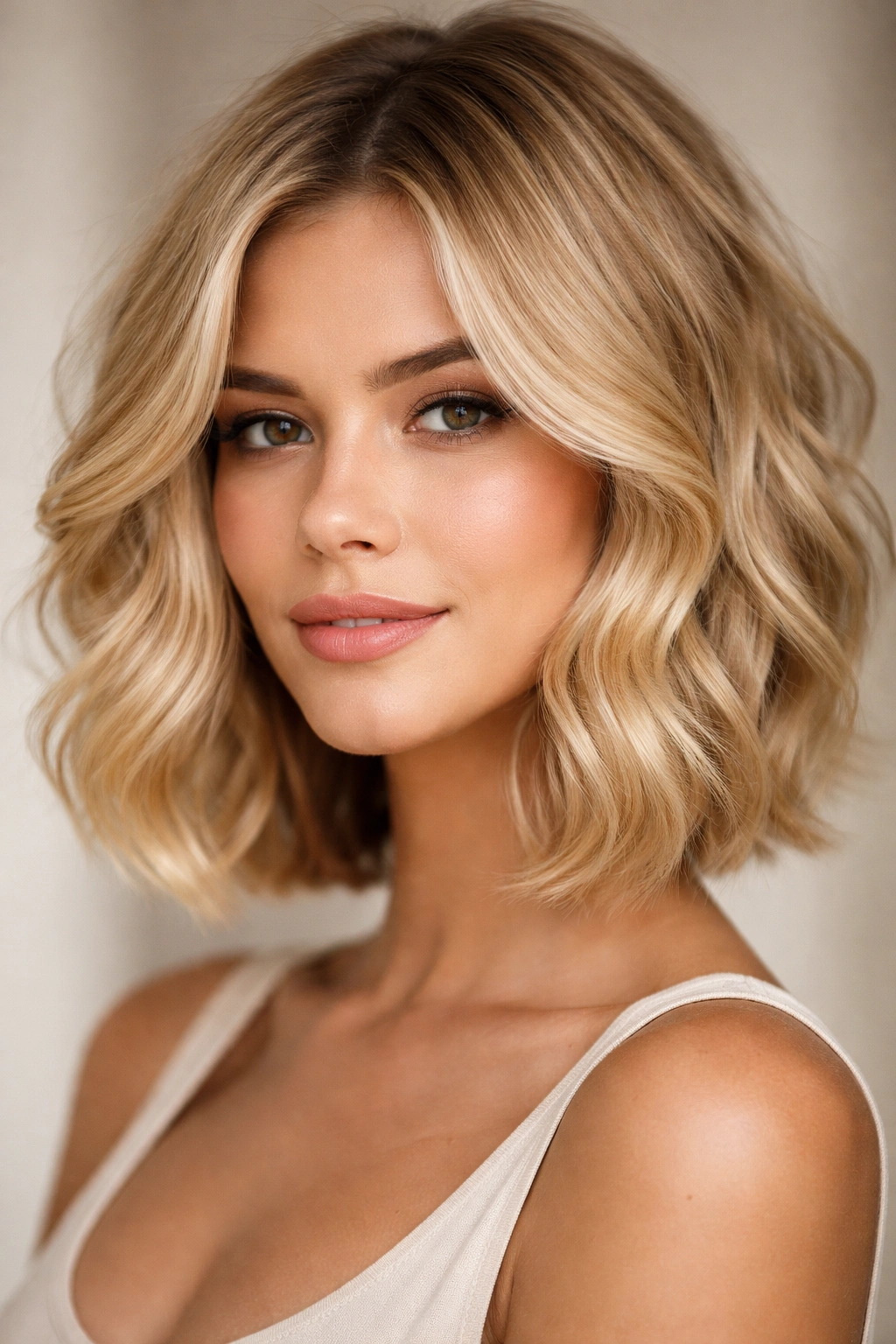
This style is strategic about where the waves sit. The shortest layers frame your face, hitting at cheekbone or just below, while slightly longer pieces build in the back. The framing layers create soft waves that draw attention to your features without looking like you’re hiding behind your hair. Soft blonde in this context works like a spotlight—it lightens and brightens your face naturally.
Who This Cut Flatters
Face-framing works beautifully if you want a short cut that doesn’t feel too severe or masculine. It softens angular features and adds width to narrower face shapes. The waves at cheekbone-length create natural balance. This is the cut if you like the idea of short hair but want softness around your face specifically.
Styling Face-Framing Waves
- Blow-dry the face-framing layers away from your face, using a round brush to create gentle curves
- Once those front layers are dry and waved, you can air-dry the rest or finish with a straightening brush for contrast
- A lightweight styling cream prevents frizz on the face-framing layers without weighing them down
- Tousle with your fingers to soften the waves and prevent them from looking too set or rigid
- On second-day hair, re-wet the front layers and re-style them—the rest of the cut holds texture better
9. Voluminous Curled Blonde Bob
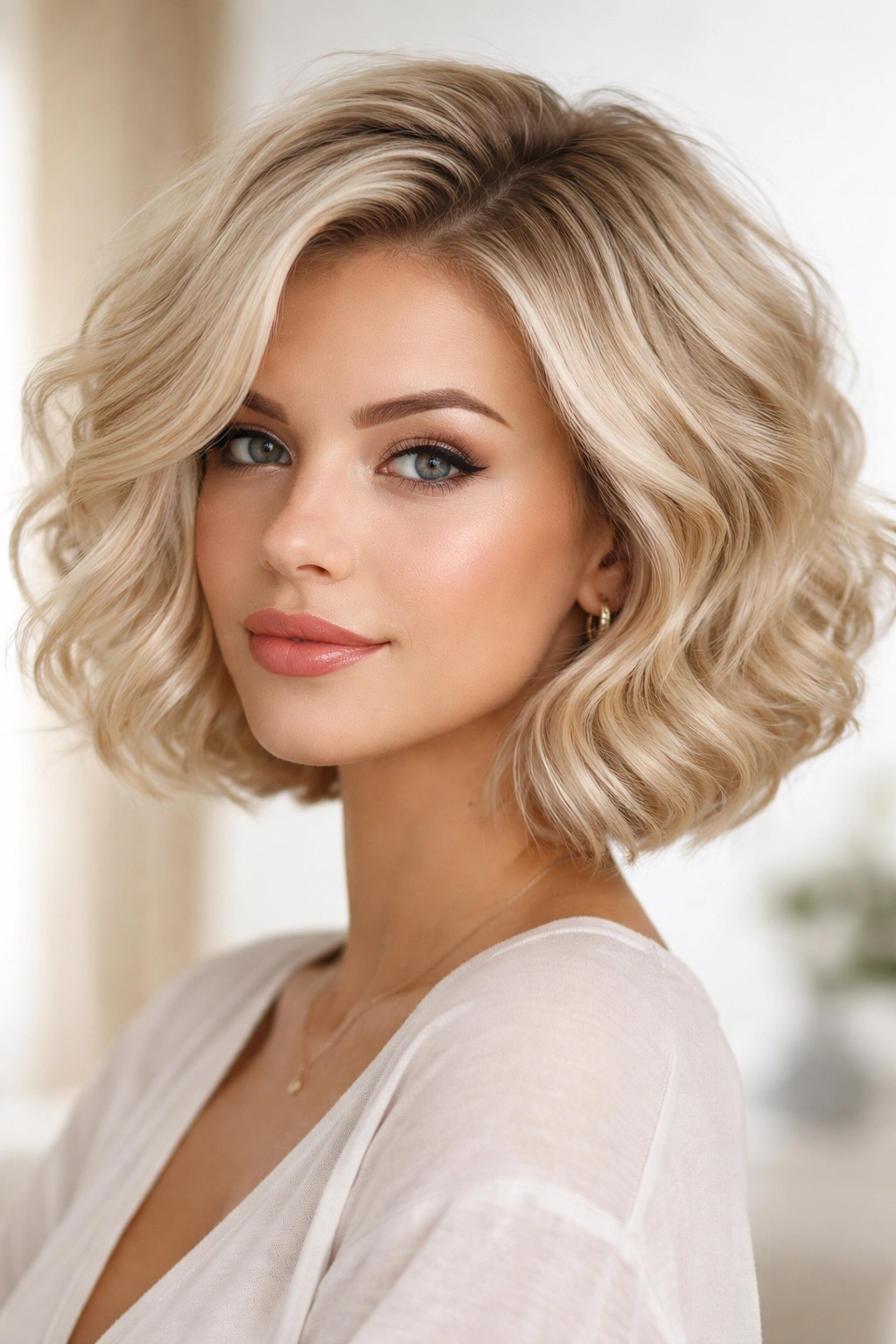
If you prefer actual curls over waves, a short blonde bob with intentional curls is its own category. The cut is shorter and more structured than the wave-focused versions—think a blunt or nearly blunt bob with minimal layering, just enough to prevent it from feeling too heavy. The styling is what creates volume and curl definition. Lighter blonde shows individual curl definition beautifully, especially if there’s some variation in tone.
Curls Versus Waves: The Distinction
Curls hold a tighter shape and more definition than waves do. They require a different styling approach and often more styling products. If you’re choosing curls, you’re committing to actually curling your hair most days rather than relying on texture spray and casual waving. The payoff is that curls create instant polish and volume without looking undone.
Creating and Maintaining Curls
- Use a curling iron (1-inch barrel for tighter curls, 1.25-inch for looser ones) to curl sections away from your face
- Let each curl cool completely before touching it—this sets the shape
- Apply a curl-defining cream or gel before curling for better hold
- Use a hairspray with flexible hold rather than stiff hold so curls don’t look crunchy
- This style benefits from sleeping in braids or pincurls to preserve curls through day two
- Refresh curls on day two with a curling iron rather than trying to reactivate them with product
10. Piece-y Blonde Dimensional Waves
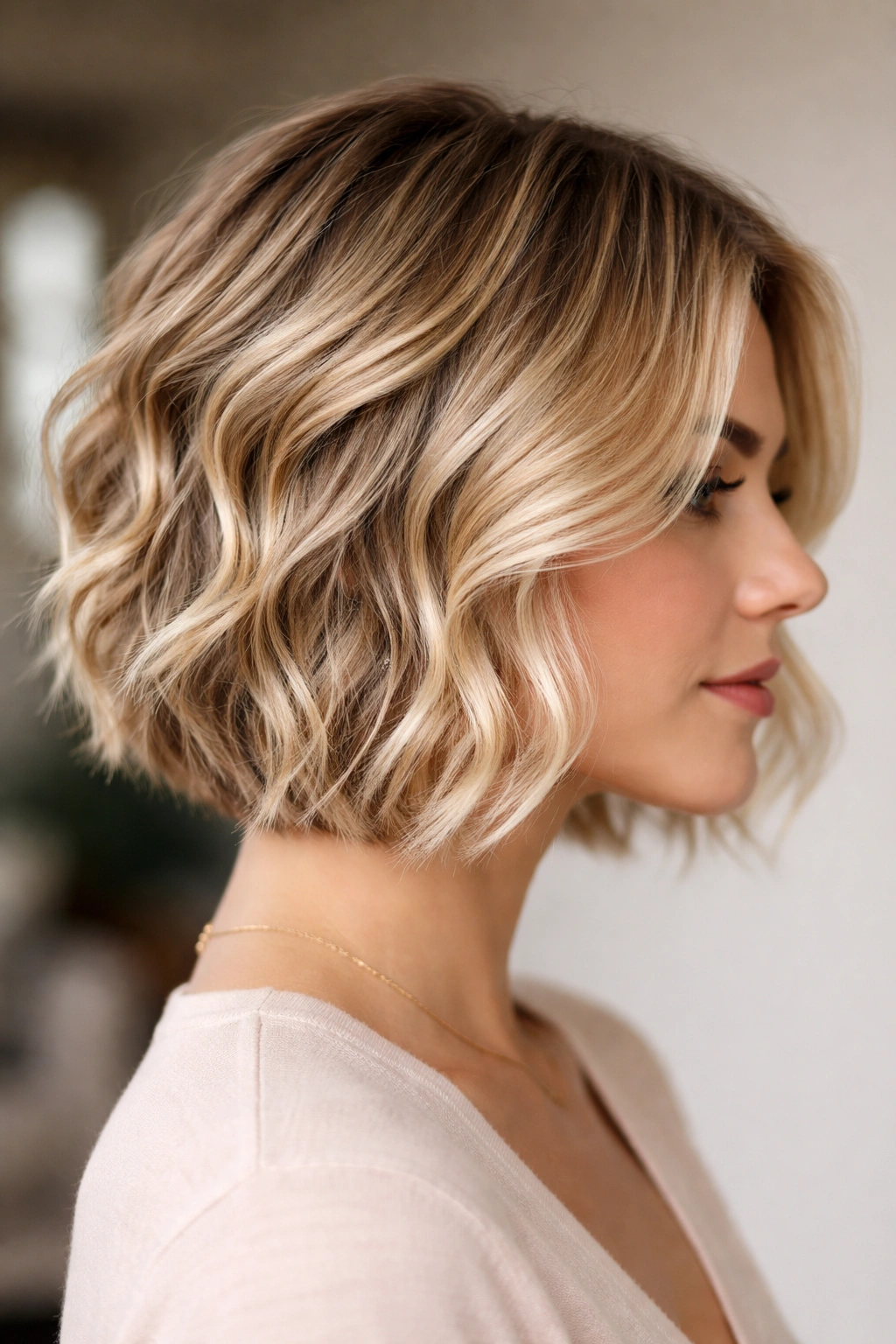
This style focuses on how multiple shades of blonde interact within a wavy cut. The cut itself features layers that create waves, but the real star is the color story: pieces of lighter blonde woven throughout darker blonde pieces, creating dimension that makes every wave visible. This isn’t a flat, single-tone blonde. It’s strategically highlighted or balayaged blonde that shows movement because of color variation.
Why Dimension Changes Everything
Two-toned or multi-toned blonde makes texture more apparent. A light blonde wave next to a slightly darker blonde piece creates visual contrast that reads as texture and movement even if the actual waves are relatively soft. This approach is especially smart if your natural wave pattern isn’t super tight or dramatic—the color contrast does some of the heavy lifting that texture would otherwise provide.
Maintaining Dimensional Blonde
- Plan coloring sessions every 6-8 weeks to keep highlighted pieces looking fresh
- Use color-depositing shampoos and conditioners designed for blonde to keep all tones vibrant
- A purple shampoo prevents brassiness in the lighter pieces
- Wave styling is the same as other styles, but dimension naturally makes styling look more effective
- Trim every 4-6 weeks to keep the layers crisp and prevent the color pieces from blending together as the cut grows out
11. Subtle Tousled Blonde Bob
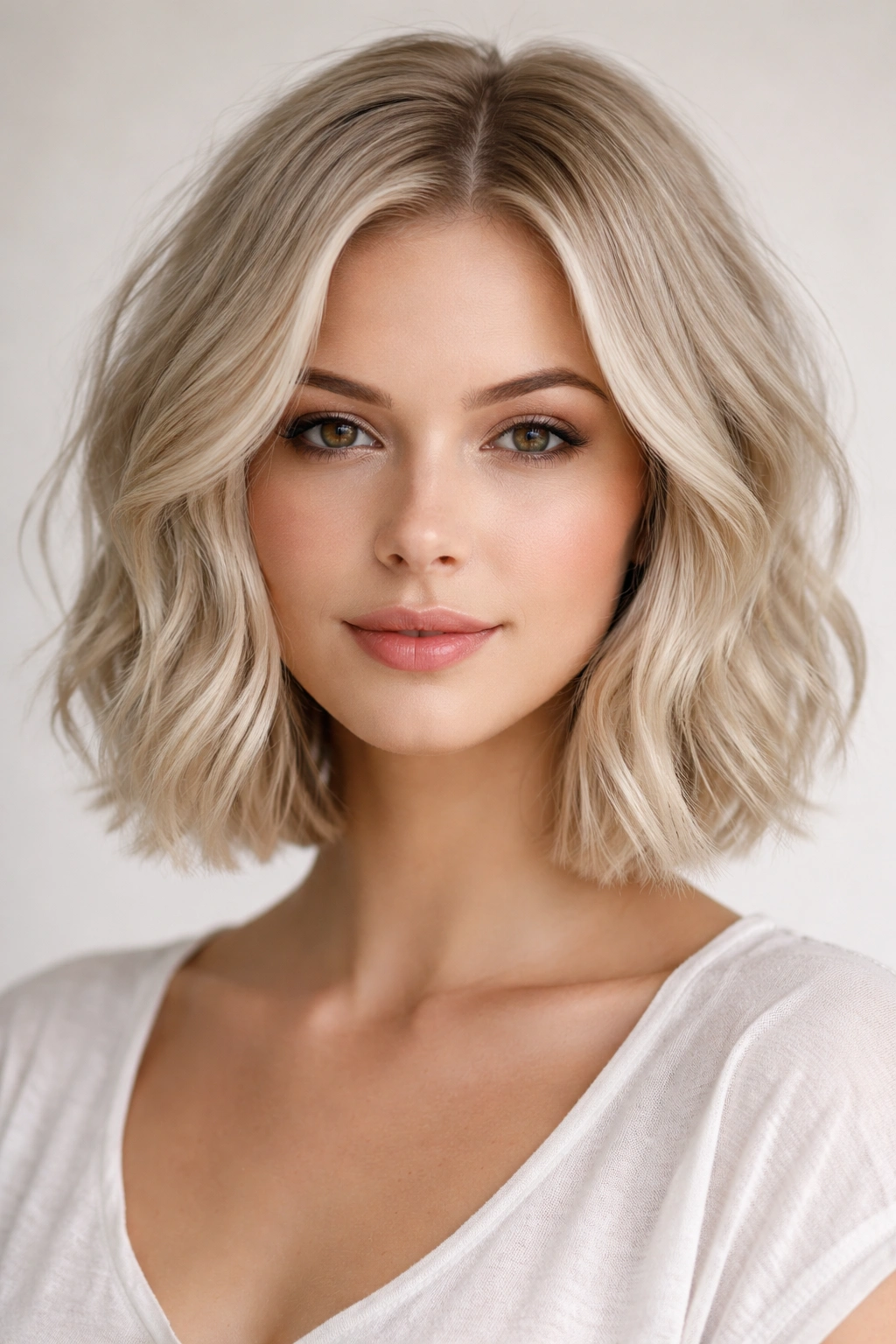
For those who prefer understatement, a subtle tousled bob is sophisticated and easygoing without being dramatic. This cut is nearly blunt with just enough layering to create subtle waves without obvious texture. The styling is minimal—not even trying to look undone, just genuinely easy. Pale blonde or cool-toned ash blonde works beautifully here because the subtlety of the cut pairs with cool, understated color.
The Appeal of Subtlety
Not every great haircut needs to make a statement. Some of the most beautiful short blonde bobs are the ones that look naturally pretty rather than artfully constructed. This style works if you want to feel put-together without the styling requirement of other wavy bobs. It’s the cut you can get and forget about for days, and it still looks good.
Maintaining Simplicity
- Blow-dry with a round brush for body, or air-dry if your hair naturally waves slightly
- A texturizing spray is optional—this cut doesn’t require it
- Light layers mean minimal frizz-fighting needed
- Trims every 6-8 weeks keep the nearly-blunt line clean without over-styling the wave
- This cut shows regrowth slower than choppy versions, so you have flexibility with timing
Final Thoughts
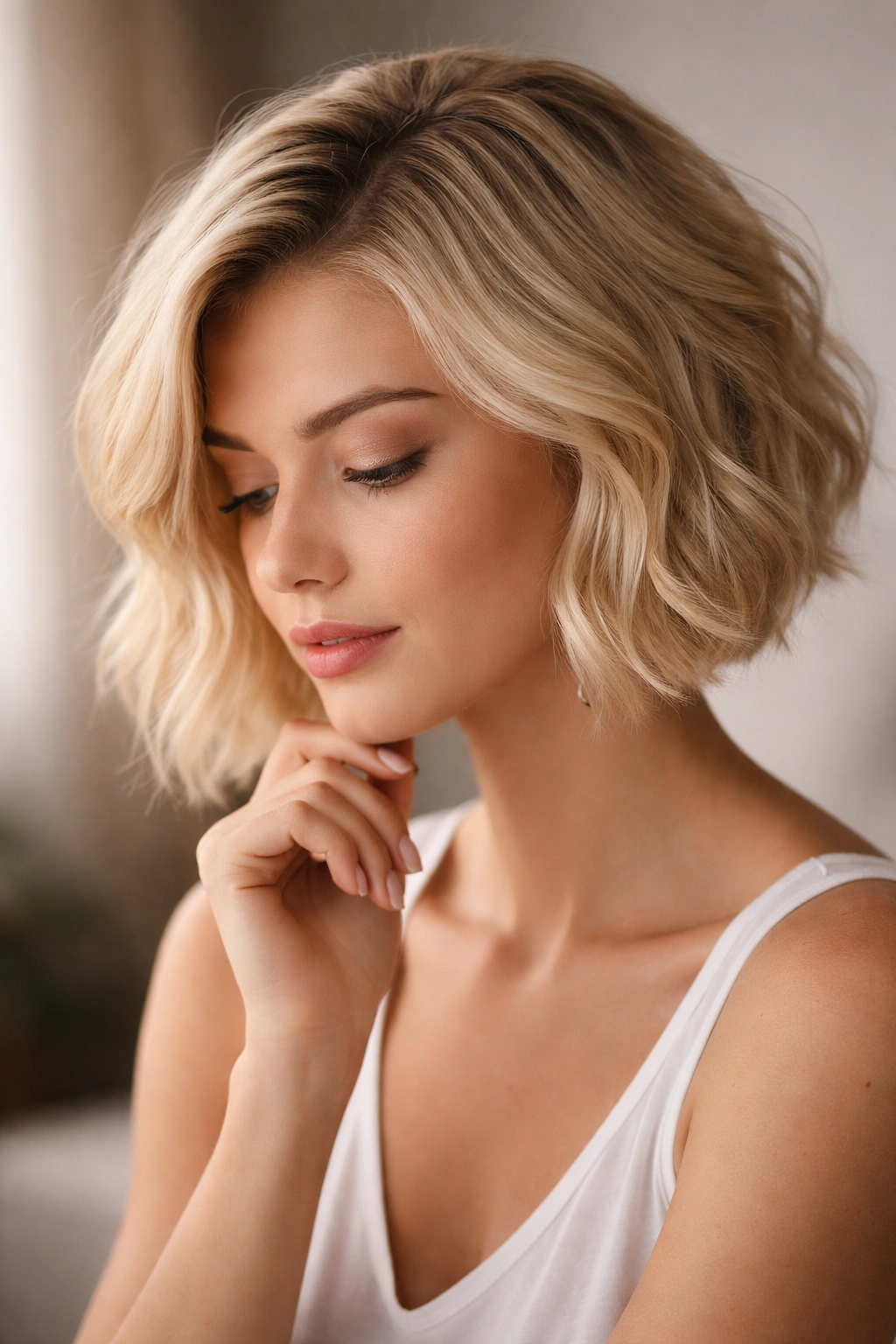
Each of these short wavy blonde bobs delivers something different, but they share one quality: the ability to look polished without feeling like you’re working against your hair. Blonde naturally reads as lighter and brighter, so it amplifies whatever movement and dimension your waves create. The short length gives you practicality and ease, while the waves ensure you’re not sporting a stark, geometric cut if that’s not your vibe.
The best version for you depends on your daily styling willingness, your natural wave pattern, and which aesthetic resonates with how you want to feel. Some of these styles ask for dedicated styling time; others practically style themselves. Some make bold statements; others whisper sophistication. Whatever direction appeals to you, a skilled colorist and stylist who understands how blonde and short wavy layers interact will be your best resource. They’ll be able to customize any of these variations to work with your specific hair type and face shape, turning inspiration into something perfectly you.
