



The wolf cut has become one of the most requested styles in salons, and for good reason. This hybrid haircut blends the rebellious textures of a shag with the modern structure of a mullet, creating a look that’s inherently edgy, movement-rich, and undeniably cool. When you pair a wolf cut with natural waves and keep the length in that sweet medium zone—typically between chin and shoulder length—you get a style that’s dramatic enough to turn heads but wearable enough for everyday life.
What makes the medium wavy wolf cut so appealing is that it works with your hair’s natural texture instead of fighting it. The choppy layers, textured ends, and structured crown create the perfect canvas for waves to do what they do best: catch light, create dimension, and add volume without requiring hours of styling. Whether your waves are tight curls, loose undulations, or somewhere in between, a well-executed wolf cut amplifies them, giving you a style that looks intentional and effortlessly put-together.
The beauty of this cut is its versatility. You can dress it up, tone it down, style it sleek, or let it be gloriously messy depending on your mood and the occasion. Different variations offer different vibes—some feel very fashion-forward and editorial, while others lean into that more relaxed, lived-in aesthetic. The key is finding the specific wolf cut variation that matches your hair type, face shape, and the energy you want to project.
1. Textured Wolf Cut With Feathered Layers
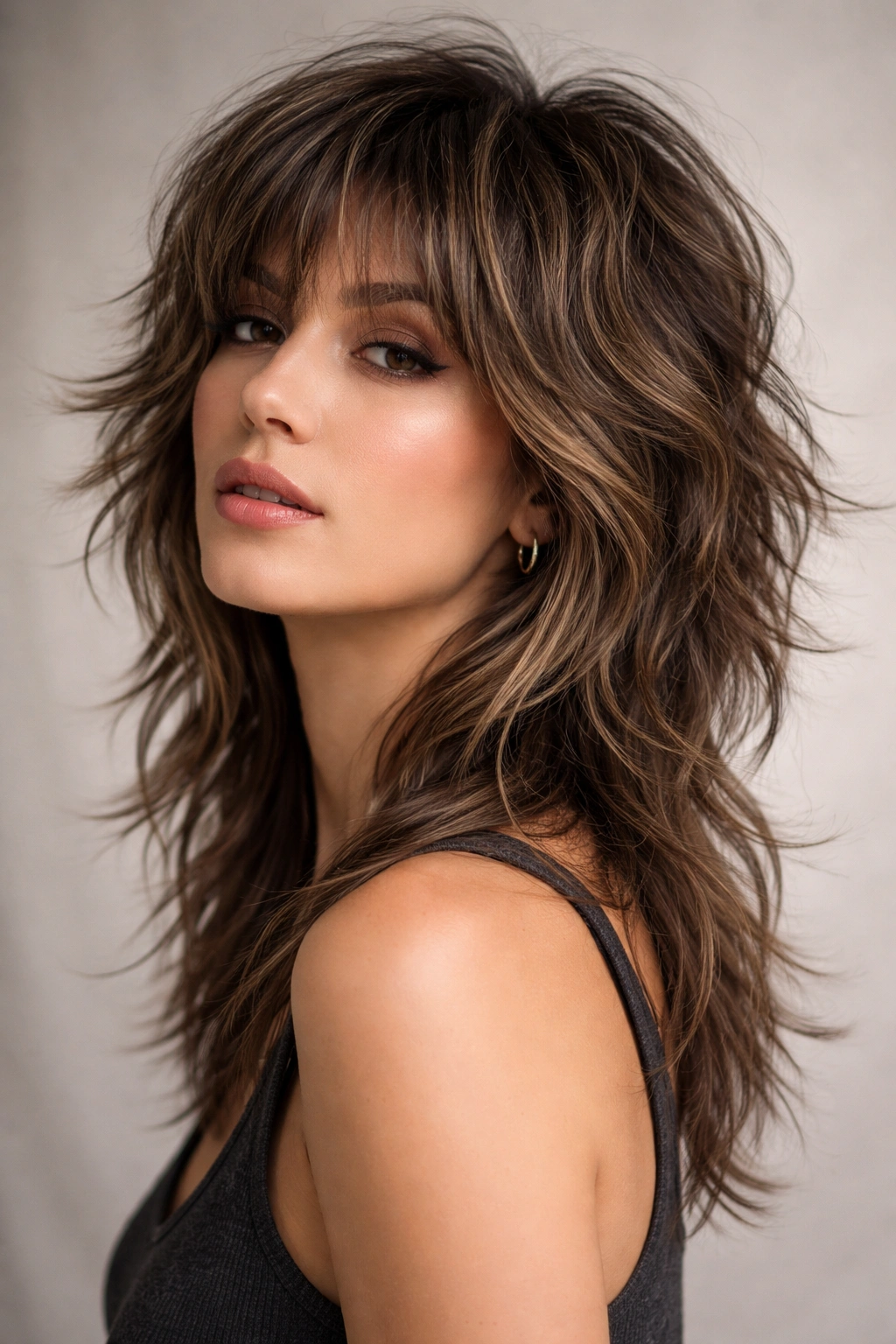
This is the classic interpretation of the wolf cut, featuring heavily feathered layers throughout that create a super textured, almost shaggy appearance. The crown is voluminous and lifted, the mid-lengths are choppy and choppy, and the ends are deliberately piece-y and separated. With wavy hair, each layer catches your waves individually, creating a multidimensional effect that’s almost impossible to achieve with straight hair.
Why This Version Works for Waves
The feathering technique is specifically designed to work with texture rather than against it. Each feathered layer creates a channel for your waves to fall through, so instead of frizz or undefined waviness, you get sculpted, intentional-looking curls and waves. The technique actually reduces bulk while maintaining that coveted volume, which is exactly what you want when you’re working with wavy or curly hair and a medium length.
How to Style It
- Use a texturizing spray or salt spray on damp hair to enhance the natural wave pattern
- Apply a lightweight mousse or curl cream to mid-lengths and ends
- Blow-dry with a diffuser attachment or let air-dry for a more tousled effect
- Scrunch upward as you dry to encourage wave formation and separation
Pro tip: Sleep on this style with a pineapple bun (gathered loosely at the crown) to preserve waves overnight and wake up with definition already in place.
2. Blunt Wolf Cut With Contrast Texture
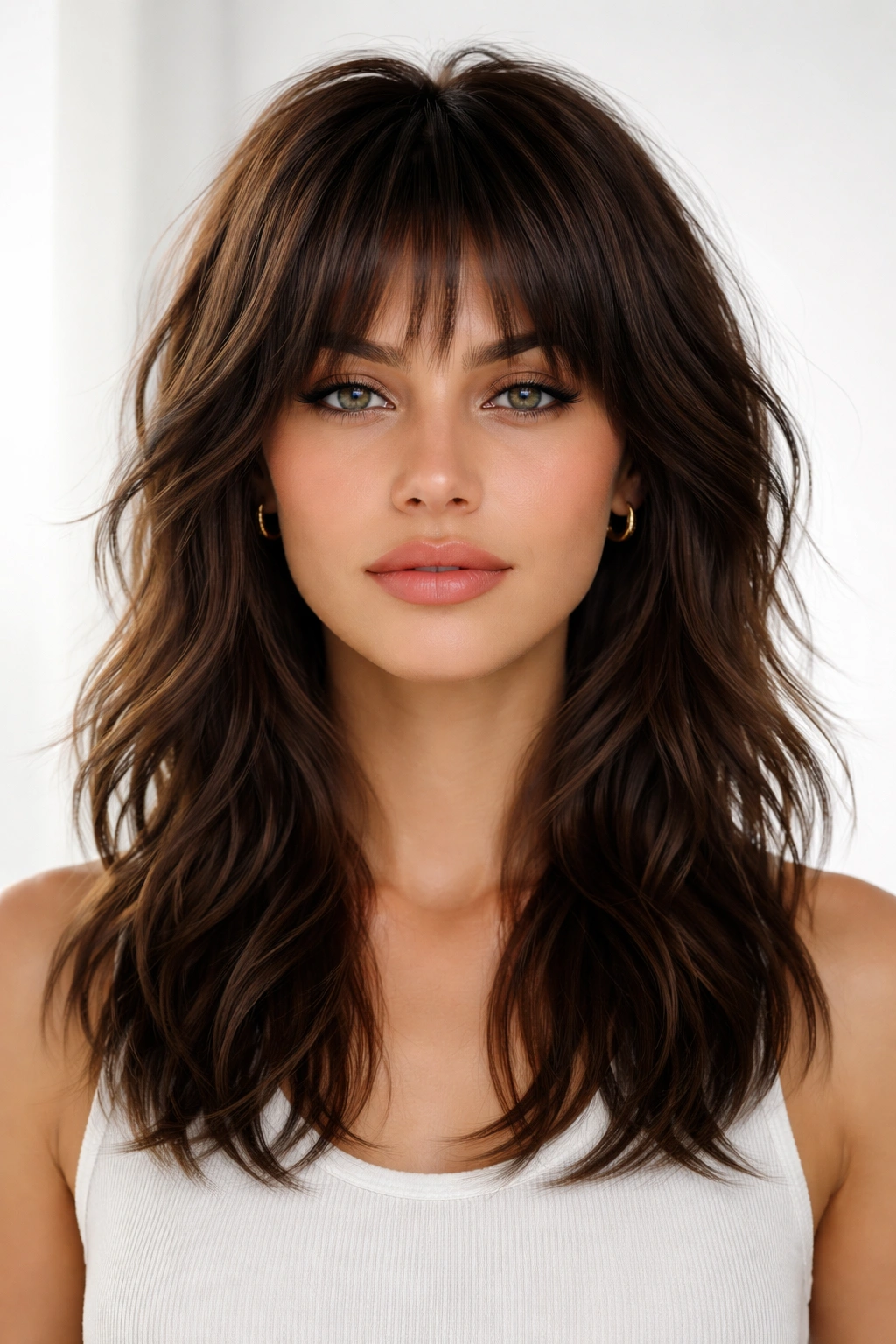
This version keeps the overall shape more structured and blunt, particularly at the ends, while still incorporating the layered crown that defines a wolf cut. The contrast between the sharper lines and the soft waves creates a striking visual that’s modern and polished. This works beautifully if you want the wolf cut silhouette without it feeling too chaotic or undone.
What Makes This Different
The blunt ends create a frame that contains your waves rather than letting them scatter everywhere. It’s a more controlled interpretation that still delivers the edgy, contemporary vibe, but with a cleaner presentation. This version reads as intentional styling rather than accidental texture, which appeals to people who want a statement cut without the “barely brushed” aesthetic.
Styling and Maintenance
- Blow-dry on high heat with a round brush to tame ends and create shape
- Use a smoothing serum or shine spray to enhance the blunt lines
- Waves still provide movement, but you’re working with slightly more definition overall
- Trim every 4-6 weeks to maintain the sharpness of the blunt ends
Insider note: This cut photographs incredibly well because the contrast between texture and blunt lines creates visual drama even in photos.
3. Shaggy Wolf Cut With Long Choppy Pieces
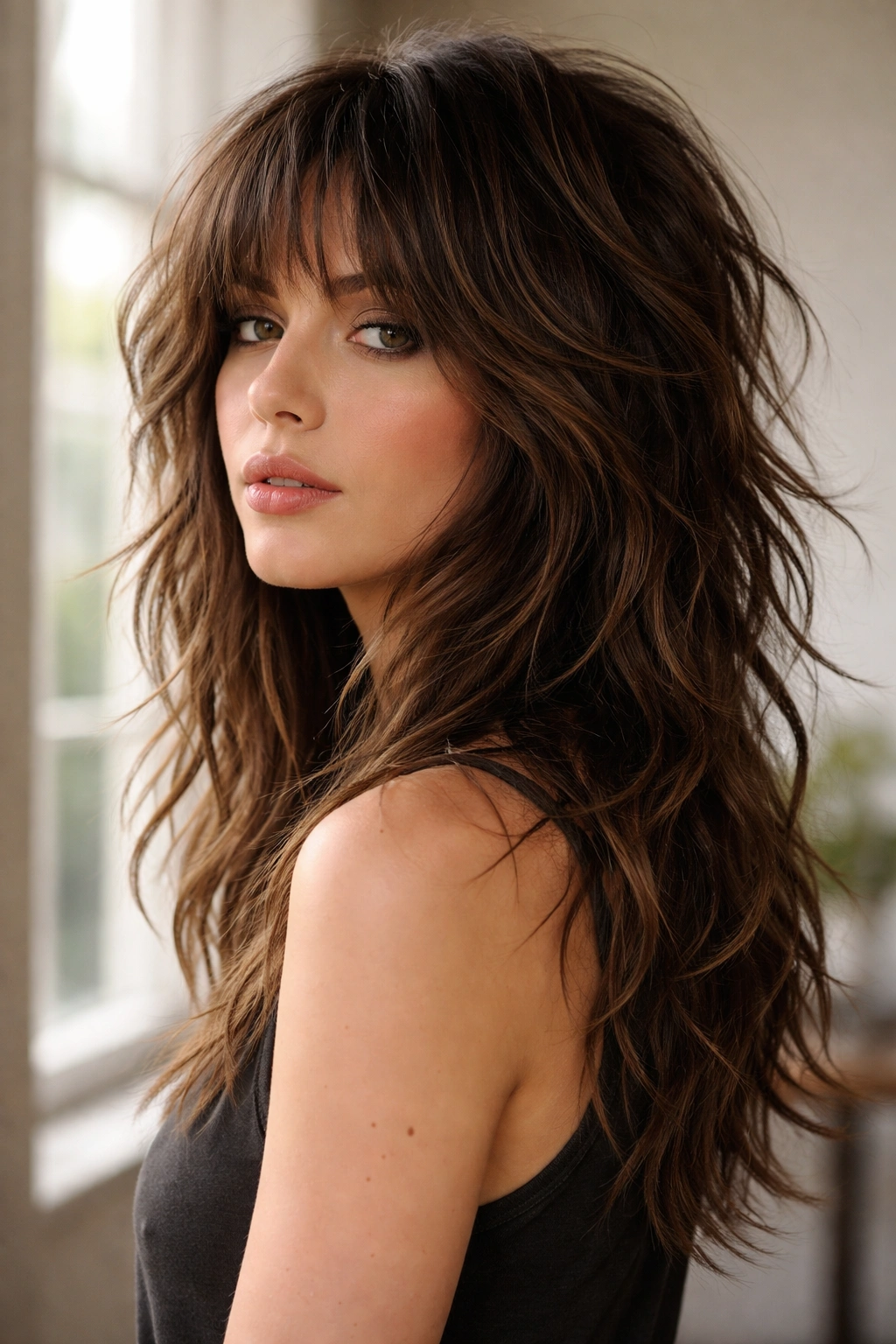
Lean all the way into the “shag” side of the hybrid by opting for longer, more dramatic choppy pieces throughout. The layers are more pronounced and spaced further apart than a tightly feathered cut, which means there are actual distinct chunks of hair creating texture and movement. With medium-length wavy hair, these choppy pieces flow beautifully and create movement all the way down to the ends.
The Layering Approach
The magic here is in the spacing of the layers. Instead of consistent feathering, you’re getting chunks of longer hair interspersed with shorter, choppy sections. This creates peaks and valleys in your silhouette—some areas are fuller and longer, other areas are noticeably shorter. With waves, each of these different lengths responds to your texture differently, creating natural-looking variation that reads as super intentional.
How to Work With This Cut
- Embrace slightly messier styling—this cut is designed to look a bit undone
- Use texturizing products rather than smoothing products to maintain the choppy feel
- Waves are your friend here; they’ll naturally emphasize the different lengths
- You can wear this slicked back for an edgy look or let waves do their natural thing
Worth knowing: This version requires slightly more frequent trims (every 4-5 weeks) because the different lengths of choppy pieces can look weird if they get too grown out.
4. Wolf Cut With Subtle Layers and Soft Waves
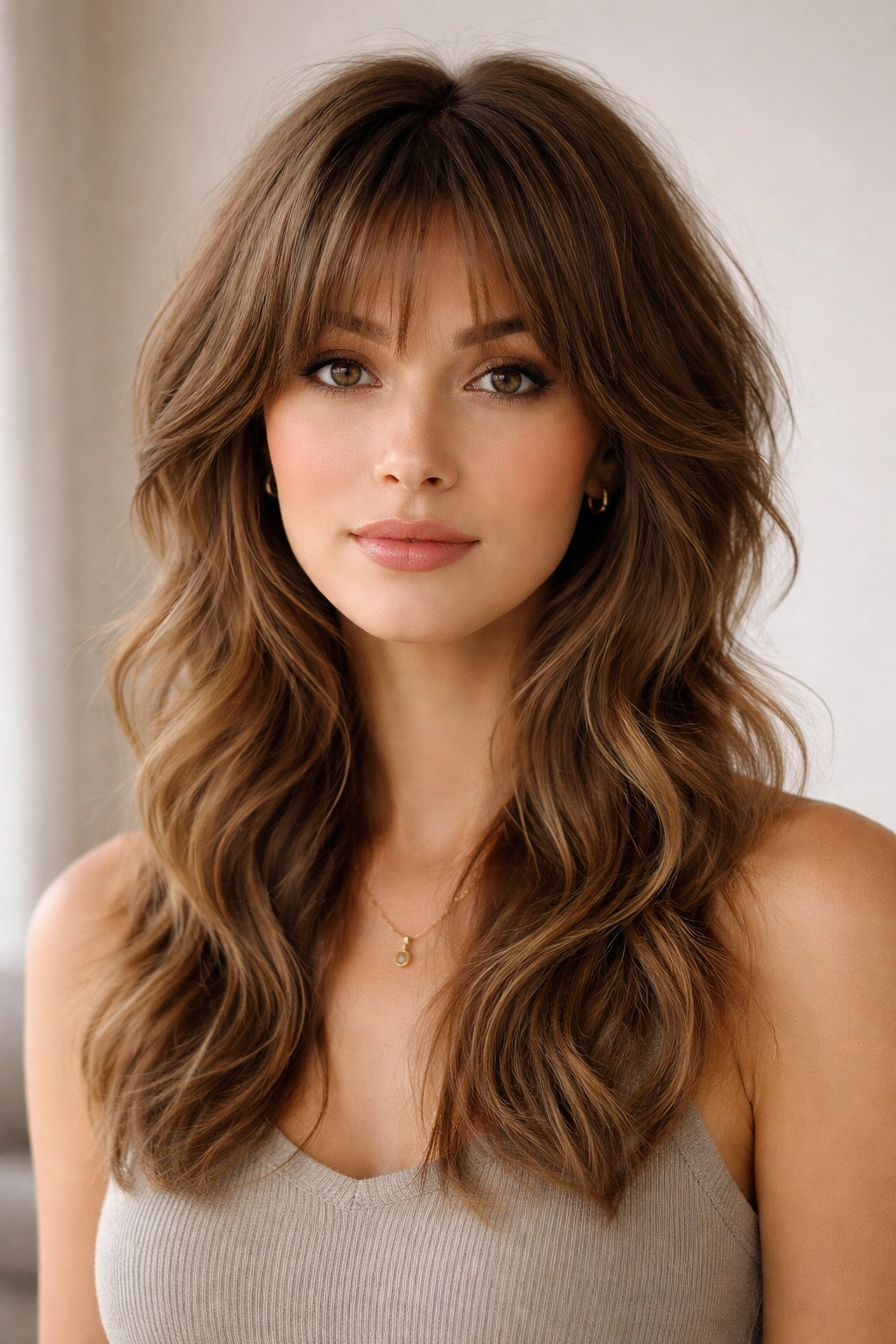
If you want the structural benefits of a wolf cut without the aggressive texture and chaos, this version delivers. The layers are there—you definitely have that elevated crown—but they’re more subtle and less pronounced than classic wolf cuts. The waves are softer, almost gentle, creating an overall effect that’s modern without being edgy or rebellious.
Perfect For a Conservative Approach
This is ideal if you like the wolf cut concept but work in a corporate environment, prefer a more polished aesthetic, or just want something that feels less extreme. The cut still has personality and movement, but it reads as “professional with texture” rather than “rock and roll vibes.” Your natural waves provide all the dimension you need without requiring dramatic layering.
Styling for a Polished Look
- Blow-dry smoothly with a paddle brush to align waves into gentle curves
- Use a light styling cream or serum for definition without crunch
- The subtle layers mean fewer flyaways, so this style air-dries more predictably
- Waves stay defined and shaped throughout the day without constant refreshing
5. Side-Swept Wolf Cut With Asymmetrical Layers
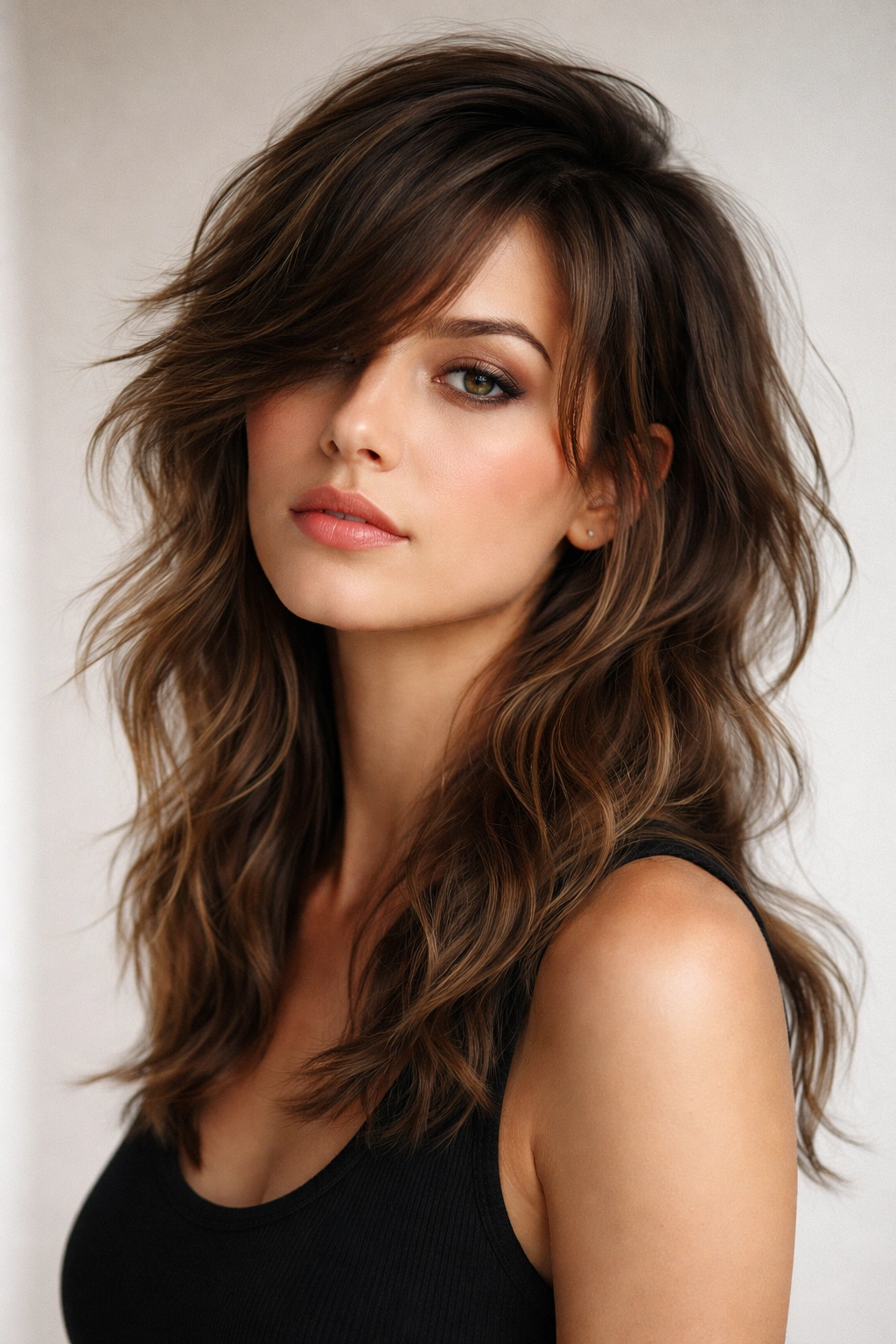
This variation plays with asymmetry, with layers that are slightly longer on one side than the other, and a side-swept parting that emphasizes one side of your face. The longer side falls past the shoulder while the shorter side sits closer to the jaw. With wavy hair, this asymmetry creates gorgeous movement on both sides, with the longer side flowing and the shorter side flipping and curling.
Why Asymmetry Works Here
An asymmetrical wolf cut is inherently more interesting visually than a symmetrical one. The different lengths on each side make the cut feel more intentional and editorial. With waves, the asymmetry becomes even more dramatic because your waves will curl and flow differently on each side depending on the length. You get a style that’s constantly shifting slightly depending on how you part it and style it.
Styling With Asymmetry
- Experiment with parting on different sides for different moods
- The longer side can be tucked behind the ear or allowed to flow forward
- Shorter side works beautifully swept across or pinned back
- Waves adapt naturally to the asymmetrical lengths and create flattering dimension
6. Low-Volume Wolf Cut for Fine or Thin Hair
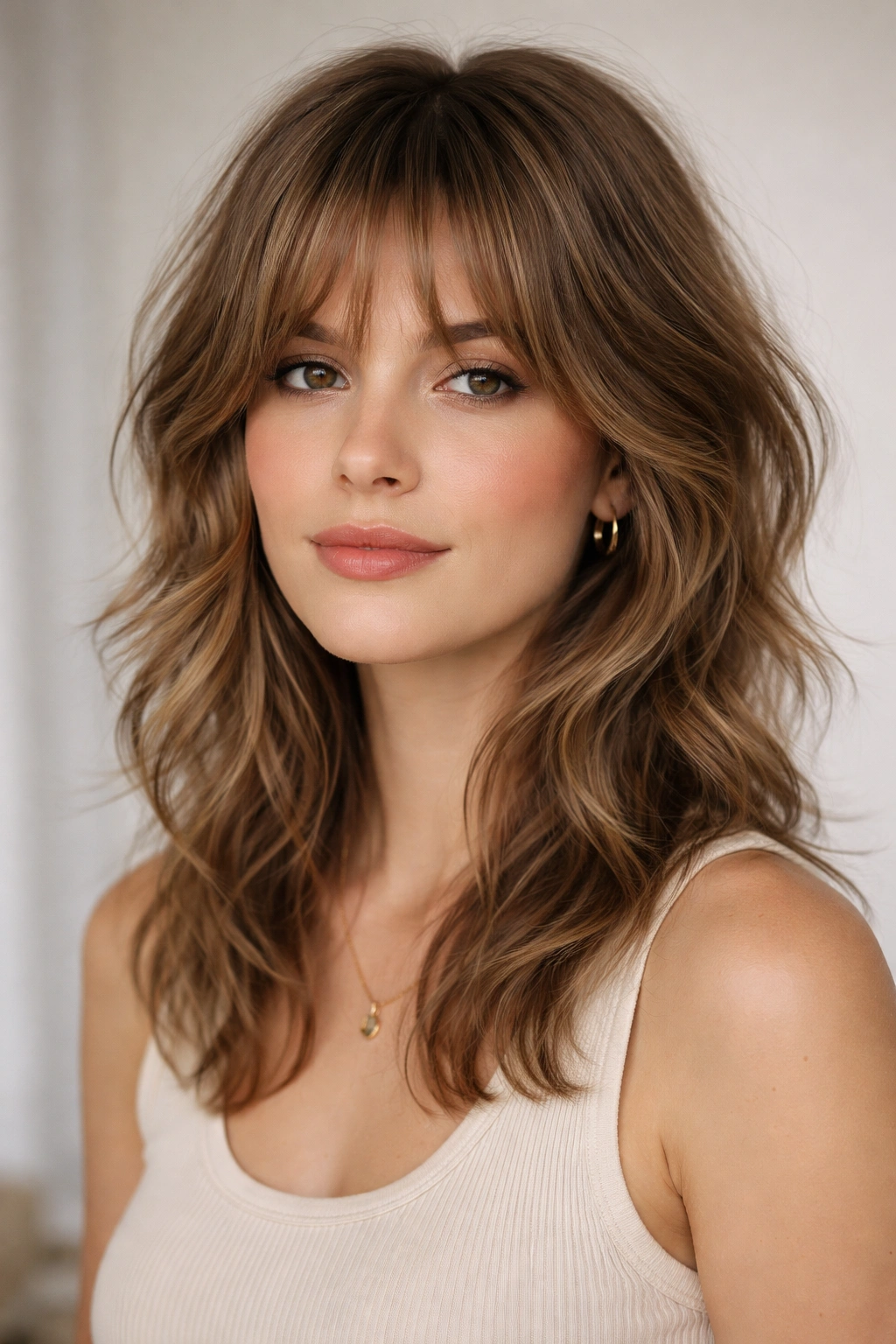
Not all wavy hair is thick and dense. If you have fine waves or thinner hair, a traditional wolf cut can sometimes feel overwhelming or make your hair look thinner in the wrong places. This version uses the wolf cut structure but with more restrained layering that doesn’t compromise the overall volume and density of your hair. You get the shape without the over-texturing.
The Fine-Hair Approach
The layers are there, but they’re less aggressive. Instead of choppy, spaced-out layers that might expose your scalp, you’re using closer, more subtle layers that create texture without removing bulk. The crown is still lifted and elevated, but it’s achieved through smart layering rather than aggressive choppy pieces. With wavy hair, even subtle layers create beautiful movement and dimension.
Maintaining Density
- Blow-dry at the roots to maximize natural volume without removing length
- Use volumizing products rather than heavy creams or oils
- Avoid layering products too heavily throughout the mid-lengths—let waves speak for themselves
- Ask your stylist to concentrate layers at the crown and end of the hair, keeping mid-lengths fuller
Pro tip: This cut actually works beautifully with a bit of product-free styling. Let your waves do the work, and you’ll have more natural-looking volume.
7. Textured Shag Wolf Cut With Money Pieces
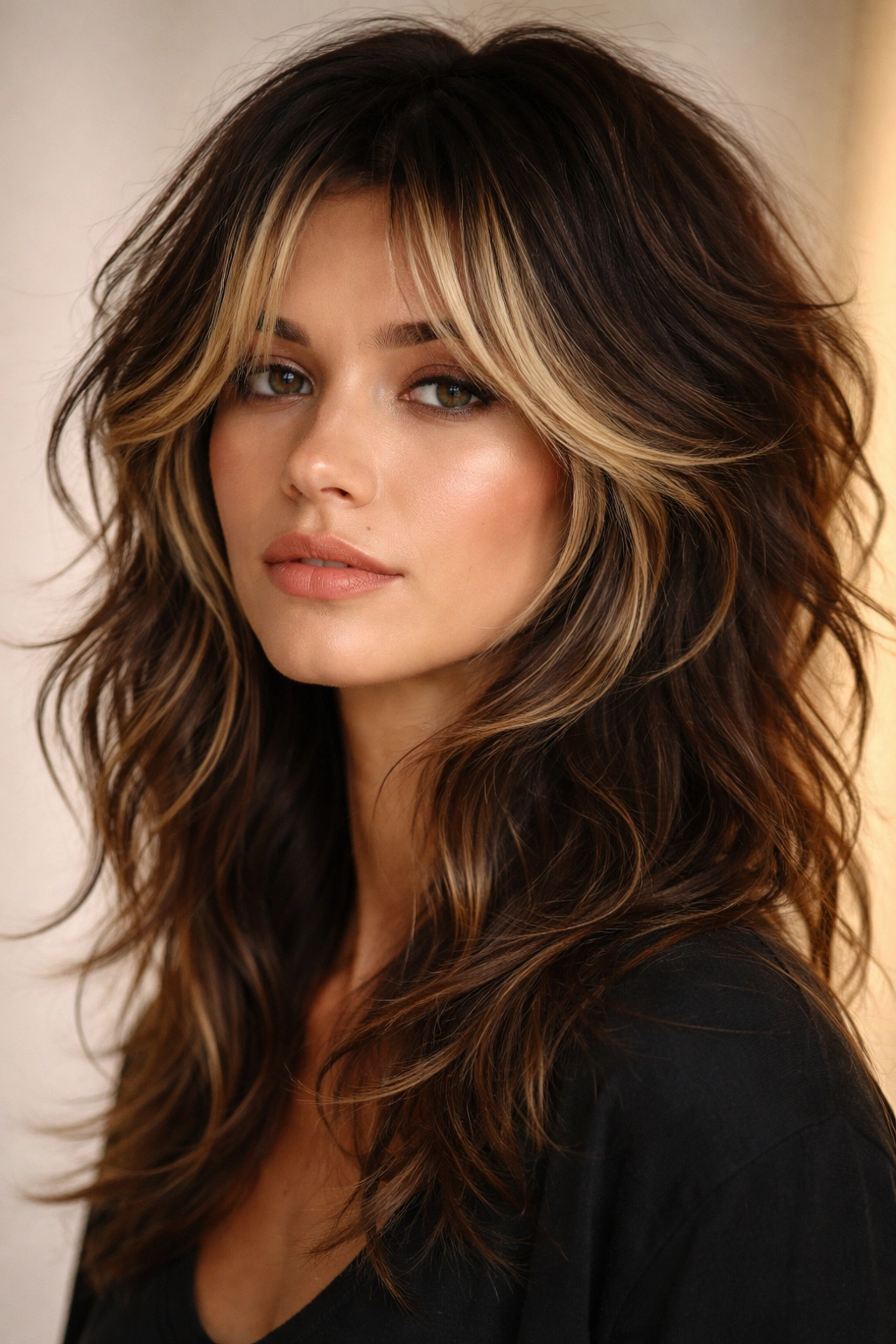
Take the wolf cut and emphasize the “money pieces”—those face-framing layers that are shorter and create definition around the face. This version combines the textured shag energy of a wolf cut with deliberate face-framing that flatters your features and draws attention where you want it. The money pieces work beautifully with wavy hair because they create movement right at the face.
The Face-Framing Strategy
Money pieces are intentionally cut shorter and positioned to frame your cheekbones, jawline, and face shape. In a wolf cut context, these pieces are even more important because they anchor the textured, shaggy feeling and create a polished focal point. With waves, the money pieces curl beautifully and catch light, framing your face in a really flattering way that feels intentional.
Styling to Emphasize Money Pieces
- Style money pieces with a curling iron or on a round brush to shape them toward your face
- Use a lightweight serum to add shine and definition to face-framing pieces
- The textured shag can be messier, but face-framing pieces should be fairly defined
- Waves naturally create movement in money pieces, so you don’t need heavy styling
8. Wolf Cut With Grown-Out Bangs
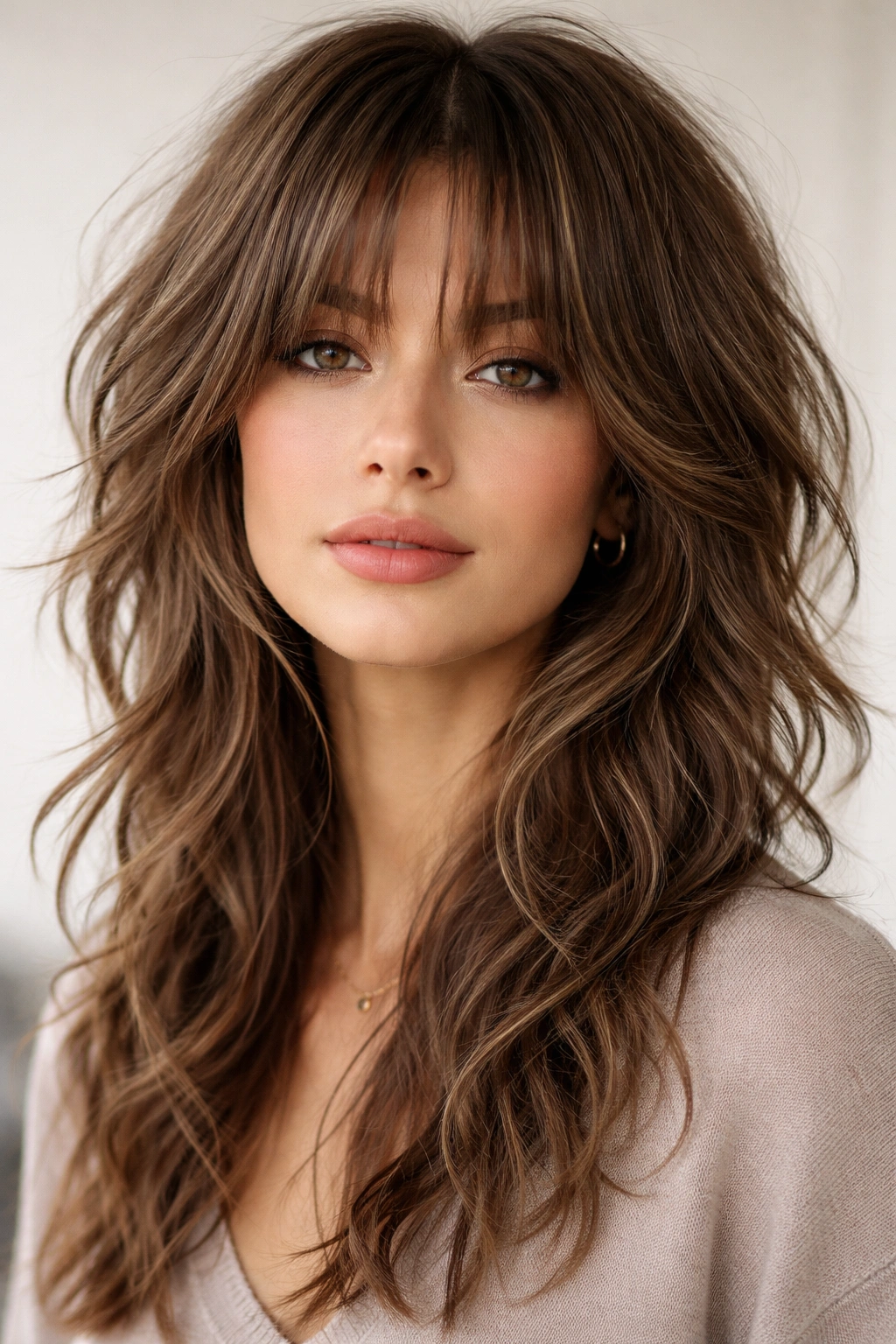
This version incorporates longer, wispy bangs that are grown out enough to blend into the overall cut but still create that signature fringe effect. The bangs are textured, choppy, and integrated into the layered structure rather than existing as a separate element. With wavy hair, grown-out bangs look incredibly romantic and movement-filled, creating a softness that balances the edginess of the wolf cut.
How Grown-Out Bangs Work
Bangs that are grown out long enough to fall past the cheekbones work beautifully in a wolf cut context. They’re still short enough to create definition and face-framing, but long enough that they blend seamlessly with the rest of the texture. With waves, these bangs curl and move, creating softness around the face that makes the overall look feel less severe and more wearable.
Styling Grown-Out Bangs
- Style bangs with the rest of your wave pattern rather than fighting it
- Use a smaller curling iron or round brush to shape bangs away from the face
- Wavy bangs look best when they’re defined and not frizzy, so use a smoothing serum
- Side-sweep bangs for a softer look or let them flow naturally with your waves
9. Heavily Layered Wolf Cut With Stacked Crown
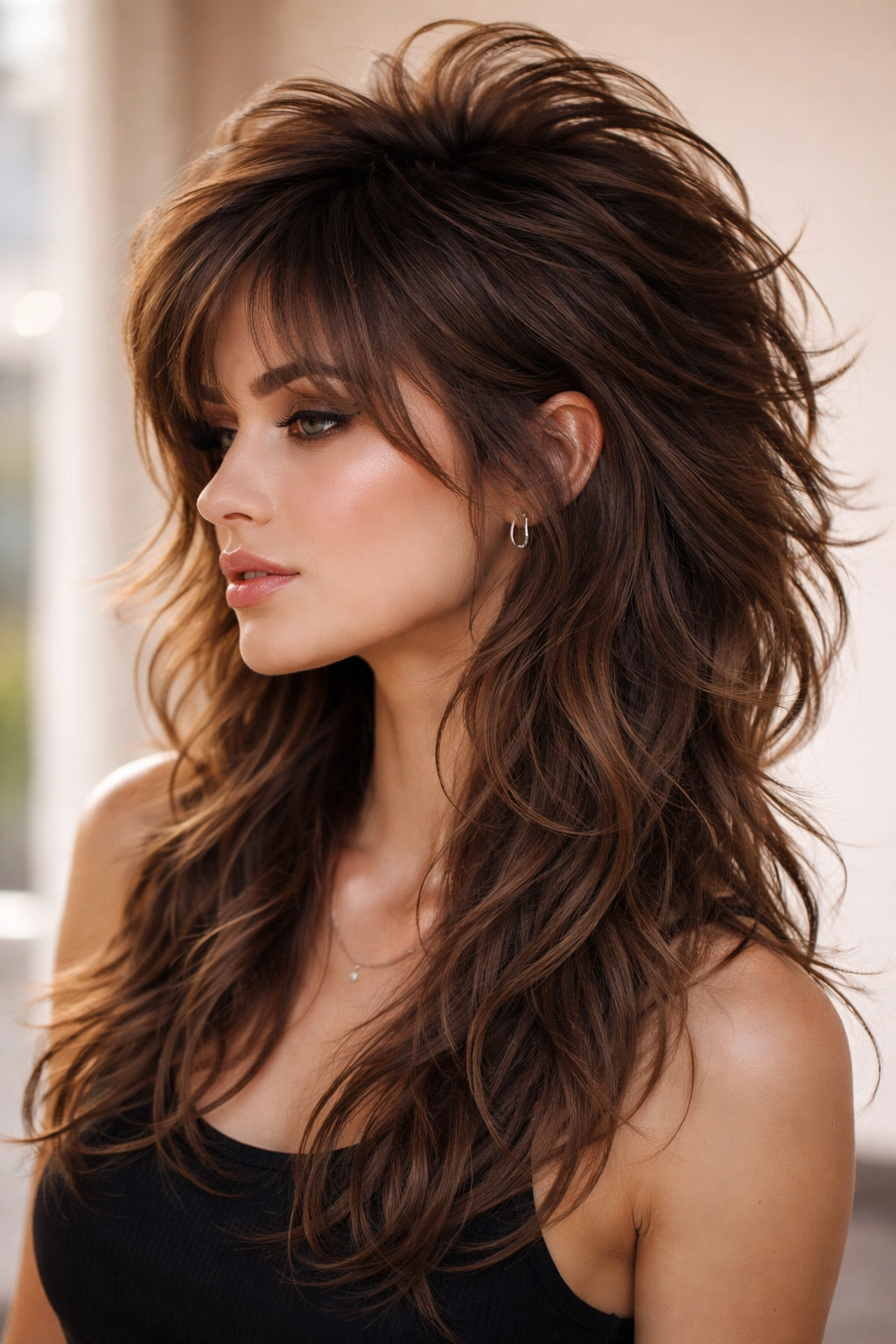
Push the volumizing potential of a wolf cut to the maximum with a heavily stacked crown that’s packed with layers, combined with longer, choppier pieces throughout the mid-lengths and ends. The crown sits quite high and is noticeably shorter than the rest of the hair, creating that dramatic silhouette that says “I’m here, I’m bold, and I’m not apologizing.” With wavy hair, this extreme layering creates an almost wild, effortlessly textured effect.
The Stacked Crown Effect
A stacked crown means multiple layers positioned very close together in a smaller area, which creates a lot of texture and lift. This is the most dramatic interpretation of the wolf cut, creating a silhouette that’s wider and taller at the crown and longer, choppier at the bottom. With waves, each layer responds independently, creating tons of dimension and movement that makes the cut feel alive and dynamic.
Styling the Stacked Effect
- Blow-dry roots to maximize lift and height
- Use a texturizing spray to enhance separation of layers
- Scrunching as you dry encourages waves to form and emphasize all the different layers
- This style looks best when you embrace the texture rather than trying to smooth it
Insider note: This cut requires commitment. It needs regular trims to maintain the stacked shape, and it definitely reads as a statement cut rather than subtle.
10. Soft Wolf Cut With Longer Ends
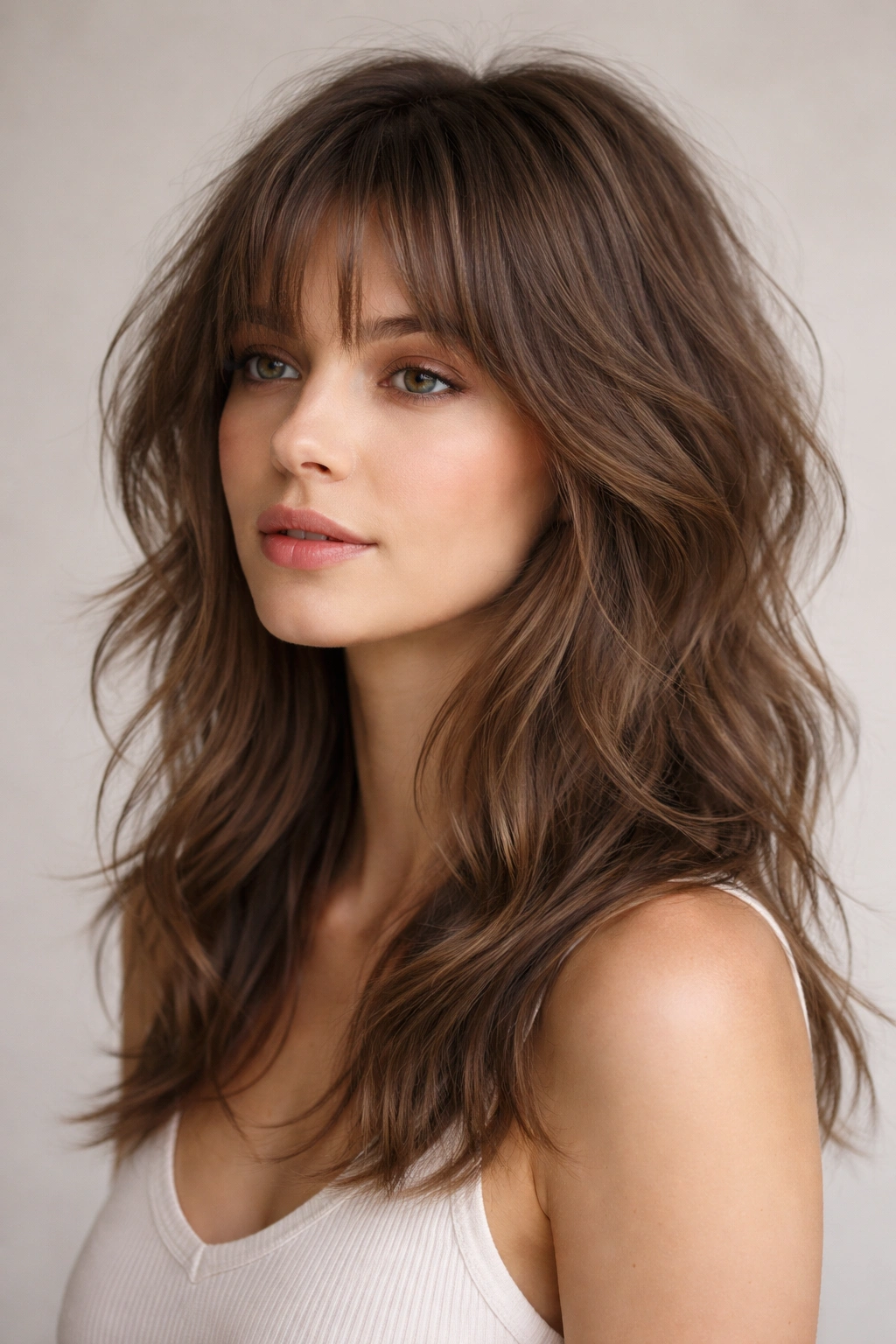
This version keeps the medium length closer to shoulder-length rather than chin-length, with layers that are considerably less dramatic than a traditional wolf cut. The crown is elevated and textured, but the overall shape is longer and flowy, with waves making up the primary visual texture rather than heavy layering. It’s a wolf cut for people who want the silhouette and crown elevation without the aggressive choppy feeling.
The Longer, Softer Approach
By keeping the overall length longer and using more subtle layering, you get a style that feels contemporary without being extreme. The layers are definitely there in the crown and mid-lengths, but they’re more understated. With wavy hair, the waves themselves provide all the texture and movement you need, and the layering just enhances what’s already there rather than creating all the texture from scratch.
How to Wear It
- Waves are the star here, so style them fully and let them create movement
- Use a diffuser or air-dry for the most natural wave pattern
- You can wear this tucked behind ears for a sleeker look or down for maximum movement
- The softness means this style works in more settings than an aggressive wolf cut
11. Color-Friendly Wolf Cut With Contrasting Layers
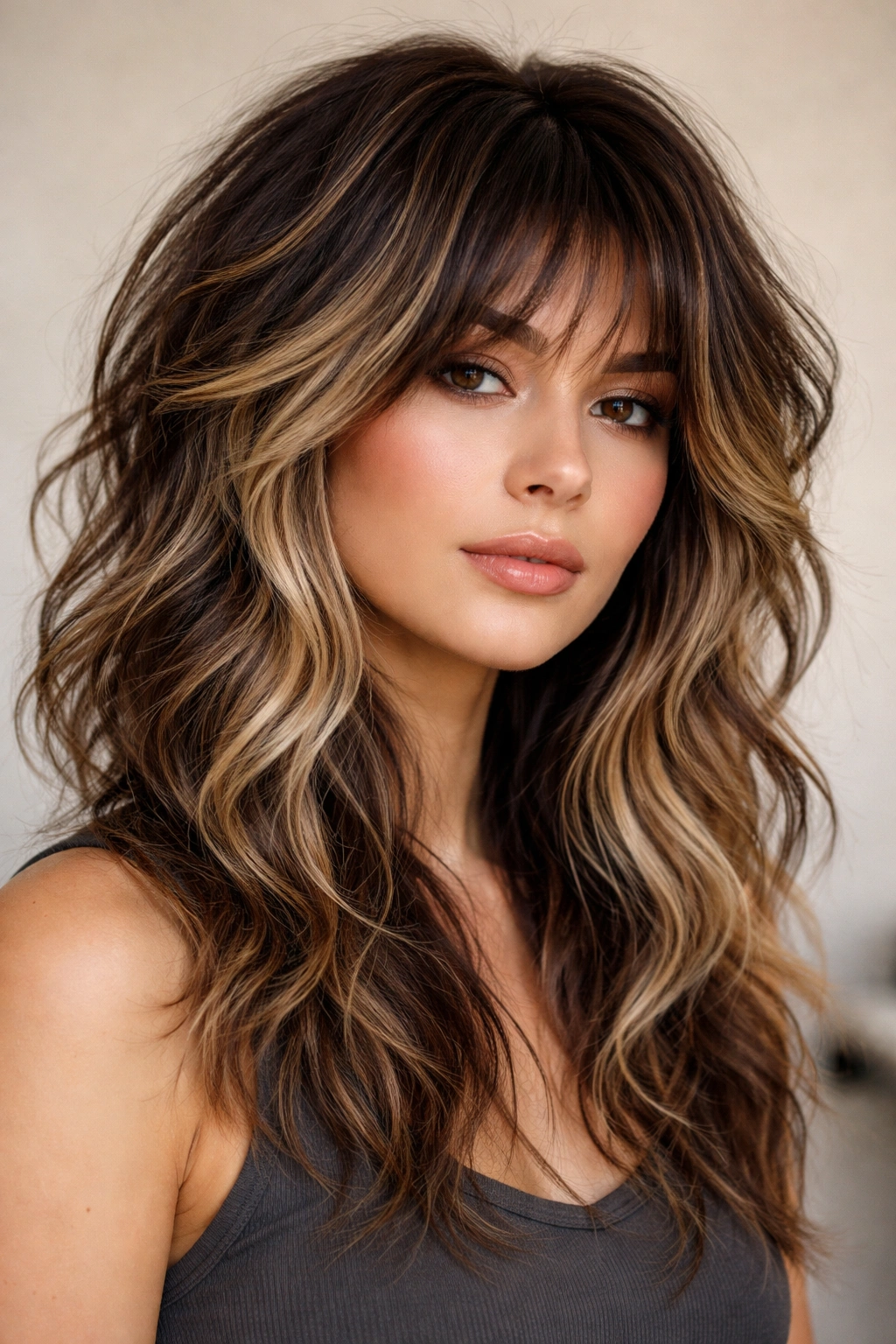
Design the wolf cut specifically to showcase color—whether that’s balayage, highlights, dimension, or even a bold color shift. The layering is positioned to frame and emphasize colored sections, and the texture catches light beautifully to show off color variation. With wavy hair, color dimension reads even more dramatically because waves create natural highlights and shadows.
Using Cut and Color Together
The layering of a wolf cut is perfect for showcasing color work because it creates movement that allows different colored sections to catch light differently. Shorter, choppy layers can frame a darker root or a lighter balayage, while longer pieces can flow to show off dimensional color at the ends. With waves, the combination of cut texture and color dimension is incredibly dynamic and catches light constantly.
Styling Colored Waves
- Use color-safe products to maintain vibrancy
- Blow-dry with a diffuser to emphasize light-reflecting wave patterns
- Waves naturally show color variation beautifully, so let them do the work
- Textured styling enhances color dimension more than sleek styling
Worth knowing: If you’re planning a wolf cut to showcase color, communicate this with your stylist before the cut. The layering can be positioned specifically to complement your color plan.
12. Romantic Wolf Cut With Soft Waves and Texture
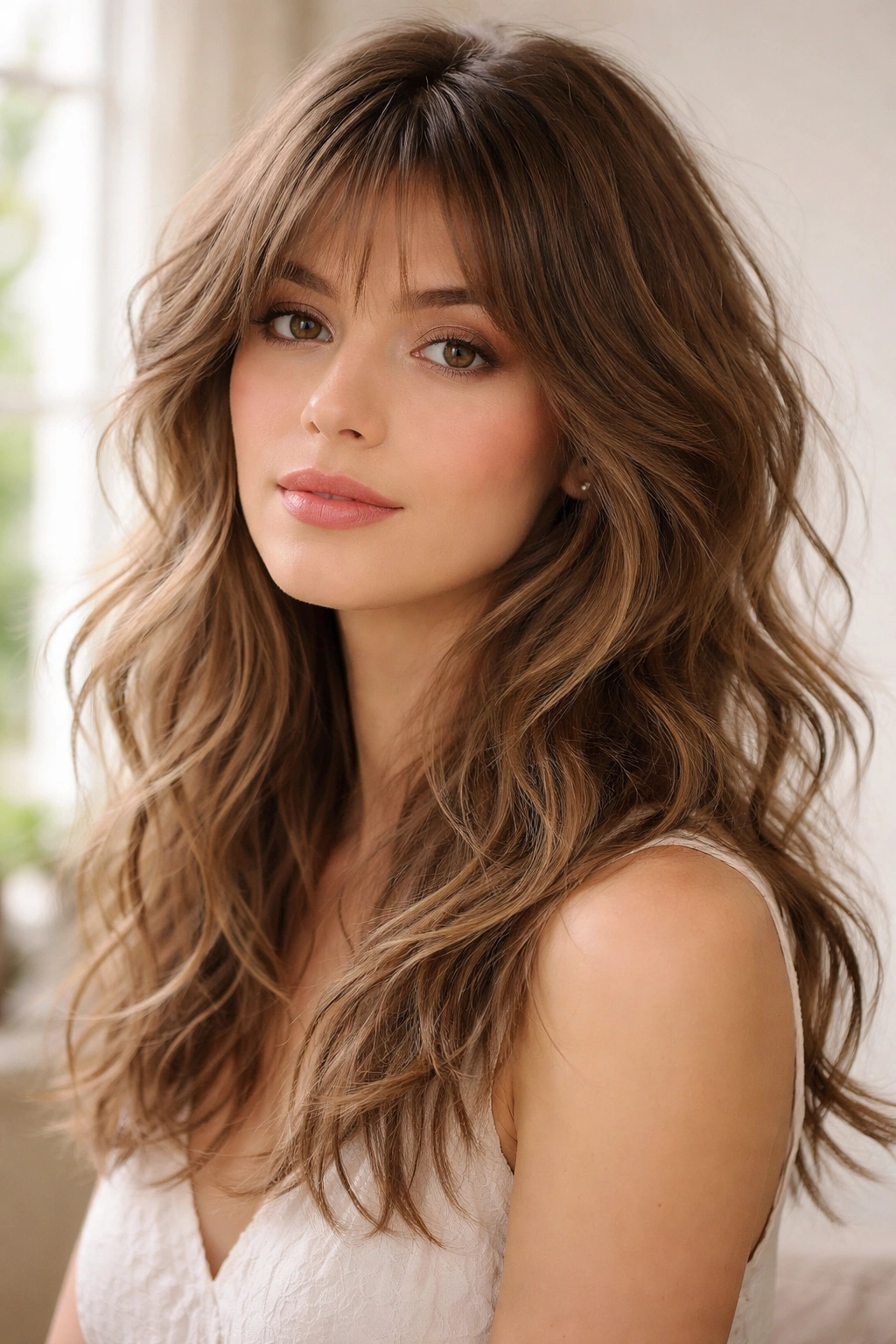
This version prioritizes romance and softness while maintaining the wolf cut structure. The layers are there, creating texture and movement, but they’re softer and more flowing than edgy. The waves are gentle and romantic rather than dramatic. You get a style that’s got the contemporary silhouette of a wolf cut but with a feminine, romantic energy. It’s wolf cut for people who want modern shape without the rebel attitude.
Creating Softness Within Structure
The key is balancing the sharper cut lines with the softness of gentle waves. The layers are structured to create shape, but they flow smoothly from one length to the next rather than creating harsh choppy sections. With wavy hair, this balance feels natural—you get shape from the cut and softness from your waves working together.
Styling for Romance
- Blow-dry gently on medium heat to create soft waves rather than tight curls
- Use a curl cream or wave cream for definition without crunch
- Waves can be tucked behind ears for a softer frame or allowed to flow down
- Consider sleeping on it for that effortlessly romantic wave pattern
13. Textured Wolf Cut With Buzzed or Faded Undercut
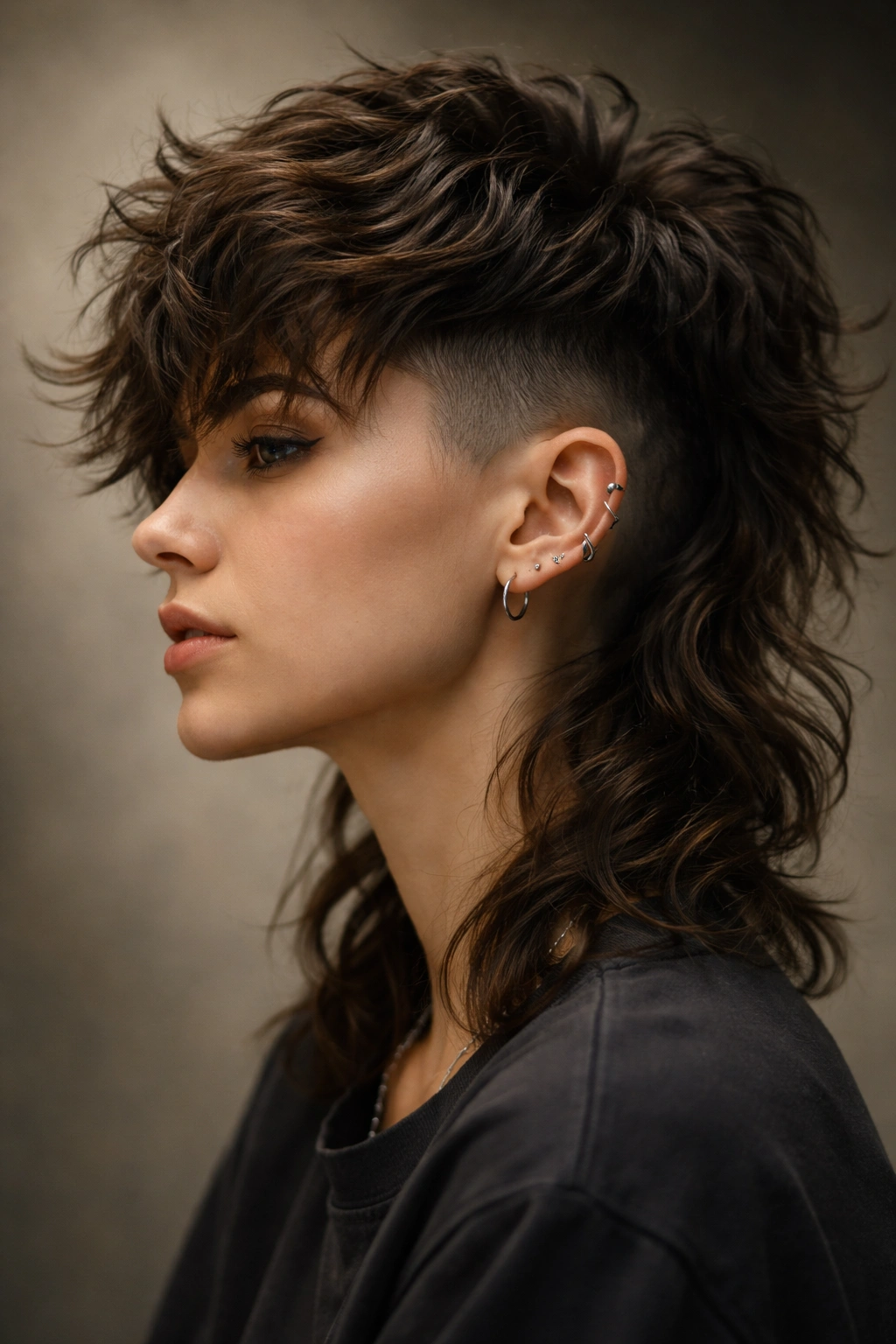
For a bolder interpretation, incorporate an undercut or fade—where the back or sides are clipped very short—that adds an edge to the already-edgy wolf cut. The top layers are textured, layered, and wavy as usual, but underneath there’s clean, short hair that creates dramatic contrast. This version is definitely a statement style, suitable for people who want to look absolutely intentional and fashion-forward.
The Contrast Effect
An undercut creates visual drama and a sense of movement because it emphasizes the contrast between the short underneath and the longer textured top. With wavy hair, this contrast is even more striking because your waves at the top create lots of visual interest while the clean, simple undercut creates clean lines. It’s a style that photographs beautifully and definitely turns heads.
Maintaining the Undercut
- The undercut needs frequent trims (every 2-3 weeks) to maintain clean lines
- As the top grows out, the proportions change, so you might need adjust trims accordingly
- The top can be wavy and textured; the undercut should be precise and clean
- This is definitely a high-maintenance cut in terms of styling and upkeep
14. Natural Texture Wolf Cut for Curly Waves
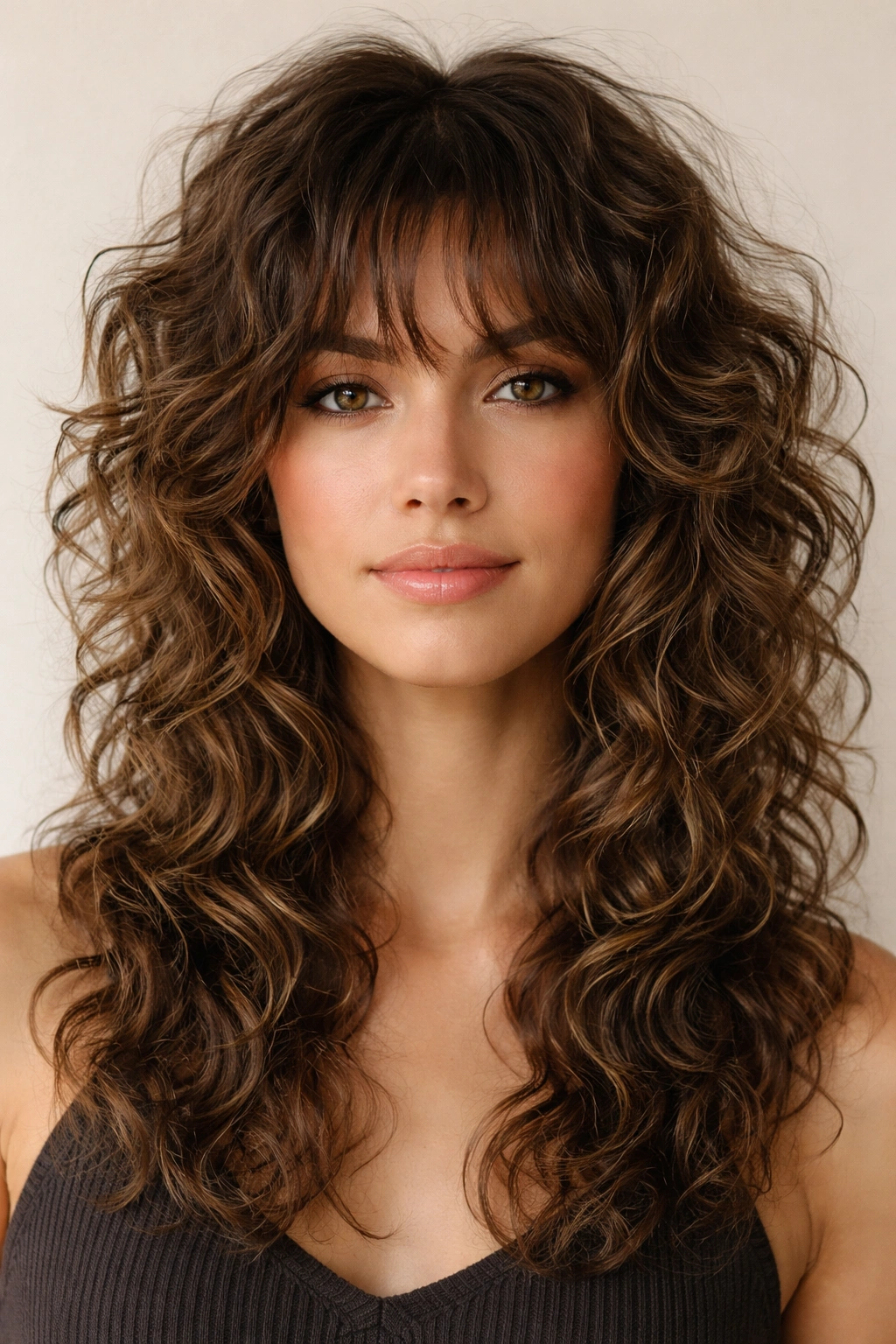
If you have naturally curly or very wavy hair, a wolf cut designed specifically for your curl pattern rather than a blowout-style wave can look absolutely stunning. Instead of styling for waves, you’re letting your natural curls do the work, and the wolf cut layering amplifies every curl. The crown is lifted by the cut itself (and your curls), and the layers create definition without frizz because you’re working with your natural texture pattern.
Embracing Your Natural Pattern
This version uses the wolf cut structure but leans entirely into natural curls rather than styled waves. If you naturally have tight curls or very defined waves, a wolf cut with layers designed for curls creates an almost sculptural effect—each curl is separated and defined by the layering, creating tons of dimension without needing to blow-dry or style heavily.
Styling Natural Curls
- Use curl-defining creams, gels, or butters to enhance definition
- Apply to soaking-wet hair and let air-dry or use a diffuser
- Avoid scrunching too much, which can disrupt your natural curl pattern
- Consider a curly haircut specialist who understands how layers interact with curl
Pro tip: Get your cut on curly hair, not blown-out hair. It’s the only way a stylist can see how the layers actually interact with your natural curl pattern.
15. Honey-Toned Wolf Cut for Sun-Kissed Warmth
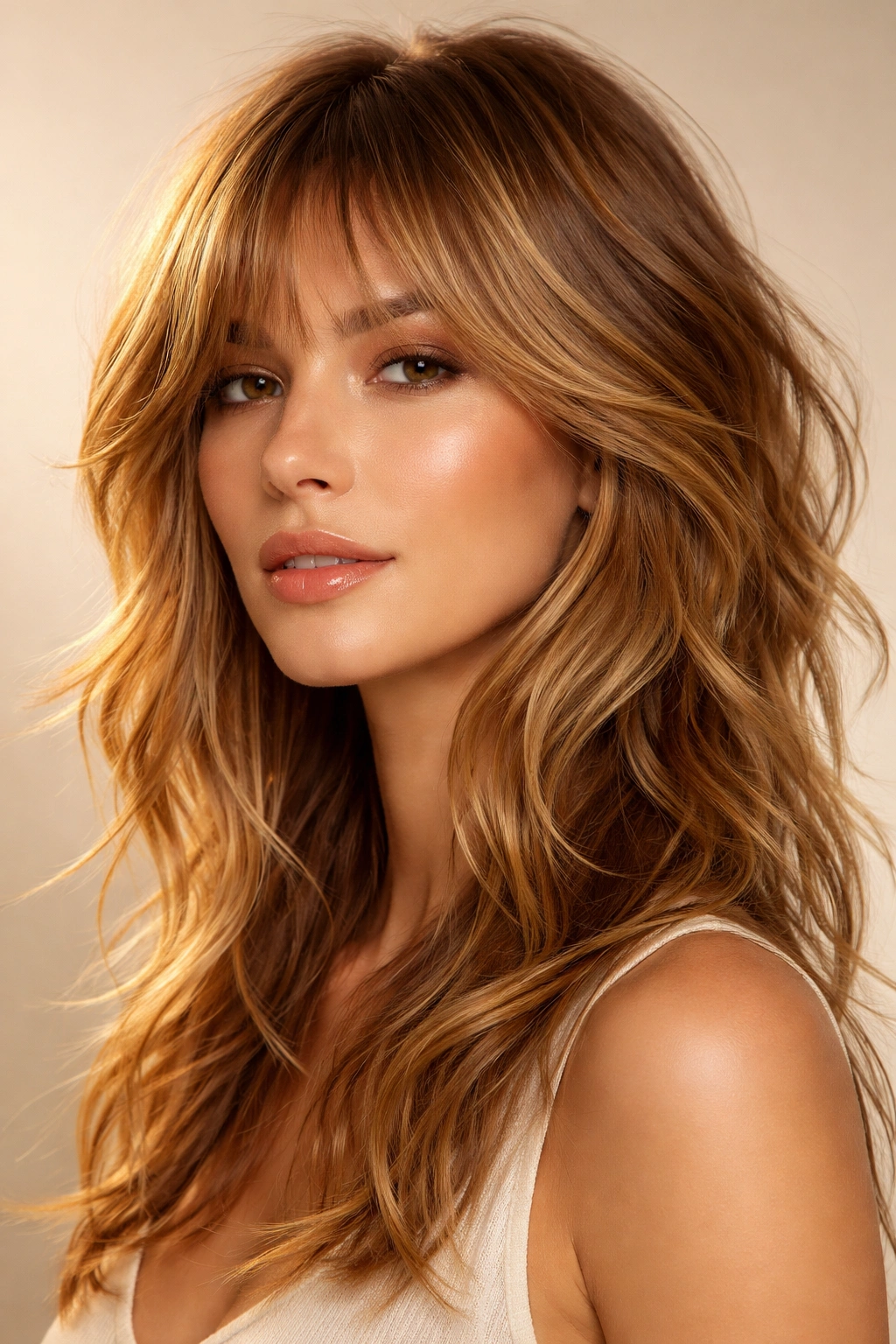
This isn’t just about cut and wave—it’s about using warm, honey-toned color to enhance the texture and movement created by wavy layers. Lighter, golden tones catch light beautifully in textured, layered hair, making every wave and choppy piece look illuminated. The cut is a classic textured wolf cut, but the color amplifies the dimension created by the cut itself.
Color and Texture Synergy
Warm honey tones, whether natural or added through balayage or highlights, work beautifully with the choppy, textured layers of a wolf cut because they catch light and create highlights and shadows throughout your hair. With waves, this is even more striking because waves naturally create light-catching movement, and warm tones amplify that effect. The result is a style that looks dimensional, expensive, and carefully considered.
Maintaining the Look
- Use color-safe shampoo and conditioner to maintain tone
- Blow-dry with a diffuser to enhance light-reflecting wave patterns
- Warm tones look better with some shine, so use a smoothing serum lightly
- Refresh highlights or balayage every 6-8 weeks to maintain the warm tone
16. Modern Wolf Cut With Minimal Layers
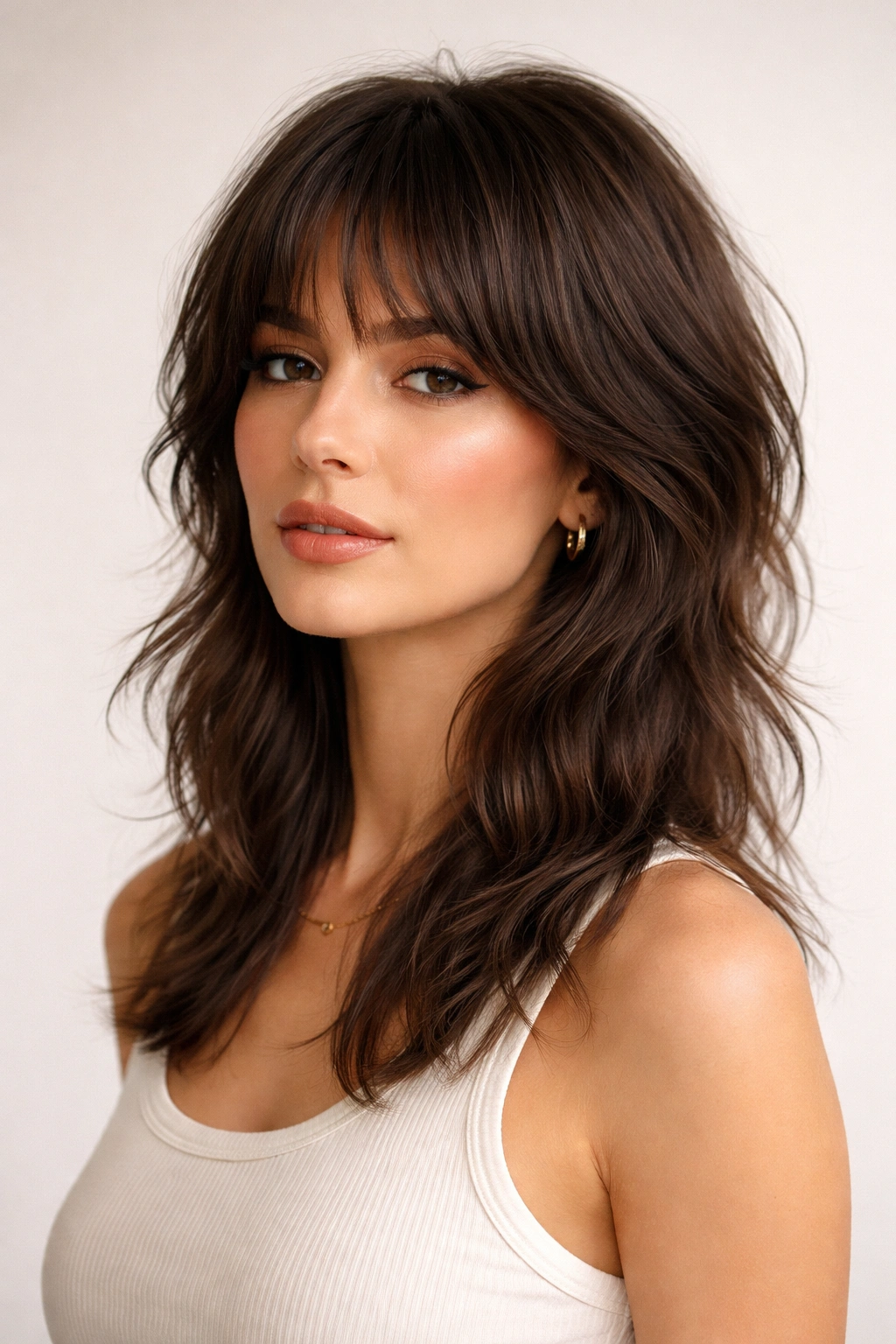
For a contemporary, minimalist interpretation, use the wolf cut silhouette but with significantly fewer, more minimal layers. The crown is still elevated and textured, but not overwhelmingly so. The mid-lengths and ends are mostly the original length with just subtle choppy pieces added for movement. With wavy hair, the waves themselves create texture, so the cut is more about shape and structure than about creating all the texture from layering.
The Minimalist Philosophy
This version is about subtlety and sophistication. You get the contemporary wolf cut silhouette—the elevated crown, the face-framing, the sense of movement—without it feeling over-processed or overly textured. With waves, this actually works beautifully because your waves already provide texture and movement; the minimal layers just refine the shape and enhance what’s already there.
Styling Minimal Layers
- This cut requires less intensive styling since you’re not maintaining tons of layers
- Waves do most of the work; you’re just enhancing them
- Blow-dry on medium heat with a diffuser for natural wave patterns
- This version air-dries more predictably than aggressive wolf cuts
Insider note: If you love the wolf cut vibe but aren’t ready for a fully aggressive cut, this minimal version is the perfect entry point. You get the shape and contemporary feel without committing to heavy texturing.
Final Thoughts
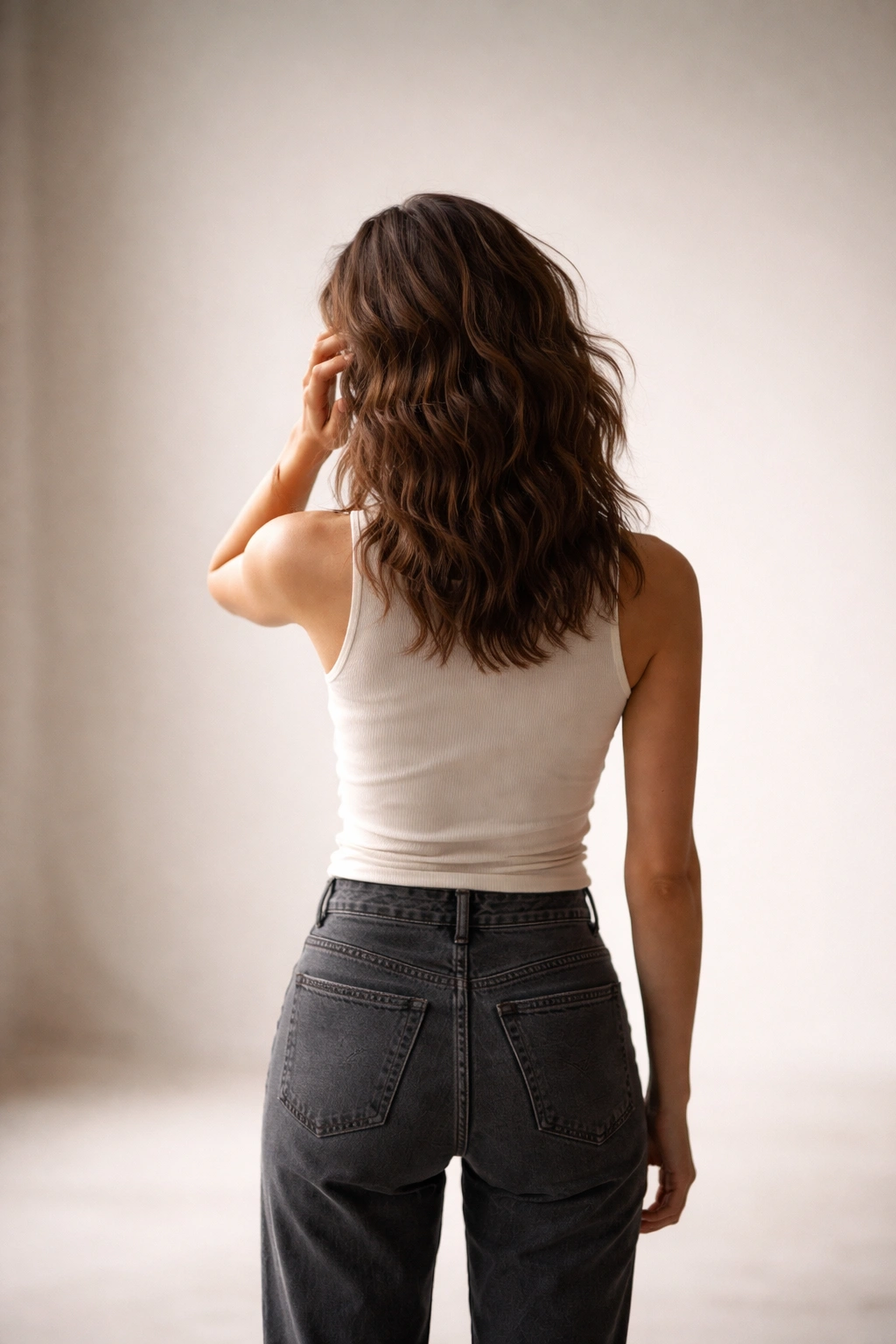
The medium wavy wolf cut is incredibly versatile, which is why it’s become such a dominant trend in contemporary hair. Whether you want soft and romantic, aggressively edgy, minimalist and modern, or anything in between, there’s a wolf cut variation that delivers exactly the energy you’re looking for. The beauty of this cut is that your natural waves do so much of the heavy lifting—they create dimension, movement, and texture that makes even a minimally-layered version look intentional and contemporary.
The most important thing is finding a stylist who understands your specific wave pattern and has experience cutting wolf cuts on wavy or textured hair. A wolf cut cut on blowout-straight hair can look drastically different when you style it with your natural waves, so you want someone who can visualize how the cut will look with your actual texture. Come in with reference photos and be honest about how much styling you’re willing to do daily—that will help your stylist dial in exactly the right version for your life and your hair.
