

Gray hair has this incredible power to showcase wave patterns in a way that feels both effortless and undeniably sophisticated. When waves and gray hair come together, you get something truly special—movement that catches the light beautifully, texture that adds dimension without requiring heavy color, and a sense of natural elegance that’s become increasingly celebrated in mainstream beauty standards.
The thing about wavy gray hair is that you’re working with a texture that’s already full of character. Waves naturally enhance the silvery, pearl-like quality of gray strands, creating depth and visual interest that doesn’t rely on color variation. Whether your waves are loose and romantic or tightly textured and playful, gray serves as a neutral canvas that lets the actual structure and movement of your style take center stage.
What makes gray hair uniquely suited to wavy styles is how the texture interacts with the hair’s natural structure as it ages. Gray hair tends to have a different porosity and fiber composition than pigmented hair, which means waves can form differently and hold texture with an almost effortless quality. This isn’t a limitation—it’s an advantage you can absolutely leverage with the right cut and styling approach.
The styles that follow range from short and edgy to long and flowing, from classic and polished to modern and undone. Each one works beautifully with gray hair specifically, taking into account how waves look, how they’re maintained, and what makes them genuinely flattering rather than just trendy.
1. Shoulder-Length Soft Waves
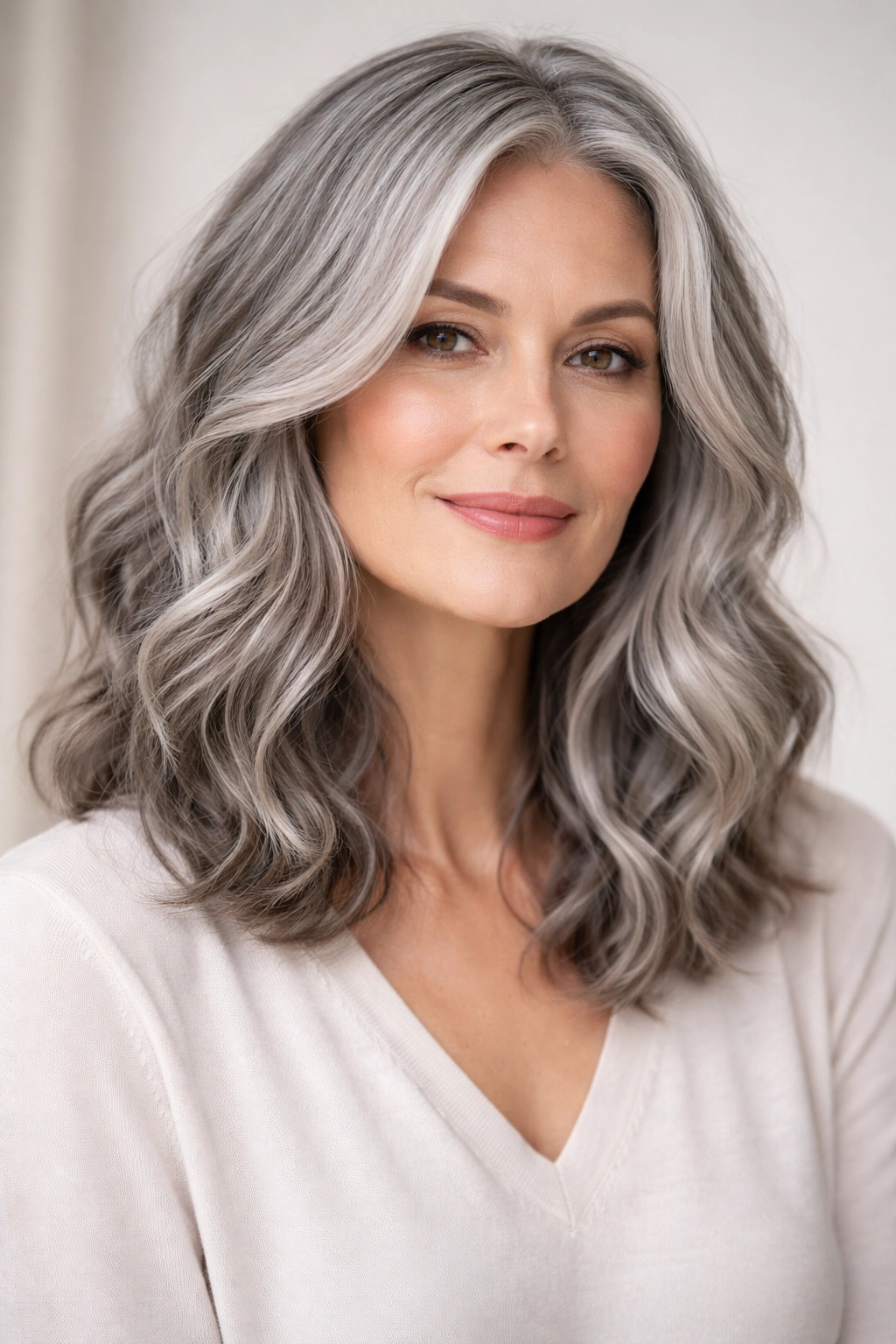
This is the workhorse of gray hair styling—a length that hits right around the shoulder bone with gentle, loose waves that feel romantic without being fussy. The shoulder-length cut gives you enough hair to create substantial waves while remaining practical and easy to manage on a daily basis.
Why This Length Works for Gray Hair
Shoulder-length waves catch light beautifully on gray hair because the waves create natural highlights and shadows that play off the silver tones. The length is short enough that waves don’t weigh the hair down and flatten out, but long enough that you get genuine, visible movement and texture. This length also frames the face without requiring constant styling to look intentional—the waves naturally fall into flattering angles around your features.
Styling Tips for Best Results
- Use a 1.5-inch barrel curling iron or wand, wrapping sections away from your face and leaving the ends out for a softer finish
- Apply a lightweight wave cream or texturizing spray before blow-drying to enhance your hair’s natural wave pattern
- Blow-dry with a diffuser attachment to encourage wave formation without frizz
- Sleep in loose braids or a pineapple bun to refresh waves on days between styling
- A weekly deep moisture mask keeps gray hair hydrated, which makes waves look shinier and more defined
The maintenance sweet spot for this cut is every 6 to 8 weeks, just enough to keep the shape sharp without losing length where you need it for wave formation.
2. Long Textured Waves with Layers
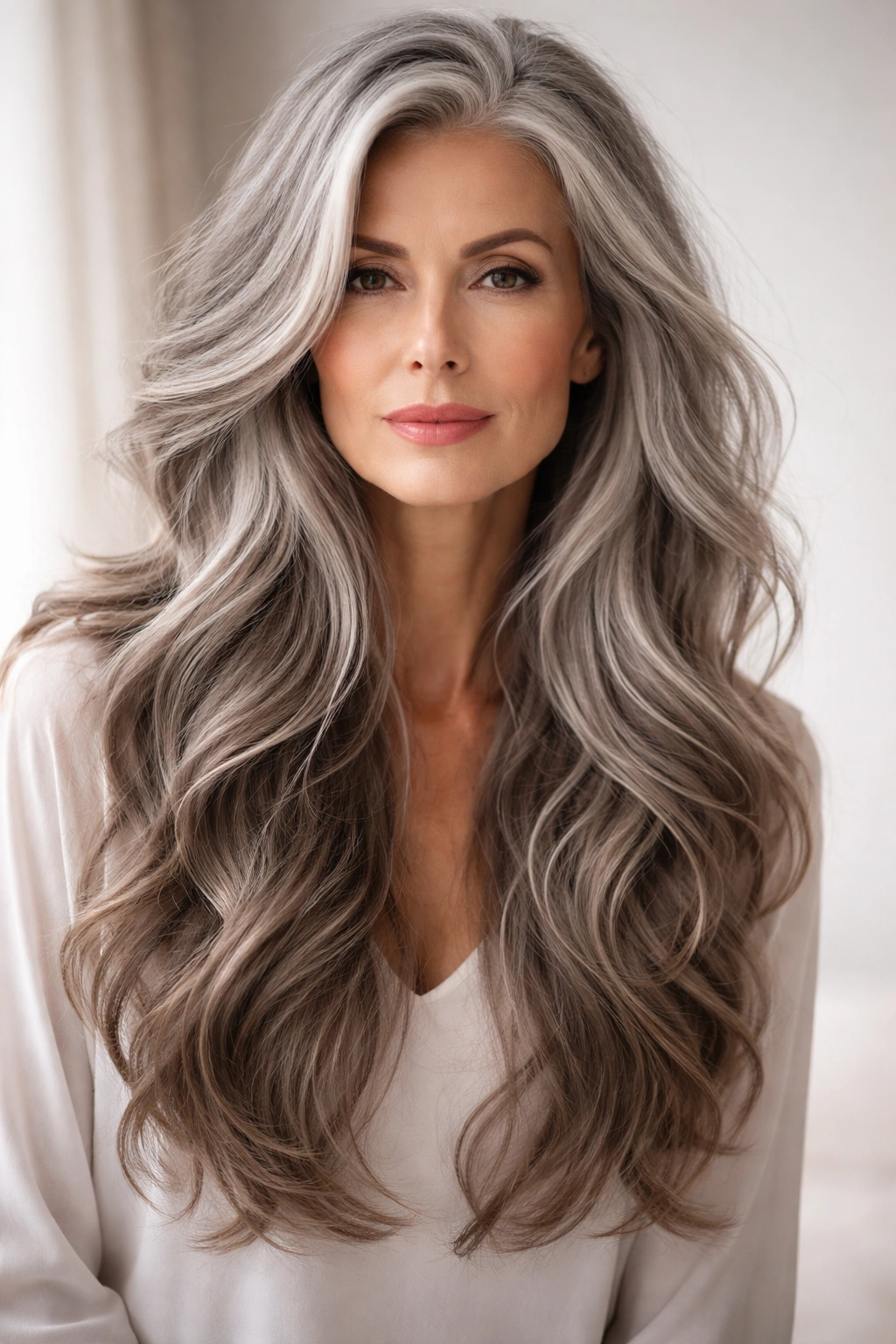
Long wavy hair on gray strands creates an almost ethereal quality—especially when the cut incorporates strategic layers that add movement throughout rather than weight at the bottom. Layers are particularly helpful on longer gray hair because they prevent the waves from becoming flat and heavy.
How Layers Transform Gray Waves
Layers break up the visual weight of longer hair and create multiple points where waves can form independently, giving you more texture overall. On gray hair specifically, layers catch light at different levels, which creates the illusion of more dimension and shine. Longer layers (longer than choppy ones) maintain sophistication while shorter, choppy layers add edge and youthfulness.
Maintenance and Styling Approach
- Layers should be cut every 8 to 10 weeks to maintain shape and prevent bluntness at the ends
- Use a sea salt spray or texturizing product on damp hair, then air-dry or diffuse with a blow dryer for waves that feel effortless
- Sleep waves overnight by braiding damp hair loosely before bed
- Waves look more intentional and defined when you use a curl-enhancing cream or gel before styling
- Gray hair can be more prone to frizz, so a frizz-control serum applied to damp ends helps waves stay smooth and polished
Long waves with layers also pair beautifully with subtle face-framing pieces that elongate the face and draw attention upward.
3. Choppy Shag Waves
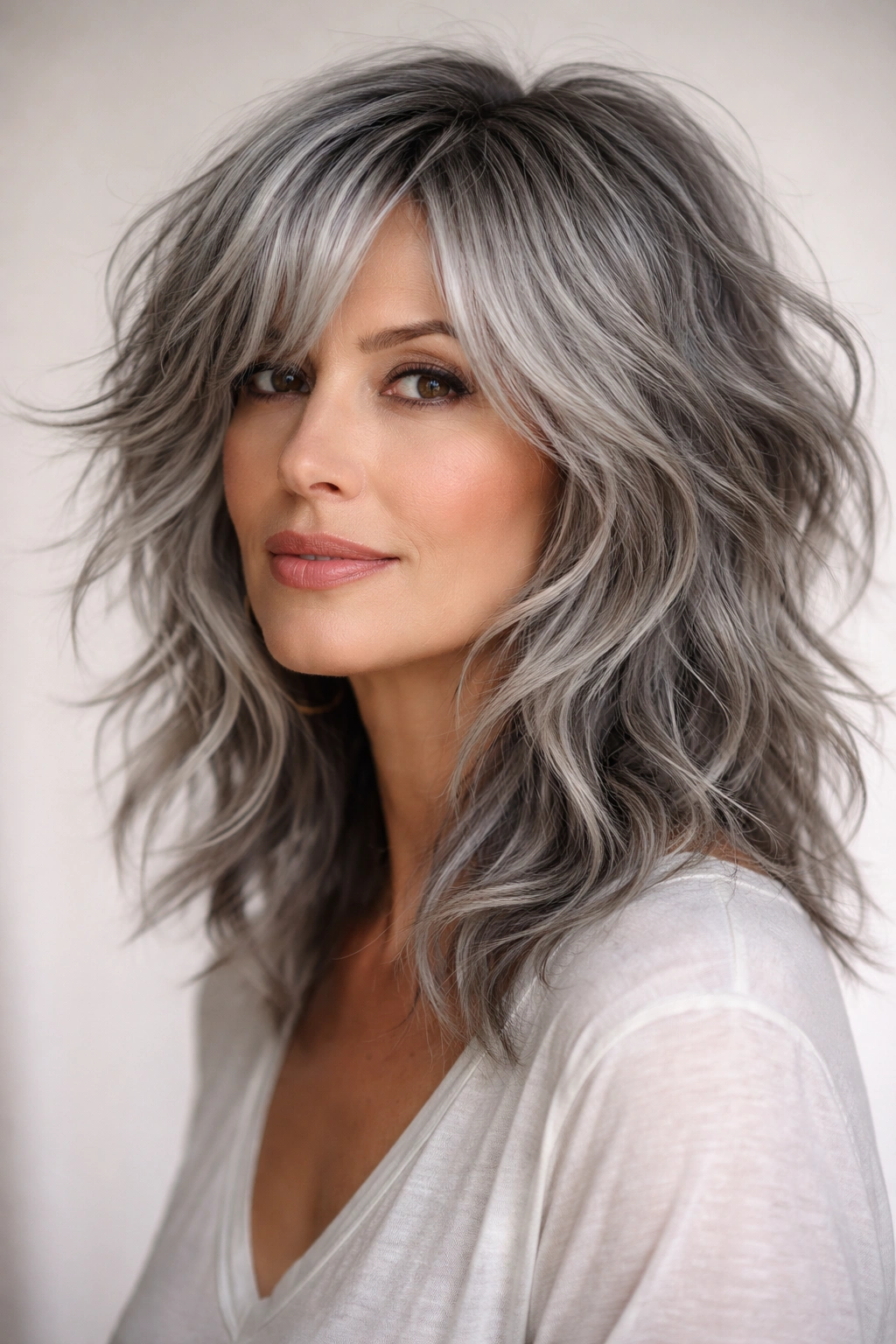
The shag is having a genuine moment of revival, and it’s particularly striking on gray hair. A choppy shag with waves creates movement, texture, and an undeniably modern edge that feels current without sacrificing wearability or sophistication.
Why Shag Works on Gray Hair
Shag cuts are all about layers and texture, which naturally complements wavy hair and plays beautifully with gray. The choppy, disconnected layers create multiple surfaces for light to reflect off, making gray hair look shinier and more dynamic. A shag also works with your hair’s natural wave pattern rather than fighting it, which means less daily styling effort while still looking intentionally styled.
Styling and Care Tips
- Choppy shags look best when styled with texture, so use a texturizing mousse or wave cream on damp hair
- Blow-dry with a diffuser or let air dry for a more relaxed, undone texture
- Embrace the lived-in quality of shags—they’re designed to look a bit tousled and imperfect
- Trim every 6 weeks to keep the choppy layers sharp and prevent a mullet-like effect
- A lightweight texturizing spray helps refresh waves between washes without looking wet or greasy
The beauty of a shag is that it reads as intentionally styled even when you’ve just rolled out of bed, which makes it perfect for people who want movement without constant maintenance.
4. Beachy Waves with Face-Framing Pieces
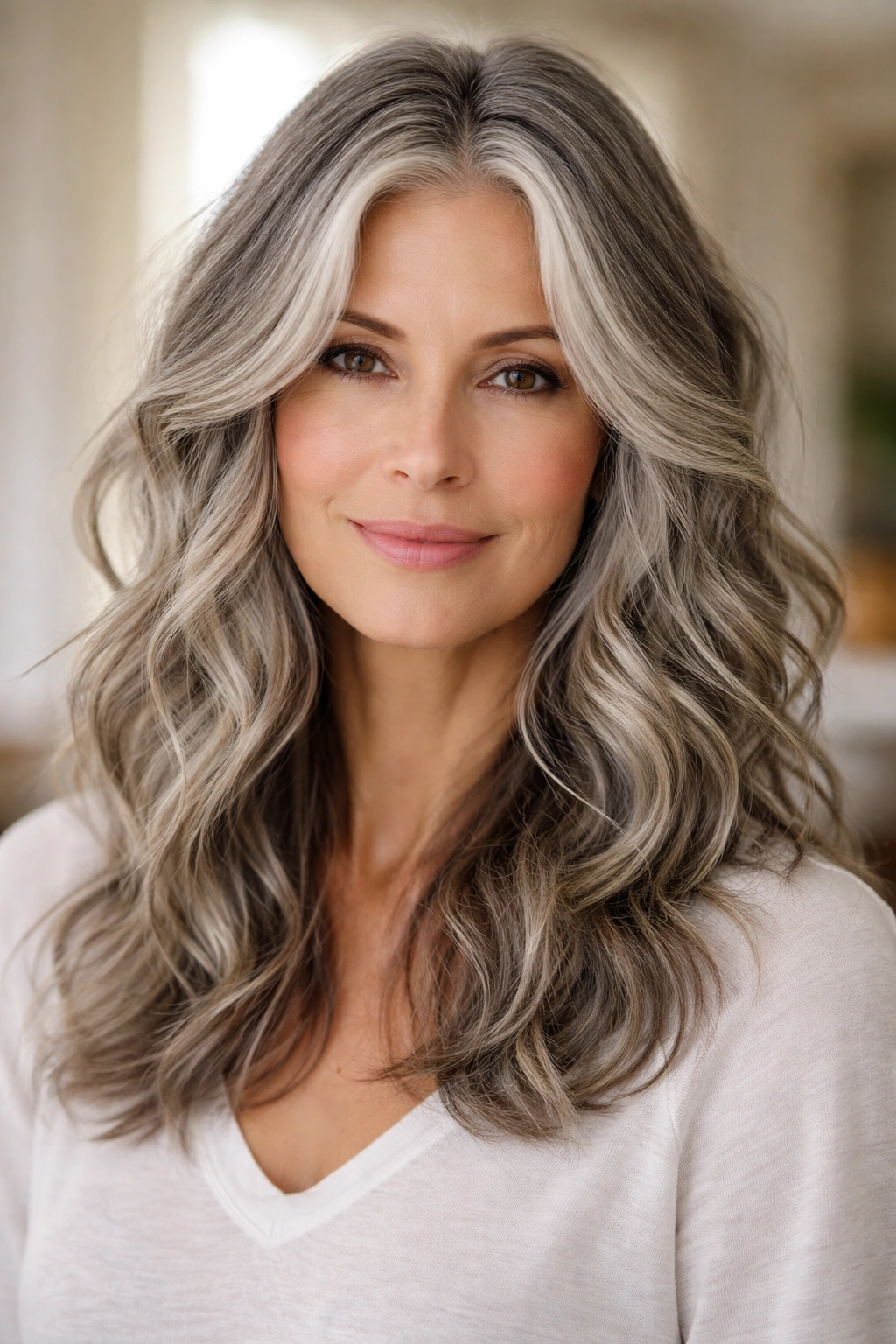
This style captures that effortless, sun-kissed beach feeling but translates it into something that works year-round on gray hair. Face-framing pieces that are shorter than the rest of the hair create softness around the features while longer lengths create waves with real depth.
Creating Flattering Face-Framing
Face-framing layers should start about 2 to 3 inches below your cheekbones and graduate longer as they move toward the back. These shorter pieces catch light beautifully and soften the overall effect, which is particularly flattering on gray hair where you want to avoid looking washed out. The face-framing also helps draw attention to your eyes and cheekbones rather than the hairline.
Achieving and Maintaining Beachy Waves
- Use a sea salt spray as your base texture—spray on damp hair and scrunch gently
- Blow-dry with your fingers and a diffuser for organic, non-uniform waves
- A 1.25-inch curling iron creates larger, more relaxed waves than smaller barrels
- Sleep in loose braids to refresh waves overnight
- The face-framing pieces can be tucked behind your ears or left loose depending on mood—this versatility is part of the style’s appeal
Beachy waves on gray hair look especially beautiful when the ends have a slightly undone quality, almost like they’ve been sun-bleached and wind-tousled.
5. Blunt-Cut Wavy Bob
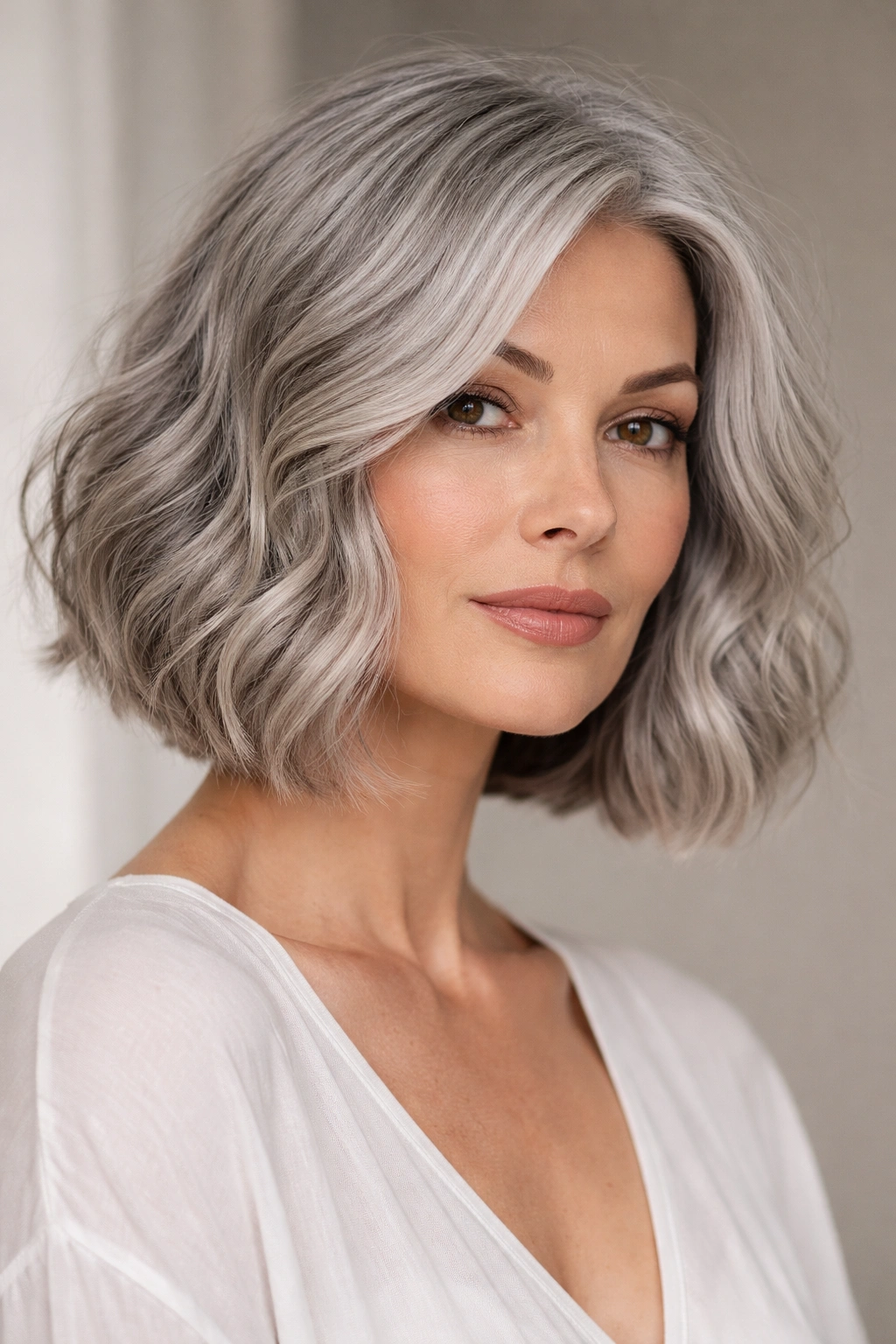
A blunt bob—where all the hair ends at approximately the same length—sounds like it wouldn’t work with waves, but it absolutely does. The blunt line creates a defined shape while waves add softness and movement, creating a style that’s modern and polished without feeling rigid or severe.
Why Blunt Lines Enhance Waves
The contrast between a sharp, defined line and soft, wavy texture creates visual interest and sophistication. On gray hair, a blunt bob shows off the clean line while waves add the softness and femininity that keeps it from looking harsh. This style works especially well if you have naturally wavy or curly hair, as fighting your texture with a super-straight bob requires more effort.
Styling This Look
- Blow-dry with a round brush to create volume at the roots while waves form through the mid-lengths and ends
- A lightweight mousse applied to damp roots helps create bounce without weighing hair down
- Use a 1.5-inch curling iron on the last inch or two of hair to add wave definition at the ends
- The blunt line should be trimmed every 4 to 6 weeks to stay sharp and prevent a shaggy, unkempt appearance
- A light texturizing spray helps waves look more defined and prevents a too-polished appearance
A blunt wavy bob typically hits at the chin or jawline, creating a youthful, intentional silhouette that’s flattering on most face shapes.
6. Asymmetrical Wavy Lob
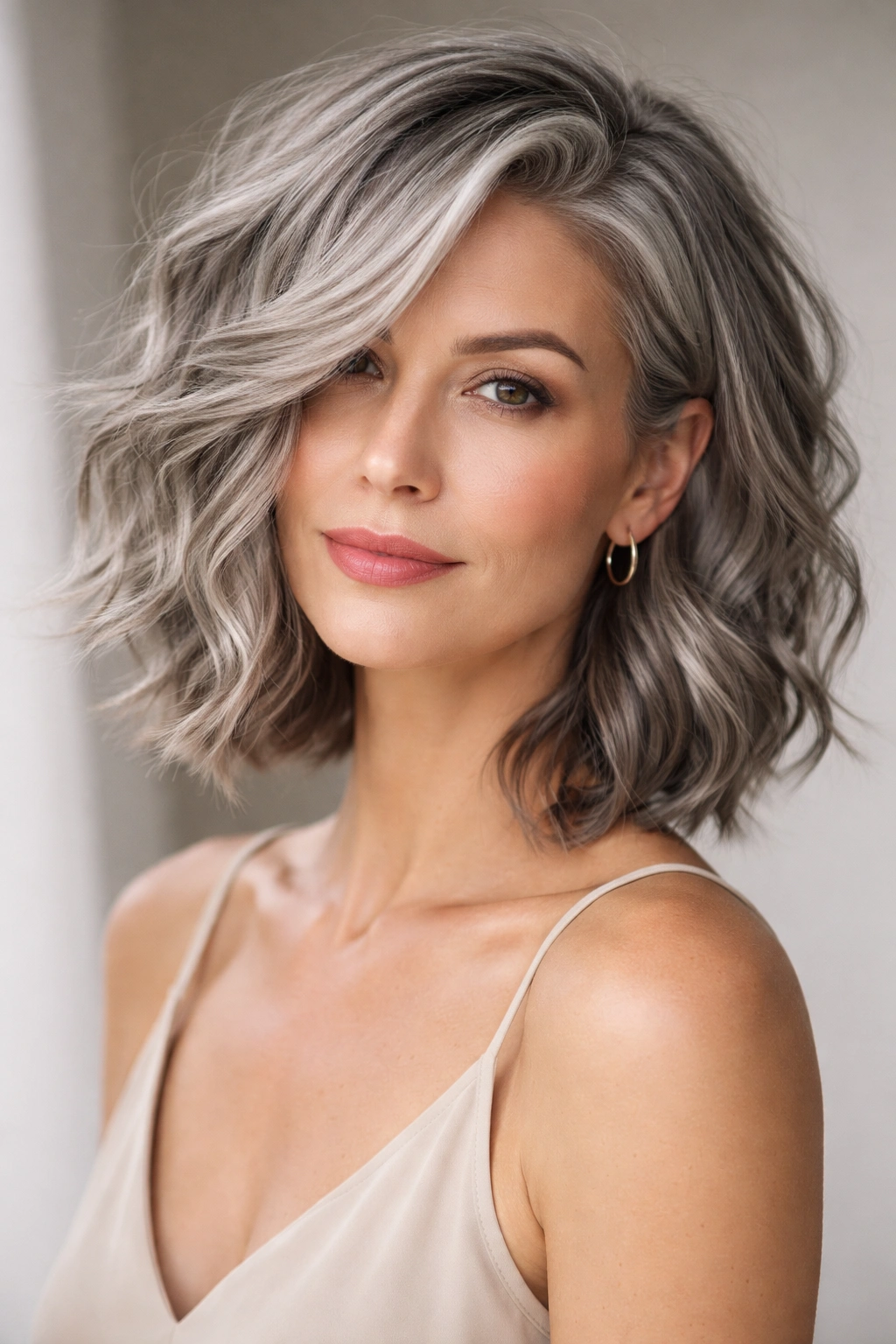
An asymmetrical lob (a hybrid between a bob and longer hair) with waves offers edginess and modernity while maintaining enough length for waves to feel dramatic. One side is shorter, typically hitting at the chin, while the other is longer, creating movement and visual interest.
The Appeal of Asymmetry on Gray Hair
Asymmetrical cuts work beautifully on gray hair because they feel contemporary and confident. The longer side creates movement and waves, while the shorter side has definition and edge. This style communicates that you’re intentional about your look while the waves keep it from feeling too severe or sculptural.
How to Achieve and Maintain It
- The shorter side should be chin-length with slight layers to create movement
- The longer side can extend to shoulder-length or longer, creating dramatic waves
- Waves look more striking when the sides are styled differently—you might straighten the short side slightly while emphasizing waves on the long side
- Trim every 6 to 8 weeks to maintain the asymmetrical shape as the shorter side grows
- A texturizing cream on damp hair enhances waves throughout and makes the asymmetry more apparent
Asymmetrical cuts are particularly flattering if you want to draw attention to one side of your face or create balance if one side of your face is broader than the other.
7. Tousled Waves with Volume at the Crown
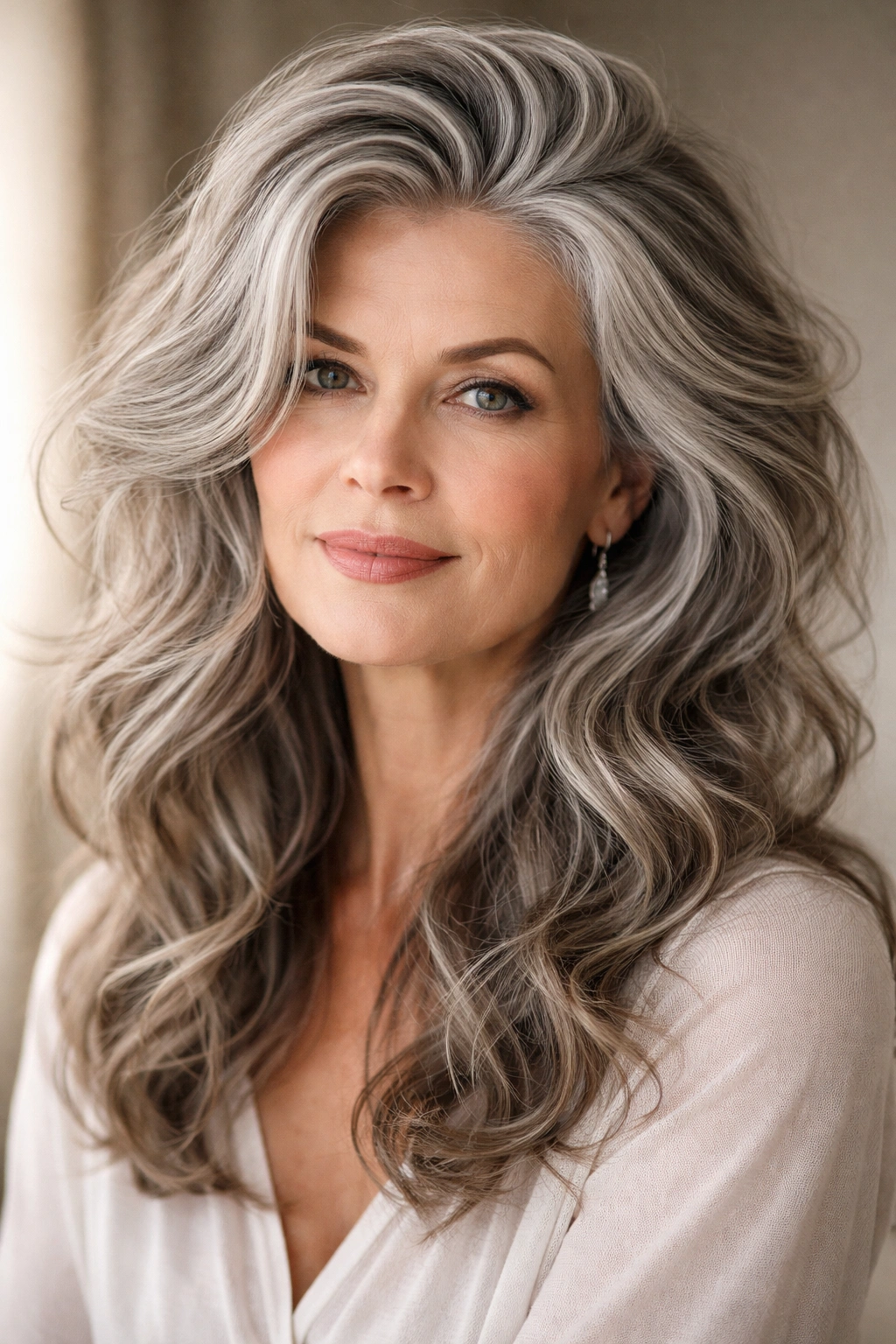
This style prioritizes volume at the roots and crown while waves move freely through the mid-lengths and ends. The effect is romantic and youthful without requiring intense styling or product to maintain.
Building Crown Volume on Gray Hair
Volume at the crown is especially important on gray hair because it prevents a flat, thin appearance that can sometimes happen as hair changes texture with age. Using volumizing products at the roots—like mousse or a root-lifting spray—creates the foundation. Blow-drying while flipping your head upside down for the first few minutes encourages roots to dry with lift that lasts all day.
Creating Natural-Looking Tousled Waves
- Apply volumizing mousse to damp roots and mid-lengths, avoiding the ends
- Blow-dry with your head tilted to one side, then flip to the other side, creating movement throughout
- Use a texturizing spray or wave cream on damp hair to encourage wave formation
- A diffuser attachment on your blow dryer helps create waves without frizz
- Scrunch damp hair gently as it dries to enhance natural wave patterns
The tousled effect works best when waves are slightly undone and imperfect—this is a time to embrace texture rather than trying for polished uniformity.
8. Wavy Pixie Layers
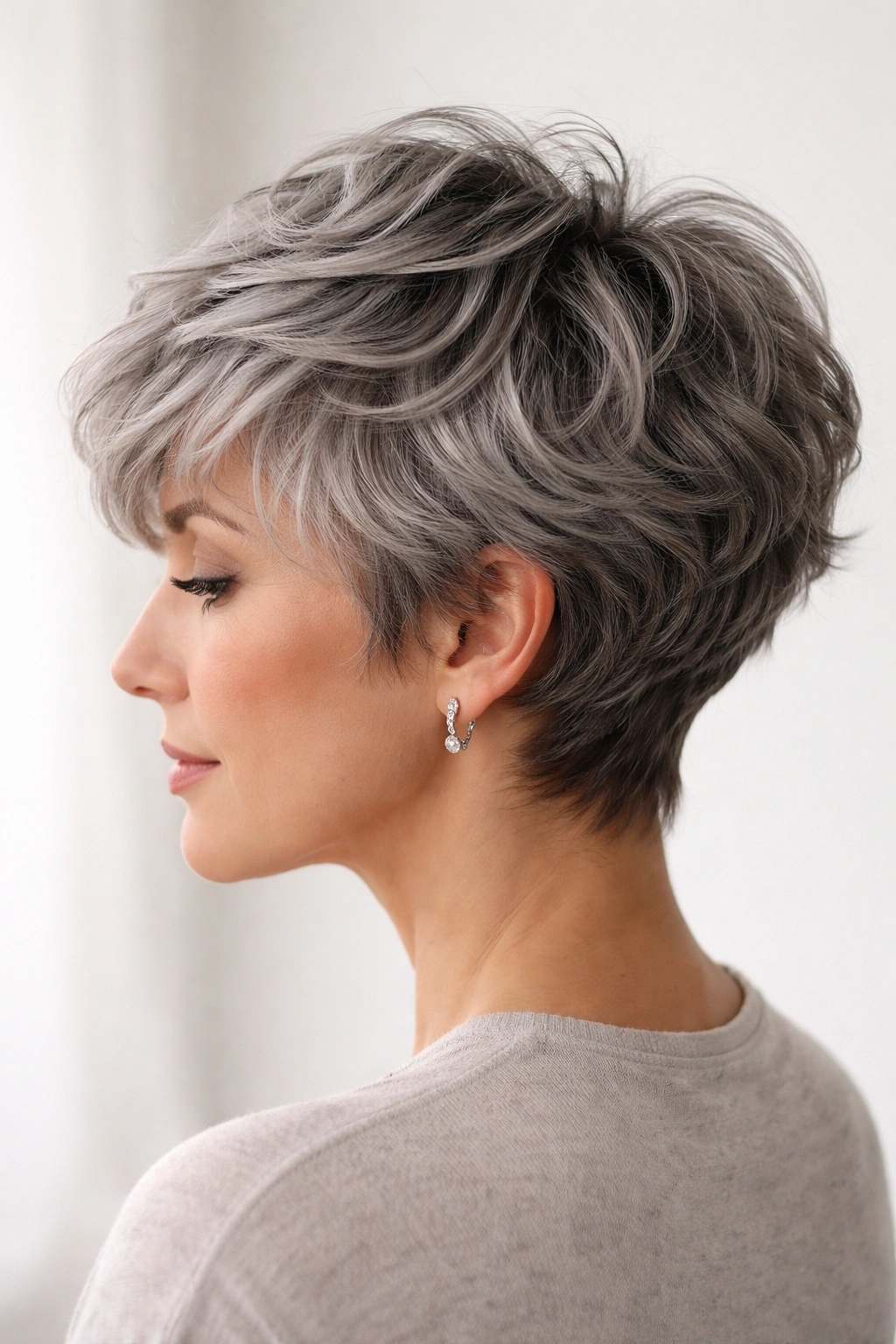
A wavy pixie with multiple layers is bold and modern, perfect for people with gray hair who want to make a confident statement. The short length keeps styling simple while layers create texture and movement that prevent the style from looking too severe or masculine.
Making a Pixie Work with Waves
Pixies traditionally are cut short and sleek, but a wavy pixie embraces texture instead of fighting it. Layers throughout—from the crown down to the nape—create multiple points of movement. On gray hair, a wavy pixie reads as intentional and sophisticated rather than appearing thin or wispy.
Styling a Wavy Pixie
- Use a texturizing cream or pomade on damp hair, scrunching gently to encourage wave formation
- Blow-dry with your fingers or a diffuser to maintain texture without frizz
- A light pomade or wax helps define individual wave sections and creates a more polished look
- Trim every 4 weeks to maintain the shape and prevent a shaggy appearance
- Pixies work beautifully with gray because you don’t need to worry about color maintenance or roots showing—just pure texture and shape
A wavy pixie is particularly striking on people with fine or thin hair because the layers create the illusion of more density.
9. Long Flowing Waves with Bangs
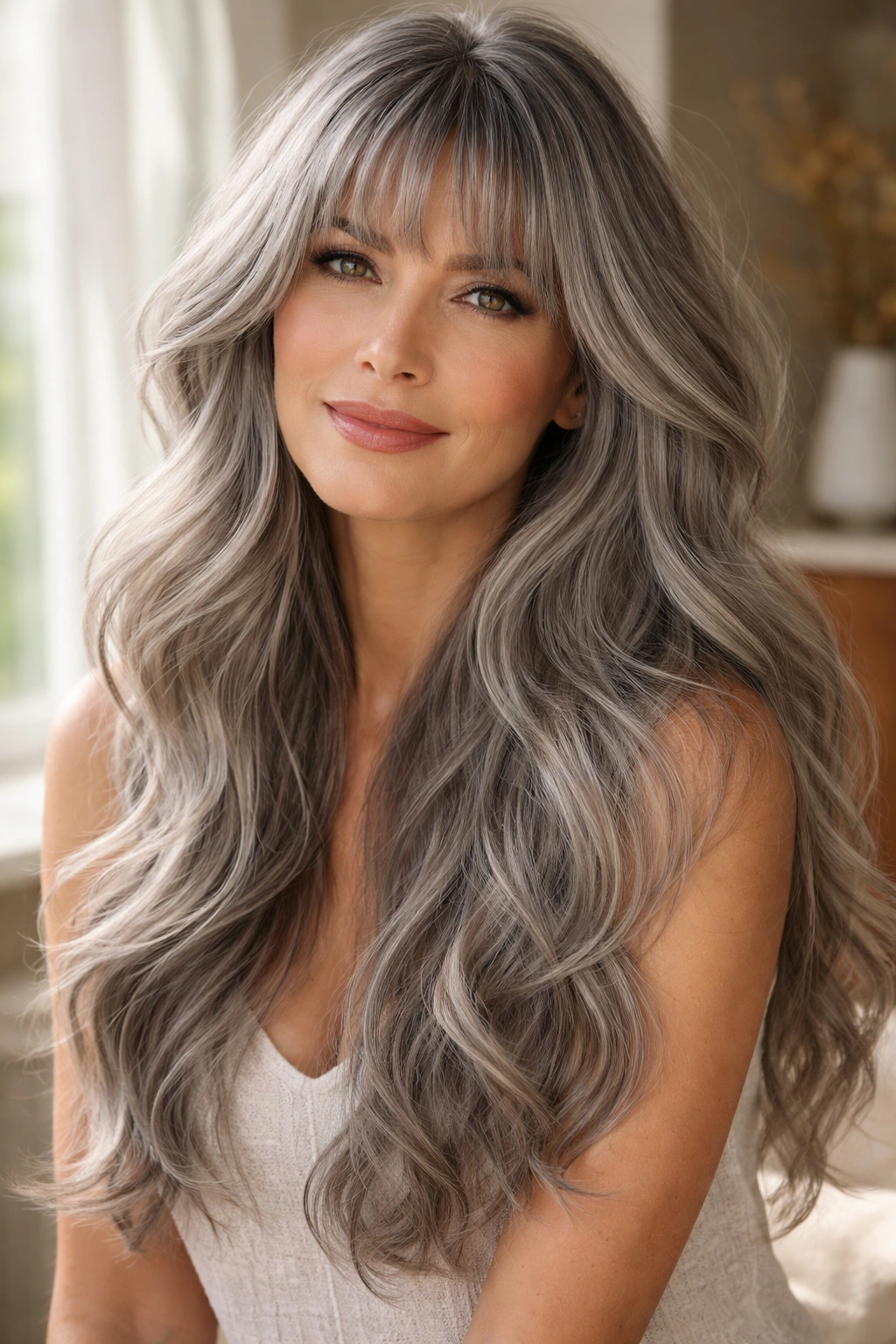
Long hair with waves can feel romantic and soft, especially when paired with bangs. Bangs add a youthful, playful element while long waves create movement and flow. This combination works beautifully on gray hair when the cut and styling are thoughtful.
Choosing the Right Bangs for Gray Hair
Bangs should ideally start at the eyebrow or slightly longer, avoiding a too-blunt, heavy appearance that can overwhelm features. On gray hair, bangs make the strongest impact when they’re slightly textured or piece-y rather than completely blunt—this prevents them from looking too harsh and creates softness around the eyes. Side-swept bangs offer a gentler alternative to blunt bangs while still framing the face.
Maintaining Waves with Bangs
- Bangs need trimming every 3 to 4 weeks to prevent them from growing into your eyes or becoming heavy
- Waves should be encouraged throughout the length with a texturizing product applied to damp hair
- A large-barrel curling iron creates relaxed, romantic waves that complement longer hair
- Bangs look their best when styled separately—use a small round brush to create subtle movement and prevent them from lying completely flat
- Long waves with bangs require a bit more daily styling attention than some other styles, so be prepared for a morning routine that includes blow-drying or at least dampening and styling
Long waves with bangs create a dreamy, romantic effect that works year-round and flatters most face shapes.
10. Textured Waves with Undercut Detail
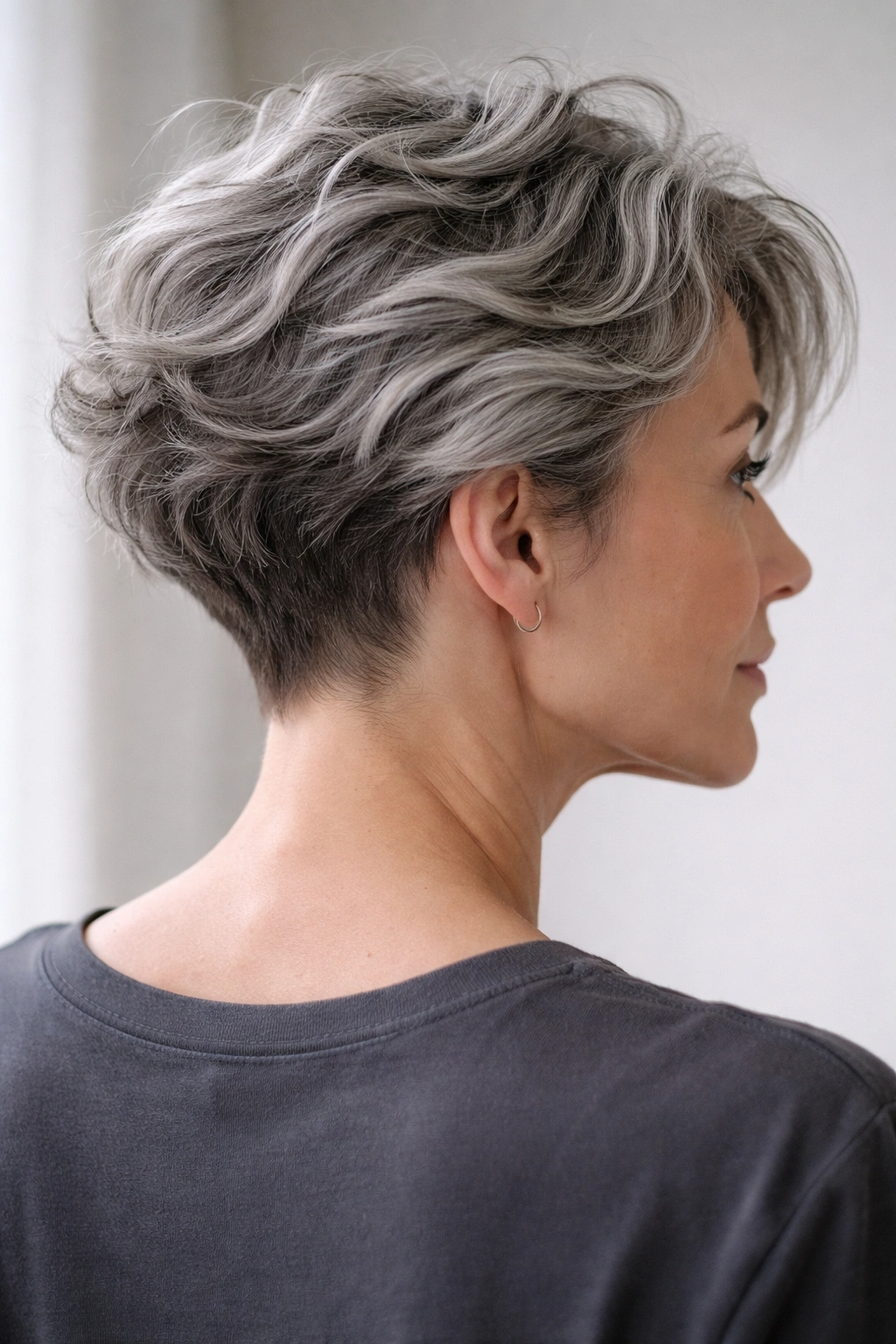
An undercut adds an unexpected edge to wavy gray hair—the underneath sections are cut shorter (sometimes even shaved), while the top layers remain longer and wavy. This creates hidden texture and movement that you can show off or conceal depending on how you style it.
Using an Undercut to Enhance Waves
The undercut removes weight from underneath, which actually helps top layers wave more freely and with less effort. It’s a particularly smart move on thick gray hair that can sometimes feel heavy. The undercut also adds visual interest and modernity without requiring the top layers to be cut short, so you maintain length for waves.
Styling with an Undercut
- The undercut is usually covered, so it’s a subtle style detail that only shows when you tuck hair back or style it up
- Top waves can be worn down for a soft, feminine look
- Tuck or pin the sides back to reveal the undercut for an edgier vibe
- Trim the undercut every 4 to 6 weeks to maintain definition
- The top layers benefit from texturizing products and diffuser blow-drying for optimal wave definition
An undercut works especially well on people who want a style that feels multifaceted—conservative when worn down, bold when styled up.
11. Half-Up Wavy Style
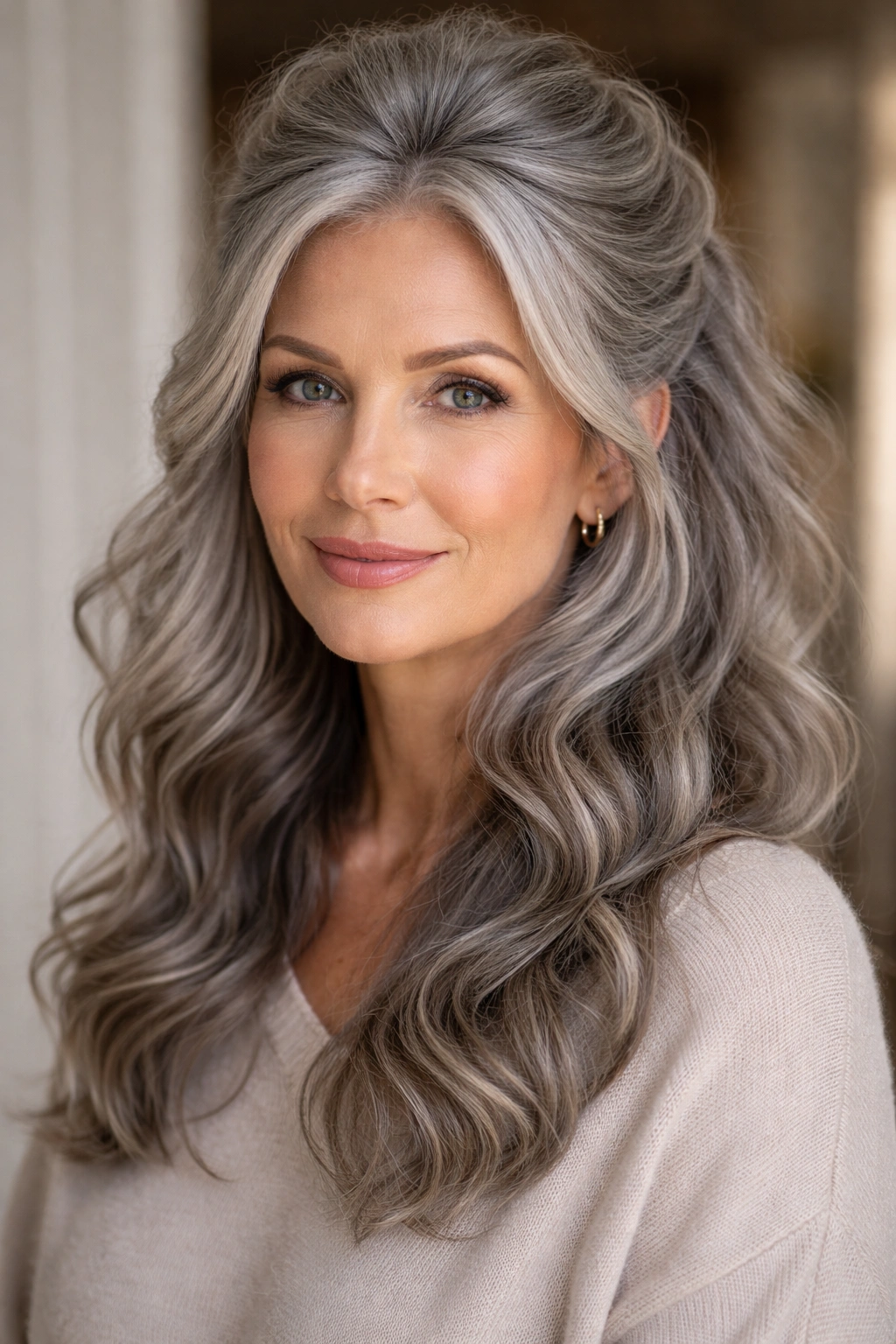
This isn’t technically a haircut, but rather a styling approach where the top portion of wavy hair is swept up and secured while the bottom remains down. This creates movement while showing off the waves and keeping hair off the face without requiring a full updo.
Why Half-Up Works for Gray Wavy Hair
A half-up style showcases waves beautifully because you get the visual impact of the wave texture while also showing off your face and features. It’s practical for keeping hair out of your face during the day while maintaining the softness and romance of wavy styling.
Creating a Polished Half-Up Style
- Create waves throughout with a texturizing product and diffuser blow-dry, or use a curling iron on damp hair
- Gather the top section (roughly from temple to temple across the crown) and secure with a bobby pin or clip
- Leave a few pieces loose around the face for softness
- A silk or velvet scrunchie looks more polished and sophisticated than elastic
- This style works beautifully with subtle jewelry or a decorative clip that complements gray hair
- Half-up styles are perfect for transitioning from day to evening without changing your entire look
A half-up wavy style offers versatility—you can style the same waves differently throughout the day depending on your needs.
12. Twisted Waves with Braided Accent
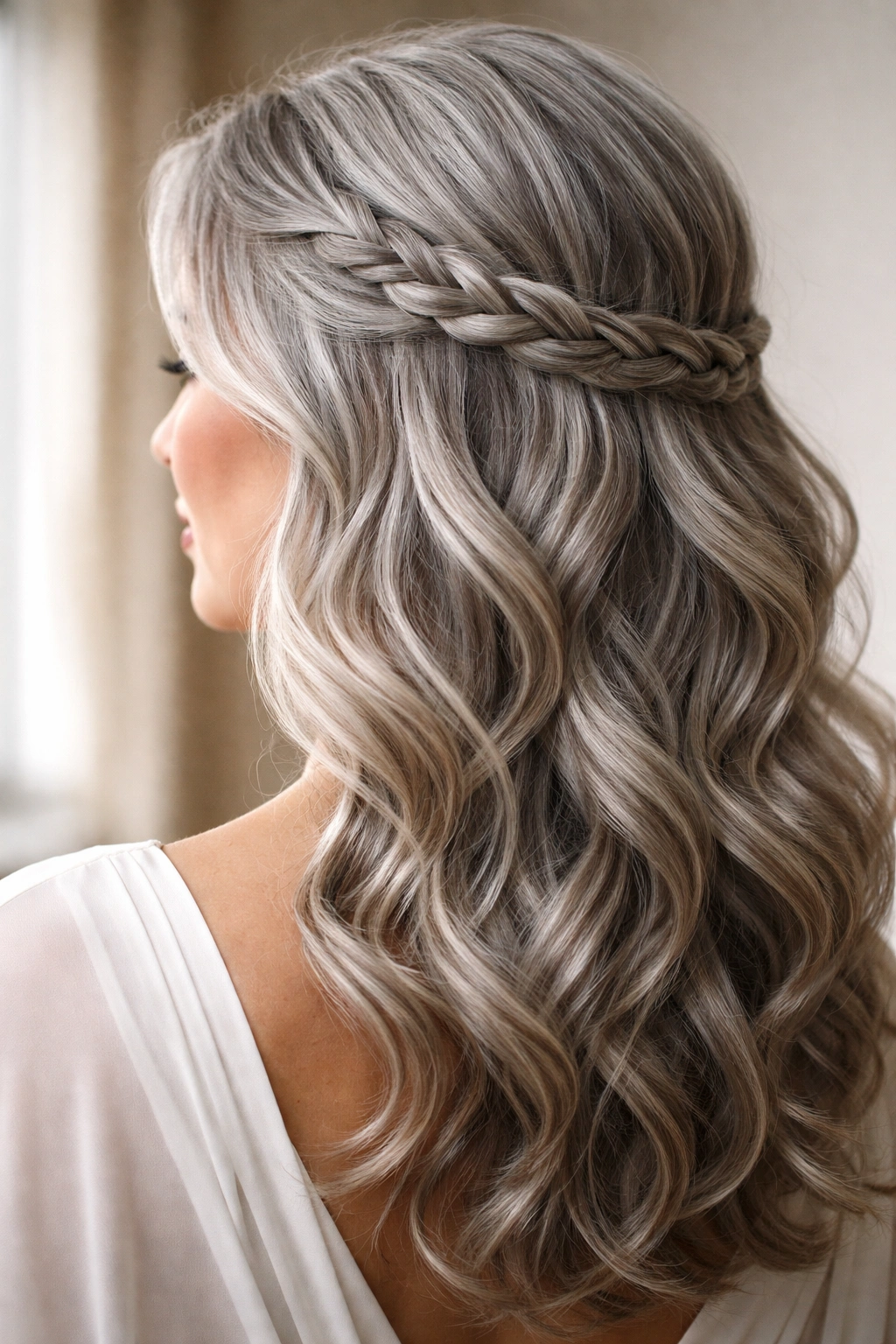
This style combines waves with subtle braiding or twisting sections of hair, creating texture and visual interest through dimension rather than just cut alone. It’s perfect for people who enjoy playing with their hair and wanting a style that feels intentionally crafted.
Incorporating Braids into Wavy Styles
Braids work beautifully with waves because they echo the texture and movement of the waves themselves. A single Dutch braid or French braid twisted along one side, or a few delicate three-strand braids woven through the waves, adds sophistication without looking childish or overly ornate on gray hair.
Styling Waves with Braided Details
- Create loose, romantic waves throughout using a large-barrel curling iron or texturizing product
- Braid one or two delicate sections, starting near the temple and incorporating the braided section back into the loose waves
- Secure braids with small bobby pins that match your hair color for a seamless look
- Frizz-control serum on the braid keeps it looking polished and defined
- This style is perfect for special occasions or days when you have time for more detailed styling
- Twisted waves with braids work beautifully for dinner out or events where you want to look thoughtfully put-together
This style demonstrates that gray hair can be just as versatile and playful as any other hair color—it’s simply about working with your texture rather than against it.
Final Thoughts
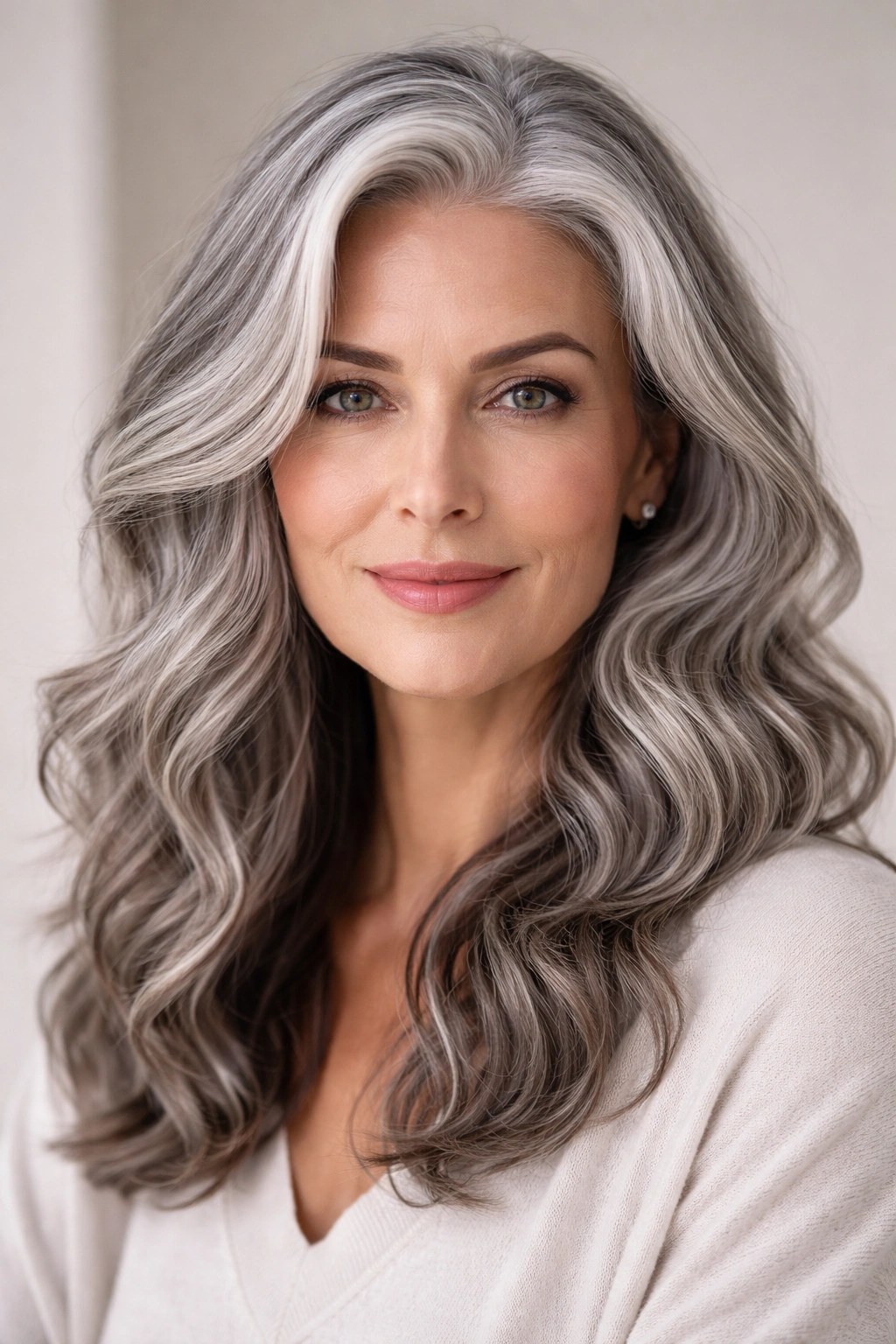
Gray wavy hair is genuinely one of the most beautiful and low-maintenance combinations available, but only when you choose a style and approach that actually honors both the color and the texture. The styles above all share one thing in common: they work with your hair’s natural wave pattern rather than fighting it, and they all look stunning specifically because of the gray.
The real secret to any of these styles is understanding that gray hair ages differently than pigmented hair, and that difference is actually an advantage. Your waves will look shinier, more defined, and more intentional on gray hair than they might on darker shades. The key is feeding your hair with quality moisture, using texturizing products that enhance rather than weigh down your waves, and trimming regularly enough that your chosen style stays sharp and intentional.
Start with whichever of these styles resonates most with your lifestyle and face shape. Remember that you can always tweak the styling approach—shorter waves one day, longer and looser the next—without needing to change the cut itself. Gray hair gives you permission to embrace texture, movement, and a little bit of that effortlessly undone quality that makes people stop and ask what you’ve done differently.