

Short hair with side bangs and a natural wave pattern offers an irresistible combination of texture, movement, and effortless sophistication. If you’ve been considering a cut that works with your hair’s natural texture rather than against it, this could be the breakthrough you’ve been waiting for. The beauty of pairing wavy hair with short lengths and side bangs is that the style actually becomes easier to maintain — your natural wave pattern adds instant dimension and body, while side bangs frame your face in ways that longer styles sometimes can’t. You get a flattering, modern look without spending an hour every morning fighting your hair into submission.
The challenge, though, is that not every short-with-bangs combination works equally well for wavy textures. Some cuts require more styling than others, some suit certain face shapes better, and some work beautifully with looser waves while others need tighter texture to achieve the intended effect. That’s why it helps to see a range of actual options — styles that have been tested on wavy hair, cut by stylists who understand how waves move and grow out, and styled in ways that show what’s genuinely achievable with your texture type.
What makes this hairstyle category so appealing right now is that it sits in a sweet spot between low-maintenance and high-impact. You’re not committing to a severely short pixie that requires frequent trims (unless you want to), and you’re not going so long that you’re back to styling challenges. The side bangs add personality and frame your features without the commitment of full bangs that need weekly styling. Whether your waves are loose and subtle or tighter and more defined, there’s a version of this cut designed for you.
1. Textured Pixie Bob With Soft Side Swept Bangs
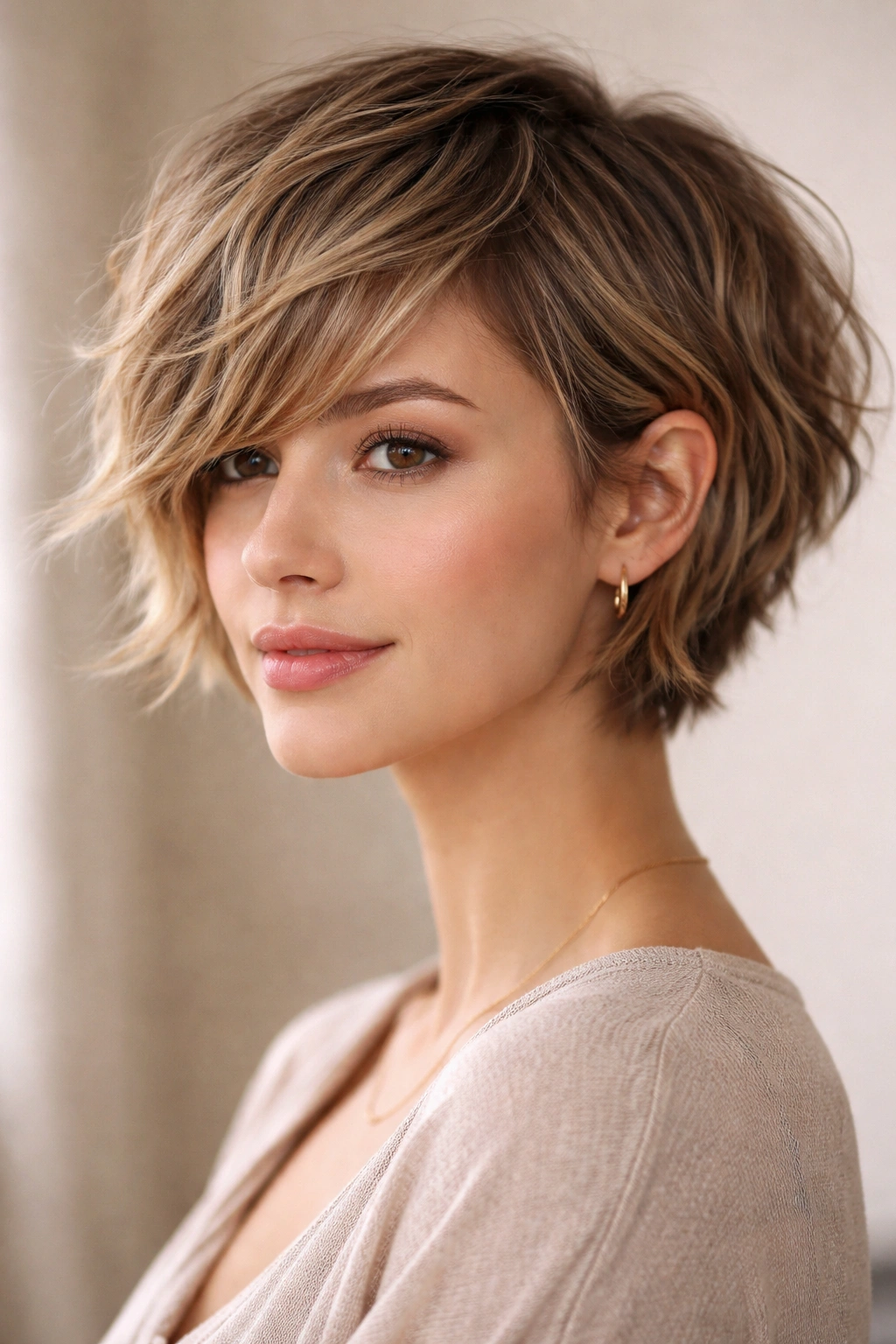
The textured pixie bob is one of the most forgiving cuts for wavy hair because it actually celebrates the texture rather than trying to hide it. The back and crown are cut short with choppy, disconnected layers that enhance natural wave patterns, while the sides remain slightly longer, allowing them to sweep back and frame your face with a soft side bang. This particular style works beautifully because the shorter length in the back prevents that awkward “poofy” phase that longer wavy hair goes through, while the longer front sections give side bangs room to fall naturally.
Why It Works for Wavy Hair
The choppy layers throughout this cut break up the weight of your waves and create individual texture definition. Rather than your waves clumping together into thick, heavy sections, the layers separate them into distinct pieces that catch light and show off dimension. The side bangs sit right at your cheekbone when pulled forward, creating a flattering frame without being so long that they require constant styling to stay in place.
How to Style It
Apply a lightweight wave cream or mousse to damp hair, scrunch upward to encourage your natural wave pattern, and let air dry or use a diffuser attachment on low heat. Once dry, you can finger-comb the piece-y layers for added separation. The side bangs typically fall into place naturally with wavy hair — you might lightly brush them across rather than blow-drying them into submission.
Pro tip: Get this cut when your hair is dry, not wet. Stylists who specialize in curly and wavy hair know to cut dry because wet hair stretches and hangs differently than it will when it’s dry and in its natural state.
2. Choppy Shag With Lengthy Side Bangs
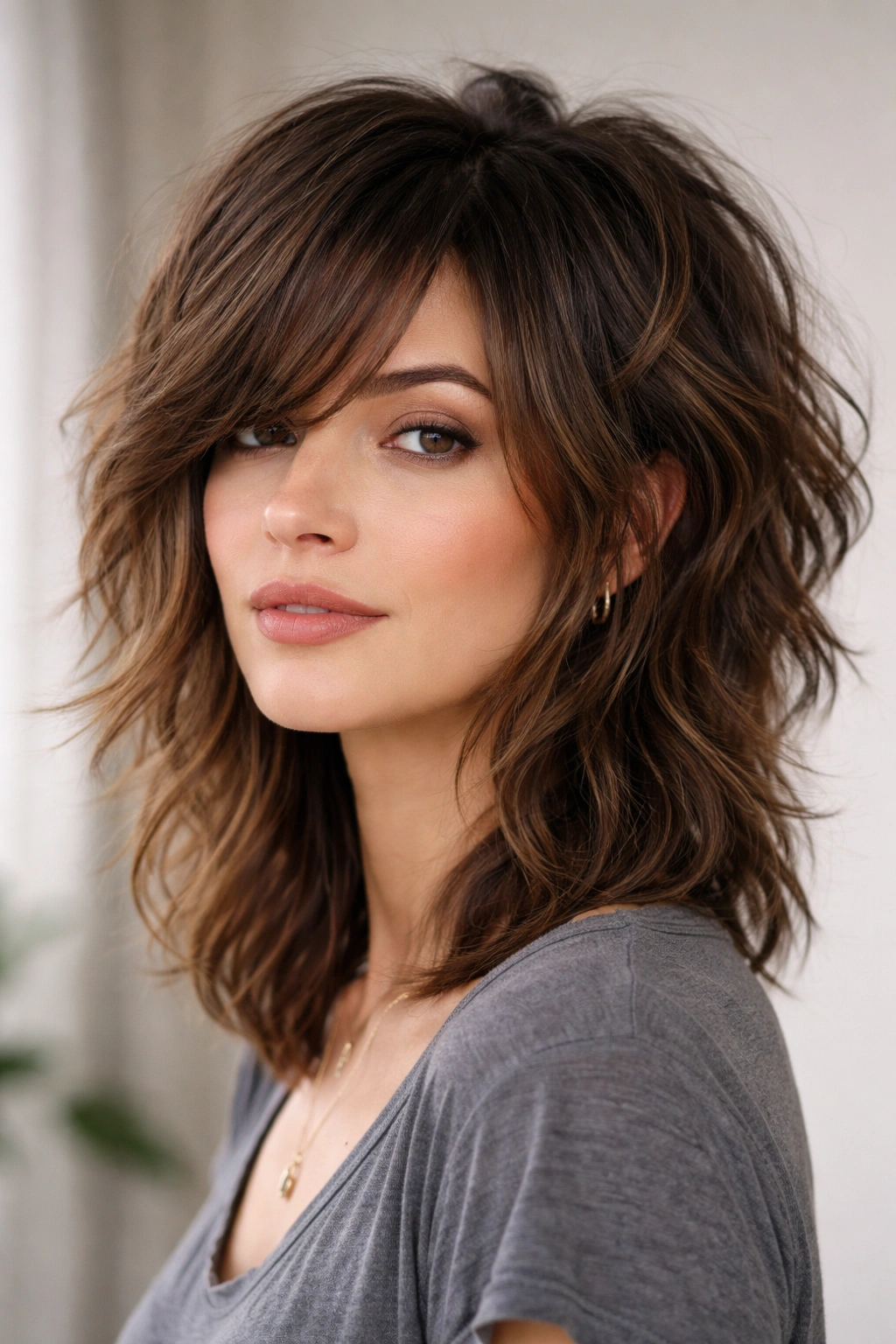
The choppy shag is having a major moment, and for good reason — it was literally designed with wavy and curly hair in mind. Picture shorter layers throughout the crown and back that create movement and texture, while longer pieces in the front (your shag bangs) create a sophisticated side-swept effect. The front sections are long enough to graze your jawline or collarbone, giving you actual styling options while the short crown keeps things manageable.
Why It Works for Wavy Hair
Shags are built on the principle of shorter layers stacking on top of longer underneath sections. This creates lift at the crown while still allowing longer pieces in the front for styling versatility. The longer side bangs don’t flatten against your face because of the layering underneath — they have texture and body to work with, so they fall in a way that looks intentional and chic.
Styling Options
On a wash day, apply leave-in conditioner and scrunch your waves dry with a diffuser. For a more deliberate look, you can blow-dry while using a round brush or straightening iron on just the side bangs to create a sleeker frame. This style is incredibly forgiving because the choppy layers mean slightly messy or tousled texture looks intentional rather than unkempt.
Worth knowing: This cut benefits from regular trims every 6-8 weeks because the layers need to maintain their shape as your hair grows. Without refreshing the cut, it can start to lose the shag definition and just look long and choppy rather than strategically styled.
3. Asymmetrical Cut With Diagonal Side Bangs
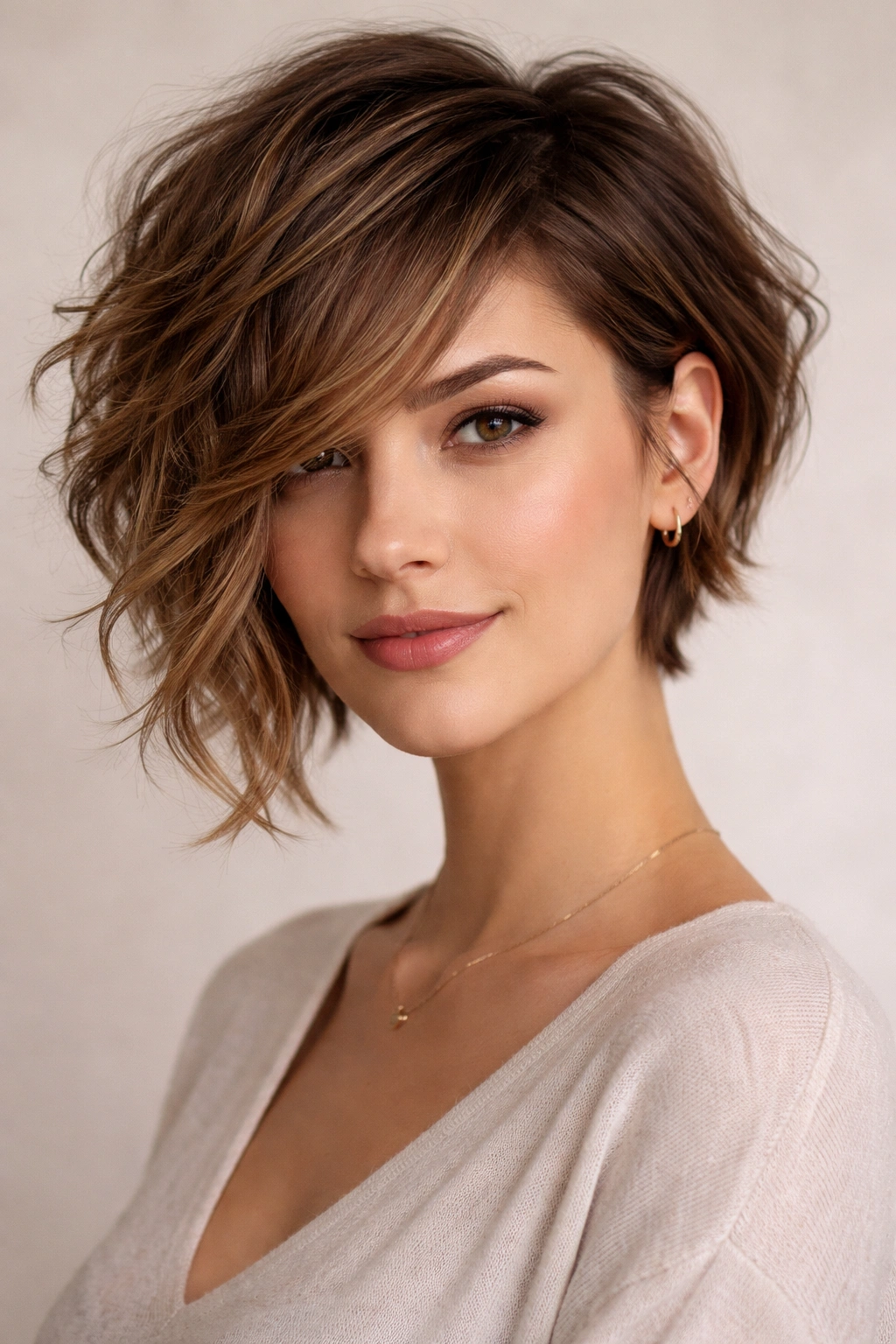
An asymmetrical short cut takes the concept of side bangs and runs with it — one side is noticeably shorter than the other, creating a bold, modern silhouette. The longer side is where your side bangs live, sweeping across your face with real drama and length, while the opposite side is cropped close to your ear or shorter. For wavy hair, this cut is surprisingly wearable because the texture and movement soften the boldness of the asymmetry.
Why It Works for Wavy Hair
The waves prevent the cut from looking too severe or harsh, which is the risk with asymmetrical styles on straight hair. Your natural texture adds softness and movement that balances the geometric precision of the cut. The longer side’s waves create a beautiful curved line rather than a sharp edge, while the shorter side benefits from the wave texture at the nape of your neck.
How to Make It Work
This style requires a bit more intentionality with styling than some other options on this list. On days when you want maximum impact, you can blow-dry the longer side’s side bangs smooth with a paddle brush, creating a sleek contrast with your shorter side. On lower-energy days, you can embrace the waves throughout and let the asymmetry do the visual work for you.
Insider note: This cut looks incredible paired with color — a subtle balayage or dimensional highlights really play up the movement created by the asymmetrical length and side bangs.
4. Modern Wolf Cut With Feathered Side Bangs
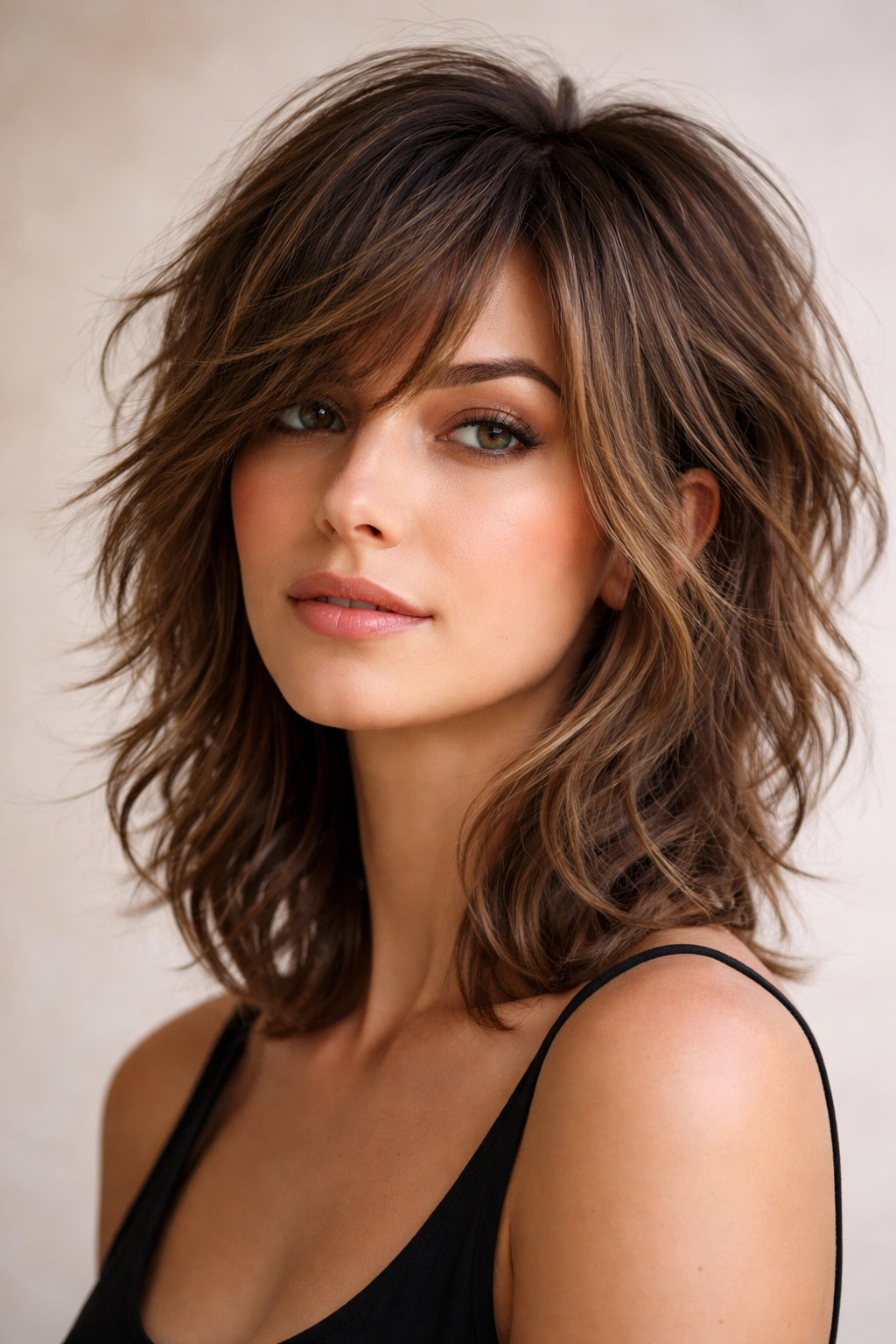
The wolf cut (a hybrid between a shag and a mullet, basically) is especially striking on wavy hair because your texture naturally creates the feathered, piece-y effect that defines this style. Short, choppy layers throughout create movement and volume at the crown, while the longer pieces in the front work perfectly for side bangs. The bangs are feathered and piece-y themselves, never blunt — they blend into your waves rather than sitting as a separate element.
Why It Works for Wavy Hair
Wolf cuts depend on having texture and movement — they don’t work nearly as well on straight hair, which is why they’ve become so popular among people with naturally wavy or curly textures. Your waves are the style, essentially. The choppy layers emphasize your wave pattern, and the feathered side bangs add movement without looking heavy or dated.
Styling for Maximum Impact
Apply a curl-enhancing cream or gel to damp hair, scrunch it in, and diffuse dry. The feathering of both the layers and the bangs means you don’t need to be perfectly precise with styling — slight messiness actually looks intentional. If you want a more polished version, you can smooth the side bangs with a small round brush while drying, creating definition without losing the feathered texture.
Pro tip: Feathered bangs work best when they’re cut to just below your eyebrow in the thickest part, then taper shorter toward your temples. This prevents them from feeling too heavy across your forehead while maintaining the length you need to sweep them back.
5. Blunt Crop With Wispy Side Bangs
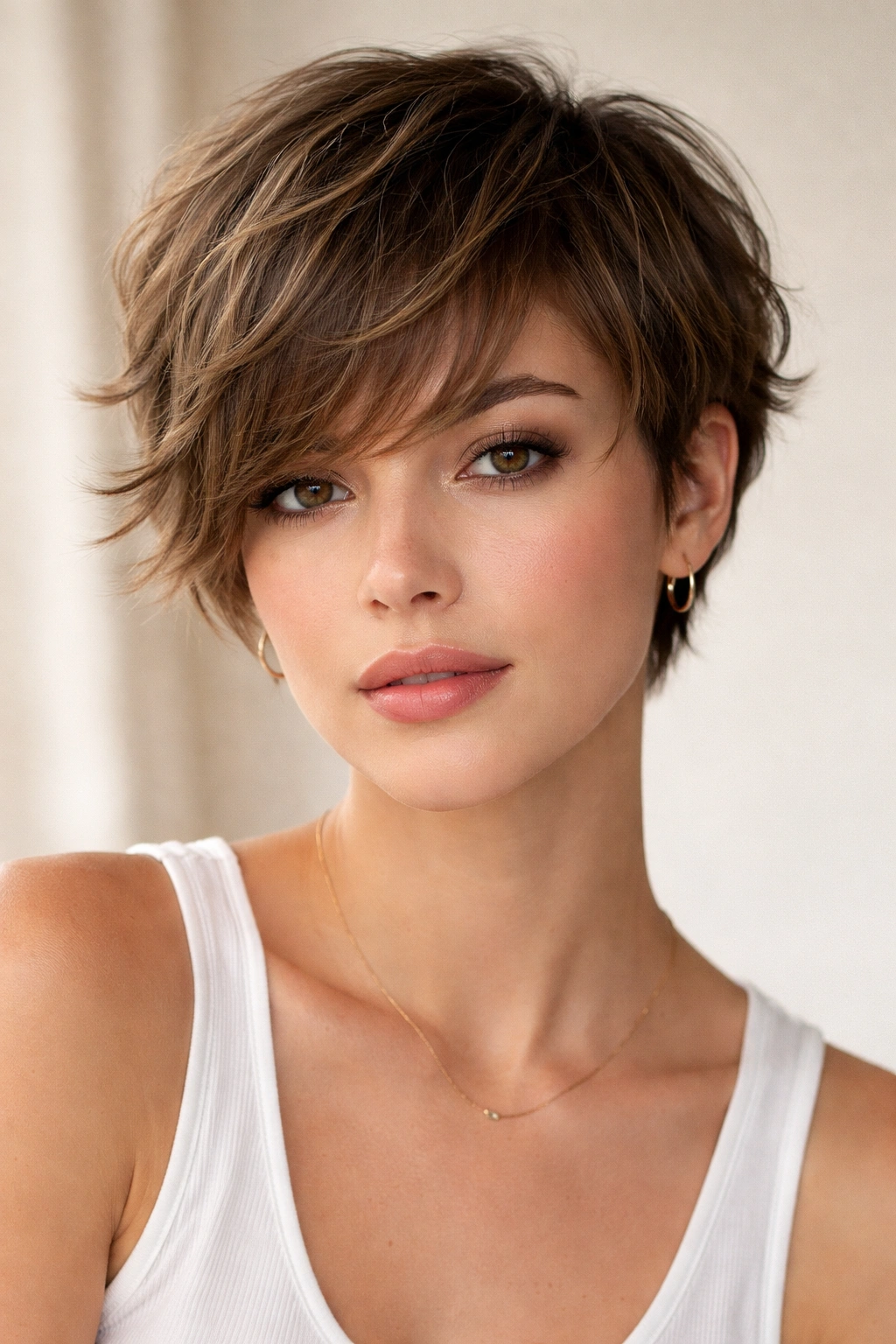
If you prefer a more modern, structured look, a blunt crop (very short throughout, typically 2-3 inches all over) paired with wispy side bangs offers the best of both worlds. The blunt crop keeps the cut minimal and contemporary, while the side bangs provide softness and face-framing that prevents the style from feeling too masculine or severe. For wavy hair, the crop actually looks more relaxed and less rigid because your texture adds movement to what could otherwise be a very geometric cut.
Why It Works for Wavy Hair
The slight wave in a blunt crop creates a textured, lived-in quality that makes the cut feel intentional rather than utilitarian. Your hair has some lift and movement at the crown and temples naturally, which softens the bluntness. The wispy side bangs — bangs that are cut with feathered, tapered edges rather than blunt — blend seamlessly into your waves.
Making It Your Own
This is a style that can go from boy-short practical to deliberately editorial depending on how you color it and style it. On its own, apply a texturizing spray to add definition and separation. With color (especially something dimensional like a highlighted or balayage effect), this cut reads as deliberately fashion-forward. The side bangs are long enough to tuck behind your ear on days when you want a different vibe.
Worth knowing: This cut requires touching up every 4-5 weeks to maintain the blunt edge. As it grows out, that precision edge softens naturally due to your wave texture, which can actually look intentional and lived-in — but if you prefer that sharp, clean look, plan for regular trims.
6. Shoulder-Length Shag With Voluminous Side Bangs
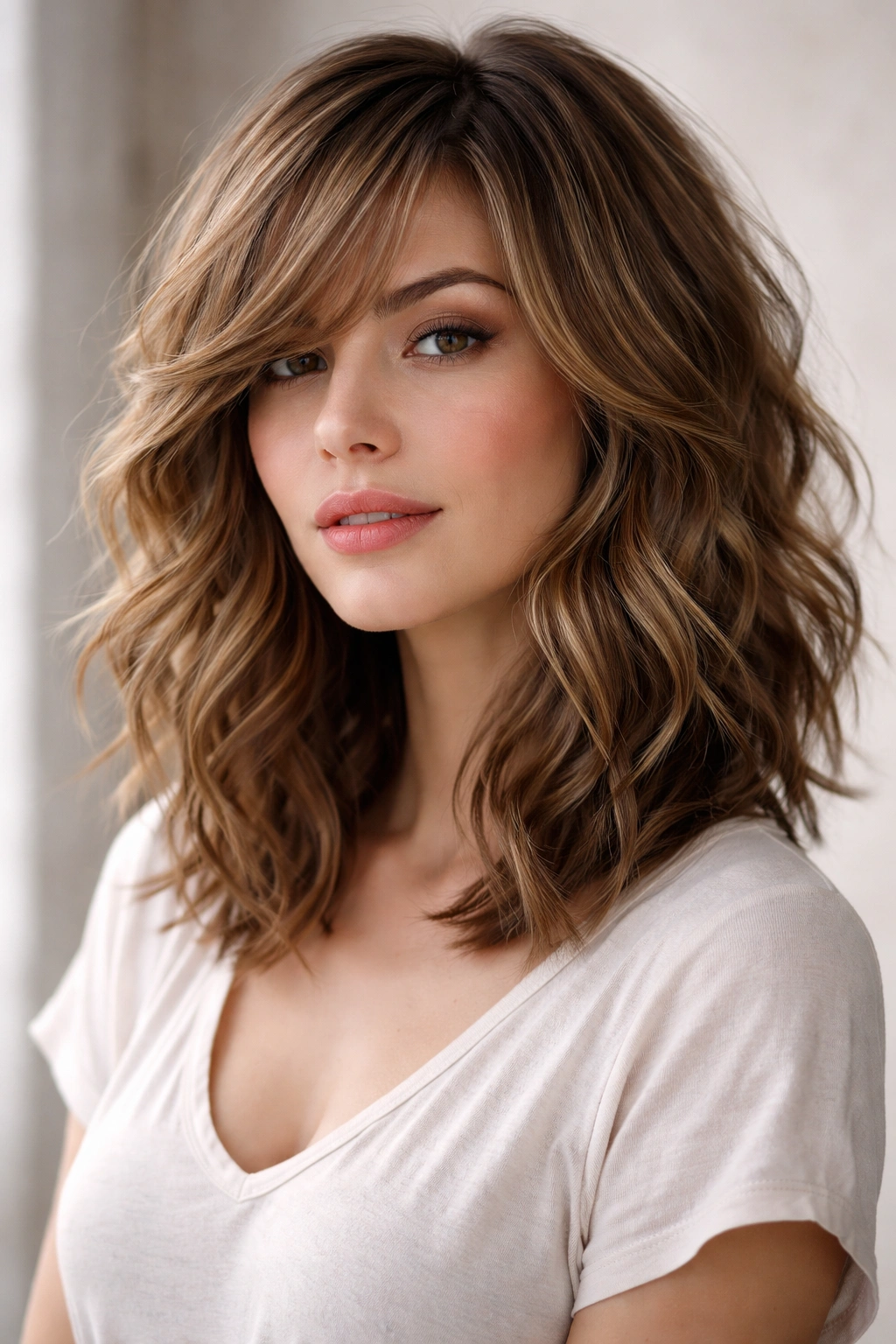
This is the longer end of “short styles,” perfect if you’re not ready to go truly short but want that effortless shag aesthetic with side bangs. The back and crown are layered for movement and texture, while the front pieces (your side bangs) are longer — long enough to graze your shoulders. The length gives you more styling flexibility than a true short cut, but the layering keeps it from feeling heavy on wavy hair.
Why It Works for Wavy Hair
Shoulder-length allows your waves to create actual waves rather than just texture — the length gives them room to form defined wave patterns. The layers prevent the weight from dragging your waves down into limp sections, so even with a bit of length, you maintain movement and dimension. The side bangs fall beautifully at shoulder-length because they have room to curve away from your face naturally.
Styling Versatility
This length allows you to wear your hair multiple ways: down and wavy for a relaxed look, partially pinned back to show off the side bangs more dramatically, or even in a half-up style that showcases the layers. Apply a leave-in conditioner or wave cream to damp hair, scrunch to encourage waves, and diffuse dry. For more definition, you can create waves intentionally with a curling iron or waving iron, though your natural texture may already give you plenty of dimension.
Pro tip: This length is forgiving enough that you can go 8-10 weeks between cuts instead of every 6 weeks, making it a good option if you’re not a fan of frequent salon visits.
7. Disconnected Undercut With Sharp Side Bangs
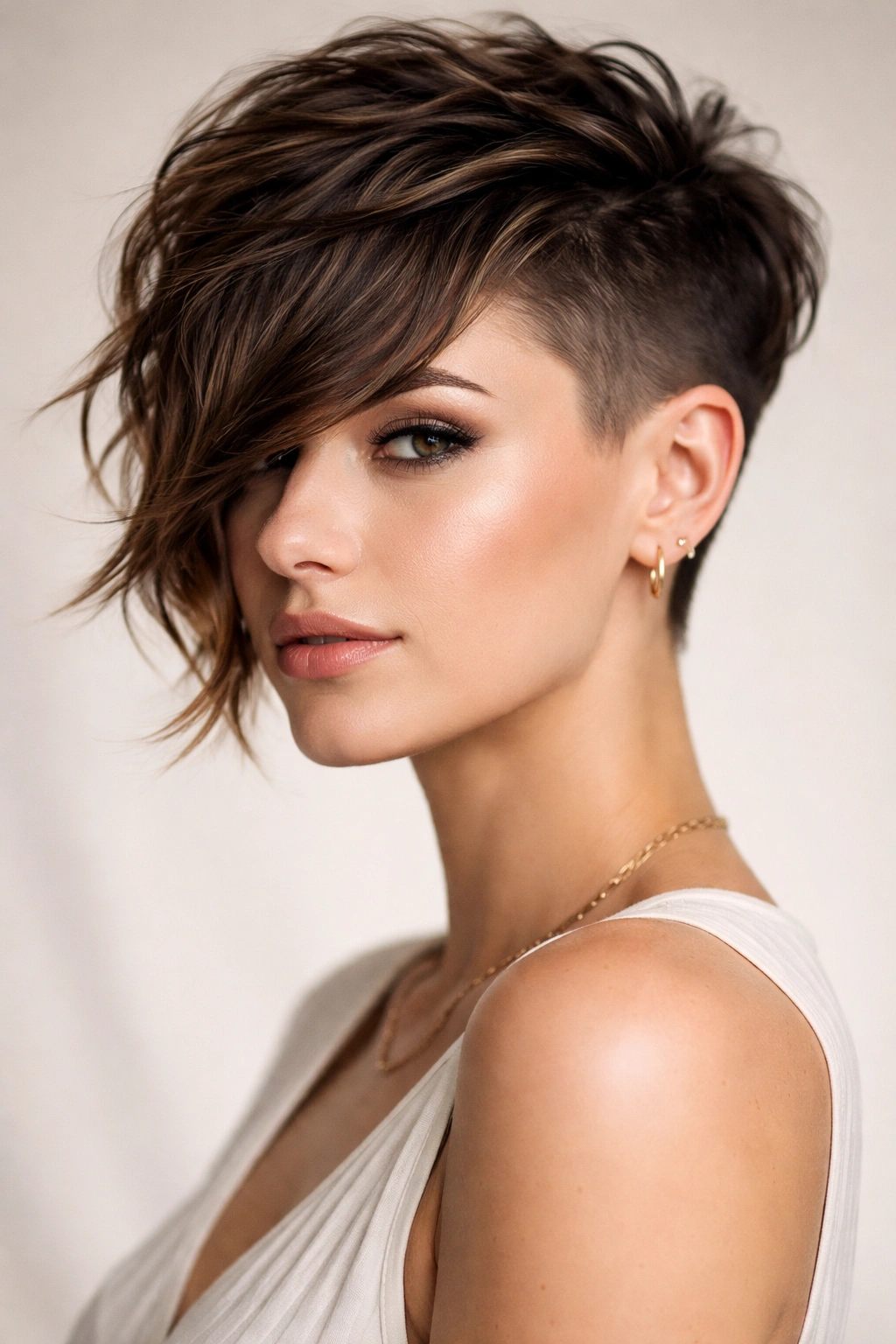
For those who want an edgier, more contemporary look, a disconnected undercut pairs perfectly with sharp, blunt side bangs. The sides and back are cut extremely short (sometimes shaved, often just 0.5-1 inch), while the top is left longer — typically 3-4 inches — and layered. The sharp side bangs are cut blunt and geometric, creating a striking contrast with the disconnected shorter sections. Your wavy texture on top works beautifully here because it adds movement to what’s otherwise a very angular cut.
Why It Works for Wavy Hair
The disconnection between the short sides and longer top is visually softened by your waves. The texture prevents the undercut from reading as too punk or severe — instead, it feels modern and intentional. The waves on top catch light and show dimension, which makes the style more elegant than edgy.
Styling for Edge
Use a texturizing cream or lightweight gel on damp hair, scrunch to enhance waves, and diffuse dry. The sharp side bangs work best when they’re blunt-cut and don’t have tapered ends — they create a clean line across your forehead or cheekbone (depending on length) that contrasts beautifully with the textured waves on top. You can occasionally smooth them with a straightener for an even sleeker effect.
Insider note: This cut requires more frequent trims to maintain the disconnection and the sharpness of the bangs — plan for every 4-6 weeks to keep the style looking intentional.
8. Layered Lob With Soft Side Bangs
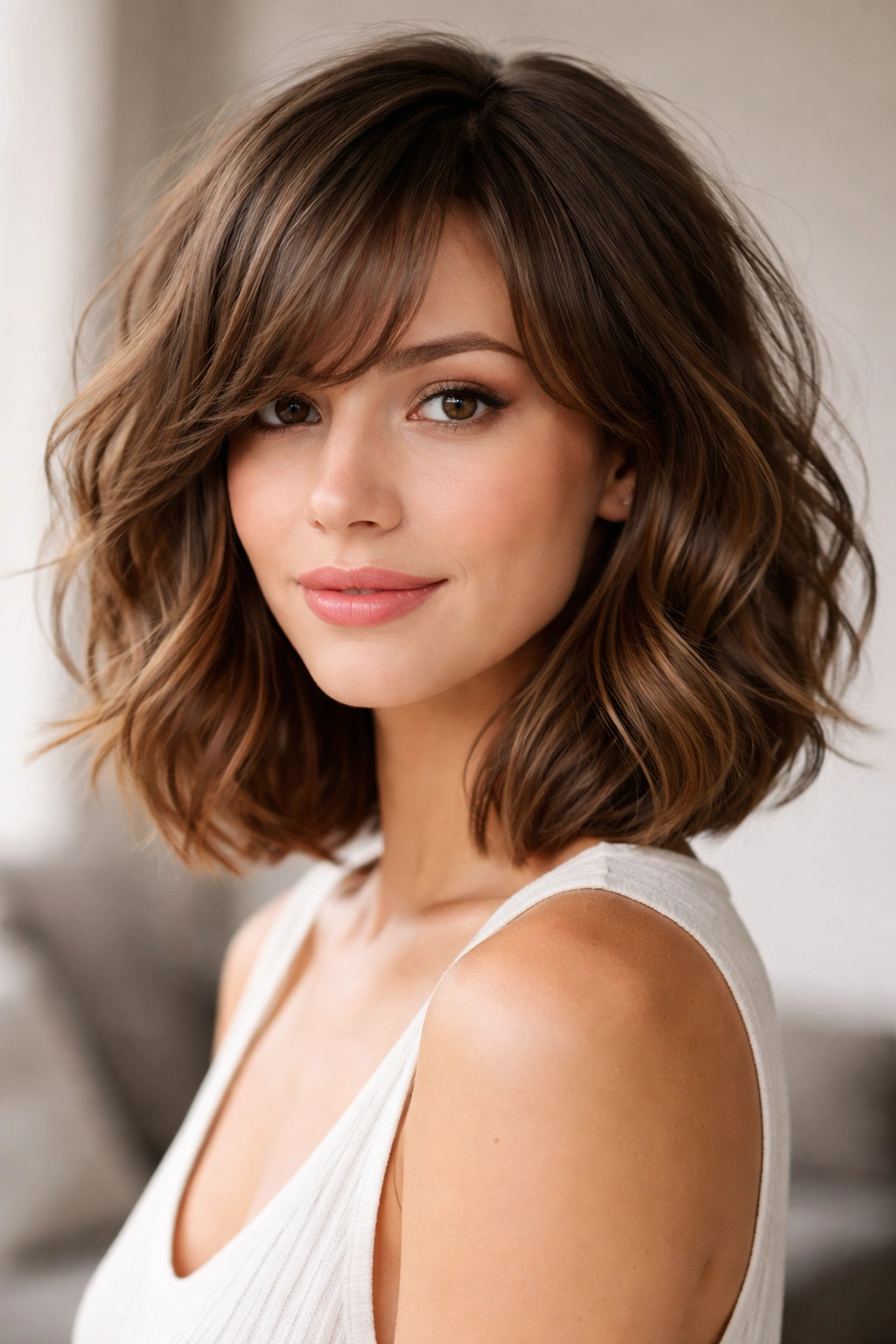
A lob (long bob, typically hitting chin-length or just below) is traditionally longer than the other styles on this list, but paired with properly placed layers and soft side bangs, it absolutely works for wavy hair and people who prefer a bit more length. The layers start around cheekbone-length and create movement throughout, while the side bangs frame your face without overwhelming it. This is for people who want the sophistication of short hair without going drastically short.
Why It Works for Wavy Hair
A lob without layers can look heavy and shapeless on wavy hair, but with proper layering throughout, it becomes a style with real movement and dimension. The waves naturally create texture that a lob on straight hair might lack. The side bangs aren’t too short (usually hitting around your cheekbone or slightly longer), so they’re easy to manage even if your waves are strong.
Styling and Maintenance
This cut is incredibly versatile for styling. Wear it down with natural waves, blow-dry it smooth for a sleeker look, or pin back sections to show off the side bangs more prominently. Apply leave-in conditioner to damp hair, scrunch to encourage waves, and diffuse dry for the easiest approach. This length gives you enough hair to create intentional waves with a curling iron or waving iron if you want to style up for a specific occasion.
Worth knowing: A layered lob needs trimming every 6-8 weeks to maintain the layer shape and prevent it from becoming shapeless as it grows out.
9. Piece-y Pixie With Longer Textured Side Bangs
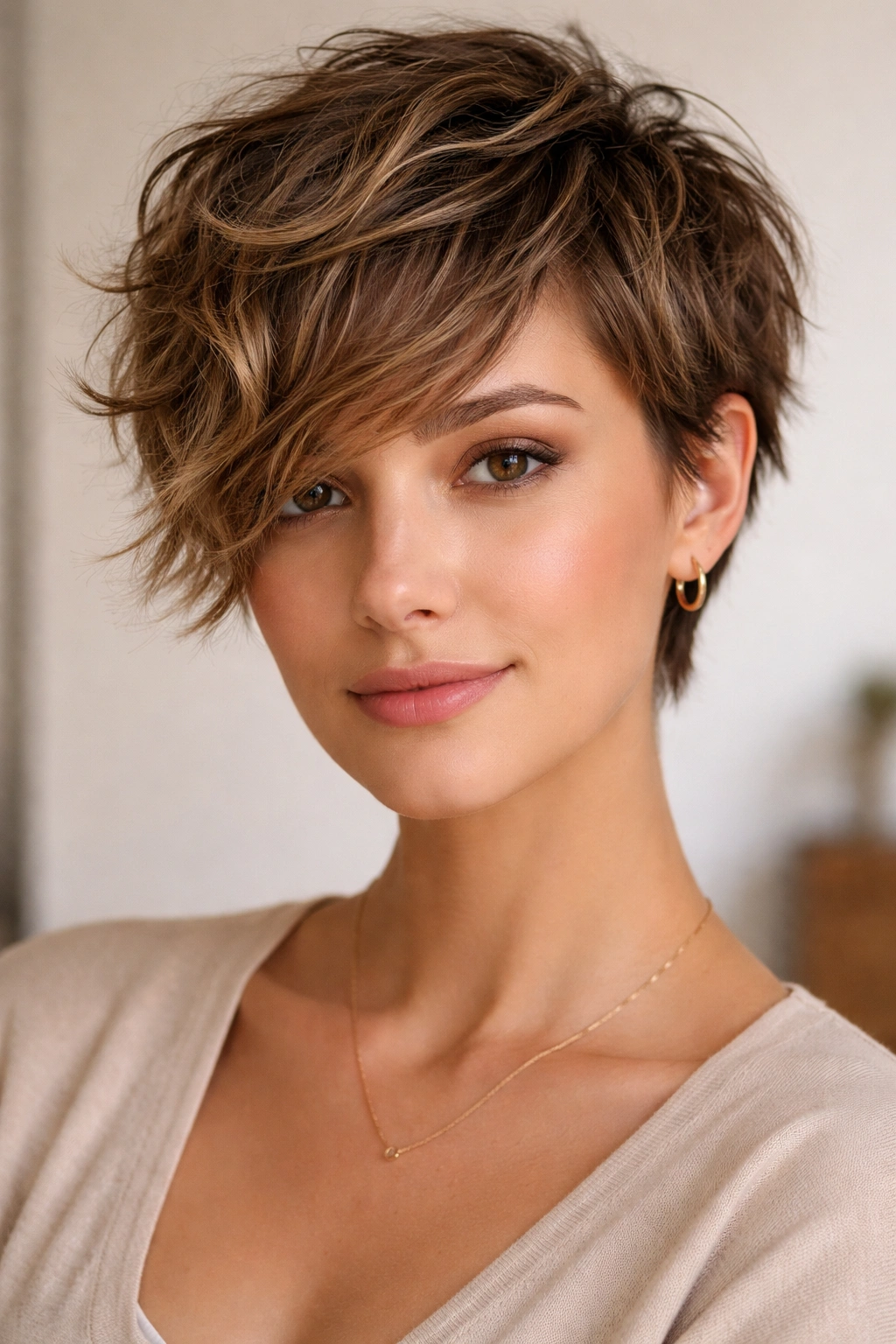
This is a short pixie that’s been specifically tailored for wavy hair — shorter overall, but with longer pieces left in the front for side bangs, and the back cut with choppy, disconnected layers that emphasize your natural texture. It’s short enough to feel low-maintenance but long enough in the front to offer some styling variation. The side bangs aren’t swept far back; they’re longer pieces that fall naturally across your forehead and cheekbone.
Why It Works for Wavy Hair
Pixies are often too short for wavy hair because without some length, your wave pattern can read as frizz rather than texture. This modified version keeps enough length to showcase actual waves while maintaining the low-maintenance appeal of a pixie. The choppy layers throughout mean you’re not fighting bulk or weight, just enhancing your natural texture.
Easy Styling
This is genuinely low-maintenance. Wash your hair, apply a lightweight wave cream, scrunch, and you’re done. Your natural waves do the work. The side bangs fall exactly where they naturally want to fall because of the piece-y cutting technique. On days when you want more definition, you can use a diffuser attachment on low heat while scrunching, or you can apply a gel for extra hold.
Pro tip: This cut actually benefits from you not blowing your hair dry if you have strong natural waves. Air-drying or using just a diffuser on low heat prevents the layers from separating in unexpected ways and lets your natural wave pattern take the lead.
10. Tousled Shag With Curtain-Style Side Bangs
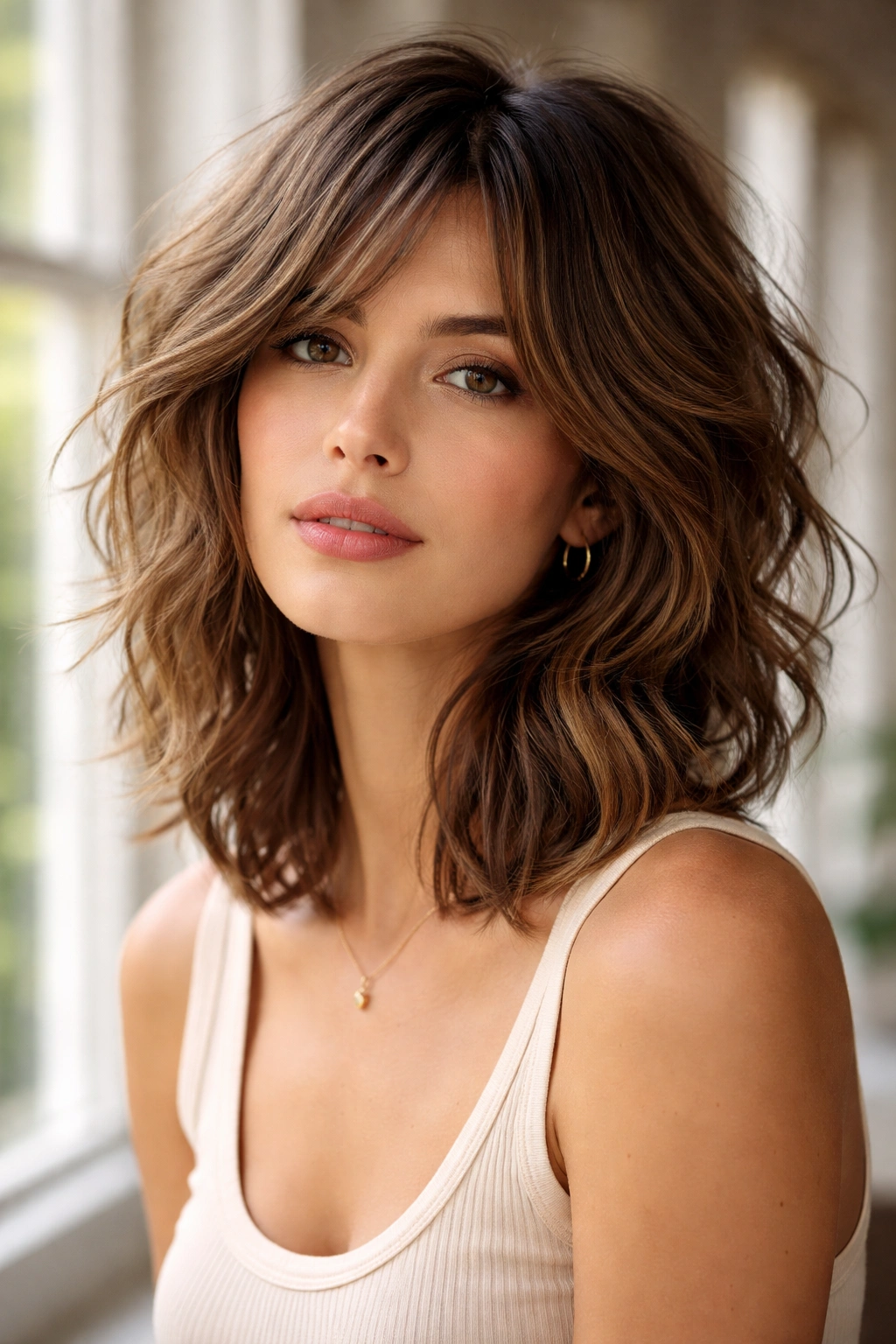
A tousled shag is intentionally undone — not messy, but deliberately relaxed and piece-y. Pair this with curtain-style side bangs (bangs that start in the center and sweep out toward both sides, framing your face like a curtain) and you have a style that celebrates your wave texture. The back and crown are layered for movement, the sides are longer, and the bangs sweep back in that ’90s-cool way that feels effortlessly modern.
Why It Works for Wavy Hair
This cut is built on embracing rather than fighting your natural texture. Every element — the choppy layers, the longer front pieces, the way the bangs are cut — works with wavy hair instead of against it. Curtain bangs don’t sit flat against your forehead; they have movement and volume because of how they’re cut and how your waves naturally sit.
Achieving the Tousled Look
The whole point of this style is that it looks effortlessly undone. Wash your hair, apply a volumizing or texturizing cream to damp hair, scrunch it throughout, and let it air dry or diffuse dry. The tousled quality comes from the cut itself, not from tedious styling. Some people enhance the effect by flipping their head upside down while drying or roughing up their hair with their fingers as it dries.
Worth knowing: Curtain bangs are slightly easier to maintain than blunt side bangs because the tapered, layered cut means minor growth isn’t as noticeable. You can typically go 8-10 weeks between cuts instead of every 6 weeks.
11. Sleek Geometric Cut With Straight-Across Side Bangs
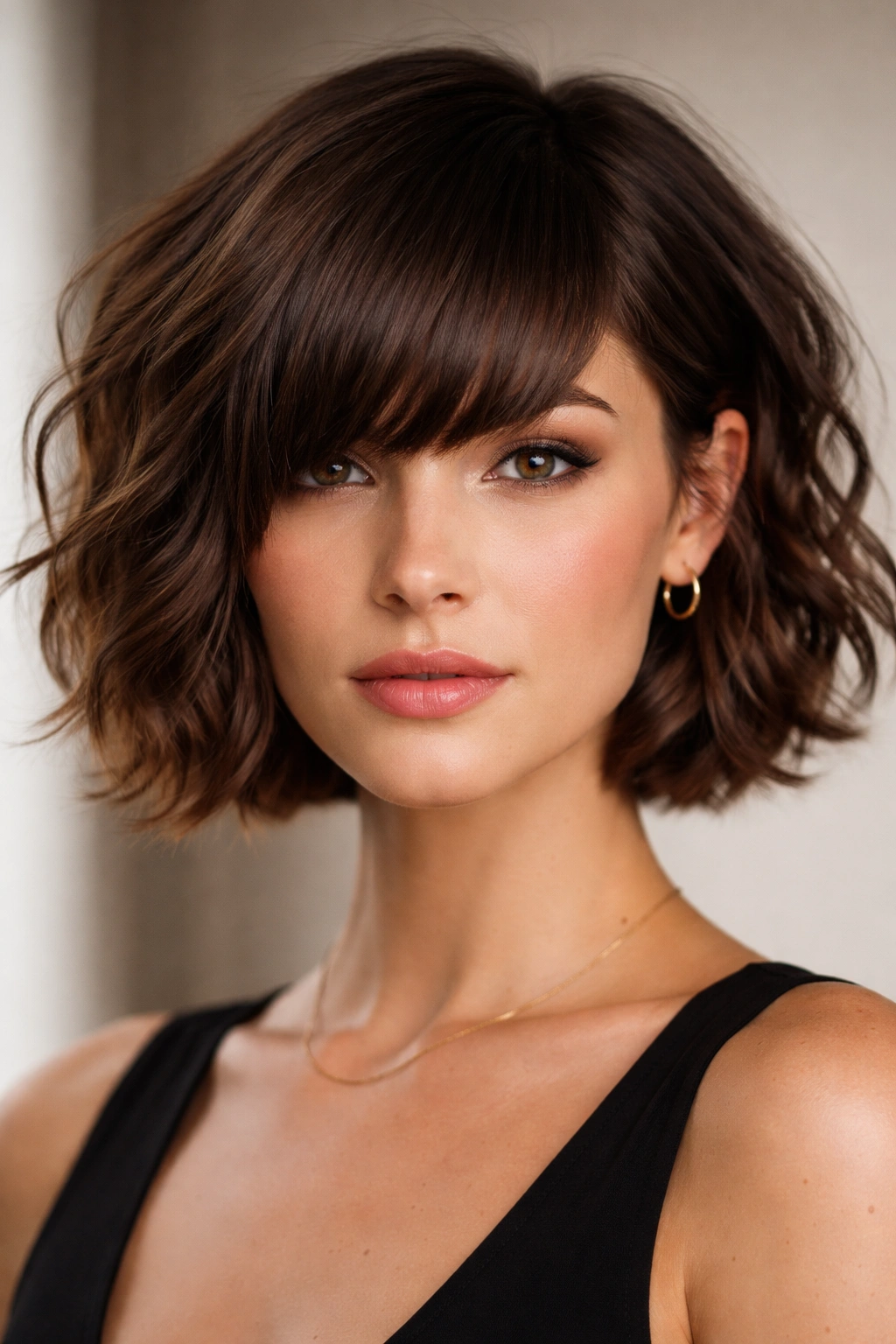
For a departure from the effortlessly tousled aesthetic, a sleek geometric cut pairs wavy hair with intentional styling. The cut itself is modern and precise, with clean lines and sharp angles, while the side bangs are cut straight across (blunt) and hit right at your eyebrow. This works for wavy hair when you’re willing to blow-dry and style it deliberately, creating a contrast between the geometric cut and your styled waves.
Why It Works for Wavy Hair
Styling your natural waves with intention — blow-drying them smooth or creating deliberate wave patterns with a tool — makes the geometric precision of this cut really shine. Your waves add sophistication and movement that a geometric cut on straight hair might lack. The straight-across bangs create a bold frame for your face, and when paired with styled waves, they look editorial and intentional.
Styling Requirements
This is the higher-maintenance option on this list. Plan to blow-dry your hair at least partially to achieve the sleek effect. You might use a paddle brush to smooth sections, or use a straightening iron on just the bangs to create a sharp line. On days when you skip styling, this cut still works because your waves create texture, but it won’t have that polished, geometric quality it’s designed for.
Pro tip: This cut looks incredible with a dimensional color — it emphasizes movement and catches light in a way that really shows off highlights or balayage.
12. Cropped Layers With Feathered Side Bangs
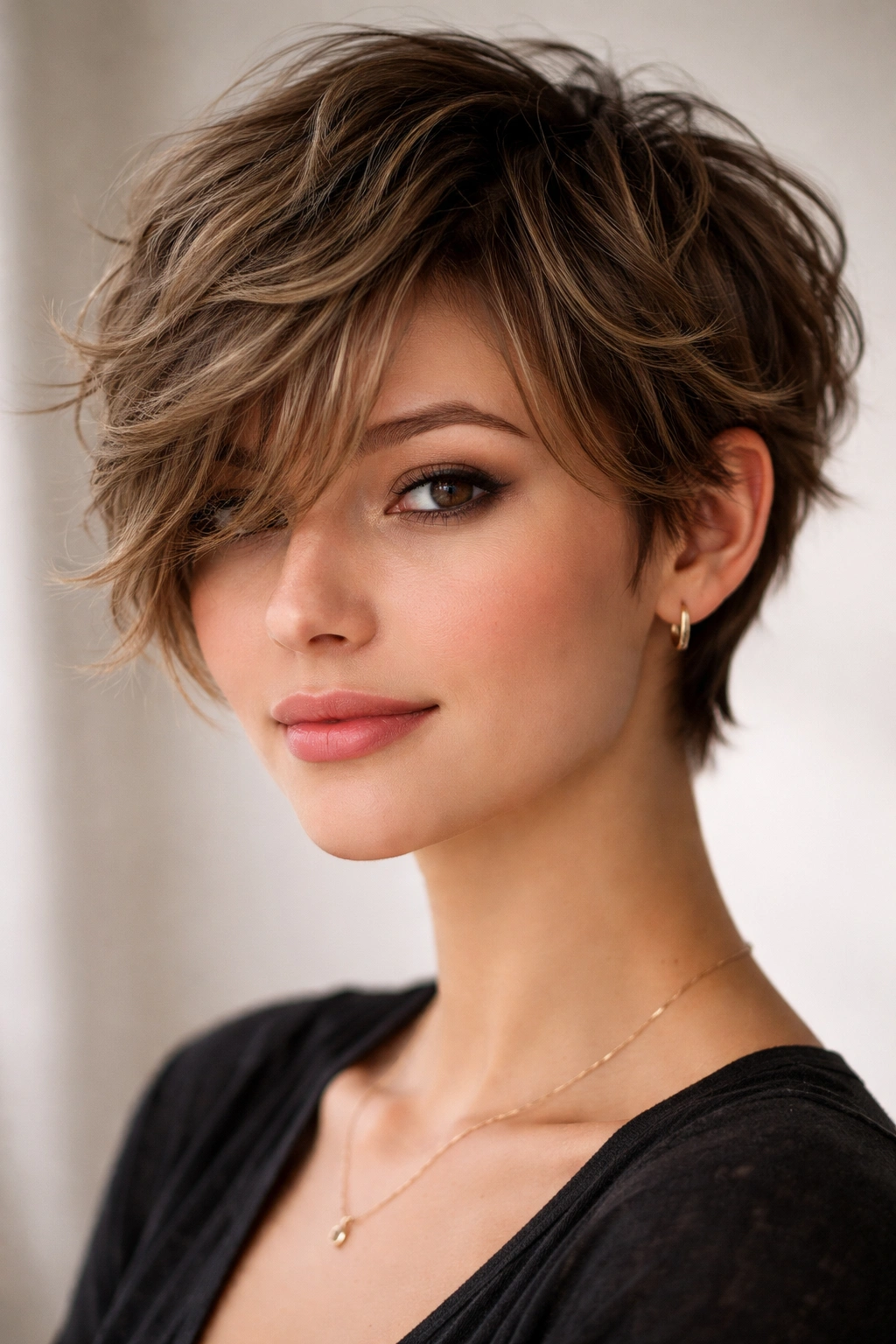
A cropped layered cut keeps hair very short overall (typically 2-4 inches) while using strategic feathering to create movement and prevent that blunt, helmet-like quality that very short cuts can have. The side bangs are feathered (tapered at the ends, not blunt), giving them a soft quality while still framing your face. This is for people who want seriously short hair that still feels feminine and soft.
Why It Works for Wavy Hair
Your natural wave texture is a huge advantage here. It automatically creates the feathering effect that makes this cut work — your hair isn’t blunt and geometric, it’s textured and piece-y. The feathered side bangs blend seamlessly into your waves rather than looking like a separate element. The short length means your waves might have less room to form actual waves, but that’s fine — they create texture and movement instead.
Low-Maintenance Styling
This is about as low-maintenance as it gets. Wash, apply a lightweight texturizing product, scrunch, and air dry or quickly diffuse. Your natural wave pattern does all the work. The feathering throughout means you’re not fighting bulk; you’re just working with texture. On days when you want more definition, use a curl-enhancing cream or gel.
Worth knowing: Feathering requires precision cutting, so finding a stylist who specializes in wavy/curly hair and understands how feathering works with texture is important. A stylist who cuts curly hair regularly will automatically understand this technique.
13. Choppy Pixie With Extended Side Bangs
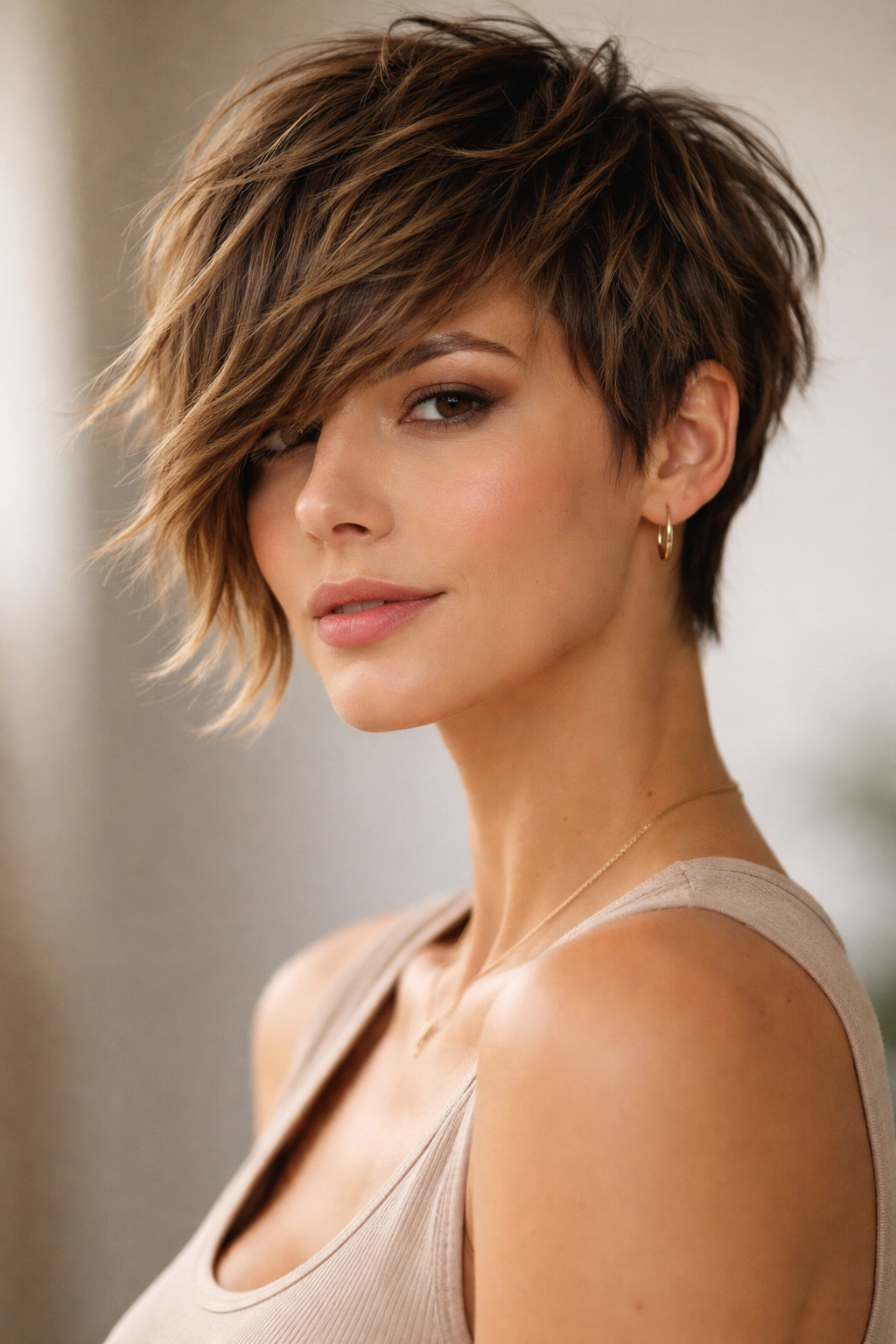
Think of this as a pixie that’s been extended in the front — super short in the back, but with considerably longer pieces swept to the side as bangs. It’s like a pixie and a bob had a baby. The back remains cropped and textured with choppy layers, while the side bangs are long enough to brush your cheekbone or slightly longer. This gives you the ease of a pixie with more styling options.
Why It Works for Wavy Hair
The choppy texture throughout prevents the short back from looking severe or masculine — your waves soften everything. The longer side bangs have room to curve and move with your natural wave pattern, so they don’t sit flat or blunt against your face. The shorter back keeps things manageable while the longer front pieces prevent you from feeling like you’ve gone too short.
Styling Flexibility
You have actual styling options with this cut. Wear the side bangs swept back on one side for a sleek look, or let them fall across your forehead for a softer effect. Style with waves for a relaxed vibe, or blow-dry them partially smooth for something more polished. This versatility makes it a great choice if you’re still deciding how committed you are to a very short style.
Pro tip: This cut grows out gracefully. As it gets longer, the shorter back naturally blends into the longer front pieces, so you have a few weeks of grace before you need a trim. Plan for trims every 6-8 weeks.
14. Textured Crop With Wispy Diagonal Side Bangs
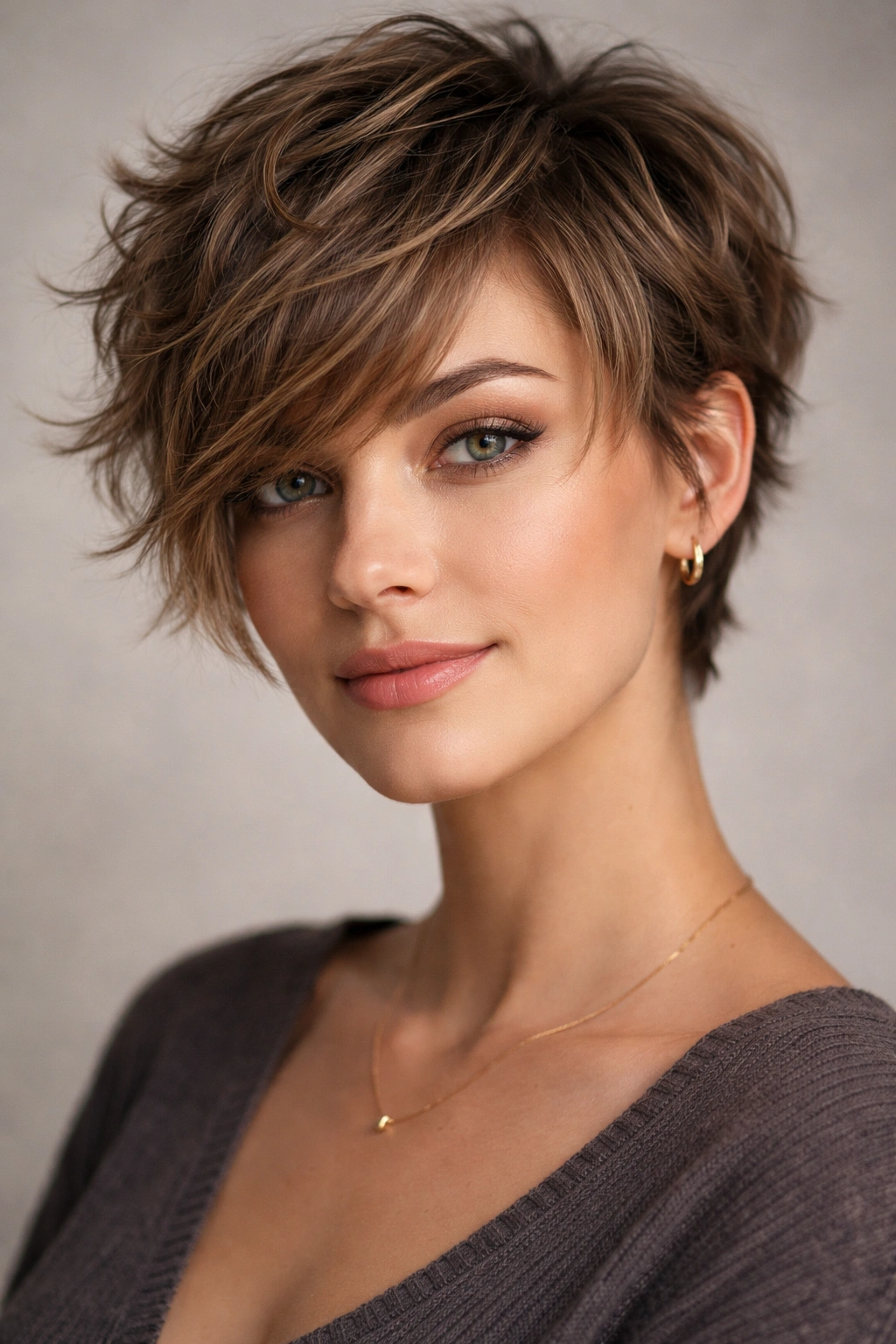
A textured crop is similar to a blunt crop, but instead of straight, blunt lines throughout, the layers are choppy and disconnected, creating a piece-y, textured effect. Pair this with wispy diagonal side bangs (bangs that taper and angle slightly upward toward your temples) and you have a modern, effortlessly cool style. The texture throughout means the cut celebrates your wave pattern rather than fighting it.
Why It Works for Wavy Hair
The whole point of this cut is texture. Every layer, every chop is meant to enhance the natural movement in your hair. Your waves are the feature, not something to minimize or smooth away. The diagonal wispy bangs look fresh and contemporary, and they don’t require the kind of precision styling that blunt bangs do.
Minimal Styling Needed
Apply a texturizing cream or lightweight gel to damp hair, scrunch throughout, and air dry or diffuse. The choppy texture means you’re not creating a specific style so much as enhancing what’s naturally there. This is genuinely low-effort. On higher-energy days, you can use a diffuser on low heat while scrunching for extra definition, but it’s optional.
Worth knowing: This cut benefits from a good texturizing product. Investing in a quality mousse, cream, or gel designed for creating texture and movement makes a noticeable difference in how the cut looks.
15. Layered Undercut With Swooping Side Bangs
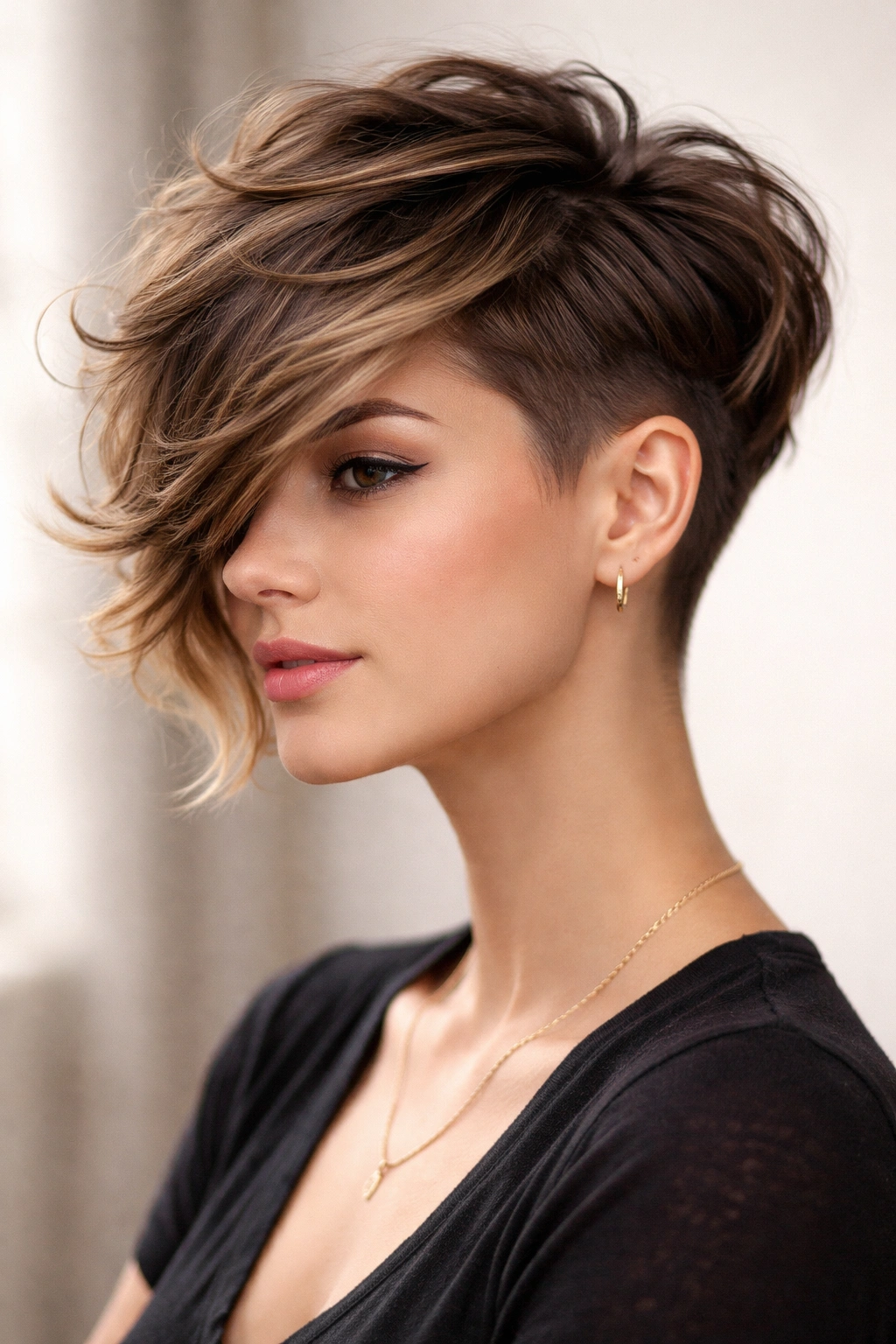
An undercut where the sides and back are clippered short but the top retains more length and layers, paired with side bangs that swoop dramatically from one side all the way across. The swooping bangs are longer (often grazing your cheekbone or longer), creating a bold statement while the undercut keeps things manageable. Your wavy hair adds texture to the top, preventing the undercut from reading as too stark.
Why It Works for Wavy Hair
The swooping bangs work beautifully with wavy hair because your natural texture creates movement in the bang line — they don’t sit flat or severe, they have dimension and flow. The undercut creates a striking contrast, and the waves on top soften that contrast so the overall effect is modern rather than harsh. The longer bangs mean you’re not fighting short, stubborn pieces constantly.
Styling Approach
Use a lightweight texturizing product on damp hair, scrunch to enhance your natural waves, and diffuse or air dry. The swooping bangs follow your natural wave pattern, so styling them is minimal — they fall where they naturally want to fall. If you want a sleeker effect, you can smooth the bangs with a paddle brush or straightener while blow-drying.
Insider note: This cut is incredibly eye-catching and works well for people who want their hair to make a statement. The swooping bangs draw attention to your face and eyes, so it pairs well with a bold eye look or lip color.
16. Textured Bob With Choppy Side-Swept Bangs
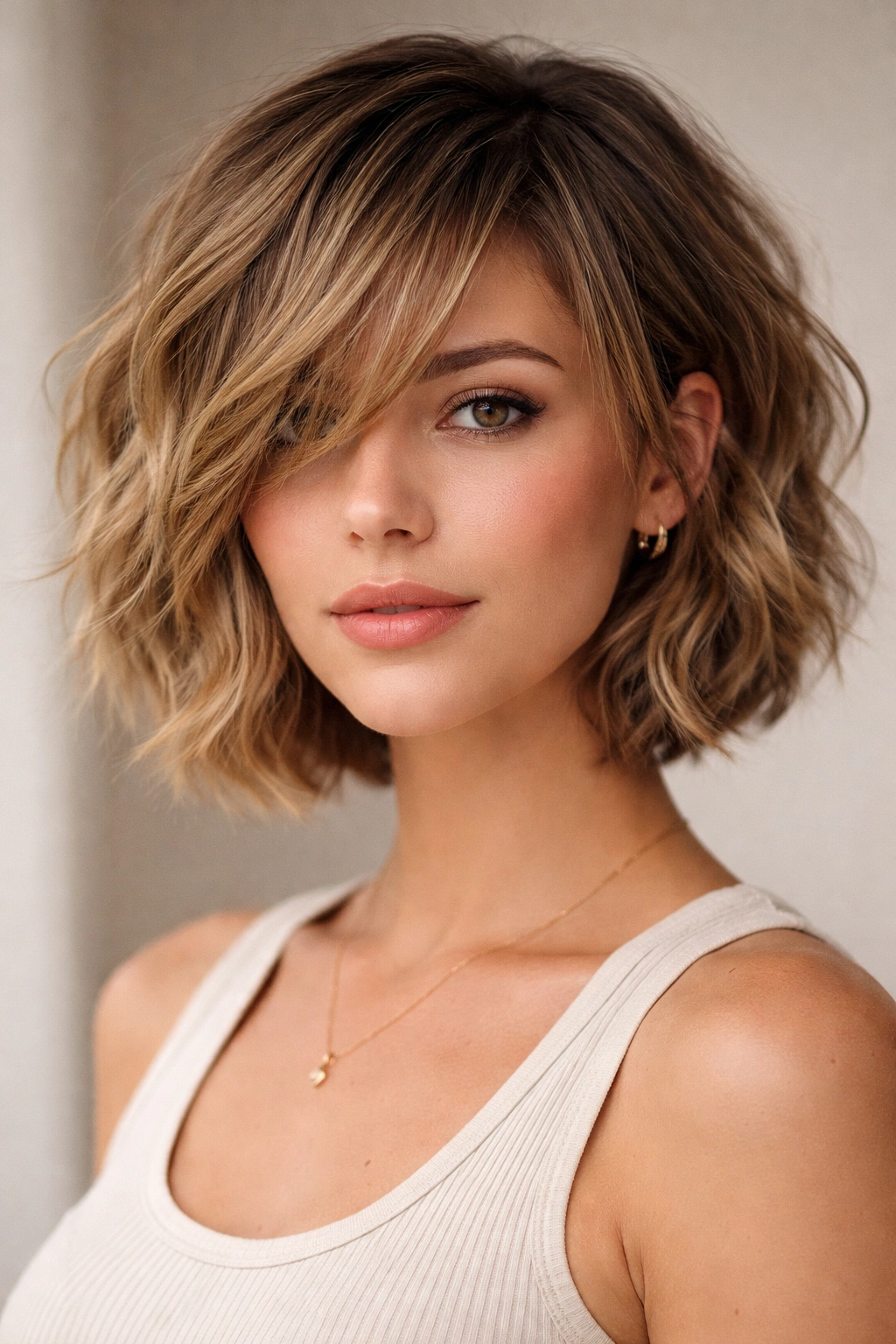
A textured bob hits roughly at your jawline or slightly shorter, with layers throughout that create movement and prevent heaviness. Unlike a sleek blunt bob (which doesn’t work great with wavy hair), this version embraces the texture, using choppy layers to enhance your wave pattern. The side-swept bangs are piece-y and not blunt, sweeping across your forehead and cheekbone with a tousled quality.
Why It Works for Wavy Hair
A traditional blunt bob can look heavy and shapeless on wavy hair because it lacks the layers needed to prevent the weight from dragging your waves down. This textured version solves that problem. The choppy layers throughout the bob create movement and dimension, and the side bangs add softness without looking separated from the rest of your hair. Your waves actually look like intentional waves rather than just frizz trapped under a heavy cut.
Easy Maintenance
Wash, apply a leave-in conditioner or wave cream to damp hair, scrunch to encourage waves, and diffuse or air dry. The layers mean you don’t need much product or effort to look polished. This length is manageable enough that you don’t feel like you need frequent trims (every 8 weeks is fine), but short enough to feel current and intentional.
Pro tip: A textured bob actually looks better when it’s slightly undone — perfect if you’re someone who doesn’t like spending time styling. Deliberate tousling looks intentional, not messy.
17. Shaggy Bangs With Short Choppy Layers
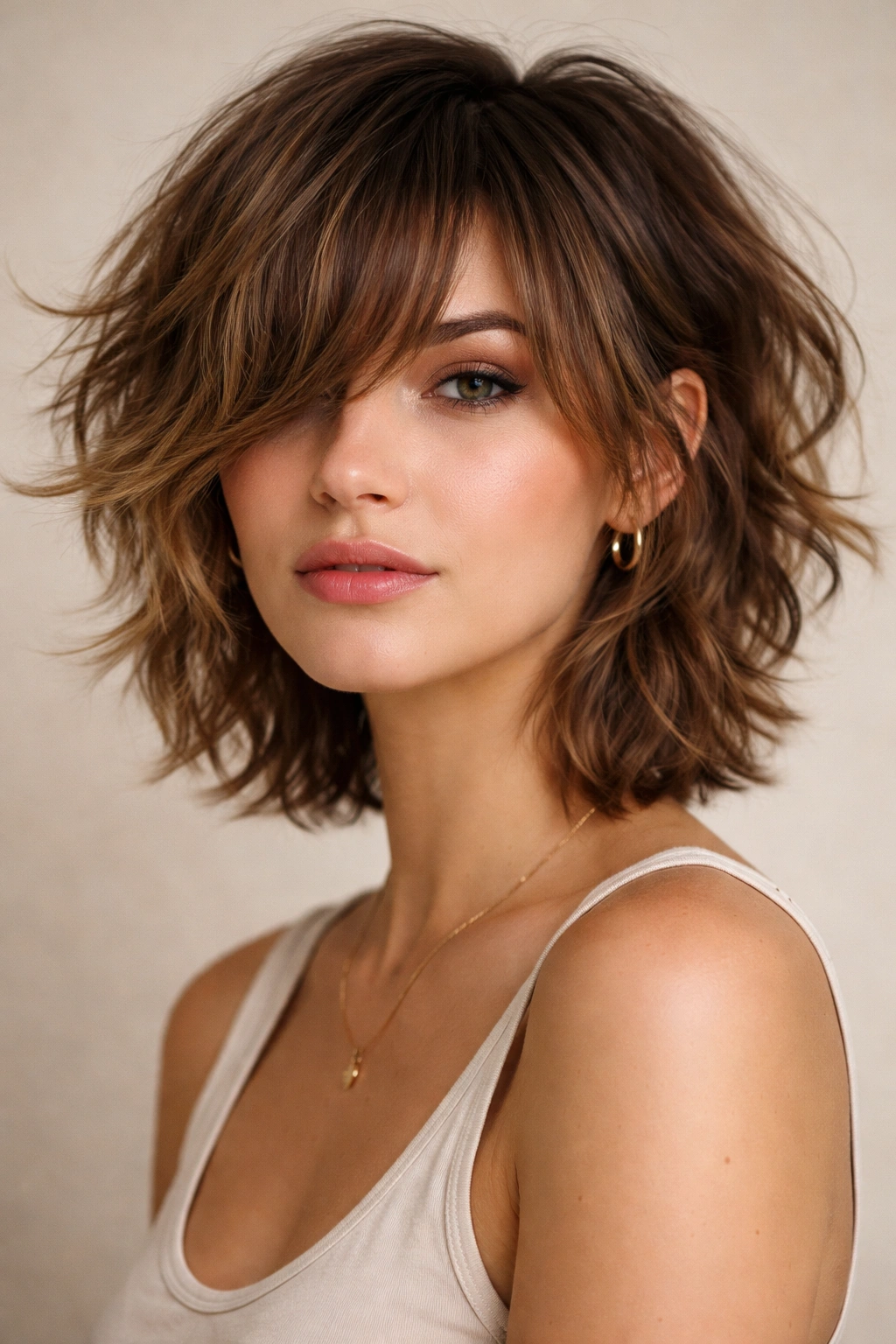
Similar to a shag, but with the emphasis specifically on the bangs — longer, shaggy, piece-y bangs that are cut in layers so they have incredible movement and don’t sit flat. The back and sides are quite short, often clippered or cut very close, while the front is where all the length and movement happens. This is for people who want to really showcase their bangs as the focal point of the style.
Why It Works for Wavy Hair
Shaggy, layered bangs are practically made for wavy hair. The layers mean your wave pattern creates definition and movement in the bangs themselves — they’re not a flat piece draped across your forehead, they’re dimensional and textured. The short back contrasts beautifully with the longer textured bangs, creating a contemporary, intentional-looking style.
Emphasizing Your Bangs
Since the bangs are the star here, you might style them more intentionally than you would other sides of the cut. Apply a lightweight styling product, scrunch the bangs upward to encourage texture, and diffuse or air dry. The bangs will naturally fall into place if they’re cut well, but you have the option to style them sleeker or more textured depending on your mood. The short back requires minimal effort — just keep it clean and let your waves do the work.
Worth knowing: The contrast between the short back and longer textured bangs means you’ll notice growth fairly quickly. Plan for trims every 6-8 weeks to keep the back sharp and the bangs layered and textured.
18. Modern Shag With Subtly Asymmetrical Side Bangs
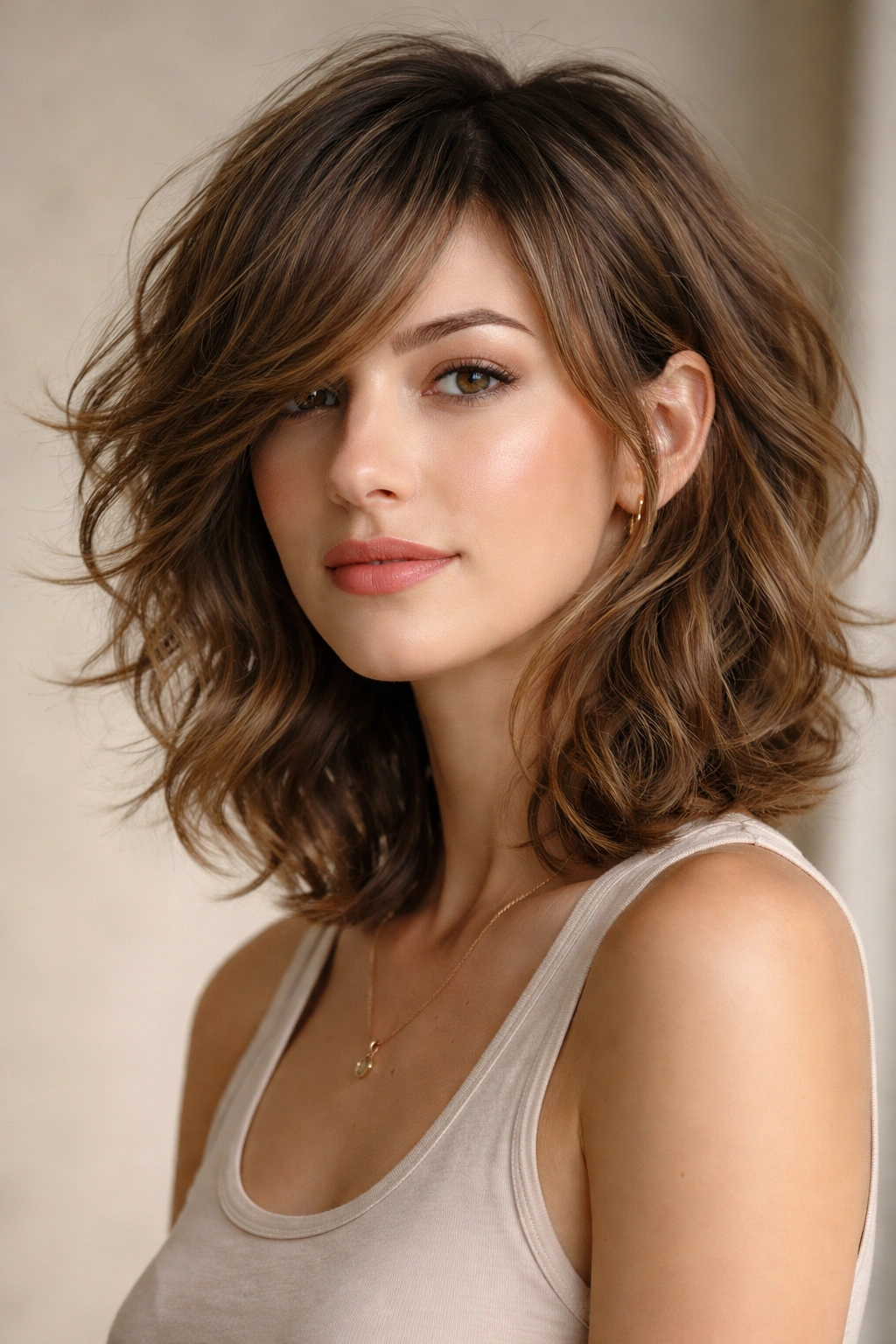
The final style is a modern shag — not quite as dramatically shaggy as some earlier styles, but definitely layered throughout with a rock-and-roll edge. The side bangs are subtly asymmetrical (slightly longer on one side than the other, perhaps by half an inch) rather than dramatically so, creating interest without boldness. The back is layered and textured, the crown has volume, and the whole thing feels deliberately modern and effortlessly cool.
Why It Works for Wavy Hair
Shags were literally invented for textured hair, so this is a natural fit for waves. The layers throughout mean your wave pattern creates all the movement and dimension you need — you’re not fighting the texture, you’re letting it shine. The subtly asymmetrical bangs add personality without the severity of a more dramatic asymmetrical cut, making it wearable for a wider range of people.
Achieving the Modern Shag Aesthetic
Wash your hair, apply a leave-in conditioner or wave cream to damp hair, scrunch throughout, and air dry or diffuse on low heat. The whole point is that it looks intentionally undone — your waves do the work. The subtly asymmetrical bangs fall naturally due to how they’re cut, creating interest without requiring specific styling. On days when you want more impact, you can blow-dry with a diffuser while scrunching for extra volume and definition.
Pro tip: Shags look incredible with a dimensional color like balayage or highlights. The layers and movement show off color variation beautifully, so if you’re considering a color change, this cut is a perfect opportunity to try something with depth and movement.
Final Thoughts

Finding the right short style with side bangs comes down to understanding what your specific wave pattern can do and what kind of maintenance you’re willing to commit to. Some of these styles are genuinely wash-and-go; others require intentional styling to achieve their best version. Some work for tight waves; others shine with looser, more relaxed texture.
The most important step is finding a stylist who actually specializes in wavy and curly hair. This isn’t about ego — it’s practical. A stylist trained in cutting wavy hair understands how your texture moves, how it dries, how it grows out, and which techniques (like feathering versus blunt cutting) work best with waves. They’ll cut your hair dry or damp depending on your wave pattern, and they’ll build in the layers and disconnection you need to prevent your waves from becoming heavy and shapeless.
Go into your consultation with a picture of a style you love from this list, but also be honest about your lifestyle and how much styling you’re willing to do. If you love the tousled, effortless look but you actually prefer to blow-dry your hair smooth every morning, a high-maintenance shag might frustrate you. Conversely, if you love the idea of a sleek geometric cut but you genuinely don’t enjoy styling, you might feel disappointed. Finding the overlap between what you love visually and what fits your actual life is the key to being genuinely happy with your cut.