



Curly hair over 50 isn’t a limitation — it’s an opportunity to embrace styles that actually suit your face shape, lifestyle, and the texture you’ve earned. Too many women in this life stage feel trapped between “too young” and “too matronly,” when the truth is that the best hairstyles for mature curly hair are the ones that work with your hair’s natural behavior, not against it. The right cut can minimize gray regrowth, make styling easier, add dimension without looking overdone, and genuinely make you feel like yourself when you look in the mirror.
The challenge isn’t finding curly styles for women over 50 — it’s finding ones designed specifically for the unique demands of mature, curly hair. Thinner density around the crown, slower regrowth of grays, different texture patterns than you had at 30, and a legitimate interest in spending less time with a blow dryer — these realities deserve hairstyles built for them, not the same cuts your daughter is wearing. The styles that follow aren’t trendy compromises. They’re classics and modern approaches that have proven themselves on women navigating this exact stage of life, with honest notes on what works, what requires maintenance, and how to communicate with your stylist to get it right.
1. Textured Pixie Cut
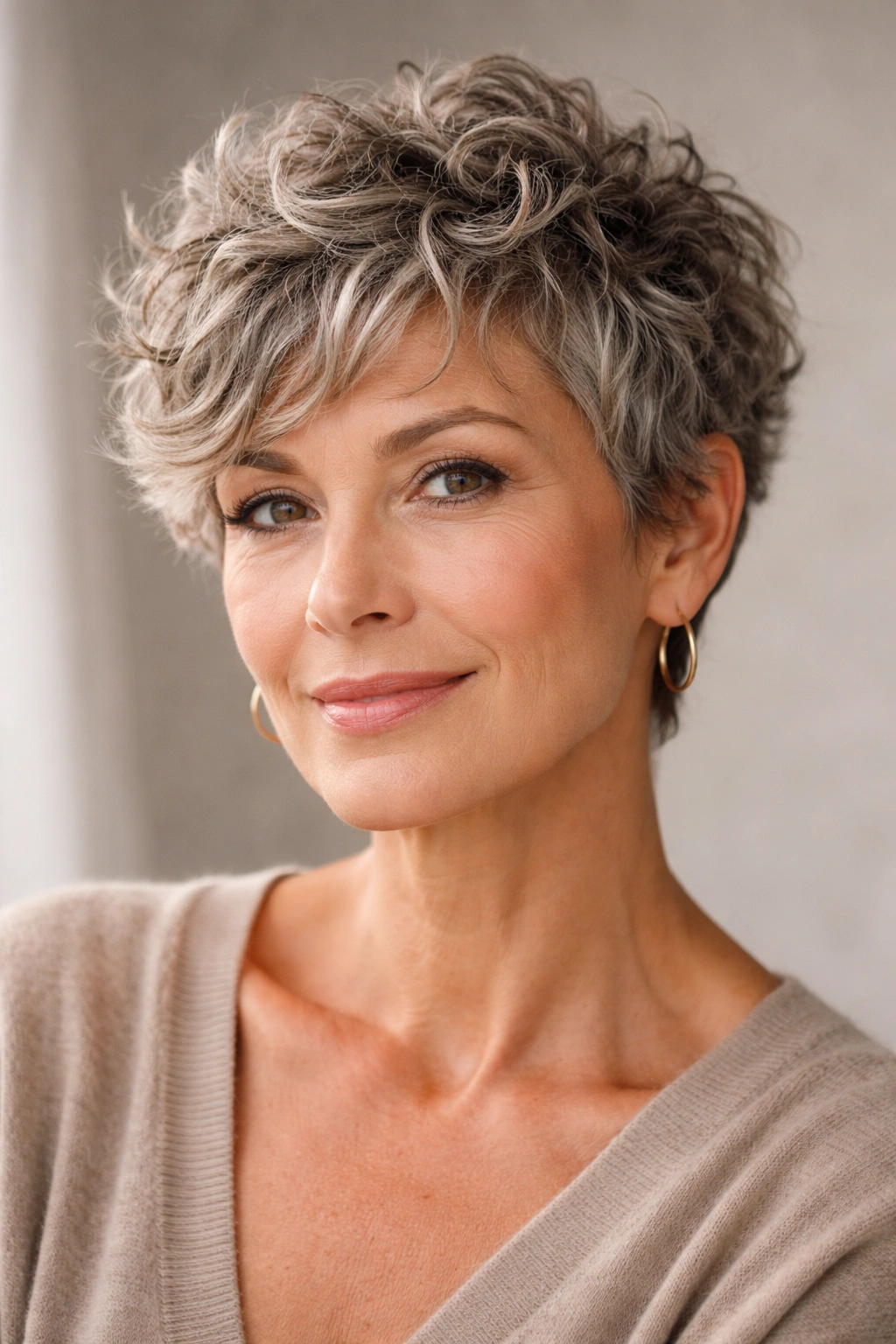
A well-executed pixie cut on curly hair over 50 is audacious and low-maintenance in a way that’s genuinely liberating. This isn’t the severe, super-short pixie of the 1990s — it’s a more textured, piece-y take that embraces your curl pattern and adds softness around the face. The cut works because shorter curly hair tends to spring up with more volume naturally, and because mature faces often have the bone structure to carry the shorter length confidently.
Why This Works for Mature Curly Hair
A pixie cut actually becomes easier to manage as your hair gets finer, because you’re not fighting against length and weight. The textured, choppy layers mean you can emphasize your natural curl pattern without needing tight ringlets — a soft wave or tousled curl is exactly what this style wants. You’ll spend less time on styling, less money on product, and less energy worrying about roots. The style also frames mature faces beautifully, drawing attention upward and making cheekbones and eyes more prominent.
What to Know Before Committing
- Requires a skilled curly-hair stylist — this is not a DIY or “I’ll figure it out” cut. The shape and length ratios matter enormously for how your curls will behave.
- Needs a trim every 4-6 weeks to maintain the shape and keep layers intentional rather than scraggly.
- Works best with at least some wave or curl texture — if your hair is truly straight, this style won’t give you what you’re hoping for.
- You’ll need to style it with mousse or curl cream and let it air-dry or diffuse — the textured effect depends on embracing your natural curl, not blow-drying it straight.
Pro tip: Ask your stylist to leave slightly longer pieces around the face for softness, even in a pixie. This frames the face better and gives you flexibility to tuck those pieces back if you want a different look on days you’re not feeling the full pixie.
2. Shoulder-Length Layers
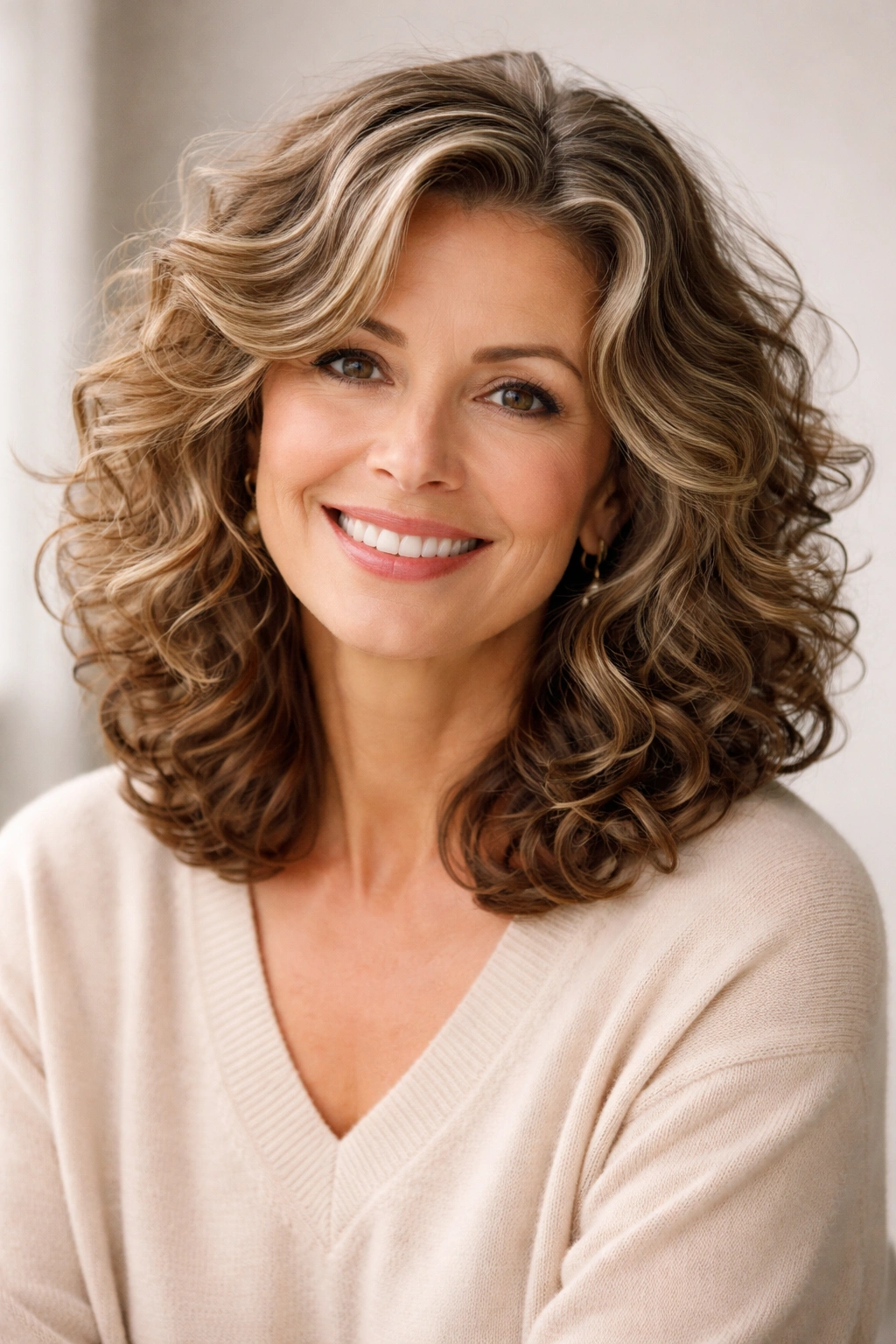
Shoulder-length layered cuts are the Goldilocks zone for most women over 50 with curly hair — short enough to be manageable, long enough to feel feminine and give you styling options, and perfect for distributing your curl pattern evenly. Layers are the secret weapon here: they remove bulk, create the illusion of volume even if your hair is finer than it used to be, and allow your curls to bounce independently rather than clumping together at the ends.
The Strategy Behind the Layers
Layers work on curly hair by creating escape routes for the curl to travel — instead of all your curls traveling straight down and piling weight at the ends, layers let curls spring up and out at different lengths. This creates texture and dimension without looking thin or wispy. A good layered cut also means that even on days when your curls don’t cooperate perfectly, the varied lengths hide the imperfections. Shoulder-length is also long enough that you can style your hair half-up, in a bun, or in a ponytail for days when you want a completely different look.
How to Ask Your Stylist
- Specify that you want layers throughout — from the crown all the way to the ends, not just in the top section.
- Ask for longer layers at the crown to add height, and shorter layers around the face for framing.
- Mention that you want curls that move independently, which means your stylist should be thinking about where each layer lands when your hair is curly and wet, not straight.
- Request face-framing layers that are slightly shorter and softer than the rest — this brightens the face.
Pro tip: Shoulder-length works beautifully with a deep side part, which adds asymmetry and makes the whole style feel intentional and modern rather than “just growing it out.”
3. Tousled Waves
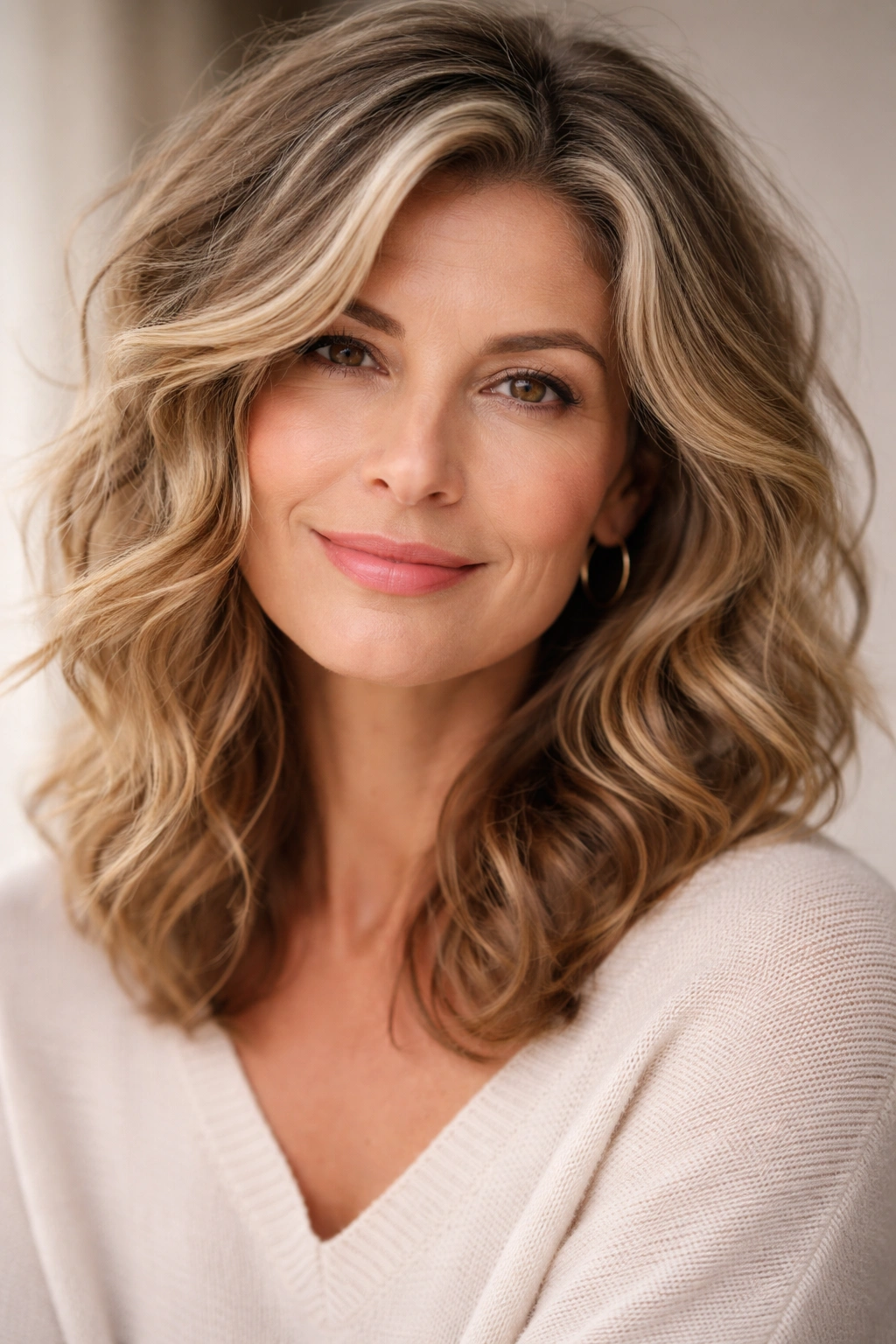
If your curl pattern is loose or wave-like rather than tight curls, a tousled-wave cut and styling approach is often more flattering and easier to maintain than trying to define every single curl. Tousled waves read as effortless and romantic — the “I woke up like this” aesthetic — while being totally achievable with the right technique and a cut designed for this specific texture.
Building the Wave Pattern
This style depends on your natural wave pattern being enhanced, not fighting against it. Your stylist should cut your hair in a way that encourages your waves to travel in a consistent direction — usually with some layers to add movement and some longer sections to weigh the wave down slightly so it doesn’t spring up too tight. The magic happens in the styling: using a curl cream, mousse, or gel applied to soaking-wet hair, scrunching gently while diffusing or air-drying, and then separating the waves once they’re set so they look tousled rather than defined curl-by-curl.
The Honest Maintenance Reality
- You’ll need to refresh your waves every 1-2 days, either with a light mist of water and re-scrunching, or with dry shampoo and texture spray.
- This style shows frizz more obviously than a tighter curl pattern, so you’ll want a good frizz-control product and possibly a microfiber towel or cotton t-shirt to dry your hair without disrupting the wave.
- On humid days, this style can expand significantly, so you may want backup styling options (bun, ponytail, clips) or a humidity-resistant product.
- The cut doesn’t hide regrowth as well as shorter styles, so you might need root touch-ups every 4-6 weeks if you’re coloring.
Worth knowing: Tousled waves look best when they’re actually moved and piece-y — not uniformly crimped or overly defined. Resist the urge to make every wave perfect and identical. Imperfection is the whole point.
4. Chin-Length Bob
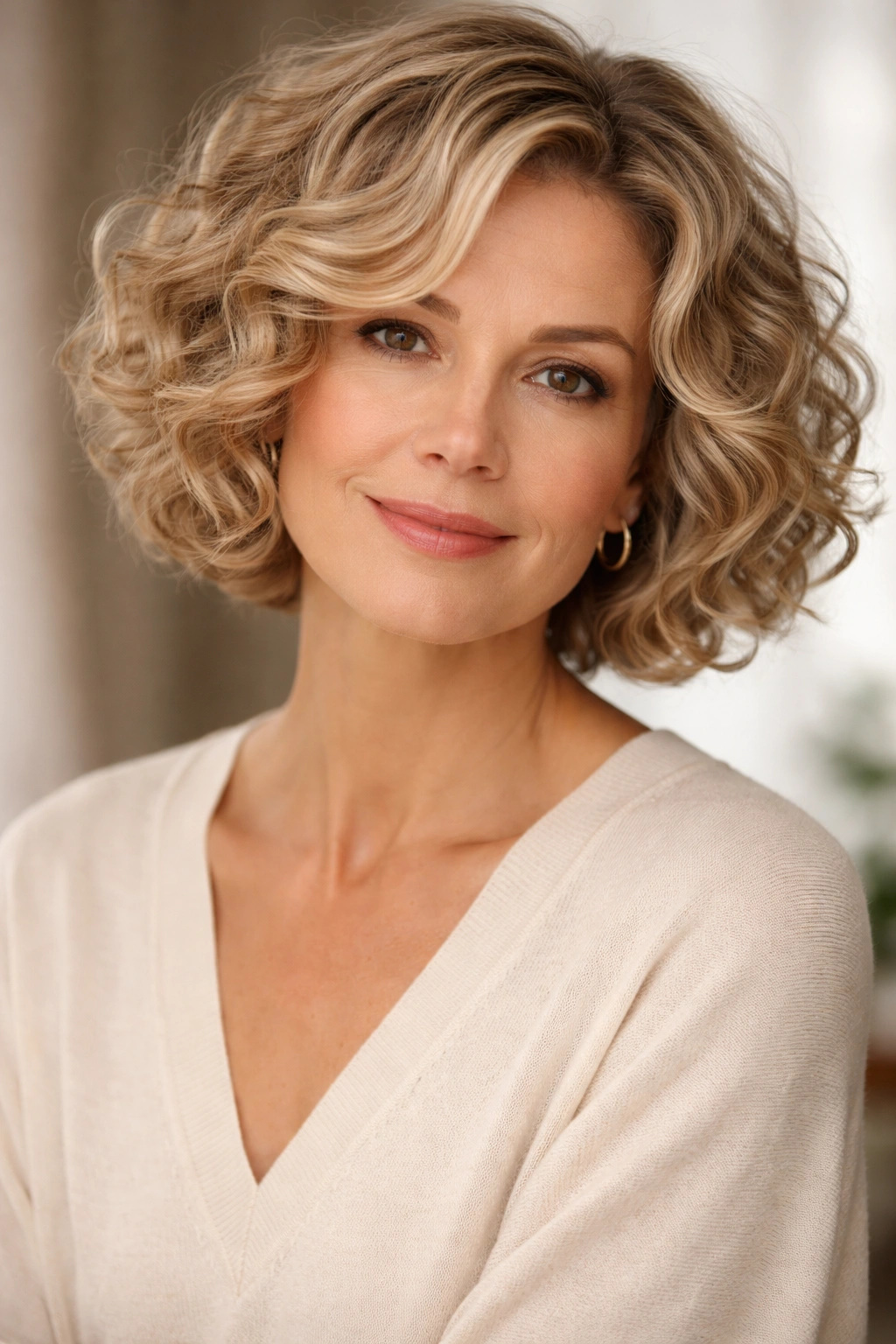
A chin-length bob — not super blunt, but not heavily layered either — is a timeless, sophisticated cut that works beautifully on mature women with curly hair. This length is long enough to avoid looking severe, short enough to be genuinely low-maintenance, and the perfect canvas for showing off curls without them feeling overly casual or young.
Why Chin-Length Is the Sweet Spot
At chin-length, your curls have enough length to form a nice bounce without being weighed down by excessive length. The cut also frames the face naturally — the ends sit right around your jawline, which is flattering for mature faces and helps disguise a softer jawline if that’s a concern. A well-executed chin-length bob is also sophisticated enough for professional settings and polished enough for evening events, so it works across your whole life.
Cut Details That Matter
- Ask your stylist to avoid blunt, heavy lines — instead, request soft layers or texturized ends so curls can move freely.
- A bob works better with some variation in length (slightly longer in front, slightly shorter in back, or longer pieces around the face) rather than a perfectly uniform cut.
- Specify that you want the weight distributed around your curls, not against them — this means your stylist should be thinking about how each curl will sit, not just cutting a straight line.
- Consider asking for a center part or deep side part to add dimension.
Pro tip: A chin-length bob pairs beautifully with subtle color dimension — lighter pieces around the face or throughout can add youth without looking overdone.
5. Curly Shag
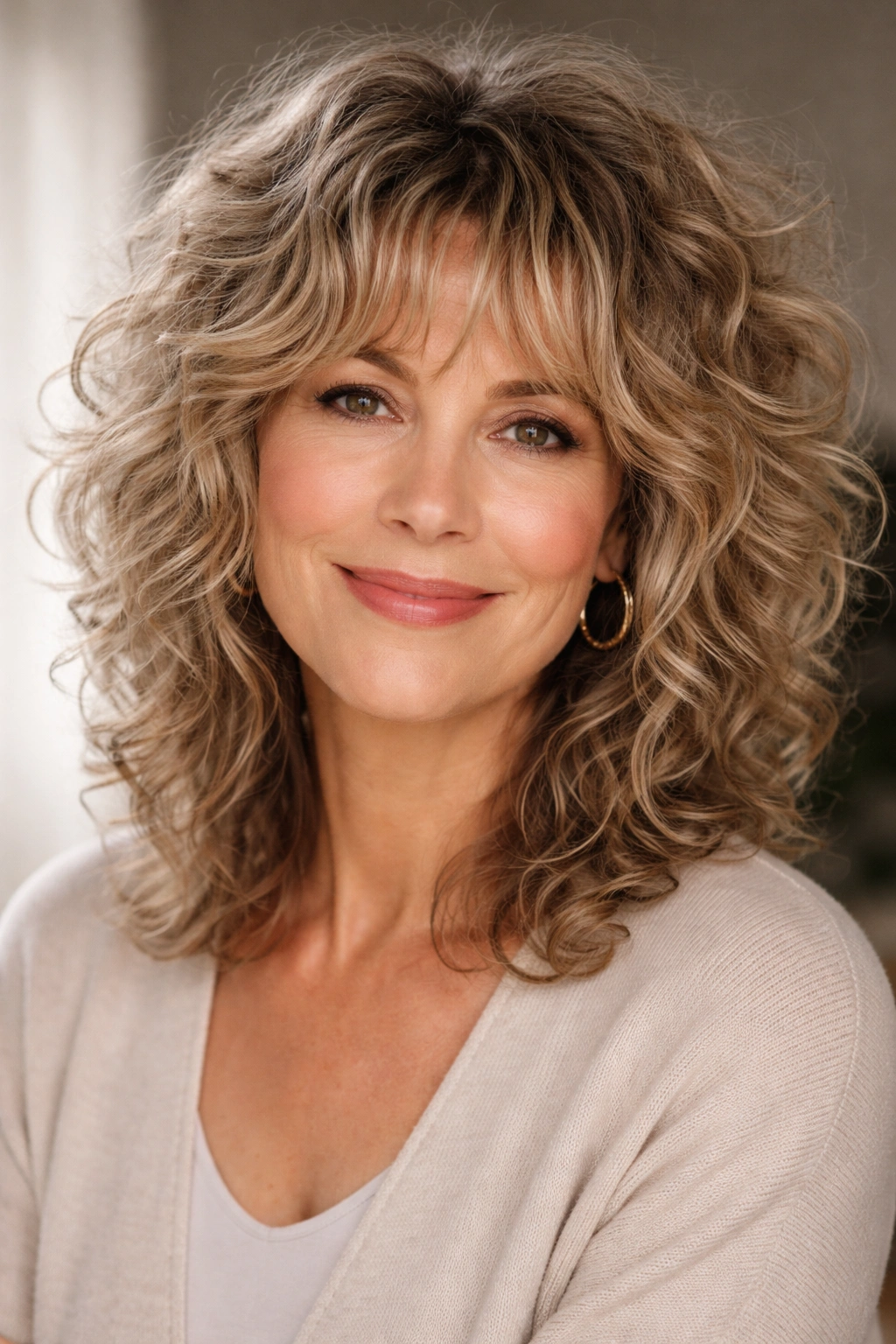
The shag has made a major comeback in recent years, and the modern curly shag — with its choppy layers, face-framing pieces, and intentionally textured vibe — is actually a fantastic style for women over 50 with naturally curly hair. This isn’t the ’70s shag your mom wore; it’s a contemporary take that’s rooted in embrace-your-texture philosophy.
What Makes a Shag Work on Mature Hair
A shag’s whole aesthetic is built on layers and movement, which means it’s designed to work with curly, textured hair rather than against it. The style actually looks better when your hair has variation in thickness, texture, and curl pattern — all things that naturally come with age. A shag also has built-in dimension and movement, so it’s forgiving on days when your curls aren’t perfectly defined. The choppy, piece-y vibe also feels modern and intentional, not like you’re growing out a previous style.
Making a Shag Work Practically
- This cut requires a stylist who really understands curly hair and can execute the layers in a way that creates movement without making your hair look thin or wispy.
- The style needs regular trims (every 4-6 weeks) to keep the layers sharp and prevent the whole thing from turning into shapeless frizz.
- You’ll get the best results if you embrace the textured, separated-curl aesthetic rather than trying to make it look polished and uniform.
- A shag shows off your natural color beautifully, but it also shows regrowth — so plan accordingly if you’re coloring.
- You’ll want styling products that define and separate curls: curl cream, gel, or a curl-defining spray rather than smoothing serum.
Insider note: A shag looks especially good on women with some gray or salt-and-pepper hair — the texture of the cut plays beautifully with the dimension that gray adds.
6. Half-Up Twist
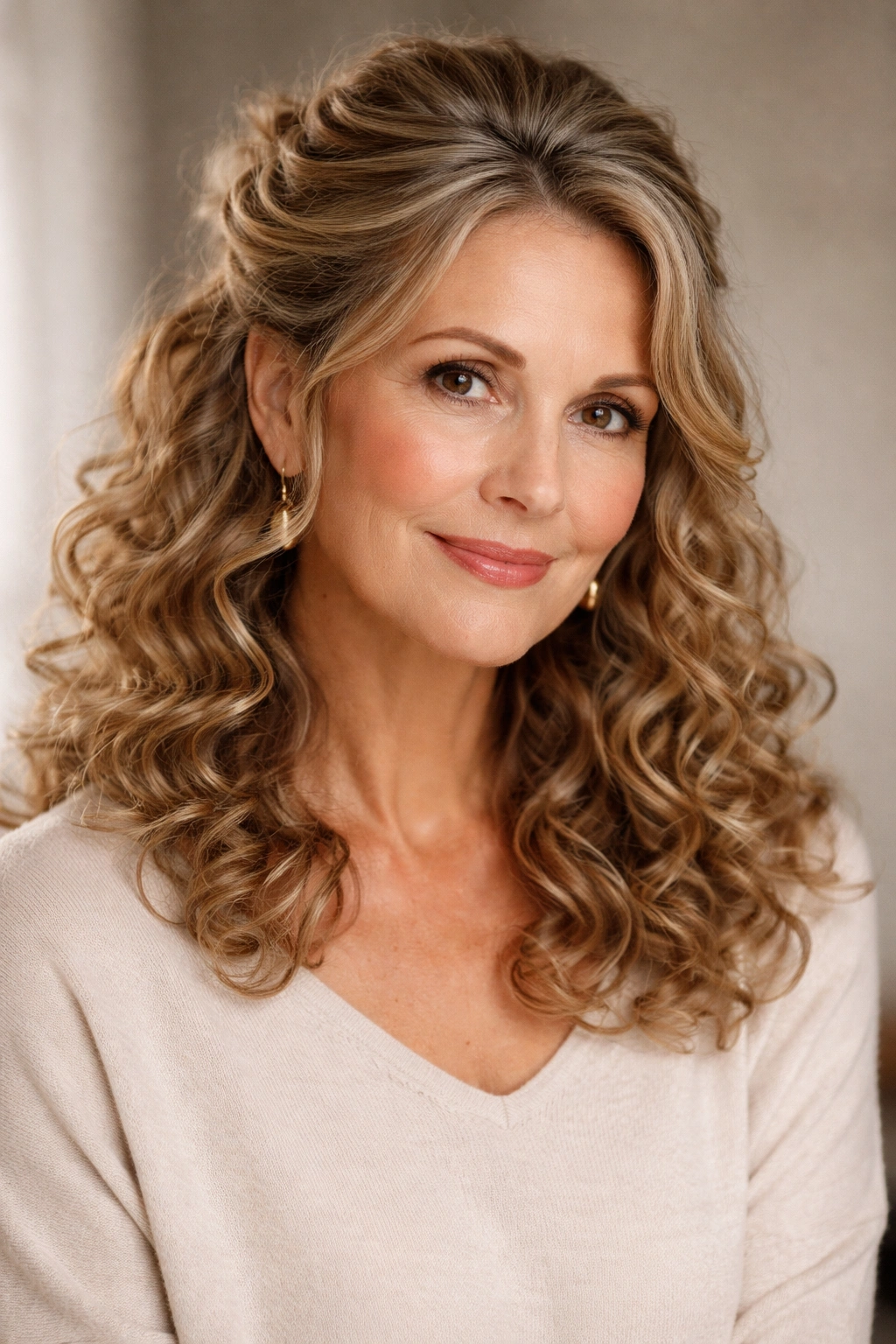
If you’re not ready to commit to a significantly shorter style, a half-up twist is a versatile approach that gives you the polished look of a more conservative hairstyle while still showcasing your curls below. This style is endlessly adaptable — you can dress it up, dress it down, change it daily, and it works for everything from casual to formal.
How to Style It
Start with your curls dried and defined, then take a section from one side of your face (about an inch-thick), twist it gently as you move toward the back of your head, and secure it with a bobby pin or small clip at the crown. You can do a single twist or create two matching twists, one from each side. The effect is polished without looking fussy, and you’re still showing off the bulk of your curly hair. The twist also moves your hair back from your face, which is flattering for mature faces and helps your features take center stage.
Practical Tips for Half-Up Twists
- This style works best when your curls are defined but not soaking wet — ideally day-two hair or hair that’s been refreshed with a spray bottle and a little product.
- The twist will hold better if you use a lightweight gel or mousse to set your curls before creating the twist, rather than trying to twist completely dry hair.
- Use bobby pins that match your hair color so they disappear.
- You can add a small claw clip or decorative pin for visual interest, or leave it simple and clean.
- This style is perfect for days when you don’t have time to fully style your hair but want to look put-together.
Quick facts:
- Takes less than 2 minutes to execute once your curls are dry
- Can be worn to work, casual outings, or dressed up for events
- Requires no heat tools or special equipment
- Works on any curl pattern from loose waves to tight coils
- Hides slightly greasy roots better than wearing your hair fully down
7. Voluminous Curls with Side Part
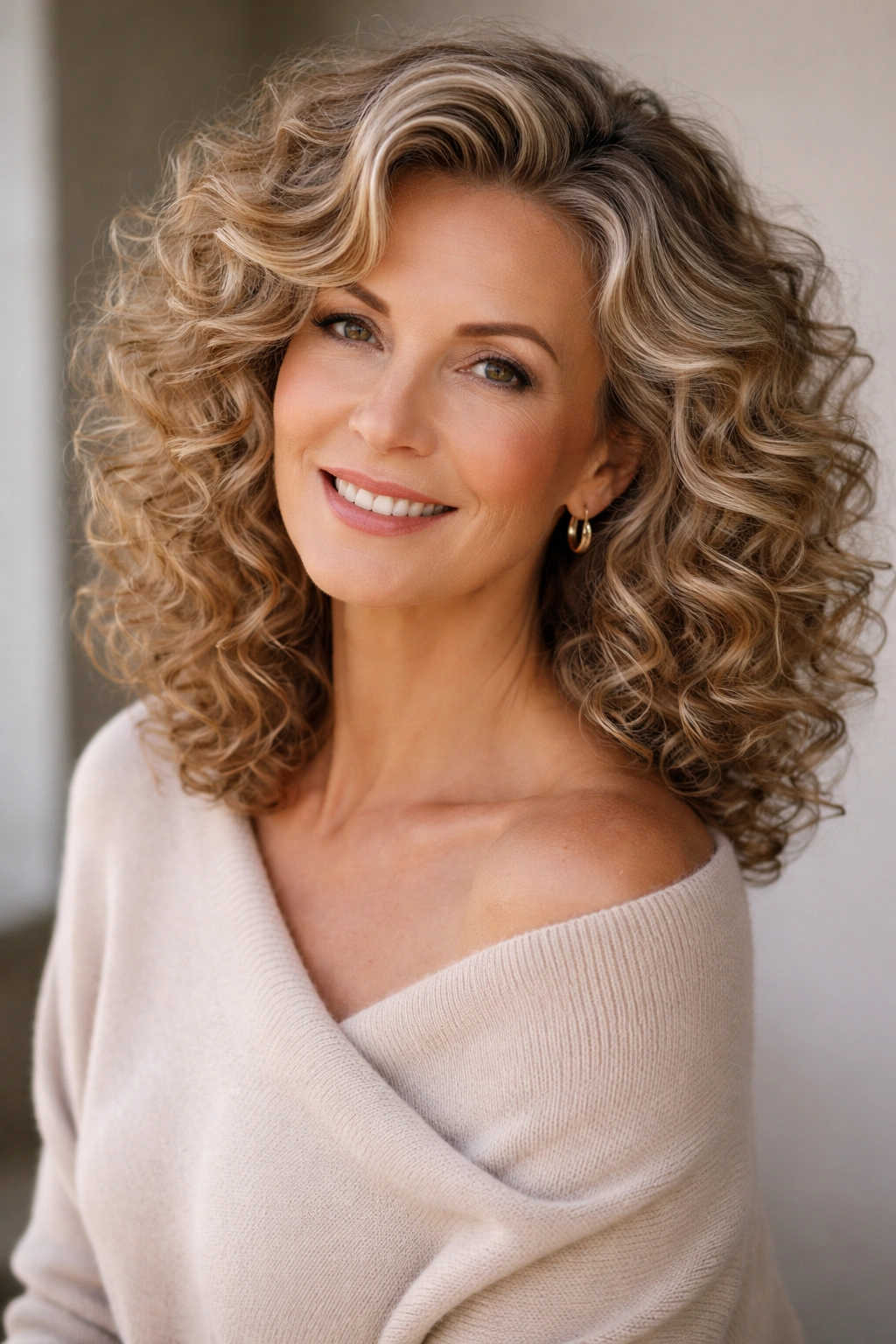
If you want to lean into the romantic, confident energy of fuller curls rather than a shorter cut, voluminous curls with a deep side part is a style that reads as intentional and glamorous without requiring you to actually do much work. The side part adds asymmetry and modern sophistication, while the curls themselves feel feminine and full.
Creating the Volume
Volume in curly hair over 50 isn’t about teasing and hairspray — it’s about technique and the right products. Start by blow-drying your curls with a diffuser, flipping your head forward or tilting your head to one side so gravity works with you rather than against you. This creates natural lift at the roots without forcing it. Then, once your curls are completely dry, you can gently piece them apart with your fingers or a wide-tooth comb to separate them and make the overall shape feel bigger. A lightweight volumizing mousse or root-lifting spray can help, but the real magic is in the drying technique.
Why a Deep Side Part Works
A side part creates the illusion of more volume on the fuller side of your head while adding face-framing dimension. On mature faces, a side part is also flattering because it lengthens the face visually and creates asymmetry, which is more interesting than a center part. The side part also gives you flexibility — on days when you want a different look, you can flip the part to the other side or move it to center, and the whole effect changes without any additional styling.
Product and Maintenance
- Use a lightweight curl cream or mousse applied to soaking-wet hair — heavy products will weigh down your curls and defeat the volume goal.
- A volumizing spray applied to damp roots before diffusing helps create lift.
- Avoid heavy serums or oils that can make curls look limp.
- Refresh curls between washes with a light mist of water and a tiny bit of product, then diffuse or air-dry.
Pro tip: If your curls tend to deflate throughout the day, a light texture spray or dry shampoo (applied at night, not just to refresh) can help them hold their volume longer.
8. Textured Crop
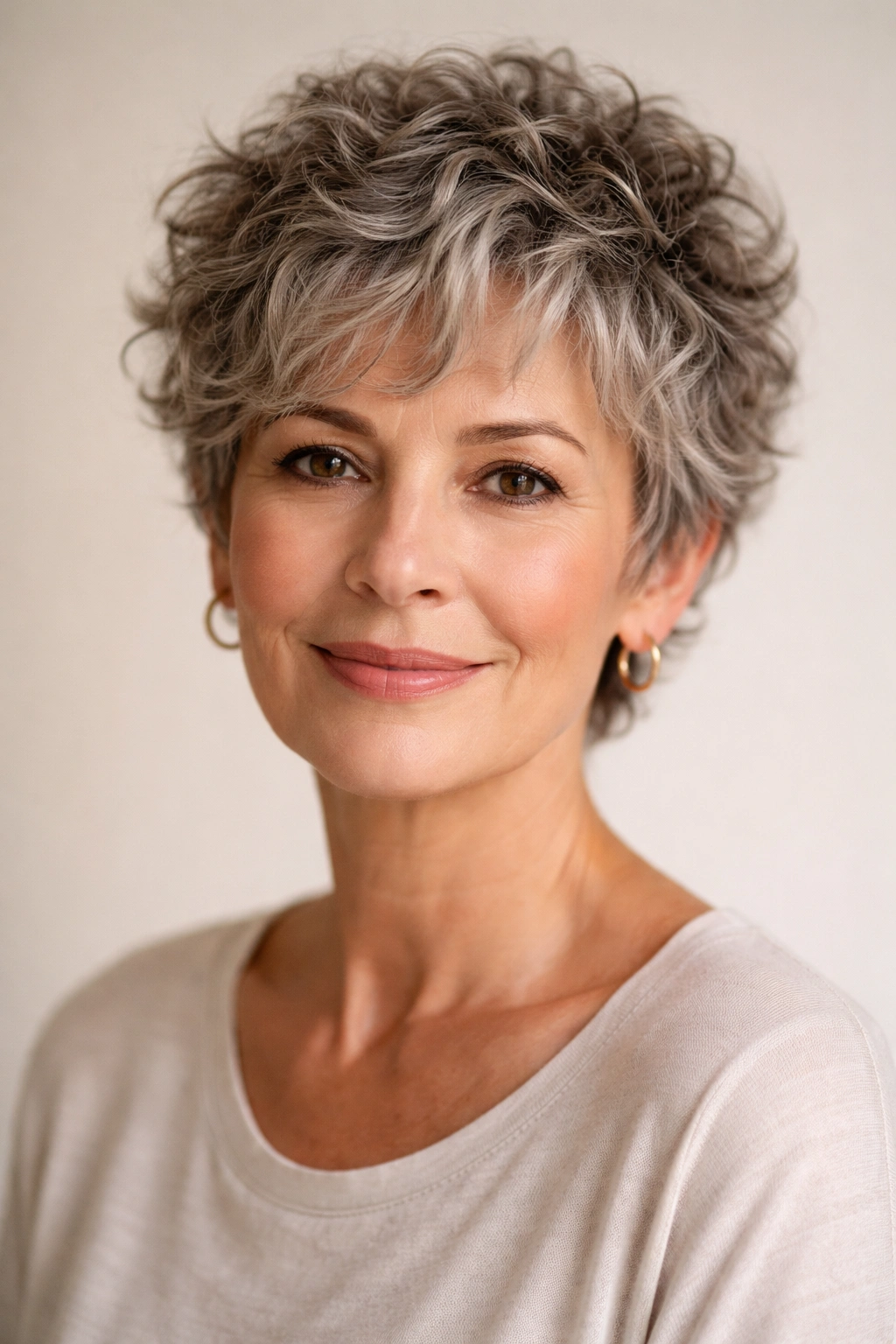
A textured crop is shorter and choppier than a pixie, with an almost shaggy vibe that’s edgy without being severe. This is a style for women who are confident enough to lean into the bold rather than trying to soften it, and it’s absolutely gorgeous on mature women with natural curls who want to make a statement.
The Confidence Factor
A crop is unapologetically short and modern — it doesn’t try to compromise or look “age-appropriate” in a conservative way. Instead, it reads as confident, contemporary, and deliberately chosen. The texture and movement in your natural curls make the style feel soft and accessible rather than severe, so you get the best of both worlds: a bold cut paired with gentle texture.
What It Requires
- A talented curly-hair stylist — this is not a beginner’s cut. The shape, layering, and proportions all need to be executed perfectly for it to look intentional rather than just short.
- Willingness to show your gray or keep your color very current — with this much hair showing, there’s nowhere for regrowth to hide.
- Comfort with styling your curls and working with product — you need to actively dry and define your curls for the best results.
- Regular trims every 4-6 weeks to keep the shape sharp.
- Honest self-assessment: do you actually like being perceived as bold and modern, or do you prefer being perceived as classic and conservative? Because this cut reads differently.
Worth knowing: A crop is especially striking on women with silver or gray hair — the combination of the short, textured cut with gray curls creates a really contemporary, artistic vibe.
9. Long Layers with Face-Framing
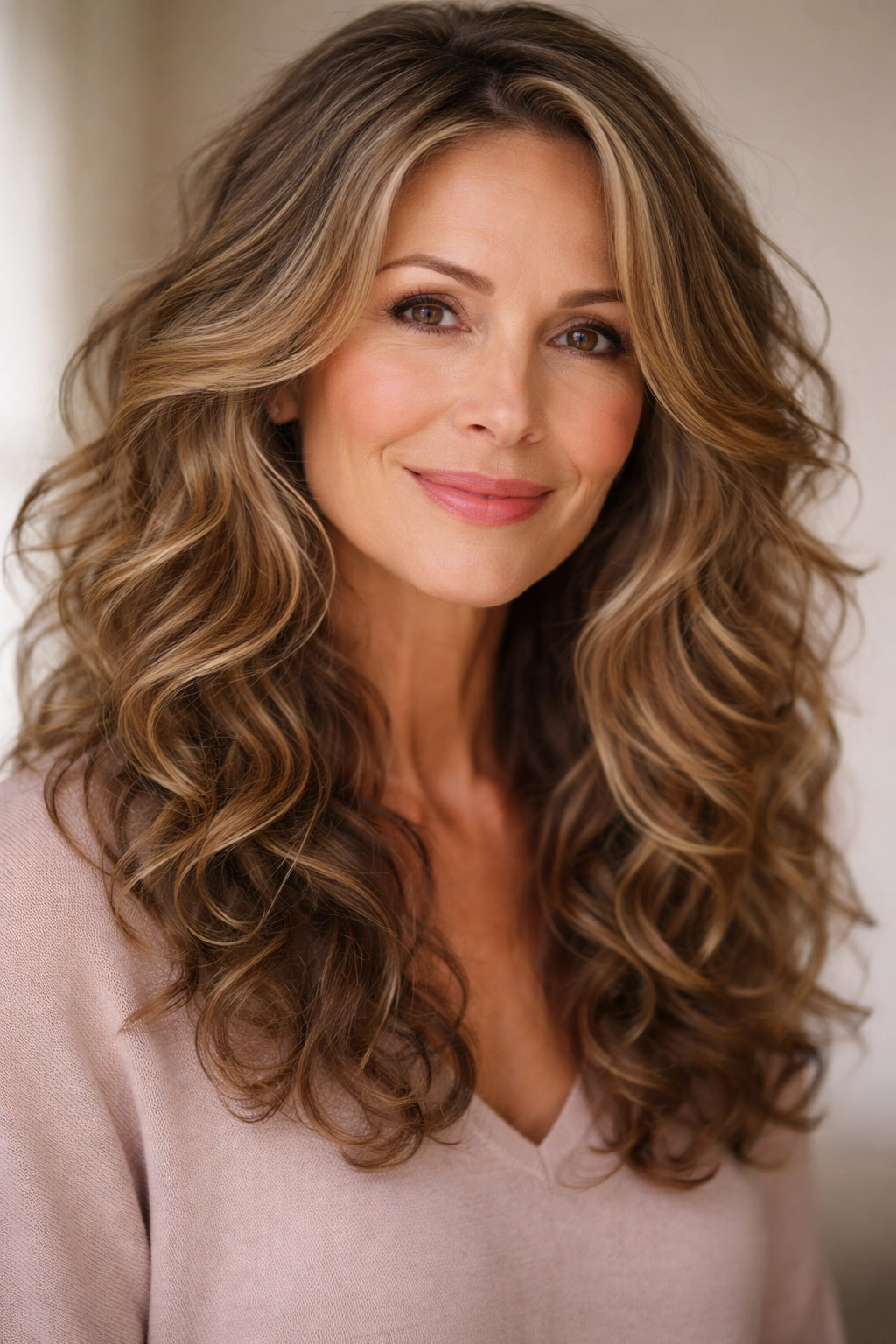
If you’re not ready to go shorter and you have the patience to manage longer curly hair, long layers — particularly with carefully designed face-framing pieces — can be incredibly flattering and versatile. This works best if your curls are relatively healthy and you’re willing to spend some time on styling and maintenance, but the payoff is a style that works from casual to formal.
The Face-Framing Strategy
Longer face-framing layers are the magic trick for flattering a mature face: they draw attention upward and forward, making your face appear more prominent and your features more defined. These pieces should be intentionally shorter — about 2-3 inches shorter than the length of your face — so they fall right around your cheekbones rather than getting lost in the longer length. Face-framing layers also give you the option to style your hair back in a ponytail or bun while still having shorter pieces that create softness around your face.
Making Longer Hair Work Practically
- Longer curly hair is more prone to dryness, so you’ll need a good moisturizing routine: deep conditioning masks weekly or bi-weekly, leave-in conditioner, and curl-specific products.
- The longer your hair, the more it weighs itself down, which means you need consistent trims (every 6-8 weeks) to keep layers crisp and prevent the whole thing from turning into a heavy, shapeless mass.
- You’ll need to be intentional about styling — longer curly hair won’t look polished by accident. Plan on spending 15-20 minutes with a diffuser or letting it air-dry strategically.
- Longer curly hair also shows damage more obviously, so regular trims and deep conditioning are non-negotiable.
- On humid or stressful days, longer curly hair can expand significantly, so you may want backup styling options.
Pro tip: Longer layers work beautifully with a color technique like balayage or highlights — the dimension helps break up the length and makes the style feel more intentional.
10. Sleek Curl with Deep Part
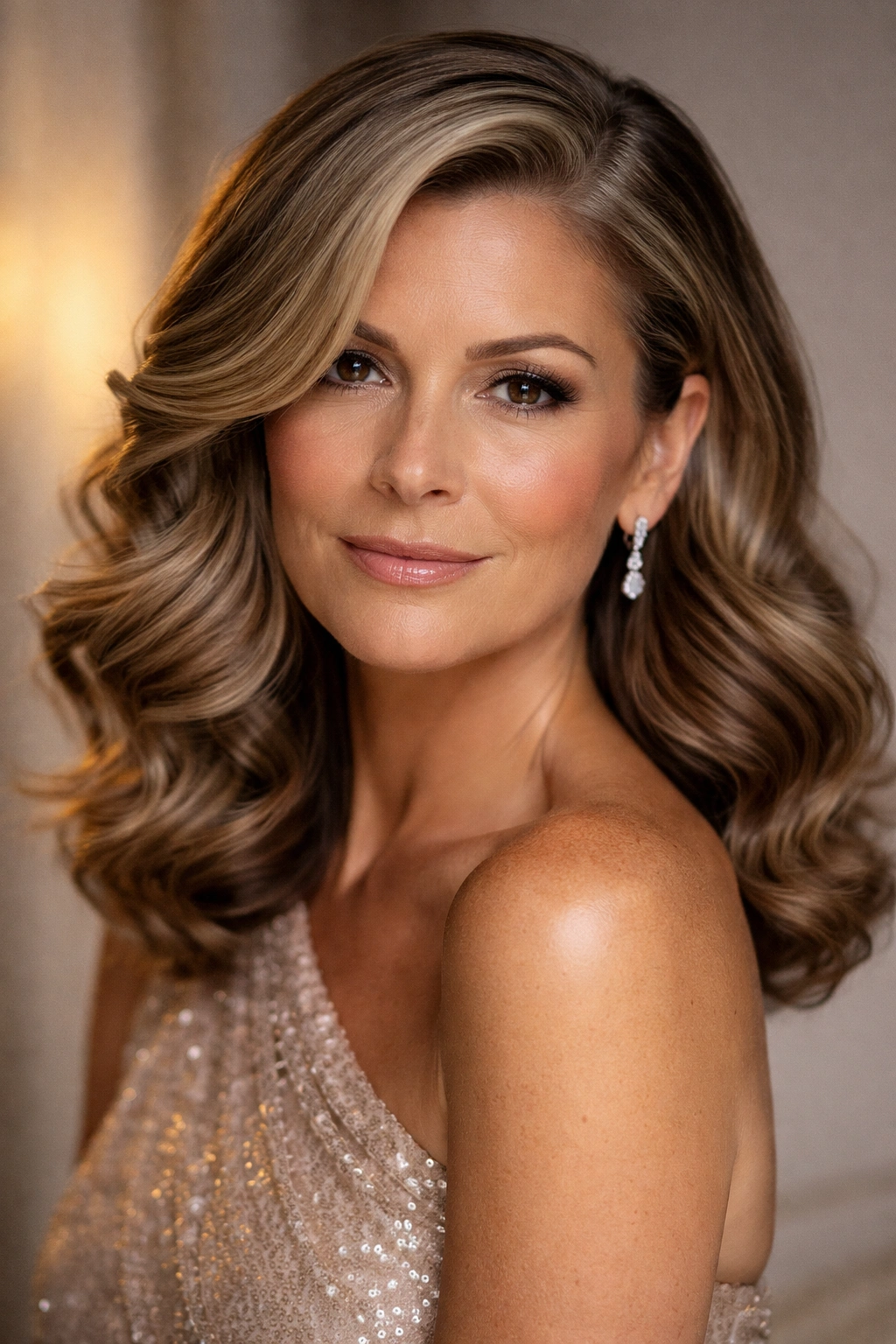
For occasions when you want your curls to be polished and defined rather than tousled or wild, a sleek curl style with a deep side part is glamorous and photograph-ready. This isn’t your everyday style — it’s the version you create for special events — but it shows that your curls are capable of looking sophisticated and refined.
Creating the Sleek Curl
Start with a curl cream or defining gel applied to soaking-wet hair, then use a diffuser to dry your curls completely. Once they’re completely dry, gently piece the curls apart with your fingers so they’re separated but not fuzzy. The key to “sleek” is that each curl is defined and distinct, with clean edges, rather than looking frizzy or undefined. You can then add a light shine spray to give everything a polished, almost wet-look finish without making it heavy or sticky.
The Deep Part Effect
A deep side part adds sophistication and asymmetry to the style. It also has the practical benefit of moving your hair slightly away from your face, which is flattering and helps your features take center stage. The deep part should start from one side of your head (not from the very center) and move diagonally across your crown, which requires a little styling skill but is worth learning.
Products You’ll Need
- A curl-defining cream or gel that provides hold without flaking
- A light shine spray or curl polish for definition and sheen
- Possibly a smoothing serum applied very lightly to frizz-prone areas
- A microfiber towel or cotton t-shirt to dry your curls gently
Worth knowing: This style is humidity-sensitive — it works beautifully in dry conditions but can frizz or expand in humid environments. If you’re creating this look for an outdoor event, have a backup plan or moisture-resistant products on hand.
11. Curly Bangs with Length
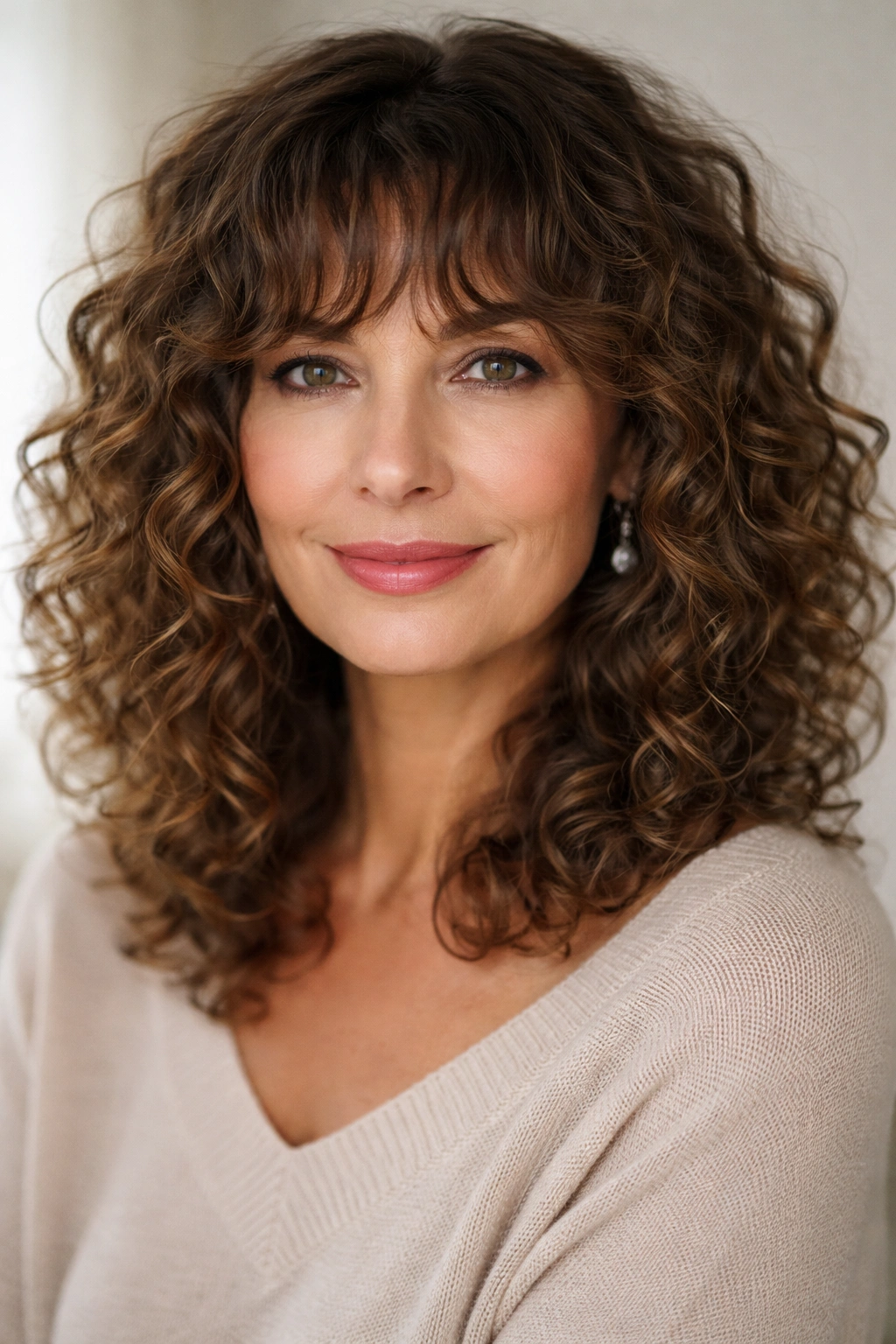
Curly bangs over 50 is a bold choice, but if you want to try bangs, curly bangs are actually more forgiving than straight bangs and work beautifully on mature faces. The key is making sure they’re designed for your specific curl pattern and cut in a way that flatters your face shape.
Why Curly Bangs Work
Curly bangs don’t sit flat and severe the way straight bangs do — they have movement and texture that makes them feel softer and less severe. This is actually ideal for mature faces because it avoids the harsh, blunt line that can look aging. Curly bangs also work with your natural texture instead of fighting against it, which means they’re easier to manage daily. You’re not trying to blow-dry them straight; you’re enhancing your curl pattern in that area.
Designing Bangs for Your Face
- Your stylist should analyze your face shape and curl pattern before cutting — the bang shape and length need to work together.
- Curly bangs look best when they’re slightly longer and wispy rather than super short and blunt — this creates softness and frames the eyes beautifully.
- Bangs work especially well if you have a longer face or a wider forehead, as they add horizontal dimension.
- Bangs can age your face if you have very fine hair or significant hair loss at the crown, because they draw attention to what’s not there.
- Consider whether you actually enjoy having hair in your face daily, because bangs require this — there’s no way around it.
Daily Styling and Maintenance
- Curly bangs need to be dried with a diffuser or allowed to air-dry to maintain their curl pattern.
- They’ll need refreshing more frequently than the rest of your hair — possibly every day.
- Trims should happen every 3-4 weeks to keep them at the right length (as they dry, curly bangs shrink up, so longer is usually better than shorter).
- Bangs can be styled with a light gel or mousse to define them, but heavy products will make them look stringy.
Pro tip: Before committing to full bangs, try a few weeks of using a clip-in extension or a scarf to approximate where bangs would sit on your face, so you know how they’ll actually look and feel in your daily life.
12. Shortened Ringlets
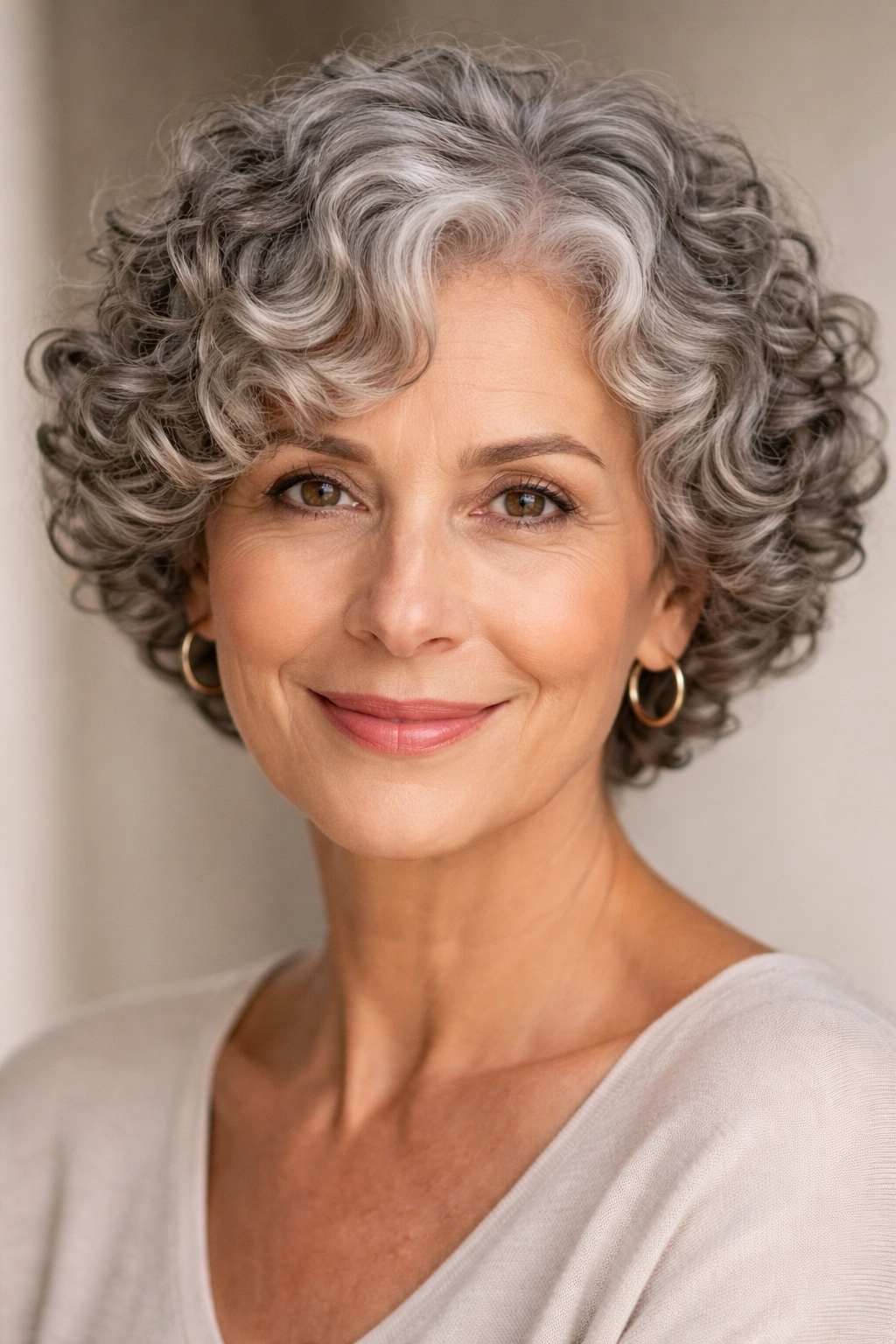
If you have naturally tight curls or coils and you want to embrace them fully, shortened ringlets — curly hair cut to about ear-length or slightly shorter, with each curl defined and celebrated — is a style that’s absolutely stunning on mature women. This is the antithesis of trying to “tame” your curls; it’s about owning them completely.
The Beauty of Shortened Ringlets
With this style, your curl pattern is the whole aesthetic. Each ringlet is defined and distinct, and the shorter length means your curls have room to expand and express their natural shape without being weighed down. The style is also incredibly low-maintenance in terms of styling time — you’re not fighting to define every curl or spending time separating them. Your curls do the work. Shortened ringlets also show off your face beautifully and can be incredibly striking, especially on women with gray or silver curls.
Making Shortened Ringlets Work
- This style absolutely requires a stylist who specializes in curly hair and understands your specific curl type — the cutting technique is completely different from how straight hair is cut.
- Your stylist should be using techniques like DevaCut or similar curl-focused cutting methods, where they cut each curl individually to create shape and movement.
- You need to commit to products and techniques that enhance your natural curl — curl creams, gels, or mousses applied to soaking-wet hair, then dried with a diffuser or allowed to air-dry completely.
- Shortened ringlets benefit from deep conditioning regularly — at least weekly — because this style shows the health and hydration of each curl.
- Refresh curls between washes with water and a light product, never with heat tools.
- Regular trims (every 6-8 weeks) keep the shape intentional and prevent the style from becoming a shapeless mass.
The Emotional Component
This is a style that requires genuine comfort with your natural texture — there’s no way to hide it or soften it. If you’ve spent decades straightening your hair, moving to shortened ringlets is both liberating and sometimes shocking. The payoff is that you stop fighting your hair and start celebrating it, which is genuinely empowering. On mature women, this shift often feels like permission to be fully themselves in a way that matters.
Worth knowing: Shortened ringlets are visually striking and will draw attention and comments. If you’re ready for that visibility and confidence, this is an incredibly powerful style. If you prefer to blend in, choose differently.
Final Thoughts
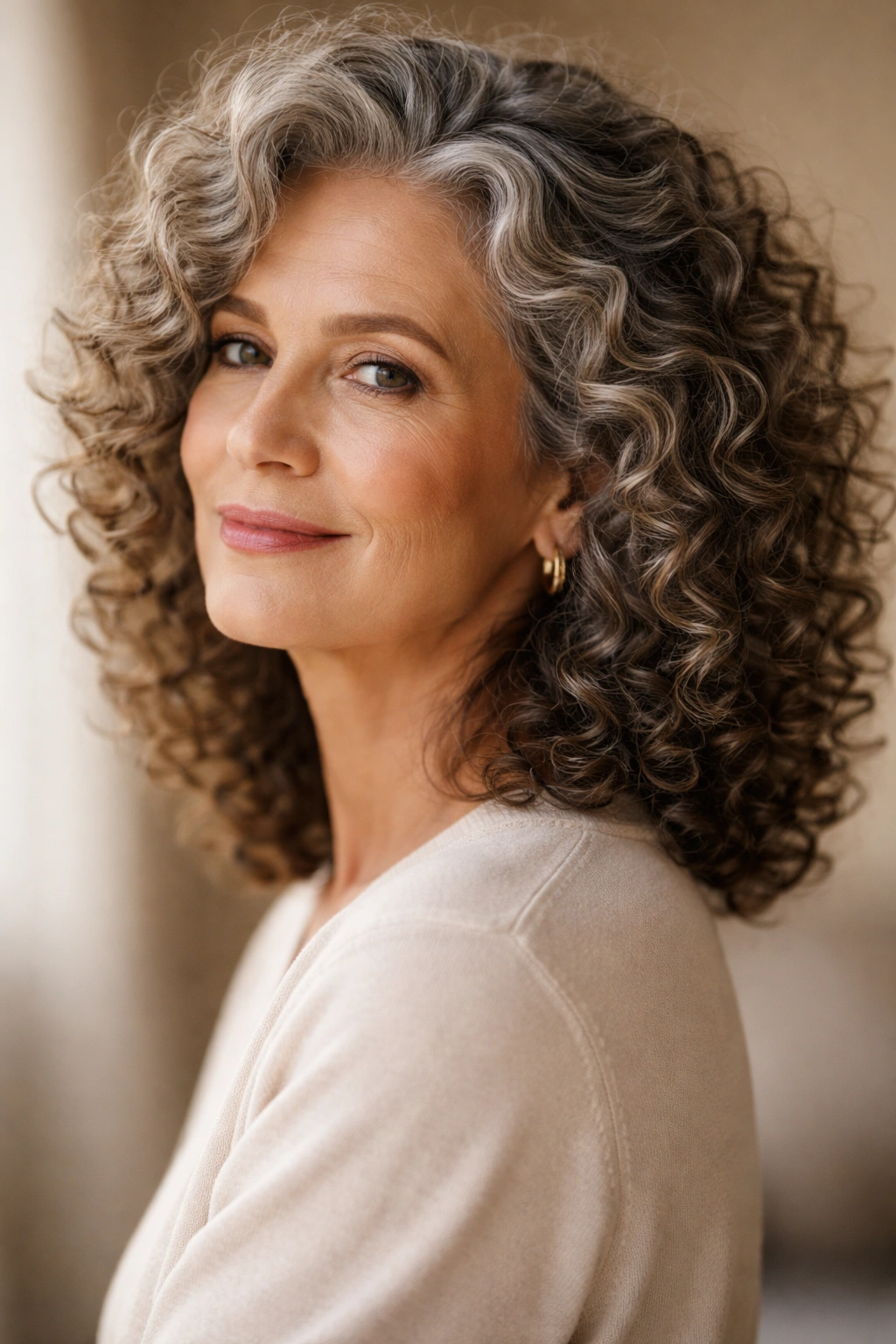
The right curly hairstyle for women over 50 isn’t about being age-appropriate in a conservative sense — it’s about choosing something that honors both your actual hair texture and your genuine personality. Some of these styles are low-maintenance practical; others require active styling and commitment. Some are bold statements; others are subtle and sophisticated. The common thread is that each one works with curly, mature hair rather than against it, which means less daily frustration and more days when you actually feel like yourself when you look in the mirror.
Your stylist matters enormously — more than the cut style itself, actually. A mediocre cut by someone who doesn’t specialize in curly hair will be frustrating no matter what you choose, while a skilled curly-hair stylist can make almost any style work beautifully. Before booking, ask questions: Do they specialize in curly hair? Do they understand your specific curl type? Can they show you examples of work they’ve done on mature clients with similar texture? A good stylist can also help you honestly assess which of these styles actually fits your lifestyle, hair health, and personal style — that conversation matters as much as the technical execution.
The styles that feel most empowering are often the ones that require you to shift your perspective slightly — from “how can I minimize my curls” to “how can I celebrate them.” That shift, even on just a few days, can change how you feel about your hair entirely. Try one of these approaches, give yourself at least two weeks to get comfortable with the styling routine, and pay attention to how you feel. The right style isn’t just about looking good; it’s about feeling like yourself.
