


Wigs have come a long way from the obviously synthetic styles of decades past. If you’re looking for a curly wig that doesn’t scream “I’m wearing a wig,” you’re in luck—the options today are genuinely impressive. The key difference between a wig that looks real and one that looks plasticky comes down to texture, construction, curl pattern, and how well the styling mimics natural hair behavior.
The best curly wigs that mimic real hair share certain qualities: they use high-quality human hair or advanced synthetic fibers, feature natural-looking density (not overly thick or thin), have a realistic hairline or lace front, and most importantly, display curl patterns that move and fall the way actual curly hair does. Whether you’re dealing with fine curls, thick coils, or anything in between, there’s a style out there that can replace your natural hair or complement it depending on your goals.
Let’s explore eight curly wig styles that genuinely look like real hair when styled properly. Each of these brings something different to the table—some are forgiving and low-maintenance, while others offer dramatic flair. The goal is helping you understand what separates a convincing curly wig from one that looks costume-quality, so you can make an informed choice based on your hair goals and lifestyle.
1. Deep Wave Curls
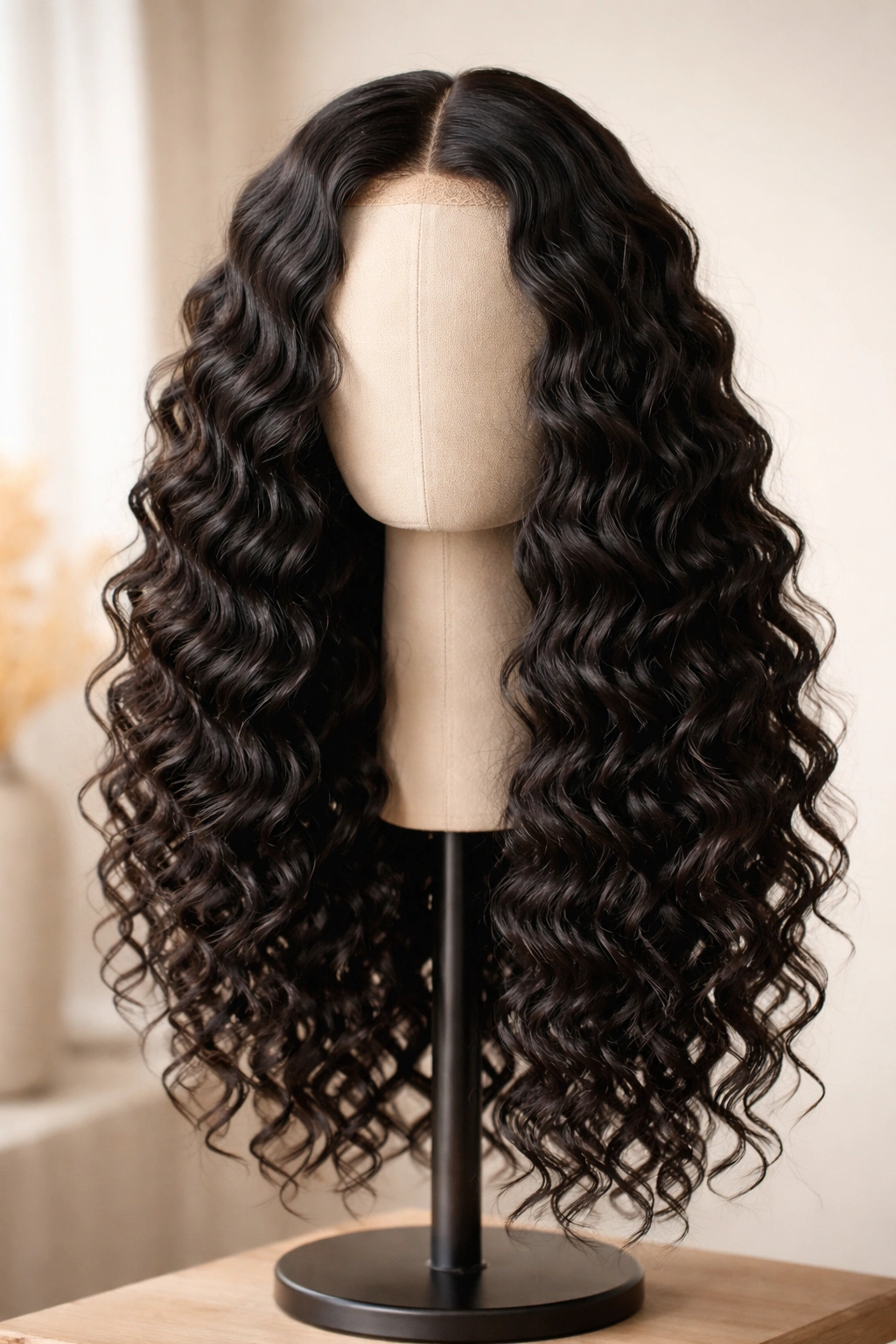
Deep wave wigs sit at that sweet spot between loose and tight—the curls have substantial depth without being coily or kinky. Think of the kind of waves you see on textured hair that’s been deliberately set with a specific curl pattern. What makes deep wave look remarkably realistic is that the curl definition is visible but still moves naturally with body and bounce.
Why It Looks So Convincingly Real
Deep wave curls mimic the kind of texture you get from heat styling or from natural hair that’s somewhere in the middle of the curl spectrum. The waves have dimension and movement—they’re not stiff ringlets frozen in place, and they’re not limp either. When you move, the curls shift and settle, which is exactly what real curly hair does. The texture also works beautifully with a lace front, because the wave pattern breaks up what could otherwise look like a fake hairline.
What to Know About Deep Wave Wigs
- Best for: Anyone wanting noticeable curl without overwhelming thickness or an extreme curl pattern
- Maintenance level: Moderate—you’ll need to refresh curls with moisture and curl cream between washes, but they’re forgiving if you don’t have perfect technique
- Styling versatility: Can be worn down for defined waves, pulled into textured ponytails, or half-up styles that showcase the curl pattern
- Hair type compatibility: Works beautifully in both human hair and premium synthetic blends
- Length options: Deep wave looks great at shoulder length or longer—longer lengths let the waves stretch out slightly and move more naturally
A pro tip that most people skip: deep wave wigs look dramatically more real when you apply a lightweight curl-defining cream while they’re still damp, then let them air dry or use a diffuser on low heat. This prevents the frizziness that can happen if deep wave dries without product, which would make it look less polished than real hair.
2. Kinky Coil Curls
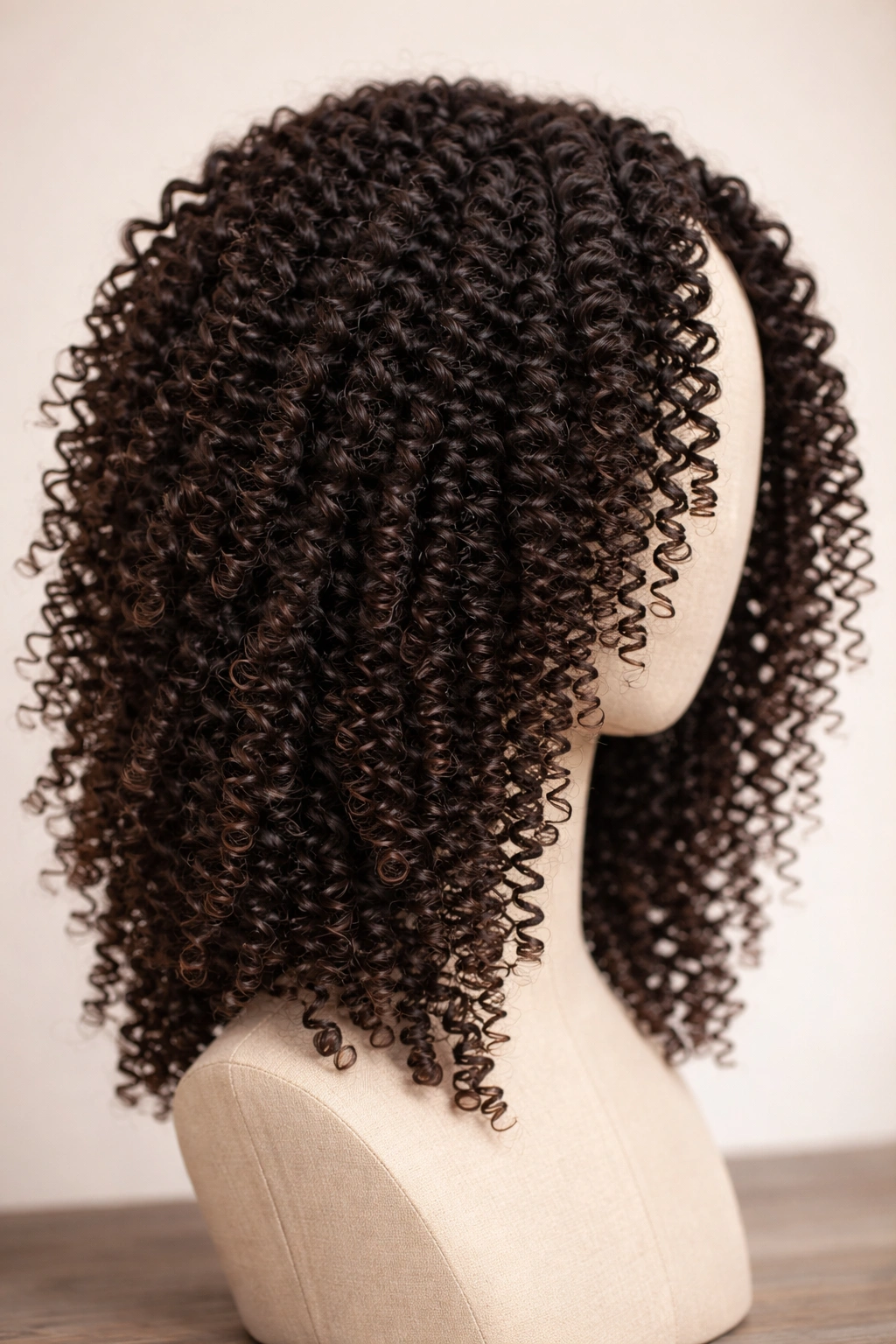
Kinky coils represent some of the most beautifully textured natural hair patterns, and modern kinky coil wigs capture this texture with impressive authenticity. The curls are tight, springy, and full of character—the texture reads as deeply textured and voluminous without looking artificial or matted down.
The Natural Movement in Kinky Coil Texture
What sets a realistic kinky coil wig apart from a cheap version is how the coils have individual definition rather than looking like one big mass of texture. Real kinky coils bounce when you touch them and settle differently than you’d expect—they compress and spring back. The best kinky coil wigs replicate this behavior because the curls are constructed individually, not just dyed and molded synthetic fiber.
Essential Details About Kinky Coil Wigs
- Density expectations: These wigs can handle full, voluminous density without looking heavy or unnatural—coily hair often reads as fuller even at moderate density
- Scalp visibility: A realistic kinky coil wig should show some scalp at the roots, making it look like the hair is actually growing from your head
- Moisture needs: Both human hair and synthetic kinky coil wigs benefit from regular moisture—dry coils look dull and undefined
- Styling options: Coils can be worn naturally textured, stretched out with blow dryers and creams, twisted into defined sections, or braided
- Color choices: Kinky coil texture is particularly forgiving with color because the curl pattern naturally creates dimension and shadows—single solid colors don’t look flat
One thing worth knowing: kinky coil wigs actually look MORE real when they show some frizz or flyaways. That delicate halo of texture around your edges is what prevents the style from looking too perfect and costume-like. A completely smooth kinky coil wig often reads as fake.
3. Loose Spiral Curls
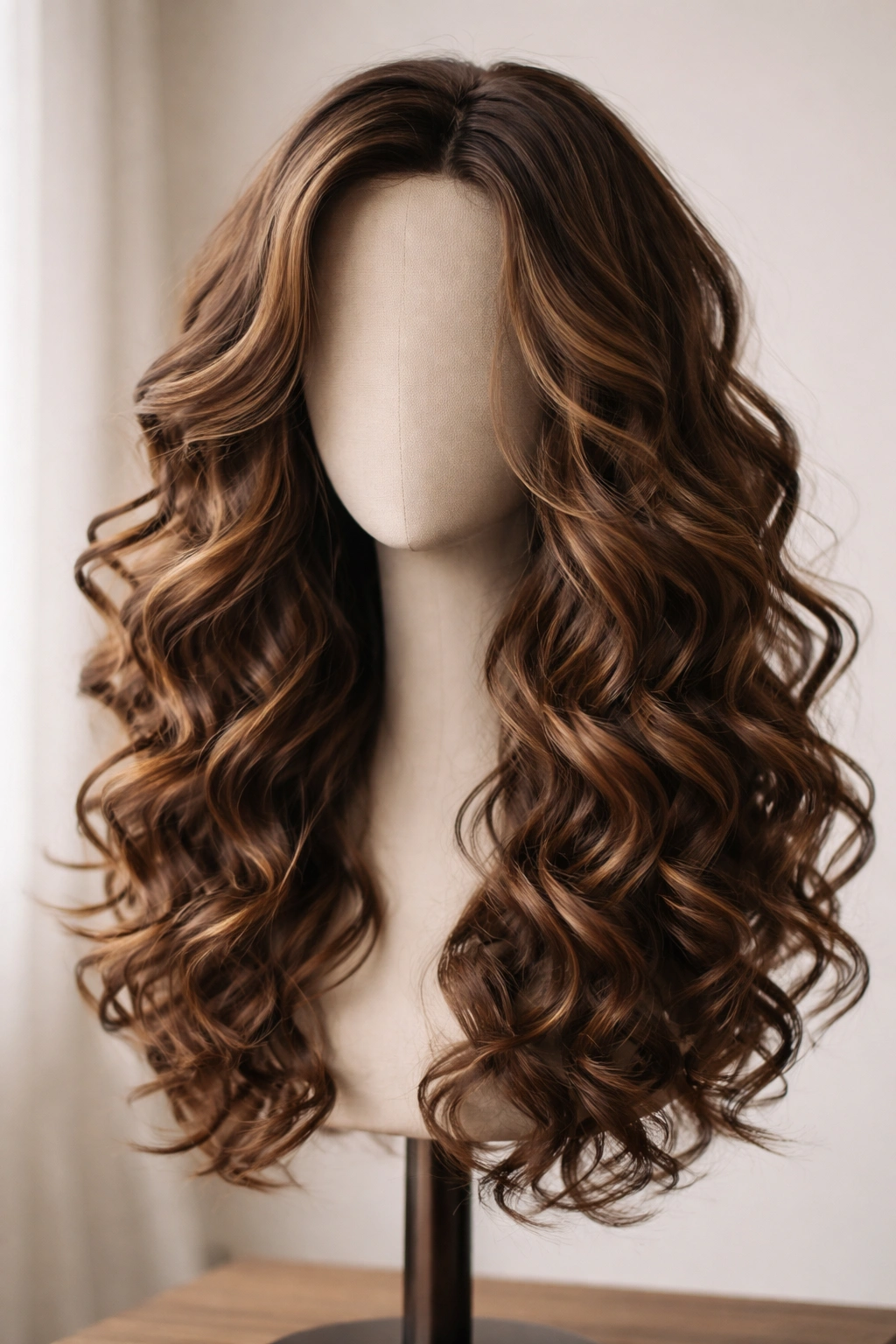
Loose spiral curls are defined, gorgeous, and undeniably feminine—but they’re also one of the trickiest textures to make look authentic in wig form. The difference between a loose spiral that looks like real hair versus one that looks costume-y comes down to the consistency and tightness of the spirals, whether they vary slightly in size, and how much movement they have.
What Makes Loose Spirals Look Believable
Real loose spiral curls aren’t uniformly perfect. The spirals vary slightly in tightness, some curl tighter at the root and looser at the end, and they shift and compress when you move. The most realistic loose spiral wigs use human hair curled into the spiral pattern rather than synthetic fiber molded into perfectly uniform coils. Even small variations in spiral size make an enormous difference in believability—if every single curl is exactly the same, your brain registers it as artificial.
Key Characteristics of Quality Loose Spiral Wigs
- Curl consistency: Look for spirals that vary in tightness—some might be tighter, others slightly looser—this mirrors real hair variation
- Spiral starting point: Realistic spirals usually start closer to the scalp, not halfway down the hair shaft
- Movement quality: When you move, the spirals should compress slightly and then rebound—not stay in a rigid, fixed shape
- Best construction: Lace front or full lace construction really elevates loose spiral wigs because it creates the illusion that curls are growing from your scalp
- Styling potential: Loose spirals can be worn down for maximum curl definition, stretched slightly with moisture and heat for larger waves, or pinned up for textured updos
A realistic styling note: loose spiral curls look better when they’re not perfectly set in place. A little gentle scrunching with your hands while they’re damp, then letting them dry naturally, creates a more organic, lived-in look than perfectly uniform coils.
4. Tight Coily Curls
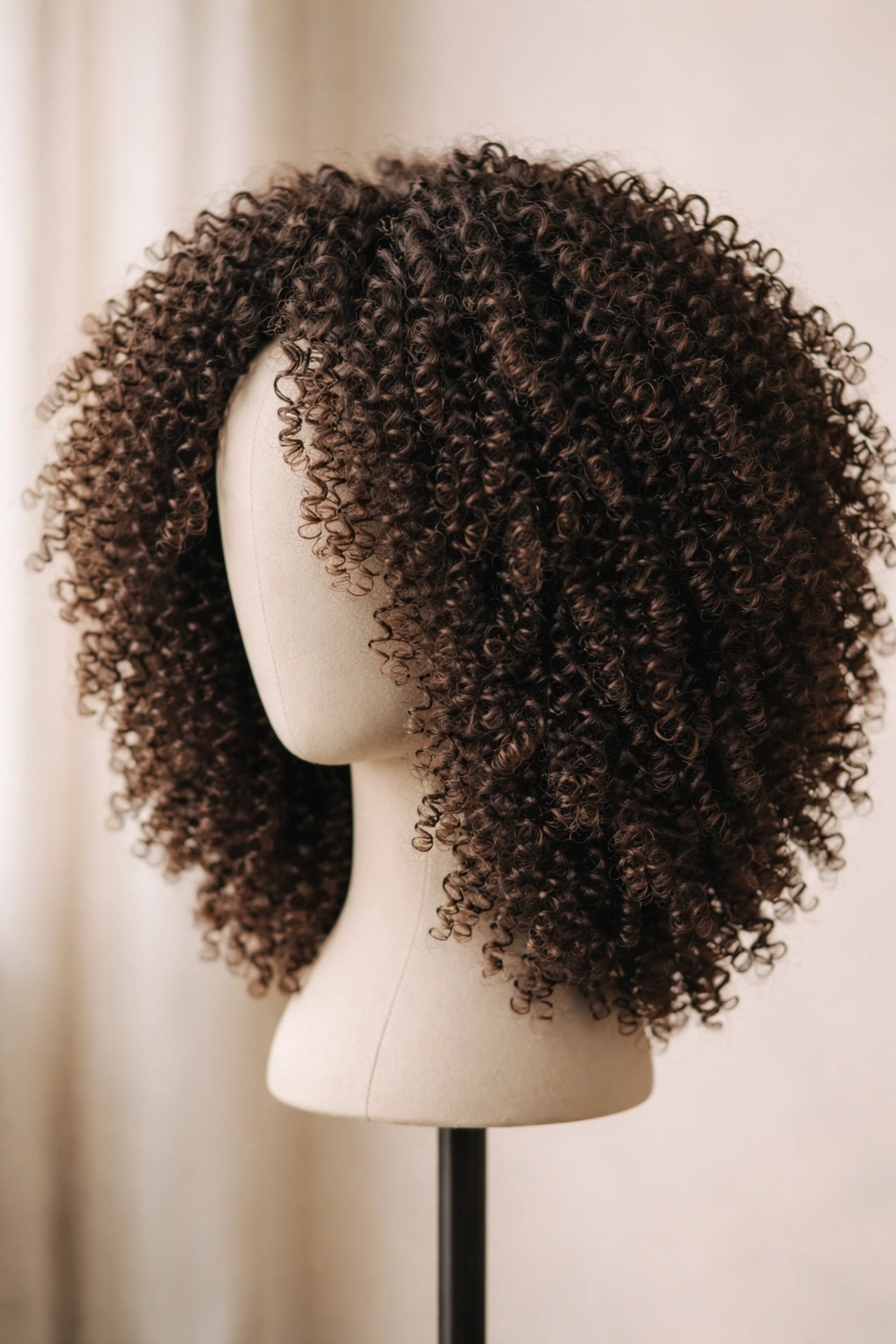
Tight coily curls are bold, distinctive, and when done well, incredibly realistic. These curls are smaller and tighter than kinky coils—think of the kind of naturally coily hair that springs up and takes up significant volume. The challenge in making tight coily wigs look real is preventing them from looking matted, dull, or overly uniform.
Why Realistic Tight Coily Curls Stand Out
The most convincing tight coily wigs have visible curl separation, meaning you can see distinct individual coils rather than a blended mass of texture. The curls also need to be shiny but not artificially glossy—real coily hair has a specific kind of shine when it’s healthy, which is different from synthetic shine. Premium human hair coily wigs capture this much better than synthetic options, though high-end synthetic blends are improving.
What Sets Quality Tight Coily Wigs Apart
- Curl definition: Individual coils should be visible and defined, not melted together into an undefined texture
- Volume distribution: The best tight coily wigs have slightly more density at the crown and temples, tapering to slightly less density at the back—this mimics how real coily hair naturally distributes
- Shine level: Look for a matte or satin finish rather than glossy—real coily hair rarely has a high shine
- Scalp appearance: Some scalp visibility adds realism—completely covered scalp can look artificial
- Edge styling: Loose hairs and baby hairs at the edges are a sign of a more realistic wig, not a flaw
Here’s something most people don’t realize: tight coily wigs look more real when styled with products. A completely dry tight coily wig can look dull and frizzy. Adding a light cream or gel while the hair is slightly damp, then scrunching gently, creates definition and shine that reads as healthy and real rather than dry and artificial.
5. Wavy Texture
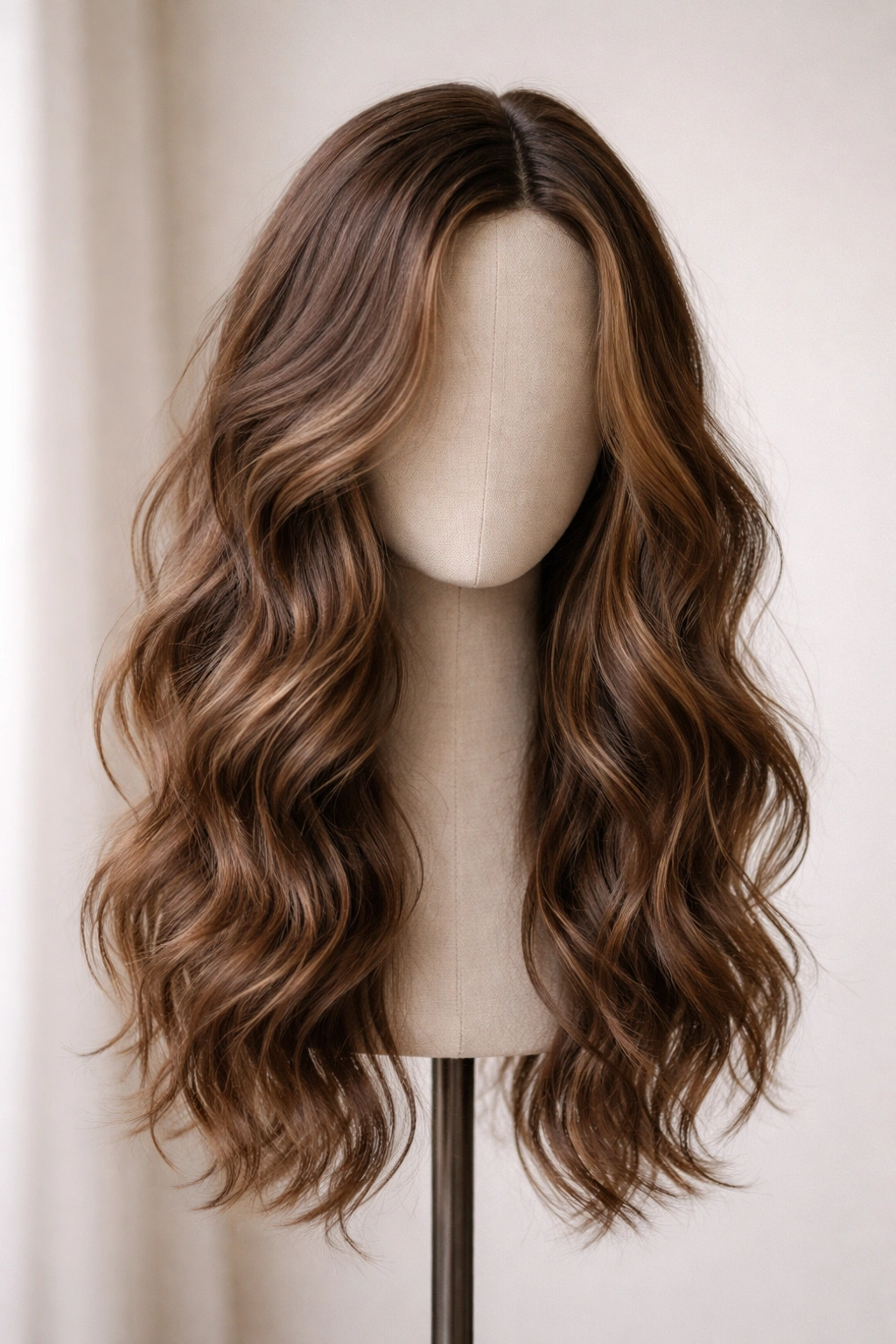
Wavy hair is the most common hair texture, so a wavy wig has enormous potential to look completely natural. The catch is that wavy texture can also look obviously fake if it’s too uniform or too slick. The best wavy wigs have gentle waves with natural movement, realistic texture variation, and enough body that they don’t hang limply.
What Makes Wavy Texture Look Like Your Own Hair
A realistic wavy wig has waves that actually move and shift rather than staying in a fixed position. The waves should be tighter closer to the scalp and looser toward the ends—this is how real hair naturally falls. The texture should also have some texture variation: some sections slightly wavier than others, some spots with more definition, other spots more relaxed. This randomness is what creates believability.
Details That Determine Realism in Wavy Wigs
- Wave pattern: Avoid perfectly uniform waves—subtle irregularities make it look real
- Texture at the roots: Waves should have more grip and definition at the roots and gradually relax toward the ends
- Shine level: Realistic waves have a soft, natural shine, not a plastic or overly processed shine
- Density: Wavy hair generally works beautifully at medium to medium-high density—lightweight density can look thin, while overly thick density can look costume-y
- Scalp visibility: A realistic wavy wig should show your scalp, especially at the part line
- Styling options: Quality wavy wigs can be worn down as-is, blown out straighter, or scrunched to define the waves more
A styling tip that changes everything: wavy wigs look dramatically more real when you style them with moisture and then let them air dry, rather than wearing them completely dry. The waves hold better, look shinier, and move more naturally. If you apply a lightweight leave-in cream or curl cream to wavy hair while it’s damp, then let it dry, the texture becomes more defined and authentic-looking.
6. Bouncy Ringlets
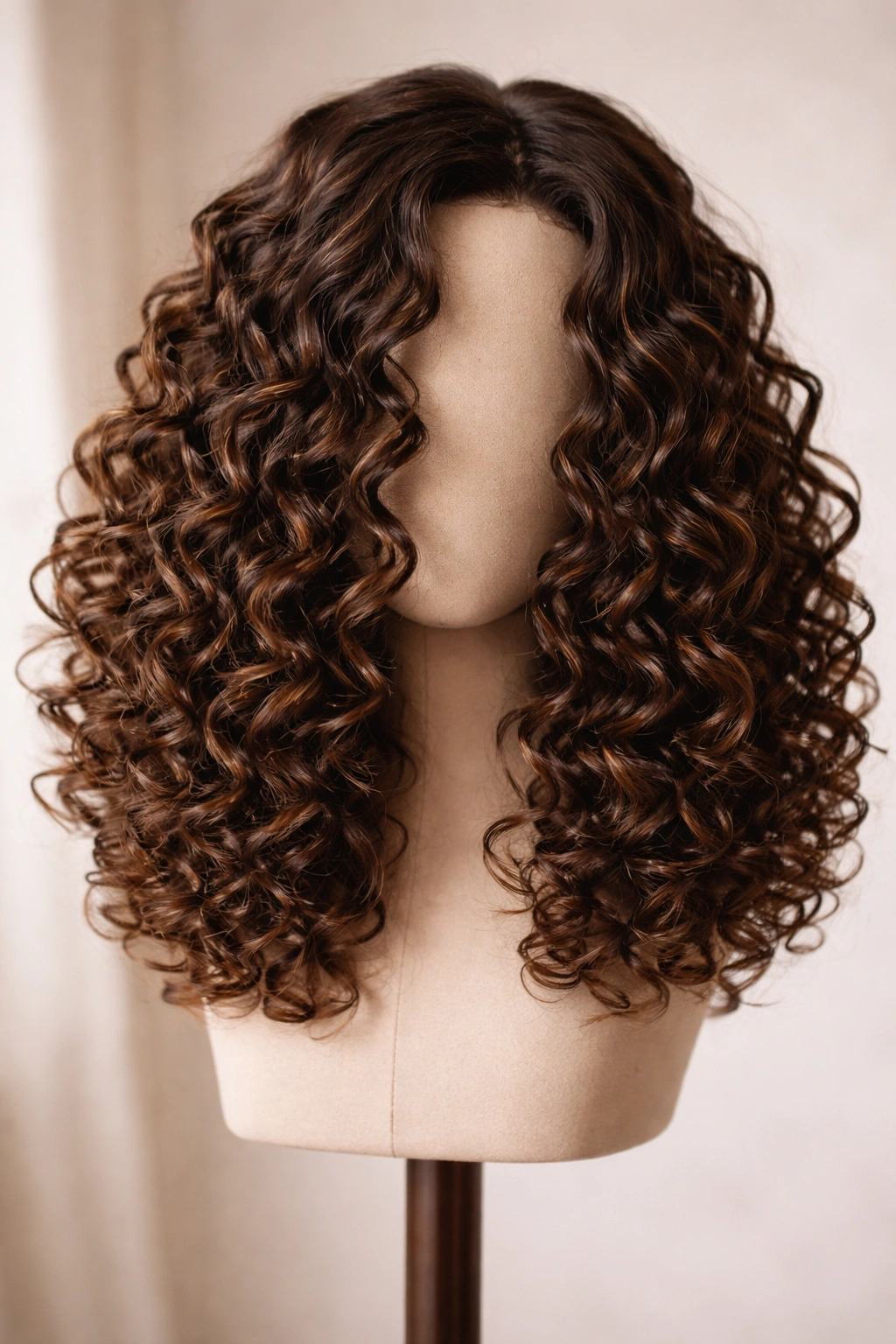
Ringlets are those tight, well-defined curls that have spring and personality. They’re fun, feminine, and when done right, absolutely convincing. The key to realistic ringlets is that they should actually bounce—your curls shouldn’t be stiff or frozen in place, but rather springy and responsive to movement.
Why Bouncy Ringlets Read as Real
Bouncy ringlets that look real share an important characteristic: they have elasticity. When you touch them or move, they compress and then spring back to their original shape. This mimics how real curly hair responds to movement. Additionally, realistic ringlet wigs have variation in how tightly they’re curled—some ringlets might be slightly tighter, others slightly looser, creating natural texture variation rather than mechanical uniformity.
Critical Features of Convincing Ringlet Wigs
- Spring factor: The curls should compress and rebound when touched—not stay permanently formed
- Curl tightness variety: Look for ringlets that vary slightly in how tightly they’re wound rather than being identically perfect
- Length consideration: Ringlets look most realistic at medium lengths—very short ringlets can read as doll-like, while very long ringlets sometimes look exaggerated
- Density level: Ringlet wigs work beautifully at high density because the curl pattern naturally creates the appearance of volume
- Hair type: Both human hair and quality synthetic ringlets can look amazing, but human hair ringlets tend to feel and move more naturally
- Styling possibilities: Ringlets can be worn down for dramatic curl, twisted or braided for texture changes, or pinned up to show off individual curls
One detail that matters more than people realize: ringlet wigs look more realistic when the curls are slightly loose at the very ends rather than tightly wound all the way to the tip. Real ringlets typically have a little texture variation at the end, while perfectly curled ringlets all the way to the tip read as overly artificial.
7. Textured Bob
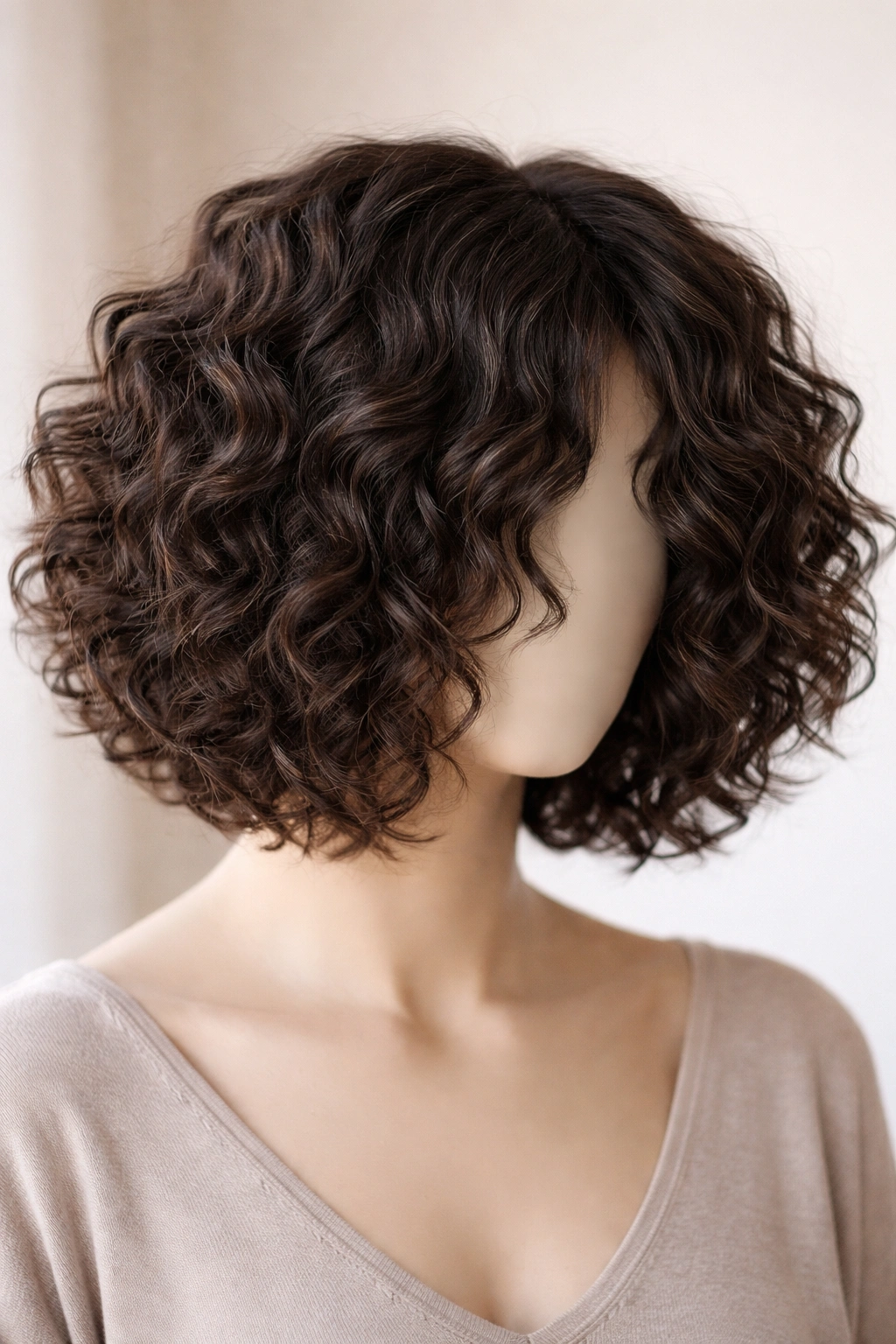
A textured curly bob is the practical, sophisticated option—it’s manageable, chic, and when constructed properly, looks entirely like real hair. The appeal of a textured bob wig is that shorter length means less fuss, while the texture adds visual interest and movement that straight bobs often lack.
Why Textured Bobs Look Surprisingly Real
Curly and textured bobs work beautifully in wig form because the shorter length actually makes it harder to detect that it’s a wig (ironically, because shorter wigs have less room to move unnaturally). The texture also breaks up what could otherwise be an obvious wig appearance. A textured bob reads as a stylish, intentional choice rather than a hair replacement, which makes it feel more natural and confident.
What Makes a Textured Bob Convincing
- Bob length: Usually sits between chin-length and shoulder-length—this length is forgiving and doesn’t draw as much scrutiny as longer wigs
- Texture pattern: Can be wavy, curly, or coily depending on preference—the key is that the texture is consistent throughout
- Layers and movement: A well-constructed textured bob has subtle layers that create movement and prevent it from looking heavy or helmet-like
- Hairline: A lace front is especially valuable on bobs because it shows that the hair is growing from your actual hairline
- Styling options: Can be worn sleek with smoothing cream, textured and natural, curled tighter, or slightly waved out
- Maintenance: Shorter length means quicker styling and easier maintenance—wigs are often more convincing when they look effortlessly cared for
The psychology of a good textured bob: it reads as “this is a deliberate style choice” rather than “this person is hiding something.” That confidence translates to believability. When a wig looks intentional and well-maintained rather than trying to perfectly mimic natural hair, it often looks more real.
8. Voluminous Crown Curls
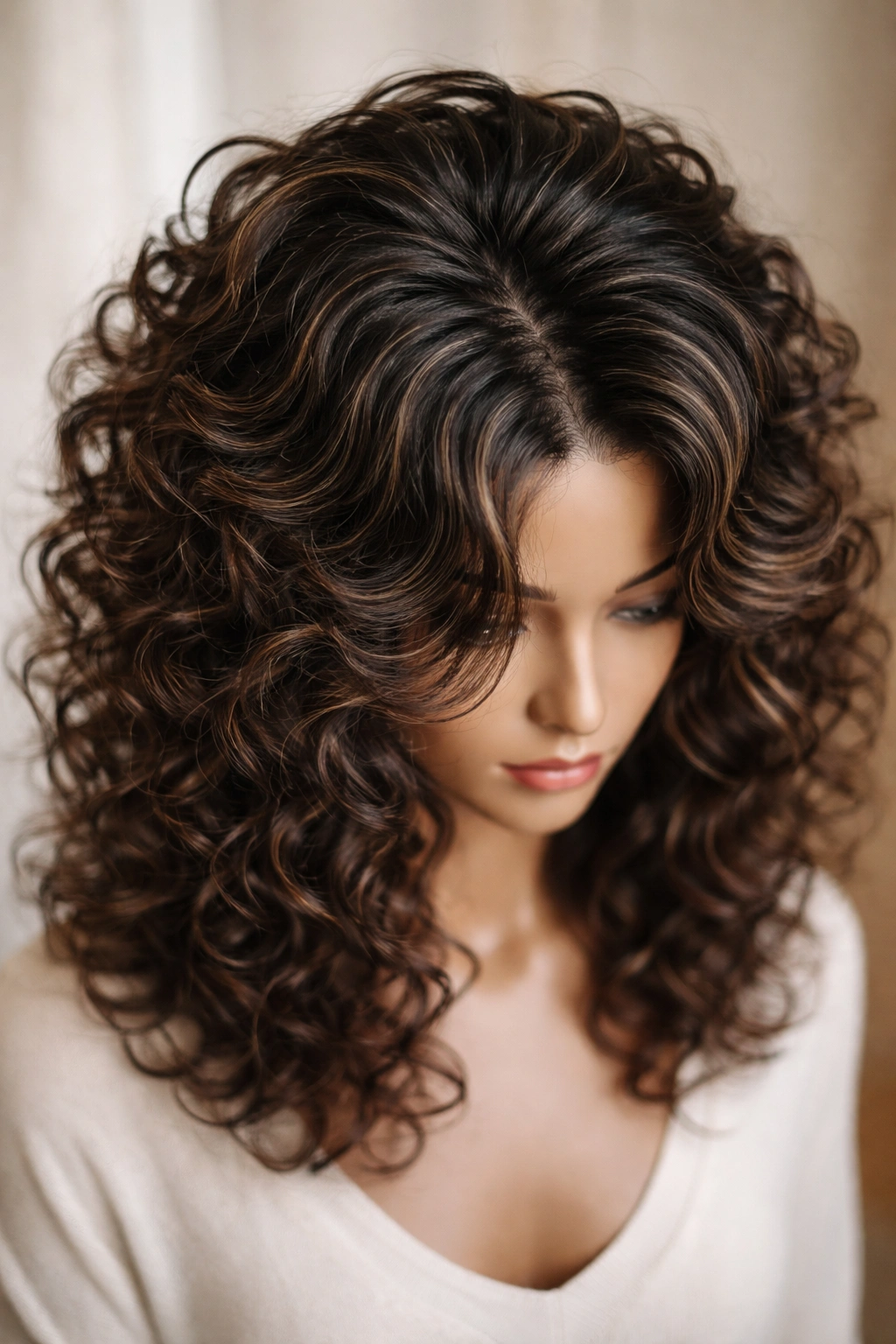
Voluminous crown curls prioritize height and fullness, especially at the top, creating drama and presence. These wigs work for anyone wanting visible, confident curl that makes a statement. When constructed well, voluminous curls look like expertly styled natural hair rather than a costume piece.
What Creates Volume That Looks Real Rather Than Artificial
The difference between a voluminous wig that looks real and one that looks like a costume wig is the distribution of volume. A realistic voluminous curl wig has strategic density: more fullness at the crown and temples where real hair naturally has more body, with slightly less density underneath. The curls should also have movement and flexibility rather than being structured so stiffly that they don’t respond to gravity and motion.
Essential Qualities of Convincing Voluminous Curls
- Strategic density: Highest at the crown, gradually transitioning to slightly less density at the sides and back—this mimics real hair naturally
- Curl definition: Individual curls should be visible and defined, not compressed into a blob of texture
- Base construction: A larger or reinforced base at the crown helps support volume without looking helmet-like
- Movement capability: Curls should be able to shift and respond to movement rather than staying in a completely fixed shape
- Texture variation: Mix of curl tightness across the crown prevents the uniform, artificial appearance
- Scalp visibility: Even with voluminous styling, your scalp should peek through at the part—zero scalp visibility often indicates a costume wig
A styling reality worth knowing: voluminous curls look more real when they’re not perfectly set. A little gentle finger-styling, some texture variation from product application, and allowing the curls to move naturally all contribute to a more authentic appearance. Over-perfect voluminous curls often read as costume-quality.
Final Thoughts
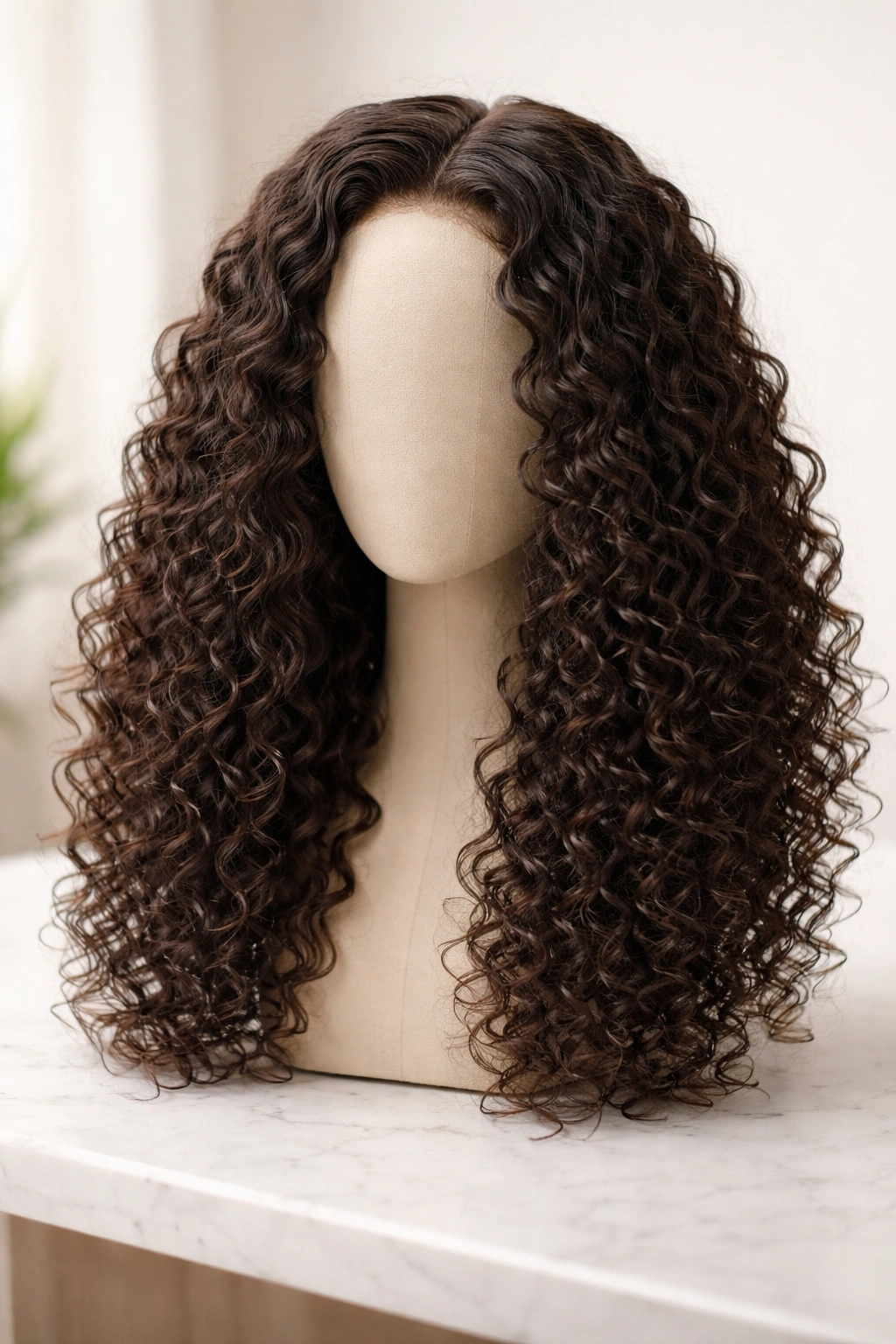
Finding a curly wig that genuinely looks like real hair comes down to understanding texture, construction quality, and realistic styling expectations. The eight styles above represent different points on the curl spectrum—from loose waves to tight coils—so there’s something for every preference and hair goal.
The wigs that look most convincing share common traits: they use quality materials, feature realistic density distribution, include scalp visibility or a convincing lace front, and allow for movement rather than being rigidly structured. Equally important is how you style and maintain them. A high-quality wig that’s dried out and never refreshed will look worse than a good wig that’s properly moisturized and styled with intention.
Before investing in a curly wig, consider what your daily routine actually allows for. Some textures require more regular maintenance than others. Tight coils and kinky coils need moisture regularly to maintain definition. Deep waves benefit from refreshing with curl cream between washes. Loose spirals sometimes need light re-styling to maintain shape. Wavy texture is generally the most forgiving. Understanding which style fits your lifestyle makes the difference between a wig that becomes your go-to and one that sits unworn because it requires more upkeep than you can realistically manage.