

Vintage curly hairstyles never truly go out of fashion—they just resurface every few decades with fresh relevance. Whether you’re drawn to the glamorous waves of Old Hollywood, the playful ringlets of the 1920s, or the structured elegance of mid-century curls, these classic styles offer timeless beauty that translates seamlessly to modern life. The real magic is that most of these looks don’t require complicated extensions, chemical treatments, or hours at the salon. If you’ve got natural curl texture or are willing to set waves overnight, you can recreate authentic vintage curly hairstyles that feel sophisticated, intentional, and genuinely flattering.
What makes vintage curly hairstyles so enduringly appealing is their versatility. They work whether you’re attending a formal event, going to brunch, or just wanting to feel more polished during a regular week. Plus, many of these styles actually complement natural curly hair better than modern trends do—they celebrate curl texture rather than fighting it. The techniques that created these looks have been refined over decades, which means they’re practical and achievable even if you’ve never attempted anything like this before.
Let’s explore ten vintage curly hairstyles that deserve a comeback, along with exactly how to achieve each one and why they still feel relevant today.
1. Finger Waves
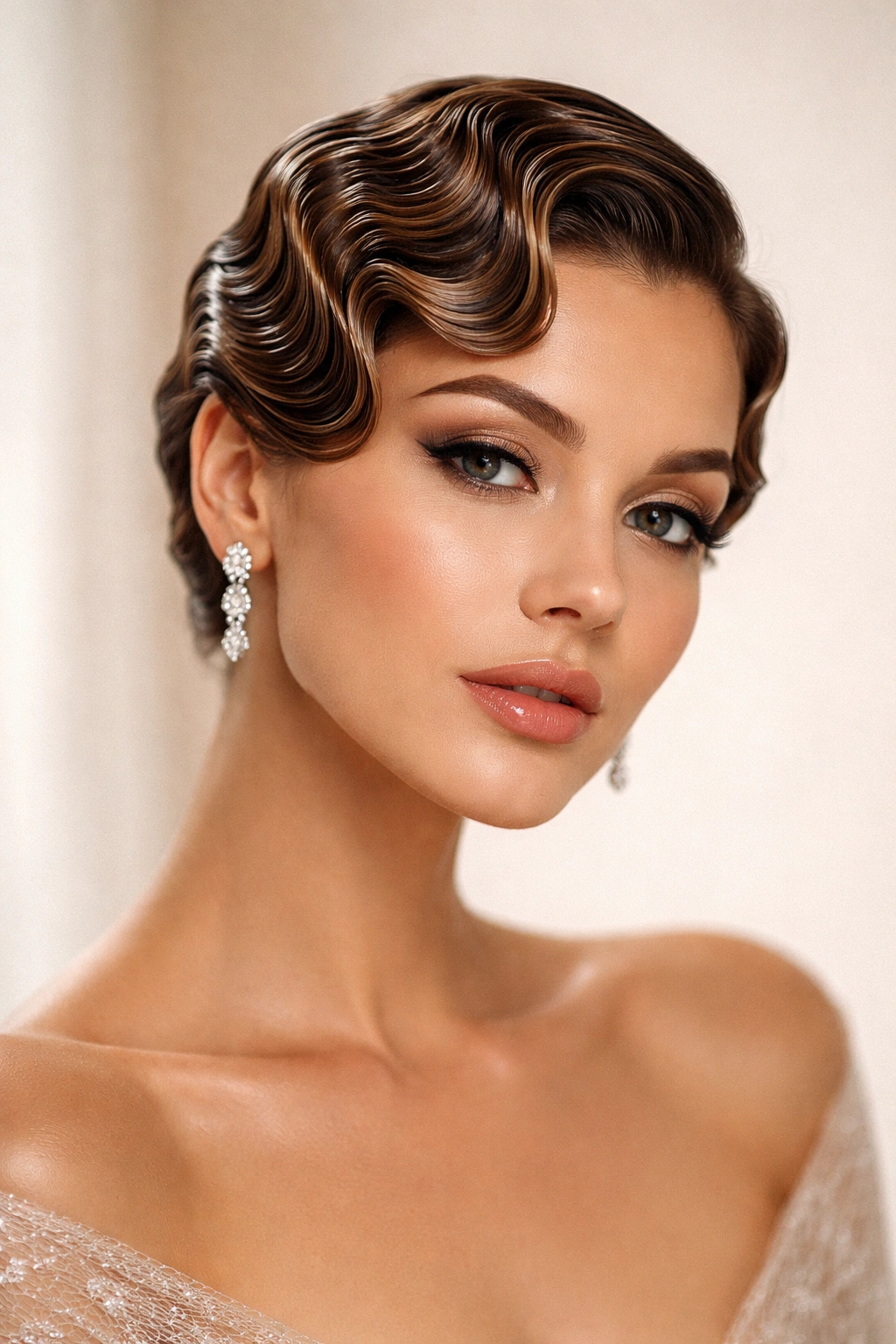
Finger waves are perhaps the most iconic vintage curl style, originating from the 1920s and 1930s and remaining deeply recognizable across generations. These are soft, sculpted waves created by manipulating wet hair into S-shaped curves and allowing them to dry in place. The beauty of finger waves is their polished, almost sculptural quality—they look intentional and groomed without feeling stiff or overdone.
Why This Style Still Works
Finger waves suit nearly every face shape because the waves can be positioned to flatter individual features. They work beautifully on both straight and curly hair, though curly hair tends to hold the wave pattern more naturally. The style reads as elegant and fashion-forward rather than costumey, which means you can wear it to upscale events, date nights, or professional settings without feeling like you’re in costume.
How to Create Finger Waves
The traditional method requires wet hair, a fine-tooth comb, and patience. Comb a section of damp hair into the first S-curve using your fingers and comb to guide the shape, then hold it in place while you create the next wave. Many people use setting gel or pomade to keep waves defined while drying. For curly hair, the easiest approach is to apply the gel to damp sections, create the wave shape, and allow hair to air-dry or use a diffuser attachment on low heat. You can also set finger waves overnight with pincurls and simply comb them out the next morning for softer, more touchable waves.
Pro tip: Finger waves photograph beautifully and hold their shape for 2-3 days if you’re gentle when sleeping, making them perfect for events where you want camera-ready hair.
2. Hollywood Curls
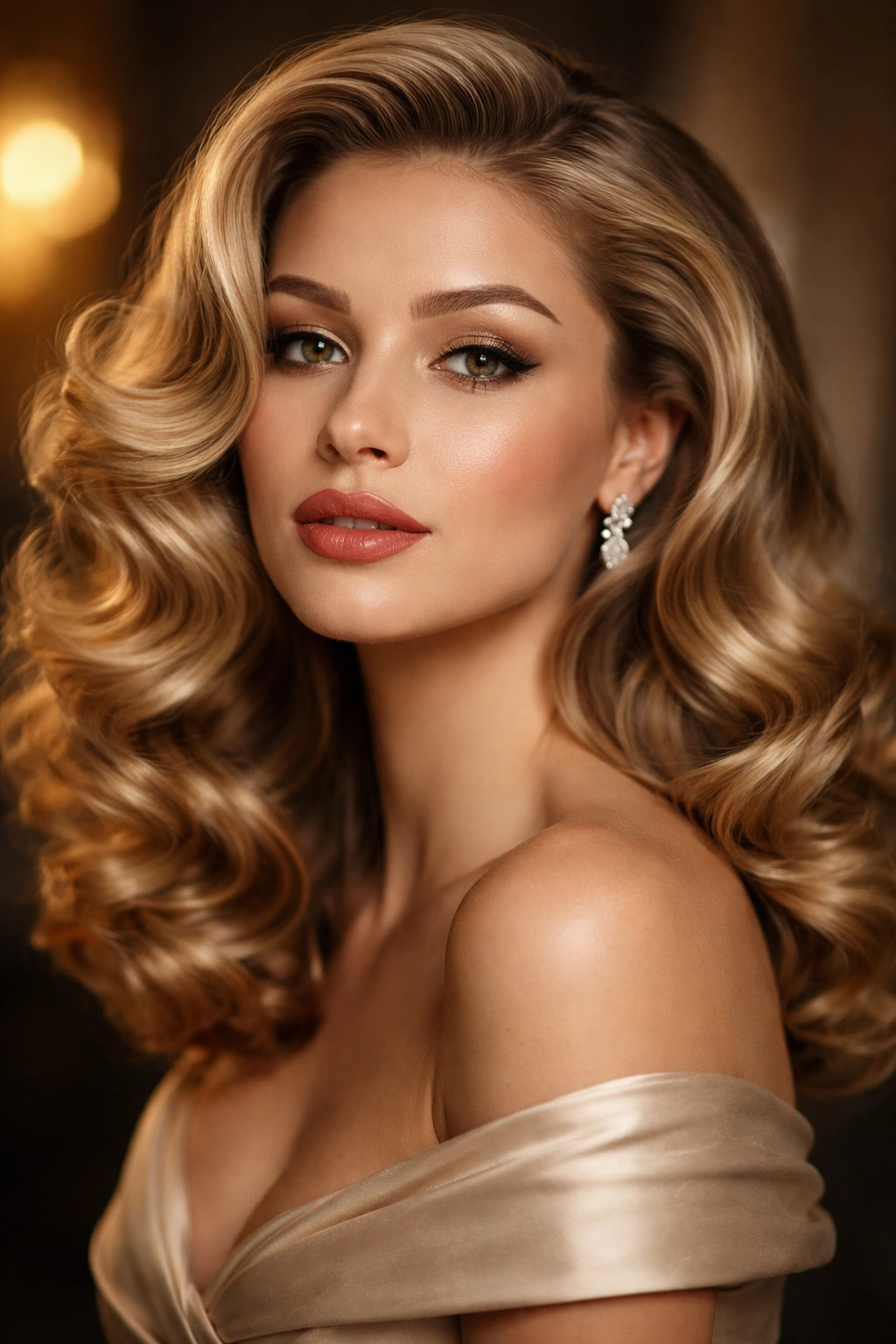
Hollywood curls represent the golden-age glamour of the 1940s and 1950s—think actresses with perfectly sculpted ringlets that catch light and movement. These aren’t tight, small curls but rather larger, looser spirals that create volume without looking frizzy. The defining characteristic is the way they’re set and released to create uniform, bouncy curls that frame the face beautifully.
The Science Behind the Style
Hollywood curls work because they’re created using a specific setting technique that controls curl size and direction. Traditional Hollywood waves were often done in salons using pin curls or hot-setting machines, which allowed stylists to create uniform results. The key difference from random natural curls is the intentionality—each curl is placed where it will be most flattering.
Setting and Styling Hollywood Curls
The most authentic way to achieve this look is with pin curls: section damp hair into the size curls you want, roll each section away from the face, and secure with a pin while the hair dries completely (or overnight). Release the curls gently, and you’ll have soft waves that you can arrange and style. For tighter hold, use setting lotion or mousse before pinning. If pin curls feel too time-intensive, large barrel hot rollers achieve a similar effect in much less time—just roll, allow to cool, and unwind.
Worth knowing: The elegance of Hollywood curls comes from their uniformity and how they’re arranged on the head, not from being perfectly symmetrical. A skilled stylist positions curls to enhance cheekbones and create a flattering frame.
3. Victory Rolls with Curls
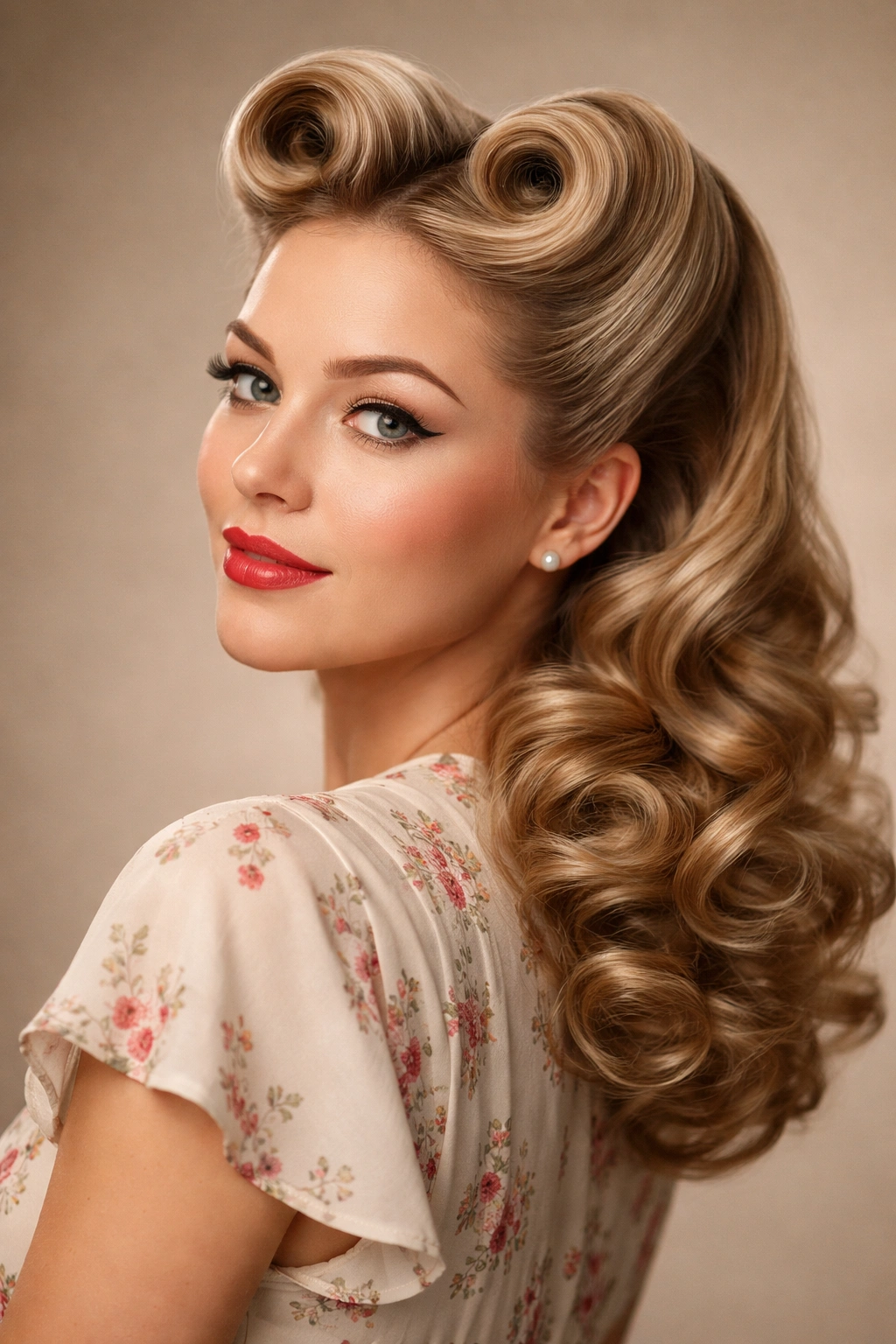
Victory rolls are the quintessential 1940s updo style—two sculpted rolls that frame the face like sculptural elements. While traditional victory rolls are often created with smooth sections of hair, adding curled texture underneath or around the rolls creates a softer, more romantic version that’s actually more wearable for everyday occasions. The curls add visual interest and texture while the roll structure keeps hair neatly contained.
Creating the Perfect Roll Base
Victory rolls start with clean, damp hair set into waves or curls. Divide the hair into sections, and create each roll by curling a front section backward and pinning it to the crown area. The magic happens when the underlying hair is set in waves or pin curls—you can see the texture peeking through and even pull small sections out for softness. This variation makes victory rolls feel less severe than smooth versions and infinitely more practical for busy days.
Styling Tips for Modern Victory Rolls
Modern victory rolls with curls work brilliantly for vintage-inspired parties, formal events, or even everyday wear if you’re confident with bold styling. Use setting lotion and let hair dry completely before unpinning for the most durable hold. The curled texture underneath means you can gently ruffle the rolls when you take them down, creating a romantic, undone vibe rather than a structured updo—this hybrid styling is what makes the look feel current rather than purely theatrical.
4. Pin Curls
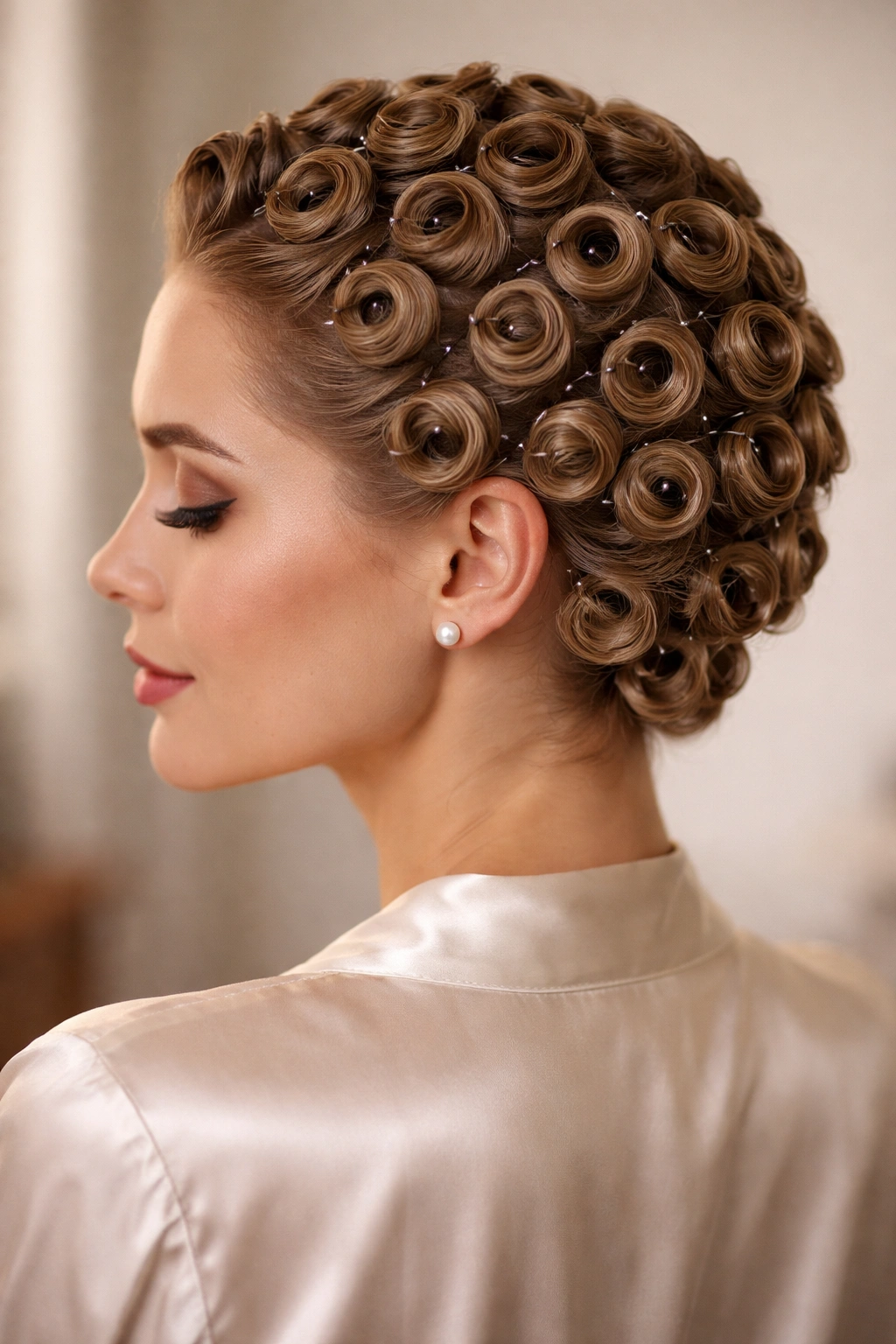
Pin curls are the foundation of nearly every vintage curly hairstyle—they’re individual curls created by rolling small sections of damp hair and securing them flat against the scalp with a pin. The resulting curl size, shape, and overall effect depends entirely on how large you roll each section and what direction you roll it. Pin curls are sometimes called “setting” hair, and they’re one of the most versatile and forgiving vintage techniques available.
The Versatility of Pin Curl Patterns
You can create loose waves with large pin curls, tight ringlets with small ones, or a mix of sizes across the head for dimensional texture. The direction you roll (away from the face, toward it, spiraling upward) changes how the waves fall. Experimentation is actually encouraged here—try different sizes and patterns until you find what flatters your face and hair type.
Setting Pin Curls Perfectly
Damp hair holds pin curls best, so apply setting lotion or a lightweight mousse before rolling. Roll each section smoothly without bumps or twists, and secure with a single pin placed horizontally across the curl. For tighter control, some people prefer old-fashioned metal clips. Allow hair to dry completely—this is crucial, as removing pin curls from damp hair will destroy your curls. Overnight drying gives you time to fall asleep while your curls set. Once completely dry, gently unroll each curl and use your fingers or a wide-tooth comb to shape waves as desired.
Insider note: The beauty of pin curls is that you can release them immediately for defined ringlets or wait a few hours and gently comb through them for softer, more romantic waves.
5. Marcelle Waves
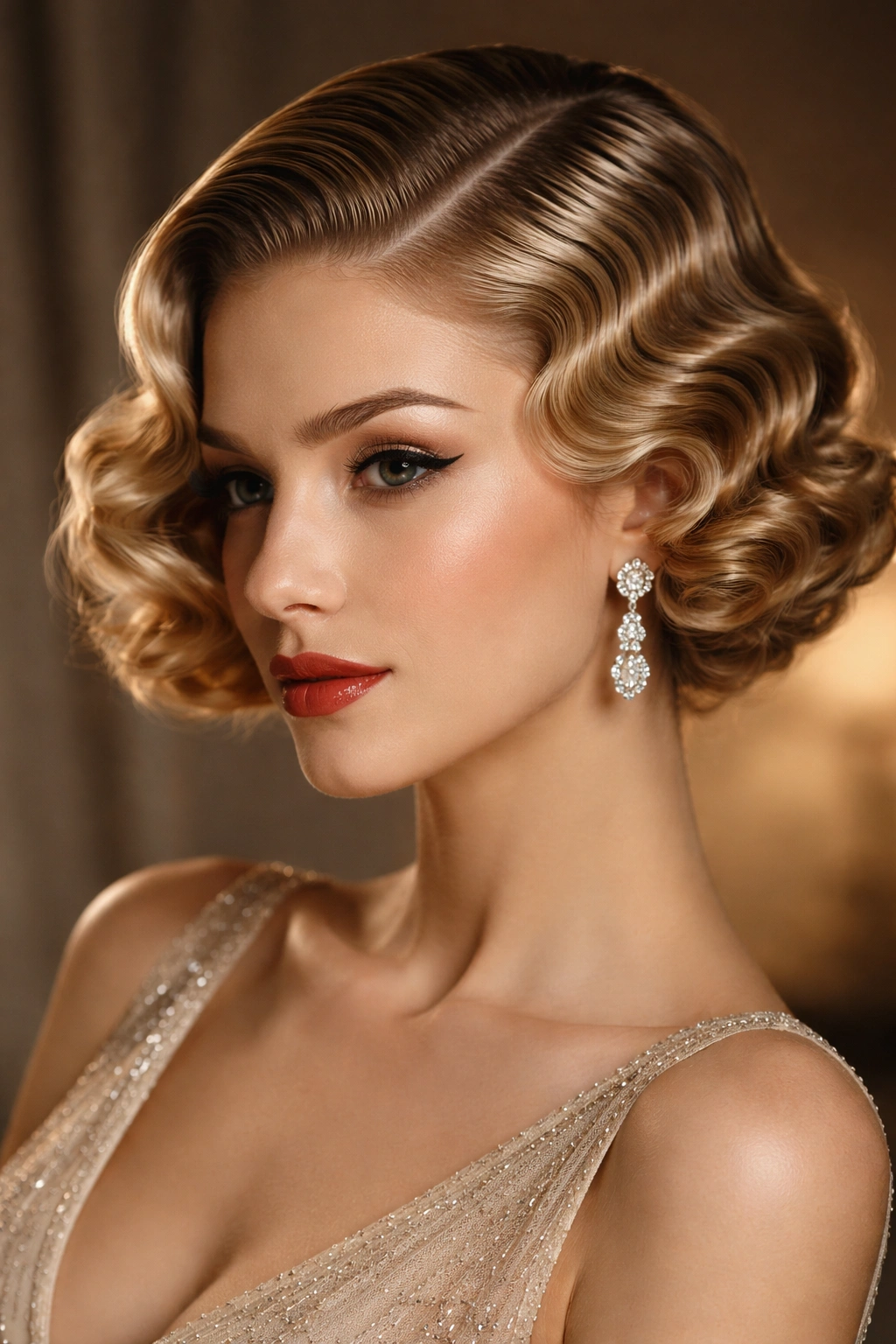
Marcelle waves are ultra-sleek, perfectly controlled S-shaped waves that were hugely popular in the 1920s and 1930s. They’re created using a very specific technique where wet hair is combed into precise wave formations and held in place until completely dry. Unlike finger waves, which can be slightly softer, Marcelle waves are distinctly structured and geometric.
The Classic Marcelle Technique
Traditional Marcelle waves required time, skill, and often a visit to the salon. Hair was washed, set in precise wave patterns using combs and clips, and allowed to dry overnight or under a drying hood. The result was hair that held a perfect wave for days. Modern techniques can achieve similar results using setting lotion, sectioning clips, and careful combing, though hot tools also create this effect quickly.
Modern Marcelle Wave Approach
To create Marcelle waves at home, apply setting lotion to damp hair and use a fine-tooth comb to comb hair into S-shaped patterns, then secure each section with a clip or pin while it dries. For faster results, you can rough-dry the hair and then use a curling iron or waving iron to create the pattern—this gives you control over the size and depth of each wave. The key is precision: the waves should be uniform in size and evenly spaced across the head.
6. Vintage Spiral Curls
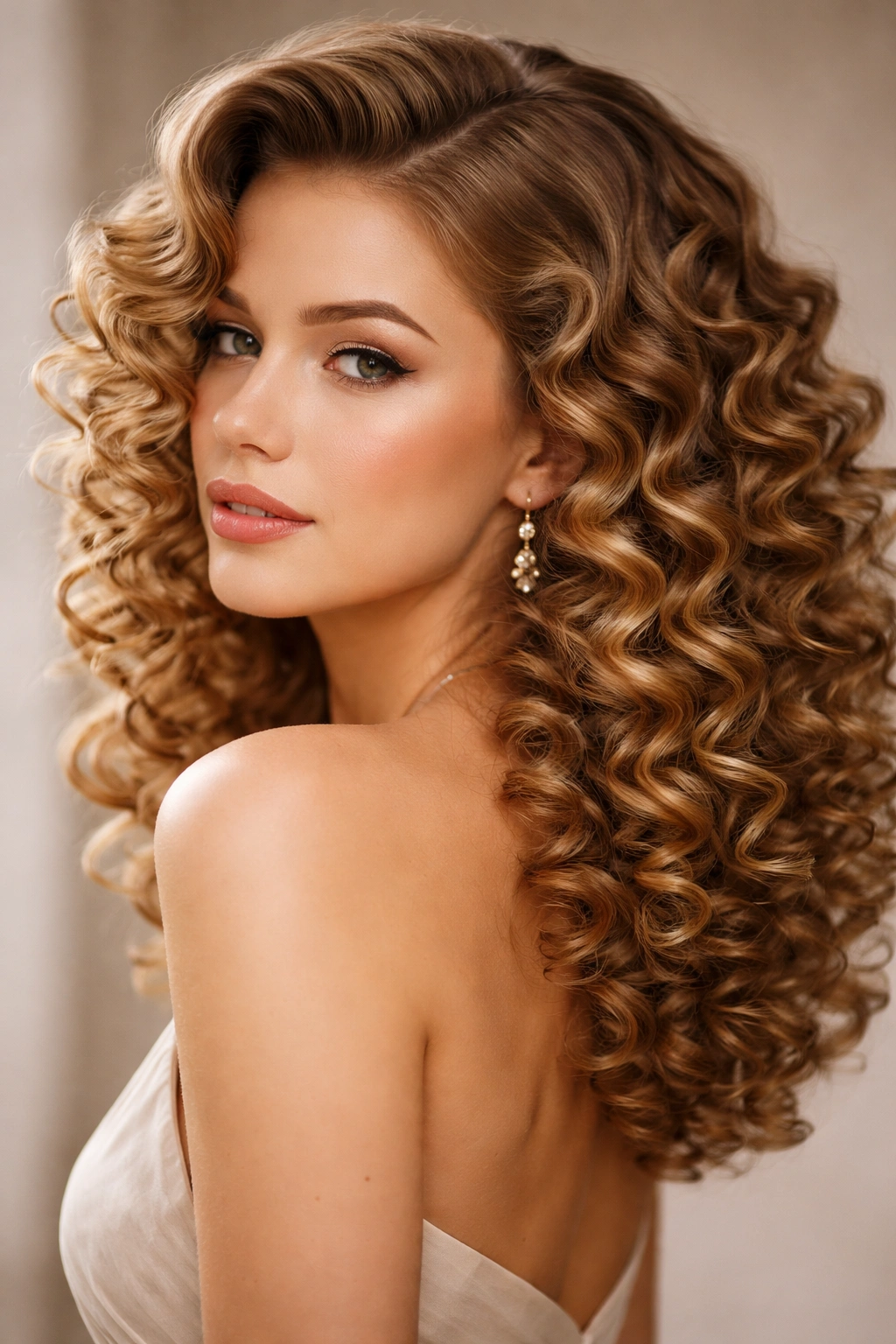
Spiral curls are tight, springy ringlets that create serious volume and movement. These curls were particularly popular in the 1980s as a vintage revival, but their roots trace back to earlier decades. Spiral curls work beautifully on curly hair because they emphasize and celebrate natural texture rather than trying to tame it. The effect is bouncy, youthful, and undeniably glamorous.
Creating True Spiral Curls
Spiral curls are usually created by taking small sections of damp hair and twisting them vertically upward, then rolling the twisted section onto a rod or perm rod and allowing it to dry. The twist creates the spiral effect, and the rod ensures even tension. For natural curly hair, simply enhancing your own curl pattern with mousse and a diffuser often creates a similar look without the effort of setting.
Maintenance and Styling
Once set, spiral curls tend to last through several days of wear, especially if you refresh them with water and mousse in the morning. The voluminous effect means you need less hair product to create impact—too much product weights the curls down and kills the bounce. A light touch with gel or mousse, combined with gentle scrunching, keeps spirals defined without looking crunchy.
Pro tip: Spiral curls photograph beautifully and create an instantly glamorous silhouette from any angle, which is why they remain popular for formal events and photo shoots.
7. Soft Ringlets
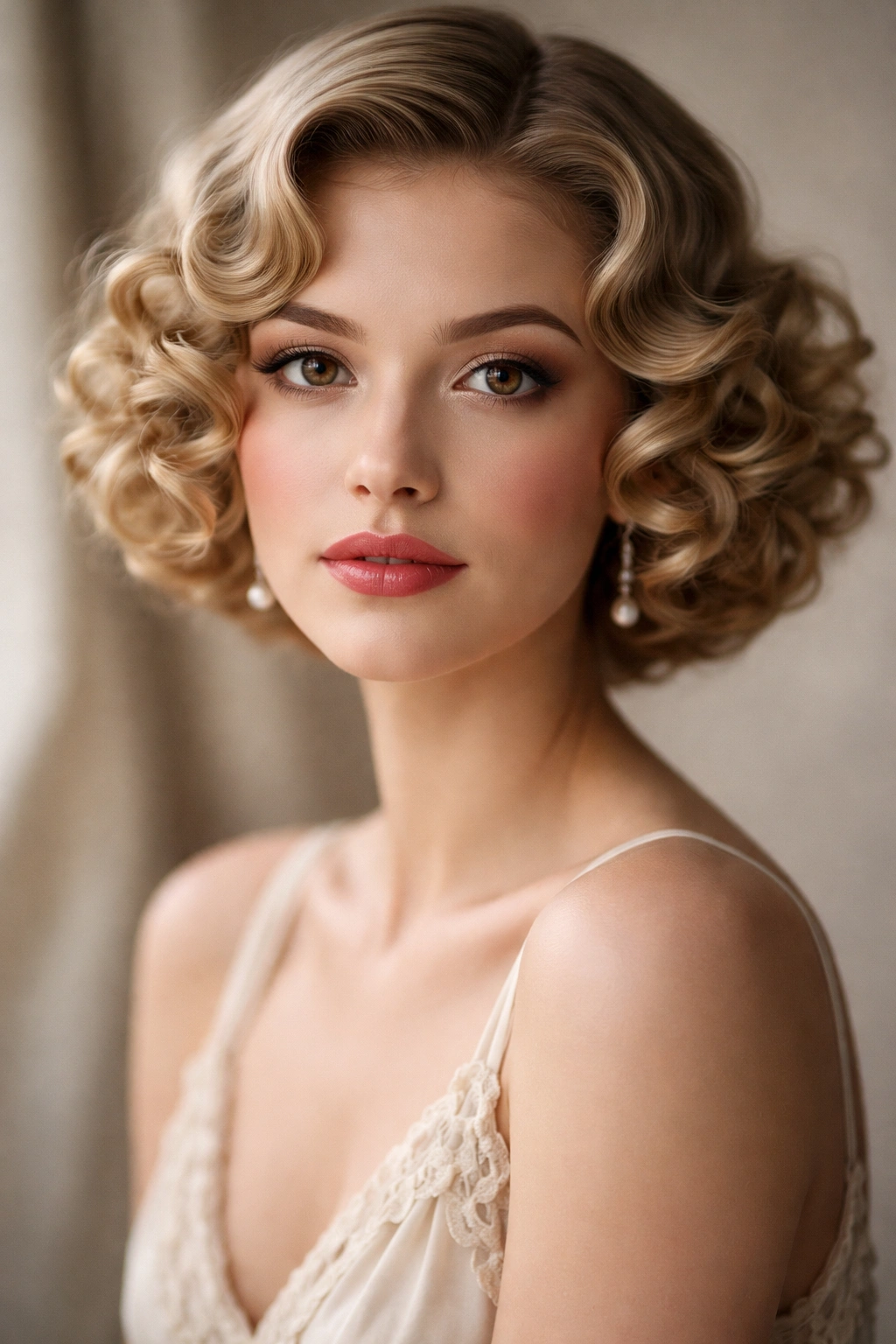
Soft ringlets are the dreamy curl style that defined the 1920s flapper era—bouncy, feminine ringlets that frame the face and create an ethereal, almost pre-Raphaelite effect. These aren’t the tight, structured ringlets of theatrical curls but rather relaxed, romantic curls with movement and dimension. They’re softer than spiral curls but more defined than casual waves.
Achieving the Ringlet Look
Soft ringlets can be created using medium-sized pin curls (about the diameter of a marker), then gently combing through them once dry to soften the curl while maintaining dimension. Alternatively, you can use medium barrel hot rollers or a curling iron to create curls and then finger-comb them into softer shapes. The goal is defined but not rigid—curls that move and flow rather than stay locked in place.
Modern Styling Applications
Soft ringlets work beautifully for romantic occasions, period-inspired events, or any time you want an intentionally vintage aesthetic that still feels wearable. They suit soft, delicate makeup and clothing styles and add nostalgia without looking like a costume. Pair them with simple pieces to keep the overall effect balanced rather than overdone.
8. Old Hollywood Glamour Waves
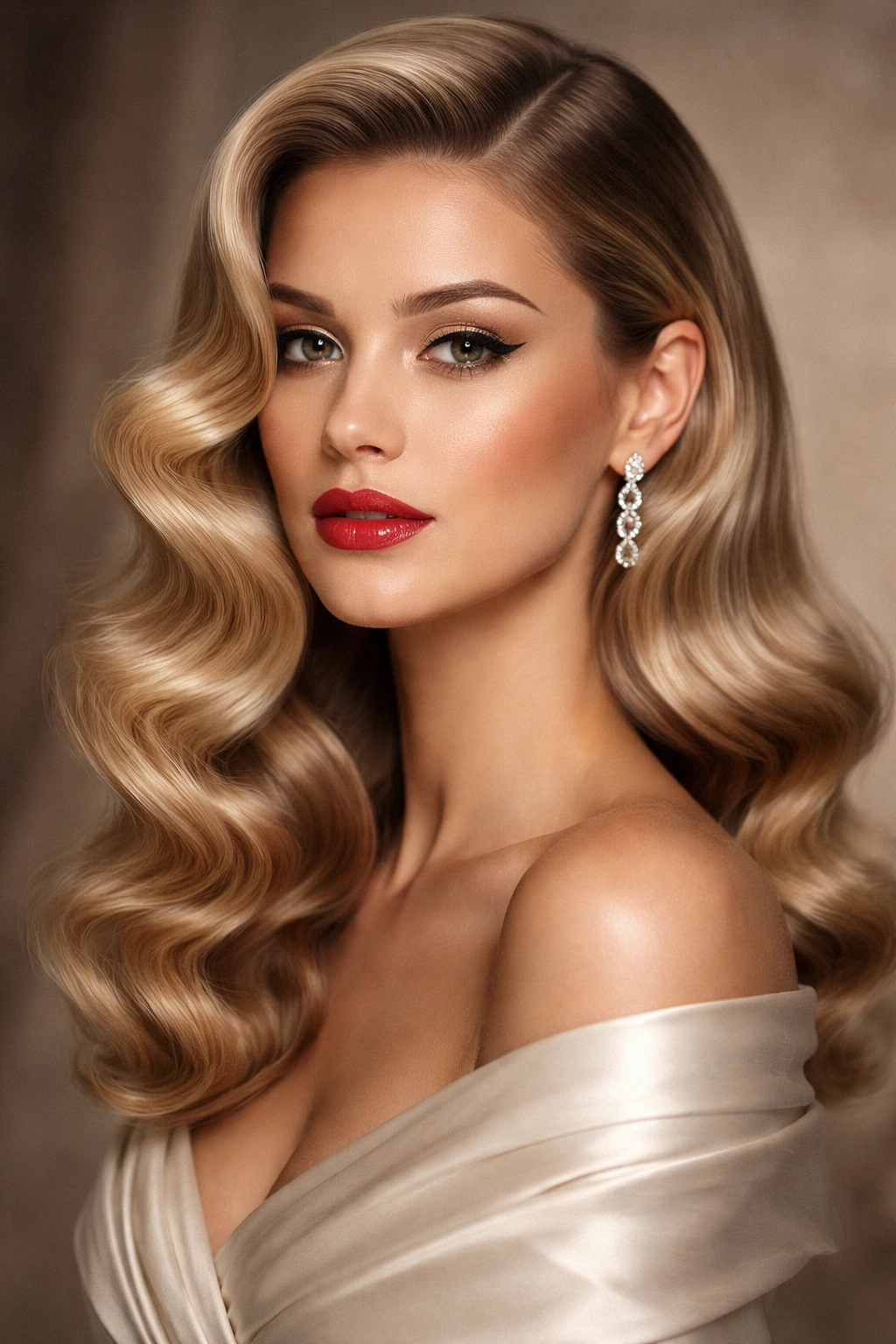
Old Hollywood glamour waves combine elements of finger waves and larger sculptured waves into a style that’s deeply sophisticated and flattering to almost every face shape. These waves are typically blown out smooth (rather than curly throughout) with strategic face-framing waves that create dimension and movement. The effect is polished, camera-ready, and timeless.
The Distinction From Other Wave Styles
What separates Old Hollywood waves from other vintage styles is their focus on a few strategic, well-placed waves rather than uniform waves throughout the head. The crown and face-framing sections get the most dramatic wave action, while other sections remain sleeker. This creates visual interest without overwhelming the face—it’s glamorous without feeling costume-y.
Creating the Look
Start with blow-dried or straightened hair as your base. Using a 1-1/4 inch barrel curling iron, take sections from around the face and curl them away from the face, rolling the curl downward and allowing it to cool before removing. Comb through the curls gently to create soft, flowing waves rather than defined ringlets. Set lightly with hairspray to hold the wave shape while still allowing movement.
Worth knowing: This style works exceptionally well for events, date nights, or any occasion where you want to look intentionally polished. It’s also highly versatile—you can style it sleek and formal or rough it up slightly for a more casual vibe.
9. Retro Bouncy Curls (1980s Vintage)
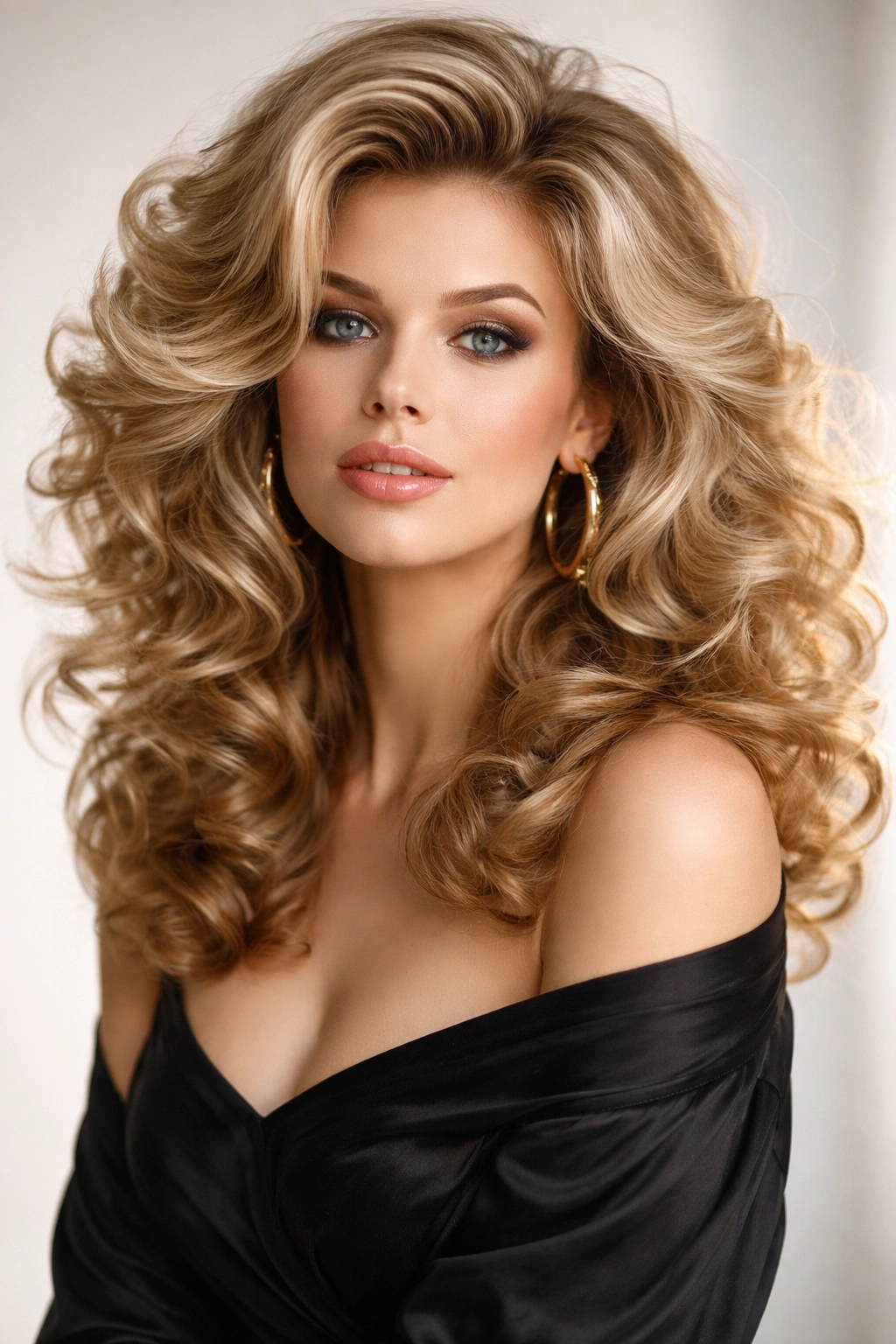
Retro bouncy curls capture the voluminous, energetic spirit of the 1980s—big, bouncy curls that create maximum volume and movement. This isn’t a delicate style; it’s bold, confident, and distinctly retro. What makes 1980s curls interesting is that they’re experiencing a genuine revival among people who appreciate unapologetic vintage aesthetics.
Volume-Building Techniques
1980s bouncy curls work best on curly or wavy hair that already has texture to build from. The goal is enhancement rather than creation from scratch—using curl-enhancing products, diffusers, and strategic scrunching to maximize volume and bounce. For straighter hair, medium-sized hot rollers or a curling iron create the effect. The key is using rich, creamy products that define curls without leaving them looking crunchy or overdone.
Styling for Maximum Impact
Bouncy curls require the right products to maintain their shape and movement. Look for lightweight mousse, curl creams, and oils that don’t weigh curls down. Blow-drying with a diffuser attachment enhances bounce by creating air movement while drying. Once curls are set, using your fingers rather than a brush to separate and arrange them creates a fuller, more voluminous final effect.
10. Vintage Bob with Waves
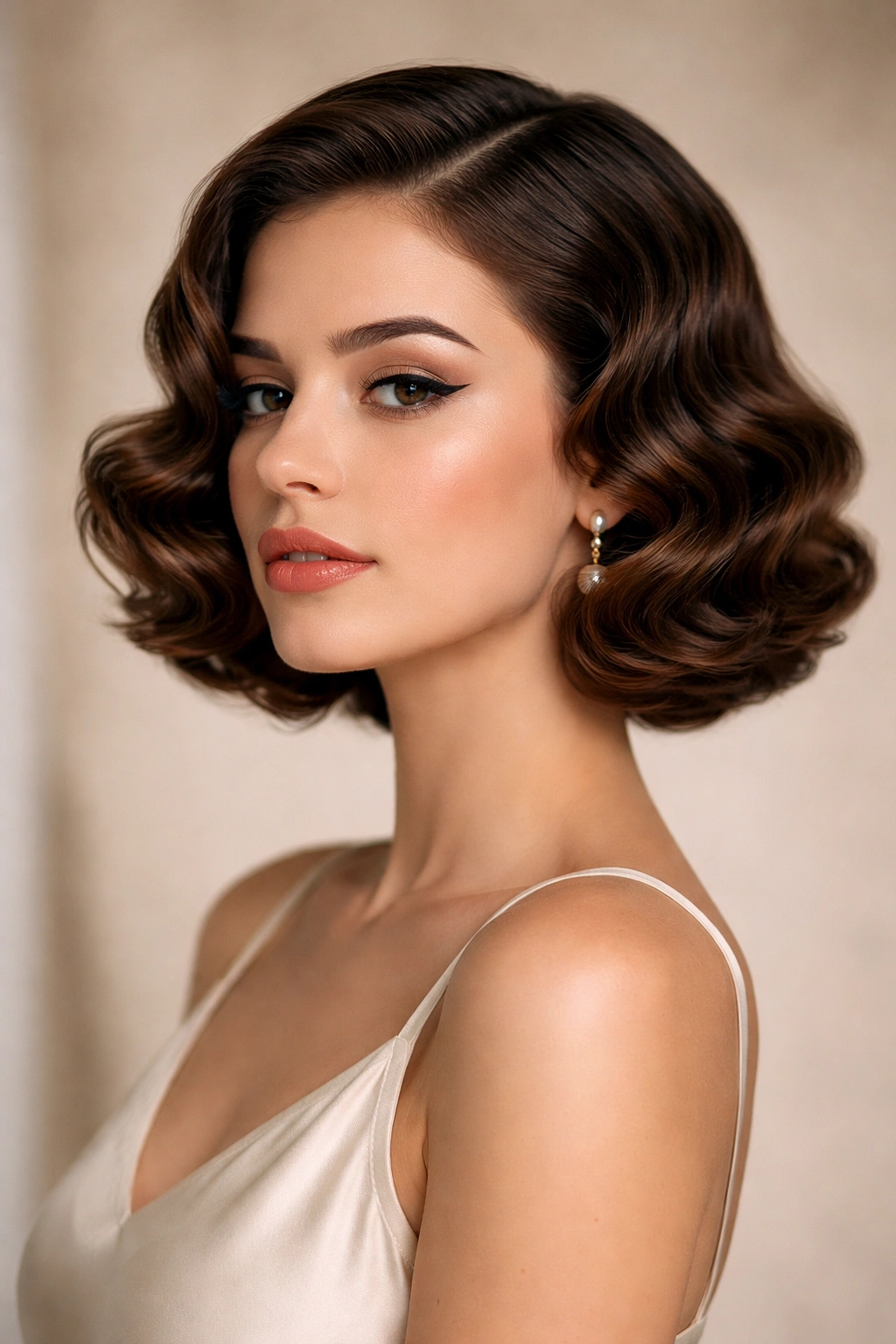
A vintage-inspired bob with waves combines the practicality and modernity of a shorter length with the femininity and texture of waves. This is the everyday vintage curly hairstyle—something you can wear to work, to casual outings, or to events without worrying it’s too dressed up or too theatrical. The waves add movement and softness that prevents a bob from feeling too blunt or severe.
Cut Considerations for Wave Styling
For a bob that works with waves, you need enough length to create proper wave shapes (generally at least chin-length, though longer bobs work better). Layers can add texture and movement but aren’t required—a blunt, slightly longer bob actually looks stunning with waves because the clean line contrasts beautifully with the soft texture. Ask your stylist for a cut that considers how waves will look—typically this means slightly longer layers around the face and a subtle graduation through the back.
Setting Waves in a Bob
Pin curls, hot rollers, or a curling iron all work for setting waves in a bob-length style. The advantage of this length is that curls or waves dry quickly, so even if you set them in the morning, you’ll have finished waves by afternoon. For longer-lasting hold, set damp hair and allow it to dry completely before styling. A vintage bob with waves looks polished enough for professional settings but casual enough for everyday wear.
Pro tip: This style looks particularly stunning when you focus wave-setting on the face-framing sections and crown while keeping the back sleeker—it creates a flattering, intentional look that doesn’t require as much styling maintenance.
Final Thoughts
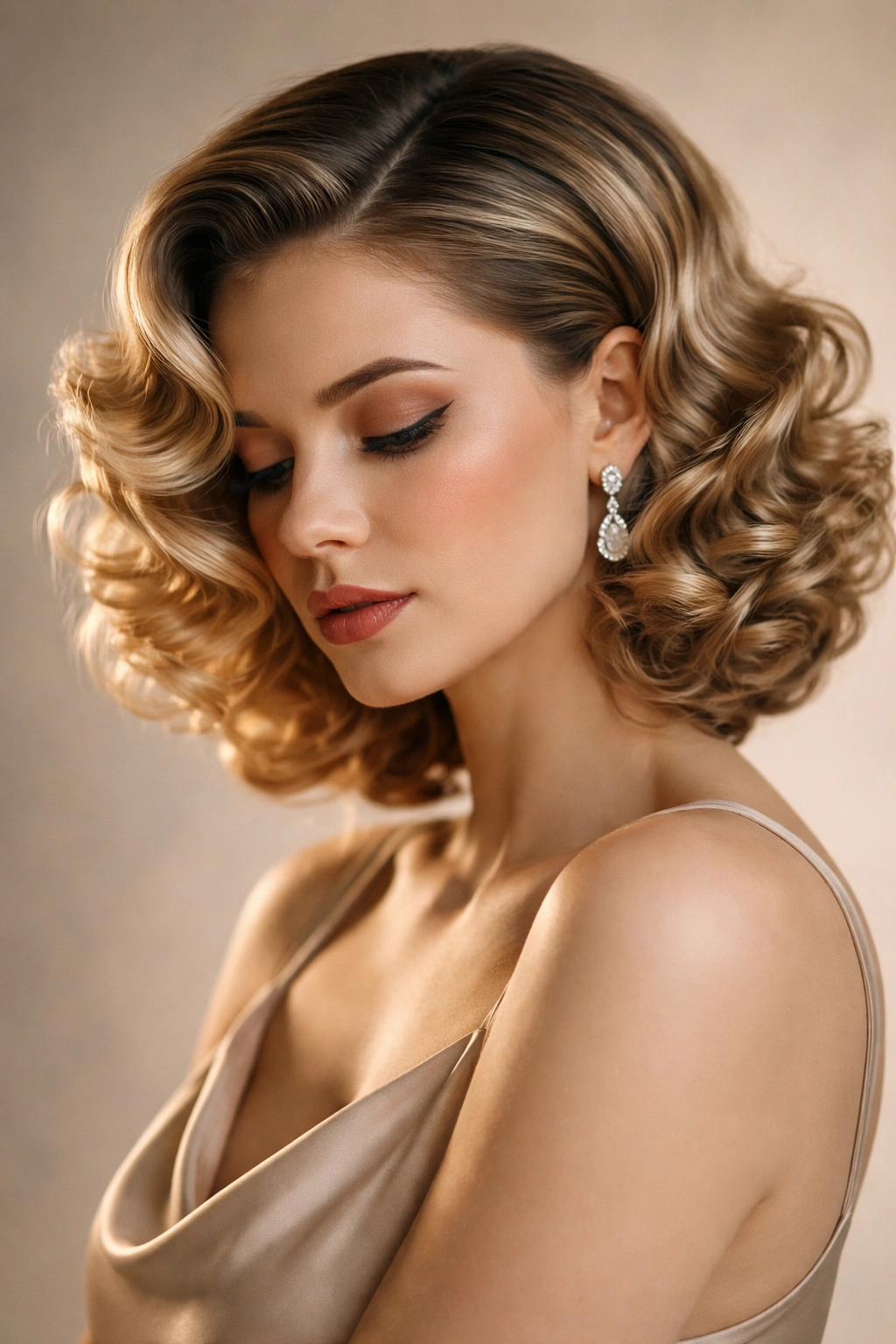
Vintage curly hairstyles remain relevant because they’re fundamentally flattering, versatile, and achievable without expensive treatments or professional intervention. Whether you’re drawn to the sculptural elegance of finger waves, the romantic bounce of ringlets, or the bold energy of 1980s curls, there’s a vintage style that matches your personality and lifestyle. The beauty of working with vintage techniques is that they work with your hair texture rather than against it—curly hair becomes an asset instead of a challenge to overcome.
The skills required to create these styles are entirely learnable. Start with simpler techniques like pin curls or hot rollers if you’re new to vintage styling, and progress to more complex patterns once you understand how your hair responds. Most importantly, these styles were designed to be done without professional equipment or salon visits, which means you have complete control over how they look and feel. Invest time in finding the right products for your hair type, practice a technique until it becomes comfortable, and you’ll have access to years of gorgeous styling options that never feel dated.