



There’s a reason the curly bob keeps showing up on everyone from editorial runways to neighborhood coffee shops — it’s one of those rare haircuts that genuinely works harder the more texture you have. Straight-haired people spend hours trying to fake the volume and movement that curly-haired people get automatically. A well-cut bob harnesses that natural energy and shapes it into something effortlessly polished, which is a trade most curly-haired people deserve to make.
But here’s what most curly-haired people don’t realize until they’ve actually sat in the chair: a bob cut on curly hair behaves completely differently than the same cut on straight hair. Shrinkage changes the apparent length. Curl pattern affects how layers fall. Hair density determines whether the cut sits cleanly or puffs into a triangle. The difference between a curly bob that thrives and one you fight every morning is almost always the cut itself — not the hair.
The category “curly bob” actually covers a wide, diverse family of styles. You’ve got tight-coil bobs that float above the jaw and wavy bobs that skim the collarbone. You’ve got razor-sharp asymmetrical lines and deliberately undone shaggy shapes. You’ve got stacked back panels that add serious lift and tapered sides that hug the nape. Each variation serves a different combination of curl type, face shape, lifestyle, and personal aesthetic.
What follows is a thorough look at 12 distinct curly bob hairstyles — how each one works, who it suits, and what you actually need to know before you book the appointment or try something new at home.
1. The Classic Chin-Length Curly Bob
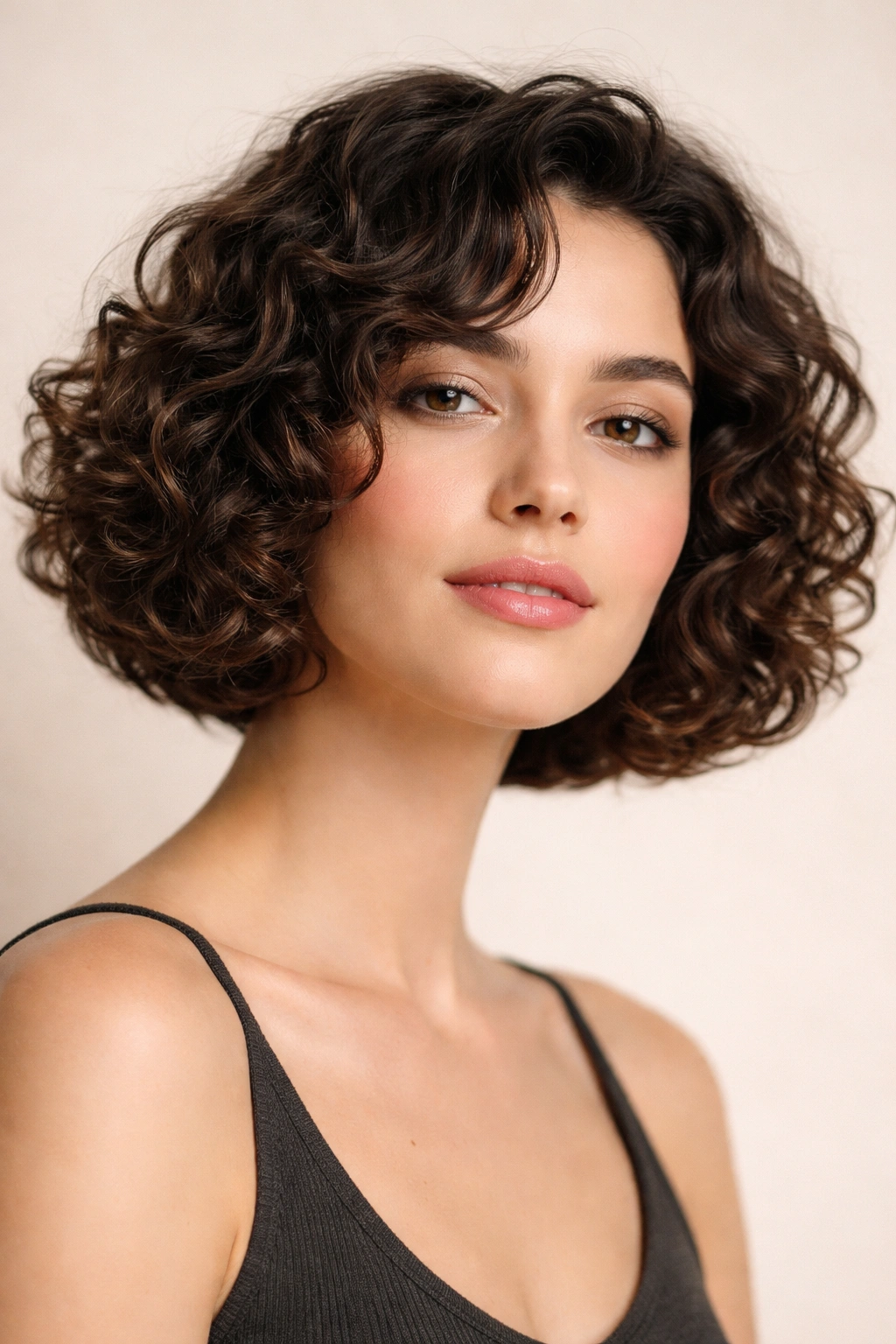
The chin-length curly bob is the foundational version — the one that started the whole category and still holds its own against every variation that followed. It sits right at the jaw, which creates a natural frame for the face without overwhelming it, and it’s one of the most universally flattering positions for curly hair across all curl types.
Why the Chin-Length Position Works So Well
This length is intentional, not arbitrary. For most people with curly hair, a chin-length result after shrinkage means the actual hair being cut is significantly longer — often two to four inches longer, depending on how tight the curl pattern is. That’s why talking to your stylist about your stretched length versus your dry length is so important before committing to this style. When cut correctly for your texture, the curls settle at jaw level and create a rounded, full silhouette that reads as polished without looking stiff.
The chin-length bob also benefits from the natural tension point the jaw creates. Curls that hit the jaw tend to stay there, rather than flopping forward past the face the way longer curls sometimes do.
What to Know Before You Book This Cut
- Shrinkage factor: 4A and 4B curl types can expect the cut to appear 40-60% shorter when dry — communicate this to your stylist before they pick up the scissors, not after
- Face shape compatibility: Pairs particularly well with oval, heart, and square face shapes because the chin-length line softens strong jawlines while adding width at the sides for narrower faces
- Styling approach: Works beautifully with the wash-and-go method; define curls with a curl cream or gel, scrunch out excess water, and diffuse on low heat to lock in shape
- Maintenance schedule: A trim every 8-10 weeks keeps the shape from growing into an undefined mass — don’t skip it thinking the length is fine
Pro tip: Ask your stylist to cut your curls while they’re dry, or at minimum to check the curl layout before trimming. Cutting curly hair wet can lead to significantly more length coming off than expected — dry curling changes everything about where a cut lands.
2. The Asymmetrical Curly Bob
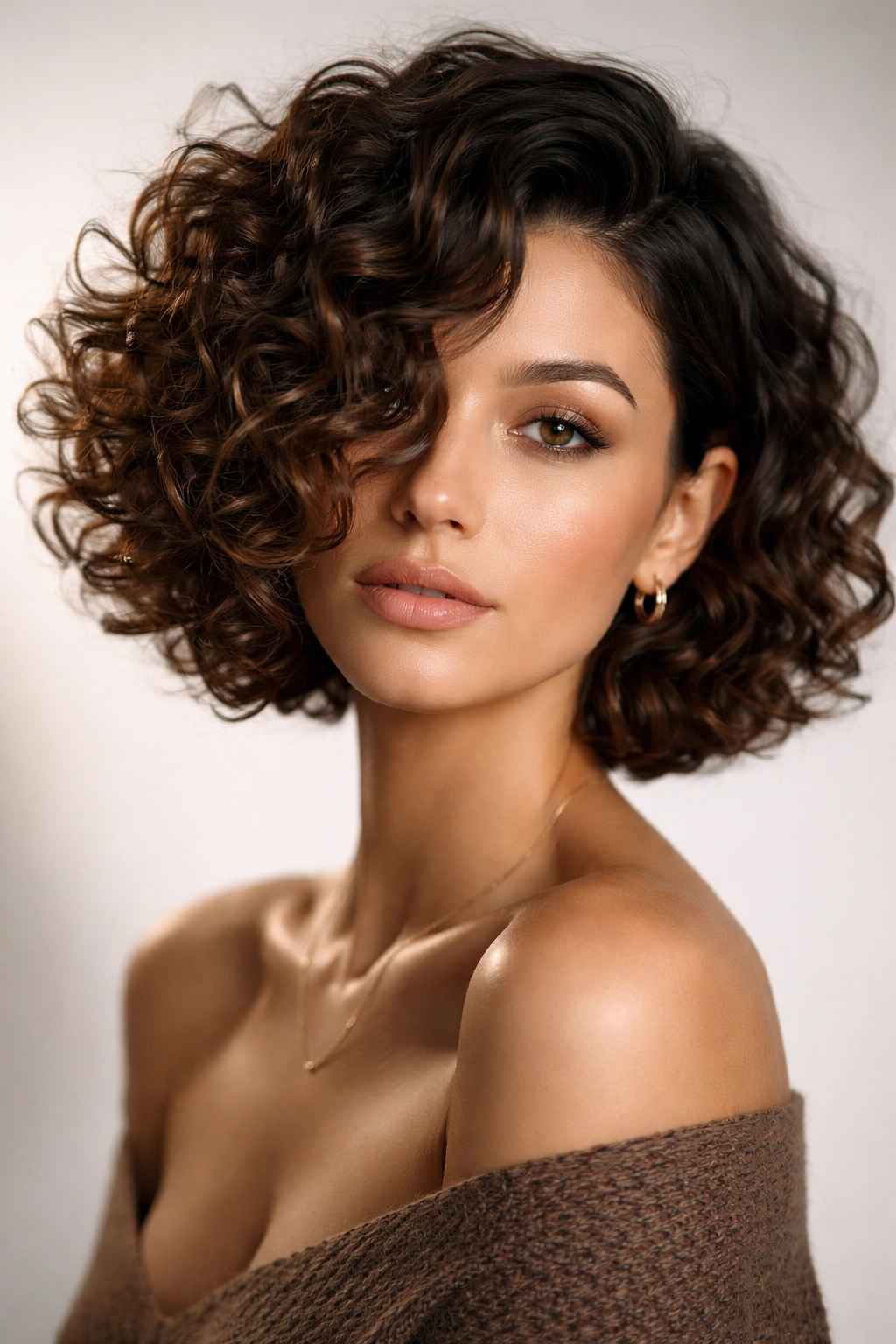
There’s something inherently bold about an asymmetrical bob — one side longer, one side shorter, with a diagonal line connecting them that creates constant visual movement. On curly hair, this cut takes on a life of its own because the different lengths interact with curl spring differently, so each side has its own bounce and direction. It’s never static, which is a large part of its appeal.
The Visual Effect on Textured Hair
The asymmetrical curly bob works on a principle worth understanding before you commit: the shorter side shows off individual curl definition more clearly, while the longer side carries more weight and creates a sweeping, dramatic silhouette. This contrast is what makes the cut so interesting to look at.
For medium to loose curl patterns (2C through 3C), this cut produces a particularly striking result. The coils are defined enough to hold their spring without overwhelming the shape, and the length differential reads clearly even with shrinkage factored in. Tighter coil patterns can also wear this cut beautifully — the asymmetry just reads more in volume and silhouette than in a precise length measurement.
What to Know Before You Book This Cut
- Best curl types: 2C through 3C curls tend to show the asymmetry most clearly; very tight coils can make the length differential harder to read without intentional styling on each side
- Styling approach: Use a diffuser with a low airflow setting to dry each side separately, preserving the natural curl pattern rather than blending the two lengths into one shape
- Length difference sweet spot: A 2-to-3-inch difference between the longer and shorter sides gives the most dramatic effect without looking uneven in an unflattering way
- Grow-out behavior: This cut maintains its shape longer than a uniform bob because you can trim the shorter side independently to refresh the look between full haircuts
Worth knowing: An asymmetrical curly bob can be made more or less dramatic based on where the shortest point sits — ear-length versus chin-length on the short side creates completely different energy from the same basic concept.
3. The Stacked Curly Bob
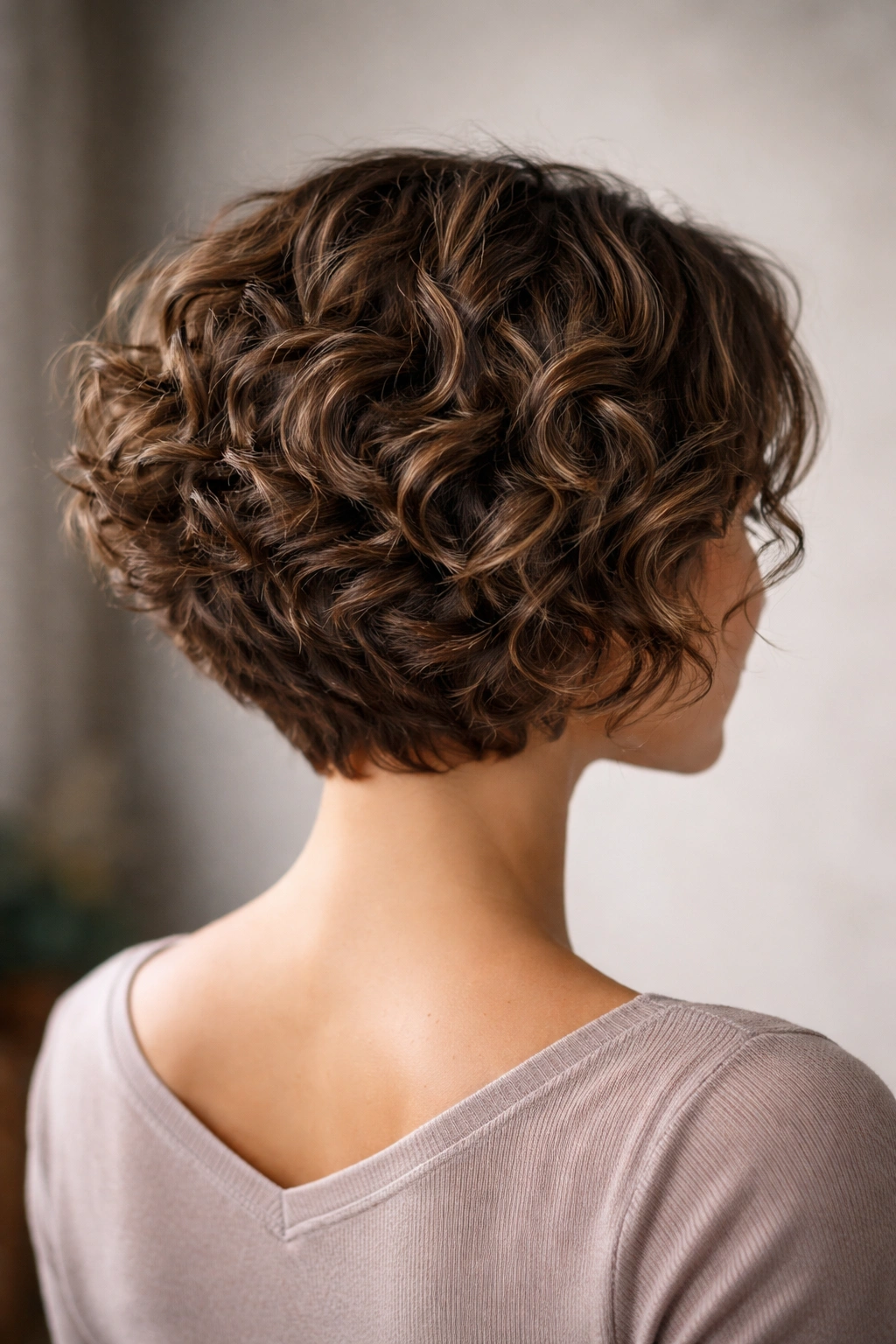
The stacked bob is built on one specific structural principle: shorter layers in the back that graduate to longer lengths toward the front. This creates a “stacked” effect at the nape — a rounded, almost spherical shape that adds serious lift and definition behind the head where most curly bobs tend to go flat.
How the Stack Architecture Works with Curls
On straight hair, the stacked bob relies on the blunt geometry of the layers sitting cleanly on top of one another. On curly hair, each shorter layer acts as a support system for the layer above it, so the back of the cut holds up and doesn’t flatten under the weight of longer sections. This is especially useful for people whose curls tend to lose volume at the nape when the hair gets longer and heavier.
The stacked curly bob is, at its structural core, a volume machine. The architecture directly fights the biggest complaint curly-haired people have with bob cuts: the weight pulling curls straight at the bottom while the top stays voluminous. With stacking, the bottom is where the structure lives and works hardest.
What to Know Before You Book This Cut
- Ideal for: Fine to medium density curly hair that struggles to hold volume through the day — the stacked back creates lasting lift without needing to pile on product
- Maintenance consideration: The back needs more frequent trimming than a single-length bob to keep the stacked shape clean — plan for visits every 6-8 weeks, not 12
- Curl type sweet spot: 3A through 4A curls get the most dramatic stacked effect; looser waves may need extra diffusing to fully bring out the architecture in the back
- Styling focus: Apply mousse or a light curl cream to damp hair, use root clips at the crown for volume, and diffuse the back thoroughly before releasing the clips
Pro tip: Ask specifically for a curly-cut stacked bob rather than a standard stacked bob — a stylist trained in curly-specific methods will cut each section in its natural curl state rather than stretched, which changes the layering angle completely.
4. The Curly Lob (Long Bob)
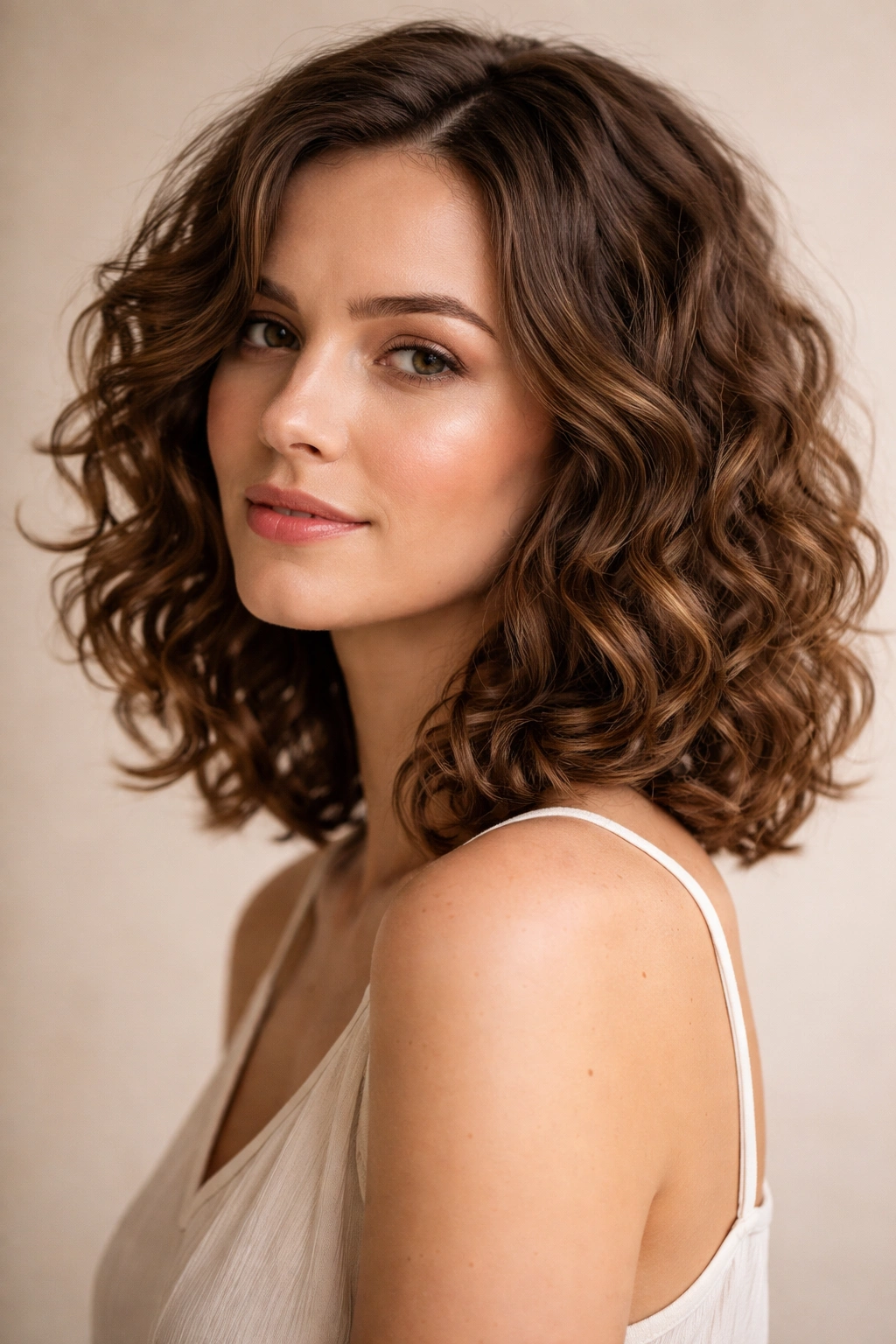
The curly lob — short for long bob — sits at the collarbone or just below it, placing it in the territory between a classic short bob and a medium-length style. For curly-haired people, this is often the “starter bob” that makes the most strategic sense, because there’s more forgiveness in the length if shrinkage doesn’t cooperate with your plans.
Why Length Changes Everything with Curly Hair
A collarbone-length curly lob doesn’t require the same level of shrinkage calculation that a jaw-length bob demands. There’s breathing room built into the length. If your 3B curls spring up half an inch more than you planned, the style still works completely. This is why a curly lob is an excellent choice for someone making their first significant cut into curly bob territory — the risk is lower, but the reward is still substantial.
The curly lob also handles layers differently than shorter bobs. There’s more surface area for movement, which means layers can be placed throughout the cut (not just concentrated in the back or at the crown) without destabilizing the overall shape. The result is a cut that moves naturally rather than sitting in one fixed position throughout the day.
What to Know Before You Book This Cut
- Who it suits: Works across all curl types (2A through 4C) because the length accommodates more shrinkage variation without losing its shape identity
- Layer placement: Ask for long layers throughout rather than short layers concentrated at the crown — this preserves the lob silhouette while eliminating bulk
- Versatility point: A curly lob can be worn fully down, half-up, or pulled back in a loose low bun, making it one of the most practical curly bob lengths for everyday life
- Color pairing: Balayage and highlights show beautifully on a curly lob because the varied curl heights catch light at different angles, creating a multidimensional effect without heavy maintenance
Fun fact: Many curly-haired people actually get more length retention with a lob than they expect, because the weight of the longer curls reduces visible shrinkage compared to shorter cuts. You may end up with more length showing than you planned — which is a genuinely pleasant surprise.
5. The Tapered Curly Bob
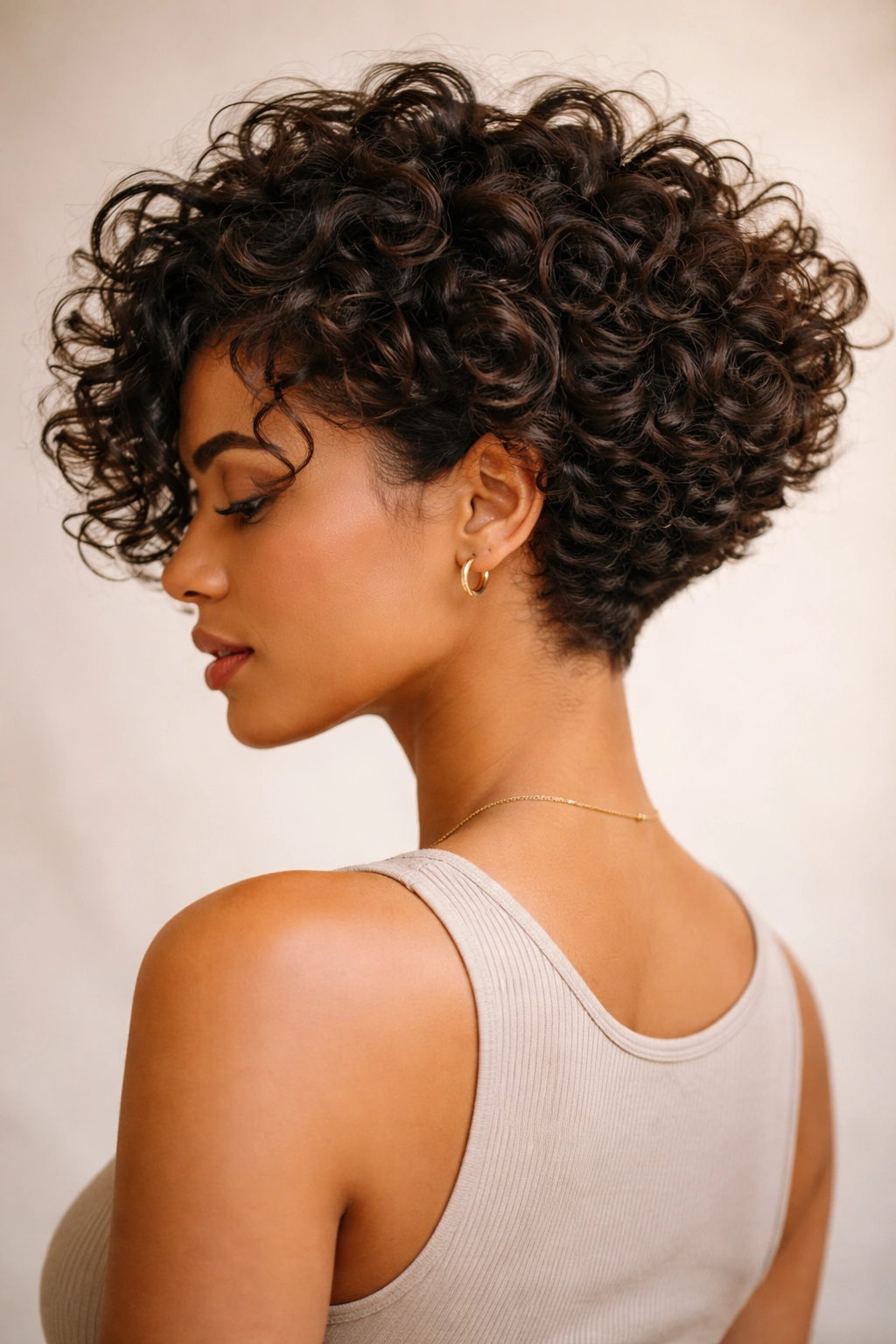
A tapered curly bob keeps more length at the front and crown while the sides and back become progressively shorter, often fading or blending close to the nape. It’s architectural and bold — sitting somewhere between a bob and a close-cut natural style — and it reads as simultaneously polished and effortlessly stylish.
The Structural Logic Behind Tapering
The taper is doing two distinct things at once. At the back and sides, the close-cut length reduces weight and bulk, which is a particular advantage for high-density curly hair types that struggle with excessive volume at the sides pushing the overall silhouette outward. At the front and crown, the longer length creates a dramatic, volume-heavy silhouette that draws the eye upward.
For type 4 natural hair, the tapered bob is one of the most flattering and manageable options in the curly bob category. The close sides handle shrinkage without creating visible inconsistency, and the longer top section gives enough length to fully showcase coil definition and pattern.
What to Know Before You Book This Cut
- Best for: High-density 4A, 4B, and 4C hair types that want the bob aesthetic without the typical width and volume issues at the sides of the head
- Fade options: The taper can range from a soft blend to a sharper fade — a softer blend works better for a natural, organic look, while a sharper fade creates a more defined, editorial feel
- Styling approach: Moisturize and define the top curls with a butter or cream, then use a light oil or edge control to smooth and lay the tapered sides; the contrast between the defined top and smooth sides is the whole point
- Grow-out timeline: The tapered sections grow out faster than the top, so plan for touch-ups every 4-6 weeks to maintain the shape contrast that makes this cut work
6. The Curly Bob with Curtain Bangs
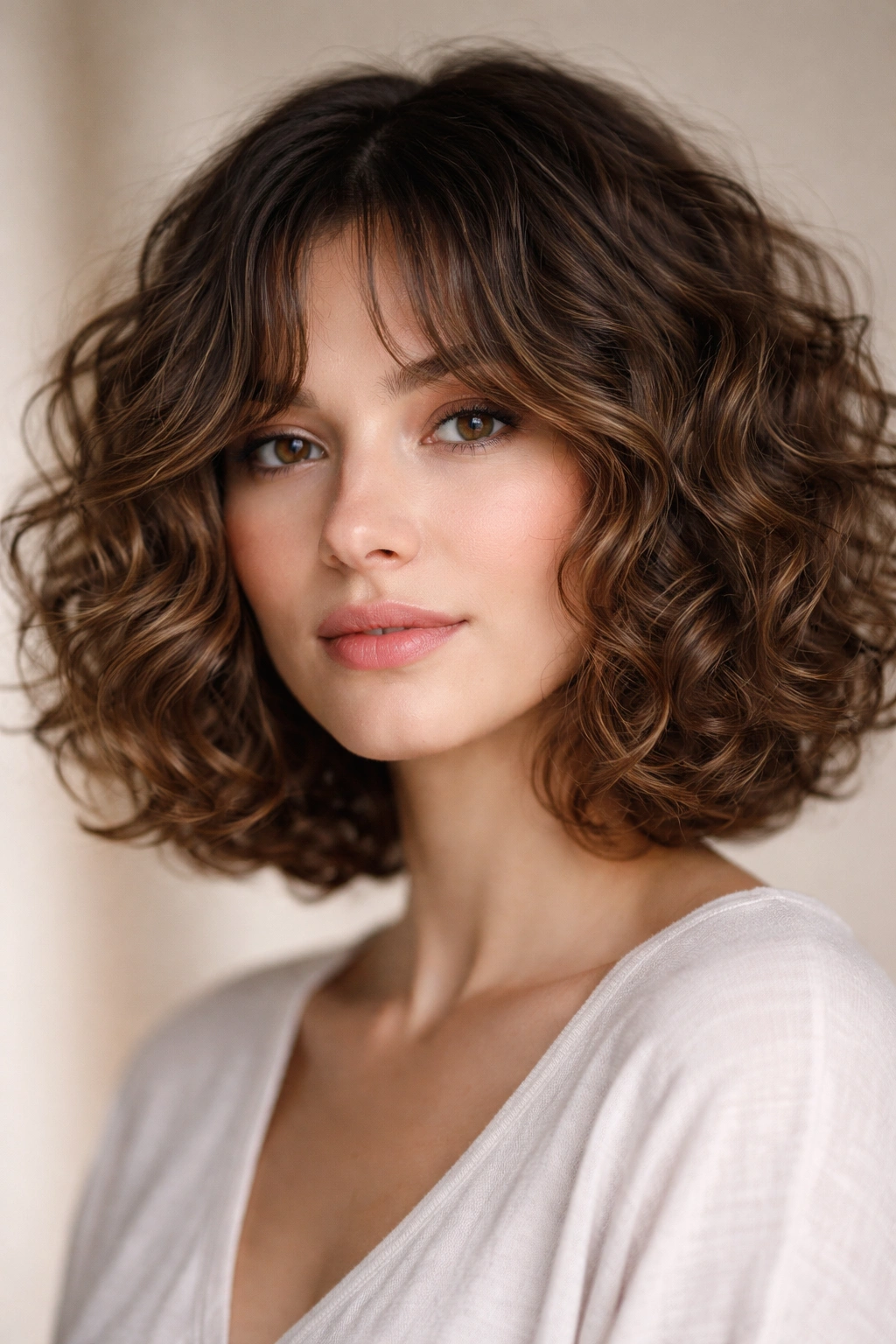
Curtain bangs and curly hair seem like they might be at odds — but when cut correctly for your specific curl pattern, they create one of the softest, most face-framing looks in the entire curly bob category. The bangs part in the center and sweep outward, framing the face on both sides in a way that feels romantic and natural.
Why Curtain Bangs Actually Work on Curly Hair
The key difference between curtain bangs on curly hair versus straight hair is behavior, not intention. On straight hair, curtain bangs lie relatively flat and frame in a predictable arc. On curly hair, they spring up, frame the forehead with a cluster of curls, and add a softness that no other bang style achieves. The curtain effect is still fully present — it just has texture and dimension baked into it.
Curtain bangs on a curly bob also address one of the biggest concerns curly-haired people carry about bangs in general: the flat, humidity-stuck-to-the-forehead look. Curtain bangs are cut long enough to participate in the curl pattern rather than fight it, which means humidity actually works for them rather than against them.
What to Know Before You Book This Cut
- Curl type considerations: 2C through 3B curls adapt most naturally to curtain bangs; tighter coil patterns work best when the bangs are cut longer and more generously to account for significant spring
- Starting length: Ask your stylist to start the bangs longer than you think you need — you can always trim more, but you can’t add length back once it’s gone
- Maintenance requirement: Curtain bangs on curly hair need reshaping every 4-6 weeks; they grow out quickly and can transition from framing to overwhelming if left unchecked
- Styling tip: Apply a small amount of curl cream specifically to the bang section, then scrunch upward and diffuse gently — avoid combing through the curls, which disrupts the pattern and creates frizz right at the forehead where you least want it
7. The Shaggy Curly Bob
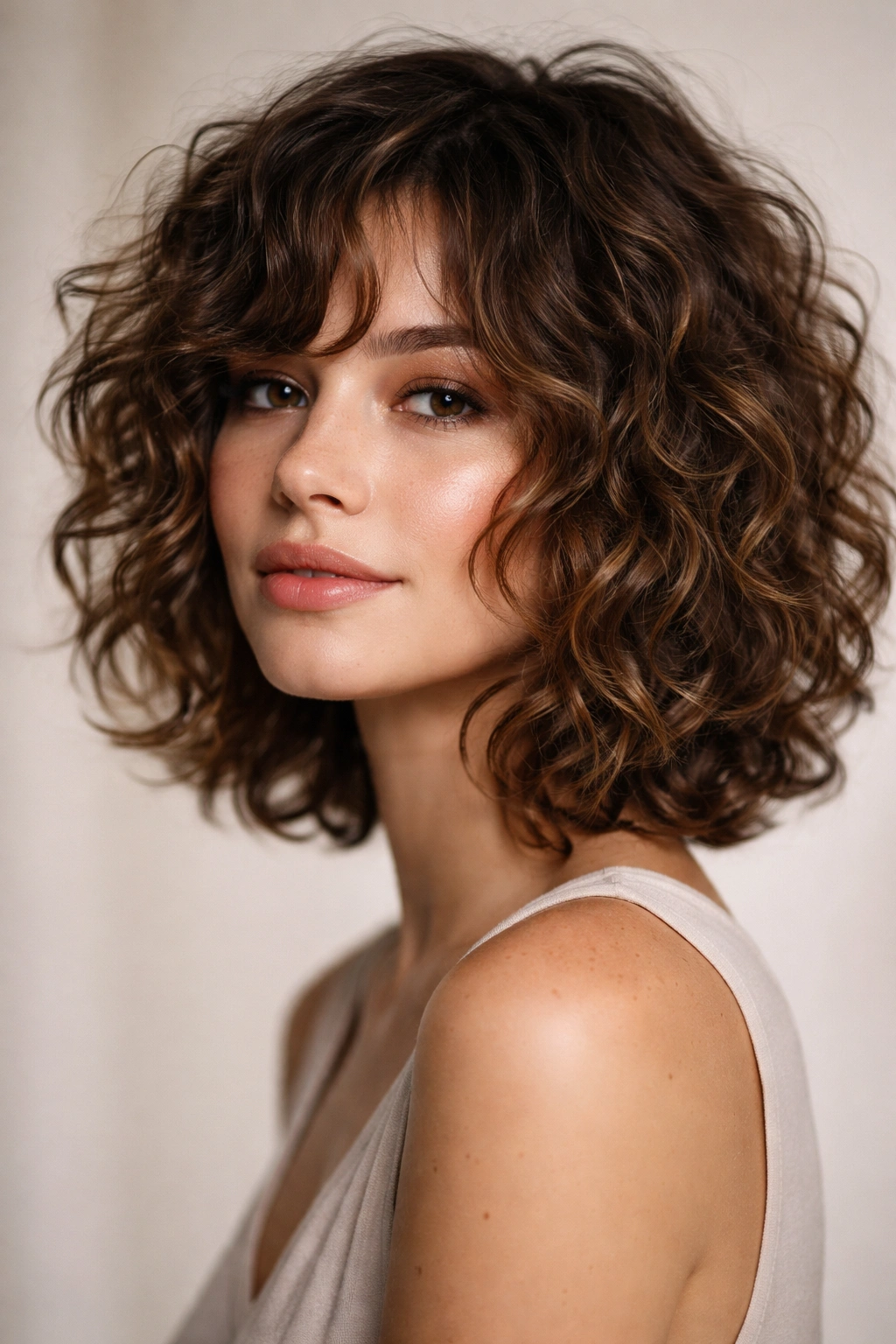
The shaggy curly bob is the most texture-forward, deliberately undone version of the cut — loaded with face-framing layers, soft ends, and a studied sense of casual messiness that reads as effortlessly cool. It’s the curly bob that makes the least effort look like the most style.
What Separates a Shag from a Standard Bob
A traditional bob is about clean lines and defined edges. The shag removes those clean lines entirely and replaces them with movement, generous layering, and an almost piece-y texture throughout. On curly hair, this means the stylist is working with the natural curl pattern and layering within it to create intentional separation between curl clusters rather than a unified outer shape.
The shaggy curly bob borrows from the 1970s shag cut — that layered, rock-and-roll silhouette — but filtered through a contemporary curl-conscious cutting technique. The result is a style that feels modern and relaxed rather than dated. The key difference between a shag that looks intentional and one that just looks unkempt is the layering — it needs to be precise in its imprecision.
What to Know Before You Book This Cut
- Technique to request: Ask your stylist for “point cutting” or “razor cutting” on the ends rather than blunt cuts — these techniques create the soft, textured edge that defines the shag aesthetic on any curl pattern
- Layer density: The more layers built into the cut, the more movement and separation you’ll see; fewer layers create a softer, less dramatic shag with more overall fullness
- Styling approach: Scrunch with a mousse or curl cream, then air-dry for maximum organic shape — diffusing on low heat for a few minutes at the end adds volume without disrupting the undone feel
- Face shape bonus: The face-framing layers in a shaggy curly bob are particularly flattering for round and square face shapes because they create vertical movement that elongates the overall silhouette
Pro tip: A shaggy curly bob with subtle highlights concentrated around the face-framing layers creates an extra dimension of depth that makes the cut look styled even on days when you’ve done absolutely nothing to your hair.
8. The Natural Afro-Textured Curly Bob
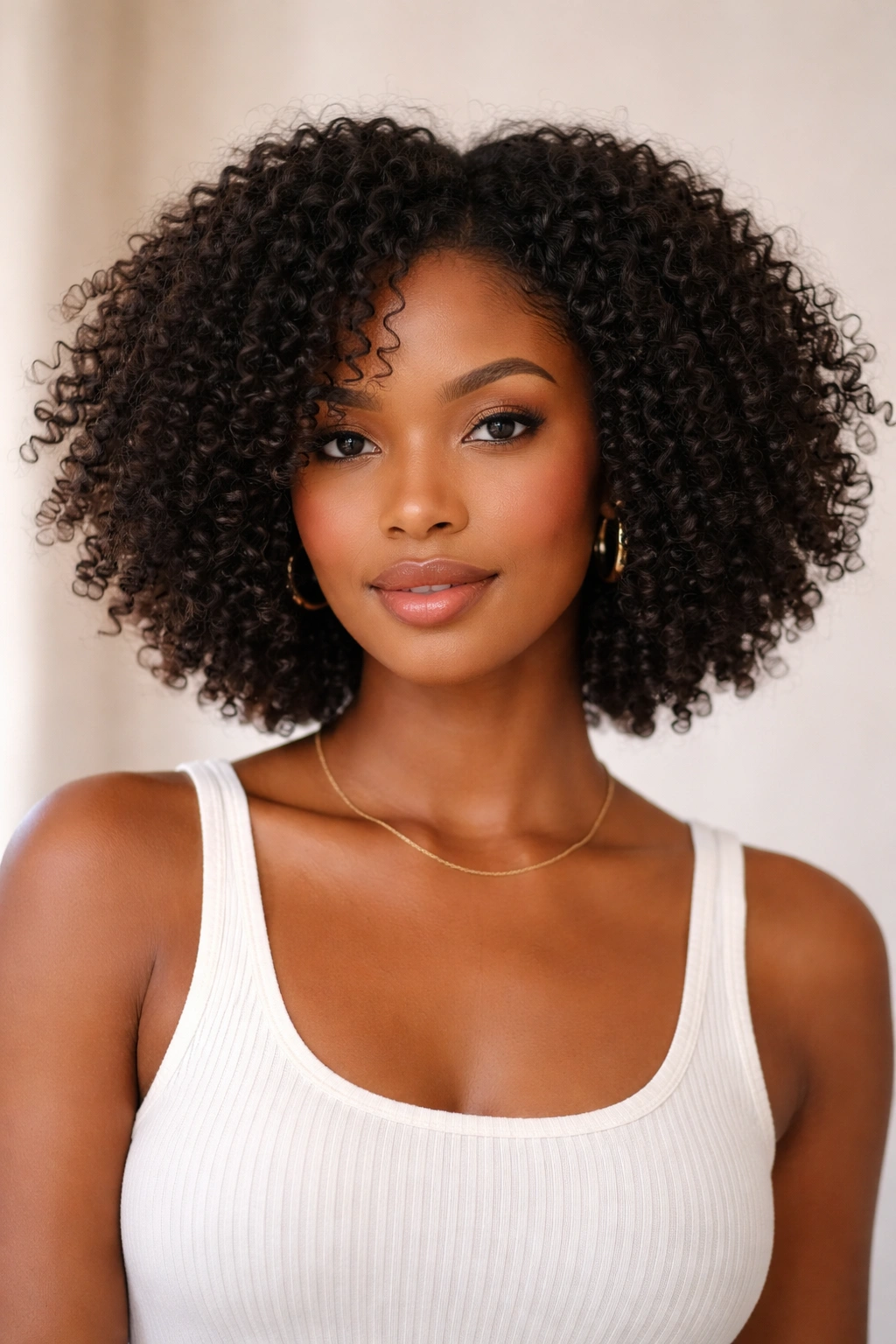
The afro-textured curly bob honors natural coil patterns — 4A, 4B, and 4C textures — and cuts specifically to showcase the inherent shape and shrinkage of those patterns rather than working around them. This isn’t a bob in the straight-hair sense of the word. It’s a bob defined by the natural outer perimeter of the hair when worn fully free in its natural state.
Cutting Philosophy for Coily Textures
Traditional bob cuts are designed around straight or loosely wavy hair and fail coily textures because they don’t account for shrinkage, coil spring, and the way 4-type hair holds (and changes) shape throughout the day. The natural afro-textured bob uses a dry cutting approach — or at minimum a twist-out or wash-and-go cut — to see exactly where each section lands before any length is removed.
The goal isn’t a clean horizontal line across the back. The goal is a balanced outer silhouette. Some coils spring tighter than neighboring ones on the same head, which means the cut needs to compensate section by section. A skilled natural hair stylist cuts to the shape, not to a ruler.
What to Know Before You Book This Cut
- Stylist selection matters more here than with almost any other curly bob style: Look for someone trained in the DevaCut, Ouidad, or Curl by Curl method, or who has a clear portfolio showing 4-type hair bobs specifically
- Product layering for definition: A leave-in conditioner followed by a curl cream and then a gel (the LOC or LCO method) gives the most defined, long-lasting coil pattern for this style’s tight outer shape
- Shrinkage as a design feature: The compact, close shape that comes from 4-type shrinkage is part of what makes this bob striking — work with it rather than spending styling time fighting it
- Protective potential: Short enough to significantly reduce daily manipulation and mechanical breakage while still showing off the full natural pattern
9. The Curly Bob with a Deep Side Part
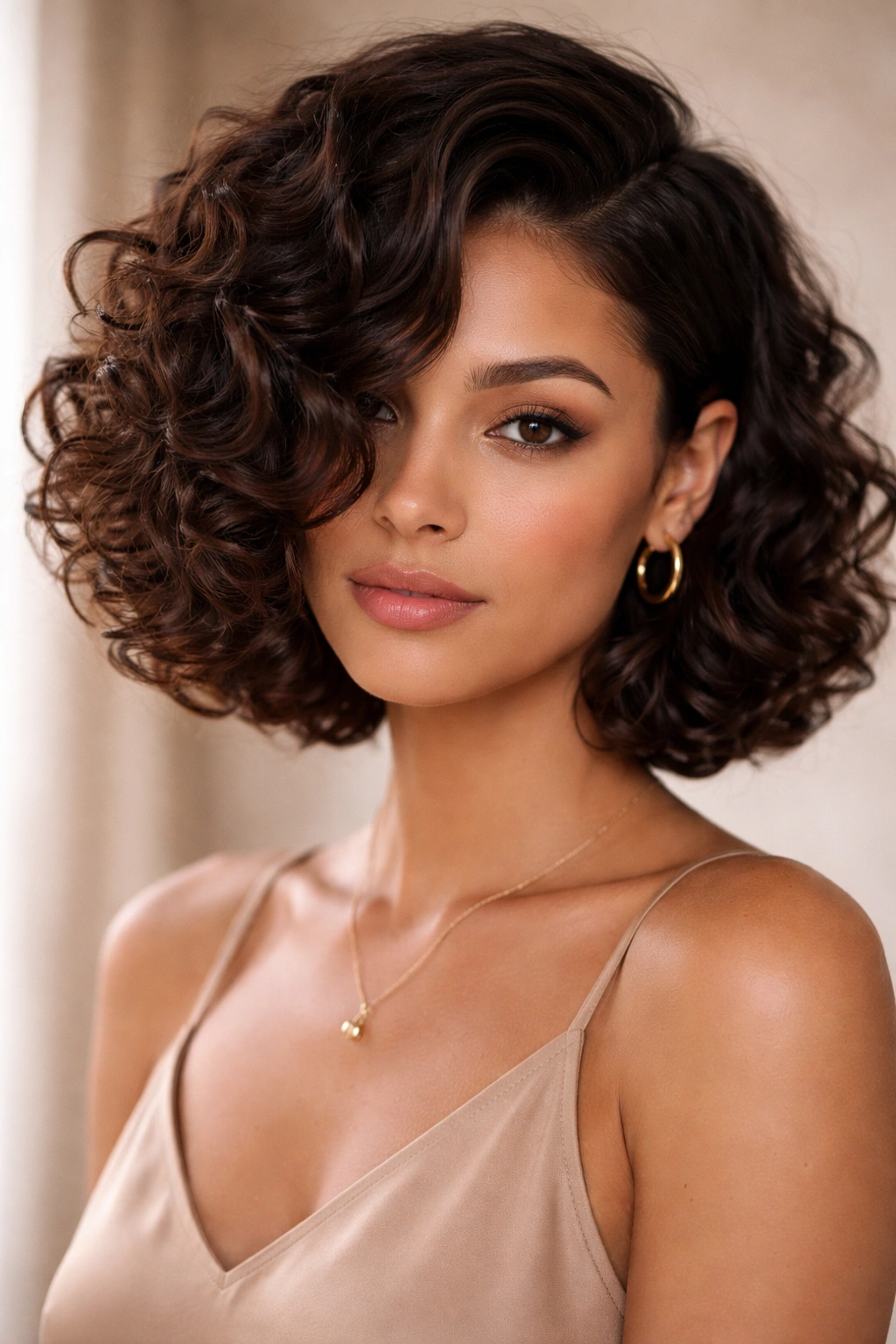
A deep side part transforms the silhouette of a curly bob. Instead of a balanced, symmetrical shape, the hair sweeps dramatically to one side — one section full and voluminous, the other pulled back or kept close — creating an asymmetric visual without requiring an asymmetric cut. It’s one of the quickest ways to dramatically change the look of a curly bob you already have.
The Shape-Shifting Power of a Single Styling Decision
What makes the side-parted curly bob remarkable is how completely one styling choice changes the entire look of the same haircut. The same bob that reads as polished and balanced when worn with a center part becomes bold and editorial with a deep side part. That’s two completely distinct looks from the exact same haircut — no scissors required.
The side part also creates a natural flow for curls: they cascade in one direction, building on each other’s volume rather than competing on both sides of the head simultaneously. For oval and oblong face shapes, this swept, one-sided volume is one of the most flattering arrangements possible, adding width where it’s most needed.
What to Know Before Trying This Style
- Creating the part: Use the pointed end of a rat-tail comb on damp hair to draw a clean line from the hairline back, then push all the hair to one side before diffusing to set the direction
- Setting with product: Apply a medium-hold gel or mousse before parting and diffusing — this helps the curls hold their direction without frizzing as they dry into the side-swept position
- Overnight protection: Pin the side-swept section loosely with bobby pins before bed and sleep on a satin pillowcase or in a satin bonnet; re-scrunch and shake out in the morning to restore the shape
- Best for: Naturally one-sided growth patterns — many people have a dominant natural growth direction from the crown; working with it rather than against it keeps the style looking intentional all day long
10. The Voluminous Rounded Curly Bob
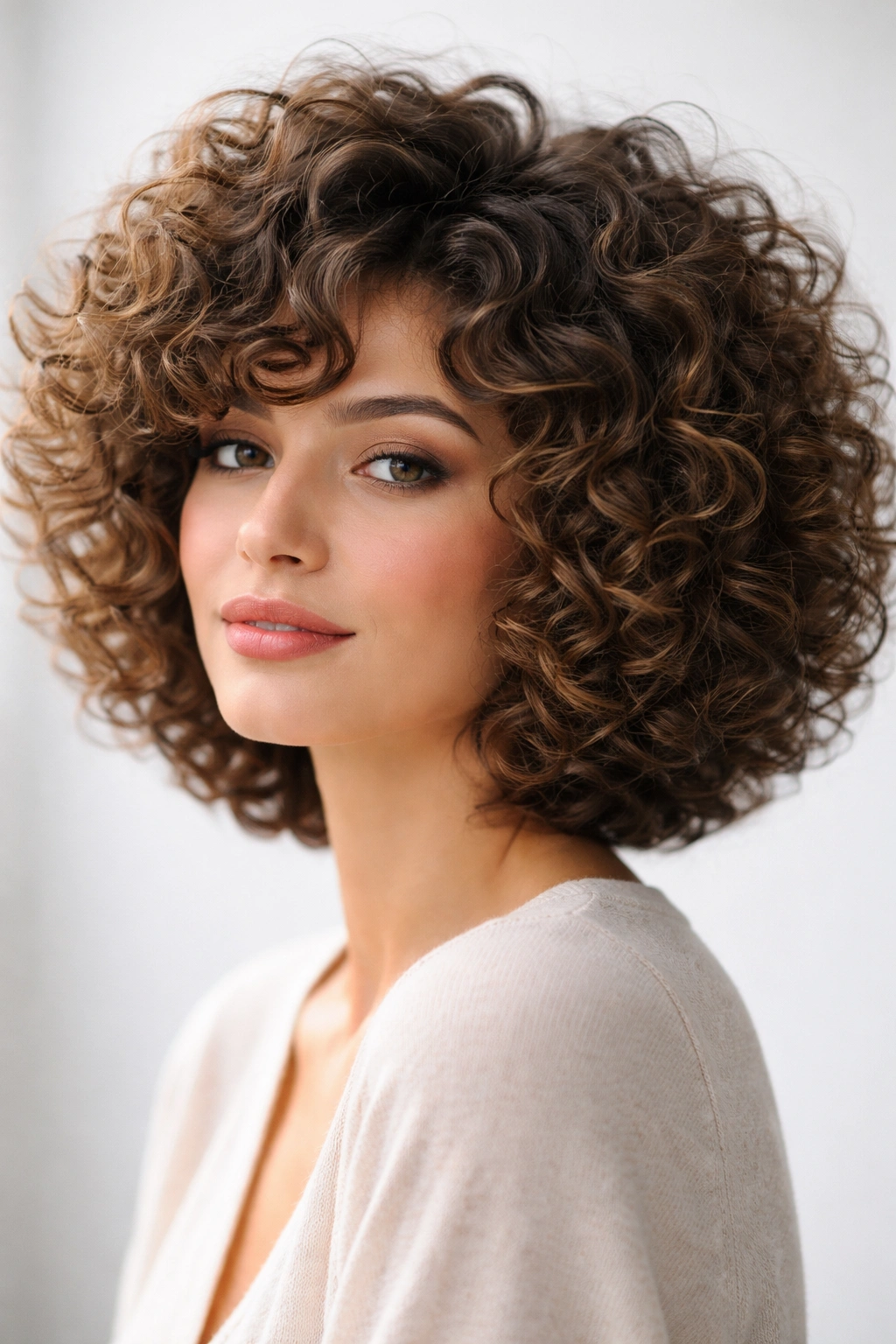
Where most bobs aim for control and definition, the voluminous rounded curly bob leans fully into mass and presence. This is the curly bob that fills a room — a full, rounded silhouette that sits wide at the sides and high at the crown, creating a shape that looks like it was designed by intention rather than arrived at by accident.
Building Shape and Volume Through the Cut
The rounded curly bob is achieved through a combination of cutting technique and styling method working together. The cut itself uses layers placed specifically to encourage expansion rather than to control it — shorter layers at the crown to push roots upward, longer layers at the sides to prevent the shape from collapsing inward as curls become heavier when dry.
Styling completes what the cut starts. Finger coiling individual sections while damp, clipping the roots, and diffusing with a bowl attachment adds roundness and dimension that air-drying alone simply can’t create. The key is heat placement — directing airflow from below the curl upward into the root zone, not downward from above.
What to Know Before You Book This Cut
- Hair density matters: Medium to high density curly hair (3B through 4B) gets the most naturally dramatic rounded shape; lower density hair may need more styling assistance to achieve the same visual mass
- Diffuser technique: Use a bowl-shaped diffuser attachment and work section by section from below, never pressing down from above, to encourage root lift throughout the entire cut
- Product combination: A leave-in conditioner followed by a strong-hold gel gives the curls enough structure to hold the rounded shape through humidity and movement without getting crunchy
- Face shape note: The wide, full silhouette pairs particularly well with heart-shaped and diamond-shaped faces, where the volume at the sides creates balance with a narrower forehead or jawline
Worth knowing: The rounded curly bob photographs best from a slightly elevated angle, showing the full three-dimensional shape — a perspective that flat eye-level photography often flattens into something less impressive than the real-life style looks.
11. The Curly Bob with Defined Face-Framing Layers
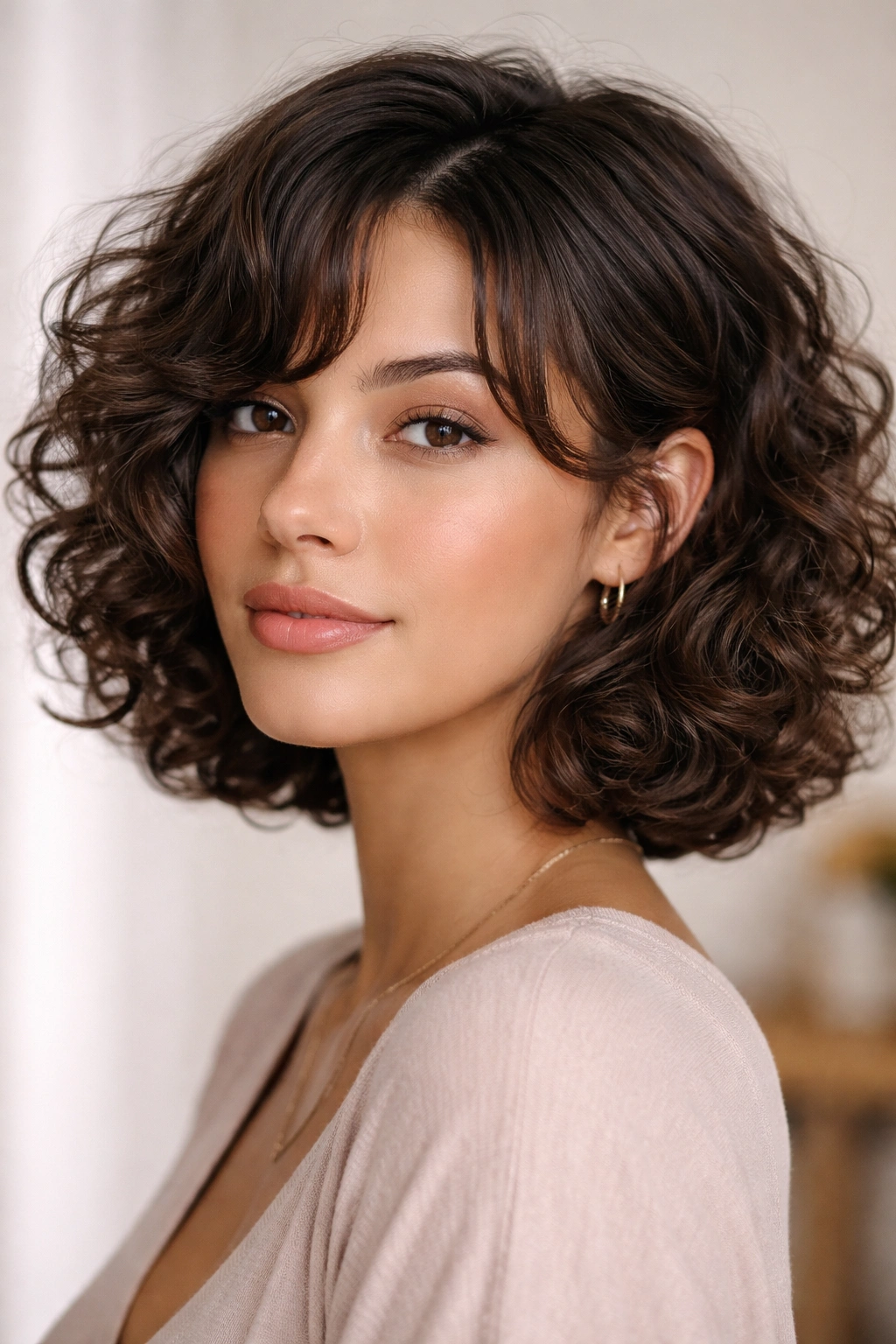
Face-framing layers on a curly bob do something specific and calculated: they soften the perimeter around the face while the rest of the cut maintains its shape and length. Instead of a uniform outer edge, the layers at the front are cut shorter to curl upward and inward, creating a natural arc that draws consistent attention to the face itself.
The Layering Strategy That Changes the Whole Experience of a Bob
The difference between a curly bob with face-framing layers and one without is most visible in how the haircut interacts with the face during movement and conversation. Without them, a bob tends to fall forward uniformly — which can create a curtain effect that hides the face rather than showcasing it. With face-framing layers, the front curls arc toward the face and stay there, creating a consistent visual connection between the hair and the facial structure.
For curly hair, these layers need to be cut specifically for the curl pattern — not simply cut short and left to spring wherever they land. A stylist who understands curl behavior will cut the face-framing layers slightly longer than the intended end result, accounting for the spring that pulls them shorter as they dry.
What to Know Before You Book This Cut
- Layer length sweet spot: Face-framing layers that end between the cheekbone and the chin tend to be most universally flattering; shorter than the cheekbone can feel abrupt, and longer than the chin begins to lose the framing effect
- Curl type note: 2C through 3C curls spiral tightly enough to hold their face-framing position throughout the day; looser waves may need a light-hold product to keep the layers from flopping outward and away from the face
- Styling tip: Apply curl cream specifically to the face-framing sections, finger-coil them toward the face, and clip at the root while diffusing — this sets the direction intentionally rather than letting gravity decide
- Grow-out behavior: Face-framing layers integrate naturally into the overall length as they grow, making this one of the most graceful curly bobs to grow out between cuts
12. The Wet-Look Defined Curly Bob
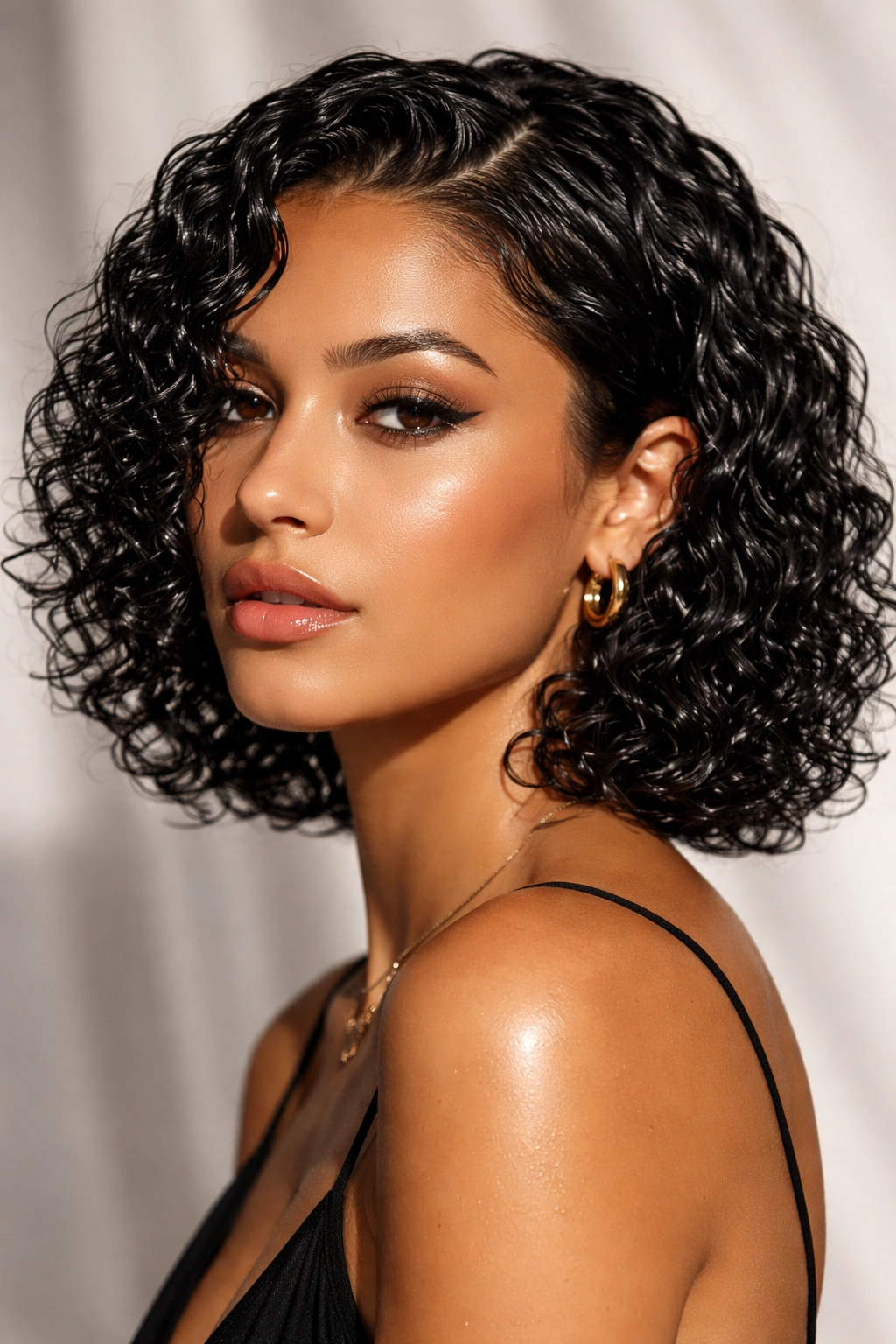
The wet-look curly bob is a fully intentional styling choice — not undone, not fluffy, but sleek and defined, with each curl cluster coated in a clear gel that sets them into glossy, glass-like definition. It’s high-impact and deliberate, the curly equivalent of a polished blowout, and it photographs brilliantly.
How the Wet-Look Technique Works on a Short Bob
The wet-look relies on the gel cast technique — saturating damp curls with a strong-hold clear gel, scrunching to encourage the curl pattern, then allowing the hair to dry completely without touching it. The result is a crispy cast that looks glossy and defined while wet and while drying. Once completely dry, you break the cast by scrunching gently with your hands — releasing the crunch while preserving the shape and shine underneath.
The shorter length of a bob makes the gel cast method particularly effective. There’s less hair to coat evenly, less weight pulling the curls apart mid-dry, and less surface area where the product can sit inconsistently. A wet-look curly bob dries faster and holds its definition longer than the same technique applied to longer hair.
What to Know Before Trying This Style
- Gel selection: Choose a strong-hold, alcohol-free gel — alcohol-based gels create a stiff, dull cast rather than the glossy finish that makes this style work; look for gels with flaxseed, aloe vera, or castor oil as a base
- Application technique: Apply gel to soaking-wet hair in sections, smoothing it down each curl strand with your fingers before scrunching; applying to damp (rather than wet) hair gives less even coverage and reduces the glossy effect
- The cast test: The hair must feel completely hard and crunchy before you break the cast — breaking it too early, while the gel is still wet inside, results in frizz and lost definition
- Humidity performance: The wet-look curly bob holds up better in humid conditions than fluffy or diffused styles because the gel creates a physical barrier against atmospheric moisture, which is the primary driver of frizz
Pro tip: Add a small amount of argan or camellia oil to your palms and rake it through the top layer of the gel before scrunching — it amplifies the gloss of the cast and prevents any white residue or flaking as the gel dries fully.
Final Thoughts
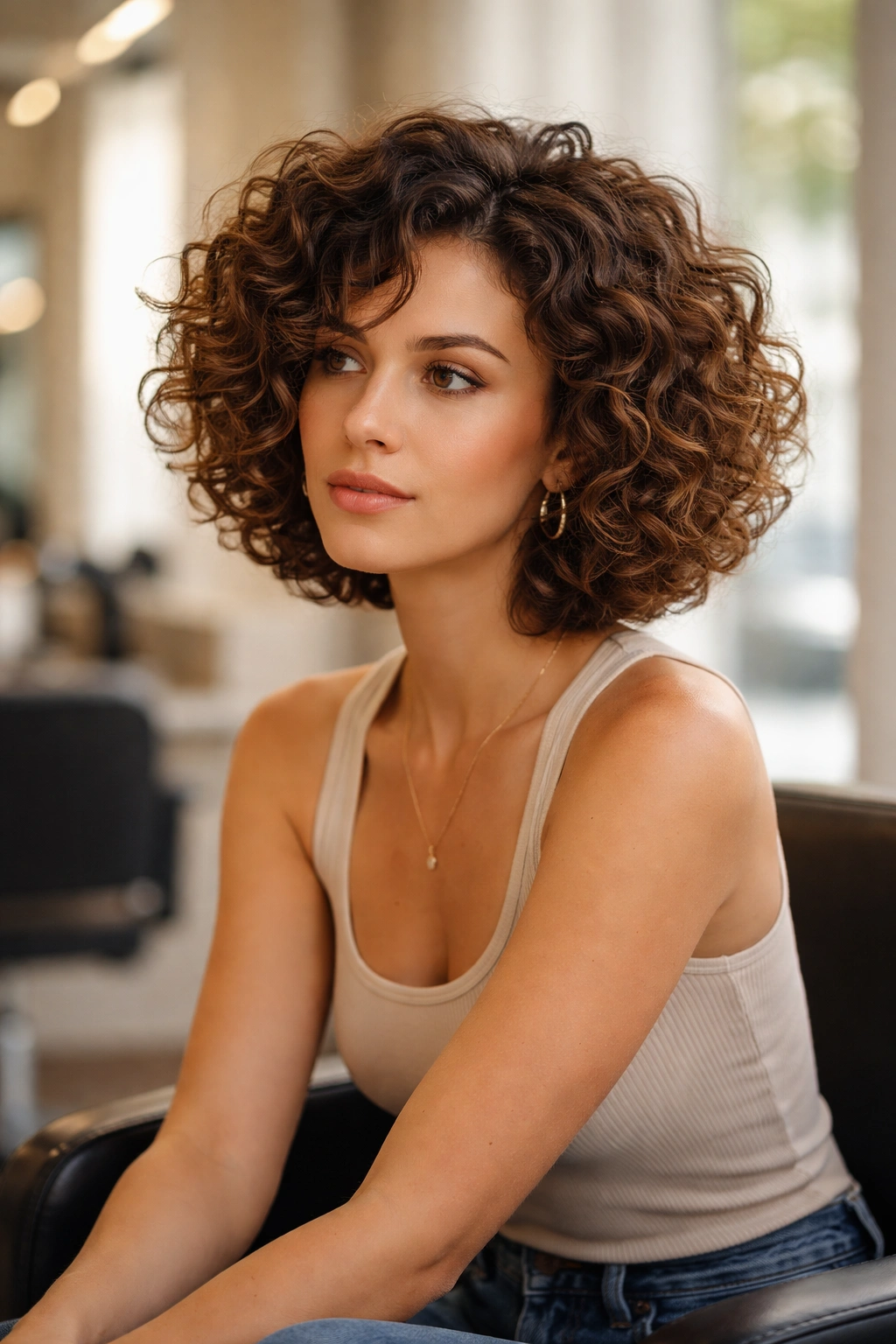
The curly bob isn’t one haircut — it’s a whole category of thinking about how to work with natural texture rather than negotiate against it. Each of the 12 styles above approaches the same basic premise from a different structural angle, which is exactly why understanding the distinctions matters before you sit down in the salon chair.
The most actionable thing you can take from this is the relationship between curl type and cut architecture. Matching the structure of the haircut to the specific behavior of your curl pattern is what separates a curly bob that makes you feel sharp leaving the salon from one you’re fighting two weeks later. It’s not about picking the prettiest photo — it’s about choosing the cut whose engineering matches your hair’s natural tendencies.
Before booking any of these styles, be honest with yourself about three things: your curl pattern and density, how your hair behaves in your local climate, and how much time you realistically want to spend on daily styling. A wet-look defined bob requires different daily commitment than a shaggy air-dried one. Neither is better — they just serve different people and different lifestyles.
A good curly bob evolves with you. The cut that starts as a dramatic transformation tends to settle into a signature look over months of trims and styling experiments. Give it time, find a stylist who genuinely specializes in textured hair, and don’t be afraid to iterate until you land on the version that feels completely yours.
