



Red hair has a magnetic quality that’s hard to ignore. There’s something about a rich, vibrant red shade combined with flowing waves that creates an instantly polished, effortlessly romantic look. The interplay between the warmth of the color and the texture of the waves creates depth, movement, and visual interest in a way that’s genuinely hard to achieve with other color choices.
Long wavy hairstyles in red work because they capitalize on natural-looking texture while letting the color do the talking. Waves catch light differently at every angle, which means a red shade can appear to shift from deep crimson to bright copper throughout the day depending on how the hair moves and bends. This dynamic quality keeps the style looking fresh and intentional rather than flat, and it works across almost every red tone—from cool burgundies to warm copper-reds to trendy auburn blends.
The challenge with red hair, of course, is maintenance. Red fades faster than other colors, and the longer your hair, the more you need to think about protecting that investment. But when you nail the combination of the right red shade for your skin tone, the perfect wave pattern, and a good haircare routine, you get a hairstyle that stops people in their tracks. Whether you’re drawn to romantic waves, beachy texture, or more structured curls, there’s a red wavy style here that’ll inspire your next salon visit.
1. Soft Copper Waves With Face-Framing Layers
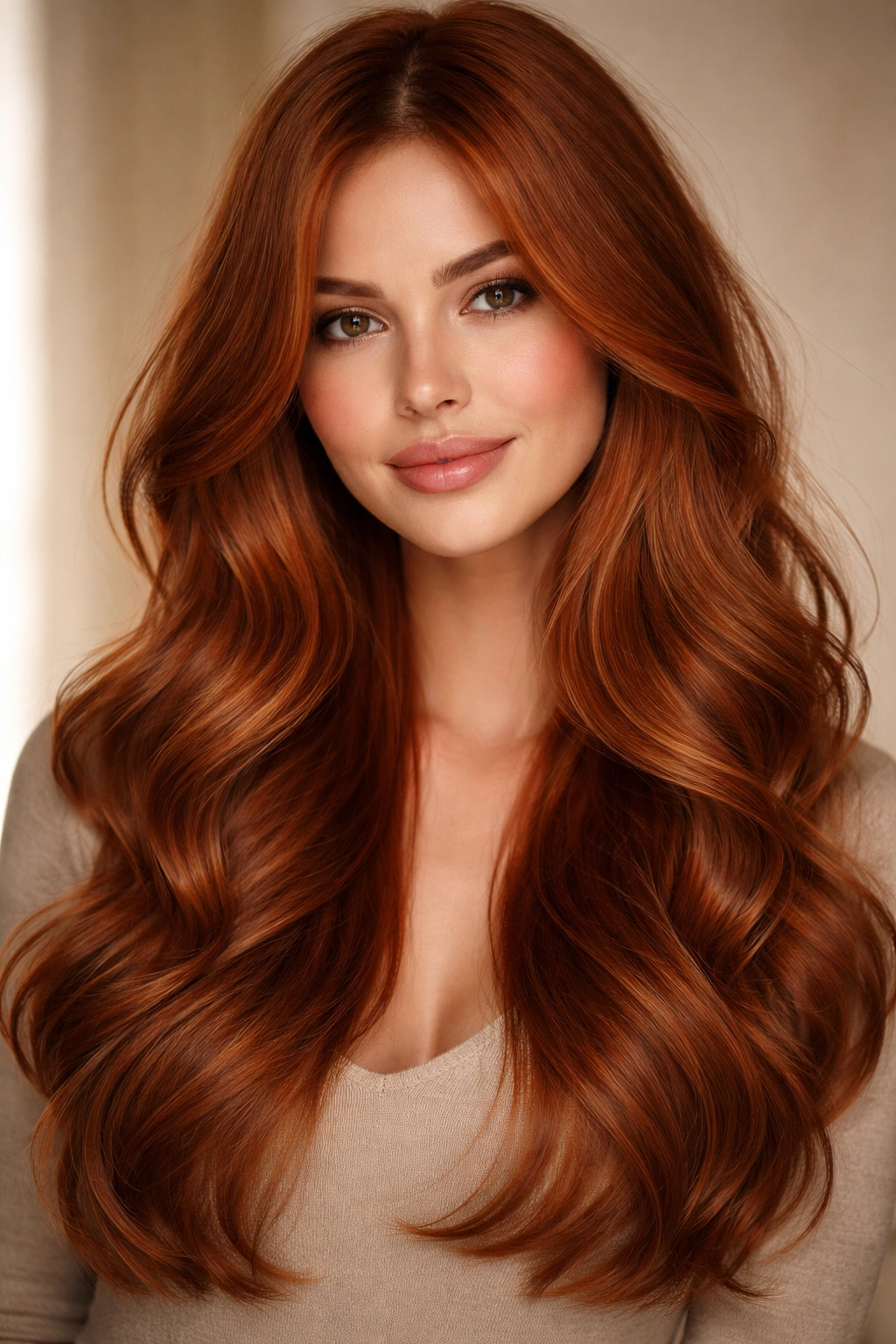
Copper red is warm, flattering, and reads less intense than a true fire engine red—which means it photographs beautifully and works across a wider range of skin tones. When you combine this shade with soft, face-framing layers and gentle waves, you get movement that feels lived-in and effortless rather than styled-to-death.
Why This Style Works
The layers create dimension and prevent the style from feeling heavy, even when your hair is long and dense. Copper catches light in a way that makes waves look more pronounced—the warmth of the color emphasizes the shadow and shine of the texture. The face-framing pieces draw attention upward and make your features feel more balanced, which is why this style works for almost every face shape.
How to Achieve This Look
- Ask for long layers starting around mid-length, with shorter pieces around the face that land roughly at cheekbone or chin level
- Request a copper-red base with slightly lighter copper-blonde highlights threaded throughout for dimension
- Style with a 1.25-inch curling iron, curling away from the face for a soft, romantic wave
- Use a texture spray or dry shampoo at the roots for grip when styling, especially if your hair is fine or slippery
Pro tip: Copper fades fastest of all red shades, so use a color-depositing conditioner once a week to keep it from turning orange as it oxidizes.
2. Deep Burgundy Waves With Center Part
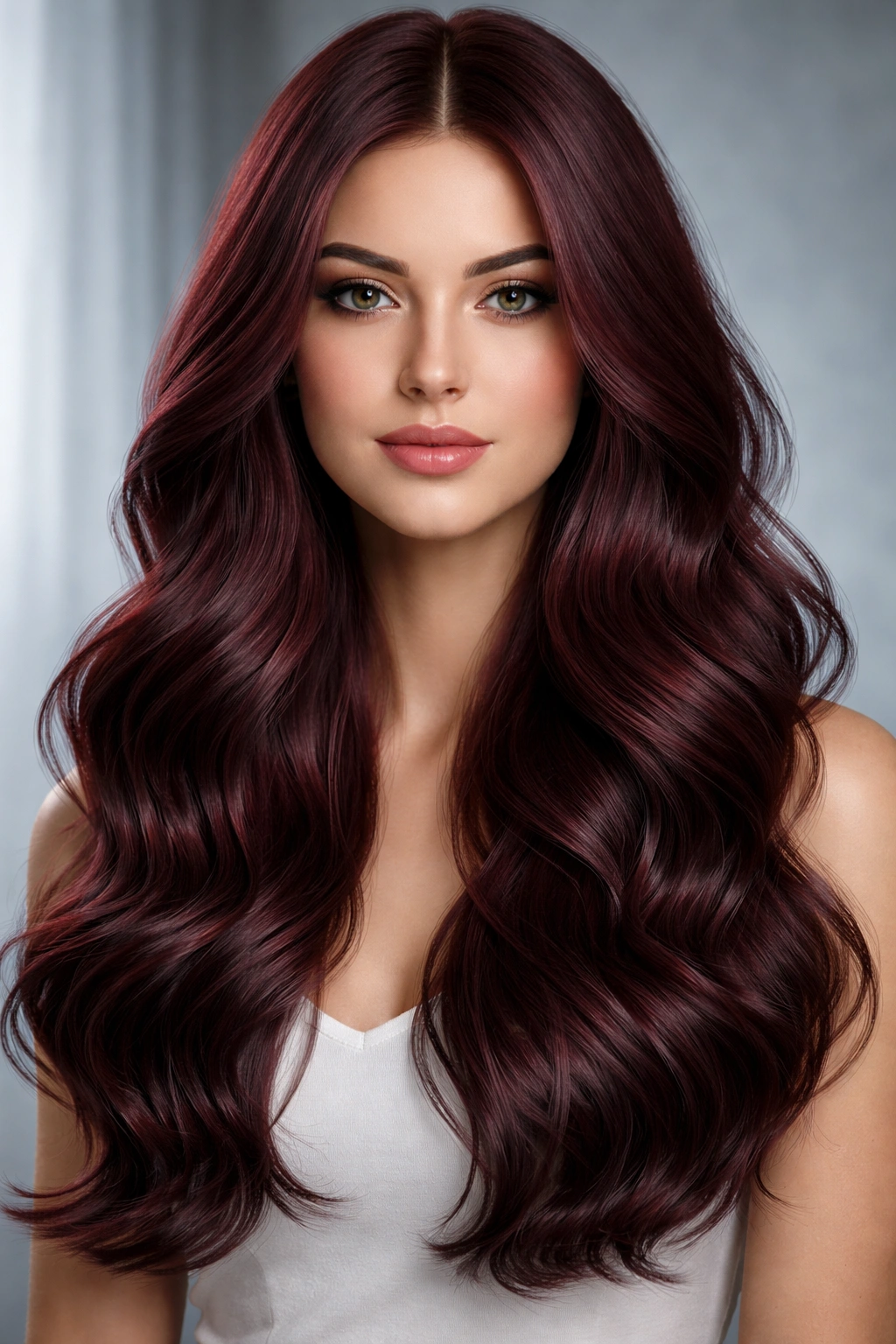
Burgundy is the sophisticated cousin of bright red. It’s rich, slightly mysterious, and works beautifully on long hair because the depth of the shade creates a frame around your face rather than overwhelming it. A center part balances the weight and lets the waves do the movement work.
Why Burgundy and Center Parts Complement Each Other
A center part is the most flattering for heart-shaped, diamond-shaped, and round faces because it balances features equally on both sides. Burgundy has enough brown undertone to feel grounding and intentional, not harsh. When you pair these two elements, you get a hairstyle that feels refined and deliberate rather than trendy—which means it’ll age well and feel current for years.
Styling and Maintenance Tips
- Center parts require healthy, full hair to look their best—consider a volumizing treatment if you have fine hair
- Create waves using a large-barrel curling iron (1.5 to 2 inches) for looser, more romantic texture
- Let waves cool completely before running your fingers through them for the best hold
- Burgundy requires cool-toned care products; avoid anything with warm undertones that can shift the shade toward orange
- Refresh your roots every 6-8 weeks to maintain the depth and prevent obvious grow-out
Worth knowing: Burgundy looks particularly stunning under warm lighting and in photos with flash, which is why it’s such a popular choice for people who spend time on social media or in front of cameras.
3. Beachy Auburn Waves With Textured Layers
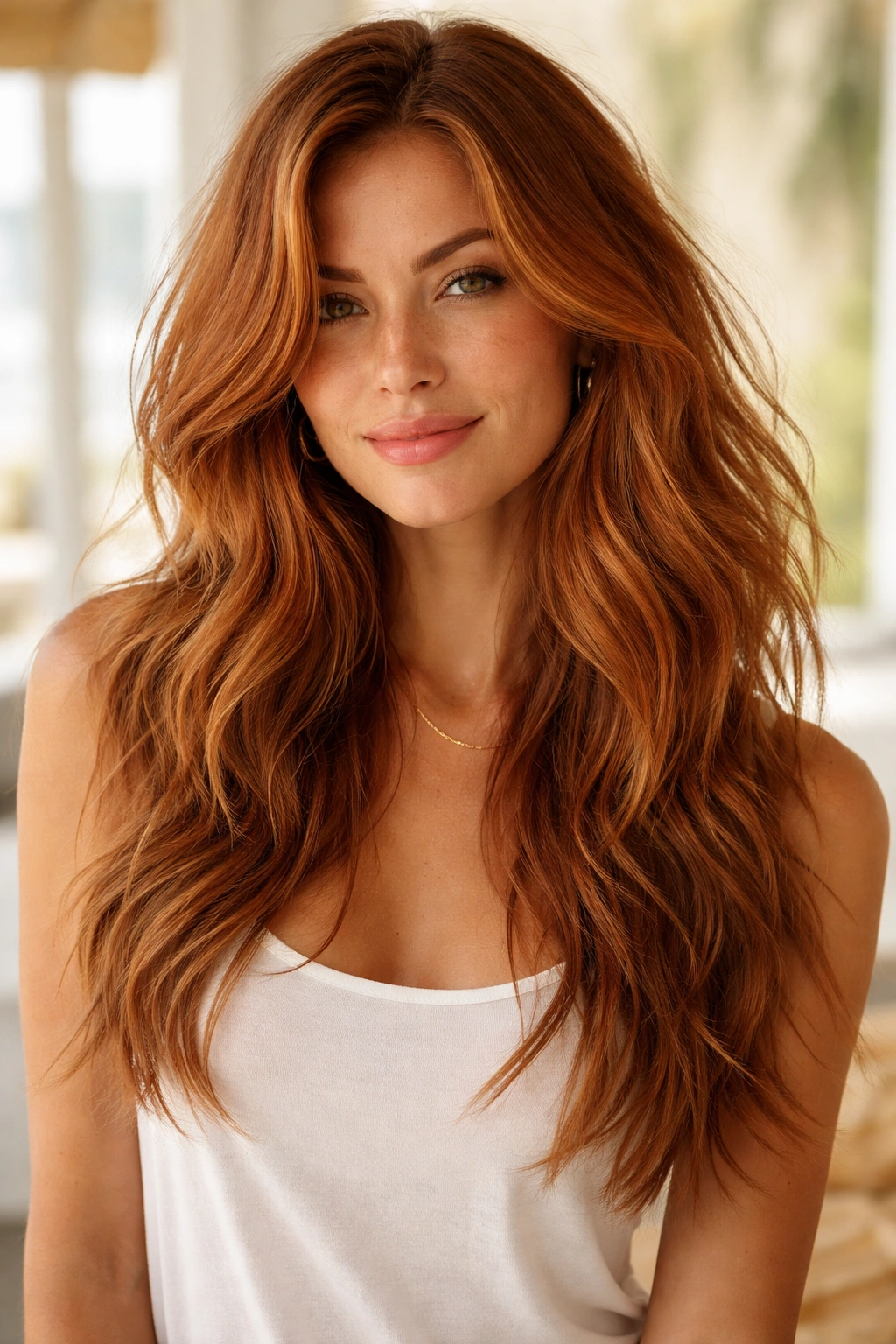
Auburn sits somewhere between red and brown, which makes it incredibly versatile and easier to maintain than pure reds. When you add beachy, undone waves and textured layers throughout, you get a style that looks like you just walked off a beach in Malibu—or that you could, anyway.
The Texture-Over-Perfection Approach
Beachy waves specifically shouldn’t look polished or controlled. The beauty is in the slightly messy, tousled quality that suggests you styled this in thirty seconds and it just happened to look this good. Layers amplify this effect by creating natural breaking points where waves can bend and shift. Auburn’s warm-brown undertones complement this lived-in aesthetic because they don’t highlight every frizz the way a bright red would.
How to Create This Style
- Layers should vary in length throughout, with some pieces hitting at your shoulders, others at mid-back, and some longer pieces creating movement at the ends
- Ask your colorist for a multi-dimensional auburn base with honey-blonde and copper highlights threaded in
- Style using a curling iron or wave-creating tool, or sleep in braids overnight for effortless waves
- Finish with a light, flexible-hold spray that allows movement rather than locking waves in place
- Use a salt spray or texturizing product to enhance the beachy, undone quality
Insider note: Auburn waves look particularly good in person rather than in photos because the color variation catches light naturally in ways that cameras sometimes flatten.
4. Glossy Cherry Red Waves With Side-Swept Bangs
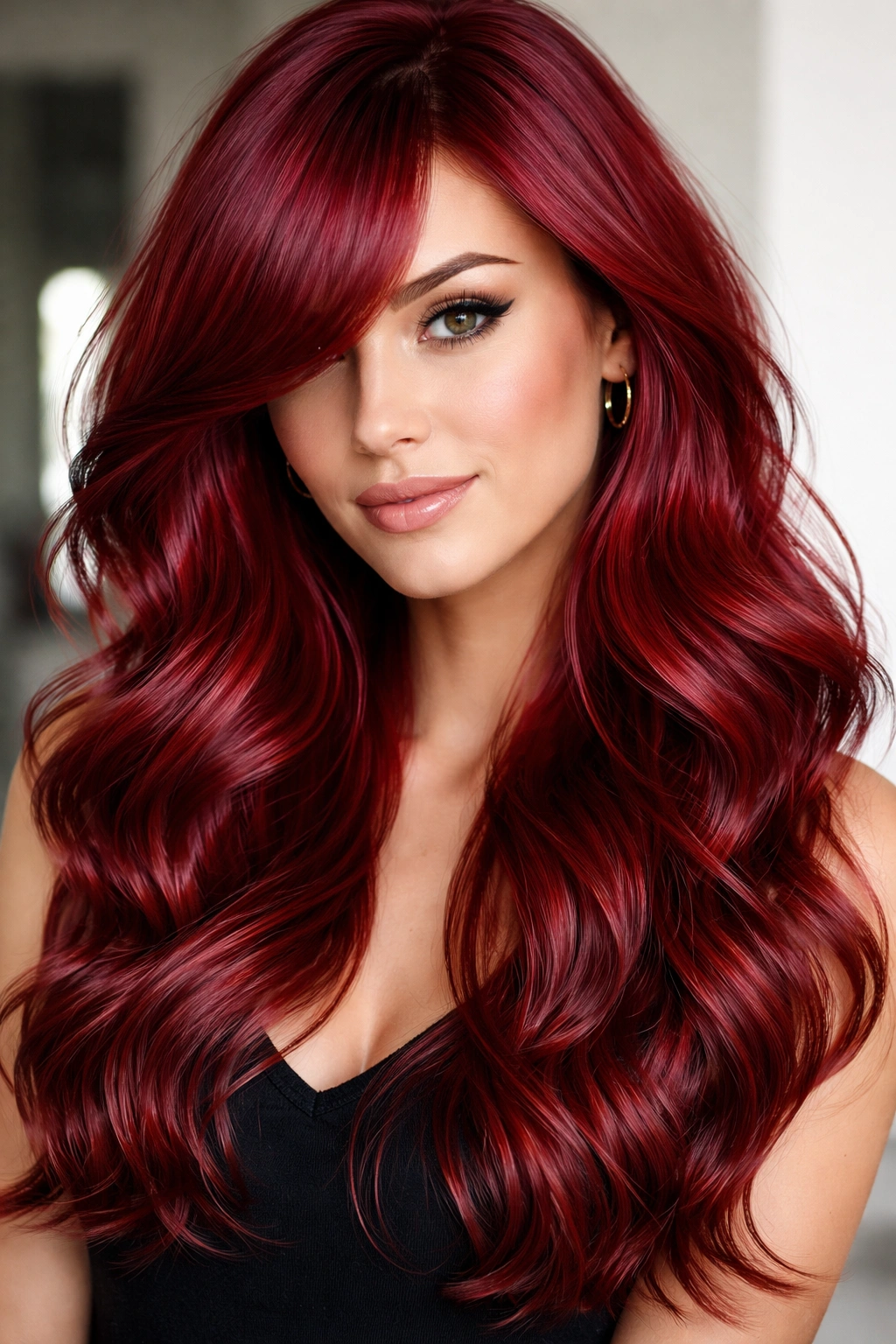
Cherry red is bright, cheerful, and unapologetically bold. It’s the red you choose when you want people to notice your hair—and you’re okay with that attention. Side-swept bangs soften the boldness while still keeping the focus on the color and the waves.
Why Side-Swept Bangs Balance Bold Red
Cherry red demands confidence, but side-swept bangs keep it from feeling aggressive or costume-y. The bangs create a softer frame and add an element of mystery (one side of your face is slightly concealed), which counterbalances the boldness of the color. This combination feels fashion-forward without feeling costume-like.
Creating Glossy, Wave-Enhanced Cherry Red Hair
- Invest in a high-quality glossing treatment after color to seal the cuticle and maximize shine
- Ask your colorist for a vibrant cherry base with subtle cool undertones to prevent orange tones
- Create waves using a curling iron and then gently brush them out for a softer, more blended texture
- Apply a lightweight hair oil or serum to the mid-lengths and ends to enhance glossiness without weighing down the waves
- Use a cool-toned shampoo and conditioner designed for red hair to prevent fading
Pro tip: Cherry red can appear slightly different depending on your undertone—it looks more blue-red on cool skin tones and more true-red on warm skin tones. Test the shade on a swatch before committing.
5. Strawberry Blonde Waves With Minimal Layers
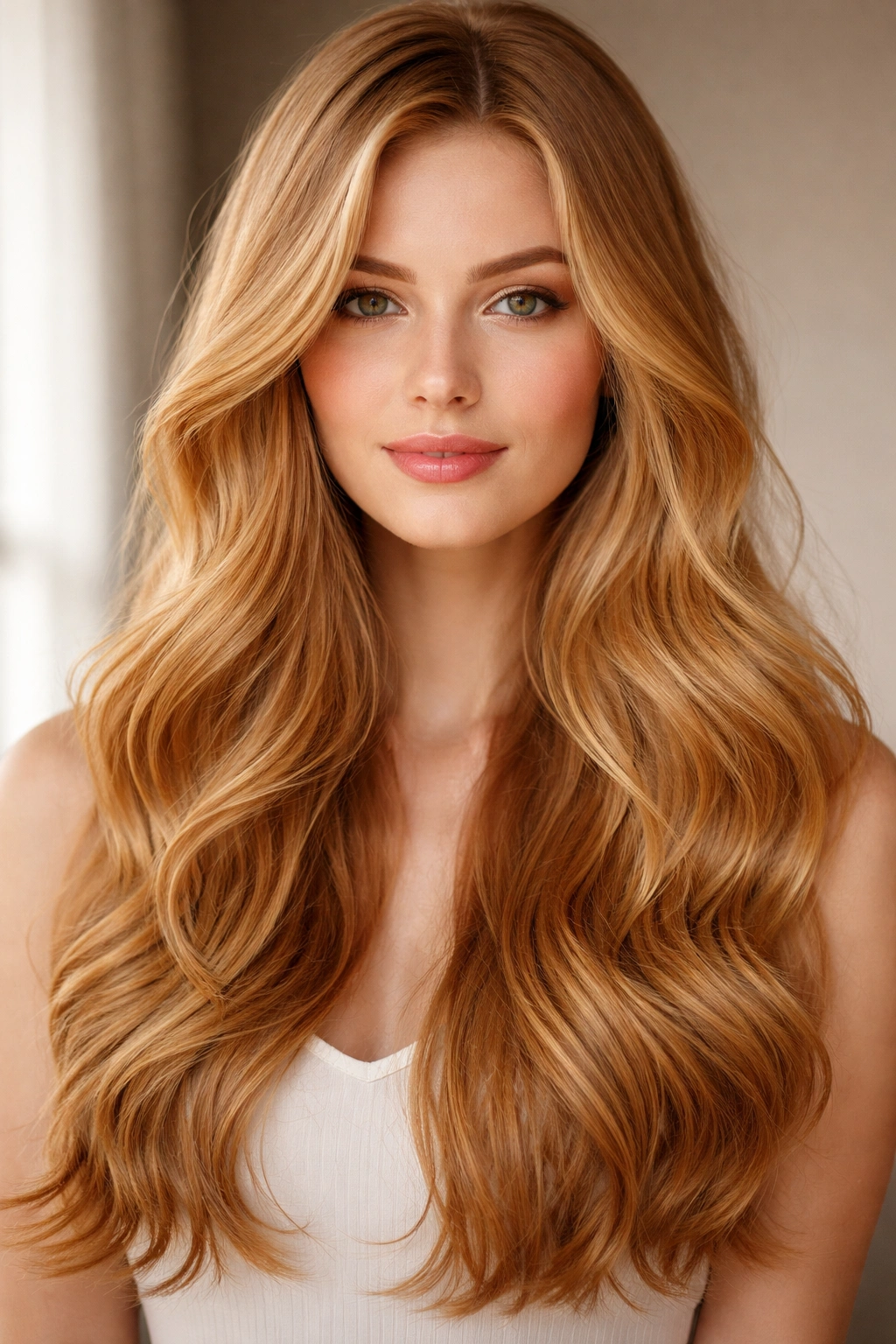
Strawberry blonde is the transition shade between red and blonde, which makes it feel lighter and fresher than deeper reds. Minimal layers keep the style streamlined and prevent too much choppiness, allowing the waves to flow as one cohesive movement from roots to ends.
Why Minimal Layers Work for Strawberry Blonde
Because strawberry blonde is already a lighter, airier shade, you don’t need layers to create the illusion of movement and texture. Minimal layers (just around the face and a few internal pieces for dimension) preserve length and weight, which makes waves appear fuller and more dramatic. This approach also reduces styling time and makes the hair easier to maintain.
Building Your Strawberry Blonde Wave Style
- Ask for long layers only around the face (cheekbone length) and an internal layer or two for movement without choppiness
- Request a strawberry blonde base with golden, honey, and subtle red highlights for multi-dimensional color
- Create waves using a 1.5-inch curling iron, working in sections and curling toward your face on one side, away on the other for balance
- Use a sea salt spray to enhance wave texture and add grip for hold
- Apply a leave-in conditioner to keep the lighter shade from feeling dry or brassy
Worth knowing: Strawberry blonde fades into a peachy tone over time, which some people love (it’s a softer, fresher look) and others want to prevent. Use a color-depositing conditioner if you want to maintain the strawberry tone specifically.
6. Richly Toned Mahogany Waves With Long Layers
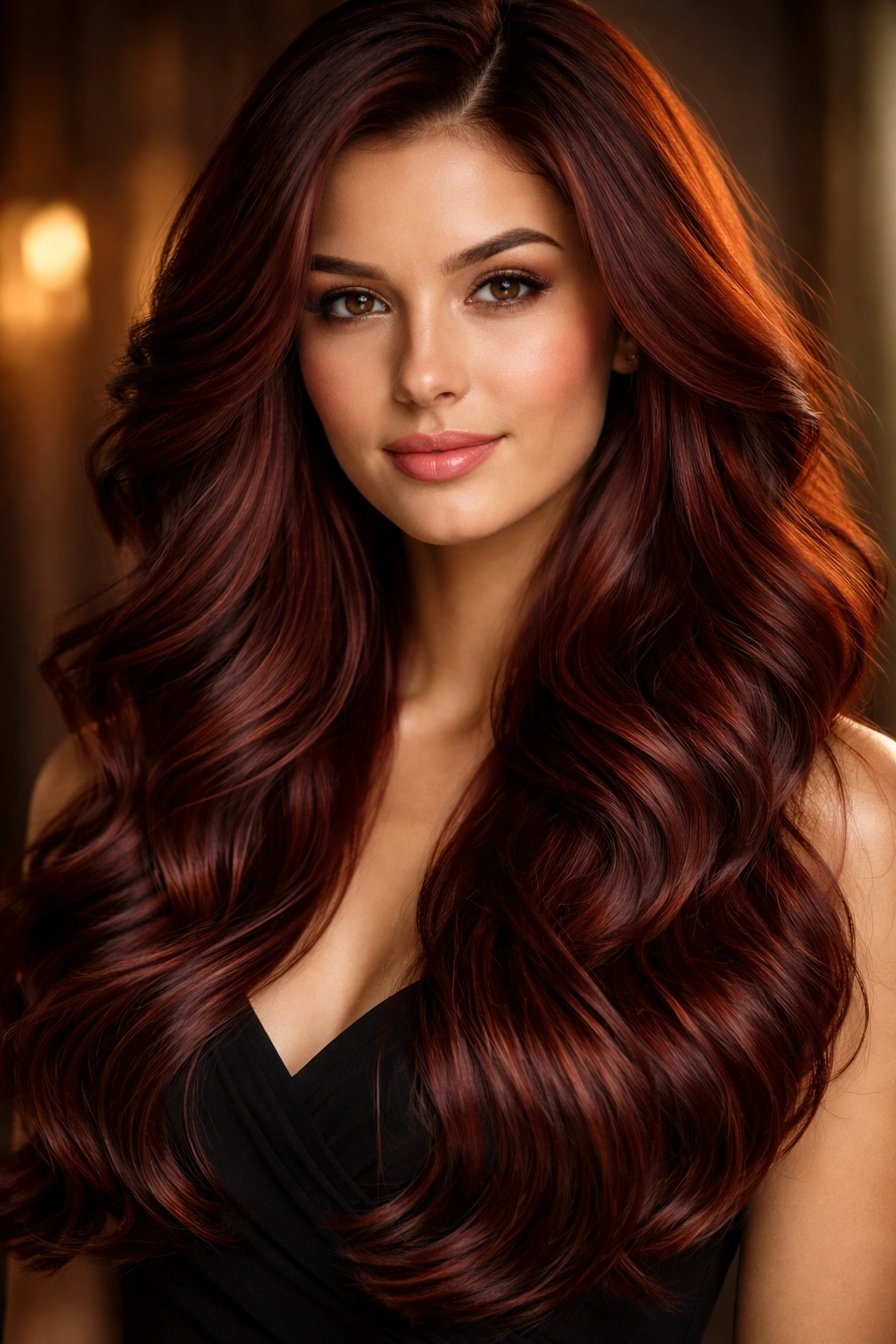
Mahogany red has brown undertones that make it feel sophisticated and grounded, unlike brighter reds that can feel youthful or playful. Long layers throughout (not just around the face) create movement and texture while the deeper tone keeps everything feeling intentional and polished.
The Psychology of Mahogany for Red Hair
Mahogany reads as more serious and professional than bright red, which makes it an excellent choice if you want a bold red color without sacrificing workplace appropriateness. The brown undertones also make mahogany significantly easier to maintain than pure reds—it doesn’t fade as dramatically and can actually look better as it slightly fades into a lovely warm brown tone.
Styling Mahogany Waves With Multiple Layers
- Long layers should graduate throughout the length (removing 1-2 inches at each layer point) to create a cohesive, flowing effect
- Ask your colorist for a mahogany base with subtle highlights in deeper auburn and lighter copper for dimension
- Create waves using a curling iron on a medium heat setting—mahogany hair with layers can sometimes feel fragile if over-styled
- Use a blow dryer on low heat and with a diffuser to dry waves in their natural direction
- Apply a protein treatment monthly to strengthen the hair since mahogany-dyed hair can be more delicate
Insider note: Mahogany is the red shade that most people who claim they “can’t pull off red” actually can wear beautifully, because it’s warm without being overwhelming.
7. Hot Red Waves With Curtain Bangs and High Volume
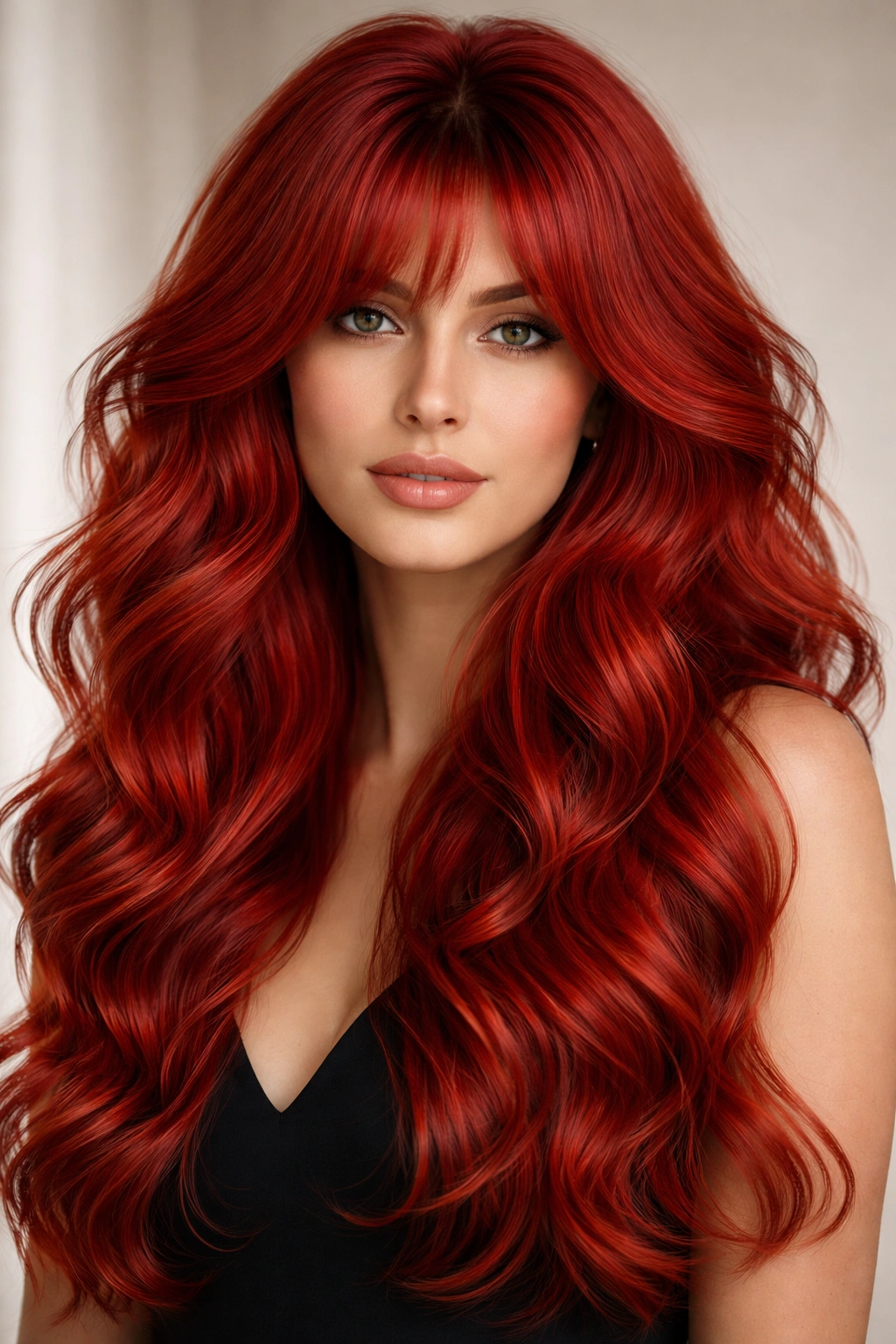
Hot red is pure, vivid, and unapologetic. It’s not a shade you wear if you want to blend in. Curtain bangs soften the intensity slightly while still showing off your color, and voluminous waves at the roots create a dramatic, eye-catching silhouette.
Balancing Bold Color With Softening Elements
Hot red + volume + curtain bangs is a look that reads as fashion-forward, confident, and intentional. Curtain bangs (long, side-parted pieces that frame the face) are softer than blunt bangs but still create structure. The high volume at the crown prevents the style from appearing flat or one-dimensional. Together, these elements create a silhouette that’s bold without being aggressive.
Creating Hot Red Waves With Serious Volume
- Get a cut with a deeper crown (the stylist removes more weight from the crown area to encourage natural lift)
- Ask for long, face-framing curtain bangs that start around 2-3 inches back from your hairline
- Request a vibrant, true hot red with minimal highlights for maximum color saturation
- Blow dry using a round brush and a volumizing mousse applied to the roots for lasting lift
- Create waves using a large-barrel curling iron (2-inch barrel minimum) and curl large sections of hair from root to end
- Tease gently at the crown and smooth the top layer for polished but voluminous waves
Pro tip: Hot red requires touching up every 4-6 weeks to maintain the saturation, so factor in regular salon time before committing to this shade.
8. Rose Red Waves With Soft, Face-Framing Highlights
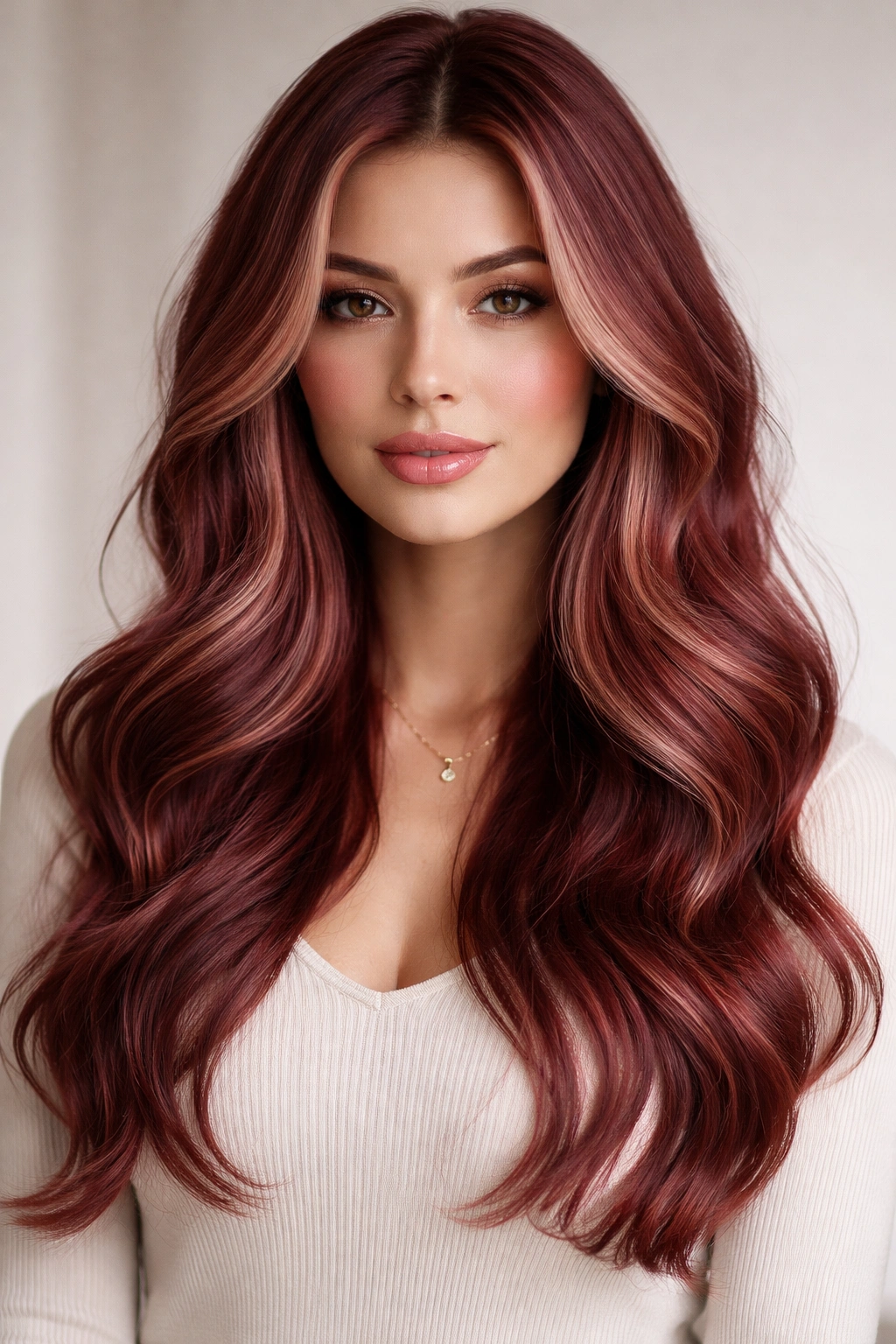
Rose red is a cool-toned red with pink undertones, which makes it feel romantic, modern, and slightly less intense than true red. Soft highlights around the face create brightness and dimension while keeping the overall look cohesive and elegant.
Why Rose Red Feels Modern
Rose red is having a major moment in fashion and hair color trends because it feels current without feeling trendy—it won’t look dated in a few years. The pink undertones are flattering on cool skin tones and can work on warm skin tones if the highlights are warm-enough to balance. Soft, face-framing highlights add brightness without creating harsh lines.
Achieving Rose Red Waves With Subtle Highlights
- Ask your colorist for a rose red base with soft blonde or rose-blonde highlights around the face and scattered throughout mid-length and ends
- Rose red works beautifully with balayage or dimensional color techniques that create natural-looking variation
- Create soft waves using a 1.5-inch curling iron, releasing waves into your hand instead of letting them cool on the barrel for a looser texture
- Use a heat protectant spray specifically designed for color-treated hair before styling
- Refresh with a toner every 3-4 weeks to maintain the pink undertones and prevent the shade from shifting toward orange
Worth knowing: Rose red is one of the best reds for preventing brassiness because the cool pink undertones naturally counteract warm, orange tones that emerge as color fades.
9. Copper-Red Waves With Layered, Choppy Texture
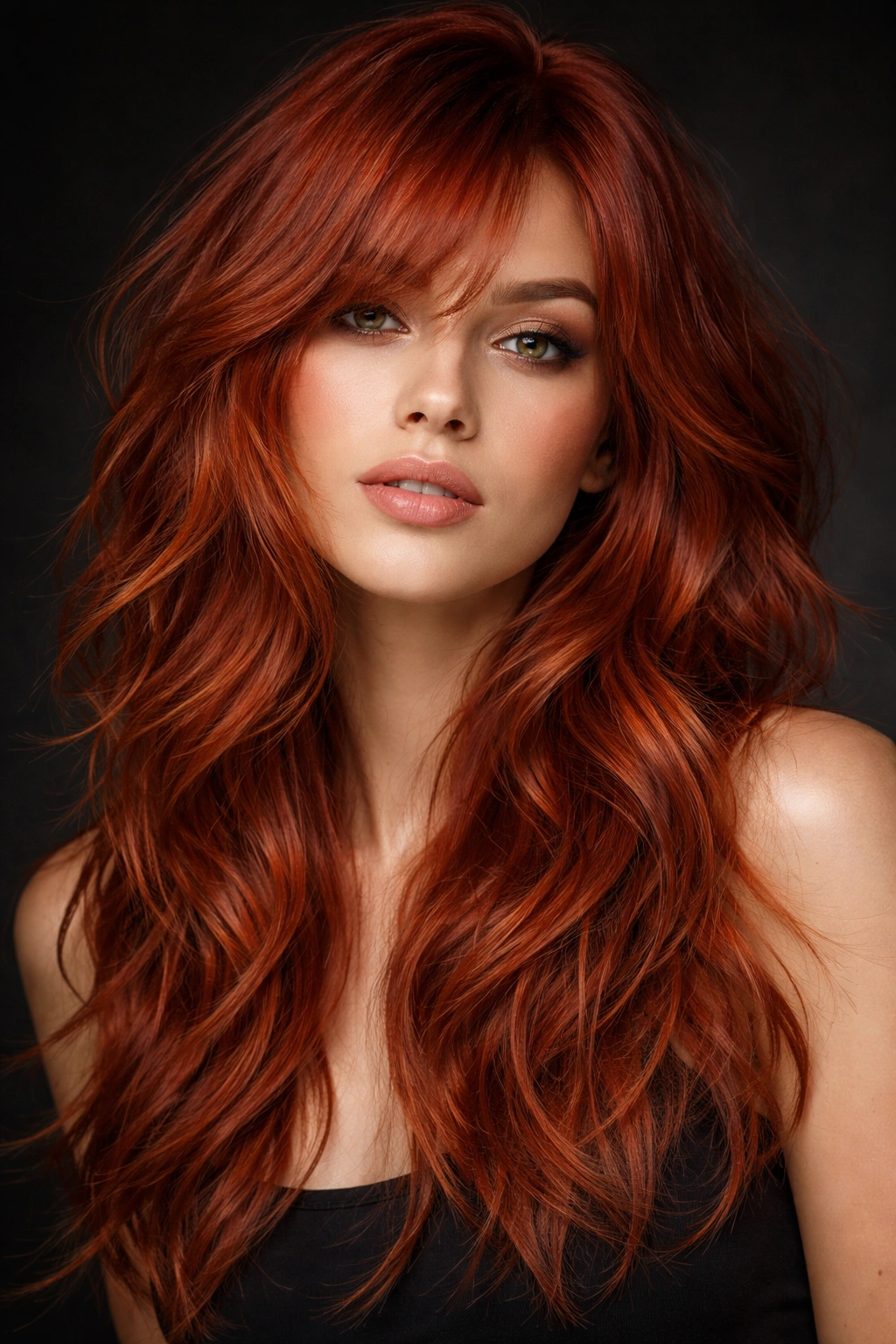
Copper red paired with choppy, textured layers creates an edgy, modern vibe. This style works if you want red hair that feels intentional and fashion-forward rather than romantic or soft. The choppiness creates visual interest and makes the color pop even more.
The Modern Edge of Choppy Layers
Choppy layers create breaking points and texture that make waves look more pronounced and deliberate. The technique adds movement and prevents the style from appearing heavy, even on long hair. Copper red’s natural warmth complements the slightly rebellious vibe of choppy layers because the color is already bold enough to handle the styling choice.
Creating Choppy, Textured Waves in Copper Red
- Ask for choppy layers at varying lengths throughout, with shorter pieces around the shoulders and some longer pieces creating movement at the ends
- Layers should appear intentional but not perfectly even—slight variation in length adds to the edgy aesthetic
- Request a bright copper red base with honey and golden highlights for warmth and dimension
- Dry hair using a blow dryer with a diffuser, scrunching upward to enhance natural wave patterns
- Create additional texture using a curling iron on individual sections, or use a wave spray on damp hair and allow it to dry naturally
- Use a texturizing spray or dry shampoo to enhance the choppy texture and add grip
Insider note: Choppy layers require regular maintenance (every 6-8 weeks) to keep the cut looking intentional rather than raggedy, so factor that into your commitment before choosing this style.
10. Burnt Orange-Red Waves With Deep Side Part
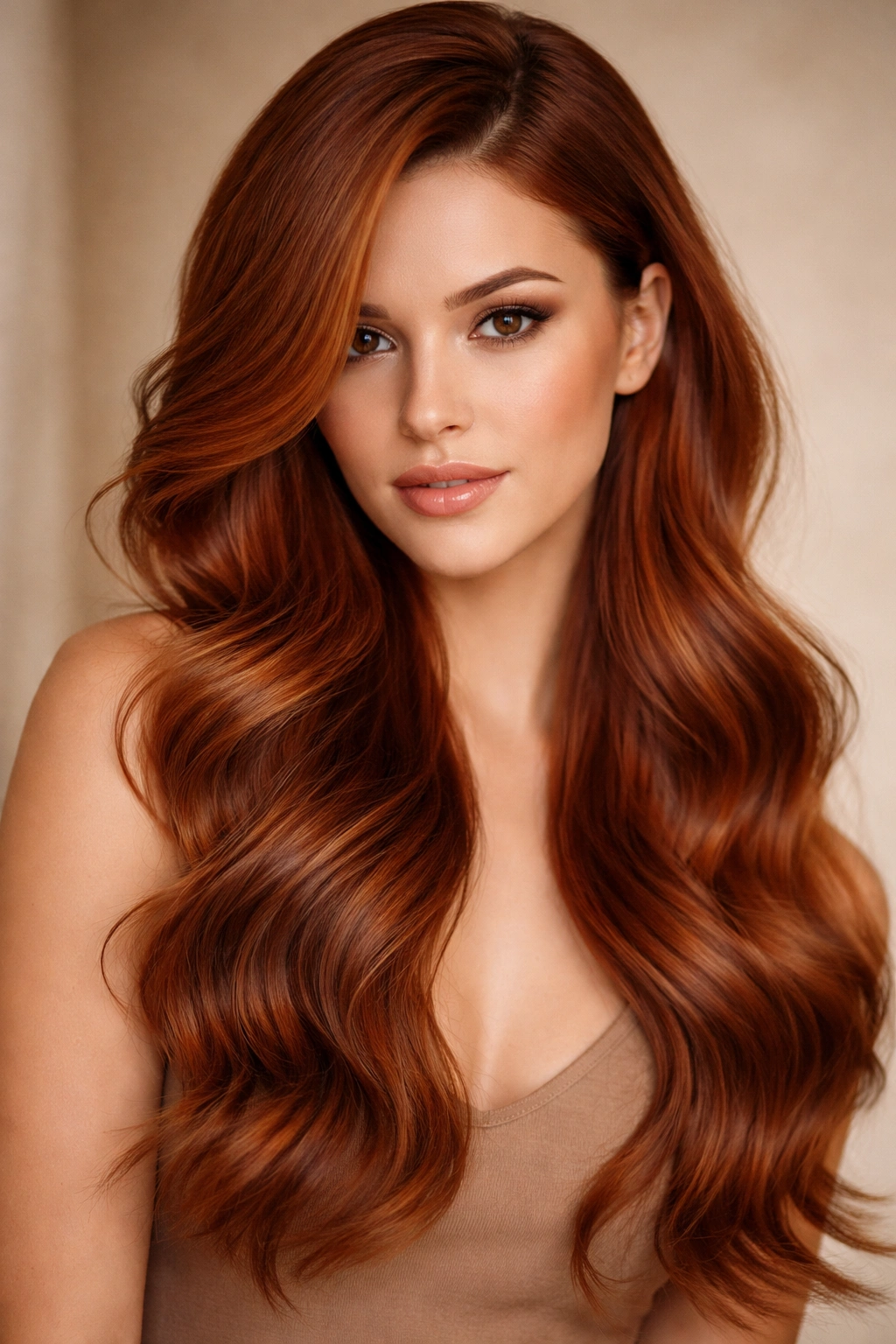
Burnt orange-red is a muted, sophisticated version of bright red that leans slightly toward brown. It’s an excellent choice if you want red hair that feels refined rather than playful. A deep side part creates asymmetry and adds visual interest without requiring lots of layers.
Why Burnt Orange-Red Feels Elevated
Burnt orange-red has enough brown undertone to feel grounded and mature, while still delivering the uniqueness and presence of a red shade. The muted quality makes it feel more wearable in professional settings and photograph beautifully in most lighting conditions. A deep side part adds visual interest and works well across face shapes.
Styling Burnt Orange-Red Waves With a Deep Side Part
- Create a deep side part by sectioning hair at least 2-3 inches to one side of your natural center line
- Ask your colorist for a burnt orange-red base with subtle caramel and bronze highlights for depth
- Create waves using a curling iron, working on the larger side of the part first and creating fuller waves there
- Use a volumizing spray or mousse on the larger side of the part to create height and balance the asymmetry
- Finish waves with a light-hold spray that allows movement and natural settling
- Use color-safe products to preserve the slightly muted tone and prevent it from shifting too warm
Pro tip: Burnt orange-red looks particularly stunning with warm-toned makeup and jewelry because the undertones complement each other beautifully.
11. Vibrant Red Waves With Micro-Bangs and Movement
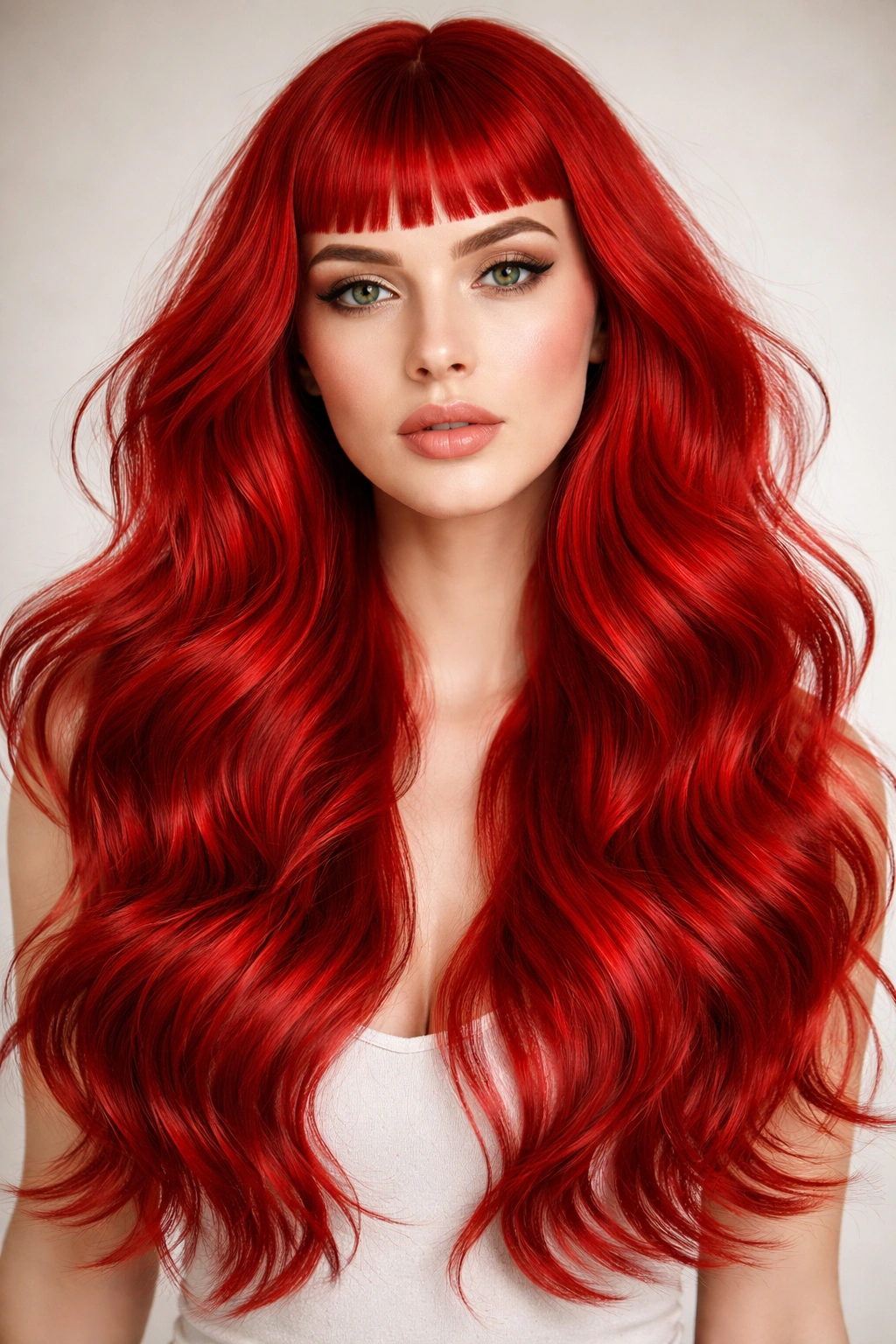
Micro-bangs are short, blunt bangs that sit much higher on the forehead than traditional bangs. They’re bold, fashion-forward, and when paired with vibrant red waves, they create a style that feels utterly confident and intentional. This is a look for people who want to make a statement.
The Fashion-Forward Energy of Micro-Bangs
Micro-bangs are having a resurgence in fashion because they feel editorial, modern, and undeniably brave. They work best on people with:
- Low foreheads or high-set eyes (micro-bangs emphasize both of these features)
- Confidence to own a look that’s intentionally bold
- Willingness to style and maintain bangs regularly (they need trimming every 3-4 weeks)
Vibrant red waves flowing below micro-bangs create a stunning contrast between the sharp, structured bangs and the soft, flowing waves.
Creating This Bold, High-Impact Style
- Micro-bangs should start very close to your hairline and end just above your eyebrows—ask your stylist for precision here
- Request a bright, saturated red with minimal (or no) highlights to keep focus on the cut and movement
- Style waves with a curling iron, creating loose waves that flow softly below the sharp bangs
- Blow dry bangs separately using a round brush to keep them smooth and straight (they should contrast with the waves)
- Use dry shampoo or texturizing spray on bangs if they become greasy between washes—greasy bangs will droop and ruin the sharp line
- Apply a light-hold spray to waves while maintaining the defined, non-fuzzy quality of the bangs
Worth knowing: Micro-bangs are not reversible—if you hate them, you’ll need to wait several months for them to grow out or style them in ways that hide them. Try the look in photos or with clip-in bangs before committing.
Final Thoughts
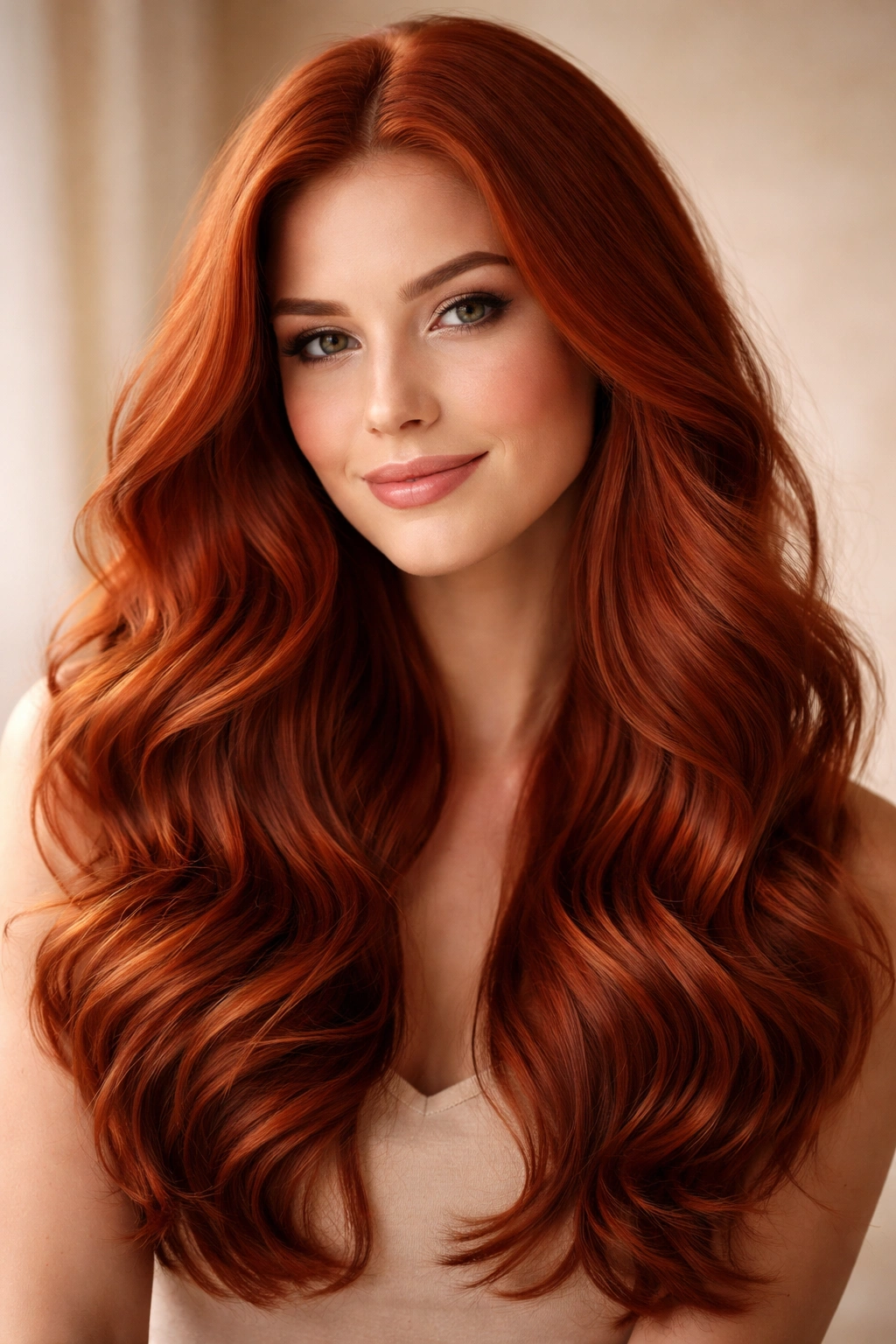
Red wavy hair is a commitment, but it’s one that pays dividends in terms of how you feel about yourself and how others perceive your confidence. The key to making any of these styles work is choosing both the red shade and the wave pattern that align with your lifestyle, maintenance willingness, and personal aesthetic—not just what looks good on someone else.
The maintenance part isn’t negotiable. Red fades, color-treated hair needs extra care, and waves require either daily styling or overnight setting (braids, waves, or a silk pillowcase). But if you’re willing to invest in a good color-safe routine, touch up your color regularly, and spend a few minutes styling your hair most days, you’ll have a hairstyle that turns heads and makes you feel genuinely beautiful.
Start by consulting with a colorist who has experience with red shades and can recommend which tone will work best with your skin, eye color, and personal style. Bring reference photos of the exact wave pattern and length you want. Have an honest conversation about maintenance—how often are you willing to style your hair? How often can you commit to salon visits for touch-ups? The answer to those questions will help determine which style is actually sustainable for you long-term, which is the only way to keep a red wavy style looking its absolute best.
