



Korean hairstyles have become a global phenomenon, and for good reason. The carefully crafted waves, face-framing layers, and dimensional color treatments that define K-beauty hair are engineered to enhance facial features while maintaining an effortlessly elegant aesthetic. If you’re looking to refresh your look with a style that feels both current and timeless, medium-length wavy hairstyles offer the perfect balance—they’re long enough to create dramatic texture and movement, yet short enough to manage without spending hours on styling.
The beauty of Korean wavy medium hairstyles lies in their versatility. Whether you prefer soft, romantic waves or more defined, sculpted texture, there’s a style that works with your face shape, hair type, and lifestyle. Korean stylists have mastered the art of creating dimension through layering, color placement, and strategic wave placement, which is why these styles photograph beautifully and look great from every angle. The waves aren’t just randomly tousled—they’re intentionally designed to catch light and create a sense of movement and volume that flatters most face shapes.
What makes these hairstyles stand out is the attention to detail that goes into the cut and styling technique. Many of these looks require specific layering strategies, blow-drying methods, and sometimes permanent texture treatments like perms to achieve that signature Korean wave. The good news is that once you understand what creates each style, you can either recreate it at home or communicate clearly with your stylist about what you want.
1. The Soft Cloud Perm Wave
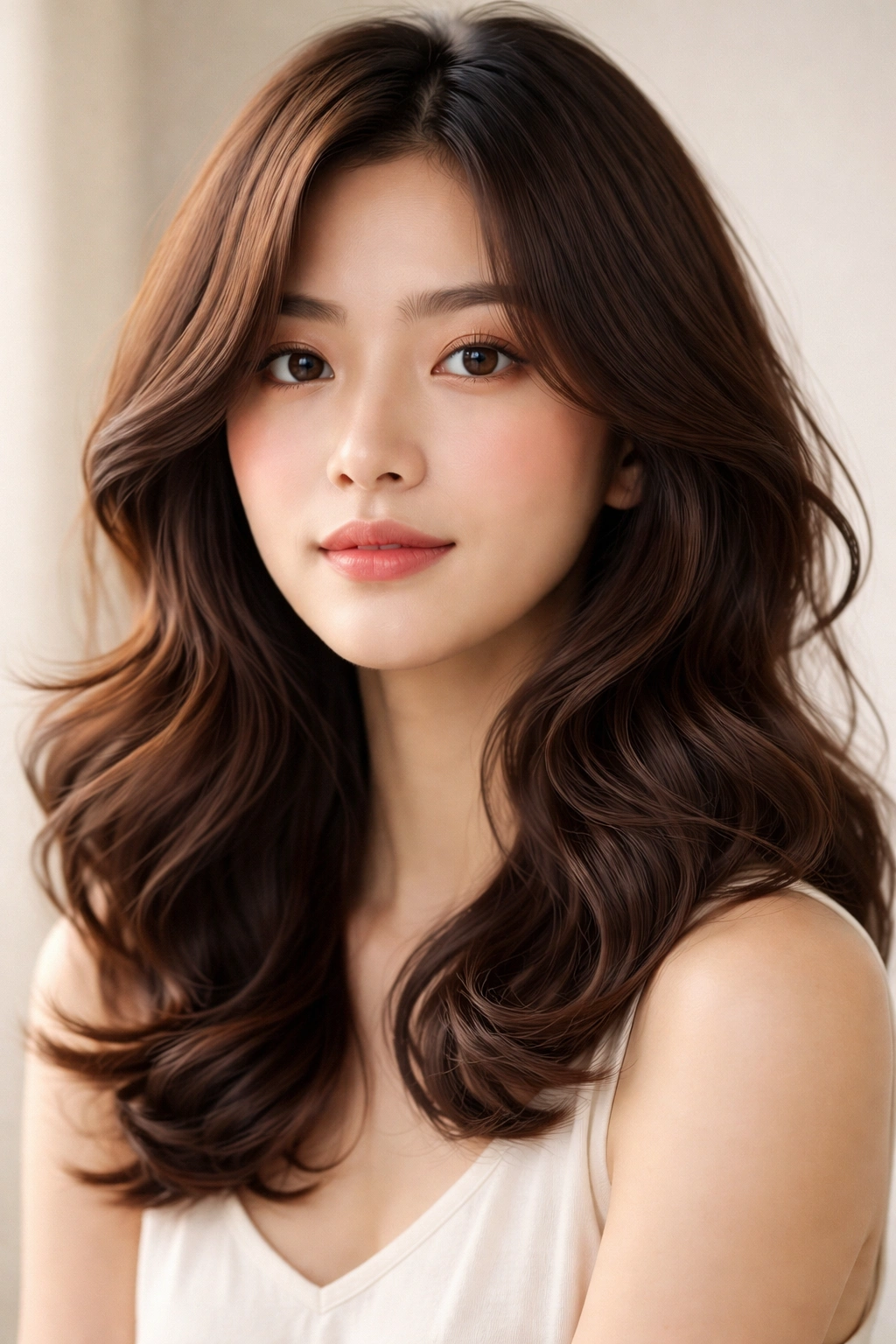
The soft cloud perm wave is one of the most popular Korean medium hairstyles right now, and it’s beloved for its pillowy, voluminous texture that frames the face beautifully. This style creates waves that look incredibly natural and effortless—almost like your hair naturally falls this way—while still providing structure and movement. The waves are intentionally loose and soft rather than tight or crispy, which is why it’s called a “cloud” perm.
Why It Works for Medium Lengths
The soft cloud perm is specifically designed to work with medium hair because the length is just right for the waves to make a visual impact without looking heavy or weighed down. The perm creates long, flowing waves that start from around the chin area and continue down, creating a beautiful S-curve pattern. This style is particularly flattering on oval, round, and square face shapes because the soft waves add height at the crown while creating width at the ends, which balances facial proportions beautifully.
What Makes This Style Unique
- The waves are achieved through a perm process that uses larger rods to create loose, romantic waves rather than tight curls
- Styling is incredibly simple—you can air dry or use a blow dryer with a diffuser, and the waves hold their shape
- The style works best with lighter layering throughout to avoid the hair looking too dense or curly
- Maintenance involves regular deep conditioning treatments to keep the permed hair healthy and hydrated
- You can enhance the waves with a wave-setting cream or sea salt spray for a more textured, beachy look
Worth knowing: This perm typically lasts 4-6 months and requires touch-ups around the roots every 2-3 months as your natural hair grows out. The initial perm service takes 2-3 hours and can be done on most hair types, though it works best on medium-thickness hair.
2. The Layered Shag Wave
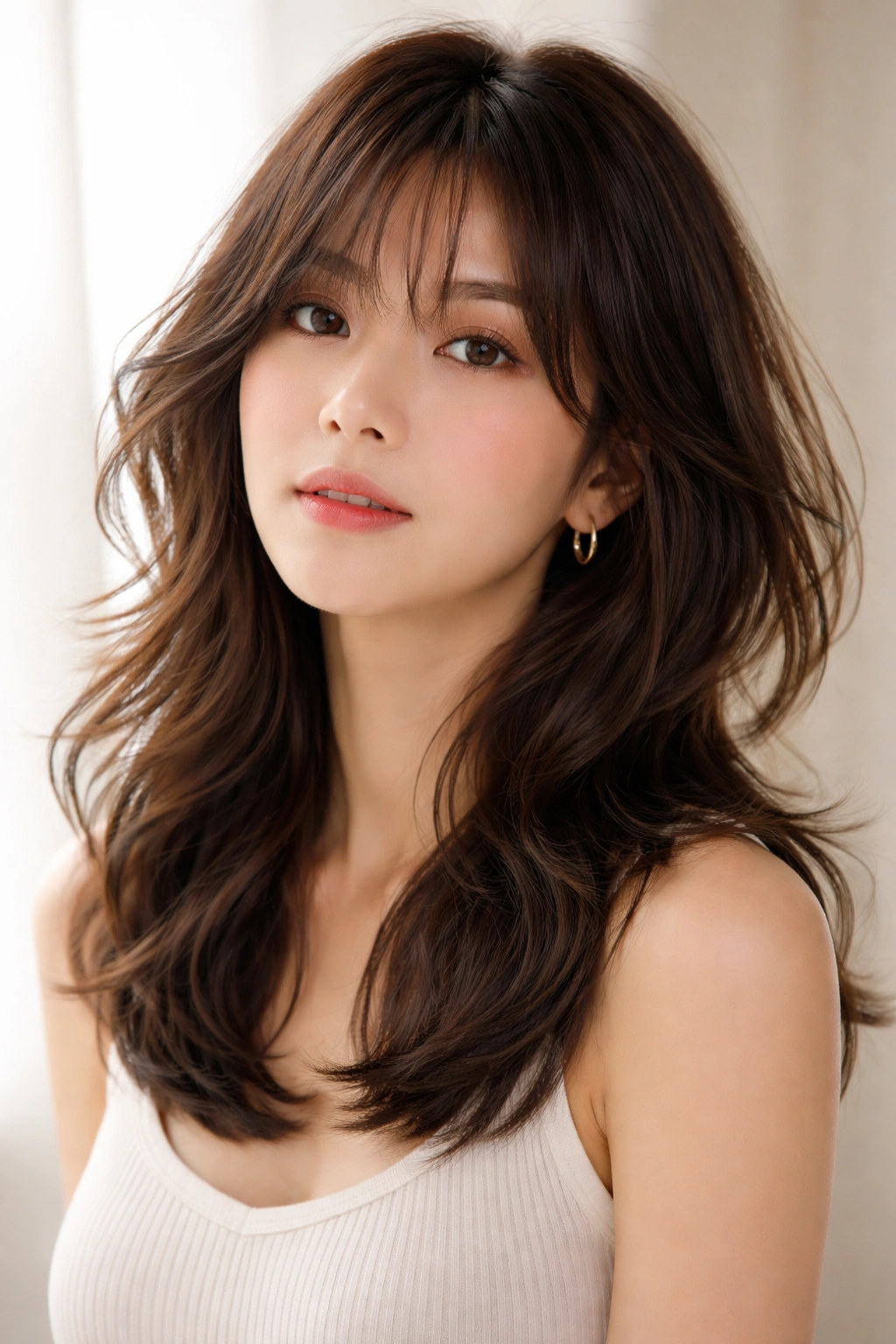
The layered shag wave is a modern take on the classic ’70s shag, reimagined through a Korean beauty lens with strategic layers, texture, and soft waves throughout. This cut creates incredible movement and volume from the roots, making even thin hair look fuller and more dynamic. The layers are cut at different lengths to create multiple points where waves can form, which means the texture shows beautifully from every angle.
The Strategic Layering Technique
Korean stylists approach the shag differently than Western versions—the layers are more intentional and blended, rather than choppy and dramatic. The longest layers typically end around chin length, while shorter layers around the face create face-framing pieces that highlight cheekbones and jawline. The key is that every layer has purpose: some create movement, some create shape, and some create the illusion of thickness at the roots.
Key Features to Ask For
- Ask your stylist to create short, choppy layers around the face (typically 2-3 inches shorter than the longest pieces) for that signature Korean shag look
- The back should have longer layers that taper slightly, creating movement without looking stringy
- Request point-cutting technique rather than blunt cutting—this creates texture within the layers rather than blunt lines
- The crown layers should be very short to create lift and volume that lasts all day
- Shorter face-framing layers should be angled slightly toward the face to enhance cheekbones
Pro tip: This cut works beautifully with a soft perm or wave-setting products to enhance the movement created by the layering. Even without a perm, the layers themselves create enough texture that the style looks intentional.
3. The Honey Butter Waves
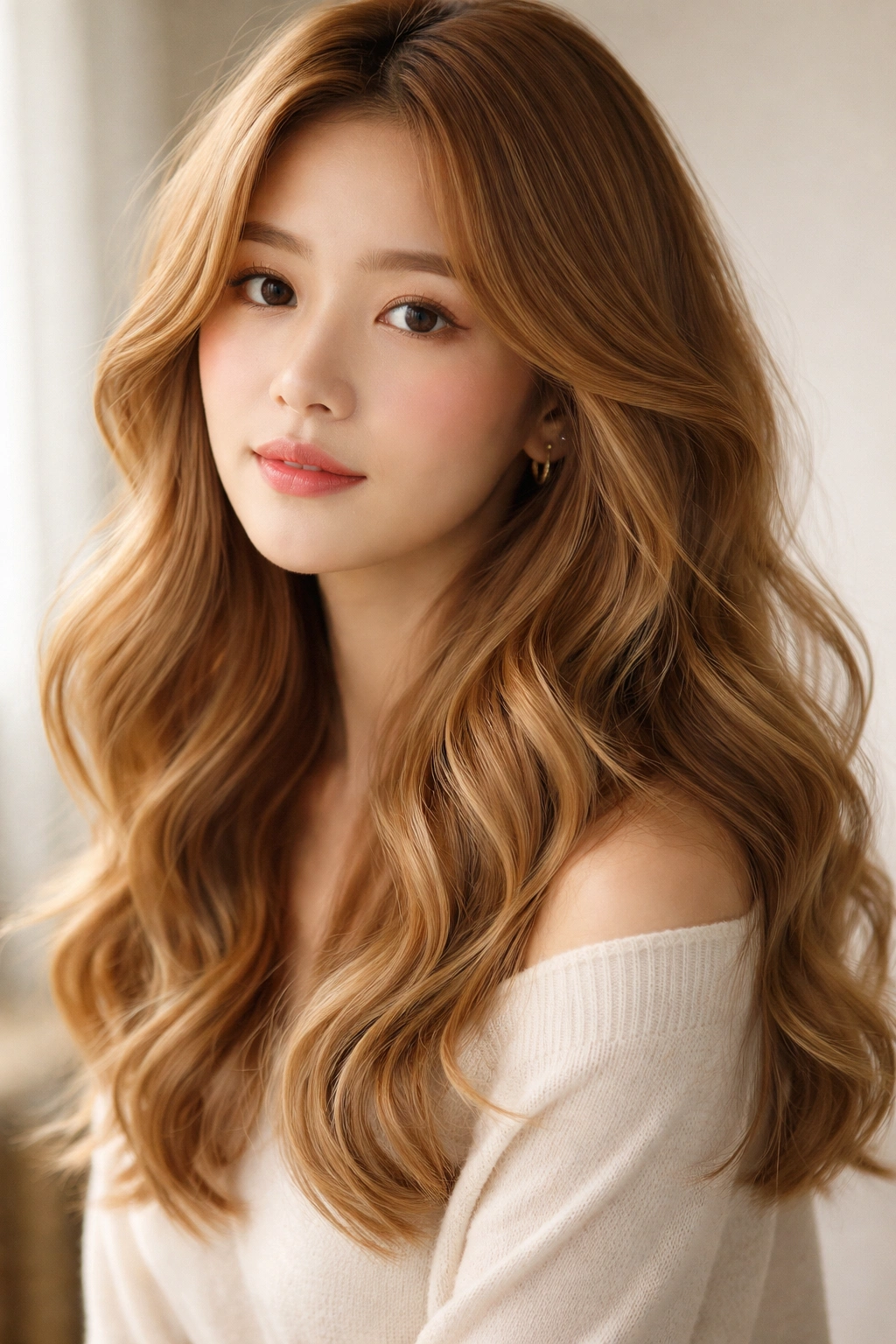
The honey butter waves style is named for its warm, honeyed color combined with creamy, buttery-soft waves that create an incredibly cohesive and luxurious look. This style combines dimensional blonde or caramel coloring with gentle waves that fall in a specific pattern—typically starting below the ears and intensifying toward the ends. The color and texture work together to create a soft, romantic aesthetic that photographs beautifully in natural light.
The Color-and-Wave Synergy
The warm honey and butter tones in this style aren’t just chosen for their flattering quality—they’re actually part of the overall design. The lighter color makes the waves appear softer and more delicate because you can see the light playing through the texture. This is why Korean stylists often recommend starting with this style if you’re considering permanent waves; the color investment helps justify the commitment to maintaining permed hair.
How to Achieve and Maintain
- The base color is typically a warm ash blonde or honey blonde with subtle caramel lowlights throughout
- Waves are created through either a perm or consistent blow-drying and setting techniques
- The style requires toning treatments every 4-6 weeks to maintain the honey and butter tones and prevent brassiness
- Weekly deep conditioning masks are essential for keeping the color-treated and permed hair healthy
- This style looks best when refreshed with a round brush blow-dry 2-3 times per week
Insider note: If you’re going for honey butter waves without a perm, using a hot air brush or ceramic blow dryer with medium heat and a volumizing mousse gives you 80% of the effect with much less maintenance.
4. The Blunt-Cut Medium Bob with Subtle Waves
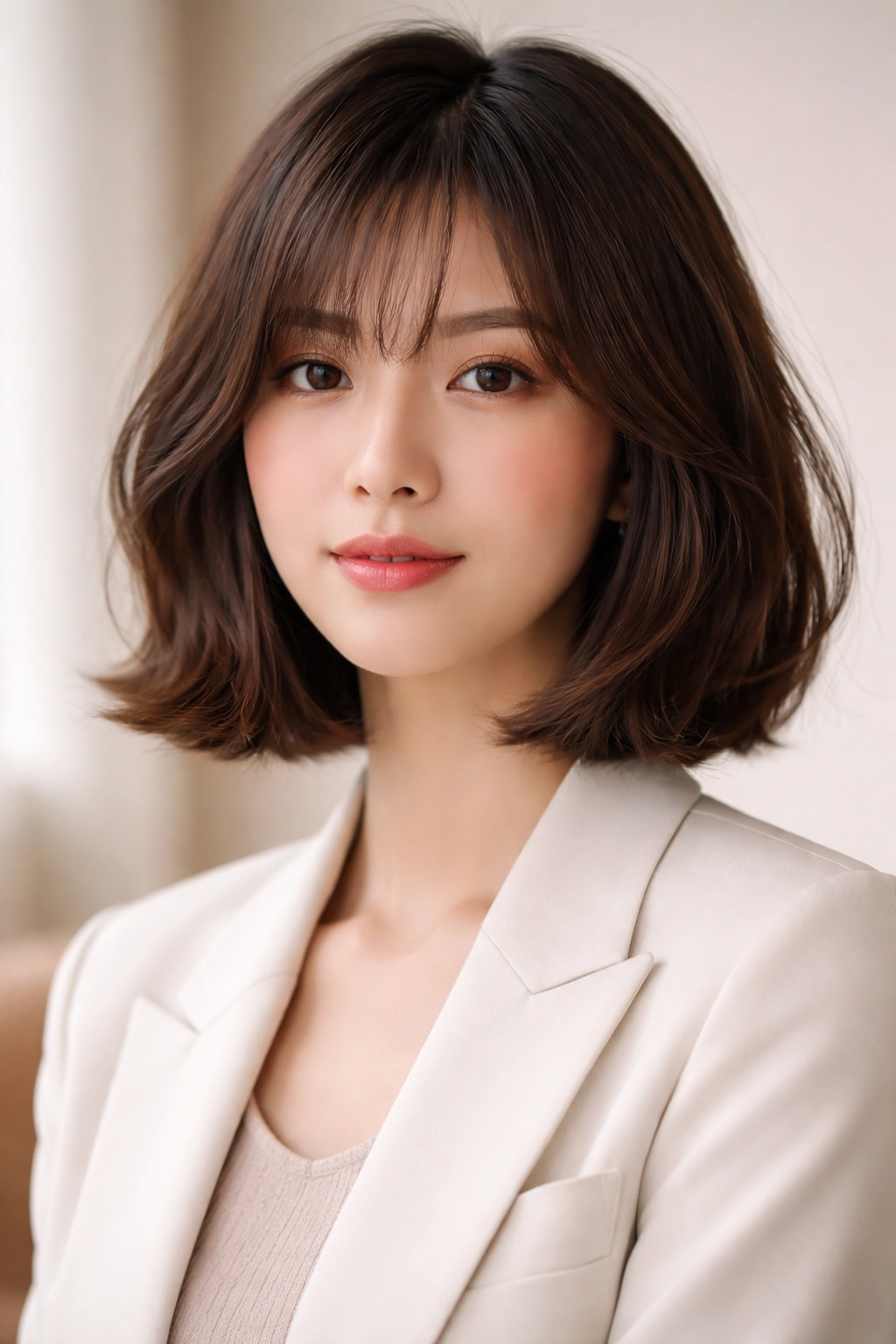
This is the polished, sophisticated Korean medium wave style that works in professional settings while still looking deliberately styled. The cut is blunt at the ends, typically hitting right around chin length or slightly below, with subtle waves that appear more like texture than obvious curls. This style looks particularly sharp in person and photographs incredibly well because the blunt line creates a finished appearance while the waves add softness and movement.
Why Blunt Lines Create Drama with Subtle Waves
The stark blunt line at the ends actually makes the waves more visible and impactful—the eye recognizes the defined edge, then follows the subtle wave texture within the overall shape. This creates visual interest without looking trendy or overly casual. Korean stylists often use this technique when they want to create a style that’s contemporary but not so fashion-forward that it dates quickly.
Technical Details for Your Stylist
- The cut should be absolutely blunt at the ends with minimal layering (maybe just some internal layers for movement)
- The waves should be subtle—created with a light perm or daily styling rather than obvious curls
- The style works best when slightly longer on one side (typically 0.5-1 inch) for asymmetry and modern appeal
- Some stylists add very slight shorter pieces around the face (just barely visible when hair is down) to frame features
- The back should be cut to sit flat against the head while maintaining a blunt line
What to expect: This cut requires blow-drying every few days to maintain the shape and subtle waves. It’s not a wash-and-go style, but the styling process only takes 5-10 minutes once you get the technique down.
5. The Twin Wave Face-Framing Style
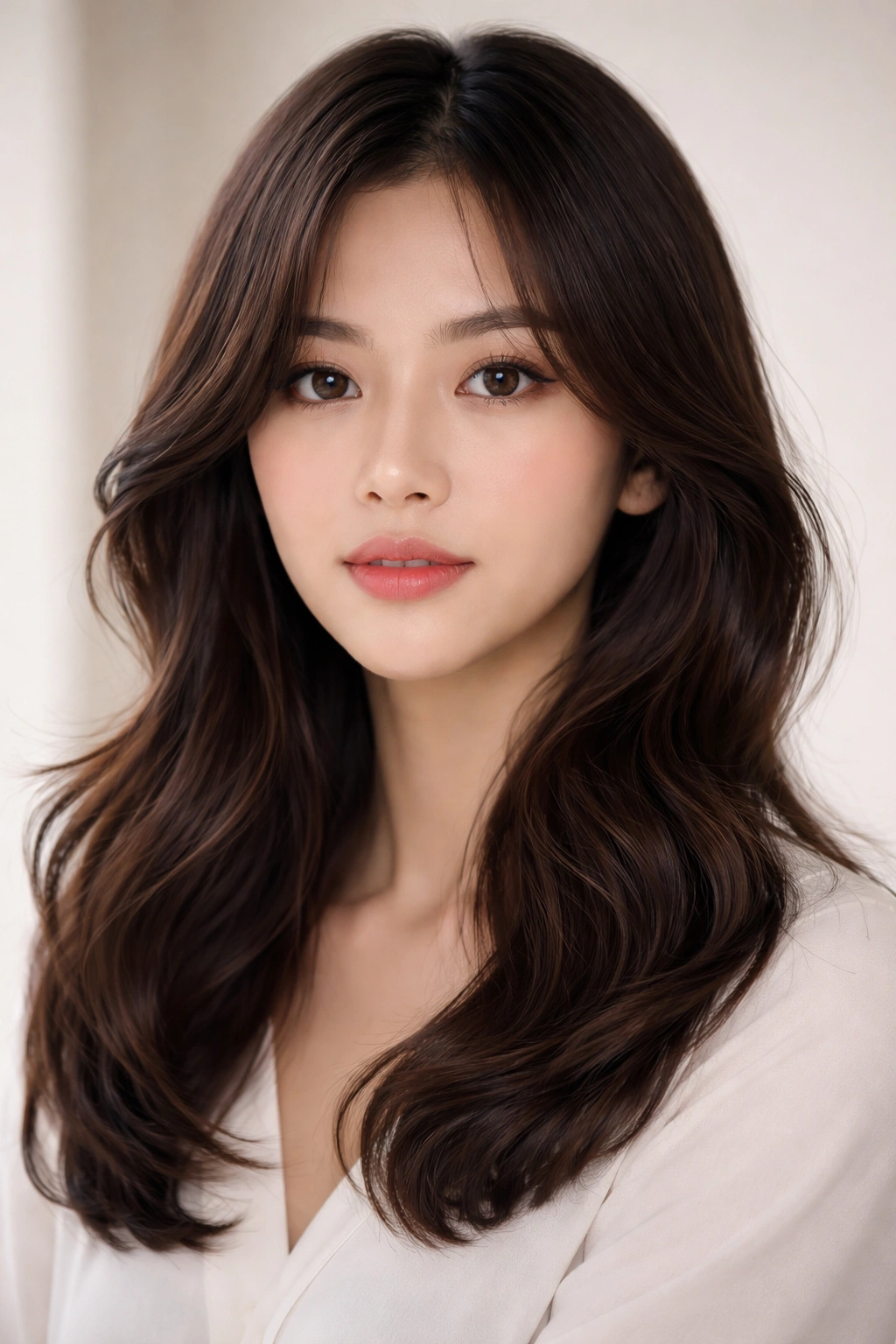
The twin wave face-framing style features two specific, intentional waves that start at the cheekbones and flow outward and downward, creating a flattering frame for the face. This is a technical cut and styling approach that requires precision—the waves aren’t random; they’re positioned exactly where they’ll be most visible and most flattering. This style works especially well for people who want to show off their face shape while maintaining some softness and texture.
The Positioning Strategy
The first wave starts at the cheekbone level and curves slightly outward, creating width that enhances cheekbones. The second wave starts lower, around the jaw, and follows through to the ends. These two distinct waves create a gentle S-curve when viewed from the front, which is incredibly flattering because it draws the eye along the contours of the face. The style typically requires a perm to maintain the wave placement through regular wear.
Creating the Twin Wave Effect
- The cut includes longer face-framing pieces that are positioned to start the first wave right at the cheekbone
- These face-framing pieces are slightly shorter and more curved than the rest of the hair
- The longer back pieces create the second wave, which flows from around jaw level downward
- Styling involves directing the waves in the intended direction while blow-drying with a round brush
- A light holding spray helps maintain the wave placement throughout the day
Worth knowing: This style is particularly effective for oval and heart-shaped faces, but it can be adapted for other face shapes by adjusting where the waves begin and how prominent they are.
6. The Feathered Wave Cut
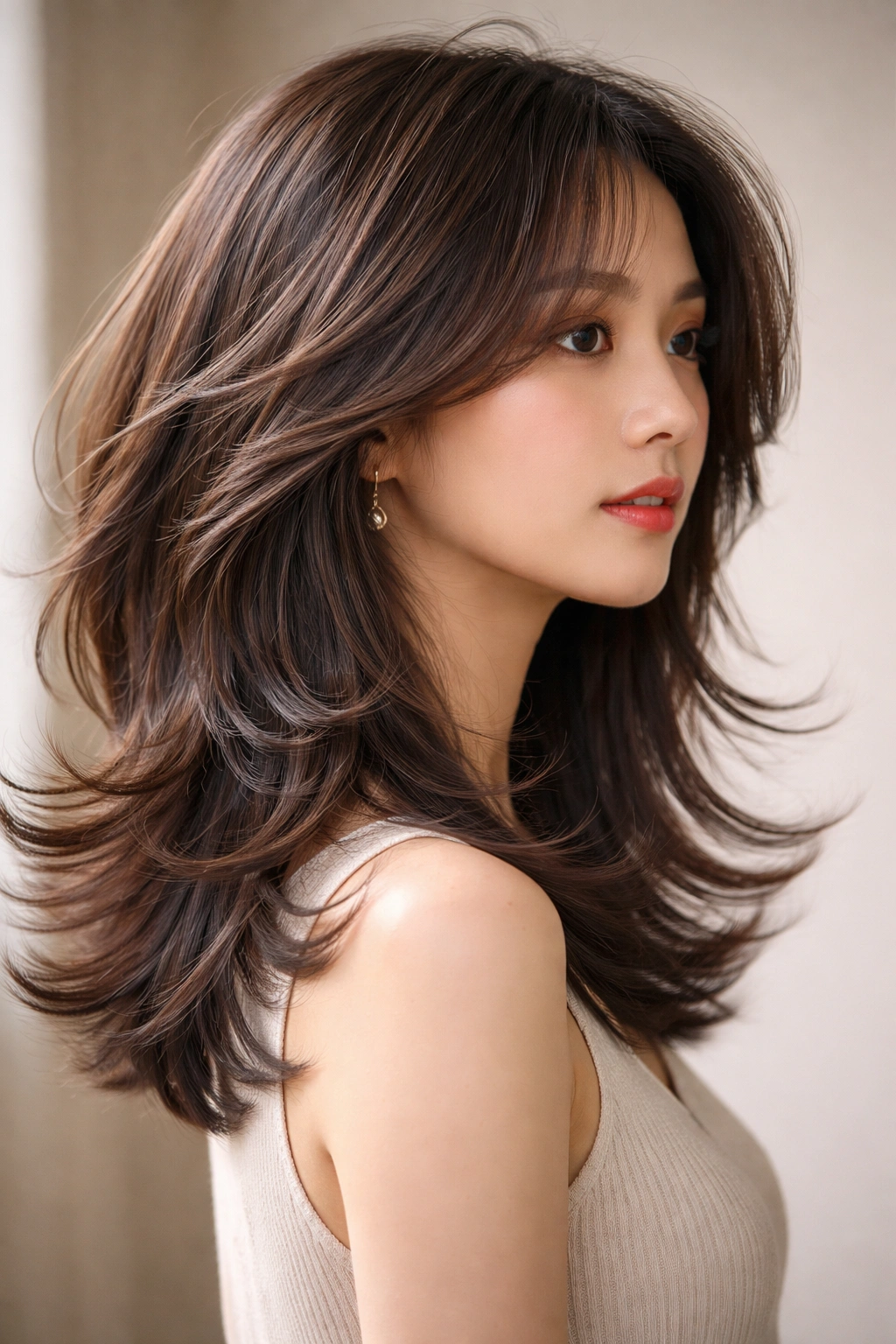
The feathered wave cut uses a specific technique where layers are cut to flip outward and upward, creating the appearance of feathers that catch light beautifully. This style has movement built into the actual cut, not just the styling—which means it looks good even if you’re not spending time styling it perfectly every day. The feathering technique is especially popular in Korean salons because it creates volume and visual interest without requiring a permanent wave.
The Feathering Technique Explained
Rather than traditional layering where some hair is shorter and some is longer, feathering involves cutting the ends of each layer at angles so they flip and separate from each other. This creates a texture that looks light and airy, almost like feathers overlapping. When waves are added to feathered hair, the effect is incredibly dimensional—you can see multiple layers of texture and movement rather than one solid wave pattern.
How to Style Feathered Waves
- Blow dry with a round brush, directing each section of hair outward and slightly upward to emphasize the feather effect
- Use a sea salt spray while hair is slightly damp to enhance the feathered texture
- A texturizing cream or light styling spray helps maintain the feather separation throughout the day
- The style actually looks better when slightly undone—perfectly smooth styling defeats the purpose
- Feathered waves hold for several days, so you can skip some blow-drying sessions mid-week
Pro tip: This cut works beautifully with minimal color work—sometimes just a few subtle highlights around the face enhance the feathered layers without requiring full color maintenance.
7. The Center-Parted Wave with Baby Bangs
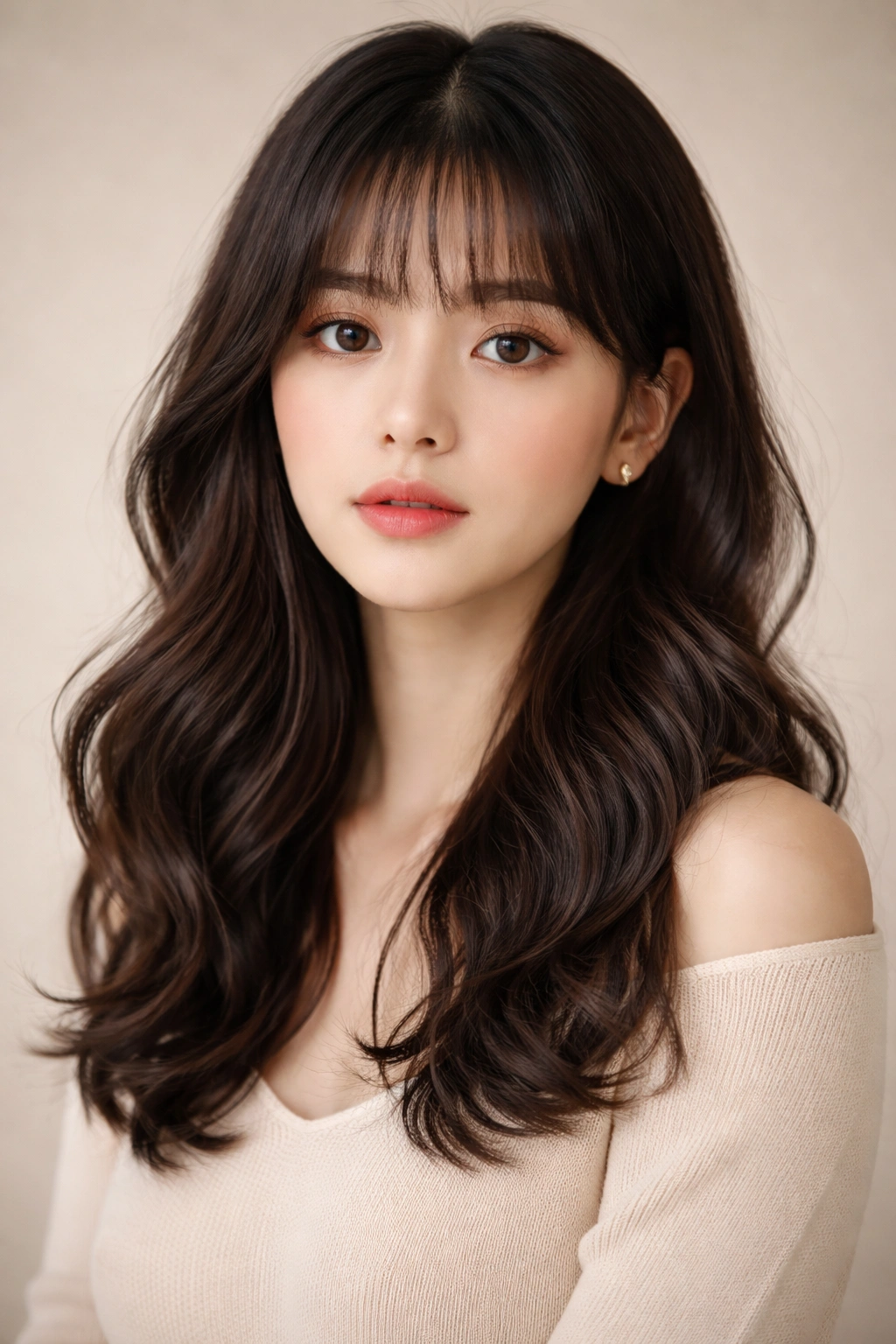
This style combines a precise center part with soft waves throughout and short, face-framing baby bangs that create a youthful, fresh aesthetic. The center part creates a formal structure that contrasts beautifully with the organic waves, making the style feel both put-together and effortlessly beautiful. The baby bangs (short, just-barely-there fringe) add a distinctly Korean beauty element while working with most face shapes because they’re so minimal.
The Power of the Center Part
A center part naturally draws attention to the center of the face, which means this style works best for people who want to emphasize their eyes, nose, or overall facial symmetry. The part doesn’t have to be razor-sharp—in fact, a slightly softer, less precise center part looks more contemporary and easier to maintain at home. The waves on either side of the part create balance and symmetry that’s visually very satisfying.
Baby Bangs Specifications
- Baby bangs should hit right at or just below the eyebrow, creating a delicate fringe rather than full coverage
- They should be cut straight across rather than angled—this creates the signature Korean baby bang look
- The bangs are typically just a few inches wide, framing only the center of the face
- They work best when styled with a slight flip or curl, which adds dimension
- Baby bangs require trimming every 3-4 weeks as they grow out
Insider note: If you’re not ready to commit to baby bangs, you can test this style by using styling clips or even drawing a faux bang with eyebrow pencil to see how it frames your face before you take the plunge.
8. The Chocolate Brown Soft Perm Wave
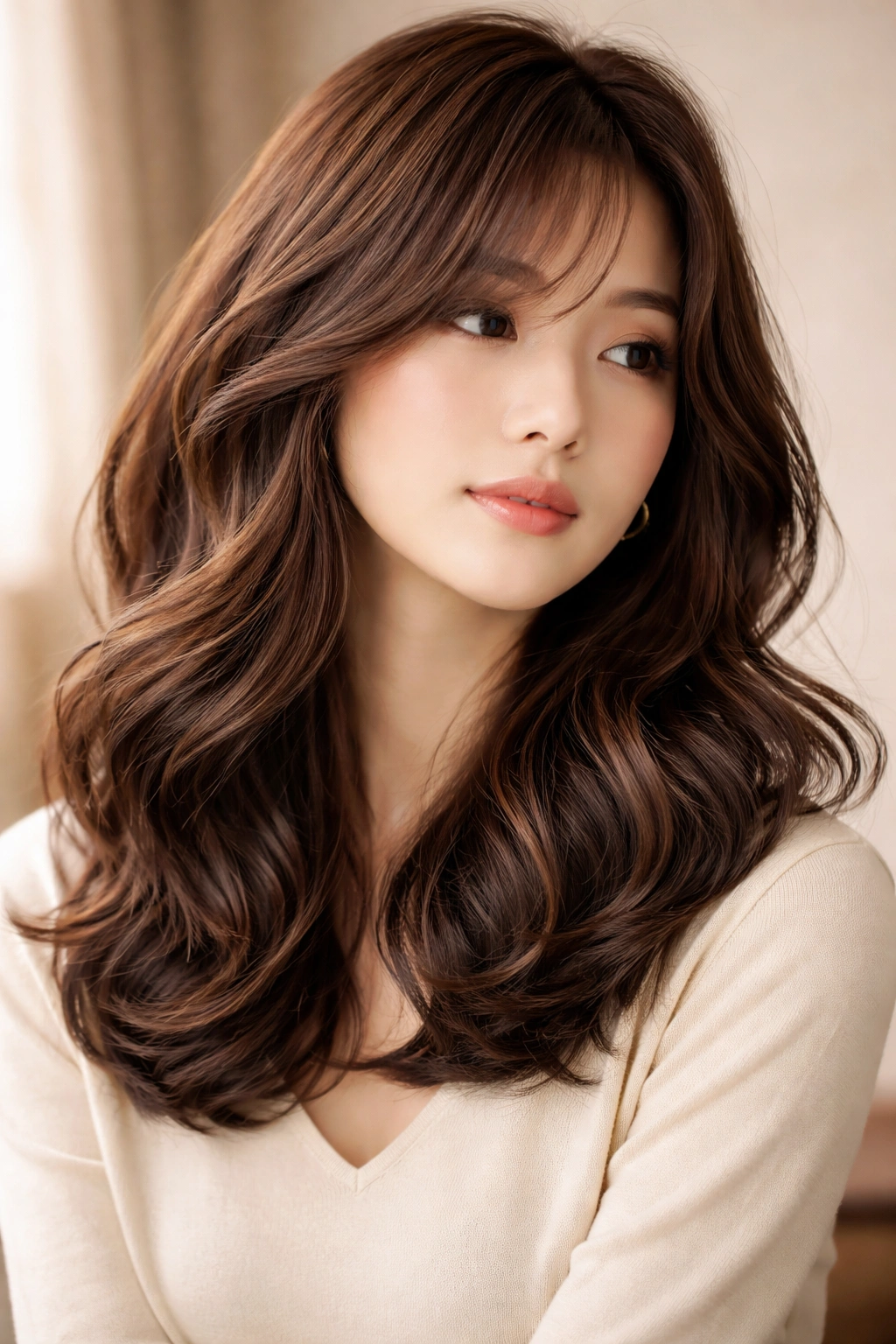
This style pairs rich, dimensional chocolate brown coloring with soft perm waves, creating a warm, luxurious aesthetic that’s incredibly wearable year-round. The chocolate brown isn’t a flat, single-tone color—it typically includes subtle ash tones and caramel highlights that interact beautifully with the perm waves and catch light differently depending on lighting. This combination of color and texture creates depth and dimension that makes the style look expensive and intentional.
The Color Dimensions in Chocolate Brown
Korean stylists typically recommend using at least two shades of brown in this style: a deeper chocolate base tone and lighter honey or ash tones throughout. This multi-tonal approach prevents the hair from looking flat or monochromatic, which would actually make the perm waves less visible. The lighter tones hit the highest points of the waves, while the darker base tone shows in the valleys, creating a natural-looking dimensional effect.
Maintenance for Color and Texture
- The chocolate brown color requires regular toning treatments to maintain dimension and prevent brassiness
- Deep conditioning treatments should be done weekly or bi-weekly to keep color-treated and permed hair healthy
- The perm will last 4-6 months before you need a touch-up on new growth
- Root touch-ups for color are typically needed every 4-6 weeks depending on how noticeable your natural color is
- This style benefits from professional styling every 6-8 weeks to refresh the shape and wave pattern
What to know: Chocolate brown soft waves actually show less damage and brassy tones than blonde waves, which makes it a great choice if you’re new to color and perm treatments.
9. The Long Choppy Layers with Textured Waves
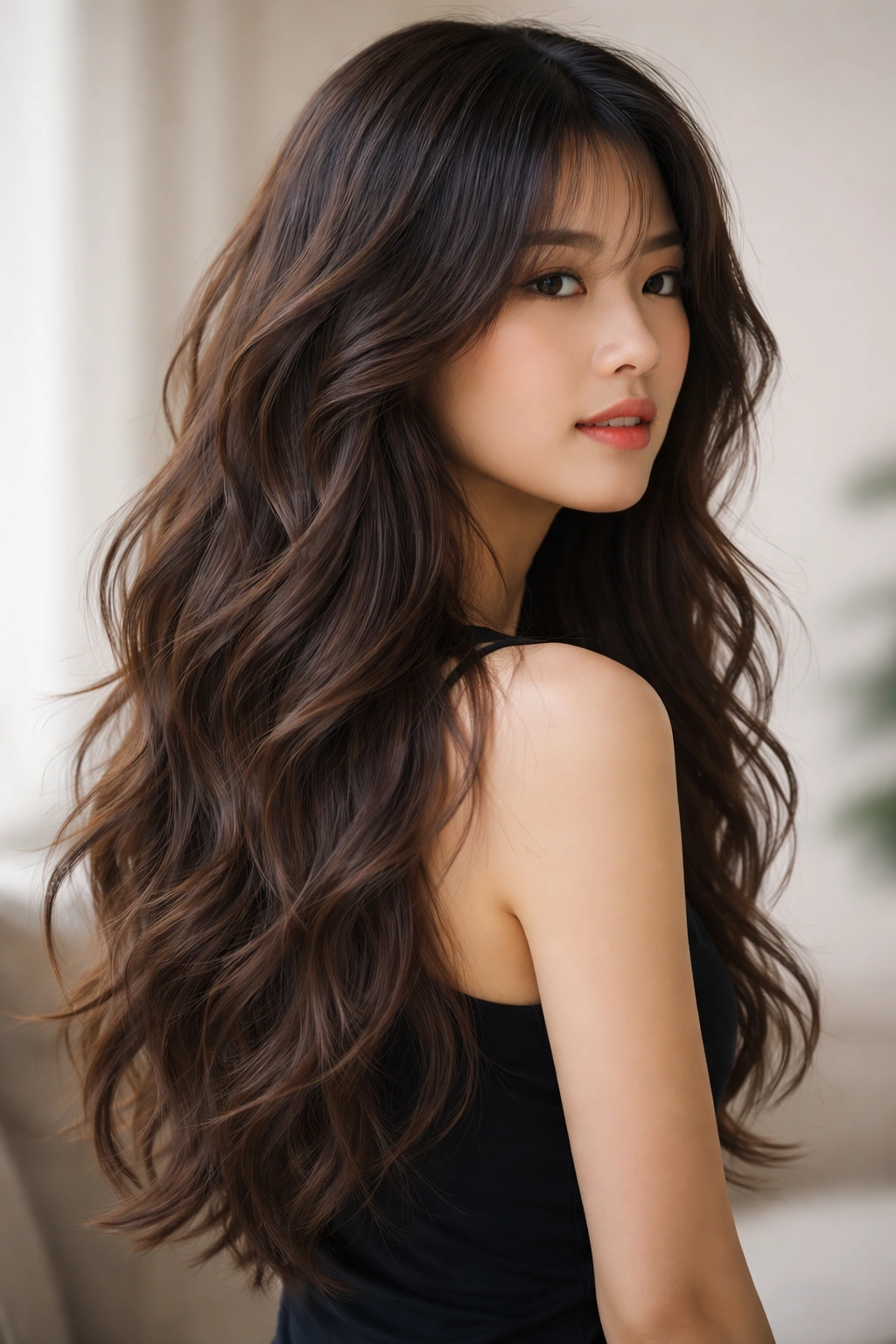
This style features longer hair (still in the medium-length range, typically hitting mid-back or just below) with choppy, uneven layers throughout and textured waves that vary in size and placement. The choppy layering creates lots of movement and visual interest, while the varied wave sizes prevent the style from looking too uniform or overly styled. This is the style for people who want maximum texture and that deliberate, curated effortlessness that defines modern Korean beauty.
Why Choppy Works for Waves
Choppy layers create natural breaking points where waves can form, which means you don’t need a perm to achieve visible texture—though a perm certainly enhances the effect. The uneven lengths mean that different sections of hair will wave at different points, creating a complex, dimensional appearance rather than uniform waves throughout. This style actually looks better when it’s slightly undone or imperfectly styled because the irregularity is the whole point.
Layering Strategy for Maximum Impact
- Shorter layers around the face (starting 1-2 inches shorter than the face-framing pieces) create movement
- Mid-length layers throughout create the choppy effect and irregular texture
- The longest pieces typically reach mid-back or just below shoulder blade
- The back is often slightly shorter than the front, creating a subtle A-line shape
- Every layer should have visible separation rather than blending seamlessly
Pro tip: This style works beautifully with balayage or highlights because the chopped layers show off color placement perfectly—ask your colorist to place lighter tones on the shorter, choppy layers for maximum dimension.
10. The Sleek Waves with Curved Underneath Layers
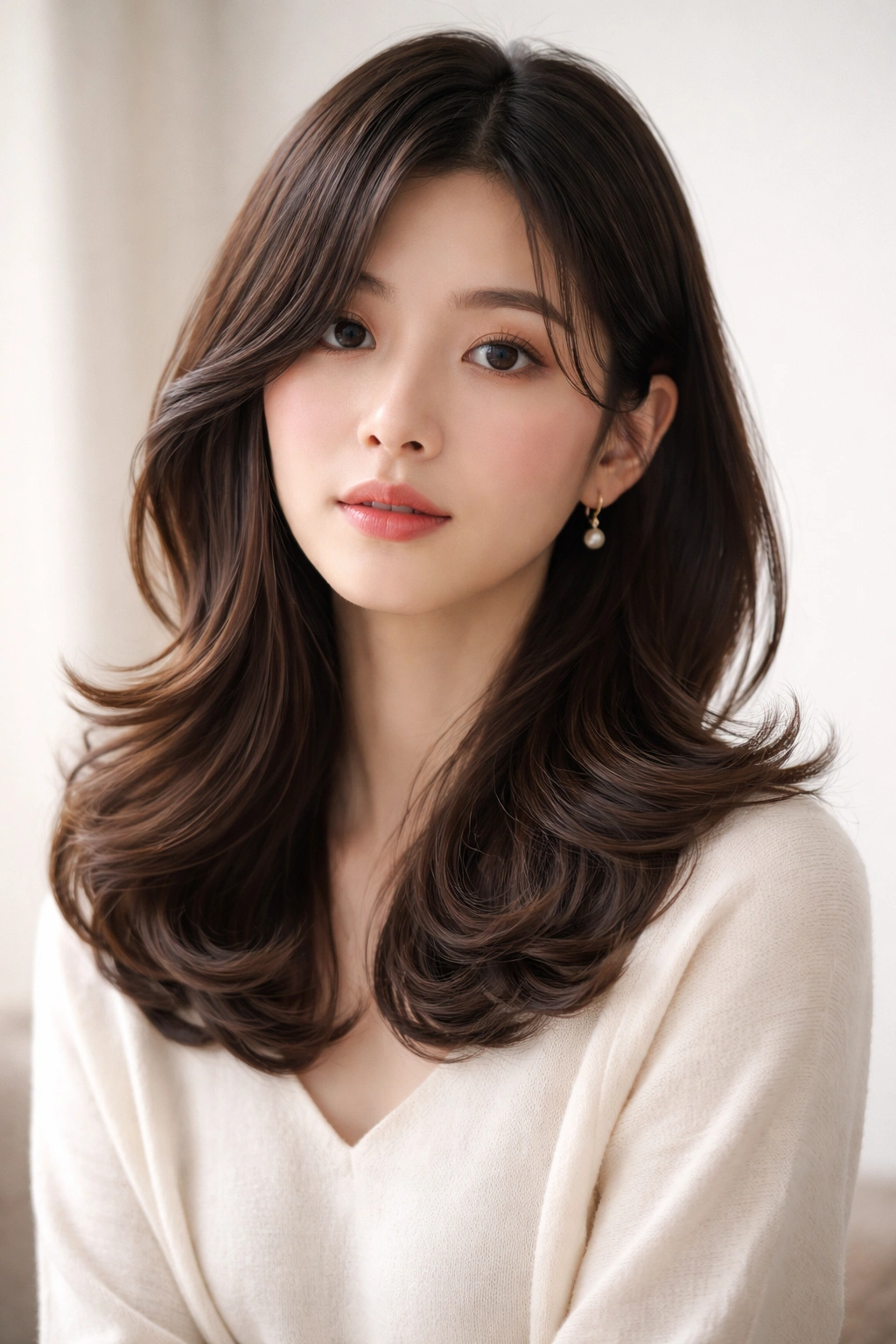
This style features sleek, smooth waves on top with curved, shorter layers underneath that create volume and movement at the ends. The visual effect is polished on the top while textured and voluminous underneath—it’s like the style has two different personalities depending on the angle you view it from. This is a more technical cut that requires precision, but once it’s cut correctly, it’s relatively easy to maintain.
The Two-Texture Approach
The top layers are designed to lay relatively smoothly while still having subtle waves built in through the cut and styling. The underneath layers are considerably shorter and cut with more aggressive angles, creating the movement and volume that prevents the style from looking flat or limp. When you wear your hair half-up or in certain styles, the curved underneath layers become visible and add visual interest and texture.
Technical Specifications
- The top layer should be blunt or nearly blunt to create a smooth appearance
- Underneath layers are cut at various shorter lengths, creating a curved, tapered effect toward the ends
- The contrast between top and bottom should be noticeable but not drastic—typically 2-3 inches of difference
- The curve of the underneath layers should follow the natural curve of the head and neck
- This cut requires blow-drying with a round brush to style the top smoothly while flipping the underneath layers outward
Worth knowing: This is an excellent style if you like wearing your hair down and smooth but want volume and movement without looking too casual or overly wavy.
11. The Curtain-Banged Wave
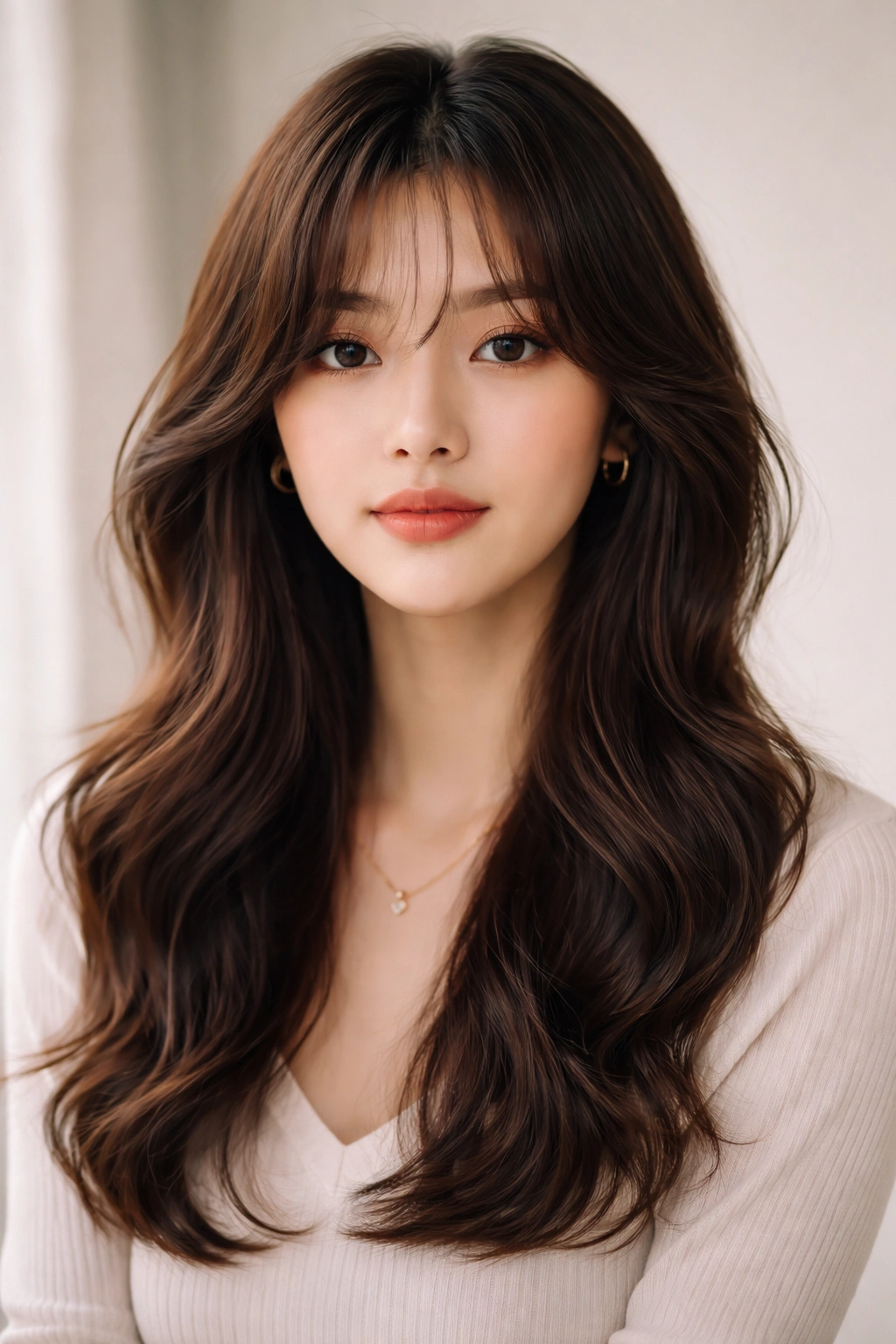
The curtain-banged wave style features longer face-framing pieces that create a gentle parted effect in the center—the modern take on ’70s curtain bangs. The face-framing pieces are longer and more integrated into the overall hairstyle than traditional bangs, and they’re styled to curve slightly away from the face, framing cheekbones beautifully. Combined with soft waves throughout the rest of the hair, this creates a romantic, slightly vintage-inspired look that’s contemporary and flattering on most face shapes.
The Curtain Bang Proportion
The curtain bangs should hit right around cheekbone length, maybe slightly longer. They’re cut to be part of the overall flow of the hair rather than a separate fringe section, which means they blend seamlessly with the rest of your waves. The center part is typically soft and imprecise rather than razor-sharp, giving the style a more effortless appearance. When you style your hair, the curtain bangs should have a gentle curve that sweeps away from the face.
Styling to Enhance the Look
- Blow dry the face-framing pieces with a round brush, directing them to curve away from the face
- Use a flat iron to create subtle waves within the face-framing pieces for extra dimension
- The waves throughout the rest of the hair should have a similar soft quality to the curtain bangs
- A texturizing spray helps maintain the style and prevents it from looking too smooth or severe
- This style benefits from a refresh blow-dry every 2-3 days to maintain the curtain bang shape
Insider note: Curtain bangs are incredibly forgiving to grow out—if you decide you want to change styles, they blend back into the rest of your hair naturally without requiring a significant cut.
12. The Honey Blonde Permed Waves
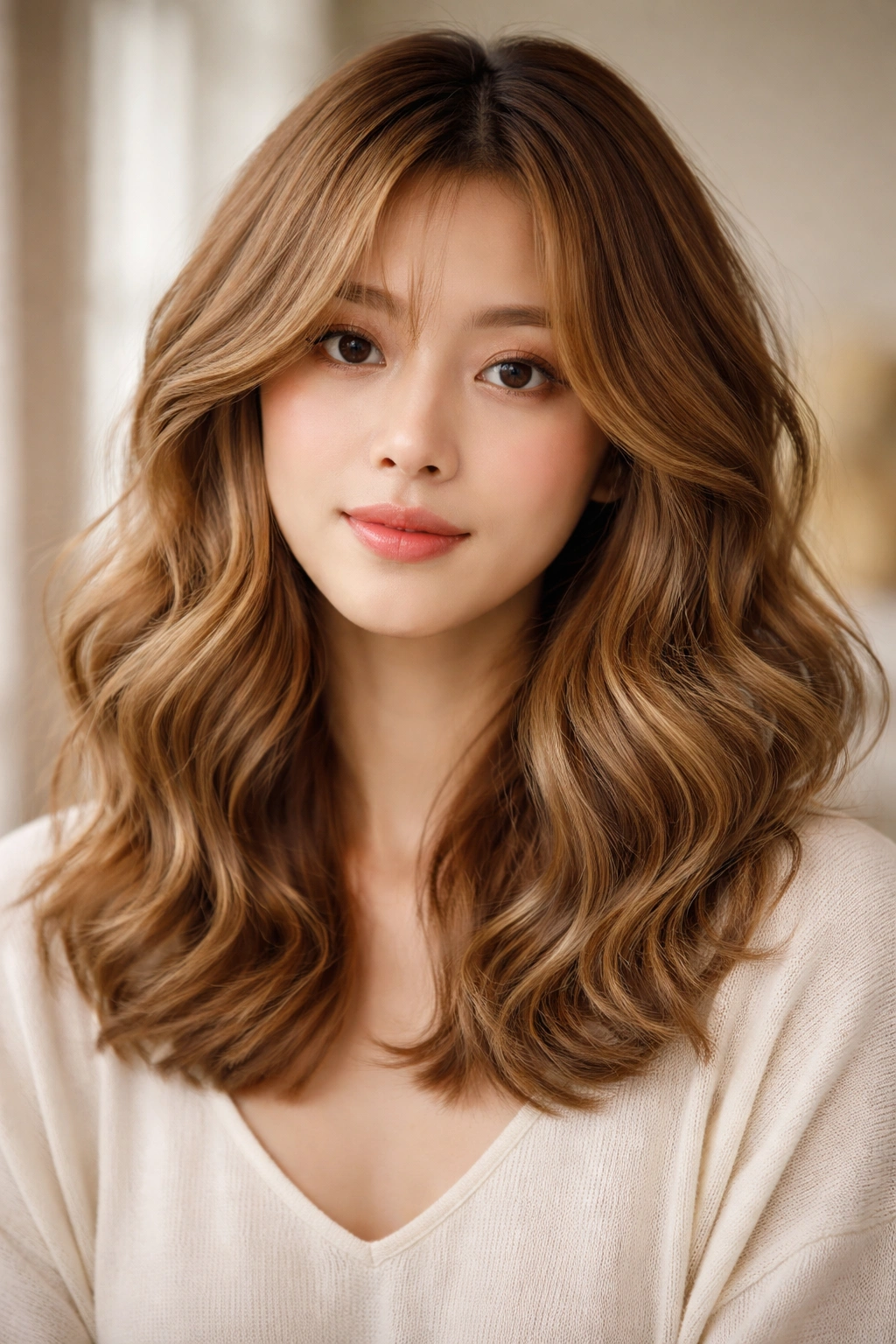
This style combines a warm honey blonde color (typically achieved through balayage or dimensional highlighting) with soft perm waves that create a luminous, expensive-looking result. The honey tones interact beautifully with perm waves because the light color makes the wave texture incredibly visible and dimensional. This is one of the most photographically stunning Korean medium hairstyles because it catches light beautifully and shows dimension from every angle.
The Color Foundation for Wave Visibility
The honey blonde should include darker root shadow to create dimension and make the hair look thicker, along with lighter honey and golden tones throughout. The dimension means that the perm waves show variation in tone as well as texture, creating a complex, multi-layered appearance. This color-and-wave combination requires commitment to maintenance, but the payoff is a style that looks like you just stepped out of a high-end Korean salon.
Commitment and Care Required
- Honey blonde color requires toning treatments every 4-6 weeks to maintain vibrancy and prevent brassiness
- Deep conditioning masks should be used weekly or bi-weekly on color-treated and permed hair
- The perm lasts 4-6 months before you need touch-ups on new growth
- Professional styling refreshes every 6-8 weeks help maintain the shape and wave definition
- This style looks best when styled with a blow dryer and round brush to enhance the waves
What to know: If you’re committing to honey blonde perm waves, plan for at least 2-3 hours at the salon for the initial service (color and perm), plus regular maintenance appointments.
13. The Asymmetrical Wave with Shaved Undercut
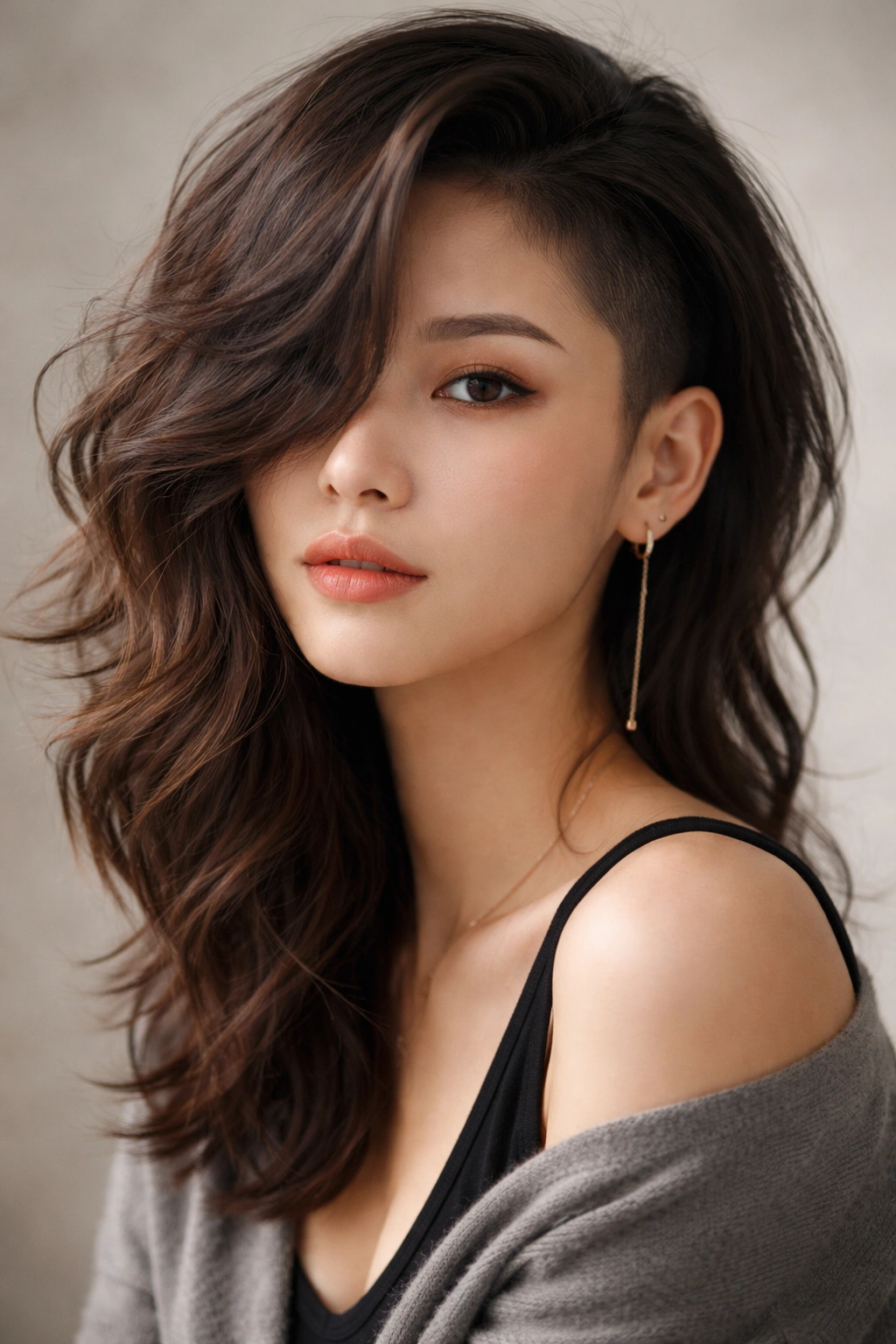
This bold, modern style features asymmetrical layering with soft waves throughout, combined with a shaved or very short undercut on one side. The shaved undercut is hidden when you wear your hair down, but it adds an edgy, unexpected element and provides volume relief if you have thick hair. This style appeals to people who want something fashion-forward and distinctive while still maintaining the romantic wave element of Korean beauty.
The Asymmetrical Structure
One side of the head has noticeably shorter layers or an undercut, while the other side is longer and fuller. When styled with the hair falling to cover the shorter side, the asymmetry is subtle and sophisticated. The waves work throughout the hair, but they appear more voluminous and dramatic on the longer side. This creates a style that’s interesting from every angle—sometimes you see the asymmetry, sometimes you don’t.
The Undercut Element
- The undercut is typically very short (1/4 inch to 1/2 inch) and tapered up the side of the head
- It’s usually hidden by longer hair, but you have the option to style it visibly for more edge
- The undercut needs touching up every 2-4 weeks as it grows out
- This element works best on people with relatively thick or coarse hair, as thin hair might show scalp
- The asymmetrical layering prevents the hair from looking too heavy on the longer side
Pro tip: Before committing to a visible shaved undercut, try styling your hair asymmetrically for a few weeks to see if you like the vibe. You can always add the undercut later if you’re sure.
14. The Textured Lob with Soft Waves
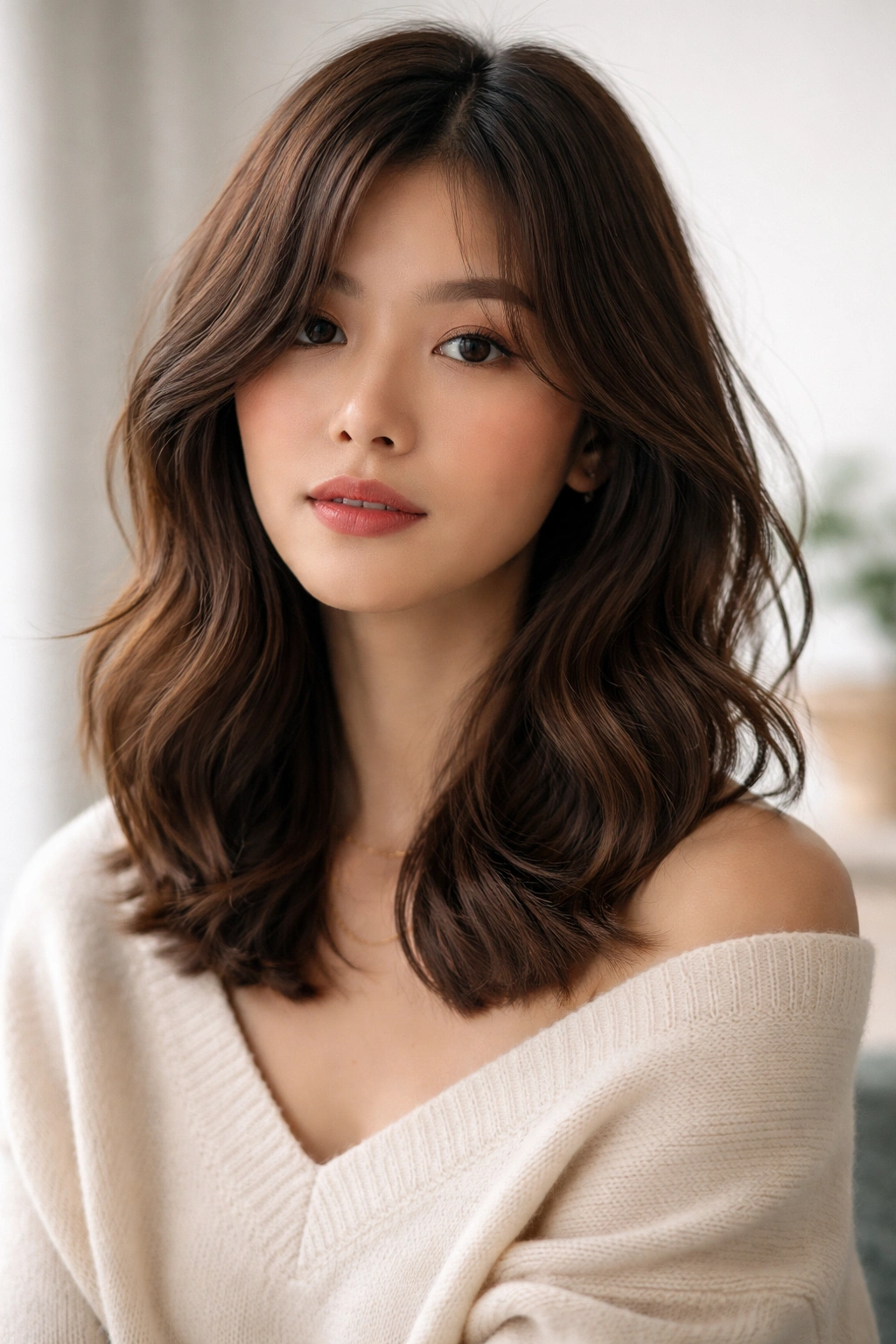
The lob (long bob) with soft waves is a versatile length that works for almost everyone, hitting around collarbone length with textured layers throughout and soft waves that create movement and dimension. This length is long enough to wear in ponytails or braids if you want a change, yet short enough to style quickly and manage easily. The textured layers throughout prevent the lob from looking blunt or heavy, and the soft waves add a romantic, effortless quality.
Why the Lob Length Is Ideal for Waves
The collarbone-length is the sweet spot for soft waves—it’s long enough that the waves create obvious movement and drape beautifully, but short enough that the waves hold their shape without becoming weighted down. The textured layering throughout means you don’t necessarily need a perm to achieve visible texture; the cut itself creates breaking points where waves naturally form. This is an excellent style if you like the idea of waves but aren’t ready to commit to a perm.
Layering Details for the Textured Lob
- The cut should include shorter layers throughout, creating texture and movement from roots to ends
- Face-framing pieces should be shorter and angled slightly toward the face to enhance cheekbones
- The back can be slightly longer or uniform length—both work with this style
- Layers should be blended rather than choppy, creating a cohesive, polished appearance
- A light perm or daily wave-setting can enhance the natural texture created by the layering
What to expect: This style requires blow-drying every 2-3 days to maintain the wave and texture, but the styling process is relatively quick and straightforward once you get the technique down.
15. The Copper-Toned Permed Waves
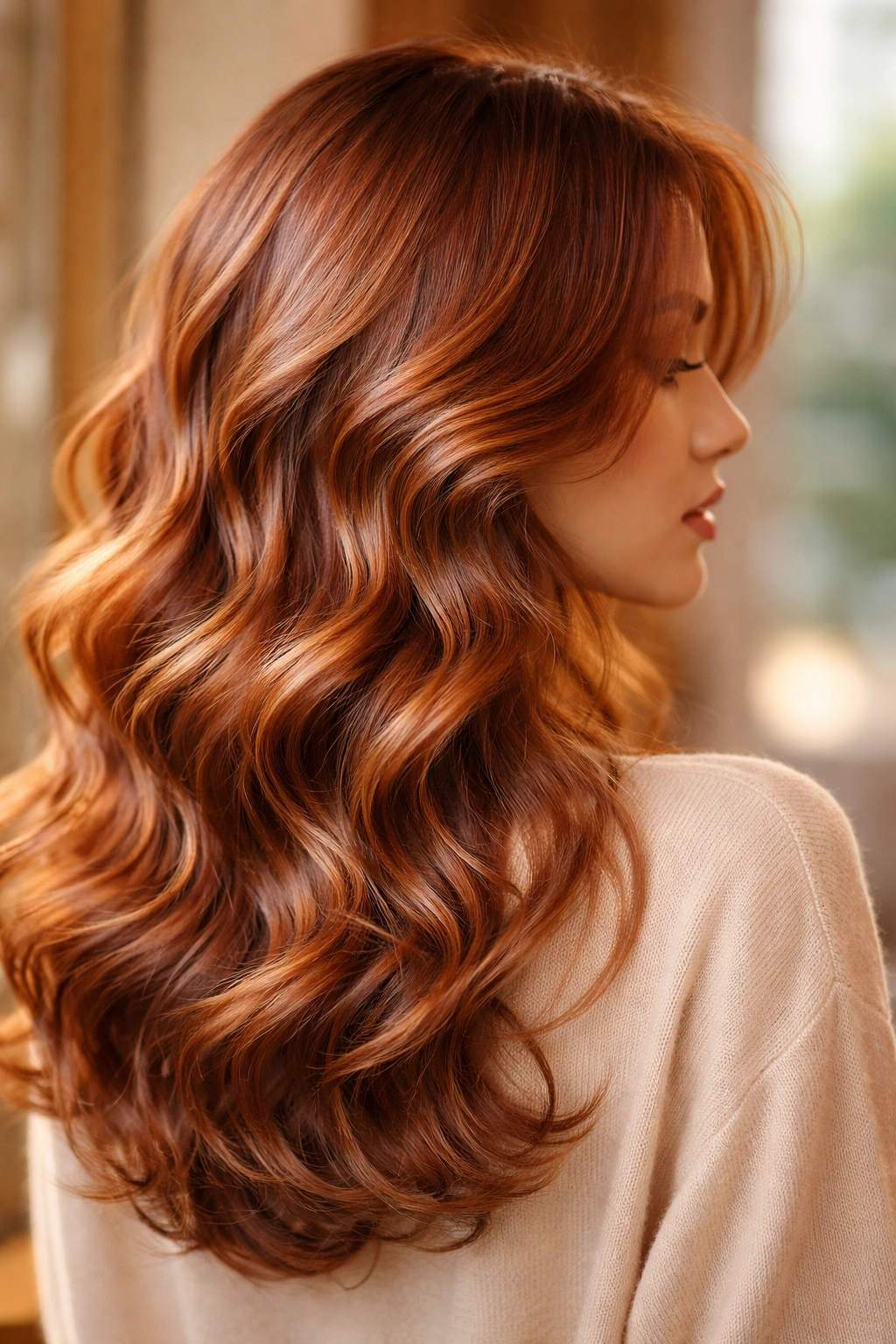
This style combines a warm, dimensional copper or rose-gold tone with soft perm waves, creating a luxurious, high-shine aesthetic that’s distinctly modern. The copper tones interact beautifully with perm waves, creating depth and dimension that changes slightly depending on lighting. This is a bold color choice that requires commitment to maintenance, but it’s incredibly striking and photographs beautifully.
The Copper Tone Dimensions
The copper or rose-gold color typically includes multiple undertones—warmer copper tones, cooler ashy tones, and sometimes subtle pink or mahogany highlights. This multi-dimensional approach prevents the color from looking flat or monochromatic, and it makes the perm waves more visually interesting because you see variation in both color and texture. The copper tones work particularly well with warm skin tones but can be adapted for cooler undertones with more ashy, rose-gold tones.
The Maintenance Reality
- Copper and rose-gold tones require toning treatments every 3-4 weeks to maintain vibrancy
- Without regular toning, these colors tend to fade to a brassy yellow or orange—which is not the desired effect
- Deep conditioning masks are essential weekly or bi-weekly to keep color-treated hair healthy
- The perm lasts 4-6 months before you need root touch-ups
- Professional styling refreshes every 6-8 weeks help maintain the overall look and wave definition
Insider note: If you love the copper tone aesthetic but are hesitant about the maintenance, ask your colorist about a slightly more muted, ashier copper that requires less frequent toning.
16. The Face-Framing Layers with Defined S-Waves
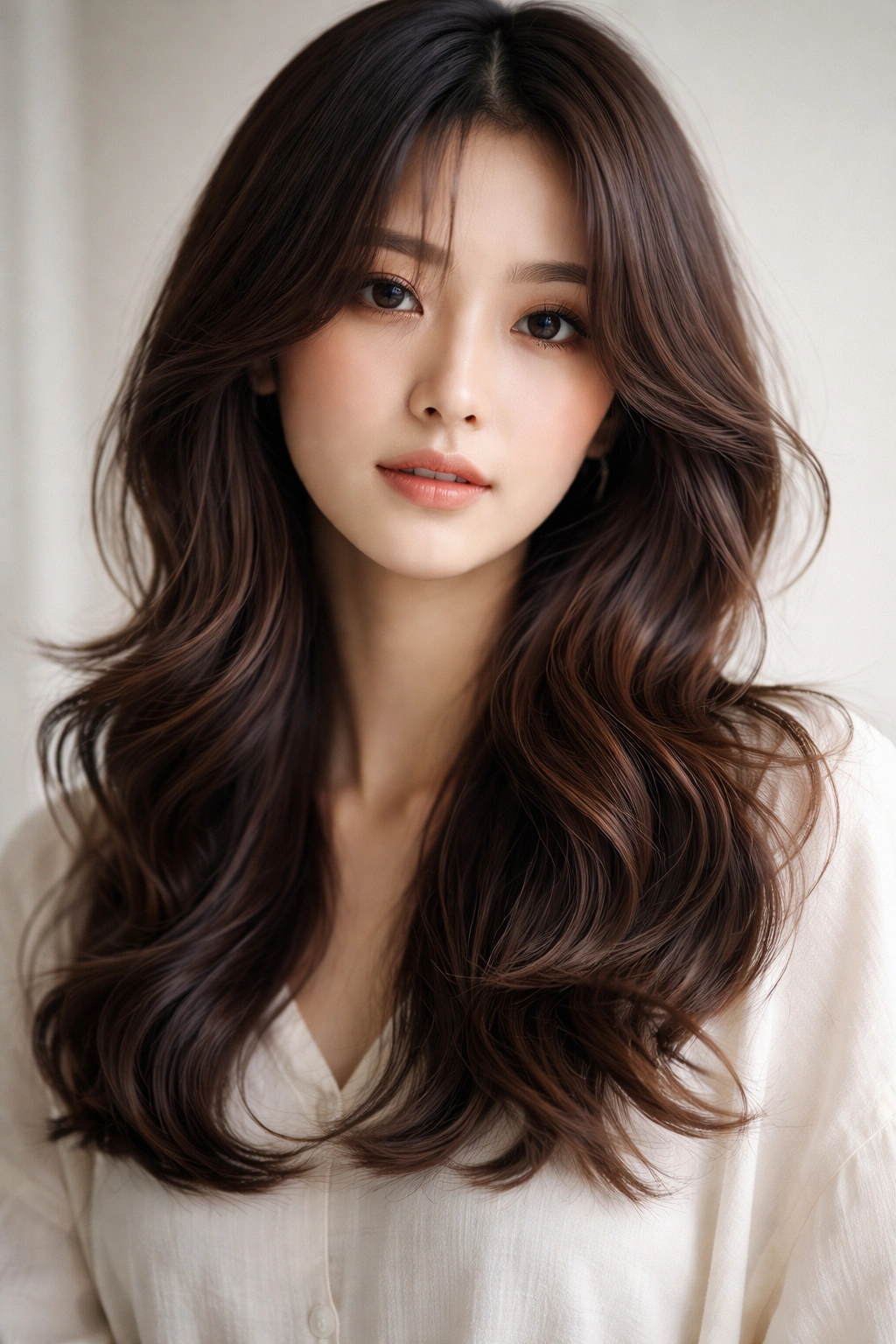
This technical style features shorter, strategic layers around the face combined with intentional S-shaped waves that create a polished, high-fashion appearance. The face-framing layers are positioned to start waves right at cheekbone level, and the waves flow down the hair in defined S-curves rather than loose, random undulations. This style requires a perm or very consistent daily styling, but the payoff is a look that’s sophisticated and deliberately curated.
The S-Wave Pattern
Rather than waves that flow in one direction, S-waves create multiple curves—the hair waves one direction, then reverses direction, creating a serpentine pattern. This creates visual interest and makes the style more dynamic than simple waves. The S-wave pattern is typically achieved through a perm using specific rod sizes and placement techniques, which is why it’s important to find a stylist experienced with this specific approach.
Technical Details for the S-Wave Perm
- The stylist should explain the rod placement and size they’re using to create the S-wave pattern
- The waves should start at specific points (typically cheekbone level) rather than randomly throughout the hair
- The pattern should flow consistently from the face-framing layers down through the rest of the hair
- After the perm, styling involves using a round brush to enhance the wave direction
- This style holds beautifully once the perm is set—typically 4-6 months before touch-ups
Worth knowing: S-wave perms are more technical than soft cloud perms, so you’ll want to find a stylist who specifically specializes in this technique.
17. The Beige-Blonde Tousled Waves
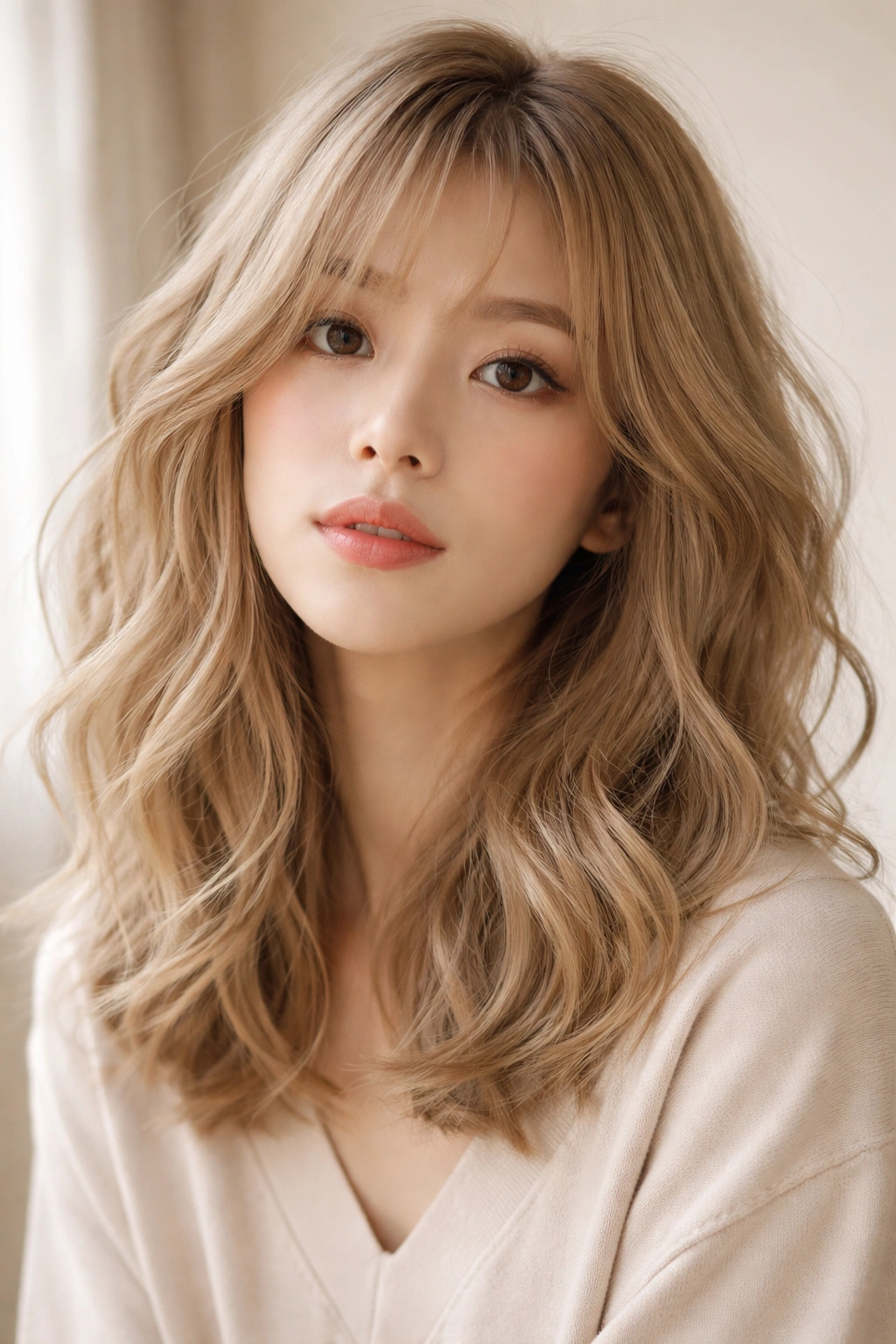
This effortlessly chic style combines a soft, neutral beige-blonde color with casually tousled waves that look like you just stepped out of bed but are actually carefully curated. The beige-blonde is warm but not golden, creating a sophisticated, slightly muted tone that works with most skin undertones. The waves are intentionally irregular and undone-looking rather than uniform, giving the style a relaxed, contemporary aesthetic.
The Beige-Blonde Color
Beige-blonde sits in the middle ground between warm honey blonde and cool ash blonde, making it incredibly versatile and wearable for almost anyone. The color typically includes some darker root shadow and subtle variations in tone throughout, preventing it from looking flat or one-dimensional. This neutral tone actually makes the wave texture more visible because you’re not distracted by dramatic color variations.
Achieving the Tousled Wave Effect
- The waves don’t need to be uniform or perfectly placed—in fact, variety is the goal
- A light perm can help set the casual wave pattern, or daily styling with a sea salt spray and texturizing cream works
- The tousled effect is actually easier to achieve on slightly textured, matte hair than on silky, shiny hair
- Blow dry with your fingers rather than a brush for a more undone appearance
- Refresh the waves with dry shampoo and a light mist of sea salt spray between wash days
Pro tip: This style actually looks better when it’s slightly “imperfect”—if your waves are too uniform or too smooth, the effect reads as overdone rather than effortlessly tousled.
18. The Multi-Layered Face-Framing Wave
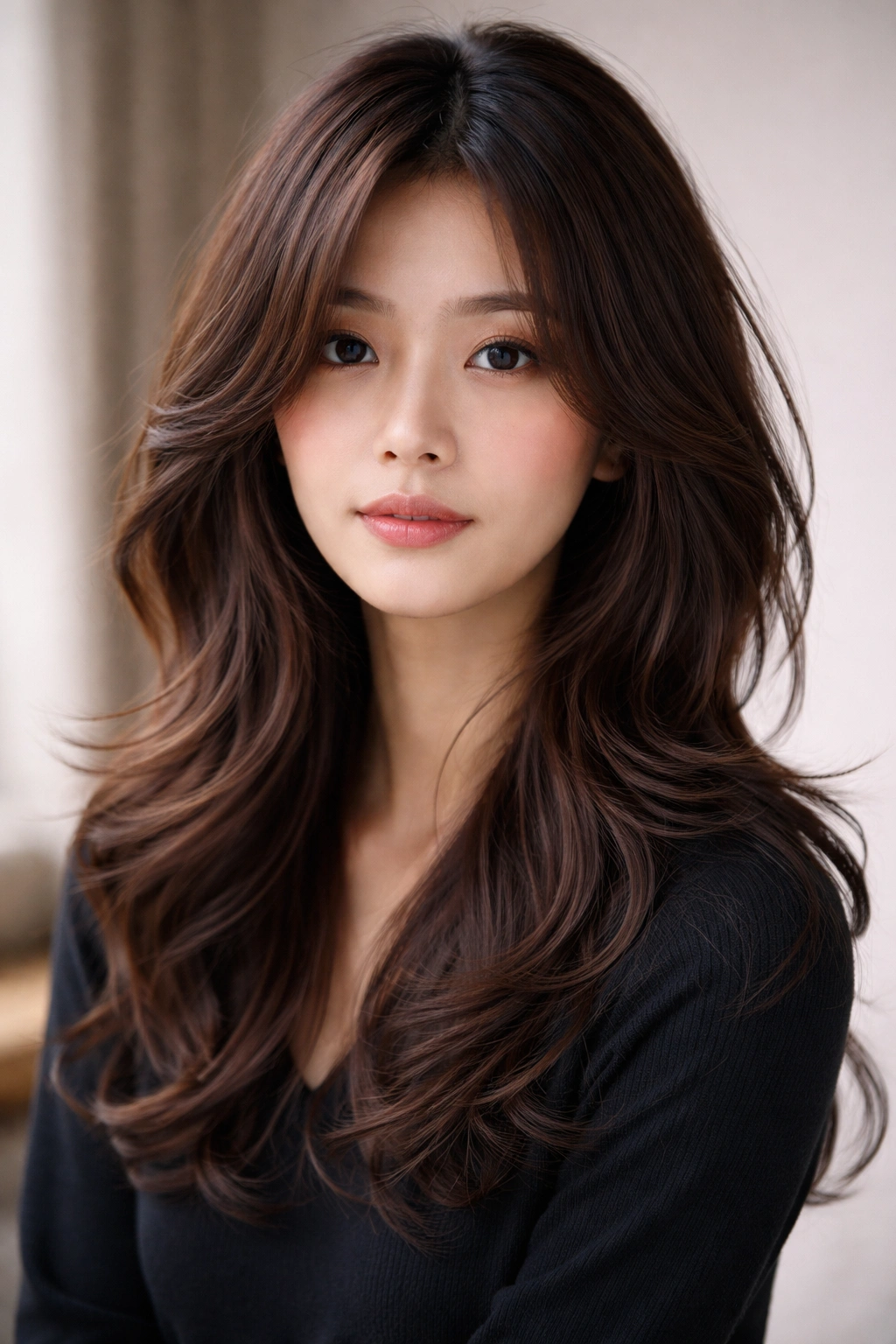
This final style is the most textured and dimensional of the Korean medium wavy options, featuring multiple layers at varying lengths specifically designed to frame and flatter the face. Every layer has a purpose: some create movement, some create shape, some create the illusion of thickness or thinness depending on where they’re placed. This is a technical cut that requires precision and skill, but the payoff is a style that looks intentional, expensive, and incredibly flattering.
The Multi-Layering Philosophy
Rather than traditional layers where there are just a few distinct lengths, multi-layering involves cutting many small sections at slightly different lengths to create a gradual progression of texture. This approach was perfected by Korean stylists and creates a softness and flow that’s different from Western layering techniques. The effect is subtle when the hair is smooth but incredibly visible and dynamic when waves are added.
How to Brief Your Stylist
- Explain that you want multiple, intentional layers throughout for maximum texture and movement
- Request that the shortest layers be reserved for the face-framing area to maximize the flattering effect
- Ask about the specific layering technique—point-cutting creates texture, while blunt cutting creates definition
- Discuss whether you’ll be getting a perm or relying on daily styling—this affects how the layers should be cut
- Bring photos of other multi-layered wavy styles to show your stylist your vision
What to expect: This cut typically takes longer than a simple cut—plan for 1.5-2 hours—because of the precision required. The investment pays off because the style works with multiple styling approaches and maintains its shape well between cuts.
Final Thoughts
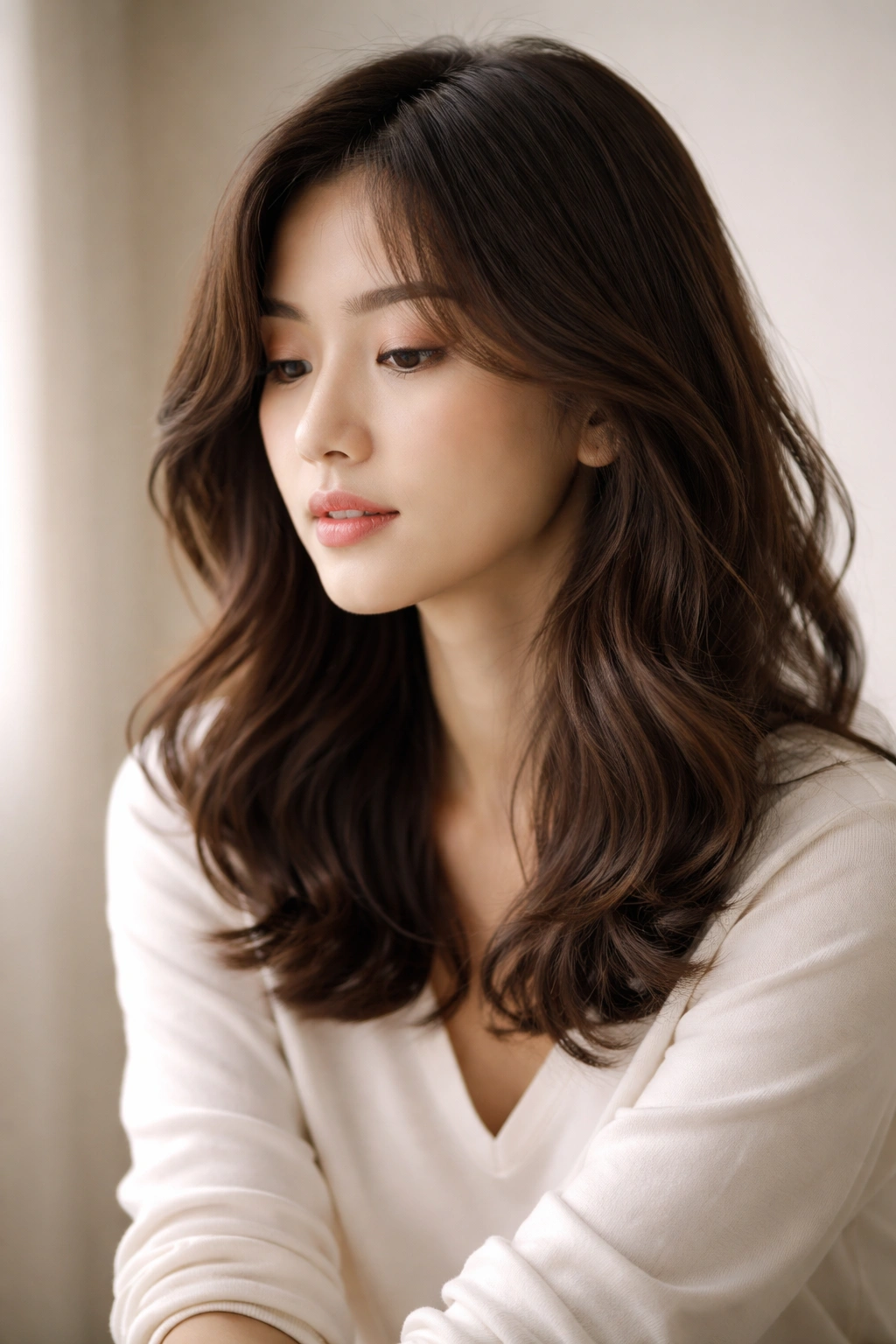
The world of Korean medium wavy hairstyles offers something for every preference, face shape, and maintenance level. Whether you’re drawn to the effortless romance of soft cloud perms, the edgy sophistication of choppy layers, or the polished luxury of dimensional color combined with intentional waves, there’s a style that’s perfect for your next transformation.
The key to getting a style you love is finding a stylist who understands your hair type, face shape, and lifestyle, then communicating clearly about what you want. Bring photos of styles you love, explain your daily routine and how much time you’re willing to spend styling, and ask questions about maintenance before you commit to a color or perm treatment. Once you have the right cut and styling routine in place, you’ll be amazed at how a good wavy medium hairstyle can completely transform your appearance while still feeling like the best version of yourself.
