

Curly hair in a ponytail doesn’t have to mean slicked-back, flat, or compromised texture. The truth is, some of the most polished, intentional looks you can create with curly hair involve pulling it back strategically—using the height, the shape, and the natural definition of your curls to your advantage. A well-executed curly ponytail strikes that perfect balance: refined enough for professional settings or special occasions, but authentic to your natural texture rather than fighting against it.
The key to a polished curly ponytail lies in understanding how to work with your curl pattern instead of against it. This means choosing styles that embrace volume and definition, securing hair in ways that don’t disrupt your curl shape, and using techniques that enhance rather than flatten your natural texture. Whether you’re dealing with tight coils, loose waves, or everything in between, there’s a ponytail style that will feel both effortlessly chic and genuinely you—not like you’re forcing your curls into a box they don’t belong in.
What makes these styles feel particularly sophisticated is that they look intentional. You’re not just throwing your hair back out of convenience; you’re showcasing your curls with intention and style. They work for everyday wear when you want your hair out of your face without sacrificing personality, and they transition beautifully into evening-appropriate looks with minimal adjustments. The polished effect comes partly from technique, partly from the right products, and partly from embracing what makes curly ponytails uniquely beautiful—their inherent dimension and movement.
1. High and Sleek Curly Ponytail
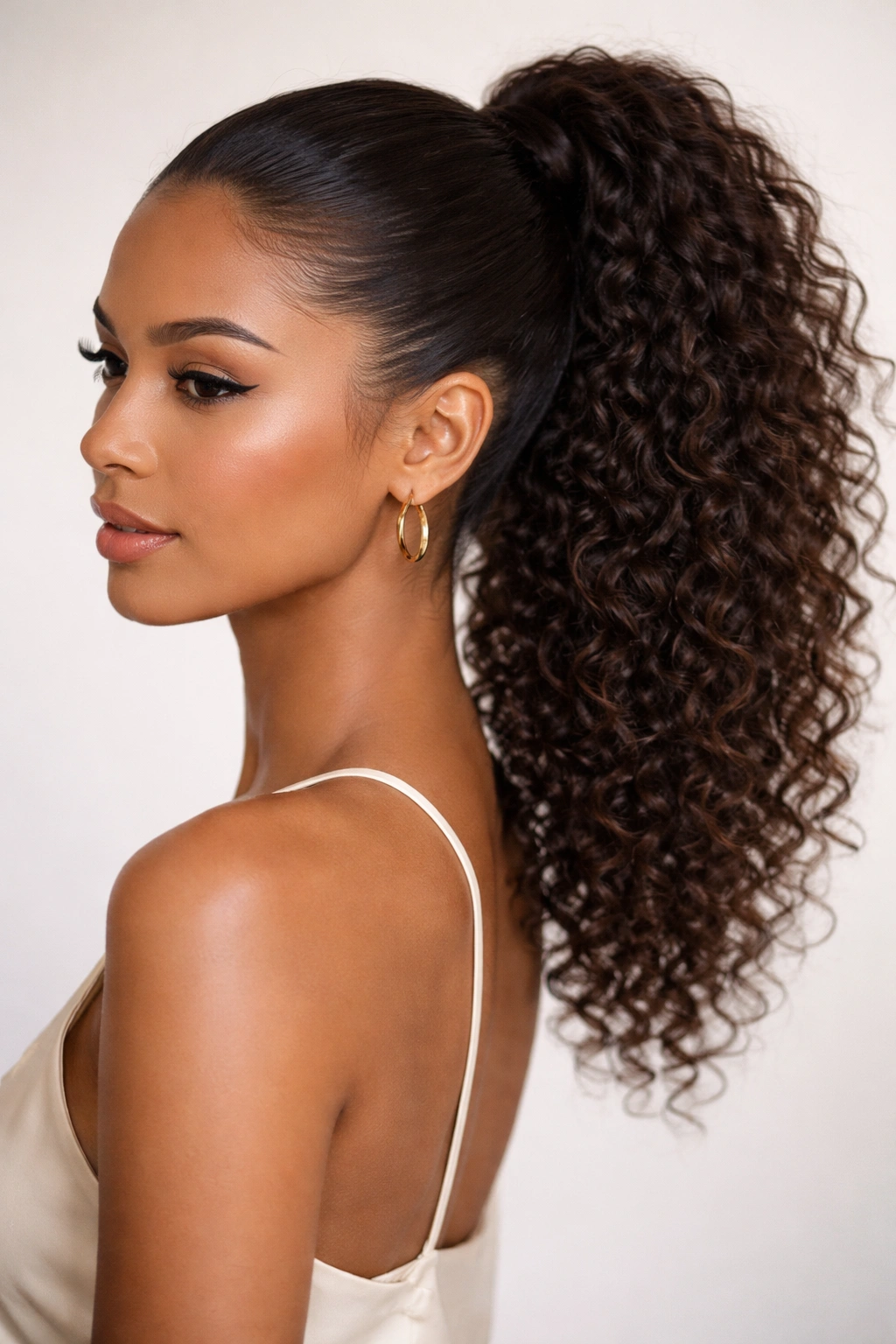
This style takes a classic high ponytail and reinterprets it for curly hair, creating height and polish without requiring your curls to be completely tamed into submission. The magic is in smoothing just the crown and sides while letting your curls at the base remain full and textured, creating elegant contrast between the sleeker top and the defined curls below.
Why This Style Commands Attention
A high ponytail naturally elongates your face and draws attention upward, which automatically reads as polished and intentional. By smoothing the crown area with a lightweight gel or edge control, you create a refined silhouette that balances the volume of your curls at the base. This asymmetry—sleek top, textured bottom—is what gives it sophistication rather than a flattened appearance. The elevated placement also prevents that weighed-down feeling you get when all your curl weight sits at the nape of your neck.
How to Execute It Perfectly
- Use a lightweight, gel-based product (not heavy creams) on the crown, smoothing hair upward and back as you gather it
- Secure the ponytail slightly higher than a traditional ponytail—aim for the crown rather than the back of your head
- Apply a curl-defining cream to the ponytail itself to enhance and separate individual curls
- Use a silk or satin hair tie to minimize frizz and prevent creasing that breaks up curl pattern
- Gently separate and fluff the curls at the base after securing to maximize volume and prevent flatness
Pro tip: Diffuse-dry your crown area with a concentrator nozzle before styling to get smooth, shiny strands without disrupting your curl pattern underneath.
2. Textured Low Ponytail with Face-Framing Curls
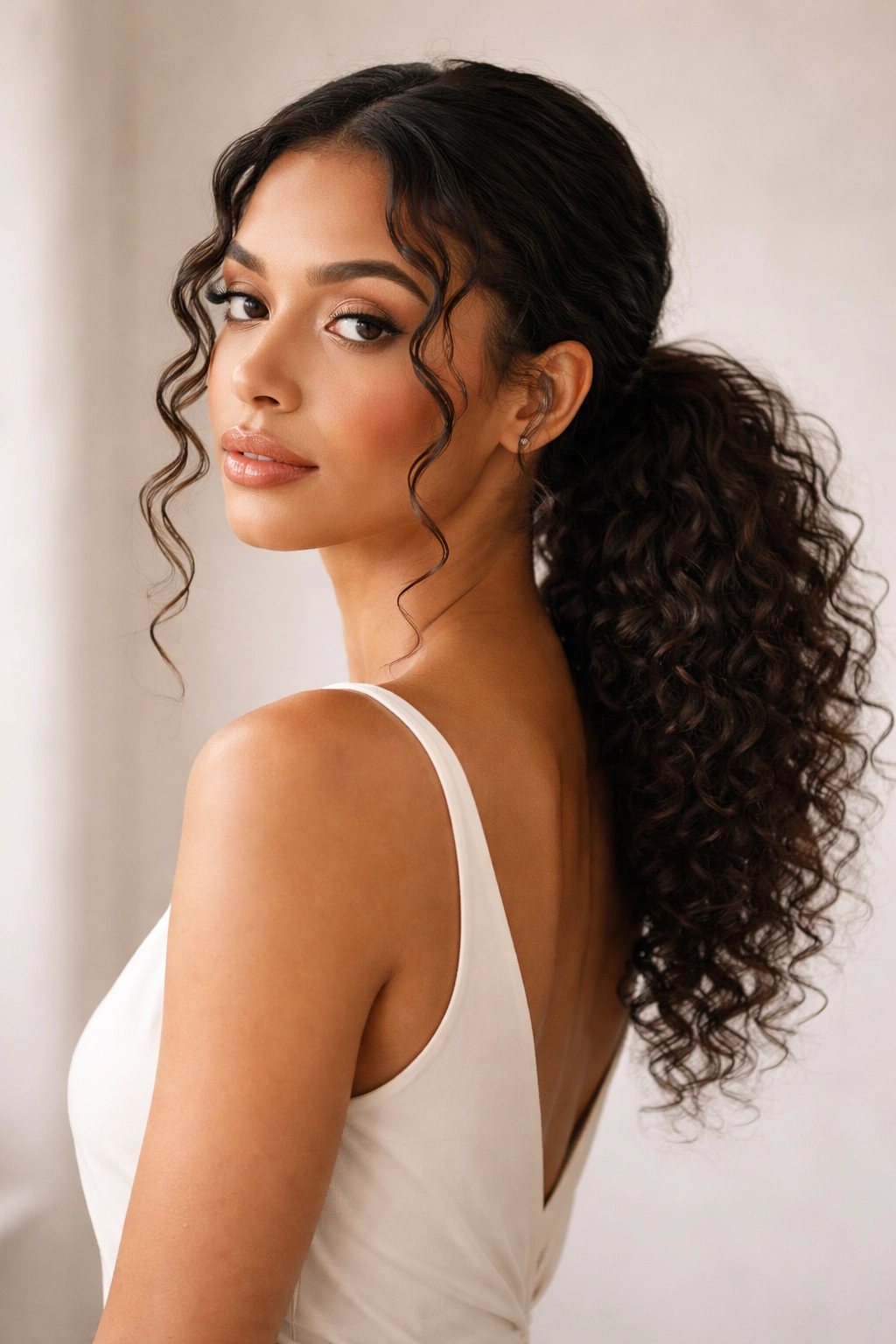
This style sits low on the nape of your neck but feels anything but casual because of the deliberate texture and the face-framing sections left loose. It’s the kind of style that looks effortless but actually involves strategic placement and curl definition—two elements that signal polish immediately.
What Makes This Feel So Refined
A low ponytail naturally feels more formal and put-together than its high counterpart, and adding intentional face-framing pieces takes it from practical to intentional. The loose curls framing your face draw attention upward and create softness, while the defined curls in the main ponytail show you’re paying attention to how your hair looks. This combination of elements—the placement, the texture, the framing—reads as genuinely polished rather than hastily pulled back.
The Step-by-Step Approach
- Section out two thin sections at your temples, setting them aside with clips
- Gather the remaining hair into a low ponytail at the base of your neck
- Secure with a satin hair tie, then release those face-framing sections
- Apply a lightweight curl cream to the face-framing pieces and scrunch gently to reactivate curl pattern
- Use a curl-defining spray on the main ponytail to deepen color and enhance separation between curls
- Smooth any flyaways with edge control applied with a small brush, not your fingers
Worth knowing: This style works beautifully whether your face-framing curls are ringlets or loose waves—the key is that they’re intentionally placed and defined, not just random pieces that escaped the ponytail.
3. Bubble Ponytail with Coil Definition
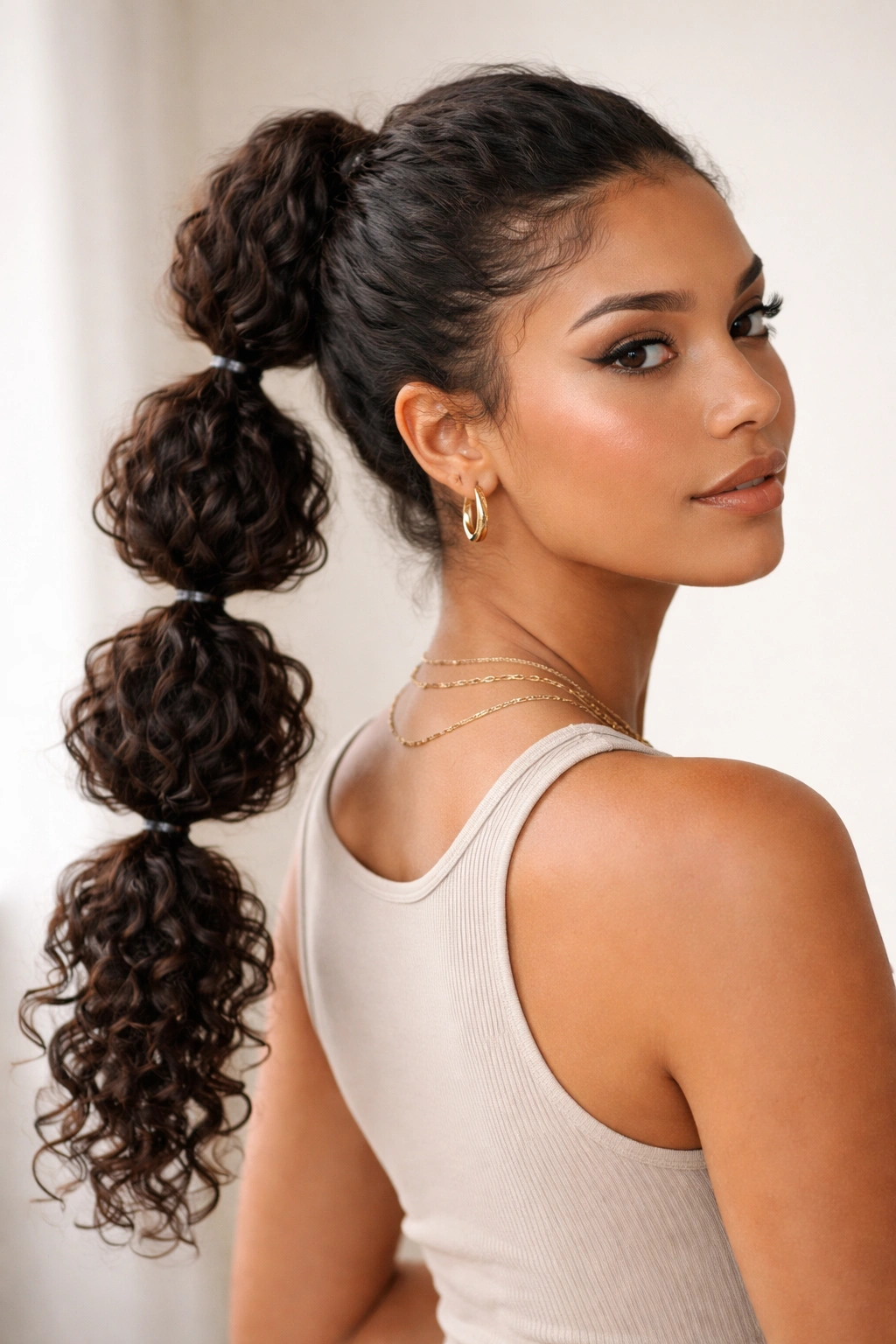
The bubble ponytail—where you use multiple hair ties to create a segmented, volumetric effect—becomes genuinely striking when you apply it to textured hair. Each bubble showcases the dimensional texture of your curls, creating visual interest that reads as fashion-forward and polished.
Why Curly Hair Makes Bubble Ponytails Special
On straight hair, bubble ponytails rely entirely on volume between the ties for their visual impact. On curly hair, you get that dimensionality automatically, plus the added benefit of your natural curl pattern creating texture within each bubble. This means you’re not fighting your hair to create a style—you’re enhancing what’s already there. The separated sections also prevent that weighted-down feeling that can flatten curls when all your hair is secured as one unit.
Creating Dimension Without Damage
- Start with a high ponytail secured with a satin tie
- Create a second tie about 2 inches below the first one
- Gently separate the hair between the two ties outward, creating a bubble shape
- Continue this pattern down the length of your ponytail, spacing ties about 2-2.5 inches apart
- Apply a curl-defining product to each bubble section to enhance natural texture
- Gently fluff and separate curls within each bubble to maximize the three-dimensional effect
- Finish with a curl hold spray that’s not so heavy it weighs curls down
Pro tip: Use smaller, more delicate hair ties if you want a refined look, and space them closer together—this creates elegant segmentation rather than chunky, playful bubbles.
4. Side-Swept Curly Ponytail
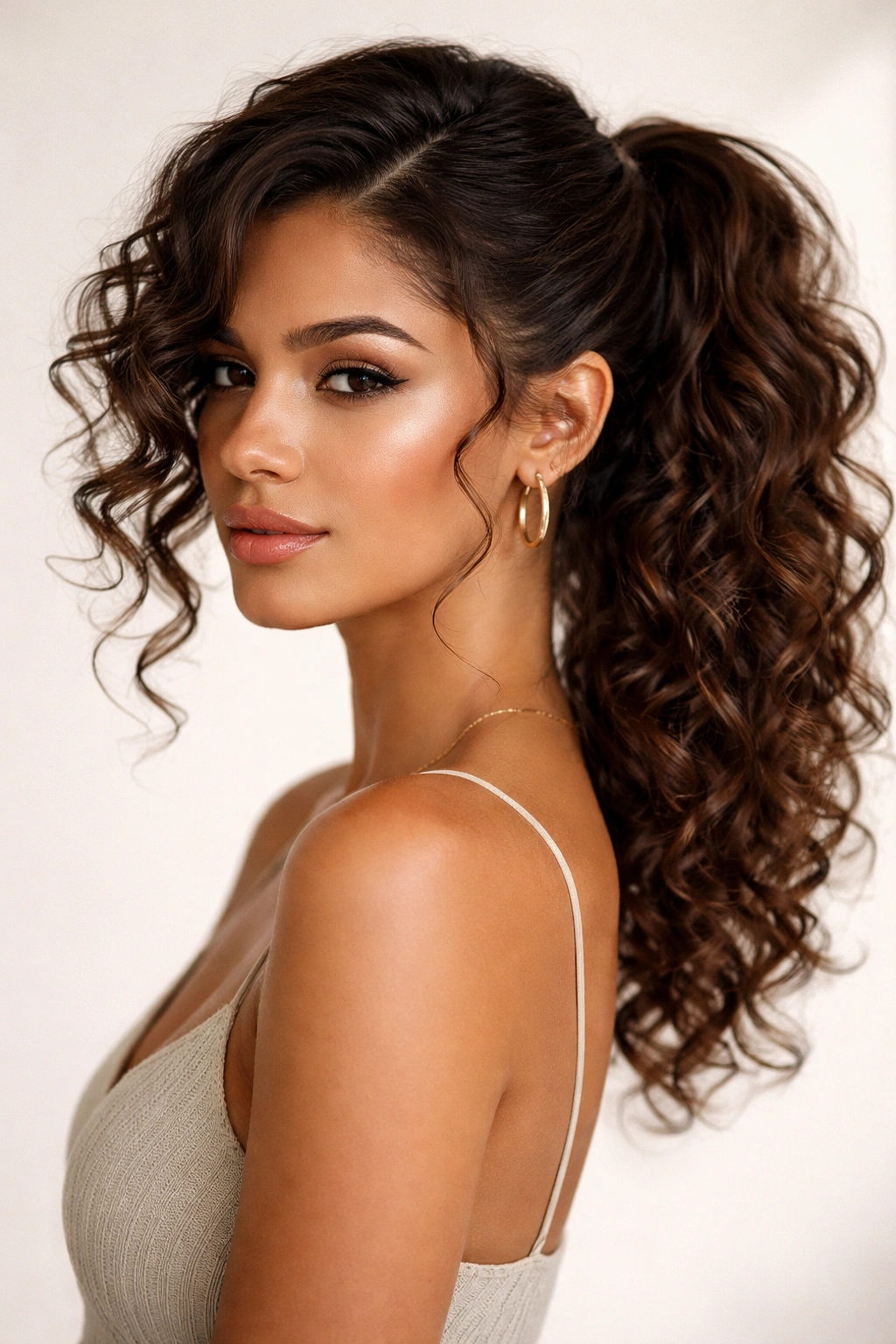
Asymmetry reads as intentional, and a side-swept ponytail that favors one side of your head naturally looks more polished than a centered style. When you add the dimension of textured curls, this asymmetrical placement becomes genuinely striking—especially when curls frame one side of your face.
The Psychology of Asymmetrical Styling
There’s something about an off-center ponytail that immediately feels more interesting than a perfectly centered one. It’s the styling equivalent of a thoughtful outfit choice—it shows you considered the placement and the effect. With curly hair, this asymmetry also creates natural face-framing on one side while keeping the other side open and clean, which is wonderfully flattering regardless of your face shape.
Technique for Maximum Impact
- Apply a curl-enhancing cream or mousse to damp hair and air-dry or diffuse-dry to set your curl pattern
- Create a deep side part, taking the part line from one temple to behind the opposite ear
- Gather your ponytail on the side with less hair (the side with the deeper part)
- Secure slightly lower and more to the side than a traditional centered ponytail would sit
- Take a small section from the heavier side of hair and wrap it around the base of the ponytail to hide the tie
- Apply edge control to smooth the part line and any flyaways on the lighter side
- Use a curl-defining spray on the ponytail to enhance separation and dimension
Worth knowing: This style is particularly flattering if you want to emphasize one side of your face or if you have curls that naturally fall heavier on one side—work with that rather than fighting it.
5. Half-Up Half-Down Curly Style
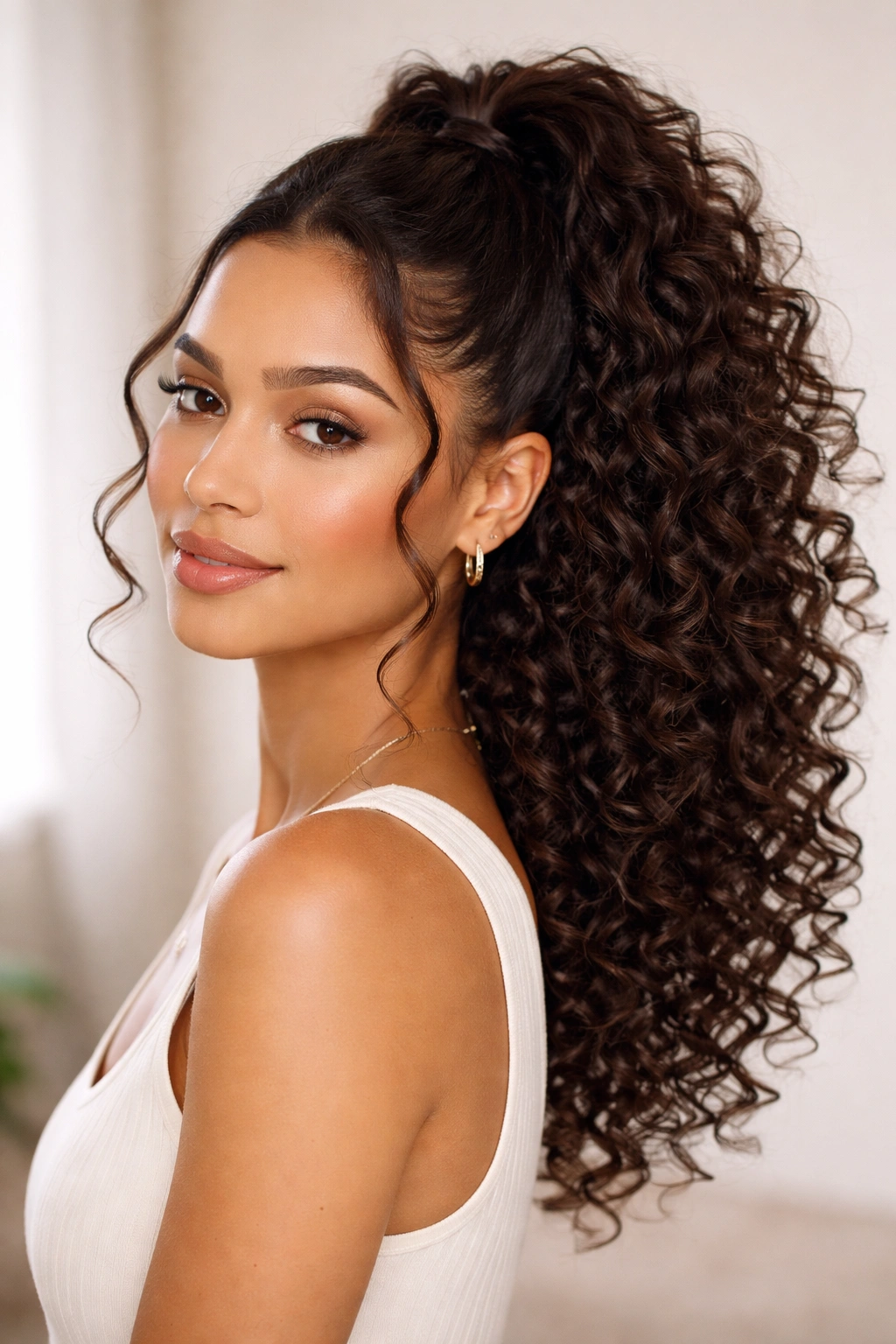
The half-up half-down style offers the best of both worlds: you get the polished, intentional feel of a secured style with the romantic, textured appeal of curls down. It’s sophisticated without being overly formal, and it showcases more of your curl length and pattern than a full ponytail does.
Why This Hybrid Works for Professional Settings
A half-up style sits in that perfect middle ground between casual and formal. It signals that you’re put-together without looking overdone, and it keeps hair out of your face without sacrificing the visual impact of your curl pattern. This makes it ideal for environments where you want to look polished but also authentic to your natural texture—professional offices, important meetings, or even formal events where you want personality alongside elegance.
Building the Style with Structure
- Apply a curl-defining product to damp hair and allow it to dry completely (or diffuse-dry)
- Section out the top third of your hair, from temple to temple over the crown
- Secure this section into a high ponytail at the crown, using a small satin tie
- For extra polish, take a thin section from the secured portion and wrap it around the base to conceal the tie
- Leave the bottom two-thirds of your hair down, separating curls gently with your fingers
- Apply a lightweight curl cream or anti-frizz serum to the down curls to enhance definition
- Use curl-setting spray to lock in the style and prevent frizz throughout the day
Pro tip: If you want more visual interest, create two smaller half-up sections (one on each side) and secure them together at the back of your head, rather than one centered section—this creates a more dimensional look.
6. Twisted Base Ponytail with Voluminous Ends
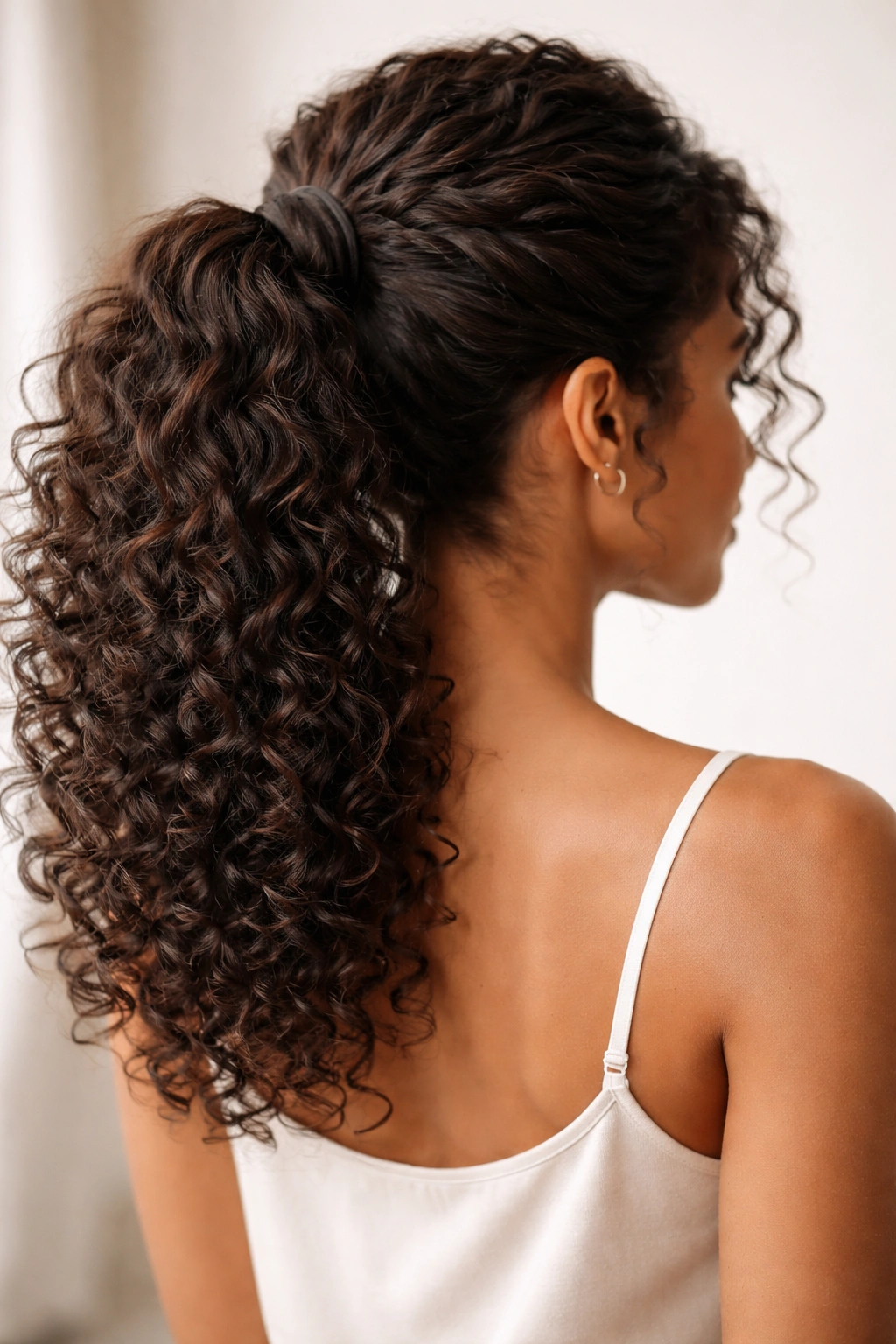
This style involves twisting sections of hair as you gather them into a ponytail, creating decorative detail at the base while keeping the bulk of your curls loose and voluminous. The twisted base signals intention and effort, while the full curls below deliver visual impact.
How Twisted Details Elevate a Basic Ponytail
A plain ponytail can feel a bit utilitarian, but the moment you add twisted detail at the base, it becomes a deliberate style choice. Those twists create visual interest and dimension right where the eye lands, making the entire style feel more considered and polished. With curly hair, this is especially effective because the texture of the twists contrasts beautifully with the defined curls of the main ponytail.
Creating Twisted Detail Without Strain
- Section your hair into two or three even sections from the sides toward the back
- Take the first section and twist it as you move it back toward where your ponytail will be
- Wrap each twisted section around your fingers as you position it, creating a coil effect
- Secure all sections together in a ponytail at the base of the twists
- Make sure the tie sits just below where the twists end, so the twisted detail is fully visible
- Apply a curl-defining product to the ponytail to enhance curl pattern and dimension
- Gently separate and fluff curls to maximize volume below the twisted base
Worth knowing: The tighter you twist, the more decorative detail shows; the looser you twist, the more subtle and relaxed the effect feels. Adjust tension based on how polished versus effortless you want to appear.
7. Sleek Top with Curly Texture Underneath
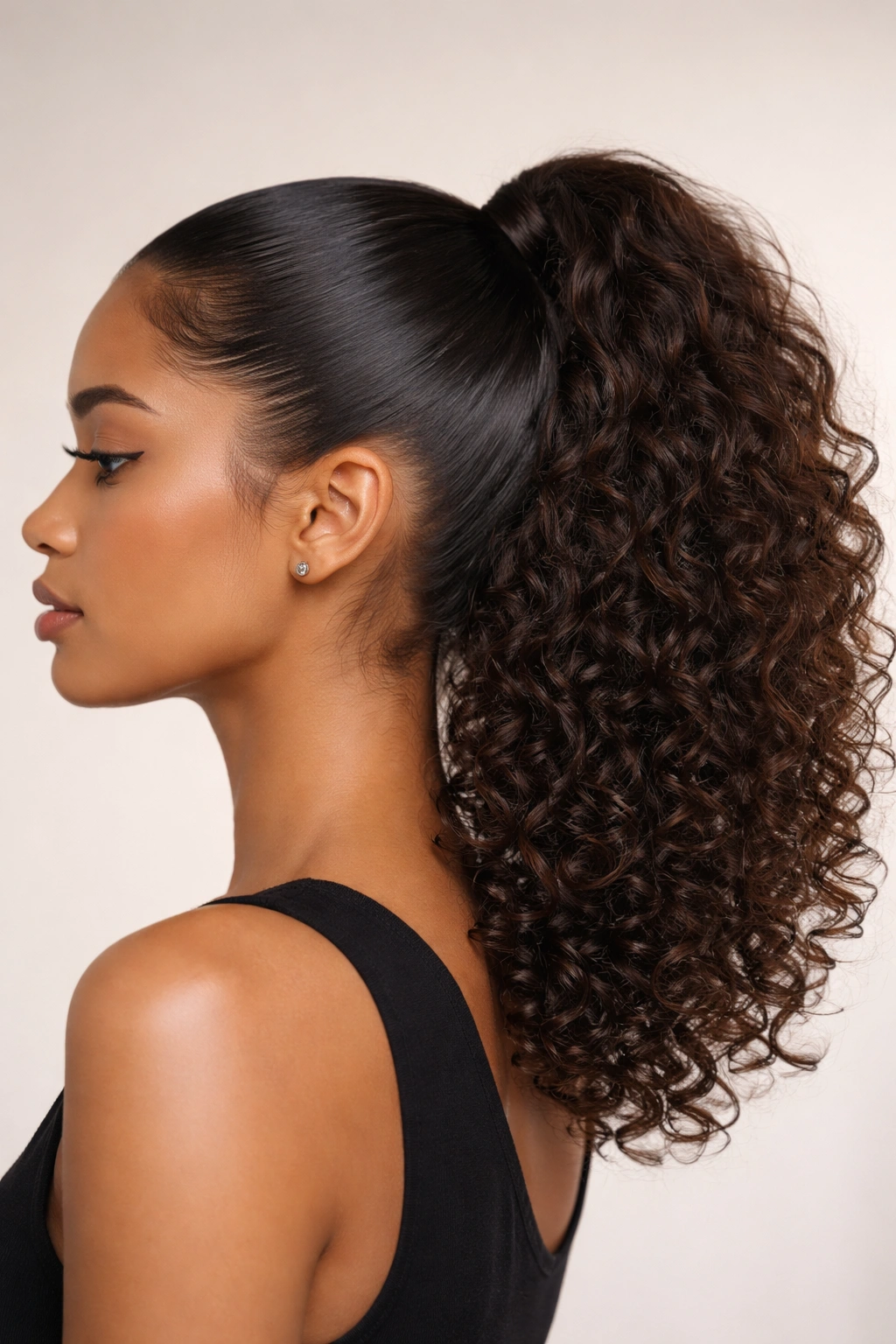
This style combines a smoothed, controlled top section with full, defined curls below—creating visual drama through contrast. It’s particularly effective for curlier, tighter curl patterns because the smoothness of the top really highlights the texture and definition of the curls in the ponytail.
The Power of Strategic Contrast
When you juxtapose sleek, smooth hair with textured, defined curls, you create visual interest that reads as intentional styling. This contrast also gives the impression of significant volume (because the curls below do all the heavy lifting) without requiring you to style your entire head to maximum volume. It’s a sophisticated trick that works for both everyday and special-occasion styling.
Achieving the Smooth-to-Textured Transition
- Apply a lightweight, gel-based smoothing product to the crown and sides of your head
- Use a fine-toothed comb or a smoothing brush to gently smooth the top section, moving hair back and slightly upward
- Gather all hair into a ponytail at the crown or slightly higher
- Secure tightly with a satin tie so the smooth top section stays in place all day
- Apply a curl-enhancing cream to the ponytail, scrunching gently to reactivate and define curls
- Separate individual curls or groups of curls with your fingers to maximize dimension and separation
- Use a curl-setting spray to lock in the definition and prevent frizz at the transition line
Pro tip: Use a blow-dryer with a concentrator nozzle on the smooth top section to create extra shine and smoothness, which makes the textured curls below look even more striking by comparison.
8. Braided Curly Ponytail Hybrid
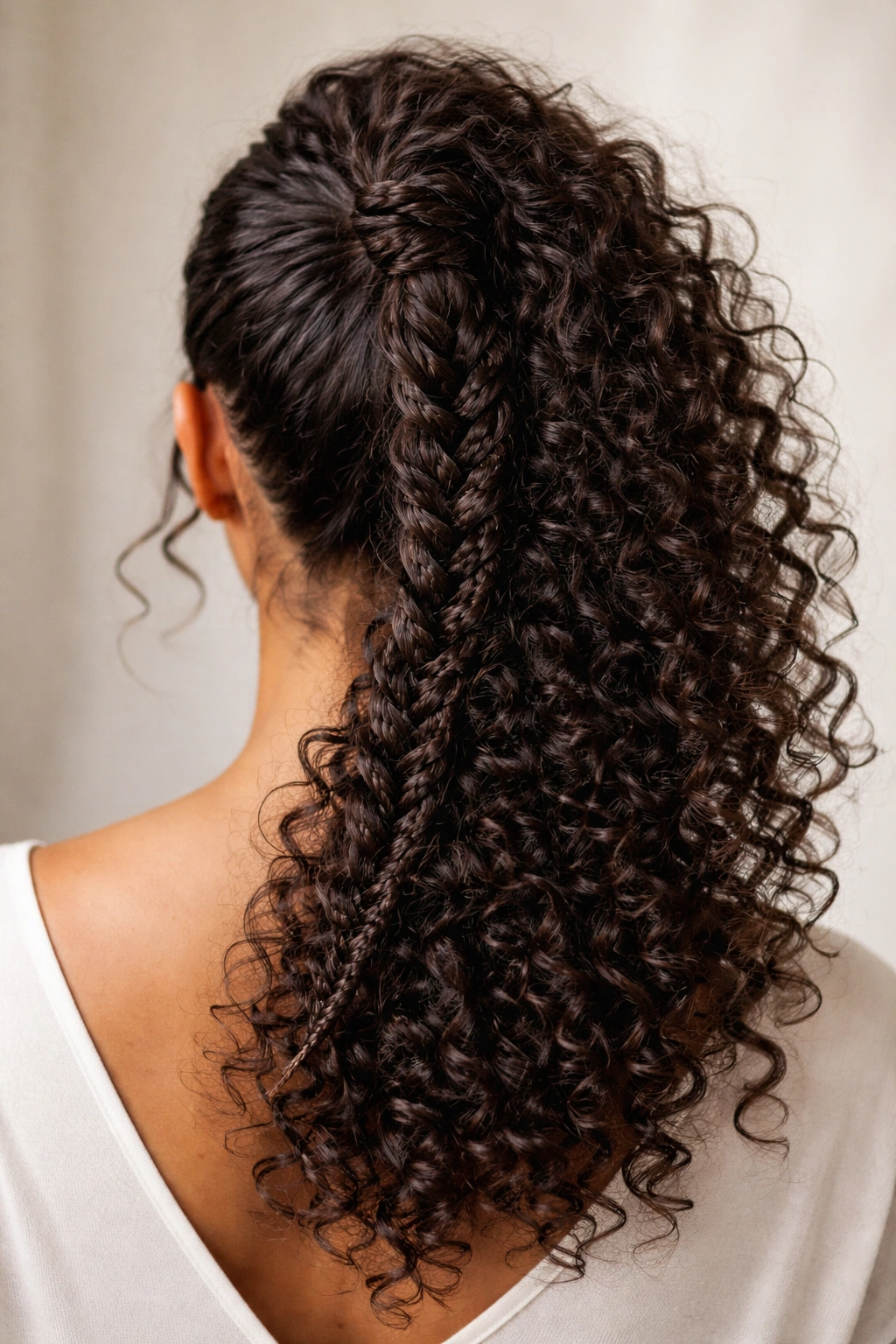
Incorporating a braid into your curly ponytail style adds both visual interest and structural detail. Whether you braid a section before pulling the ponytail, or braid around the base after securing it, the braided element gives your style texture and architectural interest that reads as intentional and polished.
Why Braids and Curls Complement Each Other
Braids create defined, geometric texture, while curls create soft, organic texture—together, they tell a story of deliberate styling. A braid running through or around your ponytail signals that you’ve taken time to craft the style, which immediately elevates it from a quick pull-back to an intentional choice. This works especially well for curly hair because braids and curls both play with texture and dimension.
Two Approaches to Braided Ponytails
- Braid before securing: Create one or two thin braids as you gather your hair back, incorporating them into the ponytail as you secure it. This creates decorative detail throughout the entire gathering process.
- Braid around the base: Secure your ponytail first, then take a thin section from the secured hair and wrap it around the base in a braid pattern, tucking the end under itself to conceal it. This creates a polished, finished look.
For either approach: Use a curl-defining product before and after braiding to ensure your natural curls stay defined within and around the braid. Braid while hair is slightly damp or damp-feeling (not soaking) so the braid holds better without disrupting curl pattern.
Worth knowing: Looser, chunkier braids work better with textured hair than tight, precise braids—the looser braid respects your natural curl pattern and creates a more cohesive, polished result.
9. Pineapple Ponytail for Maximum Volume
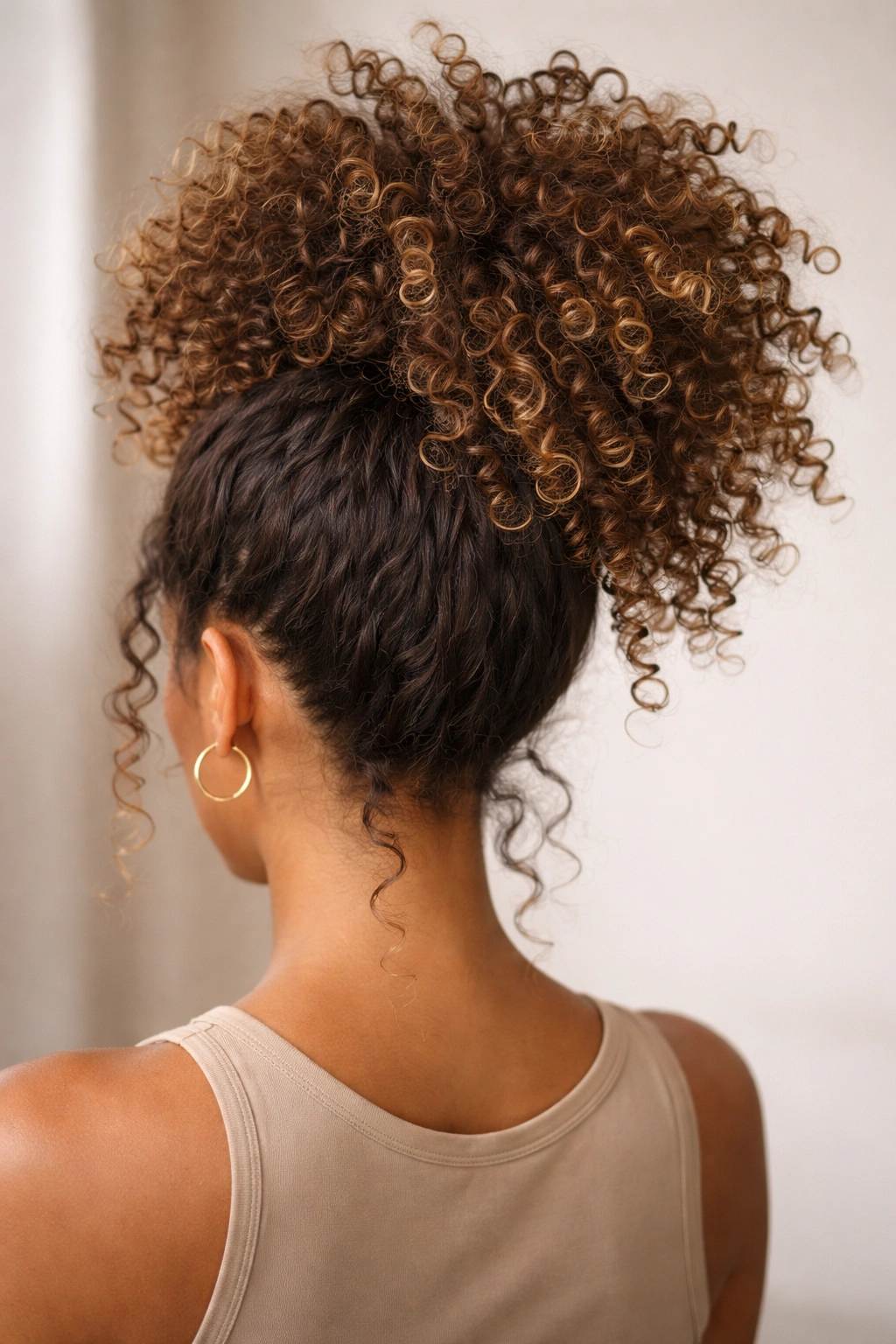
The “pineapple” method—gathering hair at the crown in a loose, high position—isn’t just a nighttime technique for protecting curls. When executed intentionally with proper product and technique, it creates a genuinely polished, voluminous ponytail that showcases the full dimension of your curl pattern.
Why Volume Reads as Polish
There’s a direct psychological link between visible volume and perceived polish—it signals healthy, well-cared-for hair and intentional styling. A pineapple ponytail, executed with your curls intentionally fluffed and defined, creates significant visual impact and dimension that reads as effortlessly put-together. This is the style to choose when you want maximum texture and visual interest.
Executing the Pineapple Approach
- Flip your head upside down and gather all your hair at the crown, using your fingers rather than a comb (combs disrupt curl pattern)
- Stand back up and secure loosely at the crown with a satin tie—the ponytail should feel loose and voluminous, not tight
- Gently flip sections of the ponytail outward and upward, separating curls as you go to create maximum dimension
- Apply a lightweight curl-defining cream, working it through the ponytail with scrunching motions
- Use a curl-setting spray (preferably one formulated for hold rather than shine) to lock in the volume
- Carefully separate individual curl sections throughout the ponytail to maximize the three-dimensional effect
Pro tip: This style works best with curls that have been plopped or air-dried to full volume—if your curls feel compressed or flattened, refresh them with a light misting of water and a quick diffuse-dry session before creating the pineapple ponytail.
10. Accessorized Curly Ponytail with Scarves or Clips
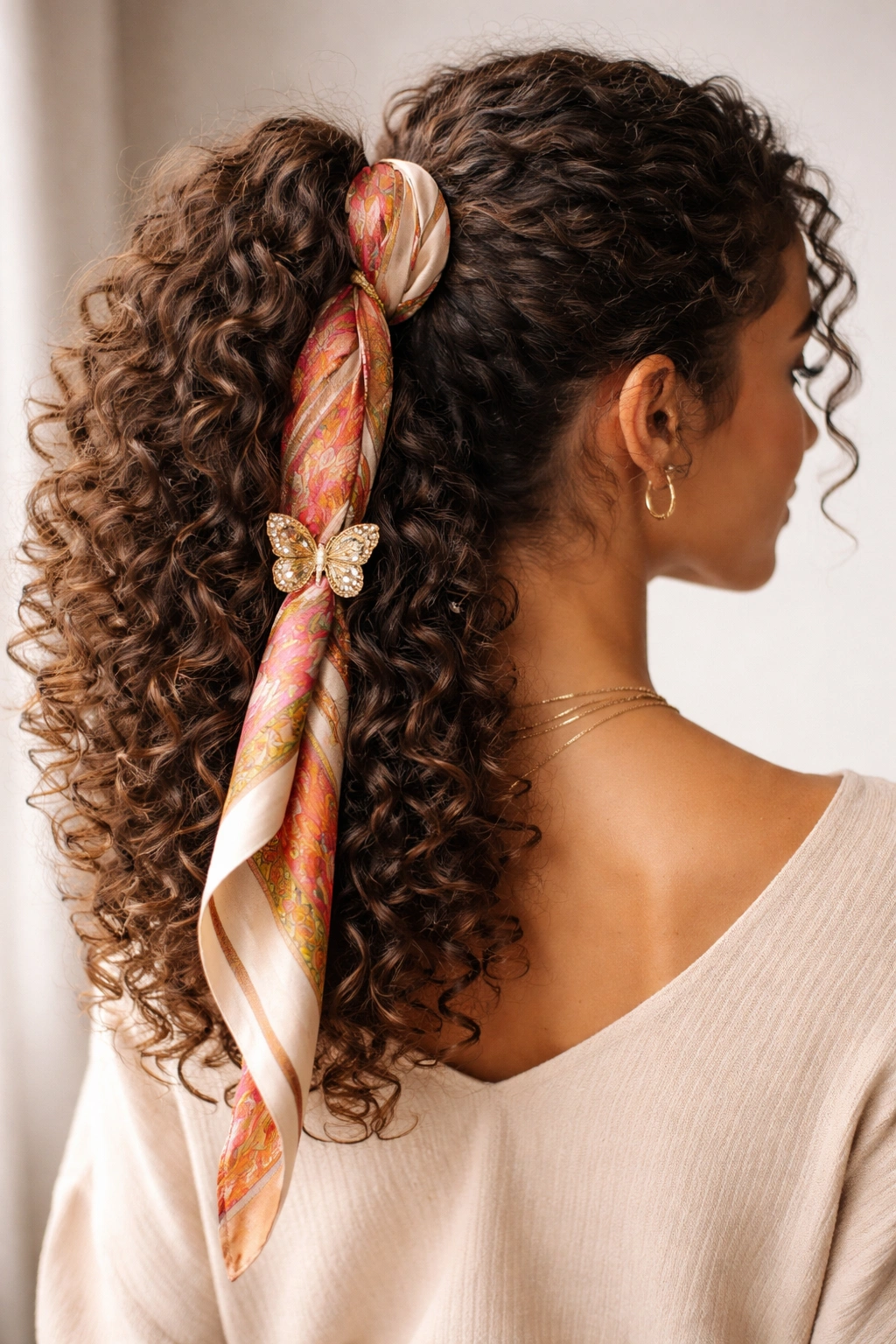
Accessories transform a basic ponytail from simple to styled, and with curly hair, the right accessory can add visual interest and intentionality without requiring additional technical skill. A silk scarf wrapped around the base, a decorative clip placed strategically, or a hair cuff all signal that you’ve given thought to how your hair looks.
The Strategic Power of the Right Accessory
An accessory serves a dual purpose: it secures and protects your hair while also adding a visual statement. With curly ponytails, accessories are particularly effective because they draw the eye to the style detail you’ve created and frame your curls beautifully. The accessory also gives you an easy way to elevate a simple ponytail into something that feels intentional and polished without requiring complex technique.
Accessory Options That Actually Work
- Silk scarves: Wrap a silk scarf around the base of your ponytail where the hair tie sits, tying it in a small knot or bow. This protects your curls, adds color or pattern, and looks intentional.
- Decorative clips: Use one or more metallic, tortoiseshell, or jeweled clips positioned at the base or throughout the ponytail to add sparkle and visual interest.
- Hair cuffs or rings: Thread the ponytail through decorative cuffs positioned at intervals down the length for a modern, polished look.
- Ribbons or hair twists: Wrap a narrow ribbon or decorative hair twist around the base of the ponytail, securing with a small tie underneath.
For any accessory approach: Make sure your ponytail itself is well-defined and polished with curl product before adding the accessory—the accessory should complement an intentional style, not compensate for an underdeveloped one.
Worth knowing: Match your accessory to your overall style aesthetic—a silk scarf reads more romantic and bohemian, while a metallic cuff reads more modern and sleek. Choose based on the vibe you’re going for.
Final Thoughts
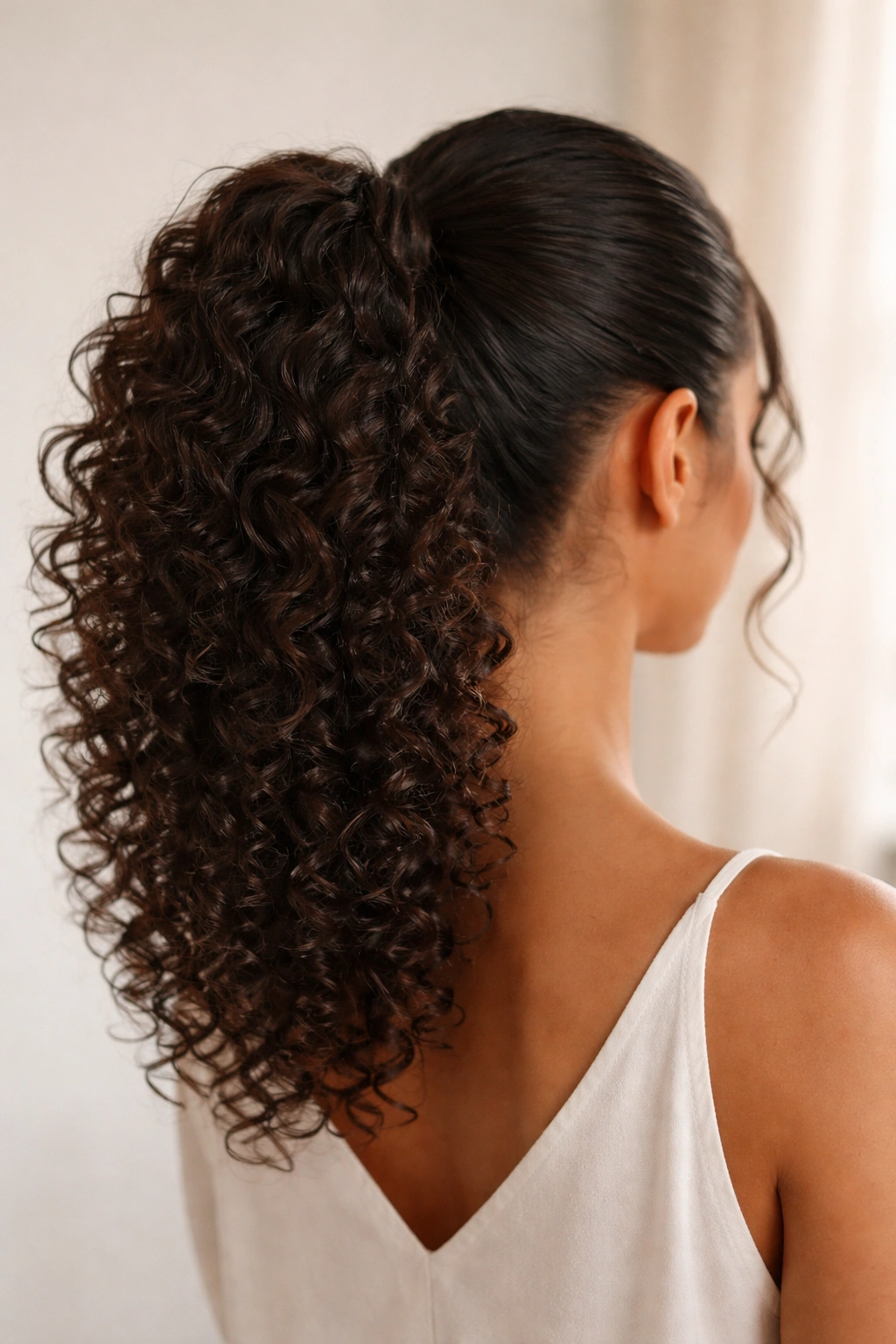
A polished curly ponytail isn’t about fighting your texture or forcing your curls into an unfamiliar shape. It’s about understanding how your specific curl pattern works, choosing a style that plays to your hair’s natural strengths, and using the right products and techniques to enhance rather than diminish what you already have. Each of these styles works because it respects the dimensionality and definition of textured hair while creating a refined, intentional look.
The truth most of the curl community discovers eventually is that polished curly styles often require less fighting and force than trying to achieve a sleek, straight look would. Your curls naturally create texture, dimension, and visual interest—you’re just channeling that in a deliberate direction. Spend time experimenting with which of these styles feels most natural for your specific curl pattern, and don’t hesitate to adapt them based on your hair’s unique characteristics.
What transforms a good curly ponytail into a polished one is consistency in your approach: using curl-specific products, drying your curls intentionally before styling, securing hair with protective materials like satin ties, and taking time to separate and define curls after gathering them. These small details compound into a finished look that feels genuinely intentional rather than hastily assembled. Your curly ponytail should make you feel confident, not like you’re managing a style that doesn’t quite belong to you.