

The wolf cut has become one of the most coveted hairstyles for people wanting something bold yet versatile. Part shag, part mullet, entirely cool—this cut thrives when combined with natural waves, creating movement and dimension that straight hair sometimes can’t quite capture. If you’re drawn to textured, shoulder-length styles that feel effortless yet intentional, a wavy wolf cut might be exactly what you’ve been looking for.
What makes the wolf cut so appealing is its adaptability. It works across different hair textures, face shapes, and styling preferences. Add waves to the equation, and you unlock an entirely new dimension of styling possibilities. The interplay between the shorter, choppy layers around the crown and the longer, flowy layers below creates a silhouette that photographs well, feels comfortable to wear, and gives you options depending on your mood—tousled and undone one day, more polished the next.
The shoulder-length wolf cut specifically strikes a sweet spot. It’s long enough to pull back when you want a break from styling, yet short enough that maintenance stays manageable. Waves add texture and movement that makes even unwashed hair look intentional. Whether you have naturally wavy hair or you’re planning to style waves regularly, this cut provides the perfect foundation for both scenarios.
Ready to explore different interpretations of this modern classic? Below are nine distinct approaches to the shoulder-length wavy wolf cut, each with its own personality and styling approach.
1. The Tousled, Textured Wolf with Choppy Layers
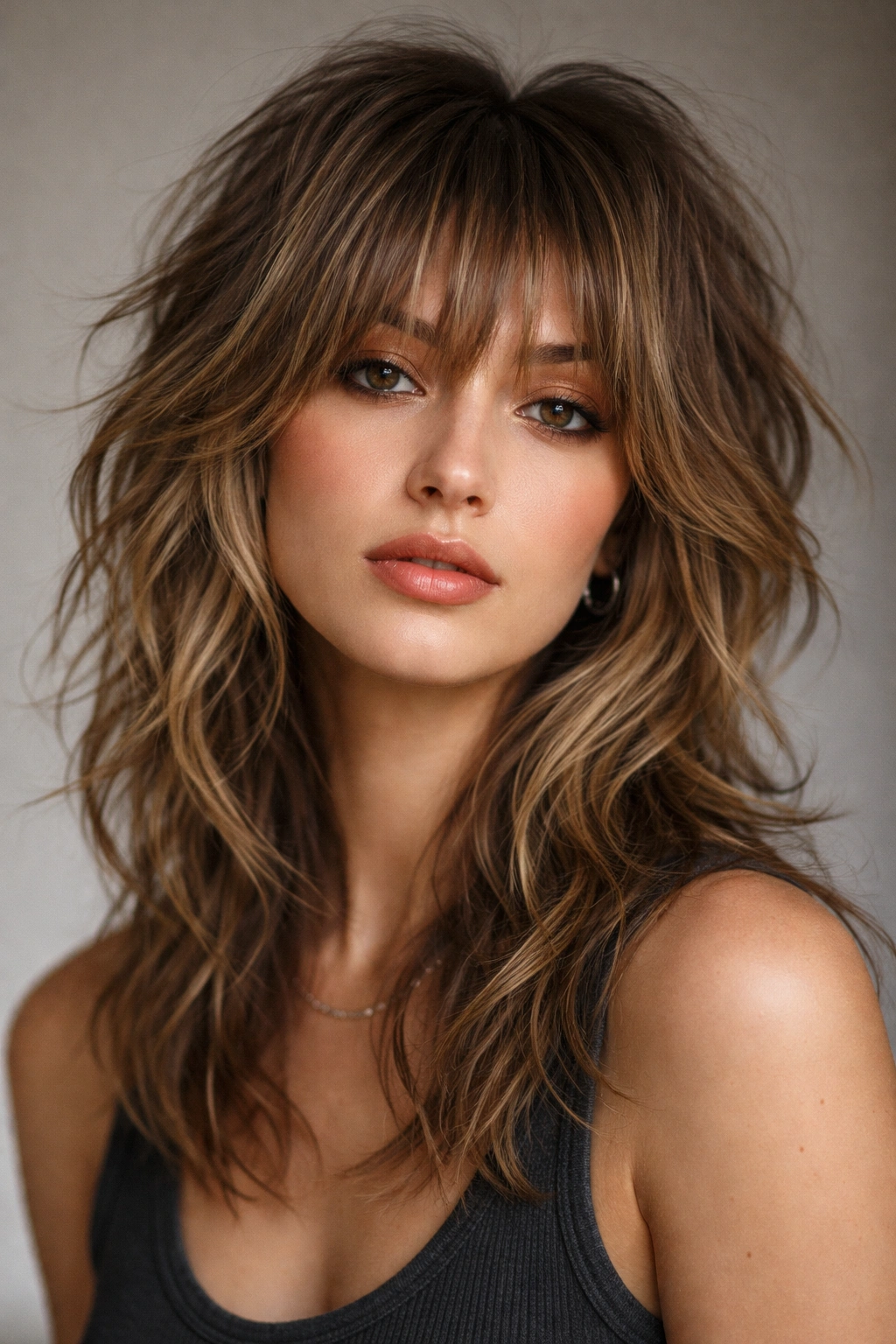
This is the wolf cut in its most exuberant form—maximized texture and movement throughout. The crown sits short and choppy, often reaching just below the ear, while the underside flows to shoulder length or slightly longer. Every layer is intentionally jagged, creating peaks and valleys that catch light and movement beautifully when you have waves working with you.
Why This Version Stands Out
The aggressive choppy layering amplifies waves instead of fighting them. When your stylist cuts sharp, disconnected layers throughout, each section moves independently. This creates that coveted tousled, “just-rolled-out-of-bed” aesthetic that takes actual effort to style but looks effortlessly cool. The texture-on-texture approach means even on your lowest-effort hair days, the cut’s structure keeps things visually interesting. It’s especially flattering if you have fine or thin hair, since the choppy layers create the illusion of fuller volume.
Styling Approach and Best Hair Types
This version demands some styling intention, even if it’s minimal. Use a curl-defining cream or mousse through damp hair, then diffuse with a blow dryer for defined waves, or let it air-dry and piece it out with your fingers once it’s dry. The cut works best for people with naturally wavy or textured hair—think 2b to 3c wave patterns. If you have straight hair, you’ll want to commit to heat styling or at least using wave-enhancing products. The upside? It’s undeniably trendy and photographs incredibly well.
2. The Soft, Feathered Wolf with Blended Layers
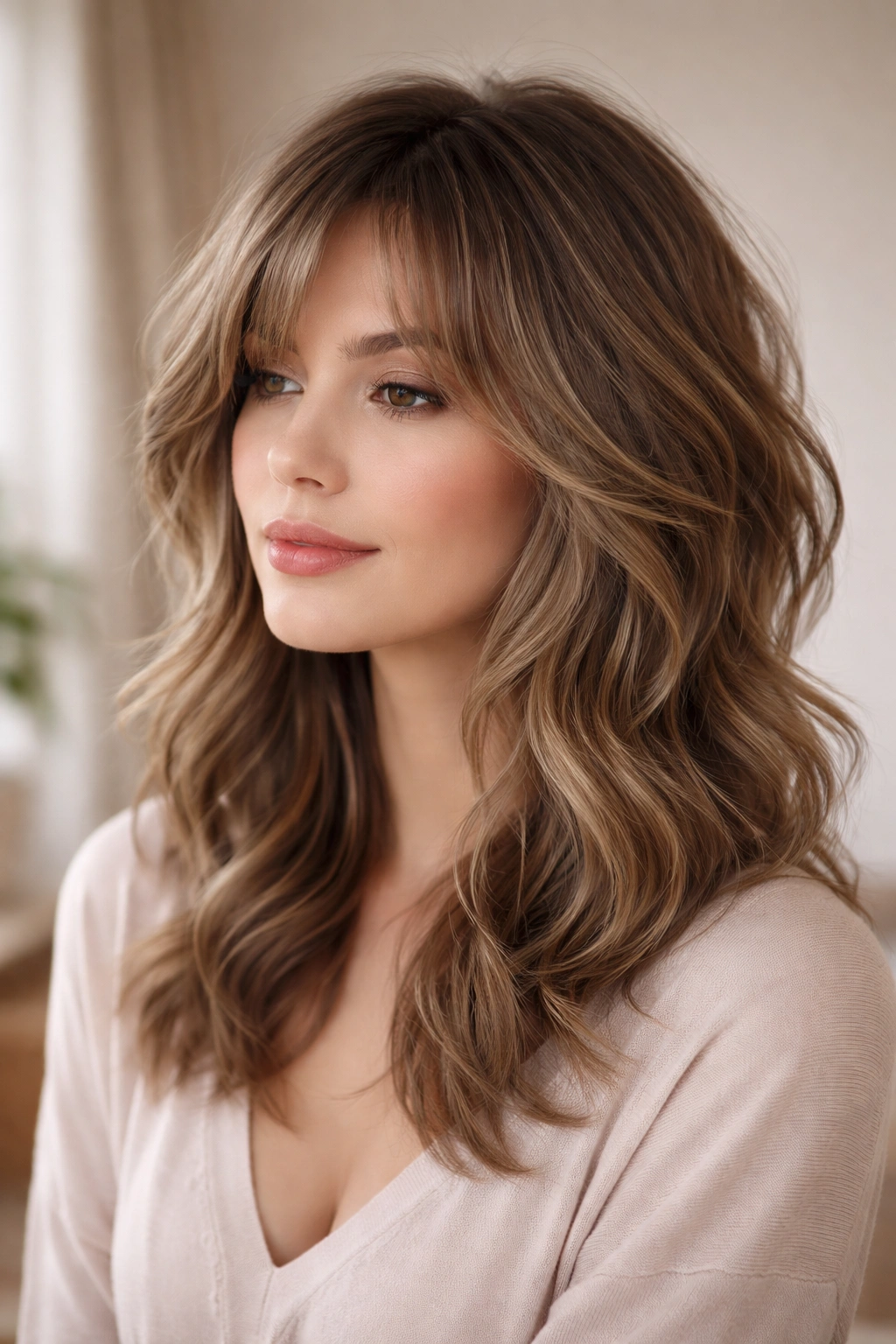
Where the first version goes bold and choppy, this interpretation takes a gentler approach. The layers are there, but they’re feathered and blended rather than razor-sharp. The crown still has that lifted, textured appearance that defines a wolf cut, but the transition feels more cohesive and less choppy. Waves flow more continuously from top to bottom rather than in distinct, separated sections.
Why This Approach Works
This version appeals to people who love the wolf cut’s modern vibe but prefer a slightly more polished, blended aesthetic. The feathering technique means each layer tapers smoothly into the next rather than creating stark separations. When waves move through feathered layers, they create a softer, more romantic silhouette without sacrificing the cut’s signature structure. It’s more forgiving if your waves aren’t perfectly uniform—slight imperfections actually add to the soft, lived-in look. This approach also photographs beautifully in both casual and more styled settings.
Who Should Consider This Version
Perfect for anyone who wants the wolf cut’s modern edge but needs something they can also pull back into a sleek ponytail or bun without it looking chaotic. The blended layering makes the cut work across more hair types and styling capabilities. If you have wavy hair that sits around 2a to 3a in terms of wave pattern, this version frames waves beautifully without requiring intense styling. It’s also more low-maintenance than the choppy version when it comes to restyling between cuts.
3. The Face-Framing Wolf with Longer Curtain Layers
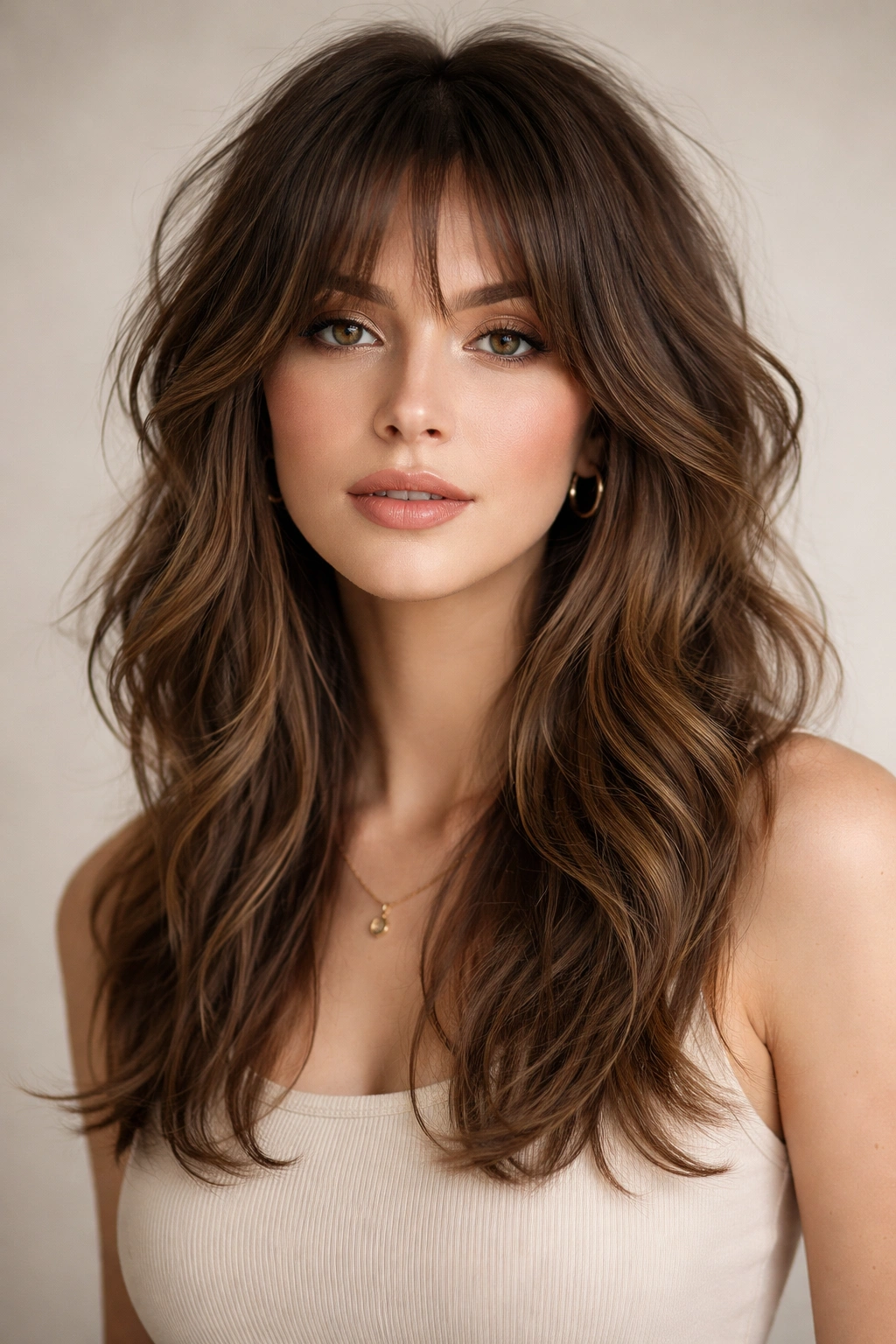
This take prioritizes longer, sweeping layers that frame the face, which are the signature feature of a classic curtain cut. The wolf cut’s shorter, choppy crown remains, but the focus shifts to those face-framing pieces that extend past the shoulders. The effect is more sophisticated and less aggressively choppy than some wolf variations.
The Visual Impact
Face-framing layers are universally flattering because they draw attention upward and can work with virtually any face shape. When these longer layers have waves moving through them, the movement frames your cheekbones and jawline beautifully. The contrast between the textured crown and the longer, flowing face-frame creates depth and sophistication that reads more editorial than experimental. Waves in the longer sections create soft movement that’s inherently flattering, while the crown texture keeps the overall look modern and interesting.
Best for Different Face Shapes
This version deserves serious consideration if you have a round or square face shape. The longer, curved layers paired with waves create elongating lines that flatter fuller faces. If you have an oval or heart-shaped face, this works equally well—the longer layers don’t overwhelm your proportions, and the waves add movement without looking chaotic. The shorter crown prevents the cut from looking dated or too heavily layered, keeping it firmly in modern territory.
4. The Textured Wolf with Piecey Bangs
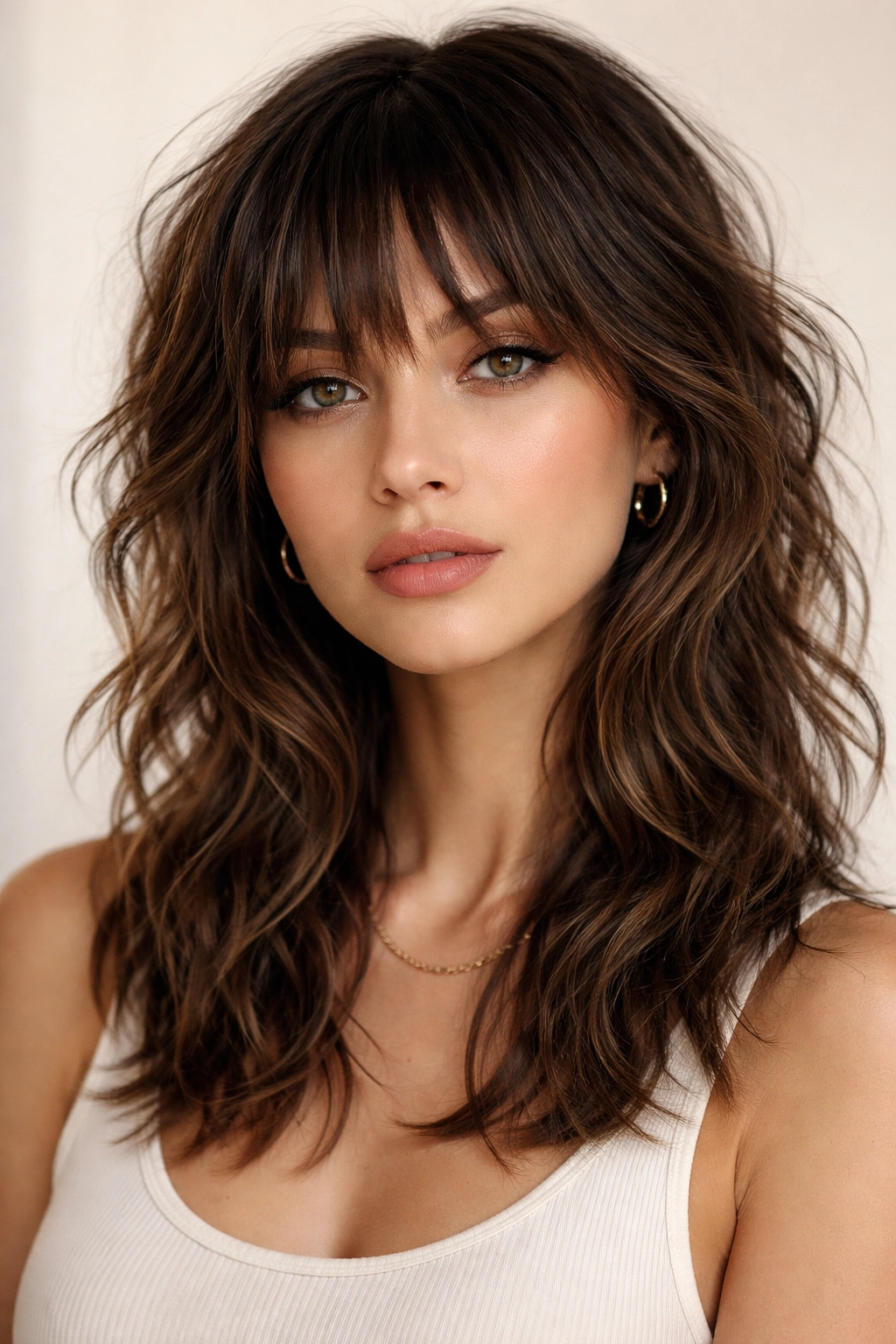
Adding piecey, choppy bangs to a wolf cut transforms the entire energy. The bangs sit just above the eyebrows or at eye level, cut in short, disconnected pieces that mirror the textured layers throughout the rest of the cut. It’s a bold choice that makes a strong visual statement and requires more styling commitment, but the payoff is undeniably striking.
Why Piecey Bangs Elevate the Look
Bangs were made for textured, layered cuts. Piecey bangs paired with a wavy wolf cut create cohesive, intentional texture from forehead to shoulders. The bangs shouldn’t look blunt or harsh—they should feel like another textured element rather than a stark fringe. When waves move through piecey bangs, they catch light and create dimension right at face level. This creates an immediately modern, fashion-forward appearance that works especially well if you’re aiming for an editorial or alternative aesthetic.
Styling Reality and Maintenance
Piecey bangs require more daily styling attention than longer bangs or no bangs. They look best when they have texture and movement, which means you’ll probably use a curling iron or heat-styling tool on them most days, or at minimum apply a texturizing product to define the waviness. They also require trims more frequently than the rest of your hair—every 3-4 weeks ideally—because the shape deteriorates faster than longer layers. If you’re someone who enjoys a styling routine and wants a conversation-starting look, this version is worth the upkeep.
5. The Asymmetrical Wolf with One Side Shorter
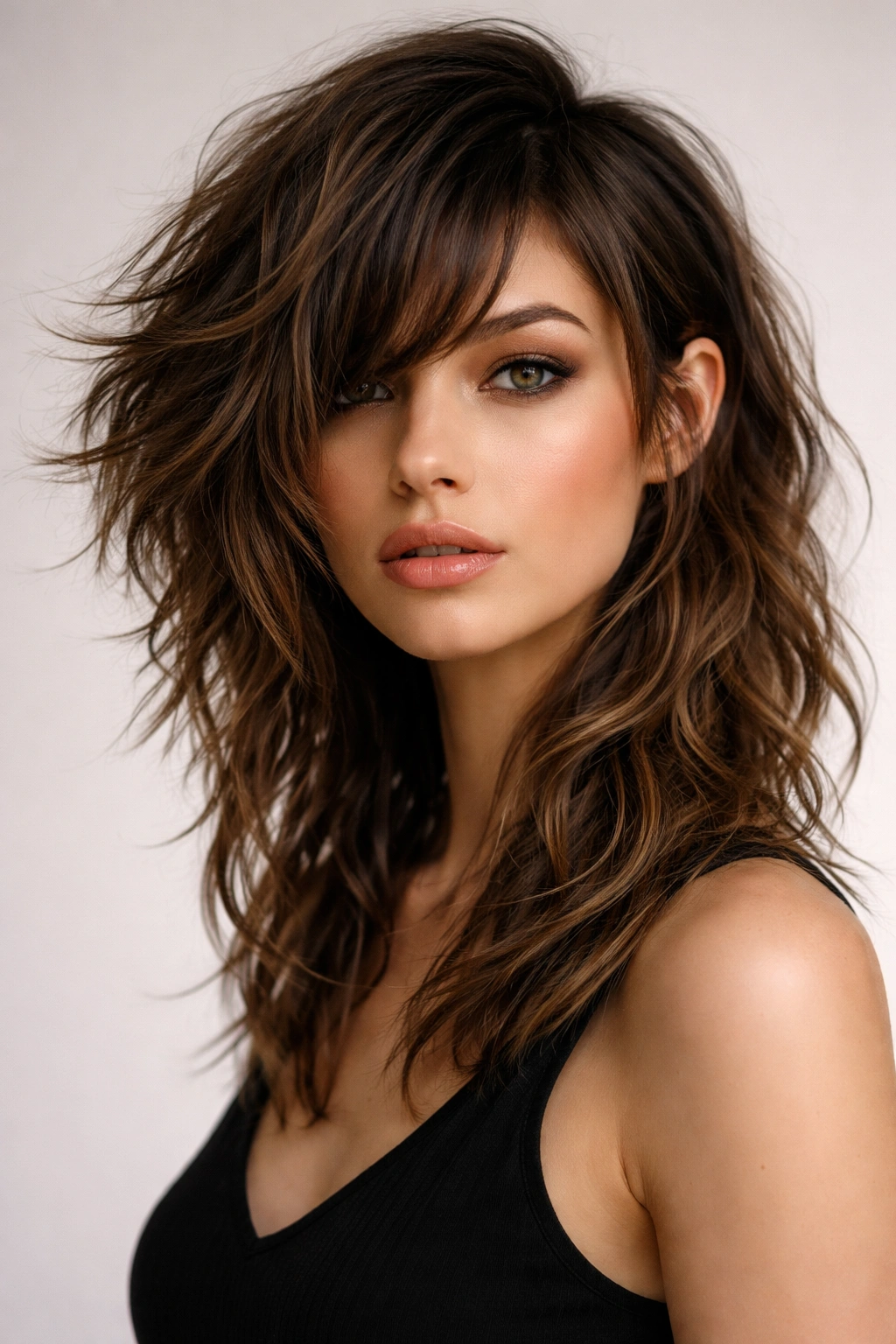
For people who want the wolf cut’s signature texture but also crave asymmetry, this version delivers drama and intentional imbalance. One side of the crown sits significantly shorter—sometimes chin-length or shorter—while the opposite side reaches closer to shoulder length or past. The waves then work with this uneven silhouette to create an edgy, modern appearance.
The Bold Appeal
Asymmetrical cuts create immediate visual interest and read as intentional and fashion-forward rather than accidental or poorly executed. When paired with waves that move differently on each side due to the length difference, the effect is genuinely striking. This version suits people who want a wolf cut that feels personal and distinctive, not like anyone else’s haircut. It photographs beautifully from certain angles and demands confidence to wear well—this is the cut for people who love standing out.
Face Shape and Styling Considerations
Asymmetrical wolf cuts work beautifully for oval or oblong face shapes, where the uneven silhouette adds dimension without overwhelming your proportions. For round faces, consider whether the shorter side lands at a flattering angle. For square faces, asymmetry can actually be incredibly flattering if the longer side extends past your jawline. Styling is straightforward—the asymmetry does much of the visual work for you. Waves on each side can move independently and actually enhance the cut’s structured unevenness.
6. The Wavy Wolf with Rooted, Dimensional Color
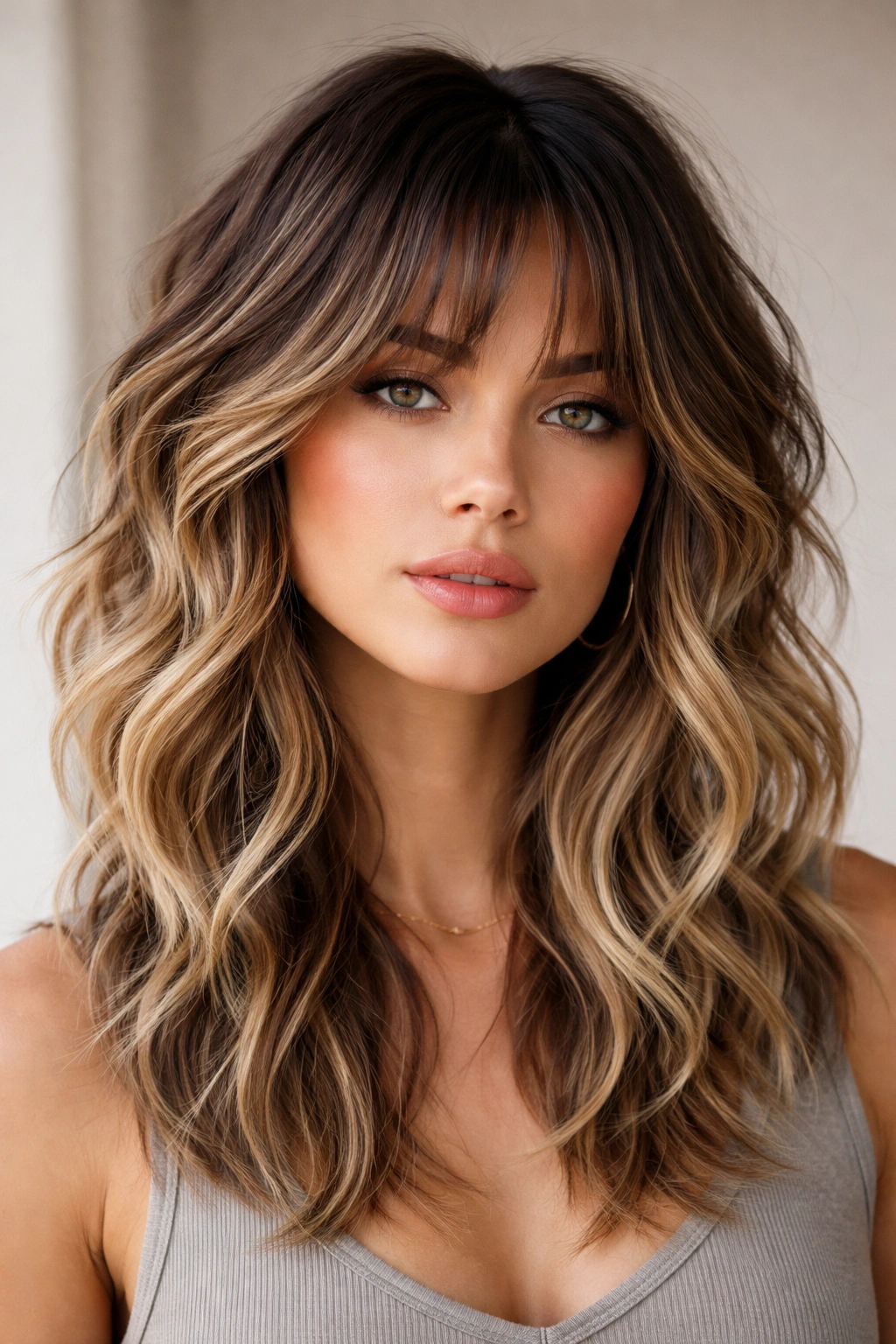
While this entry technically covers styling and color rather than cut technique alone, color makes an enormous difference in how a shoulder-length wavy wolf cut reads. Adding dimensional rooting—often a darker root shadowing with lighter midtones and ends—creates depth that amplifies the texture the cut creates. Think of it as giving your waves a built-in lighting system.
Why Dimensional Color Matters for Wolf Cuts
A solid, single-tone color can make a layered cut look a bit flat, especially if the layers aren’t aggressively choppy. Adding dimension with rooted, multi-tonal color brings out the texture and movement in ways that make the cut look more intentional and expensive. The contrast between darker roots and lighter ends creates the illusion of more volume and texture, even if your actual wave pattern is moderate. Dimensional color also means maintenance happens more gracefully—roots blending into midtones look less severe than a harsh line of regrowth.
Color Suggestions for Wavy Wolf Cuts
Warm-toned dimensional options work beautifully: caramel, honey, and copper-toned rooted looks enhance warm skin tones. For cool undertones, try ash blonde, platinum, or cool-toned brunette with deeper rooting. If you have deeper skin tones, richer dimensional options shine—think caramel through chocolate, or copper through deep brown. The key is choosing a color that contrasts enough with your roots to create visual interest but blends naturally. This approach works at virtually any level of commitment—from semi-permanent toners to full permanent color.
7. The Blunt-Ended Wolf with Wavy Texture
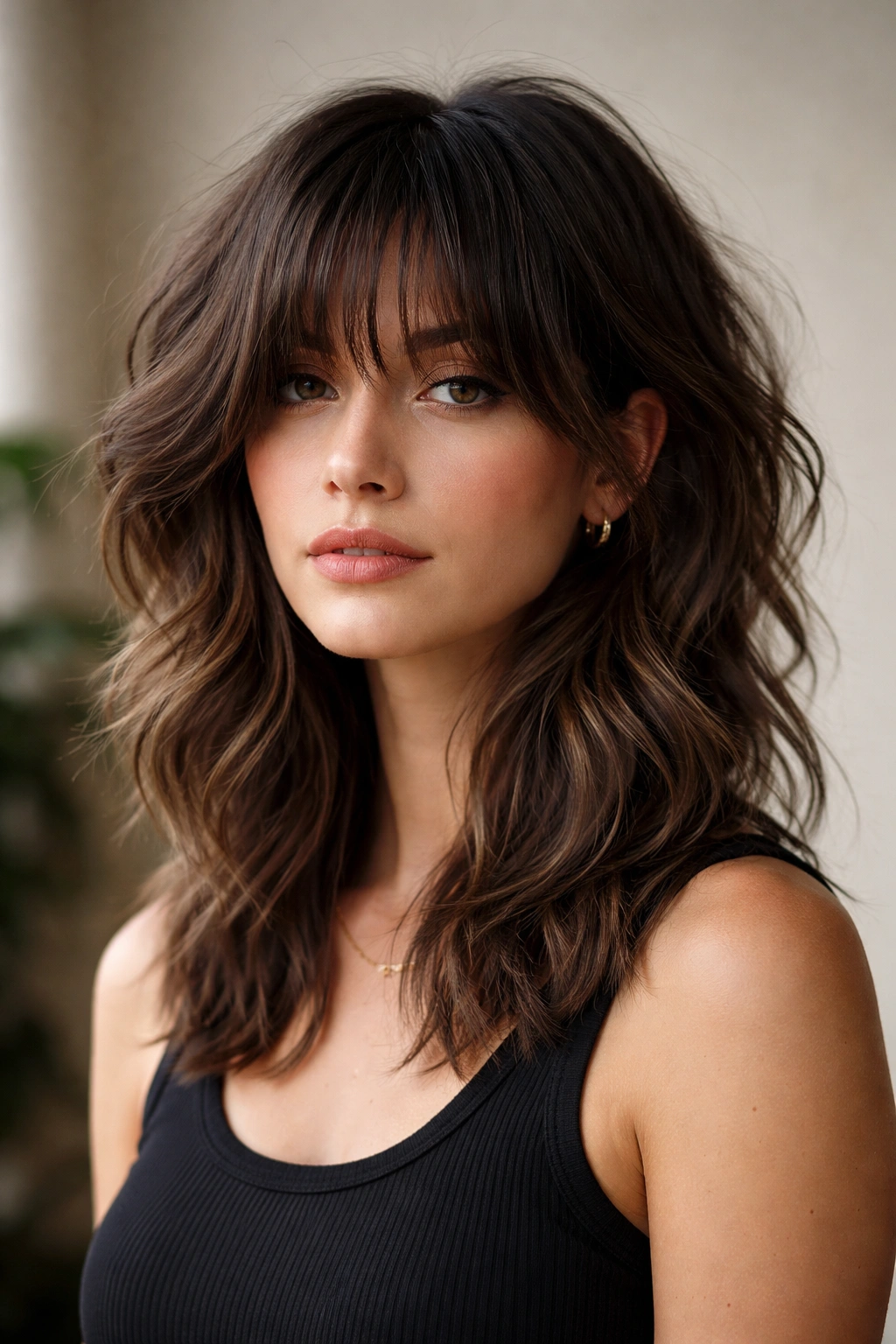
This version takes an unexpected approach by keeping the bottom ends relatively blunt and weighted while maintaining choppy, textured layers throughout the rest of the cut. Instead of feathering all the way down, the ends stay thicker and more substantial, creating a unique silhouette that feels both modern and slightly retro.
Why the Contrast Works
The blunt ends provide visual weight and anchor the cut, while the choppy upper layers add movement and texture. When waves flow through this combination, the longer ends move as a more unified unit while the crown texture dances independently. This creates a cut that feels structured and intentional rather than chaotic or purely choppy. It’s especially flattering if you have fine or thin hair—the blunt ends make your hair feel fuller and denser, while the textured crown prevents the overall look from feeling heavy or blunt-heavy.
Maintaining Blunt-Ended Wolf Cuts
Blunt ends require slightly more frequent trimming to keep them crisp and sharp—every 6-8 weeks is ideal rather than the 10-12 weeks fine for more feathered versions. The payoff is that your cut maintains its shape and intentional structure for longer. Waves actually enhance blunt ends by creating soft movement at the edges without compromising the cut’s clean silhouette. This version works across most hair types and styling capabilities, making it more universally accessible than some other wolf variations.
8. The Textured Wolf with Defined, Spiral Waves
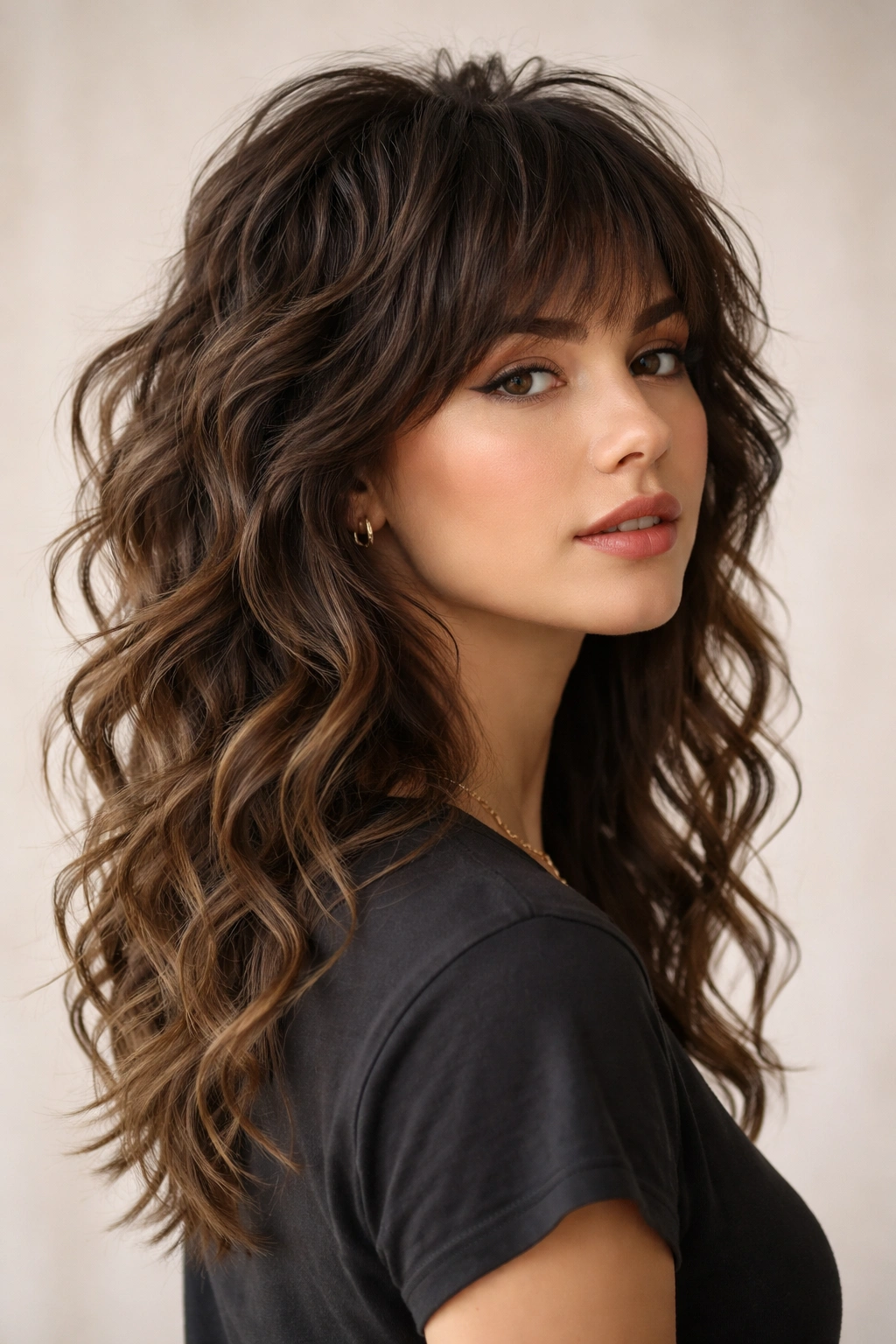
For people with naturally textured, curly, or coily hair—or those willing to create defined spiral waves consistently—this version transforms the wolf cut into something truly special. The crown remains short and choppy, but the focus is on encouraging and defining waves or curls into organized, visible spirals that extend down the shoulder-length ends.
Why Defined Texture Changes Everything
Defined waves or curls multiplied across a textured, layered cut create a finished appearance that reads as intentional and fashion-forward. The choppy layers work with each individual wave or curl, allowing each one to express itself independently. This creates volume and dimension that loose, undefined waves sometimes can’t achieve. The cut essentially becomes a vehicle for showcasing your natural texture, with the layers enhancing rather than fighting your wave pattern. It’s particularly stunning on people with naturally wavy to curly hair, where the cut can truly celebrate the texture they have.
Care and Styling Requirements
This version demands commitment to a curl or wave-care routine. You’ll want a good curl-defining cream or gel, a microfiber towel or t-shirt for plopping, and ideally a diffuser for blow-drying if you want to style it. The cut works beautifully with air-drying as well, especially if you refresh your waves the night before with a spray bottle and curl cream. Regular deep conditioning is essential because textured hair tends to be drier. The upside? This version often requires less heat styling than other wolf cut variations, which means healthier, stronger hair over time.
9. The Subtle Wolf with Just Enough Texture
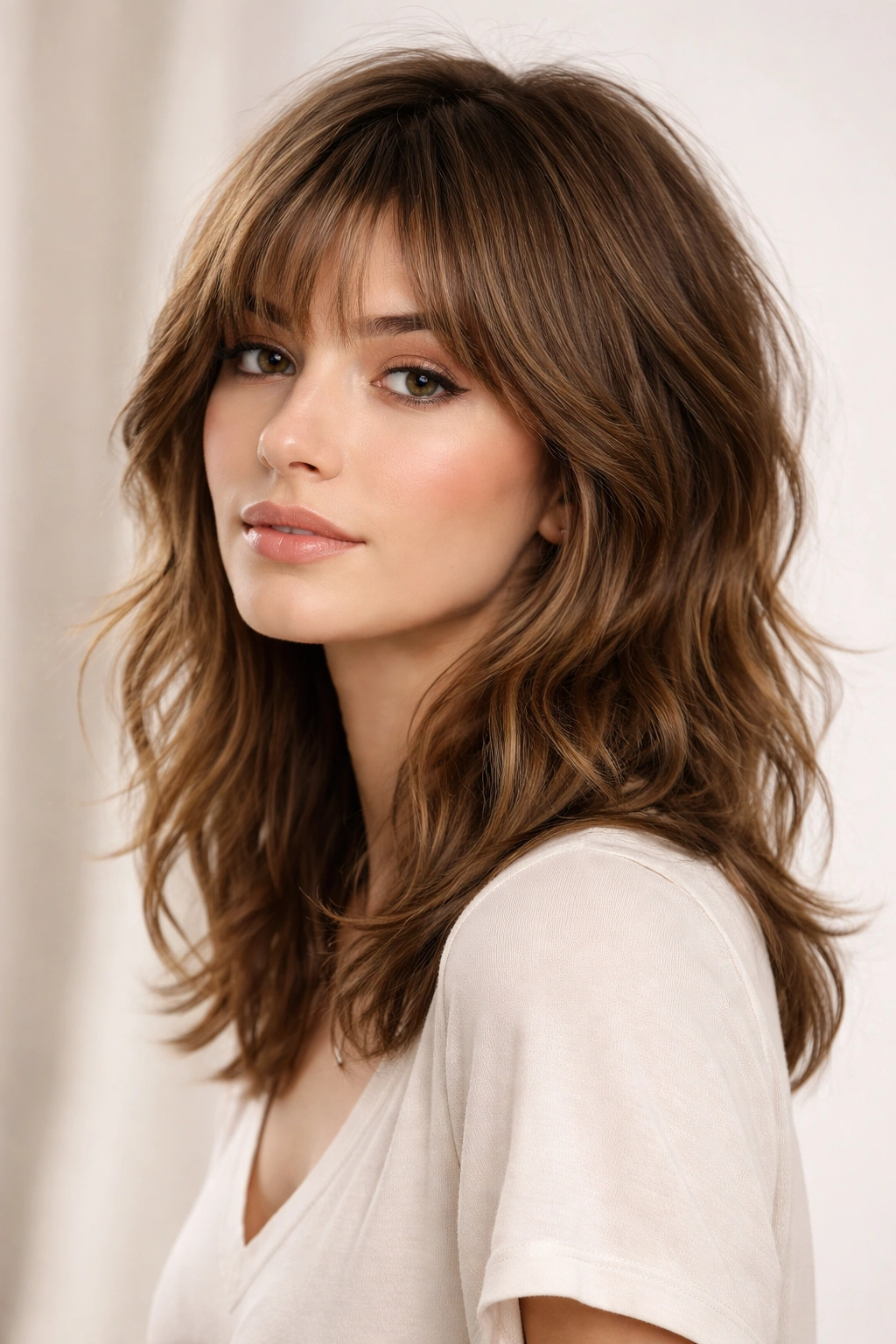
For the wolf-cut curious who aren’t ready to go full aggressive choppy, this gentler interpretation introduces the wolf cut concept without overwhelming your overall silhouette. The crown has slightly more texture and lift than your typical layered cut, but it’s not dramatically short or aggressively choppy. It’s basically a gateway wolf cut—unmistakably modern and trendy, but wearable and less commitment-intensive.
The Appeal of Subtlety
Not every trend needs to be worn at full intensity to be effective. A subtle wolf cut gives you the modern edge and texture you’re craving without requiring extensive styling or looking dramatically different from your usual aesthetic. It’s perfect if you’re between two hairstyle ideas or you love the wolf cut’s vibe but worry it might be too extreme for your lifestyle or comfort level. The subtle version also bridges the gap between the wolf cut and other popular cuts—it can feel like a layered shag that happens to have that wolf-cut texture.
Flexibility and Styling
The beauty of this approach is flexibility. You can style it tousled and textured when you want to lean into the wolf cut energy, or you can smooth it down and style it more traditionally when you want something different. The layers provide movement and dimension without requiring specific wave patterns or styling techniques. It works beautifully across different hair types and textures because the layering is moderate rather than aggressive. This version transitions well as your hair grows out, too—you don’t have to commit to frequent cuts to keep the shape looking intentional.
Final Thoughts
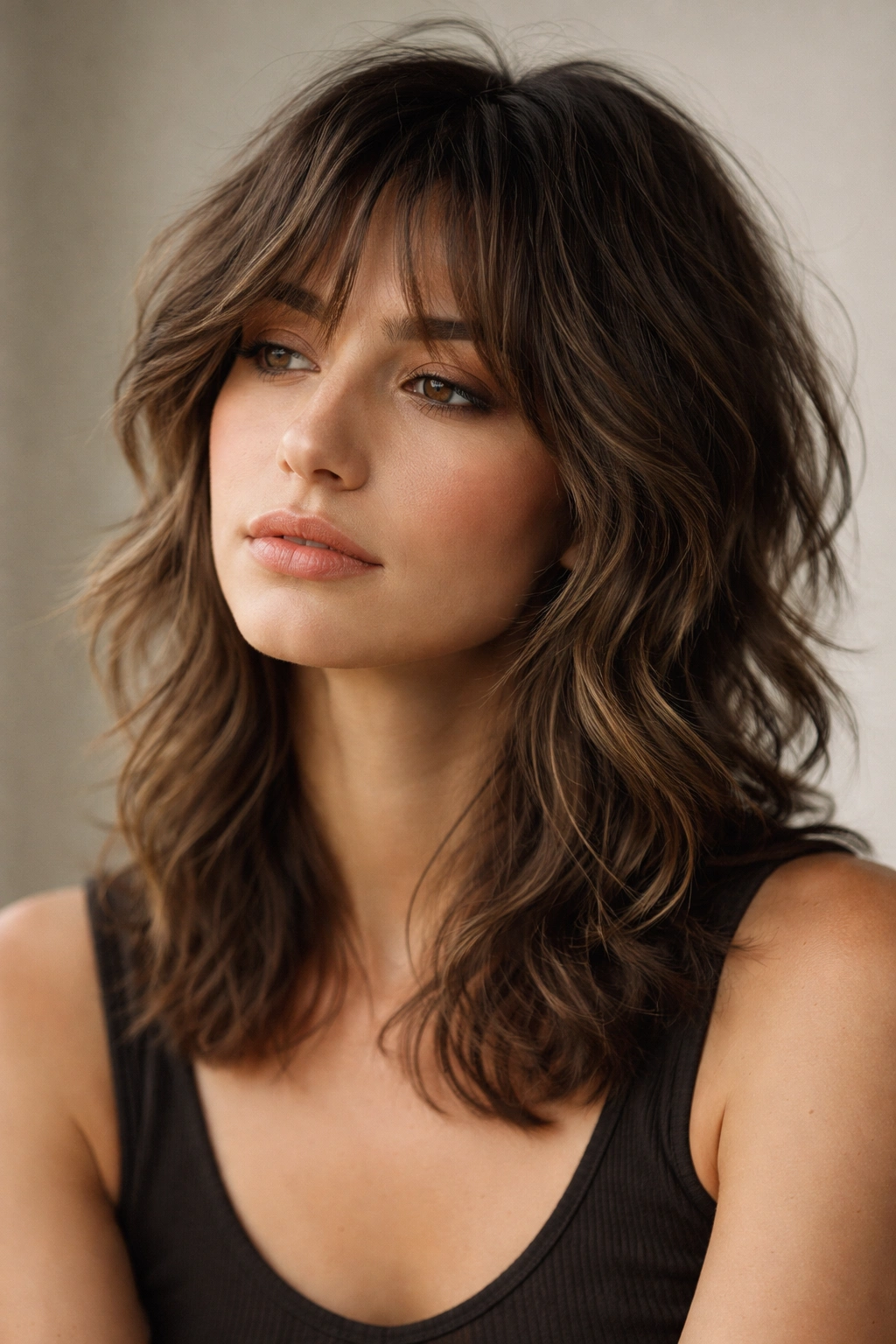
The shoulder-length wavy wolf cut deserves its popularity because it genuinely works across different aesthetics, hair types, and styling preferences. Whether you’re drawn to aggressive, choppy texture or prefer something more blended and subtle, there’s a wolf cut interpretation that fits your vibe. The addition of waves—whether natural, styled, or encouraged through cut technique—elevates the whole concept, creating movement and dimension that makes this cut feel special.
Before you book your appointment, bring multiple reference photos showing the specific version you’re imagining. Tell your stylist about your daily styling commitment level, your natural wave pattern or texture, and how often you’re willing to come back for trims. A skilled stylist can customize any of these approaches to work specifically for your hair and lifestyle. The cut requires the right technique to look intentional rather than messy, so finding someone experienced with layered, textured cuts is genuinely important.
Once you have your wolf cut, commit to the styling process for at least a few weeks. These cuts genuinely shine when you add texture through styling products, waves through heat tools or naturally, or both. Give yourself time to understand how your specific cut wants to move and what styling approach brings out its best version. Most people find that a well-executed wavy wolf cut becomes easier to style over time, not harder—the cut does a lot of the visual work once you understand how it wants to move.