



Wavy hair and bangs are a match made in heaven, but getting the combination right requires understanding how texture, length, and bang style work together. When you’re working with waves, the goal isn’t to fight your natural texture—it’s to choose a bang style that complements your waves and actually enhances your overall look instead of creating awkward contrast or fighting against your hair’s natural movement. A blunt bang that works beautifully on straight hair can look harsh or fail to blend seamlessly into wavy lengths, while the wrong bang placement can actually create flyaways where your waves meet your fringe.
The magic happens when you understand that waves aren’t static. They shift throughout the day, they respond to humidity, and they move differently depending on whether you’ve blow-dried, air-dried, or used styling products. The best bang styles for wavy hair are ones that have enough movement themselves to sit naturally against your texture, enough length to blend into your waves without a visible line of demarcation, or enough structure to hold their shape despite the texture around them. Long styles with bangs give you the versatility to wear your hair down with impact, pull it back without the bangs disappearing, or style it multiple ways without looking like you’re missing a crucial piece.
Finding a long-hair-and-bangs combination that actually works for your specific wave pattern involves considering how your bangs will sit, how they’ll interact with humidity and heat styling, and whether you’re willing to commit to the maintenance these styles require. The styles below represent the full range of possibilities—from subtle face-framing bangs that barely read as a “bang” at all, to bolder statements that completely transform your look. Each one is designed specifically to work with wavy texture rather than against it.
1. Curtain Bangs with Layered Waves
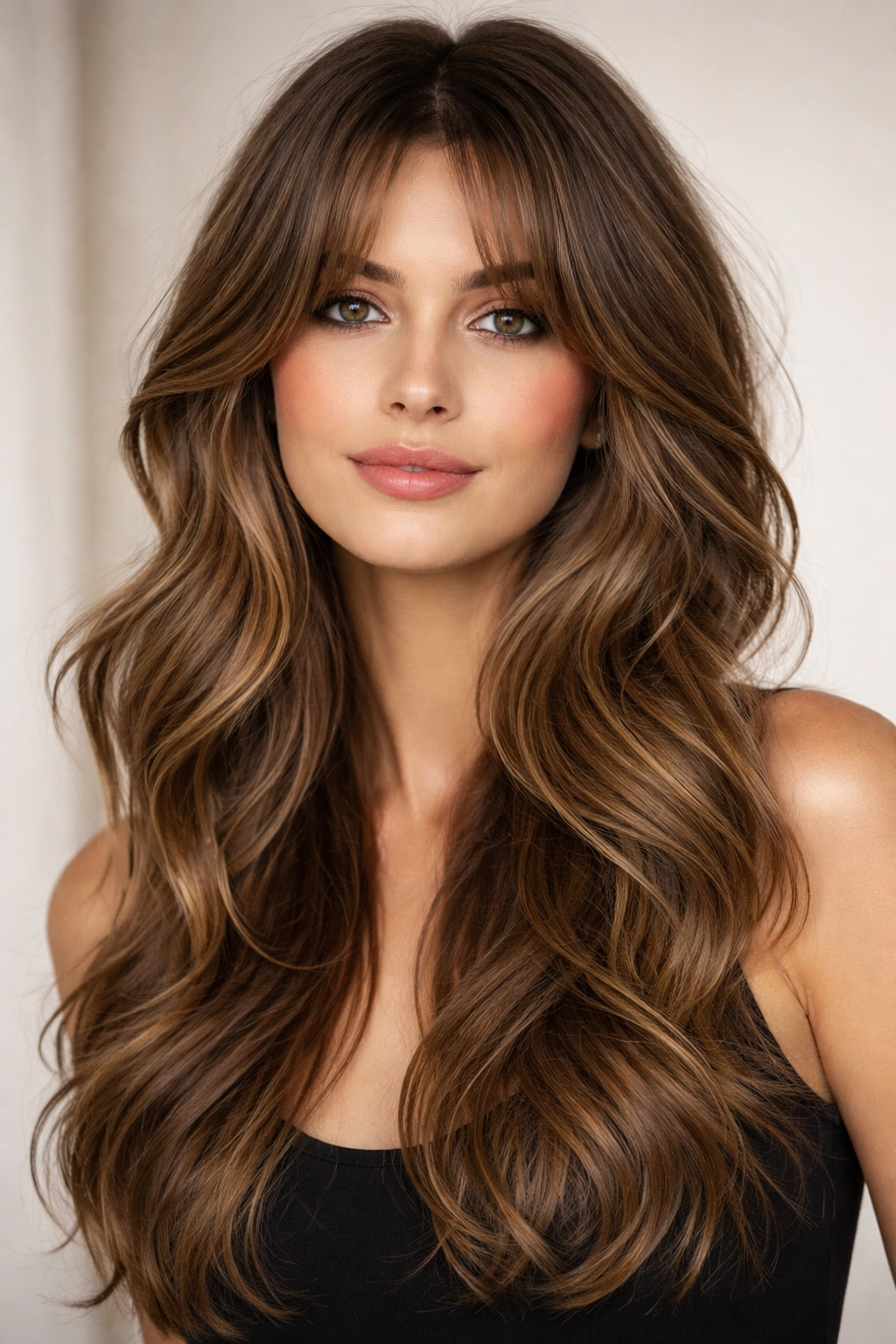
Curtain bangs are perhaps the most flattering bang choice for wavy hair because they’re built on the same principle as your waves—they move, they have shape, and they don’t fight your natural texture. This style features bangs that part down the middle and sweep away from the face on both sides, creating a soft frame that complements longer layers throughout. The bangs themselves typically start around cheekbone length and blend seamlessly into the layers surrounding them, so there’s no harsh line where your bangs meet the rest of your hair.
Why This Works for Wavy Hair
Curtain bangs actually enhance the texture of wavy hair rather than requiring you to smooth or straighten them into submission. Because they’re designed to move and fall away from the face naturally, your waves work in the style’s favor—they help create that soft, dimensional movement that makes curtain bangs so appealing. The middle part also means you’re not fighting against your natural wave pattern; you’re working with it. Most people with wavy hair find that curtain bangs actually look better when their hair has texture, not when it’s flat and straight.
How to Style Them
- Blow-dry your bangs with a round brush, rolling them away from your center part to encourage the outward sweep
- Use a medium-barrel curling iron to add subtle curve to the bangs if they’re too straight after blow-drying
- Apply light hairspray only to the underside of the bangs to avoid weighing them down
- Refresh them mid-week with a dry shampoo spray along the roots to keep them from drooping into your eyes
- Consider a leave-in conditioner that adds softness without heaviness, so the bangs move naturally without frizzing
Pro tip: Curtain bangs look even better when you add long layers throughout your hair, creating a piece-y, textured look that mirrors the soft movement of the bangs themselves.
2. Wispy Bangs with Soft Waves
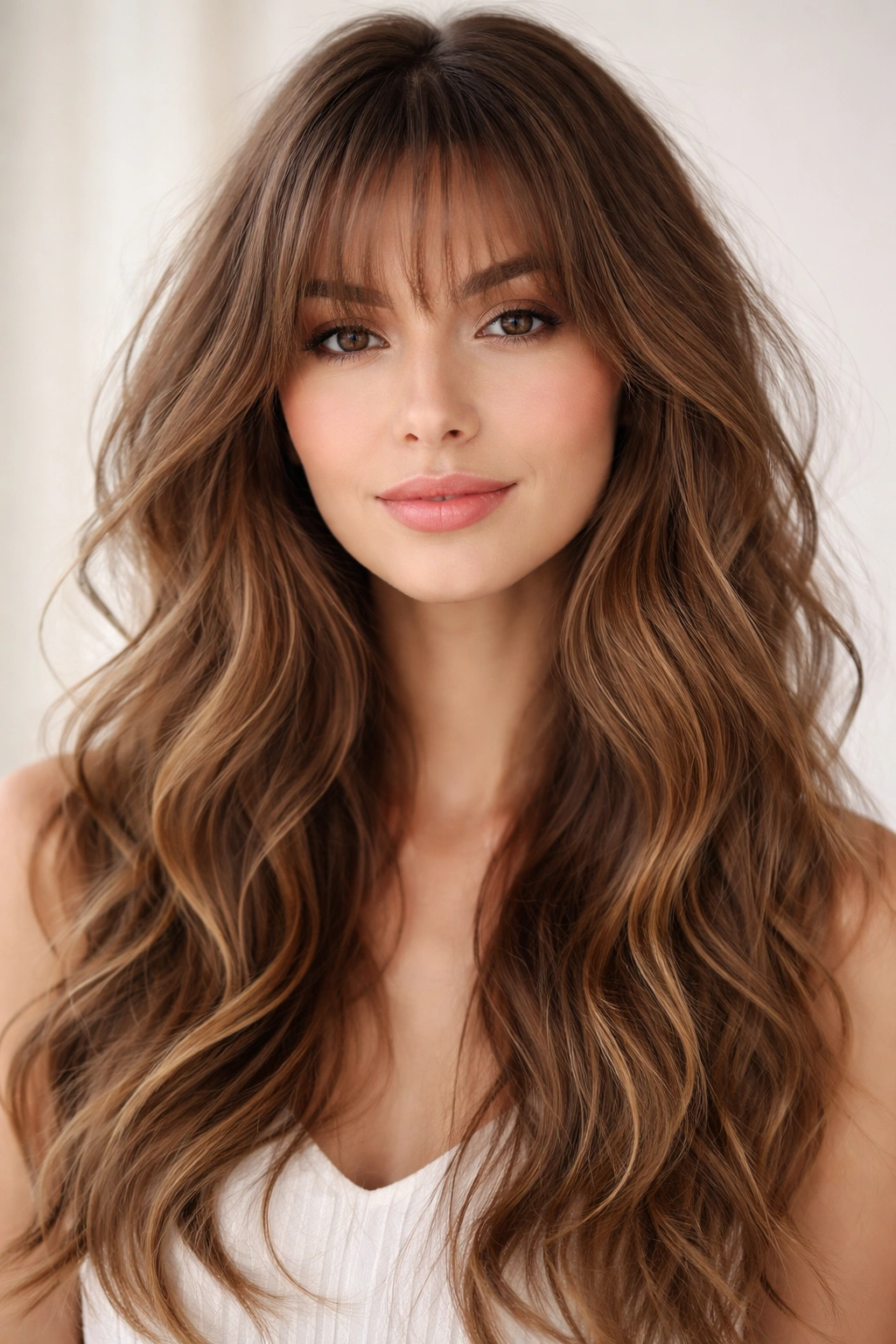
Wispy bangs are the most forgiving option for wavy hair because they’re thinner and shorter at the edges, which means they blend seamlessly into the rest of your hair with virtually no visible line. This style features bangs that are longer in the center and progressively shorter as they move toward the sides of your face, creating a delicate, feathered effect. The overall look is romantic and soft, with nothing harsh or severe about the face-framing, and the bangs are light enough that they never feel heavy against your forehead even on humid days.
Why Wispy Bangs Suit Wavy Hair Best
The genius of wispy bangs is that they’re designed to blend, not contrast. Your waves naturally create texture and movement, and wispy bangs amplify that effect rather than fighting against it. They’re also incredibly low-maintenance compared to heavier bangs—if they’re not perfectly styled on a given day, the wispy texture means they still look intentional rather than messy. This is the bang style most people with wavy hair can wear without daily restyling, making it perfect if you prefer a more relaxed approach to styling.
How to Style Them
- Air-dry your wispy bangs whenever possible to preserve their natural feathered texture
- If you blow-dry, use your fingers or a paddle brush rather than a round brush to avoid creating too much curl
- Apply a light texturizing spray or sea salt spray to the bangs to enhance their wispy quality
- Tuck them behind your ears when you want them out of your face, since they’re never heavy enough to require pinning
- Refresh the feathering with a curling iron only if they start to feel too blunt, running it through gently rather than clamping down
Worth knowing: Wispy bangs need trims every 4-6 weeks to maintain their feathered edge, so factor that into your styling commitment.
3. Heavy Blunt Bangs with Beachy Waves
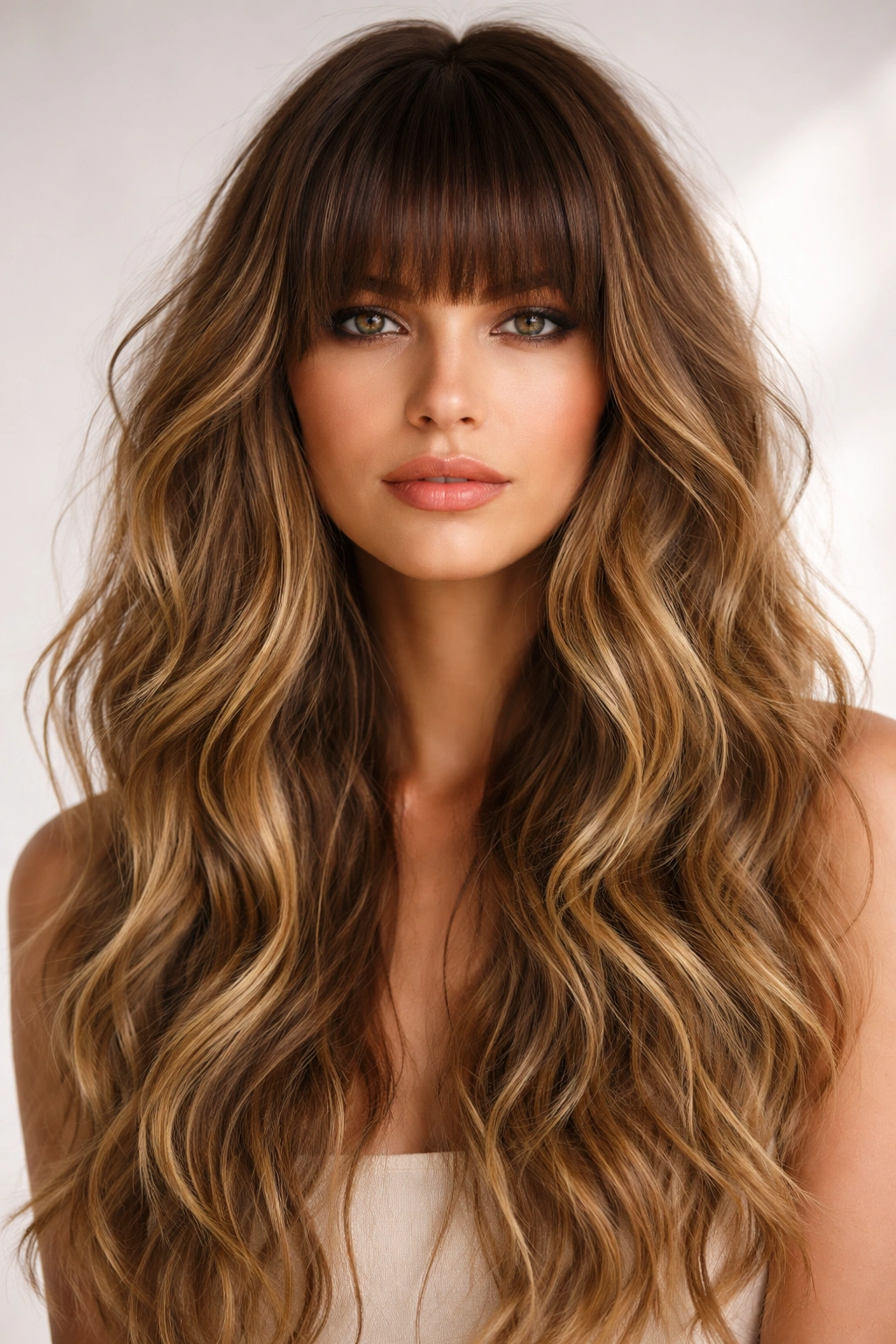
Heavy blunt bangs make a bold, confident statement when paired with long waves, creating a striking contrast between the structured bang line and the soft movement of your length. This style features a full, thick bang that sits right at your brows and stays relatively straight, while the rest of your hair features loose, natural waves that start from the roots or mid-length. The look is effortlessly chic and works especially well if your waves are on the looser side rather than tight curls, since the visual weight of the blunt bangs needs the visual lightness of soft, open waves to feel balanced.
Why Blunt Bangs Work with Loose Waves
Blunt bangs create a focal point for your face, and they work best when the rest of your hair has enough softness and movement to prevent the overall look from feeling too severe. With beachy waves, you’re creating a high-contrast look—structured bangs plus fluid waves—that feels intentional and editorial rather than like mismatched parts. The key is that your waves need to be clearly defined and soft, not tight or frizzy, so the blunt bangs feel like a styling choice rather than an accident of texture.
How to Style Them
- Blow-dry your bangs straight using a paddle brush and a straightening balm to keep them smooth
- Create your beachy waves with a curling iron, salt spray, or air-drying with mousse, applying the wave product to damp hair
- Keep your bangs slightly heavier through the center and slightly tapered at the sides so they don’t look blunt-cut to an extreme
- Use a clear or matte finish hairspray on the bangs to keep them in place without shine that might look overly styled
- Embrace some texture in your bangs—a slightly tousled blunt bang actually photographs better and looks more modern than a perfectly smooth one
Pro tip: Blunt bangs with beachy waves read as effortlessly cool, but they actually require consistent blow-drying to maintain. If you prefer air-drying your hair, consider a different bang style.
4. Long Sideswept Bangs with Texture
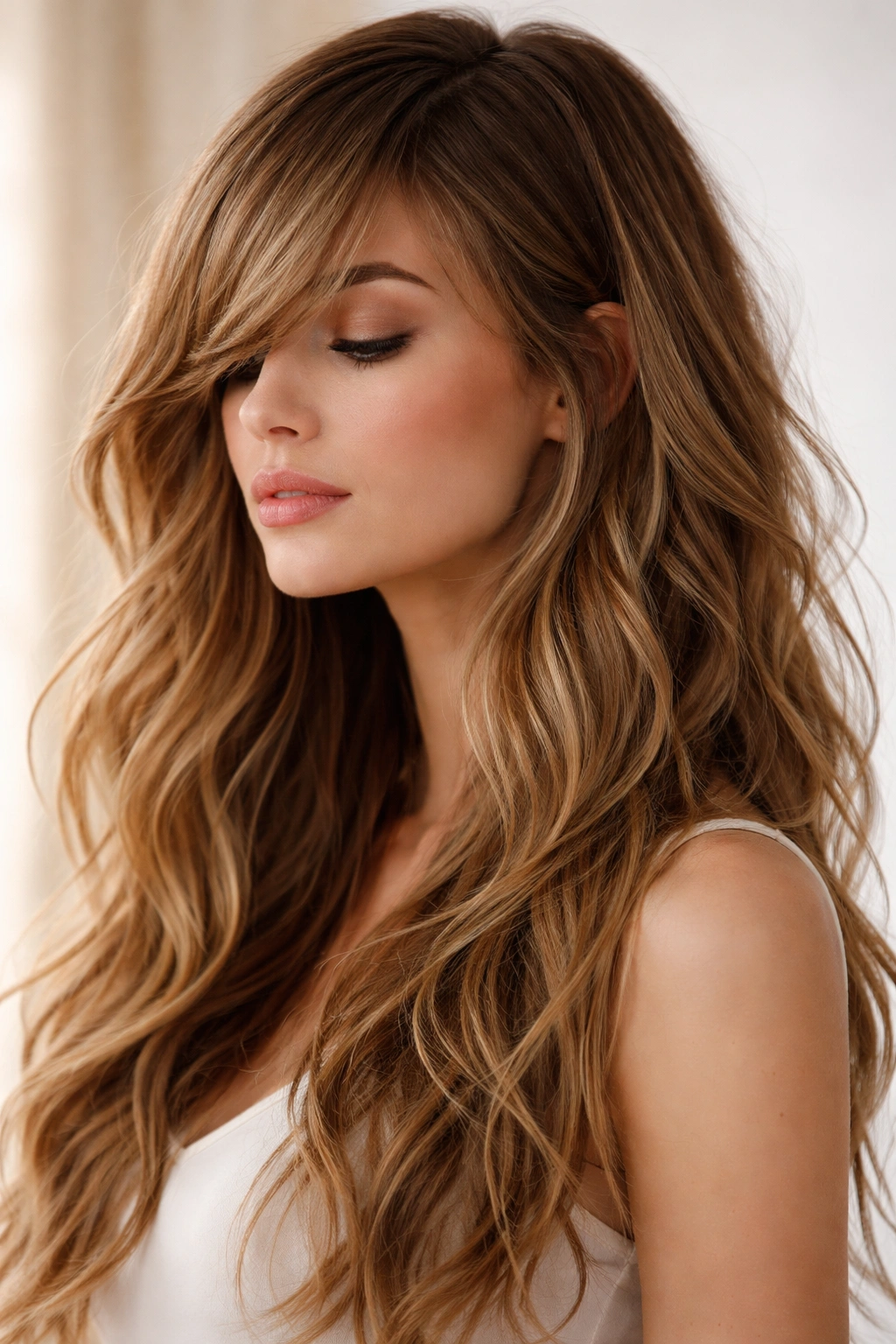
Long sideswept bangs offer a middle ground between obvious bangs and face-framing layers, sitting longer at one side of the face and shorter on the other. When paired with textured, wavy length, this style creates a continuously flowing silhouette where there’s no clear delineation between where your bangs end and your longer layers begin. The swoop of the bangs draws the eye and frames one side of your face while the opposite side stays more open, creating asymmetrical balance that feels intentional and flattering.
Why Long Sideswept Bangs Complement Wavy Hair
This style works beautifully because the sideswept movement mirrors the natural wave pattern in your hair—it’s texture-friendly and doesn’t require your waves to conform to an unnatural shape. The length of these bangs means they’re less maintenance than shorter bangs, and the asymmetrical placement means that even if one side doesn’t style perfectly on a humid day, the off-balance look still feels intentional. Many people find that sideswept bangs actually look better as their hair gets wavier throughout the day, since the movement enhances the sweep.
How to Style Them
- Blow-dry your bangs using a round brush to create the primary sweep direction, always moving in the direction they’re supposed to fall
- Use a medium-barrel curling iron to add secondary waves to your bangs, curling them in the same direction as your length waves
- Apply your wave-defining cream or mousse to damp hair before blow-drying to establish the texture from the start
- Brush your bangs to the dominant side daily, training them with a light hairspray to maintain the sideswept shape
- Pin your bangs back on one side for a change of pace, creating a half-up style that works with this bang placement
Worth knowing: Long sideswept bangs work best when your hair is cut with layers that blend them naturally into your length, so communicate this priority during your cut.
5. Shaggy Bangs with Choppy Layers
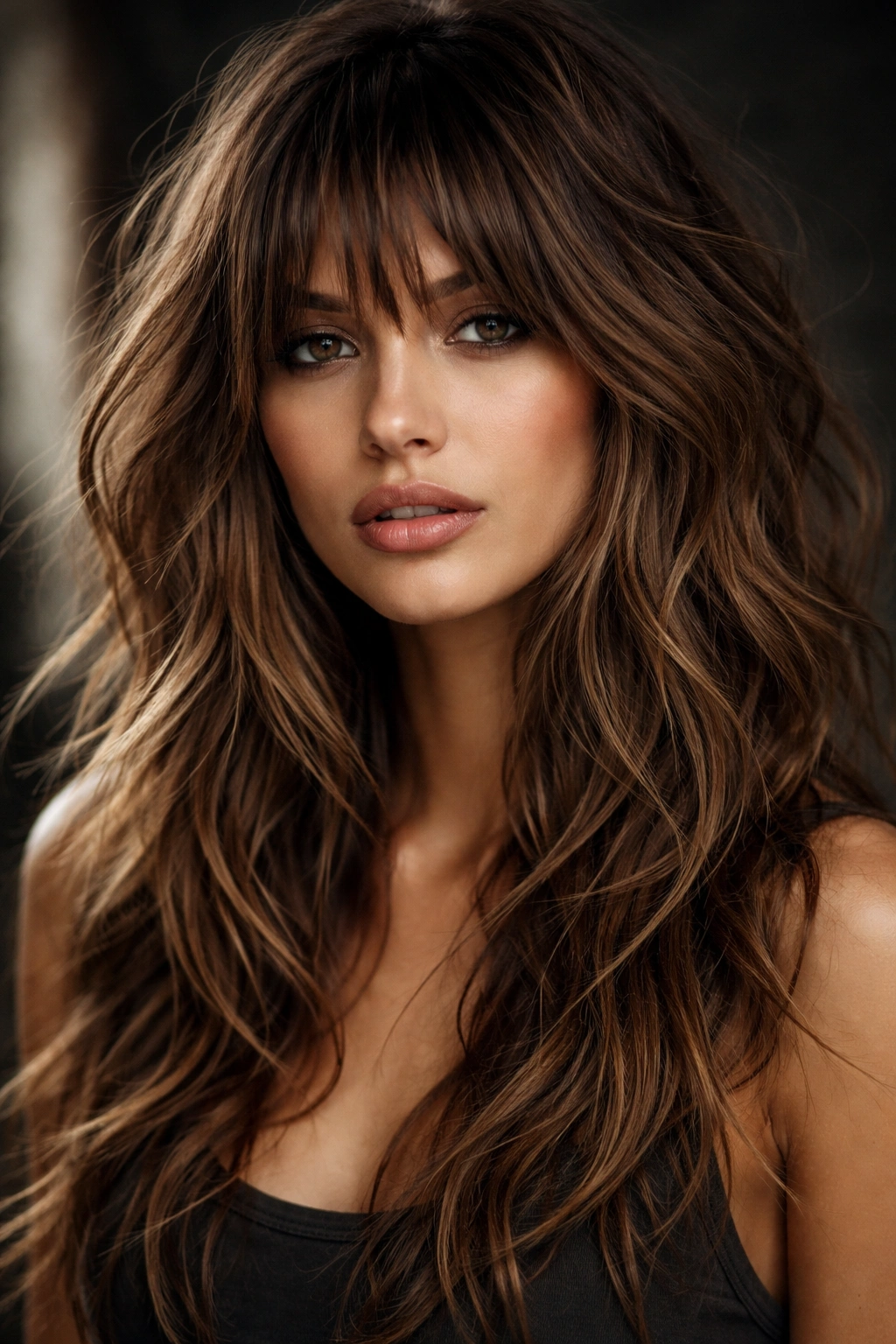
Shaggy bangs bring texture and movement to your face, featuring shorter, choppy pieces that blend into longer layers throughout your hair, creating a deliberately piece-y, rock-and-roll aesthetic. This style celebrates texture rather than trying to smooth or contain it, making it ideal for people who want to embrace their wavy hair fully instead of constantly fighting it. The bangs are shorter and more textured than curtain bangs, with shorter pieces interspersed throughout that break up the line and create a lived-in, effortless look.
Why Shaggy Bangs Embrace Wavy Texture
Shaggy bangs are designed to be textured, which means your wavy hair isn’t a problem to overcome—it’s the actual point of the style. The choppy layers throughout your hair all interact with your waves, creating dimension and movement that would be nearly impossible to achieve with straight hair. This is the bang style that actually looks better the wavier your hair is, and it’s the one that requires the least amount of blow-drying and styling product to look intentional. Many people find that shaggy bangs are the most realistic choice for everyday wear with wavy hair.
How to Style Them
- Air-dry with a texturizing cream or curl-enhancing mousse for maximum texture and movement
- If you blow-dry, use a diffuser attachment on your blow dryer to encourage your natural wave pattern rather than smoothing it
- Avoid using a flat iron on your bangs—let them be as textured and piece-y as the rest of your hair
- Use a light-hold sea salt spray to define the choppiness without crunching or weighing the bangs down
- Refresh your shaggy bangs mid-week by running your fingers through them with dry shampoo, which adds grip and texture
Pro tip: Shaggy bangs need a cut that’s designed to work with wavy texture, so find a stylist who specializes in textured hair and understands how to cut layers that enhance waves rather than fight them.
6. Feathered Bangs with Face-Framing Waves
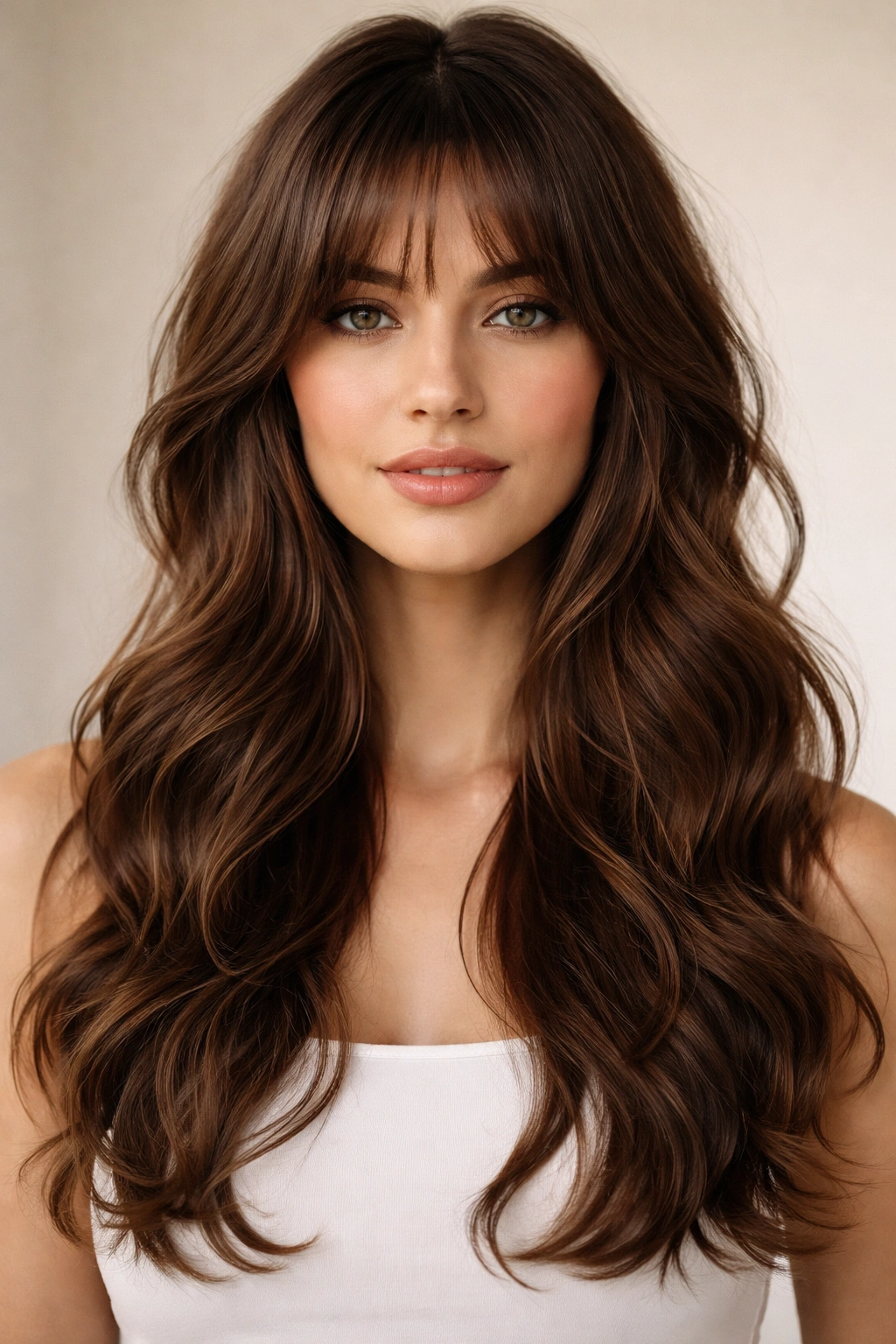
Feathered bangs feature longer, softer layers that frame your face and blend seamlessly with face-framing layers throughout your hair, creating a unified, textured look from your forehead all the way down your length. The feathering technique creates layers within the bangs themselves, so they’re thinner at the ends and fuller toward the roots, allowing them to blend beautifully with wavy texture. This style is incredibly flattering and works for a range of face shapes because the soft, layered movement around the face is customizable to your specific features.
Why Feathered Bangs and Waves Work Together
Feathered bangs are all about softness and movement, which aligns perfectly with the natural qualities of wavy hair. These bangs don’t fight your texture—they amplify it by creating layers and dimension right at your face, drawing attention to your features while the soft, textured quality keeps everything looking gentle and romantic. The feathering means there’s no harsh line where your bangs meet the rest of your hair; instead, there’s a graduated transition that feels cohesive and intentional. This is a style that genuinely looks better with wave texture than it would with straight hair.
How to Style Them
- Blow-dry your feathered bangs with a paddle brush or your fingers, creating soft curves rather than trying to smooth them straight
- Apply a lightweight leave-in conditioner to keep the feathered ends soft and prevent them from looking wispy or frazzled
- Use a texturizing spray that defines without crunchiness, spraying it from underneath the bangs to add volume and movement
- Brush through your bangs gently rather than combing them, which can disrupt the feathered layers and create frizz
- Consider having your stylist add some subtle face-framing layers throughout your length that echo the feathering of your bangs
Worth knowing: Feathered bangs require regular maintenance to keep the layers from getting too blunt or heavy, so plan for trims every 4-6 weeks.
7. Micro Bangs with Long Waves
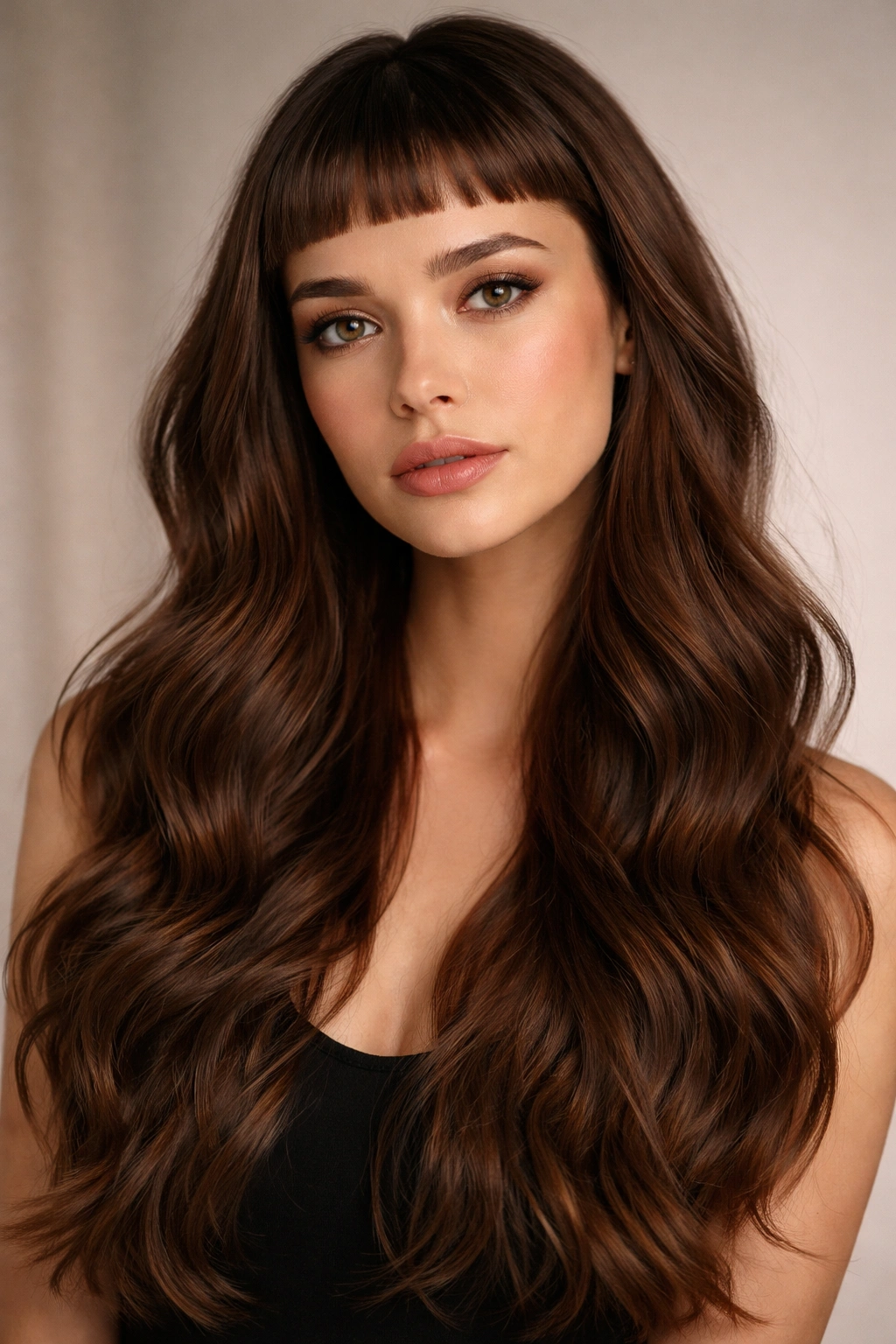
Micro bangs are a bold, fashion-forward choice featuring very short bangs that sit well above the eyebrows, creating a distinctive style that works best paired with long, flowing waves that emphasize the length contrast. This style is for people who want to make a statement—the shortness of the bangs is striking, and it works best when you’re confident enough to own something different. Paired with long, wavy hair, micro bangs create an interesting tension between the cropped fringe and the extended length, resulting in a look that feels contemporary and intentional.
Why Micro Bangs Create Impact with Long Waves
The beauty of micro bangs with long waves is the contrast—the short, clean fringe draws attention to your eyes and face, while the long, soft waves below create movement and dimension. The vastness of the length difference makes the overall style feel more intentional than it might with shorter hair. This style works best if your waves are consistently defined and soft rather than tight curls, since you want the eye to read them as one cohesive unit with the short bangs above.
How to Style Them
- Blow-dry your micro bangs completely straight using a paddle brush and a straightening balm, since any curve would disrupt the style’s impact
- Create or enhance your long waves using a curling iron, focusing on creating soft, open waves rather than tight curls
- Keep your bangs shaped with regular trims every 3-4 weeks to maintain the micro length as they grow out
- Apply a clear or matte hairspray only to the bangs to keep them in place without disrupting their clean line
- Consider a side part if you want to occasionally vary the style, as a deep side part can make micro bangs feel different without requiring a cut
Pro tip: Micro bangs are bold and require confidence, but they also require very consistent maintenance. Before committing to them, consider testing the look with bang clips or a temporary trim.
8. Deep Side-Part Bangs with Voluminous Waves
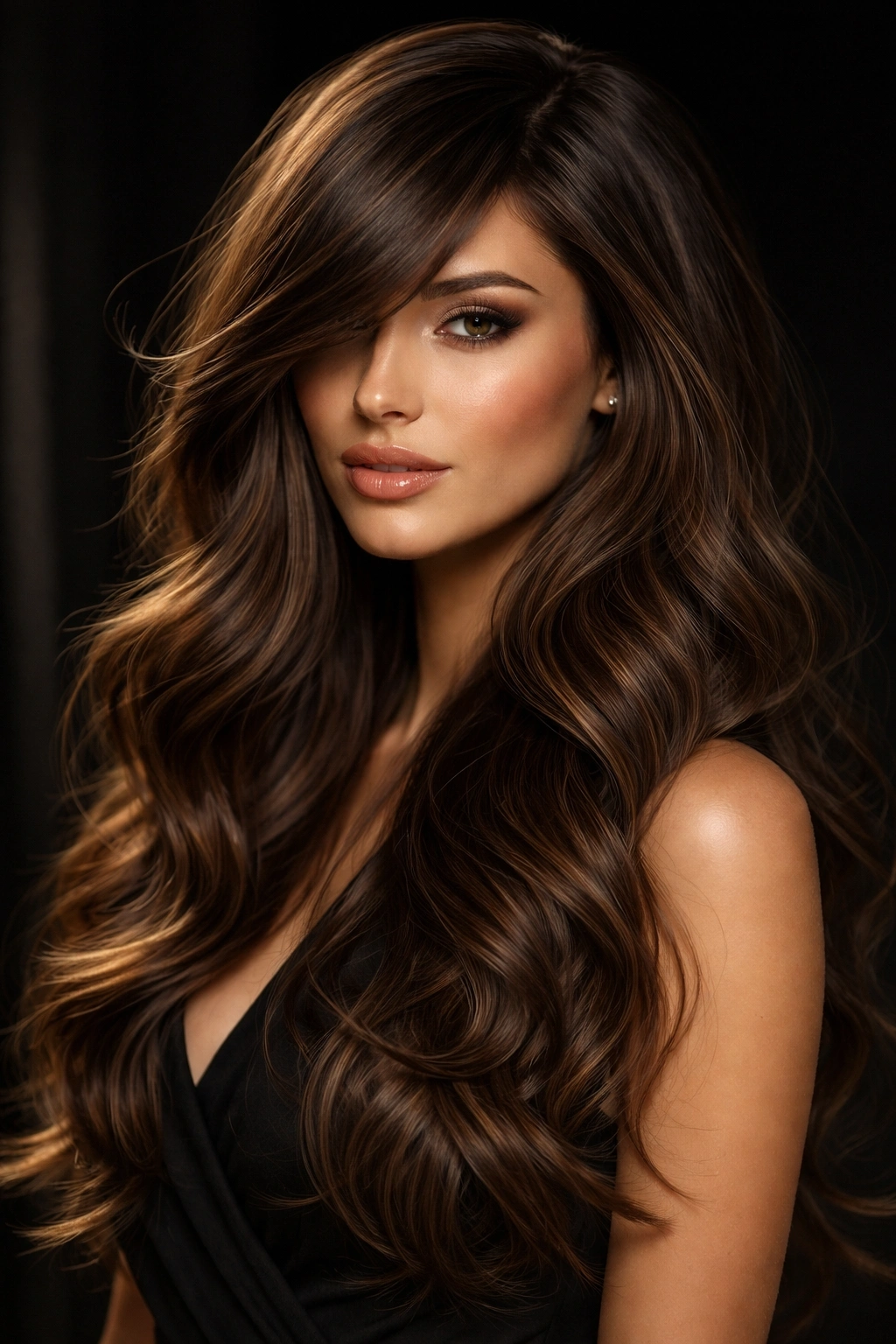
Deep side-part bangs feature a dramatic parting that starts well to one side and creates an asymmetrical bang that covers more of one eye than the other, paired with waves that have maximum volume and texture throughout. This style is glamorous and works best on longer hair where you can create significant height at the crown and waves that cascade down with real dimension. The bangs blend into the longer layers surrounding them, creating a unified look that feels effortlessly elegant rather than obviously styled.
Why Deep Side-Part Bangs Suit Voluminous Waves
Deep side-part bangs are all about drama and movement, which pairs beautifully with full, voluminous waves. The asymmetry of the part means that the overall style feels directional and intentional, while the volume of your waves reinforces that sense of movement. This is a style that actually improves throughout the day as your waves settle into their texture, so it’s perfect for people who prefer air-drying or who want a look that evolves rather than stays perfectly fixed.
How to Style Them
- Blow-dry your hair with a round brush, creating volume at the crown and allowing your roots to dry with maximum lift
- Part your hair deeply to one side before your hair is completely dry, so the part sets into your wavy texture
- Create or enhance waves using a curling iron or wave cream applied to damp hair before blow-drying
- Brush your bangs gently across your face from the deep side part, allowing them to rest naturally rather than forcing them into a specific shape
- Use a flexible-hold hairspray that allows your waves to move throughout the day rather than locking them in place
Worth knowing: Deep side-part bangs work best when you have hair that’s thick enough to create volume, since thin hair can make the deep part look like you have a bald spot rather than an intentional style choice.
9. Choppy Bangs with Tousled Length
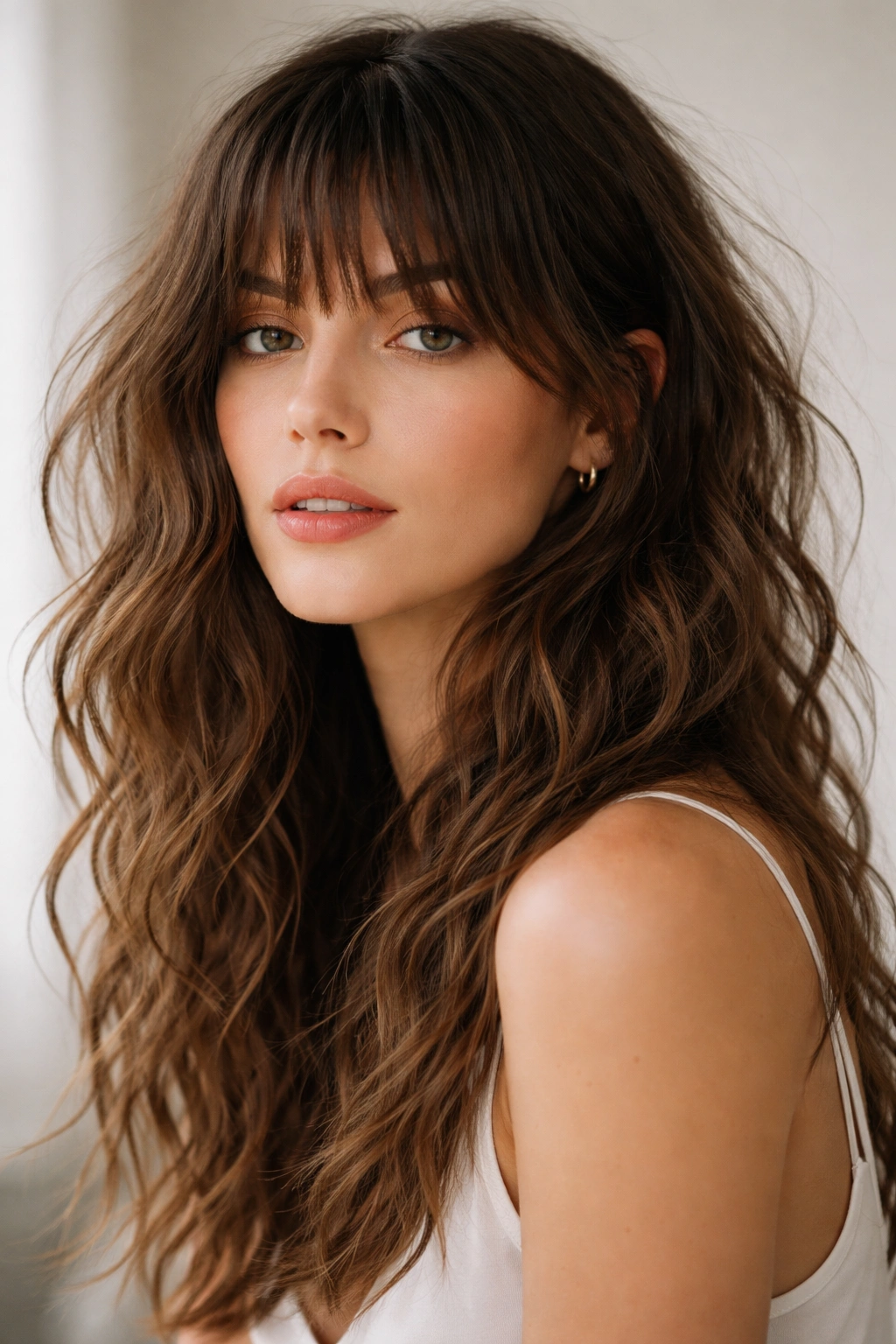
Choppy bangs feature distinct, uneven layers that create a deliberately disorganized, textured look at your face, paired with tousled, undone waves throughout your length that emphasize movement over polish. This style is meant to look like you didn’t try too hard—the bangs are choppy but intentional, the waves are soft but piece-y, and the overall vibe is effortlessly cool. The bangs blend into face-framing layers that mirror their choppy texture, creating a unified look where everything flows together despite the deliberately uneven nature.
Why Choppy Bangs Work with Tousled Waves
Choppy bangs celebrate imperfection and texture, which means your wavy hair is exactly what the style calls for. These bangs don’t require blow-drying and straightening to look right—they actually look better when there’s texture and movement throughout. The tousled nature of the length waves means that even if your bangs aren’t sitting perfectly on a given day, the overall look still reads as intentional and stylish rather than messy.
How to Style Them
- Air-dry your hair with a texturizing cream or lightweight mousse for maximum natural texture
- Avoid blow-drying your choppy bangs straight—let them maintain their natural wave and texture throughout the day
- Use a dry shampoo spray to add grip and texture to your bangs if they start to feel too smooth or polished
- Run your fingers through your bangs and length waves with a light-hold sea salt spray to enhance the tousled effect
- Consider styling your hair with your fingers rather than a brush to maintain the choppy, piece-y quality
Pro tip: Choppy bangs with tousled waves are the most low-maintenance option if you’re willing to embrace your hair’s natural texture. Skip the blow dryer and straightener, and you’ll spend far less time styling.
10. Bohemian Waves with Wispy Bangs
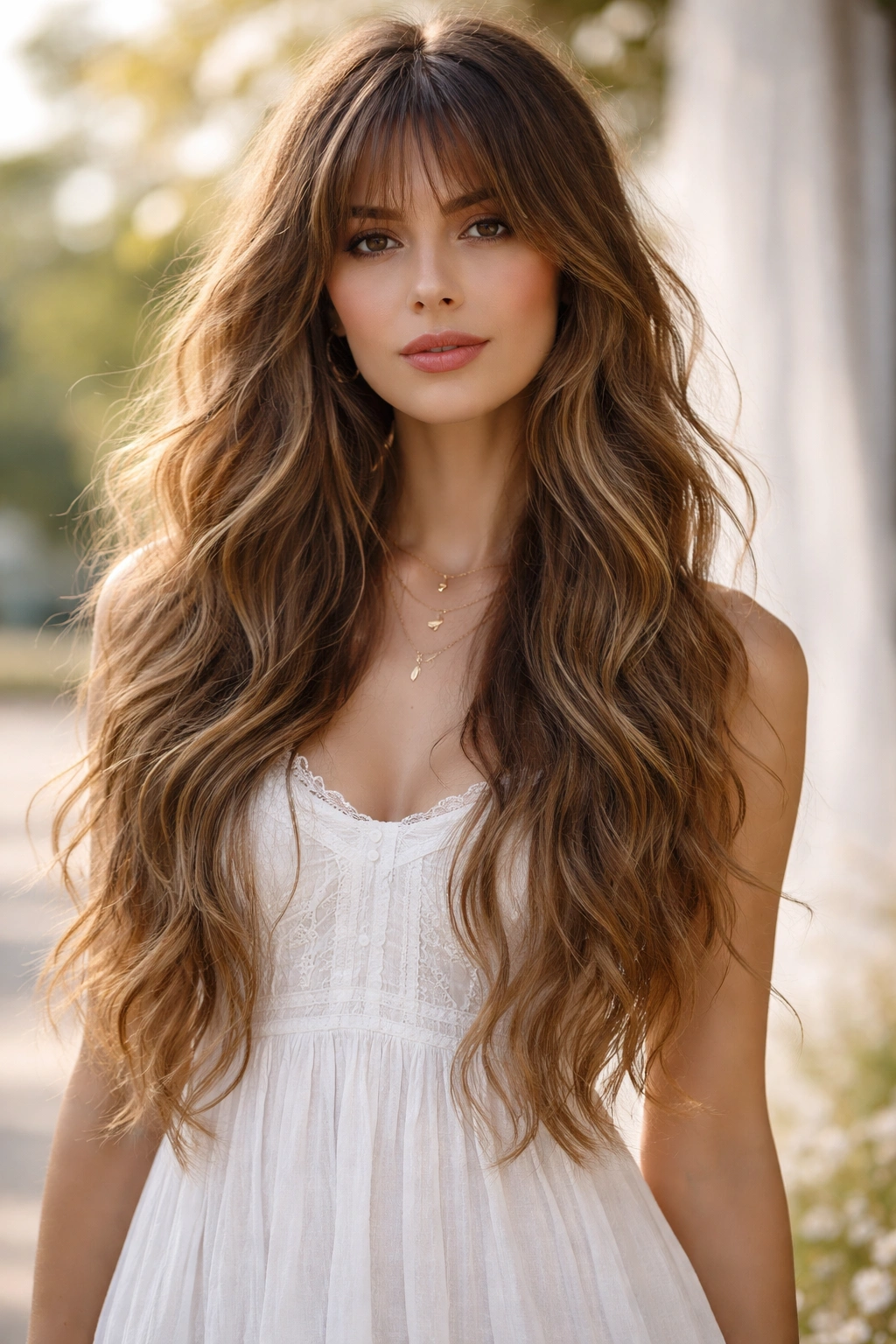
Bohemian waves with wispy bangs create a soft, romantic aesthetic featuring long, flowing waves that start from mid-length or the roots, combined with delicate wispy bangs that are barely visible as a separate element. This style is about femininity and movement, with everything designed to flow and sway rather than stay fixed. The bangs are so soft and wispy that they feel like an extension of your face-framing layers rather than a distinct bang statement, creating a dreamy, undone look.
Why Wispy Bangs Enhance Bohemian Waves
Bohemian waves celebrate flow and movement, and wispy bangs amplify that aesthetic by adding another layer of soft texture right at your face. The delicate nature of wispy bangs means they blend seamlessly with boho-styled waves, creating a unified look that feels romantic and effortless. This is the style to choose if you want bangs that enhance your wave pattern rather than creating a separate styling challenge.
How to Style Them
- Create bohemian waves by loosely curling damp hair with a large-barrel curling iron, creating open, soft waves
- Alternatively, use a wave cream or sea salt spray on damp hair and let it air-dry for a more natural boho effect
- Keep your wispy bangs soft by applying a lightweight leave-in conditioner that prevents them from looking dry or wispy-turned-frizzy
- Brush through your wispy bangs gently with your fingers rather than a comb, preserving the soft, feathered quality
- Refresh your bohemian waves mid-week with a curling iron or by sleeping in loose braids that create wave texture overnight
Worth knowing: Bohemian waves with wispy bangs look best when your hair is long enough to really show off the flowing movement, so this style works best with hair that’s at least mid-back in length.
11. Face-Framing Bangs with Spiral Waves
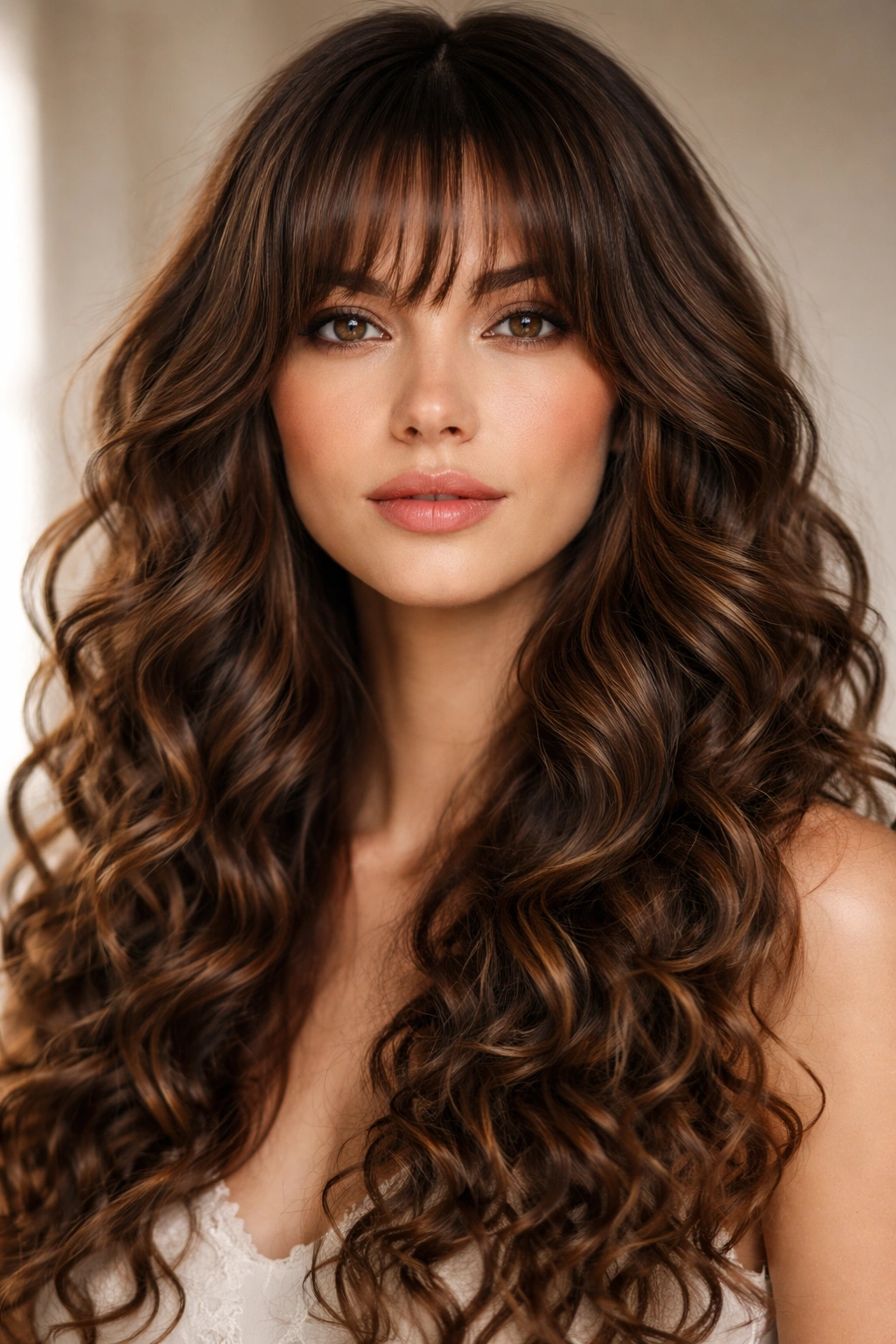
Face-framing bangs that taper into longer layers combine with tight, defined spiral waves throughout your length to create a style that’s both romantic and textured. The bangs are shorter at the center of your face and graduate longer as they move toward the sides, creating a frame for your features while blending seamlessly into the rest of your hair. Paired with spiral waves—tighter, more defined curls that start from the roots or mid-length—this creates a style with significant dimension and visual interest from your scalp to your ends.
Why Face-Framing Bangs Suit Spiral Waves
Face-framing bangs with spiral waves create cohesion because the layers in your bangs echo the defined, separated texture of your spiral waves throughout the rest of your hair. There’s no disconnect between your bangs and your length—instead, everything flows together as one intentionally textured style. This is an excellent choice if you have natural spiral waves or curls and want bangs that enhance rather than fight your texture.
How to Style Them
- Define your spiral waves by applying a curl cream or defining gel to damp hair before blow-drying with a diffuser or air-drying
- Blow-dry your face-framing bangs with your fingers, allowing them to curl naturally rather than forcing them straight
- Use a lightweight styler that defines your curls without crunchiness, spraying it throughout your hair and bangs
- Refresh your spiral waves on day two by lightly misting with water and reactivating your styler, which also refreshes your bangs
- Avoid brushing your spiral waves when dry, which can cause frizz—instead, run your fingers through gently or use a wide-tooth comb on wet hair
Pro tip: Face-framing bangs with spiral waves look beautiful when you lean into your curl pattern rather than trying to smooth it, so find a stylist who specializes in curly hair and can cut your bangs to enhance rather than fight your natural texture.
12. Straight Bangs with Wavy Length
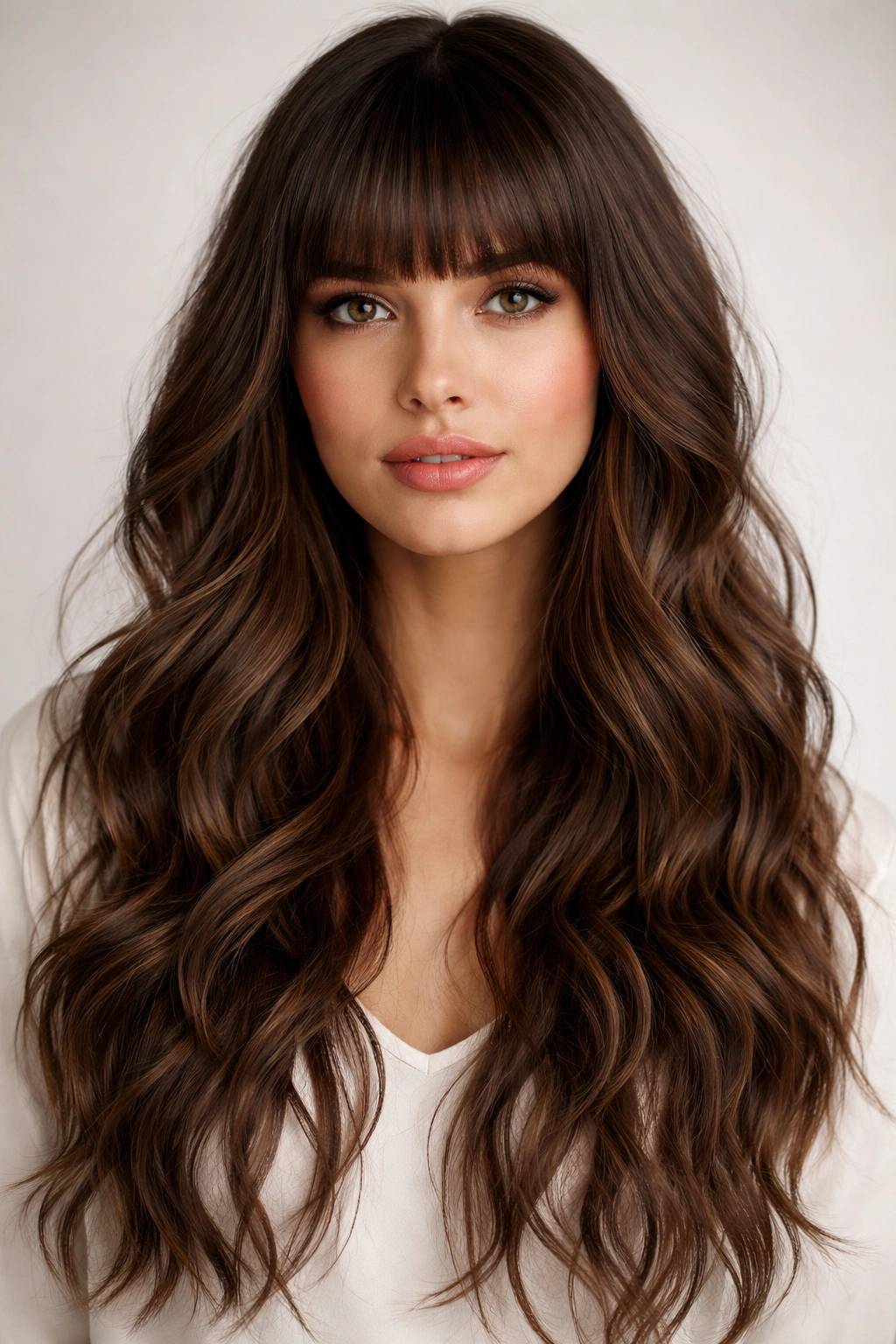
Straight bangs create a modern contrast when paired with wavy length, featuring a clean, blunt line right at your brows that stands in sharp relief against the soft, textured waves below. This style is high-contrast and intentional—the straightness of the bangs is a styling choice that requires some daily blow-drying effort, while the waves below can be more naturally textured. The look works best when you’re willing to commit to smoothing your bangs daily, since that contrast is what makes the style visually interesting.
Why Straight Bangs Create Impact Against Waves
The contrast between straight bangs and wavy length is what makes this style work—your eye reads them as two distinct elements that have been carefully styled rather than one unified texture. This works best when you have the time and willingness to blow-dry your bangs to straightness, since that effort is what creates the visual impact. Wavy hair naturally makes this contrast even more striking, so if you want a style that feels polished and intentional, this is an excellent choice.
How to Style Them
- Blow-dry your bangs completely straight using a paddle brush and a blow dryer, creating a smooth, even line
- Use a flat iron to finish your bangs once they’re blow-dried, ensuring they stay straight throughout the day
- Apply a straightening balm or anti-frizz serum to your bangs before blow-drying to prevent them from getting wavy
- Enhance your waves throughout the rest of your hair with a curling iron or wave cream, creating obvious contrast against your straight bangs
- Use a firm-hold hairspray on your bangs to keep them straight despite humidity, which wants to activate waves in your hair
Worth knowing: Straight bangs require daily styling commitment to maintain, so consider this style only if you’re willing to blow-dry your bangs most days. Air-drying them will result in them becoming wavy within a few hours.
Final Thoughts
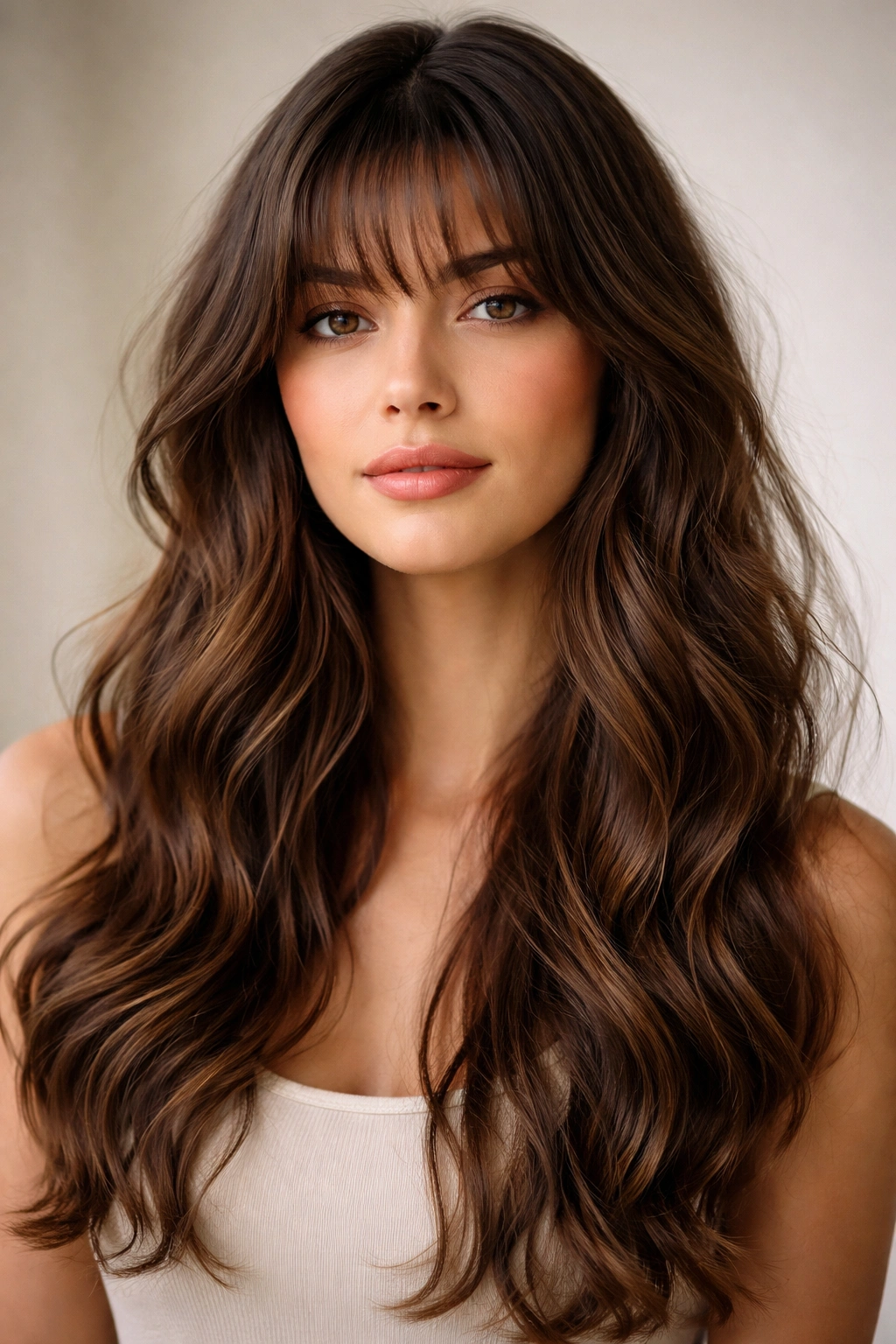
Finding the right long style with bangs for wavy hair comes down to understanding how your specific wave pattern interacts with different bang styles and being honest about how much styling maintenance you’re willing to commit to. Some styles—like shaggy bangs or wispy bangs—actually look better when you embrace your natural texture and skip the blow dryer, while others like straight bangs or heavy blunt bangs require consistent styling to maintain their look. The key is choosing a style that either complements your waves naturally or that you genuinely enjoy styling every single day, rather than picking something that fights your texture and leaves you frustrated.
Your face shape, hair thickness, and lifestyle all matter when you’re choosing between these options. If you have fine, thin hair, heavier bangs might look disproportionate to your face and weigh down your roots, while thick, coarse waves might eat up wispy bangs entirely. If you prefer wash-and-go styling, shaggy or wispy bangs are your best bets. If you love spending time on your hair and want to look polished and intentional, straight or heavy blunt bangs create more impact. Whatever you choose, communicate clearly with your stylist about your wave pattern, how you style your hair at home, and how much daily maintenance you’re realistic about doing—that’s how you end up with a style you’ll actually love wearing.
