



Wavy hair is genuinely magical when it’s cut right, but genuinely difficult when it isn’t. The difference between a haircut that enhances your natural texture and one that fights against it comes down to how your stylist understands layers, movement, and weight distribution. If you’ve ever walked out of a salon thinking your waves looked flatter, frizzier, or somehow both at once, the problem likely wasn’t your hair — it was the cut.
The best wavy haircuts work with your texture instead of against it. They use strategic layering to create movement, remove bulk from the wrong places, and leave enough length and structure that your waves have something to grip onto. A good wavy cut bounces between your shoulders when you move, frames your face in ways that feel intentional, and actually looks better on day two or three than it does fresh from the shower (which, let’s be honest, is the wavy-haired person’s dream).
Whether your waves are loose and romantic or tighter and more textured, there’s a haircut that’ll make you actually excited to style your hair instead of reaching for a straightener. The right cut can change how confident you feel, how long your styling takes, and whether you’re genuinely working with your hair’s natural personality or constantly fighting it.
Here are eleven wavy haircut styles that actually work, plus exactly how to describe them to your stylist and what makes each one special for wavy hair.
1. Shaggy Wavy Layers
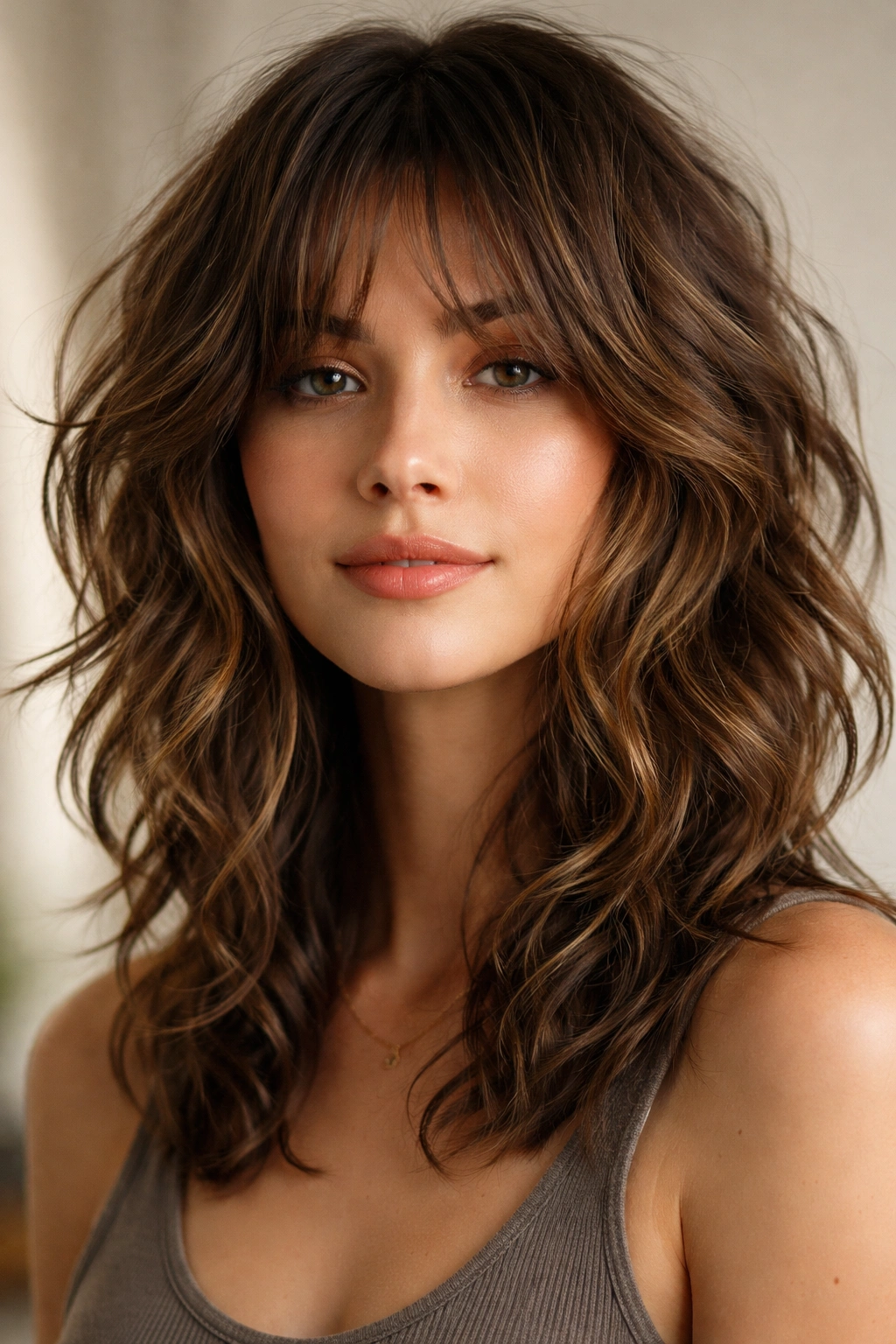
A shaggy layered cut is pure texture and movement. This style uses choppy, disconnected layers throughout to create dimension at every length, so your waves have multiple points where they can bend and curve. Instead of one uniform wave pattern, shaggy layers create a piece-y, textured effect that looks intentional even when your hair is doing its own thing.
Why It Captures Movement So Well
Shaggy layers work beautifully with waves because they eliminate weight in strategic places. When all your hair is one length, the heaviness pulls your waves down and flattens them. Layers interrupt that weight, giving your waves room to express themselves at multiple points simultaneously. The choppy, disconnected nature of shaggy cuts means your hair moves independently rather than as one solid block.
What to Know About This Cut
- Requires styling and some product to look intentional — this isn’t a “wash and go” cut, but it’s worth the effort because the texture is genuinely stunning
- Works better with slightly longer hair (shoulder-length minimum) so the layers have space to graduate and create movement rather than look too choppy
- Ask your stylist for layers that start around mid-ear or collarbone level, then graduate down longer toward the back for dimension without sacrificing length
- Pair with a texturizing spray or sea salt spray to enhance the piece-y feel — the cut is designed to work with products that separate and define
Pro tip: When you’re getting this cut, show your stylist photos of wavy shag styles and specifically mention you want choppy texture, not blunt ends. The difference between a shag that looks editorial and one that looks like you got an uneven cut comes down to how your stylist finishes those layers.
2. Long Beach Waves
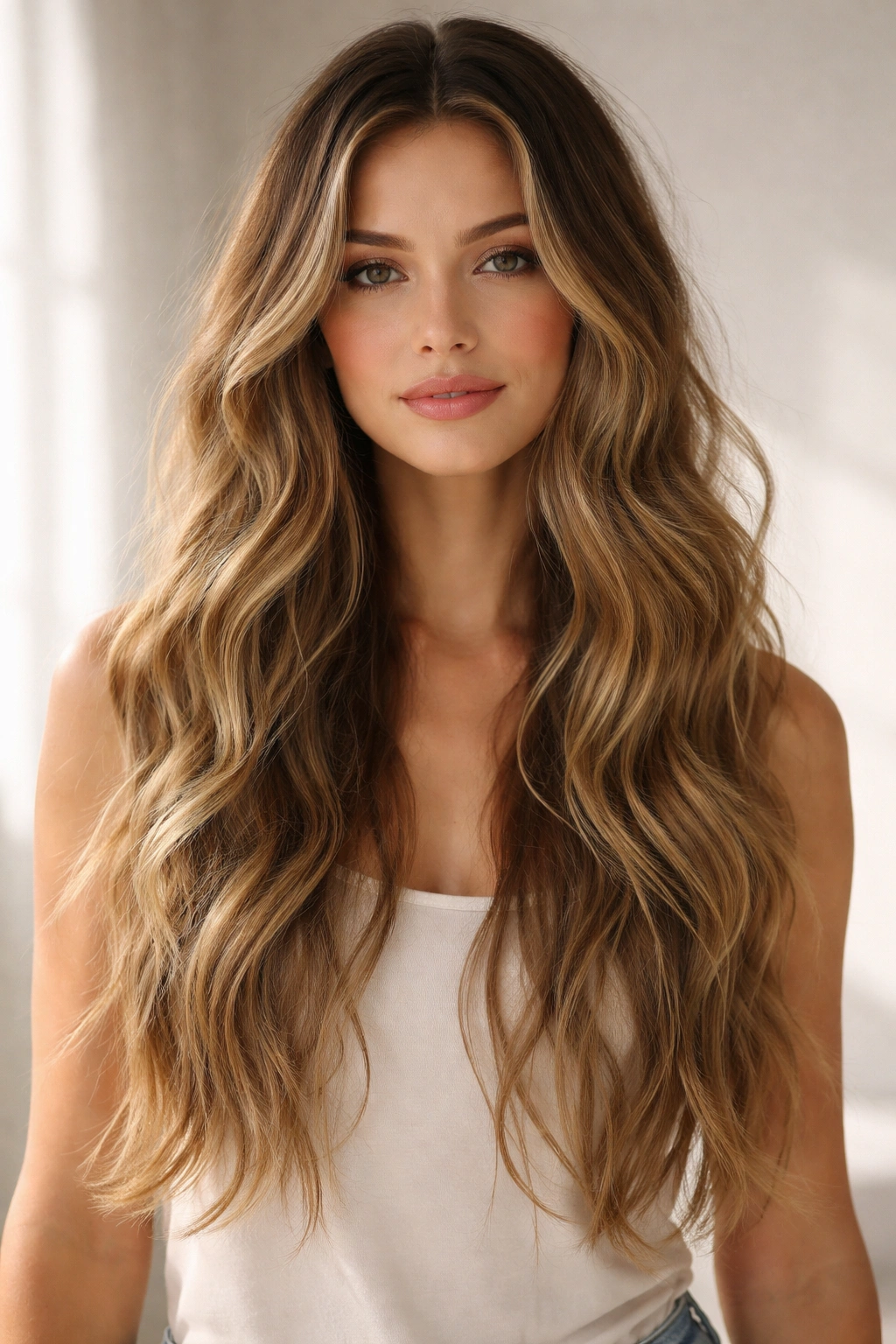
Long beach waves give you that effortless, just-came-from-the-ocean look that somehow reads as intentional. This cut keeps length (usually to the mid-back or longer) but uses subtle layers and point-cutting techniques to encourage waves rather than manage them aggressively. The result feels romantic, undone, and genuinely wearable without hours of styling time.
How Length Works in Your Favor
Longer hair actually makes waves easier to style when the cut is right. The weight helps waves hold their shape, and there’s enough hair length that your stylist can create subtle layers without removing so much bulk that your waves lose definition. Long beach waves skip the choppy, piece-y shag aesthetic and instead go for smoother, more blended layers that maintain flow and movement.
What Makes This Style Different
- The key difference from regular long hair is the layering strategy — layers are subtle and start lower (around shoulder-blade level rather than near the crown) so you keep the length and weight you want
- Requires minimal product and styling compared to shaggy cuts; waves do much of the work themselves once your hair air-dries
- Ask for point-cutting or texturizing on the ends to encourage waves and prevent blunt, heavy ends that flatten texture
- Works with hair that’s naturally wavy to very wavy, but less so with straight hair that needs help holding a wave shape
Worth knowing: This cut is genuinely low-maintenance if your waves are naturally defined. You can shower, apply a curl cream or leave-in conditioner, and let your hair air-dry with minimal finger-combing. It’s one of the few cuts where your natural wave pattern is the whole point.
3. Wavy Bob with Texture
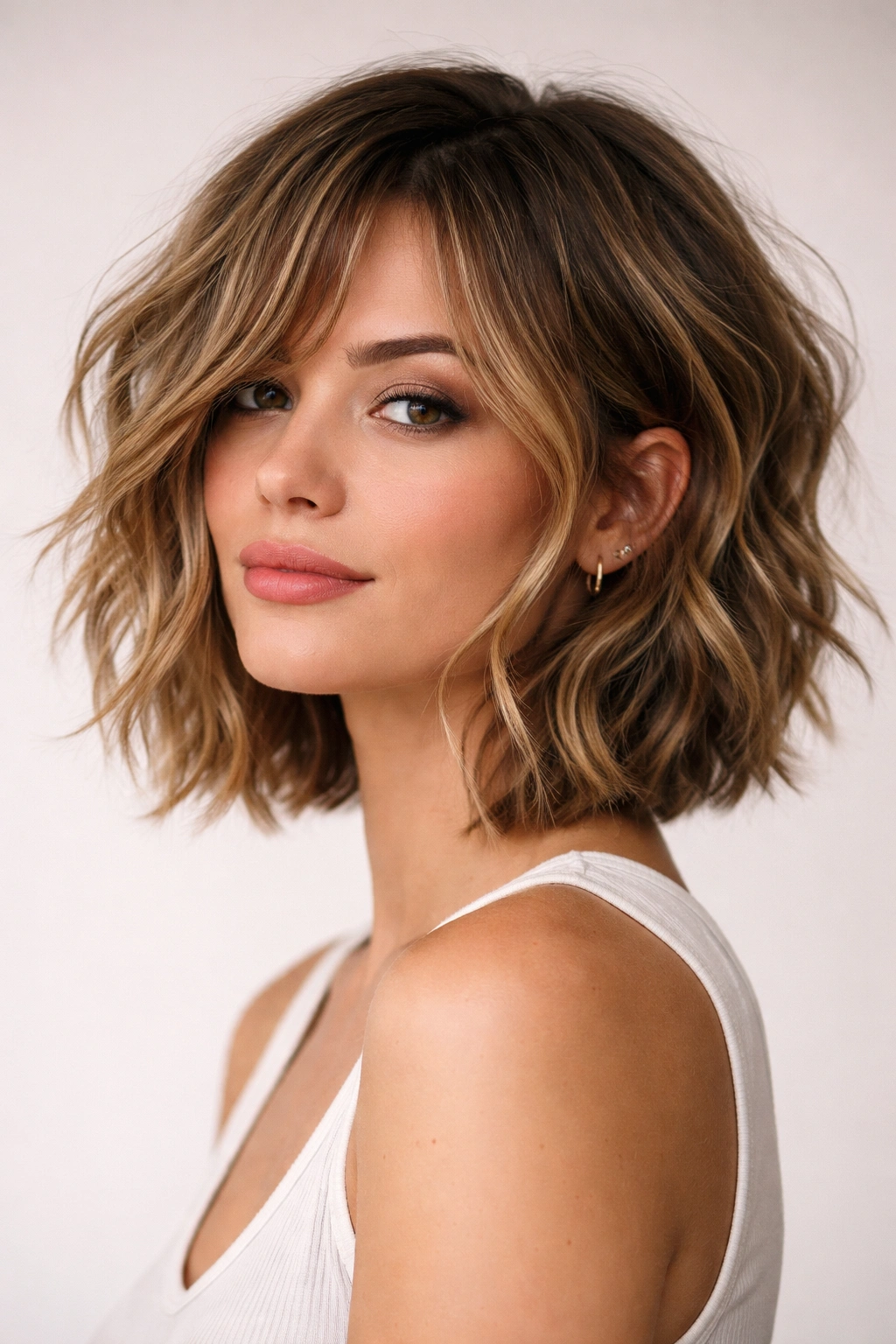
A textured wavy bob is chin-length or slightly shorter, layered throughout to create movement at every angle. Unlike a blunt bob that sits flat, a textured bob uses choppy, shorter layers on top and gradually longer lengths underneath to create dimension and encourage waves to bounce around your face and shoulders.
Why Bobs Work for Waves
Bobs are actually excellent for wavy hair when they’re cut with the right technique. The shorter length means less weight to pull waves down, and strategic layering means waves can form multiple curves instead of one flat pattern. A good wavy bob frames your face, shows off your texture, and honestly photographs beautifully because waves catch light differently at different lengths.
Creating Movement in a Shorter Length
- Layers should be choppy and disconnected, not blended smoothly — this creates the textured, piece-y effect that reads as intentional rather than accident
- Ask your stylist to leave more length on bottom layers (inside the cut) than on top layers so you maintain movement and don’t end up with an inadvertent mullet situation
- A textured wavy bob typically sits around chin-length or slightly shorter, giving you enough length for waves to form without so much weight that they collapse
- This cut genuinely shines with a bit of styling — a light texturizing spray, some finger-combing, or a curling iron twist on a few sections elevates it from bedhead to intentional
Pro tip: If you have fine or thin wavy hair, a textured bob is secretly genius because it removes weight and creates the illusion of fullness through layering and texture. Counterintuitively, shorter, layered cuts can make thin wavy hair look thicker than longer, blunt cuts that just lie flat.
4. Shoulder-Length Shag
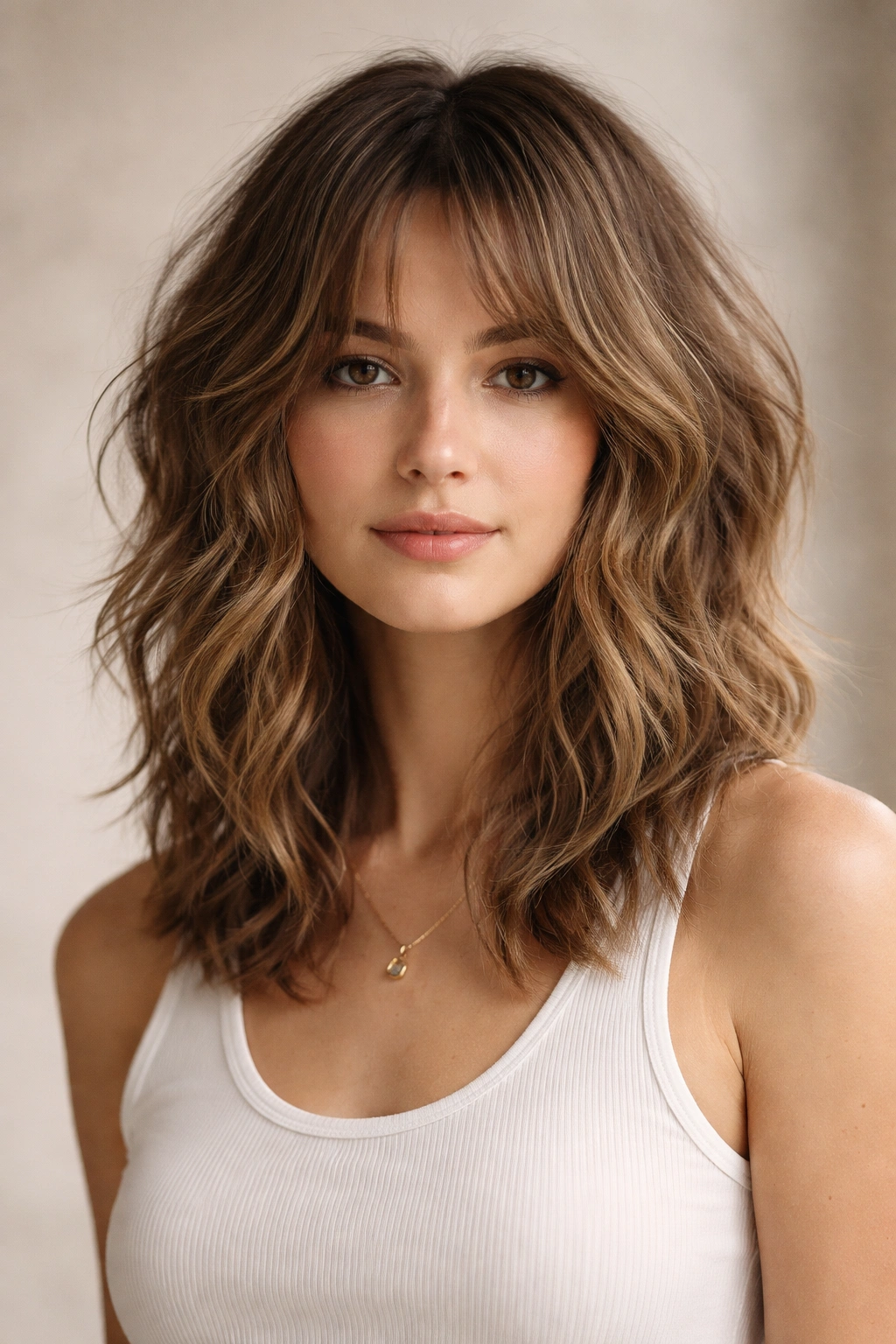
A shoulder-length shag is all the texture and movement of a longer shag but condensed to a more manageable length. Layers graduate from shorter on top to longer on the bottom, typically reaching around shoulder-length, creating that iconic shag silhouette with maximum movement and minimum maintenance.
The Sweet Spot for Waves
Shoulder-length is genuinely the sweet spot for wavy hair. It’s long enough that you have real options for styling — you can wear it down and wavy, throw it in a ponytail without everything being too short, or pin back the front sections. It’s short enough that layers can do their job properly and your waves have space to move without the heaviness of longer hair.
How to Get the Shag Right
- Ask for shorter layers starting at crown-level or slightly below rather than mid-back like a longer shag — this is what keeps it shoulder-length instead of just “shaggy long hair”
- Layers should graduate in length; the shortest are on top, then each subsequent layer is slightly longer, creating that distinctive shag silhouette and movement
- Your stylist should point-cut or razor-cut the ends to create texture rather than blunt edges; blunt edges in a shag look like a mistake instead of intention
- The front sections are typically slightly longer than the back, which frames the face and creates movement around your cheekbones and jawline
Worth knowing: A shoulder-length shag genuinely works with nearly any wave pattern, from loose, beach-y waves to tighter, defined curls. The cut adapts to your texture because the layers give everything room to be itself.
5. Curtain Bangs with Waves
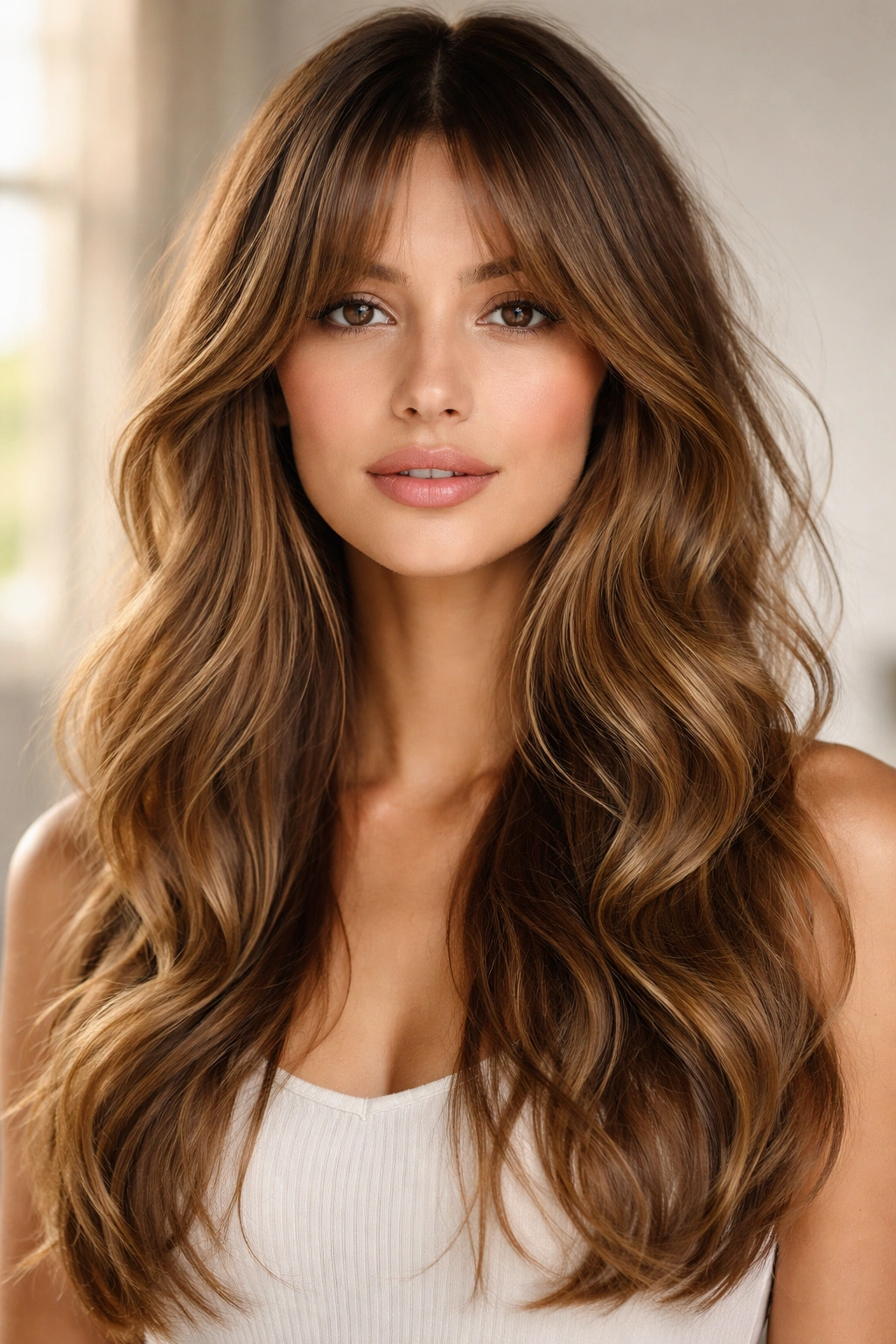
Curtain bangs are longer, face-framing pieces that part down the middle and curve away from your face like curtains. Combined with wavy hair, they create a soft, romantic frame that emphasizes your eyes and cheekbones while the rest of your hair stays long enough for movement and styling versatility.
Why Curtain Bangs Suit Waves
Curtain bangs inherently work with wave patterns because they’re meant to move and fall away from the face rather than sit bluntly. When your hair is wavy, those bangs get texture and curve, which reads as intentional and flattering. Curtain bangs also feel way less severe than blunt bangs, so they’re a lower-risk way to add a face-framing element.
Getting the Cut Just Right
- Ask your stylist to cut the longest part of the curtain bangs to at least jaw-length so they’re long enough to tuck behind your ear if you want them out of your face
- Shorter versions (chin-length or slightly shorter) work too, but they require more styling to stay in place and frame your face the way bangs are supposed to
- Curtain bangs should graduate in length, shorter in the very center and gradually longer as they curve around your face — this is what creates the curtain effect
- The rest of your hair should be longer (at least shoulder-length minimum) so the bangs feel like one cohesive part of a wavy style rather than a disconnected addition
Pro tip: Curtain bangs are genuinely forgiving on waves because the longer length and center part work with your natural texture. Unlike blunt bangs that require blow-drying or straightening to stay in place, curtain bangs can air-dry into your waves and still look intentional.
6. Choppy Wavy Pixie
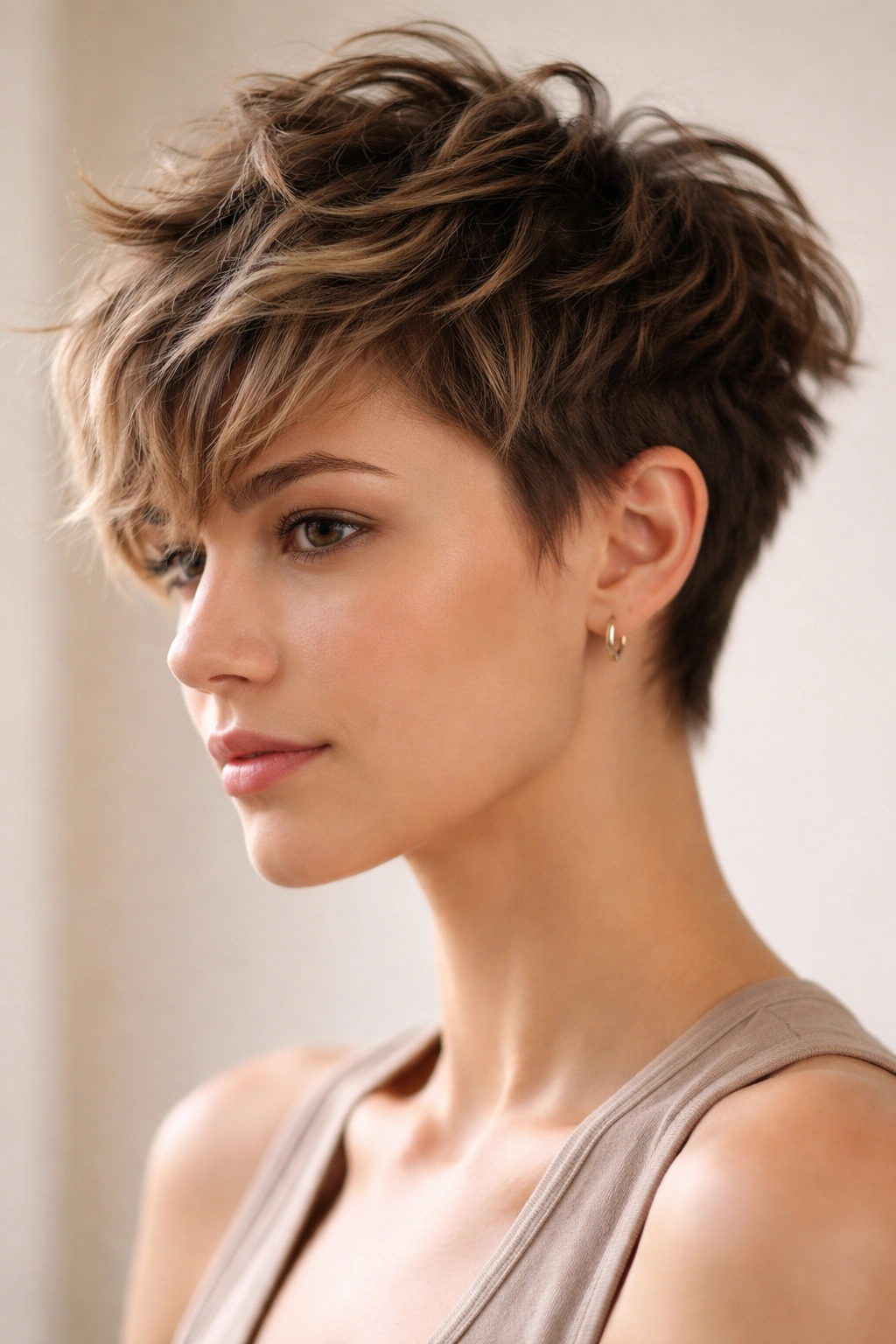
A choppy wavy pixie is a short, textured cut that uses layers and shorter lengths to create movement on top while keeping the sides and back fairly close to the head. It’s basically a pixie cut that’s layered and textured to work with waves rather than against them, giving you a short style without sacrificing movement.
How Short Cuts Work with Texture
A choppy pixie cut actually lets waves shine because there’s no weight pulling them down. Shorter layers throughout create multiple points of movement, so your hair gets texture and interest from the cut itself rather than relying on the length. This is a genuinely bold choice, but it reads as intentional and editorial rather than accident.
What This Cut Requires
- This cut absolutely needs styling and product — your stylist should recommend a texturizing paste, pomade, or spray that separates the layers and encourages waves
- Grow-out timeline is shorter than with longer cuts, but it also requires more frequent trims (every 3-4 weeks) to maintain the choppy texture and prevent it from looking shaggy or unkempt
- Ask your stylist for shorter, choppy layers throughout the crown and top, with gradual length on the sides so you don’t end up with a standard pixie cut that sits too flat
- This cut genuinely flatters most face shapes because the texture and movement around the face create visual interest and softness
Worth knowing: A choppy pixie is fantastic if you want low-fuss styling in the morning but you’re willing to use styling products. It’s genuinely easy to maintain once you understand the product your hair needs.
7. Long Layered Waves
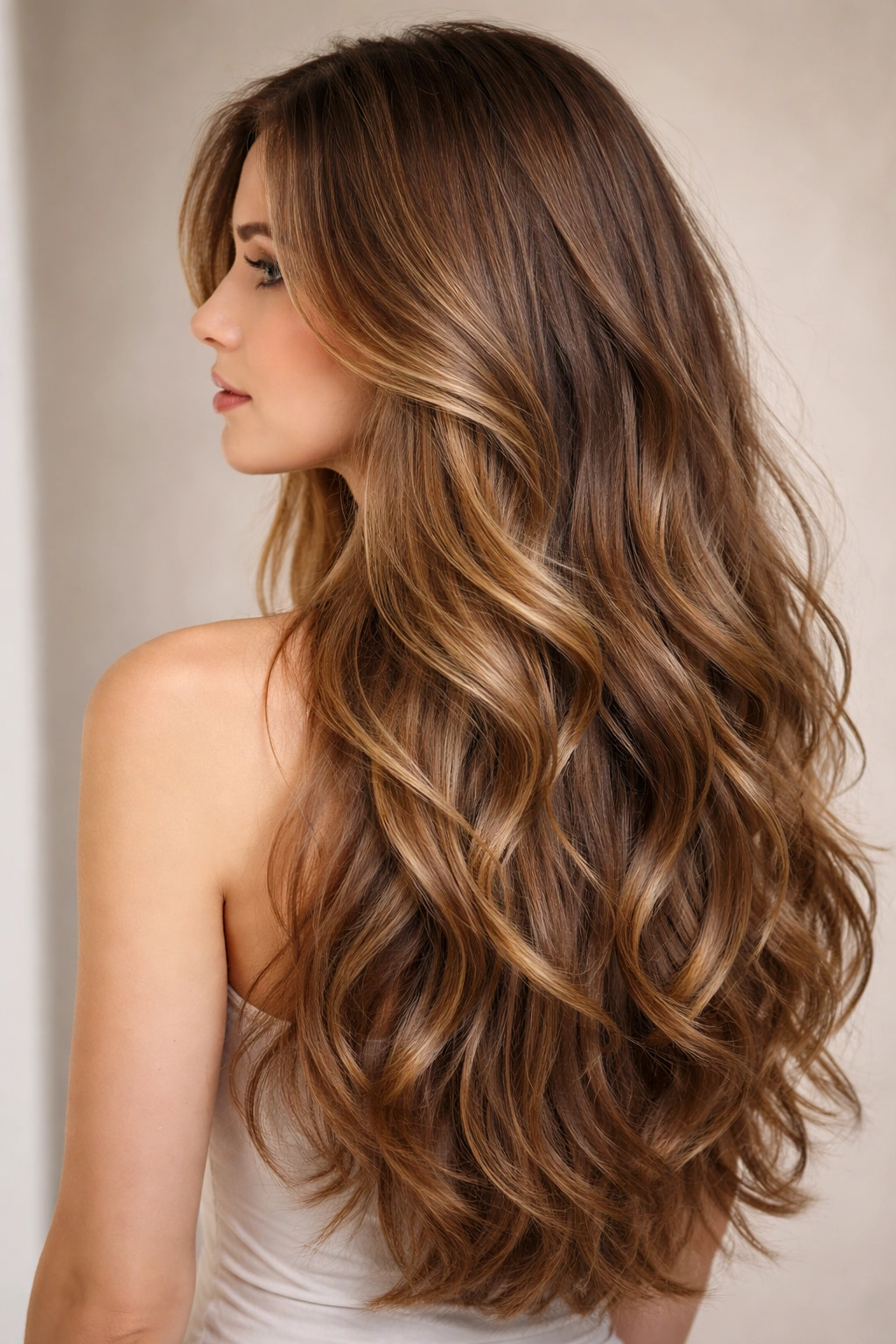
A long layered wavy cut keeps significant length (typically mid-back or longer) while using strategic layering throughout to create movement and texture at every level. Unlike beach waves that are subtle, long layered waves are intentionally choppy and textured, with visible graduation between layers that creates dimension.
Layering Strategies for Long Hair
Long hair can get heavy and weight down waves, but strategic layering prevents this. Layers throughout the crown create movement at the roots, while longer layers underneath maintain length and create flowing, textured movement. The key is avoiding a situation where the top is shorter and choppy (making it look short and stubby) while the bottom is long and flat.
Achieving Balance in Length
- Layers should graduate gradually rather than creating dramatic height differences that look disconnected
- Ask for subtle choppy texture on the ends rather than blunt, heavy edges; this prevents the style from looking weighed down
- Request layers starting around mid-back or lower so you maintain true length while still getting the movement benefits of layering
- Consider face-framing shorter layers that start around cheekbone-level; these create intentional movement around your face without sacrificing overall length
Pro tip: Long layered waves genuinely benefit from regular trims (every 6-8 weeks) because the layers gradually grow out and lose their movement if you let too much time pass. The style depends on intentional layering, so keeping those layers fresh keeps the style looking intentional rather than just long and scraggly.
8. Wavy Lob with Textured Ends
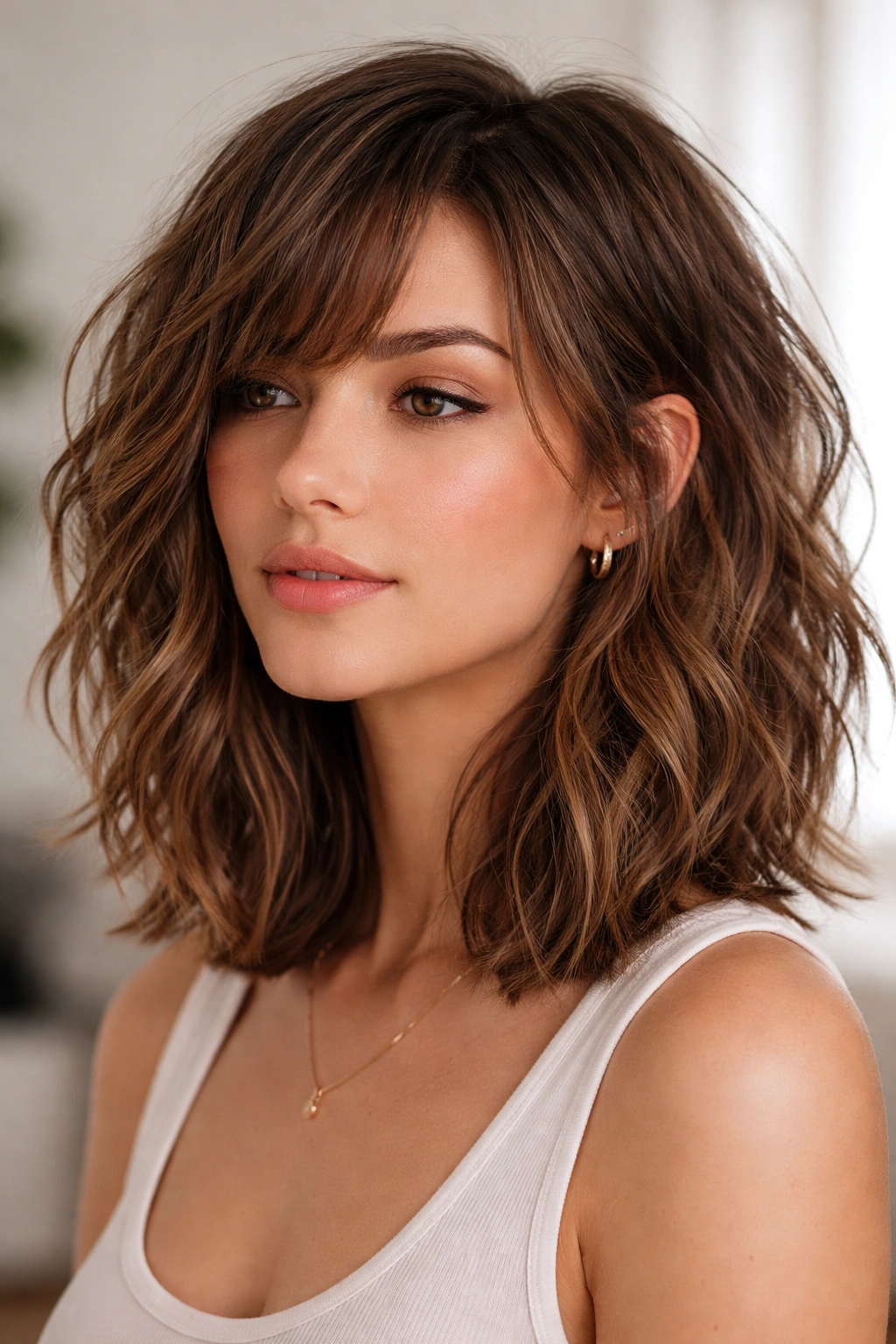
A lob (long bob) typically hits around bra-strap length and uses layering to create movement throughout. A wavy lob specifically incorporates choppy texture and piece-y layers that encourage waves rather than trying to create a smooth, blended effect. It’s the perfect middle ground between short and long, with maximum styling versatility.
The Versatility of Lob Length
A lob is genuinely the most versatile length for wavy hair. It’s long enough to throw in a ponytail without everything being short, long enough to tuck behind your ears when you want, and short enough that layers can genuinely do their job creating movement and texture. It’s also long enough for waves to express themselves fully but short enough that weight doesn’t flatten them.
Creating Intentional Texture
- Ask for textured, choppy ends rather than blunt, heavy ones; this is what makes a wavy lob read as intentional and styled rather than just long hair with bad layers
- Layers throughout should create movement, with shorter layers on top creating volume at the crown and longer layers underneath maintaining flow
- This cut works beautifully with face-framing shorter sections that start around cheekbone-level and curve around your face
- A wavy lob benefits from styling but genuinely works as a wash-and-go if your waves are naturally defined
Worth knowing: A wavy lob is an excellent transitional length if you’ve been growing out a shorter cut or cutting off length. It gives you a styled, intentional look at a length that feels fresh while you’re still figuring out what you want long-term.
9. Wavy Wolf Cut
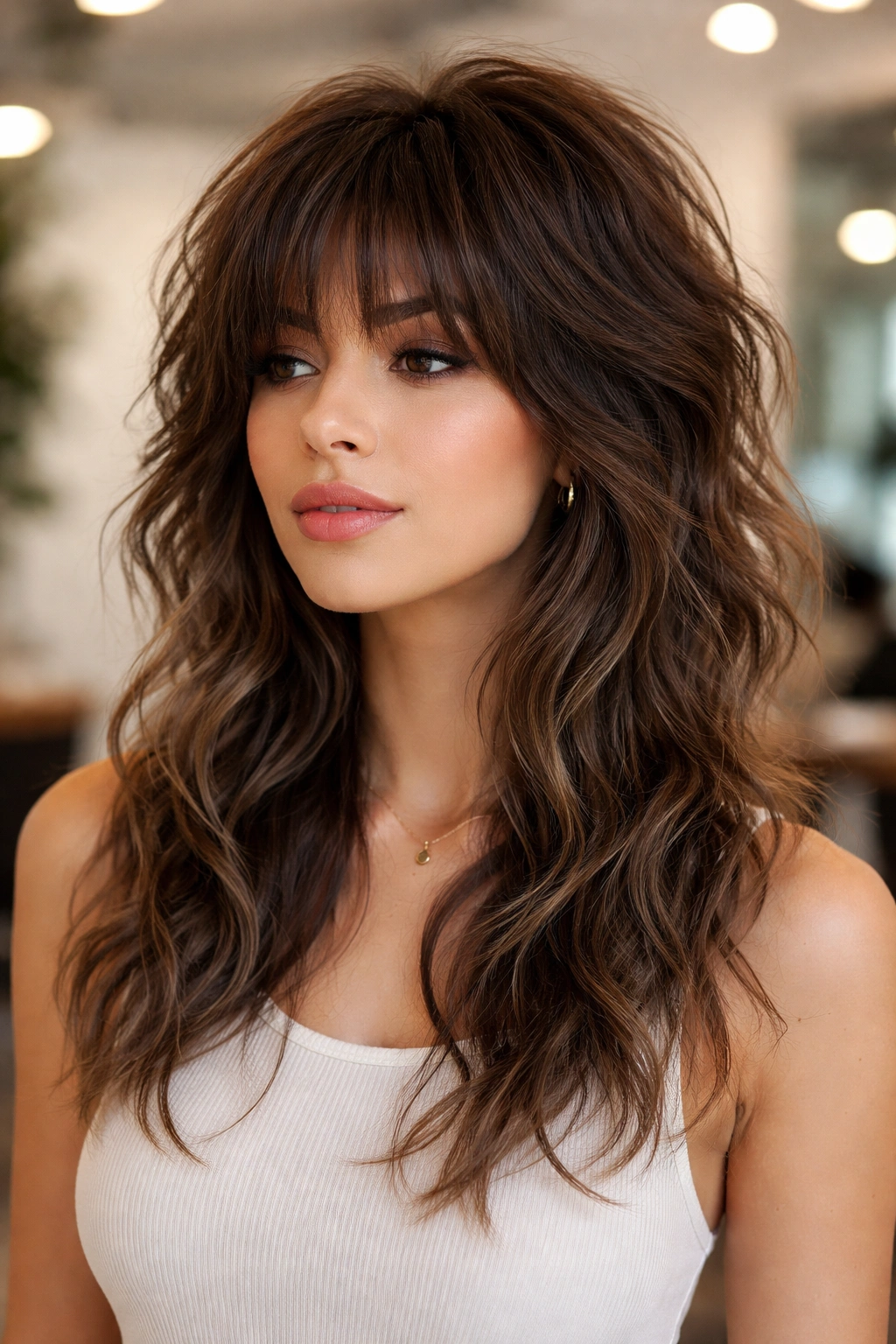
A wolf cut is a hybrid between a shag and a mullet, using short, choppy layers on top and longer, wave-friendly length underneath. It creates dramatic texture variation, with a shorter, piece-y top that’s full of movement and longer, flowing bottom layers that add drama and visual interest. It’s editorial, intentional, and genuinely cool.
The Wolf Cut Aesthetic
Wolf cuts are inherently textured and unconventional, which means they work beautifully with wavy hair because the cut itself creates movement and interest. The shorter layers on top encourage your waves to bounce around your face and crown, while the longer underneath sections create flow and femininity. It’s basically the opposite of blending — it’s all about intentional contrast.
Getting the Proportion Right
- The top layers should be noticeably shorter than the bottom — think shoulder-length on top with longer sections underneath — so you get that distinctive wolf cut silhouette rather than just a regular shag
- Ask for choppy, piece-y texture throughout; wolf cuts are not meant to look blended or smooth
- Shorter layers should be concentrated at the crown and work their way down, gradually getting longer as you move toward the back and sides
- This cut absolutely requires styling — it’s designed to be worn with product, texture spray, or a bit of effort to make it look intentional rather than accident
Pro tip: A wolf cut is fantastic if you genuinely like playing with your hair styling-wise. It’s not a low-maintenance, wash-and-go cut, but if you enjoy using texturizing products and creating intentional piece-y texture, it reads as genuinely cool and editorial.
10. Short Textured Waves
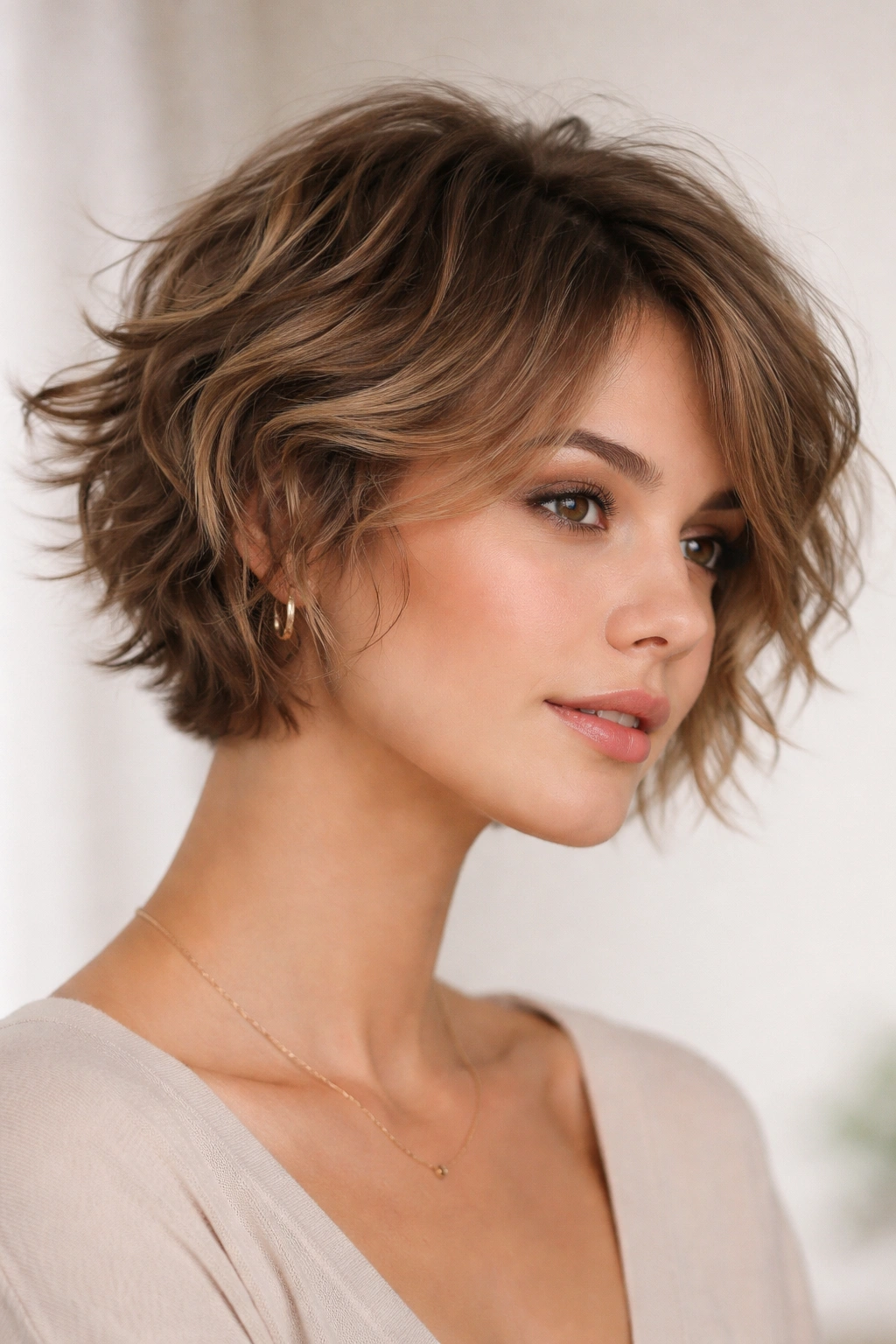
A short textured wavy cut is typically ear-length or slightly shorter, heavily layered throughout to create maximum texture and movement. It’s not a pixie cut (which typically has longer length on top) but rather a genuinely short cut that uses layering and choppy texture to keep things from looking too severe or boxy.
Working with Short Lengths
Short hair and waves can be an excellent combination because you get movement without heaviness. Layers at short lengths create multiple points where waves can form, so your hair gets natural texture from the cut itself rather than relying on length to create movement. This is a bold choice, but genuinely wearable and low-maintenance once you commit.
The Texturing Technique
- Layers should be choppy and create visible texture throughout, not blended smoothly or you’ll lose the movement entirely
- Ask your stylist for slightly longer length on top (so you have something to work with for styling) and shorter sides so the overall shape is flattering rather than shapeless
- This cut benefits from regular trims (every 4-5 weeks) because short layers grow out quickly and lose their intentional texture if you let too much time pass
- Styling products are essential — a texturizing paste, pomade, or sea salt spray creates the piece-y, intentional look this cut is designed for
Worth knowing: Short textured waves are genuinely low-maintenance in terms of product quantity but require daily styling intention. You can’t just shower and air-dry; you’re going to be working with some product and your hands to style it. If you like that hands-on approach, this cut is fantastic.
11. Mid-Length Choppy Waves
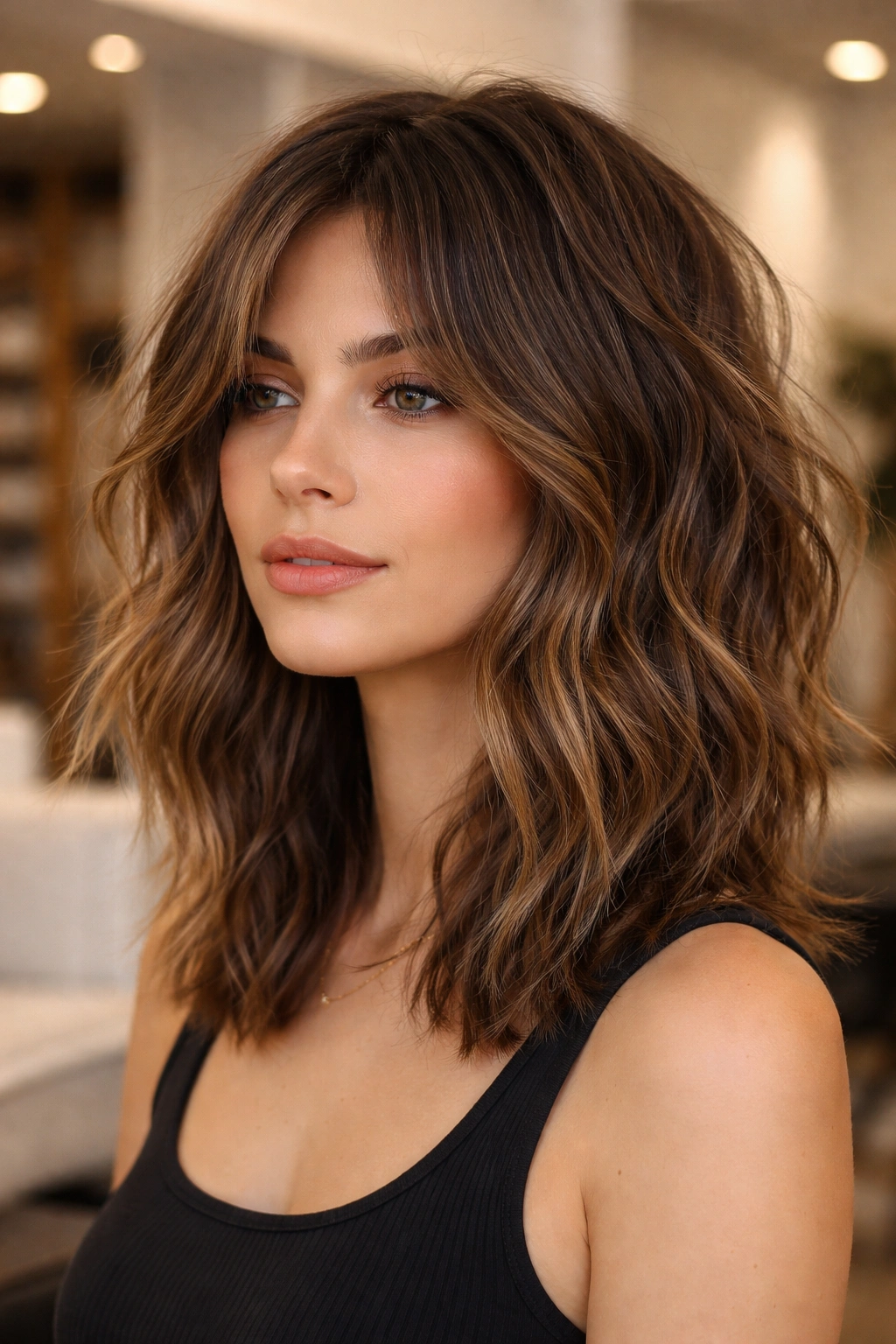
A mid-length choppy wave cut typically hits around collarbone length and uses choppy, disconnected layers throughout to create movement and texture at every level. It’s shorter than long wavy cuts but longer than shoulder-length, giving you a real middle ground with maximum styling versatility and a genuinely textured, intentional look.
The Versatility of Mid-Length
Mid-length is a genuinely underrated length for wavy hair. It’s long enough that you have real styling options, it’s short enough that layers genuinely work and create movement, and it photographs beautifully because waves catch light at multiple points. It’s also a length that works with nearly any face shape because the movement created by layers is flattering from multiple angles.
Choppy Layering for Maximum Movement
- Ask for choppy, piece-y layers that start around mid-ear level and graduate down, with the longest sections at collarbone or slightly longer
- Shorter layers on top create volume and movement at the crown, while longer layers underneath maintain flow and length
- Textured, choppy ends (not blunt) prevent the cut from looking heavy and encourage waves to separate and move rather than bunch together
- This length works beautifully with subtle face-framing layers that create intentional movement around your cheekbones and jawline
Pro tip: A mid-length choppy cut is the sweet spot if you want something that reads as intentional and styled without requiring intense daily effort. You can genuinely air-dry this with a texturizing product and have a great-looking day, or you can style it more intentionally if you want extra movement and texture.
Final Thoughts
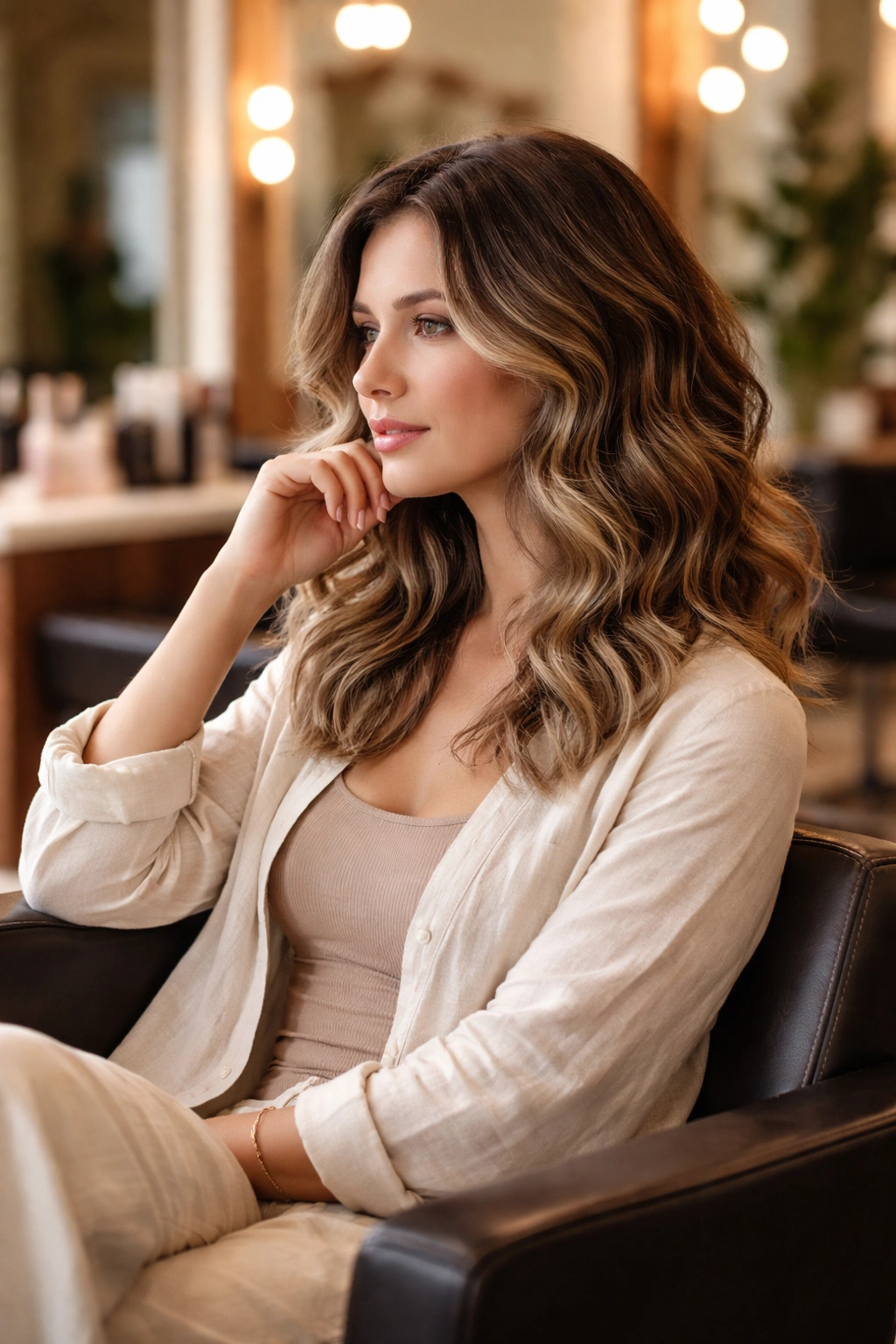
The right wavy haircut changes everything. Instead of spending mornings fighting your hair’s natural texture, you’re working with it — which means less time styling, more definition, and honestly just feeling better about your hair. The cuts that genuinely work for waves aren’t about fighting your natural pattern; they’re about understanding how layers, length, and strategic texturing can make waves move the way you want them to.
When you sit down with your stylist, bring photos of the specific cut you’re drawn to, and point out what you like about it — the length, the layer pattern, the texture, the movement. Be specific about what you’re hoping for: Do you want low-maintenance waves or are you willing to style more intentionally? Do you want maximum movement or something that still has some weight and control? What length feels right for your lifestyle?
The best haircut is the one that works with what you actually have — your hair texture, your styling patience level, your face shape, your lifestyle. Any of these eleven cuts can be your game-changer if it’s the right one for you. And honestly, finding that cut makes you actually look forward to your hair instead of dreading what it’ll do on humidity days or second-day mornings.
