

The wolf cut has become one of the most sought-after hairstyles for anyone craving texture, movement, and edge without committing to a high-maintenance look. When you combine that playful, layered silhouette with natural waves, you get a hairstyle that works with your hair’s inherent personality instead of fighting it. A short wavy wolf cut is the perfect marriage of effortless cool and intentional design — it’s choppy enough to feel modern and bold, yet soft enough to look approachable and wearable every single day.
What makes the wolf cut so versatile is how dramatically it changes depending on your hair texture, face shape, and how you style it. Two people with identical wolf cuts can look completely different based on whether they’re embracing their natural waves, adding texture with product, or blow-drying for more volume. The best version of this cut for you depends on understanding what each variation does and how it’ll interact with the way your hair naturally wants to move.
Short wavy wolf cuts work across every hair type, from fine and delicate to thick and coarse — though the texture of your natural waves will influence which of these styles you should lean toward. The key is choosing a variation that complements your specific wave pattern, face shape, and daily styling commitment. Let’s explore nine distinct takes on the short wavy wolf cut, each with its own character and practical considerations.
1. The Textured Shag Wolf with Choppy Layers
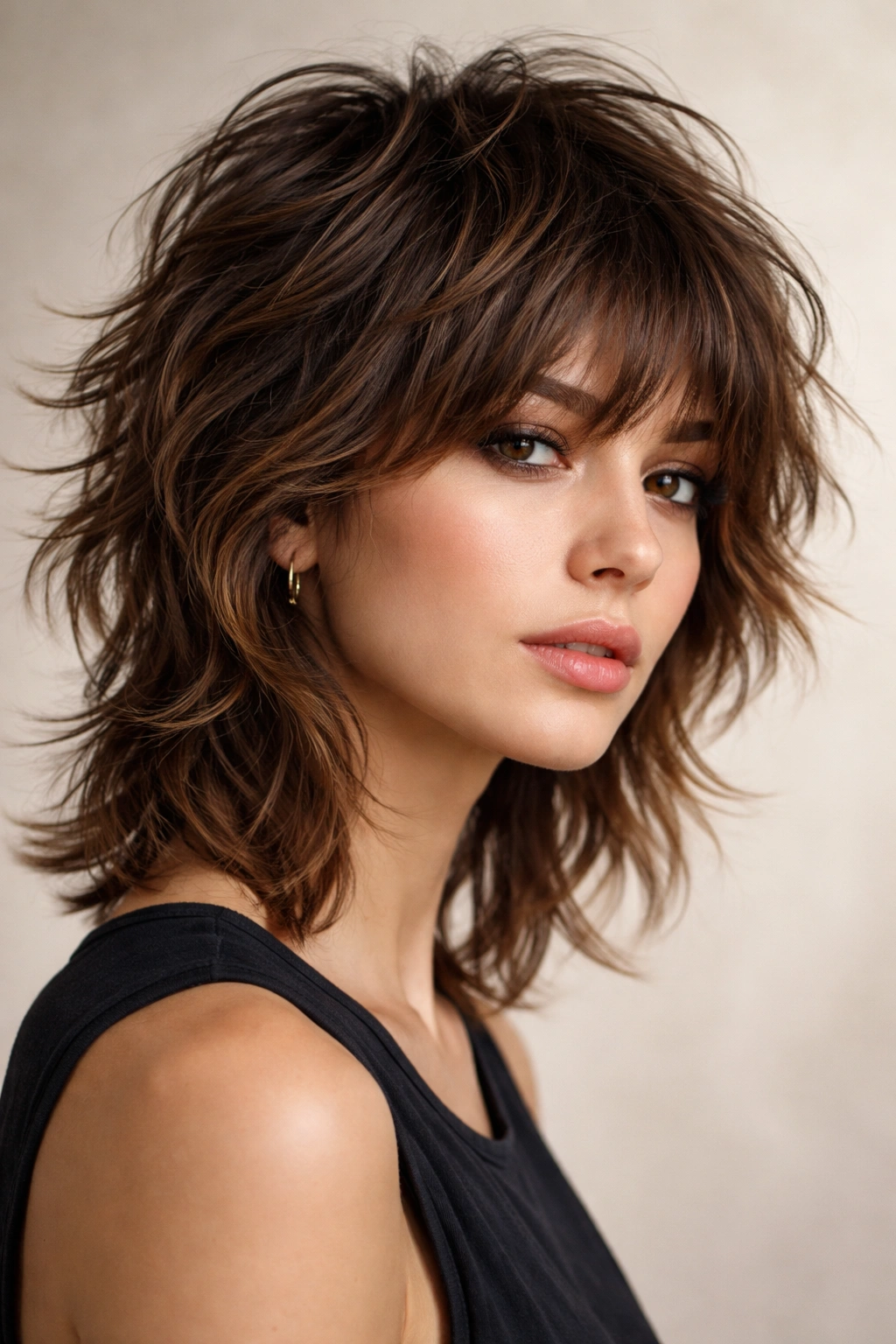
This version leans hard into the shag DNA of the wolf cut while maintaining enough length on top to work with your natural waves. The defining feature is the aggressive layering throughout — we’re talking short, choppy pieces at the crown that graduate to slightly longer lengths as you move down, creating maximum texture and movement. It’s the wolf cut for someone who wants serious visual impact and doesn’t mind that their hair looks a bit deliberately messy.
What Makes This Style Stand Out
The choppy layers are cut short and sharp, creating separation rather than a blended, flowing line. This means your natural waves have plenty of room to work independently, and the cut actually looks better when your waves are a bit piece-y and textured rather than smooth. It’s especially striking on people with medium to thick hair and defined wave patterns — the layers catch the light differently, making your hair look thicker and more dynamic even if your hair is actually relatively fine.
How to Style It Daily
- Use a texturizing spray or salt spray on damp roots for instant lift and grip
- Scrunch your waves upward while blow-drying to enhance natural movement and separation
- Apply a lightweight sea salt spray or texture cream to individual sections to emphasize the choppy layers
- Avoid heavy serums that’ll weigh down the cut’s intended messiness — this style thrives on texture, not shine
- Refresh between washes with a dry texturizing spray to maintain that intentional, lived-in look
Pro tip: This cut actually looks better when it’s slightly tousled and undone. If you’re trying to make it look “perfect,” you’re working against the design.
2. The Modern Pixie-Wolf Hybrid
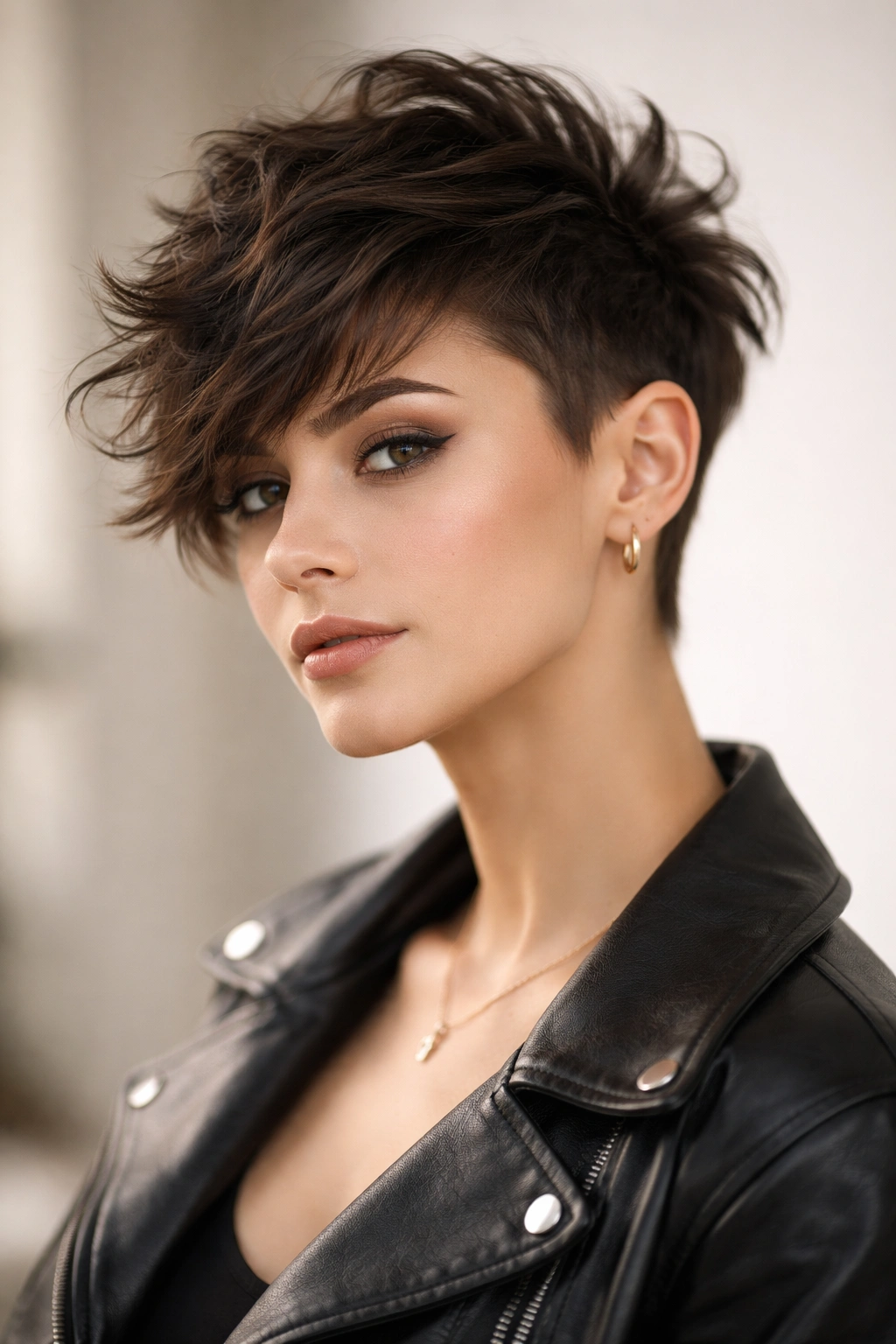
This is where the wolf cut meets the bold simplicity of a pixie — dramatically short on the sides and back, with longer, wavy layers on top that you can style sleek or textured. It’s an androgynous, fashion-forward take that reads as extremely intentional and confident. The wavy crown gives you something to work with while the close-cropped sides create an architectural frame around your face.
What Makes This Style Stand Out
The contrast between the short, tight sides and the longer, undulating waves on top is what gives this cut its visual power. You get the ease of short hair with the styling versatility of longer layers — it’s genuinely the best of both worlds. The cut also changes dramatically based on how you style it. Sleek and side-parted, it’s sophisticated. Textured and tousled, it’s edgy and cool.
Best For
- People with strong facial features who can carry a bold, asymmetrical cut
- Anyone comfortable with an androgynous, fashion-forward aesthetic
- Those who want major texture on top but don’t want to commit to managing length all over
- People willing to visit their stylist every 3-4 weeks for fade maintenance
Important to know: The shorter sides require regular maintenance to stay sharp. Expect to trim every month to maintain the contrast between the sides and the crown.
3. The Tousled Shoulder-Grazing Wolf
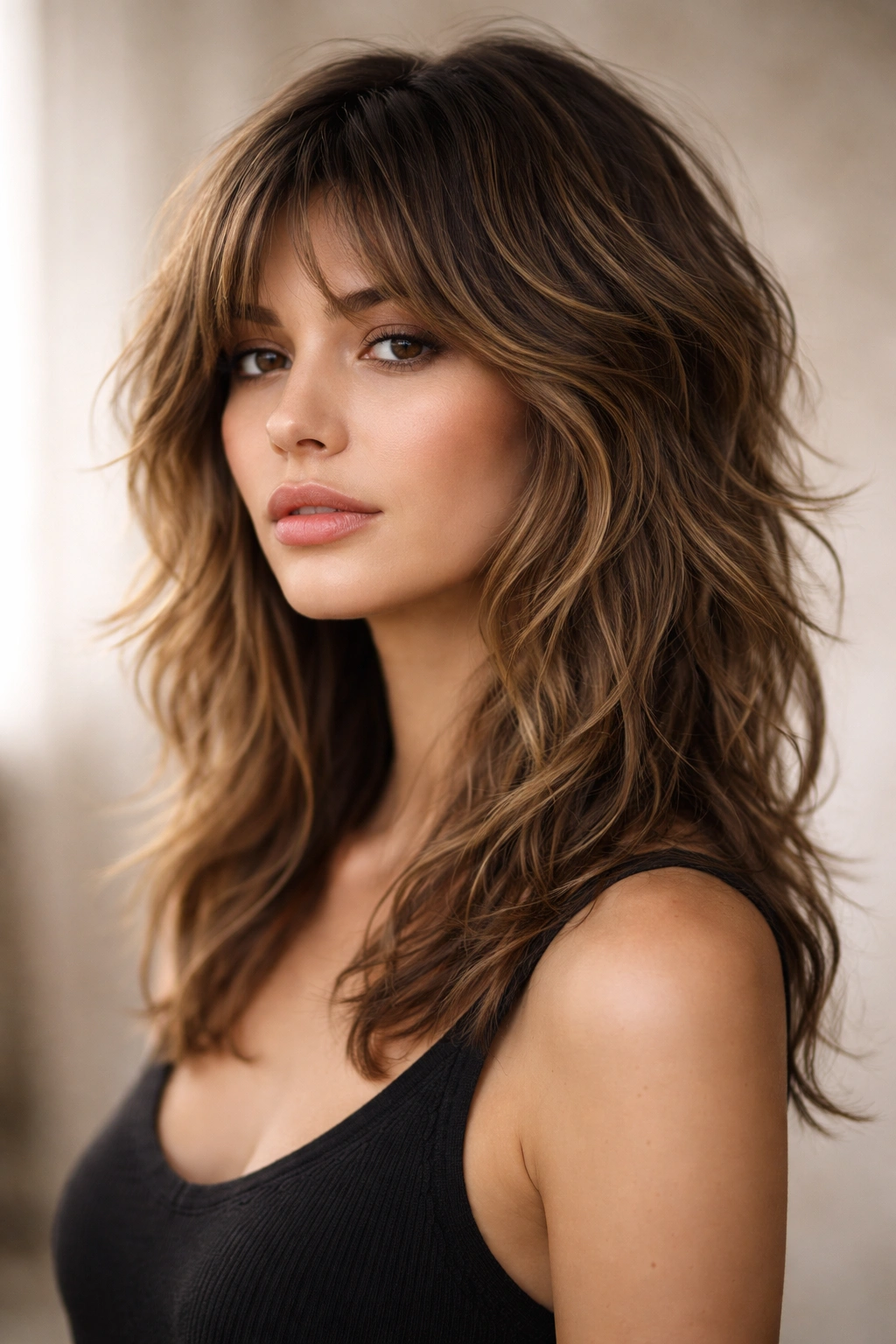
This version keeps more overall length — the wavy layers extend further down, often grazing your shoulders or just hitting your collarbone — while maintaining that choppy, textured wolf aesthetic. It’s less editorial and more wearable than some of the shorter variations, making it the wolf cut for someone who wants movement and edge but also needs their hair to feel like their hair, not a style statement.
What Makes This Style Stand Out
The shoulder-length layers give your waves room to move in a longer, more organic way. Rather than the hair standing away from the scalp in choppy bursts, these longer layers flow and curve with your natural wave pattern. It’s softer than a true pixie-wolf hybrid but still obviously a wolf cut because of the textured, choppy layering through the crown and the way the length tapers as you move down.
Styling Options
- Wear your waves naturally for an effortless, undone vibe with minimal product
- Blow-dry and scrunch for more volume and definition in your wave pattern
- Use a curling iron on individual sections to enhance wave depth and create more intentional movement
- Smooth a few face-framing pieces with a flat iron for contrast against textured waves
- Apply a wave-enhancing cream or gel to wet hair to encourage definition as it dries
Worth knowing: This length is actually easier to maintain between haircuts because the longer layers are more forgiving. You can go 8-10 weeks between cuts instead of the 4-6 weeks a very short wolf cut requires.
4. The Disconnected Bangs Wolf
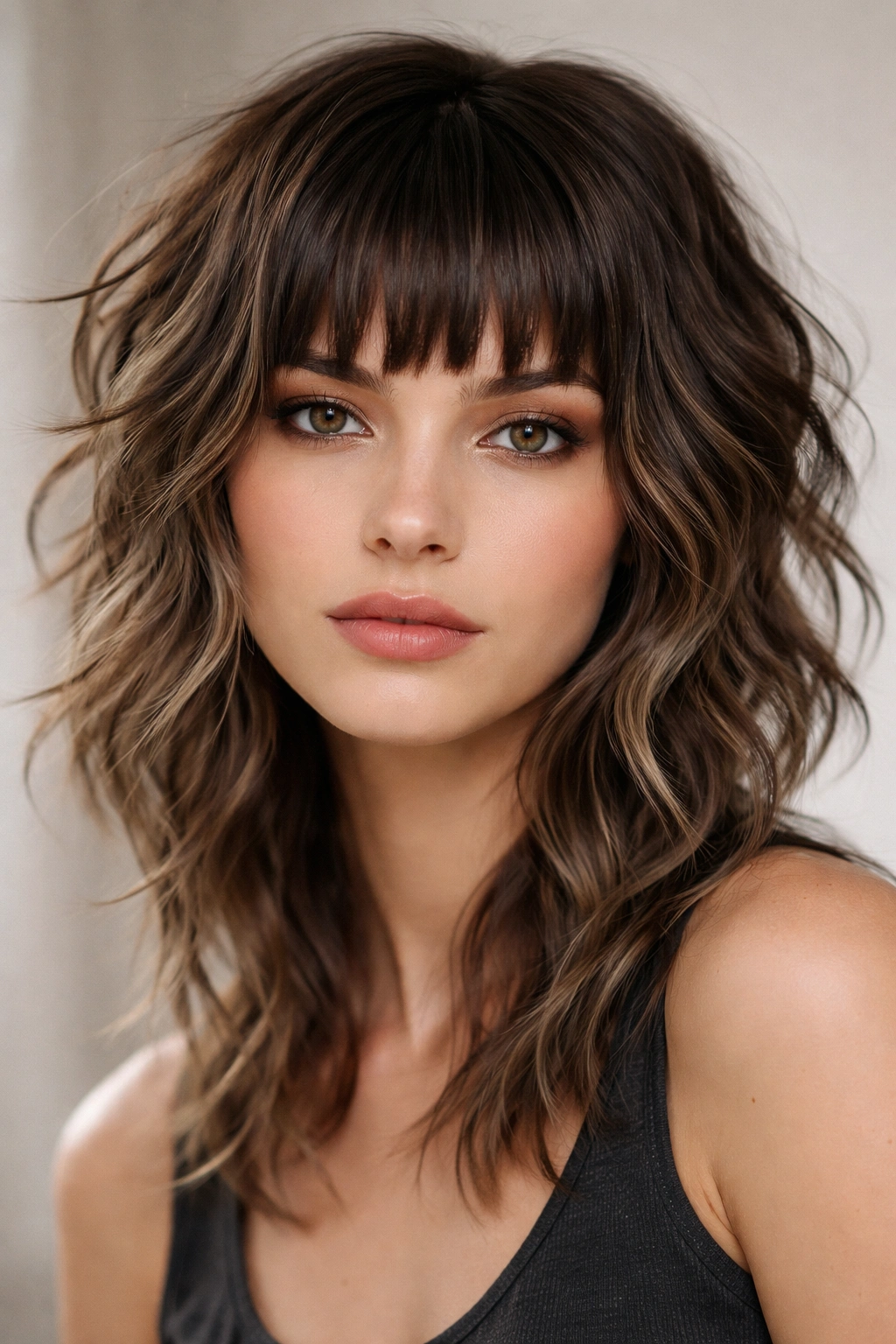
This wolf cut features a sharp, disconnected bang that sits above your natural brow line, created as a distinct, blunt layer that’s clearly separated from the rest of the cut. The bangs are the show-stopper here — they create an immediate sense of movement and intrigue because they sit at a different angle than the side and back layers. The rest of the cut is textured and wavy, but it’s the bangs that make this version feel intentional and editorial.
What Makes This Style Stand Out
Disconnected bangs add a fashion-forward, almost romantic or whimsical element to the wolf cut. They work especially well if you have face-framing waves because the bangs create their own texture and movement independent of the rest of your hair. The cut works best when the bangs have some dimension — they’re not a solid block but rather textured pieces that move and shift with your natural hair movement.
Daily Styling Considerations
- Your bangs will require more intentional styling than the rest of your hair — they’re short and will move differently
- Use a small barrel curling iron to add a subtle wave or flip to your bangs to prevent them from laying flat
- Keep your bangs slightly damp while you blow-dry the rest of your hair, then style them last with a cool shot from your dryer
- Be prepared for bangs to be in your face more during windy days or when you’re active
- A texturizing spray applied to just your bangs can help them blend better with the rest of your textured cut
Insider note: This cut requires a very skilled stylist who understands how to create a disconnected bang line that still harmonizes with the wolf cut layers. Book with someone who specializes in textured, layered cuts.
5. The Wavy Mullet Wolf
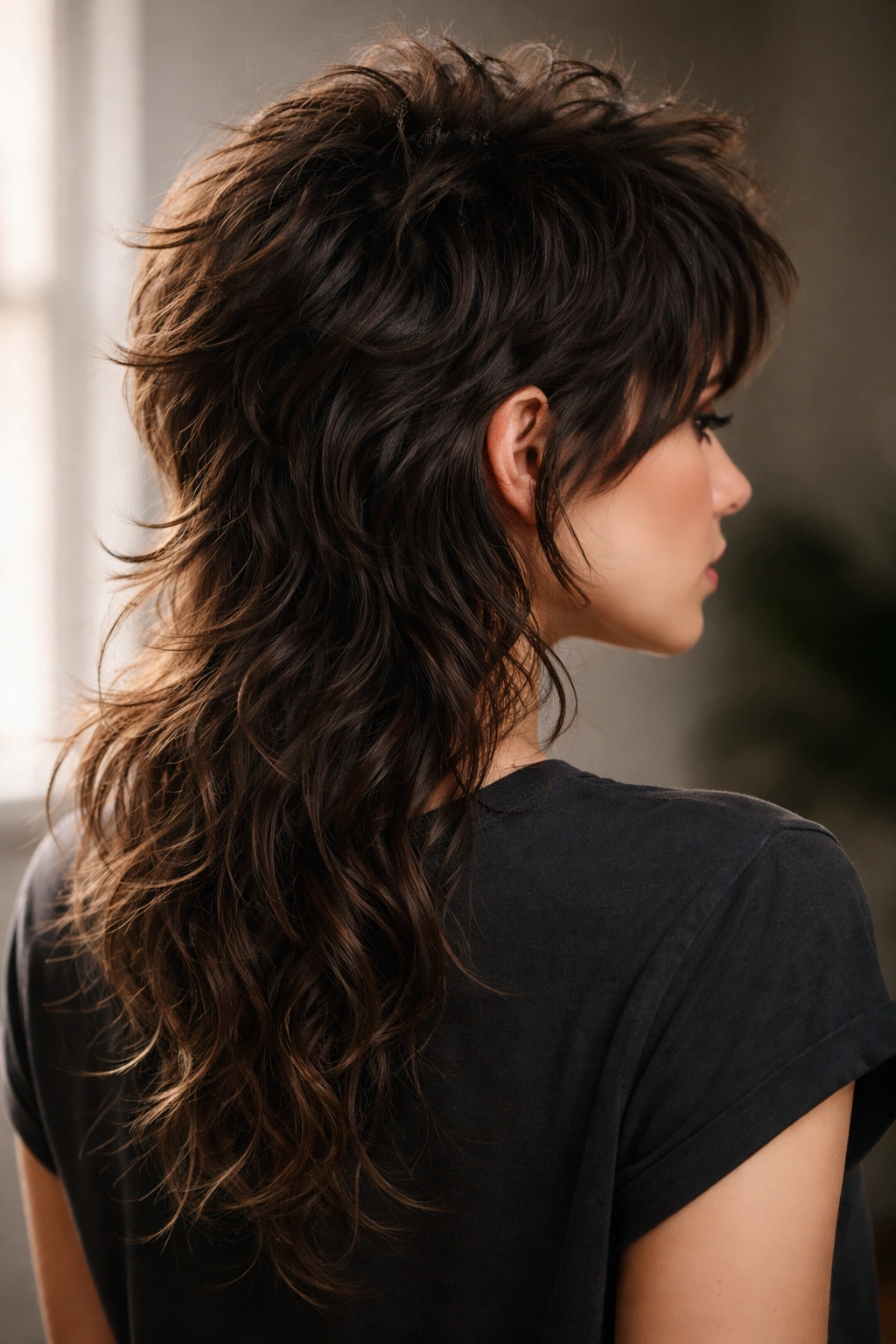
The wavy mullet wolf leans into the retro mullet silhouette — very short, textured layers on top and sides, with significantly longer, wavy pieces in the back that extend several inches below the shorter crown. It’s an unapologetic nod to 80s and 90s edge culture, but executed with modern styling and texture that makes it read as fashion-forward rather than costume.
What Makes This Style Stand Out
The length contrast is dramatic and intentional, which is what gives this cut its rebellious personality. The longer back pieces give you something to work with if you want to wear your hair down, while the shorter crown keeps your face feeling open and unframed. It’s the wolf cut for someone who wants serious visual impact and isn’t concerned about whether everyone will immediately understand what they’re going for.
Styling the Length Difference
- The crown should be textured and separated, styled with movement and lift
- The back pieces can be wavy and flowing, styled more like longer layers than the choppy crown
- Blow-dry the crown upward and away from your face, then flip your head back for maximum volume
- The back pieces can be styled sleek with a smoothing serum or textured with a curl-enhancing cream
- Mix styling approaches: textured crown plus sleek back pieces creates an interesting contrast
- Use waves in the back pieces to add visual interest and prevent the mullet from reading as one-dimensional
Pro tip: This cut benefits from occasional trims on the back to maintain the length and prevent the longer pieces from looking limp or overgrown. Trim every 8-10 weeks.
6. The Soft, Feathered Wolf
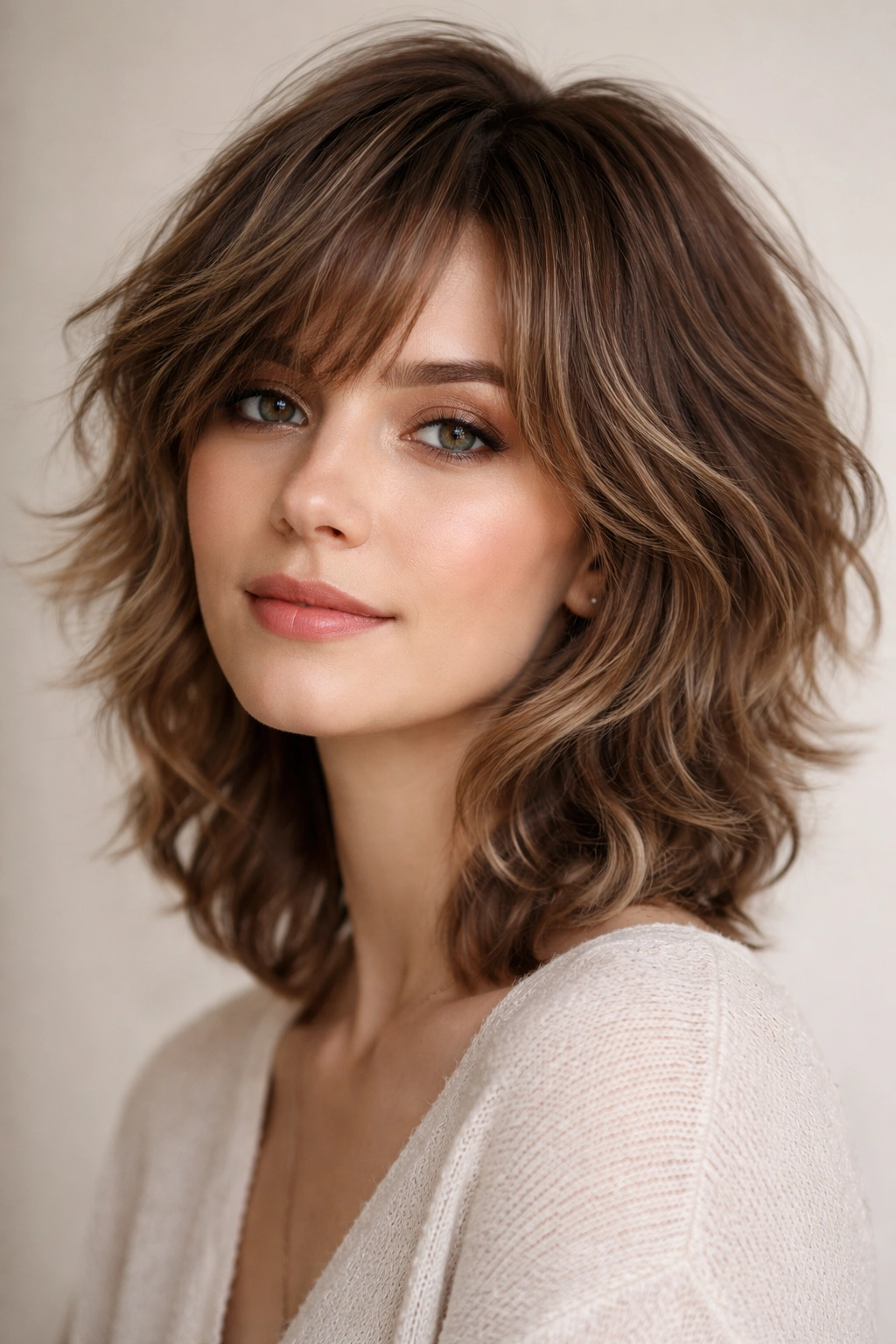
This version softens the typically choppy wolf cut by feathering the layers instead of cutting them blunt. Rather than sharp, distinct pieces, the layers graduate more smoothly, creating a softer overall silhouette while maintaining that textured, layered movement. It’s the wolf cut for someone who loves the concept but prefers something that reads as slightly less edgy or fashion-forward.
What Makes This Style Stand Out
The feathered approach allows your natural waves to blend more harmoniously instead of standing away from your head in distinct pieces. It’s still obviously a wolf cut because of the layering and texture, but it feels less deliberately messy and more naturally tousled. This works especially well if you have fine or thin hair — feathering creates the illusion of fullness without the weight of chunkier layers.
How to Maintain the Softness
- Avoid heavy styling products that’ll weigh your feathered layers down
- Use a lightweight texture spray or sea salt spray for natural-looking lift
- Blow-dry with a diffuser attachment to enhance your waves while maintaining the soft, feathered shape
- Avoid scrunching or aggressively working product in — let the feathering do the work
- Get regular trims every 6-8 weeks to maintain the soft gradient and prevent the layers from looking shaggy
Worth knowing: Feathered layers require slightly more styling attention than blunt choppy layers because they won’t naturally piece apart the same way. This is the better choice if you want a wolf cut that looks intentional but still wearable.
7. The Asymmetrical Wavy Wolf
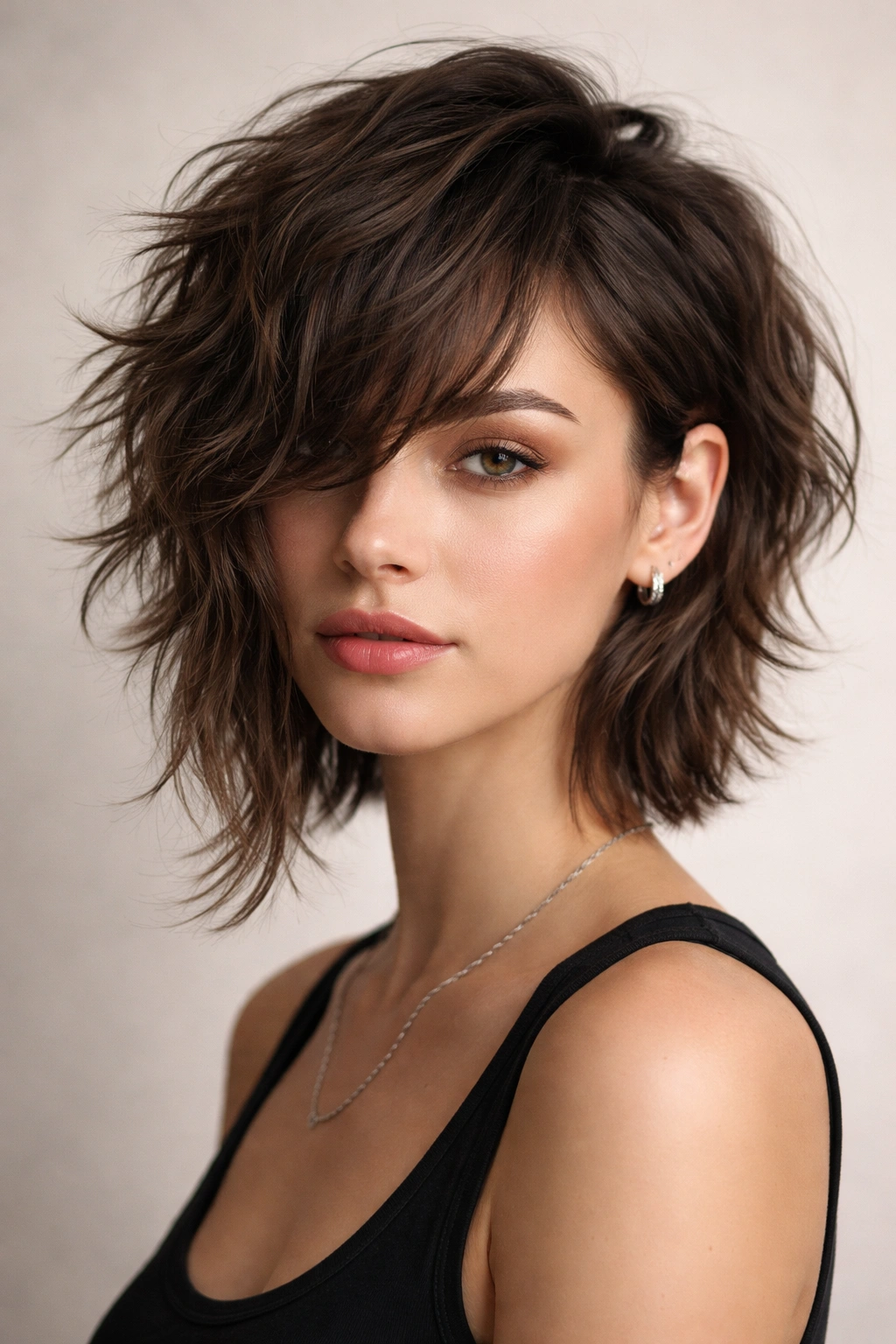
This wolf cut takes the inherent asymmetry of the cut and emphasizes it — one side is noticeably shorter and more textured while the other side has more length and wave movement. It’s a bold, fashion-forward take that immediately signals that you’re making a deliberate style choice. The asymmetry creates visual interest and can flatter different face shapes depending on which side is longer.
What Makes This Style Stand Out
The asymmetry is the entire point — it’s not an accident of the cut but rather the intentional design. One side might be cut like a short pixie-wolf with close-cropped sides and textured crown, while the other side has layers that reach your chin or shoulder. This creates a style that looks different depending on which side you’re showing to the world.
Which Side Should Be Longer
- If you want to balance a wider jaw, keep the longer side away from your jawline
- If you want to emphasize cheekbones, keep the longer side toward your face to frame it
- If you have a rounder face, the longer side can provide vertical line that elongates your appearance
- If you want maximum impact, choose the side that feels more natural to wear forward
Critical consideration: Asymmetrical cuts require more styling intention. You can’t just air-dry and hope for the best — you need to intentionally style the longer side and the shorter side in ways that honor the cut’s design.
8. The Curly-Girl Wolf
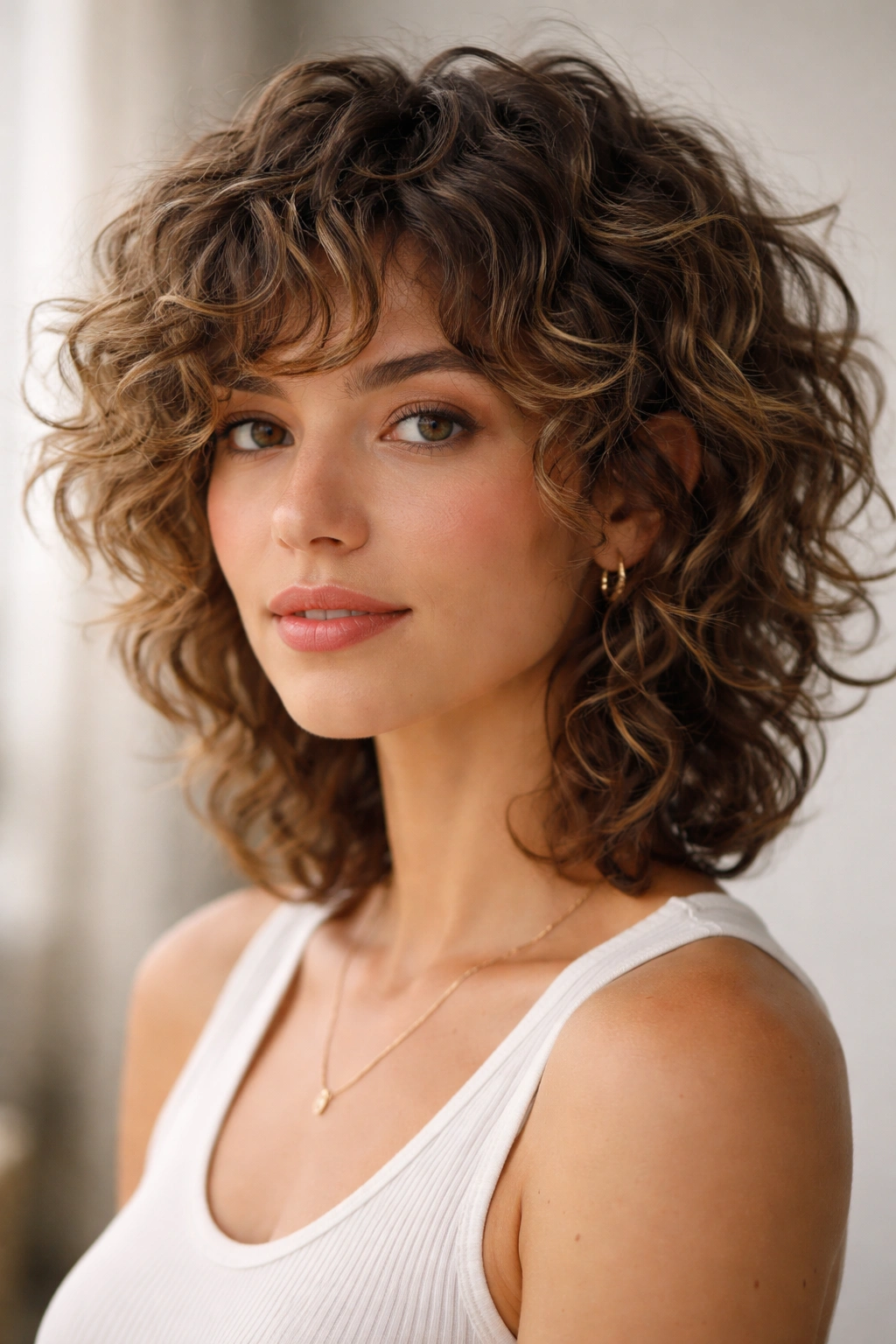
This version is specifically designed for people with naturally curly or coily hair who want to work with their curl pattern instead of against it. The layers are cut to enhance curl definition and movement, often with more length than a typical short wolf cut because curls shrink up when dry. The layers are strategic — placed to encourage your curls to pop and move rather than flatten under their own weight.
What Makes This Style Stand Out
A wolf cut designed for curls honors the fact that your hair is going to shrink and that your curl pattern is the hero of the style. The layers are cut deeper and longer than they might be on straighter hair because the stylist is accounting for curl shrinkage. You end up with a cut that looks shorter and more textured when your curls are fully dry and defined.
Styling Your Curly Wolf Cut
- Apply leave-in conditioner to soaking wet hair, then add a curl-defining cream or gel
- Use the praying hands method or scrunching to apply product and encourage curl formation
- Plop your hair in a microfiber towel or t-shirt to absorb excess water without disrupting curls
- Air-dry or use a diffuser on low heat to enhance your natural curl pattern
- Avoid touching your curls while they’re drying — let them set in their most defined shape
- Refresh between wash days with a curl-refreshing spray and light scrunching
Important note: Find a stylist who specializes in curly hair and understands how to cut for curl patterns. A general stylist might underestimate shrinkage and cut your wolf too short, or they might not understand how layers work with curl definition.
9. The Sleek and Textured Contrast Wolf
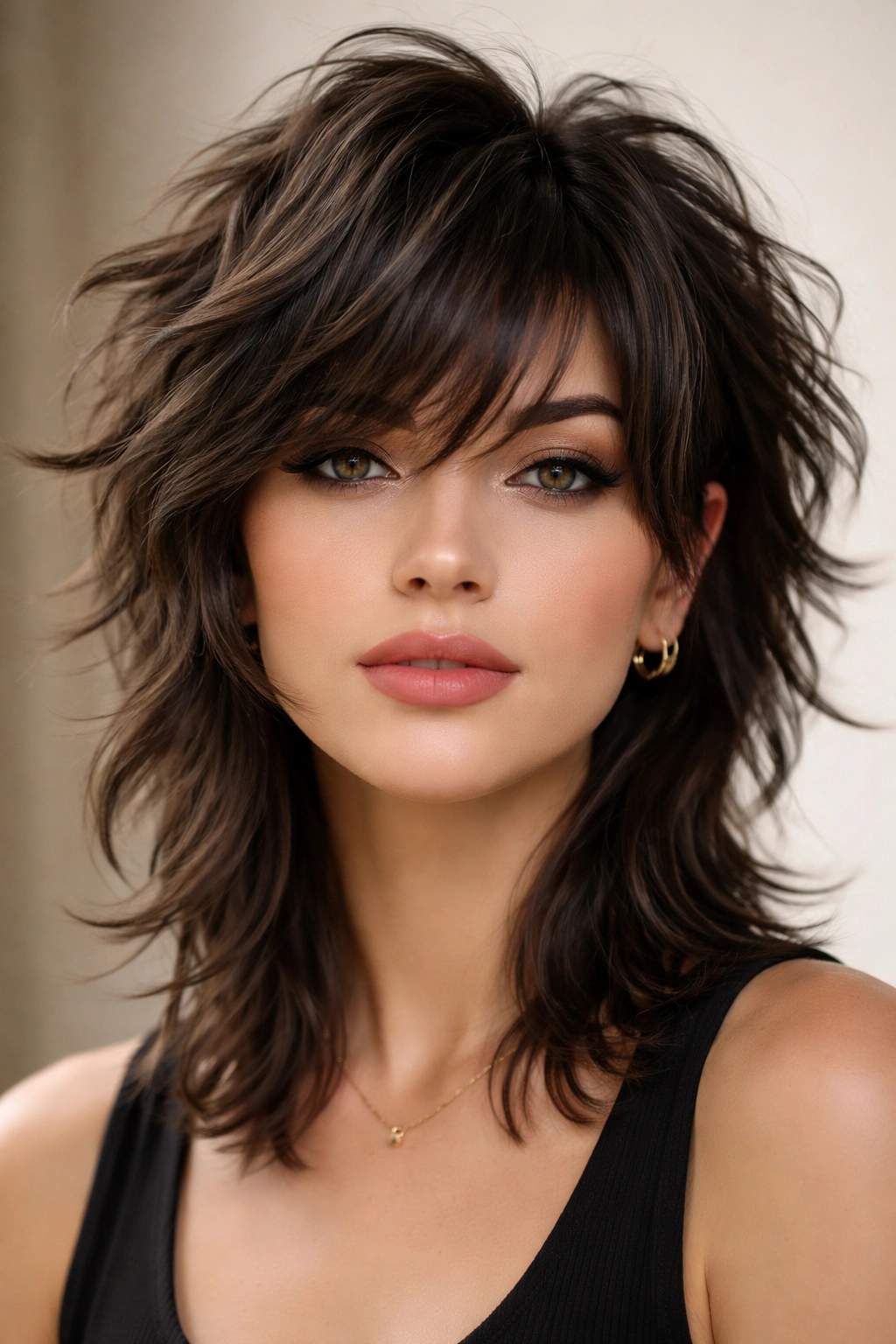
This final version plays with the contrast between sleek, smooth sections and deliberately textured, choppy pieces. Some sections are blow-dried smooth and sleek while others are textured and piece-y, creating visual interest through style contrast rather than cutting technique alone. You’re using your styling tools to create the effect that makes the cut look dynamic.
What Makes This Style Stand Out
The styling contrast turns your daily styling routine into part of the cut’s design. You’re not just styling your hair the same way every day — you’re intentionally creating different textures in different sections. One side might be sleek and smooth while the other is textured and wavy. Your crown might be textured while your sides are smooth.
Creating the Sleek-and-Textured Look
- Blow-dry smooth sections with a paddle brush and flat iron for polished areas
- Create textured sections using a curling iron, salt spray, and scrunching for movement
- Use a texturizing spray on some layers and a smoothing serum on others for visible contrast
- Style your center part area sleek and smooth, then texture the sides and back
- Create intentional waves in some sections while keeping others straight and defined
Pro tip: This styling approach actually makes your cut look fresher and more interesting because you’re not repeating the exact same style every day. Monday can be mostly sleek with textured crown, Wednesday can be mostly textured with sleek sides.
Final Thoughts

Choosing your short wavy wolf cut comes down to understanding your hair texture, your face shape, and your styling commitment. A textured shag wolf works beautifully on thick, curly hair but might overwhelm someone with fine waves. A pixie-wolf hybrid looks stunning on people with strong features but requires regular maintenance. A feathered wolf is more forgiving between cuts and works across more hair types.
The real magic of the short wavy wolf is that it’s not one fixed look — it’s a framework that changes based on how you style it, what products you use, and how much intention you bring to your daily routine. Two people with identical cuts can look completely different depending on whether they’re embracing natural waves or creating textured styling with tools and product.
Before booking your appointment, bring reference photos of the specific wolf cut variation you’re drawn to, not just a general “wolf cut” image. Talk to your stylist about your natural wave pattern, how much time you’re willing to spend styling, and what level of maintenance you’re comfortable committing to. A great wolf cut celebrates what your hair naturally does while giving you enough structure and texture to feel intentional and polished. That’s the real power of this cut — it works with you instead of demanding you conform to an impossible standard.