



Bangs can feel risky when you have wavy hair. Most of us with waves or loose curls have spent enough time battling frizz to know that adding hair around the face — the most humidity-exposed part of your head — might seem counterintuitive. But here’s the truth: the right bang style paired with smart styling techniques can actually help tame frizz rather than amplify it. The key is choosing a bang shape that works with your hair’s natural texture instead of fighting against it.
The relationship between bangs and wavy hair is all about balance. Blunt, super-short bangs tend to stick out awkwardly on waves and curl faster than the rest of your hair, creating a disconnected look. But textured bangs, layered bangs, and longer lengths that blend into your waves create a cohesive shape that actually anchors the frizzier pieces and reduces the overall appearance of frizz. When bangs frame your face at the right angle and density, they catch light differently, making the whole style appear smoother and more intentional.
The styling methods matter just as much as the cut itself. Wavy-haired people who wear bangs successfully aren’t blow-drying them straight every morning — they’re working with their natural wave pattern, using strategic product application, and finishing with techniques that seal the cuticle. You’ll learn which approaches actually work for real-world humidity and busy mornings, not just how bangs look fresh from the salon chair.
1. Shag Bangs With Choppy Layers
Shag bangs are one of the most forgiving options for wavy hair because they’re intentionally choppy and textured right from the cut. Instead of a solid line across your forehead, shag bangs have varying lengths with lots of texture, which means your natural waves actually enhance the style rather than fight it. The choppy pieces blend seamlessly into the longer layers throughout your hair, creating movement that reads as intentional rather than frizzy.
Why Shag Bangs Work for Wavy Hair
Shag bangs celebrate texture instead of trying to minimize it. Because the bangs themselves are already broken up into different lengths, small flyaways and frizz become part of the overall design. Your stylist will cut them with point-cutting or texturizing techniques, which means each piece can move independently and follow your hair’s natural wave pattern. This is the exact opposite of blunt bangs, which create a line that shows every hair that’s out of place.
How to Style and Care for Shag Bangs
- Apply a lightweight wave cream or mousse to damp hair before your hair fully air-dries, focusing on the bang area to encourage the waves rather than fight them
- Use a diffuser on your hair dryer if you need to dry quickly, keeping it on low heat to avoid frizz — or air-dry completely for the most natural texture
- Avoid brushing bangs when they’re completely dry; instead, mist them lightly with water and scrunch to reset the wave pattern if they get flat during the day
- Tousle shag bangs with your fingers rather than a comb; this keeps the intentional choppy shape intact and prevents smooth strands that emphasize frizz
- A light texturizing spray or sea salt spray applied to dry shag bangs can enhance the choppy texture and make small flyaways disappear into the overall design
Pro tip: Shag bangs look best when you get them trimmed every 4-5 weeks because they rely on choppy, defined edges to look intentional rather than unkempt.
2. Side-Swept Bangs That Blend Into Waves
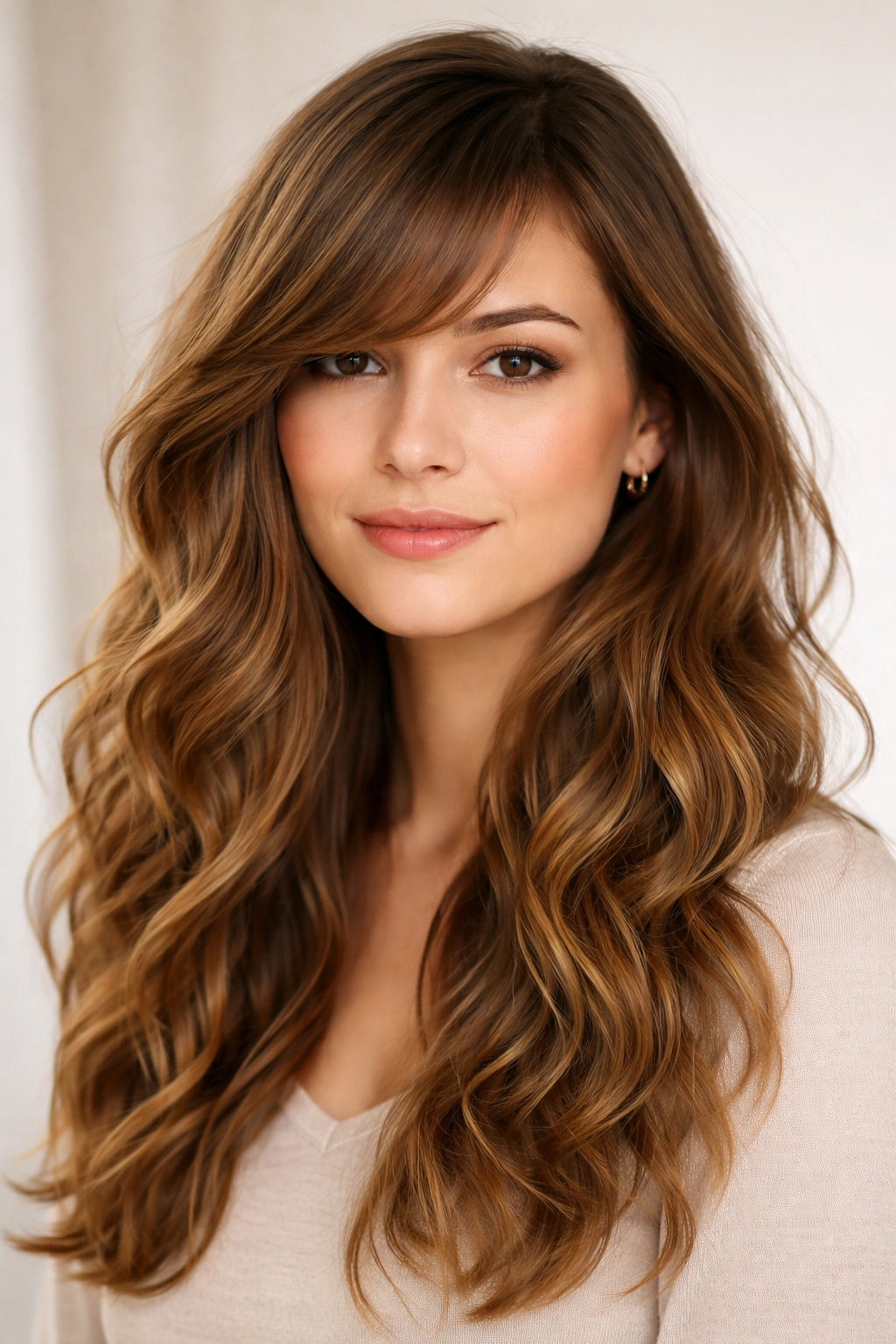
Side-swept bangs are cut longer on one side and gradually taper shorter as they move across your forehead, eventually blending into the hair at your temple. Rather than sitting as a separate element, they flow into your waves like they’re part of the overall movement. This length and angle allow the bangs to follow your natural wave pattern instead of creating a flat barrier that shows every texture variation and frizz.
Why Length and Angle Are Everything
Side-swept bangs work because they’re long enough to bend and curve with your waves. A typical side-swept bang falls somewhere between your eyebrow and cheekbone, which is long enough that gravity and your natural wave pattern can shape them without fighting the bang length. The angle also matters: because they’re longer on one side, there’s less face exposure on that side, which reduces the area where humidity hits your bangs directly and causes frizz.
Styling Strategy for Side-Swept Bangs
- Blow-dry side-swept bangs in the direction they’re meant to fall while your hair is about 60% dry, using a round brush to gently curve them and encourage the wave
- Once completely dry, lock the shape in with a light-hold hairspray or flexible styling cream
- If bangs get frizzy during the day, apply a tiny amount of anti-frizz serum or smoothing cream just to the bang area and smooth them back into place with your fingers — don’t re-wet and re-dry
- Side-swept bangs benefit from a smoothing treatment like a keratin gloss or protein mask applied every 2-3 weeks, which seals the outer layer of the hair and reduces frizz significantly
- Sleep with bangs pinned or secured to one side so they don’t get creased or bent into frizz-prone shapes
Worth knowing: Side-swept bangs can be styled two ways — swept dramatically to one side for a sleek look, or gently curved back into the wave pattern for a softer, more casual appearance.
3. Micro Bangs With Soft Wave Integration
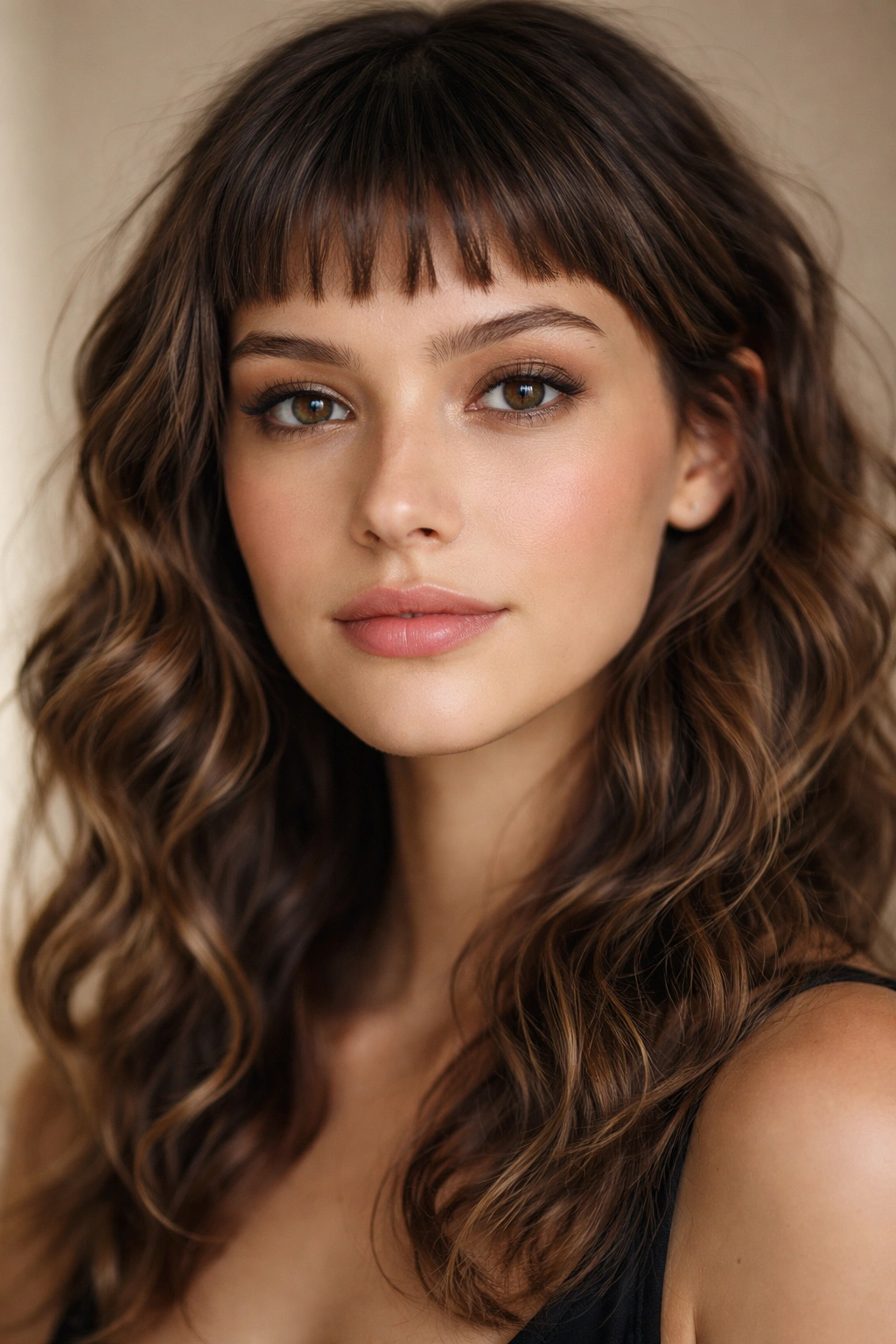
Micro bangs are short, wispy bangs that sit high on the forehead and create a bold, modern look. On wavy hair, they work best when they’re not blunt and heavy but rather textured and feathered so they integrate with your natural waves. The height of micro bangs means they sit above the area where humidity hits hardest, reducing frizz in that zone, and the softness of the texture means they don’t fight your waves.
The Texture-Over-Bluntness Rule
Micro bangs on wavy hair absolutely must be textured rather than blunt. A textured, feathered micro bang sits lighter against your forehead and doesn’t create a harsh line that emphasizes every texture variation. Your stylist will use point-cutting or razoring to create soft, wispy layers within the bang section, which allows them to move with your waves rather than sit stiffly.
Maintenance for Micro Bangs
- Micro bangs need regular trims — every 3 weeks — because they’re short enough that even slight growth changes the proportions and can make them look shaggy rather than intentionally wispy
- Style with a flexible-hold product like a wave cream or light mousse applied to damp hair, scrunching upward to encourage the natural wave at the roots
- Use a small round brush or your fingers to gently encourage soft waves into the bang area as you blow-dry
- Avoid brushing micro bangs when dry; instead, lightly mist with water and re-scrunch to reset waves if they flatten during the day
- A lightweight dry shampoo applied at the roots can add texture and grip, which helps micro bangs sit better and look less frizzy
Insider note: Micro bangs photograph beautifully and create a striking silhouette, but they require more styling commitment than longer bangs because there’s no length to disguise styling imperfections.
4. Curtain Bangs for Soft, Face-Framing Movement
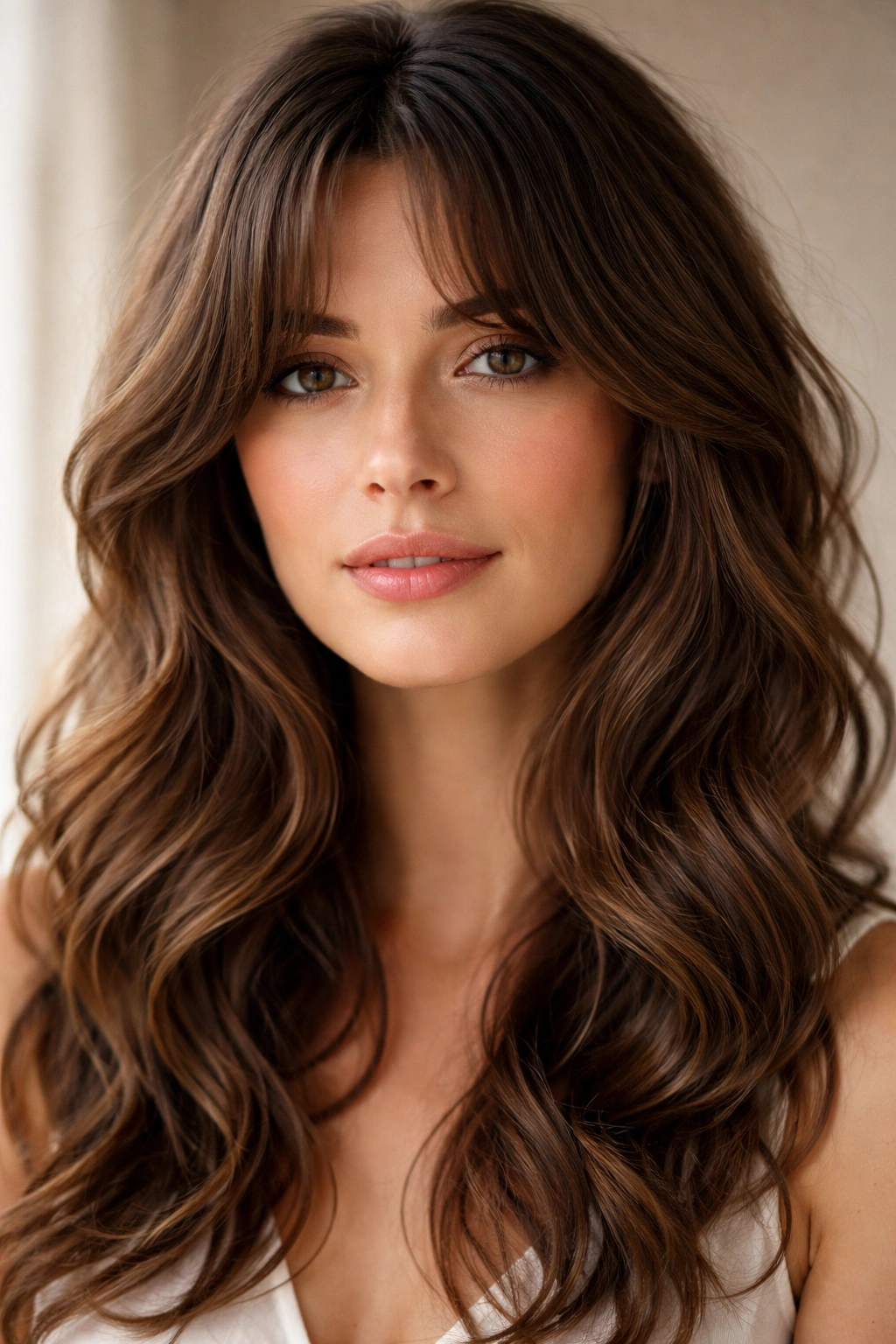
Curtain bangs part down the middle and sweep outward on both sides, creating a soft, face-framing effect. They’re one of the most flattering options for wavy hair because they flow with your natural wave pattern rather than against it. The center part and outward sweep allow the bangs to move and curve with your waves, making frizz look less pronounced and more like intentional texture.
Why Curtain Bangs Are Almost Frizz-Proof
Curtain bangs work because of their length and direction. They’re typically long enough to reach your cheekbone or slightly past, which means your waves can fully shape them. Because they part in the middle and move outward, the hair falls away from the center of your face rather than sitting flat against your forehead where humidity exposure is highest. This positioning naturally reduces the areas most prone to frizz.
Styling Techniques for Curtain Bangs
- Blow-dry curtain bangs while they’re still damp, using your fingers or a round brush to sweep them outward and encourage the wave pattern as they dry
- Once dry, run a flat iron quickly over them to create a subtle curve that directs them away from the center — this takes 10 seconds and transforms the whole look
- For a more casual, textured approach, apply wave cream to damp bangs, scrunch them, and let them air-dry with the natural wave pattern; they’ll curve outward beautifully
- Use a light hairspray or flexible styling product to hold the sweep, not a heavy hold that makes them feel stiff or look flat
- If bangs fall flat during the day, spray them lightly with water, scrunch with your fingers to encourage the wave, and let them air-dry or use a diffuser for 30 seconds
Pro tip: Curtain bangs look intentionally relaxed rather than frizzy when you embrace the texture — styling them perfectly smooth actually makes them look more prone to frizz because the contrast is so stark.
5. Textured, Choppy Bangs With Point-Cut Edges
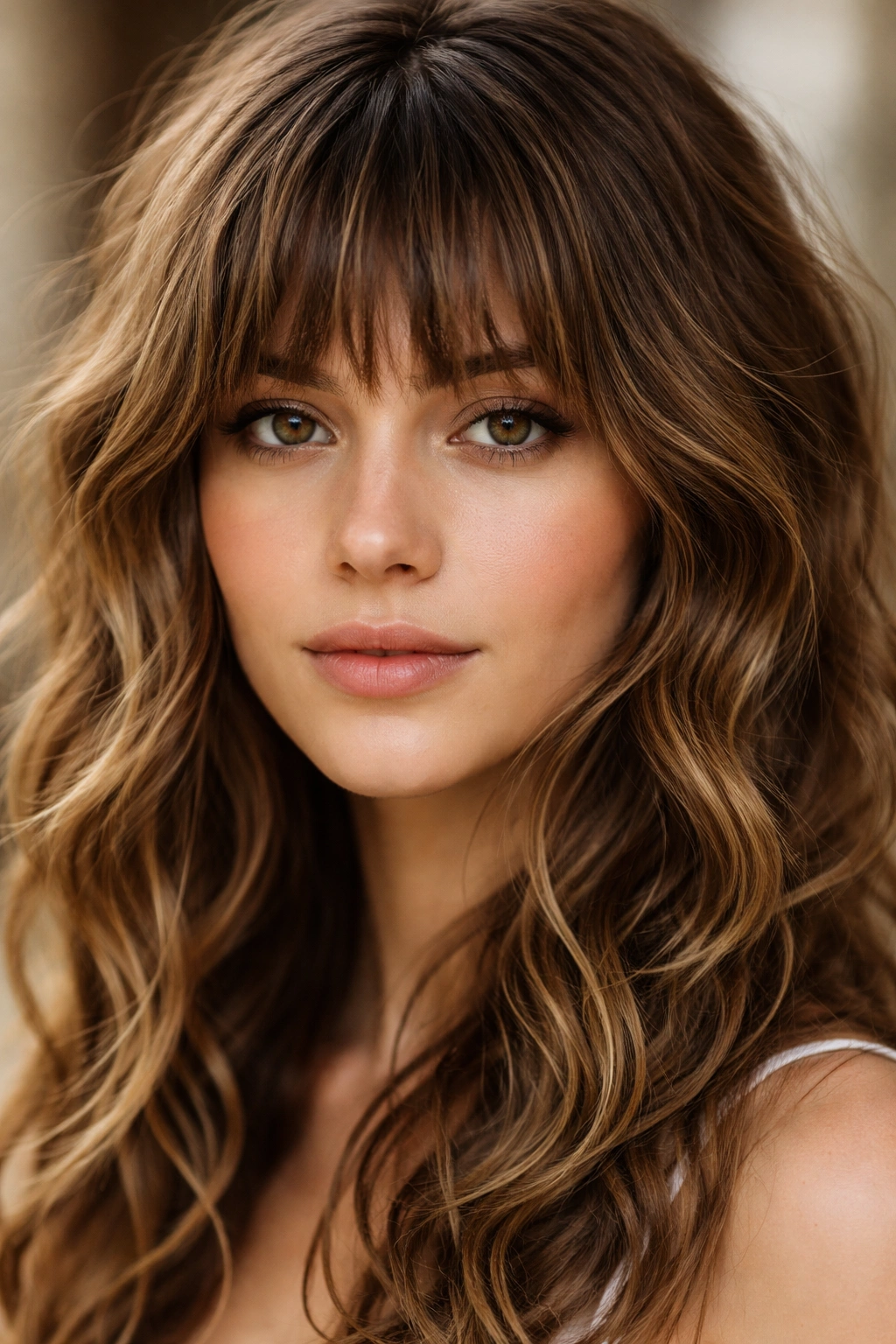
Textured, choppy bangs are created using point-cutting or razor techniques rather than scissors, which creates soft, feathered edges instead of a blunt line. These bangs have lots of movement built in from the cut itself, which means your wavy hair’s natural texture works with the bang style rather than against it. The choppy, varying lengths allow individual pieces to fall at different angles, making the overall look appear intentionally textured rather than frizzy.
The Point-Cut Advantage for Wavy Hair
Point-cutting removes weight and creates texture, which is exactly what wavy hair needs. Instead of all the bang hair falling in one direction with one length, point-cut bangs have pieces at slightly different lengths that can move independently. This means when humidity causes frizz, the frizzy pieces blend into the overall choppy texture and don’t stand out as a problem — they’re part of the design.
Care and Styling for Choppy Bangs
- Wash and condition bangs with the same hydrating products you use for the rest of your hair; textured bangs actually need moisture to look their best and avoid a dry, wispy appearance
- Apply a lightweight wave-defining cream or mousse to damp bangs and scrunch upward, encouraging the wave pattern from the roots
- Let bangs air-dry whenever possible so the natural wave pattern sets in without being disrupted by heat styling
- If you need to blow-dry, use a diffuser on low heat and cup the bangs gently in the diffuser, allowing the wave pattern to set as they dry
- Resist the urge to brush bangs when dry; instead, run your fingers through them or lightly mist with water and scrunch to refresh the texture and reset the waves
Worth knowing: Textured bangs look best when you commit to a hair routine that emphasizes waves rather than fighting them — this means plopping, scrunching, and using products designed for wave and curl definition.
6. Blended Wispy Bangs That Transition Into Layers
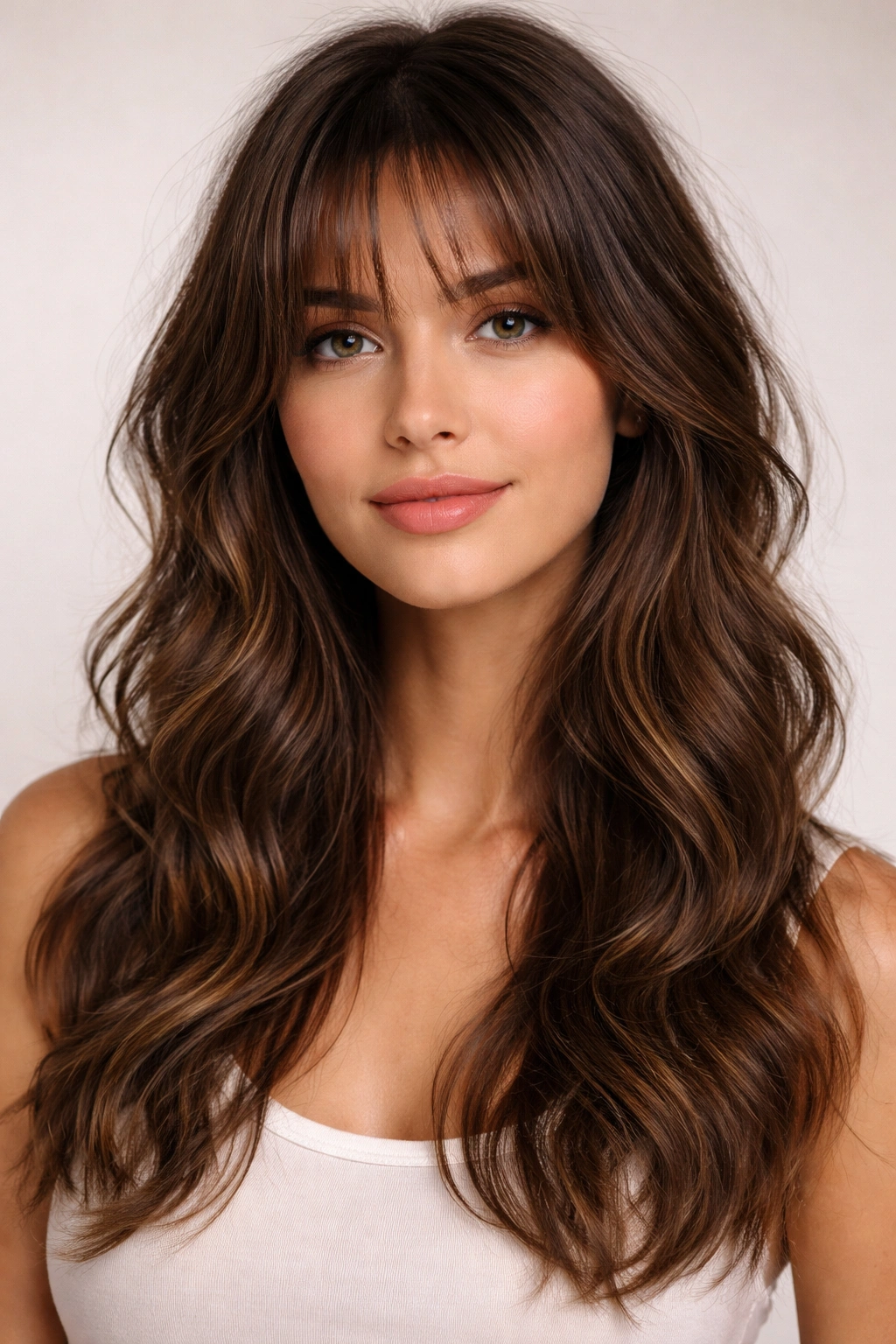
Wispy bangs are thin, delicate bangs that blend seamlessly into the longer layers throughout your hair. Instead of a distinct bang section, wispy bangs are almost an extension of your face-framing layers. They’re ideal for wavy hair because the thinness and length mean they can curve and flow with your natural wave pattern without creating a heavy line that emphasizes frizz.
The Art of Invisible Blending
Wispy bangs work because they’re cut so they transition smoothly into your other face-framing layers. Your stylist will cut them slightly shorter than the layers they connect to, creating a gradient of lengths. This means there’s no place where bangs suddenly become “other hair” — it all reads as one cohesive shape that flows with your waves. The thinness also means individual frizzy pieces are nearly invisible because they’re not concentrated in one dense section.
Maintaining Wispy Bangs
- Wispy bangs need a delicate touch when styling; apply wave cream or mousse to damp hair and let them air-dry if possible for the softest, most natural texture
- If you blow-dry, use low heat and a diffuser, scrunching gently to encourage waves without creating frizz from excessive heat or friction
- Trim wispy bangs every 4-5 weeks to maintain the gradual blend into your longer layers; even slight growth can disrupt the seamless transition
- Use products designed for fine or thin hair on bangs, even if the rest of your hair is thicker; this prevents the bangs from looking weighed down or flat
- A light texturizing spray applied to dry bangs can enhance movement and make the wispy texture look even more intentional
Pro tip: Wispy bangs photograph beautifully and feel low-maintenance because they blend into your overall shape — they’re an excellent choice if you want the framing effect of bangs without a high-maintenance daily styling routine.
7. Face-Framing Layers as Extended Bangs
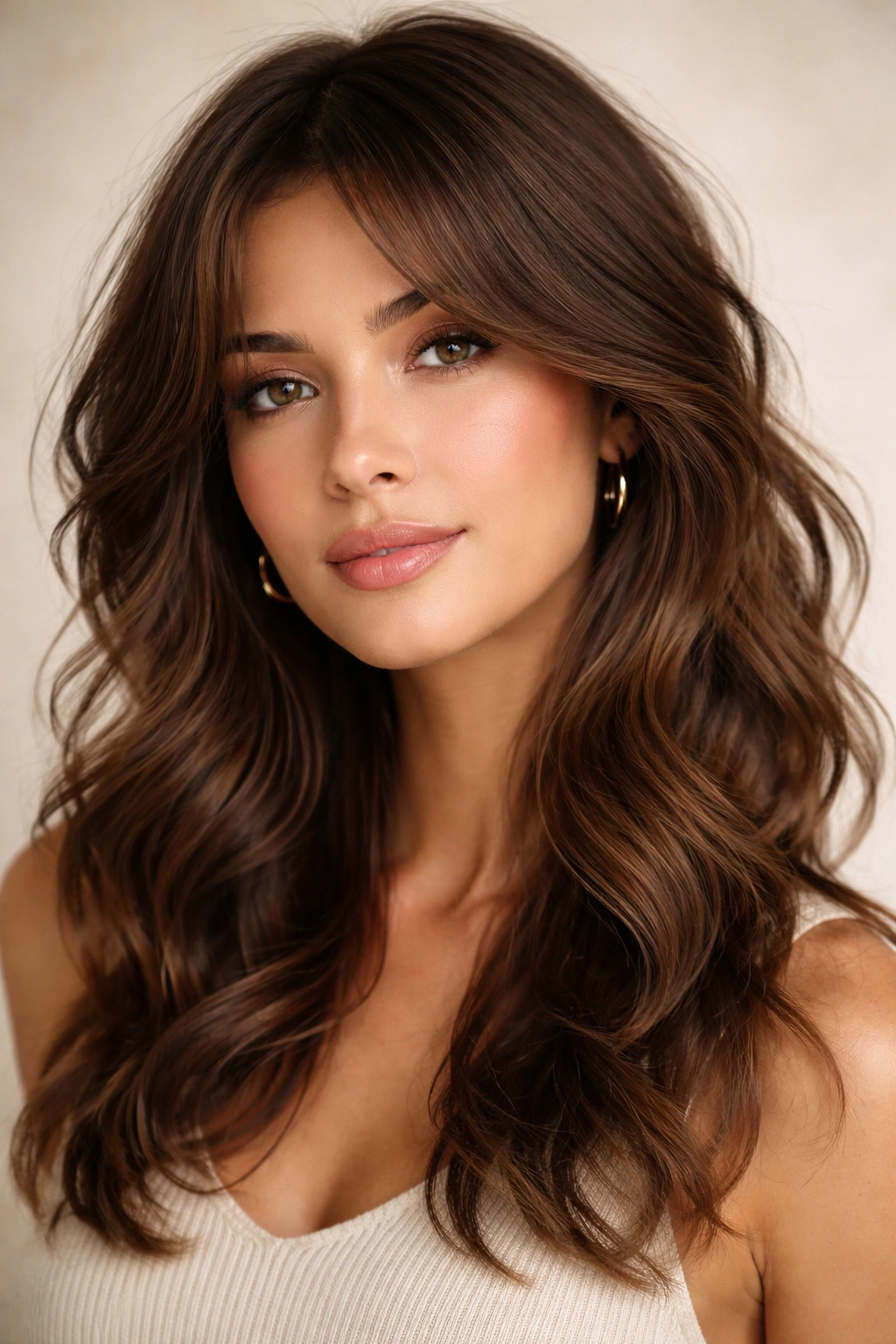
Rather than traditional bangs that sit across your forehead, extended face-framing layers act as bangs by creating shortened pieces that frame your face and cheekbones. These longer, feathered layers fall from somewhere around your temple and curve forward, creating a softening effect similar to bangs but with more length and movement. Because they’re longer and blend into your overall shape, they reduce the prominence of frizz while adding dimension.
Why Face-Framing Layers Reduce the Bang-and-Frizz Problem
Face-framing layers work as bangs because they create the same face-shortening, cheekbone-highlighting effect, but without the challenges of traditional bangs. Because they’re longer, they have more freedom to curve and move with your waves. They also blend so seamlessly into your longer layers that frizz in this zone reads as part of your overall wave pattern rather than a separate “bang problem.” The effect is softer and often more flattering than traditional bangs.
Styling Face-Framing Layers
- Apply a wave-defining product to damp hair, focusing on the face-framing sections, and scrunch upward to encourage curves and waves
- Blow-dry with a diffuser, cupping sections of hair in the diffuser to encourage the wave pattern and direct the face-framing layers to fall forward
- Use a round brush to gently curve the face-framing layers forward and down as you blow-dry to enhance the framing effect
- Once dry, a light hairspray or flexible styling cream will hold the shape without making it look stiff or flat
- If face-framing layers get flat during the day, lightly mist with water and scrunch to reset the wave, or quickly cup them in a diffuser for 20 seconds
Insider note: Face-framing layers are excellent for people who want the visual effect of bangs but worry about the daily styling commitment — they’re more forgiving and easier to style than traditional bangs.
8. Longer Blended Bangs That Sit at Cheekbone Length
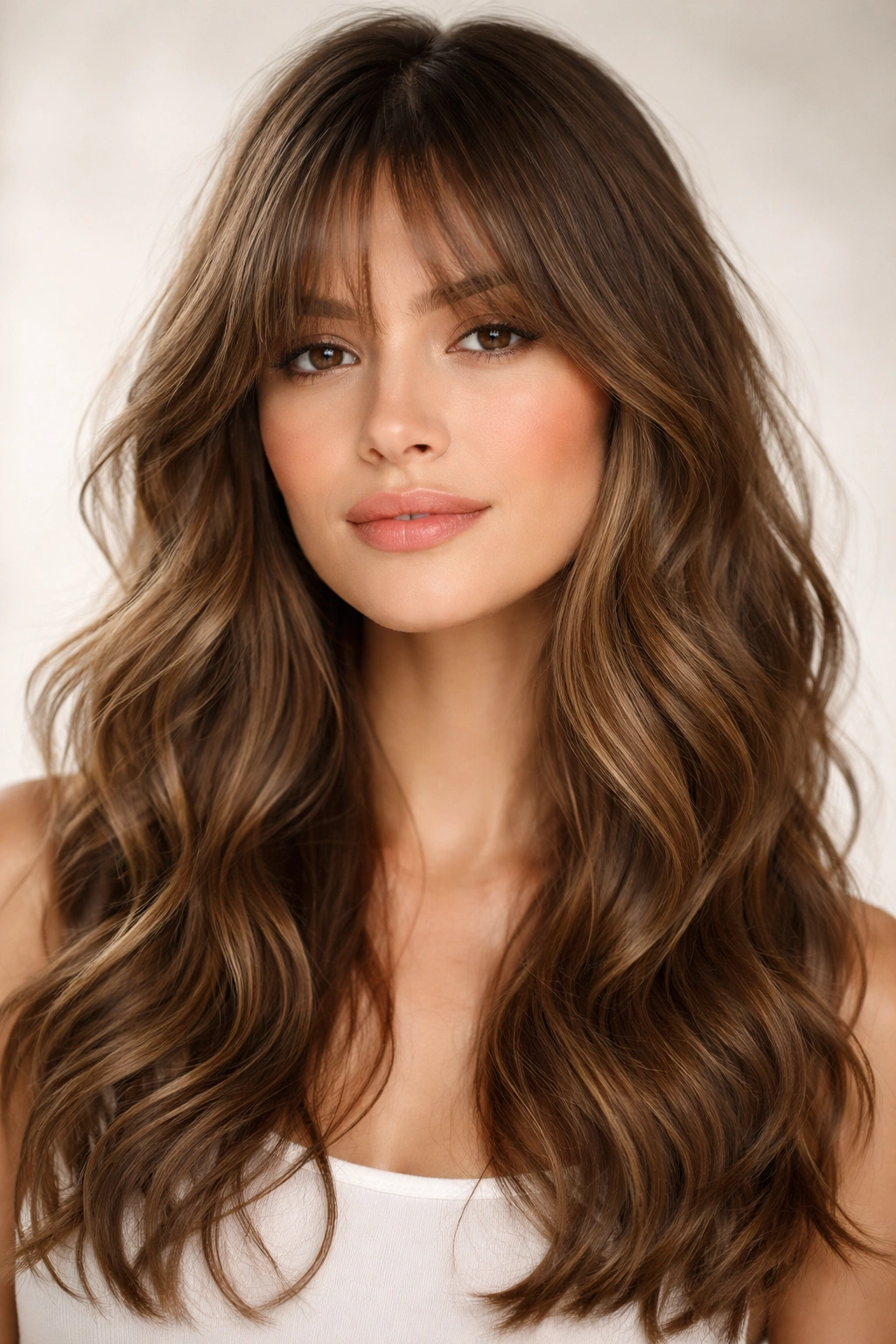
Longer blended bangs sit at or just below your cheekbone and blend into the first few layers of your hair, creating a soft, graduated effect rather than a distinct bang section. At this length, bangs have enough room to follow your natural wave pattern, and they don’t sit flat against your forehead where they’d emphasize frizz. Instead, they curve outward with your waves, making the entire look appear more intentional and polished.
The Sweet Spot for Frizz Control
Cheekbone-length bangs represent a sweet spot for wavy hair. They’re long enough that gravity and your wave pattern can shape them without fighting the length, but they’re short enough to create the face-framing effect that bangs provide. At this length, bangs tend to sit just at the widest point of your cheekbones, which is a flattering placement and one that naturally directs the eye. Because they blend into your longer layers, frizz in the bang zone doesn’t create a visible “problem area.”
Styling Longer Blended Bangs
- Apply wave-enhancing product to damp bangs and let them air-dry with the rest of your hair so they develop the same wave pattern as your face-framing layers
- If blow-drying, use a round brush to gently curve the bangs backward and outward, encouraging them to blend into your other layers as they dry
- Avoid creating a hard line; instead, aim for soft curves that flow from your face outward
- Once dry, smooth with a light product or serum to reduce frizz, focusing just on the surface layer of the bangs
- A quick run-over with a flat iron on low heat can create subtle waves and enhance blending if bangs feel too straight or separate from your layers
Worth knowing: Longer blended bangs often look best when you style them as part of your overall wave pattern rather than styling bangs and hair separately — this creates a cohesive look.
9. Wispy, Broken Bangs With Feathered Texture
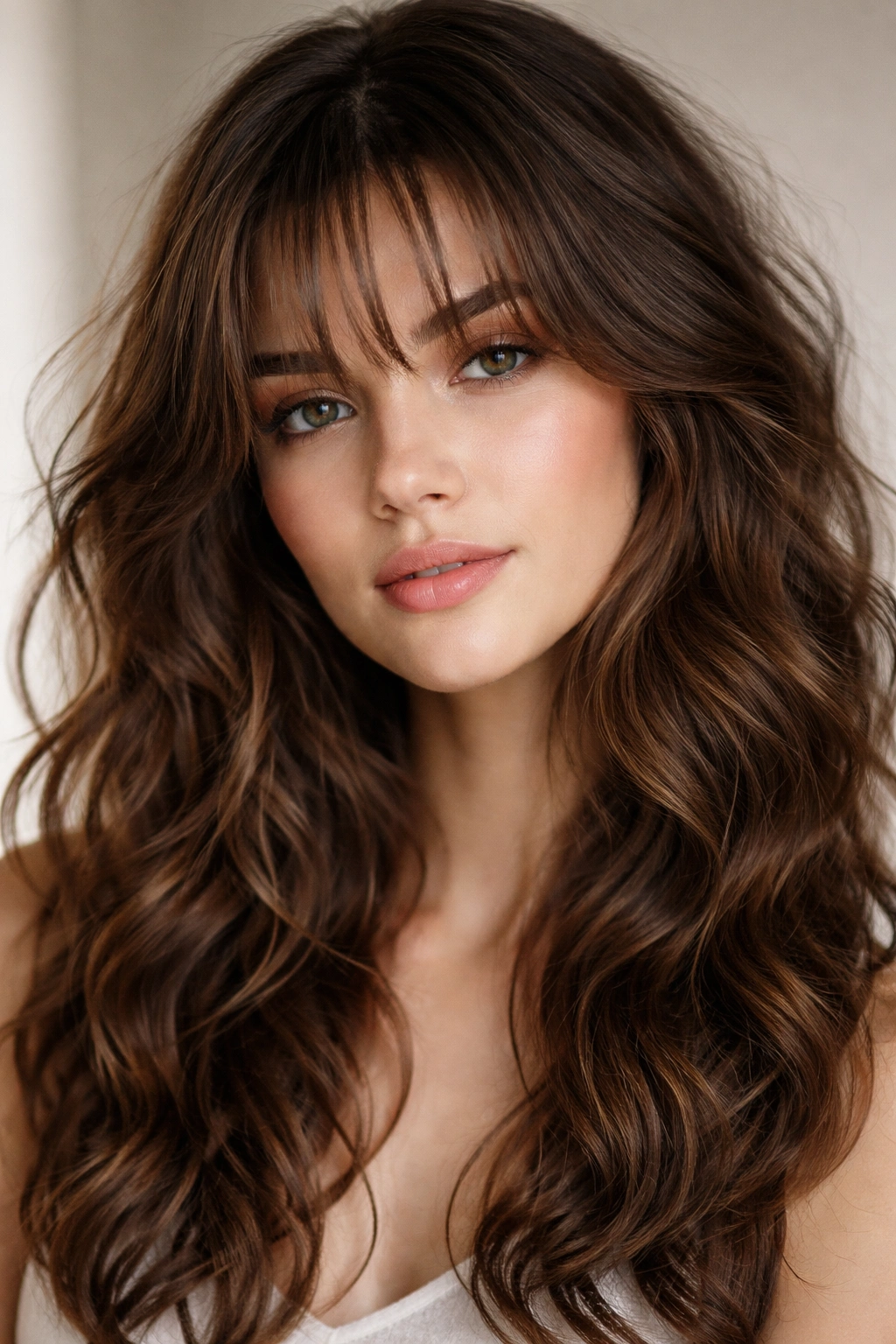
Wispy, broken bangs are cut so they have intentional breaks and texture throughout, with longer and shorter pieces mixed together. Unlike solid bangs, these have built-in texture from the cut, which means frizz and flyaways actually disappear into the overall design. They’re created with texturizing scissors or razors and look soft, romantic, and deliberately tousled even when your hair isn’t styled.
Built-In Texture Reduces Frizz Visibility
Wispy, broken bangs work because the texture is part of the design from day one. Individual frizzy hairs don’t stand out against a smooth backdrop because the baseline isn’t smooth — it’s already textured. This is the fundamental difference between these bangs and blunt bangs, which show every hair that isn’t sitting perfectly flat. The feathered, broken quality means you can wash and go without worrying that your bangs look frizzy.
Minimal Styling Required
- Wash, apply a wave cream or mousse, and let dry — this is honestly the best approach for these bangs
- If you need faster drying, use a diffuser on low heat while scrunching gently
- Avoid high heat, blow-drying with a round brush (which smooths out the intentional texture), or any technique that tries to make bangs look sleek
- A light texturizing spray on completely dry bangs can enhance the broken, feathered quality if they ever feel too smooth
- These bangs rarely need styling beyond your regular wave routine because they’re designed to look textured and soft rather than polished
Pro tip: Wispy, broken bangs are perfect if you value low-maintenance styling and want the bang effect without daily styling commitment.
10. Asymmetrical Bangs With Longer Side Placement
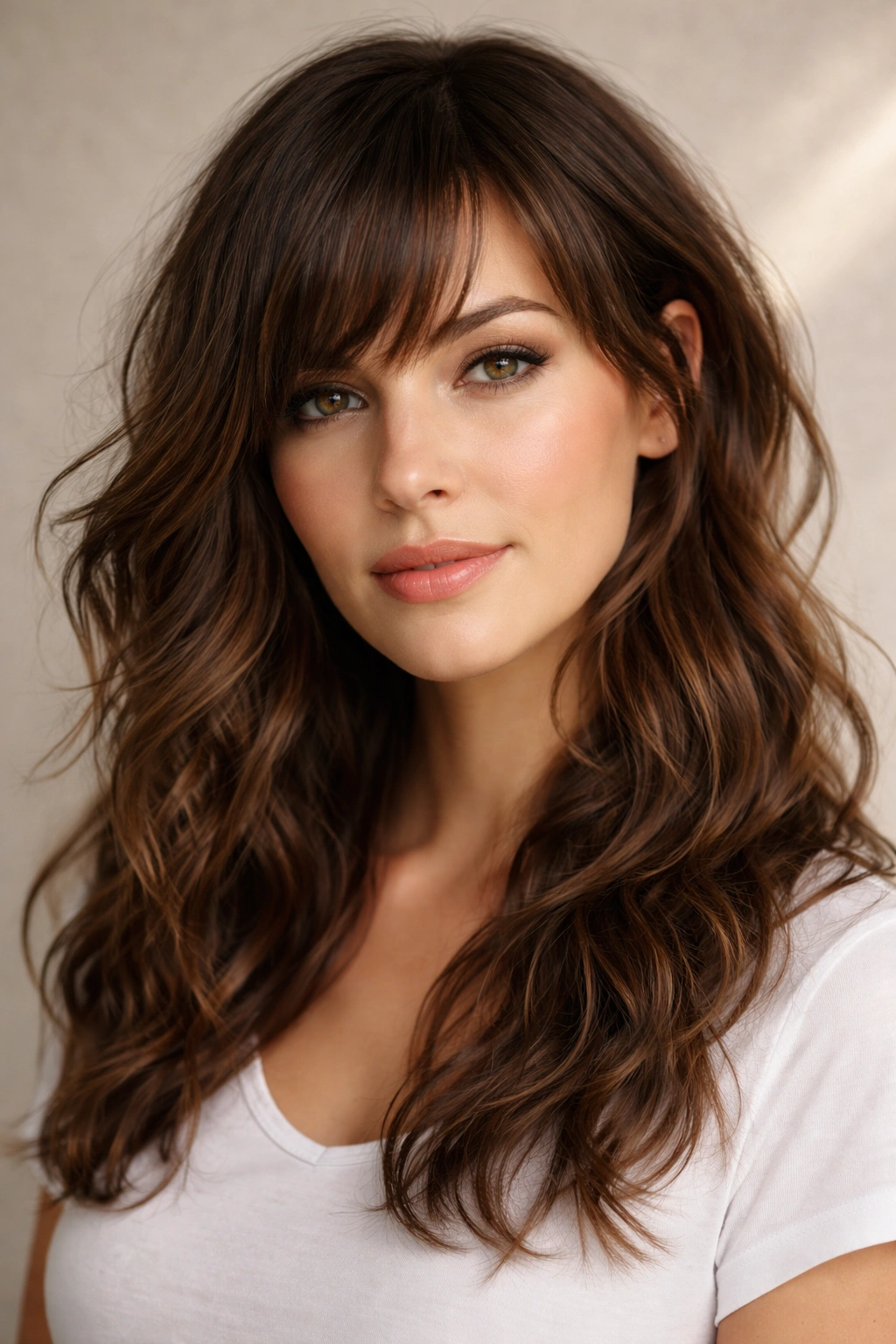
Asymmetrical bangs are cut at different lengths on each side of your face, creating a modern, directional look. One side might be longer and blend into your layers while the other side is shorter, creating dynamic movement and visual interest. This style works beautifully on wavy hair because the different lengths mean hair can fall in multiple directions, reducing the prominence of frizz in any one area and creating an intentionally editorial aesthetic.
Movement and Direction Reduce Frizz Perception
Asymmetrical bangs work for wavy hair because they’re designed to move in different directions. Instead of all your bang hair falling one way and looking frizzy if it doesn’t cooperate, asymmetrical bangs are supposed to fall in multiple directions — some pieces longer, some shorter, creating a dynamic shape. This built-in asymmetry means frizz and texture look like part of the design rather than a styling problem. The shorter side typically sits away from your face, creating an airier, less humidity-exposed area.
Styling Asymmetrical Bangs for Maximum Impact
- Apply wave-defining products to damp hair and allow to air-dry so the natural wave pattern creates the movement that makes this style work
- If blow-drying, use a diffuser and cup sections gently, allowing pieces to fall in their natural direction without forcing them all one way
- Dry the shorter side first, then the longer side, so gravity and your natural wave pattern shape them differently
- Once dry, you can enhance movement with a light texturizing spray or by running your fingers through to create separation
- If you want a slightly more polished look, quickly run a flat iron over the longer side to create a subtle curve that enhances the directional effect
Worth knowing: Asymmetrical bangs look best when you embrace the movement rather than try to make them sleek and perfect — the whole point is interesting, dynamic texture and direction.
Final Thoughts
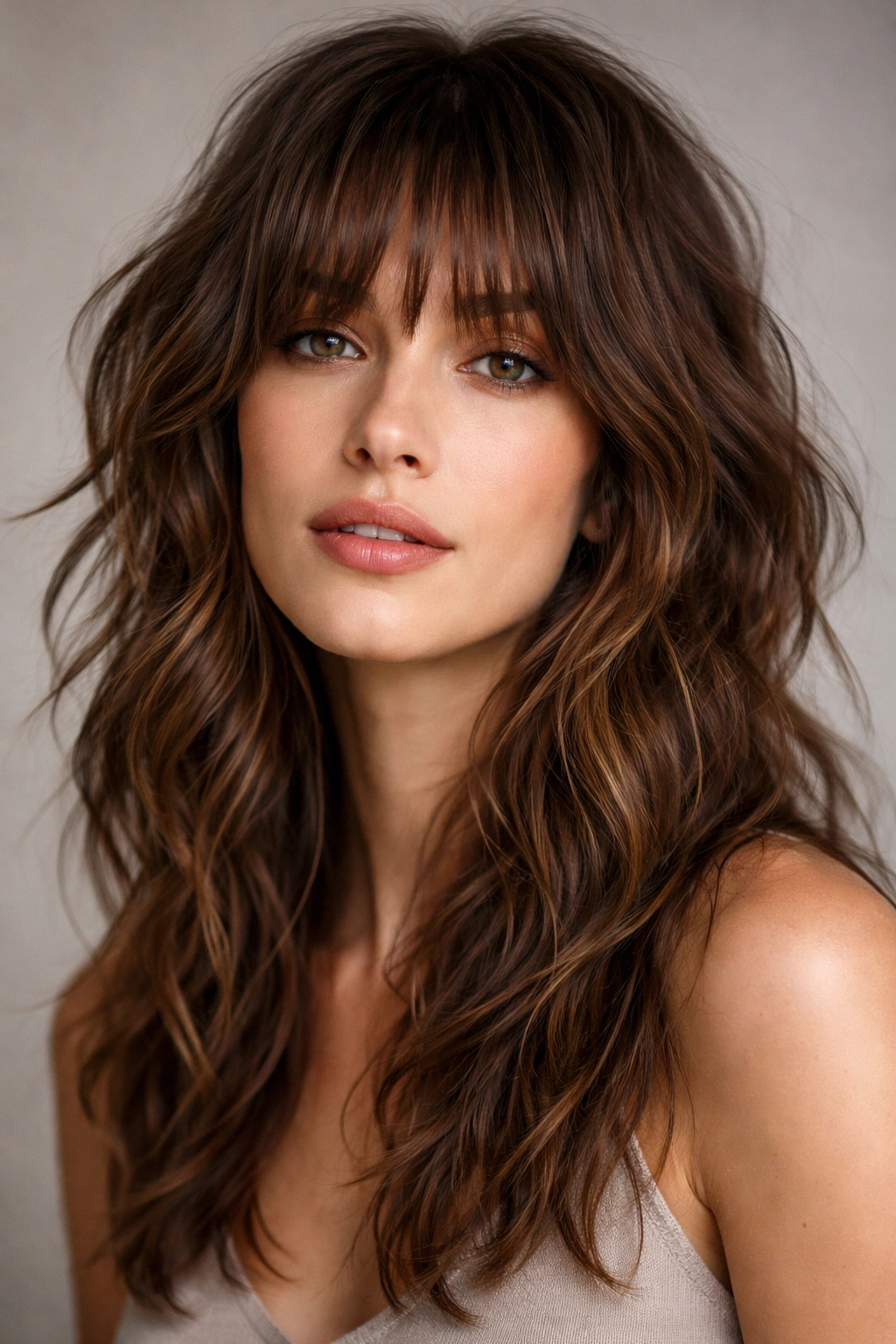
The right bang style can actually make managing wavy hair easier rather than harder because texture becomes a feature rather than a problem. The common thread connecting all these styles is that they work with your hair’s natural wave pattern instead of fighting it — they’re either textured enough that frizz blends into the design, long enough that gravity and waves can shape them, or positioned in a way that reduces humidity exposure in the frizziest zones.
Your choice really comes down to how much styling you’re willing to do daily and what shape flatters your face. Shag or choppy bangs require the least daily attention because texture is built in, while curtain bangs need a bit of blow-drying or strategic positioning to maintain the sweep. Side-swept bangs and face-framing layers offer that bang effect with more styling flexibility and forgiveness.
The most important part of making bangs work with wavy hair is the cut itself. Find a stylist who specifically understands how bangs interact with waves, who uses texturizing techniques rather than blunt cutting, and who can recommend a length and angle that will work with your unique wave pattern. Once you’ve got the right cut, the styling becomes simple: use products that enhance waves, avoid over-brushing when dry, and embrace the texture rather than fight it.
