

Wavy hair and bangs are a match made in styling heaven, but only when you choose the right combination. The texture of your waves can either beautifully frame face-flattering bangs or fight against them, so understanding which bang styles work with your natural movement is crucial. Medium-length hairstyles give you the perfect canvas—long enough to layer and create movement, short enough to be manageable and easy to style. When you add bangs into the mix, suddenly you’ve got dimension, face-framing that draws attention to your eyes, and a style that reads as intentional and modern.
The challenge most people face is figuring out which bang style won’t disappear into their waves or require blow-drying every single day. You want bangs that work with your texture rather than against it—bangs that look effortlessly styled and actually frame your face instead of getting lost in the curl pattern. The good news? There are plenty of options if you know where to look. Medium-length styles give you flexibility: you can go for bangs that blend seamlessly into the rest of your hair, or choose bangs that make a bold statement while still complementing your natural wave pattern.
What also matters is that your stylist understands how wavy hair behaves. Bangs cut bluntly into wavy hair without considering texture will either puff up, curl inward unexpectedly, or settle differently depending on humidity and your natural hair movement. The best bang styles for wavy hair are either textured enough to match your hair’s inherent movement, long enough to fall through your waves without getting caught, or styled with layers that break up weight and allow the waves to flow naturally. Let’s dive into eight medium-length styles that make bangs work beautifully with wavy hair.
Why Bangs Work So Well With Wavy Hair
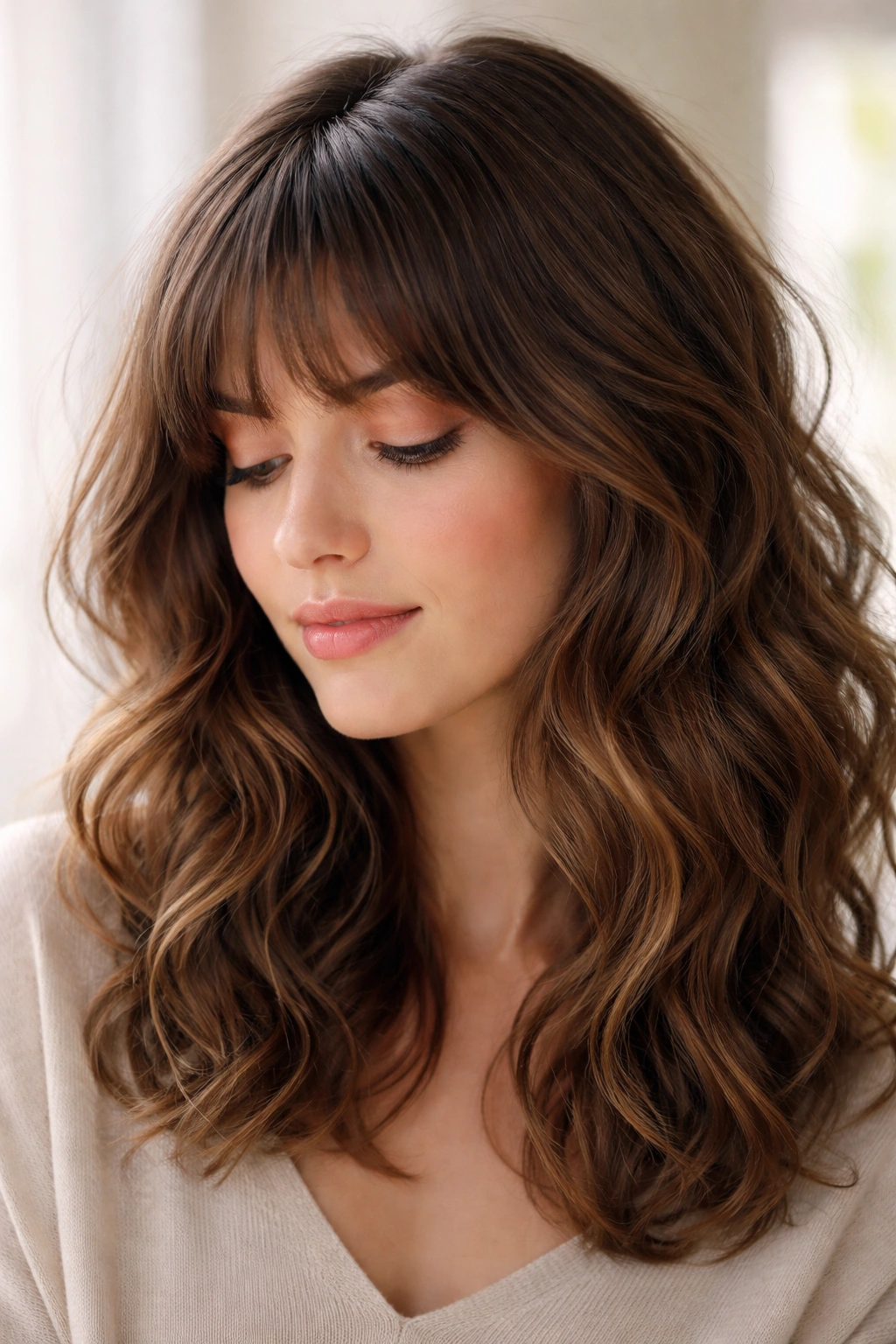
Bangs on wavy hair create an interesting visual dynamic that straight-haired styles often can’t achieve. The texture of your waves actually softens bangs, making even blunt styles look less severe and more touchable. Rather than appearing razor-sharp and precise, bangs blend into wavy hair with a natural, slightly undone quality that feels very current.
The key is that wavy hair has movement built in. This inherent texture breaks up the line of your bangs, preventing that flat, helmet-like feeling you sometimes see with straight hair. Your waves create a frame of softness around bangs, especially if they’re cut with texture and layers. Medium-length hair amplifies this effect because you have enough length to create shape and dimension around the bangs, so they never feel like an isolated element floating above your face.
Another reason this works so well: bangs on wavy hair tend to photograph beautifully. The texture catches light differently, and the softness of your natural waves makes the bangs appear intentional rather than like an accident. This is why so many influencers and celebrities with wavy hair are rocking bangs right now—they photograph well and require less formal styling than bangs on straight hair.
1. Soft-Textured Curtain Bangs
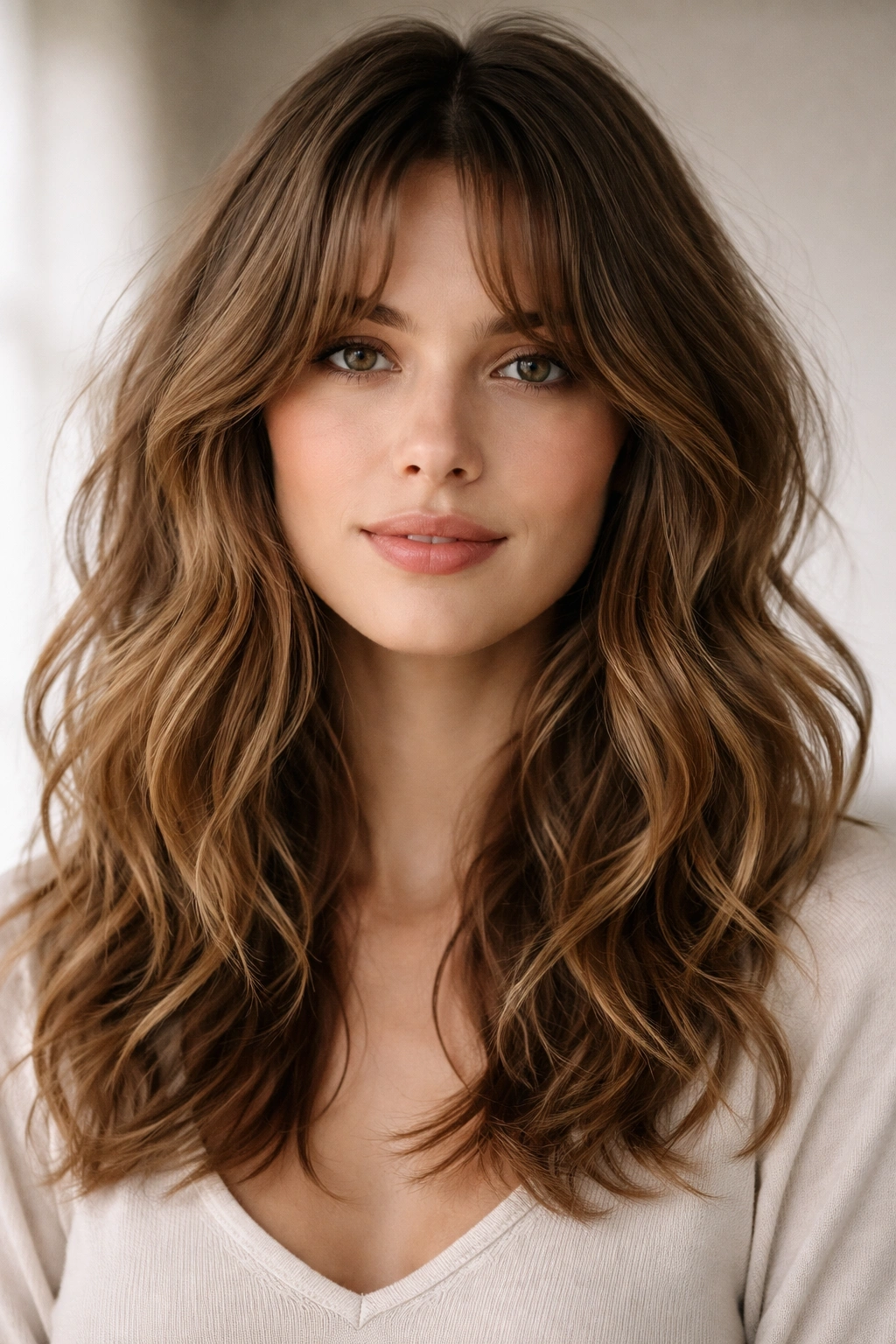
Curtain bangs are the gateway bang style for anyone hesitant about fully committing to bangs—and they’re especially gorgeous with wavy hair in a medium length. These bangs part naturally down the middle, creating two pieces that frame either side of your face and blend seamlessly into the rest of your hair. Instead of being cut severely straight across, they’re longer and textured, with choppy layers that make them move with your waves rather than against them.
Why This Style Suits Wavy Hair
Curtain bangs work beautifully with wavy texture because the layers already built into them complement your natural movement. The slight feathering at the edges allows the bangs to fall through your waves without creating a thick, heavy line across your forehead. As your hair dries, the curtain bangs naturally separate and follow the direction of your waves, creating a soft, romantic look that never appears too structured or overdone. This style also works across different face shapes—the parted center and length mean the bangs frame without boxing in your face.
How to Achieve and Maintain This Look
- Ask your stylist for curtain bangs that hit around your cheekbones, with choppy texture throughout to match your wave pattern
- Avoid perfectly blunt edges; the choppy, slightly irregular cut is what makes these bangs work with texture
- Dry your hair naturally or with a diffuser to let your waves guide the bangs into shape
- A quick tousle with your fingers as it dries helps the curtain bangs separate and frame your face
Styling tip: If your bangs stick together in the middle on humid days, a very light texturizing spray (not hairspray) can help them maintain separation without looking stiff.
2. Layered Shag With Full Bangs
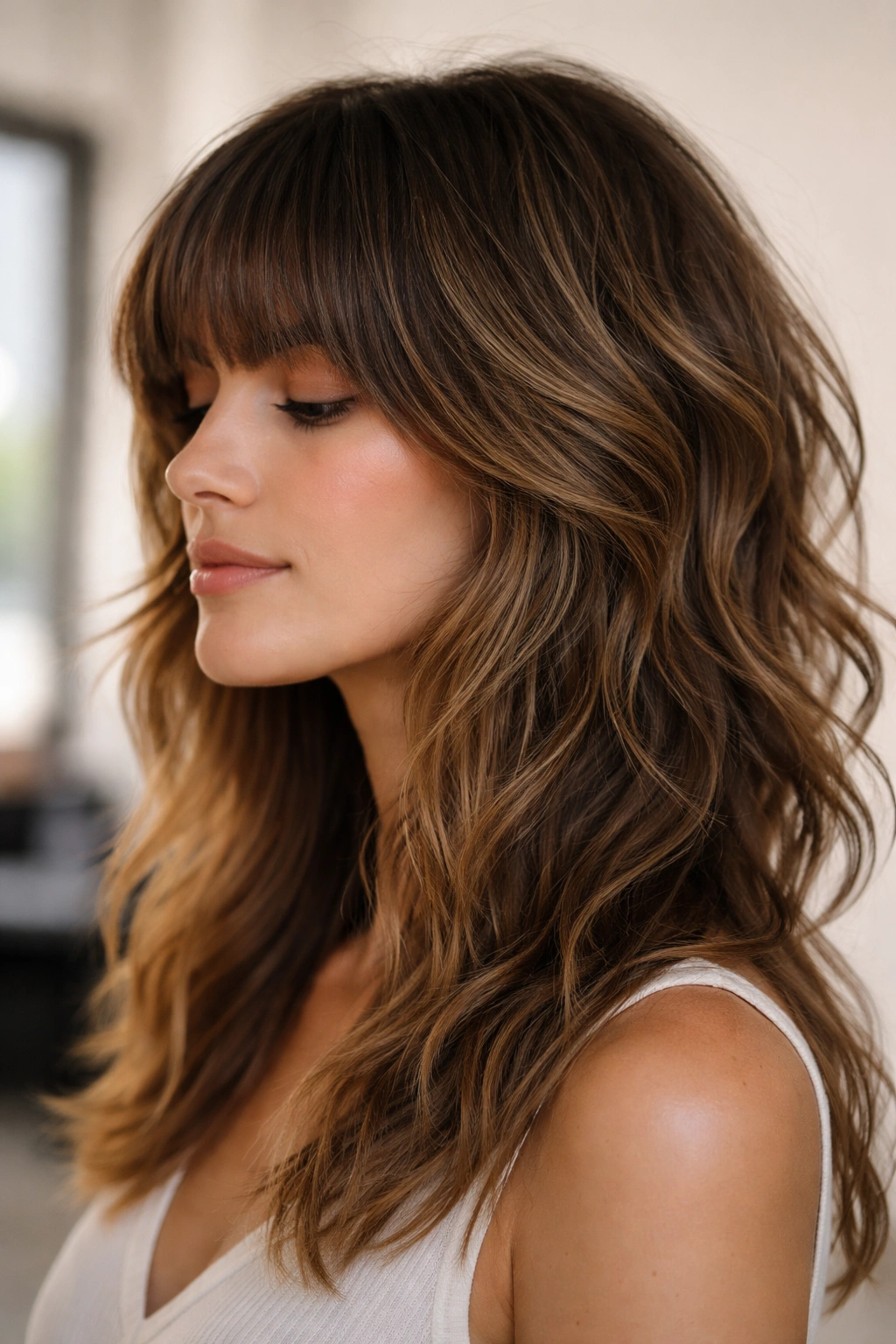
The shag is having a major moment, and pairing it with full bangs creates an incredibly chic, lived-in aesthetic that’s perfect for wavy hair. This cut features multiple layers throughout your medium-length hair, creating tons of movement and texture. The bangs are fuller than curtain bangs—covering your forehead more completely—but they’re cut with layers so they don’t feel heavy. The key is that the bangs share the same choppy, feathered texture as the rest of your shag layers, so everything blends into one cohesive, effortlessly textured whole.
What Makes the Shag-Bang Combination Work
With wavy hair, a layered shag with full bangs creates a style that looks intentionally cool without requiring much effort. The layers break up weight throughout your hair and encourage your natural waves to have more movement and definition. The full bangs frame your face while the layers around them—which are cut shorter and choppy—prevent the bangs from appearing heavy or solid. This is especially stunning if you have finer wavy hair; the layers create the illusion of more volume, and the bangs add face-framing dimension without weight.
Styling Guidance for Maximum Impact
- This cut requires a confident stylist who understands how layers behave in wavy hair
- The bangs should be cut short enough to frame your eyes but with enough layers that they don’t clump together
- Air-dry your hair whenever possible; this cut is designed to look great with your natural texture
- Use a curl-enhancing or wave-defining product on damp hair to encourage your natural movement
Pro tip: This style looks even better a few days after washing, when your waves have fully settled and become more defined. Fresh-from-the-shower isn’t always the goal with this cut.
3. Face-Framing Choppy Bangs
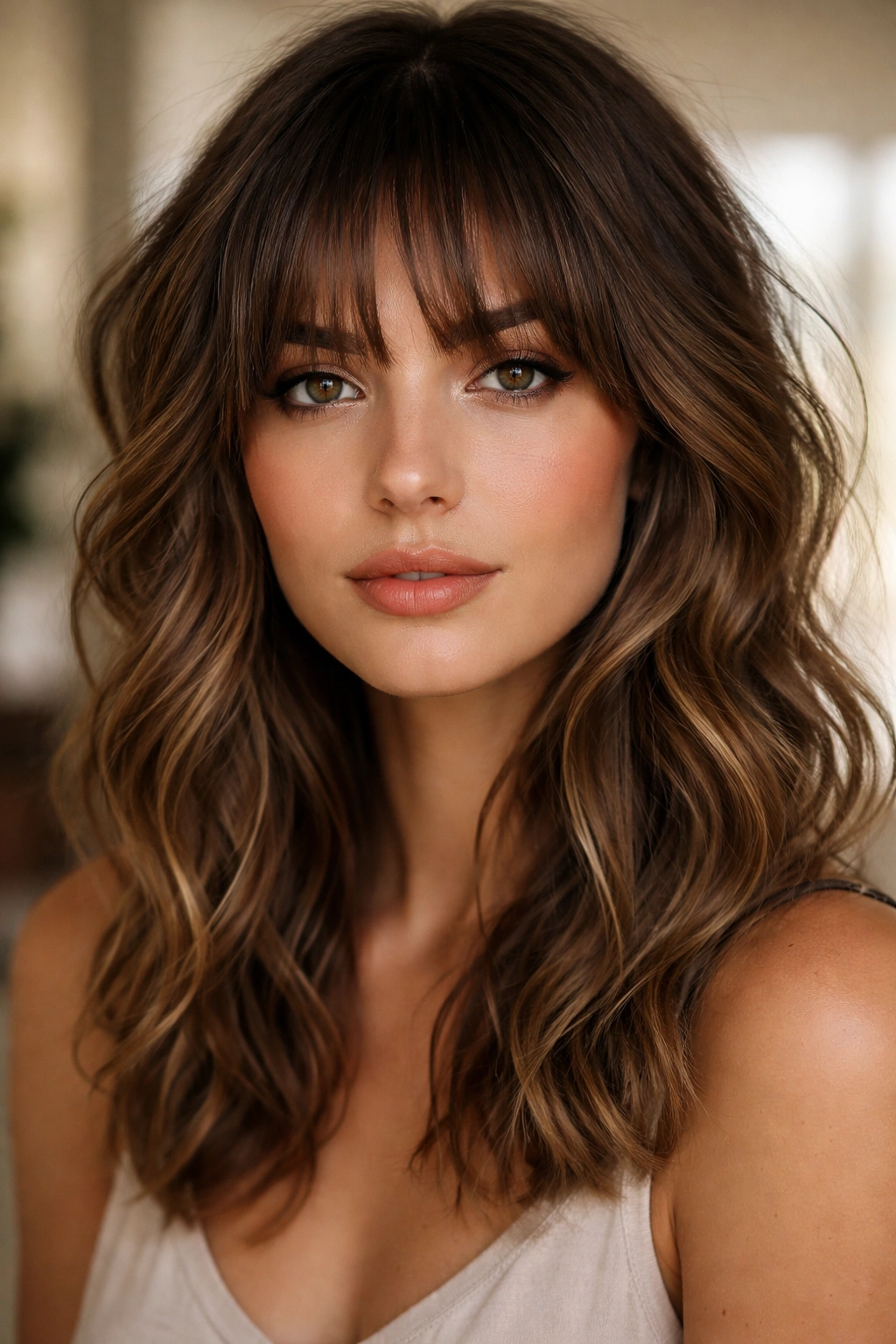
If you want maximum impact, choppy face-framing bangs cut into medium-length wavy hair create an undeniably bold, fashionable look. These bangs are shorter in the center and gradually longer as they extend toward your temples, creating a strong frame around your face. The choppy texture means they’re never uniform—pieces stick out at slightly different lengths, which actually complements wavy hair beautifully because the irregularity mirrors your natural texture. This style is dramatic but works with your waves rather than fighting them.
Why Choppy Bangs and Waves Complement Each Other
Choppy texture echoes the natural movement of wavy hair. Rather than looking chaotic, the irregular edges of these bangs read as intentional and styled. Wavy hair already has movement, so bangs that don’t fight that movement feel harmonious. The choppy lengths also mean that as your hair dries and your waves develop, the bangs follow different directions and create a very natural, slightly tousled frame around your face. This is a style that looks better the less you try to perfect it.
Cutting and Styling Specifics
- Your stylist should cut these bangs with sharp shears and create uneven lengths throughout
- The shortest pieces should sit around your eyebrows; the longest extend back toward your temples
- These bangs look best when you let your natural texture do the work—minimal blow-drying required
- Texture products (sea salt spray, wave creams) will enhance the lived-in look rather than make it messier
Worth knowing: These bangs require a trim every 4-5 weeks because the choppy layers need to maintain their irregular texture to look intentional rather than grown-out. The cut itself is the style.
4. Wispy Feathered Bangs
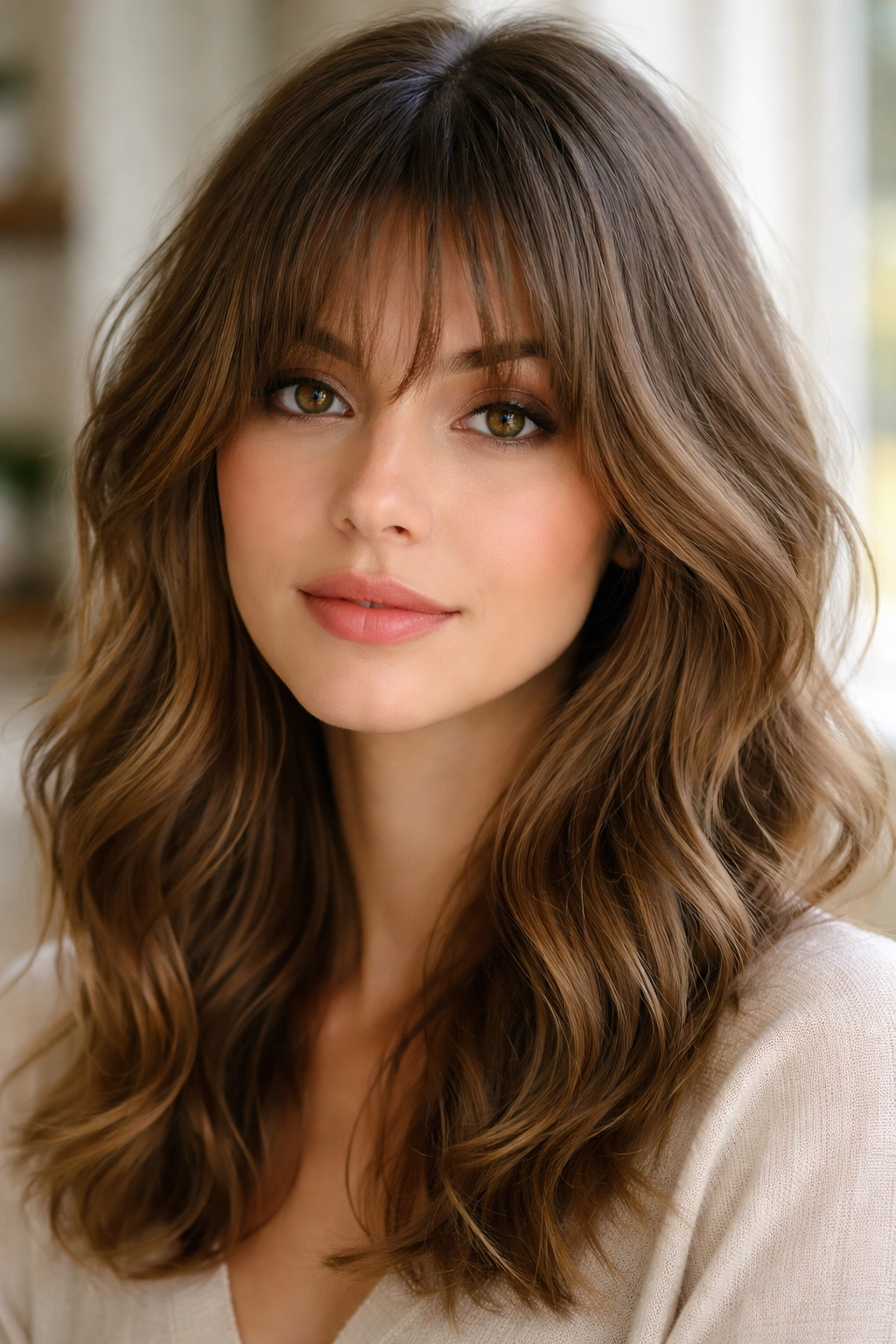
For a softer, more delicate take on bangs with wavy hair, wispy feathered bangs are incredibly flattering. These bangs are cut so that the edges feather outward, creating a light, airy feeling across your forehead. Rather than being blunt or choppy, they’re precise in how they’re cut, but the effect is of something ethereal and soft. Paired with medium-length wavy hair, they create a romantic, slightly bohemian aesthetic that works beautifully across face shapes and ages.
The Softness Factor
Wispy feathered bangs work so well with wavy hair because they’re naturally compatible in terms of visual weight and texture. The feathering means there’s no solid line across your forehead—instead, lighter, separated pieces frame your face. Your waves will make these bangs even softer in appearance, with pieces falling at slightly different angles as your natural texture moves them. This creates a very flattering frame that draws the eye upward without feeling severe or blunt. It’s one of the most forgiving bang styles if you’re new to wearing bangs.
How to Get and Maintain Wispy Feathered Bangs
- These bangs need to be cut by a stylist experienced with feathering and textured cuts
- The shorter pieces sit around your eyebrows; longer pieces extend through your cheekbones
- They work beautifully with a diffuser on your blow dryer, which enhances the feathering and follows your waves
- You can also air-dry these, though you have less control over how they fall
Pro tip: These bangs actually look fresher when they’re slightly longer and starting to blend into your hair. They don’t require as frequent trims as blunt bangs because the feathering keeps them looking intentional even as they grow.
5. Textured Wolf Cut Bangs
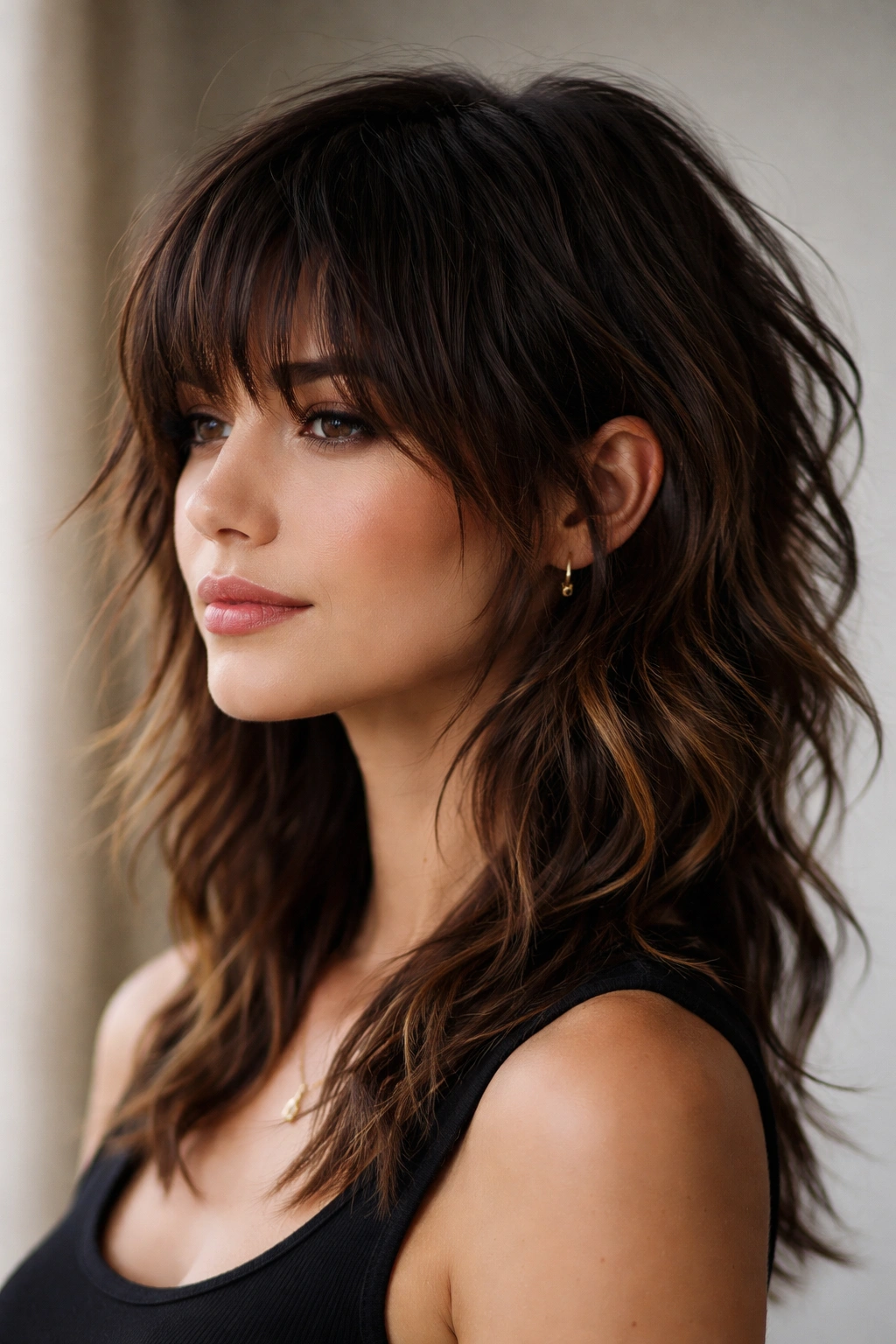
The wolf cut is a modern, edgy hybrid between a shag and a mullet, featuring short, choppy layers on top with longer, sleeker lengths underneath. When you add bangs to this style—specifically textured, choppy wolf-cut bangs—you get an incredibly fashion-forward look that’s perfect for wavy hair. These bangs are cut with lots of movement and texture, usually shorter in the center and blending into longer pieces. Paired with the wolf cut’s layered structure, the bangs create a cohesive style that looks effortlessly cool.
Why Wolf Cut Bangs Suit Wavy Texture
Wolf cut bangs work exceptionally well with wavy hair because both the cut and your natural texture are all about movement and texture. The choppy layers throughout the wolf cut encourage your waves to be more pronounced and voluminous, and the bangs repeat this textured theme. Instead of fighting your wave pattern, this cut celebrates it. The shorter layers on top (where your bangs are) create volume that flatters your face, while the longer underneath keeps the style feminine and wearable. It’s edgy without being severe.
Cutting and Styling for Wolf Cut Bangs
- Your stylist needs to understand how to cut a wolf cut with wavy hair—it’s not as simple as it might seem
- The bangs should be cut with multiple choppy layers, shorter in the center, longer toward the temples
- These bangs look best with a diffuser or scrunching motion while drying to encourage waves and texture
- The lived-in, slightly undone quality of this style is the goal—don’t try to make it perfect
Insider note: This is a bold cut that requires some styling confidence, but with wavy hair, it looks incredible because your natural texture does a lot of the work. It’s worth investing in a good haircut from someone who specializes in textured, modern cuts.
6. Side-Swept Blunt Bangs
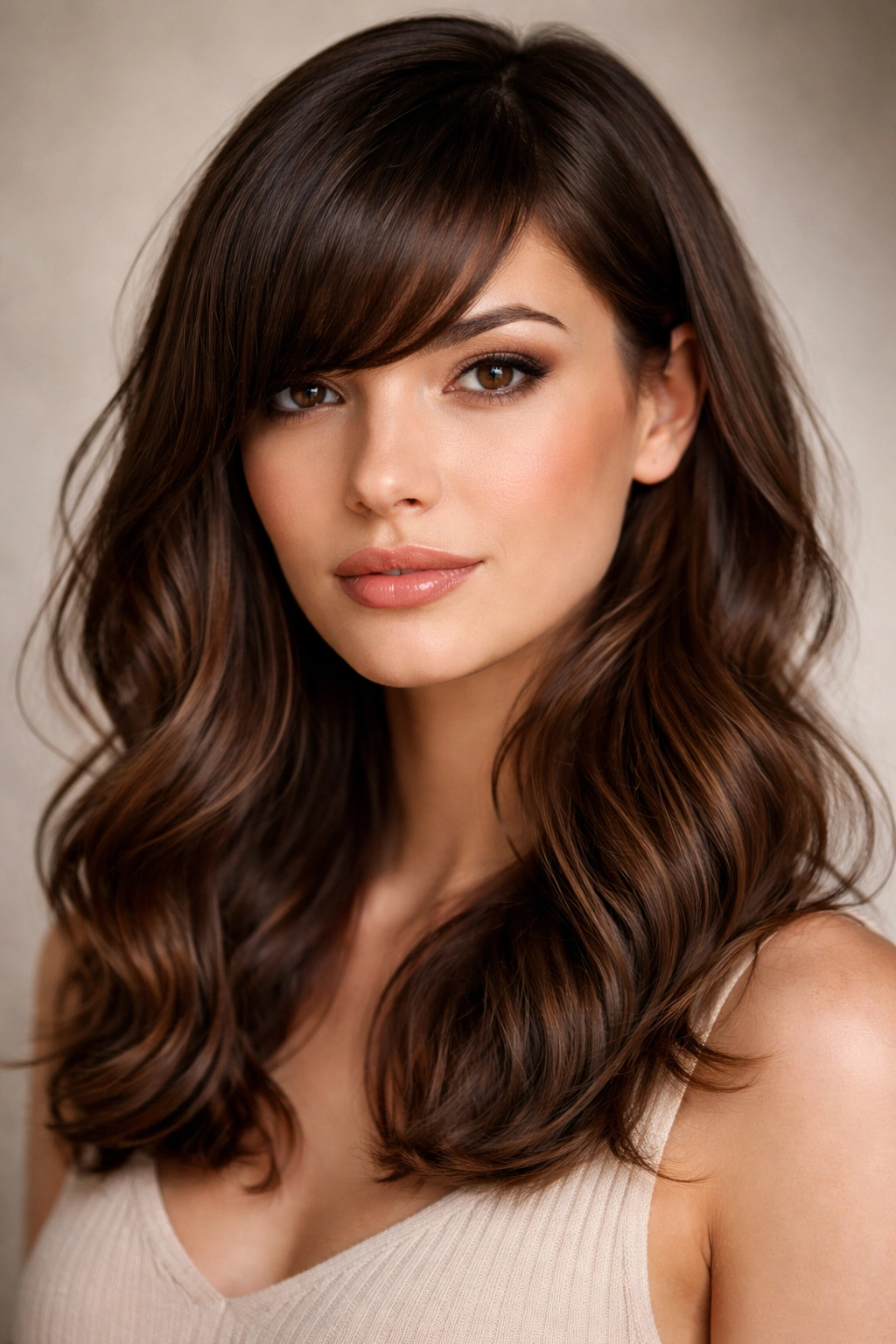
If you want the impact of blunt bangs but prefer a less-in-your-face approach, side-swept blunt bangs are a fantastic compromise. These bangs are cut bluntly across, creating a strong line, but they’re swept dramatically to one side, so they only cover part of your forehead. With wavy hair in a medium length, this creates an asymmetrical, sophisticated look that feels very intentional. The bluntness of the cut is softened by your waves, which naturally create texture and movement even as the bang line remains clean.
The Sophistication of Side-Swept Bangs
Side-swept blunt bangs create an elegant, polished aesthetic that suits both casual and more formal settings. The asymmetry is flattering because it draws attention to one side of your face, which is why this style works across different face shapes. With wavy hair, the blunt line stays relatively clean (unlike on straight hair where it can look too severe), but your waves add softness that prevents it from feeling overly structured. This is a style that looks expensive and intentional, as if you’ve thought carefully about your look.
Achieving the Look and Day-to-Day Styling
- Ask your stylist for blunt bangs swept to your dominant side, longer than a traditional straight-across bang
- The side-sweep is usually around 1-2 inches longer on one end than the other
- Blow-dry with a round brush to encourage them to sweep in the right direction, or use a flat iron for more control
- A light texturizing spray can help your waves blend with the bangs rather than making them too separate
Real talk: These bangs do require a bit more styling than some other options because you want them to consistently sweep in the same direction. But if you’re willing to put in that small amount of effort, you get a very polished result.
7. Micro Bangs With Waves
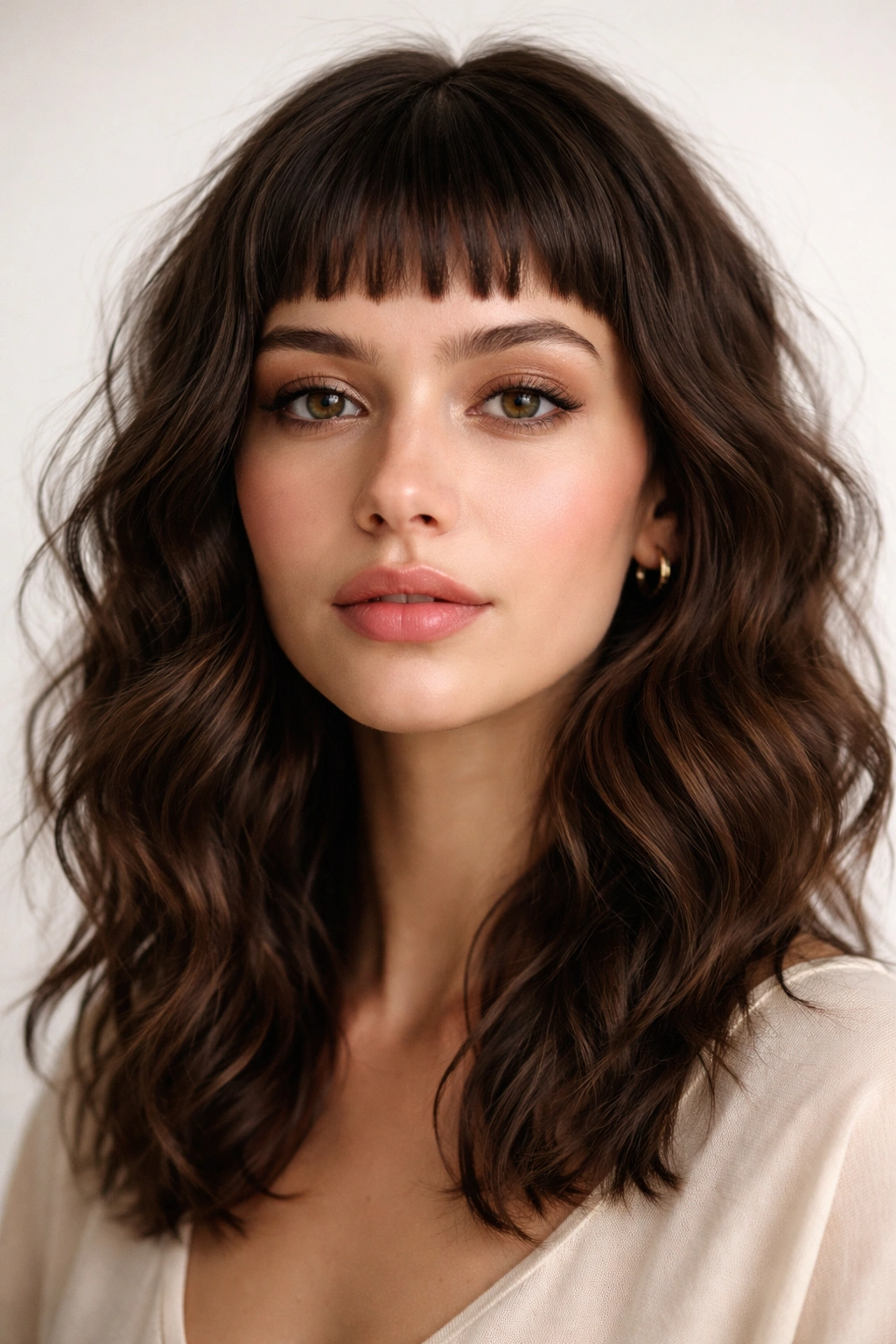
For a more daring, fashion-forward choice, micro bangs paired with medium-length wavy hair create a striking, contemporary look. Micro bangs are very short—usually hitting just above your eyebrows or even higher—and they’re typically cut bluntly or with minimal texture. The drama of these short bangs is offset by the length and movement of your wavy hair, which tumbles down in soft waves that contrast beautifully with the short bang line. This creates an interesting visual balance: chic, modern, and slightly rebellious on top, soft and romantic below.
Why Micro Bangs Work on Wavy Hair
Micro bangs could look severe and harsh on straight hair, but wavy hair creates a beautiful contrast that makes them look intentional and cool rather than extreme. The texture of your waves draws attention downward, softening the effect of the short bangs. This style reads as fashion-forward and confident without looking like an accident. Micro bangs also work beautifully with the current aesthetic of textured, lived-in waves—they feel like they belong in the same family of intentional, modern styling choices.
Styling Considerations for Short Bangs
- Make sure you love your face and are confident about trying something bold before committing to micro bangs
- These bangs need frequent trims—every 2-3 weeks—to maintain the short line
- Air-drying usually works fine; you want your bangs to maintain their short, slightly separated appearance
- If you’re worried about commitment, ask your stylist to cut them slightly longer first and see how you feel
Pro tip: Micro bangs photograph exceptionally well because of the contrast between the short bang line and your longer wavy lengths. Even if you’re hesitant in person, give yourself a few days to adjust before deciding.
8. Tousled Waves With Subtle Bangs
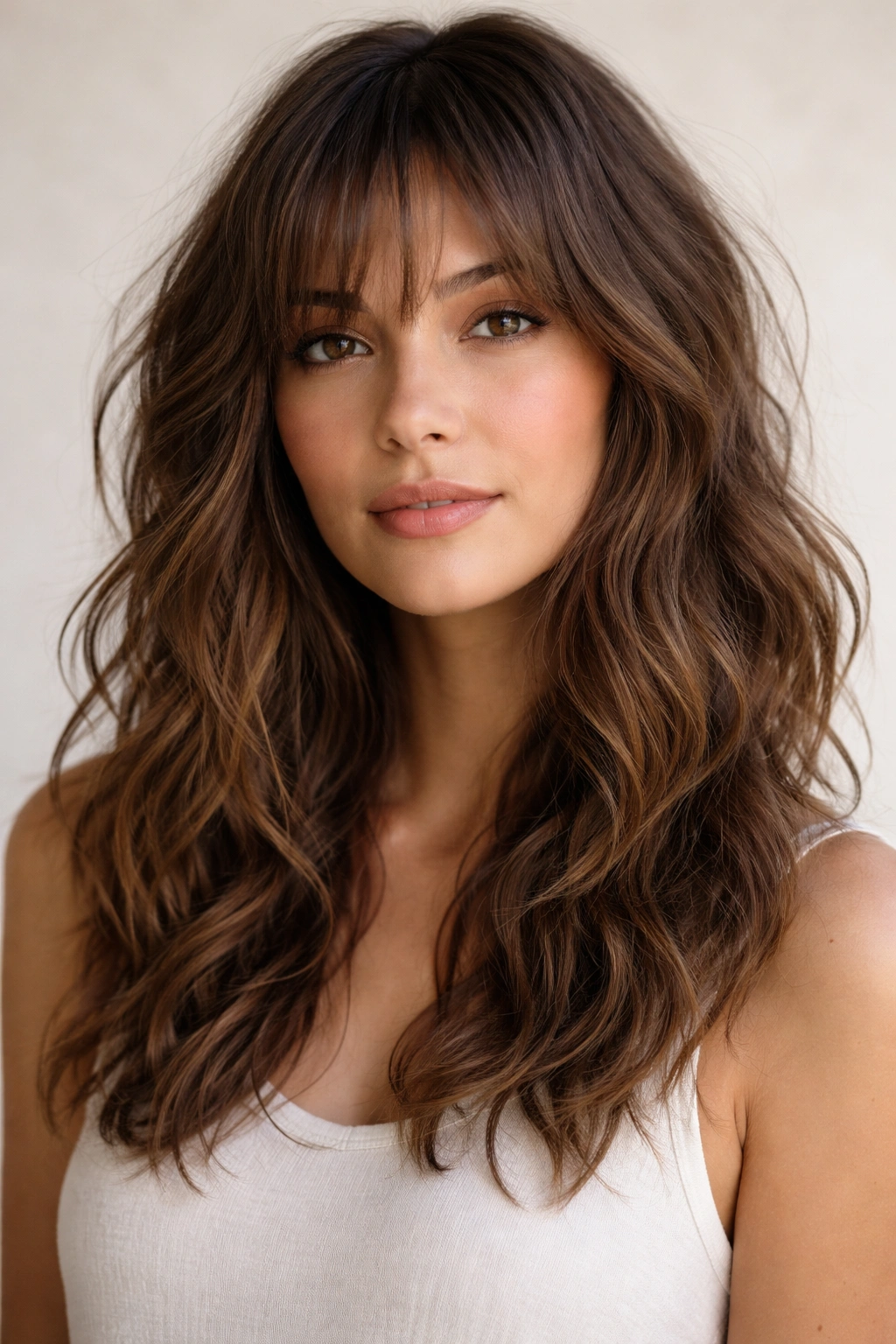
Sometimes the most sophisticated approach is the understated one. Tousled waves with subtle bangs create a style that feels effortless and undone while still clearly incorporating bangs into your look. These bangs are longer, sitting somewhere between curtain bangs and your regular hair, with minimal texture or choppy layers. The emphasis is on the waves themselves—they’re the star—and the bangs are just a soft frame that enhances rather than dominates. This style is perfect if you want the benefit of bangs without a major commitment.
The Appeal of Subtle Bangs
Subtle bangs on medium-length wavy hair create a look that’s hard to pinpoint as being dramatically different from your regular style, but it’s undeniably more flattering. The bangs frame your face softly without requiring specific styling or a bold commitment. They blend beautifully into your waves, so the transition from bangs to hair is seamless. This is an excellent choice if you’re testing the waters with bangs or if you prefer a more understated approach to styling. The bangs are there if you notice them, but they’re subtle enough that your natural wave texture is still the main focus.
Maintaining Subtle Bangs
- These bangs are usually cut with minimal choppy layers, creating a straighter line that softens as it blends into your longer hair
- They hit around your eyebrows or just below, creating a gentle frame rather than a statement
- Air-drying works beautifully; the waves carry the bangs naturally into shape
- You can style them or not—they work either way, which is part of their appeal
Worth knowing: These bangs are the most forgiving in terms of styling and maintenance. They don’t require daily styling, they can grow out without looking terrible, and they suit most face shapes and hair textures.
Why Medium Length Matters for Bangs and Waves
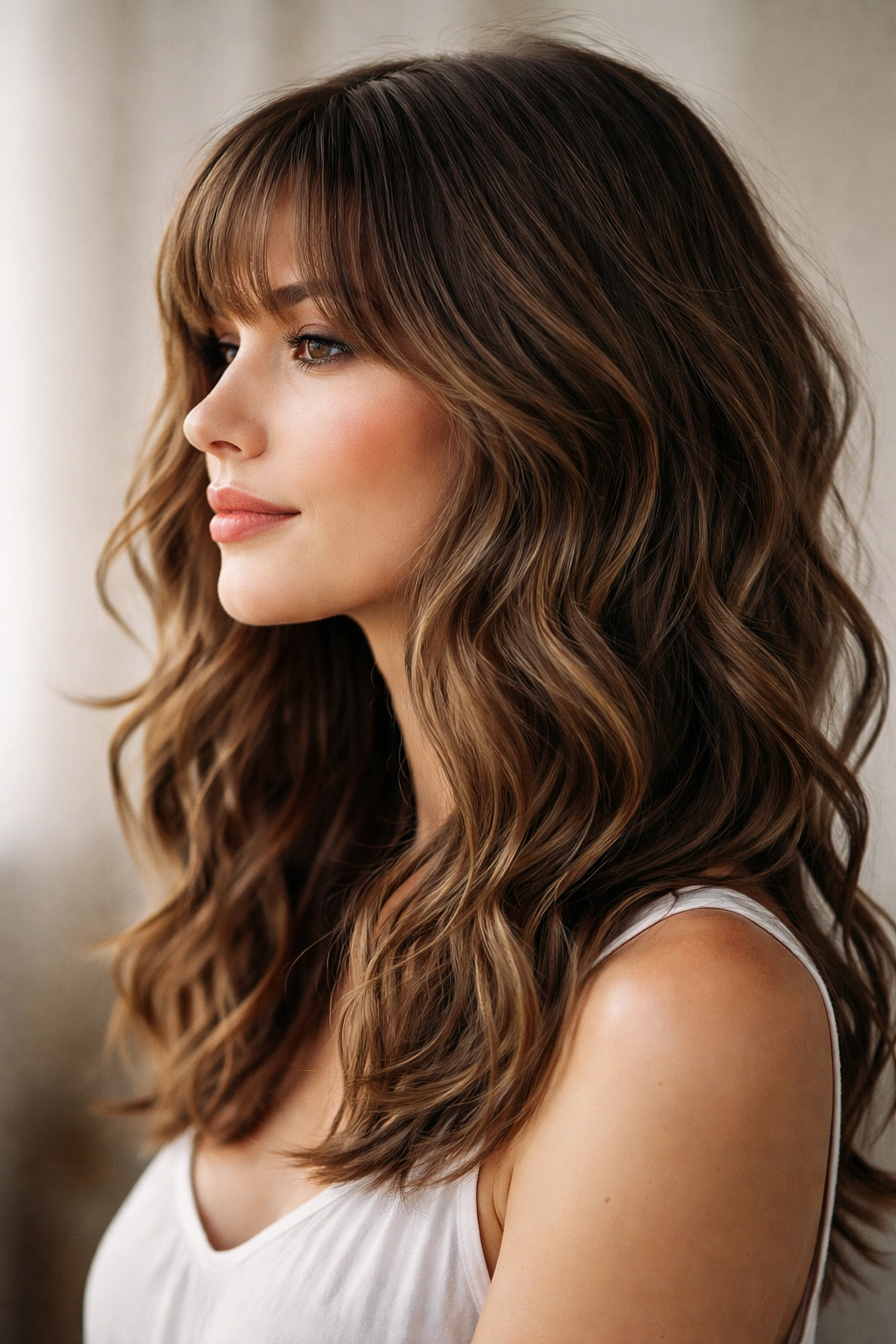
The length of your hair matters enormously when you’re pairing bangs with wavy texture. Medium-length hair—usually falling somewhere between your shoulders and mid-chest—gives you the perfect foundation for bangs. It’s long enough that you have plenty of hair to create layers, texture, and movement around your bangs, but short enough that you’re not dealing with excessive length that can weigh your waves down and make styling more difficult. Medium length is also the sweet spot for creating that effortlessly textured, lived-in look that’s so popular right now.
With medium-length wavy hair, you have enough volume and movement to make bangs look intentional rather than lost in your natural texture. Very short hair can make bangs appear to take over your face, while very long hair can make bangs feel like an afterthought that just blends into the rest of your hair. Medium length strikes that balance. It also gives you flexibility in how you style your bangs—you can wear them down blending into your waves, or you can use clips and styling techniques to pin portions of your longer hair back, changing the look without changing the cut.
Styling and Maintenance Tips for This Look
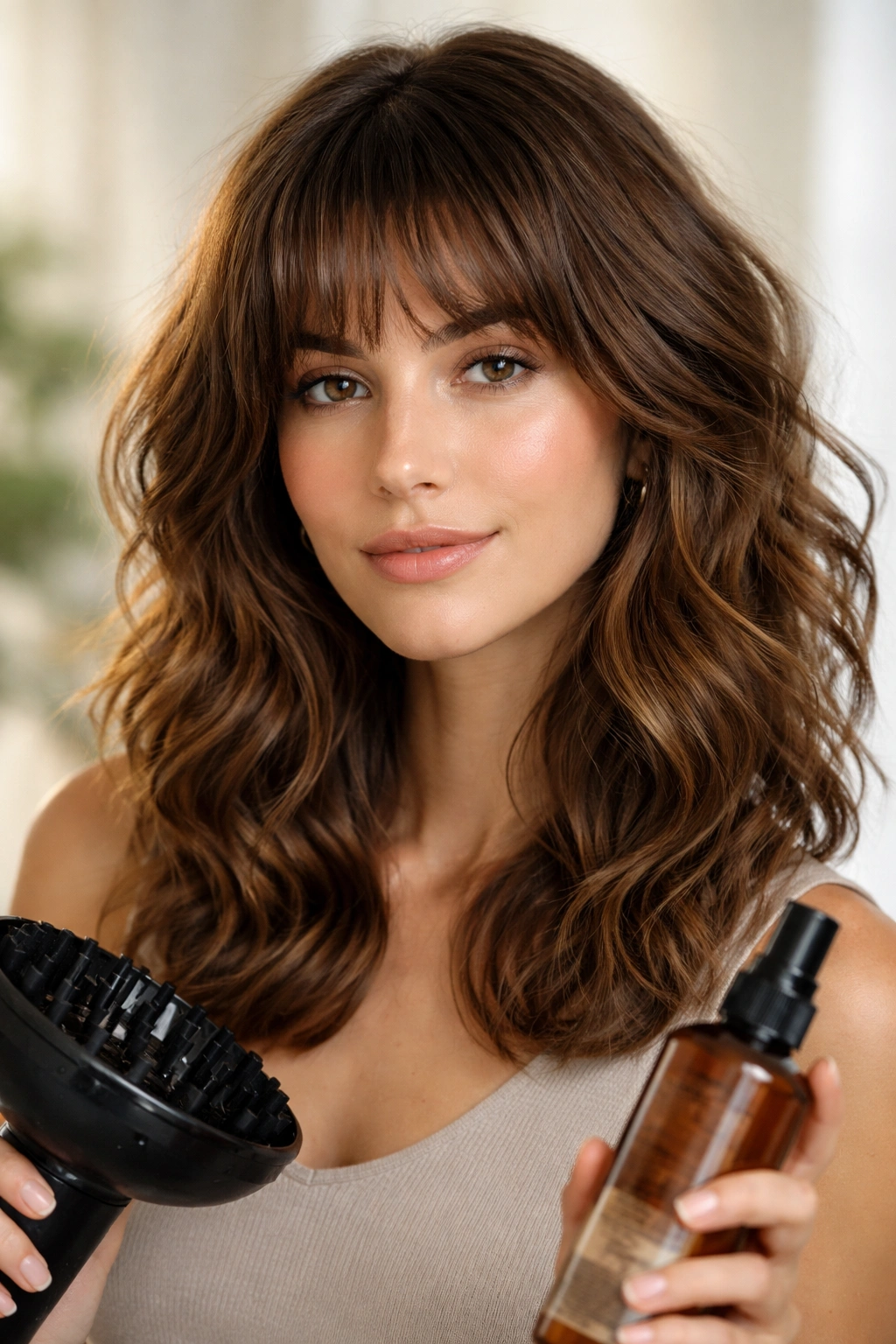
Bangs on wavy hair require a slightly different approach to styling and maintenance than bangs on straight hair. Your waves are your greatest asset here, but they also add complexity because you need to account for how your natural texture affects your bangs. First, understand that your bangs will behave differently depending on humidity, how you dry your hair, and what styling products you use. Embrace this rather than fighting it.
For day-to-day styling, let your waves guide your bangs. A diffuser attachment on your blow dryer is your friend—it dries your hair while maintaining texture rather than flattening it. Apply texture products (wave creams, sea salt sprays, light mousses) to damp hair before blow-drying, and make sure you’re getting your bangs in the flow of product too. This helps your bangs follow the texture pattern you’ve established rather than sticking straight out or clumping.
On days when your bangs are fighting you, a light texturizing spray (not heavy hairspray) can help. Dry shampoo designed for textured hair also adds grip and texture, making your bangs less slippery and more likely to stay where you want them. If your bangs are particularly uncooperative on humid days, a lightweight, frizzle-control product designed for wavy hair can help without weighing things down.
Maintenance-wise, trimming frequency depends on your bang style. Blunt bangs need trims every 4-6 weeks to maintain their line, while longer, layered styles like curtain bangs or wispy feathered bangs can go 6-8 weeks between trims. The key is catching them before they get too long, because with wavy hair, bangs that are too long start to blend into your other layers and lose their face-framing effect.
One thing that helps tremendously: sleep on your hair in a way that encourages your bangs to fall in the direction you want them. If your bangs are meant to part in the middle, don’t sleep with them all piled on one side. If they’re meant to sweep to one side, position them that way before bed. This sounds fussy, but it genuinely helps, especially on second or third-day hair when your waves are more established.
Final Thoughts
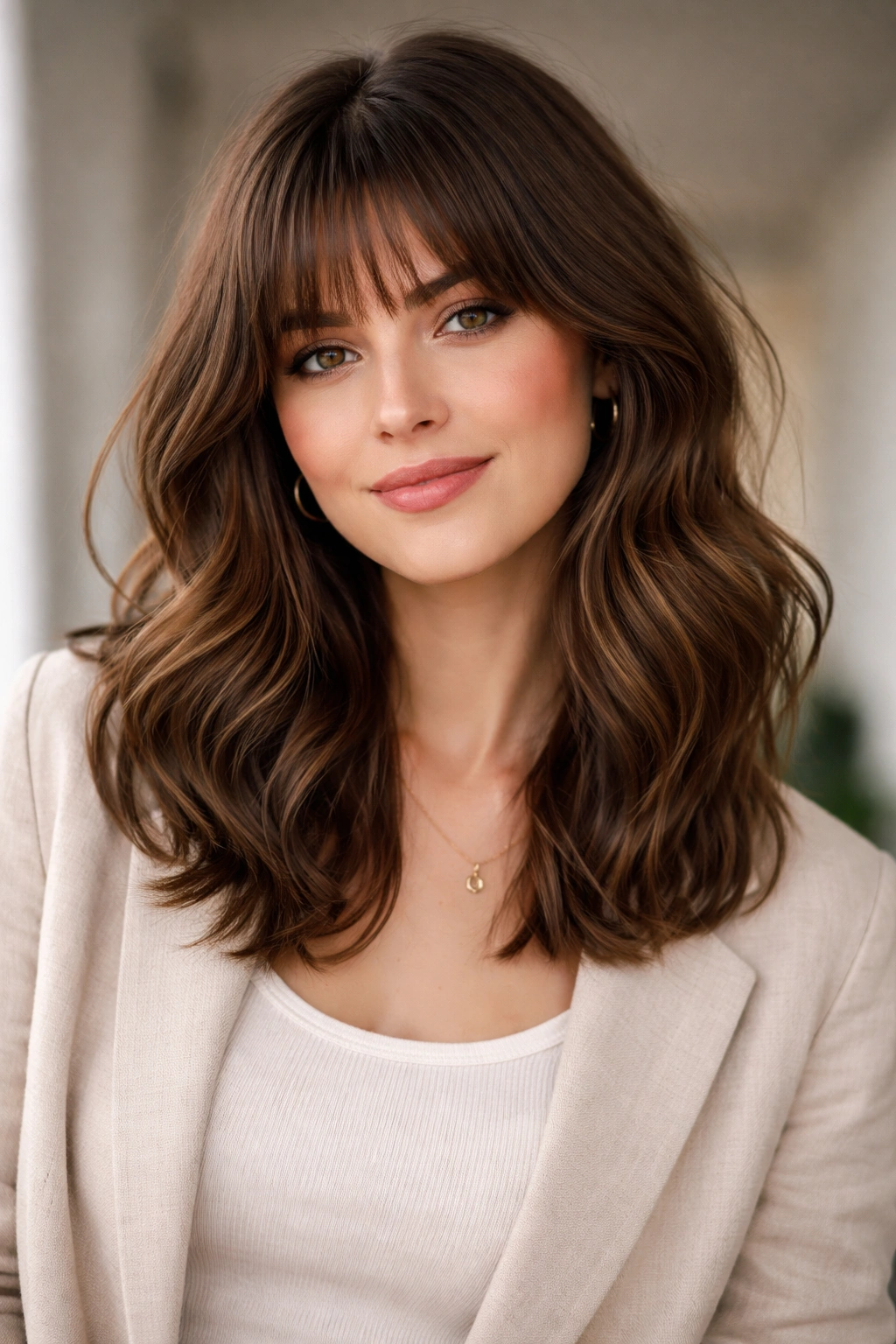
Bangs on medium-length wavy hair aren’t just possible—they’re actually an excellent styling choice if you pick the right style for your specific hair type and the way your waves naturally behave. The texture of your waves softens bangs that might otherwise feel severe, and medium length gives you the perfect foundation for creating layers and movement that make the entire style feel cohesive and intentional.
The most important thing is choosing a bang style that works with your wave pattern rather than against it. If you have loose, gentle waves, you might prefer longer, feathered bangs that blend into your hair. If you have tighter waves or more textured hair, choppier, more layered bangs complement your natural texture beautifully. And remember that bangs don’t have to be a forever commitment—you can always grow them out if they’re not your thing, though you might be surprised how quickly you fall in love with the right style on you.
Invest in a stylist who genuinely understands textured hair and how to cut bangs that work with texture rather than against it. This is the single most important factor in whether you’ll love your new bangs. Come prepared with photos of styles that appeal to you, be honest about how much styling effort you’re willing to put in, and trust their expertise on what will work with your specific wave pattern. With the right cut and a little bit of styling knowledge, bangs on wavy hair can elevate your entire look and make you feel more confident and put-together than ever.