
Korean short wavy hairstyles have become a defining look in beauty trends, blending the clean, intentional aesthetics of Korean beauty culture with the texture and movement of waves. Unlike traditional straight, polished Korean styles, these wavy cuts introduce dimension, volume, and a softer edge while maintaining that effortlessly chic Korean vibe. Whether you’re drawn to subtle movement or bold, sculpted waves, Korean stylists have perfected techniques that work across different hair types and face shapes.
What makes Korean wavy styles distinct is their attention to layering and precision cutting. Korean hairstylists don’t simply perm or wave the hair and call it done—they strategically cut shorter layers on top to enhance movement, keep the style light and airy, and create what’s often called “flow” in Korean beauty terminology. The bangs, when included, are typically softer and feathered rather than blunt. The result is a style that photographs beautifully, holds its shape throughout the day, and requires realistic maintenance without demanding salon visits every two weeks.
The beauty of these styles is their versatility. You can style them sleek and smooth for professional settings, add texture for a more relaxed weekend look, or amp up the waves for evening. Many work well with perms for long-lasting texture, but they also look striking with temporary waves created through styling. Let’s explore nine Korean short wavy hairstyles that deliver impact, movement, and that coveted modern Korean aesthetic.
1. Textured Wolf Cut with Soft Waves
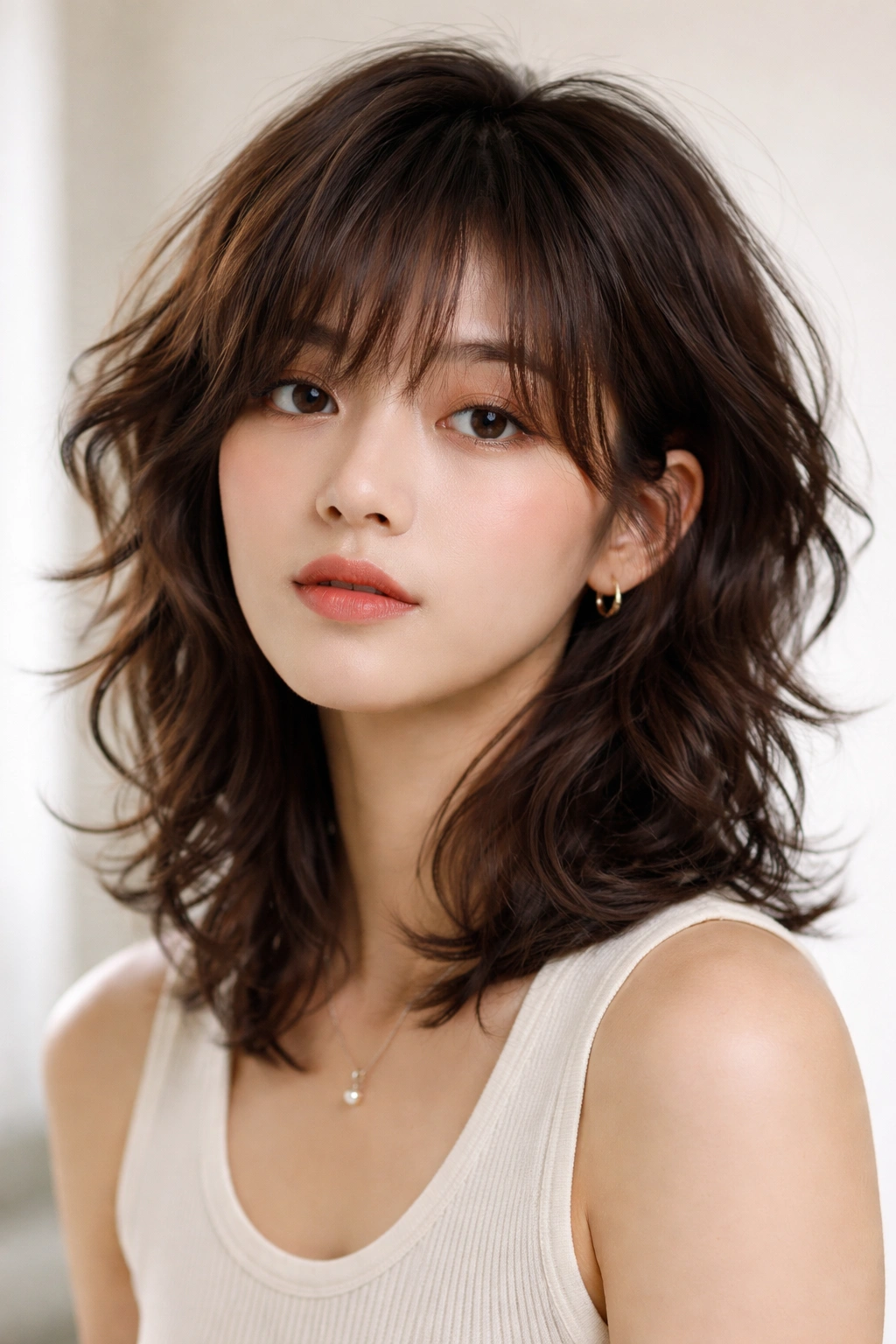
The wolf cut is one of the most recognizable Korean short styles, and the wavy version adds a romantic, softer dimension to the edgier wolf silhouette. This cut combines short, feathered layers on top with slightly longer length in the back, creating a distinct shaggy shape. When paired with waves, the textured layers catch light beautifully and give the illusion of fuller, thicker hair—even if your hair is naturally fine or thin.
What Makes This Cut Stand Out
The wolf cut’s appeal lies in its balance between structure and movement. The short, choppy layers on top provide volume and texture, while the longer back layers add length and visual interest. When you add soft waves throughout, each layer moves independently, creating that coveted dimension. Korean stylists typically cut the back to shoulder length or slightly shorter, with the top layers being significantly shorter for contrast. The waves enhance this contrast—making the top bounce and the back flow.
How to Style and Maintain It
- Blow-dry with a round brush to create volume at the roots, letting the waves fall naturally as hair dries
- Use a 1-inch curling iron or wave iron on the longer back sections to create uniform waves that frame the face
- Apply texturizing spray or sea salt spray to enhance the shaggy, lived-in feel and separate the layers
- Touch up the cut every 6-8 weeks to keep the layered shape crisp and prevent it from looking overgrown
- Work a lightweight texture cream through damp hair for hold without weighing down the waves
Pro tip: Sleep on your waves with a silk pillowcase or bonnet to preserve texture overnight—this reduces frizz and means you don’t have to restyle as heavily the next morning.
2. Shoulder-Length Curtain Bangs Wave
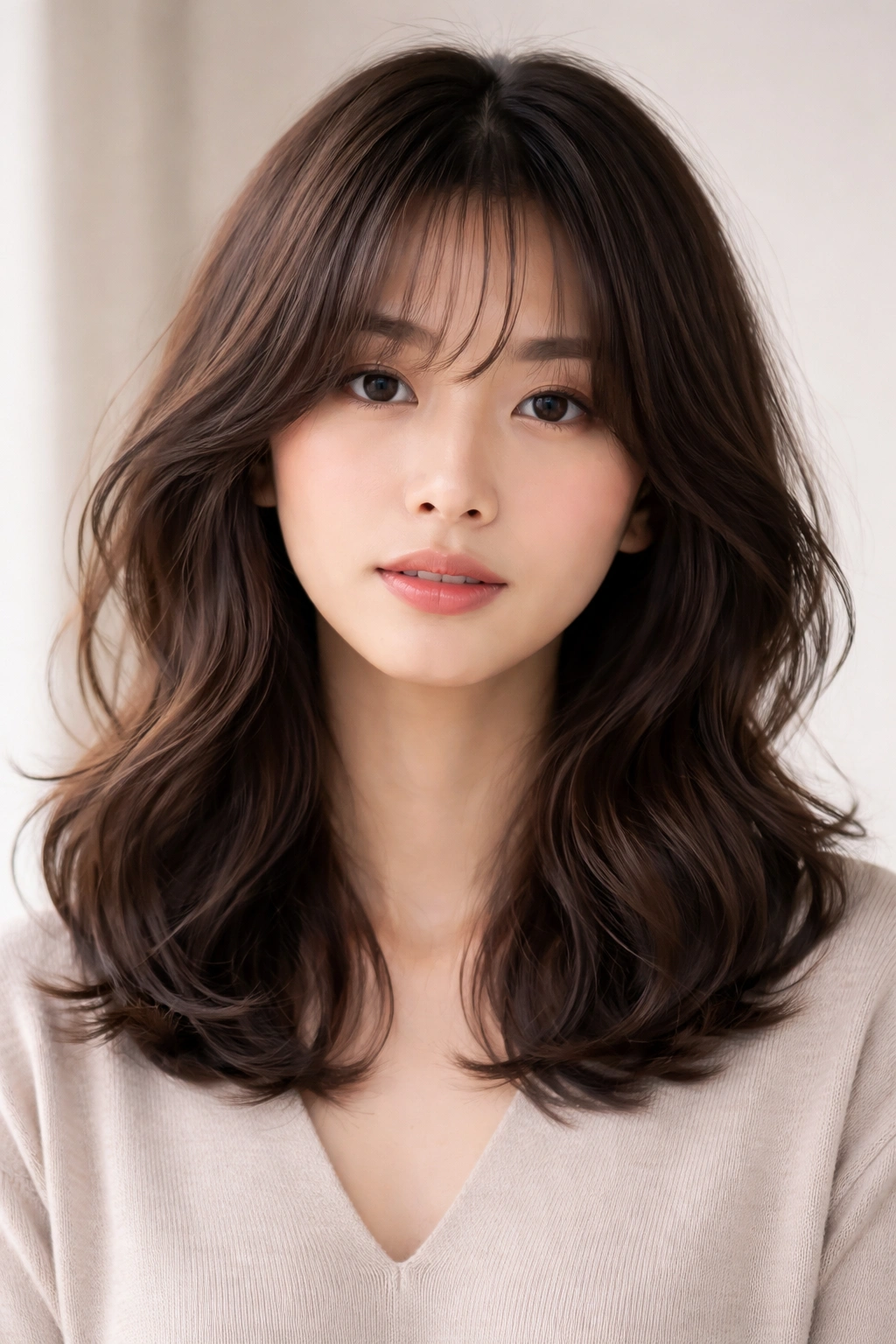
This style brings the classic Korean curtain bang aesthetic into short, wavy territory. The cut features face-framing bangs that part in the middle and sweep outward, paired with shoulder-length wavy layers throughout. The effect is remarkably softening, especially for round or square face shapes. Curtain bangs have a built-in elegance, and when combined with waves, they feel effortlessly approachable rather than too polished.
The Power of Face-Framing Movement
Curtain bangs work beautifully with waves because the bangs themselves already have movement inherent in their design. When you add waves to the rest of the hair, you create a harmonious flow that draws the eye toward the face. Korean stylists typically keep the bangs longer—falling to cheekbone length or below—so they blend seamlessly with the rest of the layered waves. This prevents the bangs from feeling disconnected or too blunt. The waves soften any sharpness and add dimension that makes the face appear more angular and defined.
Styling Techniques for Maximum Impact
- Blow-dry the bangs toward each side while using a round brush to create gentle curves that complement your face shape
- Use a waving tool on the bangs separately to ensure they hold their curtain shape throughout the day
- Apply a light-hold styling cream to damp bangs so they dry into a soft curve, not a straight part
- For extra movement, spray sea salt spray on the bangs after blow-drying and scrunch gently with your hands
- Keep the bangs trimmed every 4 weeks since they’re so visible—even 1/4 inch of growth changes how they frame your face
Worth knowing: This style works especially well if you have naturally wavy or curly hair, since the bangs will wave along with the rest of your hair. If you have straight hair, you’ll need to use a waving tool or perm to keep the bangs from falling flat against your forehead.
3. Mullet Wave with Feathered Layers
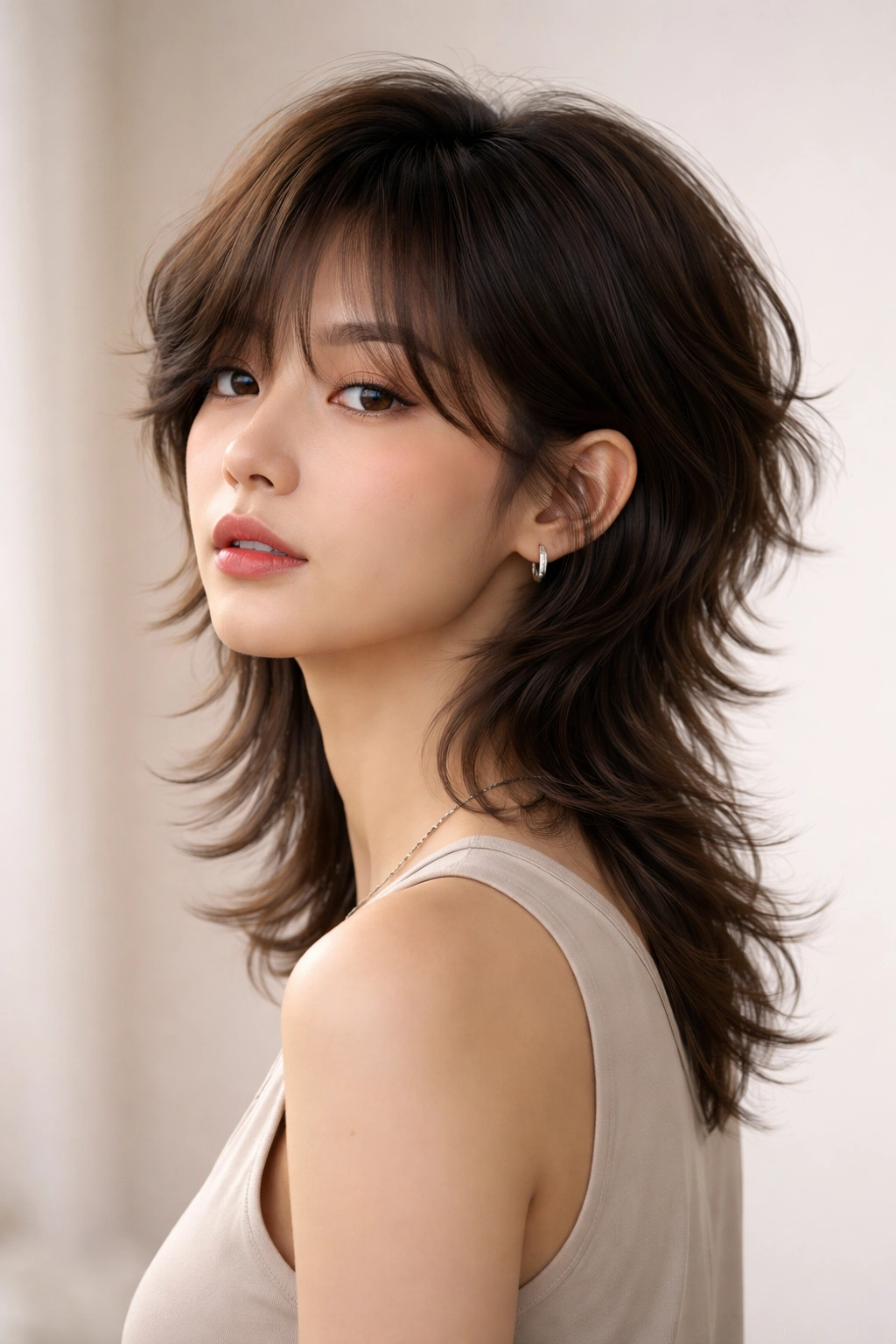
The mullet has evolved far beyond its 1980s reputation, and Korean stylists have reimagined it as a sophisticated, modern cut that actually flatters most faces. The wavy mullet keeps the short front and sides while maintaining longer length in the back, but the feathered layers throughout prevent it from looking harsh or retro. Waves soften the transition between lengths and create a cohesive, intentional shape rather than a stark contrast.
Why the Wavy Mullet Works for Modern Faces
A traditional mullet can feel too edgy for everyday wear, but adding waves creates accessibility and softness. The feathering throughout means there’s no sharp line where the short section ends and the long section begins. Instead, waves create a gradient of movement. Korean versions of this cut often incorporate subtle fade lines on the sides—not a full undercut, but enough texture to define the shape. The waves on top create volume while the wavy back adds femininity and prevents the style from reading as purely masculine or aggressive.
Creating Definition and Movement
- Ask your stylist to feather all layers extensively—this is crucial for making a mullet feel modern rather than retro
- Blow-dry the short, feathered front sections upward to create volume and movement at the crown
- Apply waves primarily to the mid-lengths and ends to enhance the feathering effect
- Use a texturizing spray to separate layers and prevent the feathered sections from clumping together
- The back can be wavy, straight, or a combination—many people wear the back straight with permed or styled waves on top for maximum contrast
- Trim every 5-6 weeks to keep the feathered layers sharp and prevent them from growing into an unflattering shape
Pro tip: This style is a bold statement—own it with confidence. Wear the front and sides styled up for dimension, not slicked back. The movement in the front is what makes the mullet read as intentional rather than questionable.
4. Blunt Wavy Bob with Side Parting
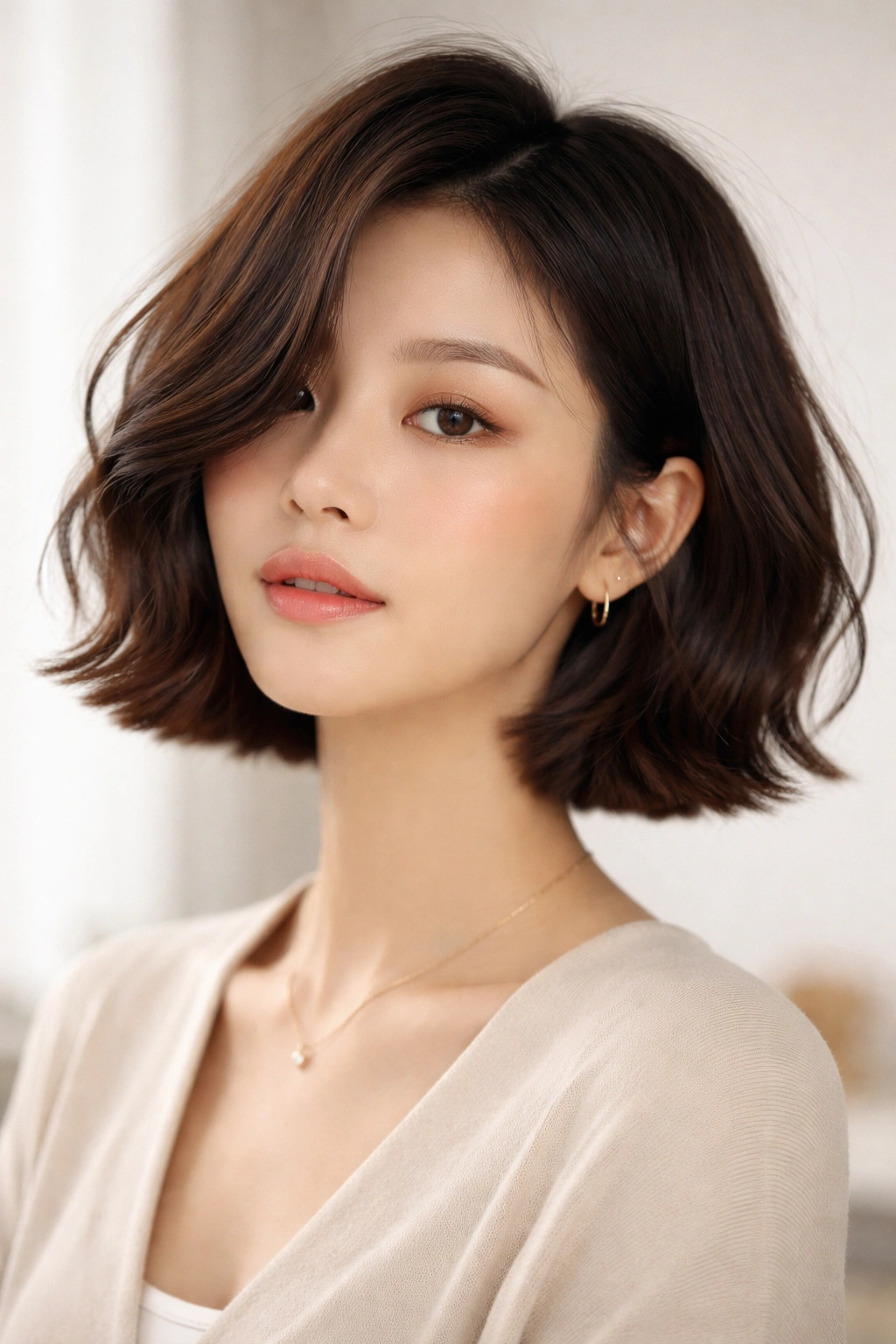
A sharp blunt bob is quintessentially Korean, and the wavy version modernizes the classic without sacrificing the clean lines that make Korean bobs so appealing. This cut features a geometric, blunt perimeter at chin length or slightly shorter, with waves added throughout for softness and texture. The side parting keeps one side slightly longer than the other, creating an asymmetrical elegance that works beautifully with the blunt shape.
The Geometry of Waves and Blunt Lines
What’s brilliant about pairing waves with a blunt cut is the contrast between structured geometry and organic movement. The blunt perimeter keeps the shape looking intentional and polished, while the waves add dimension and prevent the style from feeling too severe. Korean stylists often keep the blunt line cleaner on one side (the shorter side) and allow slightly more texture and movement on the longer side. This asymmetry feels current and sophisticated. The waves catch light along the perimeter, making the cut appear shinier and more dynamic.
Achieving the Perfect Blunt Wave
- Blow-dry hair straight first, then use a larger barrel waving iron (1.5 inches or wider) to create gentle waves
- Apply waves in one direction for a sleek, intentional look, or alternate directions for more chaotic texture
- Keep the perimeter blunt by styling waves slightly inward at the ends so they don’t flip outward and destroy the cut’s geometry
- Use a texturizing spray or light pomade on the blunt perimeter to add subtle shine and definition
- Part on the side dramatically—a deep side part is essential to this style’s asymmetrical elegance
- Trim every 4-5 weeks to maintain the sharp blunt line; even slight grow-out will soften the cut unintentionally
Worth knowing: This style photographs exceptionally well and has a timeless quality that won’t feel dated in a few years. It’s also flattering on nearly every face shape because the asymmetrical side part allows you to hide or emphasize different features.
5. Shaggy Layered Wave with Maximum Volume
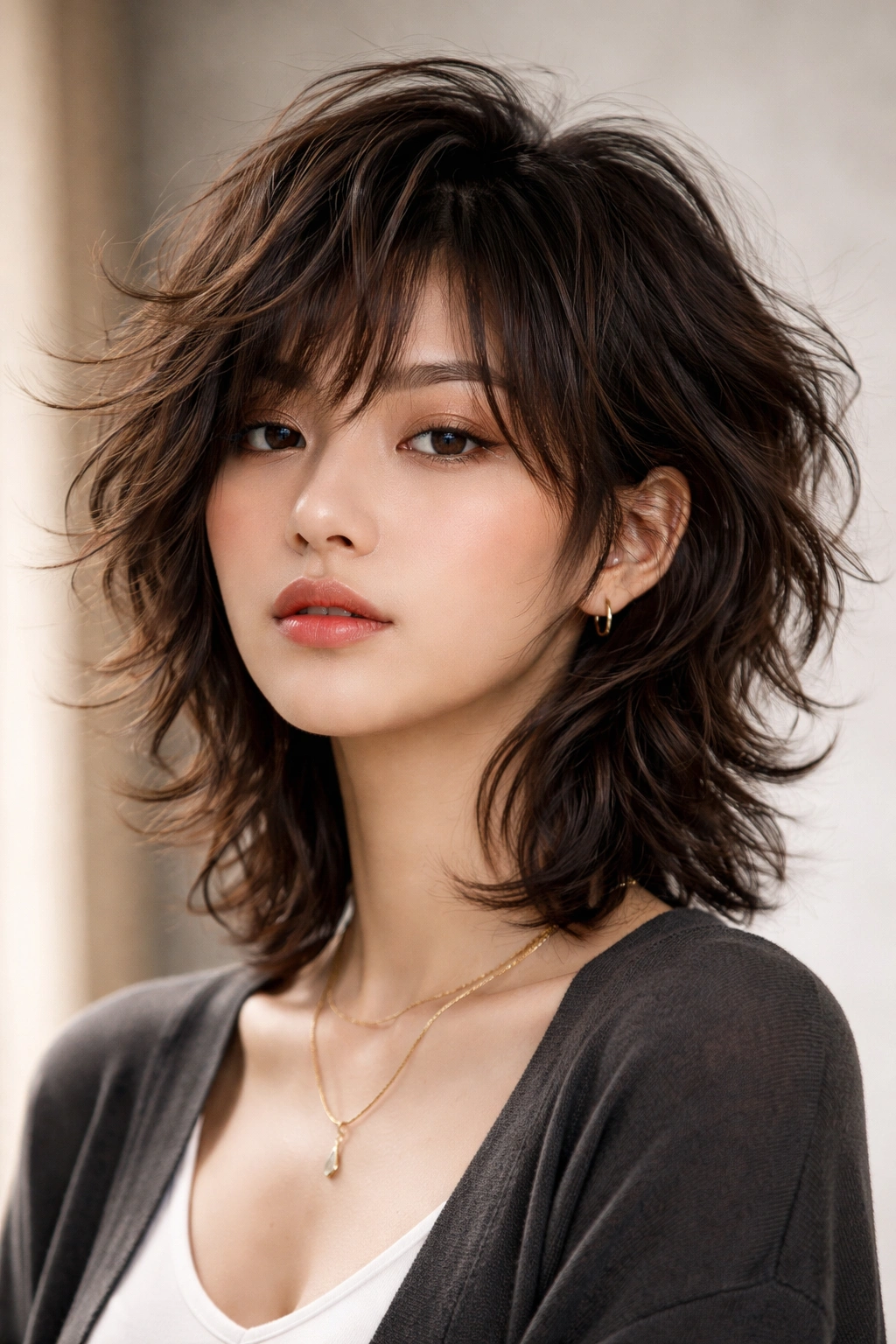
If you want impact and movement, this style delivers. The shaggy layered wave features choppy, uneven layers throughout—short on top, longer on bottom—with waves that embrace the shaggy texture rather than fight it. This is the most deliberately undone of the Korean wavy styles, but the cut itself is highly technical and requires precision to look intentional rather than accidental. The effect is rocker-chic meets K-beauty softness.
Building Layers for Chaos and Control
Shaggy wavy styles work because the layers create natural movement and texture, and waves enhance that movement exponentially. Each layer should be significantly shorter than the one beneath it, creating a cascading effect. When you add waves, each layer catches differently, creating depth that makes thin hair look thicker and thick hair look more textured. Korean stylists typically keep the overall length short—chin-length or above—but vary the layers dramatically so some sections are only two to three inches long. This requires confidence to wear, but the payoff is a distinctly modern, fashion-forward aesthetic.
Styling for Intentional Undone Texture
- Wash hair and apply a texturizing spray or mousse while damp for grip and definition
- Blow-dry roughly without a brush, scrunching hair upward to encourage waves and volume
- Scrunch hair while still slightly damp to lock in texture before it dries completely
- Use a styling cream or wax on individual sections to separate layers and prevent the whole style from clumping
- Create waves by using a waving tool on random sections rather than attempting uniformity—randomness is the point
- Don’t comb through finished waves; use your fingers to separate sections instead
- Embrace frizz as part of the aesthetic—this style should look textured and lived-in, not slick
Pro tip: This style requires daily styling—it doesn’t air dry into shape. Budget 10-15 minutes each morning for blow-drying and texturizing spray application. If you’re not willing to style daily, this isn’t the cut for you.
6. Honey-Toned Wavy Pixie Fade
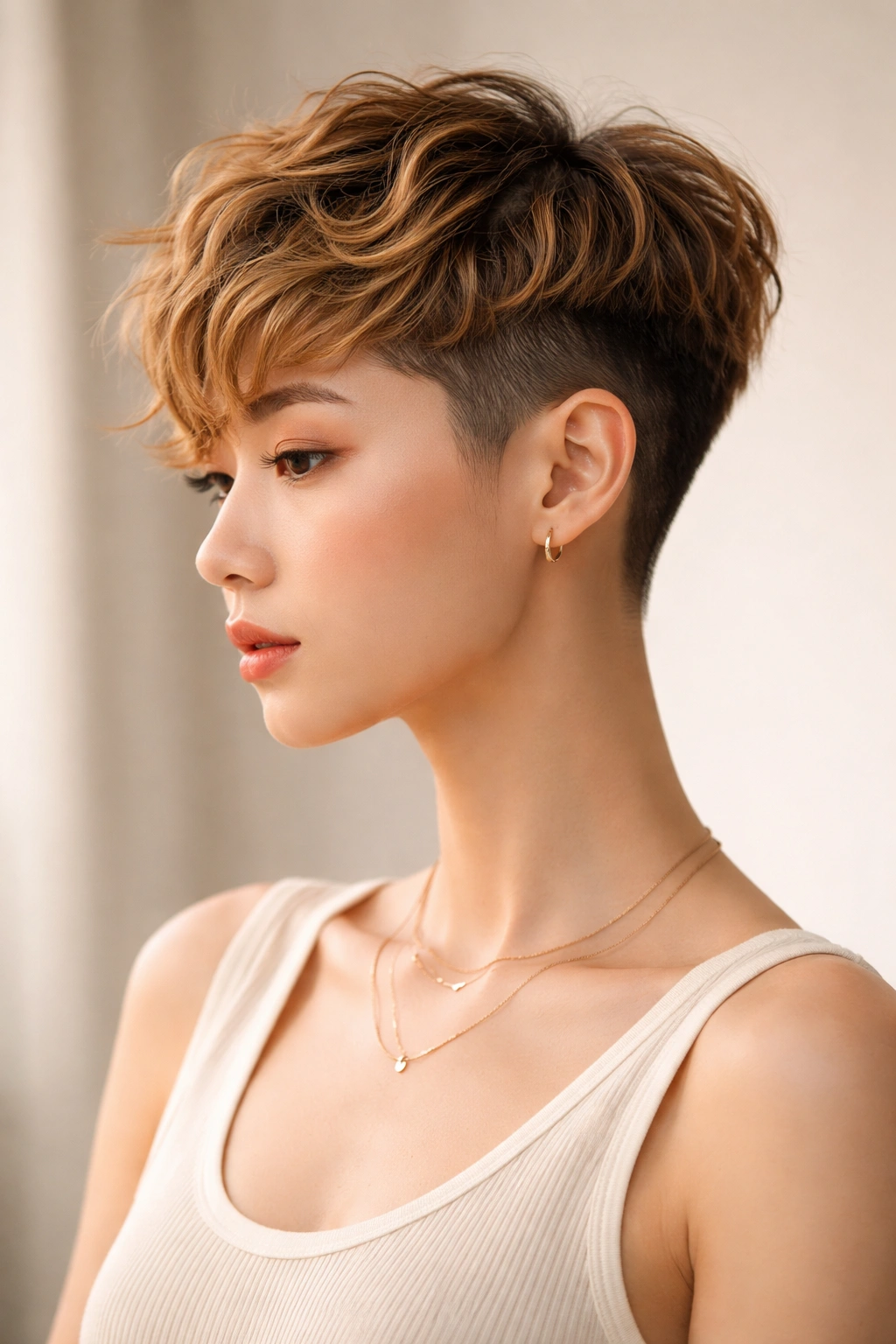
For the bold and confident, the wavy pixie fade brings Korean sensibility to an ultra-short style. This cut features a soft undercut or fade on the sides and back—not a severe military fade, but a gradual transition from very short to longer length. The top has textured, slightly longer sections that wave and move, creating contrast with the clean, neat sides. Often paired with honey or caramel tones, this style reads as fashion-forward and undeniably chic.
Undercut Precision and Wave Texture
The key to this style’s success is the contrast between smooth, faded sides and wavy, textured top. Korean stylists typically blend the fade very carefully so it appears as a subtle gradient rather than harsh lines. The top can be anywhere from two to four inches long, with choppy, feathered layers that allow waves to move freely. This isn’t a pixie cut with all uniform length—it’s strategically layered so waves have variation and dimension. The honey or golden tone adds warmth and makes the texture more visible.
Maintenance and Styling Strategy
- Ask for a soft fade, not a hard line—this creates sophistication rather than edginess
- Blow-dry the top layers upward and slightly backward to enhance wave texture
- Use a small waving tool or even a small curling iron to create defined waves through the textured top
- Apply a matte texturizing spray to the top for grip and definition
- The fade sides should be touched up every 2-3 weeks to maintain the clean, neat appearance
- The textured top only needs trimming every 4-6 weeks since the short length grows out slowly
- Consider a semi-permanent color glossing treatment every 6-8 weeks to keep honey tones vibrant
Worth knowing: This is a statement style that requires confidence and regular maintenance. It works beautifully for people with oval or long face shapes. If you have a very round face, consult your stylist about whether the side fade will work proportionally.
7. Asymmetrical Wavy Lob with Undercut
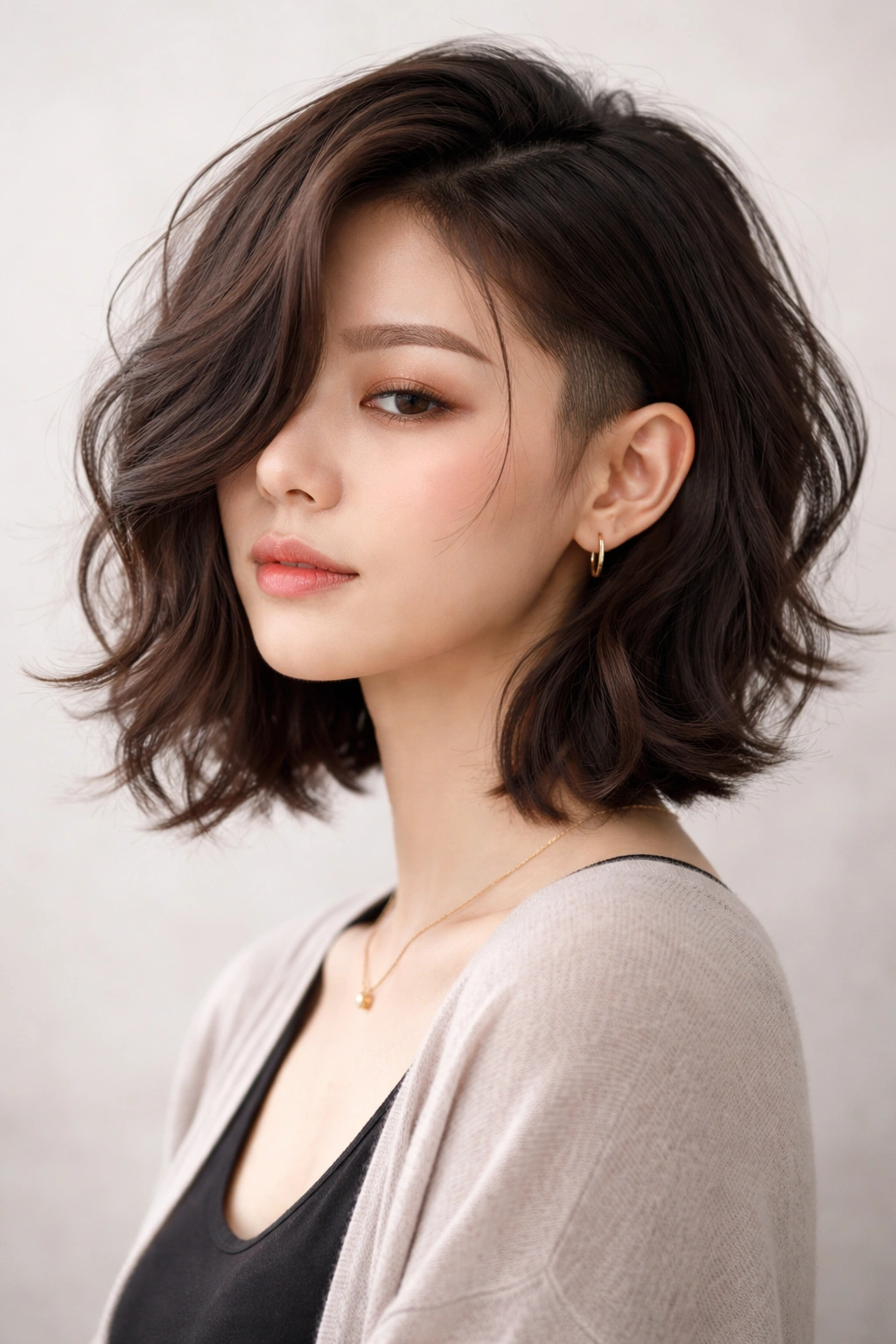
The lob—a long bob, typically falling between chin and shoulder length—is updated here with asymmetrical length and an undercut that adds an unexpected edge. One side falls longer than the other, sometimes with a dramatic difference of two to three inches. The undercut hidden beneath longer layers adds texture and movement without being immediately visible. Waves throughout create a romantic, dimensional effect that softens the asymmetry.
Creating Visual Drama with Asymmetry and Hidden Texture
Asymmetrical cuts rely on one side being noticeably longer than the other to create impact. When you add an undercut, you’re creating a second layer of visual interest—texture that appears when hair is styled up or when you move. The waves tie everything together, making the asymmetry feel intentional rather than accidental. Korean versions of this style often feature longer, softer waves rather than tight curls, maintaining that effortless elegance that defines Korean beauty aesthetics.
Styling an Asymmetrical Undercut Wavy Lob
- Part your hair dramatically on the long side, sweeping hair from the short side across
- Blow-dry the longer side with waves using a barrel iron, focusing on creating S-waves that flow toward the center
- The short side can be waved or left smoother—many people keep it sleeker to enhance the asymmetrical contrast
- Apply a light texturizing spray to enhance waves without making hair look stiff or overly curled
- Style hair behind one ear to show off the asymmetrical cut and any visible undercut texture
- The undercut doesn’t need styling—it’s mainly there for texture and weight removal to help waves move better
- Trim the longer side every 6-8 weeks to maintain the blunt, intentional shape; the shorter side may need more frequent trims
Pro tip: This style looks exceptional pulled back into a half-up hairstyle. The asymmetrical shorter side frames the face beautifully, and the longer side provides enough length to pin back without looking too severe.
8. C-Wave Wet-Look Short Hair
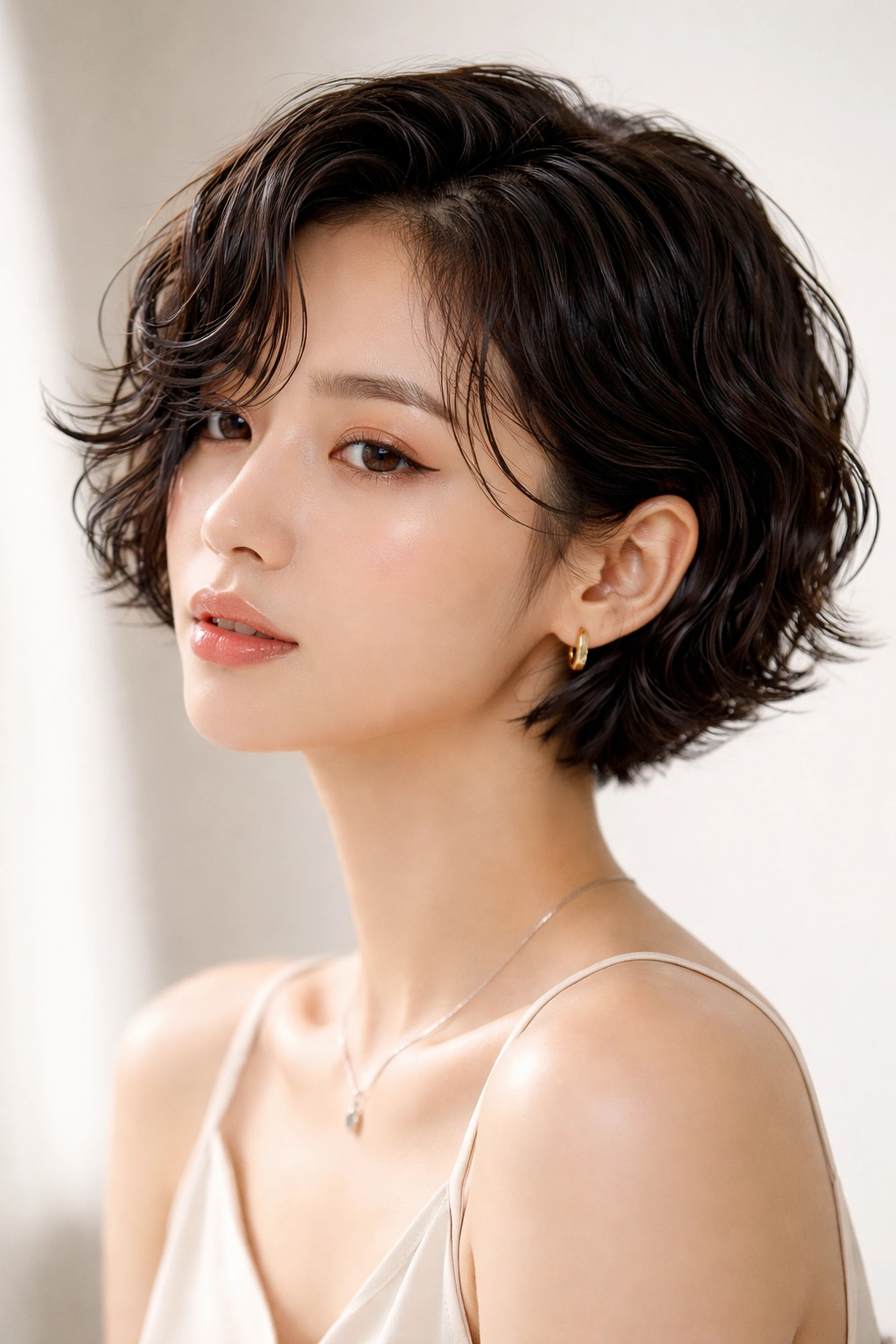
The C-wave is a popular Korean perming technique that creates a loose, dimensional wave pattern that looks glossy and intentional. When applied to short hair, C-waves create a sophisticated, polished look that translates beautifully into the “glass skin” aesthetic of Korean beauty. The hair appears wet or freshly styled without needing heat tools daily, and the wave pattern is subtle enough to work in professional settings while still being distinctly textured and dimensional.
The C-Wave Technique and Why It Works Short
C-waves are created using larger perming rods or digital perm technology to create waves that move in one consistent direction—typically a soft C shape. Unlike random texture, C-waves are more structured and intentional. On short hair, this creates sophistication because each wave is visible and deliberate. The wet-look finish is achieved through styling products—usually a light gel or glazing cream—that add shine and definition without crunchiness. Korean versions of this style often use subtle honey or ash tones to make the wave texture more visible.
Creating and Maintaining C-Wave Texture
- A C-wave perm lasts 3-4 months, gradually relaxing over time—plan to refresh when waves lose their definition
- Blow-dry hair with a round brush to encourage the C-wave pattern
- Apply a wet-look styling product while hair is still slightly damp to lock in shine and definition
- Scrunch hair slightly while product sets to enhance the wave pattern
- Use a silk pillowcase when sleeping to prevent frizz and maintain the wave shape
- No heat styling is necessary with a C-wave perm—in fact, using heat tools can disrupt the wave pattern
- A perm-specific shampoo and conditioner help maintain the wave shape and prevent damage
Worth knowing: C-waves require commitment. Your hair must be in healthy condition to handle a perm. If your hair is damaged, bleached, or compromised, perming will cause breakage. Plan to spend 2-3 weeks allowing the perm to fully settle before attempting to style it.
9. Voluminous Perm Wave with Bangs
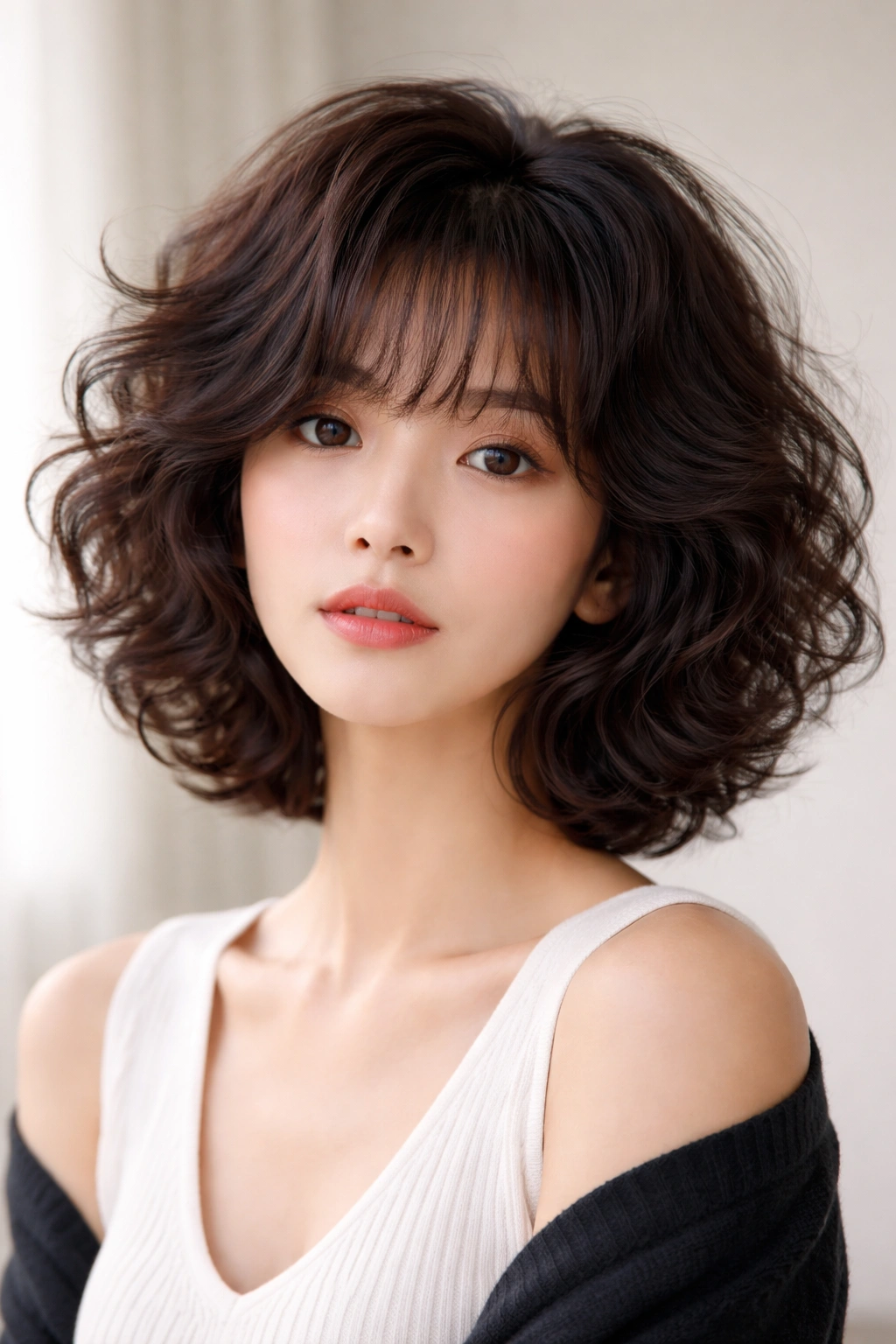
For maximum drama and volume, a voluminous perm wave with bangs delivers undeniable impact. This style uses a tighter perm pattern—usually with smaller rods—to create more defined waves and curls throughout, with special attention to creating volume at the crown. The bangs are typically wispy and curled, adding dimension to the face. This is the most visually striking of the Korean short wavy styles, perfect for those who want their hair to make a bold statement.
Engineering Volume and Definition
A voluminous perm requires a different approach than a C-wave. Instead of loose, subtle waves, a voluminous perm creates tighter, more visible curl or wave patterns. Korean stylists strategically place rods to create maximum lift at the crown and volume throughout. The bangs are usually wrapped separately to ensure they curl in a flattering way—typically creating a soft, face-framing wave rather than curls tight enough to look frizzy or outdated. The result is hair with inherent texture that requires minimal daily styling to look full and dimensional.
Styling Voluminous Perm Waves
- Blow-dry roots upward to enhance the volume from the perm
- Use a light texturizing spray or curl-enhancing spray to define the wave pattern
- Scrunch hair gently while spray sets to activate the perm curl
- Apply a curl cream or defining gel to mid-lengths and ends for shape and shine
- The bangs should be styled separately—use a small round brush or even a flat iron to create a soft, wavy frame
- Sleep on a silk pillowcase to prevent frizz and allow the perm to relax naturally overnight
- Use a microfiber towel or cotton t-shirt to dry hair after washing, avoiding regular terry cloth which causes frizz
- A perm-specific maintenance routine is essential—use sulfate-free shampoo and deep condition weekly
Pro tip: A voluminous perm is high-maintenance for the first 48 hours. Avoid washing or getting it wet for at least 48 hours after the perm is done, and be gentle with hair during this settling period. Once fully set, the perm actually reduces daily styling time because the volume and wave are built into the hair itself.
Final Thoughts
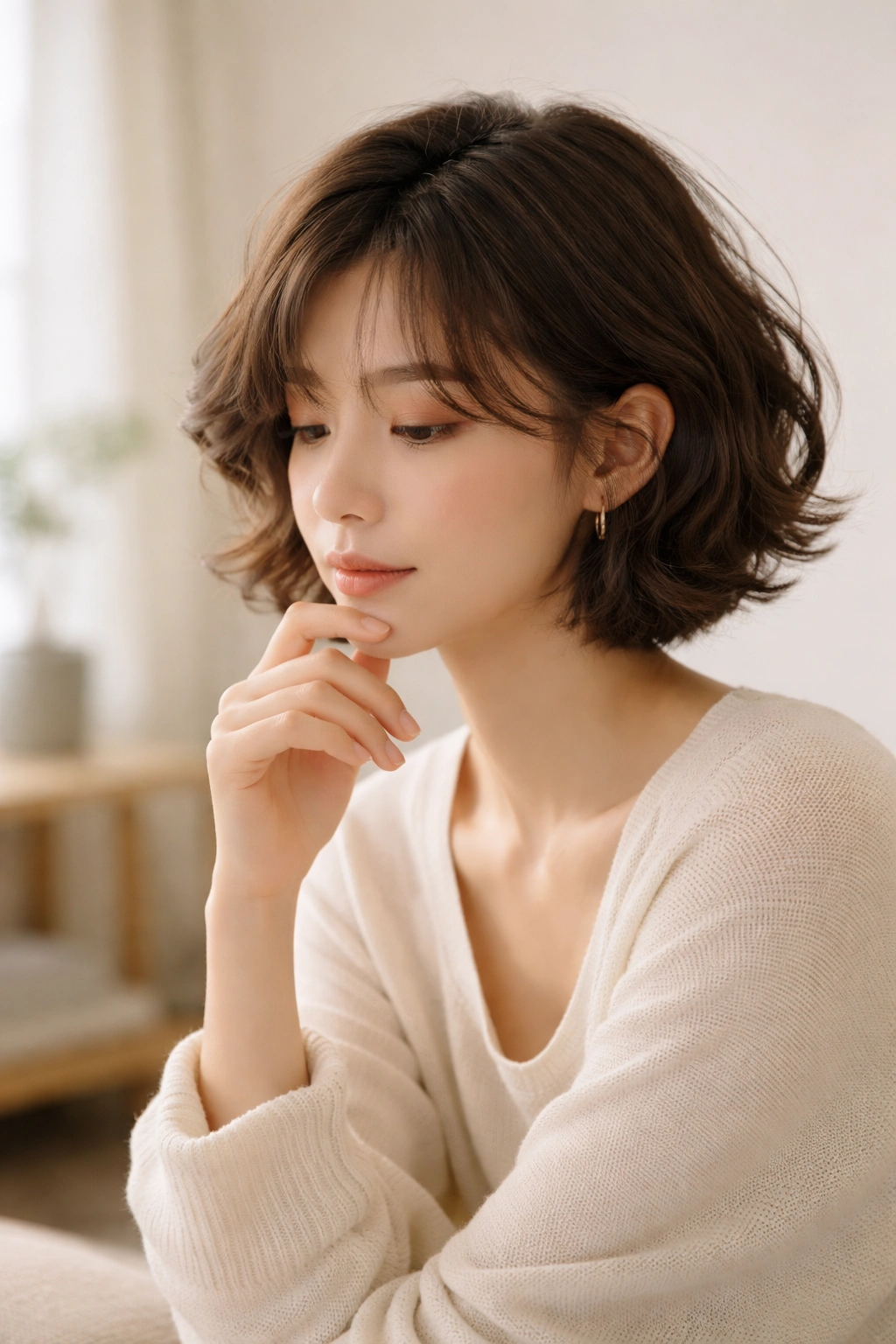
Korean short wavy hairstyles offer something for every personality and commitment level. Whether you choose a subtle wolf cut with soft waves or commit to a voluminous perm, the key is selecting a style that aligns with your daily routine and lifestyle. The most polished wavy style in the world won’t make you happy if it requires 20 minutes of styling each morning and you prefer a five-minute routine.
Start by considering your face shape, hair texture, and how much time you’re willing to invest in styling. Have an honest conversation with your stylist about your lifestyle—a shaggy, textured style demands daily attention, while a C-wave perm works beautifully with minimal effort. Bring reference photos from multiple angles, not just straight-on, because how a style looks from the side and back matters as much as the front view.
The beauty of these styles is their versatility across face shapes, hair types, and personal aesthetics. Korean stylists understand that short wavy hair can feel sophisticated, playful, edgy, romantic, or bold depending on the specific cut and how you choose to style it. Choose the version that makes you feel most like yourself, commit to maintenance, and enjoy the confidence that comes with a genuinely great haircut.