



The hime cut—a distinctly feminine Japanese hairstyle characterized by long, flowing sidelocks and face-framing bangs—has evolved far beyond its traditional long-haired origins. The short wavy adaptation takes everything charming about a hime cut and condenses it into a modern, manageable silhouette that works beautifully with natural wave texture. Whether your waves are loose, beachy spirals or more defined ringlets, a short wavy hime cut can add volume, movement, and personality to your look while maintaining the iconic sidelocks that make this style instantly recognizable.
What makes short wavy hime cuts so appealing is the balance they strike between edgy and romantic. The waves add dimension and texture that prevents the style from feeling flat or overly structured, while the characteristic sidelocks and bangs keep it distinctly feminine and intentional. Unlike longer hime cuts that require serious styling commitment, shorter wavy versions are surprisingly low-maintenance once you understand how to work with your natural texture. You get all the visual impact and style personality with a fraction of the daily effort.
The following twelve variations showcase the creative range available within the short wavy hime aesthetic. Each offers a different interpretation of length, wave pattern, bang style, and overall vibe—meaning there’s genuinely something for everyone, whether you prefer a subtly feminine take or a bolder, more avant-garde approach. Let’s explore what makes each one distinct and how to know which might work best for your face shape, hair texture, and lifestyle.
1. Textured Choppy Hime
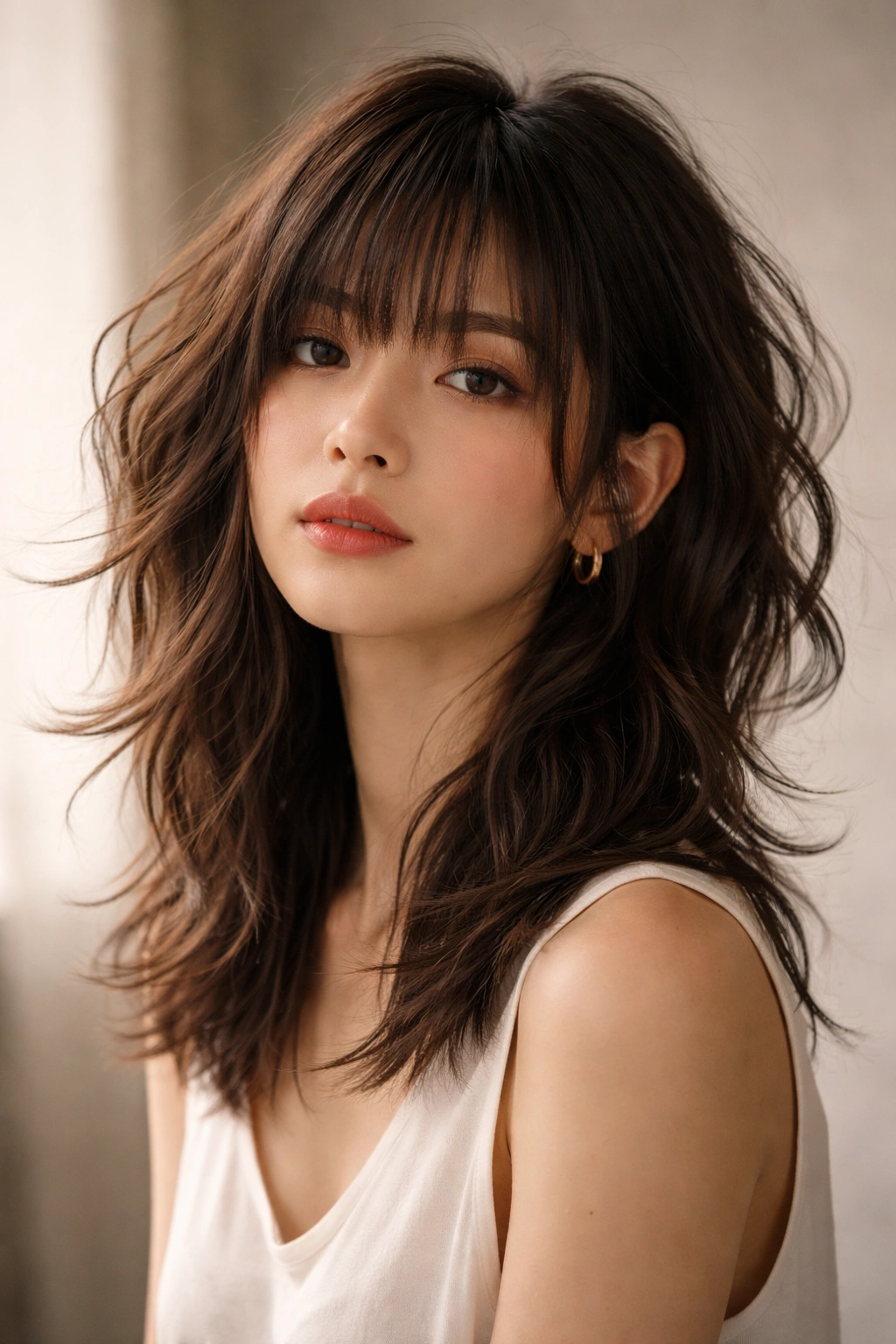
This version embraces intentional choppiness throughout, with uneven layers that create jagged, playful movement. The sidelocks are slightly thicker and more prominent, falling past the collarbone while the back sits anywhere from ear-length to chin-length in deliberately uneven chunks. Waves naturally weave through the choppy texture, creating a lived-in, undone aesthetic that’s trendy but timeless. This cut works particularly well if you already have naturally textured or slightly frizz-prone hair, since the layering breaks up weight and lets waves do what they naturally want to do.
Why the Choppy Layers Work with Waves
Chopped layers eliminate bulk without sacrificing movement. When waves fall through uneven segments, they create pockets of texture that catch light and add dimension. The sidelocks frame the face beautifully because they’re slightly longer than the rest, drawing attention to cheekbones and jawline. This cut also forgives an imperfect wave pattern—if some sections don’t curl the same way, the choppiness makes it look intentional rather than unfinished. The style naturally has attitude, which pairs perfectly with the romantic sidelocks.
Styling and Maintenance Tips
- Wash with a curl-enhancing shampoo and apply wave cream or mousse to damp hair before diffusing
- Use a large-barrel curling iron on choppy layers if you want to amplify waves, or let air-dry for a tousled effect
- The sidelocks look best when lightly styled—pin them back occasionally to show off the texture, or let them fall forward for a softer frame
- Refresh waves between washes with a spray bottle of water and a quick touch-up with a curling iron or wand
- Schedule trims every 6-8 weeks to maintain the choppy shape; this cut needs regular maintenance to avoid looking shaggy
Pro tip: Embrace a little frizz and texture here—this cut is designed to look imperfect and intentional, not sleek. Using an anti-frizz serum will enhance the waves without flattening the chop.
2. Soft Wave Lob Hime
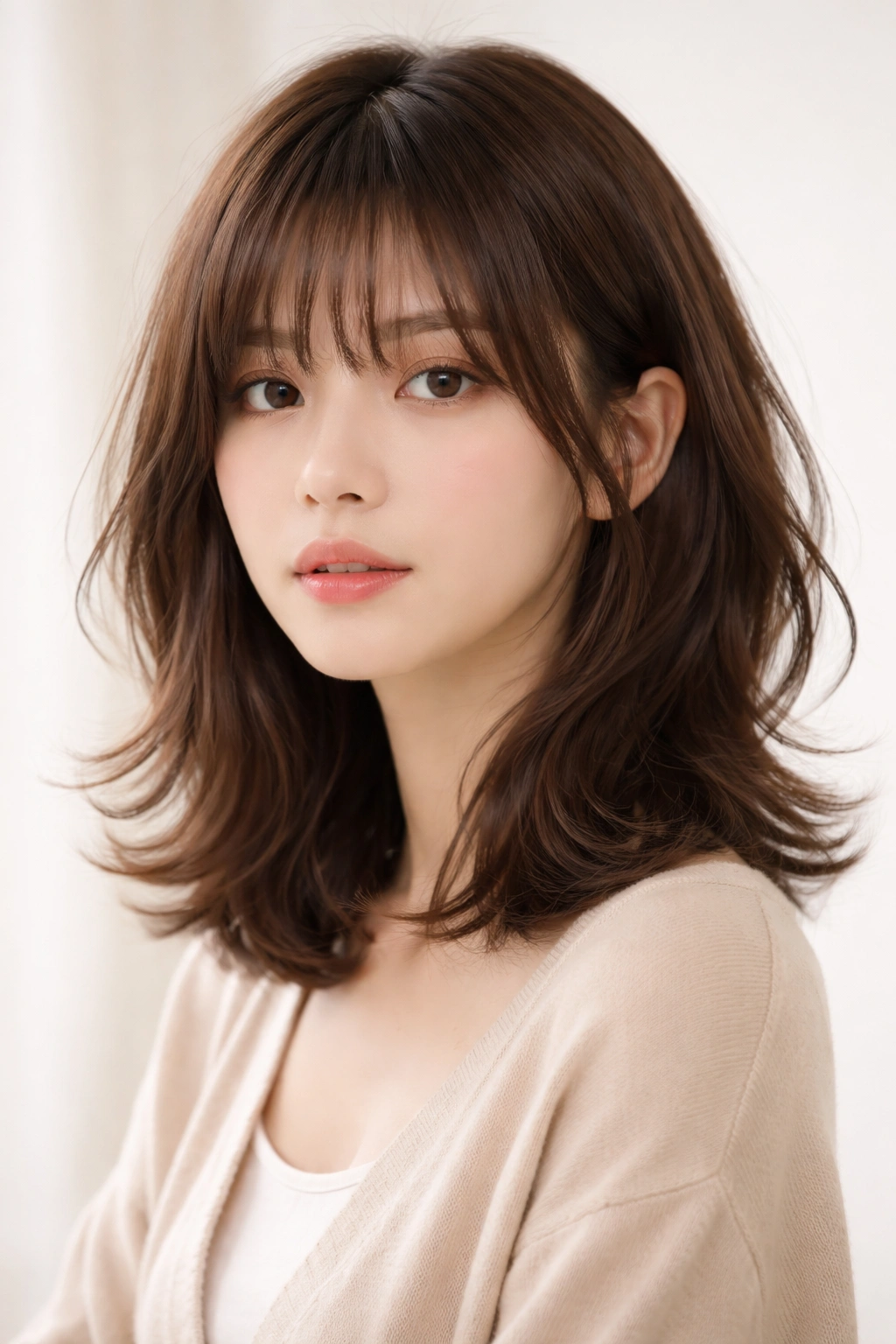
The lob-length hime sits right around jaw or collarbone and creates a perfect middle ground between short and longer styles. Soft, feathered layers blend throughout rather than chopping abruptly, allowing waves to flow smoothly while maintaining the iconic sidelocks. This version feels polished and deliberately styled, yet still casual enough for everyday wear. The softness of the layering paired with gentle waves creates an ethereal, almost vintage-inspired aesthetic that flatters most face shapes. This is the hime cut if you want something that reads as intentional without screaming avant-garde.
The Appeal of Soft, Feathered Layers
Feathering—rather than choppy cutting—creates seamless movement that makes waves look effortless. The layers taper inward at the ends, so waves spiral naturally without stray, wispy pieces. Your sidelocks become a genuine focal point because they’re noticeably longer than the back, creating beautiful asymmetry that frames the face. The softness means this style photographs beautifully and translates across different wave textures and densities. Even fine-haired people can pull off this cut because feathering adds perceived volume without relying on blunt weight.
How to Style the Soft Wave Lob
- Apply a lightweight wave cream or sea salt spray to damp hair and scrunch gently to encourage waves
- Diffuse with a hair dryer or air-dry for natural waves; this style benefits from minimal heat
- The sidelocks frame best when they’re lightly waved—use a small-barrel wand if you want more defined curls
- Part hair slightly off-center to let sidelocks fall naturally along the cheekbone
- Layer a texture spray over set waves for longevity throughout the day
- Touch up the feathered layers with a razor every 6-8 weeks to keep them from looking blunt
Worth knowing: This cut works beautifully with highlights or balayage because the layers and waves catch color movement in all the right places.
3. Tousled Curtain Hime
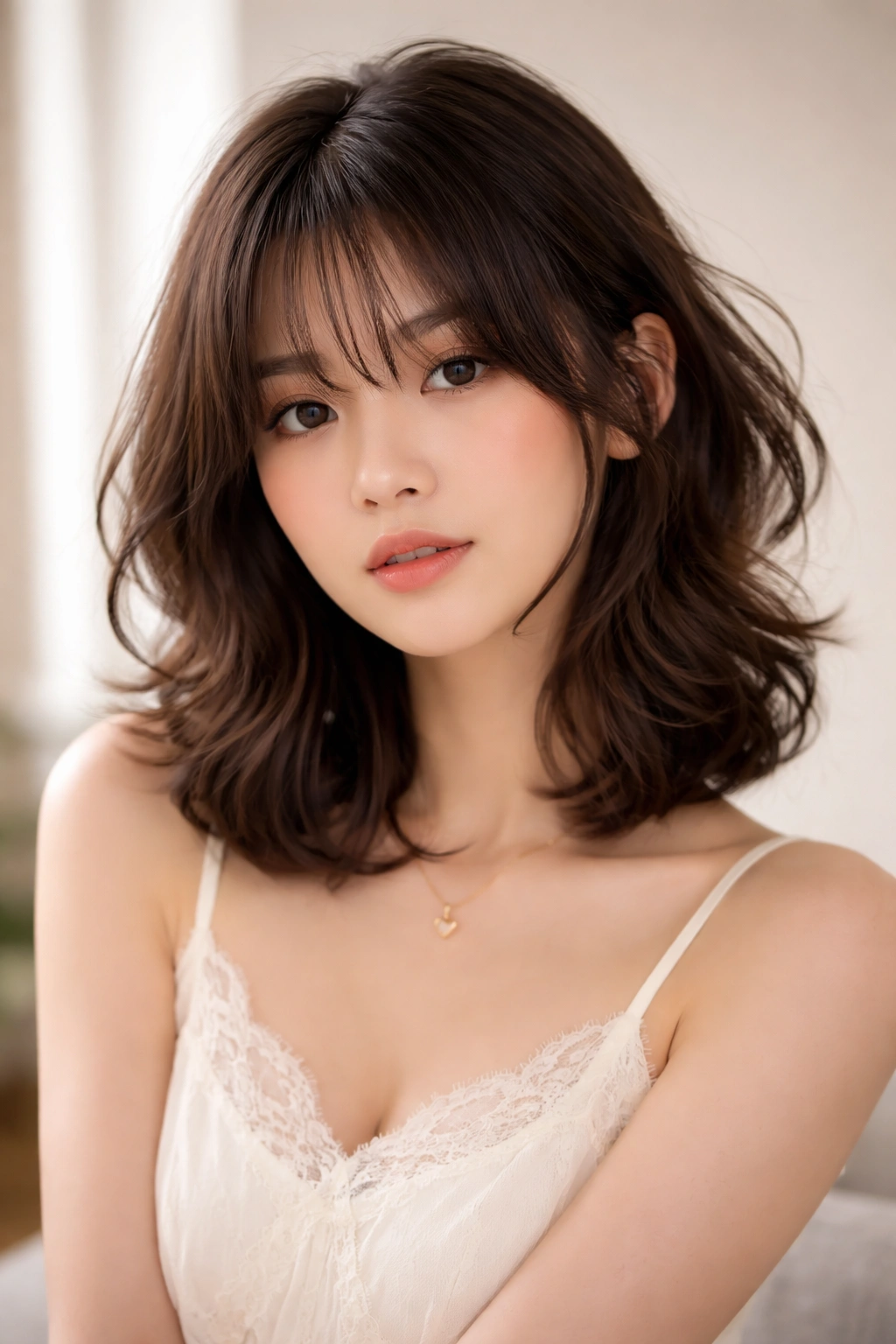
Inspired by the romantic curtain-bangs trend, this hime variation features soft, parted bangs that frame the face from cheekbone to eyebrow rather than heavy, blunt-cut bangs. The sidelocks sit slightly shorter and more delicate, sometimes pinned back or swept to one side. Waves throughout are loose and tousled, giving the entire style an effortlessly undone vibe. This is the hime cut if you want something that feels modern and fashion-forward but still maintains that feminine signature. The tousled texture means you’re never fussing to achieve perfection—texture is the goal.
What Makes Curtain Bangs Different for a Hime Cut
Traditional hime cuts have blunt, full bangs, but curtain bangs open up the forehead and soften the overall impression. They part in the center and fall away from the face, creating a lighter, more breathable feeling. Paired with sidelocks, curtain bangs create multiple frames for the face, which is genuinely flattering for most face shapes. The tousled waves throughout complement the lightweight movement of the curtain bangs perfectly. This combination creates an effect that’s polished without looking overdone—which is surprisingly hard to achieve.
Styling the Tousled Aesthetic
- Blow-dry with your head flipped upside down to create volume at the roots
- Apply texture spray or sea salt spray to damp hair before drying for enhanced wave formation
- Once waves are set, lightly mess them up with your fingers—this style should never look too neat
- Curtain bangs benefit from a little extra attention with a small-barrel curling iron to emphasize the parting and movement
- Pin sidelocks back occasionally with a decorative clip or bobby pin for variety
- This cut requires minimal styling once you understand your waves, making it ideal for low-maintenance types
Insider note: Curtain bangs tend to get a bit stringy or flat after a day or two of styling. Refresh them quickly with a dry shampoo spritz and a few passes with a curling iron for immediate revival.
4. Layered Pixie Hime
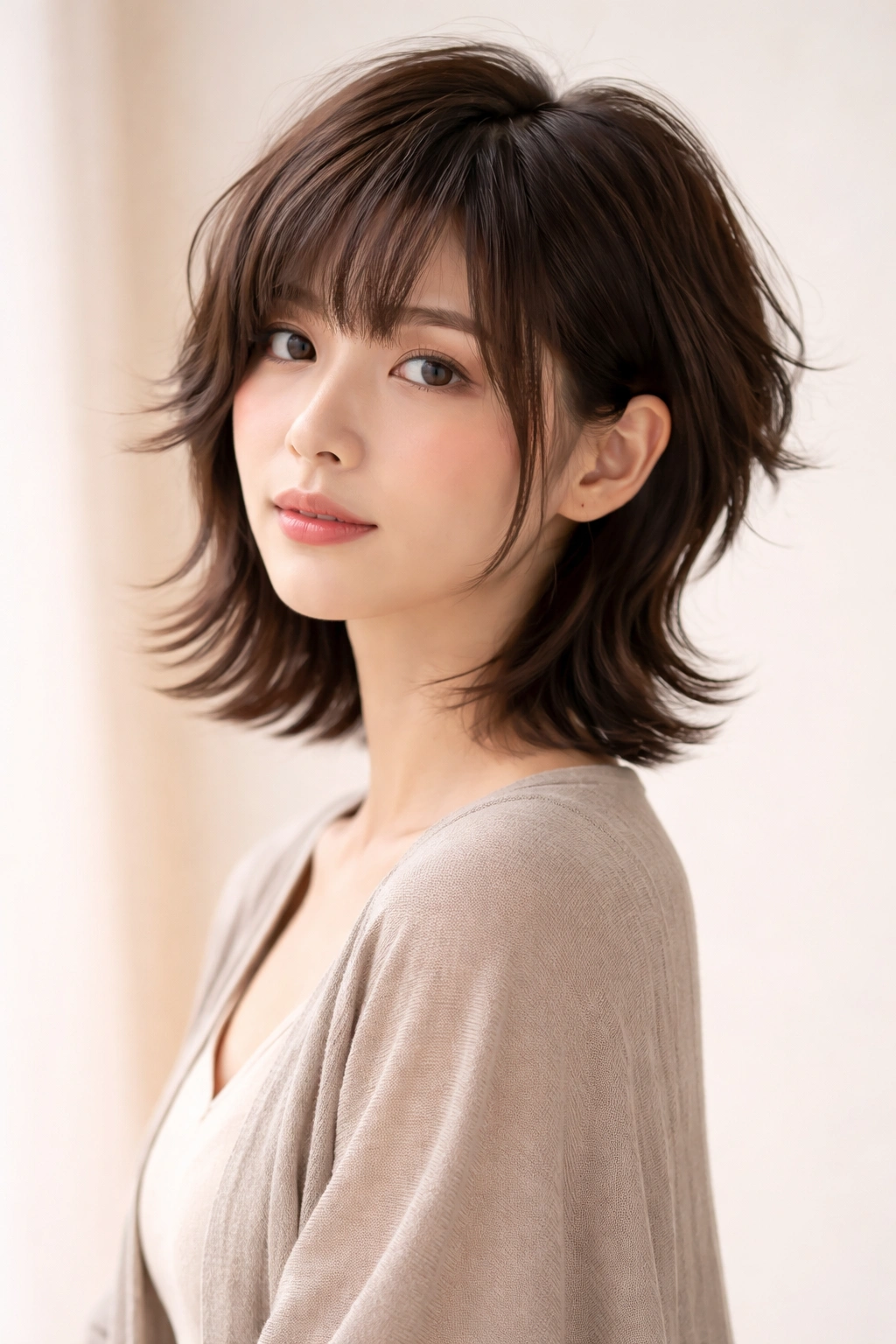
For those ready to go seriously short, this cut combines a pixie’s short, cropped back and crown with longer pixie-length sidelocks and soft bangs. Waves are relatively minimal in this version because of the short length, but the texture still reads as soft and romantic rather than structured or masculine. The sidelocks become the main visual interest, falling past the chin and creating the immediate “hime” silhouette. This works beautifully if you have fine, wavy hair that tangles easily at longer lengths or if you want maximum styling speed without sacrificing style identity.
Why Pixie-Length Works with Hime Elements
A pixie-length hime is a bold statement because it’s undeniably short yet unmistakably feminine. The short crown and back require almost no styling—you can towel-dry and go. The sidelocks, by contrast, demand attention and styling, creating an intentional asymmetry that feels modern and artistic. This cut actually suits people with straight or minimally wavy hair better than some other hime variations, because the sidelocks themselves become the focal point rather than relying on wave texture. If you prefer a very low-maintenance style but love the feminine aesthetic of hime cuts, this bridges that gap beautifully.
Maintaining and Styling a Pixie Hime
- Trim the back and crown every 4-6 weeks to maintain the clean, cropped shape
- The sidelocks need longer attention—trim them every 8-10 weeks to maintain length and health
- Style the sidelocks with a small-barrel curling iron or wand for gentle waves or defined curls
- The back naturally has texture and stands up slightly; a texturizing cream or pomade keeps it polished without looking slicked down
- Bangs (if included) sit at the eyebrow and need trims every 3-4 weeks
- This style actually benefits from slightly damp hair application of product, then air-drying for a relaxed finish
Quick tip: This cut requires confidence because it’s decidedly short. If you’ve never had a pixie before, this is a bold move—but it’s also a genuinely life-changing one if it suits your face shape and personality.
5. Shaggy Hime Bob
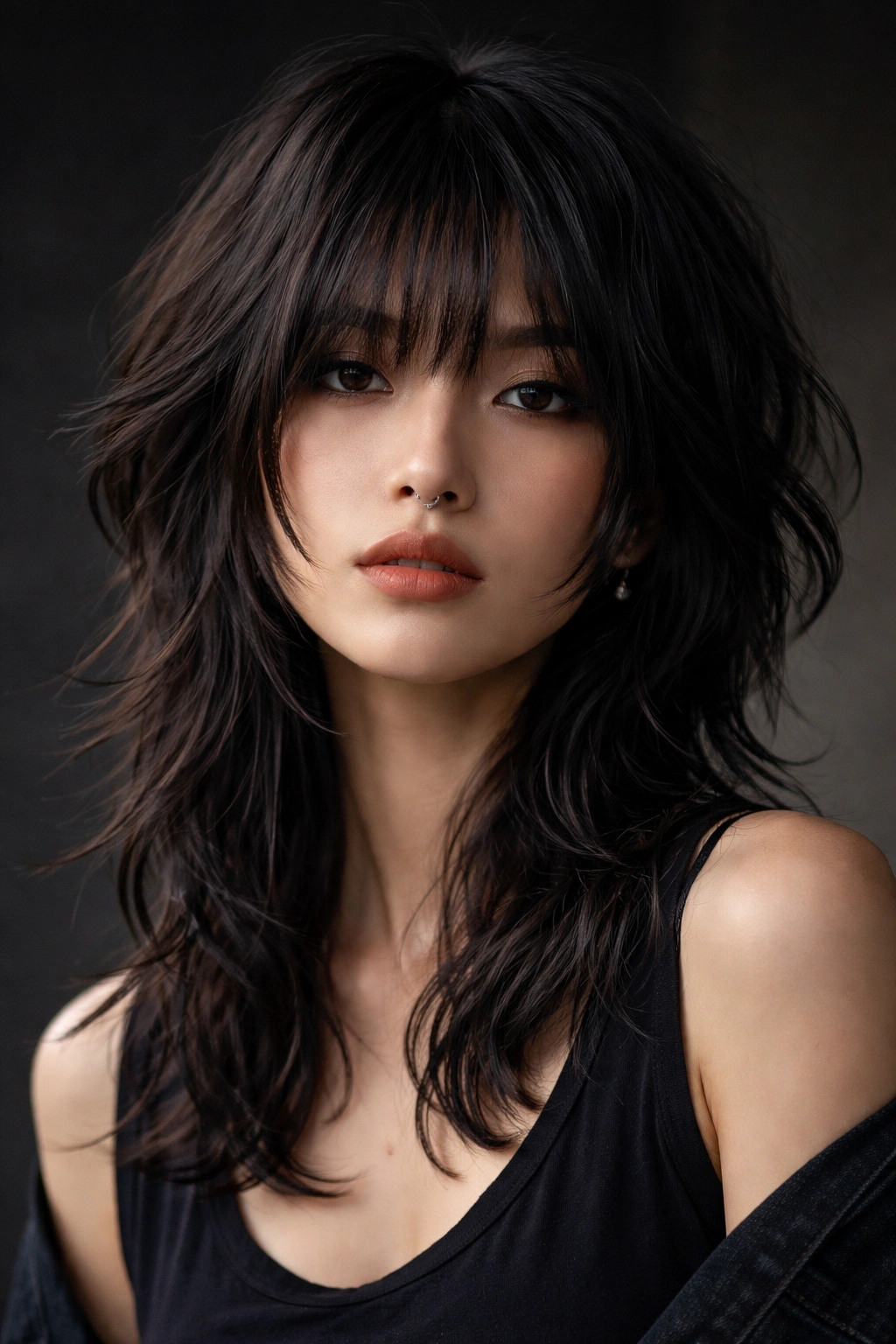
The shaggy bob takes the classic hime silhouette and layers it throughout with pronounced texture and movement. Length sits somewhere between chin and collarbone, with heavy layering that creates undulating waves and a rock-and-roll aesthetic. The sidelocks are longer and more pronounced, sometimes falling to mid-neck while the back sits noticeably shorter. This version feels edgier and less traditionally feminine than some hime variations, but it’s absolutely still a hime cut—it’s just one with personality and attitude. Waves are essential here; they make the shaggy layers come alive rather than looking matted or shapeless.
The Shag’s Relationship with Wave Texture
Shagging (adding heavy layers throughout) was specifically designed to enhance natural texture and movement. When you layer a hime cut heavily, the waves become the main feature rather than the bangs or sidelocks alone. Each wave sits independently, creating a three-dimensional effect that photographs beautifully and moves with every head turn. The sidelocks in a shag are typically thicker and more visible because the back is so short by comparison. This creates genuine visual drama—you’re not just making a style statement; you’re creating contrast and movement. The cut requires wave texture to read as intentional rather than just shapeless; with pin-straight hair, it could look thin rather than playfully undone.
How to Style and Maintain a Shaggy Hime
- Wash with curl-enhancing shampoo and apply leave-in conditioner or curl cream to soaking-wet hair
- Diffuse or air-dry, scrunching occasionally to encourage wave formation throughout
- Use a texturizing spray or sea salt spray to enhance natural wave patterns
- Scrunch the sidelocks upward while drying to create more defined waves in these key-framing pieces
- Refresh between washes with a spray bottle of water and a quick diffuse-dry, or use dry shampoo for texture
- Trim every 6-8 weeks to maintain the shag’s intentional shape; this cut can look unkempt quickly if layers grow out unevenly
Pro tip: The sidelocks in a shag can sometimes split faster than the rest of your hair due to their length. Deep condition weekly and get them trimmed slightly more frequently than the rest of your hair to prevent damage.
6. Wispy Undercut Hime
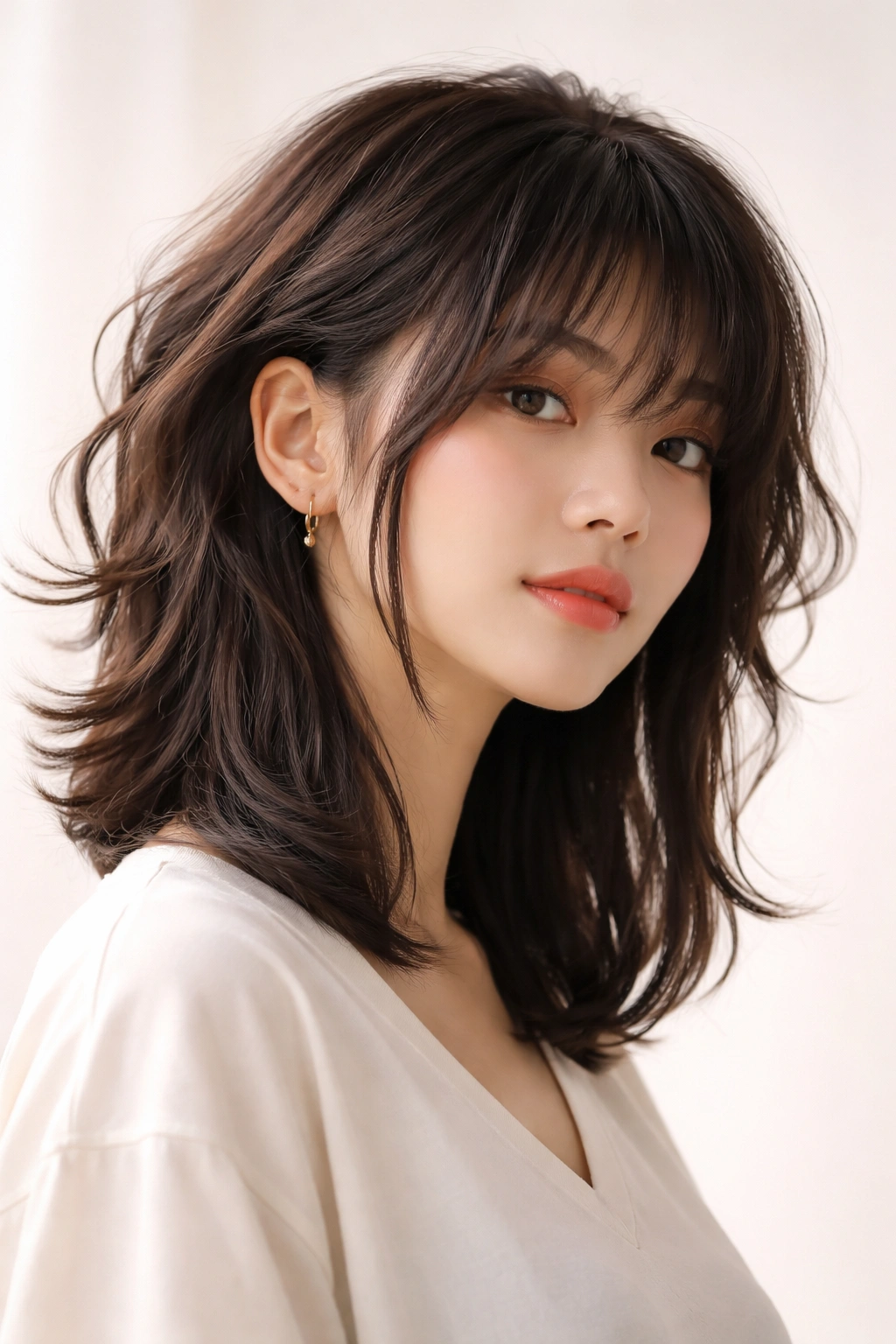
This modern variation features dramatically shorter layers underneath with longer layers on top, creating hidden depth when you move. The sidelocks are long and prominent, sometimes falling to the collarbone or beyond, while the under-layers sit much shorter—sometimes ear-length or even shorter. From the front, you see the long sidelocks and full length, but move your head and the undercut becomes visible. Waves work throughout both the top and undercut, creating visual interest on multiple levels. This is the cut for people who want something that feels secret or personal—it looks more conservative in certain angles but reveals its complexity when you move.
Why Undercuts Complement Hime Sidelocks
An undercut naturally frames the sidelocks by creating contrast in density and length. The sidelocks appear longer and more luxurious when short layers sit underneath them. The under-layers also reduce overall weight and bulk, which is why this works well for thick or curly hair. Waves in the undercut catch light differently than waves in the longer top layer, creating multi-dimensional movement. From a practical standpoint, the shorter under-layers mean less daily styling burden while maintaining the visual impact of longer sidelocks. It’s a genius compromise for people who love the hime aesthetic but struggle with the weight or maintenance of truly long hair everywhere.
Styling an Undercut Hime
- The undercut portion needs very little styling—often just a quick dry or light texturizing spray
- Focus styling effort on the sidelocks and top layers, curling or waving them intentionally
- Part your hair so the sidelocks fall naturally over the ears, revealing the undercut when you move or look to the side
- Use a small-barrel curling iron on the sidelocks for defined waves that frame the face
- The longer top layer benefits from ocean-wave texture—use a medium-barrel wand or allow natural waves to air-dry
- Trim the under-layers every 4-6 weeks so they don’t grow out and lose the defined undercut shape
- The longer layers need trimming every 8-10 weeks
Worth knowing: This cut is particularly stunning if you have contrasting colors in the undercut—a hidden highlight or a dyed under-layer that contrasts with your main color.
7. Voluminous Waves Hime
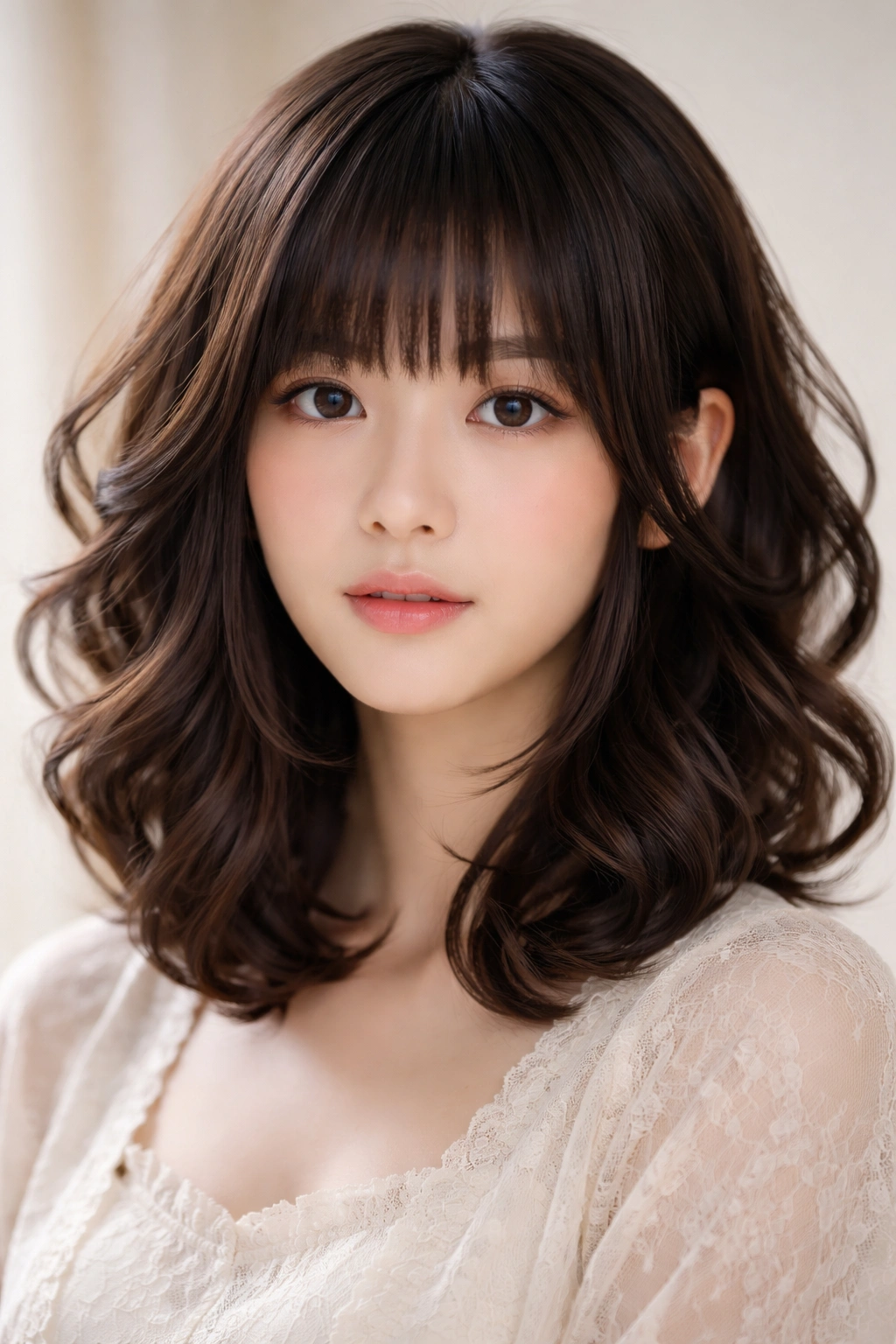
If you want maximum volume and movement, this version prioritizes big, bouncy waves throughout while maintaining the hime silhouette. Length sits at chin or collarbone, with minimal layering—mostly blunt or slightly textured lines that allow waves to stand out rather than fighting the cut. The sidelocks are prominent and full, sometimes curled more tightly than the rest of the hair to create definition. Waves are the absolute star here; bangs and sidelocks enhance the frame, but the voluminous wave pattern is what makes the cut recognizable. This works beautifully if you have naturally wavy or curly hair that holds shape well, or if you’re willing to use heat tools or chemical waves regularly.
Creating Volume with Waves in a Hime Cut
Volume comes from texture and direction—waves are literally three-dimensional strands that take up more space than straight hair. When your hime cut is designed to maximize rather than minimize that texture, you get inherent volume without needing excessive layers. A blunt or slightly textured hemline allows the waves to stand away from the head rather than being pulled down by long layers. The sidelocks become obvious and glamorous because they’re sitting in front of full-bodied waves rather than against a flat base. This is one of the few hime cuts where minimal layering actually works better than heavy layering, because each wave is distinct and visible.
Achieving and Maintaining Voluminous Waves
- Blow-dry hair upside down or in sections, using a round brush to lift waves away from the scalp
- Apply a volumizing mousse or wave cream to damp hair before drying for enhanced lift and hold
- Use a large-barrel curling iron (1½ to 2 inches) for big, loose waves that hold their shape
- Style the sidelocks with a slightly tighter curl (using a smaller barrel) to create definition and ensure they frame the face properly
- Use a texturizing spray or dry shampoo specifically designed for volume, not just texture
- Sleep with waves in loose braids or a pineapple arrangement to preserve volume overnight
- Refresh waves between washes by spritzing lightly with water and re-drying with a diffuser or round brush
Pro tip: If you’re using heat tools to create waves, invest in a quality heat protectant spray—voluminous waves require more heat than some styles, and protection prevents damage and frizz.
8. Asymmetrical Hime Cut
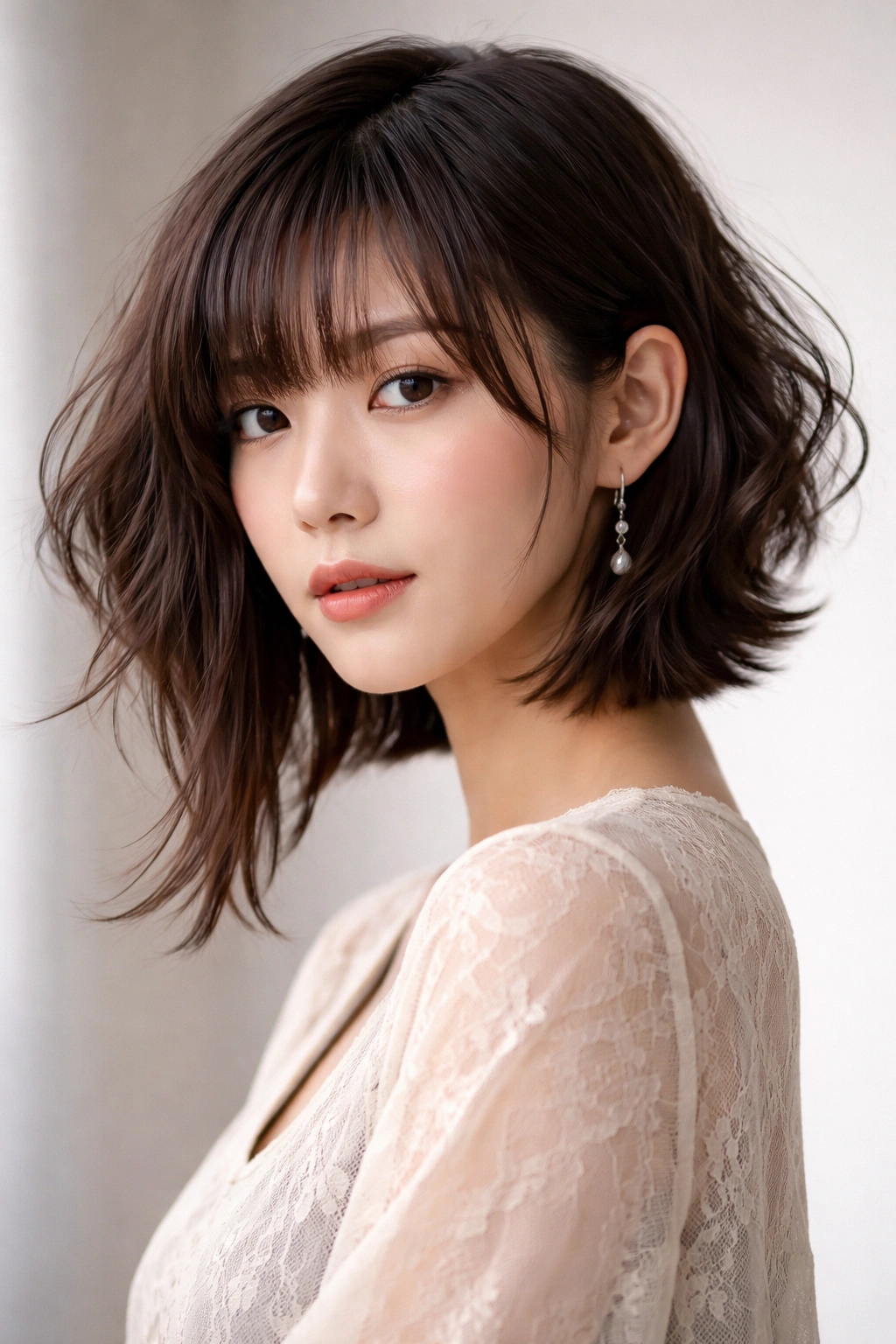
This artistic take breaks away from the traditional perfectly-balanced hime silhouette by making one sidelock noticeably longer than the other, or cutting one side of the back shorter than the other. Both sides still feature the core hime elements—sidelocks and bangs—but the proportions are deliberately unequal. Waves add to the movement and make the asymmetry feel intentional rather than accidental. The cut requires confidence and a stylist comfortable with creating imbalance as a design choice. This works for people who want to stand out and aren’t interested in a traditional, symmetrical aesthetic.
The Art of Intentional Asymmetry
Asymmetry reads as modern, artistic, and sometimes avant-garde. When it’s done intentionally in a hime cut, it transforms the style from classic to cutting-edge. One sidelock longer than the other creates movement and visual interest that symmetry doesn’t—your eye travels differently across the face. Waves enhance asymmetry by creating varied movement on each side. The angle and shape of asymmetrical lines become the focal point, sometimes even more important than the sidelocks themselves. This cut works best with wavy or curly hair because the texture further emphasizes the intentional imbalance; on straight hair, asymmetry can read as accidental rather than artistic.
Styling and Growing Out an Asymmetrical Hime
- Part your hair slightly off-center so the longer sidelock falls naturally on the side where it extends further
- Curl each sidelock separately, potentially using different barrel sizes to create additional asymmetrical movement
- The uneven hemline needs precise styling to look intentional; waves should move in slightly different directions on each side
- Trim asymmetrical lines every 6-8 weeks because even slight growth makes the intentionality less clear
- If you’re growing out one sidelock to be longer, be patient—it will look odd during transition, but the payoff is worth it
- Consider adding color asymmetrically as well (a highlight on the longer sidelock side, or contrasting color in one section)
Insider note: This cut is genuinely striking once it’s styled, but requires daily intentionality. If you forget to style it properly, it might read as “forgot to finish getting ready” rather than “artistic choice.” Make sure you’re actually interested in that daily commitment before getting this cut.
9. Blunt Wave Hime
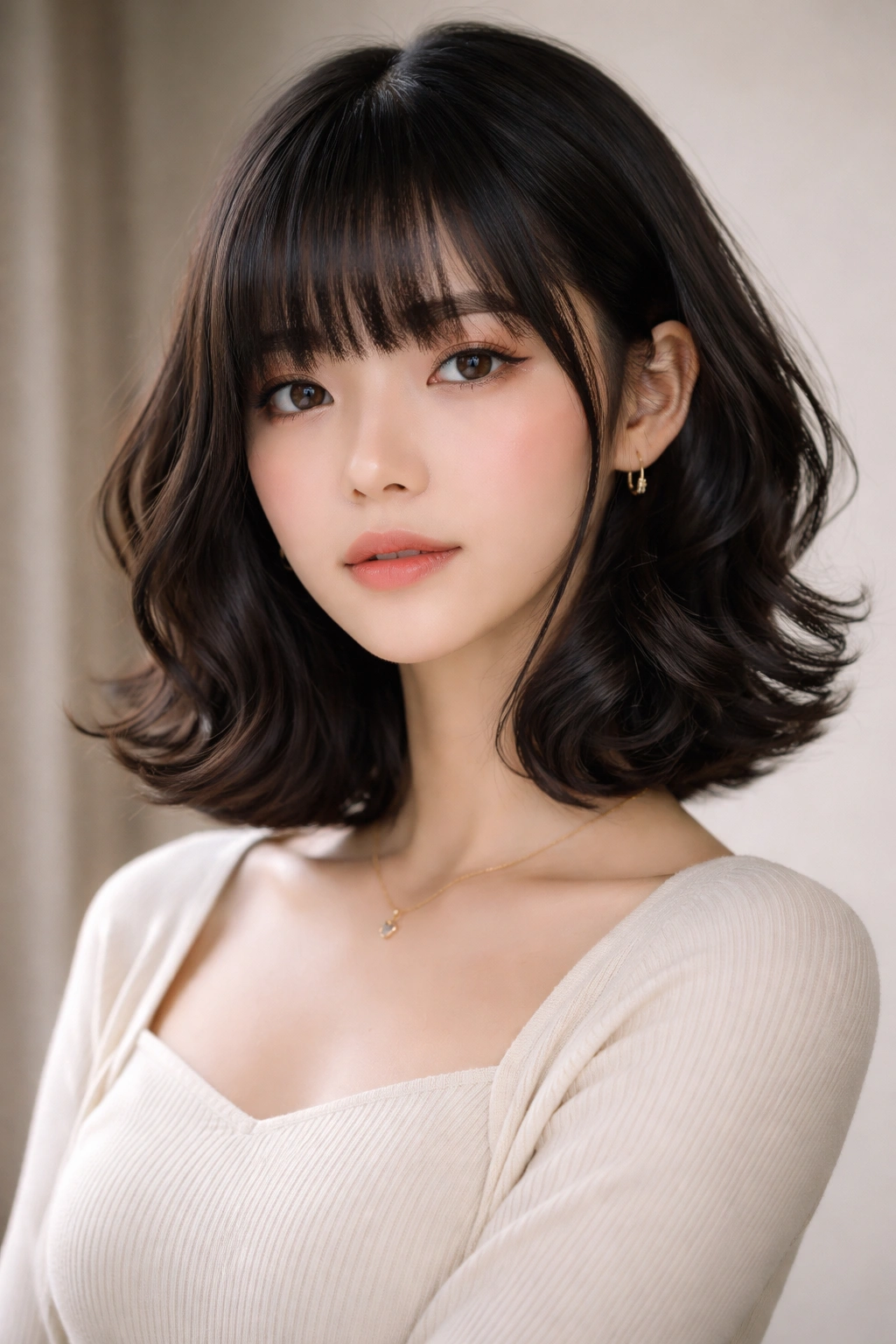
This version maintains clean, blunt lines throughout—blunt bangs, blunt hemlines, blunt sidelocks—while waves move freely within those structured parameters. It’s a beautiful contrast: sharp, precise geometry paired with soft, romantic wave texture. Length is usually chin or collarbone, with minimal layering so the blunt lines remain visible and intentional. The contrast between blunt lines and natural waves creates visual interest without requiring heavy styling. This cut reads polished and deliberately styled, making it excellent for professional or formal settings while still maintaining the hime cut’s romantic aesthetic.
Why Blunt Lines Work with Soft Waves
A blunt haircut creates structure and visual weight that holds strong even when waves add movement. The clean lines prevent the style from looking undone or accidental—those blunt edges make it clear you’re intentionally styled. Waves within blunt lines create a sandwich effect: neat geometry on the outside, soft movement on the inside. The sidelocks become particularly important in this cut because they frame the face with those clean, blunt edges—every millimeter of their line is visible. This combination works exceptionally well for people with regular, proportional face shapes because the blunt lines are flattering and the waves add softness.
Maintaining Blunt Lines with Wavy Hair
- Get trims every 4-6 weeks to keep blunt lines razor-sharp; this cut loses its impact quickly if lines become feathered or uneven
- Blow-dry waves smoothly into place before final touch-ups; the drying direction affects how blunt lines sit
- Style waves by curling hair away from the blunt hemline so the line remains visible and clean
- The sidelocks need precise styling to maintain their blunt edges while the waves move; curl them gently, smoothly
- Use a flat iron on the ends of blunt-cut layers for one final sweep if waves threaten to hide the line
- Avoid texturizing sprays or scrunch-drying, which blur blunt lines—instead use smoothing serums and directional blow-drying
Worth knowing: This cut works beautifully with live color (non-permanent or semi-permanent dye) because the blunt lines catch color movement in defined, controlled ways.
10. Feathered Hime Crop
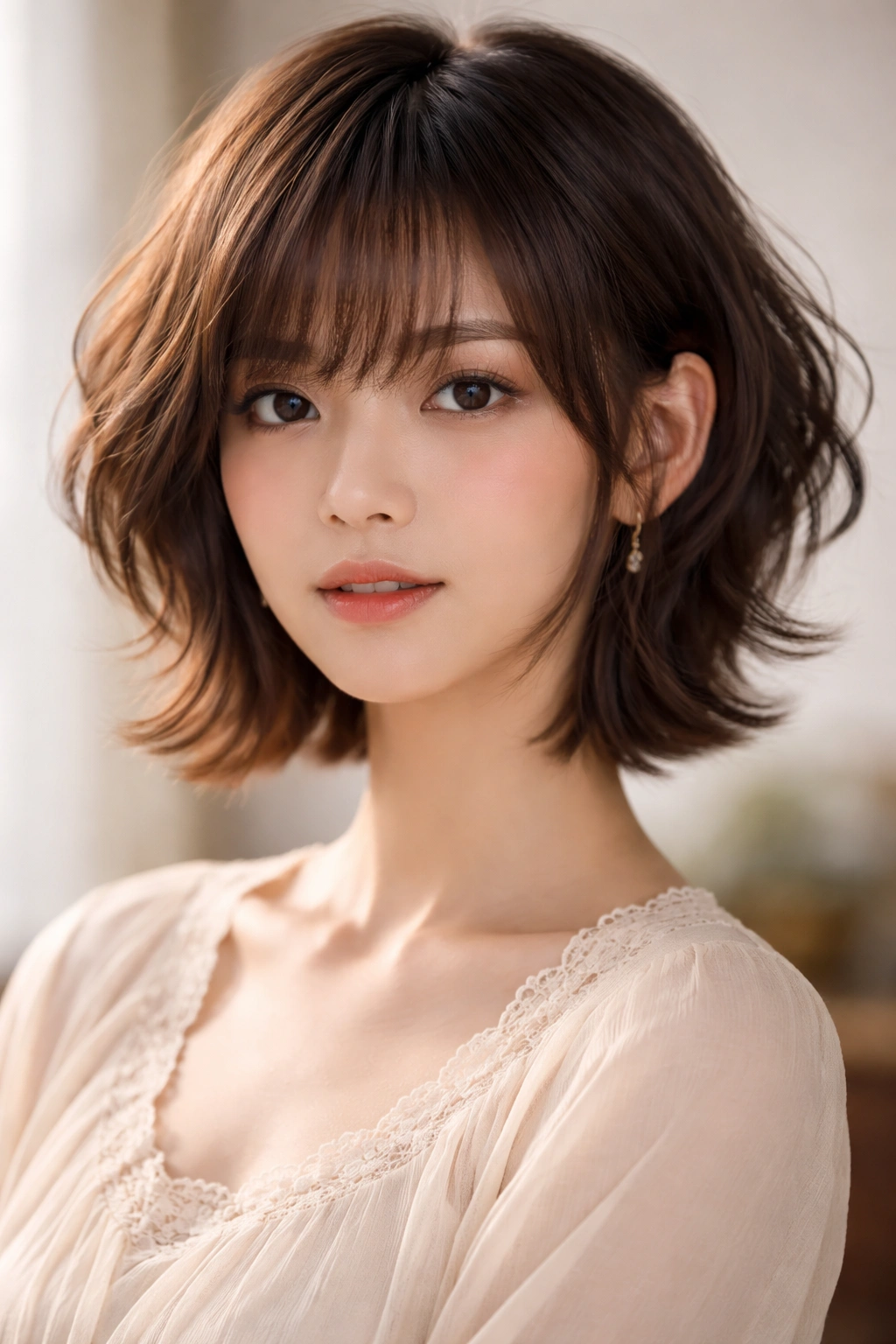
The crop version keeps everything short and close to the head while maintaining the hime signature—particularly the sidelocks, which become even more noticeable against a cropped back and crown. Feathering throughout creates softness and prevents the crop from reading as severe or masculine. Waves are subtle in this version because of the short length, but they add dimension and texture that make the sidelock-and-bangs combination feel intentional rather than just a short haircut with longer pieces. This works wonderfully if you prefer short, easy-to-style hair but love the feminine aesthetic of a hime cut.
The Impact of Sidelocks on a Crop
Sidelocks become the defining feature when everything else is cropped. They’re impossible to ignore—they immediately identify the style as a hime cut rather than just a short textured crop. On a cropped base, sidelocks appear longer and more dramatic, even if they’re not objectively very long. The contrast makes them feel luxurious and intentional. Feathering the crop itself prevents it from reading as masculine or harsh; soft, feathered texture is inherently feminine and plays nicely with the romantic sidelocks. The combination is genuinely striking without being overly complicated or high-maintenance.
Styling and Growing Out a Feathered Crop Hime
- The cropped portion needs trimming every 4-6 weeks to maintain its shape and feathered texture
- Sidelocks grow relatively quickly when the rest of the hair is cropped, so plan for a noticeably longer sidelock within just a few months
- Blow-dry the crop with your fingers or a small brush to create soft texture; avoid making it look too structured
- Style the sidelocks with a small-barrel curling iron for gentle waves or defined curls
- Bangs (if included) sit at the eyebrow and need trims every 3-4 weeks
- The crop naturally stands up slightly; a small amount of texturizing cream or pomade keeps it looking intentional without being overly styled
- This cut photographs beautifully and translates well across different face shapes
Pro tip: If you’re nervous about going this short, ask your stylist for a feathered crop that you can grow into a longer hime cut—the feathering makes the transition from crop to longer length look intentional rather than just “didn’t get a haircut.”
11. Curly Hime Bob
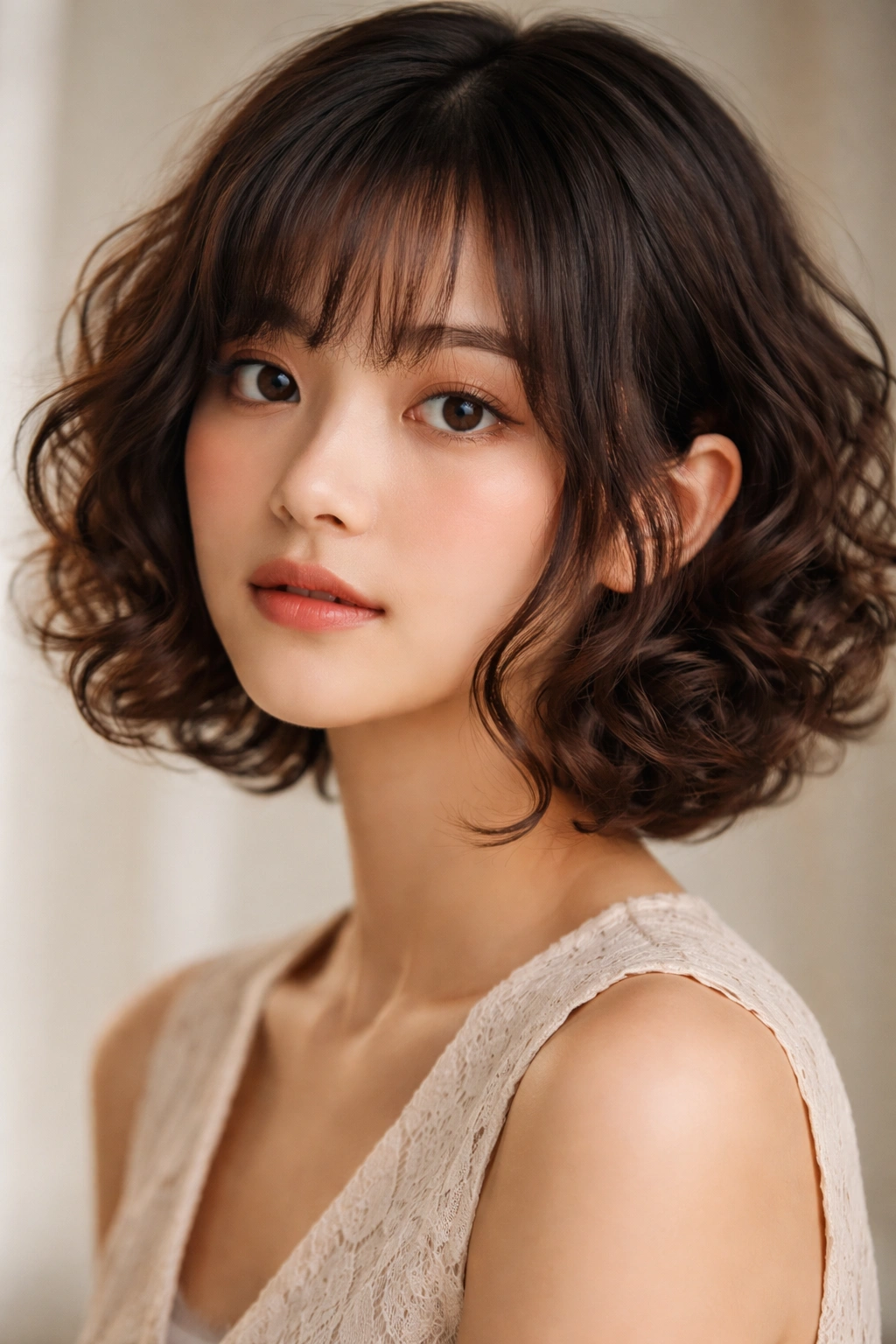
For those with naturally curly or coily hair, this version celebrates texture by working with your curl pattern rather than against it. Curls form the waves throughout, with the sidelocks curling as tightly or loosely as your natural pattern dictates. Length sits at chin or slightly shorter, with layering designed to release curl potential rather than flatten it. The sidelocks become springy, three-dimensional pieces that frame the face with pure curl texture. This cut requires understanding your specific curl pattern and working with a stylist who specializes in curly cuts—the approach is genuinely different from cutting straight or wavy hair.
Curly Hair’s Unique Relationship to the Hime Cut
Curly hair naturally creates the volume and dimension that other hair types require styling tools or product to achieve. A hime cut in curly hair looks inherently romantic and intentional because the sidelocks literally bounce with curl. The layering works differently—you’re not trying to create shape through cut alone; you’re working with the curl pattern to release its potential. The sidelocks in a curly hime cut are absolutely stunning because they frame the face with defined, bouncy curls. Bangs also benefit from curl—they sit away from the forehead slightly rather than lying flat. This is one of the most romantic and effortless-looking hime cut interpretations.
Caring for and Styling a Curly Hime
- Use curl-specific shampoo and conditioner; regular products flatten curls and strip them of moisture
- Apply leave-in conditioner and curl cream to soaking-wet hair before plopping or diffusing
- Avoid blow-drying harshly; diffusing on low speed is much gentler and better for curl definition
- Let curls air-dry partially, then diffuse the rest for maximum curl hold and definition
- Apply a light hold styling spray or gel to enhance curl definition and prevent frizz
- Sleep on a silk or satin pillowcase; cotton causes frizz and disrupts curl patterns
- Trim every 6-8 weeks specifically on a “wet curl day” so your stylist can see the actual curl pattern and length
- Deep condition weekly to maintain curl health and prevent dryness
Worth knowing: Curly hime cuts look dramatically different when wet versus dry. Always make styling decisions based on dry hair, not freshly washed wet hair.
12. Modern Textured Hime
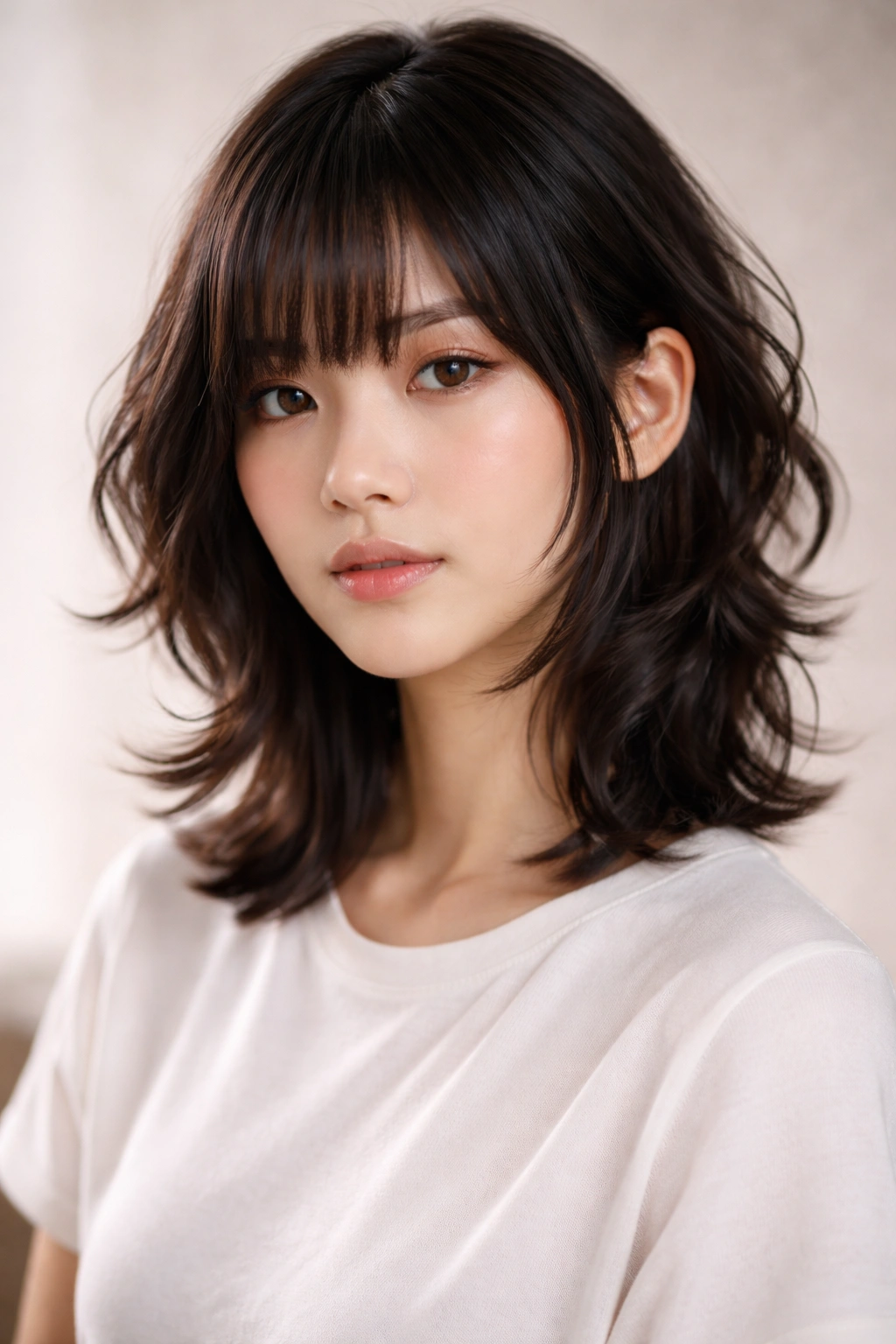
This contemporary interpretation combines a very current, editorial approach to texture with the classic hime silhouette. Layers create sharp, piecy texture throughout rather than the soft feathering or heavy shag of earlier variations—think more graphic and architectural than romantic. The sidelocks might be slightly texturized as well, creating visual interest without being particularly long. Waves are present but minimal—the texture is more about the cut than about curling or wave pattern. Bangs are typically soft and piece-y rather than blunt or full. This version appeals to people who want a hime cut that reads current and fashion-forward without looking costumey or overly styled.
The Graphic Quality of Modern Textured Cuts
Modern texture is about creating a piece-y, almost jagged appearance through precise cutting and layering. Rather than feathering or shag, the cut creates distinct separation between sections of hair—you can see where one layer ends and another begins. Paired with the sidelocks and bangs of a hime cut, this textured approach creates visual interest and sophistication. The style reads intentional and artistic rather than soft or romantic. Waves or natural texture move through these piece-y sections, but the cut itself is the main visual feature. This is perfect for people who follow fashion and want a hairstyle that reflects a more editorial, avant-garde sensibility.
Creating and Maintaining Modern Texture
- Work with a stylist experienced in graphic, piece-y cuts—not all stylists approach texture this way
- Blow-dry with a diffuser to encourage waves while maintaining the separated, piece-y appearance of the cut
- Apply texturizing spray or sea salt spray after drying to enhance the graphic quality of the layers
- Avoid anything too shiny or smoothing; matte texture sprays are your friend here
- Style the sidelocks carefully so they don’t get lost among the textured base—sometimes styling them separately helps them remain a focal point
- Trim every 5-7 weeks to maintain the precise, graphic quality; this cut loses its impact quickly if layers grow out
- Consider adding subtle color that emphasizes the layering—highlights or lowlights in the textured sections create additional dimension
Insider note: This cut works exceptionally well with experimental color—pastels, jewel tones, or fashion colors show beautifully in the textured, separated sections because each piece is distinct and visible.
Final Thoughts
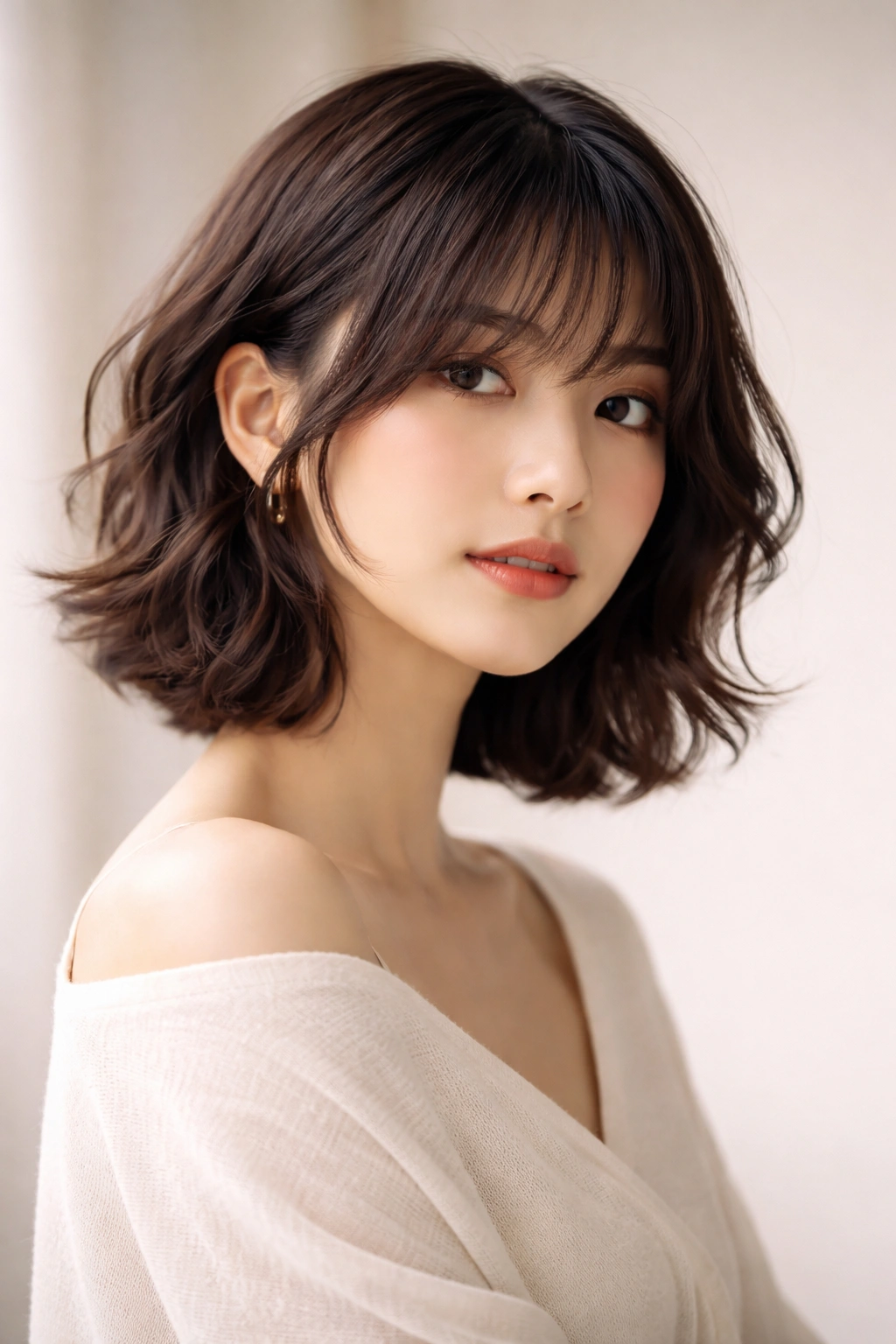
Short wavy hime cuts represent one of the most versatile and creatively adaptable styles available—proof that a hairstyle can be simultaneously rooted in tradition and completely modern. Whether you gravitate toward the romantic softness of feathered waves, the bold attitude of a textured shag, or the artistic graphic quality of a modern crop, there’s genuinely a hime cut variation that matches your aesthetic and lifestyle. The signature sidelocks and bangs provide the structure that makes a hime recognizable, while the short length and wave texture create a contemporary interpretation that feels fresh and wearable.
The key to finding your ideal short wavy hime cut is honestly understanding your hair’s natural texture and how much styling you’re willing to commit to daily. A voluminous wave version requires intentional styling or regular heat tools, while a cropped hime with feathered texture might dry and go. Your face shape matters too—soft, feathered versions work for most faces, while asymmetrical or heavily textured cuts require more confidence and a specific vision. Bring reference photos to your stylist consultation and specifically discuss your wave pattern, your styling tolerance, and how much time you’re willing to spend on hair maintenance.
Above all, remember that short wavy hime cuts are meant to feel personal and expressive. This isn’t a style you wear because it’s trendy or because everyone else has it—it’s a style you choose because it genuinely reflects who you are and how you want to present yourself. Once you find your version and understand how to style it, you’ll discover that a short wavy hime cut is genuinely one of the easiest, most impactful transformations you can make.
