



Messy buns have become a go-to protective style for people with natural Black hair, and for good reason. They’re effortless to create, genuinely protective of your hair’s delicate ends, and ridiculously versatile—whether you’re heading to the gym, a casual hangout, or even the office depending on how you style them. The beauty of a messy bun on natural hair isn’t just about convenience, though that’s definitely part of it. When done right, a messy bun actually celebrates the texture and volume that comes naturally with textured hair, rather than fighting against it.
What makes messy buns work so well for natural Black hair is that they work with your hair’s natural pattern rather than against it. Your coils, kinks, and curls are an asset here—they create dimension and that intentionally undone look that defines a great messy bun. The texture holds shape better, the volume reads as stylish rather than accidental, and you can leave it up for days without worrying about the sleek, “done” look falling flat. Plus, because they’re protective styles that minimize manipulation and keep your ends tucked away, they give your hair a genuine break from daily styling stress.
But here’s the thing: not all messy bun styles work the same way on natural hair, and the technique varies depending on your curl pattern, hair density, and length. A messy bun that looks incredible on 4C coils might need slight adjustments if you’re rocking 3B waves. That’s why there’s real value in understanding the different approaches—so you can find the versions that actually suit your specific hair type and texture.
1. The High Crown Messy Bun
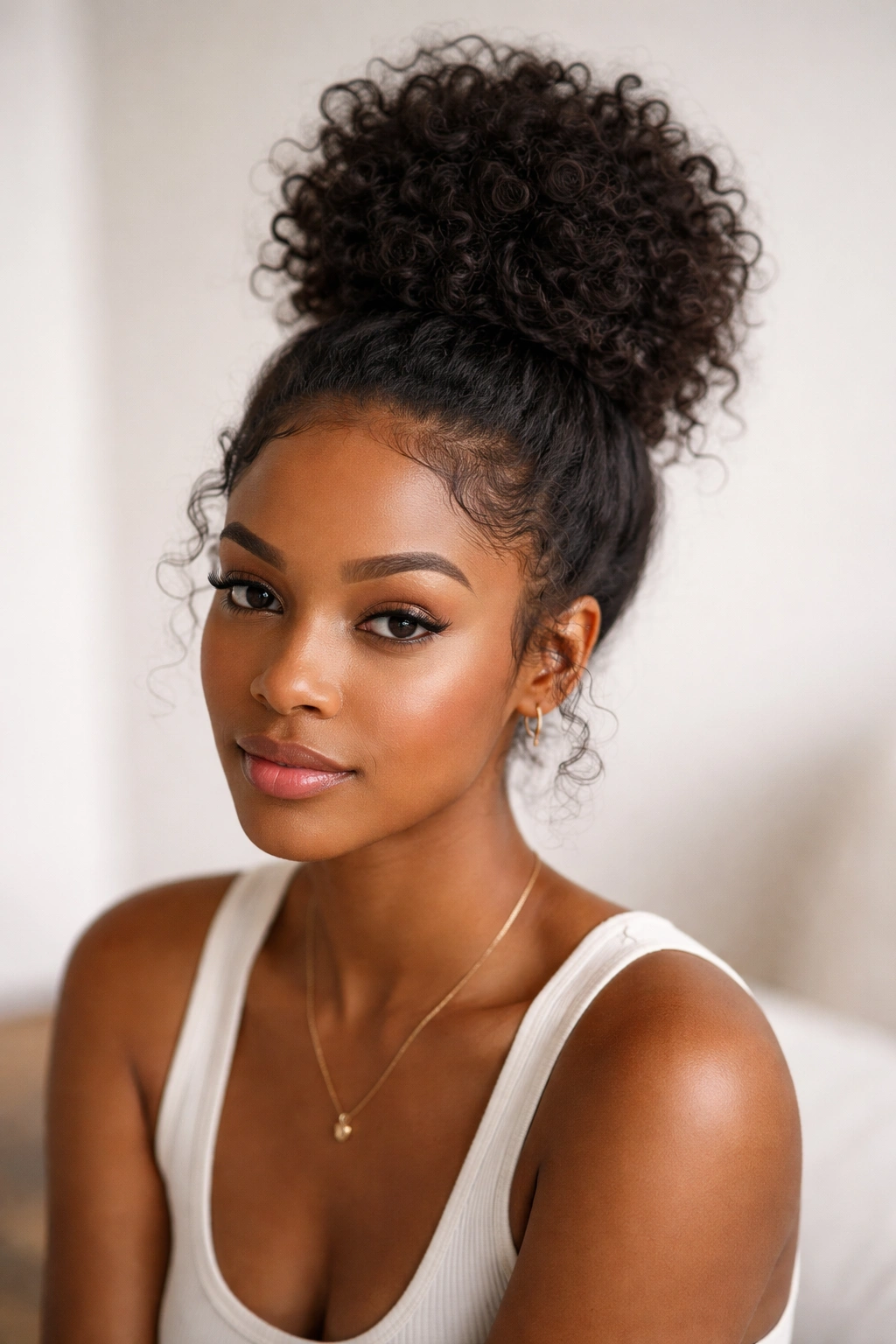
The high crown messy bun sits at the very top of your head and creates serious volume and height, which is particularly stunning on natural hair with density and texture. This style works because it takes advantage of your hair’s natural fullness and lets it expand upward rather than compressing it. The result is a look that’s both casual and somehow effortlessly polished—perfect for days when you want your hair up but not boring.
How to Create This Style
Start with damp or moisturized hair (either freshly washed or refreshed with a curl cream or light mousse). Flip your head upside down and gather all your hair at the crown of your head—essentially where the very top of your head is when you’re upright. Use a hair tie or elastic to secure it loosely into a ponytail. The upside-down flip creates natural lift and volume before you even twist it into a bun. Now gently pull sections of the ponytail and wrap them around the base to create that messy, textured appearance. Don’t aim for perfection here—uneven, slightly undone is exactly the vibe you want.
Why It Works for Natural Hair
Natural hair’s texture naturally creates the messy, undone look without extra effort. You won’t end up with a slick, tight bun unless you force it, which means this style celebrates your hair’s actual texture rather than fighting it. The volume at the crown also balances face shapes beautifully and creates a modern, intentional aesthetic.
Pro Tips for This Style
- Use a products like a lightweight mousse or gel to define curls before bunning for extra dimension
- Secure with bobby pins that match your hair color so they blend if they peek through
- Leave a few face-framing pieces loose around your temples for a softer, less severe look
- This style holds better on second or third-day hair, so don’t feel pressure to do it on freshly washed hair
2. The Low Messy Bun with Undercut Detail
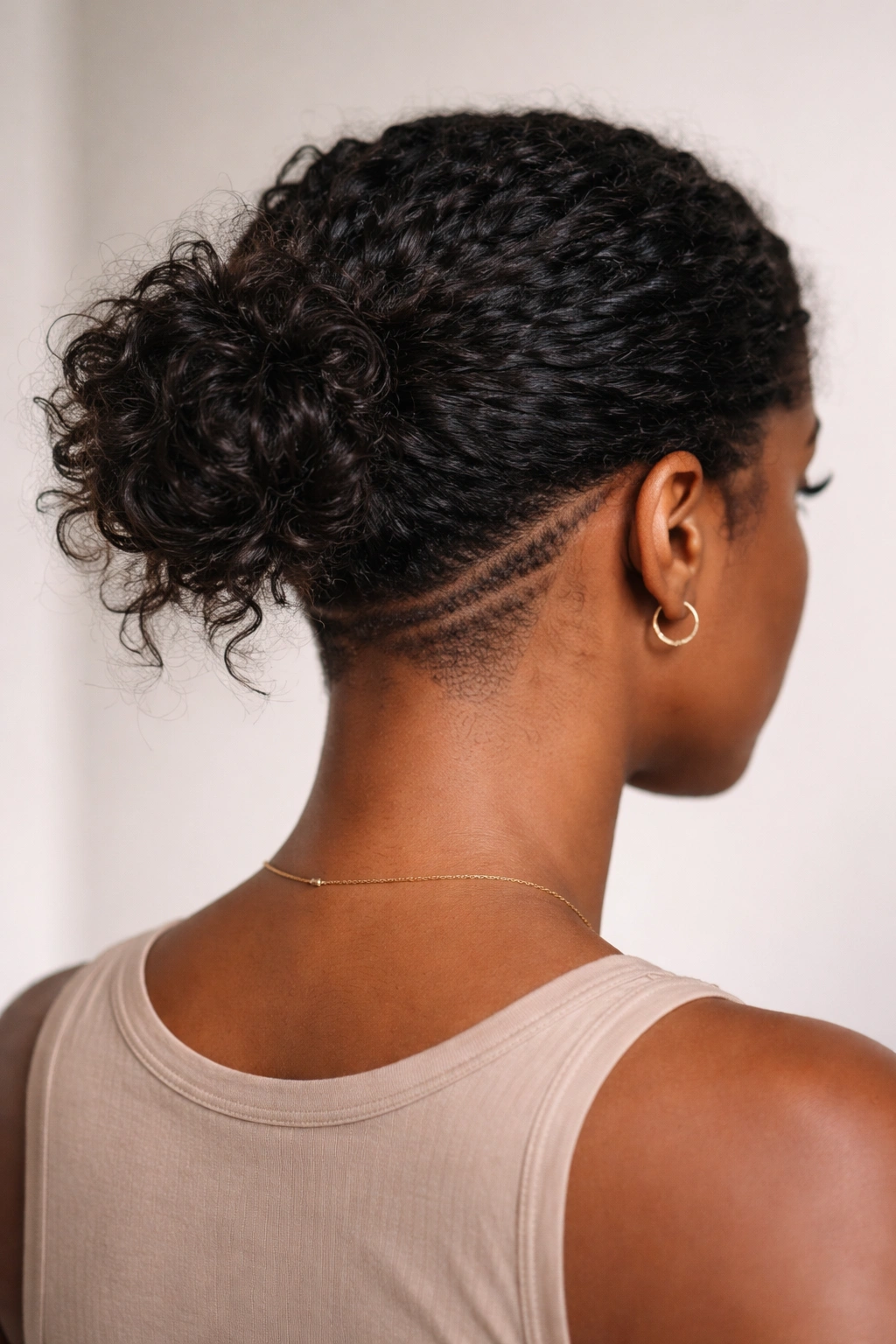
A low messy bun positioned at the nape of your neck offers a sophisticated angle, especially when you’ve got an undercut or fade that you want to show off. This style is incredibly popular right now because it combines protective styling with an edgy, intentional vibe. It’s the kind of bun that looks effortless but actually conveys intention and style awareness.
How to Create This Style
Gather your hair low at the back of your neck, roughly where your collar would sit. If you have an undercut or fade, this positioning lets those clean lines show. Secure with a hair tie, then loosely twist or wrap sections of the ponytail around the base. Let some pieces fall out naturally—this isn’t about precision, it’s about texture and movement. If you have super curly hair, you might skip the twisting altogether and just gently gather and secure, letting your natural curl pattern do the visual heavy lifting.
Styling for Maximum Impact
The low placement automatically looks more intentional than middle-of-the-head positioning. If you’ve maintained undercut lines, keep those clean by brushing that bottom section smooth before bunning the rest. You can also add subtle baby hairs or baby braids along your hairline for extra polish, or keep it completely natural depending on your aesthetic. Either way, the simplicity of the low placement makes this style feel very now.
What to Watch For
Low messy buns work beautifully on all curl patterns, but they do pull hair slightly toward the nape for extended periods. Make sure you’re not bunning so tightly that you’re causing tension at the hairline—the whole point is that it should feel effortless and lightweight. If you’re sensitive to tension, loosen the elastic or use a claw clip instead, which distributes pressure differently.
3. The Textured Twist Messy Bun
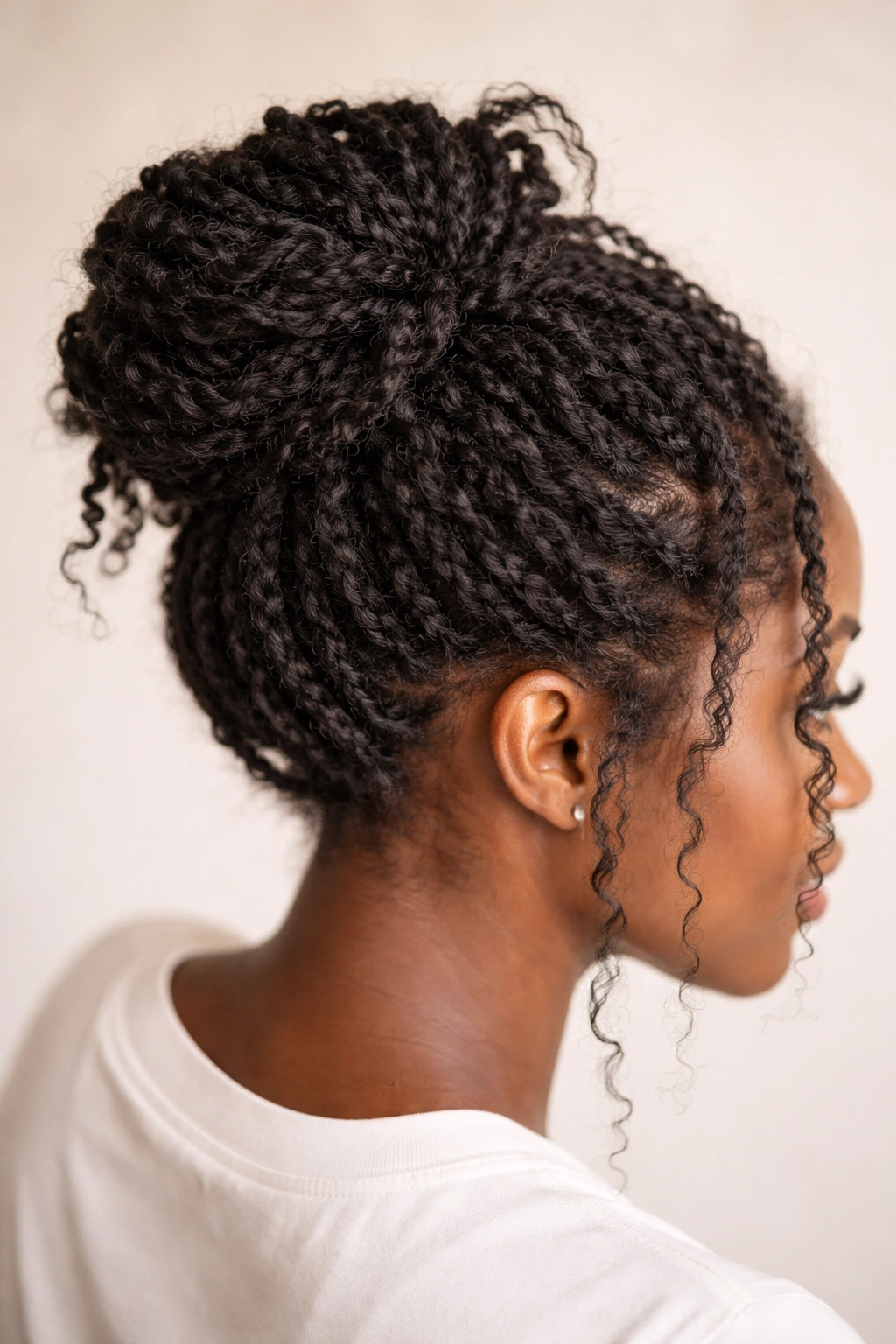
This version incorporates two-strand twists throughout your hair before you bun it, creating incredible visual texture and dimension. It’s a style that takes slightly more time to set up, but once it’s done, you can wear it for days. The twists create natural-looking coils and waves within your bun, so it reads as much more intentional and styled than a simple gathered bun.
Building the Base with Twists
Start by dividing your hair into 4-6 sections (depending on density and how much texture you want). Apply a curl cream or light styling mousse to each section, then two-strand twist each section from root to tip. Once all your twists are done, gather them up into a bun at your preferred height (high, mid, or low). Wrap the twists around each other at the base to create that messy, undone shape. The twists provide structure while still looking relaxed.
Why Twists Create the Perfect Messy Aesthetic
Because twists already have visual interest and definition, your bun automatically looks more put-together than a simple gathered version. Even if pieces come loose or it gets slightly messed up throughout the day, it still reads as intentional rather than accidental. This is especially true for people with tighter curl patterns who might struggle to get that “messy” look any other way.
Maintenance and Longevity
Two-strand twist messy buns genuinely last. You can wear this style for 3-5 days comfortably, and depending on how you sleep and your hair’s natural moisture, they might even look better on day two or three. Just refresh with a little water and product in the morning. If pieces come loose, you can either re-twist them or embrace the looser, even-messier look.
4. The Sleek-to-Messy Hybrid Bun
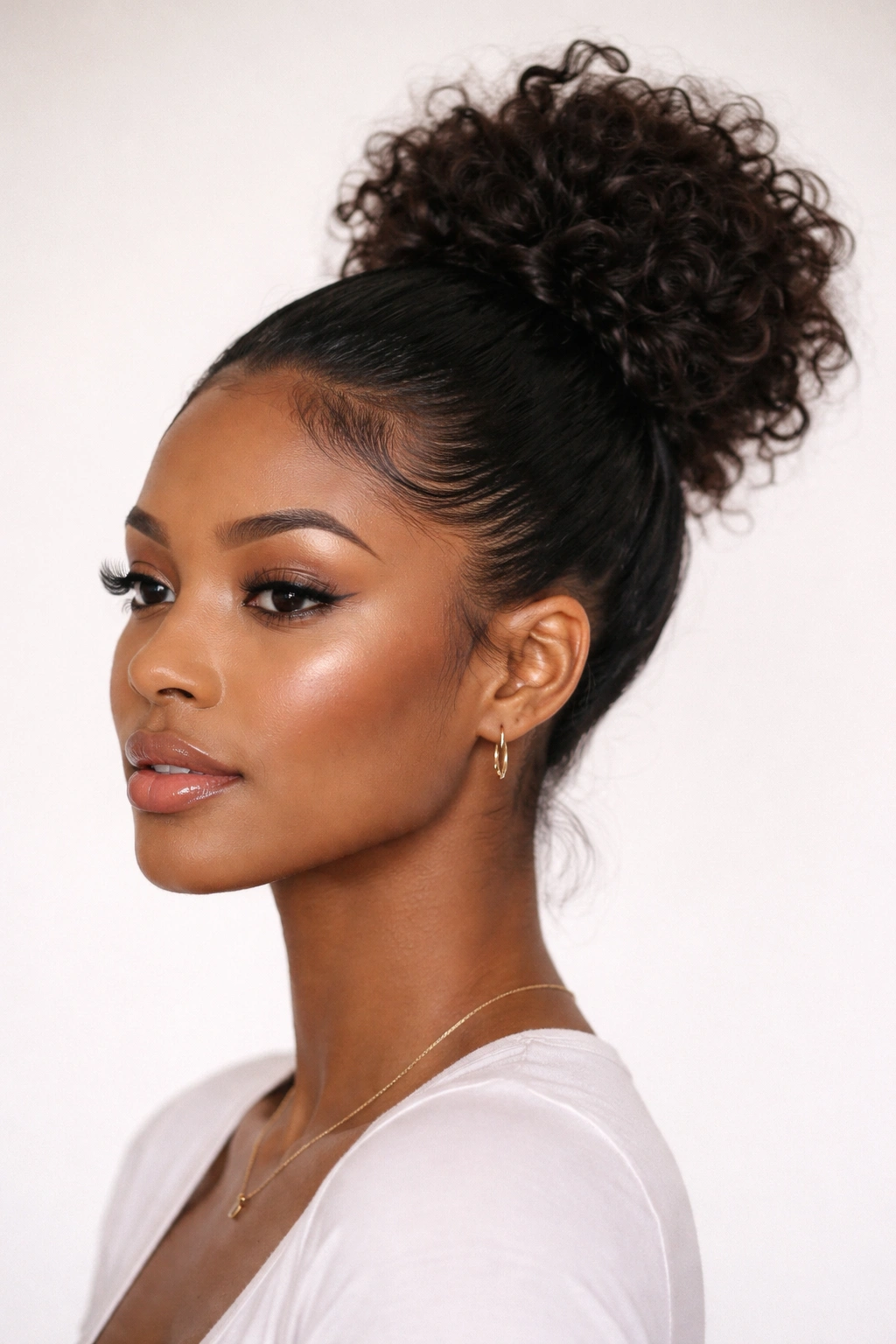
This style takes a sleek, smooth pulled-back section (often with edges laid with gel) and combines it with a voluminous, textured bun on top. It’s the ultimate balance of polished and casual, giving you the best of both worlds. You get that sharp, intentional look at the hairline and scalp, then all the texture and dimension you want in the actual bun.
Creating the Contrast
Brush or slick back your hair smooth from your hairline and sides, securing it with gel or edge control so it stays smooth and shiny. This creates a clean, defined frame for your face. Gather all that smoothed hair, plus any hair at the crown and back, into a bun at the nape of your neck or slightly higher. Now make that bun as messy and textured as you want—pull sections, let curls spring out, embrace the volume. The sleek foundation makes the messy bun read as intentional contrast rather than just undone.
Best for Which Hair Types
This is particularly stunning on people with mixed textures—maybe looser curls on top and tighter coils underneath, or thick, dense hair that naturally separates into sections. The sleek part ensures you look polished even if your hair is slightly matted or undefined in those front sections, while the messy bun gives you a place to show off all your curl definition and volume.
Locking It In
Edge control or a strong-hold gel is essential for the sleek portion, but you want something lightweight for the actual bun section so it doesn’t look stiff or crunchy. Apply gel only to the sections you’re smoothing back, then use a lighter product or even just water for the bun portion. This gives you contrast in texture that actually looks intentional.
5. The Braided Messy Bun
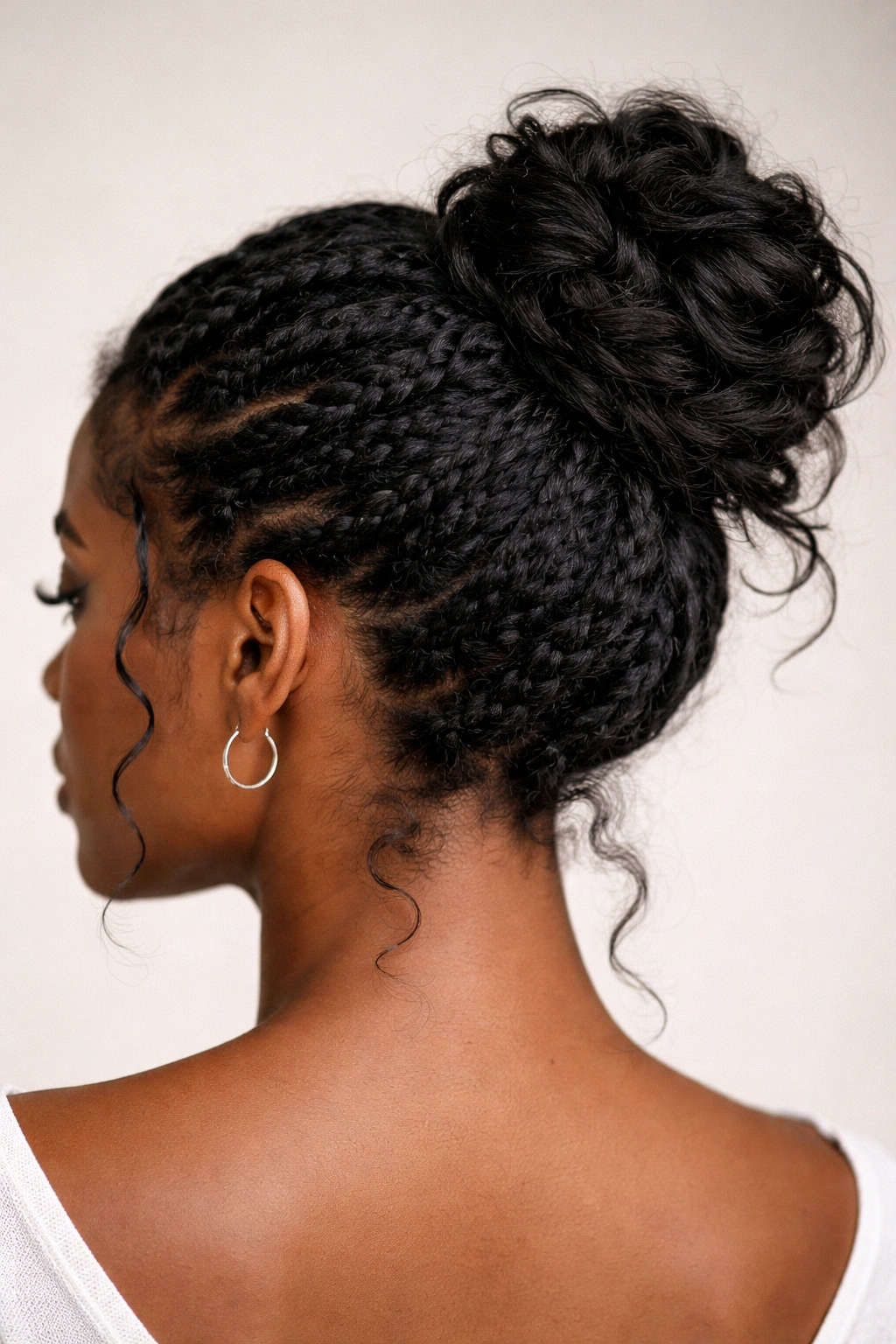
Incorporating braids—whether cornrows, box braids, or regular three-strand braids—into your messy bun adds another dimension of texture and visual interest. This is a style that gives you more staying power than a simple bun, plus it’s genuinely protective because braids shield your ends. You’re protecting your hair while creating a look that reads as intricate and intentionally styled.
How to Build It
Divide your hair into 3-5 sections and braid each one (cornrows are great for a sleek-braided effect, regular three-strand braids are perfect if you want looser texture). Gather the braids up into a bun, then gently pull the sides and texture of each braid outward to create volume and that messy appearance. Because braids have structure, your bun holds shape beautifully without needing to be super tight. You can also leave a few braids loose around your face for a softer frame.
The Protective Benefit
Unlike a regular bun where your ends are wrapped around an elastic, in a braided bun your ends are tucked inside the braids themselves, which means they’re genuinely protected from friction and breakage. This is why many people return to braided messy buns again and again—the protective element combined with the style is a real win.
Styling Timeline
These braids can last 5-7 days easily, and they actually look better on day two or three once the braids have relaxed slightly and the bun gets even messier. You can wear it for a week, then unbraid and refresh with a new style. For people looking for low-manipulation protective styling, this is genuinely one of your best options.
6. The Wrap-Around Messy Bun
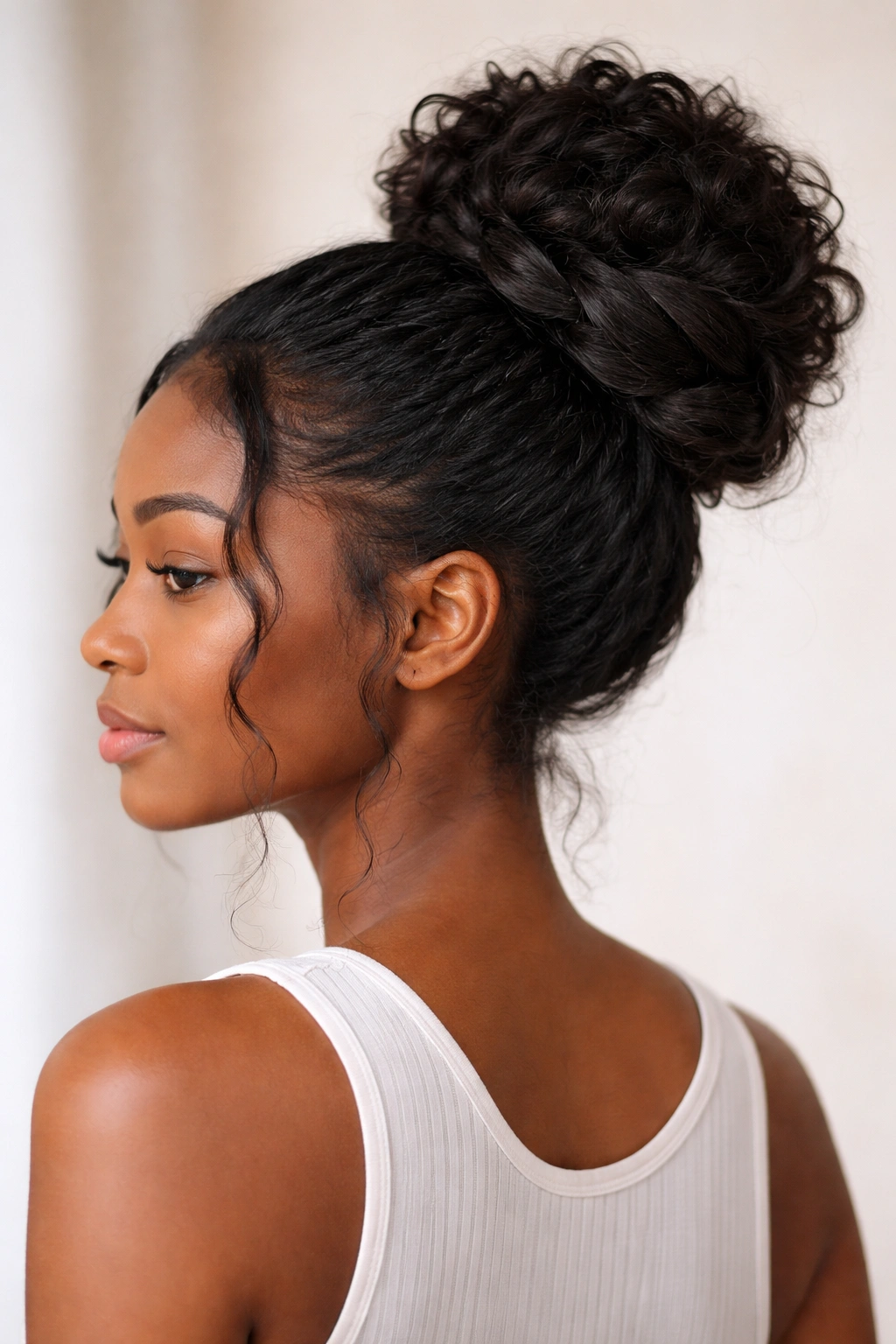
This style uses one or two thick sections of hair that you wrap around the base of your bun, creating a finished, almost elegant look while still maintaining that effortlessly messy vibe. It’s surprisingly chic and works especially well if you have thicker, denser hair that can hold this kind of structure. The wrap creates a visual anchor that makes the messiness look intentional.
The Technique
Gather your hair into a high or mid-level ponytail and secure it loosely. Take a thick section from one side of the ponytail and wrap it around the base of the bun, securing it with bobby pins as you go. If you have enough density, take another section from the opposite side and wrap it the opposite direction, creating a crisscross effect. Let the remaining hair puff out messily from the center. The wraps frame the bun beautifully and give it shape.
Why It Works for Textured Hair
Because textured hair naturally has volume and body, the wrapped section stands out visually and creates real dimension. You’re not fighting against your hair’s natural texture—you’re using it. The wrap sections are sleek and define the bun’s shape, while the center is all volume and natural curl, creating a really dynamic look.
Making It Last
These wrapped buns hold incredibly well because the wrapping actually secures the bun itself, not just an elastic. You can wear this for days and it stays relatively intact. If it loosens slightly, just re-wrap one section and pin it back down.
7. The Half-Up, Half-Down Messy Bun
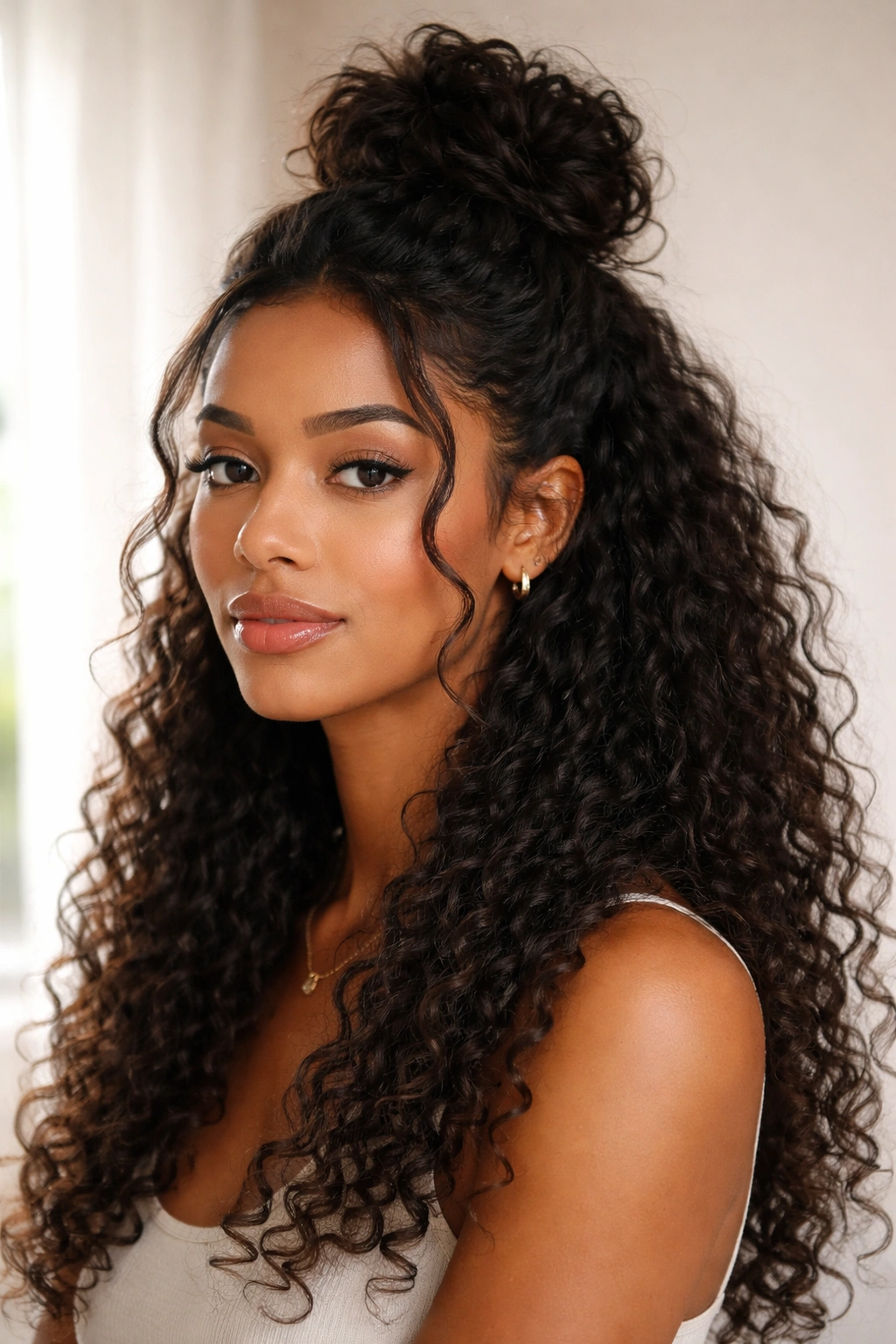
For people who aren’t ready to fully commit to an updo, the half-up bun is the perfect middle ground. You get the practical benefits of having some hair out of your face, plus the style factor of a bun, but you’re also showing off the length and texture of your hair. It’s particularly stunning on people with longer natural hair who want to display their curl pattern.
Building Your Half-Up
Take the top half or two-thirds of your hair and gather it at the crown or slightly higher, securing it into a loose ponytail. Now twist or wrap sections of that ponytail around the base to create a bun. The bottom half of your hair stays completely down, so your curls, coils, or waves frame your shoulders and back. You get maximum texture and maximum volume this way.
Best Curl Patterns for This Style
Half-up messy buns look absolutely incredible on people with looser curl patterns—3B waves, 3C curls, 4A coils—where your full hair length really showcases the texture. Even on tighter patterns, though, you can absolutely rock this if you’re looking for a lighter style option. The messiness of the bun balances with the smoothness of the down portion.
Keeping It Wearable
Make sure the bun is genuinely loose and your hair tie is loose enough that you’re not creating tension. The whole benefit of this style is that it feels light and effortless. If it feels tight or heavy, loosen it. You’re looking for something you could wear all day comfortably, whether you’re working, running errands, or just hanging out.
8. The Asymmetrical Side Messy Bun
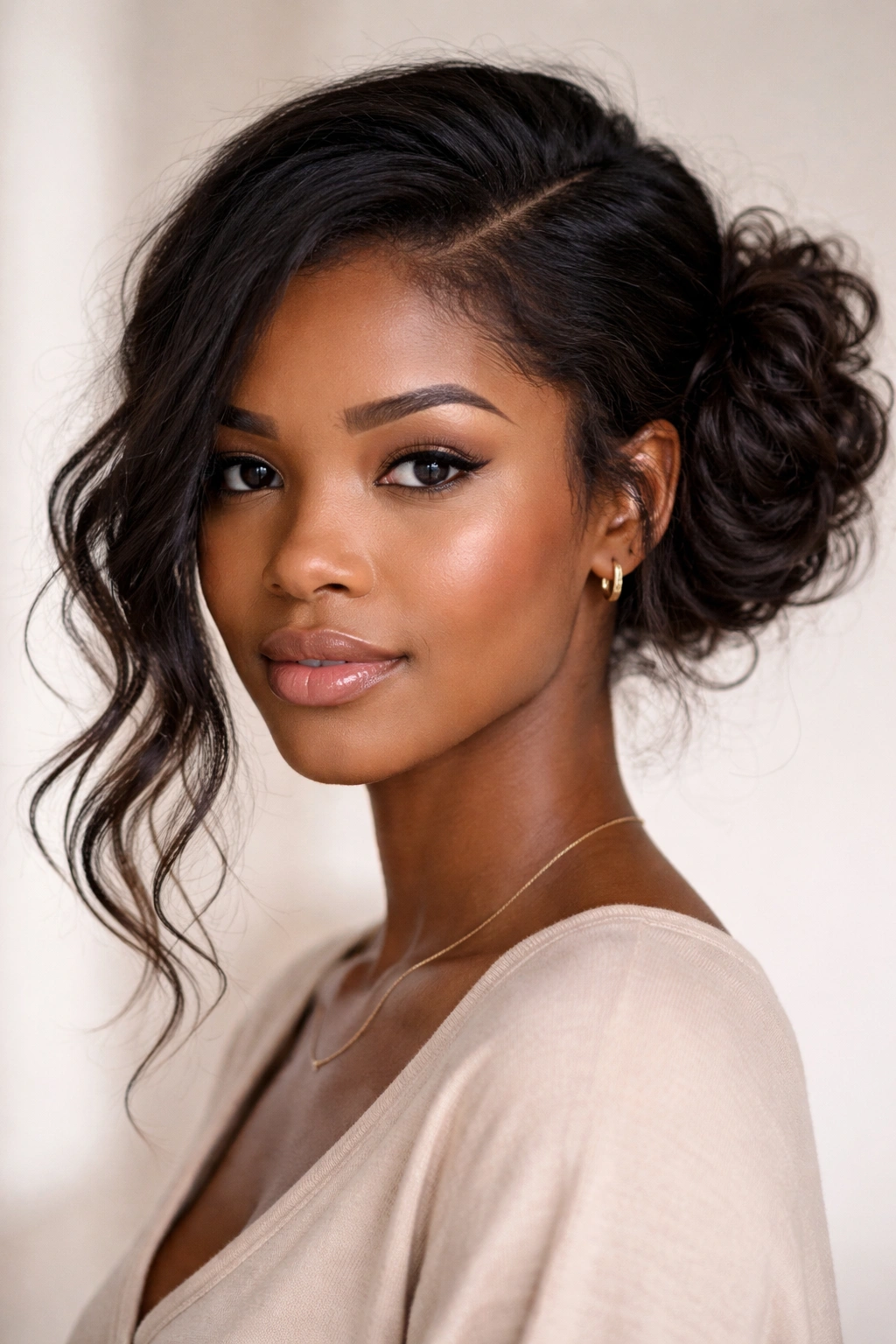
This style positions your bun to one side—off-center and slightly lower—creating a modern, fashion-forward look that’s still totally wearable. Asymmetry is having a major moment in natural hair styling because it’s distinctive and flattering, and it instantly elevates a simple messy bun into something that reads as more intentionally styled.
Creating the Off-Center Look
Gather your hair to one side and back, creating a ponytail that sits lower and more toward the nape on one side of your neck. Secure it loosely, then twist or wrap sections to create your messy bun. The asymmetry happens naturally because you’re not pulling from the center—you’re pulling from one side. You can leave the opposite side of your hair down or pull it back smoothly for contrast. If you want extra asymmetry, leave more curl-definition on the unbunned side.
Who This Flatters
Side-parted and asymmetrical styles are generally flattering on most face shapes, but they’re particularly stunning if you have an oval or heart-shaped face. The off-center placement elongates and balances. It’s also a genuinely practical style because you’re not bunning all your hair, so there’s less weight pulling on your crown, which means less tension on your hairline.
Styling Angle
This bun works beautifully with a sleek-brushed side or even a deep part. You could even add a small braid or twist along your part line for extra detail. The asymmetry gives you room to play and add personal style choices without the look feeling overdone.
Final Thoughts
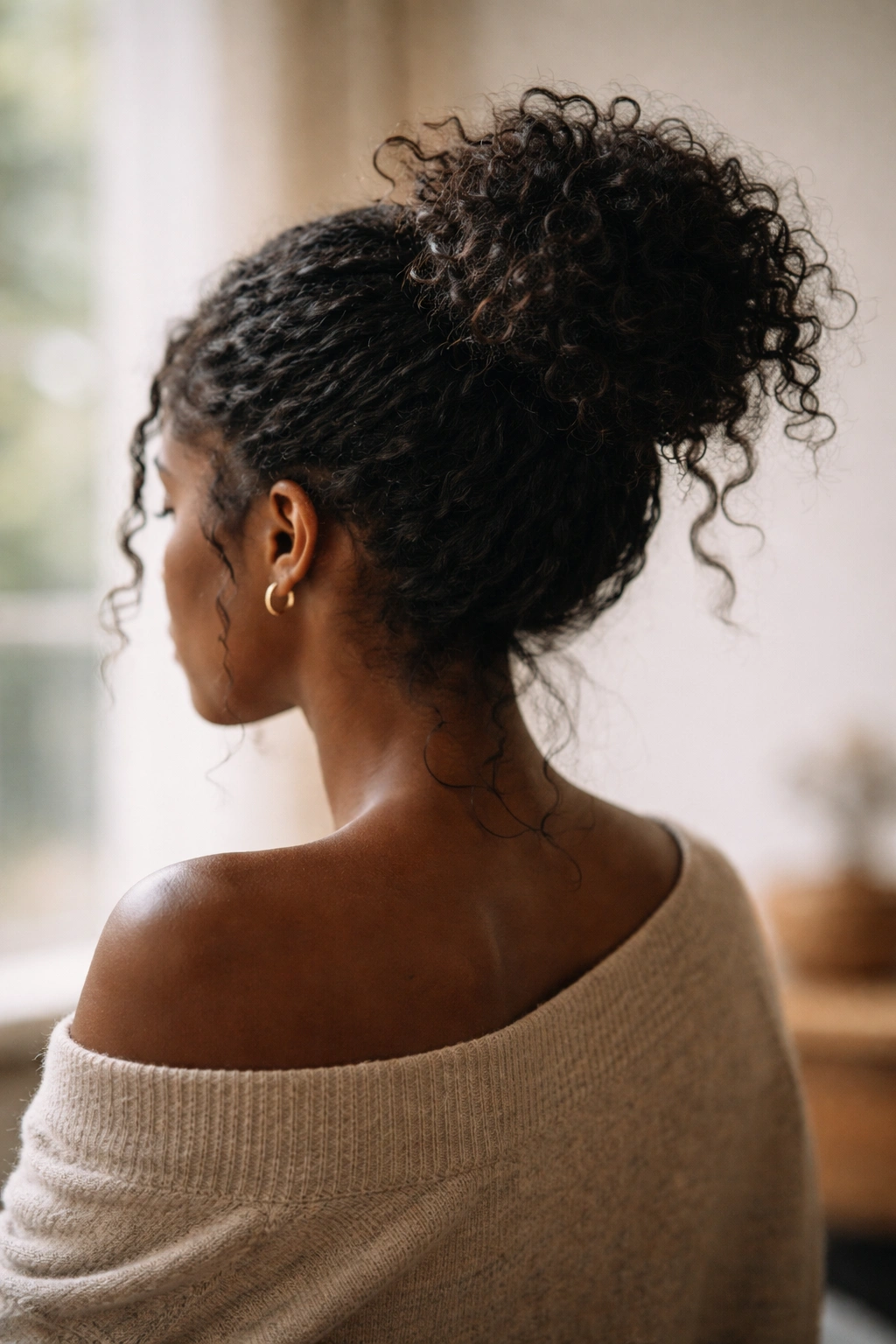
Messy bun styles are so much more than just a convenient way to get your hair off your face—they’re a legitimate styling category that celebrates what natural Black hair does best. The texture, the volume, the dimension, the way it catches light and moves—all of that is an asset in messy bun styling, not something to work around. Whether you’re drawn to the simplicity of a high crown bun, the sophistication of a low placement with undercut detail, or the intentional mess of a braided version, there’s absolutely a messy bun approach that fits your hair type, your lifestyle, and your aesthetic.
The key to making any of these styles work for your hair is understanding your own curl pattern and how your hair naturally wants to move. Your specific texture, density, and length will determine which of these versions feels most effortless and holds best. You might find that what works perfectly in summer (when your hair has more moisture and definition) needs slight tweaks in drier seasons. That’s just how it goes with natural hair—you’re working with a living, breathing thing that responds to environment and care.
Start with the style that intuitively appeals to you most, and give yourself permission to adjust as you go. Messy buns are inherently forgiving—that’s the whole point. If it doesn’t look perfect on the first try, that’s actually part of the aesthetic. Embrace the texture, work with your hair’s natural behavior, and you’ll find that these styles become easier and look better every time you do them.
