

Second-day hair has a bad reputation, but honestly, it’s one of the best-kept secrets for creating genuinely effortless, textured hairstyles. Those greasy roots and slightly limp strands that make you want to hide under a hat? They’re actually the perfect foundation for a messy bun that looks intentional, chic, and like you woke up that way—even though we both know you spent fifteen minutes perfecting it. Fresh hair, with all its moisture and bounce, can actually work against you when you’re trying to create the undone aesthetic that makes messy buns so appealing. Second-day hair gives you grip, texture, and that lived-in quality that makes the style feel modern instead of sloppy.
The trick is knowing which bun styles work best with the hair texture you have on day two, and how to elevate them just enough that they look intentional. Whether you’re heading to the office, running errands, or meeting friends for coffee, there’s a messy bun variation that’ll work with exactly where your hair is right now. These aren’t fussy styles that demand perfect execution—they’re forgiving, adaptable, and honestly get better the more you mess with them. Here are ten ways to wear your second-day hair that’ll make you never want to wash it.
1. The Classic High Messy Bun
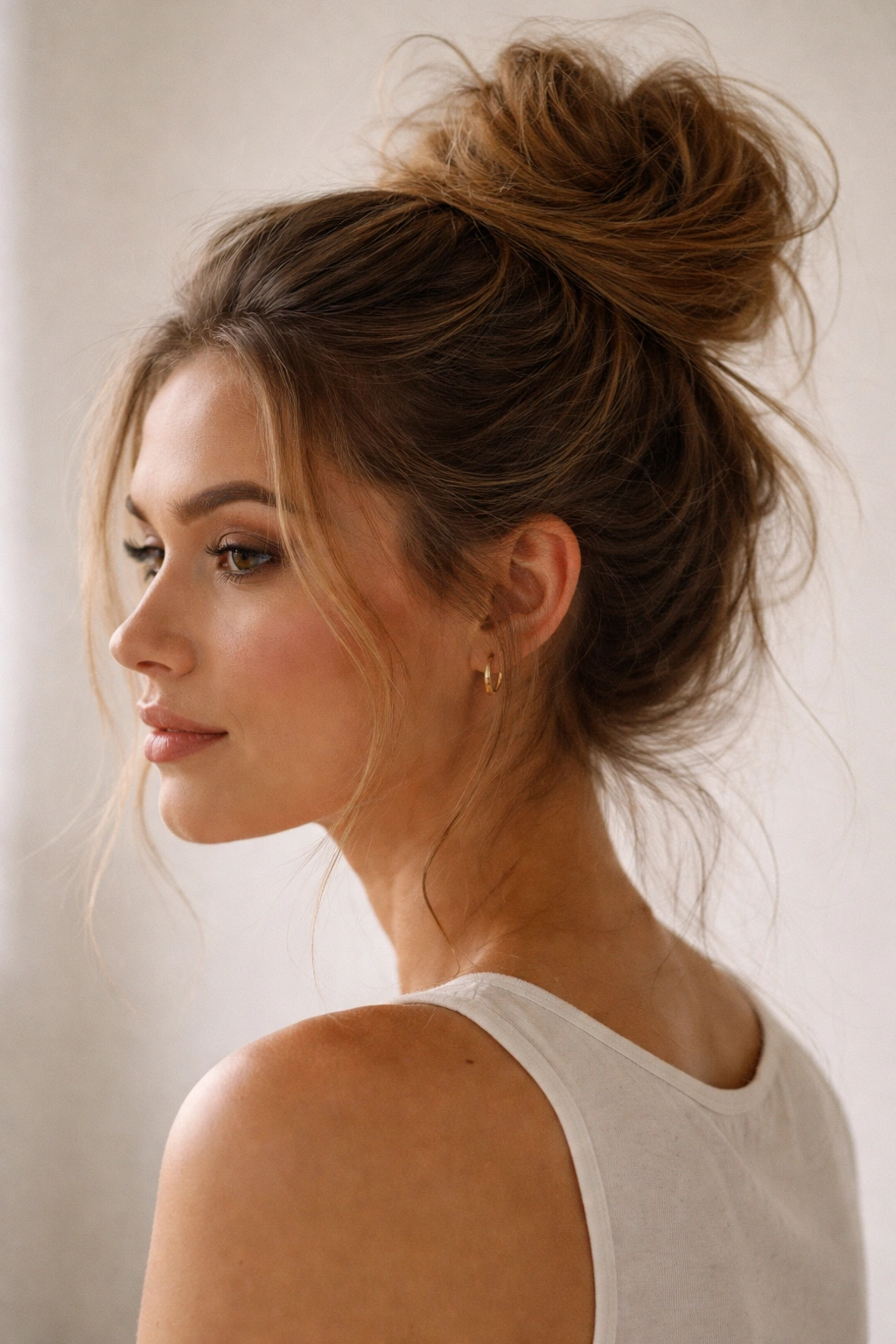
This is the foundation of every messy bun that’s ever existed, and it’s a style that absolutely thrives on second-day texture. You’re aiming for that loose, slightly chaotic gather at the crown that reads as effortlessly cool rather than hastily thrown together. The beauty of second-day hair here is that the slight greasiness provides grip without needing product, and any flyaways actually add to the intentional messiness you’re going for.
Why It Works Best on Second-Day Hair
Second-day hair has just enough texture and grip to hold this style without falling completely flat or requiring a ton of bobby pins. Fresh hair tends to slip and slide, especially if it’s fine or straight—you end up spending forever securing a bun that still manages to shift the moment you move your head. With day-two texture, the bun holds its shape, looks fuller, and that slightly greasy base means your bobby pins actually stay put. The flyaways that would normally frustrate you? They become part of the charm, giving the bun that deliberately tousled look that’s so popular right now.
How to Create the Classic High Messy Bun
- Flip your head upside down and gather all your hair toward the crown, securing it loosely with an elastic band
- Don’t pull the elastic too tight—you want a relaxed hold that lets pieces move freely
- Gently tease the gathered ponytail with a fine-tooth comb or your fingers to create texture and volume
- Twist the ponytail loosely and wrap it around the base of the elastic, tucking the ends underneath and securing with bobby pins placed at different angles
- Pull out a few strategic pieces around your face and hairline, and tousle everything with your fingers until it looks authentically undone
- A light spritz of texture spray can help hold the style, but it’s honestly optional with day-two hair
Pro tip: The messier you think it looks, the more intentional it probably appears to everyone else. Resist the urge to perfect it—that’s what makes this style actually work.
2. The Textured Low Bun
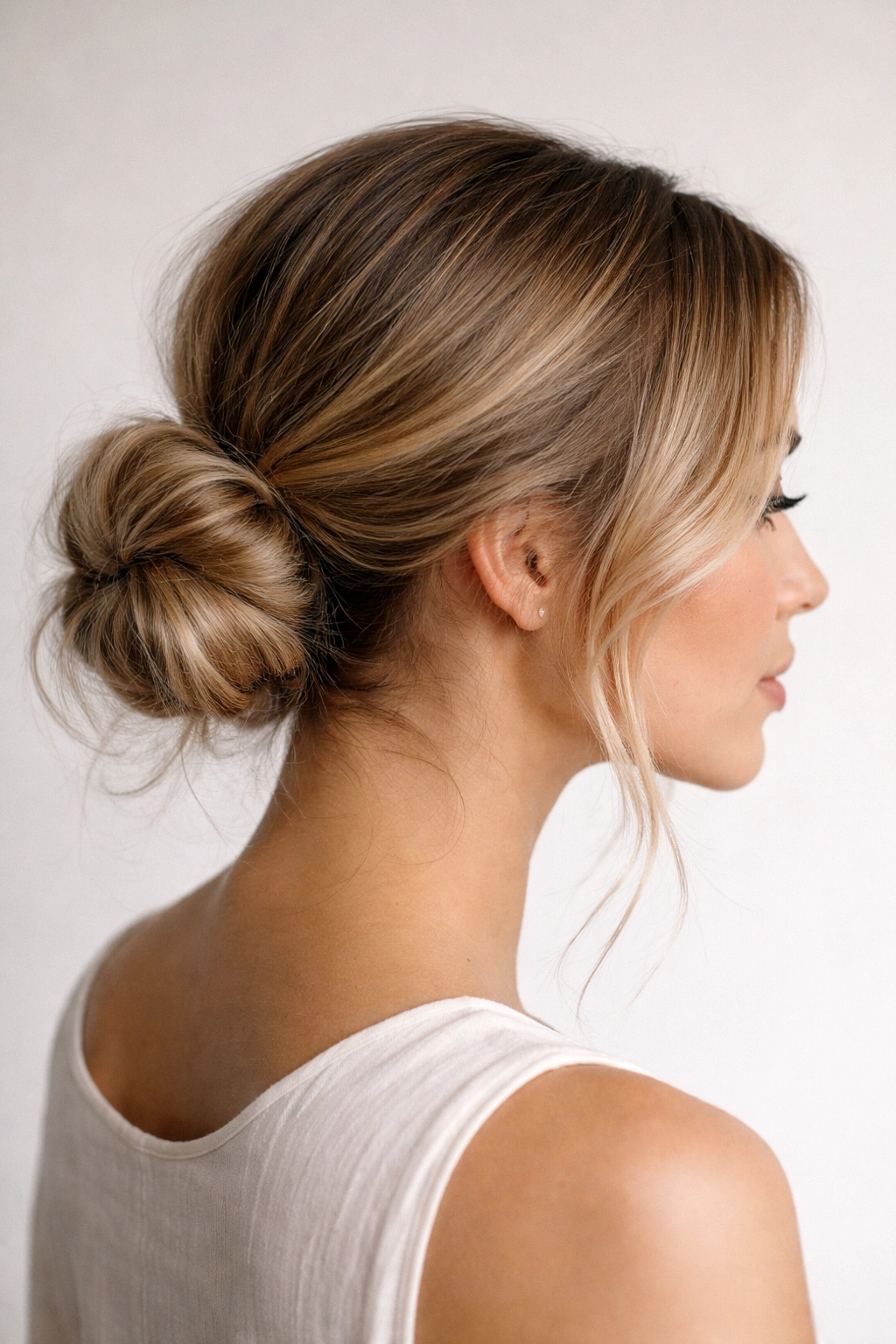
This style leans into the greasiness and lack of bounce that second-day hair naturally has, transforming those characteristics into a sophisticated, structured look. A low bun sits at the nape of your neck and works beautifully when your hair has that slightly heavier, more defined texture that develops overnight. This isn’t a style that requires bounciness or volume—it’s built on the assumption that your hair is going to cooperate by being slightly limp, slightly textured, and ready to hold a tidy shape.
The Sophistication Factor
A low bun automatically looks more polished and intentional than a high one, even when it’s technically messier. Second-day hair’s natural state actually enhances this effect because the texture reads as deliberately smooth and controlled rather than just floppy. You’re working with what your hair naturally wants to do—sit closer to your head, stay put, and hold shape—which makes the whole process feel easier and the result look more intentional.
Creating a Low Bun That Actually Holds
- Start with a low side ponytail by running your fingers through your hair and gathering it loosely at about ear level, slightly toward one side
- Secure the ponytail with an elastic that matches your hair color, but don’t pull too tight—low buns look best when they’re relaxed
- Divide the ponytail into two sections and gently twist each section, then wrap them around each other to create a loose, spiral texture
- Wrap the twisted ponytail around itself to form the bun shape, tucking the ends under and securing with bobby pins
- Leave some shorter pieces around your face loose for a softer, less corporate look
- This style works especially well if you brush your hair back into a small ponytail first—day-two hair’s texture means less slipping, and the style will stay put all day
Worth knowing: If your bun feels too tight or formal, gently pull the edges to loosen it slightly. A low bun shouldn’t feel restrictive—it should feel elegant but relaxed.
3. The Twisted Crown Bun
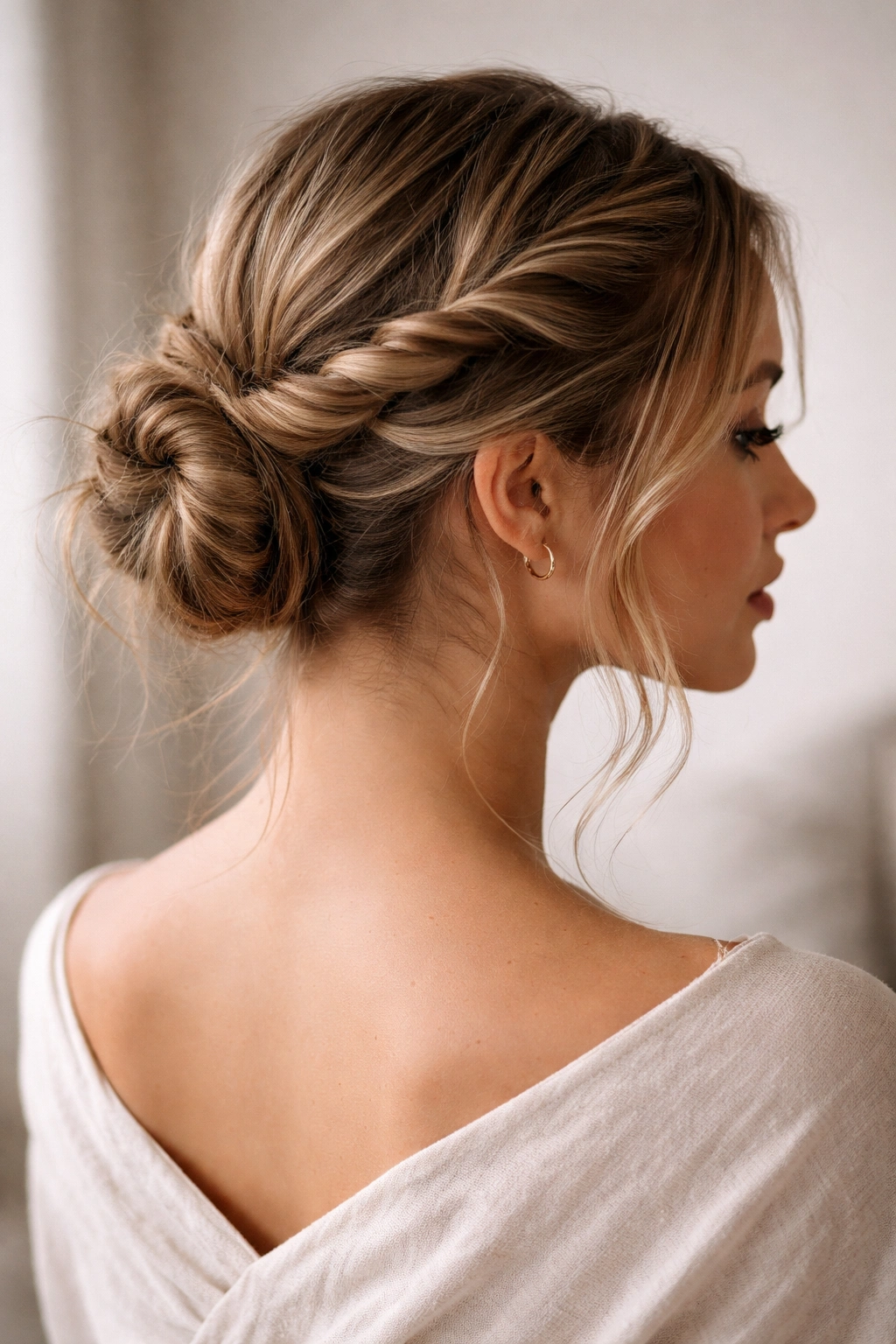
Instead of one continuous spiral, this style uses two or more twisted sections that wrap around your head like a crown before meeting at the back in a bun. It’s more romantic and intricate-looking than a standard messy bun, but second-day hair makes it surprisingly easy because the twists actually stay in place without constantly coming undone. The texture and slight greasiness grip the hair strands together, keeping each twist defined and tidy throughout the day.
Why the Twists Stay Put
The structure of twists relies on tension and grip—things that second-day hair provides naturally. If you’ve ever tried twisting fresh hair, you know it’s like trying to twist silk ribbons; the pieces separate and the twist flattens immediately. With second-day texture, individual strands cling to each other, creating a cohesive twist that you can actually see and that holds its shape. This means you can create a more intricate style without needing tons of bobby pins or product to hold everything in place.
Building the Twisted Crown
- Start on one side of your head and take a section of hair about two inches wide from your hairline
- Twist this section loosely as you move toward the back of your head, incorporating small pieces of hair as you go (like a basic two-strand twist)
- Pin the twist in place at the back of your head, or leave it loose for now and continue to the other side
- Repeat on the opposite side, creating a second twist that mirrors the first
- Gather all your hair into a bun shape at the back, securing with bobby pins
- Gently pull the edges and overall shape to create softness and texture
- The twists should frame your face and give the impression that everything was casually pulled together, which it technically was
Insider note: This style is exceptionally flattering for people with any hair texture because the twisted elements create structure and visual interest even if your overall style feels relaxed.
4. The Double-Looped Bun
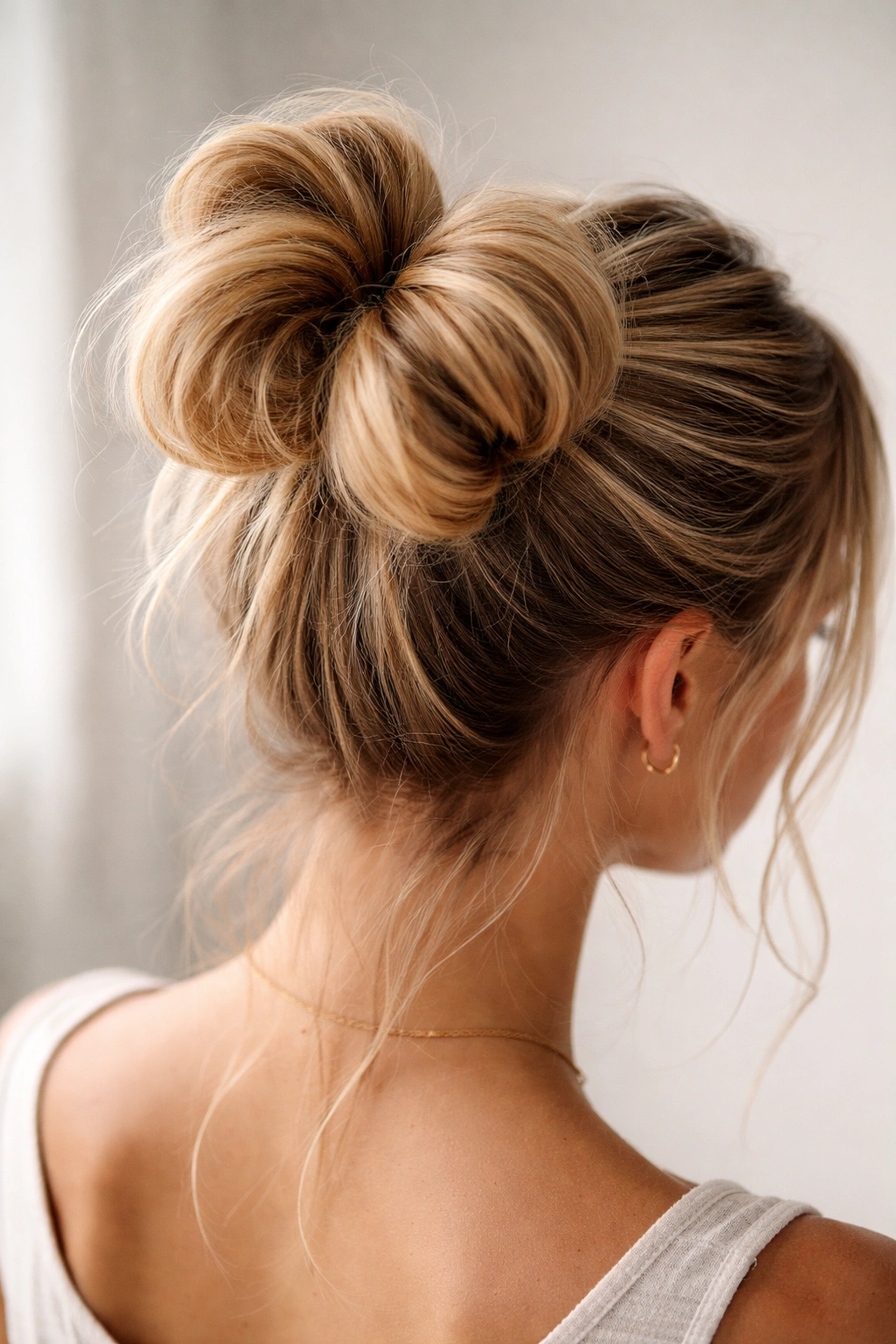
This version involves creating a ponytail, then looping the ponytail through the elastic to form two “loops” of hair instead of a traditional bun shape. It’s somewhere between a ponytail and a full bun, offering more visual interest than a standard ponytail while being faster to create than a traditional bun. Second-day hair’s texture prevents the loops from falling flat or looking limp, so they hold their shape beautifully throughout the day.
The Appeal of the Loop Structure
The loops create instant dimension and visual texture, so even if your second-day hair isn’t particularly voluminous, the style still looks full and intentional. Each loop catches light differently, and the slightly undone nature of the double loop reads as trendy rather than careless. This is also one of the most adjustable messy bun styles—you can make the loops as tight or as loose as you want depending on your mood and what you’re doing that day.
Executing the Double-Looped Bun
- Gather your hair into a high ponytail at the crown, securing loosely with an elastic band
- Take the ponytail and loop it back through the elastic, leaving the ends hanging out (don’t pull the entire length through—you want a loop shape)
- If your hair is thick, you might create two loops by dividing the ponytail in half before looping; if it’s finer, one large loop might be more proportional
- Leave pieces of hair hanging below the loops—these can be left straight, curled, or twisted depending on how polished you want the look
- Secure the loops with bobby pins if they feel loose, angling the pins in different directions for a secure hold
- Gently pull the edges of the loops to create texture and softness
Pro tip: This style works exceptionally well if you have layers in your hair, as the varying lengths create natural texture and movement within the loops.
5. The Braided Wrap Bun
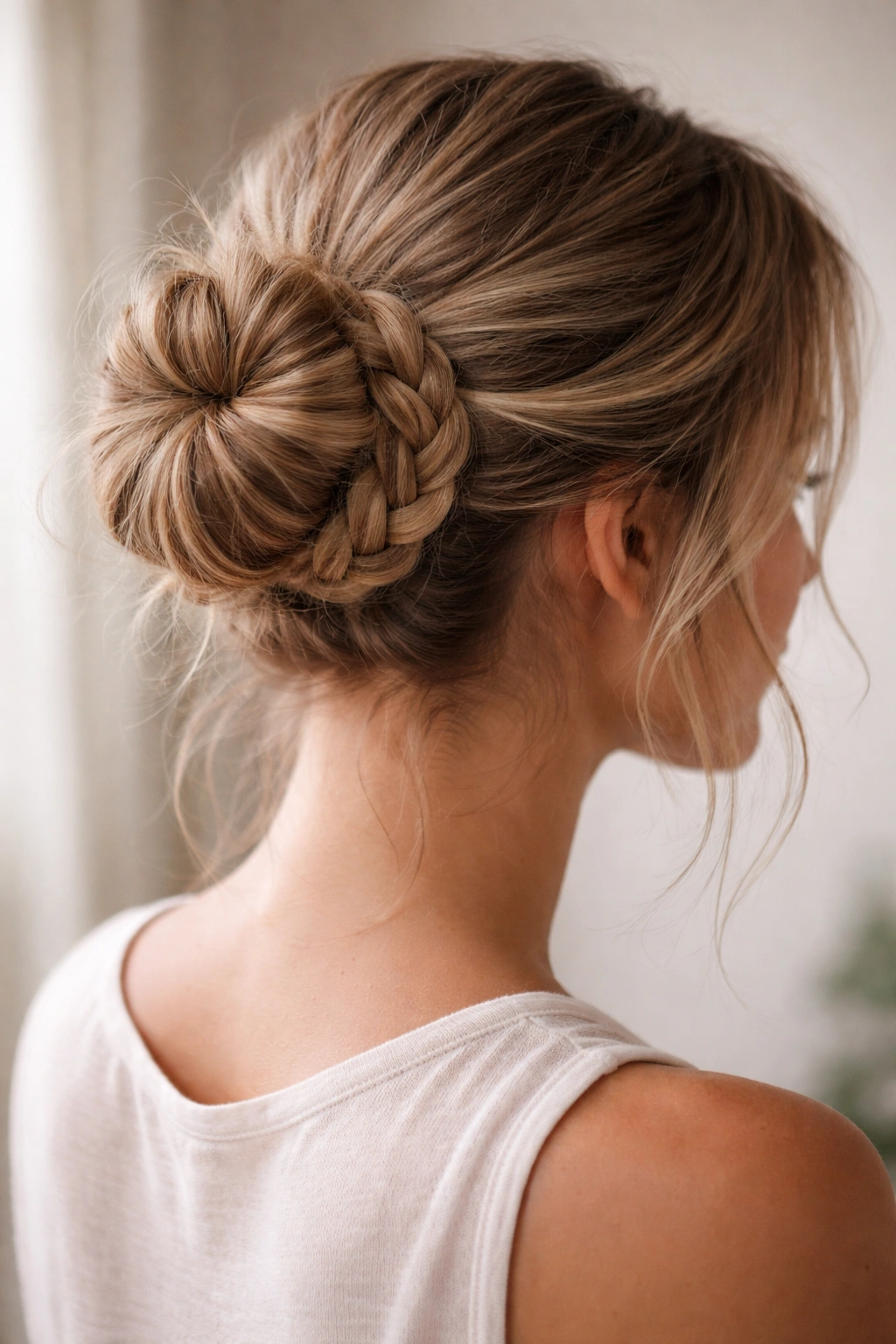
A single braid wraps around a central ponytail or bun shape, adding texture and visual interest while using minimal effort. The braid creates structure that holds even loose, second-day hair in place, and the texture of the braid itself adds dimension that makes the style look more intentional and polished than a simple messy bun. This is the perfect “I look like I tried but didn’t actually spend that much time” style.
Why Braids Work with Texture
A braid’s structure depends on tension and grip between hair strands, which second-day hair provides in abundance. Fresh hair braids can look separated and wispy, but day-two hair creates a defined, chunky braid that reads as intentional. The slight greasiness actually makes the braid look more cohesive and textured rather than thin or weak.
Creating the Braided Wrap
- Start with a loose, low ponytail secured at the nape of your neck
- Take a small section of hair from near the elastic and begin a three-strand braid, incorporating small pieces as you move around the ponytail
- As you braid around the ponytail, you’re essentially wrapping the braid around the base like a crown
- Once you’ve wrapped around completely, tuck the end of the braid underneath and secure with bobby pins
- Tease and loosen the braid slightly so it looks textured rather than tight and polished
- Leave face-framing pieces down for a softer, less structured look
- The ponytail can stay as a ponytail below the braided wrap, or you can coil it into a small bun at the base
Worth knowing: The braid doesn’t need to be perfect—slightly uneven, slightly loose braids actually look more intentional and modern than perfectly executed ones.
6. The Undone Top Knot
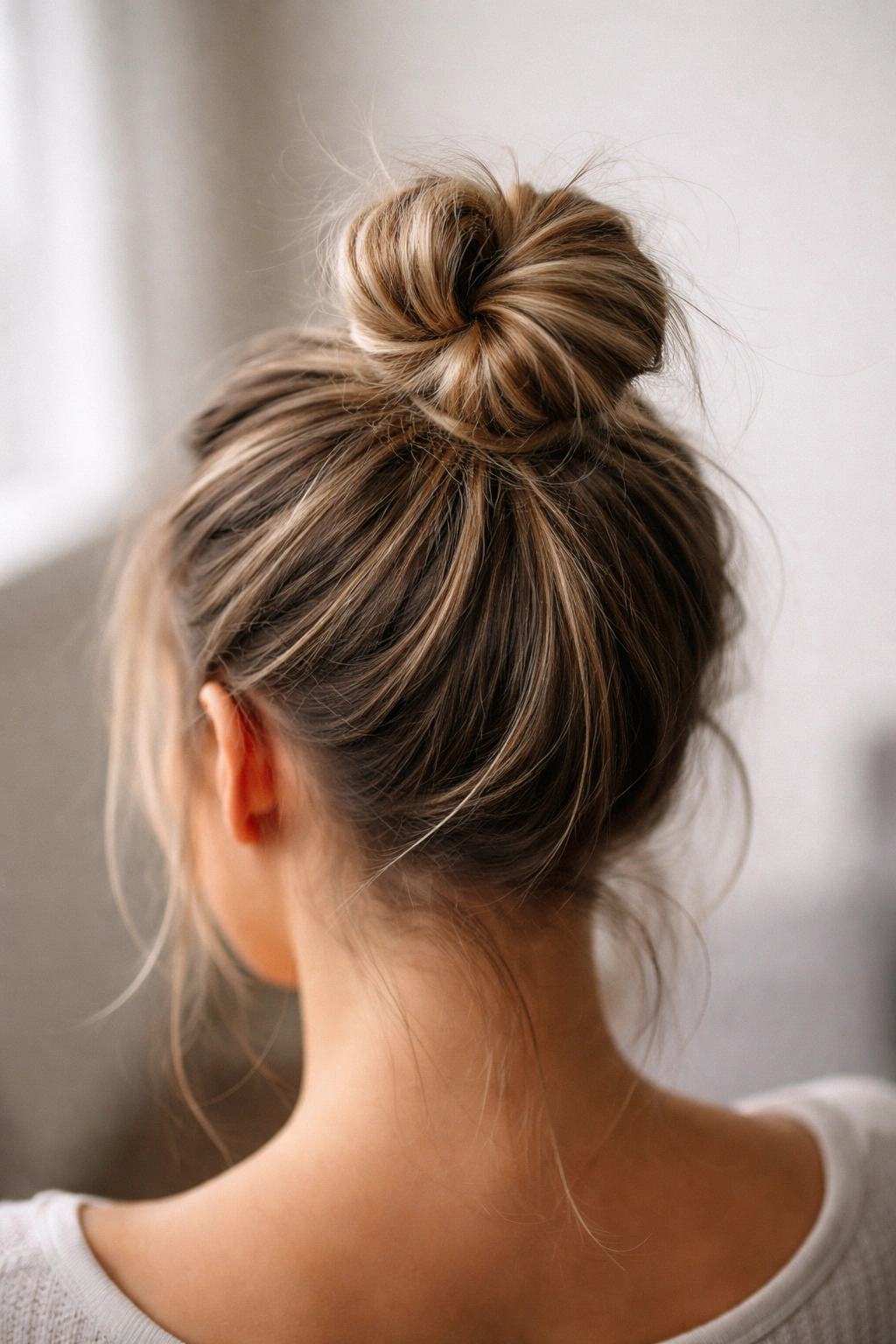
If a messy bun is casual, the undone top knot is practically anti-fashion in the best possible way. It’s smaller and tighter than a traditional messy bun, sitting higher on your head with a more compact shape. Second-day hair is ideal here because the lack of bounce prevents the knot from looking too voluminous or cartoonish, and the texture helps everything grip together into a defined shape.
The Minimalist Appeal
This style says “I literally just twisted my hair and called it done,” which is essentially what you’re doing. There’s no pretense of volume, no fancy braids, no complicated wrapping—just a tight, twisted knot at the crown. Second-day hair actually excels here because you don’t need to do anything special to make it work; the hair’s natural state does most of the heavy lifting.
Forming the Top Knot
- Pull your hair straight up to the very crown of your head, gathering it into a high ponytail
- Twist the ponytail tightly as you wind it around itself, forming a small, compact knot
- Secure the knot with bobby pins angled in multiple directions—this should be a fairly tight, secure hold
- You can leave short pieces around your face down for softness, or keep everything pulled back for a sleeker look
- A few intentional flyaways actually enhance the “undone” vibe, so don’t stress about perfection
- If the knot feels too tight, gently pull the edges to loosen it slightly
Pro tip: The undone top knot works especially well if you’re wearing an outfit with minimal hair styling—let the simplicity of the knot speak for itself.
7. The Side-Swept Bun
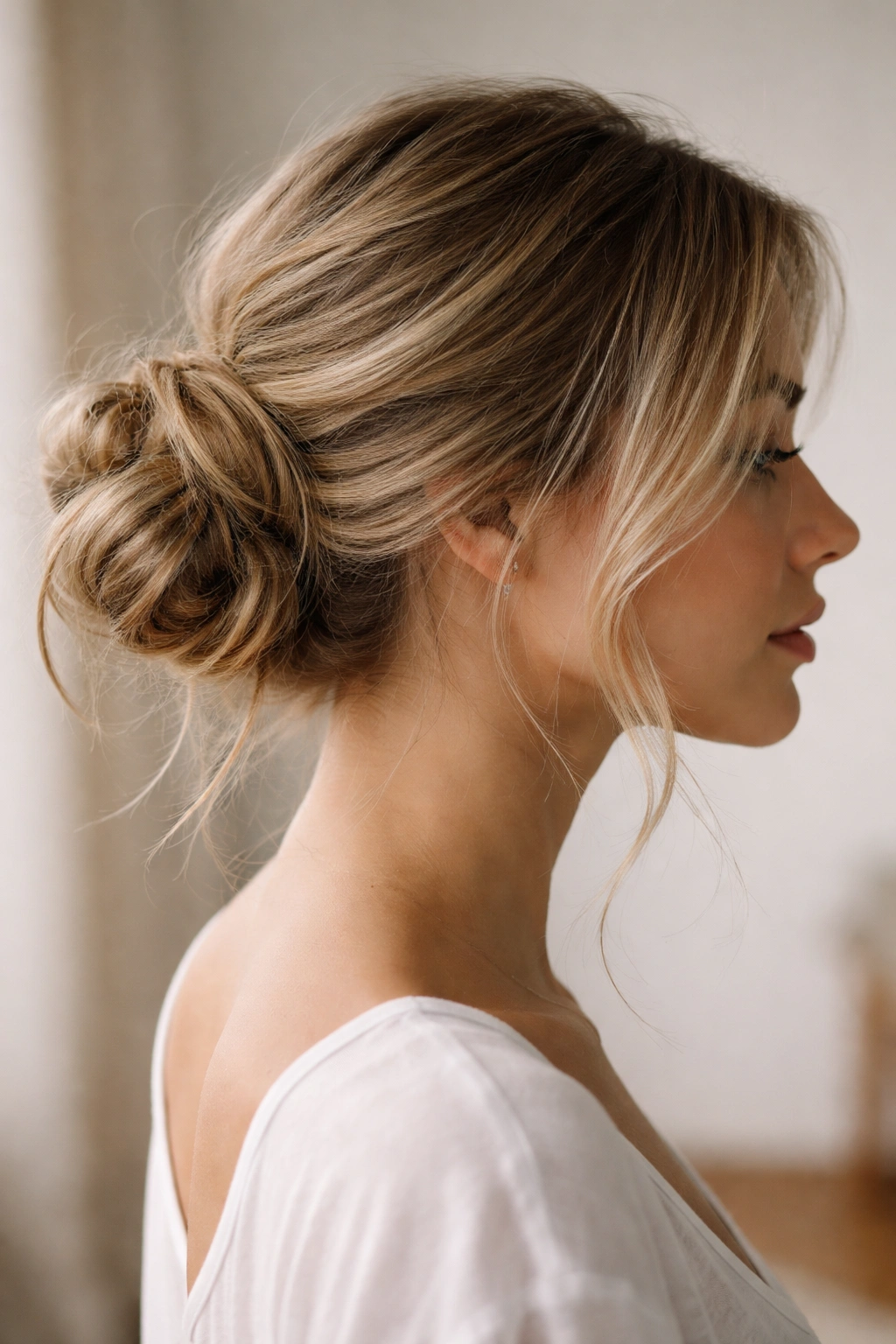
This style gathers all your hair to one side of your head, creating a bun that sits at ear level rather than at the crown or nape. It’s inherently asymmetrical and casual, and second-day hair’s texture creates enough grip to keep everything on one side without constantly slipping toward the center of your head. The side-swept positioning feels softer and more romantic than a centered bun while still being incredibly practical.
The Flattering Angle
Sweeping your hair to one side automatically creates a face-framing effect that’s more interesting than a centered bun. Second-day texture means the bun holds its position on the side of your head all day, and you don’t have to readjust it constantly. The slight greasiness and lack of bounce actually help the bun stay where you’ve placed it rather than slowly migrating toward the center.
Building the Side Bun
- Tip your head to one side and gather all your hair toward the side, creating a side ponytail at about ear level
- Secure the ponytail with an elastic, and don’t worry if it feels slightly loose—side buns look best when they’re relaxed
- Twist or coil the ponytail around itself, forming the bun shape on the side of your head
- Secure with bobby pins that are placed at various angles into the bun
- Pull pieces around your face gently to create softness and movement
- You can leave some hair loose on the opposite side of your head for more texture and interest
- This style works beautifully with a slightly off-center part, which enhances the asymmetrical vibe
Insider note: This style is especially flattering if you have a longer face shape, as the side positioning creates the visual illusion of width.
8. The Pin-Tucked Bun
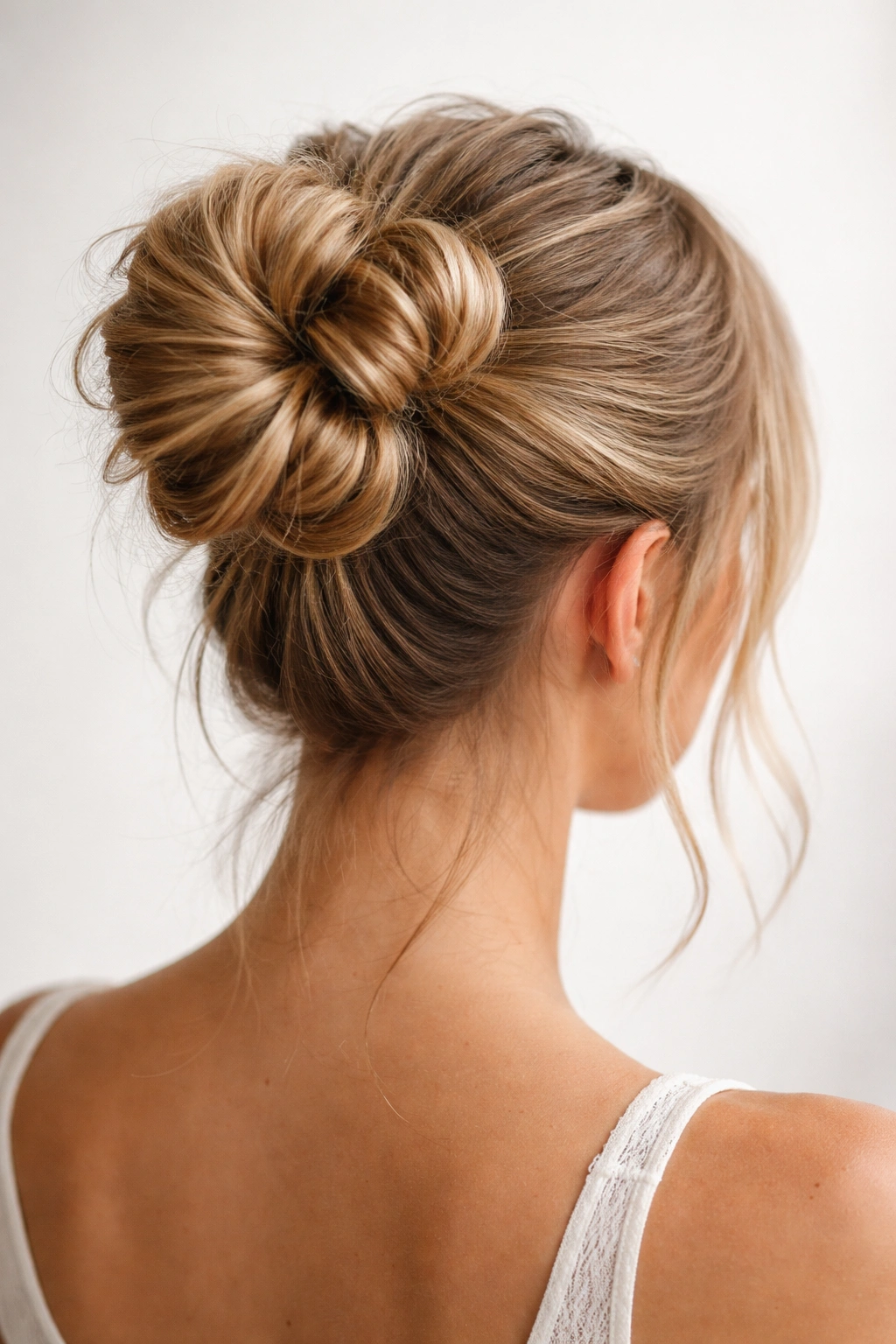
Instead of twisting your ponytail into a bun, you’re rolling sections of the ponytail and pinning them around the base to create a bun made of multiple coils. It’s more sculptural and intentional-looking than a twisted bun, and each coil creates texture and dimension that reads as polished without being overly formal. Second-day hair’s texture makes each coil defined and visually distinct rather than blending together into a blob.
The Sculptural Element
The pin-tucked bun has visual structure that a simple twisted bun lacks. Each coil is its own element, and the way they’re arranged creates a finished, intentional look. Second-day texture is ideal because each coil reads as a distinct element rather than a mushy, undefined shape. The slight greasiness means each coil holds its shape and doesn’t flatten against your head.
Creating the Coiled Effect
- Gather your hair into a high ponytail and secure with an elastic band
- Divide the ponytail into 4-6 sections depending on how thick your hair is
- Roll the first section into a coil and pin it around the elastic at the base of the ponytail
- Repeat with each section, positioning the coils in different directions around the elastic
- Some coils can face upward, some downward, creating a three-dimensional effect
- Tuck and adjust until the bun feels secure and visually balanced
- Gently pull the edges of each coil slightly to create texture
- Leave a few shorter pieces around your face loose for softness
Worth knowing: You can make the coils as tight or as loose as you want. Looser coils read as more casual and undone, while tighter coils look more intentional and structured.
9. The Half-Up Messy Bun
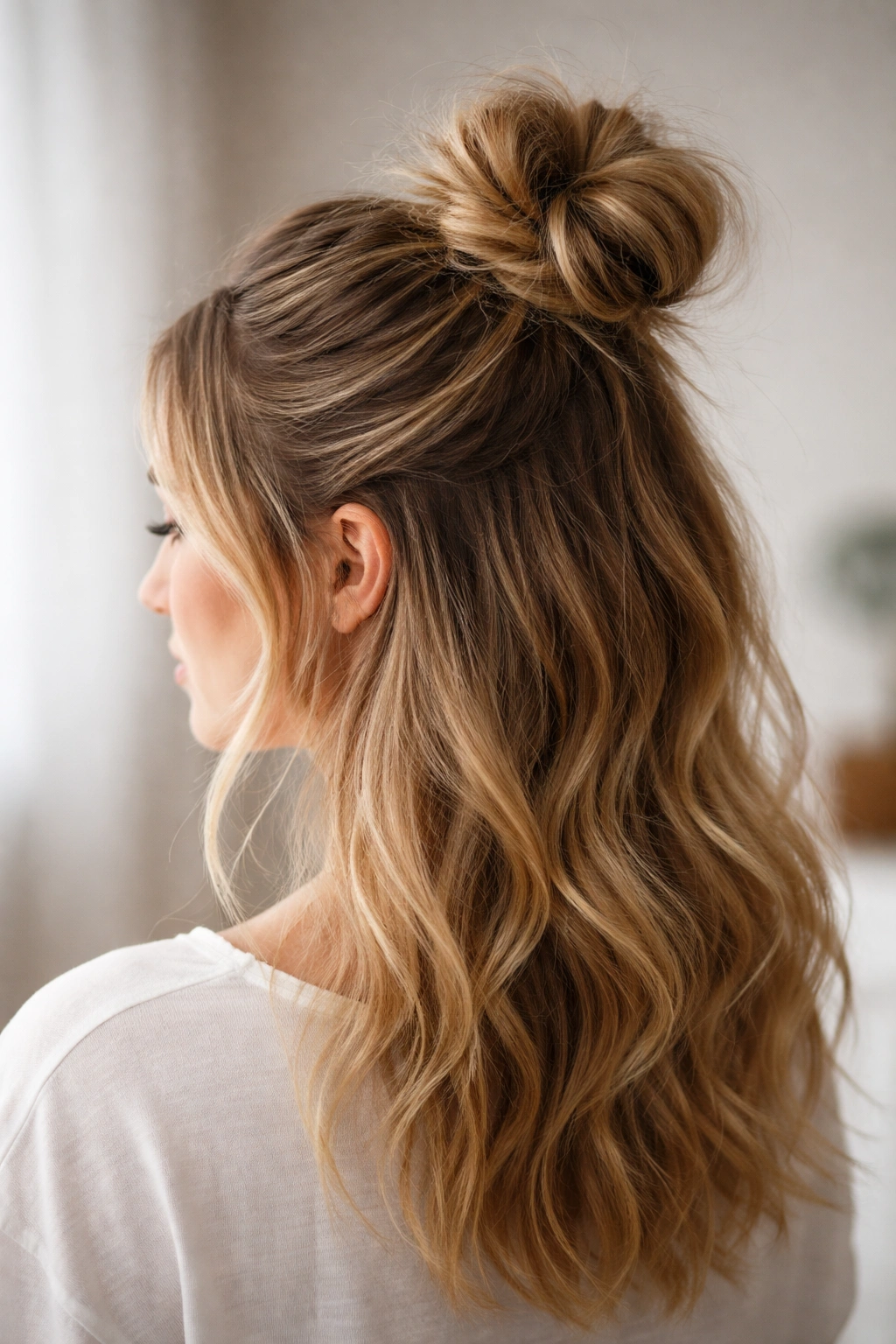
This style is technically a half-up, half-down look with a small bun at the crown, but the bun portion is messy and textured enough that it reads as a distinct style rather than just “hair pulled up.” It gives you the best of both worlds—texture and movement from the loose hair below, with the practical tidiness of having some hair secured. Second-day hair is perfect for this because the gathered portion grips and holds while the loose portion has natural texture and definition.
The Versatility Factor
The half-up messy bun works in almost any situation because it’s neither fully up nor fully down. You’ve got softness and movement from the loose hair, but you’ve also dealt with your hair in a way that says you made some effort. Second-day hair enhances this because the loose portion already has texture without needing to do anything special, and the gathered portion holds because of the day-two grip and greasiness.
Building the Half-Up Style
- Section off the hair from ear to ear across the top of your head, leaving the bottom half down
- Gather the top section into a high ponytail at the crown
- Create a small, messy bun from this ponytail using one of the methods above (twisted, looped, coiled)
- Leave some shorter pieces around your face and temples loose for softness
- Gently tease the loose hair at the bottom to create texture and movement
- You can curl or wave the loose portion, or leave it straight for a more modern look
- A texture spray on the loose portion can enhance the day-two texture even more
Pro tip: This style works beautifully with a slight wave or texture in the loose portion. If your hair is completely straight, a quick pass with a curling iron on the bottom section makes the style feel more intentional.
10. The Wrap-Around Bun
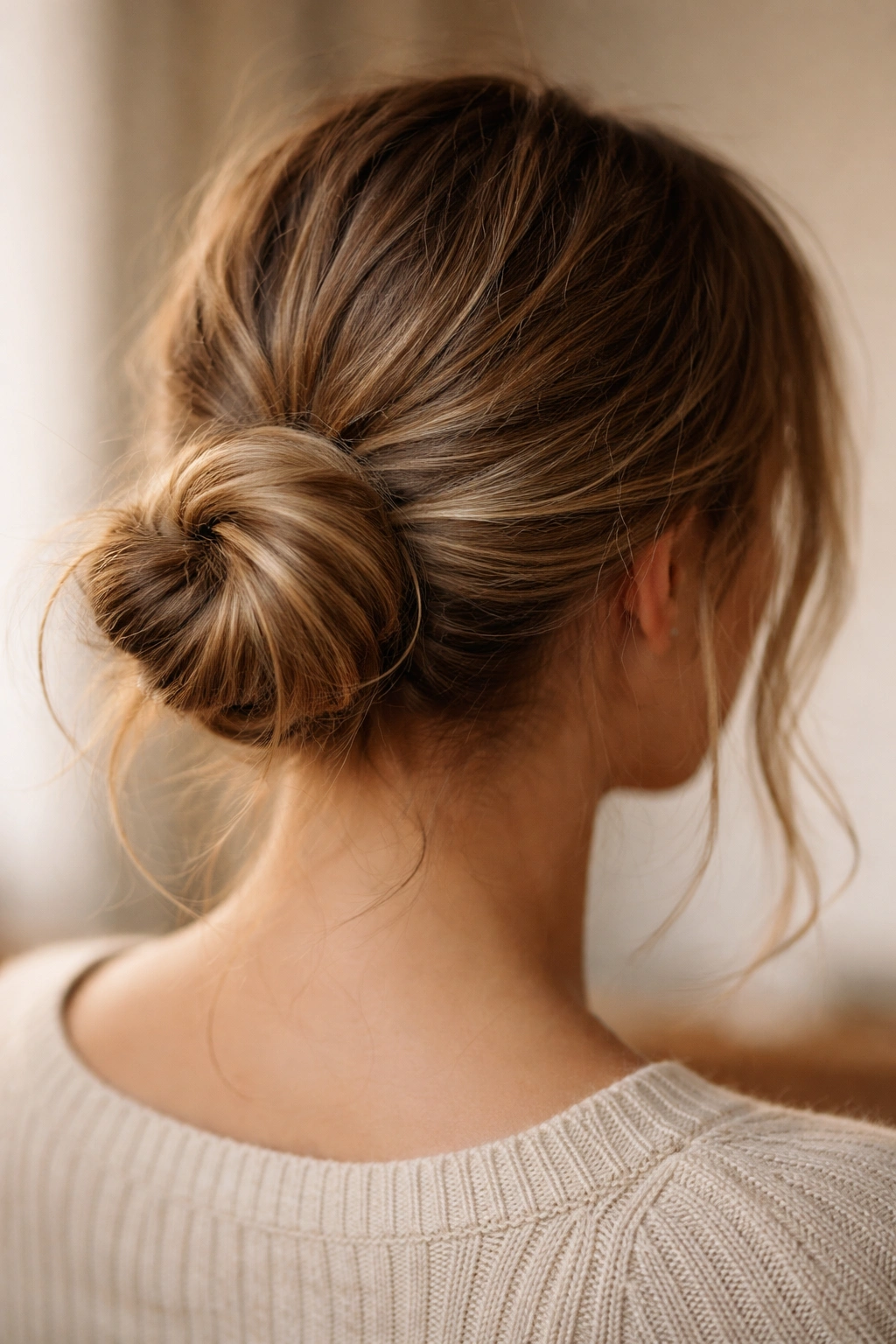
This final style involves creating a low bun and then wrapping a section of hair around the base to conceal the elastic and add visual interest. It’s more finished-looking than a traditional messy bun while still maintaining that effortless texture. Second-day hair wraps beautifully because it has enough grip to stay in place around the bun without constantly slipping or falling apart.
The Polished-But-Easy Element
A wrap-around detail instantly elevates a messy bun from “I just pulled my hair up” to “I actually styled this with intention.” The wrap hides the elastic, which automatically makes the style look more finished. Second-day hair’s grip and texture mean the wrap stays in place all day without needing a ton of bobby pins or product.
Creating the Wrapped Base
- Gather your hair into a low ponytail at the nape of your neck
- Create a messy bun using one of the methods above, securing it well with bobby pins
- Take a thin section of hair from near the elastic and wrap it around the base of the bun, covering the elastic
- As you wrap, roll the section slightly to create texture, or keep it smooth for a more polished look
- Tuck the end of the wrap underneath the bun and secure with a bobby pin
- Gently pull and adjust the wrap until it looks balanced and intentional
- You can leave face-framing pieces down, or keep everything pulled back for a sleeker look
- A small hair stick or decorative clip placed through the wrap adds an optional touch of polish
Insider note: If you want the wrap to look extra intentional, use a contrasting hair section—if your hair is dark, wrap a lighter section around the base, or vice versa. This creates visual interest and makes the wrap appear deliberate.
Final Thoughts
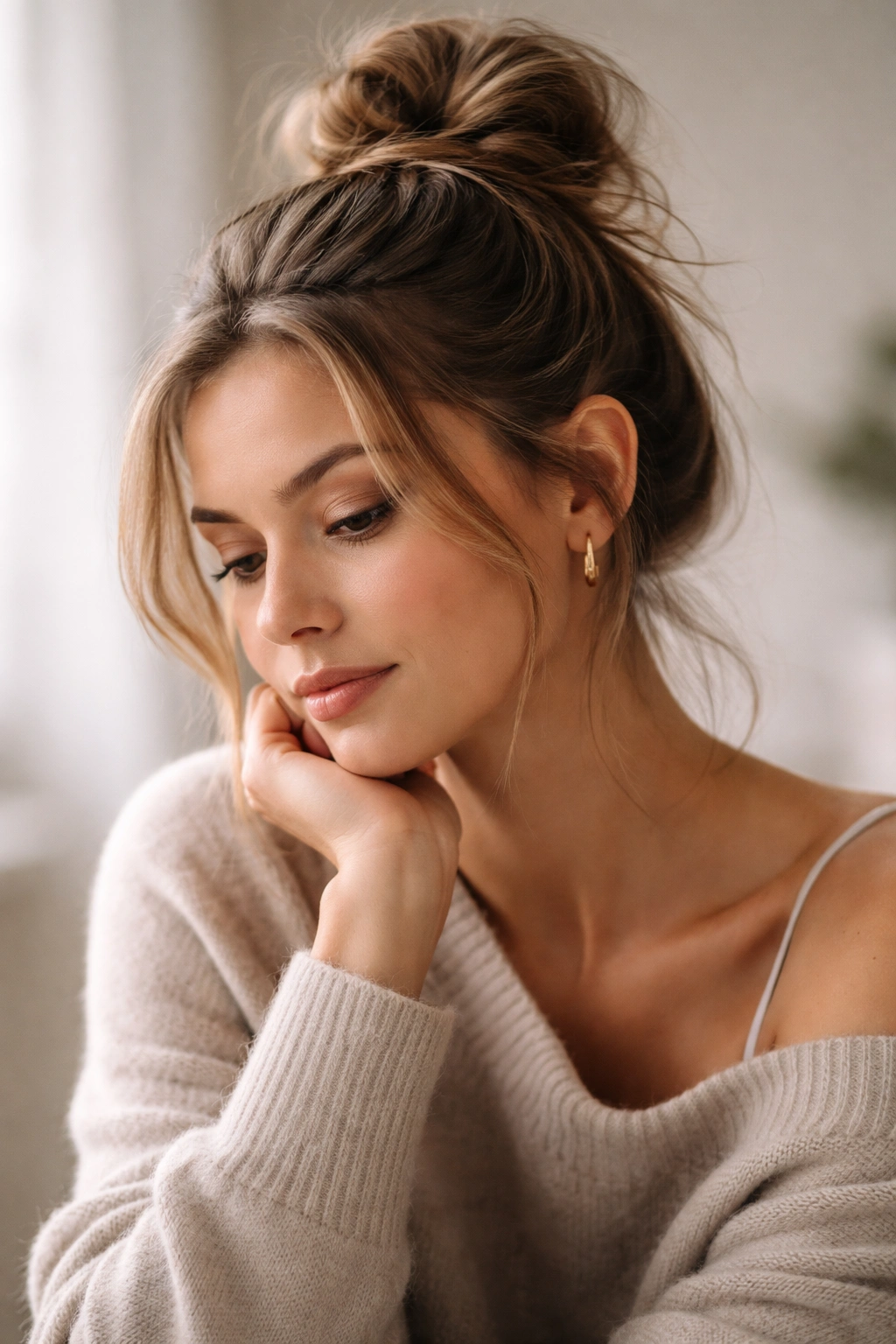
Second-day hair isn’t something to apologize for or try to hide—it’s actually your secret weapon for creating messy bun styles that look intentional, textured, and genuinely effortless. The texture and grip that develop overnight transform hair that fresh-from-the-wash would fight to hold a style into hair that cooperates beautifully with almost any messy bun variation. Each of these ten styles plays to second-day hair’s strengths, whether that’s the way it holds a twist, the natural texture it already has, or the way it grips bobby pins and stays put throughout your day.
The key to mastering these styles is embracing the slightly greasy, slightly limp quality of second-day hair instead of fighting against it. That texture is what makes these buns look intentional rather than sloppy, what keeps them in place without constant adjustment, and what gives them visual interest even when you’re not doing anything particularly complicated. Start with whichever style appeals to you most, and don’t worry about perfection—the more you tousle and adjust, the better these styles actually look.
Once you realize how well these messy bun styles work with day-two texture, you might find yourself not washing your hair as often. That’s not laziness; it’s understanding your hair and working with its natural state instead of against it. You’ve got ten options now, each one designed to work beautifully with exactly where your hair is after a day of wear. Pick the one that matches your mood, your outfit, and your time constraints, and you’re done.