

Messy buns and bangs are a styling challenge most people never think about until they’re standing in front of the mirror wondering if these two trends actually work together. The truth? They absolutely do—but it requires knowing which specific bun style pairs best with your bang type. A wispy-banged face looks completely different from one framed by blunt bangs, and stacking the wrong messy bun on top just creates frustration instead of a polished look. The magic happens when the structure of your bun, the weight distribution of your hair, and the positioning of your bangs create visual harmony rather than competing for attention.
I’ve worked with enough hair to know that the biggest mistake people make is treating messy buns and bangs as separate styling decisions. They’re not. Your bang style actually dictates which bun styles will flatter your face and look intentional rather than accidental. A high bun pulls hair away from the face entirely, which works beautifully with some bangs but can expose too much forehead with others. A low bun, by contrast, keeps hair closer to your shoulders and creates visual balance differently. The eight styles below aren’t random combinations—each one was chosen specifically because the bun structure and placement complement rather than clash with the bang style they’re paired with.
1. The High Tousled Bun with Wispy Bangs
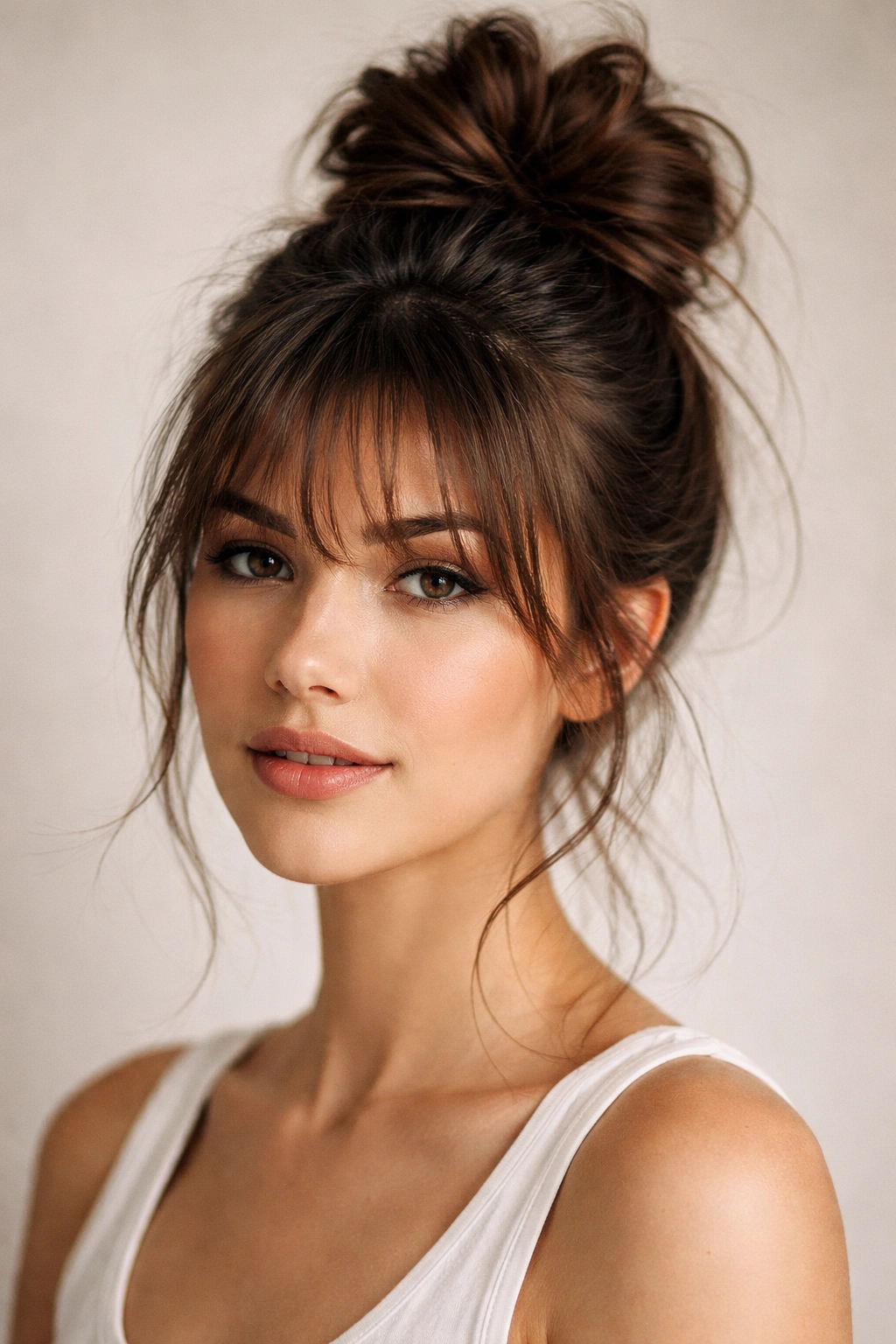
A high messy bun sits on the crown of your head and creates maximum lift and volume. Pair it with wispy, delicate bangs that frame the face softly, and you get a look that’s romantic but not too styled. The bangs catch light and add dimension without feeling heavy, while the bun sits back enough that it doesn’t feel cluttered at the hairline. This combination works because the high placement doesn’t compete with the bangs for visual space—the bun lives in its own zone on the crown, leaving your face and forehead completely open for the wispy strands to shine.
How to Create This Style
Start by blow-drying your hair with volume products at the roots. Take a section of hair from the crown and tease gently for lift and texture. Twist the remaining hair into a loose rope shape and wrap it around the teased section, securing with bobby pins as you go. The whole look should feel organic and undone, not tight or sculpted. Your wispy bangs should be cut with choppy, shorter layers that don’t all hit the same length—this creates that soft, piece-y effect that keeps the style feeling effortless.
Why This Combination Works
- High buns expose the forehead entirely, making them ideal for delicate bangs that don’t compete for attention
- Wispy bangs have movement and lightness that echoes the textured, loose quality of a tousled bun
- The height draws eyes upward while bangs draw them to the face, creating a balanced focal point
- This style suits heart-shaped and round faces best, as the height elongates and the soft bangs soften angular features
Pro tip: Use a texturizing spray before creating the bun. It grips hair better than smooth strands and keeps wisps in place throughout the day without feeling crunchy.
2. The Low Romantic Messy Bun with Straight-Across Bangs
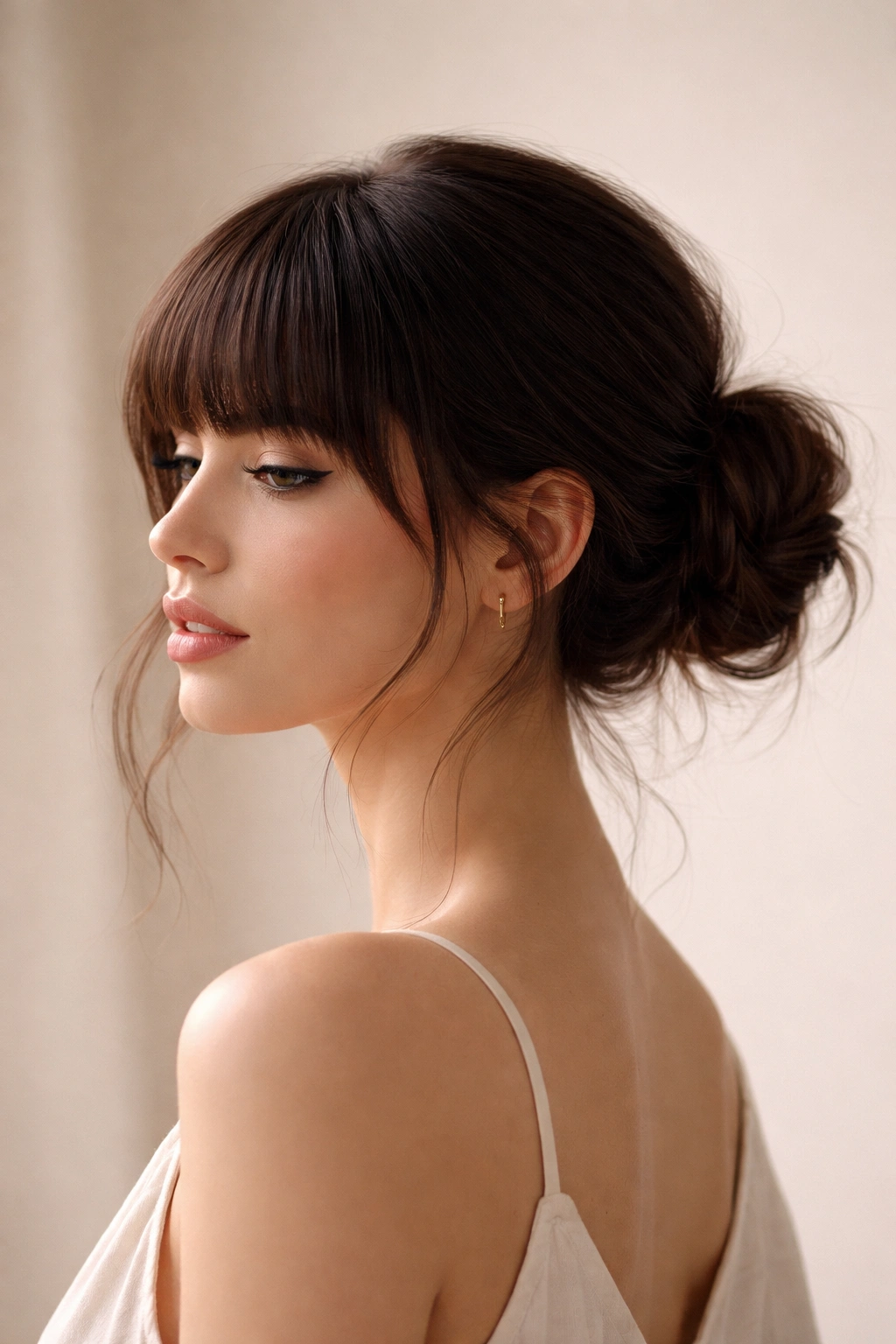
A low messy bun sits at the nape of your neck and has an inherently softer, more relaxed vibe than a high bun. Straight-across bangs (also called blunt or full bangs) are bold and graphic by nature. Together, they create a sophisticated, slightly editorial look—like you just stepped out of a French film. The low placement means stray pieces can fall around the face and neck without overwhelming the bangs, and the bangs’ blunt line creates a strong anchor for the entire style.
How to Create This Style
Brush your hair smoothly back and gather it into a low ponytail at the nape of your neck, roughly where your neck meets your shoulders. Twist the ponytail loosely and wrap it around the base to form the bun, pinning as you go. Leave a few shorter pieces around the face to fall naturally—this softens the look and prevents it from feeling too severe. Straight bangs need to be precisely cut to frame your face properly; they should hit somewhere between your brows and mid-eyelid. A professional cut is worth the investment here, as the bluntness only looks intentional if the line is clean and even.
Why This Combination Works
- Low buns allow face-framing pieces to soften the graphic quality of straight bangs
- The nape placement is casual enough to balance the precision and boldness of blunt bangs
- Straight bangs create a strong horizontal line that needs the subtle visual release of stray bun pieces nearby
- The combination suggests effortless elegance rather than high-maintenance styling
- This style suits oval and oblong face shapes best, as straight bangs add width and the low bun adds roundness
Worth knowing: Straight bangs require more frequent trims than other bang styles to maintain their clean line—every 3 to 4 weeks is ideal.
3. The Side-Swept Bun with Side-Swept Bangs
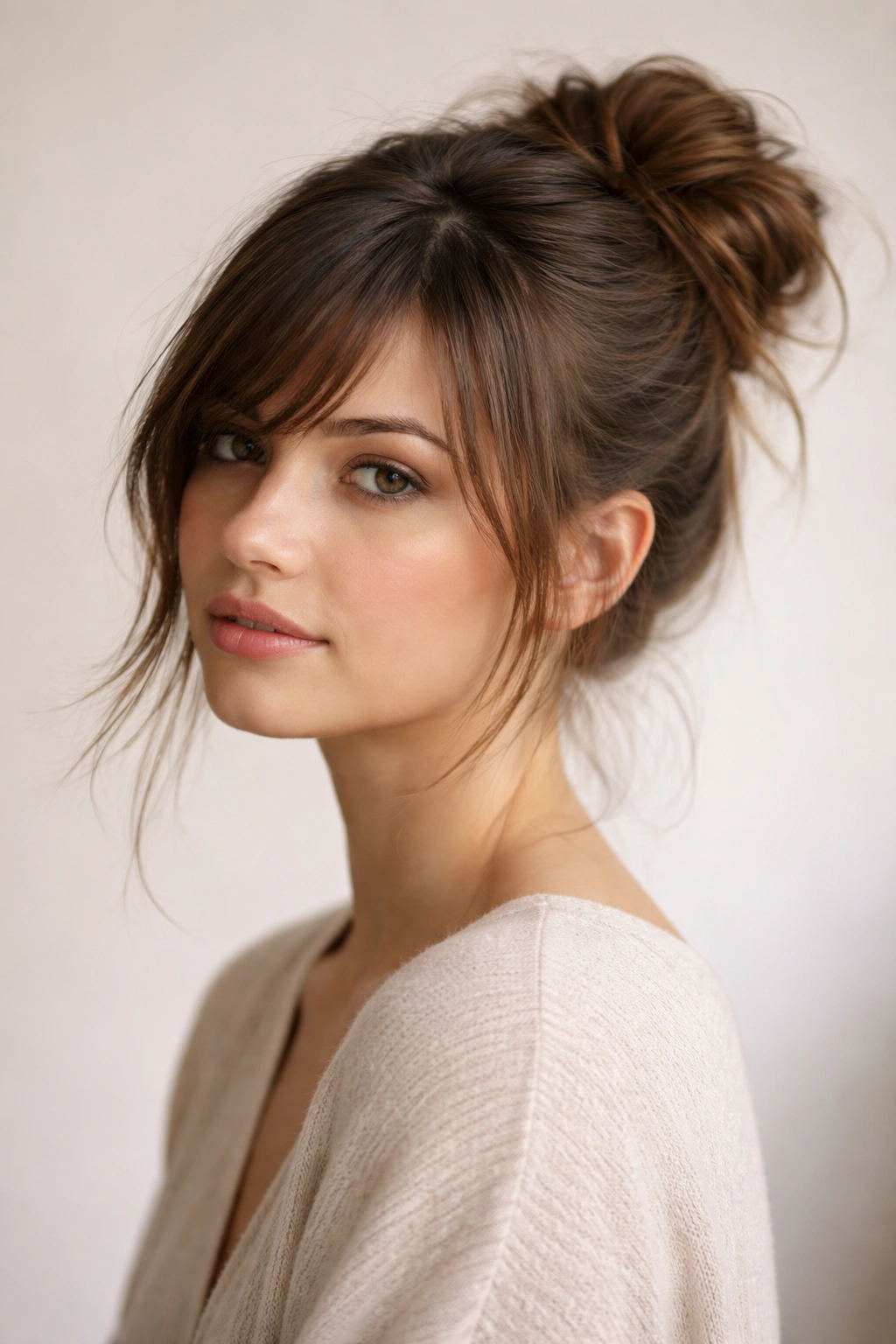
When your bangs sweep to one side and your bun also sits slightly off-center, the entire look gains a playful asymmetry that feels modern and intentional. Side-swept bangs fall diagonally across the forehead, creating movement and visual interest without covering the entire face. A bun that sits slightly off to one side (not the opposite side from the bangs, but on the same bias) echoes that asymmetrical energy. The result feels like you’ve effortlessly tilted your head slightly to one side, which is inherently flattering and softer than a centered bun.
How to Create This Style
Start by creating a deep side part on the side where you want your bangs to sweep. Blow-dry your hair with the part set, using a round brush to encourage the bangs to sweep away from your face. Gather your hair into a ponytail that sits slightly off-center on the back of your head—not directly at the crown and not too low, somewhere in the middle. Twist loosely and wrap to form the bun. Leave pieces around the face to fall naturally, especially on the side without the bangs; these strands create balance by adding visual weight to the less-banged side.
Why This Combination Works
- Asymmetrical elements (off-center bun + side bangs) create visual interest and modern appeal
- Side-swept bangs have built-in movement that’s echoed by the off-center placement of the bun
- The combination avoids the stark formality of perfectly centered styles
- Longer face shapes benefit most from this style, as the asymmetry adds width and dimension
- Works especially well on people with a heavier bang or thicker hair, as the weight sits naturally to one side
Insider note: This style looks best when your side part is truly deep—almost to the ear—rather than a subtle side part. The deeper the part, the more dramatic the asymmetry and the better the overall balance.
4. The Textured Crown Bun with Curtain Bangs
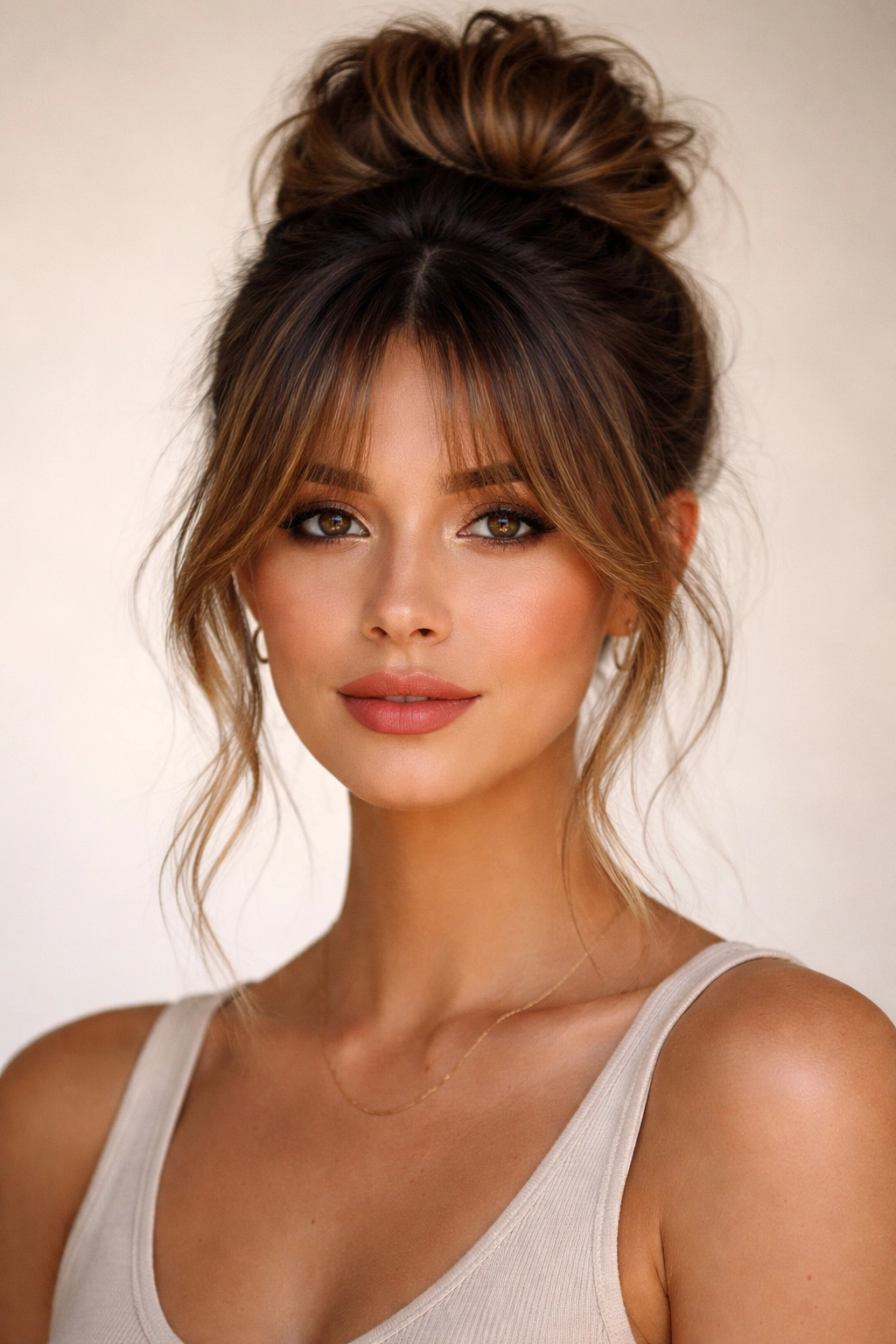
A crown bun sits at the very top of your head, positioned above the crown rather than at the crown. It requires significant texture and volume to look good, which means it pairs beautifully with curtain bangs. Curtain bangs are parted in the middle and sweep outward on both sides, framing the face like curtains frame a window. The bun’s volume at the crown draws eyes upward, and the curtain bangs’ outward sweep keeps the eyes moving around the entire face. This is a balanced, harmonious combination that feels intentionally styled without looking overdone.
How to Create This Style
Blow-dry your hair with a volumizer and tease at the crown and roots to create maximum lift. Gather the crown section and twist into a loose knot, securing with multiple bobby pins. Let the remaining hair flow down and around, leaving enough length to frame the face and blend with your curtain bangs. Curtain bangs should be cut so they fall away from the center part in a smooth diagonal, hitting around mid-cheek. They work best with layers throughout the hair, so the bangs integrate naturally with the rest of your lengths.
Why This Combination Works
- The crown bun’s height and volume create a strong anchor that won’t be overwhelmed by framing bangs
- Curtain bangs’ outward movement complements the textured, slightly undone quality of a crown bun
- Both elements have built-in flow and movement, so they feel coordinated rather than mismatched
- This style elongates the face, making it ideal for round or square face shapes
- The central part required by curtain bangs is visually centered, which balances the slightly back-heavy placement of a crown bun
Pro tip: Use a light hairspray on the bangs to encourage them to sweep smoothly, but avoid heavy product that would make them look wet or plastered down. The best curtain bangs have a soft, feathery quality.
5. The Half-Up Messy Bun with Blunt Bangs
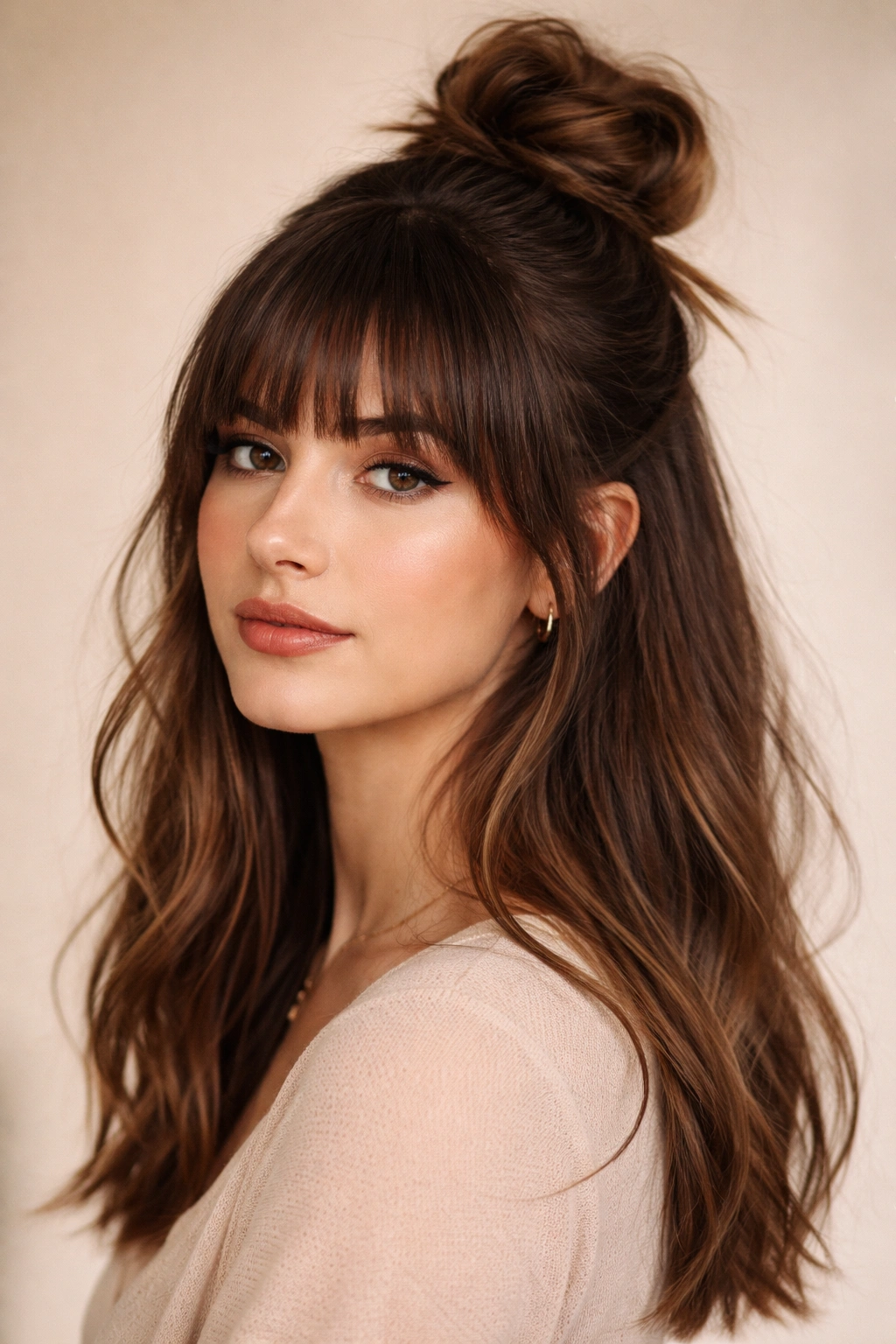
A half-up bun takes hair from the crown down and gathers it into a small bun at the back, leaving the bottom half of your hair down. This style is less formal than a full bun but more polished than completely down hair. Pair it with blunt bangs and you get a look that’s bold enough to feel intentional but soft enough to work for casual settings. The half-up structure means your bangs have neighboring hair around them—the down hair frames the face alongside the bangs—which prevents the bangs from feeling isolated or overly graphic.
How to Create This Style
Section off the top half of your hair from temple to temple, going over the crown. Gather this section into a small ponytail at the crown, then twist and wrap into a bun, securing with bobby pins. Leave the bottom half completely down and brush through gently. Blunt bangs work best with this style when they’re cut just long enough to frame the cheekbones—not so short that they sit above the brows. The proximity of the down hair below the bangs creates visual continuity that a full-up style can’t achieve.
Why This Combination Works
- The down hair below the bangs creates visual weight that balances the structured bun above
- Blunt bangs look stronger and more intentional when there’s additional framing hair nearby
- Half-up styles feel less severe than full buns, which softens the boldness of blunt bangs
- This combination works for almost every face shape because the down hair can be angled to flatter your features
- The style is practical for active situations while still feeling polished
Worth knowing: This style works best when your hair has some length—at least past your shoulders. The down hair needs enough length to frame your face properly and create visual balance with the bun above.
6. The Braided Base Bun with Feathered Bangs
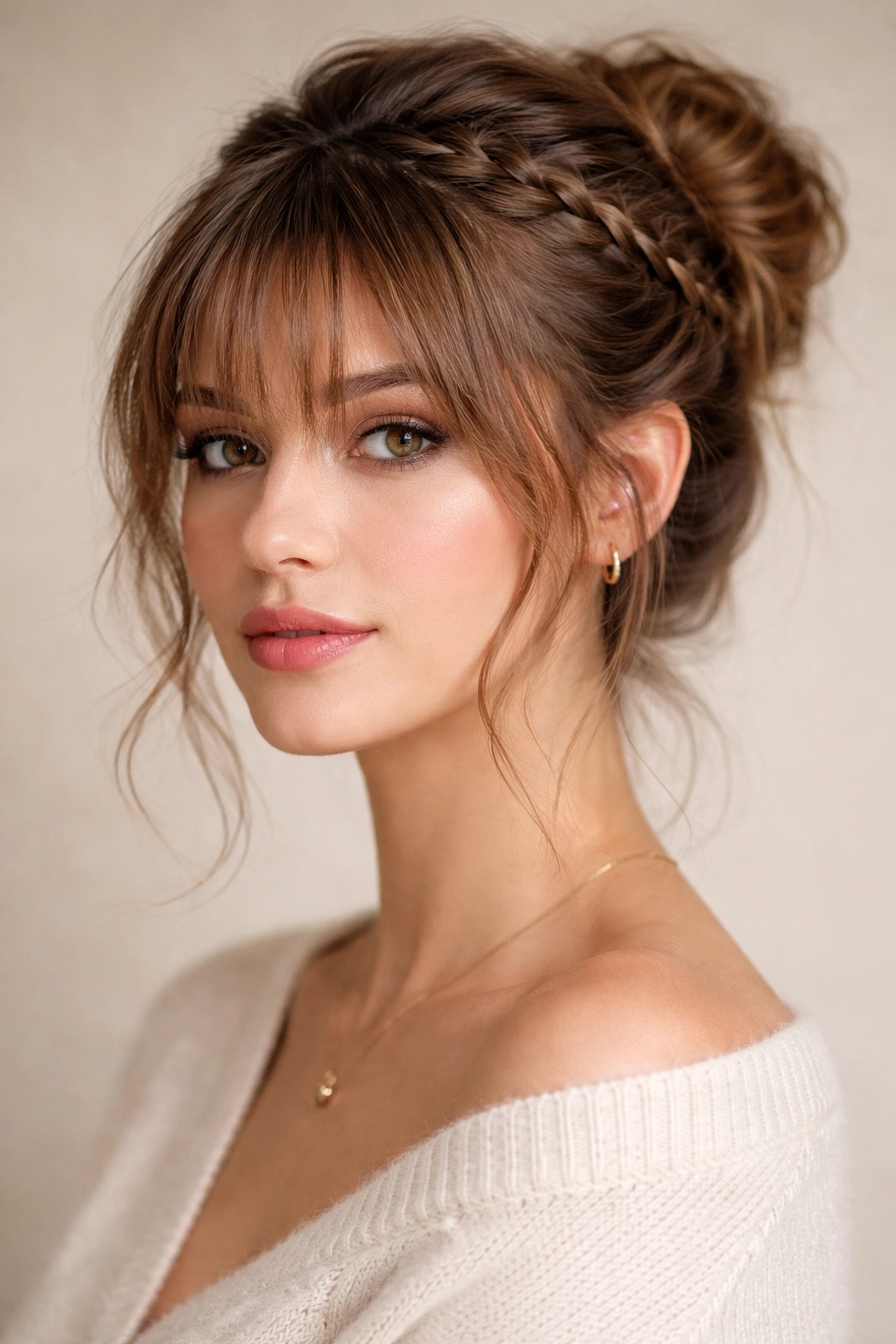
A braided base bun starts with a braid from the crown down, then wraps the remaining hair into a bun at the base of the braid. This creates visual interest and texture that a simple messy bun can’t match. Pair it with feathered bangs—shorter layers cut throughout the bang section that create soft, choppy texture—and you get a look with deliberate artistry. The braid’s lines create structure while the feathered bangs add softness and movement. Neither element is just sitting there; both have purpose and visual impact.
How to Create This Style
Start with hair that has some texture or waves. Create a section from your forehead back over the crown and braid loosely down the back. The braid doesn’t need to be tight or perfect—it should look organic and slightly undone. Gather the remaining hair and wrap it into a bun at the base of the braid, tucking the ends under and securing with pins. Feathered bangs require a professional cut with choppy, shorter layers that taper as they move away from the face. They should have movement and air between the layers, not a blunt, solid appearance.
Why This Combination Works
- The braid’s deliberate texture echoes the layered, feathery quality of the bangs
- Feathered bangs have enough movement and dimension to feel coordinated with an intricate style like a braided bun
- Both elements show effort and intention without looking formal or overly styled
- This works best for oval and oblong faces, as the braid adds width and feathered bangs add softness
- The combination suits people with wavy or textured hair better than completely straight hair
Pro tip: Feathered bangs show off texture beautifully, so use a texturizing product or light curl cream on your bangs before styling. The layers photograph and catch light in a way that makes the whole look feel more dynamic.
7. The Bubble Bun with Micro Bangs
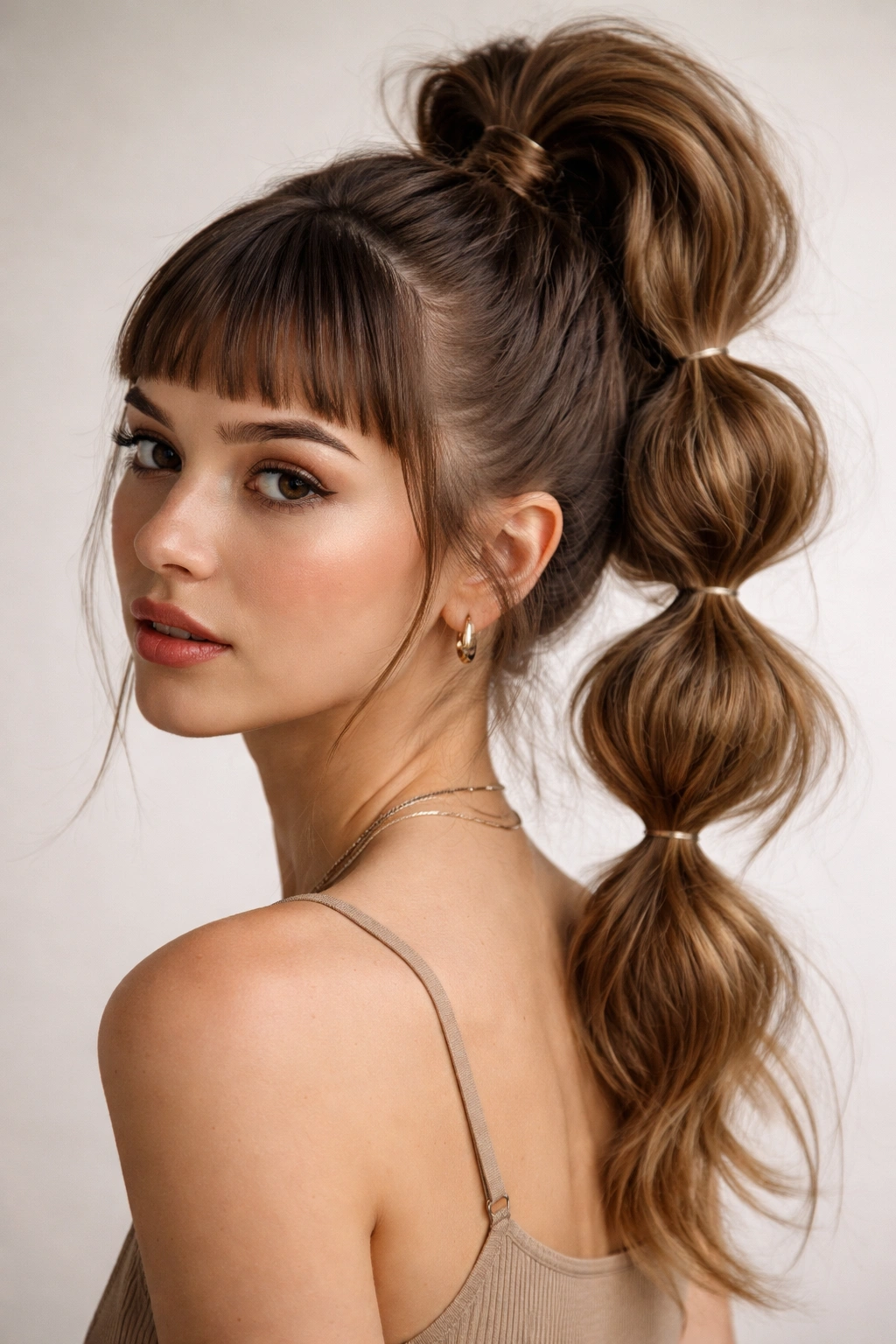
A bubble bun is a playful variation where you create multiple small sections in a ponytail, secure each section with a tiny elastic, and fluff each bubble out. It’s undeniably trendy and fun. Micro bangs are cut very short, sitting well above the brows, and create a bold, sometimes slightly edgy aesthetic. This combination is not for everyone, but when it works, it works spectacularly. The playfulness of the bubble bun matches the boldness of micro bangs, and both elements have enough personality that they coordinate naturally. This style demands confidence but rewards it with maximum visual impact.
How to Create This Style
Create a ponytail high on your head and secure with an elastic. Take a small section of the ponytail and secure it with a tiny elastic about an inch down from the first elastic, then gently pull the hair between the elastics to create a “bubble.” Repeat this down the entire ponytail, creating 4 to 6 bubbles depending on your hair length and thickness. Fluff each bubble outward slightly so they’re visible and dimensional. Micro bangs must be professionally cut; they’re difficult to achieve and maintain at home. They should sit about an inch above your natural brow line and require trims every 2 to 3 weeks to maintain their impact.
Why This Combination Works
- Both elements are statement-making and require confidence, so they feel coordinated in their boldness
- The bubble bun’s playful, youthful energy matches the edgy, modern vibe of micro bangs
- Micro bangs expose a lot of forehead, and the high placement of a bubble bun complements that fully open face aesthetic
- This combination suits younger face shapes or anyone comfortable with bold, fashion-forward choices
- The bubble bun draws attention to the crown while micro bangs draw attention to the eyes and brows, creating balance
Real talk: Micro bangs aren’t for everyone, and they require commitment. If you’re considering them, spend some time looking at photos and be honest about whether you’re willing to trim them frequently. They grow out quickly and lose their impact if they’re not maintained.
8. The Undone Low Bun with Choppy Bangs
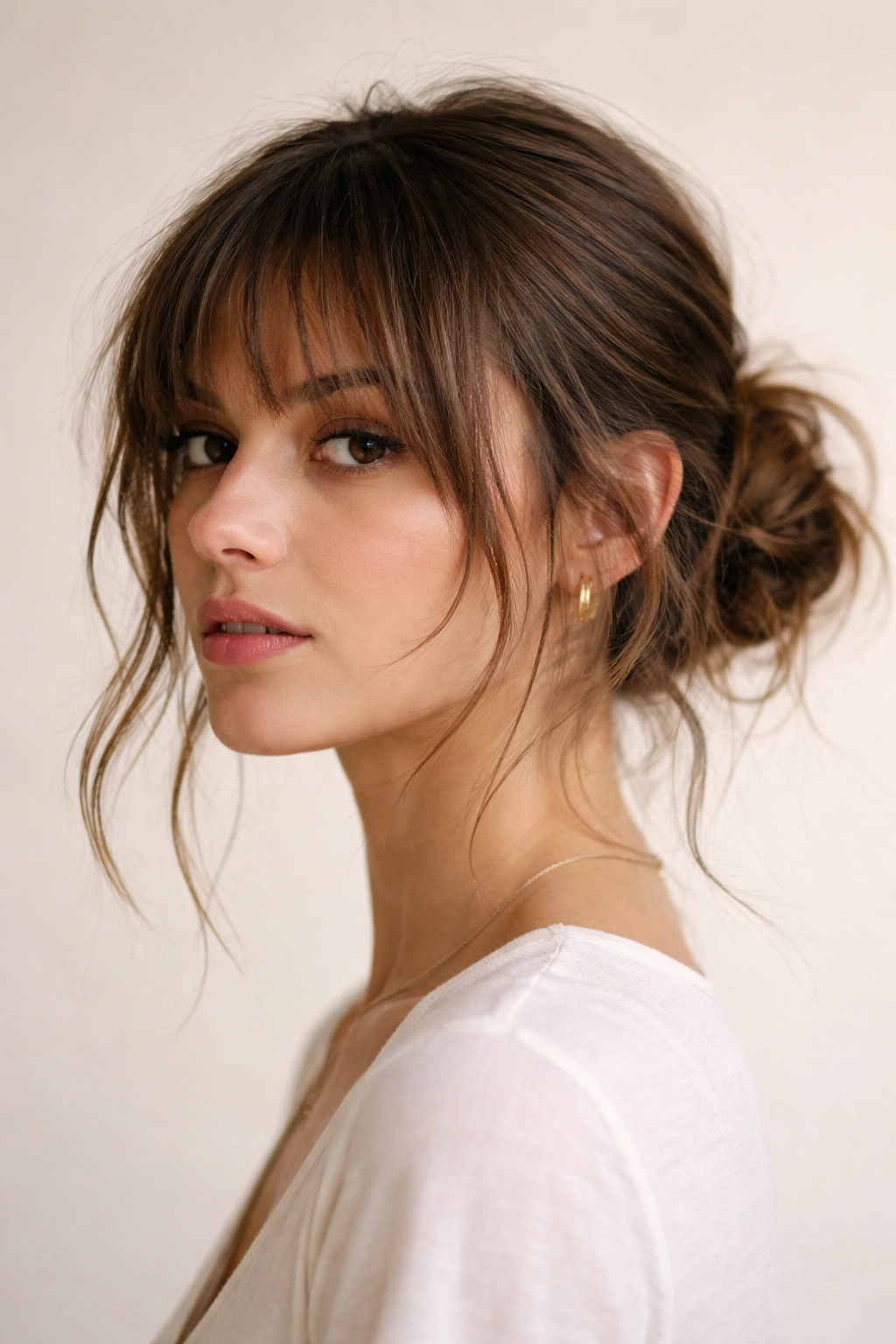
An undone low bun is the most deliberately messy variation, with pieces falling out intentionally and the overall structure feeling barely held together by a few bobby pins. Choppy bangs are cut with shorter, uneven pieces that create texture and a slightly rock-and-roll vibe. Together, these create a look that’s effortlessly cool without trying too hard. The key to making this work is understanding that “undone” and “unkempt” are not the same thing. The bun should look intentionally relaxed, with strategically placed pieces falling out, not like you just woke up and threw your hair up.
How to Create This Style
Gather your hair into a low ponytail at the nape of your neck, but don’t make it tight. Leave several inches of length out around your face before securing the ponytail. Loosely twist the ponytail and wrap it into a soft bun, securing lightly with just 3 to 4 bobby pins—you want it secure enough to stay in place but loose enough that pieces naturally fall throughout the day. Choppy bangs should have uneven lengths and lots of texture throughout. They work best cut in through the bangs section with a razor rather than scissors, which creates a softer, more feathered effect.
Why This Combination Works
- The undone quality of the bun echoes the choppy, textured quality of the bangs
- Choppy bangs have enough irregularity that they feel coordinated with an “messy” rather than “neat” bun
- Both elements read as effortless, creating cohesive visual harmony
- This style suits almost every face shape and hair type; it’s the most universally flattering of all the combinations
- The casual vibe works for everyday wear, not just special occasions
Worth knowing: Choppy bangs need regular maintenance every 4 to 6 weeks, and they work best on people willing to dry them with a blow dryer and some movement. They can look a bit stringy if left to air dry without product.
Final Thoughts
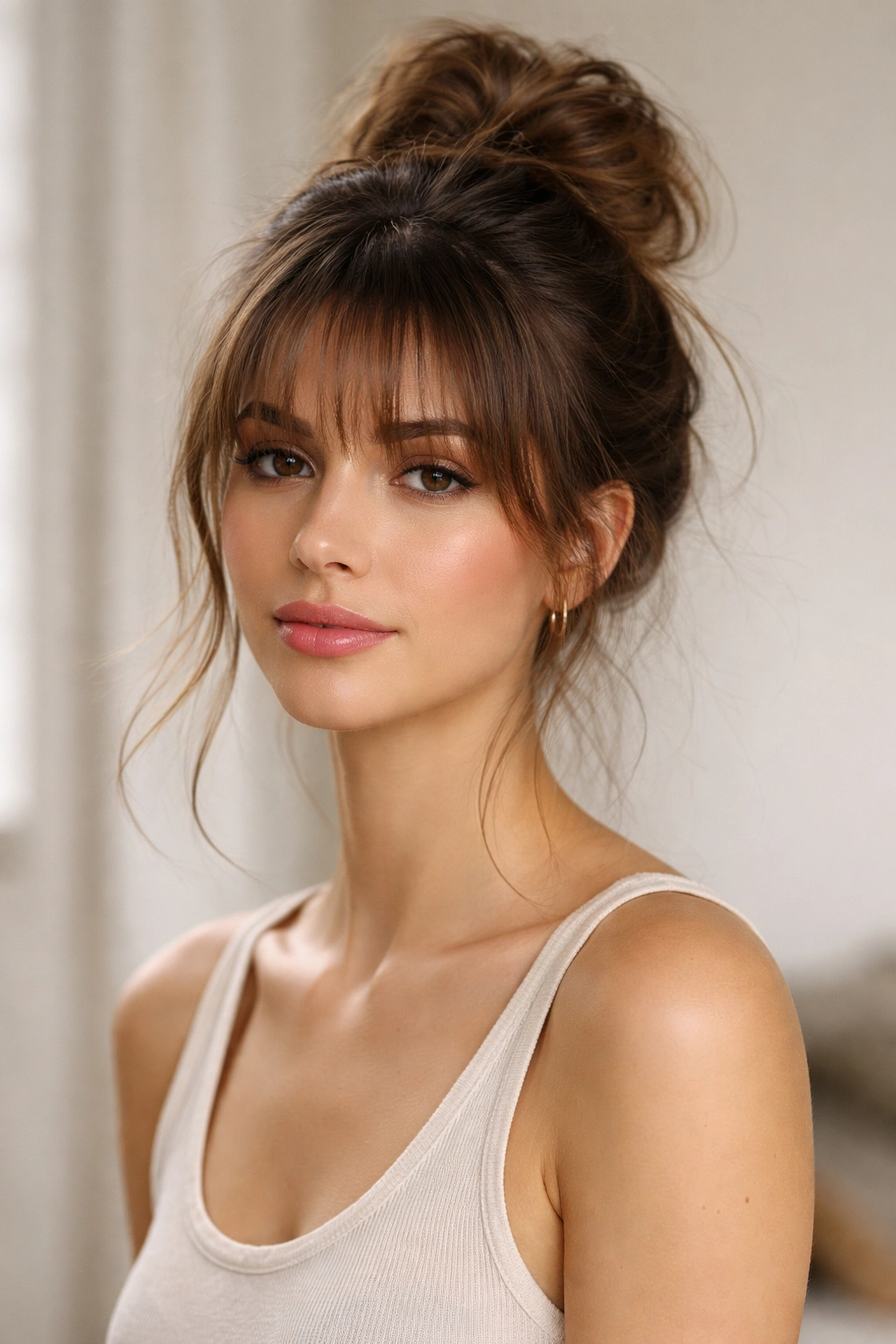
The relationship between your messy bun style and your bangs determines whether the two elements feel like a coordinated look or two separate styling decisions competing for attention. A high tousled bun with wispy bangs feels like one intentional choice, while a high bun with blunt bangs feels slightly at odds with itself. The best combinations—whether you’re going for romantic, edgy, playful, or effortlessly cool—share a visual language. Their texture, movement, and boldness work together rather than against each other.
Start by identifying which bang style you have (or want to have), then choose a bun style from this list that shares similar qualities. If your bangs have movement and softness, look for buns with similar texture and flow. If your bangs are bold and graphic, pair them with buns that have enough structure and intention to feel coordinated. The moment you stop fighting the relationship between your bangs and your bun and instead lean into harmony, you’ll find that this combination isn’t a styling challenge at all—it’s an opportunity to create a look that feels completely and authentically you.