

Curly hair and messy buns are basically made for each other — the texture naturally creates that undone, effortless look without you having to do much at all. Add bangs into the mix, and suddenly you’ve got a hairstyle that feels both intentional and completely low-key. The challenge isn’t whether curly messy buns work (they absolutely do), but rather figuring out which style actually suits your face shape, curl pattern, and lifestyle.
The beauty of pairing curly buns with bangs is that you’re working with two elements that thrive on texture and movement. Your curls give you built-in volume and dimension, while bangs frame your face and add instant personality. Together, they create a look that photographs beautifully, feels comfortable to wear, and works for everything from running errands to actually put-together weekend plans. Whether you have loose waves or tight coils, there’s a curly messy bun style with bangs that’ll become your go-to.
The trick is understanding how different bun placements and bang shapes interact with your specific curl pattern, and what styling techniques actually keep everything from falling flat halfway through the day. We’ll walk through six distinct styles that cover every angle — from romantic and undone to chic and structured — plus all the insider knowledge you need to nail each one.
1. Effortless Top Knot with Wispy Face-Framing Bangs
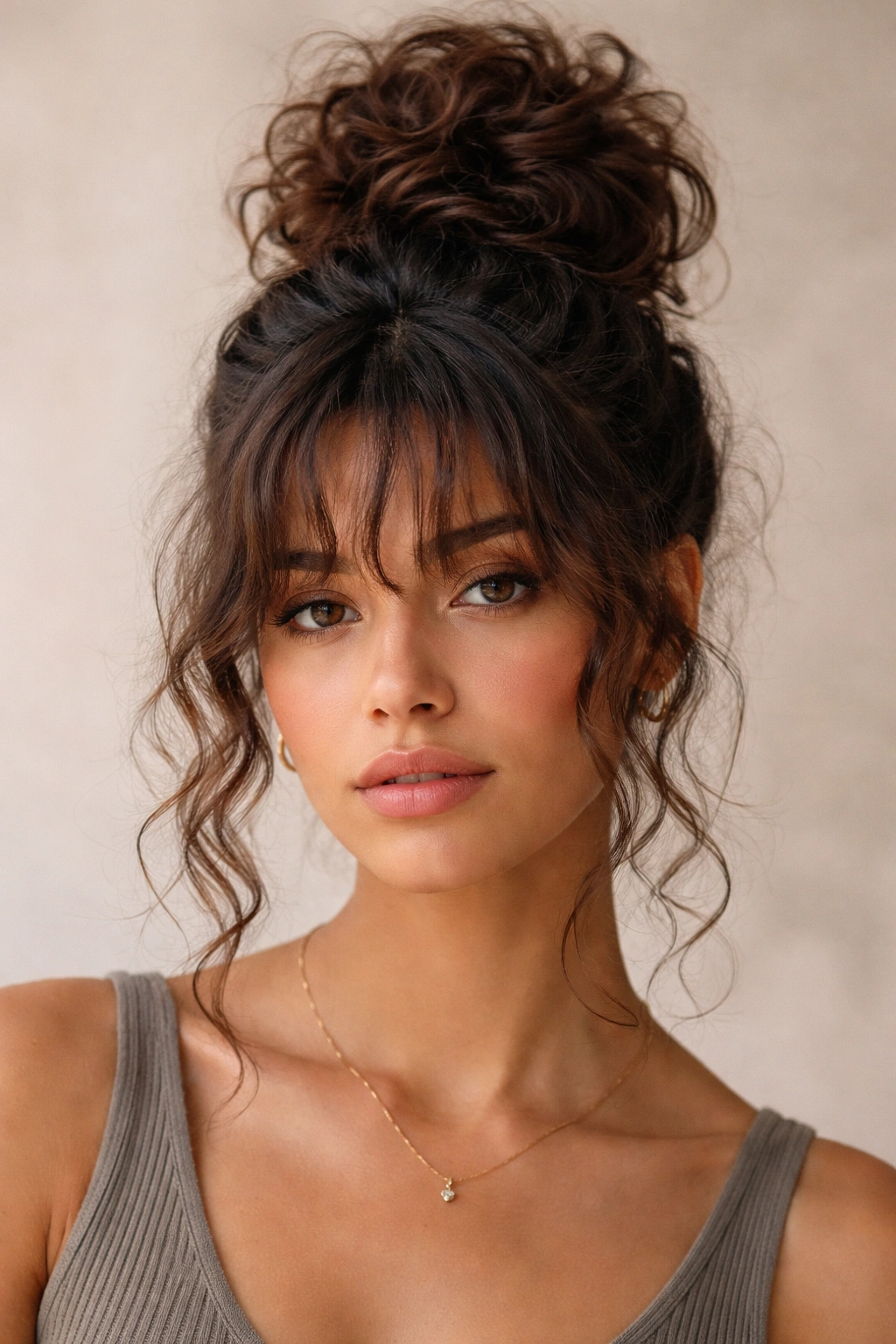
This is the casual version of a messy bun, and it works especially well if your curls are on the looser, wavier side. The top knot sits high on your crown, which naturally elongates your face and creates this intentionally tousled vibe that doesn’t look like you tried too hard (even though you definitely did). Pair it with wispy, feathered bangs that graze your cheekbones, and you’ve got a hairstyle that feels effortlessly cool.
Why This Style Works So Well
The reason this combination is so forgiving is that top knots naturally accommodate curly texture beautifully. You’re literally gathering your curls at the highest point and securing them loosely, so all that volume and movement works in your favor instead of against you. Wispy bangs soften the top-heavy effect of a high bun while adding dimension to your face. The two elements balance each other perfectly — the bun is all bold volume, the bangs are all soft movement.
How to Style It Step by Step
Start with hair that has been gently separated into sections or left as one larger, loose mass — you’re not looking for precision here. Gather everything up toward the crown (not perfectly centered, slightly off to one side feels more modern). Twist the hair loosely as you bring it up, or skip the twist entirely and just bunch it. Once you’ve got it at the crown, secure it with a few bobby pins underneath the knot, leaving some pieces loose around your face and nape. Take sections of hair from the front and gently pull them through the knot to create those face-framing wisps. Don’t try to make it neat — the messier, the better.
Styling Tips for Maximum Impact
Use a texture spray or sea salt spray before you start, since curly hair often benefits from extra grip and definition. If your top knot feels too tight, gently pull at sections around the perimeter to loosen it — this creates that deliberately undone aesthetic. Your wispy bangs can be styled with a light cream or left completely natural depending on whether you want more definition or more movement. Finish with a light hairspray to hold everything in place without making it feel stiff or crunchy.
2. Low Textured Bun with Curtain Bangs
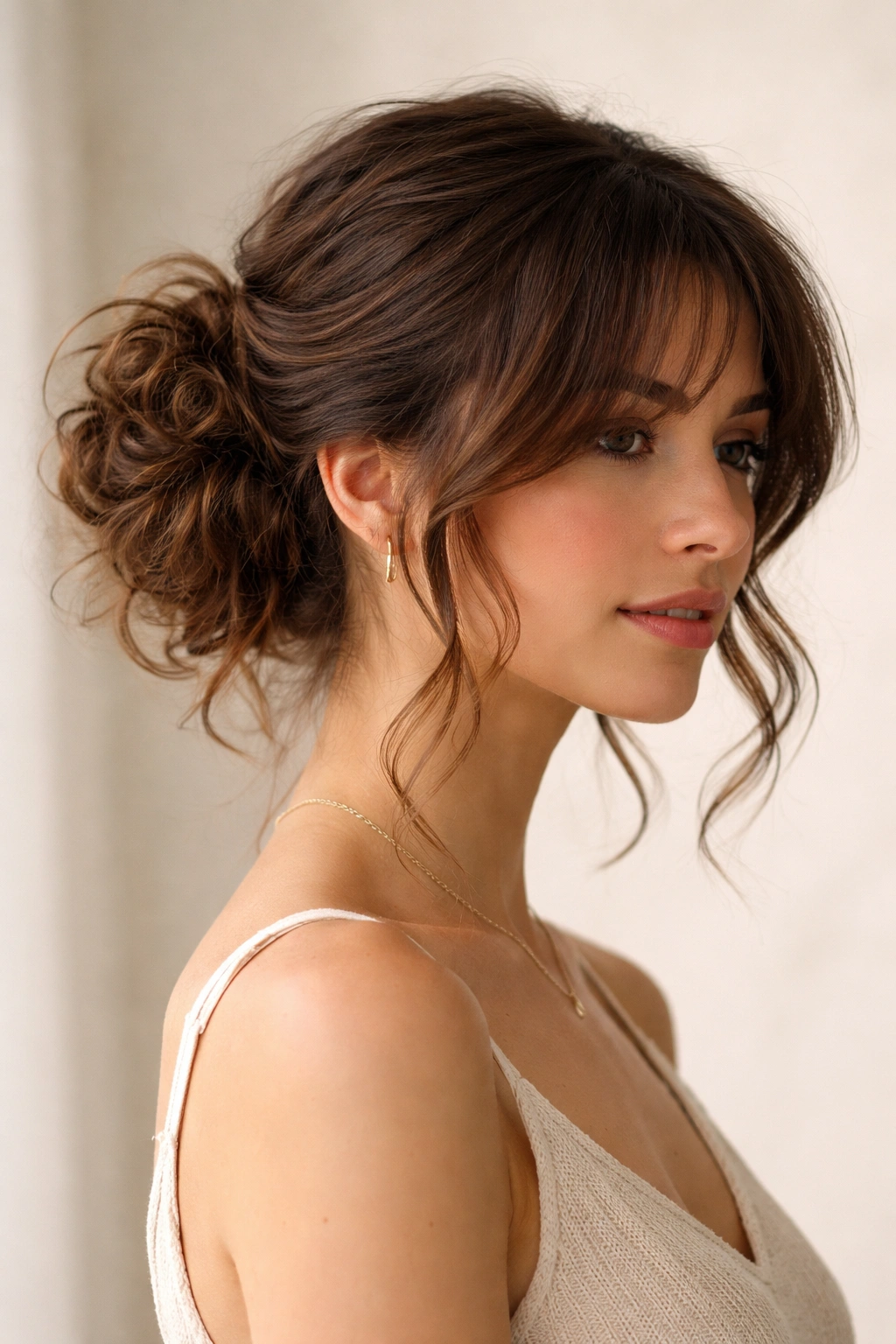
This style sits lower on the back of your head and leans into pure texture rather than neat construction. Curtain bangs — those face-framing pieces that sweep away from the center of your face — complement this bun beautifully because they echo the movement of your curls without competing for attention. It’s sophisticated and relaxed at the same time, making it perfect for someone who wants a bun that actually looks intentional.
The Appeal of Lower Placement
Low buns shift all the visual emphasis to the curtain bangs and your face instead of the back of your head, which changes how the entire style reads. It feels less sporty and more considered. The lower placement also tends to work better if you have curls that are tighter or more compact in texture — it gives you space to work with the curl structure without everything looking too bunched up at the crown.
Building Your Low Bun Foundation
Start by flipping your head upside down and applying a texturizing product to your curls — this gives everything grip and definition. Flip back up and comb through very gently (or don’t comb at all, just finger-comb if your curl pattern is tight). Gather all your hair at the nape of your neck, securing it into a low ponytail first. Twist that ponytail loosely or loop it without twisting — both approaches work beautifully with curly texture. Wrap it around itself to form a bun shape and pin it underneath, letting pieces fall where they naturally want to fall. Don’t fight your curls; let them do their thing.
Styling Curtain Bangs to Frame the Look
Your curtain bangs should be angled to sweep away from the center, ideally grazing your cheekbones. Since they’re working with the overall texture of the style, they can be smooth or curly depending on your preference and what your hair naturally does. A light styling cream applied to damp bangs before air-drying will define them. If you prefer them smoother, use a blow dryer with your fingers guiding them into shape. The key is balance — if your bun is very textured and big, streamlined bangs feel intentional rather than mismatched.
3. Half-Up Twisted Bun with Choppy Bangs
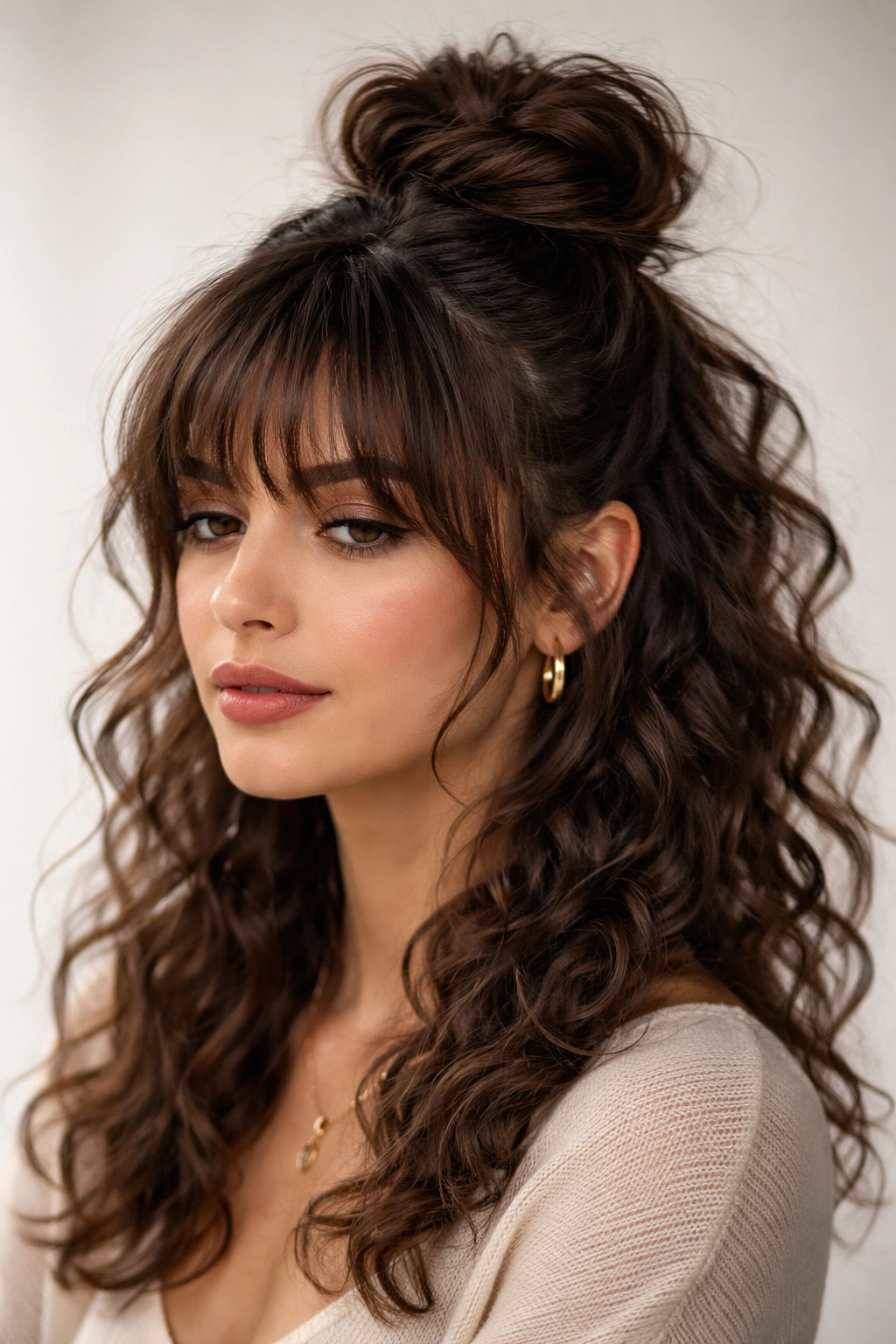
This style gives you the best of both worlds: some hair down for movement, and a secured bun that keeps things off your face. Half-up buns are inherently flattering, and when you twist the top section before turning it into a bun, you get this gorgeous detail that reads as more intentional than a simple gathered bun. Pair it with choppy, piece-y bangs, and suddenly your whole face feels more sculpted and modern.
Why the Twist Matters
A simple half-up bun can feel a bit basic, but adding a twist or two transforms it instantly. The twist creates texture and visual interest, plus it makes the bun itself feel more secure (twisted hair holds better than straight hair gathered together). When you combine this with choppy bangs that have tons of individual movement, you get a hairstyle that feels current and deliberate. The twist also helps distribute your curls more evenly, so you’re not creating a heavy blob at the back.
Executing the Twisted Detail
Separate a section from each side of your head at about temple height. Twist each section loosely toward the back, then cross them over each other at the crown or slightly higher, and secure both twists with bobby pins. Gather the rest of your hair at that point and form your bun. You can leave the bun very loose and textured, or tighten it slightly depending on the occasion. The contrast between the neat twist and the chaotic bun underneath is what makes this style visually interesting.
Styling Choppy Bangs with Impact
Choppy bangs work beautifully with twisted buns because they echo all that texture and movement. They shouldn’t be blunt or heavy — they should have distinct layers so you can see individual pieces. Style them either naturally (let your curls do what they do) or with a light cream for enhanced definition. The choppier the bangs, the more modern and fashion-forward the overall look feels. This combination works particularly well if you want to look polished without looking boring.
4. Tousled Crown Bun with Soft Side-Swept Bangs
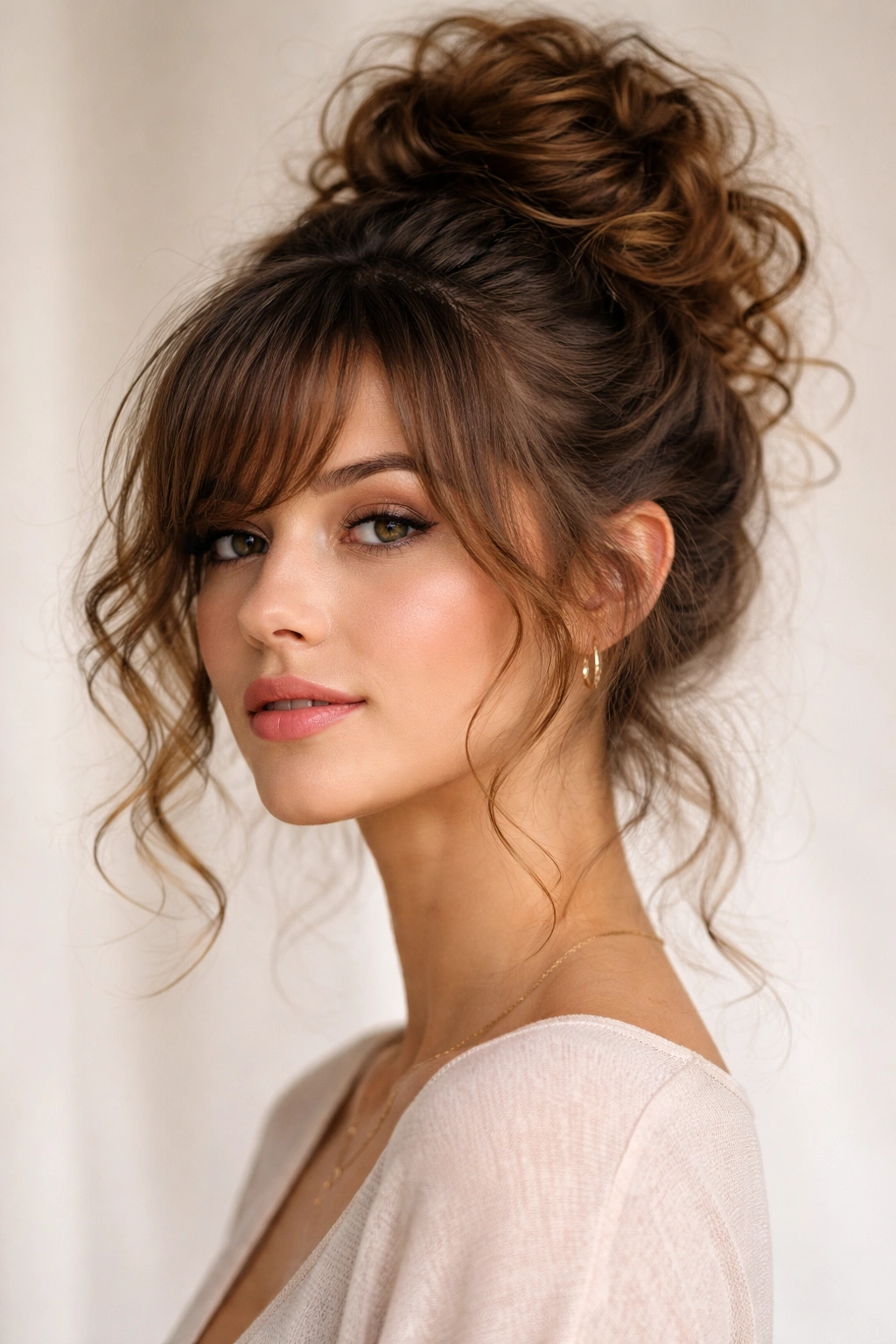
This style prioritizes softness and romance over anything edgy or structured. A tousled crown bun sits slightly back and to one side, creating an asymmetrical effect that feels very modern. Soft side-swept bangs that curve gently around your face complete the picture, creating something that’s undeniably feminine without being overly done.
Creating That Tousled Texture
The key to this style is embracing your natural curl texture completely. Don’t try to make everything neat or uniform — instead, enhance the curls you already have with a curl-defining product applied to damp hair. Let everything air dry or use a diffuser if you want more volume. Once your curls are set, gather them loosely toward the back and to one side, creating that slightly off-center, barely-there bun vibe. Some pieces should fall around your face and shoulders — this isn’t a style where everything is secured tightly.
Placing Your Bun for Maximum Effect
Instead of gathering everything at the exact crown, move it slightly back and to one side. This creates visual asymmetry that makes the whole style feel less matchy-matchy. Secure it loosely with bobby pins, letting lots of texture escape. The messier and more organic-looking, the better. You’re going for “I woke up like this, but make it cute” rather than “I spent an hour styling this.”
Softening with Side-Swept Bangs
Side-swept bangs that curve softly around your cheekbone are the perfect complement here. They should be longer than traditional bangs, ideally long enough to tuck behind your ear if you want. The curve follows the movement of your curls, creating a cohesive, dreamy aesthetic. Style these with minimal product — a tiny bit of curl cream distributed through damp bangs before air-drying is usually enough. Let them be soft and moveable rather than crunchy or heavy.
5. Pinned Bun with Layered Bangs
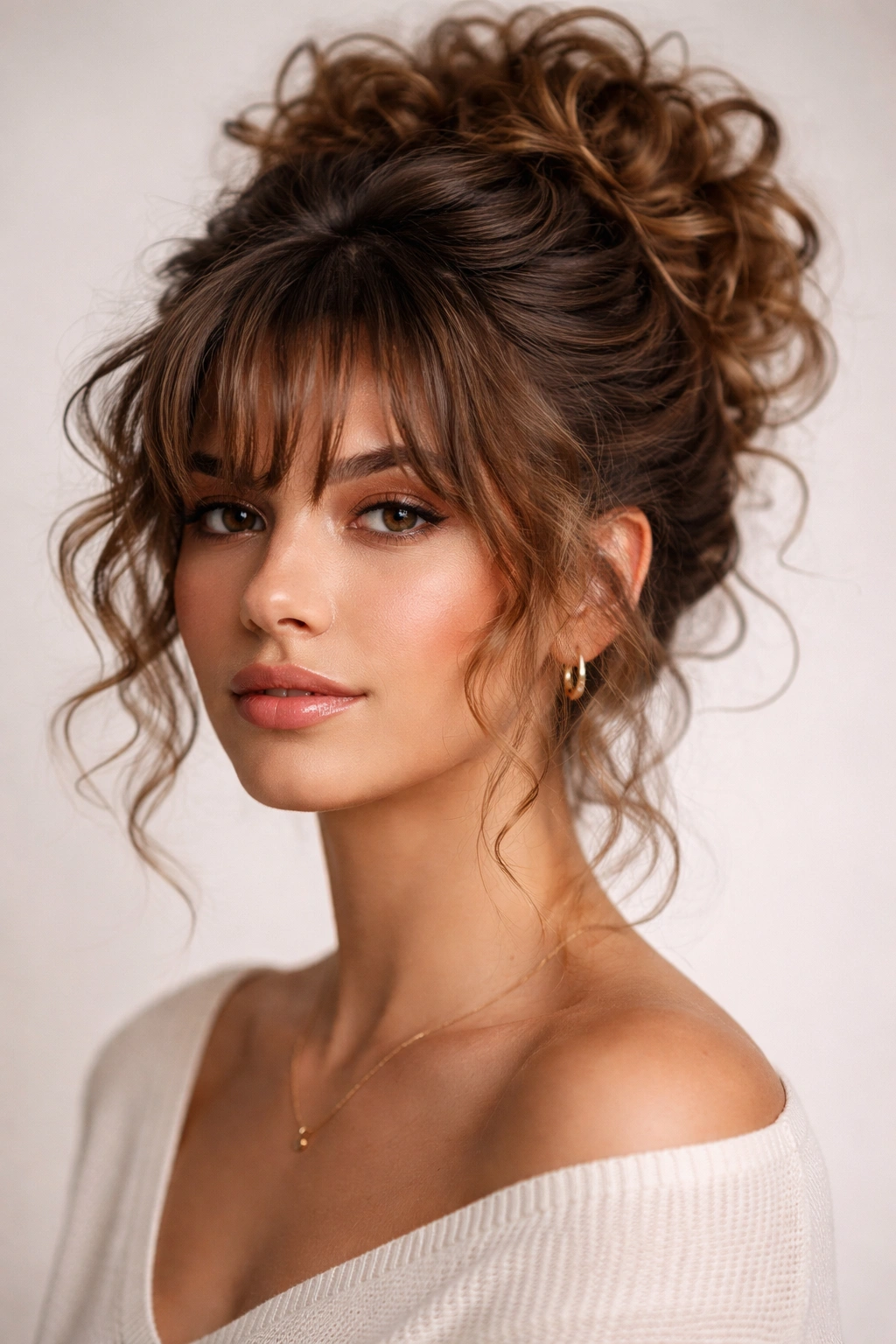
This style is for when you want a bit more structure and definition while still embracing your curls. Instead of a traditional twisted or gathered bun, you’re pinning sections of curls directly to your head in a way that creates a bun shape but maintains all the individual texture and dimension of your curls. Layered bangs with varying lengths add movement and sophistication.
The Pin-and-Sculpt Technique
Rather than gathering all your hair and securing it with a single elastic, you’re taking sections of your curls and bobby pinning them individually directly to your head. Start by applying a lightweight hold spray to your curls to give them grip. Gather your hair into sections — maybe four to six depending on how thick your hair is — and begin pinning each section up and around where you want the bun to sit. This technique creates a look that’s simultaneously neat and completely textured, since all your individual curls remain visible and distinct.
Working with Your Natural Curl Pattern
This approach actually plays beautifully with tight or medium curls because you’re using the curl structure itself as part of the design. Each curl or curl cluster becomes a visible element of the style rather than something that gets hidden or smooshed into a bun. The result is a bun that has tons of dimension and movement while still being clearly styled. It takes a bit longer than a standard bun, but the payoff is a genuinely unique look.
Layering Bangs for Visual Interest
Layered bangs with multiple lengths create movement and prevent that heavy-bang situation. You want some pieces that fall at your cheekbone, some that fall to your jawline, and some that reach your chin. This variation means your bangs catch light differently and frame your face in a multi-dimensional way. They complement the textured, dimensional bun perfectly. Style your layered bangs with a curl-enhancing product if your bangs are naturally curly, or use a light smoothing product if you prefer a slightly more polished finish.
6. Undone Wrap-Around Bun with Blunt Bangs
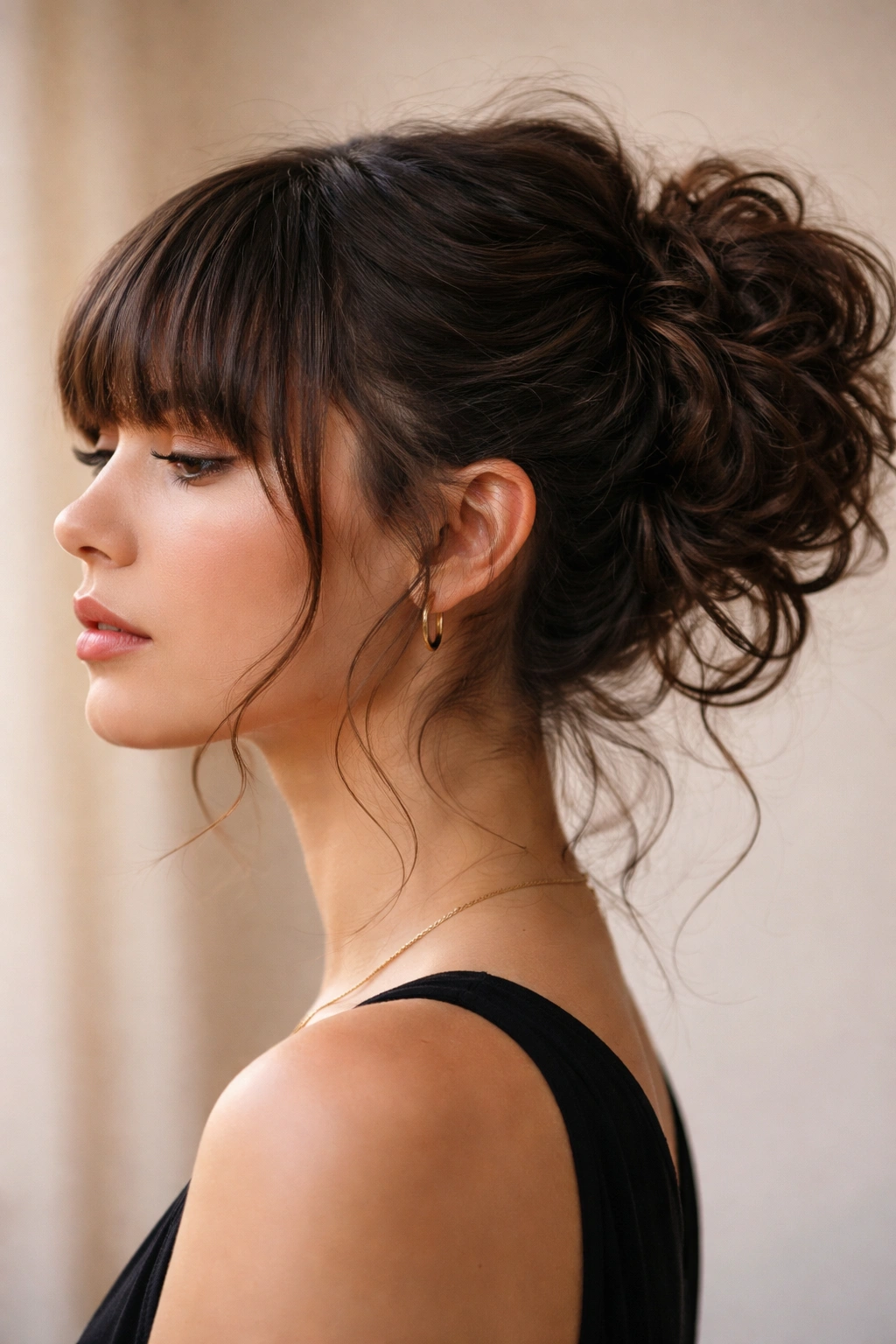
This is the most effortless version of all — it’s barely a bun at all, really, more like a sculptural arrangement of your curls that happens to look amazing. Instead of twisting or gathering your hair neatly, you’re loosely wrapping a section of curls around the base of your ponytail, creating this organic, cascading effect. Blunt bangs add a modern, graphic edge that contrasts beautifully with all that soft, flowing texture.
Understanding the Wrap-Around Method
Start by securing your hair into a low ponytail. Take a section from the ponytail (usually about an inch wide) and loosely wrap it around the base of the ponytail, pinning the end underneath. The wrapped section sits right at the elastic and creates this beautiful detail that says “I know what I’m doing” without actually requiring much skill. The rest of the ponytail falls loose or is gently gathered into a loose bun shape underneath. The beauty is in the simplicity and the contrast between the structured wrap and the loose texture beneath.
Why This Works with Curly Hair
Curly hair already has movement and dimension built in, so wrapping a section around the ponytail base creates a focal point without needing everything to be perfectly polished. The contrast between the intentional wrap and the naturally textured curls below feels intentional and modern. This style works especially well if you’re short on time but still want something that looks put-together.
Balancing Blunt Bangs with Soft Texture
Blunt bangs — where the edge is straight and precise — create visual contrast with the soft, organic texture of your bun and curls. They feel graphic and modern, almost edgy. The blunt line draws attention to your eyes and face, creating a balanced composition. Your blunt bangs can be styled smooth or left to follow your natural curl pattern; both approaches work. A light styling product keeps them defined without making them feel stiff.
How to Prep Curly Hair for Messy Bun Success
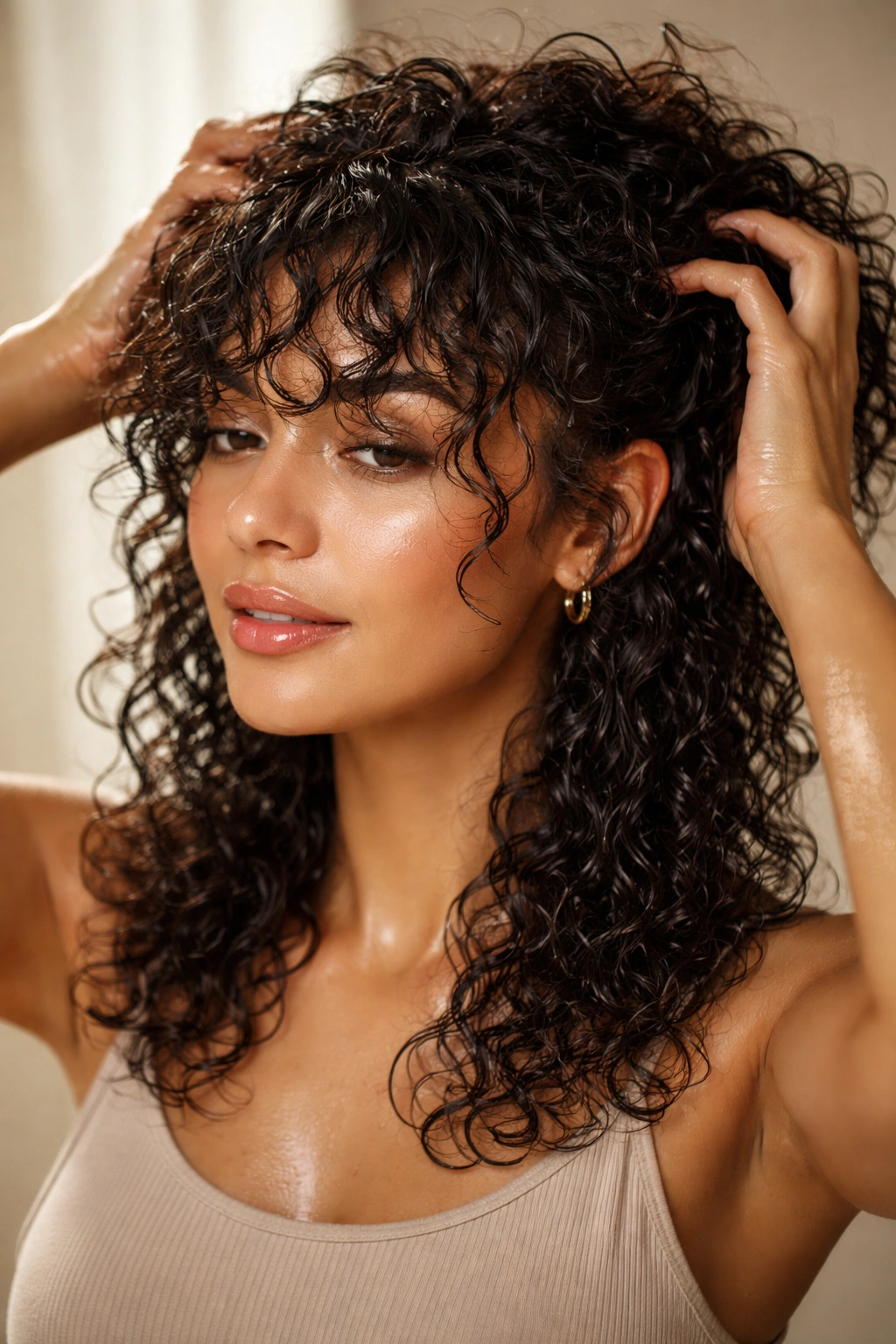
Preparation is honestly half the battle with curly hair and buns. You can have the best styling technique in the world, but if your curls aren’t properly hydrated, defined, and given grip, they’ll fall flat or frizz out by midday.
Start with damp curls, not soaking wet. Apply a curl-defining cream or gel to soaking-wet hair, then scrunch your hair with a microfiber towel or cotton t-shirt until it’s damp but not dripping. Your product needs time to set on your curls; this usually takes fifteen to twenty minutes if you’re air-drying, or five to ten minutes if you’re using a diffuser. Once your curls are completely dry, they’re ready to be styled into a bun. Styling a bun from damp or wet curls will cause them to look limp and flat as they dry.
If you’re styling on a day when your curls have already been set for a while (second-day curls, for example), lightly mist them with water and add a tiny amount of product to reactivate the curl pattern. You don’t want everything soaking wet again, just enough moisture to remind your curls of their shape. Let them dry for five minutes before you begin styling.
Best Products for Holding Curly Buns All Day
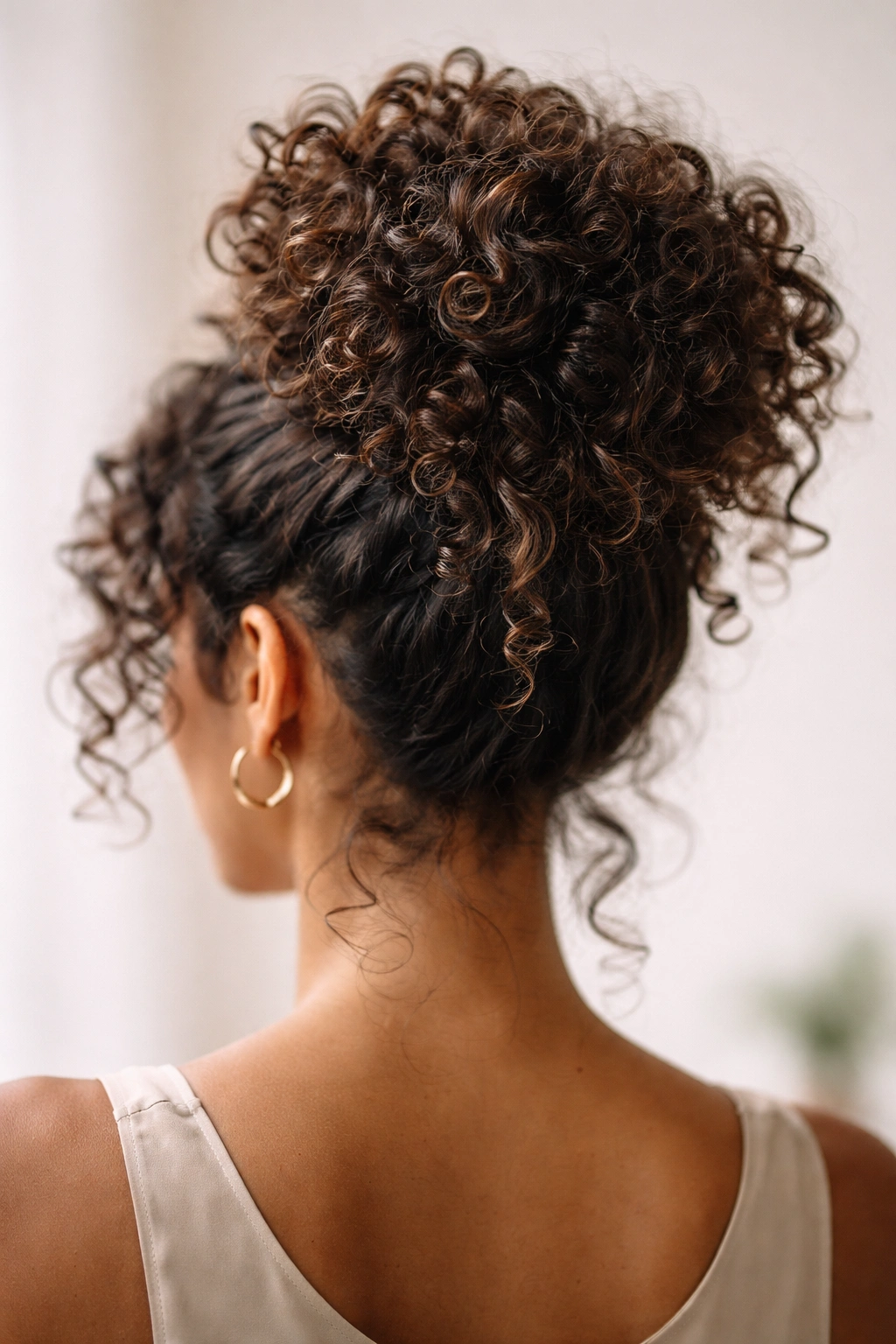
The right products make a dramatic difference in whether your bun stays put or slowly collapses by early evening.
A good texturizing spray or sea salt spray gives your curls grip and helps them hold a bun shape better. Apply this to towel-dried hair before you style. A lightweight hold spray applied after your bun is finished helps everything stay in place without making your curls feel crunchy or heavy. Look for products that specifically say they work with curly or textured hair — products designed for straight hair often feel too stiff on curls.
For securing the bun itself, use bobby pins rather than elastics alone (or in addition to a loose elastic). Bobby pins give you the stability you need without creating that obvious elastic line. Spin pins — those coily spiral pins — work beautifully with curly hair too and often hold better than straight bobby pins. Avoid cheap elastics that snag; invest in seamless silk or satin elastics that cause less friction. A light cream applied to your bangs helps define them while keeping them flexible and moveable.
Styling Techniques for Messy Bun Success
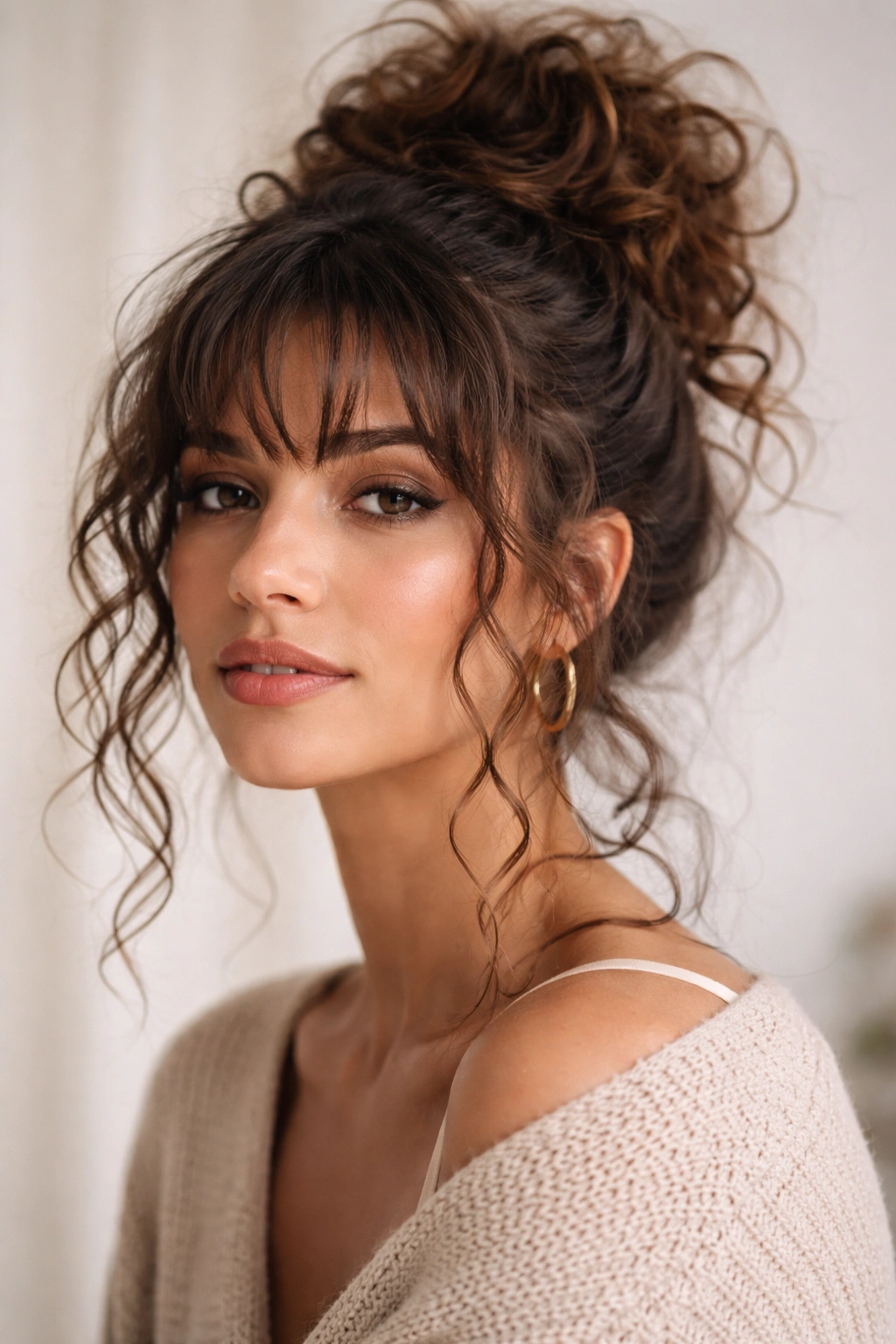
The difference between a bun that looks intentionally messy and one that just looks messy-messy is all about intentionality and technique.
When you’re gathering your hair into a bun, don’t pull it completely tight from root to tip. Instead, gather everything loosely, secure it with an elastic at the base, then gently pull and tease sections of the bun itself to make it fuller and looser. This creates volume and texture. Once your bun is roughly in place, go back and strategically pull out a few wisps around your face and nape to frame your face and soften the look. These shouldn’t look accidental — they should be clearly placed for effect.
Use the crown of your head to your advantage. The natural curve and contour of your head will make a bun sit beautifully if you’re working with it rather than against it. Don’t try to force everything into a perfectly symmetrical round shape; instead, let your bun follow the natural roundness of the back of your head. This creates a more flattering, organic-looking result.
For your bangs, whatever style you choose, style them separately from your bun. Secure your bun first, then go back and style your bangs to the final finish you want. This ensures your bangs don’t get caught or flattened when you’re arranging the bun. If your bangs are frizzing or rebelling, a tiny dab of smoothing cream on your fingertips, gently applied to the surface of the bangs, helps control without looking greasy.
Protecting Your Curls While Wearing a Bun
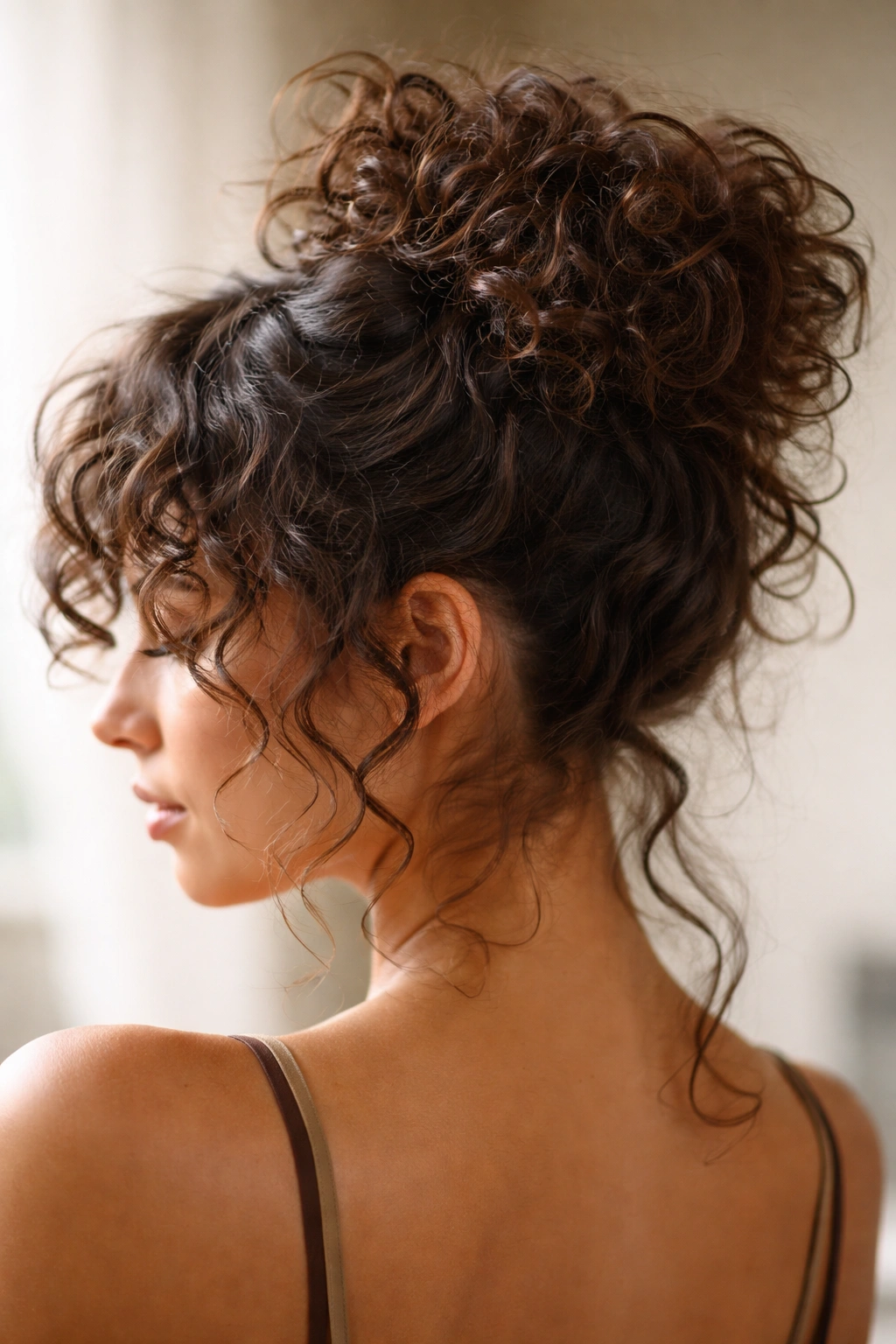
Wearing your hair in a bun puts tension on your curls, which is fine occasionally, but if you’re doing this regularly, you want to minimize damage and maintain your curl health.
Avoid sleeping in your bun, since the overnight tension can cause breakage and disrupt your curl pattern. If you want to preserve your bun hairstyle overnight, gently remove it before bed. Use a silk or satin bonnet or pillowcase to protect your curls while you sleep. This reduces friction and helps your curls stay intact for styling the next day.
Don’t pull your bun too tight, especially if you’re wearing it several days in a row. Tension alopecia is a real risk with consistently tight hairstyles. A loose, intentionally messy bun actually protects your hair better than a tight one. You’re getting the style you want while also being gentler on your curls.
When you remove your bun, do it slowly and carefully. Gently pull out bobby pins one at a time rather than yanking your hair away from the pins. Gently separate sections of hair as they come out of the bun to avoid creating tangles. If your curls are matted down where the bun was, don’t panic — a light mist of water and a few minutes of air-drying will help them bounce back.
Maintaining Bangs with Curly Hair
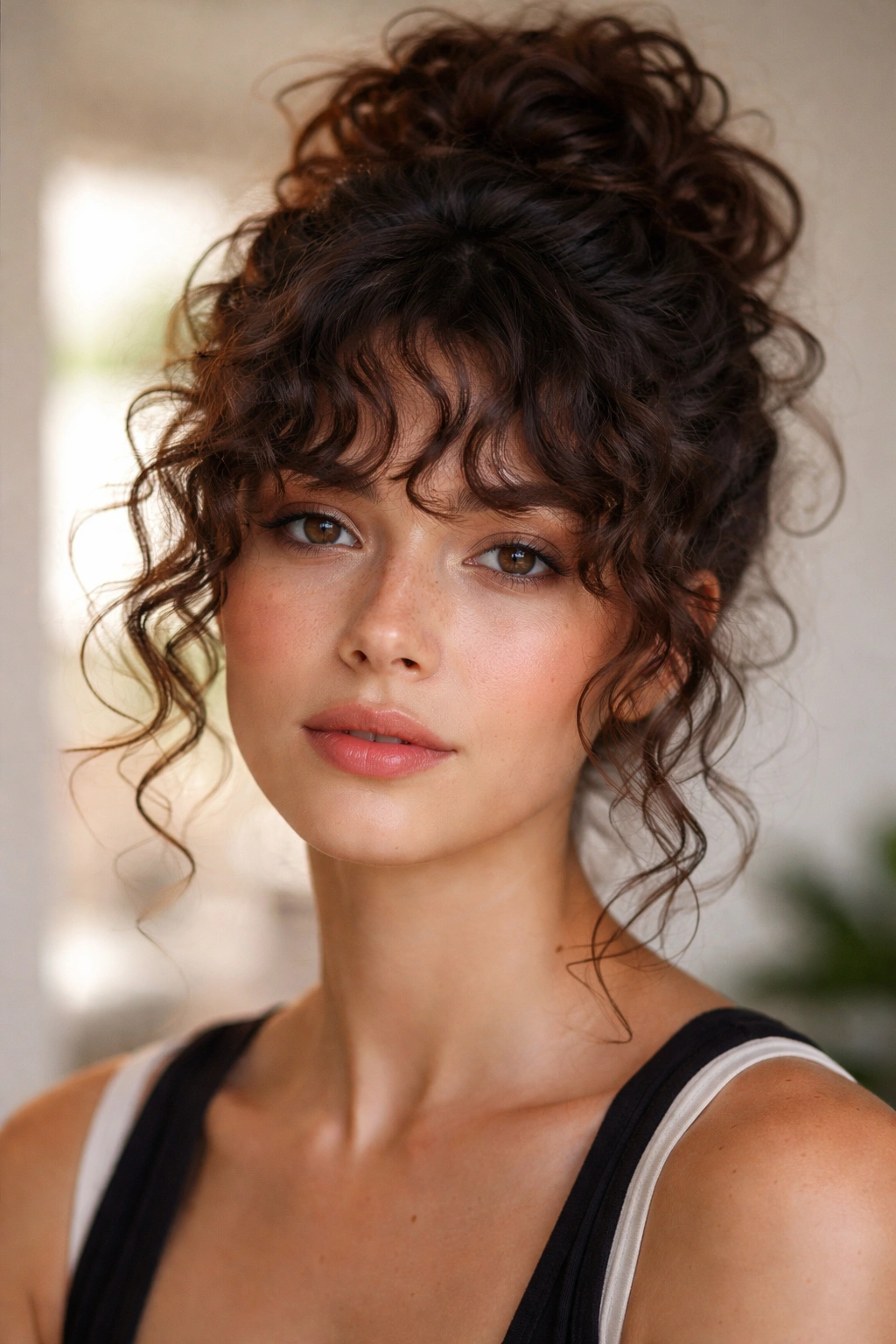
Bangs with curly hair require a slightly different maintenance approach than bangs on straight hair, especially when you’re also wearing them in a bun.
If your bangs are curly, plan on styling them fresh most mornings. Your bangs are usually at face level where moisture, humidity, and friction affect them more than the rest of your hair. This is actually fine — your bangs take about sixty seconds to style if you use the right products. Apply a lightweight curl cream to damp bangs, then either air-dry them or use your fingers to style them into shape as they dry.
If you prefer straight bangs over curly ones, you’ll need to straighten them regularly if you have curly hair on the rest of your head. A flat iron works, but use it on low heat and with a heat protectant product. Honestly, many people with curly hair find that embracing curly bangs is easier and more beautiful-looking than fighting against their texture.
Have your bangs trimmed every four to six weeks. Bangs that are growing out look shaggy rather than intentionally layered, which can throw off your whole style. A good stylist who understands curly hair will know how to cut curly bangs so they fall beautifully and frame your face properly. This is worth the investment — don’t try to trim your own bangs.
Final Thoughts
Curly hair and messy buns are genuinely a match made in heaven, and adding bangs into the equation just makes the whole thing more flattering and fun. The six styles above cover everything from romantic and soft to modern and graphic, so there’s absolutely a combination that fits your face shape, personality, and curl pattern.
The real secret isn’t any particular technique or product, though both help. It’s understanding that your curls are an asset, not something to fight against. When you work with your natural texture instead of against it, everything becomes easier and looks better. Embrace the texture, let pieces fall where they want to fall, and trust that messy actually means sophisticated when it’s done intentionally.
Your bangs and your bun should feel like they’re working together rather than competing. Spend a little time figuring out which bang style and bun placement combination feels right for your specific face shape and curl pattern, then have fun with it. The beauty of curly hair is that it’s forgiving — if something falls out or shifts, it looks even more intentionally undone. You’ve got this.