



Korean beauty culture has transformed how we think about hairstyling, especially when it comes to creating that coveted “soft girl” aesthetic. The messy bun isn’t just a practical way to get hair off your face — it’s become an art form in Korean styling, where every strand placement matters and the goal is to look effortlessly put-together rather than haphazardly thrown up. If you have soft, fine, or thin hair, Korean messy bun styles offer something traditional buns don’t: techniques designed specifically to create volume and texture without weighing down delicate strands.
The key difference between a Korean messy bun and a basic messy bun lies in intentionality. Korean stylists approach the messy bun with precision, strategically loosening pieces, creating wispy layers, and building height in ways that actually flatter soft hair instead of making it look flat or stringy. These styles work because they embrace the natural movement and delicate nature of fine hair rather than fighting against it. Whether you’re dealing with naturally soft hair, hair that’s become delicate from styling, or hair that just doesn’t hold volume easily, Korean messy bun techniques will change how you approach this everyday style.
The beauty of these eight styles is that they’re entirely achievable at home. You don’t need special training or professional-grade products — just an understanding of the techniques, the right lightweight products, and a willingness to spend an extra five minutes getting the placement exactly right. Many of these styles actually look better the less effort you appear to put into them, which makes them perfect for both casual days and situations where you want to look polished without looking overdone.
1. The Classic Cloudy Bun
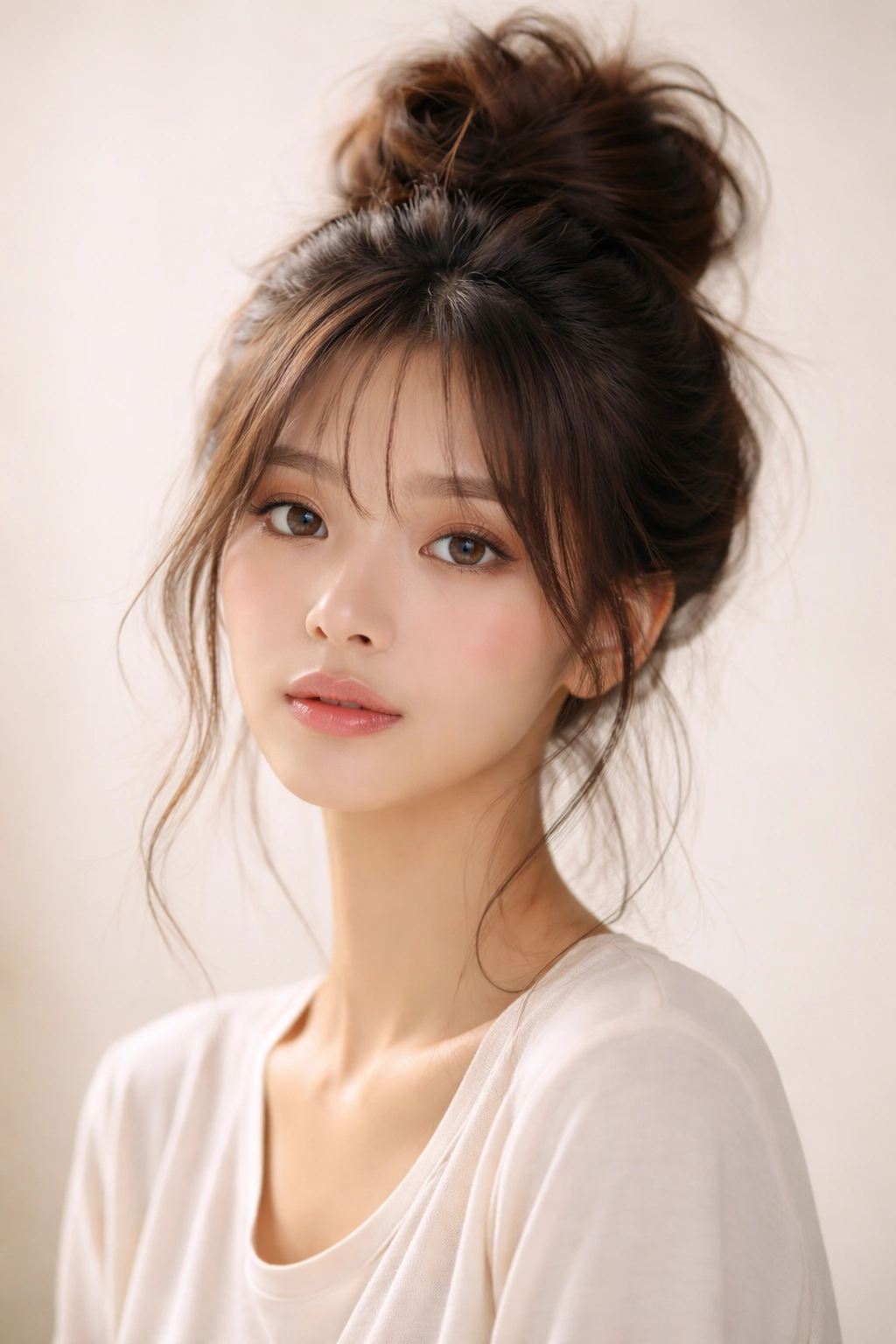
The classic cloudy bun is the signature Korean messy bun style you’ll see across Seoul’s beauty influencer community. It gets its name from the cloud-like texture created by strategically pulling and fluffing sections of hair around the crown. The key to this style is that it’s intentionally messy in a controlled way — every wisp has been placed exactly where it should be, even though it appears completely undone.
This style works beautifully on soft hair because the technique relies on texture rather than thickness. You’re not trying to create a smooth, polished bun; instead, you’re building a pillowy, rounded shape with pieces falling softly around the face. The cloudiness comes from backcombing small sections at the crown, then gently pulling some strands free to frame the face. With soft hair, this creates an especially romantic, ethereal effect because the fine strands catch light beautifully when loosened.
The Visual Effect You’re Creating
The cloudy bun sits relatively high on the crown and has a rounded, slightly undone shape that reads as feminine and approachable. Rather than all the hair being neatly gathered into a compact base, sections are intentionally softened and pieces pull free naturally. Face-framing pieces are essential to this style — without them, even soft hair can look flat against the face. The bun itself shouldn’t be perfectly round; it should have an organic, slightly asymmetrical quality.
Why Soft Hair Makes This Style Even Better
Fine or soft hair actually creates the perfect “cloudy” texture naturally. Where thicker hair might look overly loose or messy without intention, soft hair falls in delicate waves that create exactly the aesthetic Korean stylists are aiming for. The backcombing technique that adds texture reads as intentional fluff rather than frizz on soft hair.
Pro tip: Use a lightweight texturizing spray on damp hair before styling — this gives you grip without the heaviness of traditional texturizing products, making it much easier to build that cloud effect.
2. The Half-Up Messy Knot
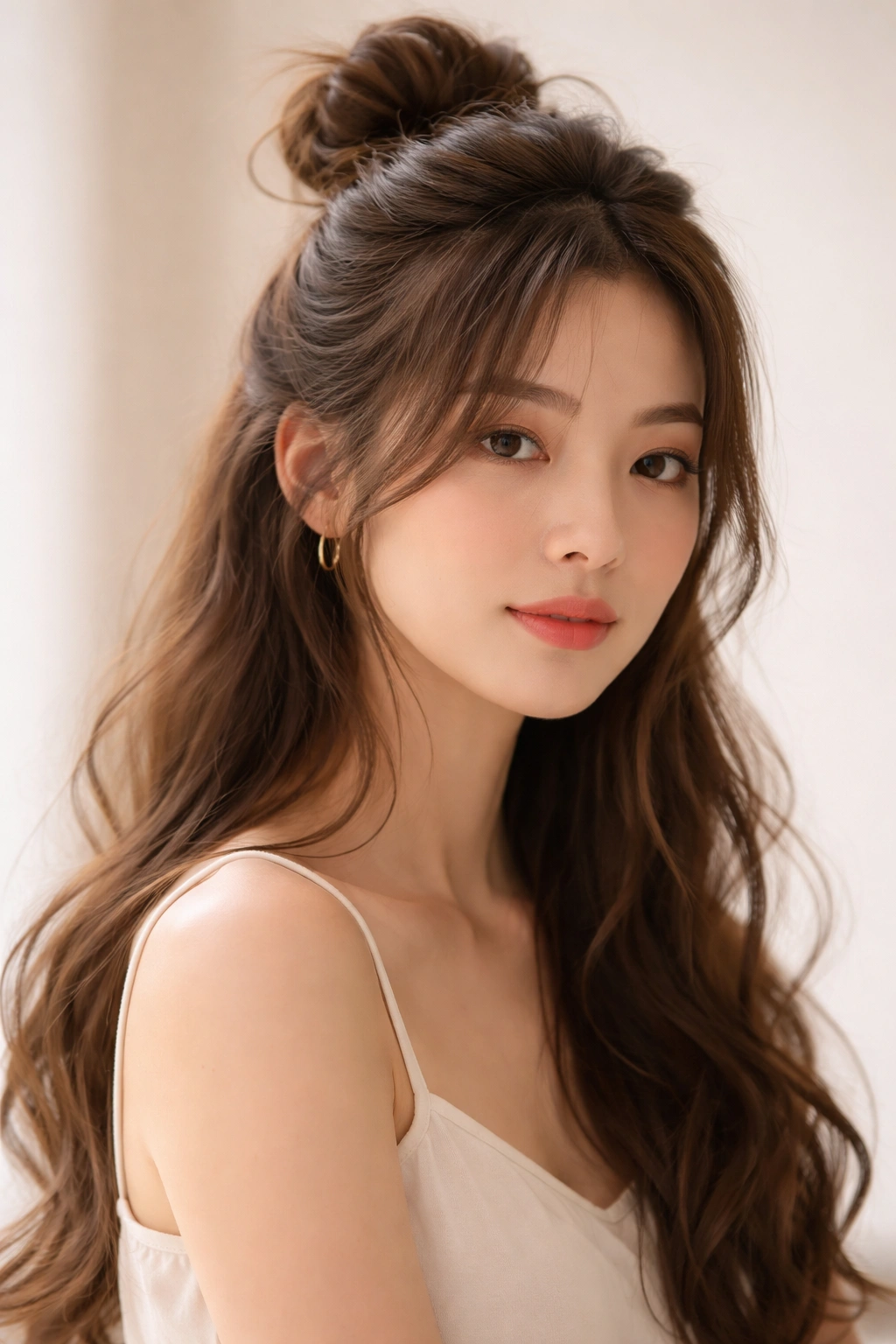
The half-up messy knot takes the intensity down from a full bun while maintaining that soft, romantic Korean aesthetic. This style is perfect for soft hair because you’re only working with half the hair mass, which means less weight pulling down delicate strands and a naturally lighter, airier look. The knot sits at the crown, with the bottom half of your hair flowing freely — this is ideal for showing off the length and movement of soft hair.
The technique involves sectioning the top half of your hair, teasing it gently at the crown for height, and then twisting or knotting it into a loose knot shape. The beauty of this style is that the knot doesn’t need to be tight or perfectly formed. In fact, a slightly loose, falling-apart knot is exactly what you want. Small pieces should be pulled free around the face and hairline, and the back can have strands gently tugged from the base of the knot to create texture.
Why This Works for Soft Hair
With soft hair, the half-up style takes advantage of your hair’s natural draping quality. The bottom half showcases the smooth, flowing nature of fine strands, while the top half creates the focal point of texture and volume. You’re not asking your entire head of soft hair to hold a structured bun; instead, you’re creating dimension with just the crown section. This approach often looks more flattering on soft hair because it doesn’t force fine hair to do something it’s not naturally built for.
The Key Technique: The Loose Knot
Start by creating a small loop with your top half section, then wrap the remaining length around the base of that loop to create a knot. Don’t pull everything tight — leave it deliberately loose so pieces can fall out. This is what gives the style its charm and prevents it from looking structured or severe.
3. The Sleek Crown Bun with Loose Tendrils
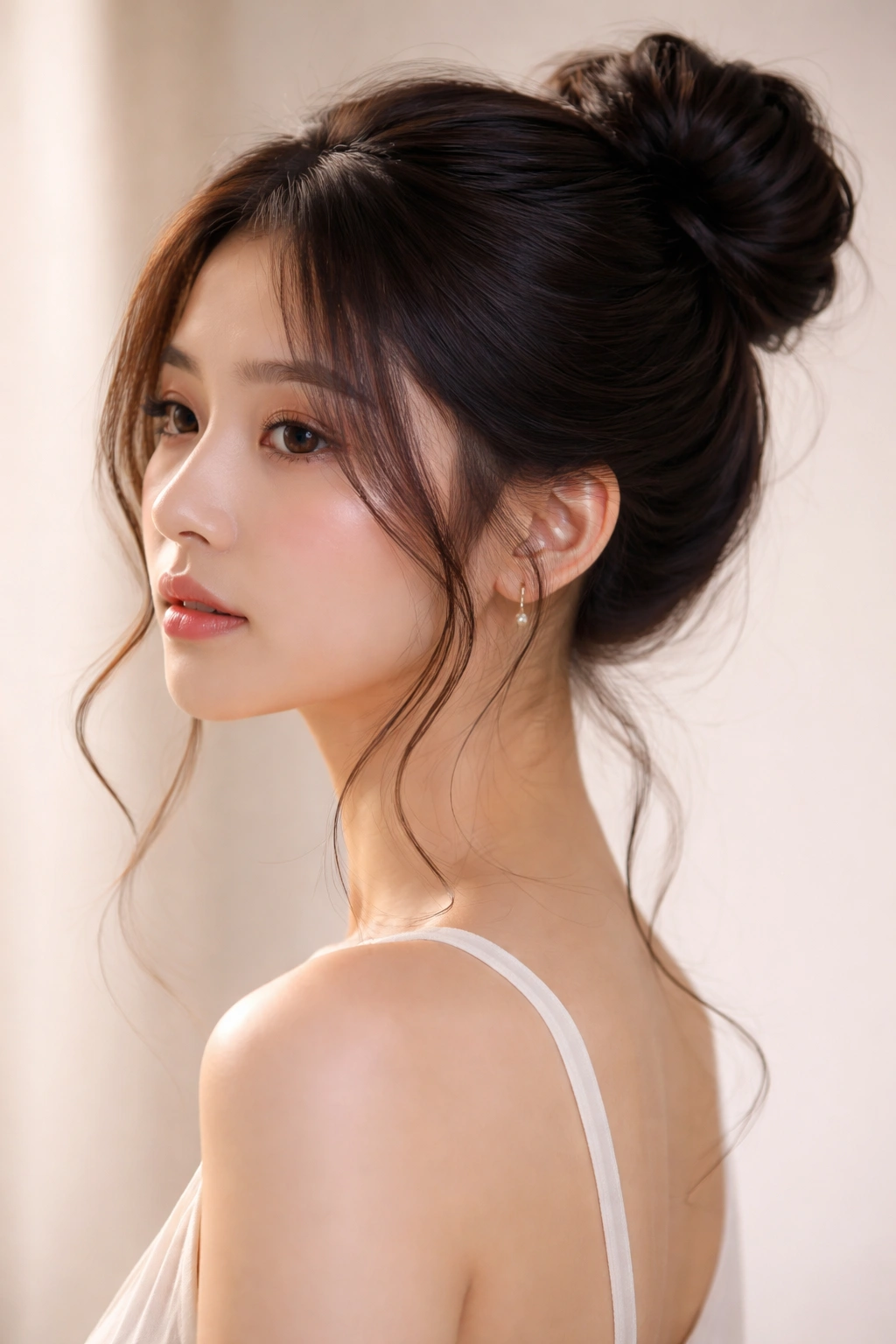
This style takes a different approach to Korean messy aesthetics: pairing a sleek, controlled base with intentional loose tendrils throughout. The contrast between the smooth, gathered crown area and the soft, face-framing pieces creates a sophisticated look that works particularly well on soft hair. The sleekness prevents the style from reading as unpolished, while the tendrils maintain that effortless, romantic quality.
To create this style, brush your hair smooth at the crown and gather it into a low or mid-height ponytail. You want this base to be as smooth as possible — this is where a lightweight smoothing serum or gel comes in handy. Once you’ve got your tight base, twist the ponytail loosely and wrap it around itself to form a bun. Now comes the crucial part: strategically pull out tendrils from around your face, ears, and the nape of your neck. With soft hair, these tendrils will be especially delicate and wispy.
Building the Tendril Effect
The tendrils shouldn’t be random pieces that have fallen out — they should be intentionally selected and gently loosened. This is a technique where you’re actually pulling small sections from your gathered hair to create a more relaxed frame. On soft hair, these tendrils create an especially romantic effect because they’re so fine they seem to float rather than hang heavily.
Why the Sleek Base Matters
For soft hair, having a smooth, controlled base is crucial because it gives your style structure without relying on volume or thickness. The sleekness also makes the loose tendrils more striking because of the contrast. This is a style that looks intentional and put-together rather than accidental.
4. The Textured Two-Strand Twist Bun
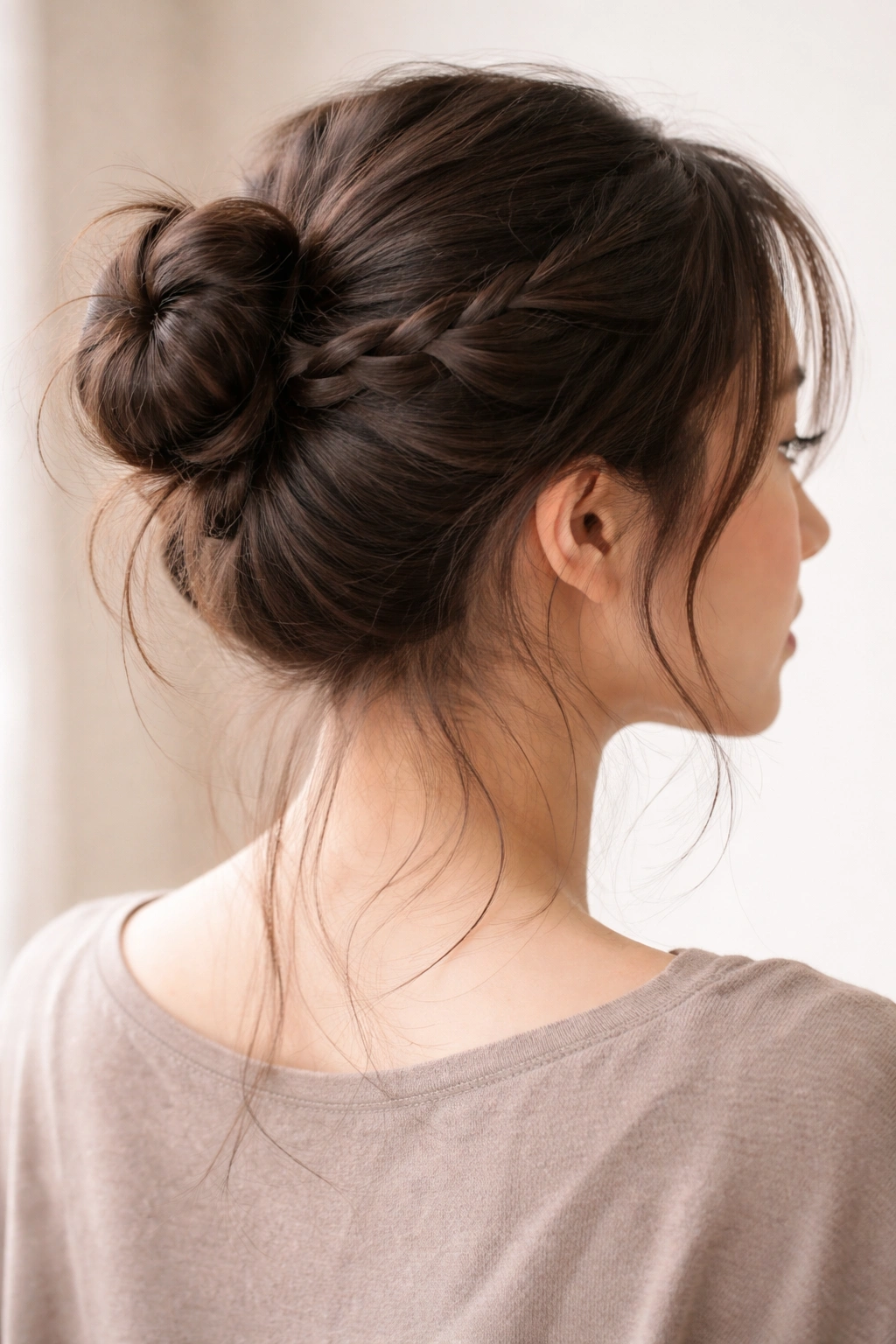
If you want to add more texture and visual interest to your messy bun, the two-strand twist technique creates beautiful, deliberate movement without requiring tight braiding. This style combines two sections twisted together, wrapped around the crown, and secured with bobby pins. The twisted strands create a beautiful pattern that’s visible from the front and sides, making it a more dressed-up version of a basic messy bun.
The two-strand twist is actually easier on soft hair than you might think. The technique relies on twist pattern rather than tightness, so delicate strands hold the shape beautifully. You’ll section off about one and a half to two inches of hair from each side of your part, twist them together loosely, and wrap them around the base of a small bun or knot at the crown. The beauty of this approach is that the twists are visible and sculptural, while the rest of the bun remains soft and undone.
Creating the Twist
Divide your selected section into two strands. Twist them around each other, but don’t twist too tightly — you want them to sit together gently. As you twist, you’ll naturally create a textured, rope-like strand that looks intentional and styled. This is where soft hair shines: the fine strands create delicate texture within the twist rather than a thick, heavy rope.
Layering the Twist Effect
For extra visual impact, you can create two twist sections on either side of your head and wrap them both around the bun base. This creates a crown-like effect while the bun itself remains soft and undone. It’s the perfect balance between put-together and effortless.
Quick tip: Use a texturizing spray on damp hair before creating the twists — this gives you grip and makes the twist pattern more visible without flattening soft strands.
5. The Ultra-Volumous Halo Bun
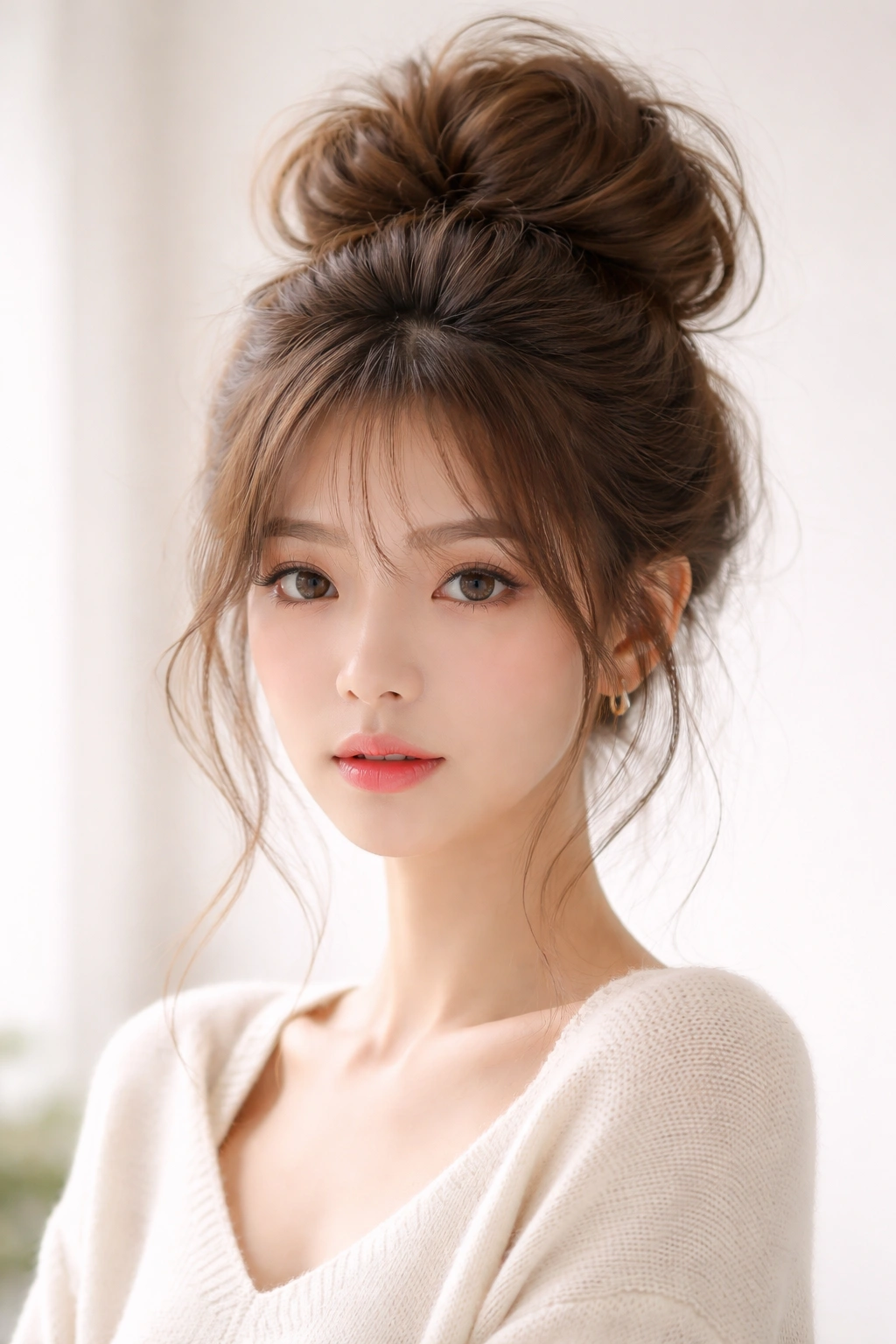
The halo bun is where you’re building serious height and dimension, and it’s one of the most dramatic Korean messy bun styles. This style works by creating volume at the crown and letting the gathered bun sit higher on the head, almost like a crown or halo. For soft hair, achieving this look requires strategic teasing and clever product use, but once you nail it, the effect is stunning.
Start by sectioning off the top third of your hair and backcombing it firmly at the roots to create height. The key difference between a halo bun and a basic messy bun is the amount of lift you’re building — you want significantly more volume at the crown. Once you’ve teased your top section, smooth the surface layer gently with a fine-tooth comb (don’t smooth away all the texture you just created), and then gather this section into a ponytail at the crown. Twist or wrap this ponytail loosely and pin it into a bun shape. The height from the teasing creates the “halo” effect, while the loose wrapping keeps it from looking too structured.
Why Halo Buns Look Especially Good on Soft Hair
With fine hair, creating height can be challenging, but the halo technique actually works better on soft hair than on thick hair in some ways. The reason is that fine hair naturally has movement and flow, so when you tease it, it holds texture beautifully without becoming stiff or overly bulky. The teased section reads as volumized rather than simply thickened.
The Teasing Technique for Soft Hair
Use a small-tooth teasing brush and work in small sections, backcomb gently rather than aggressively. With soft hair, you don’t need intense teasing — gentle, consistent teasing creates plenty of grip and texture. The goal is texture and grip, not a massive puffed-out section that will fall flat immediately.
Adding Face-Framing Pieces
Pull out small pieces around your face and ears to soften the halo effect. These pieces are crucial because they prevent the style from looking too uniform or structured. With soft hair, these face-framing pieces will have a lovely delicate quality.
6. The Tucked Bubble Bun
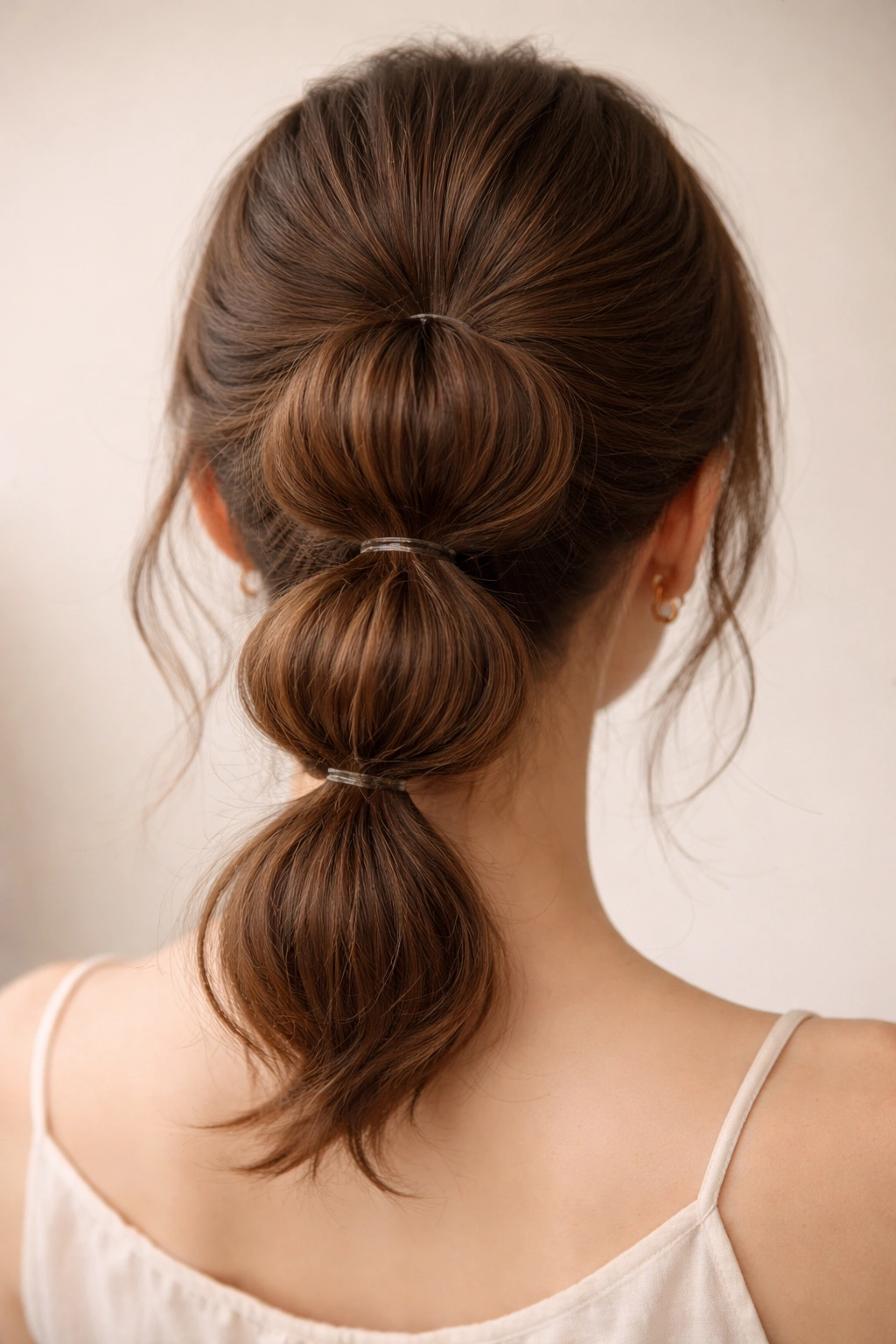
The bubble bun is a playful, slightly more youthful take on the messy bun aesthetic, and the Korean version involves creating multiple sections with small gaps between them that create a bubble-like stacked effect. This style is particularly flattering on soft hair because each bubble sits independently, and fine hair’s natural movement makes each section look intentionally textured rather than limp.
To create a bubble bun, start by gathering your hair into a high ponytail at the crown. Secure it, then divide the ponytail into 3-4 sections. Secure each section with a small elastic about two inches below the previous elastic. As you create these sections with their elastics, gently pull and fluff each section outward to create the “bubble” effect. The space between each elastic is what creates the stacked, bubble-like appearance. With soft hair, this style is especially charming because the fine strands fluff beautifully and create an airy, romantic look.
Why Soft Hair Makes Bubbles Look Better
Thick hair can look bulky in bubble styles because you’re working with dense sections. Soft hair, however, creates the perfect amount of visual interest in each bubble without overwhelming the style. The bubbles look light and whimsical rather than heavy or costume-like.
The Fluffing Technique
After securing each section with its elastic, gently pull the section upward and out to create that bubble shape. Don’t pull too hard, especially on soft hair — you’re looking for a subtle puffing effect, not a dramatic explosion of hair. Gentle is always better with fine strands.
Variations on the Bubble Style
For a messier version, pull some face-framing pieces free from the top sections and gently tease those pieces for extra texture. You can also leave the very bottom section (the lowest bubble) unsecured for a romantic, falling-bun effect.
7. The Loose Braided Wrap Bun
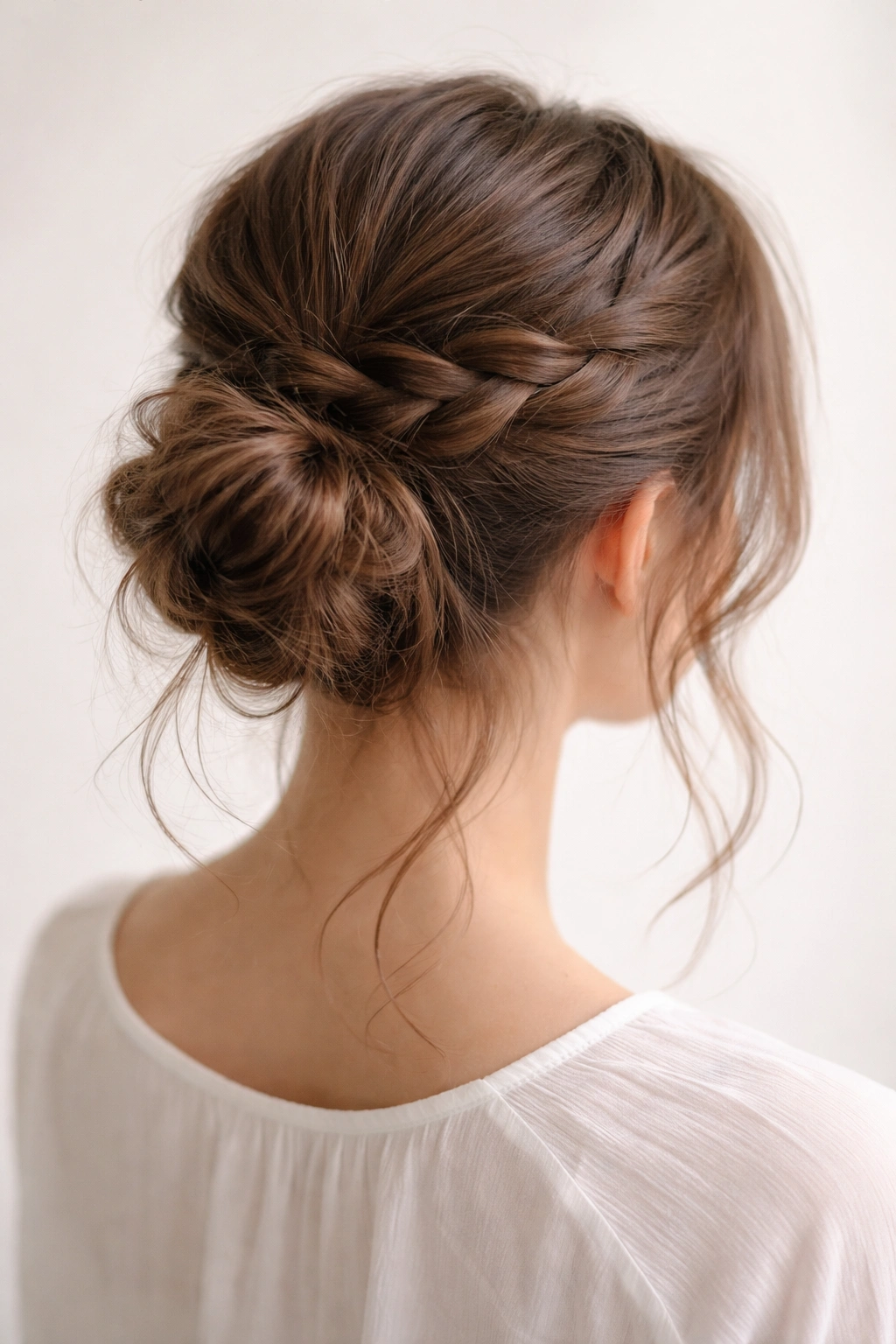
This style combines the visual interest of a braid with the softness of a messy bun. Instead of creating a traditional braided bun, you’re making a loose braid, wrapping it around the crown, and letting pieces fall free for a softer effect. The braid gives you built-in texture and visual interest, while the loose wrapping keeps the style from looking too structured or formal.
Section off a generous portion of hair from one side of your head and create a very loose three-strand braid (don’t braid tightly — Korean styles favor loose braiding that shows the texture of individual strands). Once you’ve braided down to about ear-level, stop and gather all your hair together at the crown. Twist the braided section and the remaining unbraided hair together and wrap them around the base to form a bun. The braid becomes a visible design element that wraps around the bun, while the remaining hair fills in the bun shape. This creates a bun that’s visually interesting from every angle.
Why Loose Braiding Works on Soft Hair
Tight braids can actually emphasize thinness on fine hair because they pull the scalp taut and show any gaps or areas of lesser density. Loose braiding, however, creates the opposite effect — it shows off the texture and movement of soft strands while creating the appearance of fullness through the dimensional braid pattern. The texture of the braid itself becomes the focal point rather than the density of the hair.
Creating a Visible Braid Design
When you wrap your braid around the bun, position it so the braided section is visible from the front or side. This isn’t just functional — it’s a design element. Make sure some of the braid peeks through or wraps around visibly rather than disappearing into the bun.
Layering Hair Over the Braid
After you’ve created your braided-wrap bun, gently pull some pieces from the bun portion to layer over the braid slightly. This creates depth and prevents the braid from looking like a hard line around your bun. On soft hair, these overlapping pieces create a soft, integrated look.
8. The Wispy Low Bun with Face-Framing Layers
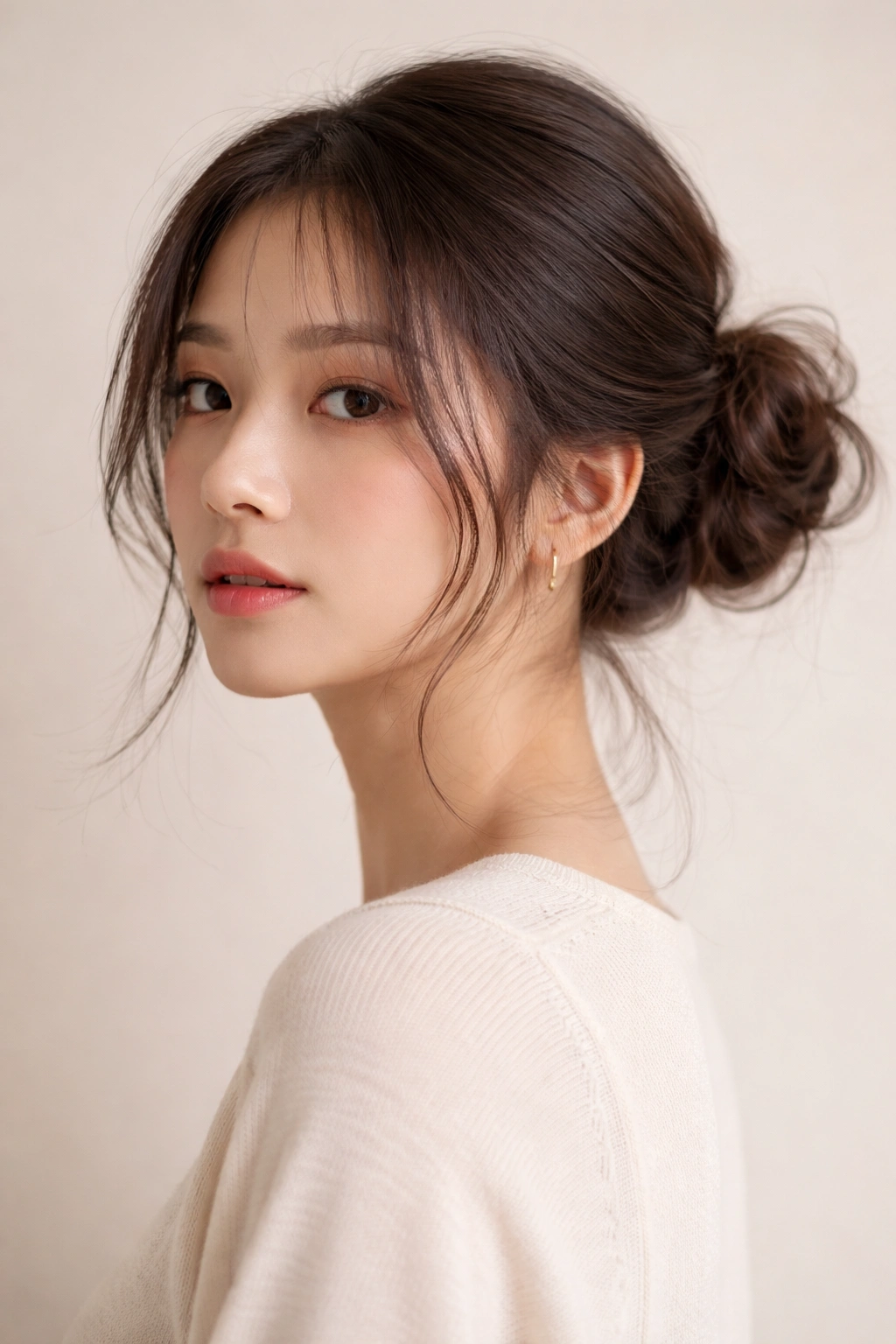
The wispy low bun is the most undone, effortlessly-romantic of all Korean messy bun styles. This bun sits low on the nape of the neck and is characterized by the amount of delicate, face-framing pieces that are pulled free throughout. It’s the style that looks like you barely tried, even though every strand placement is actually strategic. For soft hair, this is perhaps the most flattering option because it plays directly to the strengths of fine strands.
Create a low ponytail at the nape of your neck by gathering hair loosely from around the entire head — don’t pull it back tightly. The looseness of the initial ponytail is crucial; you’re not creating a sleek, smooth base here. Twist this low ponytail loosely and wrap it around itself to form a soft bun. Now, very deliberately, pull pieces free. Start at the front and work your way around: pull a piece from beside each ear, a piece from the hairline, a piece from each side of the bun base. These pieces shouldn’t look accidentally loose — they should frame your face intentionally. With soft hair, these wisps will have a lovely feathery quality that’s essentially impossible to achieve with thicker hair.
The Art of Strategic Wisping
Pulling pieces free from a bun is an art form in Korean styling. You’re not yanking at your hair; you’re gently loosening pre-selected sections. Use a fine-tooth comb or a hair pick to gently comb out small sections from various places around the bun and face. Start with less than you think you need and add more pieces if it looks too polished.
Face-Framing Specifically for Soft Hair
With fine hair, you can have more face-framing pieces than you’d typically use on thick hair because the pieces won’t overwhelm your face or look messy. In fact, the wisps become a feature rather than a flaw. Use these pieces to frame your cheekbones, temples, and jawline for a flattering, soft effect.
The Loose Ponytail Base
The difference between a wispy low bun and a regular low bun is the tightness of the initial ponytail. For this style, you want a genuinely loose ponytail — gather hair gently, secure it loosely, and even gently tug on the base to loosen it further. This creates the foundation for the wispy effect.
Worth knowing: This style looks best when you’ve added some texture to your hair before starting — if you blow-dry with texture or add waves beforehand, the wispy pieces will have more movement and won’t look stringy.
How to Prep Soft Hair for the Perfect Messy Bun
Before you even attempt any of these styles, the foundation matters enormously. Soft hair requires different prep techniques than thick hair, and getting this right is the difference between a messy bun that looks intentional and one that just looks unkempt. The goal with soft hair prep is to create grip and texture without adding weight.
Start with hair that’s been dry for at least an hour after washing — never try to create a messy bun on completely wet hair. However, hair that’s damp or has some moisture still in it actually works better than completely dry hair for building texture. The sweet spot is hair that’s about 80% dry. This is when you have just enough moisture for your hair to hold a wave or texture, but it’s dry enough that your styling will hold.
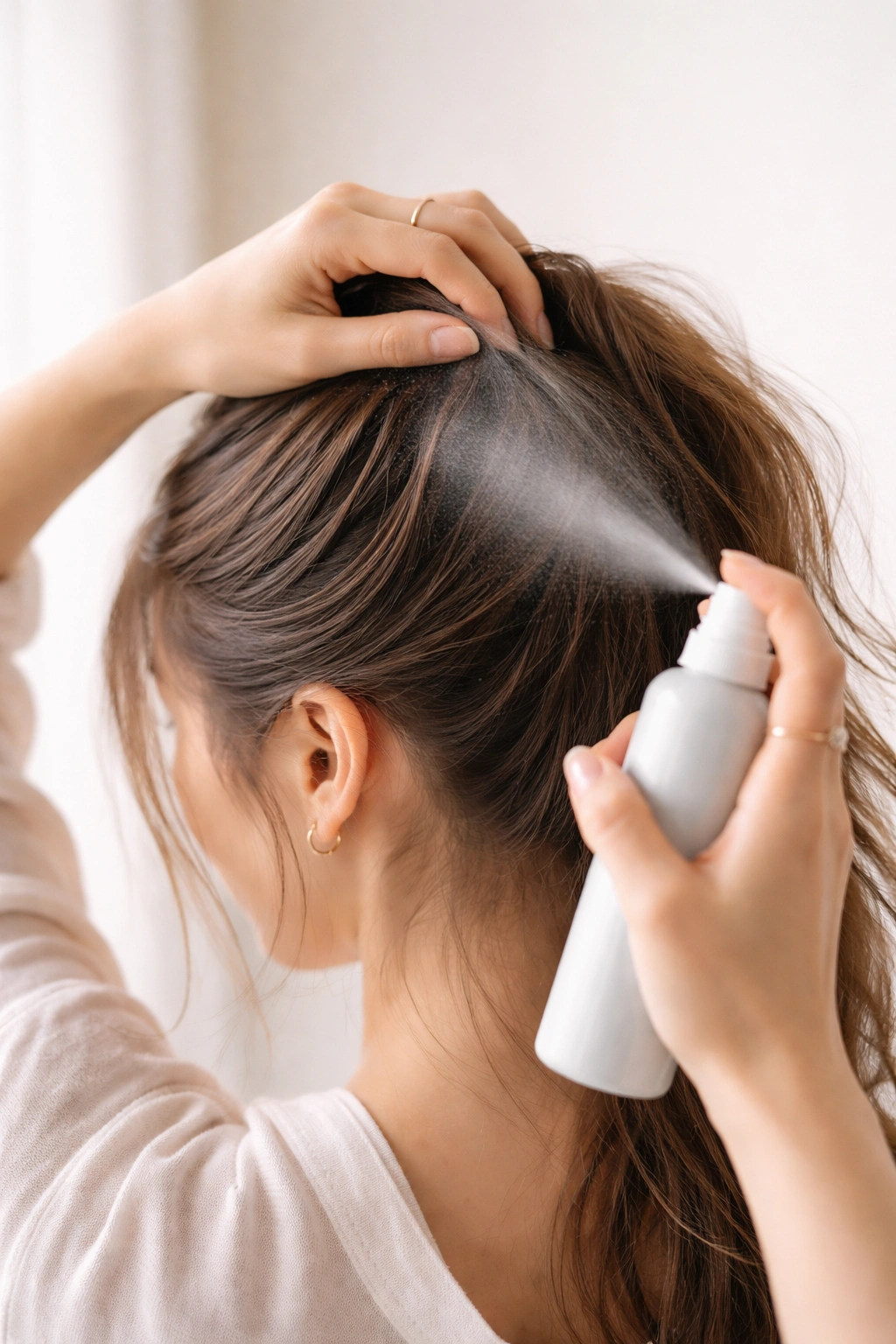
Apply a lightweight texturizing spray or dry shampoo to your roots and mid-lengths. The key word here is lightweight — you’re not using a heavy volumizing mousse or thick texturizer that will weigh down soft hair. Look for products labeled specifically for fine or soft hair. If you can’t find those, aerosol dry shampoos work beautifully and add grip without weight. Spray it throughout your hair, focusing on areas where you want height or where you’ll be working (the crown for high buns, the nape for low buns).
Let the texturizing product sit for a minute, then gently scrunch your hair with your hands or flip your head upside down for a few seconds to distribute the product and let it do its job. This creates the texture that Korean messy bun styles rely on. Without this prep step, soft hair simply won’t hold the shapes you’re trying to create.
If you have very straight, slippery soft hair, consider adding a light wave before you style. Use a curling iron on low heat to create soft waves throughout, or braid your damp hair and sleep on the braids overnight for heat-free waves. The wave texture gives you something to work with and prevents the finished bun from looking completely smooth and stringy.
Essential Styling Techniques for Korean Soft Hair Buns
Beyond the basic prep, several specific techniques separate a sloppy messy bun from an intentional Korean-aesthetic messy bun. These techniques are especially important when you’re working with soft hair, because you can’t rely on thickness to hold everything in place — you have to rely on technique and strategic product use.
The strategic tease is your secret weapon with soft hair. Instead of teasing your entire crown area aggressively, tease small sections where you need grip — specifically where you’ll be securing bobby pins and at the base of your ponytail. Use a small-tooth teasing brush and backcomb gently in short strokes. With soft hair, you don’t need much teasing; even light teasing creates enough grip to hold bobby pins and elastic. The advantage is that light teasing on soft hair doesn’t look harsh or obvious — it just looks like natural texture.
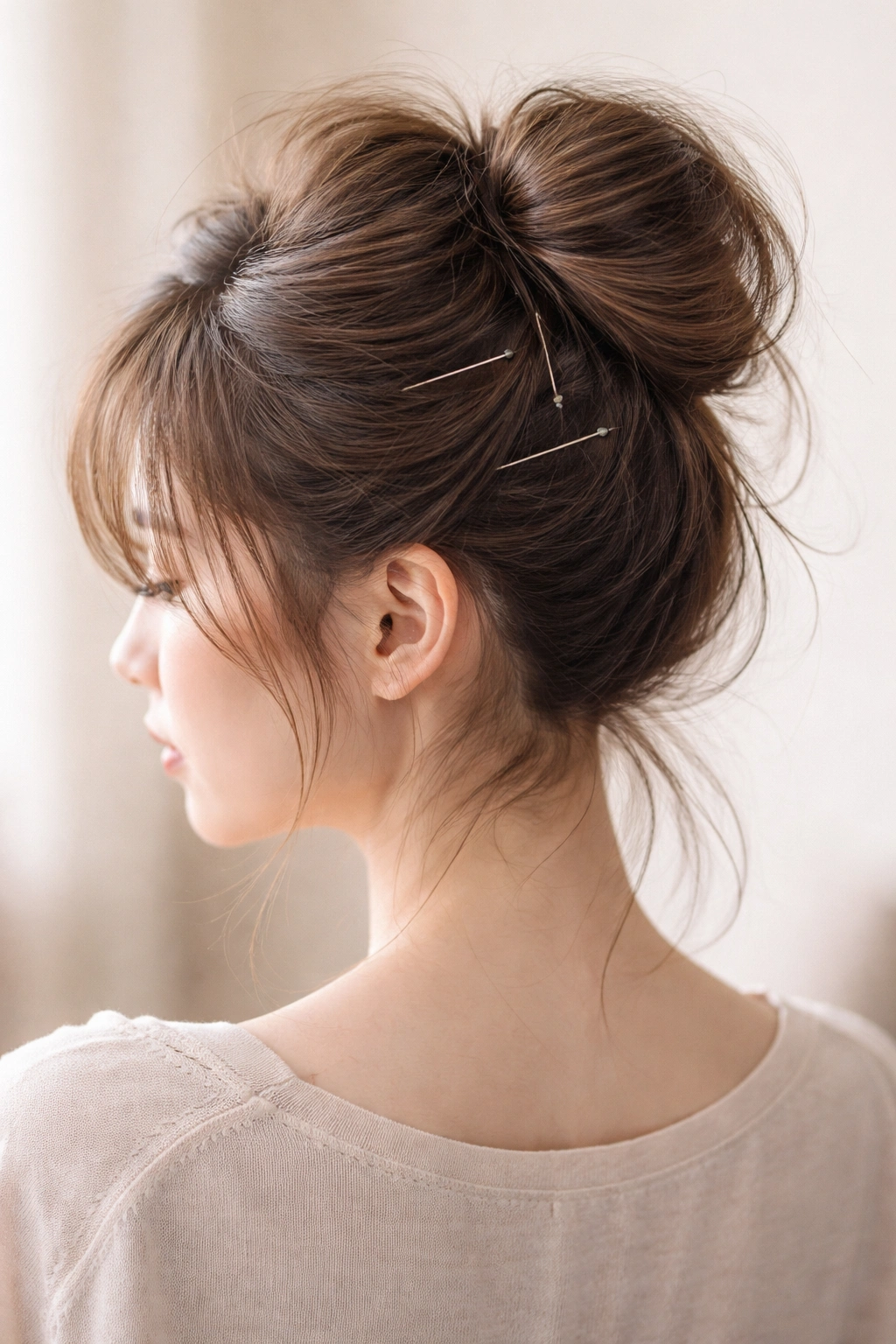
Precise bobby pin placement matters on soft hair more than on thick hair. You can’t just randomly stick pins into a bun and hope they hold. With soft hair, each pin needs to anchor a specific section or catch a specific piece. Use bobby pins that match your hair color and insert them with the wavy side facing up (this creates grip). Insert pins at a slight angle rather than straight into the bun — angling gives you more grip. For every bun you create, you might need 4-6 bobby pins minimum, and they should be strategically placed rather than randomly scattered.
The intentional loosening is crucial to the Korean aesthetic. After you’ve created your bun and secured it, you need to deliberately soften it. Use a fine-tooth comb or a hair pick to gently comb out small sections around the bun’s perimeter and face. Don’t just tug at pieces; be deliberate and strategic. With soft hair, this step transforms a somewhat severe gathered bun into the romantic, undone style Korean beauty embraces. Spend at least 30 seconds on this step — it’s the difference between a basic bun and an intentional messy bun.
Face-framing piece creation requires its own technique. Don’t just pull random pieces out and call them face-framing. Instead, identify sections you want to feature (beside each ear, at the temples, at the center of your forehead, at the nape) and use a fine-tooth comb to gently comb these specific sections free from the bun or ponytail. With soft hair, these pieces will have natural movement and won’t look stringy if you create them intentionally rather than leaving them to chance.
Best Products for Holding Messy Buns Without Weighing Down Hair
Product selection is critical when styling soft hair into messy buns. Heavy products designed for thick or curly hair will absolutely weigh down fine strands and ruin the effect you’re trying to create. Instead, focus on lightweight products that add grip and hold without visible residue.
Dry shampoo or texturizing spray should be your primary hold-boosting product. Aerosol dry shampoos (not powder) work beautifully on soft hair because they add grip throughout your hair without the weight of liquids. Look for brands marketed as “texture sprays” or “volumizing dry shampoos” — apply to roots and mid-lengths at least 30 minutes before styling (or even better, the night before, so the product can fully set into your hair).
Lightweight hairspray is essential for holding your finished bun without stiffness. Don’t use heavy-duty hairspray designed for thick hair; instead, look for “flexible hold” or “soft hold” sprays specifically designed for fine hair. These products hold your style without creating a helmet-like feel. Spray your finished bun lightly with hairspray, but don’t overdo it — you can always add more later if pieces start falling out.
Lightweight smoothing serums work beautifully for the sleek-base styles (like the crown bun with tendrils). A tiny amount applied to your wet hair before blow-drying smooths the base without leaving your hair feeling heavy. Look for products labeled “silk serums,” “argan oil” (use sparingly), or “lightweight smoothing sprays” rather than heavy creams or butters.
Leave-in conditioner spray (not a thick cream) helps soft hair hold waves and texture while keeping strands nourished. Since creating texture on soft hair sometimes requires more manipulation, a lightweight leave-in helps prevent damage and breakage. Apply to damp hair before blow-drying.
Avoid: Heavy mousses, texture creams, thick gels, pomades, or wax products. These will flatten soft hair and make it look greasy rather than textured. Similarly, avoid serums with heavy silicones — these weigh down delicate strands. Stick to lightweight, spray-based products.
Pro styling tip: Layer your products strategically. Use texturizing spray on damp hair, blow-dry with some wave, let the hair cool completely, then use a tiny amount of lightweight smoothing serum or leave-in spray on just your base section if you need extra smoothness. This approach gives you hold and texture without heaviness.
Common Mistakes When Styling Messy Buns with Fine or Soft Hair
Even with the right techniques and products, certain mistakes can derail your messy bun. Being aware of these pitfalls helps you avoid them and troubleshoot if something isn’t working.
The most common mistake is starting with hair that’s too clean. Clean hair is slippery and won’t hold texture or grip well. If your hair is freshly washed, wait at least 24 hours before attempting a messy bun, or add significant texture (waves, braids, or heavy texturizing spray) before styling. Slightly dirty hair — second-day hair — is your friend here.
Pulling too tightly is a mistake specifically with soft hair. When you’re gathering hair into a ponytail or bun, resist the urge to pull everything super tight. Tight gathering pulls on delicate strands and can cause breakage, plus it creates a severe look rather than the soft aesthetic you’re aiming for. With soft hair, a slightly looser gather actually looks better and is gentler on your strands.
Not using enough bobby pins is common because people think they can get away with fewer pins on a small bun. With soft hair, each pin needs to do work, so you need more pins, not fewer. Secure your base ponytail with a hair elastic plus bobby pins for extra hold. Don’t be shy with pins — they’re invisible once you’ve styled your bun, so use as many as you need.
Skipping the intentional loosening step creates an overly polished bun that doesn’t match the Korean aesthetic. After you secure your bun, take the time to deliberately soften it with a comb or brush. This step is non-negotiable for the effortless look that defines these styles.
Using the wrong texturizing product is surprisingly common. If you use a product designed for thick, curly, or textured hair, it often won’t work well on soft hair, and it might leave visible residue. Always check product labels specifically for “fine hair” or “thin hair” options. If you can’t find these, use a light hand with products designed for all hair types and err on the side of less product.
Not allowing enough time between washing and styling: Your best messy bun results come when your hair has had time to settle after washing. Even if you’re not doing an overnight braid set, waiting 24 hours gives your hair texture and grip that fresh-hair just doesn’t have.
How to Make Your Bun Last All Day Without Damage
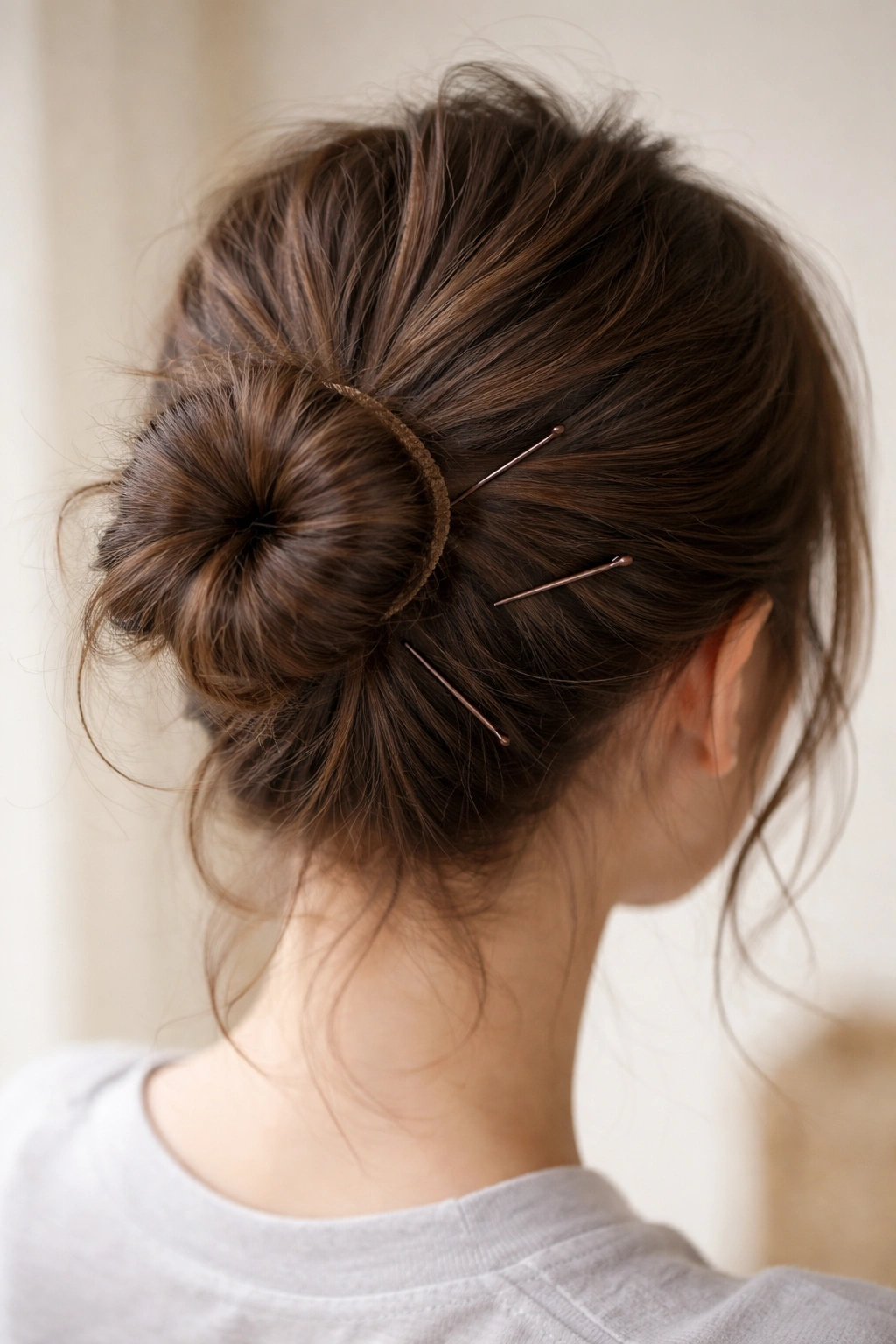
Creating a beautiful messy bun is only half the battle — you need it to last without falling apart and without damaging your soft hair throughout the day. Soft hair requires a slightly different approach than thick hair to maintain hold while minimizing stress.
Secure your base properly from the start. This is your insurance against your bun falling apart by mid-morning. Use a thick, high-quality elastic (not thin, cheap ones that snag hair) for your ponytail base and secure it around your hair at least twice. Then use bobby pins placed at strategic angles to anchor specific sections. With soft hair, this dual-anchor system prevents the entire bun from depending on a single point of failure.
Use the right bobby pin placement. After you’ve positioned your bun, place bobby pins vertically through the bun to anchor it to your head, not just through the hair. This transfers the weight from the hair elastic to your scalp, significantly reducing stress on individual strands. Place at least 2-3 pins this way.
Don’t touch your bun unnecessarily. Every time you check it, readjust it, or touch it, you’re loosening it slightly. Commit to your style and leave it alone. If you’re worried it’s coming loose, do a single check in the mirror and then resist the urge to touch it again.
Adjust your elastic position slightly throughout the day. If you notice your bun starting to slip downward or feel loose, don’t immediately retie it (this stresses your hair further). Instead, very gently grip your ponytail just below the elastic and twist it slightly to tighten it without retying. This often gives you the extra hold you need.
Layer your hold products strategically. Apply texturizing spray to your roots the night before or morning of styling, blow-dry with some texture, then use a light hairspray on your finished bun. This layered approach gives you hold without relying on heavy product that could damage your hair.
Consider a protective barrier at your scalp. If you’re wearing a bun daily or your scalp is sensitive to tension, use a thin silk or satin scrunchie for your base elastic instead of regular hair elastics. This reduces friction and breakage at the hair-elastic interface.
Take your bun down gently in the evening. Don’t just unwind it quickly or pull pins out aggressively. Carefully remove each bobby pin and then gently unwind your ponytail. If your elastic feels tight, carefully cut it (not your hair) rather than forcefully yanking it off. Your soft hair will thank you.
Limit how many days in a row you wear tight buns. Even with perfect technique, repeated daily tight styling can stress soft hair over time. If you’re able, alternate your messy bun days with looser styles or down hair. This gives your hair a break and prevents cumulative damage.
Final Thoughts
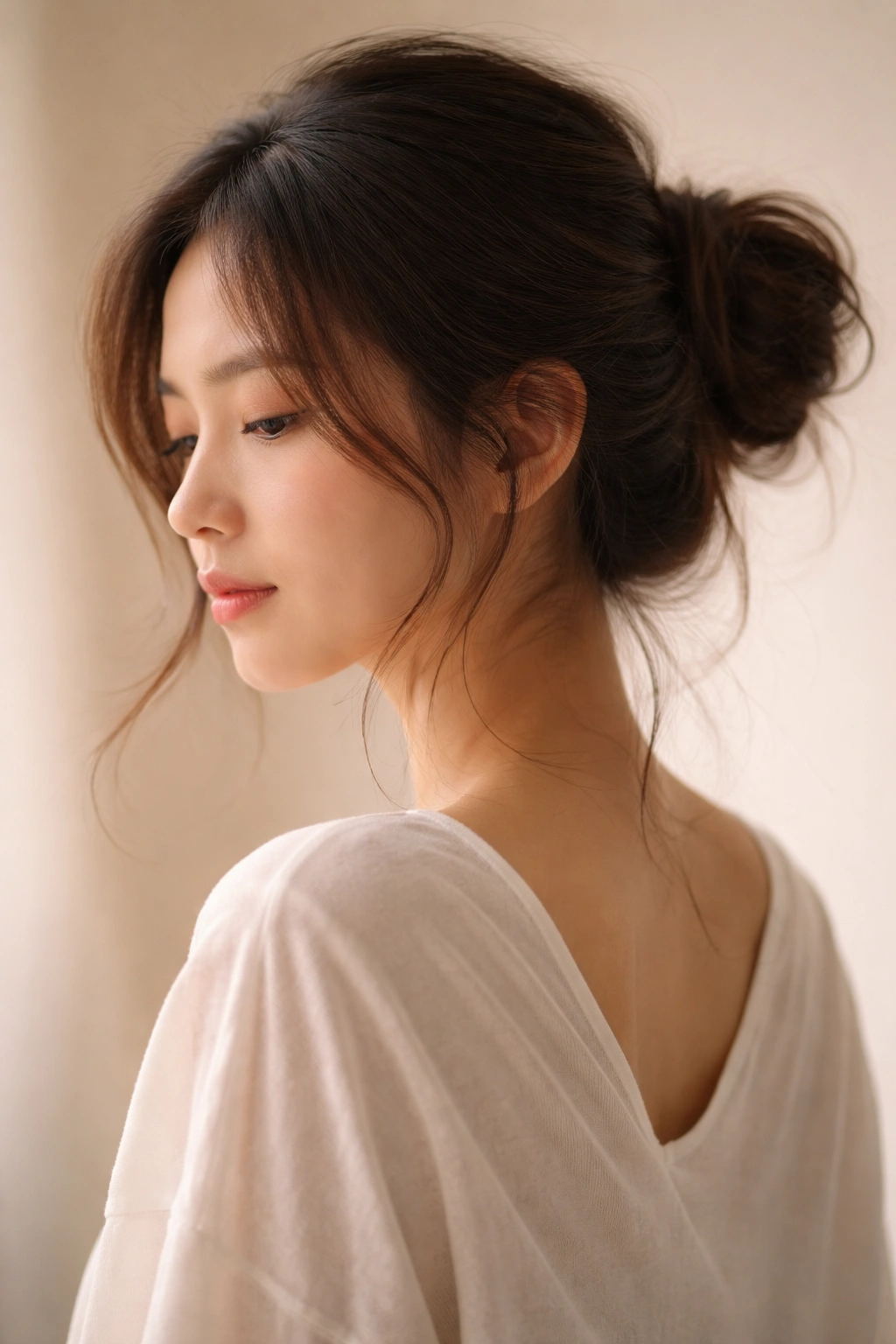
Korean messy bun styles prove that soft hair isn’t a limitation — it’s actually an advantage when you understand the techniques and aesthetics that work with delicate strands. These eight styles showcase the range of possibilities, from casual and undone to polished and intentional, and they all prioritize a soft, romantic aesthetic over structured perfection.
The most important takeaway is that soft hair responds to technique more than to product quantity. A well-placed bobby pin, strategic teasing at your base, deliberate loosening with a fine-tooth comb, and intentional face-framing pieces matter far more than heavy products or aggressive styling. These techniques work because they work with your hair’s natural qualities rather than against them.
Start with whichever style resonates most with you — the classic cloudy bun if you want the most forgiving option, or the wispy low bun if you want the most effortlessly romantic effect. Once you’ve nailed one style, the techniques transfer beautifully to the others. You’ll develop an intuition for how much teasing your soft hair needs, where your specific hair tends to cooperate, and which bobby pin placements work best for your head shape and hair density.
The beauty of Korean beauty’s approach to styling is that it celebrates imperfection and movement. Your soft hair’s natural movement, the way wisps catch light, the organic texture that creates a bun that looks lived-in rather than pristine — these are features, not flaws. Embrace them, and your messy bun will look effortlessly intentional in a way that thicker hair sometimes struggles to achieve.
