



The messy bun has become a go-to hairstyle for saree wearers across the globe, and honestly, there’s a reason why. There’s something about the effortless elegance of a deliberately undone bun that perfectly complements the drape and grace of a saree. Unlike a tight, formal bun that demands precision, a messy bun allows your personality to shine through while still looking polished and intentional. Whether you’re heading to a wedding, a festive celebration, or just a casual outing, the right messy bun can elevate your entire saree look in a way that feels modern yet deeply rooted in traditional Indian aesthetics.
What makes messy buns so perfect for saree styling is their versatility. They work with every saree fabric imaginable—from delicate silks and georgettes to bold cottons and blended materials. A messy bun takes the formality down a notch, making a heavy silk saree feel approachable, while simultaneously adding sophistication to casual everyday wear. The key is knowing which variation of the messy bun works best for your hair type, the occasion, and the specific saree you’re pairing it with. Some styles are better for thick hair, others for fine hair; some suit traditional sarees beautifully, while others complement contemporary fusion looks.
This guide walks you through ten distinct messy bun styles that will transform how you style your hair with sarees. Each style is achievable with basic styling skills, minimal products, and whatever hair tools you already have at home. You’ll discover techniques that add volume, texture, and movement—the building blocks of a truly stunning messy bun. More importantly, you’ll learn why each style works, what to avoid, and how to adapt these techniques to your unique hair and personal style.
1. The Textured High Bun with Loose Strands
This classic approach starts with creating intentional texture throughout your hair before you even gather it into a bun. The texture is everything here—it prevents the bun from looking flat or one-dimensional, and it creates those signature loose strands that frame your face and add softness to your entire look. A textured high bun pairs beautifully with traditional silk sarees because it creates a sense of movement that echoes the saree’s own flow and drape.
How Texture Creates the Foundation
The success of this style hinges on texture. You can create it several ways: with loose waves, a light tease at the roots, or by blow-drying your damp hair with a round brush in different directions. The texture should feel lived-in, not overdone—you’re aiming for the appearance of second-day hair that’s been naturally tousled, not hair that’s been subjected to rigorous styling. When your hair has this texture, it naturally falls into a messy bun with far less effort. Smooth, straight hair tends to slide out and doesn’t hold the “messy” shape as well.
The Assembly Process
Gather your textured hair high on your head—at the crown, not at the very top. This placement works better for sarees because it balances the weight of the saree’s pallu (the draped end) on your shoulder. Secure a small elastic band loosely at the base of your ponytail, then twist the ponytail once or twice and wrap it around the elastic to form the bun. Don’t pull it tight. Leave at least 3-5 strands deliberately loose on each side of your face, pulling them gently to create a soft frame. These face-framing pieces are crucial—they soften the overall look and create visual balance with your saree.
Pro Tip for Saree Styling
Pin small sprigs of jasmine flowers or a delicate hair pin directly into the bun itself. This adds an ornamental element that catches light and complements the saree’s embellishments without looking overdone. Choose flowers or pins that echo the color palette of your saree’s border or blouse.
2. The Sleek Undercut Messy Bun
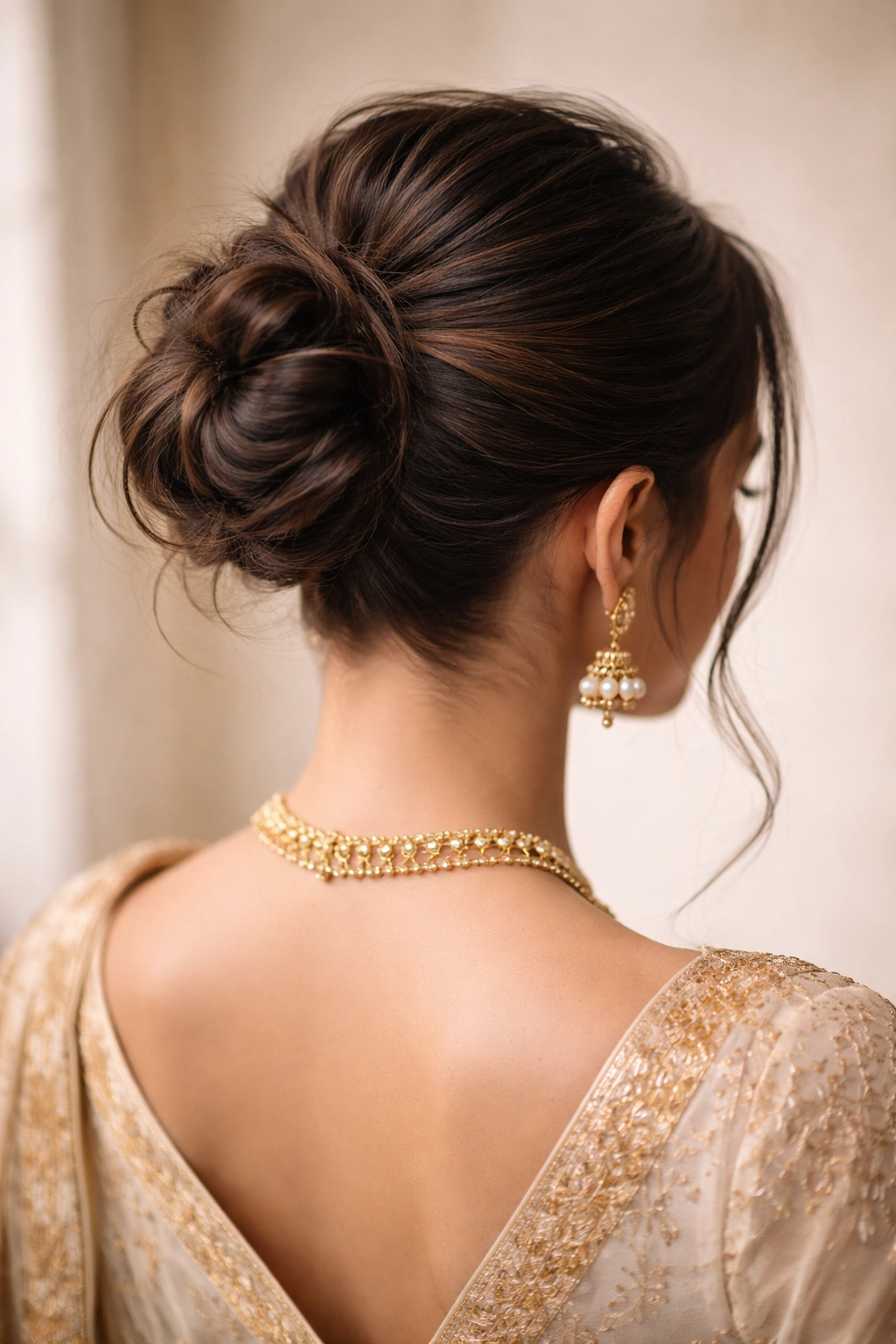
This style takes a different approach: the nape and lower portion of your hair is smoothed and secured tightly, while the crown section is deliberately loosened and teased. The contrast between the polished underside and the textured crown creates visual interest that’s both modern and sophisticated. This particular style works exceptionally well with contemporary fusion sarees or minimalist designer pieces because it has an architectural quality.
Understanding the Undercut Technique
The key is creating two distinct sections of hair with two different levels of polish. Start by gathering your hair into a low ponytail at the nape of your neck, using a fine-tooth comb to smooth it completely flat. Secure this tightly with an elastic. Then, separate the upper crown section—everything from your temples upward—and gently tease this section at the roots using a teasing brush or fine-tooth comb. The contrast between the sleek lower section and the textured crown creates the “messy” effect while maintaining overall structure.
Creating the Bun Itself
Once your crown section is teased, loosely gather all your hair (the teased crown plus the sleek lower ponytail) and form a low-to-mid bun at the back. Use bobby pins to secure it in place, focusing on anchoring the teased crown section while leaving the ends deliberately loose and undone. This style has fewer face-framing pieces than other messy buns—usually just one or two loose strands near the ears—which gives it a cleaner, more architectural appearance.
Why It Works With Sarees
The streamlined nature of this bun lets the saree’s pallu drape without distraction, and it doesn’t add bulk to the back of your head. This is particularly useful if your saree is heavily embroidered or patterned at the back—the clean bun won’t compete for visual attention.
3. The Romantic Side-Swept Bun
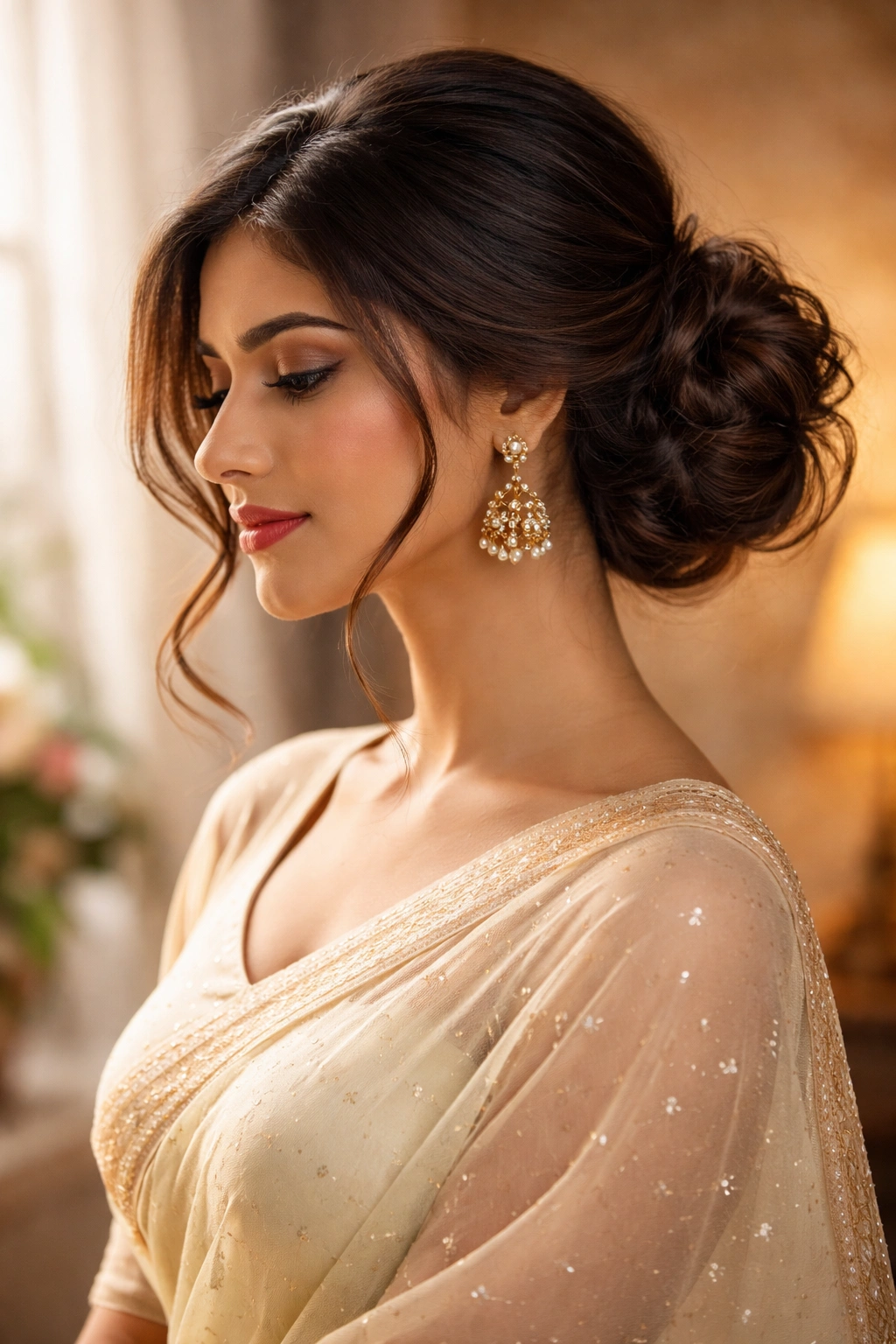
Instead of placing your bun at the center back or crown, sweep all your hair to one side and gather it into a loose bun positioned between your ear and shoulder. This placement is distinctly romantic and works beautifully with lighter, more delicate sarees in pastels or lighter fabrics. The side placement creates an asymmetrical silhouette that’s visually interesting and draws attention to the nape of your neck, which you might showcase with a simple pendant or bindi.
The Side-Sweep Assembly
Part your hair slightly off-center, then use a fine-tooth comb to gently smooth and gather all your hair toward your preferred side (usually the right, but it depends on which way your hair naturally falls). Don’t aim for a completely smooth, slicked look—leave enough texture and slight bumps so hair doesn’t look pasted down. Secure a loose elastic at the gathering point, then twist the section loosely and wrap it into a low, casual bun. The bun should sit between your shoulder and your ear, not tucked behind your ear.
Creating Visual Balance
Because this bun sits to one side, balance is essential. Leave the opposite side of your face mostly clear, perhaps with just one or two small face-framing pieces on that side. If your saree is draped with the pallu over your left shoulder (standard draping), position your side-swept bun on the right. This creates an elegant visual flow where the pallu’s movement echoes the direction of your bun.
Styling Details That Elevate This Look
Add a delicate hair vine or small pearl-studded hair pin on the side of your bun facing away from your swept-over hair. This asymmetrical ornament adds sophistication without overwhelming the romantic nature of the style. Keep your jewelry minimal—perhaps just a pair of simple earrings on the side opposite your bun.
4. The Voluminous Crown Bun With Flowing Ends
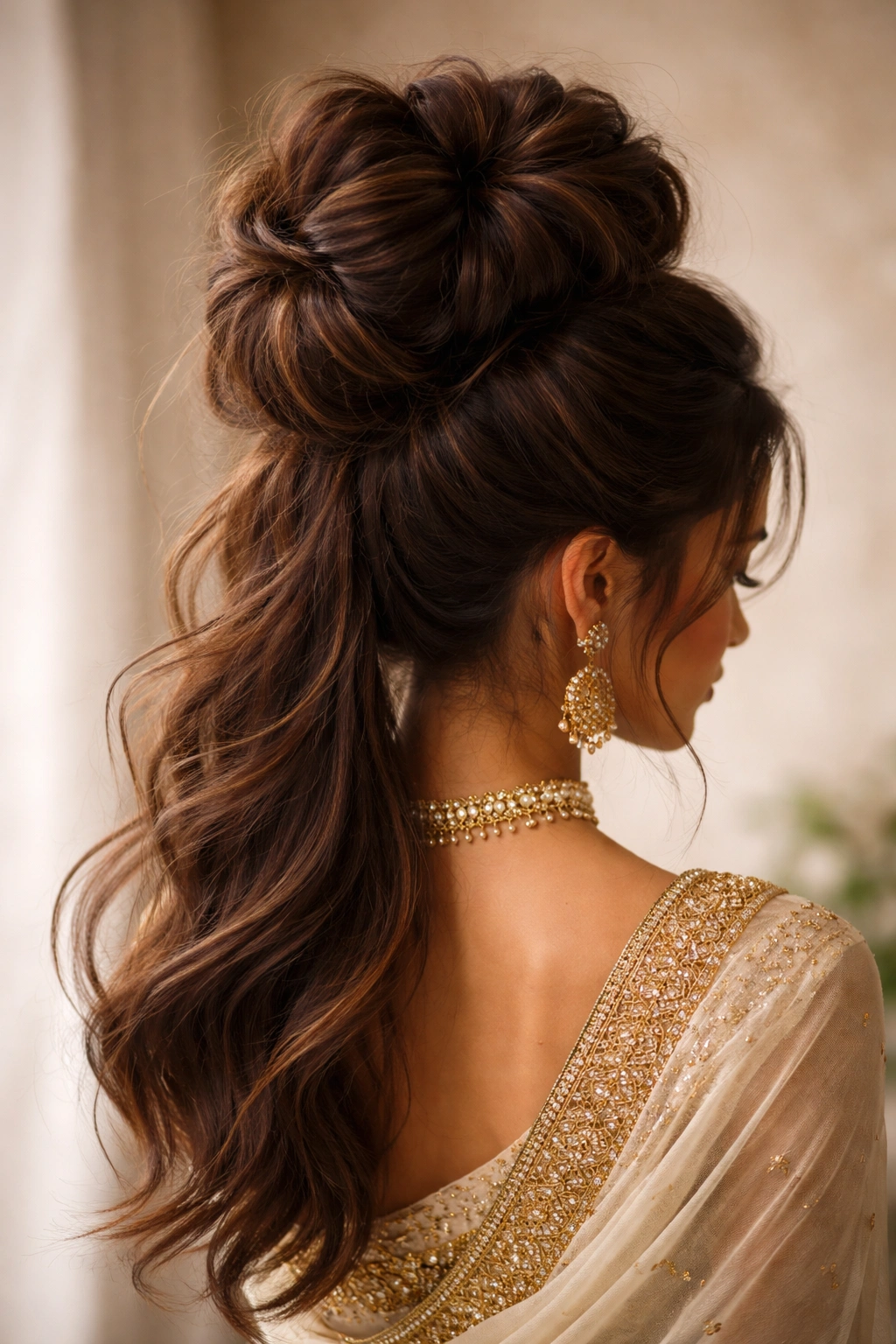
This style is all about height and volume at the crown while maintaining incredibly loose, flowing strands that drift down your back. It’s the messiest of the messy buns, and it suits thick, longer hair beautifully. The style works exceptionally well with traditional heavy silks and embroidered sarees because it creates a balanced visual frame—the volume at your head anchors the weight of elaborate saree embellishments without looking top-heavy.
Building Maximum Volume
Start with a good volumizing product—a lightweight mousse or dry texture spray works well. Apply it to the roots of your crown, then blow-dry your hair upside-down to create maximum lift. Once your hair is dry, flip your head right-side up and gently tease the entire crown section (from your temples to the back of your head) using a teasing brush. The teasing should be generous here—you’re aiming for significant height, not just subtle texture.
The Bun Placement and Structure
Gather your hair loosely at the highest point of your crown—not at the very top, but close. Don’t bother smoothing it first; the teased texture is your asset here. Secure with a loose elastic, then gently push the bun upward and slightly forward so it sits prominently. Wrap some of the longer ends loosely around the base of the bun, then deliberately leave long strands unraveled. These should flow freely down the back of your head and neck. Don’t pin them; let them move with you.
Maintaining the Messy Aesthetic Throughout the Day
This style works best when you resist the urge to over-refine it. Any bobby pins should be hidden inside the bun itself, not visible on the surface. If strands come loose as you wear the saree, let them stay loose—that’s literally the point of this style. A light hairspray mist (not heavy-hold) helps maintain the teased texture without making it feel stiff or product-laden.
5. The Twisted Low Bun With Incorporated Face-Framing
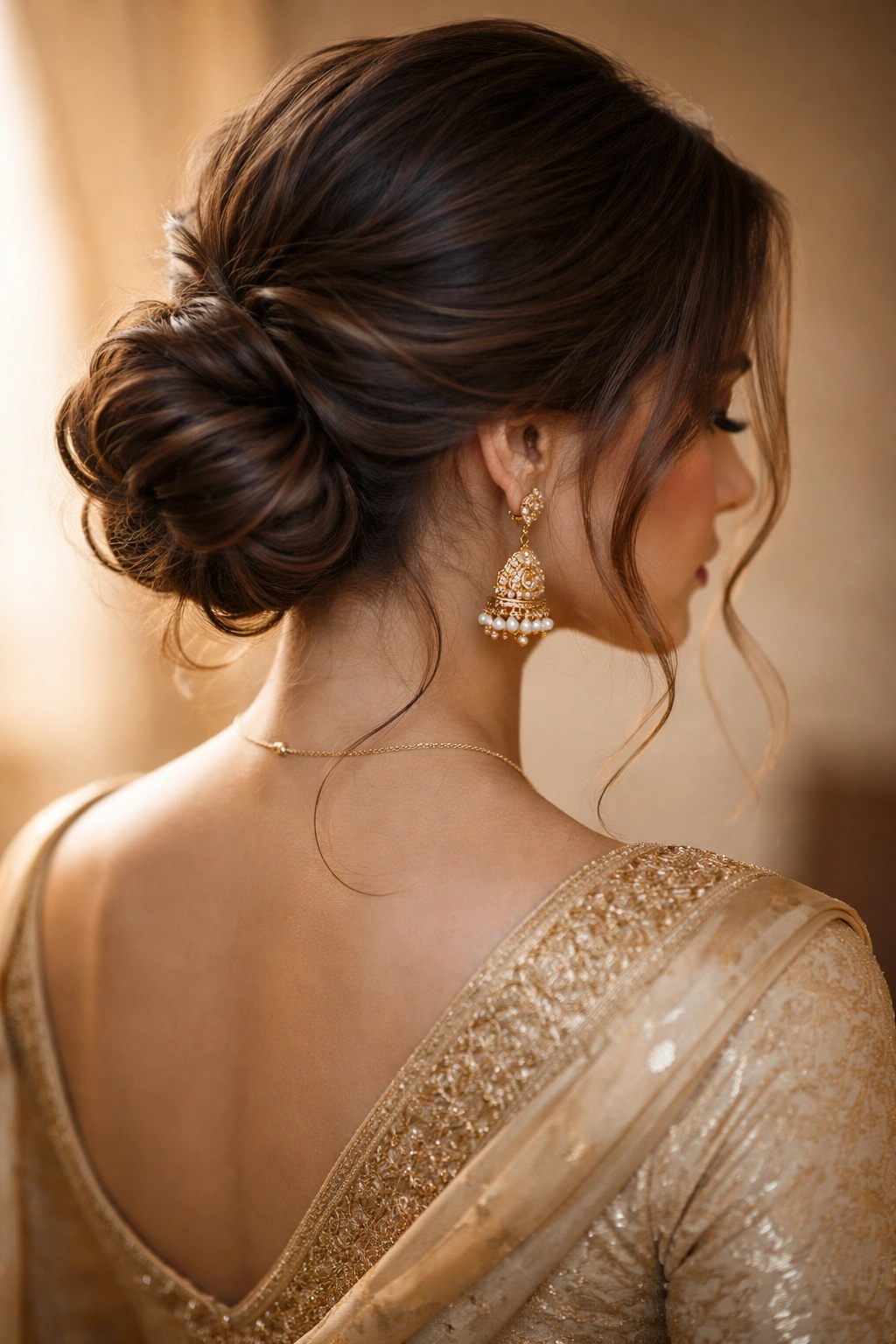
This technique involves creating two or three distinct twisted sections that you wrap around each other, then gather into a low bun. The twisting technique naturally incorporates and secures face-framing strands as you go, so they’re intentionally part of the structure rather than randomly left loose. This style works particularly well for medium-length hair and creates an elegant, intentional-looking messy bun that still feels effortless.
The Twisting Technique
Divide your hair into three sections: one along each side of your face, and one at the crown and back. Starting with the left side section, twist it loosely from the front toward the back, naturally incorporating and leaving a small strand loose at your temple as you twist. Do the same on the right side. These side twists should meet at the back of your head. Take your crown section and loosely twist it downward, letting it meet the side twists.
Gathering Into the Bun
Once your three twisted sections reach the back of your head, secure them together loosely with an elastic at the nape of your neck. Don’t wrap them tightly; instead, loosely coil and pin them together, creating a bun that shows the twist structure rather than completely concealing it. Some of the twists should be visible on the surface of the bun, creating visual texture and an obviously “constructed” messy look.
The Face-Framing Magic
Because the face-framing strands are incorporated into your twists from the beginning, they have natural curl or wave to them. These twisted face-framers look intentional and graceful, complementing your features without looking like stray hairs. They also stay in place better than loosely pulled strands because they’re anchored within the twists.
6. The Braided Bun Base With Messy Crown
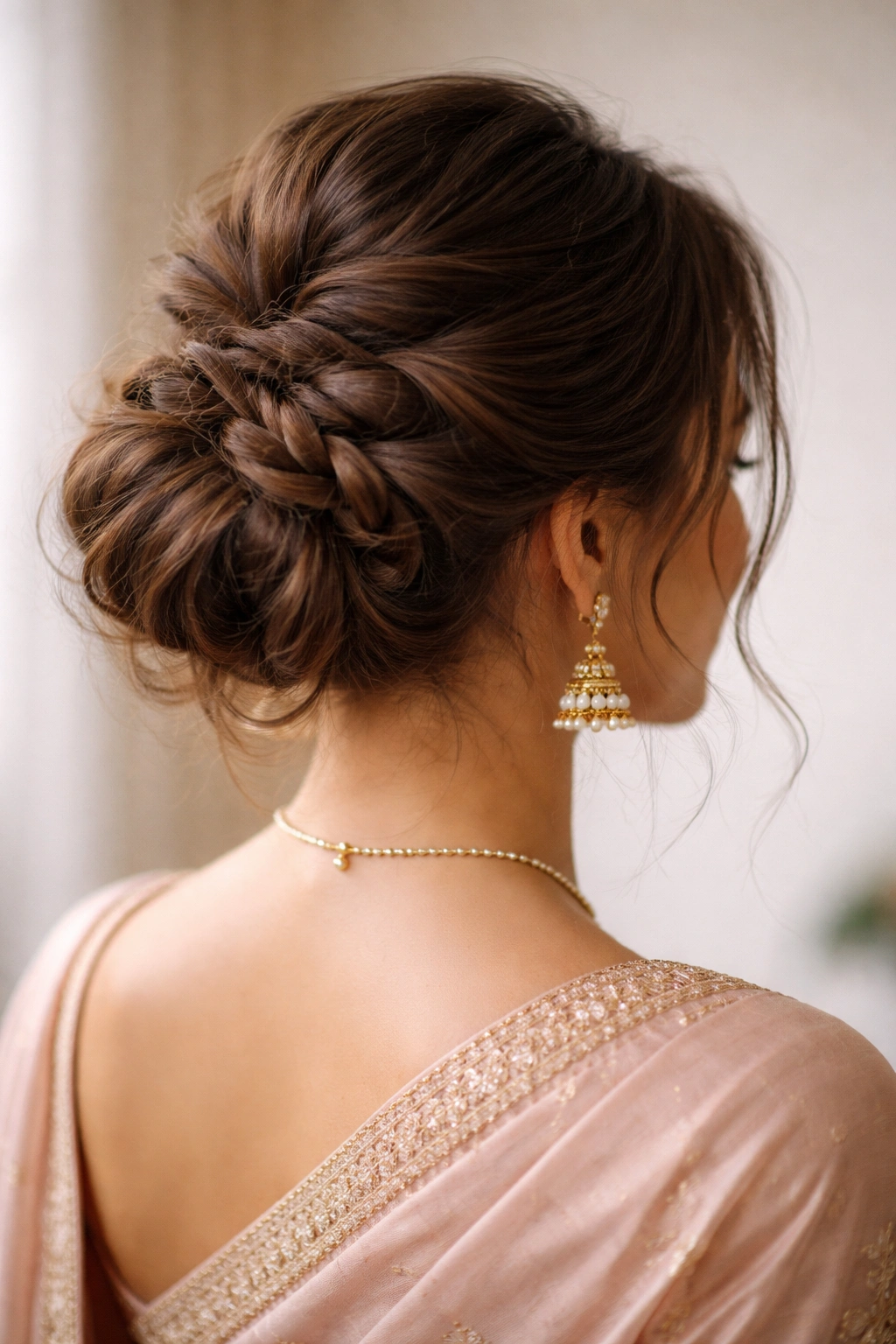
This hybrid style combines the security and texture of a braid with the softness of a messy bun. You create a simple braid at the lower back of your head, then gather your crown hair loosely on top of it. The braid acts as an anchor, keeping the entire style secure even as the crown section maintains maximum messiness. This is brilliant for saree wearers because it prevents the bun from sliding or shifting as you move, sit, and navigate the pallu draping.
Creating the Braided Foundation
Gather hair from the nape of your neck and create a loose three-strand braid. Don’t aim for a tight, perfect braid—you want it textured and soft. Braid only partway up the back of your head, then stop and secure the braid with a small elastic. This braid becomes your anchor point. The braid should be positioned low, roughly at the height where you want your finished bun to sit.
Adding the Messy Crown Layer
Now gather all your hair (including the loose hair from above the braid) and bring it together at the point where your braid ends. You should have quite a bit of volume here. Secure loosely with an elastic, then gently tease and fluff this upper section. Wrap and coil it around the base of your braid, securing it with bobby pins. The finished look should show some of the braid texture on the lower part of the bun, with messiness and texture on top.
The Stability Advantage
Because the braid anchors everything, this style holds beautifully throughout wearing a saree. You can sit, stand, and move freely without worrying about the bun collapsing or becoming unraveled. This makes it ideal for weddings, long celebrations, or any event where you’re wearing the saree for several hours.
7. The Romantic Curved Bun With Undone Edges
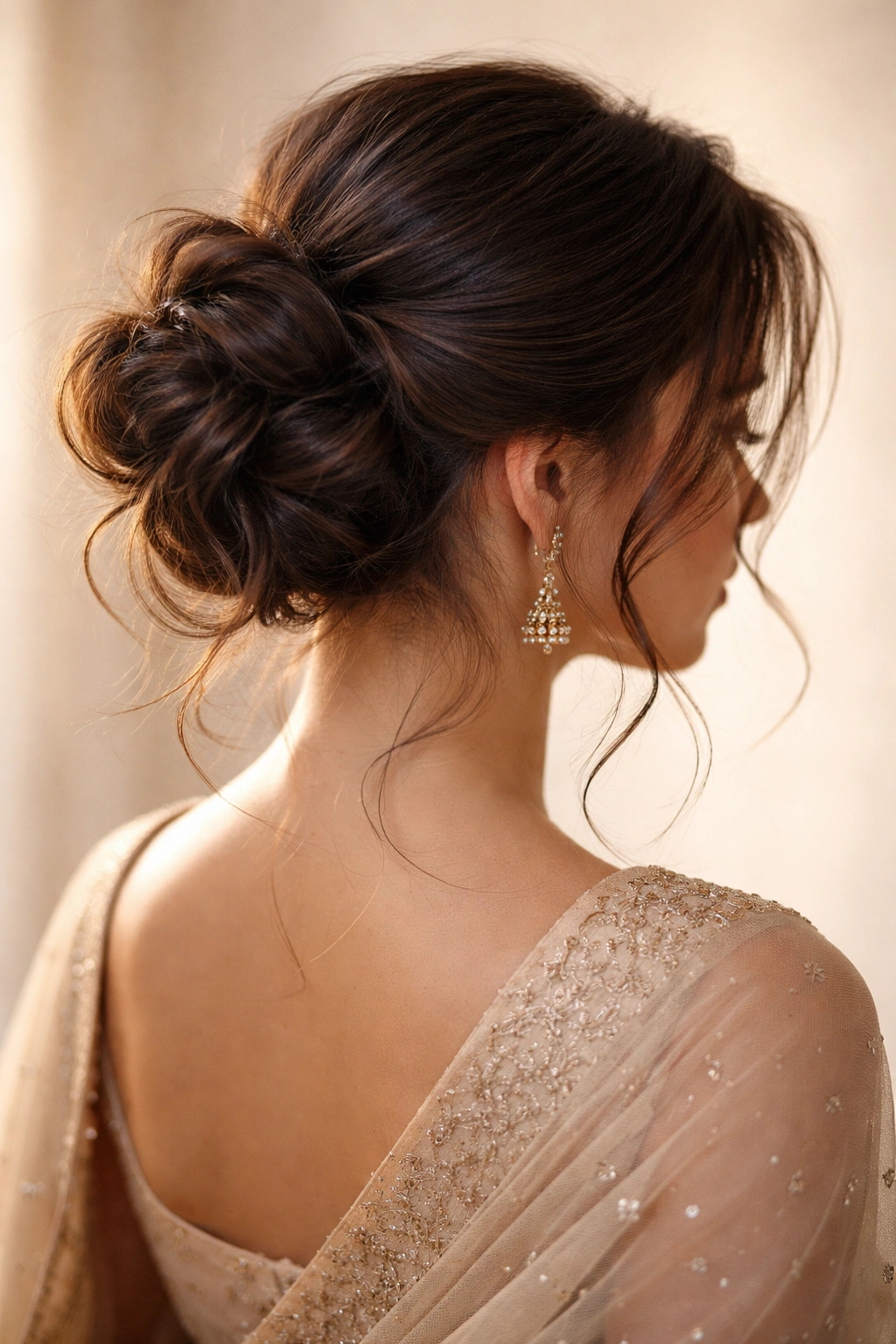
This style positions the bun slightly off-center and curved rather than completely round, with intentionally undone, feathered edges that catch light and create softness. It’s a style that reads as both polished and artfully disheveled—perfect for sarees that lean toward romantic, feminine aesthetics like embroidered lehengas-turned-sarees or soft, draped fabrics in jewel tones.
Shaping the Curved Bun
Instead of gathering all your hair into one spot and wrapping it around itself, gather your hair loosely and position it at a slight angle—not dead-center at the back of your head, but slightly toward one side. As you twist and coil your hair into the bun, intentionally keep the shape slightly oblong rather than perfectly round. This curved, asymmetrical shape is achieved by how you wind the hair and where you position pins.
Creating Feathered Edges
This is the detail that elevates the whole look. As you form your bun, deliberately leave some hair strands unraveled at the edges. These strands should be 3-4 inches long and should feather outward from the bun rather than tucking neatly inside it. Use a curling iron or round brush to add a subtle wave or curl to these edge strands so they catch light and create dimension. The feathered edges shouldn’t look accidental—they should look like you carefully crafted this romantic, soft appearance.
Why This Works With Feminine Sarees
The curved shape and feathered edges create visual movement that echoes the flowing nature of soft, draped sarees. If your saree is a lighter color or features floral patterns, this bun style complements those aesthetics beautifully. The softness of the feathered edges mirrors the softness of delicate fabrics.
8. The Slicked-Back Textured Bun
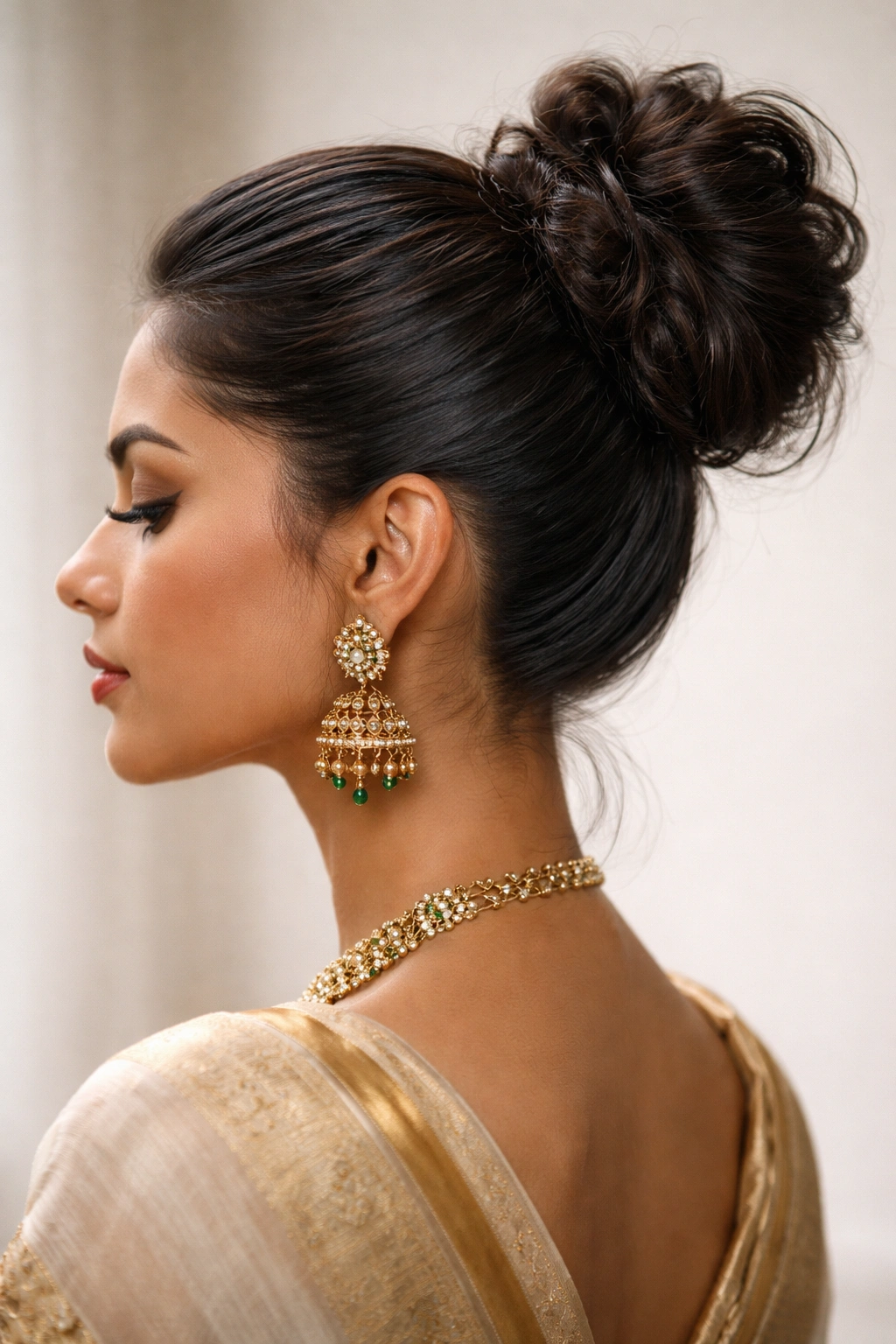
This approach starts with a completely slicked-back base (think a wet-look gel or lightweight pomade), then introduces texture only at the crown and in the bun itself. The contrast between the ultra-smooth, polished sides and back with the textured crown section creates a bold, statement-making style. This is perfect for modern, minimalist saree styling or for anyone who wants their messy bun to feel intentional and styled rather than accidentally undone.
Achieving the Slicked-Back Base
Apply a lightweight gel or pomade to damp hair, focusing on the sides and back. Use a fine-tooth comb to smooth hair completely flat against your head. Blow-dry in the direction you’re combing to set the smooth, wet look. The goal is a completely polished, sculpted appearance on the sides and lower back of your head. Once this base is completely dry and set, move on to the crown section.
Adding Texture to the Crown
Now tease and fluff only your crown section—the hair from your temples upward. This teased crown will be a dramatic contrast to your slicked sides. Gather this textured crown hair and loosely secure it with an elastic, then form a bun that sits at the top-back of your head. The bun itself should look deliberately messy, with texture and loose ends. The contrast between the sculpted, polished sides and the chaotic crown creates the visual impact.
Making It Work With Sarees
This style suits structured, contemporary saree looks beautifully. It’s bold and modern, so pair it with sarees in solid colors, geometric patterns, or minimalist designs. Avoid overly ornate sarees with this style—the bun’s architectural boldness will compete with intricate embroidery rather than complementing it.
9. The Half-Up Messy Bun Hybrid
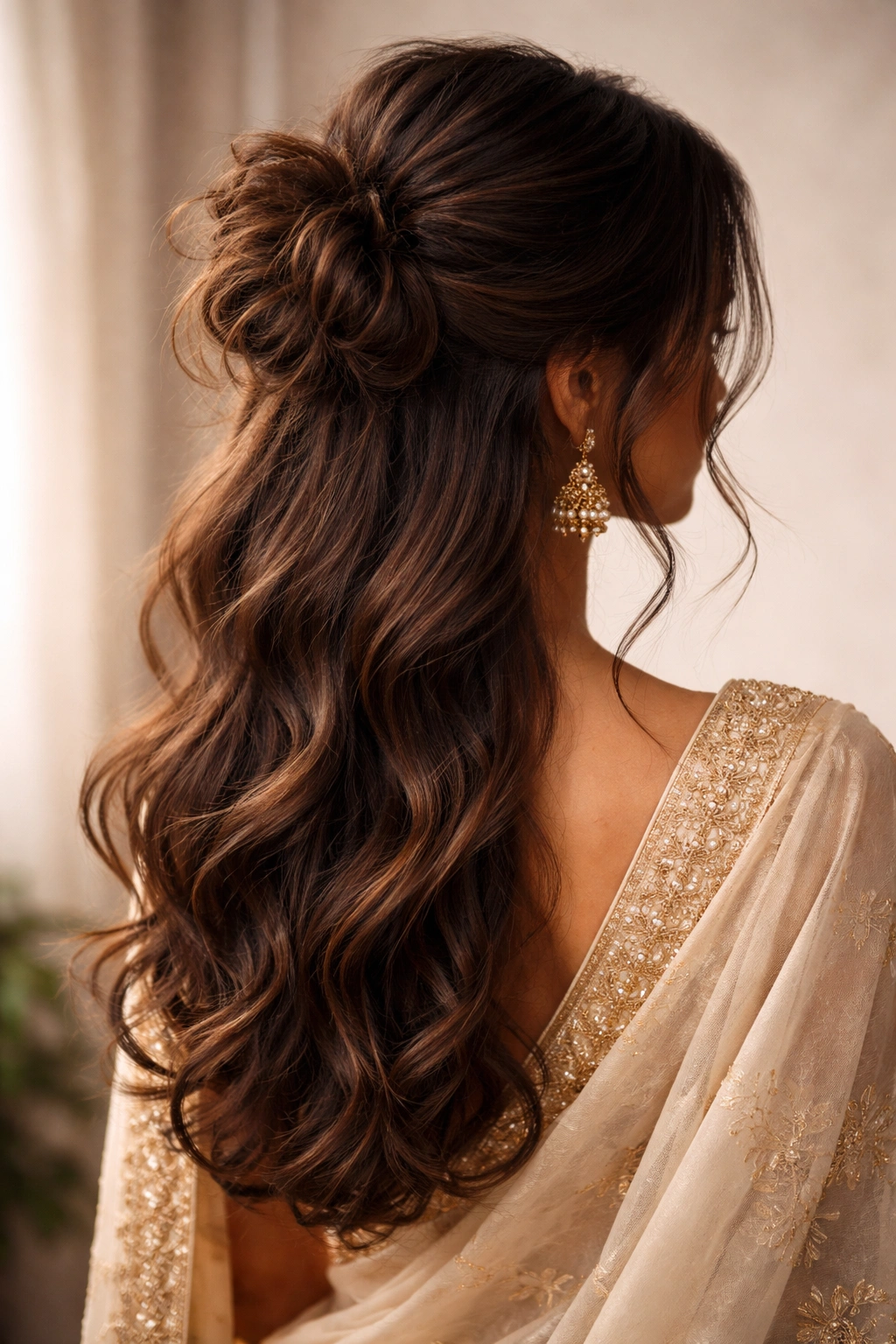
This style keeps some hair down while gathering only the upper half into a bun, creating a hybrid between loose waves and an updo. It’s perfect for saree wearers who love the look of longer hair but want it partially secured for practicality. The style works beautifully with medium to long hair and creates a romantic, effortless appearance that’s ideal for daytime saree events.
Sectioning and Securing
Take the hair from your temples across the top and back of your head—roughly the upper half—and gather it loosely at the back. Secure with a gentle elastic. Don’t aim for a smooth, tight ponytail; the texture and slight bumps are what make this work. Form a loose bun with this upper section, leaving it deliberately undone and messy. The lower half of your hair hangs freely, creating waves and movement.
Styling the Loose Lower Section
The lower half of your hair shouldn’t be completely straight; it should have wave or curl to complement the bun above. If your hair is naturally straight, add texture with a curling iron or by braiding damp hair before creating the bun. The loose waves should look soft and intentional, framing your shoulders and complementing the drape of your saree pallu.
The Visual Balance
Because only half your hair is in a bun, this style is lighter and airier than a full updo. It works beautifully with lighter-weight sarees and with any saree where you want to keep the focus on the fabric’s movement rather than an elaborate hairstyle. The style also works well if you have a shorter or more delicate face shape—the loose waves frame your features gently while still keeping hair partially off your face.
10. The Romantic Spiral Bun With Wispy Tendrils
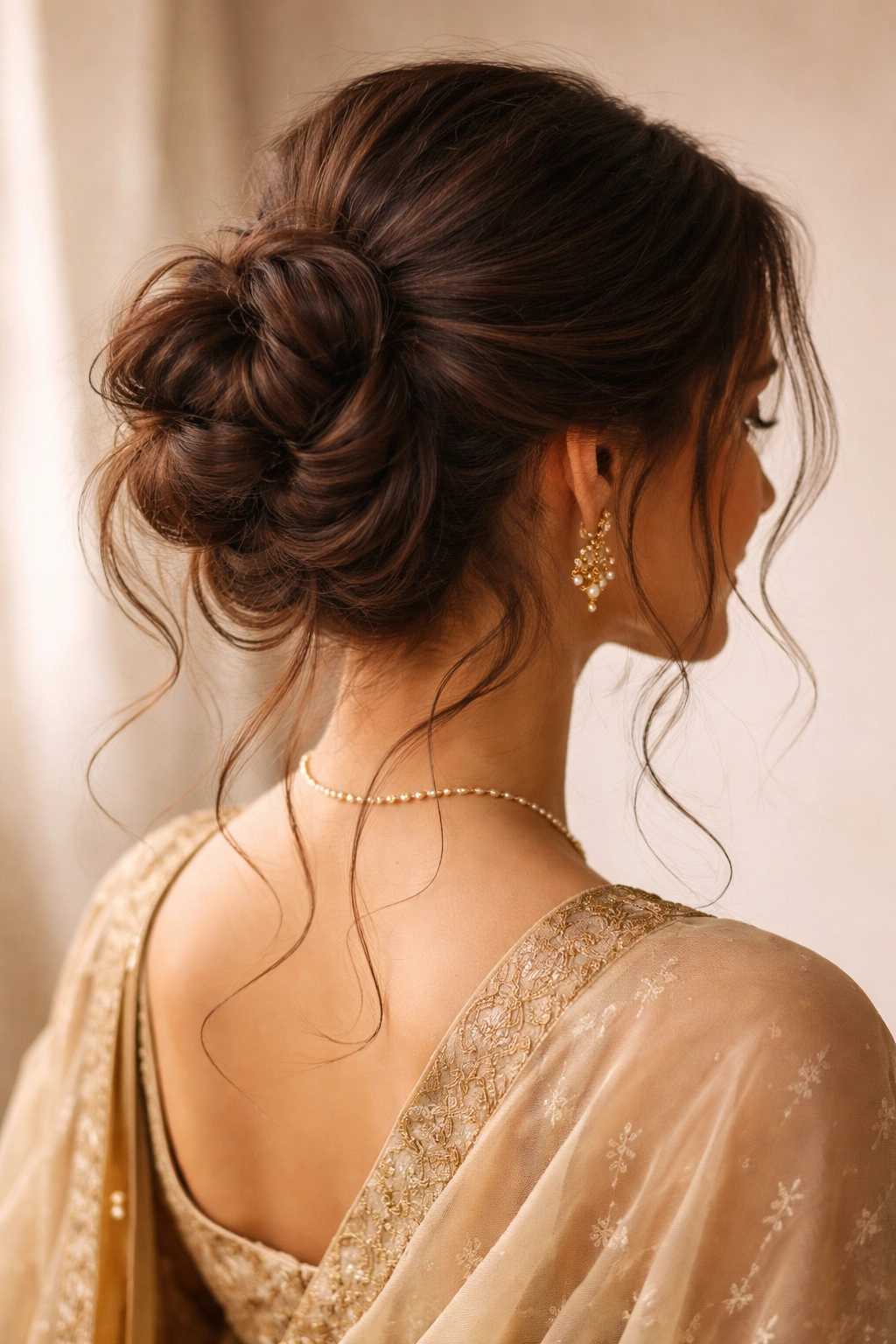
This final style uses spiral-wrapped sections to create a bun that looks intricate and constructed rather than haphazardly undone. You create multiple loose spirals from your hair sections and wrap them around each other, then deliberately leave wispy tendrils loose around your face and nape. This style walks the line between “intentional updo” and “effortless messy bun,” making it versatile for both formal celebrations and semi-formal occasions.
Creating the Spiral Sections
Divide your hair into 2-3 sections. Starting with one section, twist it loosely into a spiral rather than a tight twist. As you spiral downward, the section naturally curls. Once you reach the end, anchor that spiral loosely. Repeat with your remaining sections. The spirals should look soft and organic, not tight or sculptural.
Wrapping Into the Bun
Gather your spiral sections together at the back or side of your head, then wrap them around each other, creating a bun that shows the spiral structure on its surface. This is quite different from a traditional bun where you conceal the construction—here, the spirals are visible, creating visual texture and interest. Secure with bobby pins hidden inside the bun.
Adding Wispy Tendrils
Leave small sections of hair completely unwrapped around your face (temples and ears) and at the nape of your neck. These wispy tendrils should be smoothly pulled but not tightly secured, creating soft curves rather than flyaways. Lightly curl these tendrils with a curling iron so they frame your face and neck with defined, romantic curves.
The Elegance Factor
This style reads as more “done” and intentional than other messy buns, making it ideal for formal saree occasions where you want to look polished without appearing overly formal. Pair it with statement jewelry or ornamental hair pins for a look that’s clearly styled with intention.
Final Thoughts
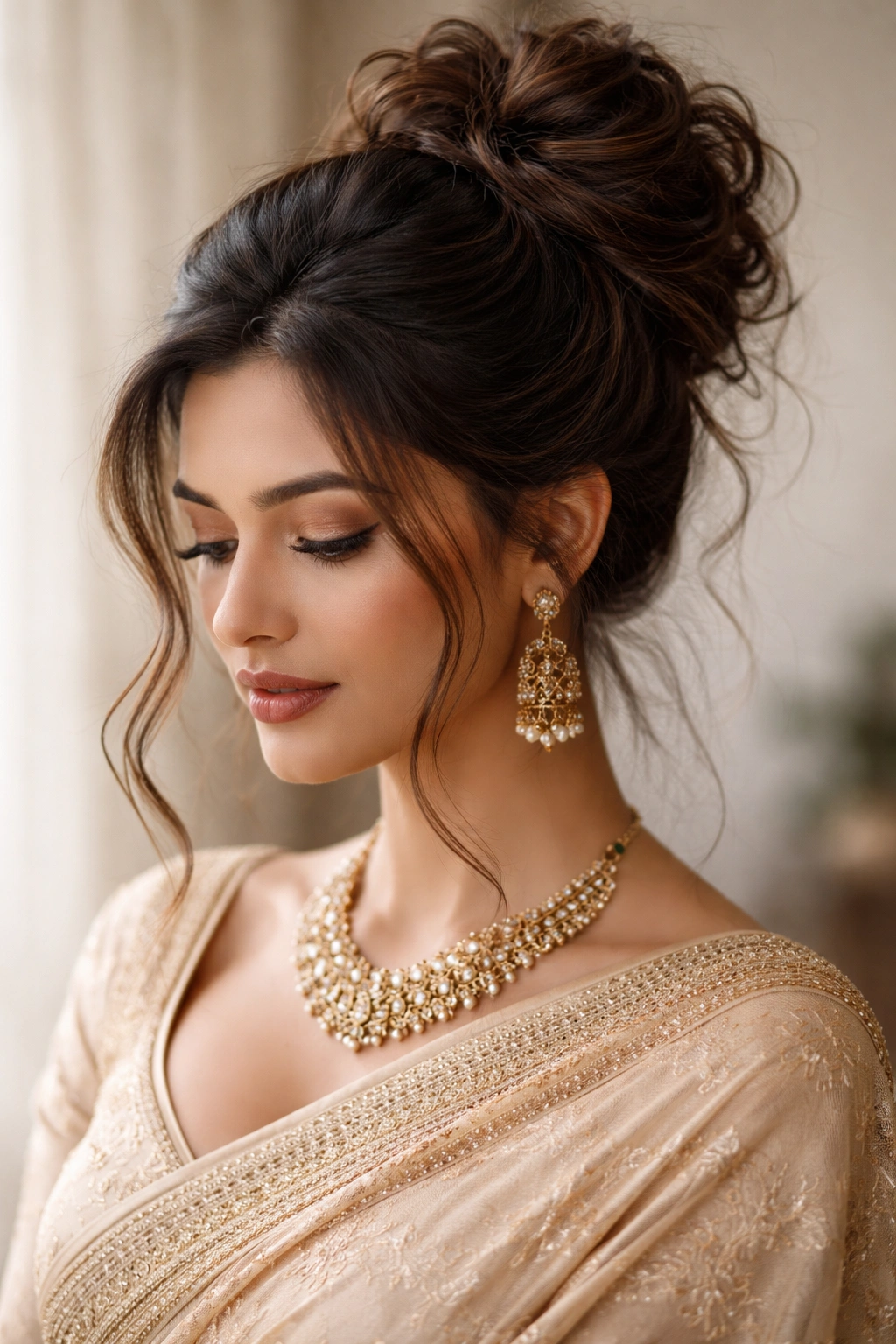
The beauty of messy bun styling for sarees lies in the intentional balance between polish and ease. Each of these ten styles offers a different approach to achieving that balance, whether you’re leaning into maximum texture and romance or creating bold architectural contrast. The right messy bun should feel like it took minimal effort while still looking thoughtfully put-together—a perfect match for the saree’s own blend of elegance and wearability.
Your hair type, hair length, and personal styling preferences should guide which styles you experiment with. Thick hair gravitates naturally toward voluminous options like the high crown bun, while finer hair might shine with tightly braided anchors and strategic texture placement. The occasion matters too: romantic celebrations call for the spiral bun or feathered edges, while contemporary events suit the slicked-back or sleek undercut approaches.
The secret that most saree stylists don’t mention is this: a truly stunning messy bun isn’t about luck or naturally perfect hair. It’s about understanding your hair’s texture, using intentional teasing and texture-building techniques strategically, and deliberately leaving the right pieces loose while securing the rest. Master these principles, and you’ll be able to adapt any of these ten styles to suit your hair, your saree, and the moment you’re dressing for. That’s the real skill—not following a rigid formula, but understanding the techniques well enough to make them your own.
