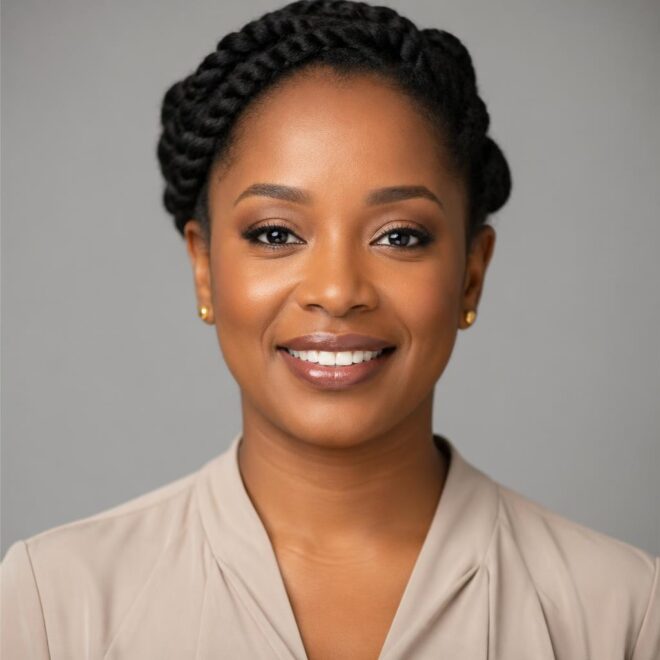

Job interviews come with a lot of pressure, and what you wear on top of your head shouldn’t be part of that stress. The messy bun has evolved far beyond the “just rolled out of bed” vibe — it’s now a legitimate professional style that says you’ve put thought into your appearance without looking overly formal or unapproachable. The beauty of a messy bun is that it projects confidence, competence, and approachability all at once. It keeps your hair away from your face so the interviewer focuses on what matters — your expression, your eye contact, and the words coming out of your mouth.
The key to nailing a messy bun for an interview is understanding that “messy” doesn’t mean sloppy. It means textured, relaxed, and intentional. A well-executed messy bun shows you care about presentation while also appearing confident enough not to obsess over perfection. It works across industries, from creative fields where a looser interpretation of polish is expected to corporate environments where you want to appear professional but not rigid. The real power of a messy bun lies in how it balances polish with personality — you’ll look put-together without appearing stiff or overly formal.
The interview is one of the few moments where your appearance does matter, and getting your hair right can genuinely boost your confidence walking into that room. A great messy bun does the heavy lifting for you: it’s flattering on most face shapes, it works with different hair types and lengths, and it communicates care without screaming “I spent three hours getting ready.” Let’s walk through ten interview-appropriate messy bun styles, each with specific techniques to execute them perfectly.
1. The Classic High Messy Bun
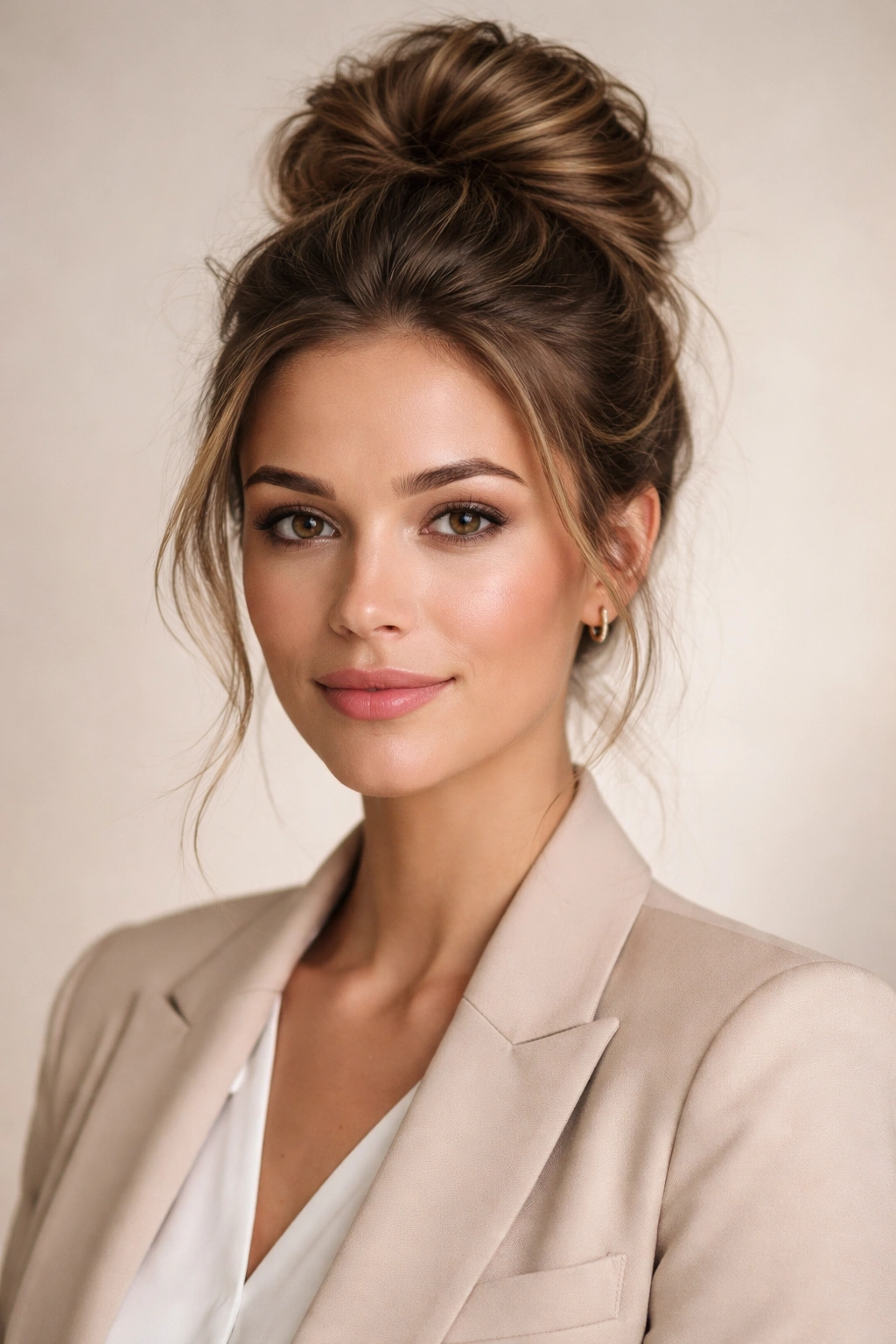
This is the most versatile and universally flattering messy bun style, which makes it ideal for interviews where you’re not quite sure what vibe to strike. The bun sits high on your head, exposing your face and neck fully, which naturally draws attention to your features and expressions. It projects youthful energy while still looking intentional and groomed — not a single strand looks accidental, even though it’s designed to look effortlessly tousled.
How to Create the Perfect Classic High Bun
Flip your head upside down and brush or comb your hair up toward the top of your head in a high ponytail. The key is positioning it higher than you’d normally put a bun — aim for the crown or slightly above, not at the back of your neck. Twist your ponytail loosely around itself about two times, then wrap it around the base of the ponytail to form a bun shape. Secure with bobby pins inserted horizontally through the bun, using at least three pins crisscrossed for stability. Once the basic bun is in place, gently pull at the edges of the bun to loosen it slightly — this is what creates that intentional messiness that photographs well and looks polished in person.
Making It Interview-Ready
The classic high bun walks a careful line between professional and relaxed, which is exactly what you want in an interview setting. Use a light hairspray (not heavy-hold) to keep flyaways in place without making your hair look stiff or overly styled. A few intentional wisps around your face and neck are fine — they actually soften the look — but stray hairs everywhere read as careless rather than charmingly undone. Smooth down the crown area and any hair along the parting so the base of the bun looks neat, then let the textured looseness happen at the sides and bottom.
Pro tip: Practice this style at home the day before your interview so you know exactly how long it takes and how many bobby pins you’ll need. Most people use between three and five pins for a secure high bun, but the exact number depends on your hair thickness and texture.
2. The Sleek-to-Messy Hybrid Bun
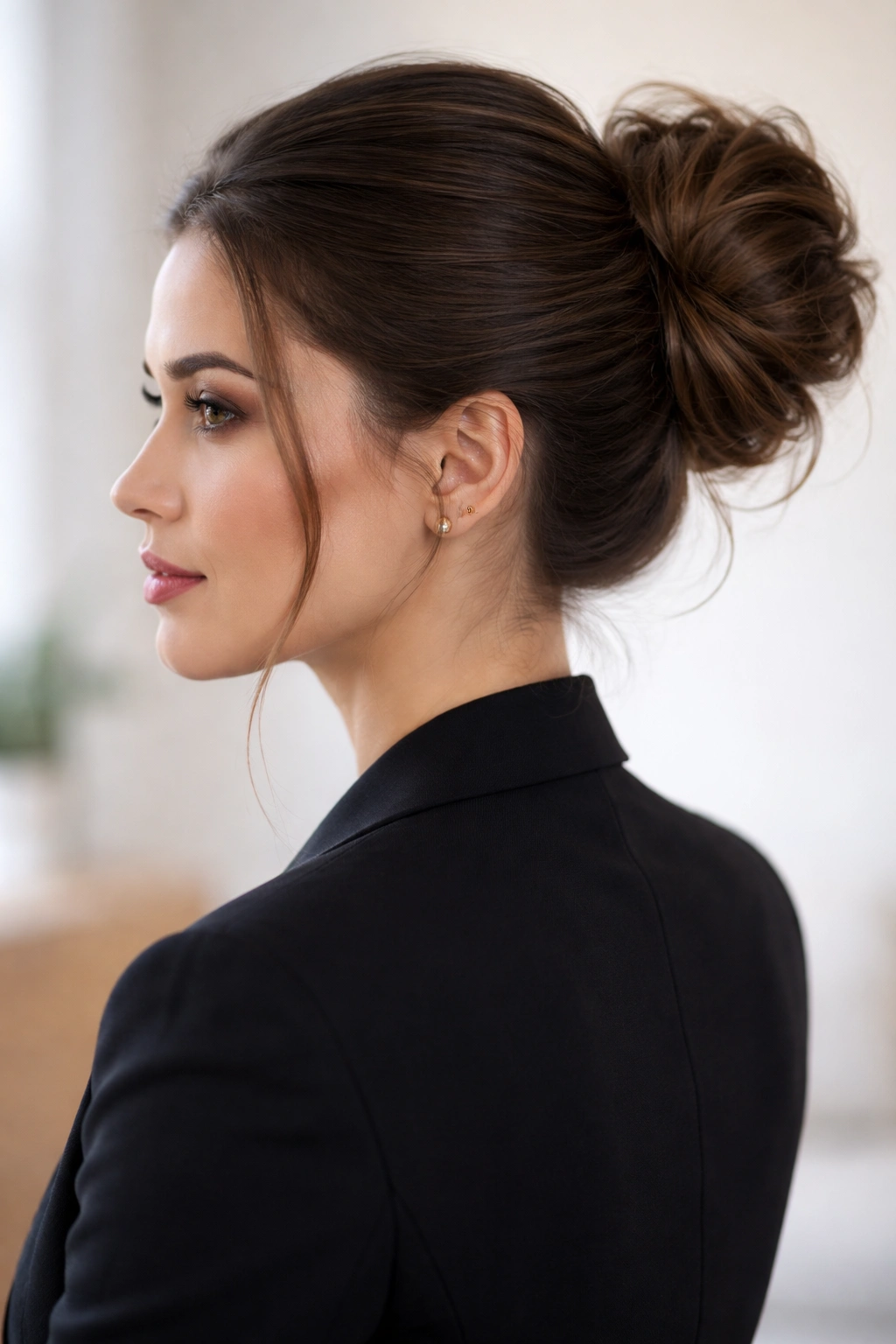
This style offers a professional compromise if you’re worried a traditional messy bun reads as too casual for your industry. The base is sleek — your hair is combed smoothly into a ponytail without lumps or bumps — but the actual bun itself is textured and softly tousled. You get the professional appearance of polished hair with the approachable softness of a messy bun, making it ideal for conservative industries like finance, law, or consulting where you want to appear both competent and personable.
The Technique: Controlled Texture
Create a high or mid-height ponytail using a fine-tooth comb to smooth every strand perfectly against your head, securing it with a clear elastic band. Then, rather than twisting the ponytail, gently backcomb or tease the ponytail itself — not aggressively, just enough to create texture and volume. Wrap this textured ponytail loosely around the elastic to form the bun shape, securing with bobby pins. The contrast between the smooth sides and the textured bun is what gives this style its sophisticated edge.
Why It Works for Conservative Interviews
Hiring managers at formal companies often perceive traditional messy buns as insufficiently polished. This hybrid style proves you understand professionalism — your hair doesn’t look like you rolled out of bed — while still showing personality. The sleek base communicates precision and attention to detail, while the textured bun keeps you from looking stiff or unapproachable. It’s particularly effective if you’re interviewing for a role where you’d be client-facing.
Worth knowing: This style is easier to maintain throughout a long interview day because the secure sleek base means you won’t have flyaways working themselves loose as you move and talk. The texture is built in and won’t shift.
3. The Low Messy Bun
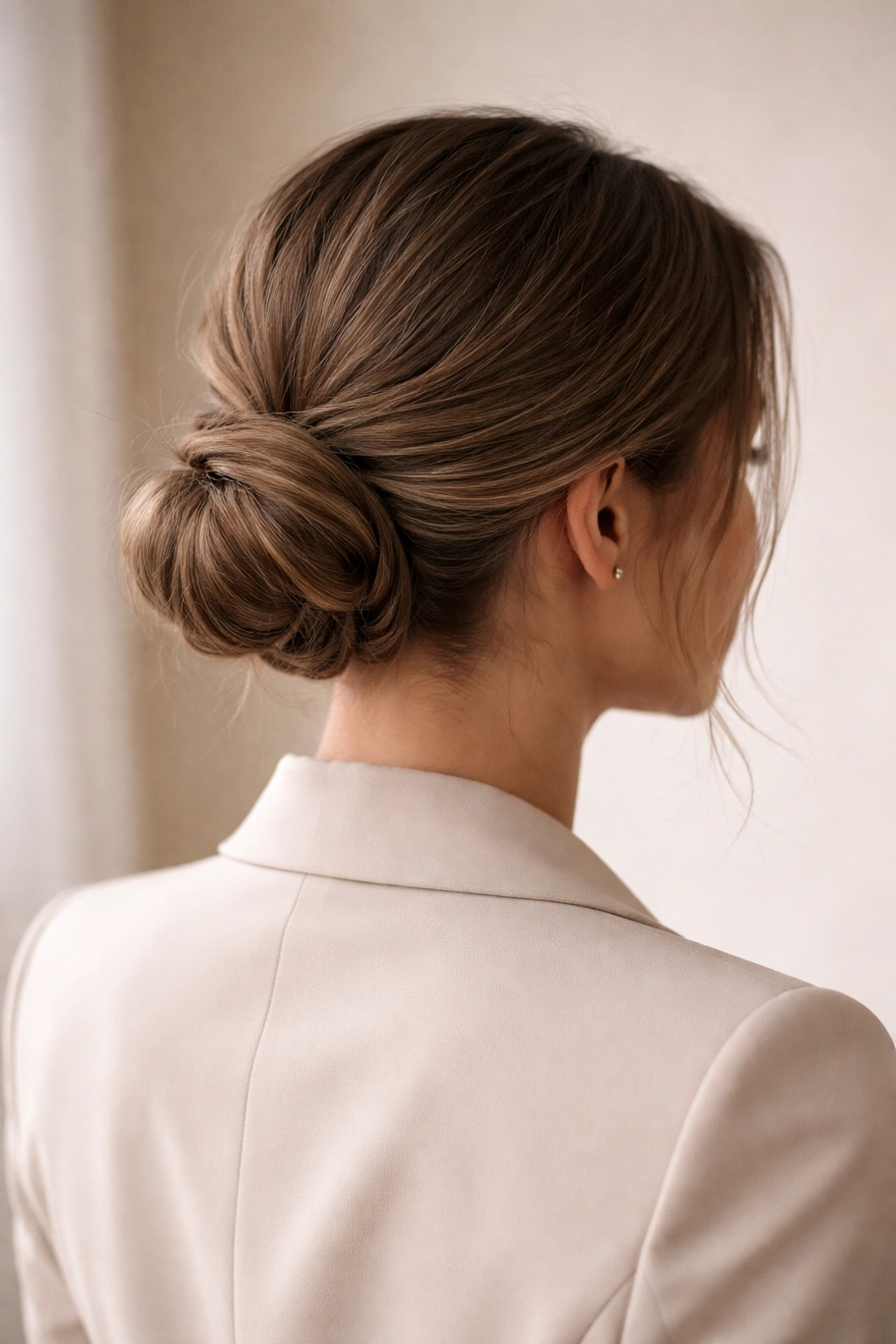
A low bun positioned at the nape of your neck or just below reads as more traditional and formal than a high bun, which can work beautifully if you want to appear especially professional and polished. The lower placement is often associated with corporate environments and formal settings, so this style works particularly well for interviews at established institutions, banks, law firms, or professional services companies where tradition matters.
Creating the Low Messy Bun with Stability
Flip your head and gather all your hair toward the base of your skull, securing it into a ponytail positioned low on the back of your head. You want the ponytail to sit at the nape of your neck or just slightly above. Twist the ponytail loosely and wrap it around the base, securing with multiple bobby pins. Because this bun is lower, gravity works against you, so use four to five bobby pins rather than three, inserted at different angles to distribute the weight. Gently pull at the sections of the bun to create texture, but keep the overall shape tighter and more defined than you would with a high bun.
Interview Appropriateness and Perception
Research consistently shows that low buns are perceived as more formal and traditional, which means they work particularly well if you want to emphasize your professionalism and competence. This style is especially effective if you’re interviewing for a senior position, a role in a formal industry, or a company with a conservative culture. The lower placement also has the added benefit of keeping your hair completely off your face and neck, which many interviewers perceive as more professional and composed.
Insider note: If you have a round face, a low bun can feel less flattering than a high bun because it can emphasize width. In that case, you might style your low bun slightly to one side rather than directly centered to create a more flattering angle.
4. The Half-Up Messy Bun
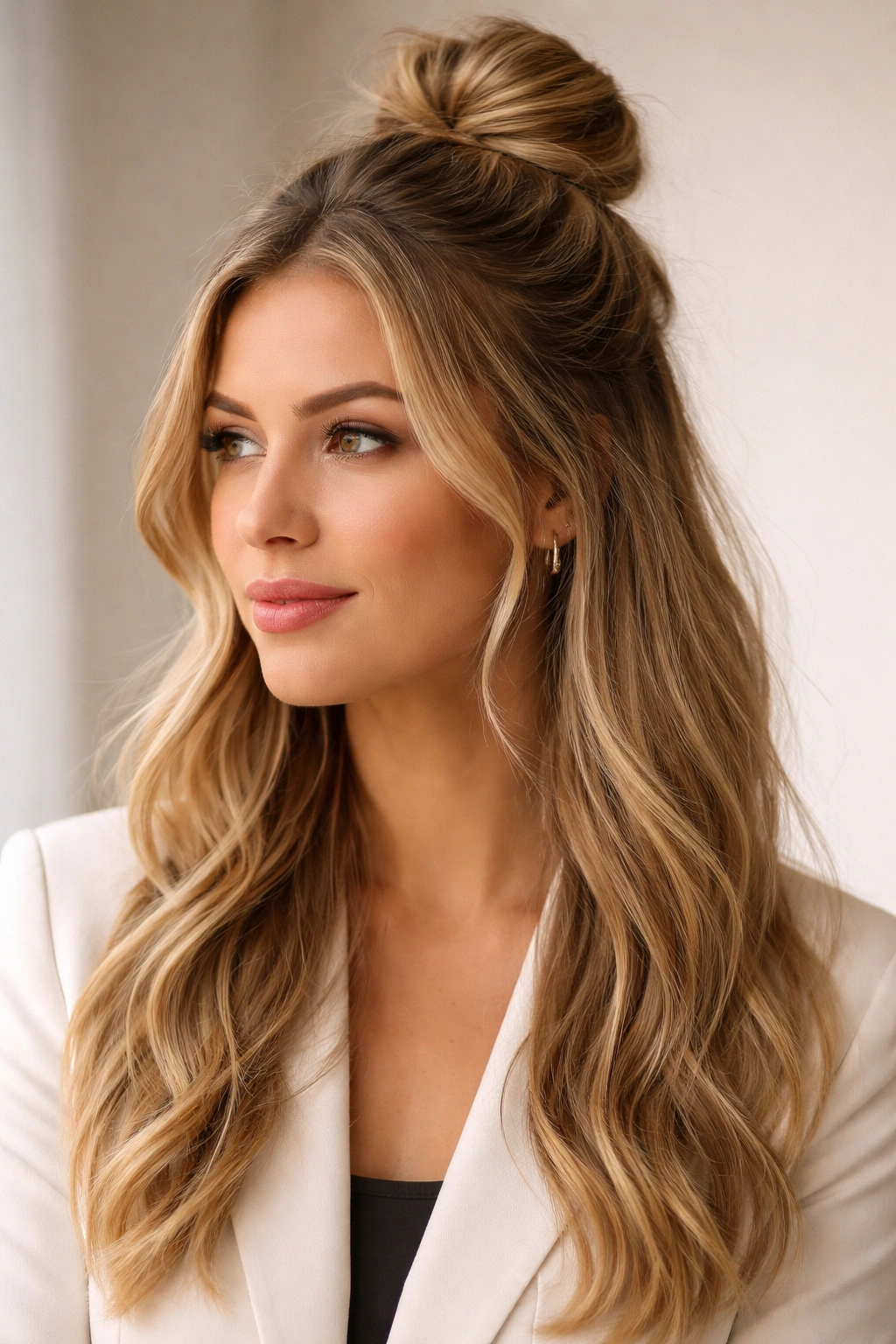
This style creates a softer, more approachable look than a full bun while still keeping most of your hair off your face and neck. You section off the top half of your head, gather it into a ponytail or bun at the crown, and let the bottom half of your hair fall down your back in soft waves or straight texture. It’s ideal for interviews where you want to appear friendly and collaborative — think creative industries, nonprofits, education, or startups where being personable is as important as being competent.
How to Execute the Half-Up Bun
Section off the hair from your temples and forward, creating a line that runs from ear to ear across the top of your head. Secure this section into a ponytail at the crown using a clear elastic band. Twist and wrap this ponytail into a small, loose bun, securing with bobby pins. The bottom half of your hair remains down, framing your face and shoulders. For an interview, you want the bottom half to look intentional — either styled in loose waves or sleekly straightened — rather than completely undone. The contrast between the bun on top and the styled hair below creates a balanced, polished look.
Best For Approachability
The half-up style projects warmth and approachability because it allows some hair to frame your face softly, which is psychologically associated with being friendly and open. Interviewers often perceive candidates with some hair framing their face as more likable and less intimidating. This works particularly well for interviews for roles that involve collaboration, mentoring, or working with diverse groups of people. If the job description emphasizes teamwork or communication, this style subtly reinforces those qualities.
5. The Side-Swept Messy Bun
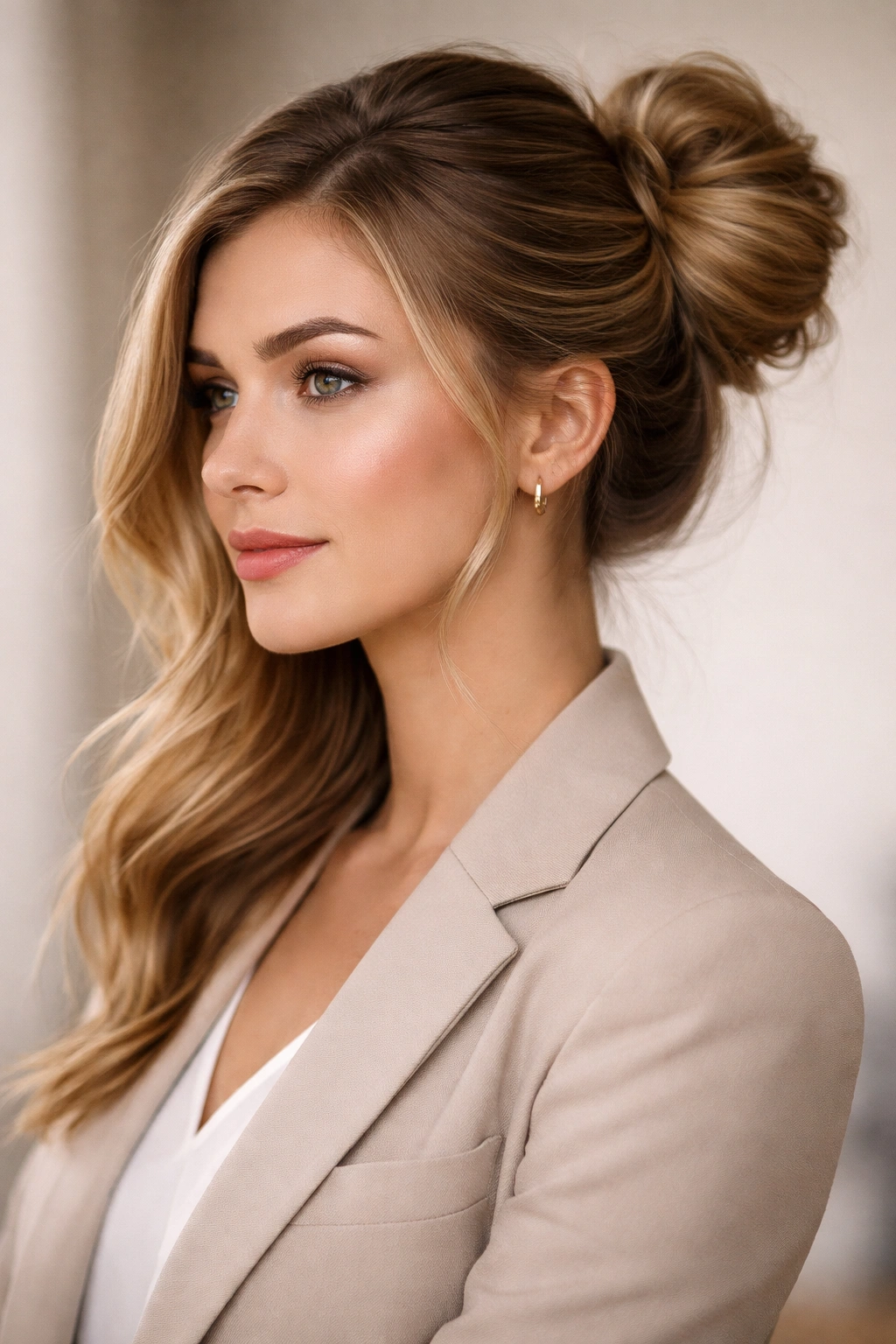
A side-swept bun sits slightly off-center, positioned more toward one side of your head than directly down the middle of your neck. This asymmetrical placement adds visual interest and can actually be more flattering for certain face shapes — particularly round faces, where the off-center positioning creates visual slimming. The swept positioning also creates a slightly softer, more fashion-forward impression than a centered bun.
Creating the Side-Swept Effect
Gather your hair slightly to one side and create a ponytail positioned off-center at the crown or mid-height of your head. Twist and wrap this ponytail into a bun, securing with bobby pins. The key is committing to the side placement rather than allowing it to drift toward center as you go about your day — use at least four pins to keep it anchored in place. Allow a small section of hair on the opposite side to fall across your shoulder, which balances the asymmetry and looks intentional rather than lopsided.
Why It Works in Interviews
A side-swept bun signals that you have fashion awareness and confidence — you’re not just following the default centered approach. This makes it ideal if you’re interviewing for creative roles, fashion-adjacent positions, or companies known for having distinctive visual cultures. It’s also excellent for interviews at tech companies, startups, and creative agencies where personal style is valued. The asymmetry adds personality without reading as unprofessional, as long as the bun itself is well-executed.
Pro tip: The side-swept bun works particularly well if you have longer hair (at least shoulder-length), because the side-swept positioning creates a more dramatic visual effect with more volume.
6. The Textured Wrap Messy Bun
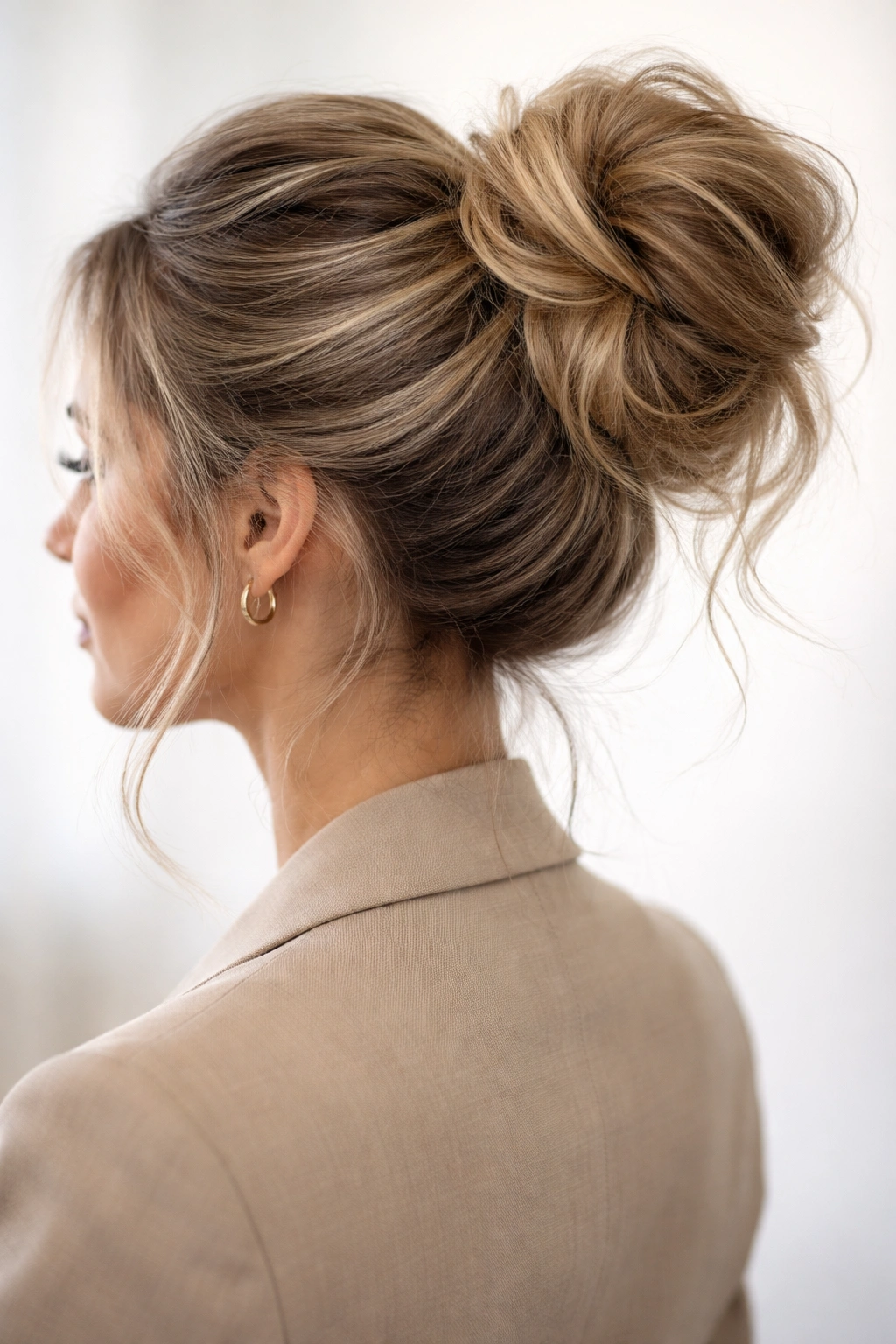
This variation involves backcomb or tease the base of your ponytail before wrapping it around the elastic, which creates maximum volume and texture throughout the bun. It’s more visibly “messy” than the other styles, with more pronounced texture and looser sections, making it ideal for creative interviews where you want to project artistic sensibility and individuality.
Building Texture Into Your Base
Create a high ponytail secured with a clear elastic band. Using a fine-tooth comb or teasing brush, gently backcomb the entire ponytail, creating texture throughout rather than just smoothing it. The key is doing this lightly — you want volume and texture, not matted hair. Once the ponytail has texture throughout, wrap it loosely around the elastic, arranging the teased sections to create an intentionally undone appearance. The texture will naturally create that tousled, textured look without additional pulling and loosening.
When This Style Shines
The textured wrap bun reads as creative, artistic, and individualistic. Use this style if you’re interviewing for graphic design, marketing, fashion, content creation, or other roles where creative thinking is valued. It also works well in nonprofit or advocacy roles where you want to signal that you’re not purely corporate or buttoned-up. Avoid this style if you’re interviewing at traditional financial institutions or formal professional service firms, where the visible texture might read as insufficiently polished rather than intentionally creative.
7. The Braided Messy Bun
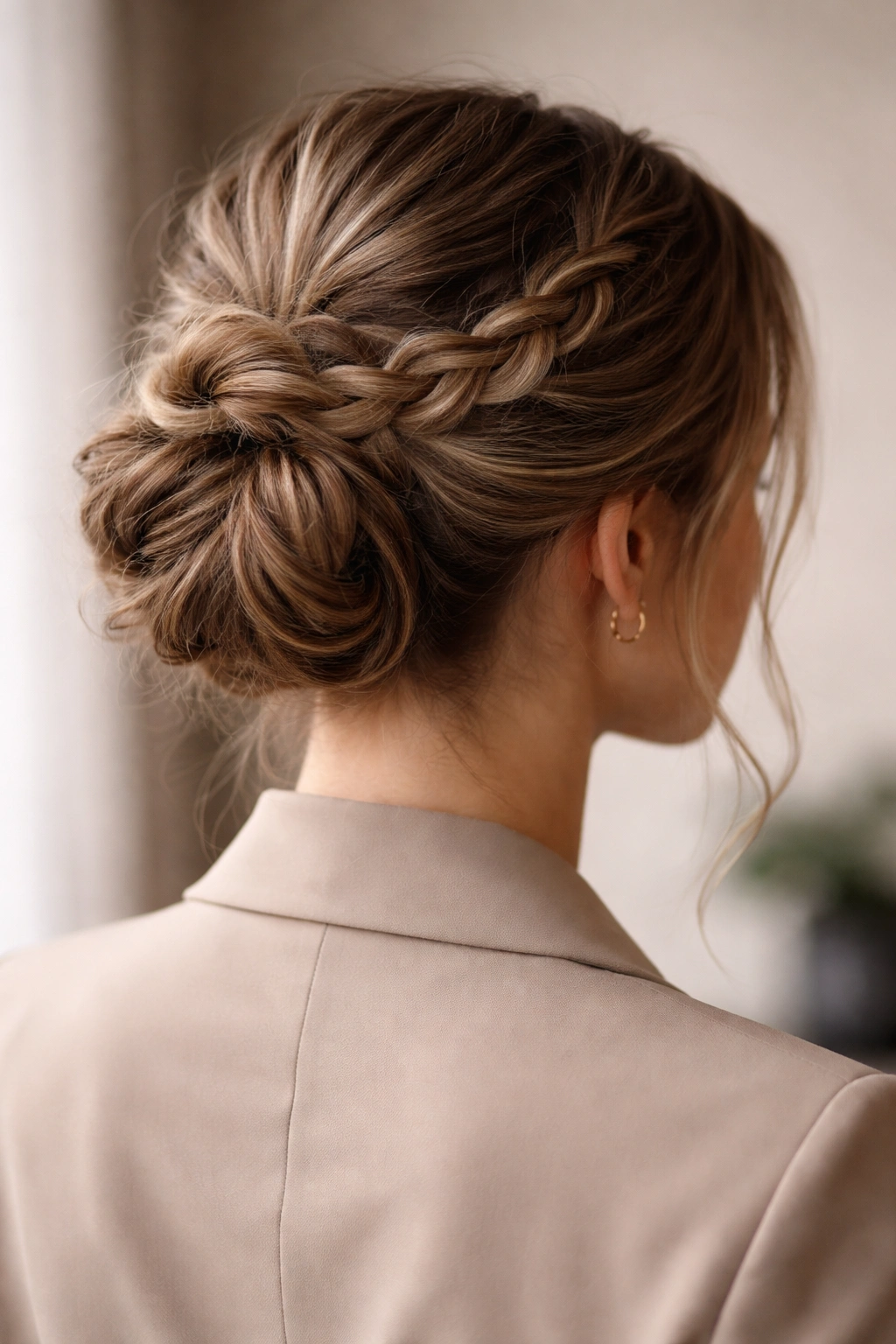
This style incorporates a braid into the bun itself, adding elegance and visual interest while maintaining the approachable messy aesthetic. You can either braid the entire ponytail before wrapping it into a bun, or wrap a braid around the base of a standard bun for added sophistication. The braid element elevates a messy bun from casual to refined, making it excellent for interviews where you want to appear both competent and thoughtfully put-together.
Two Methods for Braiding
Method One: Create a high ponytail and divide it into three sections. Braid the ponytail loosely, then wrap the braid around the elastic to form the bun. Secure with bobby pins. This creates a cohesive look where the texture of the braid is visible throughout the bun.
Method Two: Create a high ponytail, wrap the loose ponytail into a basic bun shape, then take a thin section of loose hair and braid it, wrapping the braid around the base of the bun as an accent. Secure both the bun and braid with bobby pins. This method adds an elegant detail without requiring you to braid a thick ponytail.
Perception and Interview Impact
The braided bun projects sophistication and attention to detail — hiring managers perceive braids as requiring more time and skill than standard buns, which reflects positively on your overall presentation. This style works beautifully across most professional environments, from corporate to creative. It’s particularly strong for interviews where you want to appear organized, thoughtful, and detail-oriented — roles in project management, research, law, or any position requiring precision and careful work.
Worth knowing: Braided buns photograph exceptionally well if your interview involves any video component, like a video call with the hiring manager or a recorded presentation.
8. The Undone Crown Bun
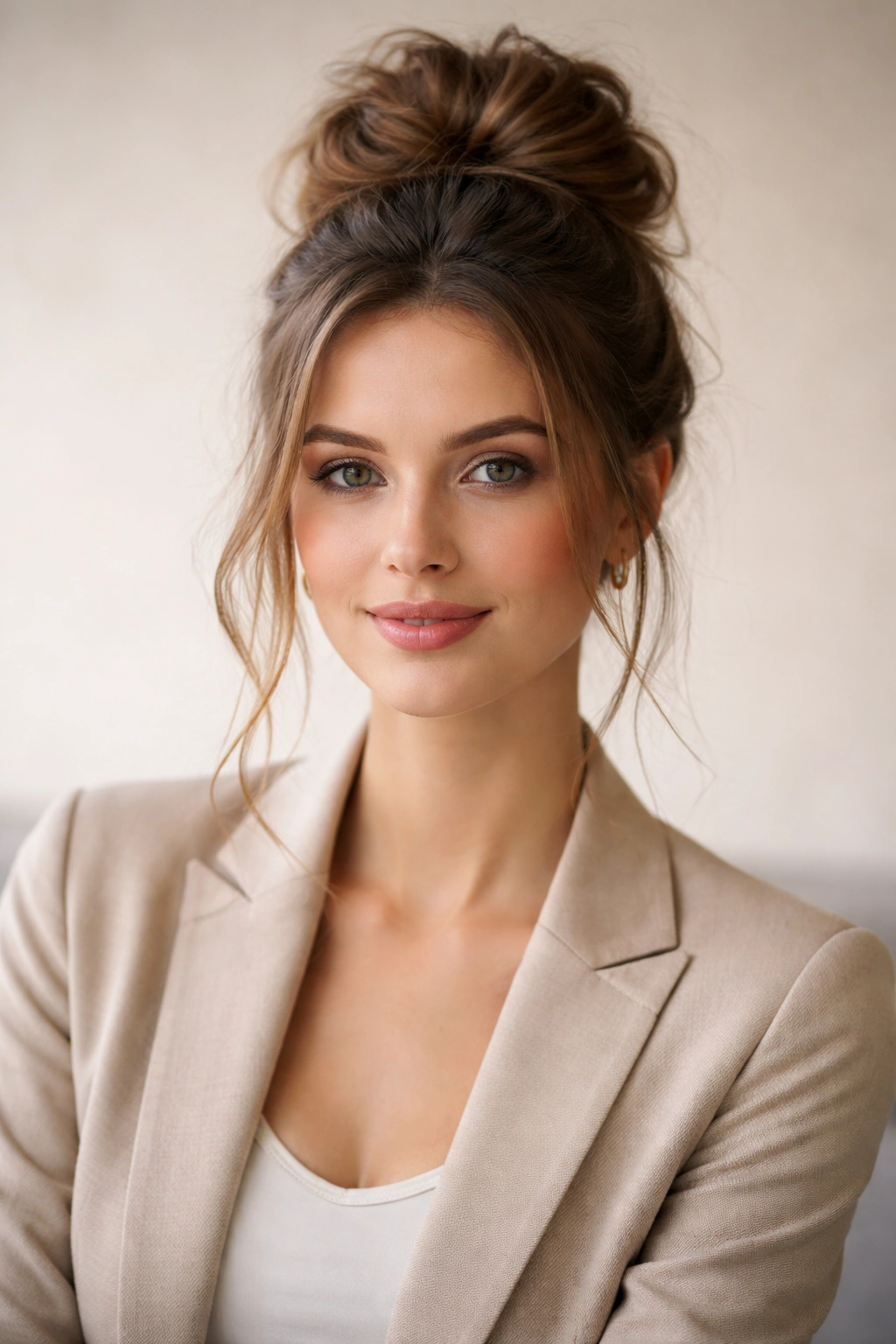
This style positions the bun high on the crown but leaves several longer face-framing pieces loose around the front. Rather than tucking everything back, you intentionally leave tendrils falling around your face and neck. It’s significantly softer than other bun styles and reads as more approachable and warm, making it ideal for interviews for roles emphasizing emotional intelligence, client-facing work, or collaborative team environments.
Creating Intentional Softness
Create a high ponytail at the crown, leaving intentional sections of hair around your face unsecured. Use a fine-tooth comb to smooth these face-framing pieces, then gently wave or curl them for softness. Secure the ponytail into a bun and arrange the loose pieces around your face. The key is making these pieces look intentional rather than accidental — they should frame your face symmetrically on both sides rather than randomly scattered.
Best Use in Interview Settings
The undone crown bun projects warmth and approachability because it allows hair to frame your face softly, which people subconsciously associate with friendliness and openness. Use this style for interviews at nonprofits, schools, counseling centers, or healthcare settings where compassion is valued. It also works well for customer service, human resources, or any role where people management is central. Avoid this style if you’re interviewing for very formal roles where you want to maximize professionalism signals.
9. The Double-Twisted Messy Bun
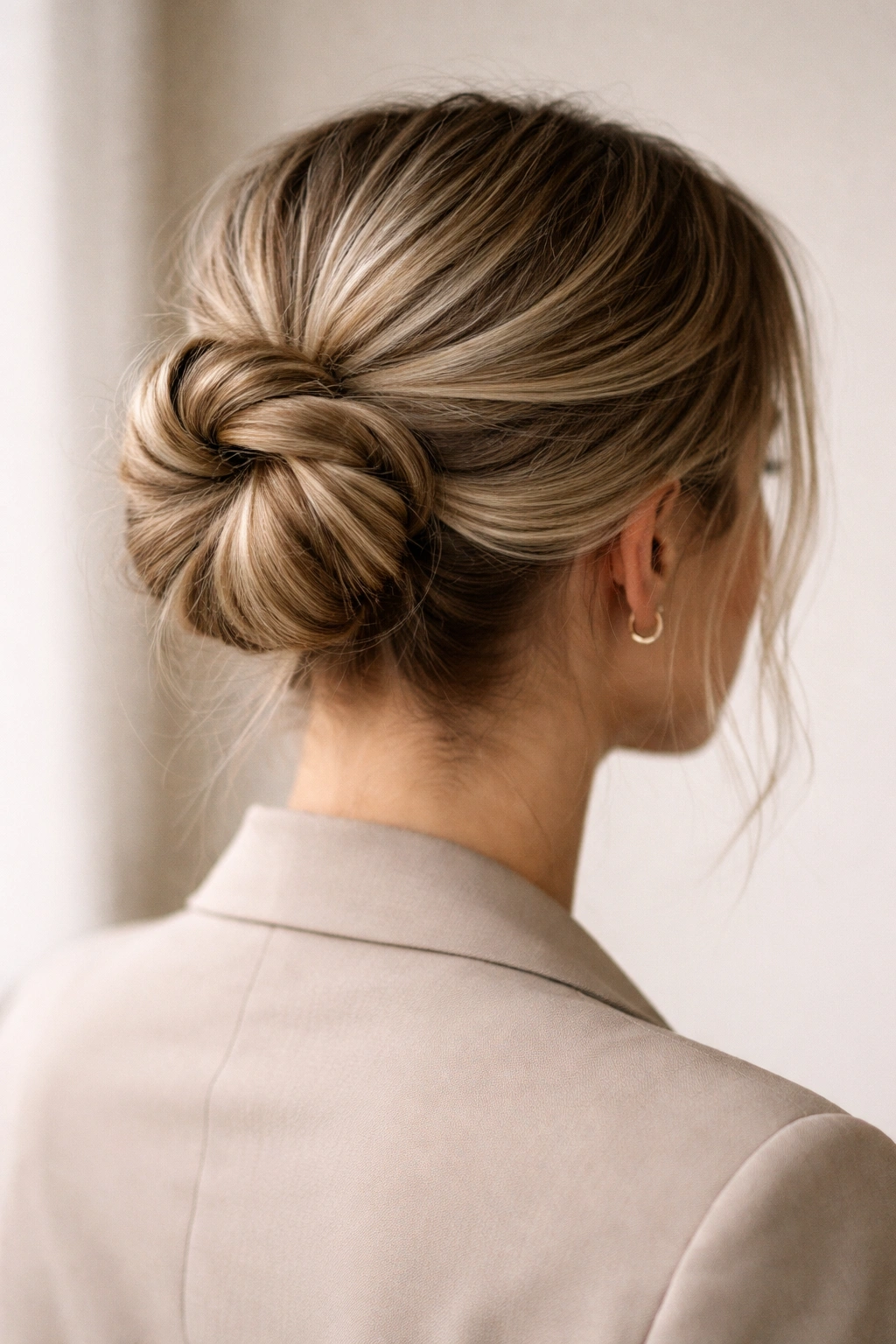
This technique involves twisting your ponytail twice before wrapping it into a bun, which creates a more defined, structured texture than a single twist. The double twist adds sophistication and intentionality while still maintaining the “messy” aesthetic. This style bridges the gap between casual and polished, making it versatile across various interview settings.
The Double-Twist Technique
Create a high or mid-height ponytail secured with a clear elastic band. Divide the ponytail into two sections. Twist each section tightly, then twist the two twisted sections around each other, creating a rope-like effect. Wrap this double-twisted rope around the elastic to form the bun and secure with bobby pins. Gently pull at sections of the resulting bun to loosen it slightly and create texture, but the double twist creates natural definition that requires less manipulation.
Why It Works Across Industries
The double-twisted bun projects sophistication and attention to detail because the visible twisting pattern shows intentionality. It reads as more polished than a simple twist but maintains the approachable messiness of an unstructured bun. This makes it excellent for interviews across diverse industries — corporate environments where you want to appear thoughtful, creative fields where you want to show you have technique, or professional services where precision matters.
Insider note: The double-twisted bun is less likely to loosen throughout a long interview day than a simple wrap bun, because the twist itself adds structural stability.
10. The Asymmetrical High Bun
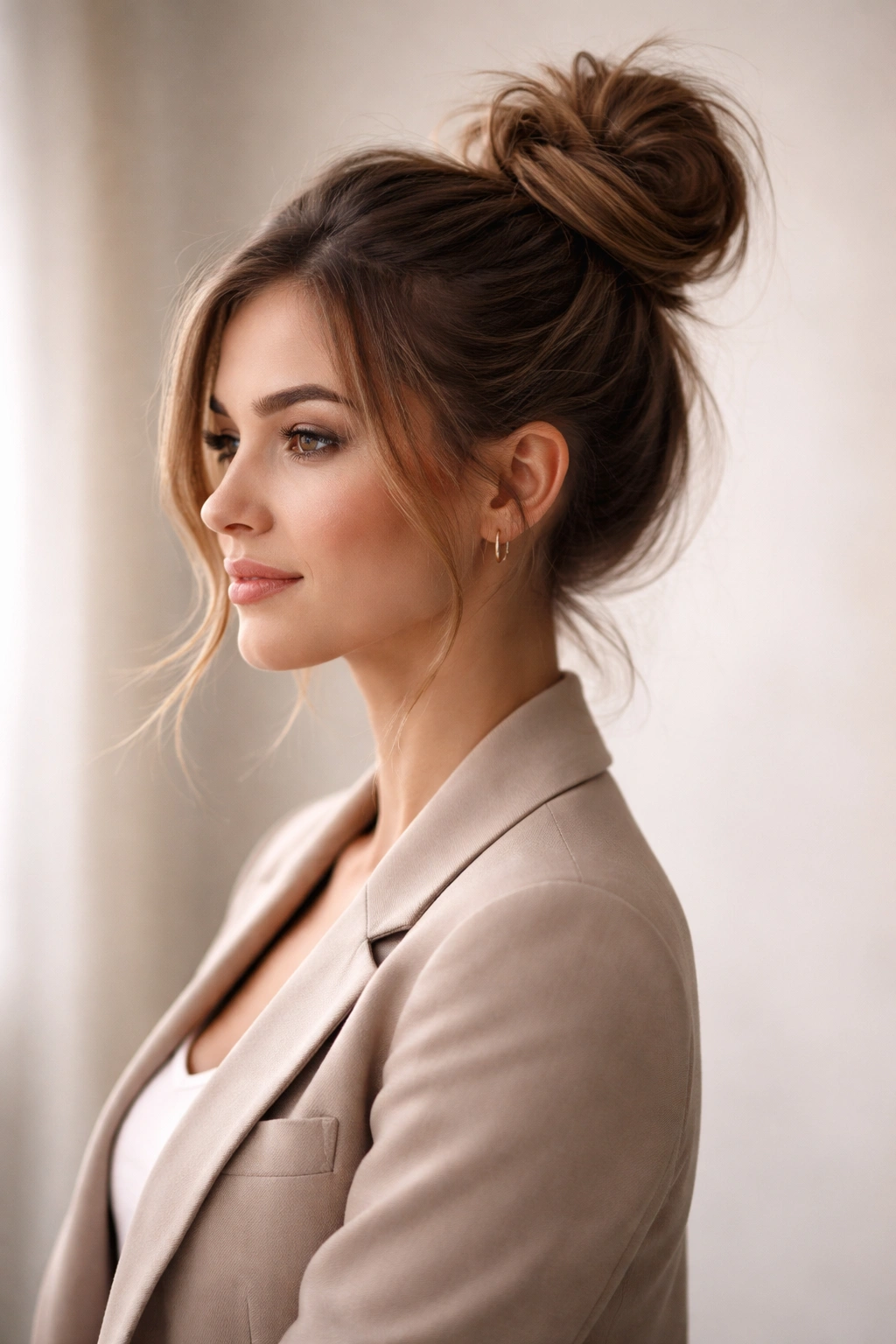
This final style combines the height and exposure of a high bun with the visual interest of asymmetrical placement. Rather than sitting directly on the crown, the bun is positioned slightly to one side or the back, creating a unique silhouette. It’s perfect for interviews where you want to project confidence, creativity, and individuality without sacrificing professionalism.
Positioning the Asymmetrical Bun
Create a high ponytail positioned slightly off to one side of the crown rather than directly centered. You might position it about an inch to the left or right of center, or even slightly toward the back of the crown rather than directly on top. Twist and wrap this ponytail into a bun, securing with bobby pins. The off-center positioning creates a more dynamic silhouette than a centered bun and photographs beautifully from the side angles you’ll encounter in interviews.
Confidence and Individuality Signals
An asymmetrical bun signals that you’re confident enough to make non-traditional styling choices — it’s not the default approach, which means you’ve made an intentional decision about your appearance. This works particularly well for interviews at creative agencies, tech companies, startups, and innovative organizations where personal style is valued. The asymmetry also creates visual interest that can actually help you be more memorable to interviewers, which is an advantage in competitive hiring processes.
Who Should Wear This Style
If you have a confident personal style and are interviewing at a company with creative or innovative culture, the asymmetrical bun is your statement piece. It shows you understand professional presentation while also asserting your individuality. Avoid this style if you’re interviewing at traditional, conservative organizations where you want to minimize anything that might read as unconventional.
Pro tip: The asymmetrical bun looks particularly striking if you have longer hair with substantial volume, because the off-center positioning creates a more dramatic visual effect.
Final Thoughts
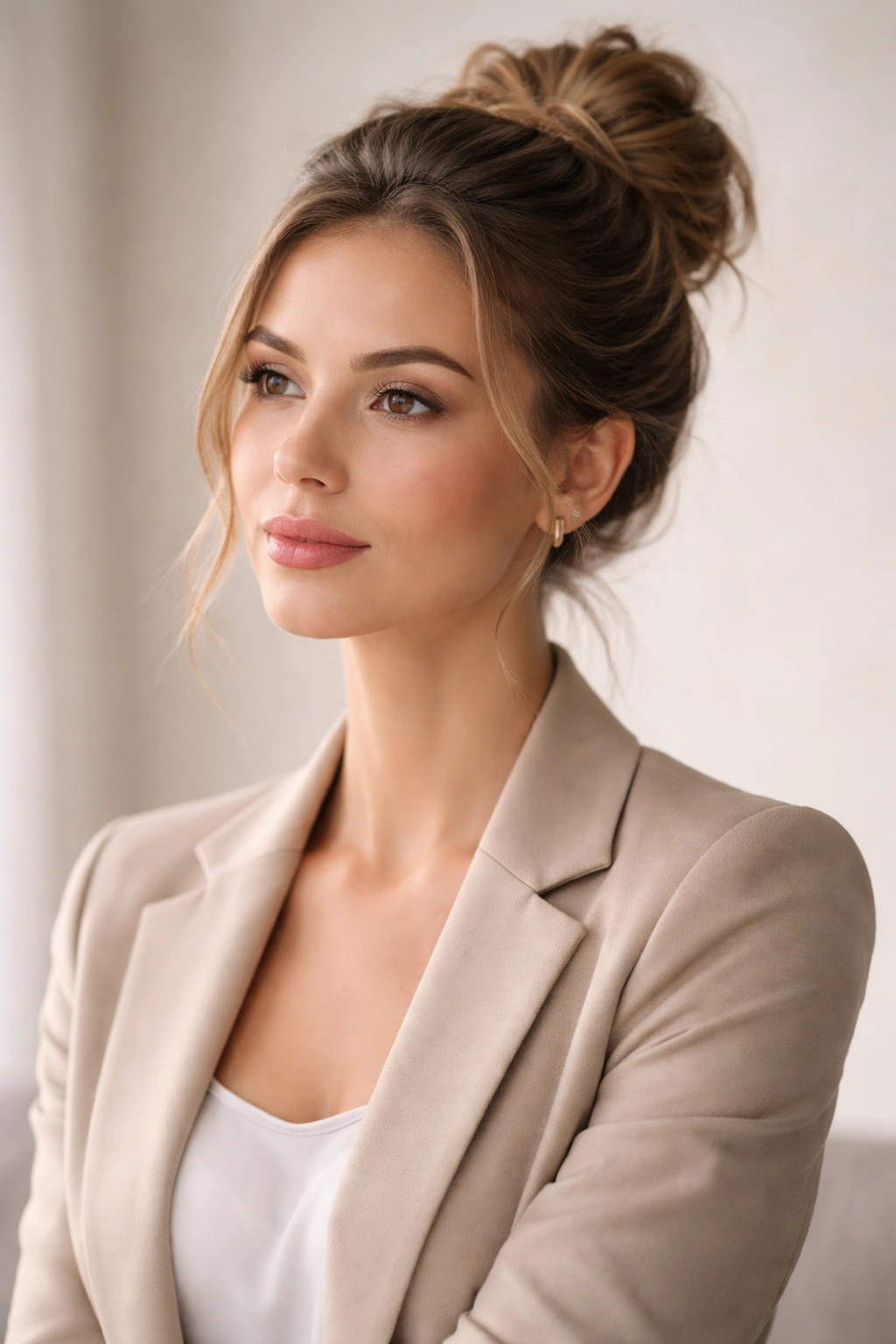
The messy bun remains one of the most effective hairstyle choices for interview settings because it accomplishes multiple things simultaneously — it keeps your hair off your face so your expressions are visible, it demonstrates care about your appearance without appearing obsessive, and it projects confidence by showing you’re comfortable enough not to adhere rigidly to formal hairstyles. The ten styles covered here offer enough variety that you can choose one that genuinely aligns with your personality and the company culture you’re interviewing with.
The real secret to interview-ready messy bun success is understanding that intentionality matters more than perfection. Every strand doesn’t need to be in place — what matters is that your hair looks like you made a deliberate choice about how to present yourself. Spend time practicing whichever style resonates with you before your interview day, so you’re not fumbling with bobby pins in the parking lot. The more familiar your hands are with creating your chosen style, the more confident you’ll feel walking into that interview room, and that confidence will translate into better communication and stronger overall presence. A great messy bun does half the work for you — it’s one less thing to worry about so you can focus entirely on demonstrating why you’re the right person for the job.