



Greasy hair days are absolutely brutal when you’ve got curls. That flat, limp texture that makes your strands cling to your scalp and destroys any definition you worked hard to build feels inevitable when sebum builds up faster than you’d like. The frustration is real—you’ve washed your curls, you’ve styled them with intention, and now everything looks deflated and weighed down just a couple of days in.
Here’s the thing though: greasy hair days don’t have to mean giving up on looking put-together. With the right styling strategies designed specifically for curly texture, you can actually work with what’s happening instead of against it. The key is understanding that grease affects curls differently than it affects straight hair, and knowing which styles leverage that texture shift to your advantage rather than highlighting it.
The styles that work best on greasy hair days for curls are ones that create volume, add dimension, or position your curls in ways that don’t emphasize the flatness at the roots. Some styles embrace the weight gain that comes with oil buildup, transforming it into structure and hold you wouldn’t get on a super-clean hair day. Others use protective techniques, texturizing products, and strategic styling to refresh your look completely. The good news is you have real options—and many of them are actually faster to execute than your usual curl styling routine.
1. The High Pineapple Bun with Loose Tendrils
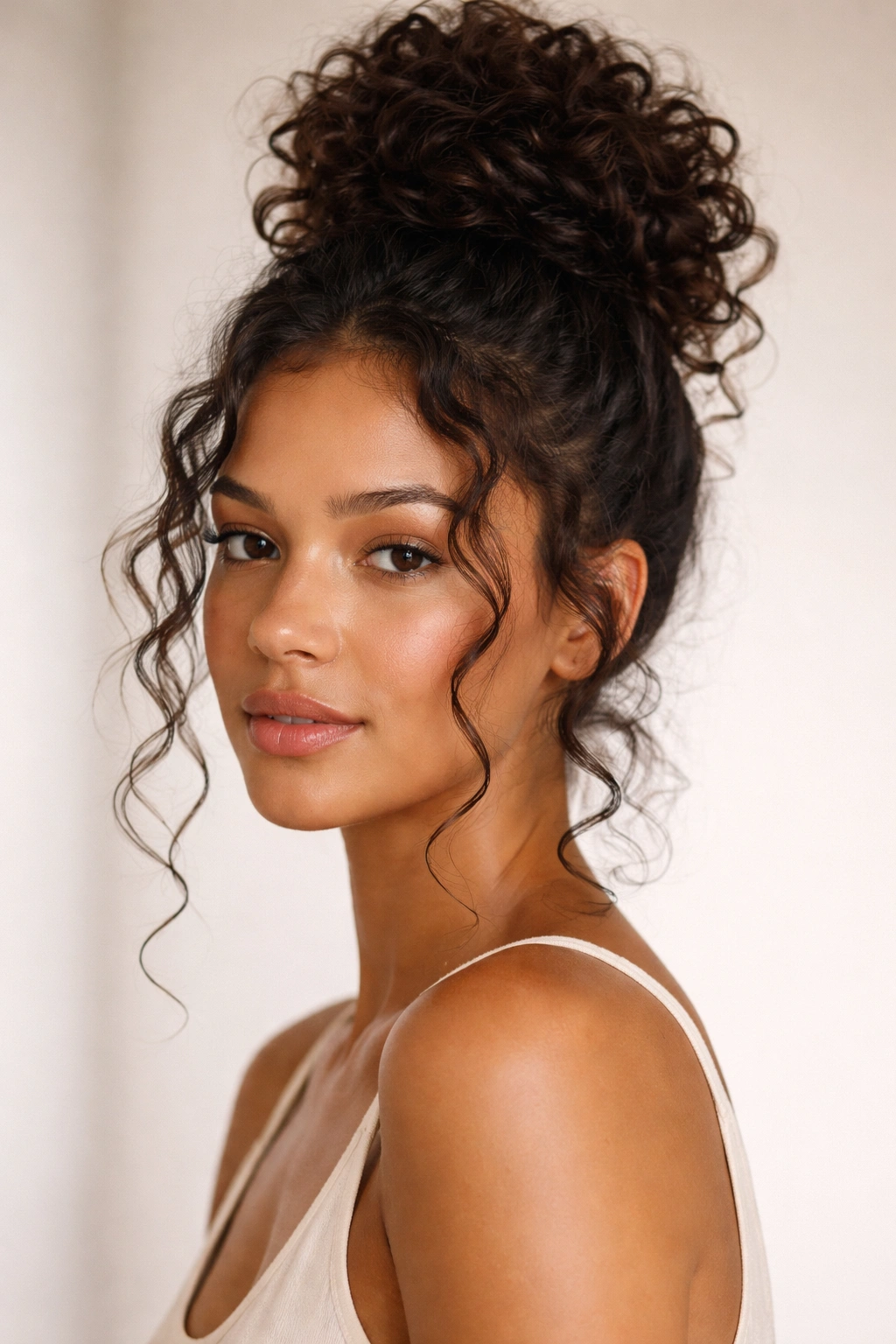
The pineapple technique—gathering your curls on top of your head in a high ponytail to preserve your curl pattern while you sleep—becomes an intentional daytime style when you transform it into a structured bun. When your hair is greasy, the weight naturally creates definition around your crown, and the loose tendrils that escape frame your face beautifully without looking messy.
How to Create This Look
Start by flipping your head upside down and using your fingers to gather your curls at the very top of your head, not at the back like a traditional ponytail. You want the gathering point to be directly above the crown. Secure loosely with a silk or satin hair tie that won’t create a crease—this is crucial because you’ll be taking it down later. Flip your head back upright, then gently pull the ponytail through a hair stick, or wrap it loosely around the elastic to form a soft, undone bun shape. Don’t make it tight. Pull out a few face-framing pieces on each side and reshape them so they fall naturally.
Why It Works on Greasy Days
- Concentrates the weight at the crown, lifting hair away from your oil-prone scalp while looking intentional
- Loose tendrils camouflage any flatness at the front because they’re arranged to draw attention to your curl pattern
- The bun itself reads as “styled” rather than “slept on,” which changes how people perceive your hair
- Greasy curls hold a bun shape better than clean ones, so the style stays put all day without additional products
Pro tip: If your tendrils are looking too slick, use a dry shampoo specifically designed for curls (one that won’t leave white residue) and apply it only to the face-framing pieces, then scrunch gently to reactivate curl.
2. The Half-Up Twisted Knot with Texture
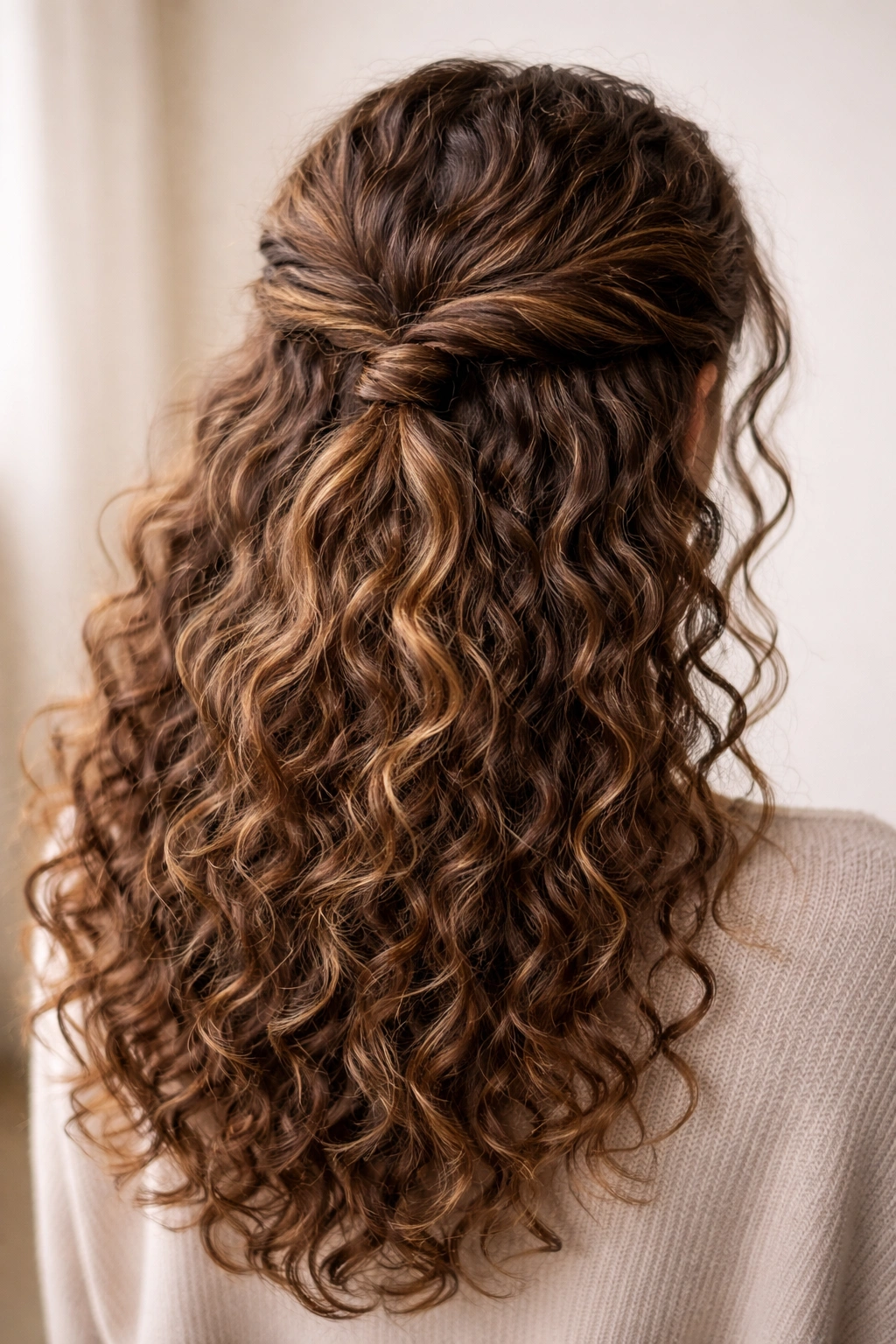
The half-up style is a greasy hair day classic, but the way you execute it matters for curls. Instead of creating a standard half-up ponytail, twist two sections from opposite sides of your head, bring them to the back, and tie them together or tuck them into themselves to form a loose knot. This approach uses the weight of your curls strategically and looks modern instead of basic.
Creating Volume Despite the Weight
Flip your head back slightly to create lift at the crown, then take a two-inch section from one side near your temple. Gently twist it back toward the center of your head—you want loose, relaxed twists that show off your curl texture, not tight ones that flatten everything. Repeat on the other side. Bring both twists to the back, and either tie them with a tiny elastic or tuck one end under the other to create a loose knot shape. Pull and gently scrunch the twists slightly to add texture and volume. The key is not making this symmetrical or perfect; that’s what makes it look intentional rather than like you’re just managing greasy hair.
Why This Works
- Greasy curls grip each other more, making twists hold their shape beautifully without slipping
- Pulling hair away from your face and scalp reduces the appearance of greasiness at the most visible parts
- The loose knot creates visual interest and dimension that distracts from any flatness at the roots
- You can add bobby pins through the twists to disguise them as a decorative detail, which ups the “styled” factor
- The exposed curl pattern in the twists shows off your texture in its best light
Quick styling note: If your twists are looking too slick, apply dry shampoo to your scalp before styling and gently work it through with your fingers. This adds grip and reduces shine without weighing curls down further.
3. The Sleek Low Ponytail with Curl Definition
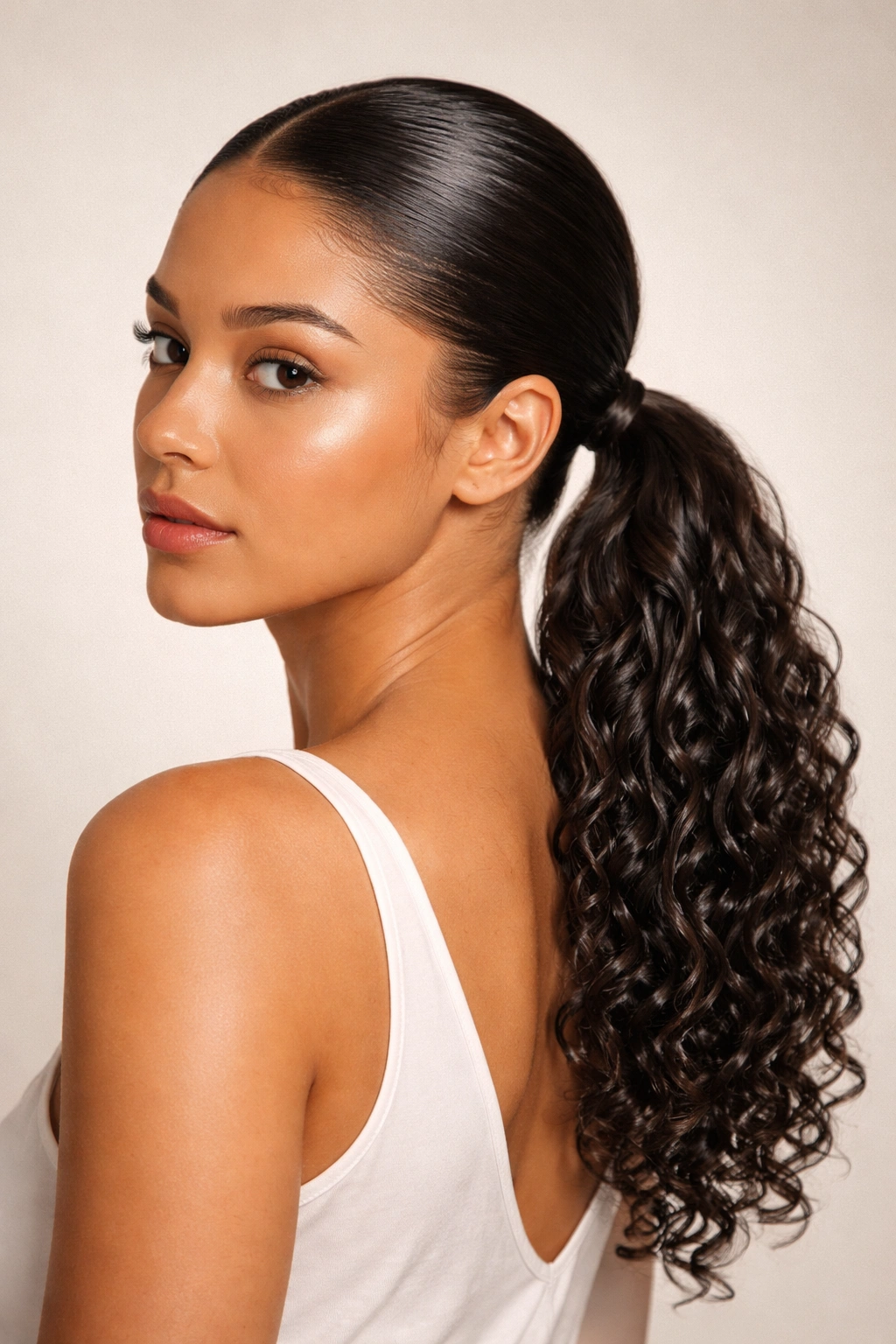
When your curls are greasy, sometimes the move is to lean into the sleekness rather than fight it. A low ponytail gathered at the nape of your neck with intentionally separated curls falling below creates a polished look that actually benefits from the oil in your hair. The curls hang with better definition, and the sleek base looks deliberately styled rather than greasy.
Technique for Definition
Apply a lightweight gel to damp palms and smooth the hair back from your face and sides, sweeping everything into a low ponytail at the nape. Use a fine-tooth comb or your fingers to gently separate and define individual curl clumps in the ponytail section. You can lightly mist sections with light hairspray if you want additional hold. The key is making sure the curls below the ponytail look intentionally separated and sculpted, not just bunched together.
Why Greasy Hair Makes This Better
- Oil naturally creates definition in curls, making each ringlet or coil more distinct and visually separated
- Greasy curls photograph better than you’d expect because they have more shine and dimension
- The contrast between the sleek, controlled crown and the defined curls in the ponytail looks intentional and editorial
- Lightweight gels and creams that normally slip out of clean curls stay put because the oil gives them grip
Worth knowing: This style works better with curly or coily hair than with straighter textures because the natural curl pattern creates the visual interest you need. If your curls are on the looser side, you might add a small amount of curl-defining cream to the ponytail curls to enhance separation.
4. The Textured Side Braid Crown
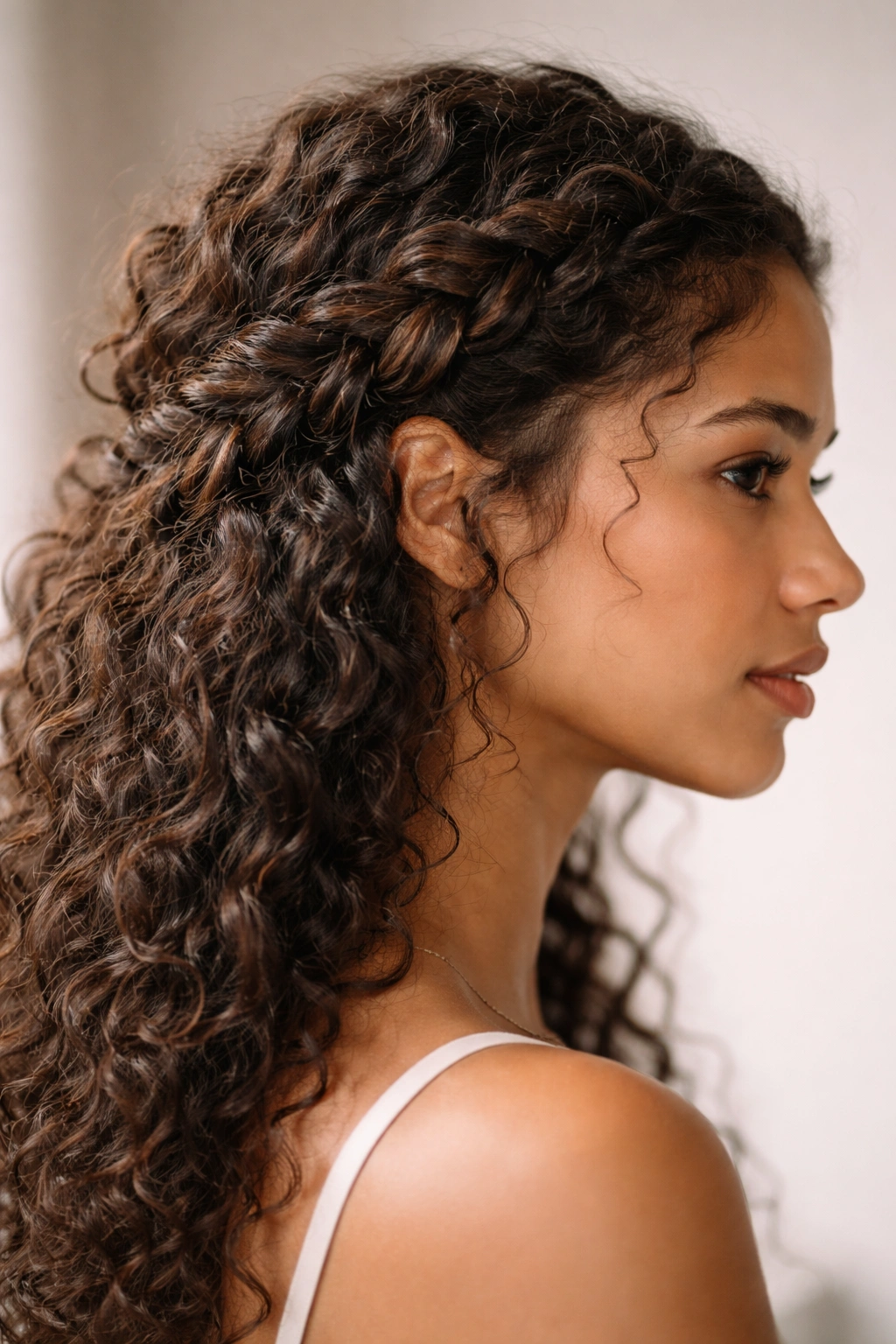
A braid that wraps around the side of your head from ear to ear uses greasy curls to its advantage. Because your curls are heavier and more defined with oil, the braid actually looks more intricate and textured than it would on a fresh-wash day. It’s a style that looks effortlessly beautiful and gives you a reason to position your hair off one side of your face, which automatically reduces the visibility of any greasiness.
How to Braid Greasy Curls
Section off a thick piece of hair starting near one ear, about two inches thick. Divide it into three parts and begin a basic three-strand braid, but here’s the key difference: don’t make it tight. Keep the braid loose and wispy, and gently pull sections outward as you go to create a chunky, textured appearance. The natural wave and curl in your hair will show through beautifully. As you braid toward the back of your head, add small sections of hair from below the braid (like a French braid) if you want, or keep it as a simple side braid—both look great. End at the opposite ear or at the back of your head, depending on how much of your head you want to cover.
Why Greasy Curls Perfect This Style
- Greasy hair stays braided without slipping or coming undone, so your braid holds all day
- The natural clumping of greasy curls within each strand of the braid creates visual texture and dimension
- A loose braid in greasy hair reads as “intentionally textured” rather than just “loose”
- This style keeps hair off your face and scalp, which is where greasiness is most noticeable
- The braid itself is a dominant visual feature that draws attention away from any root flatness
Pro tip: Use a texture spray before braiding if you want extra grip and definition in the braid sections, but honestly, greasy curls grip themselves beautifully.
5. The Twisted Crown with Center Part
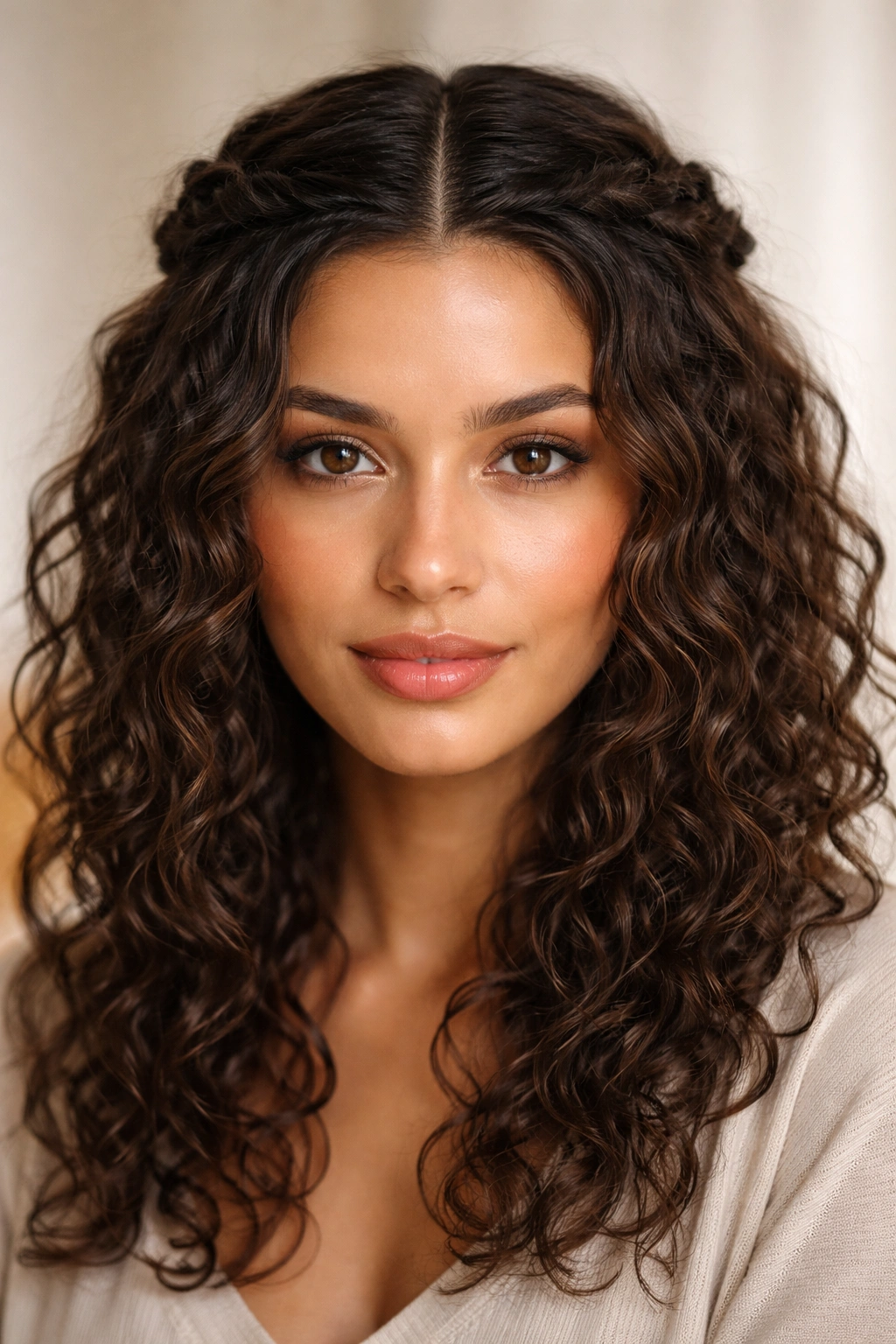
This style involves taking two thick twists from the sides of your head and wrapping them around the crown like a halo, creating an elegant, romantic look that works beautifully when your curls are greasy. The twists secure and define your hair while the waves and curls falling down create a full, lush appearance. Center your part to frame your face and balance the style.
Executing the Twist Crown
Create a center part from your forehead down the back of your head using your fingers or a rat-tail comb. Starting on one side, take a three-inch-wide section of hair near your temple and begin a loose, relaxed twist, incorporating small sections of hair as you go toward the back of your head (again, like a French braid but with twists instead of braids). Bring this twist up and around the crown. Secure it with bobby pins at the back. Repeat on the other side, bringing that twist up and around to wrap over the first twist. Let the remaining curls fall down your back and shoulders. Gently scrunch and reshape your curls so they fall in a flattering way.
The Greasy Hair Advantage
- Twists in greasy hair hold their shape all day without additional product or maintenance
- The weight distribution of greasy curls makes the twists sit closer to your head, creating a polished crown effect
- Curls hanging down below the twists look fuller and more defined because of the oil
- This style is protective and elegant, making it appropriate for work, events, or dressier occasions
- The twists are a visual feature that says “styled,” which gives you permission to have greasy hair underneath
Quick note: If you’re concerned about shine, a little-known trick is to mist your twists with a mattifying spray designed for oily skin. It dulls the shine without making your curls look dry or crunchy.
6. The Sectioned and Clipped Top Knot
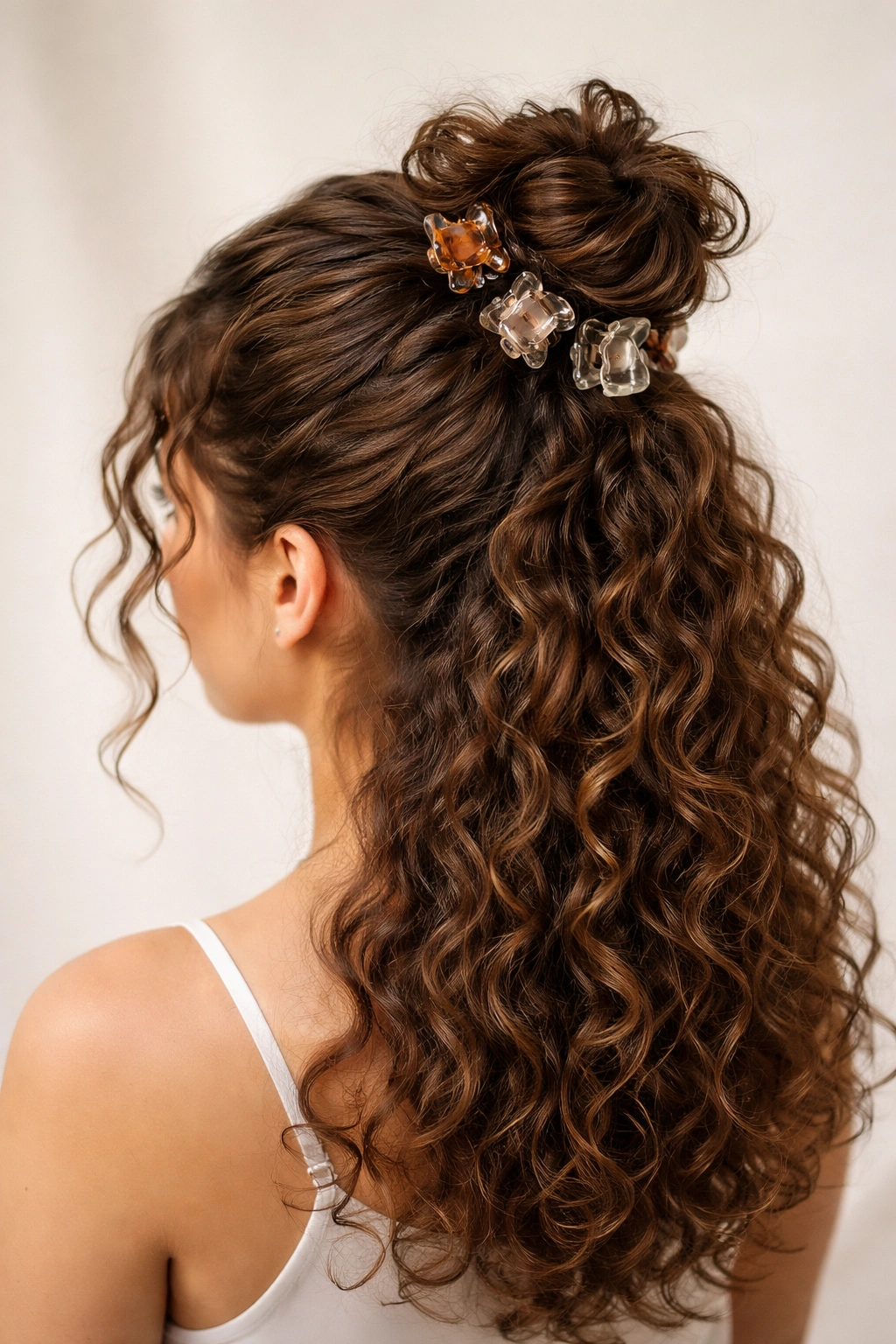
Rather than gathering all your hair into one bun, this style involves creating four or five intentional sections at the top of your head and clipping each section up with a claw clip or bobby pins, leaving the bulk of your curls to fall down your back. It looks modern and intentional, and the clipped sections add volume and visual interest while your greasy curls provide their own hold.
How to Section and Clip
Start with a center part. On one side, take a two-inch section of hair from your temple, twist or curl it slightly with your fingers to add some dimension, and clip it up to the side with a claw clip, positioning it so the clip is visible and looks intentional. Repeat on the other side with a mirror-image section. Then, take a section from the crown and clip it up. Continue creating and clipping sections until you have four to five clips holding the top portion of your hair up. This creates a scooped-back silhouette while still showing off volume and curls. Gently pull and scrunch the clipped sections to add texture and reshape them so they look deliberately styled rather than just pinned back.
Why This Works on Greasy Days
- Clipped sections stay secured all day in greasy hair because the weight and oil give them grip
- By lifting hair away from your scalp, you reduce the appearance of greasiness at the roots
- The visual pattern created by multiple clips is eye-catching and says “intentional styling,” which reframes your greasy hair day as a choice
- Clipped sections look modern and trendy right now, so the style feels current rather than utilitarian
- You can easily add a small hair accessory or clip in a fun color or material to make this feel more polished
Insider note: This style actually looks better with a little grease because your curls have more shape and hold. On a super-clean day, you might need light hairspray to make the clipped sections stay in place.
7. The Twisted Wrap Around with Exposed Curls
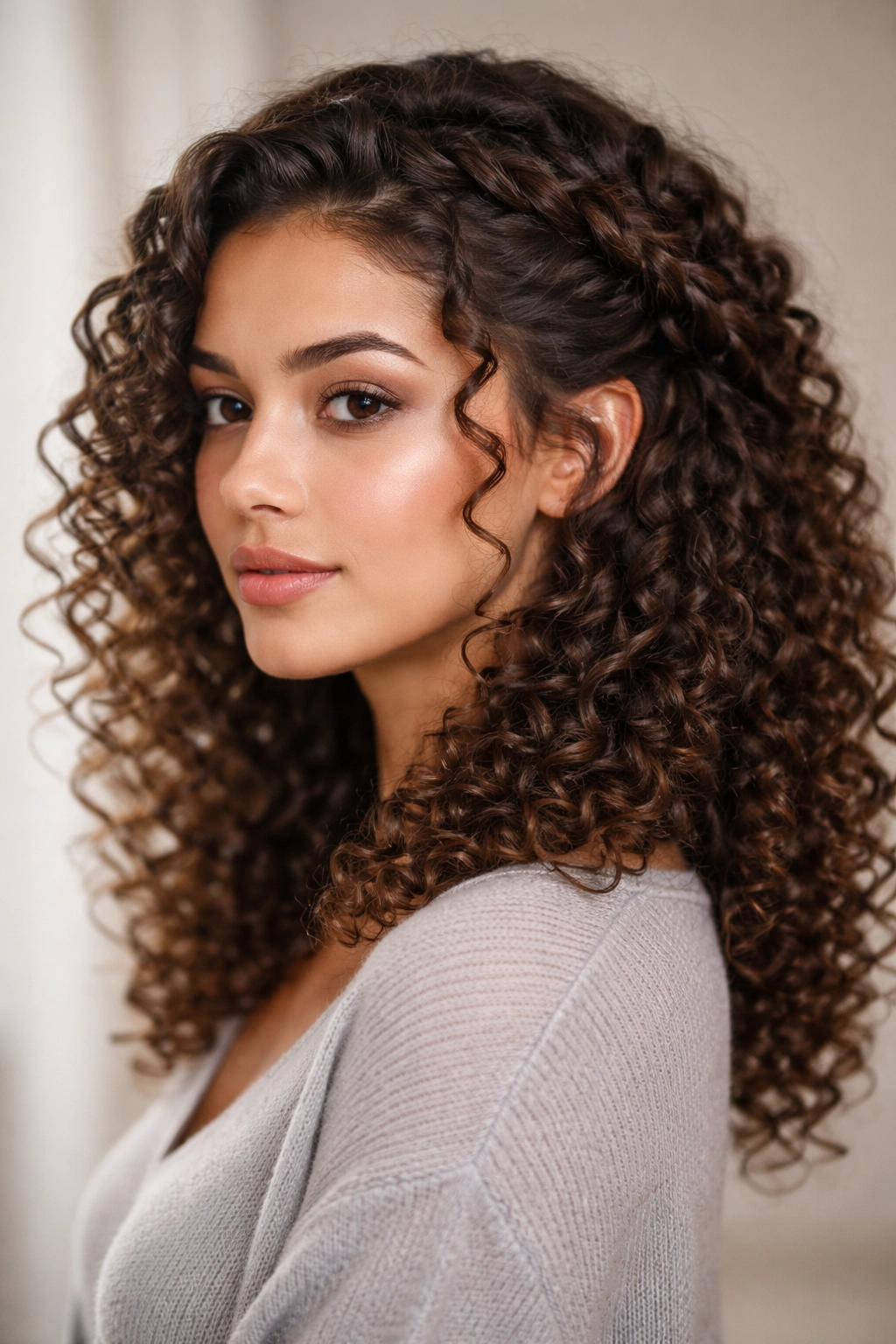
This protective style wraps a thick, twisted section around the back of your head like a crown, while the bulk of your curls remain loose and unconfined in the front and sides. It’s less structured than a full updo but more intentional than just wearing your hair down, making it perfect for when your curls are greasy and you need to manage them without completely putting them up.
Creating the Wrapped Twist
Take a thick section of hair from behind one ear, about three or four inches wide. Twist it loosely, adding small sections of hair as you bring the twist toward the back of your head. Secure the twist at the back with bobby pins. For a more dramatic look, you can take a second twist from the other side and wrap it around as well, crossing the two twists to create an X pattern at the back. The key is leaving plenty of curls loose in the front and around your face so the style reads as something you chose to wear, not something you’re doing to hide greasy hair.
The Appeal for Greasy Curls
- Twists grip securely in greasy hair, so you don’t need additional products or teasing to make them stay
- Keeping the majority of your curls down and loose makes the style feel full and intentional
- The twisted sections frame and define your face, drawing focus there instead of to your scalp
- Greasy curls in the front and sides of your face look more defined and textured, which is beautiful
- This style sits somewhere between casual and polished, making it versatile enough for any situation
What to know: This is genuinely easier to execute on a greasy-hair day than on a clean day, because your curls stay where you put them. You might even find you need fewer pins.
8. The Sleek Puff with Layered Waves
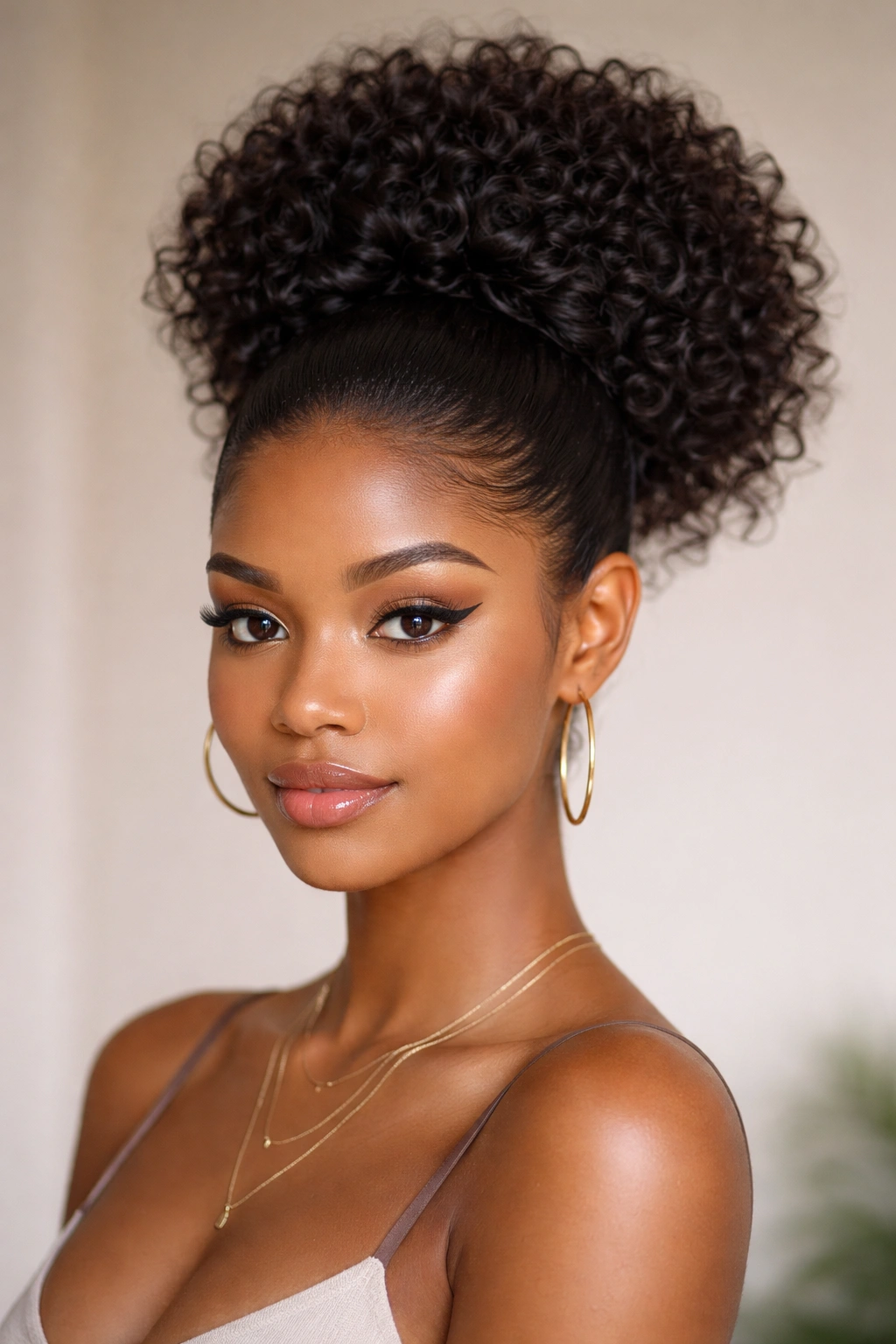
The puff—a gathered pouf of curls at the crown—becomes a statement style when you create a sleek crown and smooth down-growth while letting the puff remain voluminous and textured. It’s bold, it’s beautiful, and it absolutely works when your curls are greasy because the contrast between the sleek top and the defined curls in the puff is striking.
Building the Sleek Puff
Apply a smoothing gel or lightweight cream to damp hands and smooth the hair back from your face, sides, and nape, creating an intentionally sleek crown. Gather the top portion of your hair (roughly from your temples up to the crown) into a high ponytail, but don’t tighten it into the elastic right away. Loosely gather the hair with the elastic, then flip the ponytail section upside down and tease it gently with a fine-tooth comb or your fingers to create volume. Flip it back right-side up and puff it out, shaping it into a full, rounded pouf. Smooth down any flyaways at the edges with a tiny bit more smoothing gel. Secure any loose pieces with bobby pins hidden within the puff.
Why Greasy Curls Make This Shine
- Greasy hair is heavier, which means your puff holds its shape beautifully all day
- The individual curl definition in greasy hair makes the puff look textured and voluminous rather than clumpy
- Smooth, sleek gel applied to damp hair stays put better when there’s oil already present in your strands
- The dramatic contrast between the sleek crown and the voluminous puff is visually striking and very on-trend
- This is a style that looks intentional and fashion-forward, completely reframing a greasy hair day as a styling choice
Pro tip: If you want the puff to be even more voluminous, use a lightweight texturizing spray on your curls before gathering the ponytail, then tease and shape. The combination of texture spray, natural oils, and volume styling creates a puff that lasts all day.
Final Thoughts
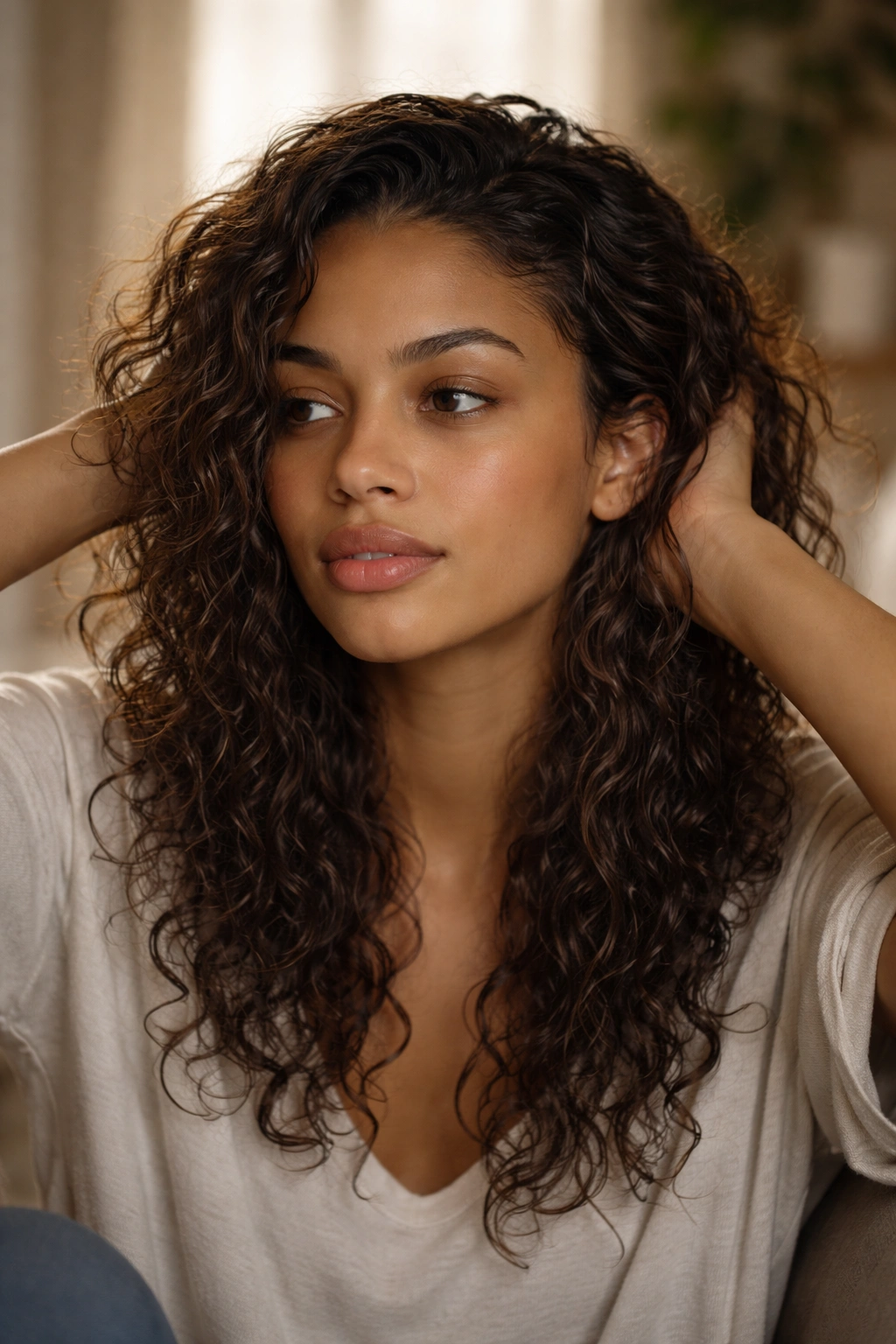
Greasy hair days don’t have to be hair days you dread. When you’ve got curls, you’re actually working with a texture that cooperates beautifully with a little oil—your curls grip and hold shapes better, your definition is more pronounced, and your curl pattern is actually more visible than it would be if your hair were freshly washed.
The styles that work best are ones that acknowledge the weight and shift happening in your hair and use those changes strategically. Whether you’re gathering your curls up and away from your face, creating intentional texture with braids and twists, or leaning into the sleekness with defined styles, you’re making a choice that shows off your hair rather than hiding it.
Here’s the honest truth: once you get comfortable with any of these styles, you might find yourself actually enjoying greasy hair days. You might even stop waiting for the third day to try them out. Your curls will look fuller, hold longer, and feel easier to style—which is basically every curly-haired person’s dream. Next time you’re facing a greasy hair day, remember you’ve got options that are genuinely beautiful and intentional. Pick your favorite and go.
