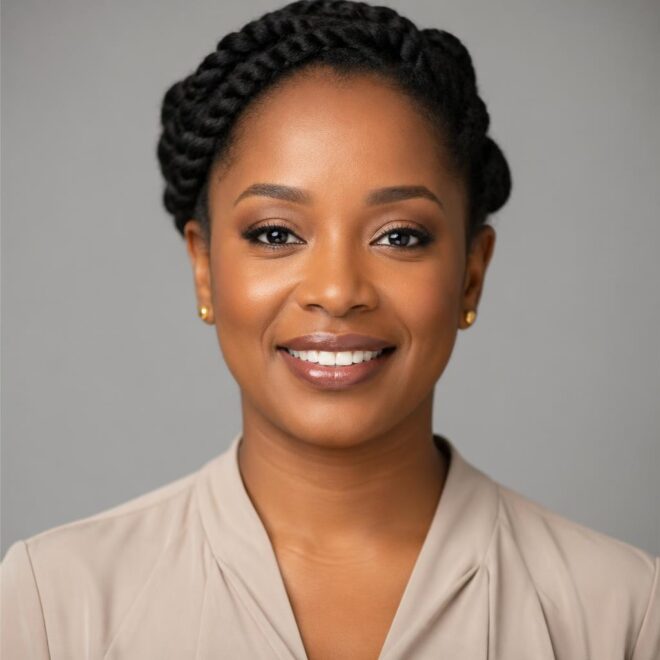


There’s something undeniably sophisticated about a French messy bun—it’s the hairstyle equivalent of looking effortlessly put-together while secretly investing genuine effort. The French have long mastered the art of “je ne sais quoi,” that ineffable quality that makes something feel both intentional and undone at the same time. When it comes to messy buns, French styling elevates the everyday updo from a practical hair solution into a statement of understated elegance.
The beauty of a French messy bun lies in the paradox: it looks like you threw your hair up in 30 seconds, but it actually reflects careful attention to texture, placement, and those perfectly imperfect strands that frame your face. Unlike other messy bun approaches that lean heavily into the “bed head just rolled out of sleep” aesthetic, French messy buns prioritize a specific kind of controlled chaos—one that suggests you’re chic enough to style your hair thoughtfully, yet relaxed enough to let a few pieces fall loose.
What sets French messy bun styles apart is their versatility. They work for casual coffee dates, professional settings with a creative edge, date nights where you want to look effortlessly beautiful, and even semi-formal events when styled with the right finishing touches. The key to mastering French messy bun variations is understanding how texture, positioning, and face-framing elements work together to create that coveted “expensive-looking” result that makes people assume you just left a salon.
Let’s explore eight distinct French messy bun styles, each with its own character and best-use scenarios. Whether you have thick, textured hair or fine, straight strands, you’ll find options that work beautifully for your hair type and personal style.
1. The Classic French Twist Bun
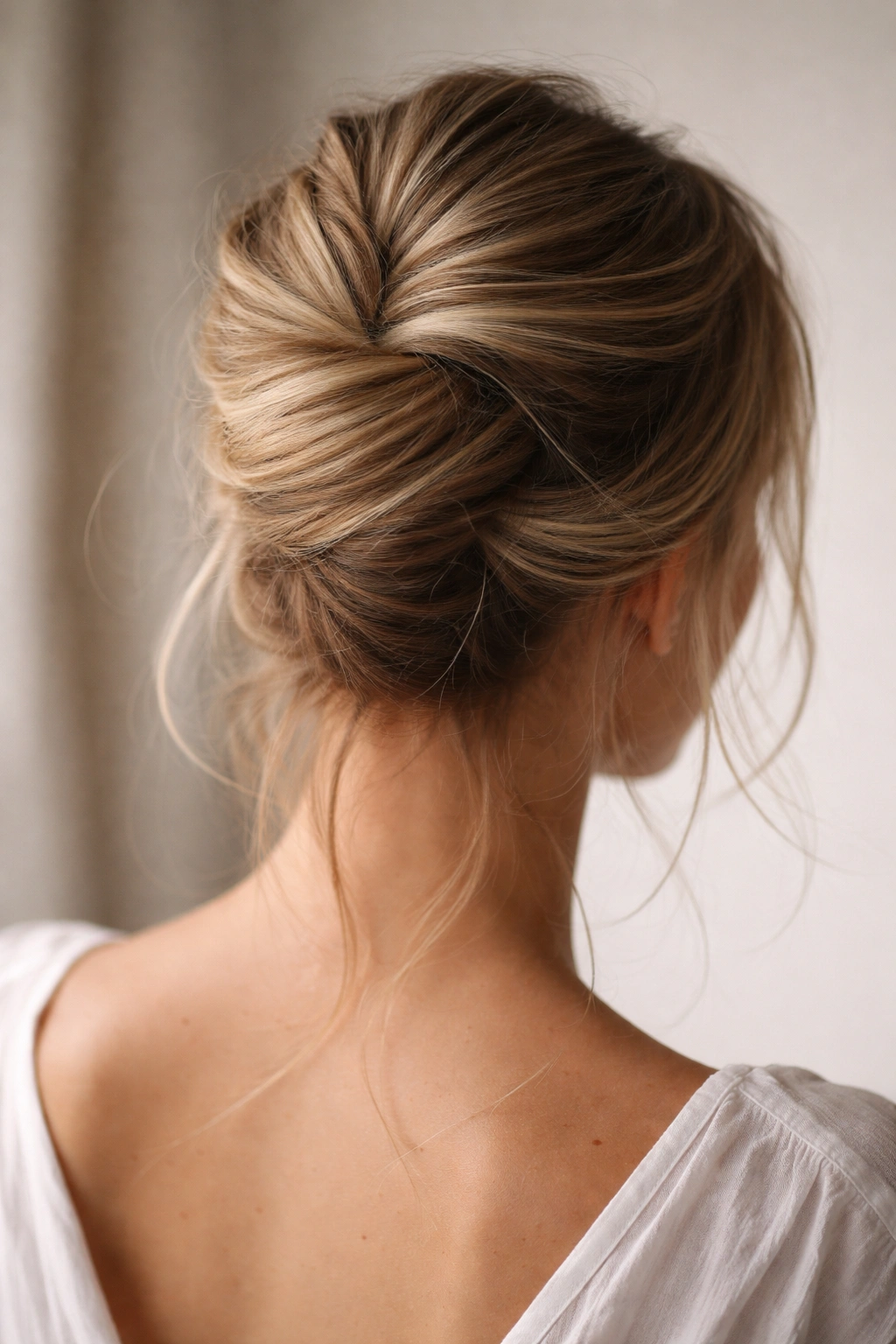
The Classic French Twist Bun is the foundation of French hairstyling elegance. This style starts with a clean, controlled twist that runs from the nape of your neck upward, then coils into a bun at the crown or mid-back of your head. The “messy” element comes from deliberately loosening the twist and the finished bun, allowing small sections to fall free and creating texture rather than a polished, tight shape.
How to Create This Style
Start with hair that has been brushed but not overly smoothed—a light texture spray can help if you’re working with very straight hair. Flip your head upside down and gather your hair at the nape of your neck using your fingers rather than a brush (this creates more volume at the roots). Twist the gathered section tightly as you bring it up the back of your head toward the crown. Once you’ve reached the crown, continue twisting as you coil the hair around itself to form a bun shape. Secure with bobby pins strategically placed around the bun’s perimeter, inserting them parallel to your head to hide them completely.
Key Styling Tips for Maximum Impact
- Tease the crown section lightly before gathering your hair—this gives you lift and that coveted volume the French bun is known for
- Pull some face-framing pieces out immediately after pinning to soften the overall look; these strands add movement and femininity
- Gently tug on sections of the twisted rope and the finished bun itself to create a rougher, less manicured appearance—this is where “messy” meets “chic”
- Use a light hairspray rather than heavy-hold formula, which can make the style look stiff and prevent you from achieving that relaxed vibe
This style works beautifully at shoulder length and longer, and it’s especially stunning on wavy or curly hair types that naturally create texture throughout the twist.
2. The Romantic French Pinned Bun
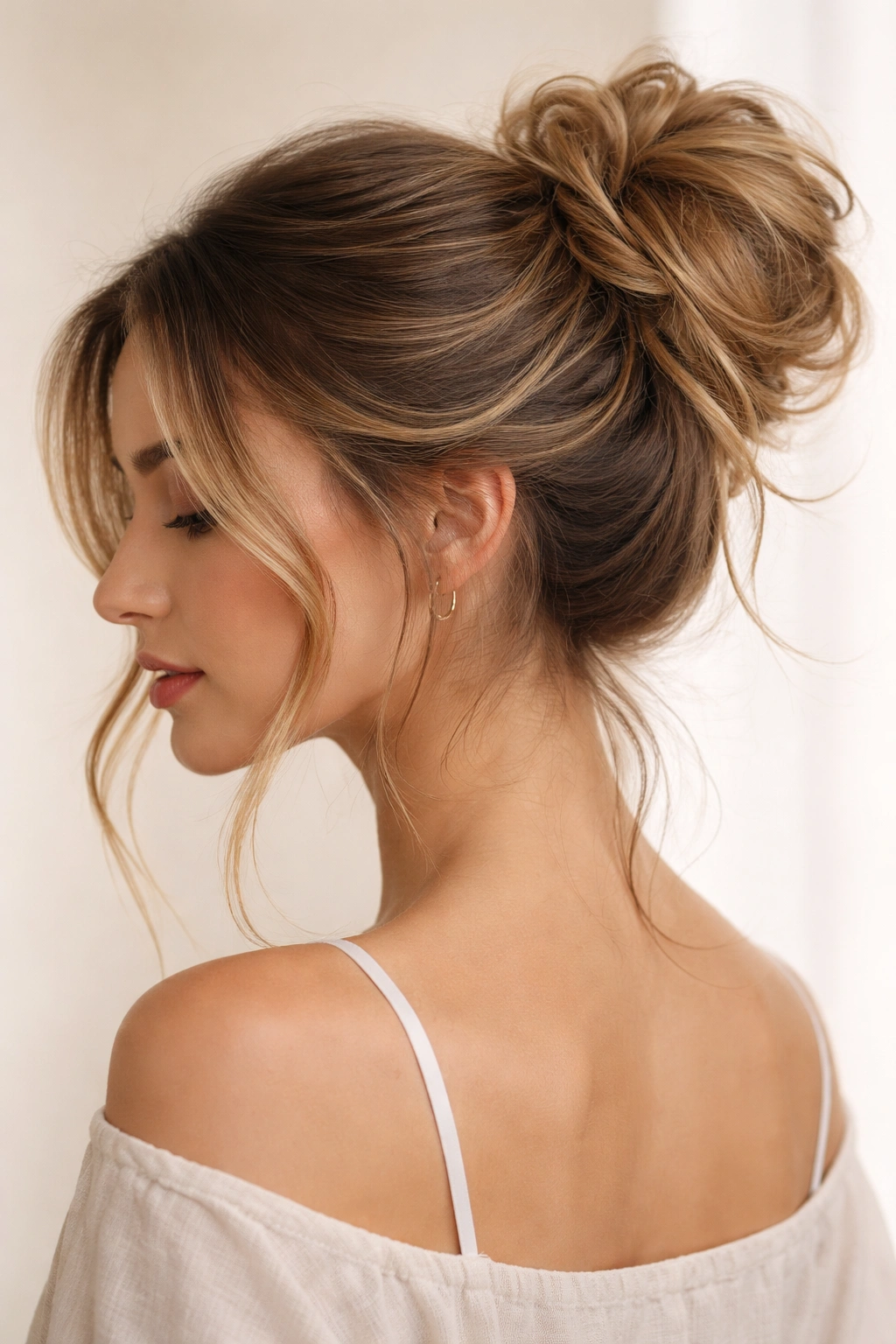
The Romantic French Pinned Bun is the softer, more feminine cousin of the classic twist. Instead of starting with a twist, you’ll create a high ponytail and then pin sections of it loosely around themselves, allowing the overall shape to remain undone and romantic rather than structured. This approach gives you more flexibility to create an organic, effortless shape.
Why This Style Reads as “Romantic”
The magic lies in how the pinned sections fall and overlap. Rather than following one continuous twist, you’re creating pockets of texture throughout the bun—some sections wrap tightly while others loop more loosely. This variation in texture creates visual interest and a genuine “I didn’t try too hard, but it turned out beautiful” feeling. Face-framing strands are essential here; they soften the style and add the romantic quality that makes this bun feel distinctly French.
Step-by-Step Creation Process
- Gather hair into a high ponytail at the crown—use a soft elastic rather than a tight hair tie, and don’t pull it taut
- Divide the ponytail into 3-4 thick sections
- Take the first section and pin it into a loose loop against the base of your ponytail, leaving the end of the section hanging out
- Repeat with remaining sections, overlapping and crisscrossing the loops in a somewhat random pattern
- Take the loose ends and tuck them under previous sections, pinning as needed
- Leave several 2-4 inch strands hanging around your face—these should feel intentional but not styled
Who Should Try This Style
This bun works especially well if you have medium to thick hair with some natural wave or texture, and it’s ideal for events where you want to look elegant without appearing overly formal. The romantic pinned bun bridges the gap between “trying hard” and “naturally beautiful.”
3. The Undone French Chignon
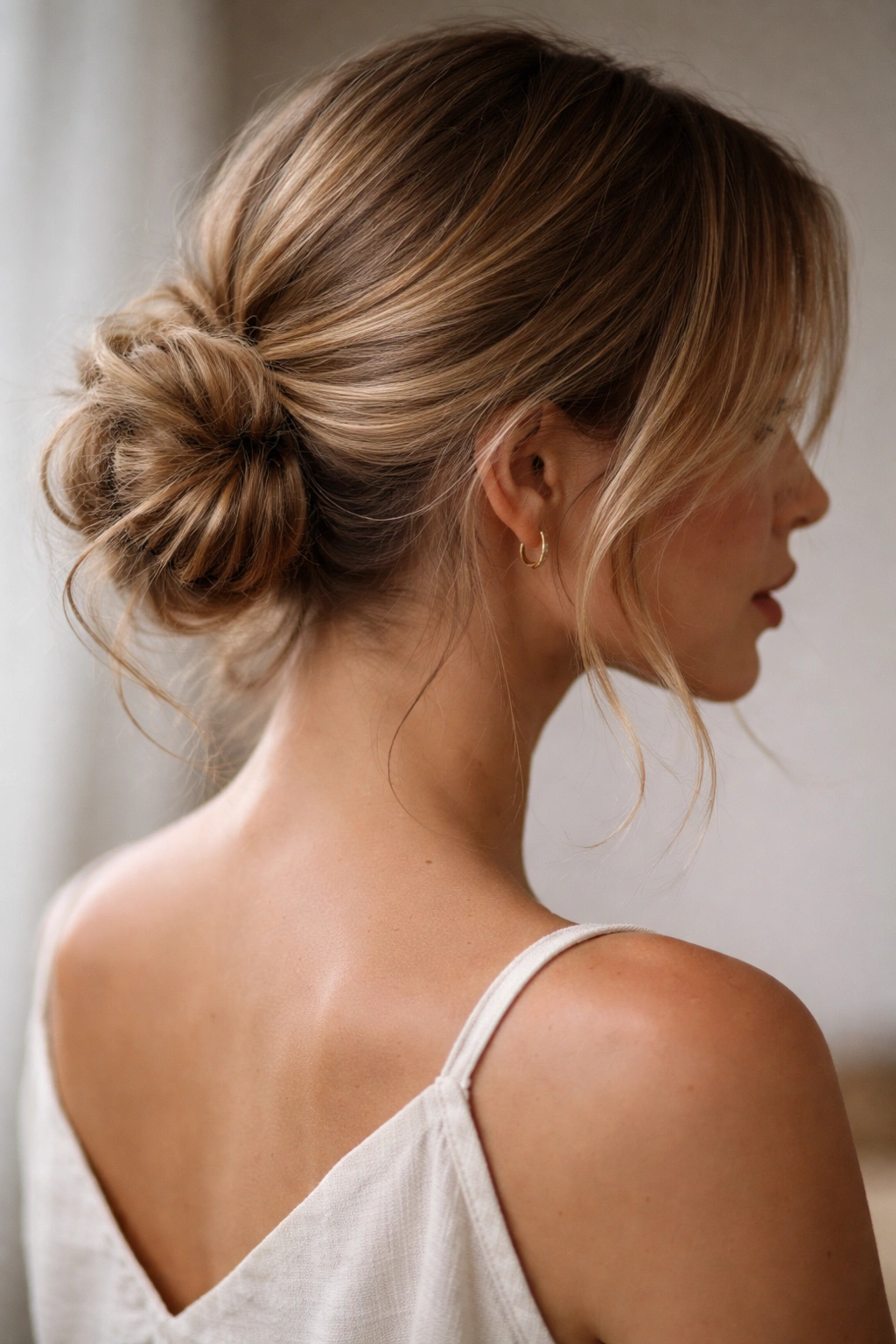
The Undone French Chignon is the low-slung, relaxed version of the traditional chignon—still refined and polished, but with a softness that feels more accessible and modern. A chignon is technically any bun worn low on the back of the head, but the French approach emphasizes subtle texture and strategically placed loose pieces rather than a perfectly sculpted shape.
The French Difference in Chignon Styling
While chignons can sometimes read as severe or overly formal, the French version softens everything. The bun itself is larger and less compact, the placement is slightly asymmetrical, and small wispy pieces are intentionally left around the face, ears, and nape. This creates a style that feels luxurious and put-together without appearing stiff or overdone.
How to Build Your Undone Chignon
Create a low ponytail at the base of your skull, positioned slightly off-center (slightly to the left or right rather than dead center). Don’t pull it tight—a relaxed ponytail is key to the undone aesthetic. Twist the ponytail loosely and wrap it around itself to form a soft bun shape, tucking the ends under and securing with bobby pins. Gently pull the bun outward at the top to add volume and an organic shape.
Finishing Touches That Make It Work
- Pull face-framing strands from near your part down along your cheekbones and jawline
- Loosen some hair along the nape of your neck—this is the detail that transforms a standard chignon into a French one
- Apply texture spray to any loose pieces and gently scrunch them with your fingers to create soft waves rather than straight strands
- Smooth the ponytail section (but not the bun itself) with a fine-tooth comb or smoothing serum to create contrast between the polished base and the undone top
The low position makes this style appropriate for professional settings with a creative edge, and it’s especially flattering for oval and heart-shaped face types.
4. The Braided French Crown Bun
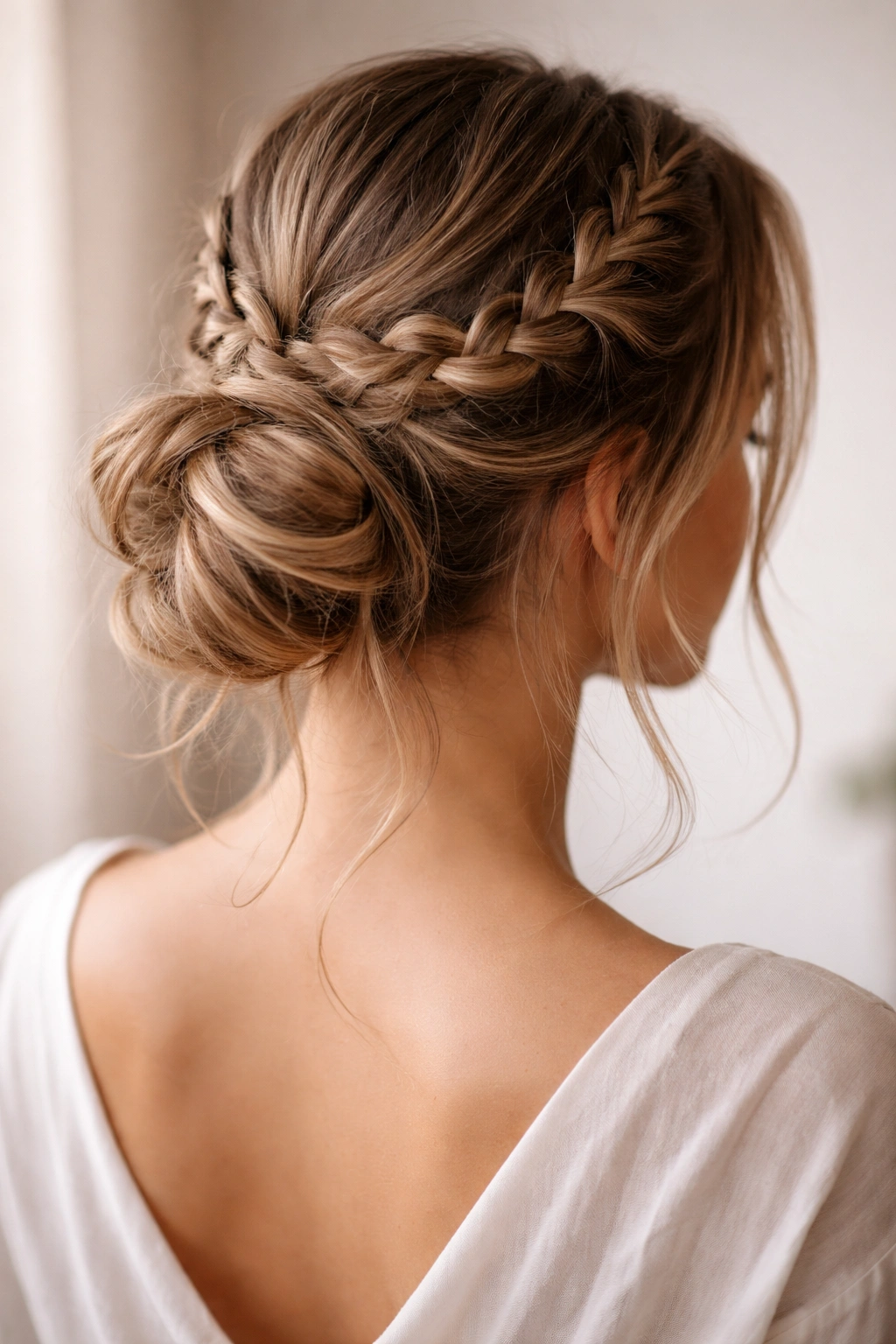
The Braided French Crown Bun incorporates the elegant detail of a braid into the updo structure. Rather than a simple twist, you’re creating one or two braids that form the foundation for your bun, adding visual interest and textural complexity to the style. This is the perfect choice when you want to elevate a basic messy bun with an artisanal detail.
The Two-Braid Approach
Start by sectioning your hair into two roughly equal parts down the center of your head. Create a Dutch braid (braiding under rather than over) on each side, starting from your temples and braiding toward the back of your head. Bring both braids to meet at the nape of your neck, where you’ll gather them together along with any remaining loose hair. Twist this gathered section loosely and coil it into a bun, securing with bobby pins.
The Single-Braid Method
Alternatively, gather your hair into a high ponytail and braid the entire ponytail length. Then coil the braid around itself at the base of the ponytail, pinning as you go. This creates a visually dramatic bun with the braid visible on the surface, which is stunning if you have contrasting hair color or natural highlights.
Why Braids Elevate the Messy Bun
Braids add structure and visual detail without making the overall style feel overly formal. The braid itself remains relatively neat while the bun portion stays appropriately undone—this balance is quintessentially French. The texture created by the braid also catches the light beautifully, making the hairstyle appear more dimensional and intentional.
Best for Your Hair Type
This style shines on medium to thick hair with at least some texture or wave. If you have very fine or straight hair, apply a light texture spray before braiding to give the braid more grip and dimension. The braided elements are also more visible on straighter hair, making this a great choice if you want the braid to be a featured detail.
5. The French Half-Up Messy Bun
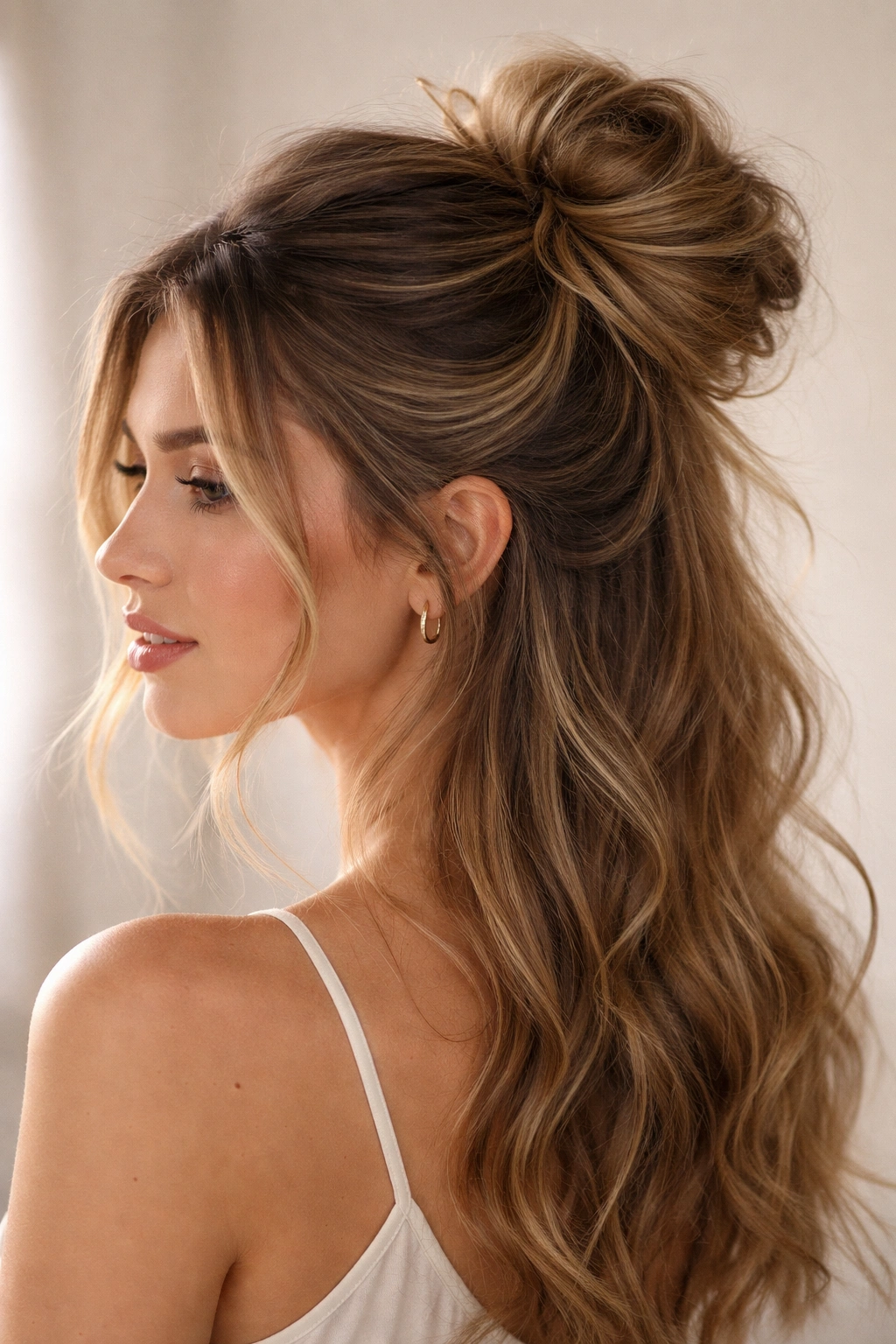
The French Half-Up Messy Bun combines the best of both worlds—the sophistication of an updo with the modern ease of wearing your hair down. You’re securing only the top half to three-quarters of your hair into a bun, while the bottom section flows freely. This style is endlessly flattering, works on nearly every hair length and type, and bridges the gap between casual and polished.
Why Half-Up Buns Feel Distinctly French
The French approach to half-up styles prioritizes volume, softness, and an overall aesthetic that suggests you’re effortlessly beautiful rather than carefully constructed. The bun portion should feel generous and slightly undone, and the down-hair portion should frame your face gently rather than looking like an afterthought.
Creating Volume and the Right Proportions
Flip your head upside down and tease the crown section generously—this gives you the lift you need at the roots and creates a fuller-looking bun. Flip back to normal position and gather only the crown section (from your temples upward and across the top) into a high position. Create a loose bun using your preferred method—twist, pinned loops, or a low-effort coil—and secure it. Leave the bottom section down, and use a smooth serum or shine spray on the down-hair to create contrast with the textured bun.
Face-Framing Pieces Are Non-Negotiable
The strands that fall around your face are what transform this from a practical style into something chic. You want at least two thicker sections framing each side of your face, falling from near your temples. These pieces should look intentional but soft, maybe slightly waved with a curling iron to add dimension.
Versatility Across Occasions
This style works for weekend brunches, professional meetings with creative fields, date nights, and semi-casual events. It’s professional enough for most workplaces yet relaxed enough for weekend wear. The key is in the execution—if done correctly, it looks effortlessly elegant rather than thrown-together.
6. The Textured French Bun with Face-Framing Strands
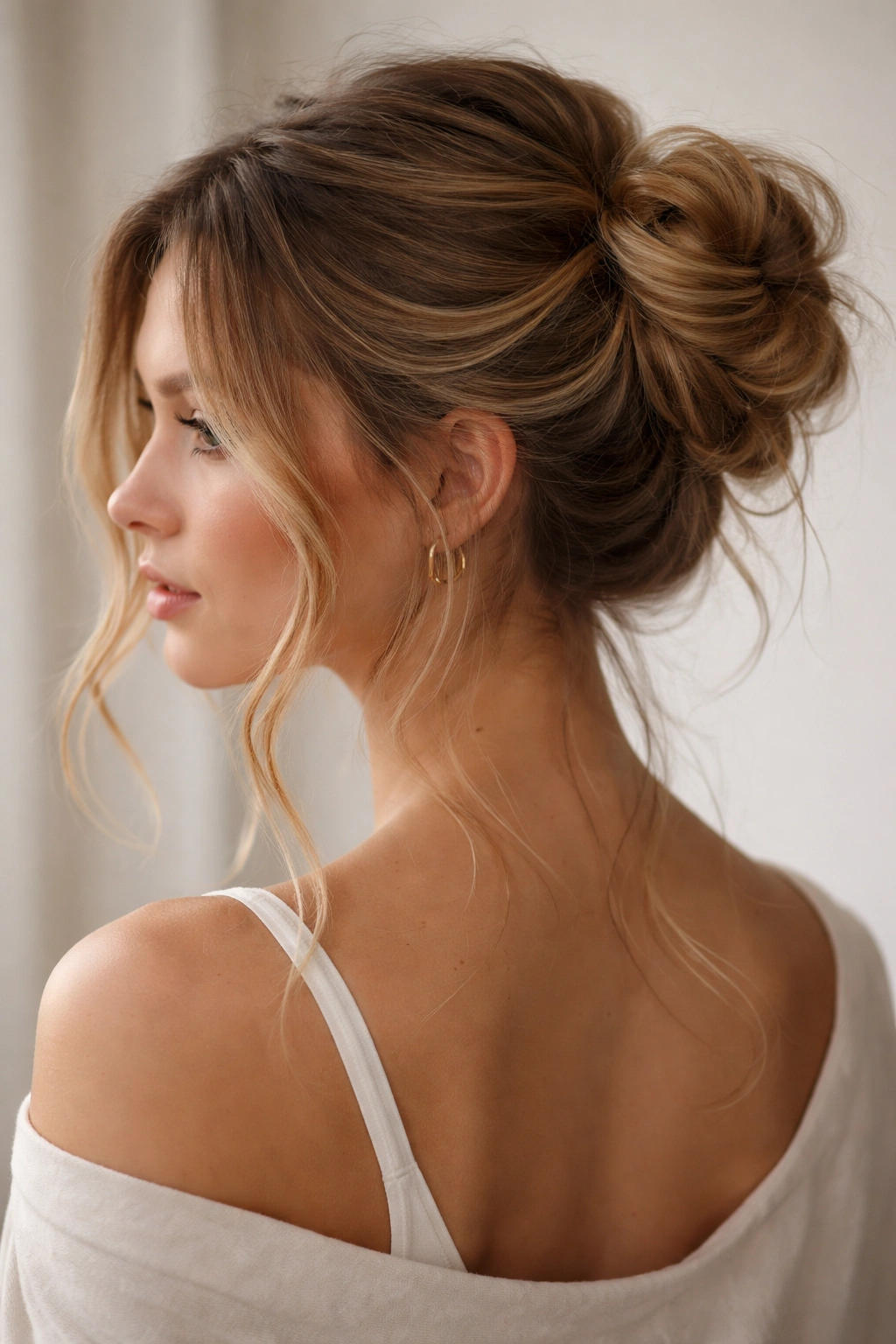
The Textured French Bun with Face-Framing Strands prioritizes creating visible texture throughout the entire style—not just in the bun, but also in the gathered section and the face-framing pieces. This approach works beautifully if you have naturally wavy or curly hair, but even straight hair can achieve this look with the right texture spray and styling technique.
Building Texture From the Ground Up
Apply a texturizing spray or dry shampoo to your hair before creating the bun—this gives grab to the hair and helps it hold shape better. If you have straight hair, use a curling iron to create soft waves throughout before gathering into a bun. These waves won’t last perfectly (and that’s the point), but they give you visible texture and movement rather than a smooth, sleek appearance.
Creating the Textured Ponytail Base
Gather your hair into a ponytail, but use your fingers rather than a brush to create a slightly rough, textured gathering. Don’t smooth it back tightly; instead, allow some bumps and irregularities. These imperfections are what make the style feel French—controlled but not overly manicured. Secure with a soft elastic.
Constructing the Textured Bun
Twist or braid your ponytail loosely, then coil it into a bun shape. As you pin, don’t aim for a compact, neat shape. Instead, leave some sections slightly looser, allow the texture to show, and create an overall shape that feels more organic than geometric. After pinning, gently pull sections outward to increase volume and create a rougher appearance.
The Strategic Face-Frame
This style truly shines when you have multiple layers of face-framing pieces at different lengths. Pull out one thicker section from near your part that’s longer and fuller. Then pull out one or two thinner pieces closer to your ear that are slightly shorter. Scrunch these pieces with texture spray and your fingers to enhance any natural wave and create soft, undone-looking strands.
7. The Low French Knot Bun
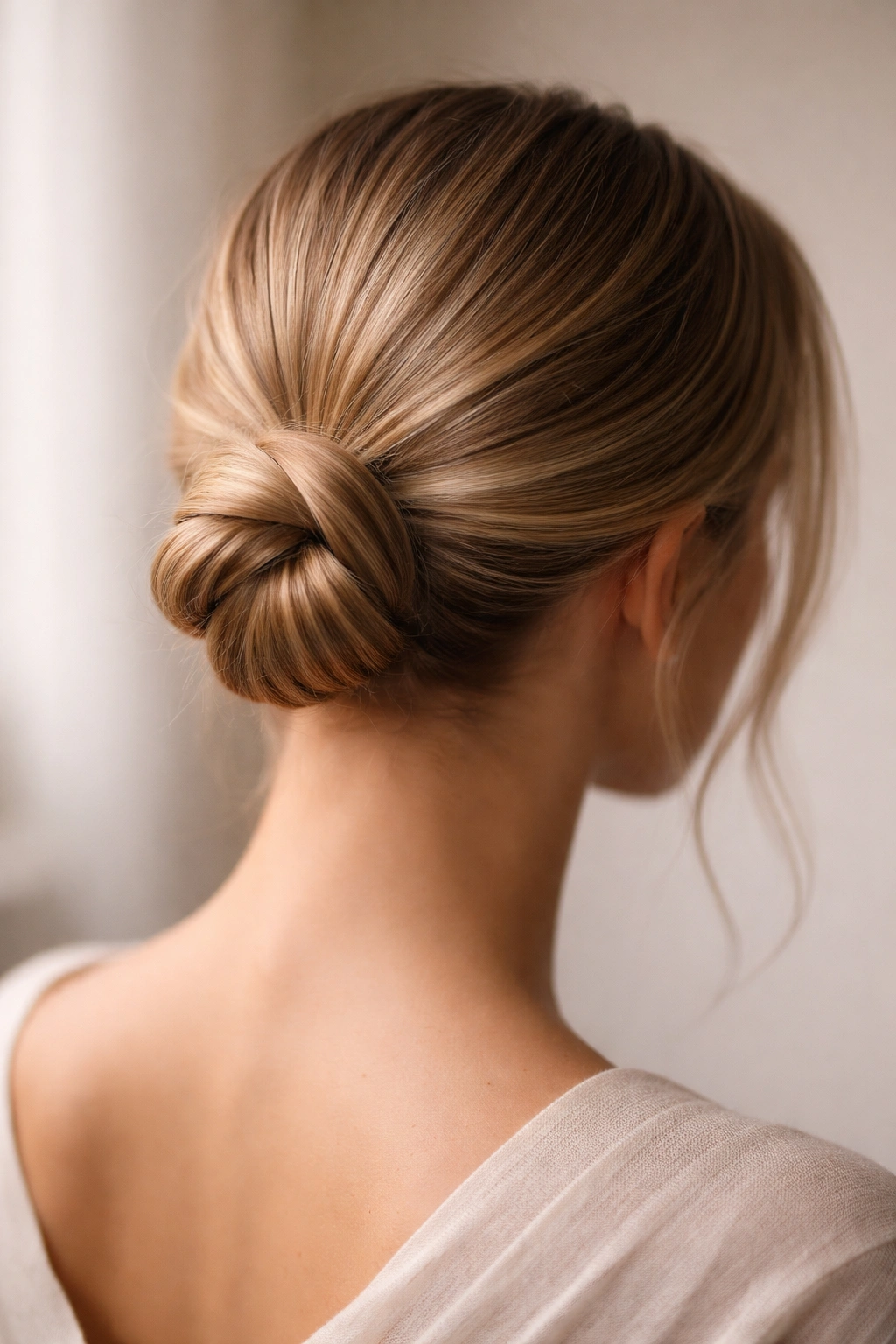
The Low French Knot Bun is a sophisticated, understated style that sits lower on the back of your head—typically at the nape of your neck or just above it. The “knot” refers to a simple, elegant structure created by looping your gathered hair into a soft knot shape rather than a traditional twist or coil. This creates a distinctly polished look that still maintains the French emphasis on softness and movement.
Understanding the Knot Structure
A knot is created by gathering your hair, creating a small loop with the gathered section, passing the ends through the center of that loop, and securing. The result is a shape that’s more geometric and intentional-looking than a messy coil, but with the face-framing and loose elements, it maintains that French sensibility of controlled elegance.
Step-by-Step Knot Creation
Gather your hair into a low ponytail at the nape of your neck using a soft elastic. Create a loop with the ponytail, bringing the gathered ends back toward the elastic. Push the ends through the center of the loop and adjust so the loop lies flat against the back of your head. Secure everything with bobby pins inserted underneath the loop where they won’t be visible. The final shape should look like a simple knot viewed from behind.
Why the Low Position Matters
The low knot placement is inherently more elegant and sophisticated than a crown-positioned bun. It elongates the neck, flatters most face shapes, and reads as more refined without requiring any additional effort. The low position also makes this style appropriate for professional and formal settings while still maintaining that effortless French charm.
Styling for Different Hair Types
On thick hair, the knot will naturally appear fuller and more substantial. On fine hair, you might want to tease the gathered section before creating the loop to add volume. Regardless of hair type, leaving those face-framing pieces is essential—they’re what transform a simple low knot into a French statement.
8. The Voluminous French Pony Tail Bun
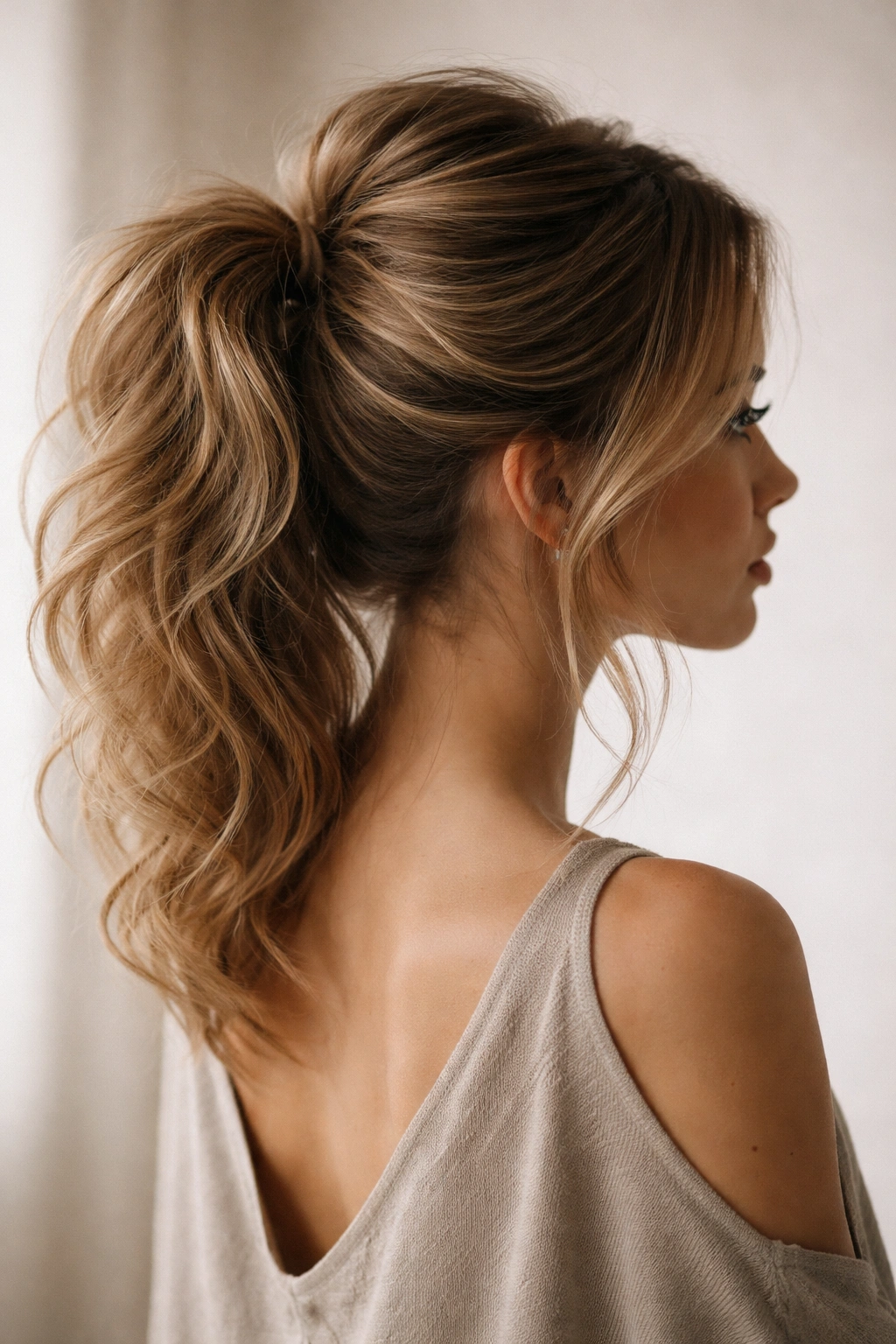
The Voluminous French Pony Tail Bun starts with a high, full ponytail and then transforms it into a bun while maintaining that sense of abundant volume. This style celebrates fullness and works especially well if you have naturally thick hair or are willing to tease and strategically backcomb to create the illusion of more volume. It reads as glamorous yet undone—perfect for special occasions or when you want to look noticeably styled.
Creating Volume at the Crown
This style succeeds or fails based on crown volume. Flip your head upside down and generously tease the crown section—the area from your forehead back to your crown. Use a teasing brush or fine-tooth comb and backcomb sections to create texture and lift. Flip back to normal and smooth the top layer only (not the teased section underneath), which creates a polished surface over a volumized base. Gather this generous, voluminous section into a high ponytail.
Transforming the Voluminous Ponytail Into a Bun
Rather than twisting the entire ponytail (which can compress your volume), try the pinned-loop method. Divide your ponytail into 3-4 thick sections. Create loose loops with each section, pinning them in different directions around the base of your ponytail. Leave the ends loose and tuck them under other sections. This approach preserves volume throughout rather than consolidating it into a tight twist.
The Importance of Loose, Undone Elements
What prevents this voluminous style from looking overdone is the emphasis on softness and movement. Leave multiple face-framing strands—these are essential. Gently pull sections of the pinned loops outward to create an organic, slightly undone shape. Use a very light hairspray that provides hold without weighing the hair down or making it look stiff.
When to Wear This Style
The voluminous French pony tail bun is perfect for special events where you want to look obviously styled and glamorous, yet not so formal that you appear uncomfortable. It works beautifully for date nights, parties, weddings, and any occasion where you want your hair to be noticed as a statement rather than simply functional.
Final Thoughts
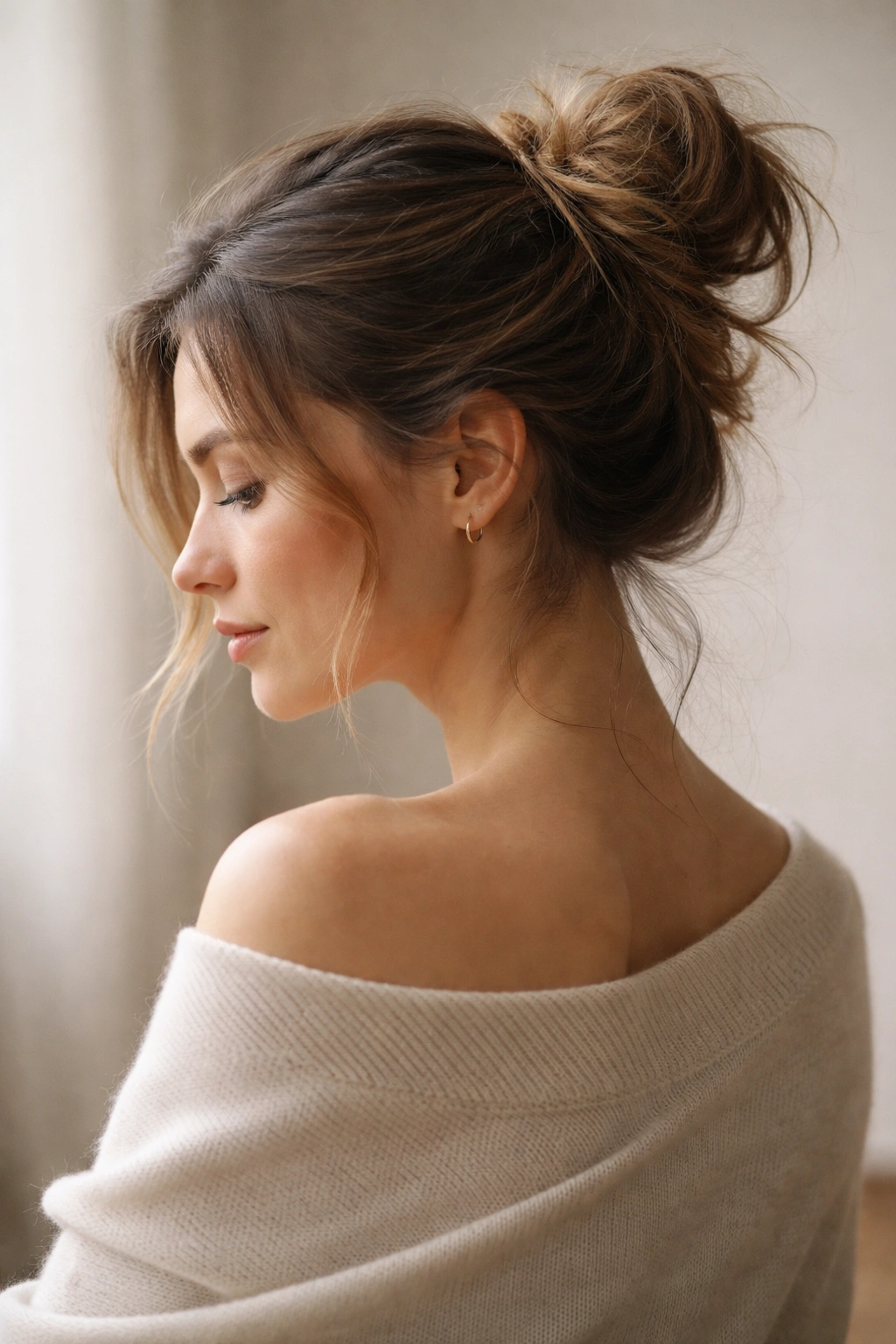
The French approach to messy buns isn’t about being messy at all—it’s about understanding the specific balance between intentional styling and apparent effortlessness that creates genuine elegance. Each of these eight styles prioritizes texture, strategic looseness, and face-framing elements that work together to create that coveted “I’m naturally beautiful and didn’t need to try too hard” aesthetic that the French have perfected.
The beauty of learning multiple French messy bun styles is that you develop flexibility based on your hair type, the occasion, and how much time you have to style. Start with the style that resonates most with you and practice it until you can create it without thinking. Once you’ve mastered one, the techniques transfer to the others—you’re essentially learning different ways to manipulate texture, volume, and placement to create distinct looks from a similar foundation.
Remember that the magic lies in details most people overlook: the shape of your face-framing strands, the volume at your crown, the softness of your loose elements, and the intentionality behind what looks accidental. These subtle choices are what elevate a basic messy bun into something genuinely chic—something that makes you look like you understand that true elegance whispers rather than shouts. Practice these styles, adjust them to suit your hair and face shape, and trust that the effort you put into mastering them will be rewarded with a hairstyle that consistently makes you feel effortlessly beautiful.